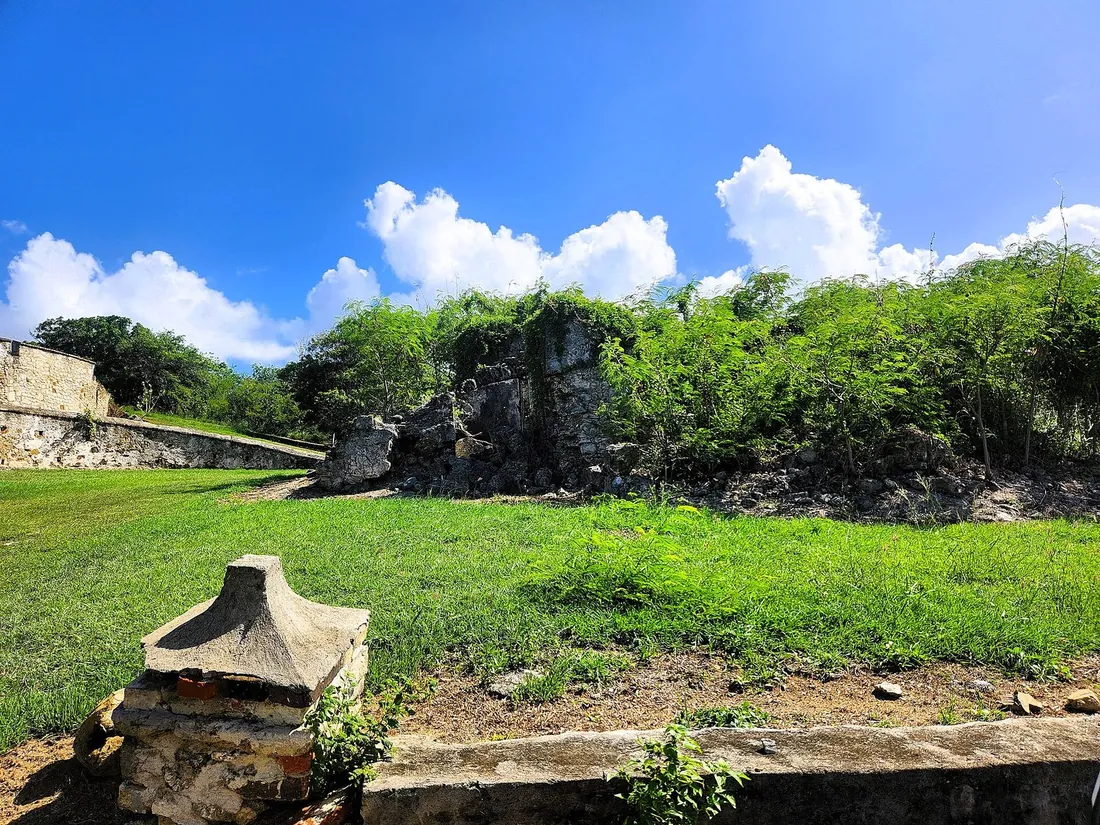
St. Croix vs St. Thomas
Two islands, one U.S. territory, one decision. The same water and the same passport-free trip, with very different days once you land.
This is the comparison most people planning a U.S. Virgin Islands trip actually make. St. Thomas is the USVI most Americans have seen, usually from a cruise ship deck or the Charlotte Amalie waterfront. St. Croix sits forty miles south, twice the size, with a fraction of the ship traffic. Both are the same country, the same dollar and the same no-passport flight home. The difference is what kind of week you want — and it is a real difference, laid out below with sources.
The two, side by side
| St. Croix | St. Thomas | |
|---|---|---|
| Passport for U.S. citizens | Not needed | Not needed |
| Size | 84 square miles — the largest USVI | About 31 square miles |
| Population density | About 41,000 people on 84 sq mi | Roughly the same population on a third of the land |
| Cruise traffic | A handful of calls a week in season, at Frederiksted | One of the Caribbean's busiest cruise ports |
| Mainland nonstops | Miami, Charlotte, Atlanta, Newark, Chicago | More frequencies from more cities |
| Between the two | Seaplane about 25 minutes; ferry about two hours | Same links, from Charlotte Amalie |
| Beaches | Cane Bay, Rainbow, The Shoys, Jack's and Isaac's, Sandy Point | Magens Bay, Sapphire, Lindquist |
| Diving | Cane Bay Wall and Frederiksted Pier from shore | Mostly boat dives |
| Historic towns | Two — Christiansted and Frederiksted | One port city, Charlotte Amalie |
| Nightlife and shopping | Christiansted boardwalk, small-town scale | Charlotte Amalie duty-free strip, resort bars |
| A week in a villa | Lower nightly rates for comparable homes | Higher demand, higher prices |
Advisory levels and details are as published by the U.S. Department of State and checked August 2026. They change — read the current advisory at travel.state.gov before any international trip.
The short answer
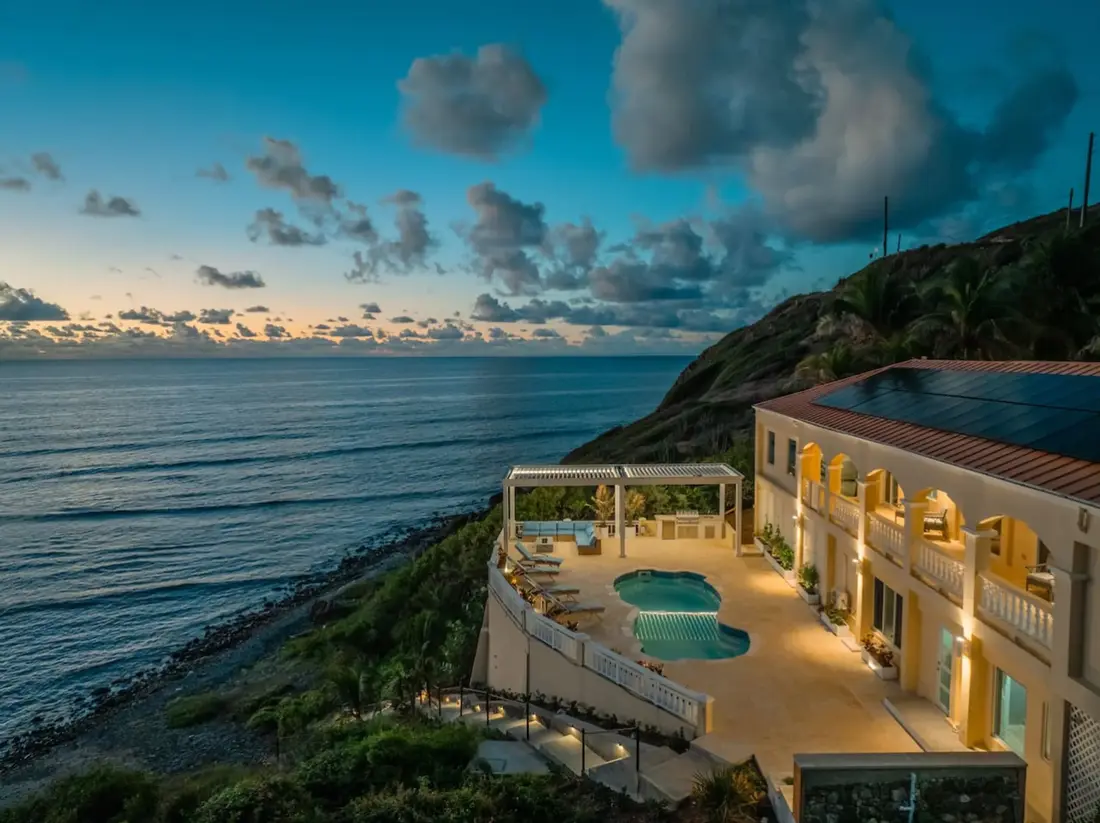
Choose St. Thomas if you want resort infrastructure, duty-free shopping streets, and the widest choice of flights in the territory. Choose St. Croix if you want the U.S. Virgin Islands with room around you: the largest island of the three, two historic towns instead of one port city, shore diving you walk into, a national monument built around a snorkel trail, and villas that cost less than their St. Thomas equivalents. We manage our own homes on St. Croix, so you know where we stand — but every claim on this page is checkable, and the biggest ones come from the National Park Service, the census, the cruise schedules and the airlines themselves.
Two islands built around different visitors
St. Thomas has organized itself around the ship day for more than half a century. Charlotte Amalie regularly ranks among the busiest cruise ports in the Caribbean; on a multi-ship day, thousands of passengers move through Havensight and Crown Bay, up the Skyride to Paradise Point, through the duty-free arcades on Main Street and out to Magens Bay by open-air safari taxi. The island is very good at this. It is efficient, polished and busy, and if you love that energy it delivers every week of high season.
St. Croix never built that machine. Cruise ships do call — at the long pier in Frederiksted, on the island's quiet west end — but a handful of calls in a good week is not the same weather system as a port that can turn over several ships in a day. The practical result for a villa guest: on St. Croix the beach you drive to on a Tuesday is mostly yours, the restaurants seat you without a ship-day crush, and the roads between towns stay open and easy. The island's rhythm is set by the people who live there, not by the sailing schedule. When a ship does tie up at Frederiksted, the town enjoys the day and goes back to being a small west-end town by dinner — our cruise-day guide exists mostly to tell day visitors how much island they are missing.
Scale is the other half of the story. St. Croix is 84 square miles — the largest island in the U.S. Virgin Islands, about 22 miles end to end and 7 across — while St. Thomas fits roughly the same number of residents into about a third of the land. St. Thomas is vertical: one ridge line, houses stacked up the hillsides, traffic funneled along a waterfront road that backs up on ship days. St. Croix is horizontal: a rainforest west end that catches more than fifty inches of rain a year, a dry cactus east end that gets half that, cane-country flats in the middle, and two towns with open road between them. Two landscapes on one island — the guide is here — and you feel the difference the first time you drive it.
Getting there
St. Thomas wins the schedule board, and it is fair to say so. Cyril E. King Airport has carried year-round nonstops from more mainland cities, more times a day, for years. If your priority is the absolute widest choice of departure times on any given date, St. Thomas has it.
The gap has closed, though, and 2026 is the year it closed hardest. St. Croix's Henry E. Rohlsen Airport now has nonstop service from five mainland cities: American from Miami daily year-round (about 3 hours) and from Charlotte (daily beginning December 17, 2026), Delta from Atlanta (daily except Mondays beginning December 19, 2026), United from Newark (Saturdays beginning October 31, 2026 — the first New York–area nonstop in more than thirty years), and American's winter Saturday flight from Chicago O'Hare. Cape Air and JetBlue connect through San Juan all day long, about 50 minutes for the hop. The full board, verified August 2026:
| Airline | From | Schedule (as published Aug 2026) | Flight time |
|---|---|---|---|
| American Airlines | Miami (MIA) | Year-round, one to three flights daily by season | about 3 hours |
| American Airlines | Charlotte (CLT) | Paused until Saturdays return November 7; daily beginning December 17, 2026 | about 3¾ hours |
| American Airlines | Chicago O'Hare (ORD) | Winter Saturdays beginning December 5, 2026 | about 4¾ hours |
| Delta Air Lines | Atlanta (ATL) | Saturdays through September 5; Saturdays again from November 14; daily except Mondays beginning December 19, 2026 | about 4 hours |
| United Airlines | Newark (EWR) | Saturday nonstops beginning October 31, 2026 | about 4½ hours |
And the two islands connect to each other easily, which softens the whole question: the Seaborne seaplane crosses from Christiansted Harbor to Charlotte Amalie in about 25 minutes, several times most days (schedules vary), Cape Air flies the same route in about 25 minutes, and the QE IV ferry runs Gallows Bay to Charlotte Amalie in a bit over two hours. Plenty of guests use a St. Thomas nonstop on dates when it is cheaper and hop across; plenty more fly St. Croix direct and day-trip the other way. The island hops:
| Airline | From | Service | Flight time |
|---|---|---|---|
| Cape Air / JetBlue | San Juan, Puerto Rico (SJU) | Multiple daily, year-round | about 50 minutes |
| Fly The Whale | San Juan — Isla Grande (SIG) | Several round trips daily | about 40 minutes |
| Cape Air / Fly The Whale | St. Thomas, USVI (STT) | Multiple daily, year-round | about 25 minutes |
| Seaborne (seaplane) | St. Thomas — Christiansted Harbor to Charlotte Amalie | Schedules vary; one aircraft on the route | about 25 minutes |
| Cape Air | Nevis (NEV) | Fridays and Sundays | about 1 hour |
Getting around once you land
Both islands drive on the left in ordinary left-hand-drive American cars, a Danish-era habit that takes about a day to stop noticing — see driving on the left. From there the experience diverges. St. Thomas driving means switchbacks, hill starts and the waterfront crawl when ships are in; parking in Charlotte Amalie is its own sport. Many visitors give up and ride the open-air taxis, which are plentiful and priced per person per stop.
St. Croix driving is flat-out easy by comparison: the island is bigger but emptier, the main roads run straight through former cane country, and everything on the island is reachable within about forty minutes from the airport. Christiansted sits 15 to 20 minutes east of the airport, Frederiksted 10 to 15 west, the East End 30 to 40. A rental car is the right call for a villa week — here is how that works — and there is no ride-share on either island, so plan on the car or the taxi stands.
The beaches
Magens Bay is the famous one, and it earns the postcard: a mile of protected white sand in a deep green amphitheater, calm as a pool most days. It is also the beach nearly every cruise passenger is driven to, it charges an entry fee, and on multi-ship days the mile fills up. Sapphire and Lindquist on the east end are lovely, smaller, and busy in season. St. Thomas beaches are good beaches; what they rarely offer is solitude.
St. Croix spreads comparable sand across far more coastline with far fewer people on it. A sampler, all covered in the best beaches on St. Croix:
Cane Bay on the north shore puts a beach bar, dive shops and the island's signature wall dive on one calm bay — you can snorkel the reef shelf before lunch and watch divers walk into a 3,000-foot drop-off after it. Rainbow Beach on the west end faces the sunset, with watersports rentals and a beach bar that has run for about thirty years. The Shoys, east of Christiansted, is a calm, quiet crescent behind the Estate Shoys guard gate — our Shoy's Beach House sits directly on it. Jack's and Isaac's Bays on the far east end are hike-in beaches inside a 301-acre Nature Conservancy preserve, with sea-turtle nesting and reef snorkeling and no facilities at all. And Sandy Point National Wildlife Refuge is two miles of undeveloped white sand — the largest leatherback nesting beach under U.S. jurisdiction — open to visitors on weekends from September through March, closed entirely April through August for the turtles. Not one of these beaches has an entry line.
The tally: St. Thomas has the single most photographed beach in the territory. St. Croix has more beaches, more kinds of beach, and more empty sand on any given day of the week.
The water: snorkeling and diving
Here St. Croix holds a card St. Thomas cannot match: Buck Island Reef National Monument, protected by presidential proclamation since 1961 — President Kennedy's Proclamation 3443 called it one of the finest marine gardens in the Caribbean Sea — and expanded in 2001 to about 19,000 acres of no-take marine reserve. Its east lagoon holds a marked underwater snorkel trail, one of only a few in the United States, and an elkhorn coral barrier reef wraps two-thirds of the island. Access is by licensed National Park Service concessionaires sailing from the Christiansted boardwalk, about 1.5 miles offshore. Details and operators in the Buck Island guide.
Divers have an even easier call. St. Croix's two signature dives are both shore entries: the Cane Bay Wall, which begins about 100 yards off the sand and falls away toward depths measured in thousands of feet, and the Frederiksted Pier, one of the Caribbean's best-known macro dives — seahorses, frogfish, octopus — and a famous night dive. Add the Butler Bay wrecks and the walls of Salt River Canyon on short boat runs and you have a full dive week without a long boat ride in it. On St. Thomas the equivalent dives are boat trips: two-tank mornings built around the dive operator's clock. Good diving — but St. Croix is the divers' island of the three, and has been for decades. Start at diving St. Croix.
One more thing St. Thomas does not have: a bioluminescent bay. Salt River Bay glows year-round — one of the few places in the world that does — and three operators run night kayak tours, including clear-bottom kayaks. Book around the moon phase; the bio bay guide explains.
Towns, history and culture
Charlotte Amalie has real history threaded through a working port city — Fort Christian, one of the hemisphere's oldest synagogue buildings, the 99 Steps — but the town's main business today is the ship day, and its streets read accordingly: jewelry, liquor, electronics, repeat.
St. Croix keeps its history as whole towns. In Christiansted, the National Park Service protects five Danish colonial structures around the harbor — Fort Christiansvaern, the Steeple Building, the Scale House, the Customs House and the warehouse of the Danish West India & Guinea Company — and the arcaded streets around them, built to Danish plans by enslaved African craftsmen, are still the island's main dining and shopping rows. Frederiksted, the second town, is where roughly eight thousand enslaved people marched on Fort Frederik on July 3, 1848 and won emancipation from its ramparts; the town's gingerbread-Victorian look dates to the rebuild after the 1878 Fireburn labor revolt. Alexander Hamilton grew up on Company Street in Christiansted and clerked in the town's export trade before sailing to New York in 1772. None of this is staged for visitors; it is just the fabric of the island. Start with the Christiansted historic site, Fort Frederik and Hamilton's St. Croix.
Then add what a bigger island holds: the Cruzan Rum distillery, distilling at Estate Diamond in a tradition dating to 1760, and the Captain Morgan visitor center; the world's first breadfruit vodka at Sion Farm; rainforest drives down Mahogany Road; tide pools at Annaly Bay; an 18-hole Robert Trent Jones Sr. course at Carambola, which the architect counted among his finest; and Point Udall, the easternmost point of the United States, where the country's first sunrise of 2000 was marked with a monument. St. Thomas fills a beach week. St. Croix fills a beach week and leaves you a list for the next visit.
Food and drink
St. Thomas eats well at the resort tier — hotel dining rooms, marina restaurants, a few destination kitchens — and Charlotte Amalie has good lunch rooms tucked between the shops. St. Croix's scene is smaller-town and more local-facing, which most villa guests come to prefer: Christiansted's boardwalk and arcades hold most of the island's kitchens, from harborside dining rooms to pate stands and johnny cakes. La Reine Chicken Shack spit-roasts chicken for the whole island on weekends. Crucian standards — kallaloo, fungi with fish, saltfish, stew conch — are on real menus, priced for neighbors, not for a ship crowd. And the rum is made here: Cruzan tours run weekdays, Captain Morgan's visitor center pours tastings, and Leatherback brews beer with rainwater in Kingshill. The full tour starts at the Crucian food guide.
Crowds, prices and the feel of a week
Tourism on St. Thomas is a high-volume business, and prices reflect demand: hotel and villa rates run higher for comparable properties, restaurants price for a captive season, and the famous beaches meter their crowds with parking lots and entry fees. None of that is a criticism — it is what a successful port economy looks like — but you should walk into it knowingly.
St. Croix's visitor economy is smaller and calmer. Comparable villas list for less on matching dates — we do not print nightly rates here because they move with seasons, but the pattern is easy to verify on any booking search. Tables are easier. The marquee sights do not sell out. And the things that anchor a St. Croix week — a beach with nobody on it, a shore dive, a fort you wander into for a few dollars, a sunset at Rainbow Beach — are cheap or free. A week here simply spends less than the same week forty miles north, and spends it more quietly.
Who each island suits
Families who want a kids' club, a lazy river and dinner a lobby away: St. Thomas, comfortably. Families who want a house with a pool, their own kitchen, and a different beach every morning: St. Croix — start with the family collection and traveling with kids.
Couples: St. Thomas offers resort romance packages; St. Croix offers a house for two, dinner on a Danish arcade, and a bioluminescent bay paddle in the dark. Divers and snorkelers: St. Croix, and it is not close — shore access decides it. Shoppers: St. Thomas, and it is not close the other way. History travelers: St. Croix has the towns, the forts, the Hamilton story and the emancipation story. First-timers to the Caribbean who want everything arranged: St. Thomas's resorts do that well. Returners who want the islands as they were: that sentence usually ends with someone booking St. Croix.
A sample week, side by side
A St. Thomas week from a resort: beach and pool days on property, a Magens Bay morning, a Charlotte Amalie shopping run, a day sail to St. John, dinner reservations on property or a taxi ride away. It is a good week; thousands of people have it every month.
A St. Croix week from a villa: Buck Island's snorkel trail Monday; Cane Bay Tuesday with lunch at the beach bar and a first look at the wall; Christiansted Wednesday — the fort in the morning, the arcades for lunch, the boardwalk for dinner; the East End Thursday, Point Udall at sunrise if you are ambitious, then Jack's and Isaac's Bays and an afternoon at The Shoys; Frederiksted Friday — Fort Frederik, the pier for snorkeling or a dive, Rainbow Beach for sunset; Saturday the rainforest, the distilleries and the Domino Club; Sunday the beach you liked best, one more time. Every night ends at your own house. The full versions are in the 7-day itinerary.
Month by month on the two islands
The climate is shared — both islands ride the same trade winds — so the monthly question is really about crowds and money. December through April is high season on both: the Christmas Winds keep the air dry and sparkling, days sit around 83°F, and prices peak. On St. Thomas that peak means peak everything — the most ships in port, the fullest beaches, the hardest dinner reservations of the year. On St. Croix the same months feel like a pleasant hum: the marquee weeks fill the villas, but Sandy Point on a January Saturday is still a few dozen people on two miles of sand, and Cane Bay's lot still has spaces at ten.
May and June are the sleeper months on both islands — dry-ish, warm, cheaper, with the water at its clearest before the summer plankton. July and August run hot and bright with a family-travel bump; St. Croix adds its own reasons to come exactly then, with Emancipation Day on July 3 and mango season in the markets. September through November is the deep off-season inside hurricane season — the green months. Prices fall hardest, the islands empty out, and the sensible playbook is the same on both: travel insurance, flexible bookings, eyes on the forecast. The difference is what you get for the discount: on St. Thomas, a quieter version of a port; on St. Croix, an island that feels briefly private. December brings the Crucian Christmas Festival's season — carnival troupes, food fairs, the parades in Frederiksted — which St. Thomas answers with its own Carnival in April. Our month-by-month guides run the detail for every month of the year.
The travel day, hour by hour
A Saturday arrival on St. Thomas in season: land at Cyril E. King mid-afternoon in a bank of three other jets, queue for the rental shuttle, merge into the waterfront crawl behind the last ship-day taxis, and reach an east-end resort about ninety minutes after wheels-down — normal for the island, and everyone manages. The same Saturday on St. Croix: land at Henry E. Rohlsen, walk to the rental counters, and be at a Christiansted villa by the time the St. Thomas arrival clears the airport road — fifteen to twenty minutes east, ten to fifteen west to Frederiksted, thirty to forty to the East End. First stop Plaza Extra or Seaside Market for provisions, then the pool before sunset. The return day mirrors it: no security-line crush at STX, no waterfront traffic between you and the flight, and the same domestic arrival home — no customs hall on either island, just the agriculture check, with the $1,600 duty-free allowance either way. The logistics tie nationally; they diverge locally, and they diverge in St. Croix's favor every single time the clock matters.
Who should pick which island
Pick St. Thomas if: you want a full-service resort and will use its pools, kids' club and restaurants daily; duty-free jewelry and liquor shopping is a planned event; your dates require a nonstop frequency only Cyril E. King offers; or you are meeting a cruise. Pick St. Croix if: you are renting a villa and a car; you dive or snorkel and want the wall and the pier a walk from the sand; you want history you can wander into between beaches; your group spans ages and needs a house rather than two hotel rooms; or the whole point of the trip is that nobody is around. Undecided couples default sensibly to St. Croix — the seaplane makes St. Thomas a day trip, while the reverse commute wastes the quiet you paid for. And repeat USVI travelers already know: the first trip is usually St. Thomas because the flights were familiar; the second is St. Croix because the first taught them what they actually wanted.
When St. Thomas is the right call
Be fair to the other island: if you want a full-service resort with a kids' club and a swim-up bar, St. Thomas has more of them. If duty-free shopping is a main event of your trip, Main Street is the territory's showcase. If your dates demand a nonstop that only Cyril E. King has, take it — or take it and cross to St. Croix by seaplane in 25 minutes, which is exactly how a share of our guests arrive. If you are cruising, you will likely see St. Thomas anyway. The question this page answers is where to go when you pick the island yourself, for a week, on purpose.
The bottom line
There is no passport, no currency exchange and no customs line on either island — that part is a tie, and it is why the U.S. Virgin Islands beat the foreign Caribbean for many American travelers before this comparison even starts. Between the two: St. Thomas is the territory's port, built to move a ship's worth of people through a great day. St. Croix is the territory's island — twice the land, a fraction of the traffic, two historic towns, walk-in diving, a national monument with a snorkel trail, and villas that cost less. For the kind of week this site is about, the choice is easier than the forty miles between them suggest. The homes are here.
Elsewhere in this series
This page is one of twenty-six. If you are still shopping the map, the verdicts nearest this comparison run as follows — each links to the full page with its own sources:
St. Croix vs St. John — St. John is a gorgeous, expensive boat ride. St. Croix is a whole island with its own airport and half the price tag.
St. Croix vs Puerto Rico — Puerto Rico is a country-sized trip with city energy. St. Croix is the island-sized version: 41,000 people, no traffic, same flag.
St. Croix vs Vieques & Culebra — Same quiet, same flag. St. Croix has the jets, the villas and the services; the little islands have the ferry line.
The complete set, grouped by region and passport rules, lives at St. Croix vs other destinations.
Which home fits your group
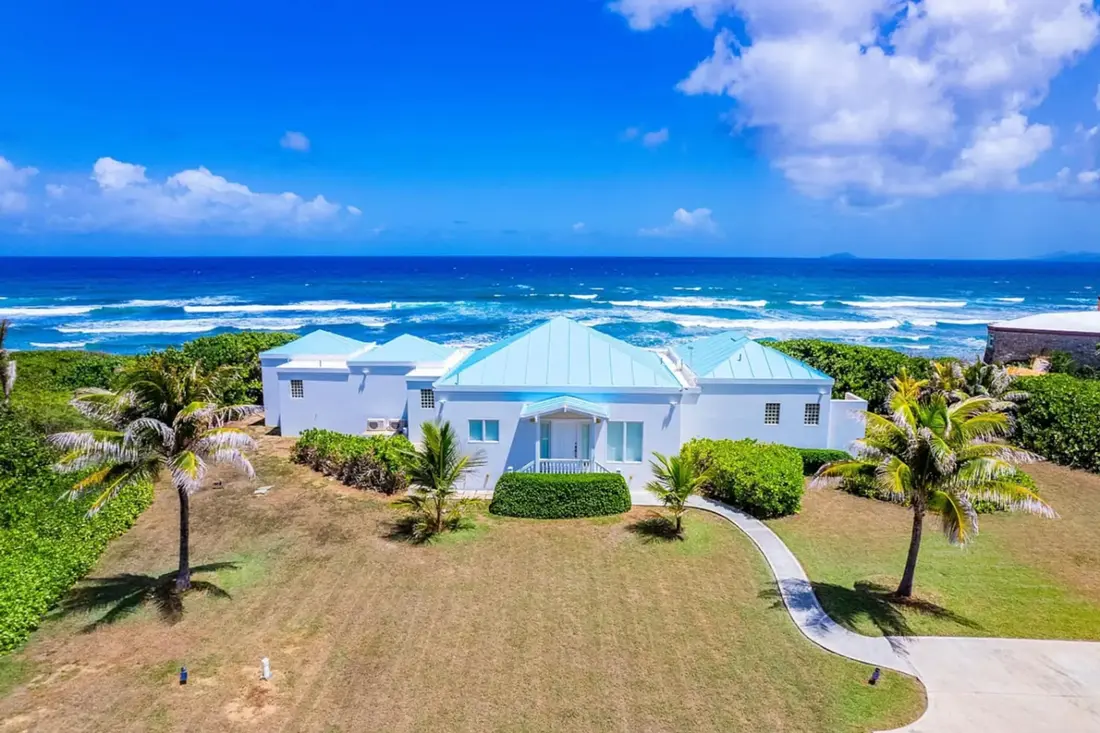
If St. Croix wins your comparison, the homes are the easy part. Groups of eight to twelve settle into the family collection; couples take a home for two; anyone who wants sand at the door starts with beachfront. Every one is managed from the island by Sterling Point and booked direct — tell us the dates and the headcount and we will point you at the one that fits.
Two practical notes that surprise first-time villa bookers. Direct booking means the rate is the rate: no platform service fees, no resort fees, and the people answering questions are the same Sterling Point team that manages the houses on the island. And every home runs a full kitchen — one run to Plaza Extra or Seaside Market on the drive from the airport covers the week, which is where a villa quietly beats a resort bill before the first beach day. How the booking works, and what it does not mean, is spelled out at book direct.
Who wrote this
SP Vacations is the vacation-rental division of Sterling Point Real Estate, a licensed real-estate operation based on St. Croix in the U.S. Virgin Islands. The team lives and works on the island it writes about: the homes in the villa collection are inspected, cleaned and managed locally, and the person who answers a booking question is on St. Croix, not in a call center three time zones away. That is the vantage point behind every page in this series — and the reason the series exists at all, since most of the destinations compared here are places our guests weighed before choosing this island.
Two standing practices shape what you read. First, the pricing wall: nightly rates and availability for the homes live only on the booking pages, never in articles, so nothing here goes stale or oversells. Second, the sourcing rule: safety statements cite the U.S. State Department, customs figures cite CBP, park facts cite the National Park Service, and anything that changes — advisories, schedules, hours — carries its checked date and a pointer to the primary source. Where a rival destination wins a category, the page says so, because a comparison that concedes nothing persuades nobody. Questions, dates or a villa to match a group — the island team is here, or call 340-205-3929.
Questions people ask
Is St. Croix or St. Thomas better for a vacation?
It depends on the trip. St. Thomas has more resorts, more flights and the territory's duty-free shopping strip. St. Croix is twice the size with a fraction of the cruise traffic, has shore diving and Buck Island Reef National Monument, and comparable villas cost less. For a villa-and-rental-car week, St. Croix fits better; for a resort-pool week, St. Thomas has more choices.
Do I need a passport for either island?
No. Both are the U.S. Virgin Islands. U.S. citizens fly with a government-issued ID, spend U.S. dollars, use their U.S. phone plans and clear no foreign customs in either direction. See no passport needed.
Is St. Croix less crowded than St. Thomas?
Yes, consistently. St. Croix is the largest of the U.S. Virgin Islands at 84 square miles, holds about 41,000 residents, and receives a small fraction of St. Thomas's cruise calls — Charlotte Amalie ranks among the Caribbean's busiest cruise ports, while St. Croix sees a handful of ship visits a week in season at Frederiksted.
How do I get between St. Croix and St. Thomas?
The Seaborne seaplane flies harbor to harbor in about 25 minutes, several times most days, Cape Air flies the airports in about 25 minutes, and the QE IV ferry sails between Gallows Bay and Charlotte Amalie in a bit over two hours. Many guests do St. Thomas as a day trip — see the day-trip guide.
Which island has better diving?
St. Croix, by most divers' reckoning — and the logistics agree. The Cane Bay Wall and the Frederiksted Pier are both shore dives; the Butler Bay wrecks and Salt River Canyon are short boat runs. St. Thomas diving is boat-based. See diving St. Croix.
Which island is cheaper?
For comparable villas and meals, St. Croix generally runs lower — demand is thinner and the island is not priced for cruise-day volume. Rates move with season and dates, so compare like for like on your own dates; the pattern is easy to verify.
Can I fly nonstop to St. Croix?
Yes. As of August 2026: American from Miami daily year-round and from Charlotte (daily beginning December 17, 2026), Delta from Atlanta (near-daily from December 19, 2026), United from Newark (Saturdays from October 31, 2026) and American's winter Saturday flight from Chicago. San Juan connections run all day on Cape Air and JetBlue. See getting here.
Which island is better for families?
St. Thomas if the kids' club and resort pool are the plan; St. Croix if the plan is a house with its own pool, calm shallows at Chenay Bay, the Buck Island snorkel trail and a fort to explore. Groups that span grandparents to toddlers usually find the villa model easier — see the family collection.
When is the best time to visit either island?
December through April is high season on both — dry, breezy, about 83°F. May and June are the value sweet spot. September through November is hurricane season's quiet green stretch: cheapest rates, emptiest beaches, insurance and flexible bookings advised. The months differ mainly in crowd size, and St. Croix's crowds are smaller in all of them.
Is Magens Bay worth visiting?
Yes — it earns the postcard, especially early on a no-ship morning; expect the entry fee, the lot and the crowd the rest of the time. St. Croix's counterpart mornings — Sandy Point's refuge miles, The Shoys' guarded calm — charge nothing and share themselves with almost nobody.
Can I visit both islands in one trip?
Easily. The seaplane makes the crossing a 25-minute hop, so a St. Thomas day trip from a St. Croix villa — or the reverse — needs no overnight bag. Some guests split the week; most who try both end up spending the larger share on St. Croix, which is the point of this page.
In this comparison
St. Croix at a glance
- U.S. territory — no passport for U.S. citizens
- Nonstops from Miami, Fort Lauderdale, Charlotte, Atlanta, Newark and Chicago
- U.S. dollars, U.S. phone plans, no foreign customs
- $1,600 duty-free allowance home (double the standard $800)
- 84 square miles — the largest U.S. Virgin Island
More comparisons
- St. Croix vs St. John
- St. Croix vs Puerto Rico
- St. Croix vs Vieques & Culebra
- St. Croix vs the Florida Keys
- St. Croix vs Hawaii
- St. Croix vs the British Virgin Islands
- St. Croix vs Turks & Caicos
- St. Croix vs Anguilla
- St. Croix vs St. Barts
- St. Croix vs St. Martin
- St. Croix vs Antigua
- St. Croix vs St. Kitts & Nevis
- St. Croix vs St. Lucia
- St. Croix vs Barbados
Sources
Island sizes, population and park facts: NPS, the 2020 census and the sourced figures in our St. Croix reference. Flight schedules verified August 2026 against the airlines. Cruise-port rankings as widely published by the port authorities and trade press. Prices are stated as patterns, not numbers — verify on your dates.
St. Croix vs St. Thomas
Same country, same water. St. Thomas gets the cruise ships; St. Croix gets the room to breathe.