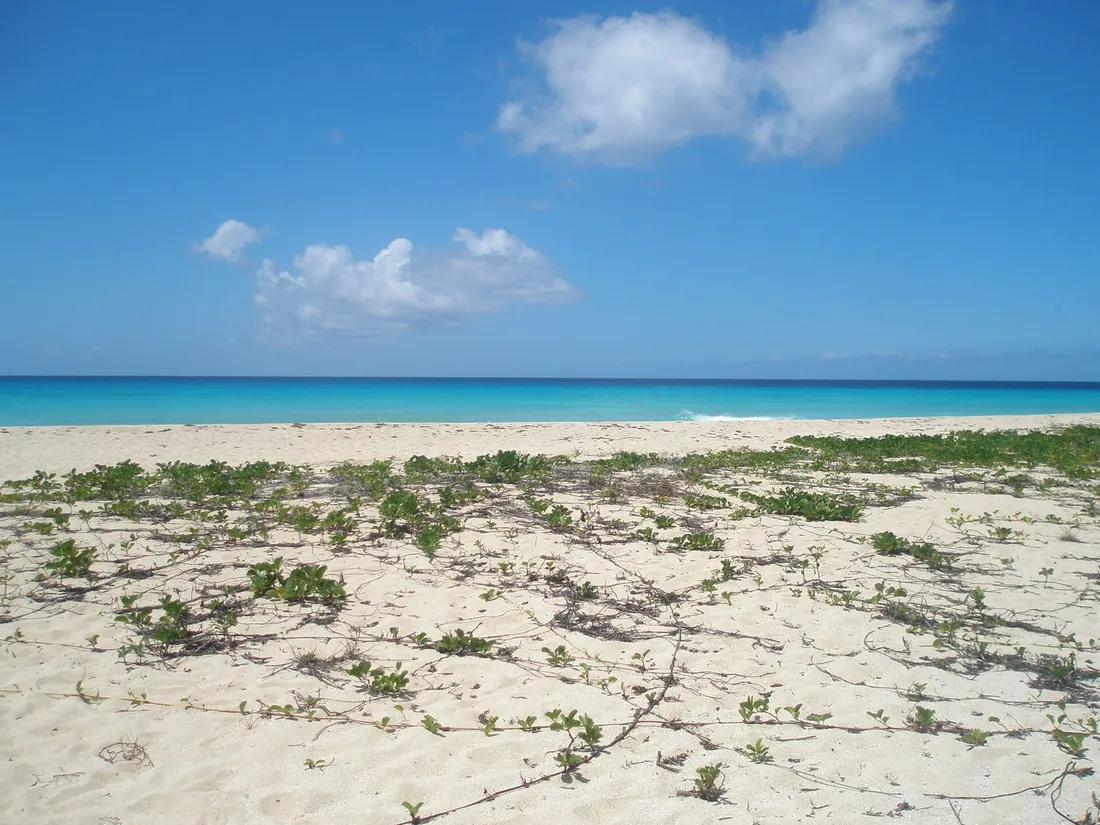
St. Croix vs Turks and Caicos
Grace Bay is the beach the whole industry measures itself against — with prices to match and a customs hall on both ends. The comparison is closer than the rankings suggest.
Turks and Caicos is the reigning beauty queen of Caribbean beach rankings: Grace Bay's long sweep of powder regularly top the world lists, the water over the Caicos Banks is as pale and clear as water gets, and the destination has priced itself accordingly — it is one of the most expensive trips in the region. It also carries a U.S. State Department Level 2 advisory, an unusual warning about ammunition arrests, and a passport line in both directions. St. Croix competes on different ground: breadth, value, and the fact that it is simply part of the United States.
The two, side by side
| St. Croix | Turks & Caicos | |
|---|---|---|
| Passport for U.S. citizens | Not needed | Required |
| U.S. State Department advisory | None — it is the United States | Level 2: Exercise Increased Caution (crime) |
| A warning unique to this trip | — | Strict firearms law: Americans detained over stray ammunition in bags |
| Famous beach | Sandy Point's two undeveloped miles; a dozen others | Grace Bay, routinely ranked among the top beaches anywhere |
| Crowds on that beach | Often a few dozen people on two miles | Resort row runs its full length |
| Prices | Villas and meals priced for an island economy | Among the Caribbean's most expensive destinations |
| Diving | Cane Bay Wall and Frederiksted Pier from shore | Superb wall diving — by boat |
| Beyond the beach | Two historic towns, rum, rainforest, bio bay, golf | Thin: the beach and the water are the product |
| Coming home | Agriculture check; $1,600 duty-free | U.S. customs and immigration; $800 duty-free |
| Currency | U.S. dollar | U.S. dollar |
Advisory levels and details are as published by the U.S. Department of State and checked August 2026. They change — read the current advisory at travel.state.gov before any international trip.
The short answer
If the assignment is one flawless beach with a five-star resort behind it and money is no object, Turks and Caicos executes that assignment as well as anywhere on earth. If the assignment is a week — beaches plural, a reef you can walk into, towns with history, rum made on the island, a villa with a pool that does not cost resort-row money, and no passports for a family of five — St. Croix wins the week and refunds the difference. We manage our own homes on St. Croix; hold that against us and check every line below.
What the rankings measure, and what they skip
Grace Bay earns its trophies: a long protected sweep of white calcium-carbonate sand behind a barrier reef, no seaweed most of the year, no surf most days, water so pale it reads as light rather than liquid. Nobody should argue with the photograph. The rankings measure the sand; they do not measure the context. Grace Bay's full length is fronted by resort row — the beach is the amenity of forty properties, and in season their guests are all on it. Provo beyond the beach is a flat, scrubby island of strip development whose restaurants and provisioning price at luxury-import levels; the running joke among repeat visitors is that the beach is free and everything else costs double.
St. Croix's sand comes from the same carbonate chemistry — that identical pale-turquoise optics — spread across an 84-square-mile island with almost nobody on it. Sandy Point National Wildlife Refuge is two miles of undeveloped white sand, the largest leatherback nesting beach under U.S. jurisdiction, open weekends September through March; a winter Saturday there shares those two miles with a few dozen people and zero buildings. Cane Bay, Rainbow, The Shoys (our Shoy's Beach House fronts it), hike-in Jack's and Isaac's Bays, Chenay's family shallows — a different beach every day, none of them an amenity of anything. The roster: the best beaches.
What the State Department says
As of August 2026 the U.S. State Department places the Turks and Caicos Islands at Level 2 — Exercise Increased Caution — citing crime, with most incidents on Providenciales, the island visitors actually stay on. The same advisory carries a warning that has produced real headlines: the territory enforces strict firearms and ammunition laws, and American travelers have been arrested and detained — some held for weeks — over stray rounds found in luggage, including forgotten range ammunition in a backpack pocket. The State Department tells travelers to search their own bags before flying. That is an unusual sentence to need before a beach vacation.
St. Croix has no State Department advisory, because the State Department does not advise Americans about America. Common-sense guidance still applies anywhere — ours is written at safety and common sense — but there is no level, no bulletin, and no scenario where a forgotten bullet becomes a foreign legal odyssey. Advisories change in both directions; check travel.state.gov before any foreign trip.
Getting there and getting home
Provo's airlift is good — about a three-hour nonstop from the East Coast — and this page will not pretend otherwise. The difference sits at the ends: a passport for every traveler including infants, an immigration queue on arrival that stacks up badly when flights bunch, and U.S. customs and immigration on the way home with the standard $800 duty-free allowance.
St. Croix matches the flight math — Miami nonstop in about three hours daily on American, Charlotte daily from December 17, 2026, Atlanta near-daily from December 19, Newark Saturdays from October 31, 2026, Chicago winter Saturdays, plus the 50-minute San Juan hop — and deletes the formalities: driver's license, no immigration queue, no customs hall home (an agriculture bag check only), and a $1,600 per-person duty-free allowance, double the standard, with CBP's five-liter rum rule on top. Verified August 2026:
| Airline | From | Schedule (as published Aug 2026) | Flight time |
|---|---|---|---|
| American Airlines | Miami (MIA) | Year-round, one to three flights daily by season | about 3 hours |
| American Airlines | Charlotte (CLT) | Paused until Saturdays return November 7; daily beginning December 17, 2026 | about 3¾ hours |
| American Airlines | Chicago O'Hare (ORD) | Winter Saturdays beginning December 5, 2026 | about 4¾ hours |
| Delta Air Lines | Atlanta (ATL) | Saturdays through September 5; Saturdays again from November 14; daily except Mondays beginning December 19, 2026 | about 4 hours |
| United Airlines | Newark (EWR) | Saturday nonstops beginning October 31, 2026 | about 4½ hours |
The water
Turks and Caicos diving is excellent: the wall off Grand Turk and West Caicos drops into deep blue, and the reef system fringing the banks is among the region's larger ones. All of it is boat diving, on charter schedules, at Provo charter prices — and the famous sites involve runs of forty minutes to a day-trip.
St. Croix's headline dives are walk-ins. The Cane Bay Wall starts about a hundred yards off the sand and falls toward depths measured in thousands of feet; you wade in past snorkelers. The Frederiksted Pier is one of the Caribbean's known macro dives — seahorses, frogfish, octopus — and its classic night dive. Buck Island Reef National Monument, a no-take reserve since 1961, adds a marked underwater snorkel trail behind an elkhorn barrier reef, by licensed boat from the Christiansted boardwalk. A dive week here never waits on a boat. See diving St. Croix.
Beyond the beach: the category Provo forfeits
Turks and Caicos is candid about what it is: the beach and the water are the product, and the islands' land attractions run to a conch farm, some colonial remnants on Grand Turk (a separate hop), and shopping plazas. Rain on Provo is a day of resort restaurants.
Rain on St. Croix is a choice of centuries. Christiansted National Historic Site keeps five Danish colonial buildings around the harbor; Frederiksted's Fort Frederik is where emancipation was proclaimed in 1848; Alexander Hamilton's boyhood ran through Company Street. The Cruzan distillery has poured at Estate Diamond since 1760; Captain Morgan's visitor center and the world's first breadfruit vodka round out a distillery trail. Add the west-end rainforest, the Annaly Bay tide pools, a year-round bioluminescent bay at Salt River, Robert Trent Jones Sr.'s Carambola course, and Point Udall's first-in-America sunrise, and the island simply holds more days than a beach-only destination can. Start at things to do.
What a week costs
Turks and Caicos is, by broad agreement of the travel trade, one of the two or three most expensive destinations in the Caribbean: resort rates that start where other islands' suites stop, villa inventory priced to match, imported-everything menus, and charter fees on every excursion. People pay it for Grace Bay, knowingly, and that is fair.
St. Croix runs an island economy with a U.S. supply chain: direct-booked villas with pools that undercut Provo's inventory on matching dates by a margin you will notice, real supermarkets for provisioning, free beaches, shore diving with no charter line-item, and attractions priced in single digits. We do not print nightly rates — seasons move them — but the direction of the gap is stable and wide. Run your dates, then look at the homes.
Month by month on the two islands
Both sit in the same dry-side Atlantic belt — TCI runs slightly drier and breezier, one of the region's sunniest climates, and this page credits it. The calendars diverge on money and people. Provo's high season (Thanksgiving through Easter) is when its luxury market flexes hardest: minimum-stay rules at the resorts, villa rates that double, dinner books that close — and Grace Bay carrying every guest on the island at once. Summer softens prices without emptying the beach, and late summer through fall is the quiet window inside hurricane season, with the standard advice everywhere: insurance, flexible bookings. St. Croix's high season fills homes without filling sand — Sandy Point on a February Saturday is still a private-feeling two miles — and its green months discount an island that never needed minimum-stay rules in the first place. Months in detail: when to visit.
The travel day, hour by hour
Provo's flight math is excellent — three-ish hours from the East Coast — so the day is decided at the edges. Arrival: a passport line that moves fine at 11 a.m. and badly at 3 p.m., when the American, JetBlue, Delta and United banks land on top of each other and the hall backs up an hour or more, a pattern the territory's own tourism press covers every season. Then the resort shuttle or rental (driving is on the left in TCI too, which surprises people) and check-in by late afternoon. Departure day reverses it with an airport whose seating and services strain at peak — regulars budget extra and eat first. Home means U.S. immigration and customs at the $800 allowance.
The St. Croix day, same three-hour flight: a domestic gate, no immigration hall at either end, rental counter to villa in under forty minutes, groceries on the way. The return is an agriculture bag-check and a boarding pass, $1,600 allowance in hand. When the flights tie, the halls decide — and only one trip has halls.
Seven days on each
The Provo week is a resort week with excursions: Grace Bay mornings, a half-day boat to the cays (iguanas at Little Water Cay, conch at the bar), a snorkel run to the reef, maybe the Thursday fish fry — the destination's one organized dose of local culture — and dinners across resort row. Lovely, and the itinerary's edges show by Thursday, which the destination itself would not dispute: the beach is the product.
The St. Croix week fills all seven differently: Buck Island's snorkel trail Monday; Cane Bay Tuesday, wall and beach bar; Christiansted's fort, arcades and boardwalk Wednesday; Point Udall sunrise, the Jack's and Isaac's hike and The Shoys Thursday; Frederiksted's fort and pier and Rainbow's sunset Friday; rainforest, Cruzan and the Domino Club Saturday; the bio bay one dark evening; Sunday at whichever beach won the week. One destination is a beach with services; the other is an island with beaches. Plans: the 7-day itinerary.
Getting around once you land
Providenciales drives on the left (surprising arrivals annually) through a flat grid of roundabouts connecting resort row to the plazas; rentals are easy and insurance-upsold, taxis run per-person rates that make a family's dinner run a line item, and there is no transit to speak of. The island beyond Grace Bay is scrubland and building sites — drives exist (Chalk Sound's photogenic blue, the Long Bay kiteboard beach) and run out quickly. The sister islands — Grand Turk's colonial rows, Middle Caicos's caves — are ferries and puddle jumpers away, rarely taken.
St. Croix's left-side roads connect an island that does not run out: two towns, a dozen beaches, the rainforest, the distillery belt, the East End — a week of different drives (the loop) with free parking at all of it. See driving on the left.
Before you book either island
For Turks and Caicos: search every bag for stray ammunition before flying — the State Department's own instruction, born of real detentions; book high-season lodging months out and read the minimum-stay rules; price the true week (villa or suite, per-person taxis, charter fees for every good snorkel, import-priced dining) rather than the rate card; and check your dates against the afternoon flight banks if immigration-hall patience is short. Passports for all, including infants.
For St. Croix: book the villa direct (the homes), reserve the car, calendar Buck Island and the bio bay ahead in peak weeks. No bag search required beyond TSA's, and the ammunition instruction has no St. Croix equivalent to write.
The case for St. Croix, point by point
One: no advisory against Level 2 with the region's strangest warning — vacationers detained over forgotten range rounds. Two: no passport — and $1,600 of allowance against $800. Three: an island economy's prices against the Caribbean's steepest resort market. Four: a dozen empty beaches against one perfect crowded one — Grace Bay's trophy conceded and contextualized. Five: walk-in wall diving against boat-fee wall diving. Six: a week of non-beach days — towns, rum, rainforest, bio bay — against a destination that is candidly beach-only. Seven: supermarket provisioning against import-priced plazas. Eight: villa-with-kitchen economics against per-person everything. Nine: history — Columbus, Denmark, Hamilton, emancipation — against a conch farm. Ten: the same carbonate-shelf turquoise, no rankings required. A top-ranked beach is a fine thing to have seen; a whole island is a better thing to have had.
Who should pick which island
Pick Turks and Caicos if: the trip is built around one photograph of one beach and the budget is open-ended; a five-star resort's service is the vacation; the West Caicos wall or the Caicos Banks flats are specialist draws; or a short, high-gloss honeymoon needs maximum sand-per-hour. Pick St. Croix if: a week needs seven different days; the group wants a villa and a car rather than a suite and a shuttle; divers and snorkelers want the water without charter scheduling; the family includes anyone whose passport is expired (a real Thanksgiving-week discovery every year); or the same money should buy twice the trip. The rankings measure sand grains; weeks are measured in days.
When Turks and Caicos is the right call
The honeymoon where one beach photograph carries the whole brief. The five-star resort buyout, kids' club included, where budget is no constraint at all. Divers with the wall off West Caicos on a list. Bonefishermen headed to the flats of the Caicos Banks. In those frames, Provo delivers exactly what it advertises, and it should be booked without guilt — with a passport for every member of the family, bags searched for stray rounds, and the advisory read before departure.
A rainy day on each island
Provo's rainy day is the destination's candor made visible: the resort spa, the plaza shops, the conch farm's brief tour, and the sky watched from a daybed — the beach island waiting for its beach back. St. Croix's wet-day circuit runs on contents: Fort Christiansvaern's vaults, the Whim estate museum, the Apothecary Hall, Frederiksted's arts center, and the distillery trail from Cruzan to Sion Farm. Grace Bay in the rain is a postponed appointment; Christiansted in the rain is an afternoon.
If you choose Turks and Caicos anyway
Then buy the beach properly. Book Grace Bay's central stretch for the postcard or Long Bay for kiteboarding calm; reserve high-season everything months out and read the minimum-stay rules before falling in love. Search every bag for stray ammunition before both flights — the advisory's own instruction, and the detentions are real. Do the cays excursion (iguanas, conch, sandbars) once; snorkel Smith's Reef and Bight Reef from shore for free before paying for boat trips; and time the immigration hall by booking morning arrivals when the banks are thin. Eat off resort row at least twice — the island's independent kitchens outcook the compounds. Convert the week's true total early; TCI's tier is a considered purchase, and considering it is what this series is for.
Where you would stay on St. Croix
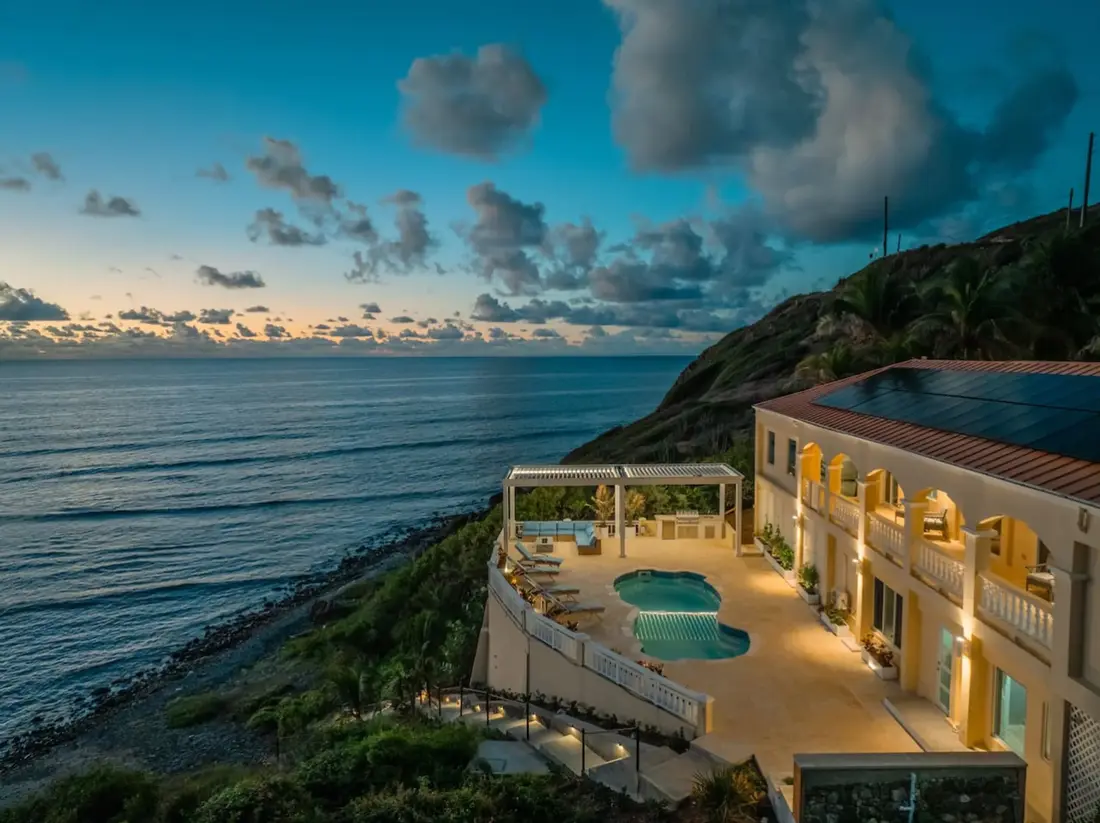
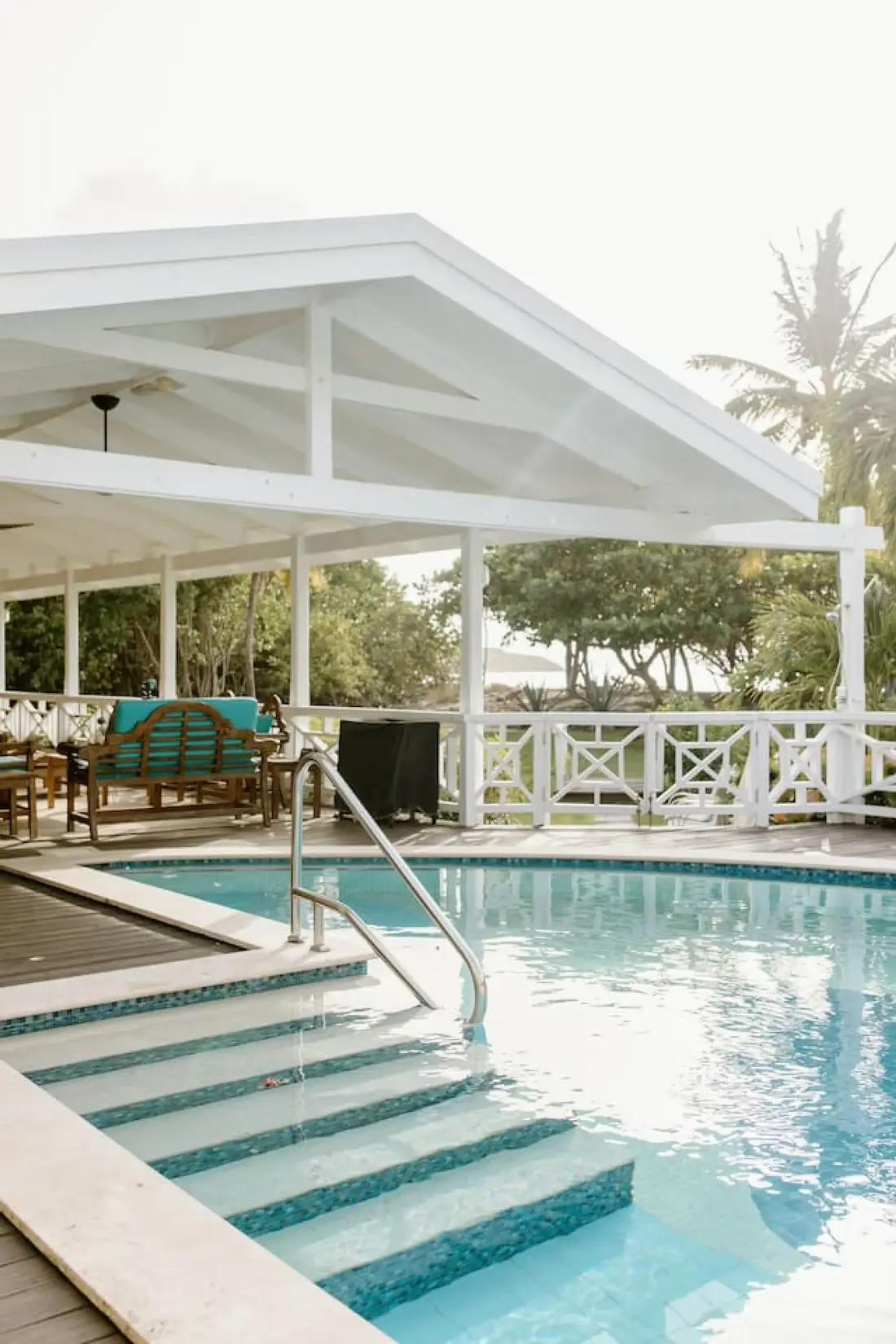
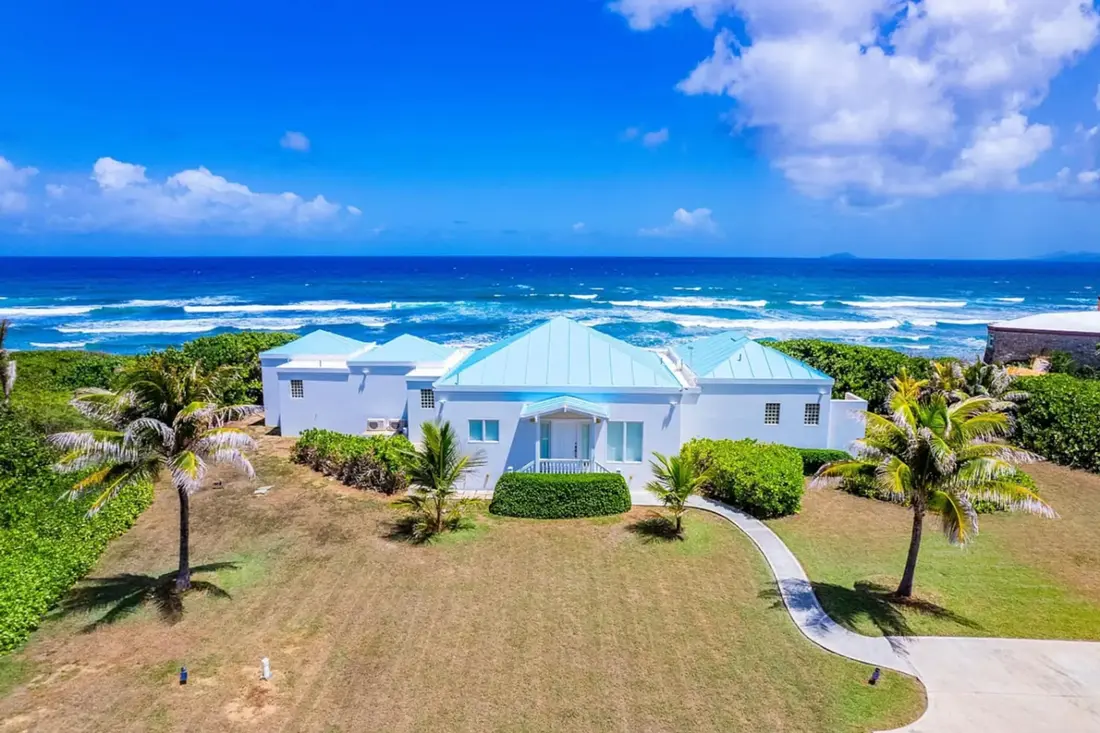
The whole-island alternative: our direct-booked homes with Sterling Point managing on-island. Shoy's Beach House owns its Grace-Bay-grade sand outright on The Shoys; East End villas (The Cerulean among them) face Buck Island's monument water from private pools; Christiansted condos walk to the boardwalk; west-end sunset stays. Full kitchens, supermarket provisioning, free beaches on every exposure and shore-entry reef — the charter-fee line deleted from the week. Couples: homes for two; groups to twelve: the family collection. The roster: the homes.
How this page was made
Series rules: the Level 2 advisory and its firearms-and-ammunition warnings per the State Department's published text, checked August 2026 — current version at travel.state.gov; the detention cases per U.S. press record; Grace Bay's rankings per the industry lists that issue them; price positioning per travel-trade documentation, stated as patterns. TCI's crown — the sand, the banks' water, the polish — is conceded in the first section. Our bias: the homes we manage on St. Croix, disclosed throughout this series. The carbonate chemistry is the same on both islands; the crowd counts are not, and both are photographable.
The bottom line
Turks and Caicos is a single spectacular beach operating at the top of the market, wrapped in a Level 2 advisory, a passport line and the region's steepest prices. St. Croix is the same carbonate-shelf turquoise across a whole quiet American island: more beaches, more days, walk-in diving, real towns, half the friction, and meaningful savings — with no advisory at all. The rankings crown Grace Bay; the arithmetic crowns the island you do not need a passport for. The homes are here.
Elsewhere in this series
This page is one of twenty-six. If you are still shopping the map, the verdicts nearest this comparison run as follows — each links to the full page with its own sources:
St. Croix vs the British Virgin Islands — The BVI are the Caribbean's sailing capital — reached by passport, puddle jumper and ferry. St. Croix flies you straight in, no passport at all.
St. Croix vs Anguilla — Anguilla perfected the quiet expensive beach. St. Croix does the quiet beach without the relay flight, the passport or the markup.
St. Croix vs St. Barts — St. Barts is a scene with a beach attached, priced accordingly. St. Croix is an island priced like one — no passport, no puddle jumper.
The complete set, grouped by region and passport rules, lives at St. Croix vs other destinations.
Which home fits your group
If St. Croix wins your comparison, the homes are the easy part. Groups of eight to twelve settle into the family collection; couples take a home for two; anyone who wants sand at the door starts with beachfront. Every one is managed from the island by Sterling Point and booked direct — tell us the dates and the headcount and we will point you at the one that fits.
Two practical notes that surprise first-time villa bookers. Direct booking means the rate is the rate: no platform service fees, no resort fees, and the people answering questions are the same Sterling Point team that manages the houses on the island. And every home runs a full kitchen — one run to Plaza Extra or Seaside Market on the drive from the airport covers the week, which is where a villa quietly beats a resort bill before the first beach day. How the booking works, and what it does not mean, is spelled out at book direct.
Who wrote this
SP Vacations is the vacation-rental division of Sterling Point Real Estate, a licensed real-estate operation based on St. Croix in the U.S. Virgin Islands. The team lives and works on the island it writes about: the homes in the villa collection are inspected, cleaned and managed locally, and the person who answers a booking question is on St. Croix, not in a call center three time zones away. That is the vantage point behind every page in this series — and the reason the series exists at all, since most of the destinations compared here are places our guests weighed before choosing this island.
Two standing practices shape what you read. First, the pricing wall: nightly rates and availability for the homes live only on the booking pages, never in articles, so nothing here goes stale or oversells. Second, the sourcing rule: safety statements cite the U.S. State Department, customs figures cite CBP, park facts cite the National Park Service, and anything that changes — advisories, schedules, hours — carries its checked date and a pointer to the primary source. Where a rival destination wins a category, the page says so, because a comparison that concedes nothing persuades nobody. Questions, dates or a villa to match a group — the island team is here, or call 340-205-3929.
Questions people ask
What are Smith's Reef and Bight Reef?
Provo's two free shore-snorkel spots, marked with underwater trails off the Grace Bay side — the island's best no-charter water and a genuine credit to it. St. Croix scales the same idea island-wide: Cane Bay's shelf, the pier's pilings and Buck Island's federal trail, with a true wall for the divers.
Is Grand Turk worth visiting from Provo?
It is a separate hop — a small colonial-era island with wall diving and a cruise pier — that most Provo visitors never make. St. Croix keeps its history on the same island as its beaches: two Danish towns, an emancipation fort and Columbus's landfall, ten to forty minutes from every villa.
Do Turks and Caicos resorts have minimum stays?
In high season, commonly — five-to-seven-night minimums appear across Grace Bay's premium inventory and holiday weeks book out months ahead. St. Croix's villas ask no such terms outside peak holiday weeks, and the island itself never sells out.
What currency does Turks and Caicos use?
The U.S. dollar — one friction the territory spares you. The passport, the immigration halls, the $800 allowance and the resort-market prices remain; St. Croix keeps the dollar and deletes the rest.
Is Long Bay good for beginners at kiteboarding?
Among the best anywhere — miles of waist-deep, steady-wind flats with schools to match; if kiting is the trip, TCI earns it. St. Croix's wind sports run casual by comparison; its water specialty is what lies under the surface, from the wall to the trail.
Is Turks and Caicos safe right now?
The U.S. State Department lists Turks and Caicos at Level 2 — Exercise Increased Caution — citing crime, mostly on Providenciales, as of August 2026. It also warns that strict local firearms laws have led to Americans being detained over stray ammunition in luggage. Advisories change; read the current one at travel.state.gov. St. Croix, as U.S. territory, carries no advisory.
Is Grace Bay better than St. Croix's beaches?
Grace Bay is a world-ranking beach and this page says so. It is also fronted end to end by resort row. St. Croix's sand shares the same white-carbonate chemistry with a fraction of the people: Sandy Point alone offers two undeveloped miles on winter weekends. One trophy beach versus a quiet island full of them.
Do I need a passport for Turks and Caicos?
Yes, for every traveler including children, plus immigration on arrival and U.S. customs on return with the standard $800 allowance. St. Croix requires no passport for U.S. citizens and allows $1,600 per person home under CBP's insular-possession rules.
Which is more expensive?
Turks and Caicos, decisively — it ranks among the Caribbean's priciest destinations for lodging, dining and excursions. St. Croix's direct-booked villas, supermarket provisioning and free shore-access reef make the same week meaningfully cheaper. Compare matching dates and the gap is immediate.
Which has better diving?
Both are strong. Turks and Caicos offers superb boat-based wall diving. St. Croix's Cane Bay Wall and Frederiksted Pier are shore entries — no boat, no schedule — plus Buck Island's protected snorkel trail. For ease and cost per dive, St. Croix; for the West Caicos wall specifically, TCI.
What is there to do in Turks and Caicos besides the beach?
Candidly little — the destination itself markets the beach and the water. St. Croix counters with two Danish colonial towns, three distilleries, a rainforest, a year-round bioluminescent bay, tide pools, golf and Point Udall — a full week beyond the sand.
When is high season in Turks and Caicos?
Thanksgiving through Easter, when minimum-stay rules appear, villa rates double and Grace Bay carries every guest at once. St. Croix's matching high season (December–April) fills villas without filling beaches — Sandy Point stays near-empty even in February.
Are the airport lines bad in Providenciales?
At peak banks, yes — when the afternoon U.S. flights land together the immigration hall routinely backs up an hour-plus, and the departure terminal strains in season, a pattern covered annually in the territory's own press. St. Croix has no immigration hall in either direction.
Does Turks and Caicos drive on the left too?
Yes — like St. Croix, a surprise to many arrivals. The difference is what you drive to: Provo's grid of resort roads and plazas versus St. Croix's rainforest road, two historic towns and a dozen beaches. See driving on the left.
How do the flights compare?
Both are roughly three hours nonstop from Florida and well-served from the East Coast. The difference is at the ends: TCI adds passport control both ways; St. Croix is a domestic arrival with an agriculture check on the way home. See getting here.
In this comparison
St. Croix at a glance
- U.S. territory — no passport for U.S. citizens
- Nonstops from Miami, Fort Lauderdale, Charlotte, Atlanta, Newark and Chicago
- U.S. dollars, U.S. phone plans, no foreign customs
- $1,600 duty-free allowance home (double the standard $800)
- 84 square miles — the largest U.S. Virgin Island
More comparisons
- St. Croix vs St. Thomas
- St. Croix vs St. John
- St. Croix vs Puerto Rico
- St. Croix vs Vieques & Culebra
- St. Croix vs the Florida Keys
- St. Croix vs Hawaii
- St. Croix vs the British Virgin Islands
- St. Croix vs Anguilla
- St. Croix vs St. Barts
- St. Croix vs St. Martin
- St. Croix vs Antigua
- St. Croix vs St. Kitts & Nevis
- St. Croix vs St. Lucia
- St. Croix vs Barbados
Sources
Advisory level, crime notes and ammunition warnings per the U.S. State Department's Turks and Caicos advisory, checked August 2026; detention cases as widely reported in U.S. press. Price positioning per travel-trade coverage, stated as a pattern. St. Croix facts from NPS, USFWS, CBP and our sourced island reference. Flights verified August 2026.
St. Croix vs Turks and Caicos
Turks and Caicos sells one famous beach at luxury-resort prices. St. Croix sells a whole island for less — no passport, no Level 2 advisory.