
St. Croix from Raleigh–Durham
Real routing, realistic connection times and which home fits: Raleigh–Durham to St. Croix, verified August 2026.
Raleigh-Durham is milder than most winter-escape cities, with January highs near 50°F, but St. Croix still runs 30-plus degrees warmer at around 83°F over 79°F water — and the Triangle happens to sit one short hop from the best gateway on the map. A quick flight to Charlotte connects to American's daily St. Croix nonstop, and because the island is a U.S. territory you make the trip with no passport, U.S. dollars, and your own phone plan. From RDU, a warm-water beach is a same-morning idea.
The fastest way from Raleigh–Durham
Raleigh-Durham (RDU) has no nonstop to St. Croix, but it has the next best thing: a very short hop to Charlotte (CLT), where American's St. Croix nonstop goes daily starting December 17, 2026. The RDU-CLT leg is one of the quickest connections in the region — well under an hour in the air — and the Charlotte-to-STX leg is about three and three-quarter hours. Charlotte is the natural gateway here because it is a major American hub close to home, with lots of daily RDU-CLT frequency and a single St. Croix nonstop waiting at the other end. You keep the whole trip on one American ticket, one bag check, and one airline handling any hiccups.
If Charlotte does not fit your date, the other clean option is American through Miami (MIA), the busiest St. Croix route on the map, with year-round service and a final leg of about three hours. That routing is a longer day than the Charlotte hop but gives you more frequency and flexibility. Delta through Atlanta is a third one-stop, on a different airline, useful if the fares or times work better for you. For most Triangle travelers, though, the short jump to Charlotte and the daily nonstop from there is the one to price first.
Count the door-to-door day, which is short by Caribbean standards. On a well-timed Charlotte connection, plan roughly eight to ten hours from your Triangle driveway to a villa key: the short drive to RDU, bag drop and security at a compact terminal, the quick hop to Charlotte, a layover long enough to eat, the three-and-three-quarter-hour island leg, and the 15-to-40-minute drive from Rohlsen. Because the first leg is so brief, give the Charlotte connection a little breathing room rather than the tightest gap; a short hop that runs a few minutes late should not threaten your island flight.
Think about the return before you book. Coming home, St. Croix is one hour ahead of the Triangle in winter, so a mid-morning departure from STX with a Charlotte connection lands you back at RDU in the evening. St. Croix is a U.S. port of entry, so there is no customs returning to the mainland — you simply re-check for the short final hop at Charlotte. Give the homeward Charlotte connection a comfortable buffer; after a week away, a tight gap between an island flight that ran a little late and the last short hop home is the one part of an otherwise easy trip worth over-planning.

Every route from Raleigh–Durham, compared
The options, best first. Times are door to door and rounded; days follow the published August 2026 schedules.
| Option | How it works | Days | Door to door |
|---|---|---|---|
| Via Charlotte — American | A very short RDU to Charlotte hop, then the CLT to STX nonstop (about 3¾ hours), which goes daily from Dec 17, 2026. | daily from Dec 17, 2026 | about 8–10h door-to-door |
| Via Miami — American | RDU to Miami, then MIA to STX (about 3h) on the most frequent St. Croix route, running year-round. | daily, year-round | about 9–11h door-to-door |
| Via Atlanta — Delta | RDU to Atlanta, then ATL to STX (about 4h); the island leg runs daily except Mondays from Dec 19, 2026. | daily exc. Mon from Dec 19, 2026 | about 9–11h door-to-door |
Which airport to fly from
Raleigh-Durham (RDU) is a mid-size, easy airport that serves the whole Triangle — Raleigh, Durham, Chapel Hill, and the Research Triangle Park — and its strength for St. Croix is location rather than a hub of its own. RDU has no nonstop to the island, but it sits a very short flight from Charlotte, American's big Carolinas hub, which is where the daily St. Croix nonstop lives. American, Delta, and United all fly from Terminal 2, and your Charlotte-bound hop leaves from the American gates there; Terminal 1 handles Southwest and Avelo, neither of which serves the island, so a St. Croix connection almost always starts in Terminal 2. Confirm on the monitors, though for this trip it is nearly always the American side of Terminal 2.
The ground game is refreshingly simple. RDU sits between Raleigh and Durham with fast highway access from both, so the drive in is short for most of the Triangle. Parking runs from the pricier close-in decks to the economy lots and the Park Economy shuttle lots that make more sense over a week away, plus the usual off-site options. The terminal is compact and quick to move through, with TSA PreCheck lanes that rarely back up the way a mega-hub's do — part of why RDU is a comfortable place to start a travel day. Past security, Terminal 2 has a decent spread of sit-down restaurants, coffee, and grab-and-go, plus an American Admirals Club if you have access; grab a bite here, since the short Charlotte hop has no meal service and you will want to be fed before the longer island leg. Winter here is mild, so de-icing delays are rare compared with the northern cities feeding the same hubs, which is one more reason the Triangle has an unusually easy path to St. Croix.
What the travel day feels like
The Raleigh-Durham travel day is one of the gentler ones on this list, and the short first leg is why. A quick hop to Charlotte, a manageable layover, and then the main flight south means you spend less of the day in transit than a traveler from Denver or Minneapolis would. The connection still deserves a little care: because the RDU-CLT leg is so brief, a small delay can pressure a tight Charlotte gap, so a comfortable 60-to-90-minute layover is the sweet spot — long enough to walk to your island gate and grab lunch, short enough that you are not killing an afternoon in the terminal. With the whole trip on one American ticket, a rare misconnect is the airline's to rebook, but a little buffer keeps the day smooth and stress-free.
Then the descent, which is a treat on a route this easy. The final leg comes into St. Croix over open Caribbean water, and on a clear afternoon the reef and the turquoise shallows off the north and east show up before the runway does; which window gets the best of it depends on the day's runway direction, so it is luck rather than something you can book. Rohlsen's single runway is a full 10,002 feet, rated for aircraft up to a 747, so the touchdown is smooth. The first thirty minutes on island are the easy reward for a short day: you step off into warm, salt-heavy air, cross to a small and calm terminal, and because you never left the United States there is no passport line and nothing to declare. Bags out, a rental car a few steps away, and within half an hour you are driving toward Christiansted 15 to 20 minutes east, windows down, with the light still high. The road rolls past green hills and the water flashing between the trees, and you stop for groceries at Plaza Extra or Seaside Market with plenty of afternoon left. Because the day is so short, you often reach the house with time for a first swim before dinner rather than collapsing into it. From a mild Carolina morning to a warm island afternoon, the whole thing unwinds so quickly it barely feels like a travel day.

Your travel day from Raleigh–Durham, hour by hour
The Triangle's easiest route is a short hop to Charlotte and American's daily St. Croix nonstop, which goes daily from December 17, 2026. Here is how a smooth day runs. St. Croix keeps Atlantic Standard Time all year, so in winter it is one hour ahead of the Triangle — a small, easy shift.
- 7:15 a.m. EST — Leave for RDU. From Raleigh, Durham, Chapel Hill, or the Research Triangle Park the drive is short and the highways are quick.
- 7:50 a.m. — Bag drop and security at Terminal 2, where American, Delta, and United fly; the terminal is compact and PreCheck moves fast.
- 8:25 a.m. — Coffee near the American gates; there is not much waiting to do at an airport this easy to move through.
- 8:55 a.m. — Board the short RDU to Charlotte hop, well under an hour in the air.
- 10:00 a.m. EST — On the ground at Charlotte with a sensible layover; lunch on the concourse, not a sprint.
- 11:15 a.m. EST — Board the Charlotte to STX nonstop, about three and three-quarter hours over open water.
- ~4:00 p.m. AST — Descent over the reef and wheels down at Rohlsen; the clock is one hour ahead of home now.
- 4:35 p.m. AST — Car, a quick grocery stop, and the short drive to the house with plenty of daylight before sunset near 5:50.
Raleigh–Durham in winter vs a week on St. Croix
The Triangle is not a place of brutal winters — Raleigh-Durham averages around 50°F for the January high, with plenty of crisp, gray, and occasionally icy days, an early dusk, and the rare ice storm that shuts everything down for a day, but nothing like the deep cold up north. Still, St. Croix runs some 30-plus degrees warmer in the same week, near 83°F by day, with sea water around 79°F and roughly eleven hours of daylight, the sun up past 5:45 in the evening. Fifty-degree damp and eighty-three-degree sun are not close, and the water is the difference between admiring the ocean and actually swimming in it.
What the trip buys a Carolina traveler is reliable warmth and swimmable water in the middle of a season that gives you neither. A typical St. Croix week in January runs warm and breezy, with steady trade winds keeping the heat comfortable, quick passing showers that dry within the hour, and sea temperatures around 79°F that make a midday swim an easy call rather than a dare. January falls in the island's dry, breezy high season, so you are trading a chilly, changeable Triangle week for steady sun, warm sea, and evenings mild enough to eat outside. The days hold near 83°F through the afternoon, and all eleven hours of daylight are usable rather than gray and short. It is less an escape from bitter cold than a jump straight into summer, and from RDU it is close enough to make on a whim rather than plan around for months — a long weekend on the island is a reasonable idea from the Triangle.
Booking it: when to fly and when to buy
Raleigh-Durham's advantage is that Charlotte is right next door, but the pricing still turns on the St. Croix leg, not the short hop. American's daily CLT-STX nonstop feeds a small island, so it fills first over the December holidays and the February and March high weeks. Book those peaks early and keep an eye on the availability of the Charlotte-to-island leg, which is the part that gets tight, rather than just the fare on the quick first flight.
Read the year by month. The two Christmas-through-New-Year weeks are the hard peak; MLK weekend in January and Presidents week in February are the next tier and sell early because school breaks pile onto long weekends. The value windows are the first weeks of December before the holidays and the back half of April into May, when the island stays warm and dry but mainland demand has eased. Compare the Charlotte routing against the Miami one-stop when Charlotte looks expensive on your dates, since Miami's greater frequency can occasionally beat it. Price the full itinerary rather than the RDU-CLT hop alone, so a cheap first leg with a bad layover does not undo the time savings that make Charlotte attractive in the first place. Set a fare alert once your dates are firm.
Two practical notes. Because the first leg is so short, a carry-on that fits the overhead keeps you nimble through the Charlotte connection and off the plane fast at the other end; a checked bag is fine here too, given the generous single-airline routing, but a tight connection favors traveling light. And for the approach view, the reef looks best from whichever side of the plane faces the water on the day's runway heading, so do not pay extra for a specific seat — take the window you like and enjoy whatever the landing gives you.

Making the connection easy
The Raleigh-Durham connection is usually the easiest kind, but the short first leg is exactly why you should not book the tightest possible layover. The floor at Charlotte is about 45 to 60 minutes, but a quick RDU-CLT hop that runs a few minutes late can still threaten a tight gap, so give yourself a comfortable 60 to 90 minutes and enjoy the fact that Charlotte is a straightforward hub to move through. With the whole trip on one American ticket, a rare missed connection is the airline's problem to rebook, not yours to scramble, but a little cushion means you never have to test that.
If you would rather make the change of planes part of the fun, Miami is the natural place to build in a night: fly RDU to Miami one afternoon, stay over near the airport or in South Beach, and take a relaxed morning flight down to STX. San Juan (SJU) works the same way on the Caribbean side, about fifty minutes from the island with many daily hops, so an overnight there stages you for a quick morning arrival and a full first day on the beach. Neither is necessary on a route this short and easy, but either turns a quick trip into an unhurried one, and both are pleasant places to spend an evening if your schedule has the room.
No passport, no foreign country
St. Croix is part of the U.S. Virgin Islands, a U.S. territory. U.S. citizens fly on a domestic ID, spend U.S. dollars, keep their own phone plans and clear no foreign customs in either direction. Henry E. Rohlsen (STX) is a U.S. port of entry with CBP on the field, so arriving feels like any other domestic flight. Full detail is on getting to St. Croix.
When you land at St. Croix
Rent a car at the airport (drive on the left), and it is a short run to the house: Christiansted is about 15 to 20 minutes east, the East End 30 to 40, Frederiksted 10 to 15 minutes west. Stop at Seaside Market or Plaza Extra for the first night before you settle in. See renting a car on St. Croix.
Which home fits your group
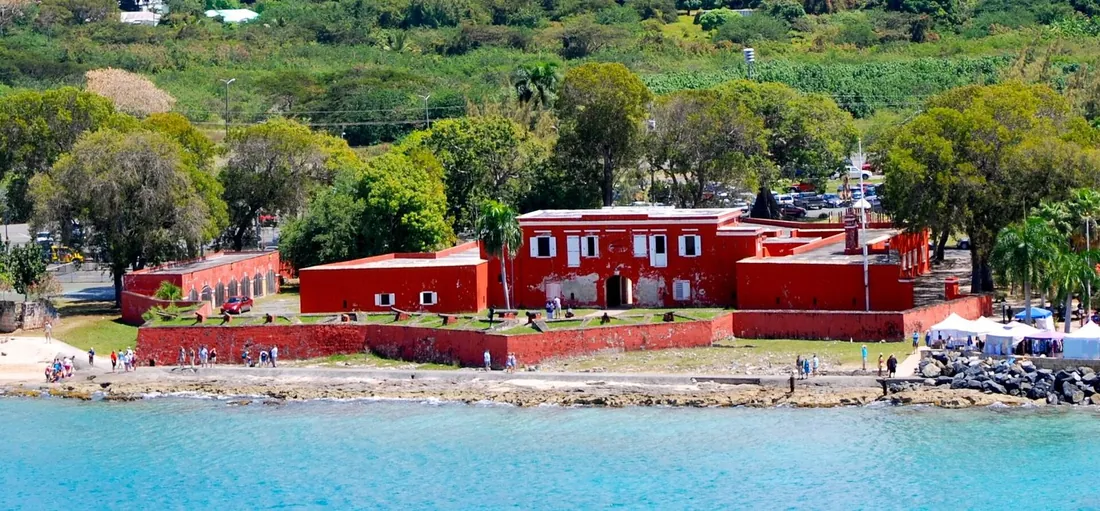
Groups of eight to twelve settle into the family collection; couples take a home for two; anyone who wants sand at the door starts with beachfront. Tell us the dates and the headcount and we will suggest the one that fits.
Questions people ask about flying from Raleigh–Durham
Is there a nonstop from Raleigh-Durham to St. Croix?
What is the fastest way from RDU?
Do I need a passport to fly from RDU to St. Croix?
Which terminal at RDU do I use?
Should I worry about a tight Charlotte connection?
What is the best month to go?
Is it faster to connect in Charlotte or Miami?
Can I fly with kids and car seats?
Do I need a passport to fly from Raleigh–Durham to St. Croix?
Is St. Croix the same island as St. Thomas?
What time will I actually land on St. Croix?
Do I need to rent a car on St. Croix?
In this guide
Raleigh–Durham at a glance
- One stop
- Best via Miami, Charlotte, Atlanta or Newark
- Airports: RDU (Raleigh-Durham) — short hop to Charlotte, then the daily STX nonstop, Also one-stop on American via Miami, or Delta via Atlanta, Destination: STX, Henry E. Rohlsen — U.S. port of entry, no passport
- Destination: STX, Henry E. Rohlsen