

St. Croix from Washington, D.C.
Real routing, realistic connection times and which home fits: Washington, D.C. to St. Croix, verified August 2026.
Washington gives you three airports and, through them, three easy roads to St. Croix. January in the District averages about 43°F, milder than New England but still coat weather with short days. St. Croix sits a single connection away, and because it is a U.S. territory you fly there with no passport, spend U.S. dollars, keep your own phone plan, and clear nothing on the way home. A morning out of D.C. can have you swimming in 79°F water by mid-afternoon.
The fastest way from Washington, D.C.
Washington has no nonstop to St. Croix, but it has an unusually good spread of connecting options because of its three airports. The quickest reliable path is a single connection on American through Charlotte (CLT) or Miami (MIA), or on Delta through Atlanta (ATL), each of which feeds a nonstop final leg into STX, about three hours from Miami and near four from Charlotte or Atlanta. Take an early departure from whichever airport fits, hold your layover around 90 minutes, and you land at Rohlsen the same afternoon. Which local airport you leave from matters less than the hub you pick; National (DCA), Dulles (IAD), and Baltimore (BWI) all feed these routes, and among the hubs Miami gives the shortest final leg while Charlotte usually gives the most departure times.
The full day looks like this. Door to door, a clean D.C. one-stop runs about 9–11 hours: time at the airport, the first leg to the hub, a comfortable connection, the leg to the island, then the drive from Rohlsen, 15–20 minutes to Christiansted or 30–40 out to the East End. Leave around 8 a.m. and you are at the villa in the mid-to-late afternoon, because St. Croix keeps Atlantic Standard Time year-round and sits an hour ahead of Washington from about November through March. That extra hour on the clock is why an early departure lands you in daylight with the evening still in front of you. United flyers have a distinctive option: Dulles (IAD) is a United hub, and United can route you toward Newark (EWR), where on Saturdays from October 31, 2026, it flies a nonstop to St. Croix, turning the trip into a short hop to Newark plus one 4½-hour flight.
The return trip needs the same planning. Rohlsen is small, so 90 minutes early is usually plenty and the line moves fast. Coming home you lose an hour crossing from Atlantic to Eastern time, so a late-morning STX departure gets you back to a D.C. airport in the evening. Book the return connection with a comfortable Miami, Charlotte, or Atlanta layover rather than the tightest one, because a delayed island leg is the standard way people miss the flight home. If you want the villa and the flights lined up cleanly, our team plans these routes all winter.

Every route from Washington, D.C., compared
The options, best first. Times are door to door and rounded; days follow the published August 2026 schedules.
| Option | How it works | Days | Door to door |
|---|---|---|---|
| Via Charlotte — American | American connects any of the three D.C. airports through Charlotte to a nonstop STX leg of about 3¾ hours; winter frequency rises. | daily, year-round | about 9–11h door-to-door |
| Via Miami — American | American's Miami hub gives the shortest final leg, roughly three hours nonstop into St. Croix, on a dependable daily schedule. | daily, year-round | about 9–11h door-to-door |
| Via Atlanta — Delta | Delta routes through Atlanta to its own STX nonstop leg of about four hours; that island leg is Saturdays in season (next from Nov 14, 2026) and daily except Mondays from Dec 19, 2026. | check the Atlanta leg by date | about 10–12h door-to-door |
| Via Dulles/Newark then nonstop — United | United connects Dulles toward Newark, where a Saturday nonstop to STX runs from Oct 31, 2026. | Saturdays, from Oct 31, 2026 | about 9–11h door-to-door |
Which airport to fly from
Washington's three airports each pull their weight for this trip, so pick by carrier and convenience. National (DCA) is the easiest to reach from the city, right on the Metro, and a strong American and Delta airport, which makes it a fine launch point for one-stops through Charlotte, Miami, or Atlanta; its drawback is that some longer connections are thinner because of its perimeter and slot rules, so schedules can be tighter. American uses Terminal C (the newer concourse) and Delta the older piers, so know your gate. Dulles (IAD) is the United hub, and it is your airport if you want to route through Newark for the Saturday nonstop or simply prefer United; United's gates cluster in the main terminal and the mid-field concourses reached by the underground train, so leave time for that transfer, and note IAD is farther out with a longer drive or Silver Line ride.
Baltimore (BWI) rounds it out, strong on Southwest and often the cheapest of the three, and a reasonable choice if you live north of the city, though its best St. Croix connections still run through the same American and Delta hubs. On parking, BWI is the cheapest for a week, DCA the priciest and tightest, IAD in the middle with big economy lots and shuttles; that gap alone can tip a close decision. TSA PreCheck and CLEAR are at all three, and DCA's lines move fast outside the morning federal rush. Eat before your first leg, since a tight hub connection may not leave time, and all three have decent food and airline clubs airside. The short read: DCA for convenience and American or Delta, IAD for United and the Newark nonstop routing, BWI when it wins on price. Because all three sit within an hour or so of most of the metro, the smart move is to price the same trip across the group and let the fare, the schedule, and your own side of the Beltway decide, rather than defaulting to whichever airport is closest.
What the travel day feels like
A Washington travel day is a two-flight day, and its texture depends on the layover and the light. Leave early on American or Delta, keep the connection near 90 minutes, and the day moves along nicely: a short first leg to the hub, enough time to eat and stretch, then the final leg where the Atlantic opens up blue beneath the wing. The connection is the make-or-break moment. A roomy layover at Charlotte, Miami, or Atlanta lets you walk to the next gate, grab a coffee, and hit the restroom without a countdown, which matters because the St. Croix gate can be a train ride or a long concourse walk from where you land at those big hubs. A 40-minute connection means power-walking with your bag and gambling that the first leg was on time, a bad way to start a vacation, especially in a winter when a first leg can slip.
The clock works in your favor at the end. St. Croix stays on Atlantic Standard Time all year, so in winter it runs an hour ahead of D.C., and a morning departure lands you at Rohlsen in the early-to-mid afternoon island time, in full daylight. The descent is the payoff: the deep blue shades to pale green over the reef, the north shore and Buck Island come into view, and the plane banks in over the water toward the long runway. Then the first thirty minutes on island, identical no matter how you routed it. You step off the airstairs into warm, soft air, collect your bag in a small open-sided terminal where the fans turn slowly, and find the rental counters a few steps away. No passport check, nothing to clear, so you are quickly in the car with the windows down, on island roads with the whole evening still ahead. The drive out of Kingshill climbs through green hills and old sugar-mill country before the sea spreads out ahead, and after a two-flight day from the capital that first open view of the water is where the trip finally lands. Reach the villa, drop the bags, and step onto the porch into the trade wind, and the gray Beltway morning you started in feels a season away.

Your travel day from Washington, D.C., hour by hour
A realistic one-stop day from Washington, connecting on Delta through Atlanta out of Reagan National. Times are in local zones; St. Croix runs an hour ahead of D.C. in winter, so an early start lands you on the island with daylight to spare.
- 6:15 a.m. ET — Leave for Reagan National; Metro Blue or Yellow Line straight to the terminal.
- 6:50 a.m. ET — Arrive DCA, drop the bag at Delta.
- 7:20 a.m. ET — Through security; PreCheck moves fast ahead of the federal rush.
- 8:10 a.m. ET — First leg departs Washington for Atlanta, about two hours.
- 10:10 a.m. ET — Land Atlanta; ride the Plane Train to the STX gate and grab lunch.
- 11:30 a.m. ET — Atlanta to STX departs; about four hours nonstop over the water.
- ~4:30 p.m. AST — Wheels down at Rohlsen; warm air, no passport line, car counters steps away.
- 5:15 p.m. AST — At the villa with groceries, settled just before the ~5:50 sunset.
Washington, D.C. in winter vs a week on St. Croix
January in Washington averages about 43°F, milder than points north but still a season of overcoats, early darkness by five o'clock, and the occasional ice day that snarls the Beltway. Daylight runs under ten hours, the monuments look their grayest, and outdoor plans mostly wait for spring. St. Croix over the same week is the opposite in every measure: daytime highs near 83°F, sea temperatures around 79°F, roughly eleven hours of sunlight, and evenings mild enough for a shirt. A typical January island week is a stretch of bright, trade-blown days with the odd quick shower that passes in minutes and leaves the hills greener, the kind of dependable warmth that makes planning a beach week easy.
Set the two against each other and the swing is about forty degrees, plus better than an hour of extra daylight each day. You trade gray commutes and a heavy coat for a morning swim, an afternoon in the sun, and dinner outdoors while it is still light. The sea stays warm enough for long swims, not the quick in-and-out a mid-Atlantic beach forces even in summer, and the breeze keeps the afternoons from ever feeling heavy. For anyone spending January in the capital, a St. Croix week is not a small upgrade in the weather. It is a different season within easy reach, and one you get to without ever leaving the United States or opening a passport. January also lands in the island's driest, steadiest stretch, so you are not betting a week's vacation on an uncertain forecast the way a spring or early-summer beach trip can feel; the warm, breezy pattern is dependable enough to build the whole week around.
Booking it: when to fly and when to buy
Because Washington connects, your fare mostly tracks the season and how far ahead you buy rather than one scarce nonstop. Month by month: prices firm up through Christmas and New Year, hold high around MLK and Presidents' Day, and ease in early December before the holidays and again from late April into May, when the island is warm and the crowds thin out. Booking a couple of months ahead for winter is the dependable habit; last-minute peak-week seats are the pricey ones. Having three airports is a real advantage here, because you can compare DCA, IAD, and BWI for the same trip and take whichever offers the better fare or schedule, and BWI often undercuts the other two.
If your plan runs through Newark for United's Saturday nonstop, treat that one leg as scarce and book it early, since it flies once a week and the holiday Saturdays go first. For ordinary connections through Charlotte, Miami, or Atlanta, midweek departures usually undercut weekend ones, and shifting your dates a day or two often finds a better price.
Two tactical notes. On a tight connection, carry on rather than check, so your bag lands at Rohlsen with you instead of a day later. And if you like a window for the approach, Rohlsen's arrivals usually come in over the water, so a left-side seat often catches the north shore and Buck Island on descent, though it depends on the day's runway direction. With three airports to play against each other, setting fare alerts on DCA, IAD, and BWI for the same week is the surest way to catch the lowest price. No fixed fares here; these are the patterns, since real prices move all the time.
Making the connection easy
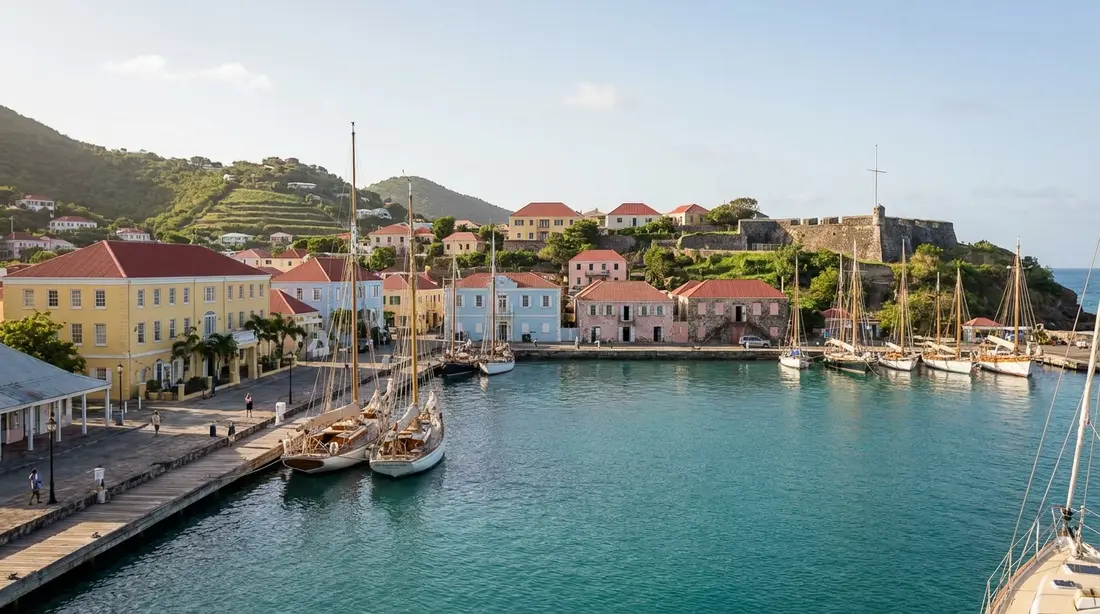
With a connection, you can keep it short or make it part of the trip. If you route through San Juan, turning the change into a real stopover is easy, since the hop to St. Croix is only about 50 minutes with several a day: spend a night in Old San Juan, walk the fort walls at El Morro, eat in a courtyard restaurant, and take an early hop the next morning already on island time. Miami suits a South Beach afternoon before the last leg, and even a longer Atlanta or Charlotte layover leaves time for a proper meal outside the airport if you plan it.
If you would rather do it in one day, aim for a layover of 90 minutes to two hours at Charlotte, Miami, or Atlanta so a late first leg does not cost you the second; under an hour is a gamble in winter, especially out of DCA where the morning bank is busy. San Juan is the forgiving exception, where a missed 50-minute hop is rarely a lost day. Three home airports also mean more schedule choices, so you can usually find a departure that sets up a comfortable connection in the first place. Keep your carry-on with you and you will still reach the villa before dark. That spread of options is Washington's real edge here: if the best connection leaves from Dulles rather than National, or from BWI, the short extra drive is often worth it to avoid a nerve-testing 40-minute change at the hub.
No passport, no foreign country
St. Croix is part of the U.S. Virgin Islands, a U.S. territory. U.S. citizens fly on a domestic ID, spend U.S. dollars, keep their own phone plans and clear no foreign customs in either direction. Henry E. Rohlsen (STX) is a U.S. port of entry with CBP on the field, so arriving feels like any other domestic flight. Full detail is on getting to St. Croix.
When you land at St. Croix
Rent a car at the airport (drive on the left), and it is a short run to the house: Christiansted is about 15 to 20 minutes east, the East End 30 to 40, Frederiksted 10 to 15 minutes west. Stop at Seaside Market or Plaza Extra for the first night before you settle in. See renting a car on St. Croix.
Which home fits your group
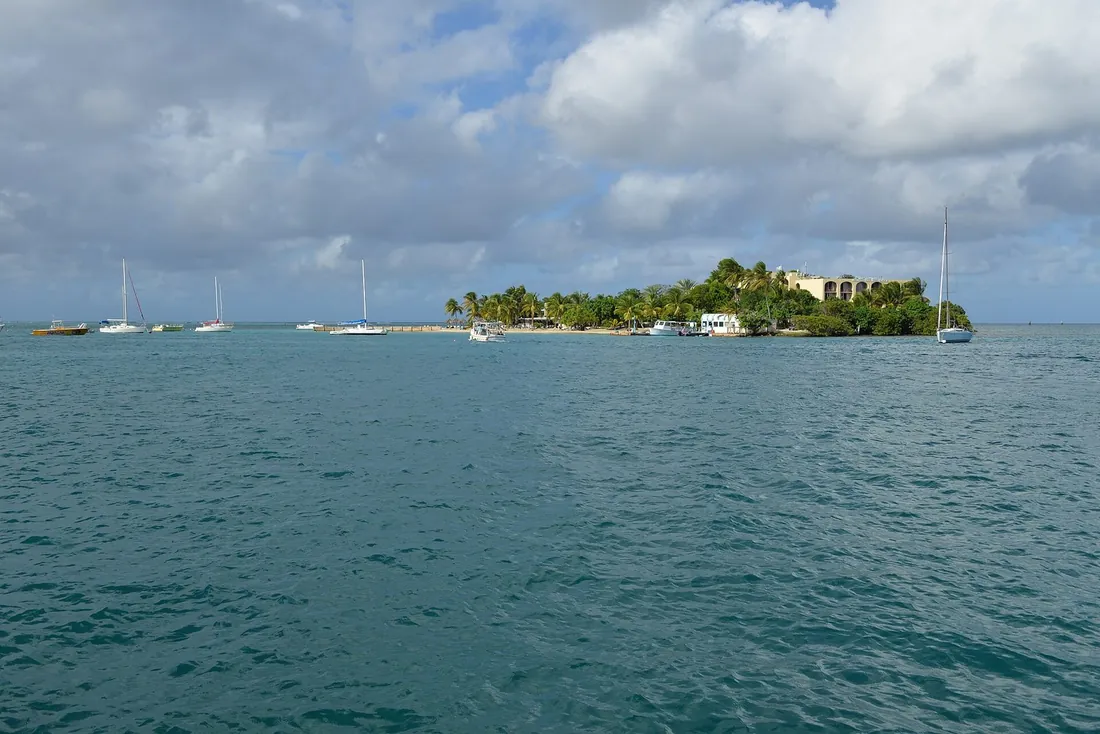
Groups of eight to twelve settle into the family collection; couples take a home for two; anyone who wants sand at the door starts with beachfront. Tell us the dates and the headcount and we will suggest the one that fits.
Questions people ask about flying from Washington, D.C.
Is there a nonstop from Washington, D.C. to St. Croix?
Do I need a passport?
How many hours should we plan on?
Which airport should I fly from?
When is the cheapest time to go?
Do I need to connect in San Juan?
Can I fly with kids and car seats?
Is it faster to connect in San Juan or Miami?
Do I need a passport to fly from Washington, D.C. to St. Croix?
Is St. Croix the same island as St. Thomas?
What time will I actually land on St. Croix?
Do I need to rent a car on St. Croix?
In this guide
Washington, D.C. at a glance
- One stop
- Best via Miami, Charlotte, Atlanta or Newark
- Airports: DCA (National) — connect via CLT/MIA/ATL, IAD (Dulles) — United hub, route via EWR nonstop (Sat), BWI — often best fare, connect via hubs
- Destination: STX, Henry E. Rohlsen