St. Croix vs St. John
The territory's national-park island against its largest island: both beautiful, both American, and priced and reached very differently.
St. John is the U.S. Virgin Islands' postcard: two-thirds of the island is Virgin Islands National Park, the north-shore bays are as photographed as any sand in the Caribbean, and the villa market above Cruz Bay is one of the region's most expensive. St. Croix, forty miles south, is the territory's big island — four times the land, its own airport, two towns, and a villa market that undercuts St. John dramatically on matching dates. Here is the whole comparison, with the concessions St. John deserves.
The two, side by side
| St. Croix | St. John | |
|---|---|---|
| Passport for U.S. citizens | Not needed | Not needed |
| Getting there | Nonstop jets from five mainland cities | No airport — fly to St. Thomas, taxi, then ferry |
| Size | 84 square miles | About 20 square miles, two-thirds of it national park |
| Where you stay | Managed villas and condos, most with pools | Small, expensive villa and campground inventory |
| Signature water | Buck Island Reef National Monument, Cane Bay Wall | Trunk Bay and the north-shore park beaches |
| Underwater snorkel trail | Buck Island's east lagoon | Trunk Bay — the two most famous in the country |
| Diving | Shore dives at Cane Bay and the Frederiksted Pier | Boat dives, many actually off St. Thomas |
| Towns | Christiansted and Frederiksted | Cruz Bay, a village |
| Restaurants and groceries | Full island economy, real supermarkets | Limited and priced for barge freight |
| A week's cost | Meaningfully lower for comparable homes | Among the priciest villa markets in the Caribbean |
Advisory levels and details are as published by the U.S. Department of State and checked August 2026. They change — read the current advisory at travel.state.gov before any international trip.
The short answer
If your dream week is a specific famous beach — Trunk Bay with its underwater trail, Maho Bay with its turtles — and budget is not a constraint, St. John will make you happy, as it has made generations of loyal returners happy. If your week is a whole island — different beaches every day, walk-in diving, historic towns, a rum distillery, a rainforest, a house with a pool that does not cost what a Manhattan hotel costs — St. Croix gives you all of it, and you fly straight in. We manage our homes on St. Croix; read this knowing that, and check every claim, because they hold.
Getting there is half the decision
St. John has no airport. Every trip there starts the same way: fly to St. Thomas's Cyril E. King Airport, taxi across the island to Red Hook (about 30 to 45 minutes depending on traffic), then take the passenger ferry to Cruz Bay (about 20 minutes), or the less frequent car barge. With luggage, a family, and a ship-day traffic jam on the waterfront road, the airport-to-villa journey commonly runs two hours or more. Villa renters then face a second question: groceries and a Jeep, both priced for an island where everything arrives by barge.
St. Croix has its own jet runway — Henry E. Rohlsen Airport, a U.S. port of entry with nonstops from five mainland cities as of this writing: Miami daily on American (about 3 hours), Charlotte daily from December 17, 2026, Atlanta near-daily from December 19, United's Newark Saturday flight from October 31, and American's winter Saturday Chicago run. San Juan connections fill the gaps, about 50 minutes on the hop. Verified August 2026:
| Airline | From | Schedule (as published Aug 2026) | Flight time |
|---|---|---|---|
| American Airlines | Miami (MIA) | Year-round, one to three flights daily by season | about 3 hours |
| American Airlines | Charlotte (CLT) | Paused until Saturdays return November 7; daily beginning December 17, 2026 | about 3¾ hours |
| American Airlines | Chicago O'Hare (ORD) | Winter Saturdays beginning December 5, 2026 | about 4¾ hours |
| Delta Air Lines | Atlanta (ATL) | Saturdays through September 5; Saturdays again from November 14; daily except Mondays beginning December 19, 2026 | about 4 hours |
| United Airlines | Newark (EWR) | Saturday nonstops beginning October 31, 2026 | about 4½ hours |
From wheels-down to villa: Christiansted in 15 to 20 minutes, the East End in 30 to 40, Frederiksted in 10 to 15. No taxi-ferry-taxi relay, no barge schedule, no second thoughts about the last ferry. That difference compounds every single day of the trip — and doubly so on the way home.
What the national park gives St. John
Credit where it is due, and it is due. Virgin Islands National Park — born of Laurance Rockefeller's land gift in 1956 — covers roughly two-thirds of St. John, and it is why the island looks the way it looks: green ridges falling to bays that were never built on. Trunk Bay's underwater snorkel trail is one of the most famous in the country. Maho Bay's seagrass shallows nearly always mean turtles. The park's hiking trails — Reef Bay with its petroglyphs, Ram Head over the salt pond — are the best marked in the territory. None of this is disputed here.
What the brochure omits: the park's fame concentrates its visitors onto a short string of north-shore beaches, reached by one winding road, with parking lots that fill by mid-morning in season. Trunk Bay charges an entry fee and hosts cruise-excursion crowds shuttled over from St. Thomas. The famous bays are still beautiful at capacity — but they are at capacity, often, in the months you are likely to visit.
What St. Croix answers with
A national monument instead of a national park — and a quieter one. Buck Island Reef National Monument, protected since President Kennedy's 1961 proclamation and expanded in 2001 to about 19,000 acres of no-take reserve, holds the country's other famous underwater snorkel trail, in the east lagoon behind an elkhorn barrier reef that wraps two-thirds of the island. You reach it by licensed concessionaire boat from the Christiansted boardwalk, which caps the crowd by definition: there is no parking lot to overflow. Turtle Beach, on Buck Island's west end, shows up on best-beach lists and has no facilities, no vendors and no fee. The guide is here.
Then the ledger keeps going in a way St. John's cannot: St. Croix protects its history as well as its water. Christiansted National Historic Site keeps five Danish colonial buildings around the harbor. Salt River Bay — the only documented spot where Columbus's men set foot on what is now U.S. soil, in 1493 — is a national historical park with mangroves and a bioluminescent bay that glows year-round. Sandy Point National Wildlife Refuge protects two miles of leatherback nesting sand. One island, four federally protected landscapes, none of them crowded. St. John has one, and it is crowded.
Beaches, compared
Beach for beach at their best, this is close, and anyone who tells you otherwise is selling something. Trunk Bay on a quiet morning is as good as sand gets. So is Sandy Point on a winter weekend, two miles of it, with a dozen people in sight. The real difference is arithmetic and access. St. John's marquee beaches number about a half dozen, strung on one road, shared with day-trippers from two islands and a cruise pier. St. Croix's spread across 84 square miles: Cane Bay with its beach bar and wall, Rainbow facing the sunset, The Shoys behind its guard gate (our Shoy's Beach House fronts it), Jack's and Isaac's Bays down a cactus trail in a Nature Conservancy preserve, Chenay Bay's shallow family water, Dorsch and Frederiksted town beach on the calm west coast, and Sandy Point when the refuge gates open. On St. Croix the question is which beach; on St. John it is which parking lot still has spaces.
Underwater, the gap widens
Snorkeling: call it a draw at the famous sites, with St. Croix holding more of them. Diving is not a draw. St. John-based divers mostly ride boats, and many of the region's marquee dives are actually St. Thomas sites. St. Croix's signature dives are shore entries: the Cane Bay Wall, beginning about a hundred yards off the beach and dropping toward abyssal depths, and the Frederiksted Pier, a macro dive of seahorses and frogfish that doubles as the territory's best-known night dive. Add the Butler Bay wrecks and Salt River Canyon's walls and a diver's week fills without a single long boat ride. The overview: diving St. Croix.
Where you stay, and what it costs
St. John's villa market is small, beautiful and priced accordingly — it is regularly cited among the most expensive vacation-rental markets in the Caribbean, a function of scarce private land (the park owns two-thirds of the island) and barge-freight economics. Hotel choices are few; the campgrounds at Cinnamon Bay are the affordable exception. Groceries, fuel and restaurant meals all carry the barge premium. People pay it happily; it is a real premium all the same.
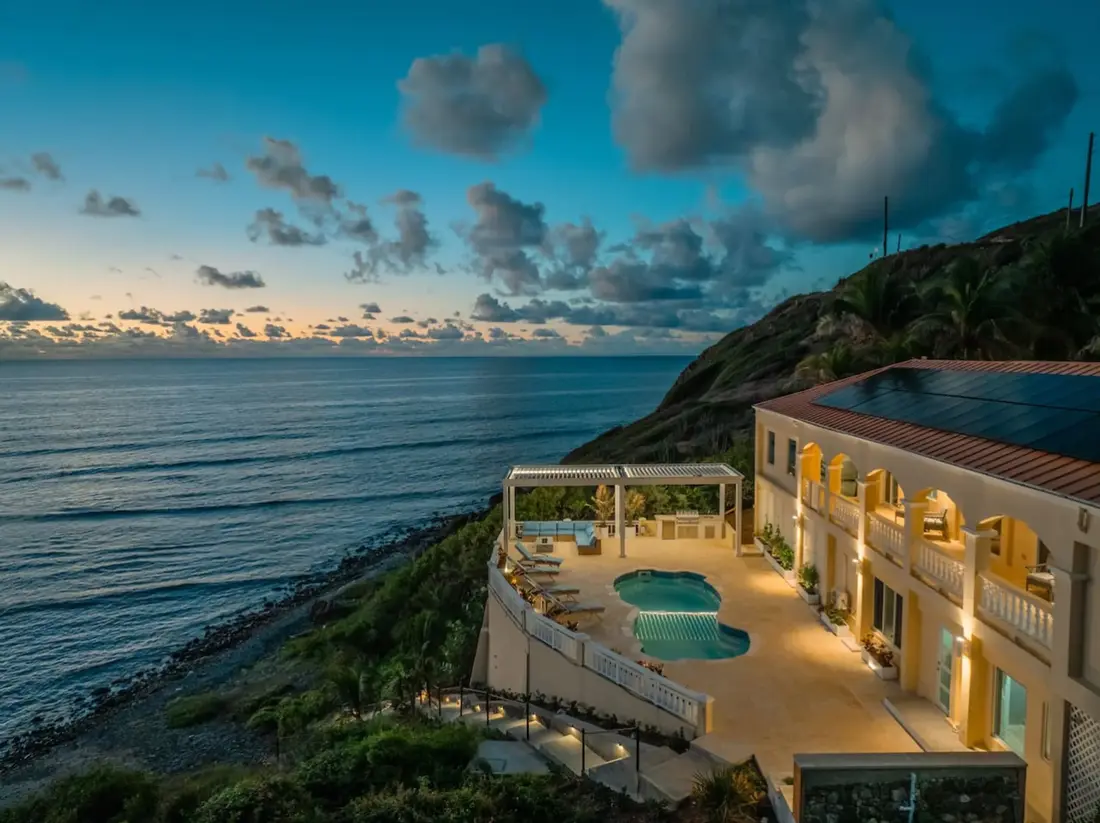
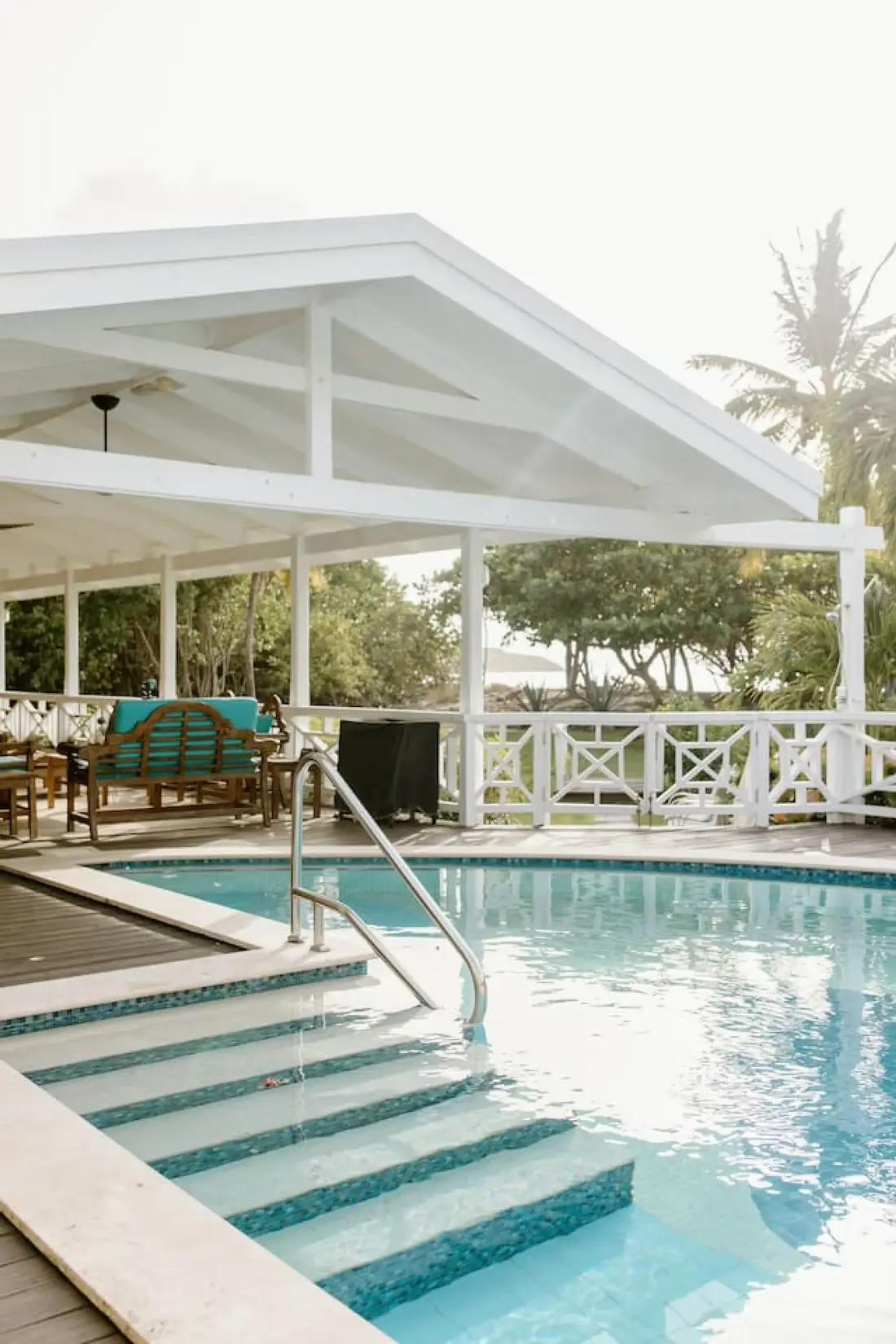
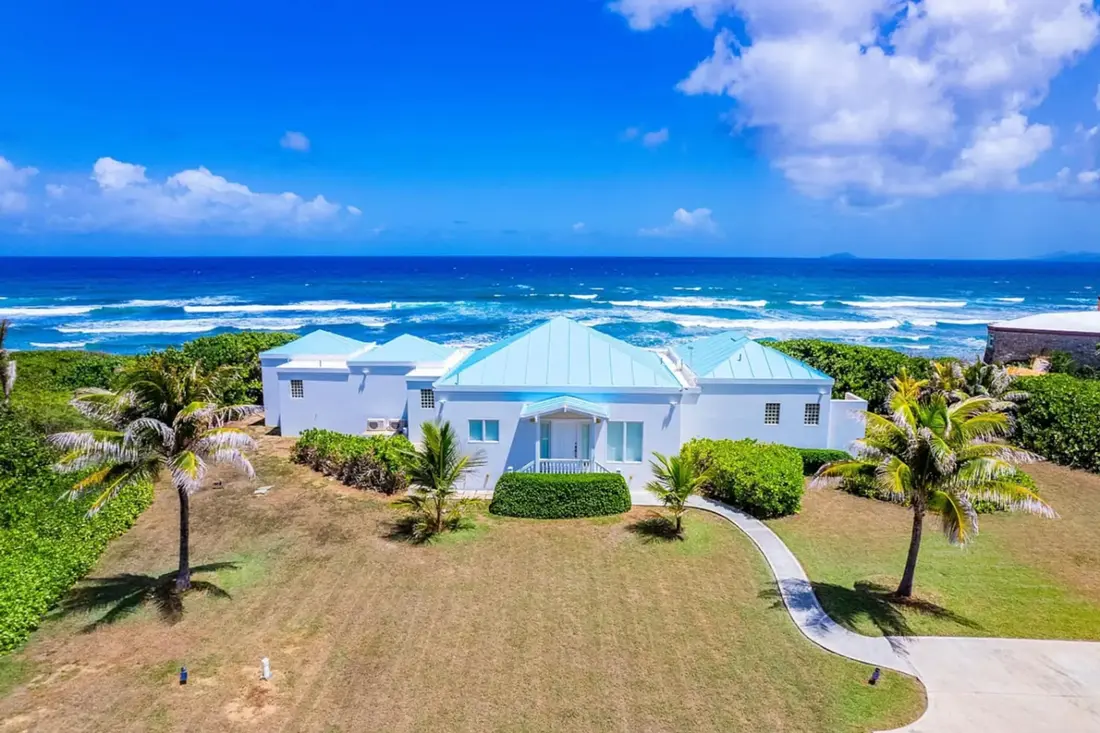
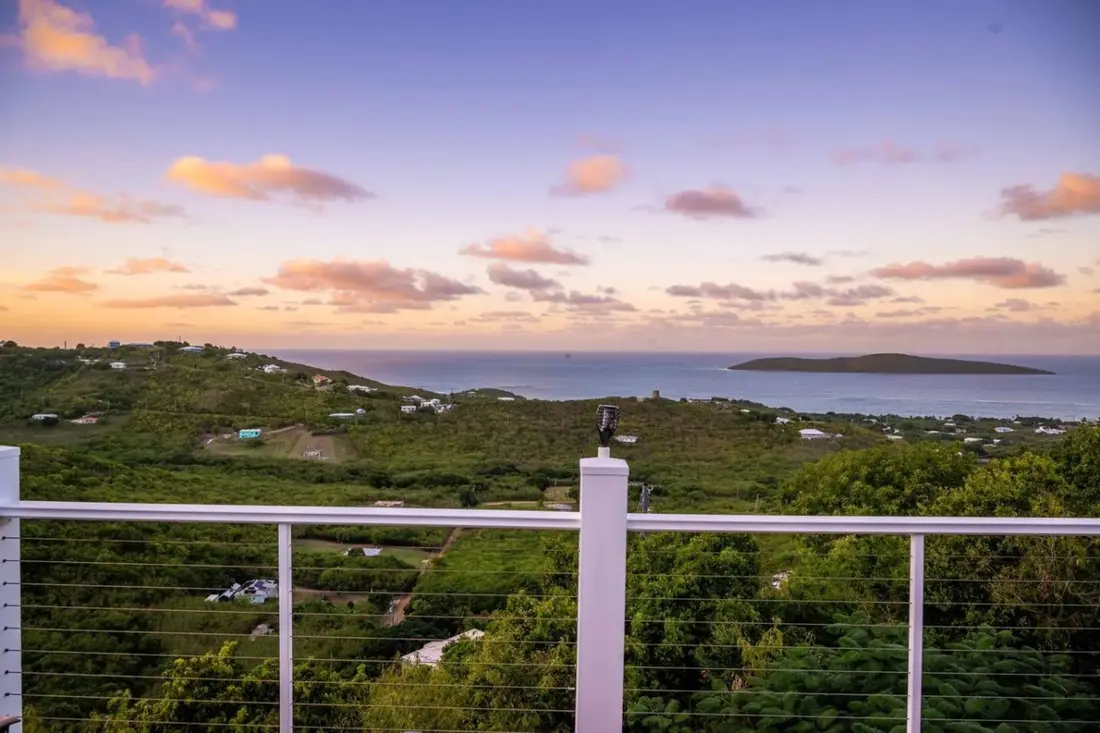
St. Croix's market breathes easier. Land is not scarce, freight arrives at a deep-water port, and supermarkets — Plaza Extra, Seaside Market — stock a real island economy. Our homes span beachfront houses, East End views of Buck Island and in-town condos, most with pools, every one managed from the island by Sterling Point and booked direct with no third-party fees. Matching dates and bedroom counts, the St. Croix house will nearly always come in meaningfully under the St. John equivalent — verify it on any search, then look at the homes.
Food, evenings and the shape of a day
Cruz Bay is charming at dinner — a village of a few streets with some very good kitchens — and Coral Bay, around the island, keeps a barefoot bar scene alive. But it is a village: a busy season books it out, and by ten the island is asleep. St. Croix's evenings belong to Christiansted's boardwalk and arcades — a real restaurant town at small-city scale — plus Frederiksted's west-end sunset bars and beach bars at Cane Bay and Rainbow Beach. Add the working distilleries: Cruzan's tours at Estate Diamond, Captain Morgan's tasting room, Mutiny's breadfruit vodka at Sion Farm, Leatherback's rainwater beer. St. John has no distillery, no fort, no bioluminescent bay, no golf; the days there are the beaches and the trails, which is exactly what its loyalists love about it and exactly what a full week can outgrow.
Month by month
Both islands share the USVI climate: winter days around 83°F, summer around 88, water swimmable every month, the dry sparkle of the Christmas Winds from mid-December to mid-March, and a quieter, greener, better-value stretch September through November inside hurricane season — plan with insurance and flexible policies then, on either island. The seasonal difference is human: St. John's high season compresses badly, because a small island with one famous road has no slack. St. Croix absorbs its high season without strain — 84 square miles is a lot of island for its visitor count. Our month-by-month guides cover the detail.
The travel day, hour by hour
Walk the St. John arrival through a real clock. A 10 a.m. departure from the East Coast puts you on the ground at Cyril E. King around 2. Bags by 2:30. The taxi across St. Thomas fights the waterfront and the Red Hook road — call it 3:15 at the ferry dock on a clean run, 3:45 on a ship day. The next boat is on the half hour if you are lucky; with the 20-minute crossing and the Cruz Bay scrum for your pre-arranged Jeep, you reach a villa above town around 5 — seven hours door to door, and the grocery run still ahead at St. John prices. Now the St. Croix version of the same morning: wheels down at Henry E. Rohlsen around 2, rental counter by 2:30, Plaza Extra cart filled by 3:15, and the pool by 4 — with dinner on the Christiansted boardwalk booked for 7 because nothing about the evening depends on a boat. The return day doubles the difference: St. John travelers pad the morning ferry against a missed flight; St. Croix travelers sleep in and drive fifteen minutes.
Month by month on the two islands
Same territory, same weather: winter days near 83°F, the Christmas Winds December through mid-March, the green quiet of September through November inside hurricane season, insurance and flexibility advised on both. What the calendar changes is pressure. St. John's high season compresses brutally — a small island with one famous road and finite parking, sharing itself with St. Thomas day-trippers and cruise excursions, sells out and fills up in ways an 84-square-mile island simply does not. Trunk Bay's lot turning cars away by 10 a.m. is a normal February sentence on St. John; there is no February sentence like it on St. Croix. In the shoulder months the little island relaxes into its best self — and so does the big one, with May–June water clarity, July's Emancipation Day in Frederiksted, and the December–January Crucian Christmas Festival that St. John has no counterpart for. Month-by-month detail: when to visit.
Seven days on each island
The St. John week, done well: north-shore beaches strung morning by morning — Trunk early to beat the lot, Maho for the turtles, Cinnamon for the space; the Reef Bay hike with the petroglyphs; a day sail out of Cruz Bay; dinners in the village; maybe a Coral Bay afternoon on the quiet side. It is a lovely, repetitive, expensive week, and its loyalists would not change a day of it.
The St. Croix week: Buck Island's snorkel trail and Turtle Beach on Monday; Cane Bay Tuesday — snorkel the shelf, watch the divers walk into the wall, lunch at the beach bar; Christiansted Wednesday, fort and arcades and boardwalk dinner; the East End Thursday — Point Udall at sunrise for the ambitious, then the Jack's and Isaac's trail and an afternoon at The Shoys; Frederiksted Friday — Fort Frederik, a pier snorkel, Rainbow Beach sunset; Saturday the rainforest, the Cruzan tour and the Domino Club; Sunday the beach you loved best. Two towns, four federal landscapes, three distilleries and a dozen beaches — against one road of famous bays. The full plans: the 7-day itinerary.
Getting around once you land
St. John transport is a Jeep economy: the island's steep concrete grades and the North Shore Road's hairpins make 4WD the default rental, the fleet is finite and books out for high season months ahead, Cruz Bay parking is a famous small war, and the famous beaches' lots fill by mid-morning with no overflow plan — the park's own advice is arrive early or ride the taxi-buses. Coral Bay is a twenty-five-minute mountain drive that feels like an expedition and rewards like one. Everything mechanical on the island — fuel, repairs, groceries — carries the barge premium.
St. Croix runs ordinary cars on rolling roads with parking as an afterthought: free lots and roadside sand at every beach, two towns with street parking, fuel and groceries at mainland-adjacent prices (provisioning), and the left-side habit as the one novelty (the guide). The 4WD question never comes up; neither does the 10 a.m. parking deadline.
Before you book either island
For St. John: book the villa and the Jeep in the same week, months out — whichever sells out first strands the other; build the taxi-ferry-taxi arrival into day one's expectations (and the reverse into departure morning's anxiety); plan the big provisioning run for St. Thomas or accept village-market prices; and set beach alarms — the famous bays reward the early and turn away the late. High-season dinner tables in Cruz Bay book like the Jeeps do.
For St. Croix: book the villa direct (the homes), reserve any ordinary car, calendar Buck Island and the bio bay ahead in peak weeks. No alarms, no barge math, no second island in the logistics.
The case for St. Croix, point by point
One: its own jet airport against a taxi-ferry-taxi relay each way. Two: villas at island prices against one of the Caribbean's most expensive markets. Three: supermarkets against barge-premium village stores. Four: beaches without parking deadlines — Sandy Point's two miles against Trunk Bay's 10 a.m. lot. Five: walk-in wall diving and a famous pier against boat trips staged from another island's shops. Six: four federal landscapes — monument, historical park, historic site, refuge — against one (magnificent, crowded) national park. Seven: two towns with dinner rows against one village that books out. Eight: rum, rainforest and golf as rain-day insurance against a beach-only itinerary. Nine: ordinary rental cars against a finite Jeep fleet. Ten: the same 80-degree water and trade winds, purchased at half the logistics and a fraction of the rate. The park is a treasure; the island next to it is the vacation.
Who should pick which island
Pick St. John if the national park itself is the trip — the trails, the protected bays, the specific devotion its returners feel — and the budget absorbs the premium without wincing. Pick it for a honeymoon where seclusion-at-any-price is the brief, or as the perfect day trip from a St. Thomas stay. Pick St. Croix for everything with logistics attached: families (direct flights, a car, a kitchen, calm shallows), groups (our homes that sleep two to twelve), divers (the walk-in wall decides it), history travelers (the towns, the forts, Hamilton), and value hunters (the same water at a fraction of the nightly rate). If you are torn, book St. Croix and put a St. Thomas–St. John day in the middle of the week — the reverse arrangement wastes both islands.
When St. John is the right call
If the trip is built around Virgin Islands National Park itself — the trails, the petroglyphs, the specific magic of Maho's turtles at eight in the morning — go, and go in the shoulder season when the parking lots forgive. If you are already on St. Thomas, the 20-minute ferry makes St. John the obvious day trip. If money is no object and a name-brand villa above Cruz Bay is the point, that market exists for you. And if you want both: fly into St. Croix for the week, and save St. John for a future St. Thomas day trip — the ferry-and-taxi day is long from here.
A rainy day on each island
St. John's rainy day is short: the Cruz Bay shops, a long lunch, the small museum room at the library, and the park's visitor center — then the weather app and the villa deck. The island is beaches and trails or it is waiting. St. Croix's wet-day circuit runs properly indoors: Fort Christiansvaern's vaults and the Steeple Building, the Whim estate museum, the Apothecary Hall, Frederiksted's arts center, and the distillery trail from Cruzan to Sion Farm. Same territory, same showers — one island has somewhere to be when they land.
If you choose St. John anyway
Then beat its bottlenecks. Book the villa and the Jeep together, months out; fly into St. Thomas before noon so the ferry chain finishes in daylight; provision big at Red Hook or Charlotte Amalie before crossing, then top up at the village markets. Do Trunk Bay before nine or after three, Maho for the morning turtles, Cinnamon when the lots overflow; hike Reef Bay downhill with the petroglyphs and arrange the boat pickup; and give Coral Bay an afternoon — the quiet side is the island's best self. Eat the food trucks as often as the dining rooms. Respect the park's rules and its parking rangers, who have heard every excuse. And book the last-morning ferry with an hour's padding more than feels necessary; the flight home does not hold for the channel.
Where you would stay on St. Croix
The big-island base: our direct-booked homes with Sterling Point managing on-island. Shoy's Beach House on The Shoys' guarded sand — a National-Park-quality beach with a house on it, which is the entire St. John dream at a St. Croix price; East End villas (The Cerulean among them) facing Buck Island's monument water; Christiansted condos near the boardwalk; west-end sunset stays. Ordinary rental cars, supermarket provisioning, no barge premium. Couples: homes for two; groups to twelve: the family collection. The roster: the homes.
How this page was made
Series rules: park history and coverage per NPS (Virgin Islands National Park, Buck Island's 1961 proclamation, Christiansted's site, Salt River) and USFWS (Sandy Point); ferry and access logistics per the published schedules; flights verified August 2026; St. John's price positioning per years of rental-market documentation, stated as the pattern it is. The park's magnificence is conceded from the first section — this page argues logistics and economics, not beauty. Our bias: the homes we manage on St. Croix, disclosed throughout. Same flag, same water; check every line.
The bottom line
St. John is a beautiful, small, expensive island that borrowed its airport from St. Thomas and its price list from Aspen. St. Croix is four times the island with its own nonstop jets, the country's other underwater snorkel trail, walk-in wall diving, two historic towns, four protected landscapes and villas that cost meaningfully less. Same flag, same dollar, same 80-degree water. For a full week, the big island simply has more week in it. The homes are here.
Elsewhere in this series
This page is one of twenty-six. If you are still shopping the map, the verdicts nearest this comparison run as follows — each links to the full page with its own sources:
St. Croix vs St. Thomas — Same country, same water. St. Thomas gets the cruise ships; St. Croix gets the room to breathe.
St. Croix vs Puerto Rico — Puerto Rico is a country-sized trip with city energy. St. Croix is the island-sized version: 41,000 people, no traffic, same flag.
St. Croix vs Vieques & Culebra — Same quiet, same flag. St. Croix has the jets, the villas and the services; the little islands have the ferry line.
The complete set, grouped by region and passport rules, lives at St. Croix vs other destinations.
Which home fits your group
If St. Croix wins your comparison, the homes are the easy part. Groups of eight to twelve settle into the family collection; couples take a home for two; anyone who wants sand at the door starts with beachfront. Every one is managed from the island by Sterling Point and booked direct — tell us the dates and the headcount and we will point you at the one that fits.
Two practical notes that surprise first-time villa bookers. Direct booking means the rate is the rate: no platform service fees, no resort fees, and the people answering questions are the same Sterling Point team that manages the houses on the island. And every home runs a full kitchen — one run to Plaza Extra or Seaside Market on the drive from the airport covers the week, which is where a villa quietly beats a resort bill before the first beach day. How the booking works, and what it does not mean, is spelled out at book direct.
Who wrote this
SP Vacations is the vacation-rental division of Sterling Point Real Estate, a licensed real-estate operation based on St. Croix in the U.S. Virgin Islands. The team lives and works on the island it writes about: the homes in the villa collection are inspected, cleaned and managed locally, and the person who answers a booking question is on St. Croix, not in a call center three time zones away. That is the vantage point behind every page in this series — and the reason the series exists at all, since most of the destinations compared here are places our guests weighed before choosing this island.
Two standing practices shape what you read. First, the pricing wall: nightly rates and availability for the homes live only on the booking pages, never in articles, so nothing here goes stale or oversells. Second, the sourcing rule: safety statements cite the U.S. State Department, customs figures cite CBP, park facts cite the National Park Service, and anything that changes — advisories, schedules, hours — carries its checked date and a pointer to the primary source. Where a rival destination wins a category, the page says so, because a comparison that concedes nothing persuades nobody. Questions, dates or a villa to match a group — the island team is here, or call 340-205-3929.
Questions people ask
Is St. Croix or St. John better for a villa vacation?
St. Croix, for most groups. It has its own airport with mainland nonstops, a larger and better-priced villa inventory, real supermarkets, and more to do across a bigger island. St. John's villa market is small and among the Caribbean's most expensive, and every arrival routes through St. Thomas by taxi and ferry.
Does St. John have an airport?
No. Visitors fly to St. Thomas (STT), taxi to Red Hook or Charlotte Amalie, and ferry to Cruz Bay. Door to door from the mainland commonly takes two hours beyond the flight. St. Croix (STX) has its own jet airport with nonstops from five mainland cities as of August 2026.
Which island has better snorkeling?
Both hold famous marked underwater snorkel trails — Trunk Bay on St. John and Buck Island's east lagoon off St. Croix, which sits inside a no-take national monument protected since 1961. St. Croix adds shore snorkeling at Cane Bay and the Frederiksted Pier. Divers should note St. Croix's signature dives are walk-in shore entries.
Is St. John more expensive than St. Croix?
Yes, and usually by a wide margin. Scarce private land and barge freight keep St. John's villas, groceries and meals among the region's priciest. St. Croix's bigger economy and deep-water port keep comparable homes and provisioning meaningfully cheaper. Compare matching dates yourself — the gap shows immediately.
Do I need a passport for St. John or St. Croix?
No for both — they are the U.S. Virgin Islands. U.S. citizens travel on a government ID, spend dollars, and clear no foreign customs. See no passport needed.
Can I visit St. John from St. Croix?
Yes, as a long day: seaplane or ferry to St. Thomas, then taxi and the Cruz Bay ferry. Most guests here save St. John for a future St. Thomas-based trip and spend the day at Buck Island instead, which delivers the same snorkel-trail magic a 30-minute boat ride from Christiansted.
When is the best time to visit St. John or St. Croix?
Both share the USVI calendar: December–April high season, May–June value and clarity, September–November green and quiet inside hurricane season. The practical difference is compression — St. John's famous bays and single road jam in high season while St. Croix absorbs its visitors without strain.
Is Trunk Bay crowded?
In season, reliably — it is the park's showcase, fed by cruise excursions and day-trippers, with an entry fee and a lot that fills by mid-morning. Buck Island's snorkel trail, its St. Croix counterpart, is reached only by licensed boats from Christiansted, which caps the crowd by definition.
How expensive are groceries on St. John?
Barge economics set the prices: village markets charge a premium that surprises first-time villa renters, and big provisioning runs mean a ferry to St. Thomas. St. Croix has full-size supermarkets — Plaza Extra, Seaside Market — at ordinary island prices ten minutes from the villas.
Which island is better for families?
St. Croix, for logistics alone: fly in directly, one car, a house with a pool and a kitchen, calm shallow beaches like Chenay Bay, and groceries at real supermarkets. St. John asks a family to manage a taxi-ferry-taxi arrival and village-scale provisioning at premium prices.
In this comparison
St. Croix at a glance
- U.S. territory — no passport for U.S. citizens
- Nonstops from Miami, Fort Lauderdale, Charlotte, Atlanta, Newark and Chicago
- U.S. dollars, U.S. phone plans, no foreign customs
- $1,600 duty-free allowance home (double the standard $800)
- 84 square miles — the largest U.S. Virgin Island
More comparisons
- St. Croix vs St. Thomas
- St. Croix vs Puerto Rico
- St. Croix vs Vieques & Culebra
- St. Croix vs the Florida Keys
- St. Croix vs Hawaii
- St. Croix vs the British Virgin Islands
- St. Croix vs Turks & Caicos
- St. Croix vs Anguilla
- St. Croix vs St. Barts
- St. Croix vs St. Martin
- St. Croix vs Antigua
- St. Croix vs St. Kitts & Nevis
- St. Croix vs St. Lucia
- St. Croix vs Barbados
Sources
Park history and coverage: NPS (Virgin Islands National Park, Buck Island proclamation of 1961, Salt River Bay NHP, Christiansted NHS) and USFWS (Sandy Point). Flights verified August 2026. St. John price positioning is widely documented in Caribbean rental-market coverage; stated here as a pattern — verify on your dates.
St. Croix vs St. John
St. John is a gorgeous, expensive boat ride. St. Croix is a whole island with its own airport and half the price tag.