Captain Morgan Visitor Center
The Diageo distillery's mid-island visitor center: weekday tastings, a gift shop, and the industrial side of Caribbean rum.
The Captain Morgan Rum Distillery is the largest rum operation on St. Croix, a modern Diageo plant at Estate Annaberg & Shannon Grove that turns imported molasses into the bulk rum behind one of the best-selling spirits anywhere. It is a different animal from the island's older distillery: the Cruzan tour walks you through a working factory, while Captain Morgan keeps visitors in a separate exhibit building and does not open the production floor to the public. This page is the full reference — what stands at the site, how and why Diageo built it here around 2010, the rum-tax deal that reshaped the island's spirits industry, how the rum is actually made and where it goes, and exactly what a visitor can and cannot do at the visitor center at last check.
Set your expectations before you drive out, because the name confuses people. This is not a distillery tour in the sense that the Cruzan visit is one. You will not stand next to the stills. What you get instead is a branded visitor experience — an exhibit, a short film, a guided tasting and a shop — a few hundred yards from an industrial plant you mostly see from the road. Whether that is worth an hour depends on what you came for, and this guide lays it out so you can decide.
What stands at Estate Shannon Grove
Two separate things share the site. The first is the distillery itself: a large, purpose-built industrial facility that Diageo runs to make rum in volume. It is a factory, closed to the public, fenced and secured like any bottling-scale plant. The second is the visitor center, a stand-alone building put up to give the brand a public face on the island where its rum is now made. When people say they are going to Captain Morgan, they mean the second building; the first is a workplace, not an attraction.
The location sits at Estate Annaberg and Shannon Grove, just off the Melvin Evans Highway — Route 66, the south-shore road — a few minutes from Henry E. Rohlsen Airport. Listings file it under Kingshill, Christiansted or Frederiksted depending on the source, which tells you it sits in the island's south-central middle rather than in either town. The airport-corridor position matters for planning: this is the rare island attraction you can fold into an arrival or departure day, since it is close to the terminal and to the highway that feeds it. You can catch the plant's tanks and stacks from the road as you pass, which for many visitors is as close as they will get to the production side.
How Captain Morgan came to St. Croix
For most of its life the rum in a Captain Morgan bottle was not made on St. Croix at all. It was distilled in Puerto Rico under a long contract with Destilería Serrallés, the Ponce family firm that had produced the brand for decades. That changed with a deal struck in 2008. In July of that year the Virgin Islands legislature approved, by a 10-to-5 vote, a thirty-year agreement with Diageo — the London-based drinks multinational that had bought the Captain Morgan brand in 2001 — to move production to St. Croix. Governor John de Jongh negotiated the terms.
Construction moved fast. Diageo broke ground at Shannon Grove in May 2009, the plant came online in 2010, and Captain Morgan production in Puerto Rico wound down that same year as the Serrallés contract ran out at the end of 2011. The milestone the territory chose to celebrate came on February 9, 2012, when Governor de Jongh accepted the first case of St. Croix-produced Captain Morgan; by the end of that month the plant expected roughly a million cases ready for shipment. The brand takes its name from Sir Henry Morgan, the seventeenth-century Welsh privateer who ended his career as lieutenant governor of Jamaica — a marketing thread that predates any of this by three centuries and has nothing to do with St. Croix.
The rum cover-over, explained
None of this happened for the weather. It happened because of a federal tax rule called the rum cover-over, and the rule is worth understanding because it explains the whole arrangement. The federal government levies an excise tax on distilled spirits — reported at $13.50 per proof gallon at the time of the deal — and then returns most of that money, $13.25 per proof gallon in the figures Congress had set, to the two rum-producing territories, the U.S. Virgin Islands and Puerto Rico. The payment is called a cover-over because the revenue is covered over to the territories. It has flowed since 1917, and each territory's share tracks how much rum it produces.
That last clause is the engine of the story. Because the money follows production volume, moving a large rum brand from one territory to the other physically shifts tens of millions of federal dollars a year with it. Cover-over money is not small. Over the years from 1990 to 2008, published figures put Puerto Rico's total cover-over receipts at about $5.4 billion and the Virgin Islands' at about $1.1 billion. A brand the size of Captain Morgan is a large slice of that flow, and both territories know it.
The deal the Virgin Islands offered Diageo
To pull Captain Morgan across the water, the Virgin Islands offered Diageo a package that critics on the losing side called extraordinary. The territory agreed to hand a large share of the cover-over revenue generated by Captain Morgan sales back to the company — Diageo described the figure as roughly 40 percent, while Puerto Rican officials put it nearer half. On top of that came a 90 percent break on income taxes, a full exemption from property taxes, and, most striking of all, a distillery built with public money. Reported at around $165 million and financed through territorial bond offerings — a $250 million issue went out in 2009 — the plant was effectively a gift of infrastructure to a private company.
Analysts valued the whole thirty-year package to Diageo at roughly $3 billion, described in coverage as about ten times what Puerto Rico had been giving the company under the old arrangement. From the territory's side, the projected payoff was a jump in Virgin Islands cover-over revenue from about $90 million a year toward $240 million, a gain in the neighborhood of $150 million annually. Governor de Jongh defended the split by arguing that roughly 40 percent went to the company and the remaining 60 percent to schools, infrastructure and public pensions. The Cruzan distillery, the island's other producer, drew its own smaller package of territorial support over the same period.
The rum war with Puerto Rico
Puerto Rico did not take the loss quietly, and the episode became known in the press as the rum war. The stakes there were concrete. Captain Morgan had accounted for close to 75 percent of Destilería Serrallés's output, and losing it left the Ponce distillery exposed; the firm faced layoffs of roughly 30 to 40 workers out of about 350 and set about chasing new supply contracts and premium bottlings to fill the gap. Roberto Serrallés warned at the time that the subsidy handed to a competitor would run greater than the cost of the rum itself, making it, in his words, extremely hard to continue.
The Commonwealth answered with money of its own. In February 2011 it signed a twenty-year agreement with Bacardi — whose largest plant sits in Cataño — that included a $95 million grant for plant renovation plus production and marketing incentives worth about 10 percent of the cover-over revenue tied to Bacardi sales. Puerto Rico's resident commissioner, Pedro Pierluisi, went to Congress with legislation to cap how much of their cover-over the territories could give away to producers, proposing a 10 percent limit. The two sides also spent heavily to make their cases: 2009 lobbying disclosures showed Diageo spending about $2.25 million, including $770,000 to a single firm, with the Virgin Islands and Puerto Rican interests spending smaller sums on their own advocates. The dispute never produced a clean winner. It produced a subsidy floor that both territories now compete above.
The scale of the plant
The reason the deal was worth fighting over is the plant's output. The Shannon Grove distillery was built to make about 20 million proof gallons of rum a year, and it produces the bulk rum for Captain Morgan products sold across the United States. When Diageo relocated the brand it moved on the order of 9 million proof gallons of annual production off Puerto Rico, and the St. Croix plant was sized with headroom above that. For comparison, the older Cruzan distillery reported production around 9.6 million proof gallons in a recent fiscal year — so Captain Morgan's plant was built with roughly twice that ceiling.
Scale is also where the deal's sharpest criticism lives. A modern rum distillery of this kind is highly automated, which means it generates enormous output with a small workforce. The plant employs the technicians who run and monitor the process plus a limited crew of operators, not the hundreds of workers a factory of its footprint might suggest. That gap — a very large public investment against a modest headcount — was the point opponents pressed hardest, and it is a fair thing to know before you form a view of the place. The economics that built the plant were about tax revenue first and jobs second.
How the rum is made
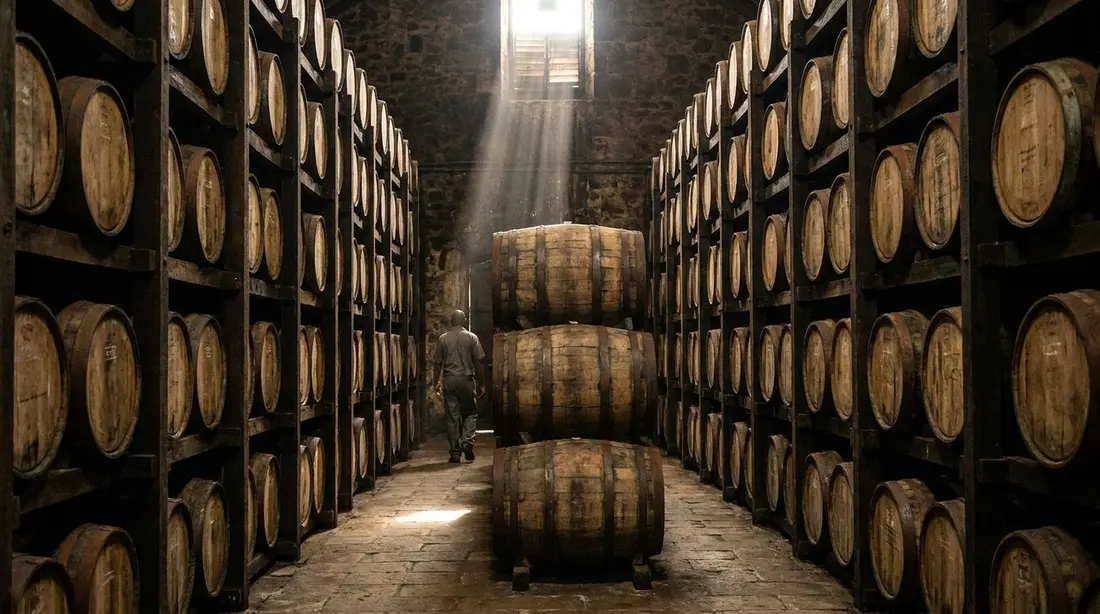
Captain Morgan is a molasses rum, like nearly all Caribbean rum, and the molasses is imported. St. Croix stopped growing sugar cane commercially in 1966, so no raw material comes off local fields; the plant brings in molasses by sea, the same constraint every island distiller works under. The process from there is standard industrial rum-making. Molasses is diluted with water, pitched with yeast and fermented into a low-alcohol wash, and the wash is distilled in tall continuous column stills — the type built for steady, high-volume output and a clean, light spirit, rather than the batch pot stills a small craft producer would use. The new spirit then rests in charred oak, with the brand describing aging up to about a year to pull color and take the raw edge off before blending.
If you want the human-scale version of this same chemistry — open fermenters you can smell, a still house you walk beneath, warehouses of barrels you stand among — that is the Cruzan tour, and it is the better choice for anyone who wants to see rum actually being made. The sugar economy that underlies the whole business, on both sites, is the subject of the sugar mill ruins guide and the restored works at Estate Whim.
Distilled here, finished elsewhere
Here is the real limit of the phrase made on St. Croix, because it is narrower than a bottle's Virgin Islands label implies. St. Croix distills the base rum. The steps that turn that base into the product on a store shelf — blending, the proprietary mix of spices and vanilla that defines the spiced rum, and bottling for the U.S. market — happen on the mainland, at Diageo facilities including its plant in Plainfield, Illinois. In a further move, Diageo shifted the brand's aging and warehousing off the island to Maryland while keeping distillation on St. Croix; that change affected only about ten warehouse jobs on island, a small number that underlines how lean the operation runs.
So the accurate sentence is this: the spirit is born at Shannon Grove and grows up elsewhere. That is not unusual in the industry — global brands routinely distill in one place and finish near their markets to cut shipping and simplify regulation — but it is worth knowing when a bottle's origin story suggests a single island cradle. What St. Croix supplies is the rum itself, at volume, which under the cover-over rules is exactly the part that matters to the territory's budget.
The product line
Captain Morgan is a mass-market brand, the world's second-best-selling rum after Bacardi, and its lineup reflects that. The Seagram Company created the brand in 1944, and the flagship most Americans know, Captain Morgan Original Spiced Rum, reached U.S. shelves in 1984. The current range runs from that Original Spiced through Original white rum and darker expressions to a broad flavored wall — coconut, various fruit and cannon-themed bottlings — plus a non-alcoholic option. A labeling quirk is worth a footnote: in the United Kingdom and Europe the classic Original Spiced Gold is sold as a spirit drink rather than as rum, a technical distinction that follows from its strength and added flavoring, while in the United States it is marketed as spiced rum.
What all of this means for a visitor is that the bottle you might carry home is not a rare island find. It is one of the most widely distributed spirits on earth, sold in every supermarket back on the mainland. The souvenir value is the story, not the scarcity: this is where the base rum is distilled, and buying a bottle at the source has a small charm the same bottle at your corner store does not. For local, small-batch spirits, the island points elsewhere — the breadfruit vodka at Sion Farm Distillery, the beer at Leatherback Brewing, and the bush-rum tradition at the Domino Club.
The distillery in numbers
| Item | At last check |
|---|---|
| Operator | Diageo (Captain Morgan brand, acquired 2001) |
| Location | Estate Annaberg & Shannon Grove, off Melvin Evans Highway, south shore near the airport |
| Built | Groundbreaking 2009; plant online 2010; first island case Feb 2012 |
| Capacity | About 20 million proof gallons of rum a year |
| What it makes | Bulk rum for U.S.-market Captain Morgan products |
| Raw material | Imported molasses (no local cane since 1966) |
| Distillation | Industrial continuous column stills |
| Aging & bottling | Aging/warehousing moved to Maryland; U.S. blending and bottling on the mainland |
| The deal | 30-year agreement (2008); territory-financed plant reported near $165 million |
| Brand rank | World's second-best-selling rum, after Bacardi |
Figures above come from published coverage and the sources listed below; capacity and financial terms are as reported at the time of the deal and its follow-on moves, so treat them as the documented record rather than a live spec sheet.
The visitor center experience
The visitor center is a produced, indoor attraction, and recent visitor accounts describe it consistently. You are received in an exhibit space that walks through the history of Caribbean rum and the brand, with a short film and sensory displays, and staff explain how rum is made while you stand in the exhibit rather than on any factory floor. The centerpiece is a guided tasting: accounts describe starting with about three rums, then choosing two more from a wider set of flavored and dark expressions, with pours running small — on the order of three-quarters of an ounce each — and one mixed cocktail included. Additional cocktails have been available for a few dollars each. A retail shop closes the loop.
The whole visit runs roughly 40 minutes to an hour. It is climate-controlled, level and easy to move through, which makes it a genuine option on a hot or wet afternoon and a reasonable stop for anyone who cannot manage the stairs and rough ground of a working plant. What it is not is a look at the distillery. If seeing rum made is the goal, one recent account put it bluntly that a cruise visitor short on time is better served elsewhere, and the working alternative is the Cruzan tour across the island. The two visits answer different questions: one shows you a factory, the other tells you a brand's story with a drink in your hand.
Hours, prices and booking
Hours and pricing here have shifted more than once, and the visitor center has been through at least one refresh, so treat everything in this paragraph as a starting point and confirm by phone before you go. At last check the center kept weekday hours in the range of 10 a.m. to 4 p.m., closed Sunday, with a guided rum tasting in the early afternoon; some current listings show an added limited Saturday and a later weekday close, which is exactly the kind of detail that changes. Reported admission has run from about $10 to $15 a person, with extra cocktails a few dollars more. Reservations are strongly advised — callers get further than emailers, by one visitor's account — because tasting sessions run on a schedule and space is capped.
The tasting is for adults; bring photo ID, and note the posted rule that anyone arriving intoxicated will be turned away from the pours at the guide's discretion. The gift shop keeps roughly the same weekday hours as the center. Because the site sits by the airport rather than in a walkable town, plan it as a drive with a designated driver, the same as any island tasting, and remember the roads run on the left.
Planning your visit
| Detail | Current status |
|---|---|
| Address | Estate Annaberg & Shannon Grove, off Melvin Evans Highway |
| Open | Weekdays about 10 a.m.–4 p.m.; closed Sunday; some listings add limited Saturday |
| Tasting | Guided session, early afternoon; reserve by phone |
| Admission | Reported about $10–$15; extra cocktails a few dollars each |
| Duration | About 40 minutes to an hour |
| What you see | Indoor exhibit, film, tasting, shop — no walk through production |
| Ages | Tasting for adults with ID; intoxicated guests refused |
| Nearby | Minutes from Henry E. Rohlsen Airport |
Hours, prices and the tasting format all move; the center's own phone line is the only current authority, and a quick call the day before saves a wasted drive.
Where it fits on a rum-curious trip
Think of Captain Morgan as the big-industry chapter of St. Croix's drinks story, best read alongside the others rather than on its own. The island supports a short, varied circuit, and each stop plays a distinct role. The Cruzan distillery is the working-factory tour and the historic anchor, the place to go if you want to watch rum being made and taste widely. Sion Farm Distillery makes Mutiny Island Vodka from breadfruit, the island's craft-scale counterpoint, with a tasting room and free tours. Leatherback Brewing covers beer near the airport, and the Domino Club up in the rainforest holds down the bush-rum end with its house MamaWanna and its beer-drinking pigs.
Captain Morgan's role in that lineup is the scale story: the modern plant, the tax deal, the global brand. Pairing it with Cruzan on one trip gives you both ends of the island's rum spectrum, the produced brand experience and the working factory, and the drive between them is short. Because the visitor center is indoor and close to the airport, it also slots neatly into the rainy-day plan or a last-morning-before-the-flight stop. If you are stringing distilleries into a wider loop, the Mahogany Road drive and the Frederiksted waterfront sit on the same western half of the island.
Buying Captain Morgan
Because this is a mainstream brand, buying it is the easy part of any plan. Every supermarket and liquor store on St. Croix carries the range, and so does the duty-free shop at the airport, where a departing traveler can grab a bottle on the way out. The visitor center shop stocks the portfolio and the usual branded merchandise. The one genuine perk of buying at the source is symbolic — this is where the base rum is distilled — so a bottle makes a fair souvenir even though you can buy the identical thing back home.
The territory's shopping rules are generous for anyone flying back to the mainland, since the Virgin Islands sit outside the U.S. customs zone and returning residents carry a larger duty-free allowance than they would from a foreign country. Rather than repeat the arithmetic here, the details of the allowance, the alcohol limits and the airport screening sequence are laid out in the no-passport guide, and the Cruzan guide works the same five-liter math through with a worked example. All bottles fly in checked luggage, and no island shop, the visitor center included, will ship alcohol for you.
Questions guests ask
Can we tour the actual distillery?
No. The production plant is a secured industrial facility and is closed to the public. What is open is the separate visitor center, where staff explain the process in front of exhibits and displays, not on the factory floor. You can see the plant's tanks and buildings from the road, but there is no walk-through of the stills, the fermenters or the warehouses. If a working-factory tour is what you want, book the Cruzan distillery instead, where the route runs through the live production areas.
How is this different from the Cruzan tour?
They are opposite kinds of visit. Cruzan is a walk through an operating factory — machinery running, molasses in the air, stairs and heat — finishing with a large seated tasting. Captain Morgan is an indoor, climate-controlled exhibit with a film, a guided tasting and a shop, and no access to the plant. Cruzan suits anyone who wants to see rum made and does not mind a physical route; Captain Morgan suits a shorter, easier, brand-focused stop, or a hot or rainy afternoon. Many visitors with a free weekday do both and enjoy the difference.
Why did Captain Morgan move to St. Croix?
Federal tax money. Under the rum cover-over, most of the federal excise tax on rum is returned to the territory that produces it, and the payment follows production volume. The Virgin Islands offered Diageo a thirty-year package — a large share of that cover-over revenue, deep tax breaks and a publicly financed distillery — to move Captain Morgan production from Puerto Rico. Diageo built the plant, opened it in 2010, and shifted the brand's rum-making to St. Croix, which in turn moved tens of millions of federal dollars a year across the water and set off a subsidy contest with Puerto Rico.
Is the rum really made on St. Croix?
The base rum is distilled here, yes, but the finishing is not. Blending, the spice-and-vanilla recipe that defines the spiced rum, and bottling for the U.S. market happen on the mainland, and aging and warehousing were moved to Maryland. So St. Croix supplies the spirit at volume while the product is completed elsewhere. That is common for a global brand, but it means a Virgin Islands label reflects where the rum was distilled rather than where the whole bottle came together.
Do we need a reservation, and what does it cost?
Reserve by phone; tasting sessions run on a set schedule with limited space, and callers tend to get further than people who email. Admission has been reported in the range of $10 to $15 a person at last check, with extra cocktails a few dollars each, though pricing has changed before. Bring photo ID for the tasting, which is adults only. Confirm the current hours and price when you call, because the visitor center has revised both more than once.
Is it worth a stop?
It depends on the trip. For someone interested in the business story — the tax deal, the scale, a global brand's island plant — it is a tidy, comfortable hour, and its spot near the airport makes it an easy arrival or departure stop. For someone whose main goal is to watch rum being made, the working Cruzan tour delivers more, and a visitor short on cruise-day time may prefer to skip straight to a beach bar. Weigh what you actually want to see before you commit the drive.
A base near the distillery
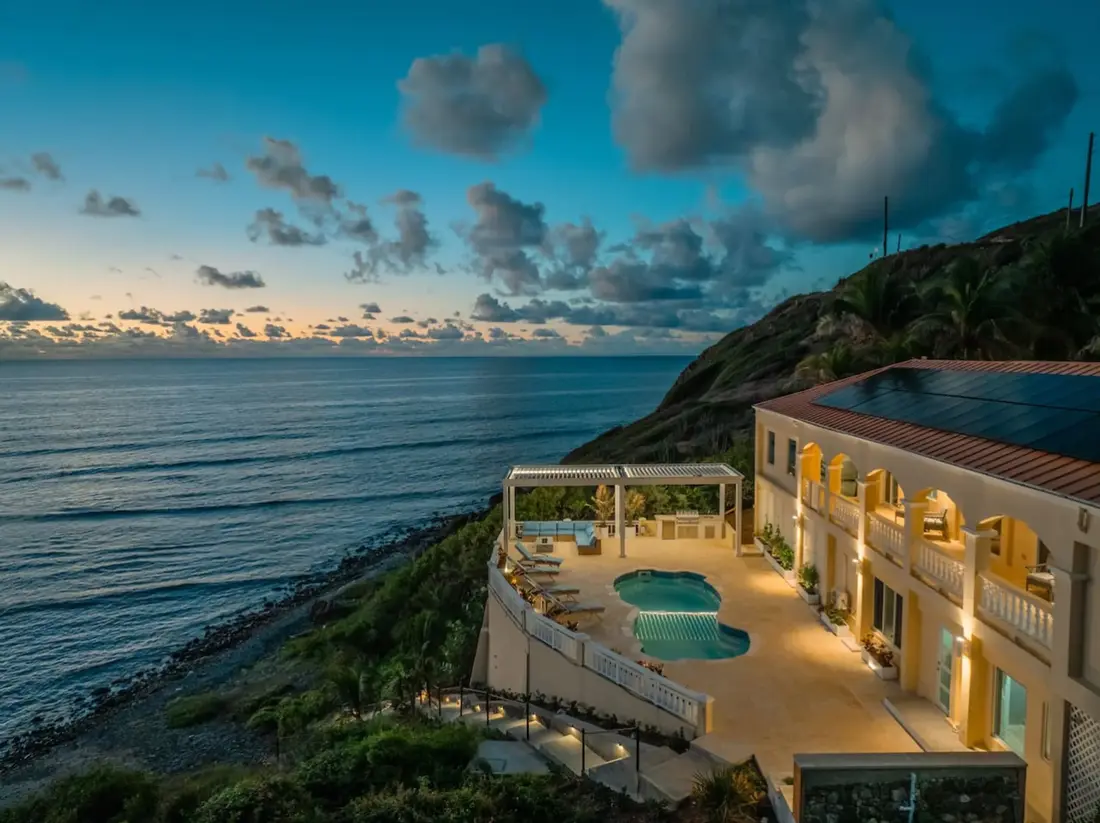
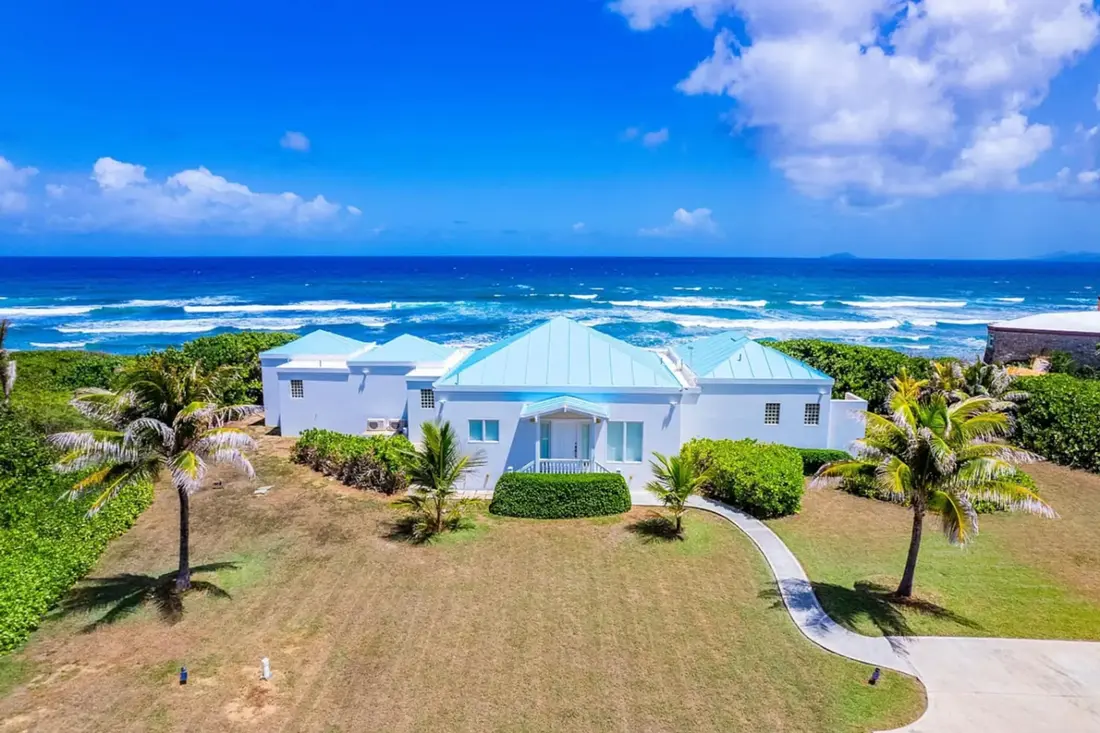
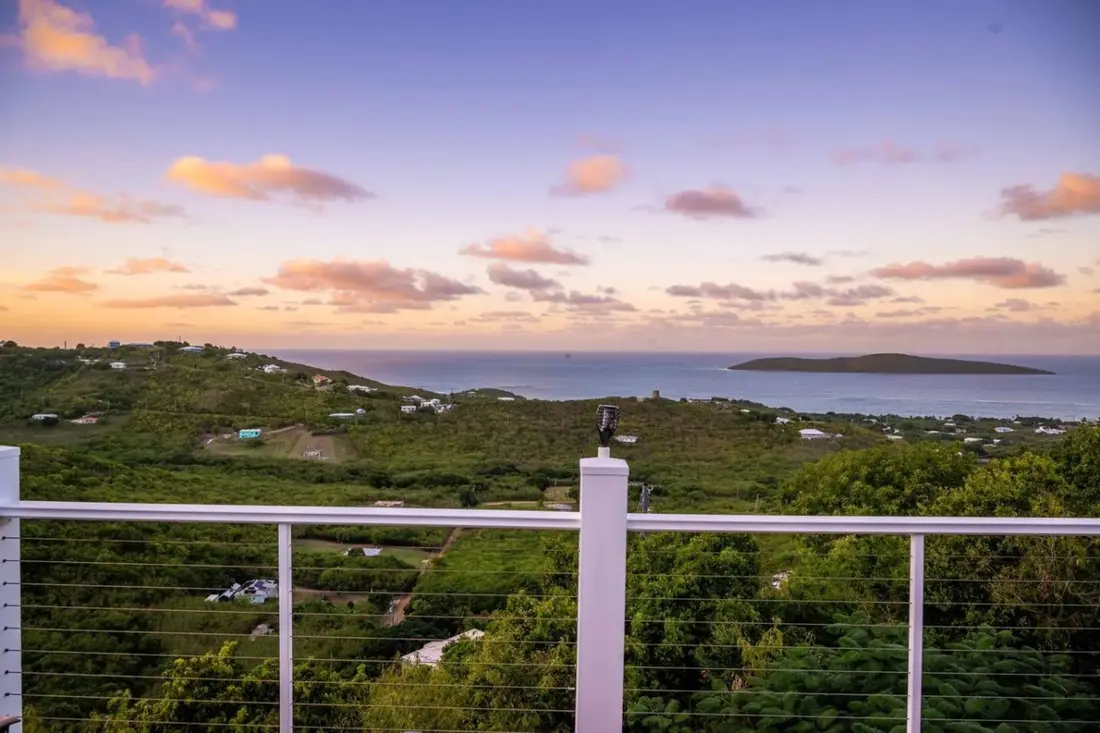
Because the plant sits by the airport in the island's south-central middle, it is a short hop from almost anywhere our guests stay, which is what makes it a practical first-day or last-day stop. From Sunset Sea-Clusion and our other west-end homes around Frederiksted it is a quick run along the south-shore highway, easy to pair with the Cruzan tour and a west-end sunset. From the East End villas it slots naturally into a cross-island day. Every home in our collection of twelve villas and condos has a full kitchen and a place to mix a drink, so whatever you carry out of the shop — or grab duty-free on your way through the airport — has somewhere to land before it leaves in your luggage.
Sources
Written from official and first-party sources, checked August 2026. Hours, prices and event dates change — confirm before you go.
In this guide
Stay nearby
On The Shoys beach: six bedrooms, six baths, pool and hot tub, room for twelve, and the beach through the back garden.
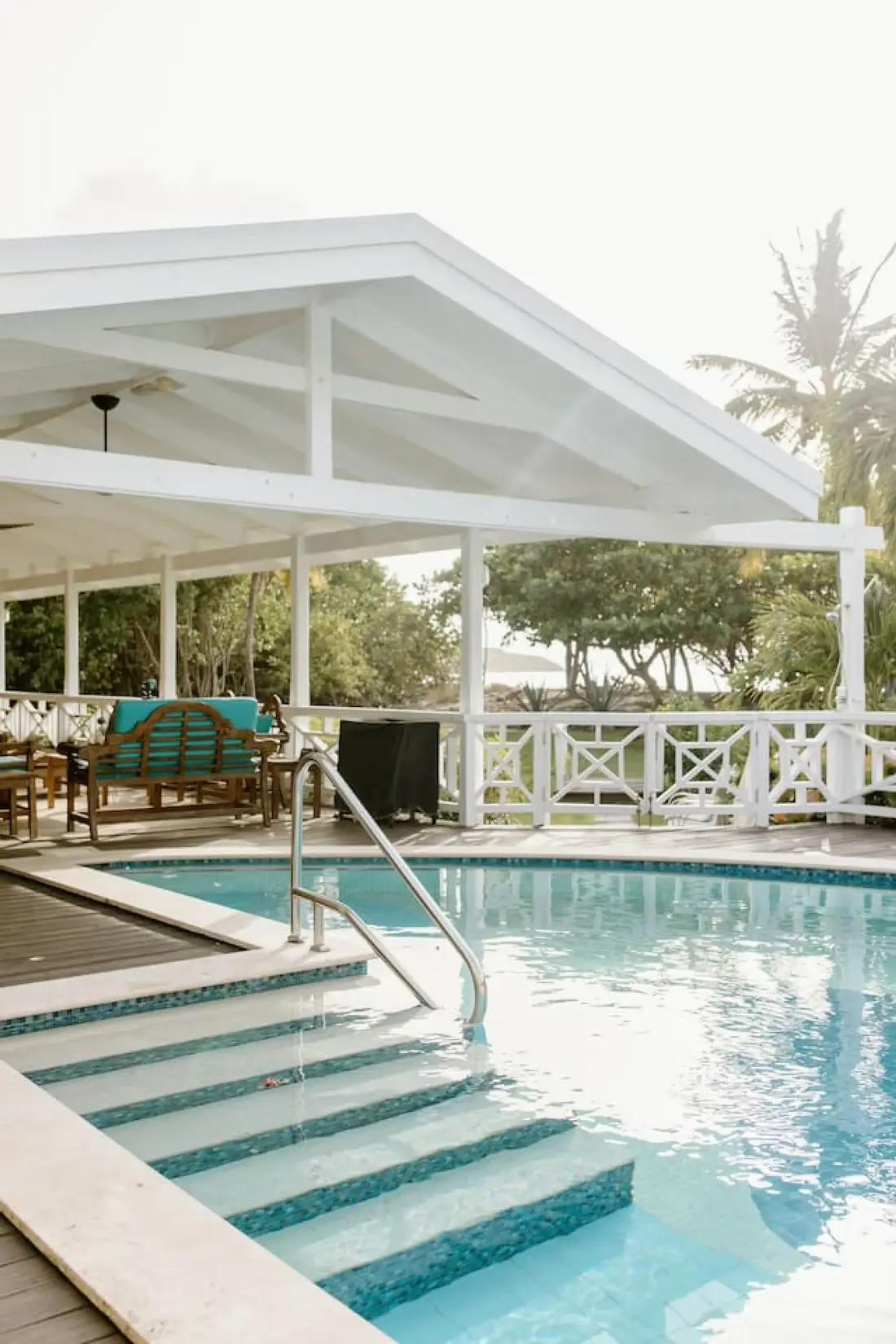 Shoy's Beach House6 bd · 6 ba · sleeps 12 · Christiansted
More in Food & Drink
Sources
12 references, listed in full at the end of this guide — official park, refuge, tourism-board and business sources, checked August 2026.