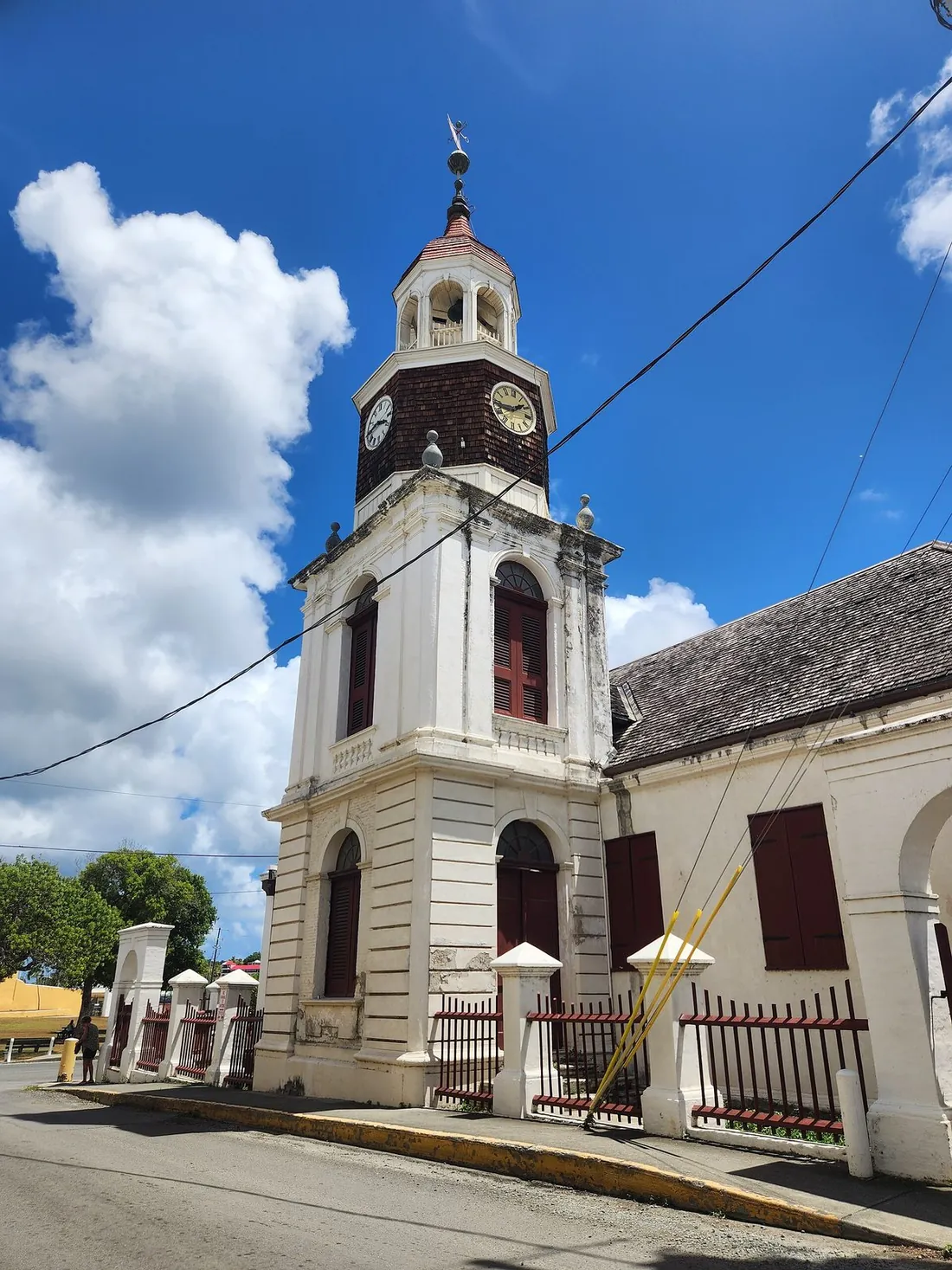
St. Croix vs Puerto Rico
The Caribbean's biggest U.S. destination against its quietest: same flag, same dollar, and a hundred-to-one difference in scale.
Puerto Rico is the easiest big trip in the Caribbean for Americans: enormous airlift, cheap fares, a famous old city, a rainforest, and no passport. St. Croix is the same idea at one seventy-fifth the population — also American, also passport-free, with its own mainland nonstops and a 50-minute hop from San Juan itself. The comparison is really between a city vacation with beaches and an island vacation with none of the city. Both sides get their due below.
The two, side by side
| St. Croix | Puerto Rico | |
|---|---|---|
| Passport for U.S. citizens | Not needed | Not needed |
| Population | About 41,000 | About 3.2 million |
| Feels like | A small island: two towns, open road | A metro area with beaches: San Juan is a real city |
| Flights | Nonstops from five mainland cities; San Juan hop 50 minutes | Huge airlift, often the cheapest fares in the Caribbean |
| Traffic | Rush minute, not rush hour | San Juan metro congestion is real |
| Signature sights | Buck Island, Cane Bay Wall, two Danish towns | Old San Juan, El Yunque, Condado |
| Bioluminescent bays | Salt River glows year-round, 10 minutes from villas | Mosquito Bay (Vieques) — a separate trip within the trip |
| Beach crowds | Often nobody within a hundred yards | Urban beaches busy; the quiet ones take work |
| Where you stay | Villas with pools, booked direct | High-rise resorts, city hotels, scattered rentals |
| Duty-free allowance home | $1,600 per person (USVI) | $800 standard |
Advisory levels and details are as published by the U.S. Department of State and checked August 2026. They change — read the current advisory at travel.state.gov before any international trip.
The short answer
Puerto Rico is a wonderful trip that is not primarily a quiet-beach trip. It is a Spanish-colonial city, a rainforest, a food scene, a nightlife, and three and a quarter million people living their lives around you — with beaches attached. St. Croix is the inverse: the beaches, the reef and the quiet are the main event, with two small historic towns attached. Same flag, same dollar, no passport either way. If your week wants energy, take San Juan and enjoy it. If your week wants an island — a villa, a rental car, an empty crescent of sand by ten in the morning — St. Croix is the version of America that does that. We manage our homes here, so weigh our view accordingly; the facts below stand on their own.
Scale, by the numbers
Puerto Rico: about 3.2 million residents on 3,500 square miles, with the San Juan metro holding roughly two million people — a real American city, with a real city's traffic, noise and pace. St. Croix: about 41,000 residents on 84 square miles, the largest of the U.S. Virgin Islands, with Christiansted — its biggest town — small enough to walk end to end in fifteen minutes. Neither number is a criticism of the other place. They are simply different products. A driver in San Juan merges across four lanes under highway signage; a driver on St. Croix slows for a herd of goats near Estate Lower Love. Both are the United States in the Caribbean. Only one is an island in the sense a villa vacation means the word.
Getting there
Puerto Rico wins airfare and frequency, and it is not close. Luis Muñoz Marín International is the Caribbean's great hub — nonstops from dozens of U.S. cities, all day, often at the lowest fares in the region. If a bargain fare on exact dates rules your planning, San Juan will usually win the spreadsheet.
But St. Croix is not the hard-to-reach island in this comparison — and San Juan's airlift is partly St. Croix's airlift too. Henry E. Rohlsen Airport has its own mainland nonstops — American from Miami daily year-round (about 3 hours) and Charlotte (daily from December 17, 2026), Delta from Atlanta (near-daily from December 19), United from Newark (Saturdays from October 31, 2026), American's winter Chicago Saturdays — and Cape Air and JetBlue run the San Juan hop all day, about 50 minutes. Fly any cheap fare into SJU, walk to the commuter gates, and be over the East End of St. Croix before your coffee cools. Verified August 2026:
| Airline | From | Schedule (as published Aug 2026) | Flight time |
|---|---|---|---|
| American Airlines | Miami (MIA) | Year-round, one to three flights daily by season | about 3 hours |
| American Airlines | Charlotte (CLT) | Paused until Saturdays return November 7; daily beginning December 17, 2026 | about 3¾ hours |
| American Airlines | Chicago O'Hare (ORD) | Winter Saturdays beginning December 5, 2026 | about 4¾ hours |
| Delta Air Lines | Atlanta (ATL) | Saturdays through September 5; Saturdays again from November 14; daily except Mondays beginning December 19, 2026 | about 4 hours |
| United Airlines | Newark (EWR) | Saturday nonstops beginning October 31, 2026 | about 4½ hours |
| Airline | From | Service | Flight time |
|---|---|---|---|
| Cape Air / JetBlue | San Juan, Puerto Rico (SJU) | Multiple daily, year-round | about 50 minutes |
| Fly The Whale | San Juan — Isla Grande (SIG) | Several round trips daily | about 40 minutes |
| Cape Air / Fly The Whale | St. Thomas, USVI (STT) | Multiple daily, year-round | about 25 minutes |
| Seaborne (seaplane) | St. Thomas — Christiansted Harbor to Charlotte Amalie | Schedules vary; one aircraft on the route | about 25 minutes |
| Cape Air | Nevis (NEV) | Fridays and Sundays | about 1 hour |
The city question
Old San Juan deserves every word written about it: five hundred years of walled Spanish city, the forts of El Morro and San Cristóbal, blue cobblestones, balconied streets that reward a full day and a good appetite. If you have never walked it, you should. It is one of the great historic districts in the hemisphere.
St. Croix's history plays at a different register, and Americans consistently underrate it: Christiansted's harbor is ringed by five protected Danish colonial structures — a National Historic Site — and its arcaded streets, built to Danish plans by enslaved African craftsmen, still function as the island's dining rows. Alexander Hamilton grew up here, clerking on Company Street. Frederiksted's Fort Frederik is where emancipation in the Danish West Indies was proclaimed in 1848, and Salt River Bay is the only documented place where Columbus's crew set foot on what is now U.S. soil. Old San Juan is grander; St. Croix's history is quieter, closer, and woven into towns you will actually be having dinner in. See the Christiansted historic site and Hamilton's St. Croix.
Nature: El Yunque against a whole quiet island
Puerto Rico's headline nature is El Yunque, the only tropical rainforest in the U.S. national forest system — and a heavily visited one, with timed-entry reservations for the main recreation area in recent years and full lots in high season. Its bioluminescent headliner, Mosquito Bay, is on Vieques — a separate ferry-or-puddle-jumper trip within the trip.
St. Croix compresses the same categories into a drive: a west-end rainforest you enter by simply turning onto Mahogany Road (no reservation, no gate), tide pools at the end of the Annaly Bay hike, a year-round bioluminescent bay at Salt River ten minutes from town — kayak it at night with clear-bottom boats — and Sandy Point, the largest leatherback turtle nesting beach under U.S. jurisdiction, open weekends outside nesting season. Add Buck Island Reef National Monument, a no-take marine reserve since 1961 with a marked underwater snorkel trail, and the count of protected federal landscapes on this one small island reaches four. The guides: the rainforest, the bio bay, Buck Island.
Beaches and the water
Puerto Rico has hundreds of miles of coast and some superb sand — but its most accessible beaches are urban (Condado, Isla Verde: hotel towers, city crowds), and its quiet ones demand either a long drive or a hop to Culebra and Vieques. The snorkeling and diving near San Juan are modest; the good water is out at the islands and reefs, an excursion away.
On St. Croix the good water is the default. Cane Bay's wall starts a hundred yards off the sand — divers walk in from the beach. The Frederiksted Pier is a celebrated macro and night dive, also a walk-in. Buck Island's lagoon is a half-day sail from the Christiansted boardwalk. Rainbow, The Shoys, Jack's and Isaac's, Chenay, Dorsch — a different beach every day for a week, none with an entry line, most with nobody within a hundred yards on a weekday. The overview: the best beaches and snorkeling St. Croix.
Food and evenings
San Juan's food scene is the Caribbean's deepest — from lechoneras in the hills to white-tablecloth rooms in Condado — and if eating is the point of your trip, Puerto Rico wins and you should go hungry. St. Croix answers at island scale with a real local cuisine rather than a resort menu: kallaloo and fungi, saltfish, pate from roadside stands, spit-roasted chicken at La Reine, harborside dinners on the Christiansted boardwalk, west-end sunset bars in Frederiksted. And the drinks are made on-island: Cruzan's distillery (a tradition at Estate Diamond since 1760), Captain Morgan's visitor center, the world's first breadfruit vodka at Sion Farm, rainwater beer at Leatherback. Start with the Crucian food guide and the rum.
Crowds, noise and the feel of the week
This is the core of the choice. Puerto Rico is a high-volume destination: millions of visitors a year, cruise megaships at Old San Juan, resort towers shoulder to shoulder at Condado and Isla Verde, weekend traffic to every famous beach and waterfall. The energy is the product, and lots of travelers love it.
St. Croix's visitor economy is a rounding error by comparison, and the days show it: the fort without a line, the beach without a second group, dinner without a wait on a Tuesday, stars over the East End with no city glow behind them. There is no traffic report on St. Croix because there is no traffic. For remote workers and long-stayers the same calm applies — see long stays. If your nervous system's idea of vacation is quiet, this is the American island built for it.
Costs
Airfare: Puerto Rico usually wins, sometimes by a lot — use it, via the San Juan hop, and St. Croix inherits the savings. On the ground the ledger flips. San Juan resort and boutique-hotel rates in season are city prices; parking, resort fees and restaurant rows add up. A St. Croix villa with a pool, booked direct with no platform fees, typically undercuts comparable San Juan lodging for a group — and a villa kitchen stocked at Plaza Extra beats a week of hotel breakfasts. Two U.S. quirks sweeten it further: purchases in the USVI fly home under a $1,600 per-person duty-free allowance, double the standard $800, and the rum you tour on Tuesday ships home in your bag under the same rule (details in money and tipping).
The travel day, hour by hour
Puerto Rico's arrival is easy by Caribbean standards, so run it fairly. Land at Luis Muñoz Marín at 2; the airport is big and moves; bags and the rental shuttle put you on the highway by 3. Then the destination decides the day: a Condado hotel is twenty minutes of city traffic; a Rincón surf town is two and a half hours west; a Fajardo resort an hour east through the afternoon crawl. Check-in lines at the big resorts run resort-length. Call it 4:30 to 6 at the pool, depending on ambition.
The St. Croix day uses the same first flight and lands softer: either a mainland nonstop straight into Henry E. Rohlsen, or any cheap SJU fare plus the 50-minute Cape Air/JetBlue hop — commuter gates, no re-check drama on through-tickets, and the East End of St. Croix out the right-hand window on descent. Rental counter, Plaza Extra, villa: inside an hour from wheels-down, whichever home you booked. There is no traffic variable because there is no traffic. And the flight home from STX is a domestic stroll — no TSA crush, no customs, the agriculture check and gone.
Month by month on the two islands
The weather tracks together — both sit in the same trade-wind belt, winter days around 83°F, hurricane season June through November with the same insurance advice. The calendars diverge on people. Puerto Rico's crowds pulse with the mainland's: holiday weeks triple San Juan, Semana Santa fills every beach on the island, summer brings family volume, and the winter cruise schedule stacks Old San Juan daily. Its festival calendar is magnificent and busy — San Sebastián Street Festival in January is one of the hemisphere's great parties and books the city solid.
St. Croix's calendar breathes: high season December through April fills villas without filling beaches; the Crucian Christmas Festival runs its parades in Frederiksted at island scale; February brings AgriFest, the Virgin Islands' big farm fair; May and June are the clear-water value months; September through November the island goes green and quiet and cheap. If your ideal trip is timed to a festival's energy, Puerto Rico's calendar wins. If it is timed to everyone else's absence, St. Croix's does. Detail: when to visit.
Seven days on each
A good Puerto Rico week is a tour: two days of Old San Juan's forts, streets and kitchens; El Yunque with a timed reservation; a day east for Fajardo's cays or a Culebra ferry gamble; a day west if you are ambitious (the drive is the price); a beach day at Condado or Isla Verde among the towers; a last night of San Juan's restaurants. Wonderful — and it is a tour, with the car clocking hours daily.
A good St. Croix week is a residence: Buck Island's snorkel trail Monday, Cane Bay and the wall Tuesday, Christiansted's fort and arcades Wednesday, the East End and Point Udall Thursday, Frederiksted and Rainbow's sunset Friday, the rainforest and Cruzan Saturday, your favorite beach again Sunday — no drive over forty minutes all week, every night in the same house with your own kitchen and pool. The tour teaches you a place; the residence lets you live in one. Plans: the 7-day itinerary.
Getting around once you land
Puerto Rico drives on the right through a full American highway system with a full American city's habits: San Juan's rush hours are real, the autopistas toll electronically (sort the AutoExpreso tag with the rental), parking in Old San Juan is a strategy game, and the famous corners — Rincón's surf, the southwest's Cabo Rojo cliffs — sit two-to-three highway hours from the capital. Ride-share works in the metro and thins beyond it. None of it is exotic; all of it is a big place's logistics, and visitors who pictured an island discover they booked a small country.
St. Croix is the island they pictured: forty minutes corner to corner on open roads, left-side driving as the single briefing (the guide), no tolls, no parking strategy, no highway hours between the villa and anything. The island loop is the whole road trip, and it fits before lunch.
Before you book either
For Puerto Rico: pick your geography first — a San Juan-based trip and a west-coast trip are different vacations connected by three hours of autopista; reserve El Yunque's timed entry when reservations open for your dates; book Old San Juan dinners ahead in season; sort the toll tag and the parking plan with the rental; and check the festival calendar — San Sebastián in January fills the city completely. Culebra-Vieques add-ons need the ferry-or-flight homework covered in their own comparison.
For St. Croix: book the villa direct (the homes), reserve the car, calendar Buck Island and the bio bay ahead in peak weeks. The geography question does not exist; everything is the same forty minutes.
The case for St. Croix, point by point
One: an island against a small country — 84 square miles that hand themselves over whole. Two: no traffic, no tolls, no timed-entry rainforest. Three: beaches that empty out against beaches that fill in. Four: walk-in wall diving and a snorkel-trail monument against excursion-boat water. Five: a year-round bio bay ten minutes out against a ferry-or-flight add-on. Six: the $1,600 USVI allowance against the standard $800 — the one federal perk Puerto Rico lacks. Seven: quiet as the default rather than the exception. Eight: Danish-built towns and Hamilton's streets against (conceded) the hemisphere's grandest walled city. Nine: villa economics with supermarket provisioning against city-hotel rates and resort fees. Ten: the 50-minute hop that lets you take both — San Juan's forts as the appetizer, the quiet island as the week. The big territory is a great trip; the small one is a great vacation.
Who should pick which island
Pick Puerto Rico if: the city is half the point (eat, dance, museum, repeat); airfare rules and your dates catch a fare war; you want big-resort infrastructure, casinos or a convention-grade hotel; or you are stacking a multi-stop Caribbean tour on SJU's hub. Pick St. Croix if: the trip is a villa and a car; the beach should be empty when you get there; anyone in the group dives or snorkels seriously; you are working remotely for part of the stay (see phones, wifi and remote work) and need quiet; or the memory you are trying to make involves nobody else's soundtrack. And the hybrid is always open: San Juan's forts on the way in, the 50-minute hop, and the week at the villa — the city as an appetizer rather than the meal.
When Puerto Rico is the right call
Take Puerto Rico when the trip is the city: a long weekend of Old San Juan, museums, kitchens and nightlife. Take it when airfare rules everything, when you want a big-resort casino weekend, or when your itinerary needs the scale — a family reunion across three generations with wildly different needs finds more infrastructure there. And take the combination when you can: San Juan's forts on the way down, then the 50-minute hop to a St. Croix villa, is one of the best one-two punches in the Caribbean and needs no passport at any point.
A rainy day on each
Puerto Rico owns the region's best rainy day and it is not close: Old San Juan's museums and forts, the Museo de Arte de Ponce's collection (worth the drive even wet), the distillery tours at Casa Bacardí, and a food scene that improves under awnings. Conceded happily. St. Croix's smaller circuit still fills the day: Fort Christiansvaern's vaults, the Whim estate museum, Frederiksted's arts center, and the Cruzan-to-Sion-Farm trail. The wet-day column goes to the big territory; the other six days of beach weather go to the island whose beaches are empty.
If you choose Puerto Rico anyway
Then take the city seriously and the logistics early. Base in Old San Juan or Condado for a first trip; book El Yunque's timed entry when it opens for your dates; do the forts at opening before the ships disembark; and eat with intention — the lechoneras of Guavate on a weekend, the food trucks of Loiza, one splurge kitchen in Santurce. If beaches headline, aim west (a Rincón base) or plan the Culebra logistics properly rather than day-tripping on hope. Drive with the toll tag sorted, park with strategy, and time the whole trip around San Sebastián in January only on purpose. Then — the hybrid this series keeps recommending — put the last five nights on the 50-minute hop east, where the quiet lives.
Where you would stay on St. Croix
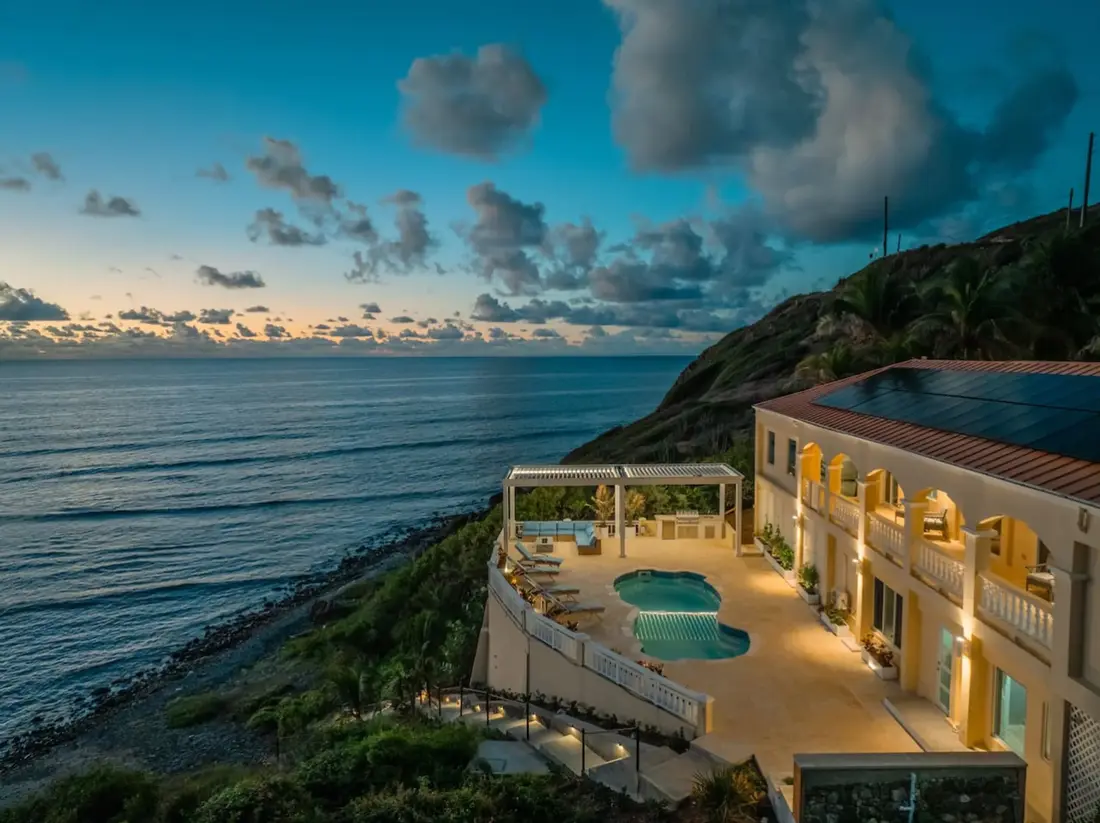
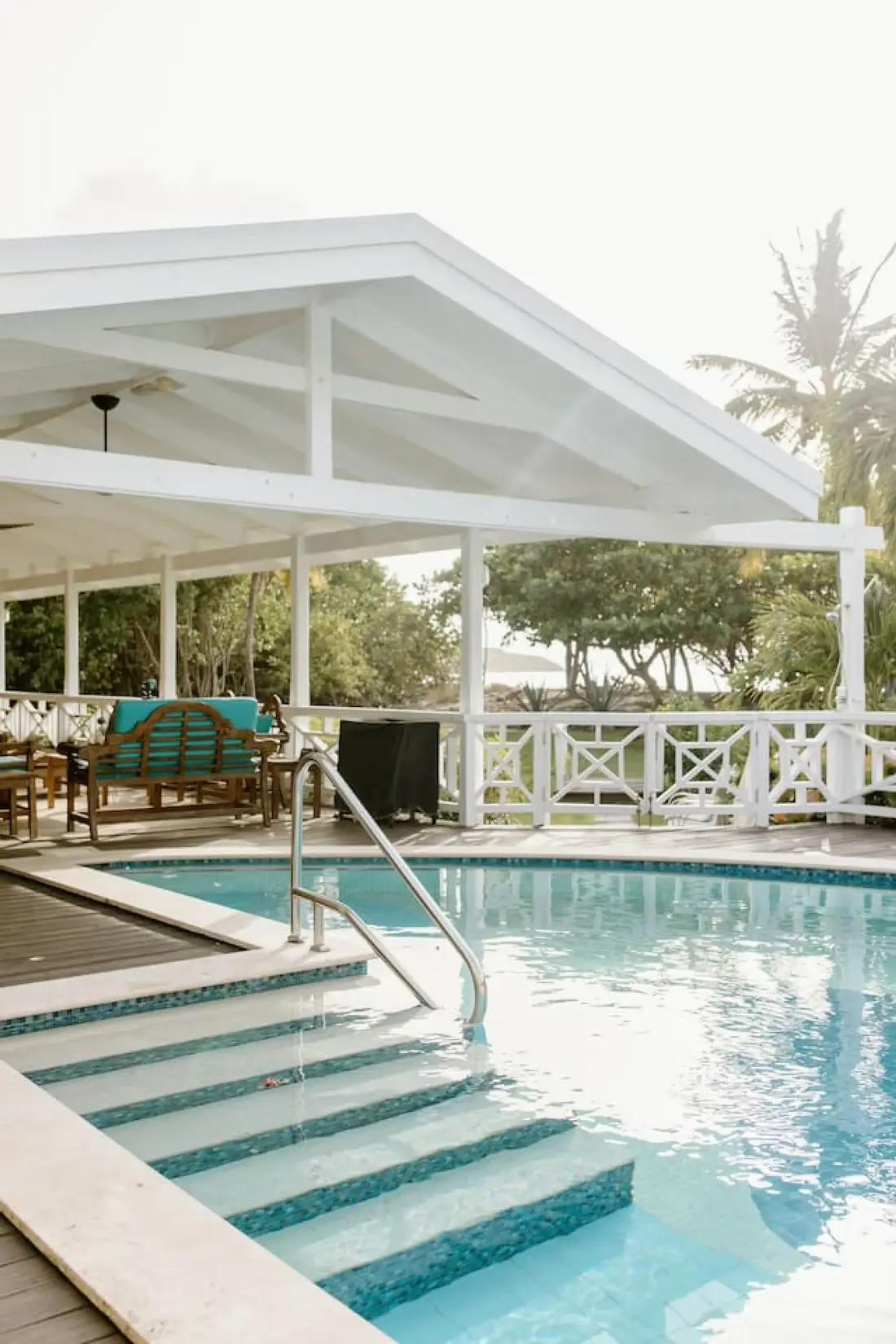
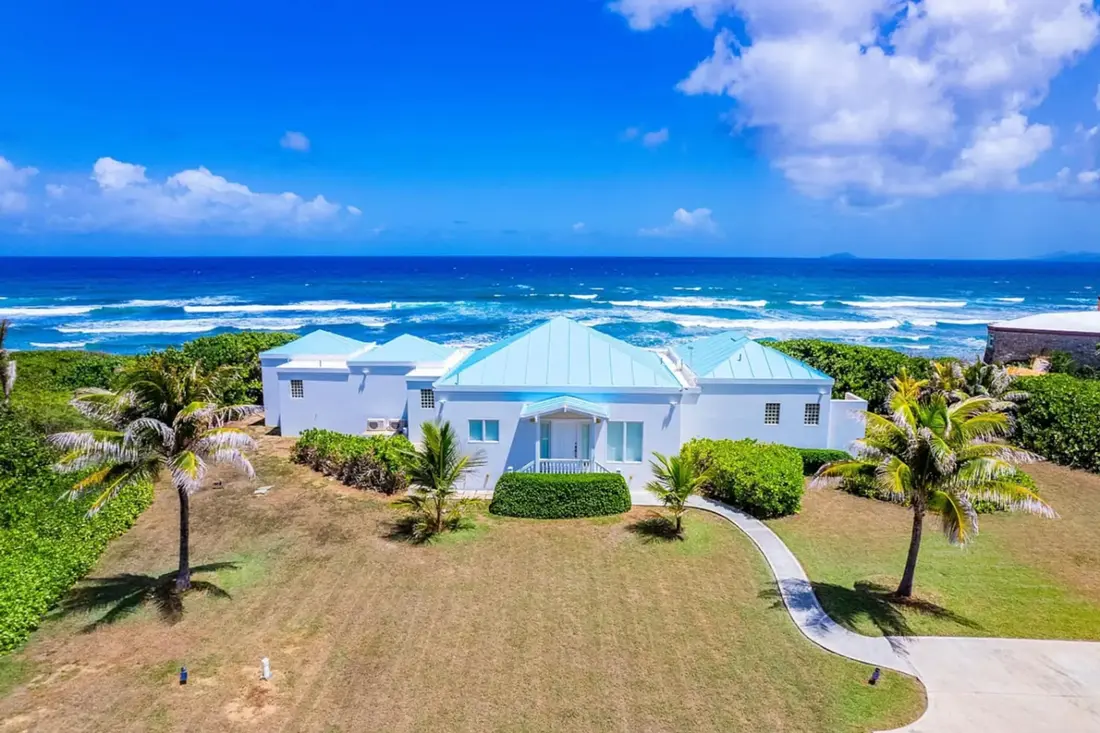
The quiet half's addresses: our direct-booked homes with Sterling Point managing on-island. Shoy's Beach House on The Shoys' guarded sand; East End villas — The Cerulean among them — facing Buck Island from private pools; Christiansted condos near the boardwalk; west-end sunset stays. Full kitchens, supermarket provisioning, no resort fees, no parking strategy — and the $1,600 allowance home that Puerto Rico's $800 cannot match. Couples: homes for two; groups to twelve: the family collection. The roster: the homes.
How this page was made
Series rules: population and scale per census figures; El Yunque's reservation practice per the U.S. Forest Service; flight and hop schedules verified August 2026; the duty-free differential per CBP's insular-possession rules. Puerto Rico's strengths — the city, the food, the airlift, the rainy-day bench — are conceded throughout, and the hybrid itinerary is recommended sincerely because it is what we would book ourselves. Our bias: the homes we manage on St. Croix, disclosed on every page. Both territories are American; the facts are all domestic and all checkable.
The bottom line
Puerto Rico is the United States' Caribbean city; St. Croix is its Caribbean island. One offers scale, energy and the hemisphere's great walled town; the other offers 84 quiet square miles where the wall you visit is underwater at Cane Bay and the loudest thing at night is the tree frogs. Same citizenship, same currency, same easy flight home. For the week this site exists to serve — a villa, a car, a reef, a slow dinner in a small Danish town — the small island wins on every line that matters. The homes are here.
Elsewhere in this series
This page is one of twenty-six. If you are still shopping the map, the verdicts nearest this comparison run as follows — each links to the full page with its own sources:
St. Croix vs Vieques & Culebra — Same quiet, same flag. St. Croix has the jets, the villas and the services; the little islands have the ferry line.
St. Croix vs the Florida Keys — The Keys are a road trip with margaritas. St. Croix is the Caribbean: warmer winter water, real turquoise, and lodging that costs less than Key West.
St. Croix vs Hawaii — Hawaii is magnificent and eleven hours away. St. Croix is the American tropics you can reach by lunch, with warmer, calmer, bluer water.
The complete set, grouped by region and passport rules, lives at St. Croix vs other destinations.
Which home fits your group
If St. Croix wins your comparison, the homes are the easy part. Groups of eight to twelve settle into the family collection; couples take a home for two; anyone who wants sand at the door starts with beachfront. Every one is managed from the island by Sterling Point and booked direct — tell us the dates and the headcount and we will point you at the one that fits.
Two practical notes that surprise first-time villa bookers. Direct booking means the rate is the rate: no platform service fees, no resort fees, and the people answering questions are the same Sterling Point team that manages the houses on the island. And every home runs a full kitchen — one run to Plaza Extra or Seaside Market on the drive from the airport covers the week, which is where a villa quietly beats a resort bill before the first beach day. How the booking works, and what it does not mean, is spelled out at book direct.
Who wrote this
SP Vacations is the vacation-rental division of Sterling Point Real Estate, a licensed real-estate operation based on St. Croix in the U.S. Virgin Islands. The team lives and works on the island it writes about: the homes in the villa collection are inspected, cleaned and managed locally, and the person who answers a booking question is on St. Croix, not in a call center three time zones away. That is the vantage point behind every page in this series — and the reason the series exists at all, since most of the destinations compared here are places our guests weighed before choosing this island.
Two standing practices shape what you read. First, the pricing wall: nightly rates and availability for the homes live only on the booking pages, never in articles, so nothing here goes stale or oversells. Second, the sourcing rule: safety statements cite the U.S. State Department, customs figures cite CBP, park facts cite the National Park Service, and anything that changes — advisories, schedules, hours — carries its checked date and a pointer to the primary source. Where a rival destination wins a category, the page says so, because a comparison that concedes nothing persuades nobody. Questions, dates or a villa to match a group — the island team is here, or call 340-205-3929.
Questions people ask
Is St. Croix or Puerto Rico better for a beach vacation?
For a quiet beach-and-villa week, St. Croix: fewer people by orders of magnitude, walk-in reef access, and beaches that stay near-empty on weekdays. Puerto Rico's most accessible beaches are urban and busy; its quietest ones require long drives or a second hop to Culebra or Vieques. For city energy plus beaches, Puerto Rico is excellent.
Do I need a passport for Puerto Rico or St. Croix?
No for both. Each is a U.S. territory: government ID for the flight, U.S. dollars, U.S. phone plans, no foreign customs. St. Croix adds one perk Puerto Rico lacks: the USVI duty-free allowance home is $1,600 per person, double the standard $800.
Is it easy to combine San Juan and St. Croix?
Very. Cape Air and JetBlue connect SJU and STX in about 50 minutes, multiple times daily. A common pattern: two nights of Old San Juan on the way in, then the hop to a St. Croix villa for the week. No passport is needed at any point.
Which is cheaper?
Airfare to San Juan is usually cheaper; on-island costs then favor St. Croix, where a direct-booked villa with a pool typically undercuts comparable San Juan resort lodging for a group and a stocked kitchen replaces resort meals. Flying a cheap fare to SJU and hopping to STX captures both sides.
Is St. Croix quieter than Puerto Rico?
Dramatically. St. Croix holds about 41,000 people on 84 square miles; Puerto Rico about 3.2 million, with a two-million-person metro. St. Croix has no traffic congestion, no high-rise beach strips and no cruise megaport. That contrast is the core of the choice.
Does Puerto Rico have better snorkeling and diving than St. Croix?
No — the reverse, for shore access especially. St. Croix's Cane Bay Wall and Frederiksted Pier are walk-in dives, and Buck Island Reef National Monument holds a marked underwater snorkel trail in a no-take reserve. Puerto Rico's better water generally requires excursions to offshore islands and cays.
When is the best time to visit Puerto Rico or St. Croix?
The weather tracks together — winter dry season, June–November hurricane season. Crowds differ: Puerto Rico pulses with mainland holidays, Semana Santa and the January San Sebastián festival; St. Croix's high season fills villas without filling beaches, and September–November runs green, quiet and cheap on both.
Is driving hard in Puerto Rico or St. Croix?
Puerto Rico drives on the right on a full highway network, with real San Juan congestion and long cross-island hauls to the famous corners. St. Croix drives on the left — a day-one novelty in ordinary American cars — with no congestion and nothing more than forty minutes away. See driving on the left.
Which is better for remote work or a long stay?
Both have U.S. phones, banking and Amazon-adjacent logistics. San Juan offers city amenities and coworking; St. Croix offers quiet, villa desks with sea views and fewer distractions — see long stays and working remotely.
What about El Yunque vs St. Croix's rainforest?
El Yunque is larger and taller — a true national forest — and has used timed-entry reservations for its main area in recent years. St. Croix's west-end rainforest is smaller but ungated: turn onto Mahogany Road and you are in it, with the Annaly Bay tide-pool hike and the Domino Club along the way.
In this comparison
St. Croix at a glance
- U.S. territory — no passport for U.S. citizens
- Nonstops from Miami, Fort Lauderdale, Charlotte, Atlanta, Newark and Chicago
- U.S. dollars, U.S. phone plans, no foreign customs
- $1,600 duty-free allowance home (double the standard $800)
- 84 square miles — the largest U.S. Virgin Island
More comparisons
- St. Croix vs St. Thomas
- St. Croix vs St. John
- St. Croix vs Vieques & Culebra
- St. Croix vs the Florida Keys
- St. Croix vs Hawaii
- St. Croix vs the British Virgin Islands
- St. Croix vs Turks & Caicos
- St. Croix vs Anguilla
- St. Croix vs St. Barts
- St. Croix vs St. Martin
- St. Croix vs Antigua
- St. Croix vs St. Kitts & Nevis
- St. Croix vs St. Lucia
- St. Croix vs Barbados
Sources
Population and geography: 2020 census figures for both territories. Park and monument facts: NPS and USFWS. Flights verified August 2026 against the airlines. El Yunque reservation practice per USDA Forest Service announcements. Cost statements are patterns, not quotes — verify on your dates.
St. Croix vs Puerto Rico
Puerto Rico is a country-sized trip with city energy. St. Croix is the island-sized version: 41,000 people, no traffic, same flag.