St. Croix with Kids
Calm-water beaches, forts to climb, turtles to meet, and villas where everyone gets a room: the family logistics that work.
St. Croix is one of the easier islands in the Caribbean to run with children. No passport for U.S. citizens, no currency exchange, phones that work as they do at home, calm beaches within a short drive of every villa, and history a kid can climb on. This page is the operations manual for a family week: what a villa changes about the daily logistics, what each age group can actually do here, how to structure a day so nobody melts down, where to feed picky eaters, the car-seat law, and the gear questions to settle before you fly.
What a villa changes for a family
The core problem of a hotel trip with kids is that a hotel room is one room. Bedtime for a four-year-old at 7:30 becomes bedtime for the adults at 7:30, or a week of whispering in the bathroom with the lights off. A house dissolves that problem. Every home in our portfolio has a full kitchen, most have a washer and dryer, and the bedrooms are separate rooms behind real doors, so the toddler naps while the ten-year-old watches a movie and the adults talk on the terrace at normal volume.
The concrete gear matters too, and it varies by house, so read the amenity list on the property page before booking. The Cerulean lists a high chair, a pack-and-play travel crib, and stair gates in its amenities. Dragonfly Villa lists a pack-and-play as well. Shoy's Beach House lists a fenced yard and board games, and it sits directly on a calm beach, which shortens the distance between a small child and the water to a walk across the sand. These items come straight from each listing; if a specific piece of equipment decides your booking, confirm it with us first, because inventories change.
Then there is the money arithmetic. A family of five in a hotel is two rooms, two breakfasts out, and every lunch at restaurant prices. A house is one booking, a stocked refrigerator, and sandwiches made while the kids are still in wet swimsuits. Over a week, the kitchen usually pays for a boat trip. The full comparison lives in the villa or hotel guide; the short version for parents is that laundry and a freezer with popsicles in it are worth more than turndown service.
Ages 2 to 5
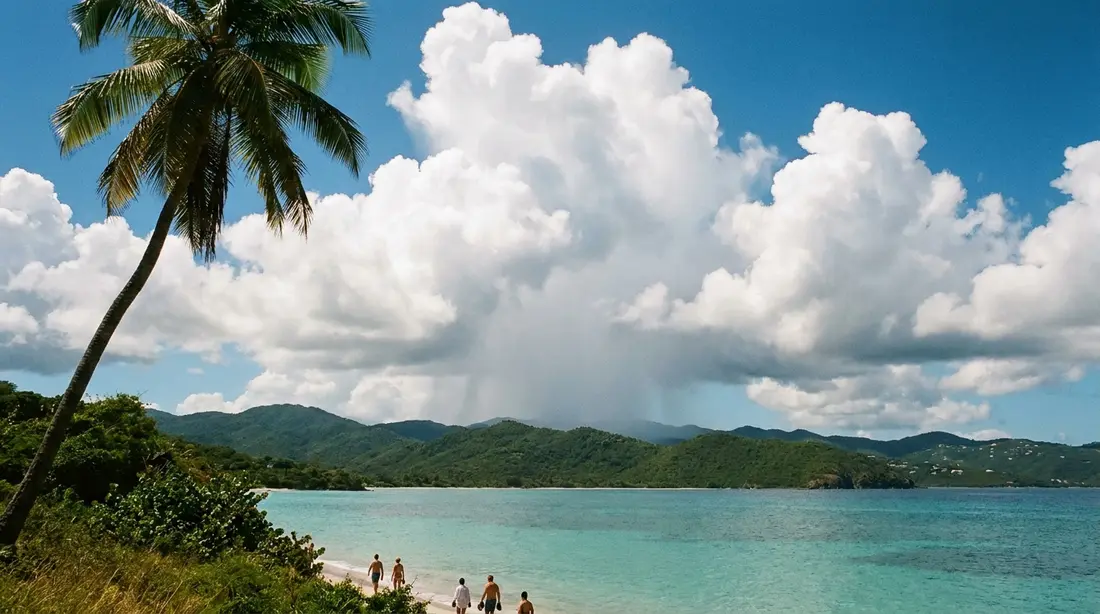
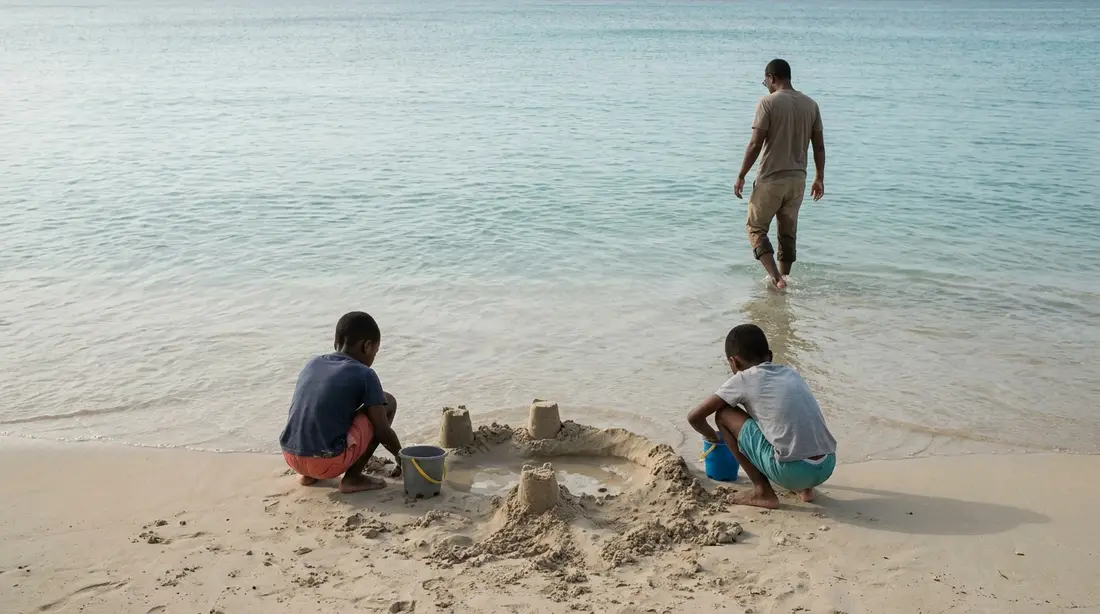
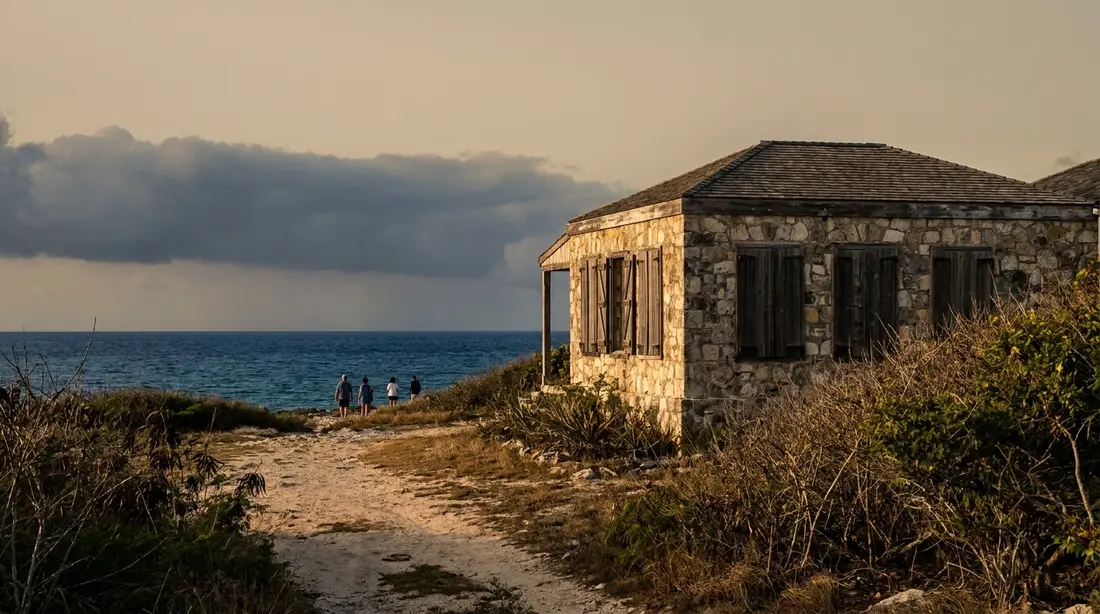
The island works for this age group because its best toddler assets are free and close. The move is shallow water, and St. Croix has an unusual amount of it. Chenay Bay is the standing answer: protected, gradual, and calm enough that a three-year-old can stand in water to the knees for an hour while turtles surface farther out. The Shoys offers the same calm on the Christiansted side, and Columbus Landing adds restrooms, grills, and picnic tables, which at this age count as critical infrastructure.
Keep ambitions modest and schedules sacred. One outing per half-day, naps defended like appointments, dinner early. Toddlers do fine on the shorter Buck Island boats, and at least one operator publishes a fare for ages 2 through 5, but a boat day burns a small child's whole battery, so plan nothing after it. Skip the bio bay at this age; the operators' minimum ages start at 6, and the trip runs past every toddler bedtime anyway. The wins that stick for the smallest kids are simple: sand, shallow water, a pool with a parent in it, and the tarpon under the boardwalk lights after an early dinner.
Ages 6 to 11
This is the sweet-spot age for St. Croix, because the island's headline attractions match a grade-schooler's abilities almost exactly. A confident 7-year-old swimmer can manage the guided Buck Island underwater trail with a flotation vest and a crew member nearby. The cannons and ramparts at Fort Christiansvaern hold this age group longer than any museum case. The Salt River bio bay becomes possible: kids paddle tandem with a parent, and the clear-bottom kayaks turn the water under their feet into the show. The Domino Club pigs in the rainforest are a sure hit, and the story of a bar where pigs drink (non-alcoholic) beer will be retold at school for a month.
Two planning notes for the middle years. First, book the half-day version of the Buck Island trip on the first pass; three hours on a boat matches this attention span, and you can always go back for the full day. Second, start the snorkel progression early in the week (covered below), so that by the time the boat day arrives the mask is familiar equipment instead of a new negotiation.
Teenagers
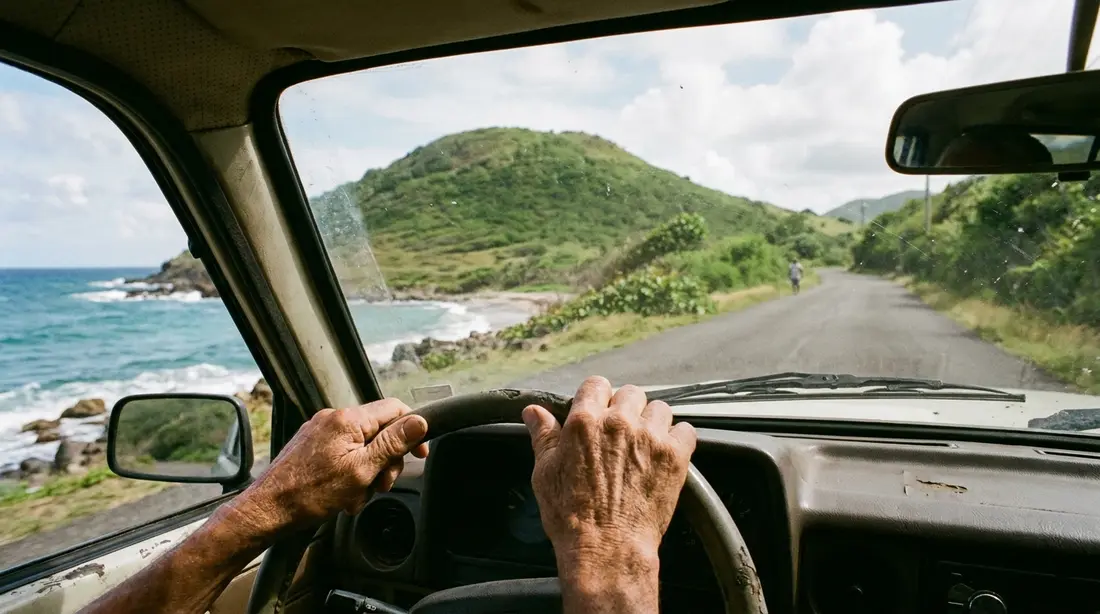
Teens need two things a villa week can supply: real activities with some edge, and unstructured time that requires nothing from them. For the first category, St. Croix offers a genuine ladder. A teen can take a discover-scuba session or start certification through the island's dive shops — the learning to dive guide covers how that works. Jet skis and paddleboards rent at Rainbow Beach through West End Water Sports. The Annaly Bay tide pool hike is a legitimate adventure at low tide in calm seas, and Point Udall before dawn gives a teenager the first U.S. sunrise and a photo no friend back home has. Fort Frederik lands differently at this age: the 1848 story of 8,000 people marching to demand emancipation, and winning it that day, is history with weight, told on the spot where it happened.
For the second category, the villa itself does the work. Wi-Fi, a pool, a bedroom with a door, and no obligation to perform vacation enthusiasm before noon. Families who plan every hour of a teen's island week regret it by Wednesday. Plan every other day and let the house absorb the rest.
The shape of a kid day
The families who leave happiest run roughly the same daily pattern, and it is worth stating because it runs against resort instinct. The pattern: beach in the morning, villa in the middle, one more outing late.
Morning is the island's gift to parents. Kids wake early here anyway, the trade winds are at their lightest before noon, the water is at its calmest, and the sun is at its most forgiving. Be on the sand by 8:30 and you get the best two or three hours of the marine day while the beach is nearly empty. By 11:30 the wind is building and the sun is serious; that is the exit cue.
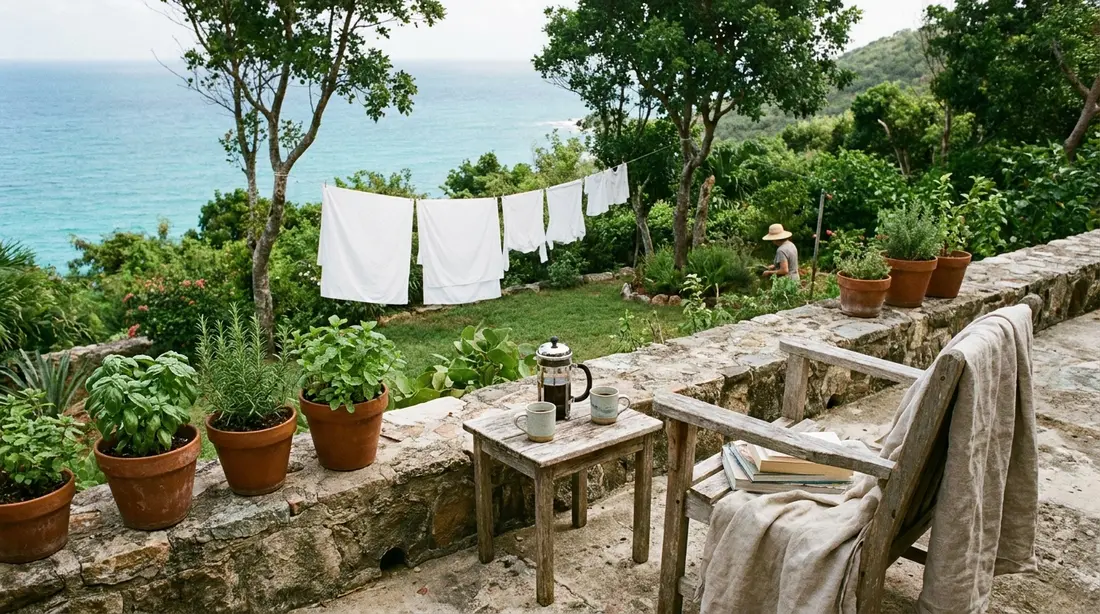
Midday belongs to the house. Lunch from your own kitchen, a nap for the small ones, shade and screens for the bigger ones, laundry cycling through. This is the stretch a hotel family spends negotiating a crowded pool deck at the sun's worst hours; a villa family spends it in air conditioning, spending nothing.
Late afternoon opens the second window: a different beach, the fort before it closes, ice cream in town, or the pool now that the light has softened. Dinner early, and on one or two nights, a walk on the Christiansted boardwalk to watch the tarpon assemble under the lights. Two modest outings separated by a real rest beats one heroic all-day expedition every time it is tried, and the villa in the middle is what makes the rhythm possible.
Beaches for families
The full island ranking lives in the best beaches guide, and this page will refrain from re-ranking. For family purposes, four names carry most of the load: Chenay Bay for the smallest swimmers, The Shoys for calm water near Christiansted, Columbus Landing for facilities, and Cramer's Park for covered pavilions and easy swimming near Point Udall. On the west side, Dorsch Beach gives a family sandy-bottom swimming under palms, and Frederiksted's town beach adds a treasure hunt: it is the island's known sea glass hunting ground, which converts any cloudy afternoon into a mission with a collectible reward.
The one family rule that applies everywhere: assume no lifeguard, because effectively no St. Croix beach has one. Calm-side beaches make this a minor fact; on the windward south and north shores in swell it becomes the whole decision. A parent watches the water before anyone enters it, and on days when the sea looks disorganized, the pool wins.
Buck Island with children
The boat tour guide covers the five authorized operators, prices, and hulls in full; here is the family-specific layer. Operators publish child pricing, which tells you the trips are built with kids aboard in mind — Big Beard's fare table included a 6-to-12 rate and a separate small-child rate for ages 2 through 5 at last check, and the Teroro II sail priced under-12s below adults with the youngest riding free. Crews teach first-time snorkelers on every trip and carry flotation, and they ask to be told about weak swimmers at booking, which is exactly the question a parent wants asked.
Age fit, hedged because policies live with the operators and change: toddlers ride the boats and play at Turtle Beach while older family members swim the trail; the guided trail itself suits solid swimmers, commonly the 6-and-up crowd with flotation; and the choice between power and sail matters more with small children, because a faster crossing means less time for a small stomach to reconsider breakfast. Confirm the day's plan, the minimum ages, and the flotation setup when you book, and name your kids' swim levels out loud. The half-day format is the family default for reasons of stamina, cost, and nap preservation.
The snorkel progression
The difference between a child who snorkels Buck Island happily and one who refuses the mask at the boat ladder is usually three practice sessions. Run the progression early in the week:
- The pool. Mask and snorkel only, no fins, in water where the child can stand. The goal is one skill: face in the water, breathing through the tube, until it feels boring.
- A calm beach in the shallows. Chenay Bay or The Shoys, standing depth, a parent alongside. Now there is something to look at — small fish over sand and grass — and the skill acquires a purpose. Add fins here if the child wants them.
- A real reef edge with a flotation vest. The small reef at the east end of The Shoys, or the marked areas the snorkeling beaches guide covers, still with an adult within arm's reach.
By the boat day, the equipment is familiar, the breathing is automatic, and the guided trail becomes what it should be: the reward. The snorkeling overview has the full site-by-site detail for planning steps two and three.
Forts and history at kid speed
St. Croix's history offering passes the child test because so much of it is physical. At Fort Christiansvaern, kids patrol ramparts, inspect cannons, and poke into powder magazines and cell rooms; the yellow fort reads as a castle to anyone under ten. The pricing favors families: admission runs $10 for visitors 16 and older, children under 16 enter free, and a ticket remains valid for three days at last check, so a short first visit costs nothing extra to repeat. The historic site guide covers the other four buildings of the complex for parents who want the fuller story.
In Frederiksted, Fort Frederik is the deeper lesson, matched to older kids: this is where emancipation was proclaimed in 1848 after thousands marched on the fort, and standing on the ramparts where it happened teaches more in ten minutes than a chapter can. Between the two towns, Estate Whim makes plantation history concrete — a windmill, a factory complex, grounds a child can walk (the great house interior has been closed since 2017). The botanical garden next on the same road wraps ruins inside a garden and tolerates short attention spans gracefully.
Feeding children on St. Croix
Groceries first, because breakfast and lunch are villa meals in a well-run family week. Plaza Extra East, the island's biggest supermarket, was measured by the territory's consumer-affairs department as the cheapest family basket on St. Croix, and it stocks the mainland brands a picky eater recognizes — the cereal, the mac and cheese, the specific brand of nuggets, hedged only by island shipping, which occasionally leaves a particular item off the shelf for a week. Seaside Market and Deli near Christiansted is the villa-guest standby for made-to-order sandwiches, bakery goods, and ice cream, and Cost-U-Less sells bulk for long stays. Stock on day one; the provisioning guide maps every store and the delivery option.
Restaurants, verified at last check, chosen for why they work with kids rather than by rank. Shupe's on the Boardwalk serves build-your-own burgers with the harbor three feet away and the tarpon show after dark — dinner and entertainment in one stop, and the entertainment is free. For the pizza-and-pasta night, ask us what is currently open near your villa — the island's Italian options have shifted in recent years. Turtle's Deli in Frederiksted hands over oversized sandwiches at outdoor picnic tables, a format no child has ever objected to. Duggan's Reef on Teague Bay has been family-owned since 1983 and puts the beach directly beside the table. And La Reine Chicken Shack, the open-air mid-island institution, is the place to convert children to johnny cakes — fried dough, essentially, and therefore an easy sell; the pate and johnny cakes guide explains what the adults should order alongside. Kids' menus exist but matter less here than portion-sharing; Crucian plates run large.
Car seats and the law
The Virgin Islands has a child passenger law, and it applies to your rental car. As written in the territorial code at last check: children under five must ride in an approved child restraint (with infants up to roughly a year or 20 pounds rear-facing), a properly fastened belt in the rear seat may substitute for ages three through five, and children from five up through twelve must wear seat belts wherever they sit. Read the current text before you travel if the details decide your gear, and hold your family to the stricter standard you use at home — the statute is a floor, and U.S. pediatric guidance on rear-facing and boosters goes well past it.
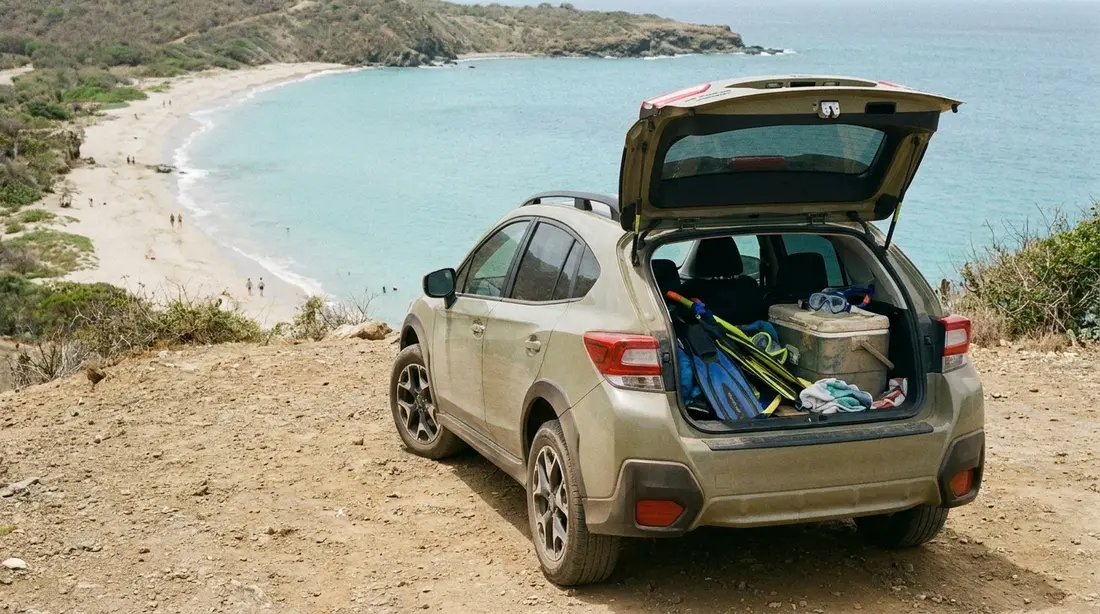
The practical question is supply. The island's rental agencies generally offer child seats as a paid add-on, and the fleet is finite, so reserve the seat when you reserve the car and reconfirm before arrival — or fly with your own, which airlines check free as baby equipment on the major carriers (confirm your airline's rule). A seat you own is also a seat you know how to install. The renting a car guide covers the agencies; the driving guide covers the left-side adjustment, which arrives faster than new drivers expect.
Sun, urchins, and water rules
Three systems keep a family out of the island's two common medical mishaps, sunburn and sea-urchin spines.
- The sun system. Fabric first: rash guards on every child for every water session, because a shirt protects a moving target better than any amount of lotion a parent manages to apply to one, and it never needs reapplying. Lotion covers what fabric misses — face, ears, backs of knees, tops of feet — and it must be reef-safe by law: the USVI banned sunscreens containing oxybenzone and octinoxate in 2020, so mineral formulas are the compliant choice. Hats for the sand, shade for the midday block, and the day-shape above does the rest by keeping kids indoors at the burn hours.
- The urchin rule. Sea urchins live where rock and reef meet water, which is exactly where children climb. Water shoes for every rocky entry, and a standing family rule that feet land on sand, never on reef — a rule that protects the coral as much as the foot. Spines are painful rather than dangerous in most cases, and tweezers belong in the first-aid pouch regardless.
- The water rules. No lifeguards, so the family supplies its own: one adult on designated watch whenever kids are in the water, swimmers stay inside their depth on any shore with wind on it, and confused-looking water cancels swimming without appeal. Hydration is the quiet fourth rule — kids in water all morning do not feel themselves sweating, so water bottles go to the beach and get emptied before anyone asks.
The wider adult version of all this, including north-shore swell and driving notes, is the safety guide.
Baby gear, cribs, and babysitting
The plain answer on baby equipment is per-villa, ask first. Some homes list cribs, high chairs, and stair gates in their amenities (The Cerulean lists all three; Dragonfly lists a travel crib); others list none, and an amenity list is the only promise that counts. If you travel with an infant, make the crib question part of the booking conversation rather than an arrival surprise, and pack the irreplaceable items — a particular sound machine, the familiar sleep sack — because no island store promises your brand. The packing guide carries the full kids' addendum, from kid-size masks to the two-rash-guard rule.
Babysitting on St. Croix is arranged rather than booked from an app; there is no island-wide sitter platform to point you to. Childcare gets set up through local services and word of mouth, and the workable path for a visiting family is to ask us when you book — with notice, arrangements can usually be explored, and with no notice they usually cannot. Plan the adults-only dinner for mid-week and raise the question early.
Rainy hours with kids
The rainy-day plan carries a full kids' section — the chocolate class, the forts between squalls, the bookstore — so this page adds only what it leaves out. Three additions: the botanical garden absorbs a drizzly hour well, since the plantings shrug off light rain and the paths drain fast; a sea-glass walk on Frederiksted's beach is actually better after weather, when fresh glass turns up; and a Plaza Extra run doubles as an event if you assign each kid a single-aisle scavenger list. Remember the scale of the problem before rearranging a day: most island rain is a shower measured in minutes, and the pool reopens the moment the sky closes behind it.
When families come
Family traffic follows the school calendar. The Christmas holidays bring peak season and the Crucian Christmas Festival, whose children's parade in Frederiksted in early January is a genuine kid spectacle of mocko jumbies and costume troupes. Spring break, March into April, lands in the driest stretch of the year and books the family villas earliest. Summer runs warm and greener, with calm seas most days and the best fares; it is hurricane season on the calendar (June through November), which argues for travel insurance and flexible plans rather than avoidance, and the odds concentrate late August through September. Families chasing empty beaches and low rates with preschoolers not yet bound to a school calendar own the September-to-November shoulder. The full seasonal argument, month by month, is in our best time to visit essay, and the family week itinerary turns whichever week you pick into a day-by-day plan.
Ages and activities at a glance
| Activity | 2–5 | 6–11 | Teens | Notes |
|---|---|---|---|---|
| Chenay Bay / calm beaches | Ideal | Yes | Yes, briefly | Standing-depth water; mornings calmest |
| Buck Island boat trip | Boat and beach only | Trail with flotation | Full trip | Half day first; operator age policies vary — confirm |
| Snorkeling from shore | Mask play in shallows | Progression to reef edge | Independent with a buddy | Three-step progression above |
| Bio bay night kayak | No | From 6 or 8 by operator | Yes | Minimum ages at last check; tandem with a parent |
| Fort Christiansvaern | Short visit | Ideal | Good | Under 16 free; ticket good for three days |
| Fort Frederik / Estate Whim | Grounds only | Good | Ideal | Emancipation story lands with older kids |
| Domino Club pigs | Yes | Ideal | Amused despite themselves | Rainforest drive; daytime outing |
| Annaly tide pools hike | No | Strong hikers 8+ | Yes | Low tide, calm seas only; guided is smart |
| Discover scuba / certification | No | Junior programs vary | Yes | See the learn-to-dive guide; shop minimums apply |
| St. Thomas seaplane day | Possible | Memorable | Yes | The flight is the attraction; see the day-trip guide |
The St. Thomas day trip deserves its asterisk explained: for many kids the seaplane ride itself — a takeoff and landing on water — outranks anything on the other island, and one leg by seaplane with the return by air or ferry makes the transportation the souvenir.
Questions guests ask
Do my kids need passports for St. Croix?
No — for U.S. citizens the trip is domestic, so children fly on the same documentation they would use to any U.S. state, and minors under 18 traveling with an adult generally need no TSA identification at all. Pack each child's birth certificate anyway. The departure checkpoint at the St. Croix airport is staffed by Customs and Border Protection, and having proof of citizenship in the carry-on turns a possible question into a non-event. The no-passport guide covers documentation for the whole family, including non-citizen family members, who should carry their usual immigration documents.
What ages work best on St. Croix?
Every age works; the itinerary changes. Ages 6 to 11 get the most from the island's headline list — the underwater trail, the forts, the bio bay, the pigs — because those attractions sit exactly at grade-school capability. Toddlers get calm, shallow water and a villa that protects naps. Teens get scuba, jet skis, real hikes, and history with weight. The planning mistake is applying one child's itinerary to a different child's age; the table above is the corrective.
Are car seats required by law in the USVI?
Yes. The territorial code requires children under five to ride in an approved child restraint, with rear-facing placement for infants, and requires seat belts on children from five up through twelve, as written at last check. Rental agencies generally rent seats, supply is limited, and reserving the seat with the car is the reliable path — or bring your own, which most airlines check at no charge. Whatever the statute's floor, running your home-state practice on boosters and rear-facing is the sensible standard.
Can a non-swimmer child do Buck Island?
Yes, with the right framing. The boats welcome small children, Turtle Beach gives them powder sand and shallow water while stronger swimmers take the guided trail, and crews carry flotation and want to know about weak swimmers before departure. A child who cannot swim does not swim the trail; a child working on it can often manage with a vest, a parent alongside, and a crew briefed at booking. Tell the operator the swim levels when you book and let them match the plan to the group.
Is there a kids' club or resort programming?
Not in the villa model — the trade is programming for space, and most families who try both prefer the space. What replaces the kids' club is the structure in this guide: the two-outing day, the villa reset at midday, and a short list of bookable adventures. Families who want a third adult in the mix should ask us about arranging childcare when they book, since sitters are organized through local services with notice rather than summoned on demand.
What should we do on the first day with jet-lagged, wired kids?
Keep it small. Grocery run first — Plaza Extra or Seaside Market — with each kid choosing one treat, then the villa pool, then an early dinner and the boardwalk tarpon if energy holds. Flights from the East Coast land without time change or with one hour, so there is no true jet lag to manage, only travel-day fatigue. Save the boats, the forts, and anything with a reservation for day two onward; the first day's only job is making the house feel like theirs.
The family villas
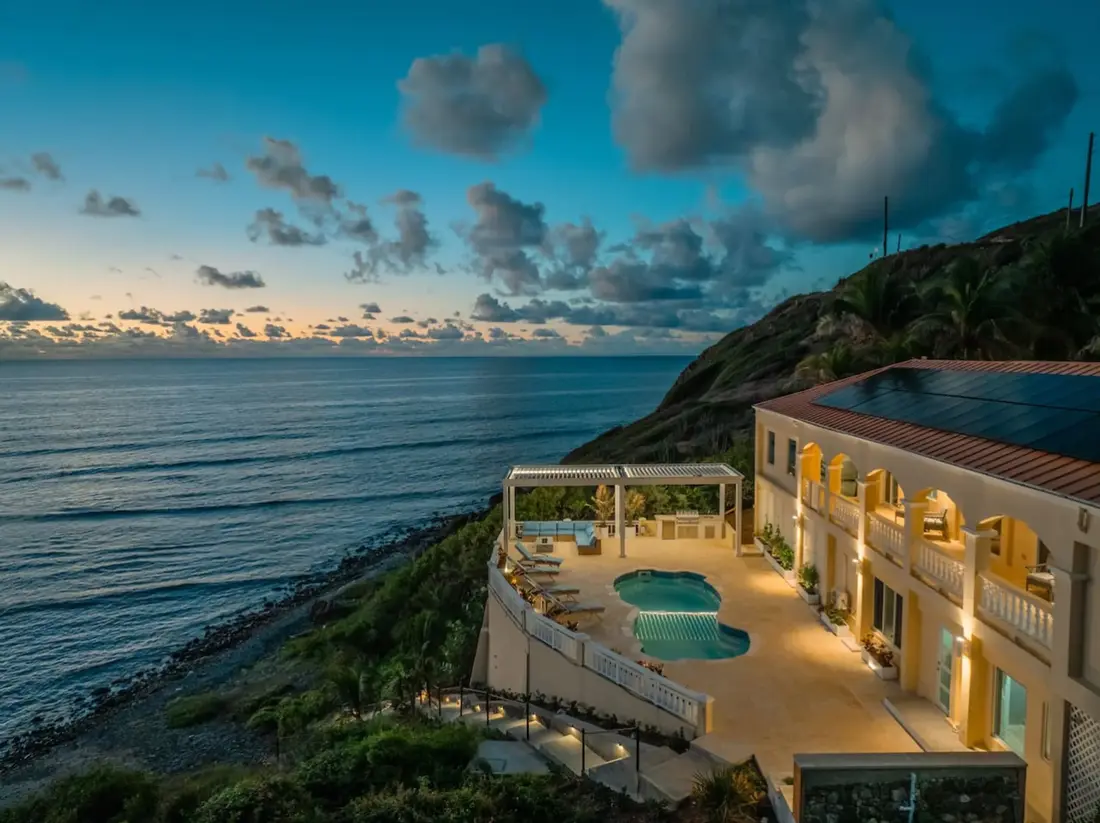
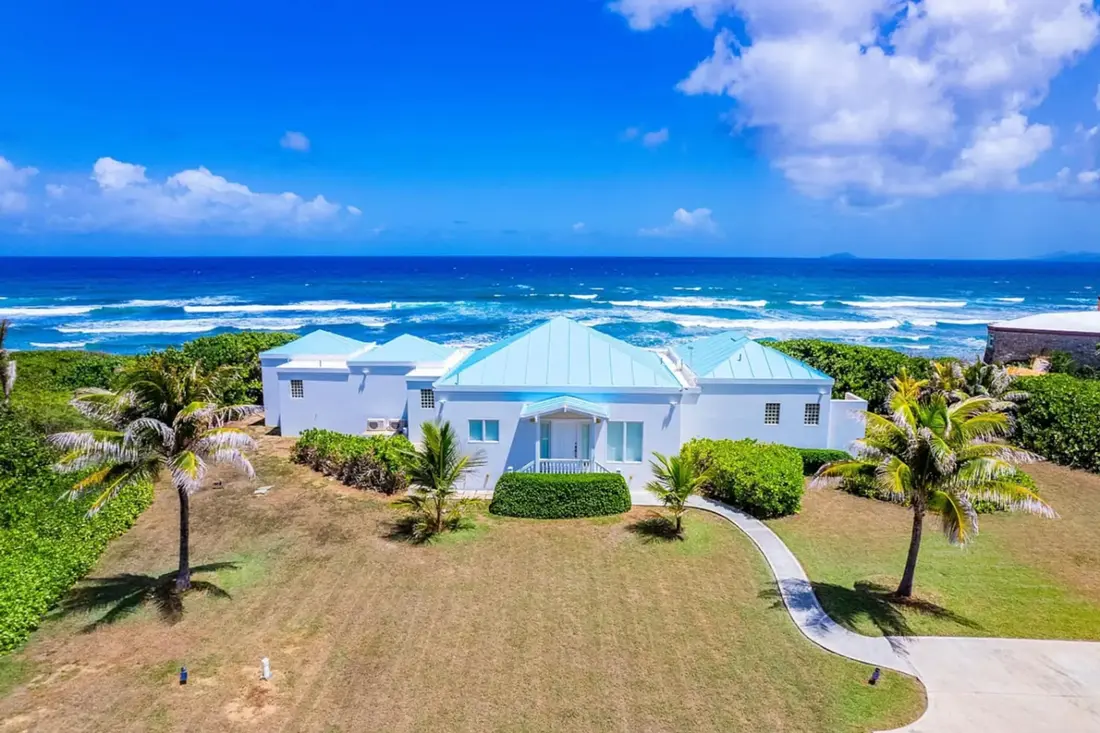
Our family collection gathers the homes that work hardest for kids. Shoy's Beach House sleeps 12 on a calm private beach, with a fenced yard, a private pool, and board games in the listing. The Cerulean pairs a main house with a separate guest cottage and lists the full baby kit — high chair, travel crib, stair gates. Toes in the Sand puts a family directly on the sand, Dragonfly Villa adds a pool and a travel crib on the East End, and The Buck Island Overlook sleeps 12 with a private pool for multi-family trips. Amenity lists come straight from each listing; tell us the ages and we will point you to the right house.
Sources
Written from official and first-party sources, checked August 2026. Hours, prices and event dates change — confirm before you go.
In this guide
Stay nearby
On The Shoys beach: six bedrooms, six baths, pool and hot tub, room for twelve, and the beach through the back garden.
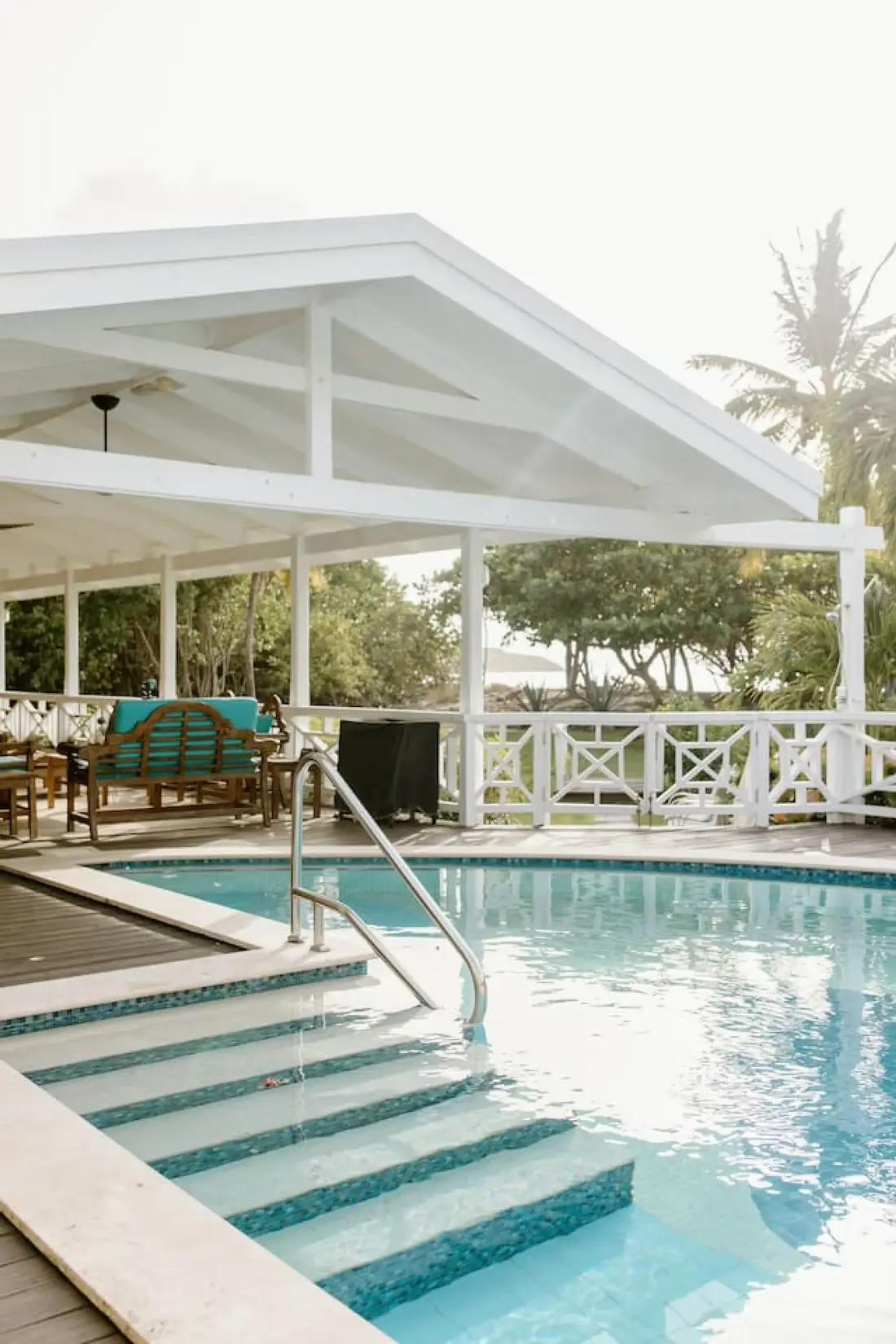 Shoy's Beach House6 bd · 6 ba · sleeps 12 · Christiansted
More in Plan Your Trip
Sources
12 references, listed in full at the end of this guide — official park, refuge, tourism-board and business sources, checked August 2026.