Scuba Diving St. Croix
Walls, wrecks, a pier, and a canyon: St. Croix packs four distinct kinds of diving into one island. An overview of sites and shops.
St. Croix packs four kinds of diving onto one island: a wall that drops off within swimming distance of the beach, a pier that ranks among the Caribbean's best macro sites, a cluster of intentionally sunk wrecks, and a submarine canyon inside a national park. Shore entries are easy, boat rides are short, and seven dive shops spread across both towns run small groups. This page is the island's diving reference: every major site with depths and access, the operators verified as of this writing, training options, seasons, and the flying-after-diving math that shapes the last day of the trip.
Why the diving here is different
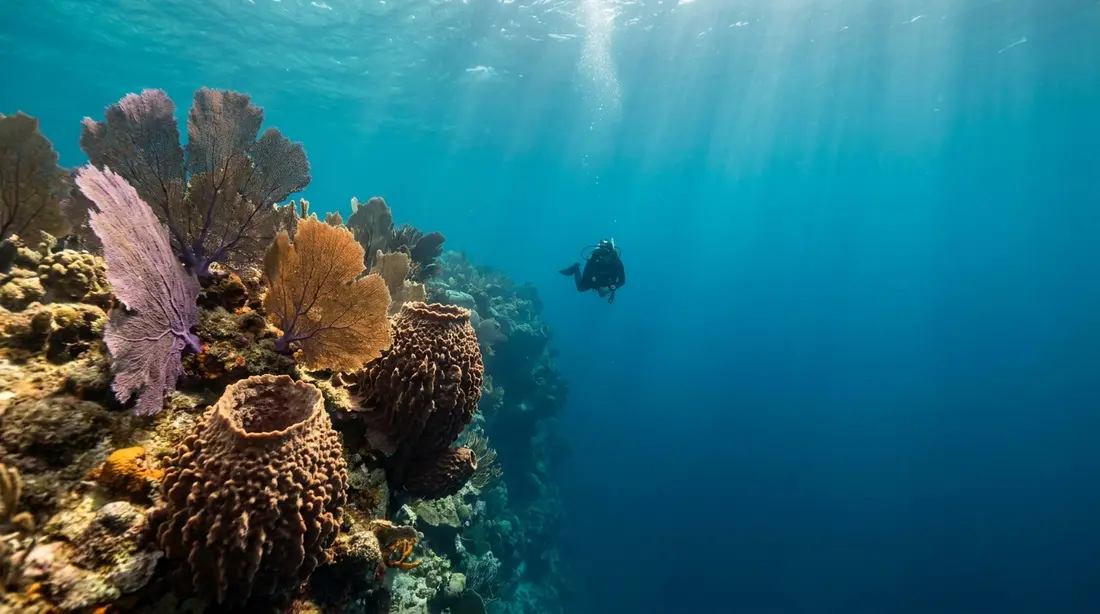
Most Caribbean islands sit on a shallow shelf, and their diving starts where the boat stops. St. Croix's north shore does something rarer: the sea floor leaves. A drop-off runs roughly parallel to the coast from the northwest corner past Salt River, and along much of that stretch the edge sits close enough to shore that a diver can swim to it from the sand. At Cane Bay the lip begins around 26 to 40 feet deep, about 100 yards off the beach.
How far down the wall goes depends on who you ask, and the published numbers disagree. The island's main visitor guide puts the drop beyond 3,200 feet; dive shops advertise figures past 13,000, pointing toward the deep water that separates the Virgin Islands from the open Atlantic. The defensible statement is that it falls for thousands of feet, which is the only part that matters at 60 feet with a regulator in your mouth: below you is blue with no bottom in it, and pelagic animals use that blue as a highway.
The second distinction is variety per mile. The wall, the macro pier, the wrecks and the canyon sit on one 28-by-7-mile island, and nothing is more than about 40 minutes by car from anything else. The third is scale. Boats here are small, six to two dozen divers, loaded from a boardwalk or a boat ramp rather than a cruise-tender dock, and popular sites are moored rather than anchored. Divers who have queued behind forty tanks in Cozumel notice the difference on day one.
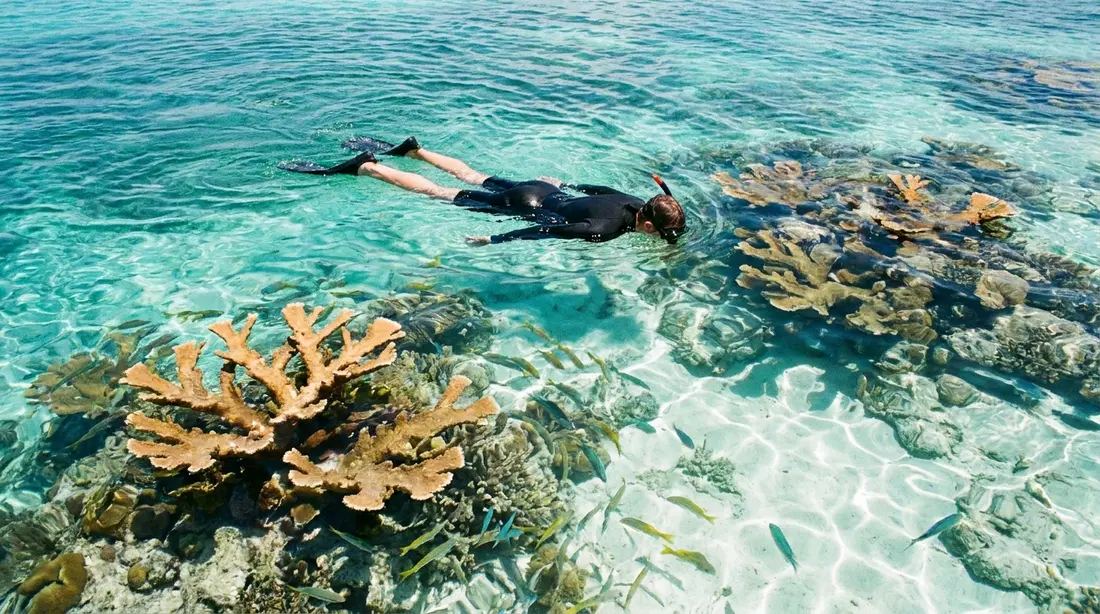
Shore diving and boat diving
St. Croix is one of the Caribbean's few real shore-diving islands, and a certified diver with a rental car can build half a trip without a boat. The two classic entries are Cane Bay, where you walk in over the sand by the boat ramp and swim out to the wall, and the Frederiksted Pier, where the entry is a walk-in from the town beach or a giant stride from the pier into about 20 feet of water. Guided shore dives are the sensible first move at both: the shops know the entry lanes, the day's surge and the ship schedule, and they know which piling the seahorse was on yesterday. After a guided orientation, independent shore diving is routine here for certified buddy teams. Experienced shore divers add a third entry to the list: North Star, the stretch of wall west of Cane Bay, where the Christiansted shops describe black corals and barrel sponges four to six feet wide on the face. Its beach is small and mixes sand with stone, the swim is longer and less forgiving than Cane Bay's, and it belongs to divers who already know the coast or go with a guide who does.
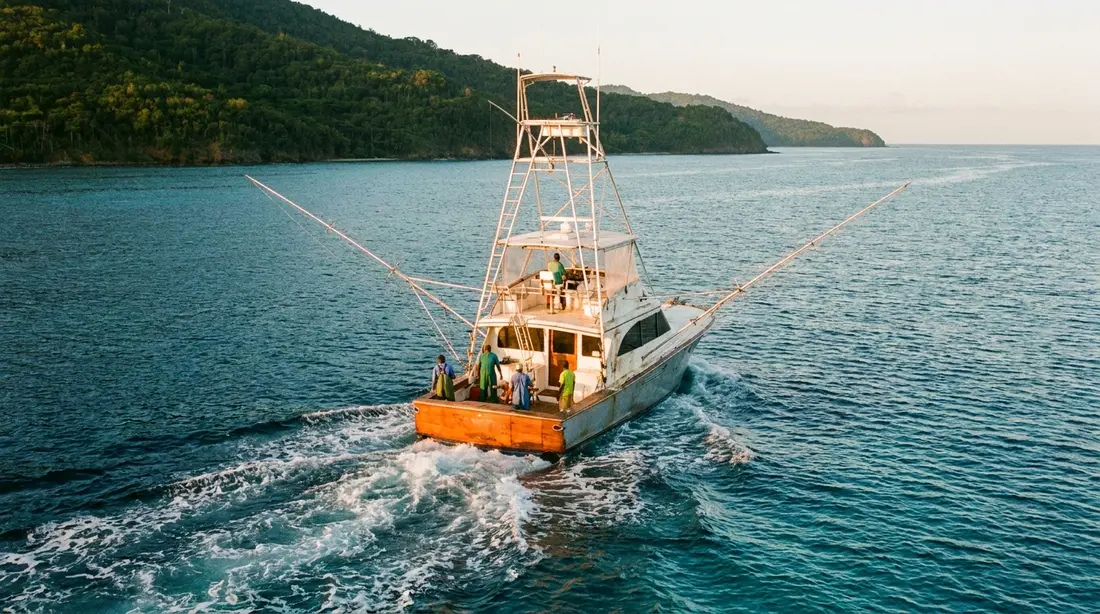
Boats fill in everything else. They leave from three places: the Christiansted boardwalk, which serves the moored reef and wall sites strung along the north shore; the Salt River area, closest to the canyon walls; and Frederiksted, which covers the pier, the Butler Bay wrecks and the west-coast reefs. The rides are short, commonly minutes rather than hours, and two-tank morning trips are the standard format. Deeper wall and wreck profiles go by boat even where a shore approach technically exists, because a 15-to-20-minute surface swim in full kit convinces most people the boat was the better idea.
Cane Bay Wall
The signature dive, and one of the Caribbean's known shore dives. From the beach at Cane Bay you swim about 100 yards over sand and reef to a white mooring buoy, and the wall begins at about 26 feet near the buoy, rolling over between 26 and 40 feet into the drop. The face mixes sheer vertical sections with sloping benches, covered in hard and soft corals, with nineteenth-century anchors resting where ships lost them and coral-restoration structures planted by conservation crews visible on the shallows. Reef sharks, stingrays, turtles, barracuda and schools of triggerfish work the edge; dolphins pass through, humpback whales are reported off this coast in late winter on their migration, and the shops keep a running list of rarer visitors. Visibility here runs roughly 20 to 60 feet depending on season and runoff, more modest than the island's west side. Skill floor: any certified diver can enjoy the lip on a calm day; depth discipline is the whole game, because the wall will take you as deep as you let it. Full detail, including the entry and the after-dive food, in the Cane Bay Wall guide.
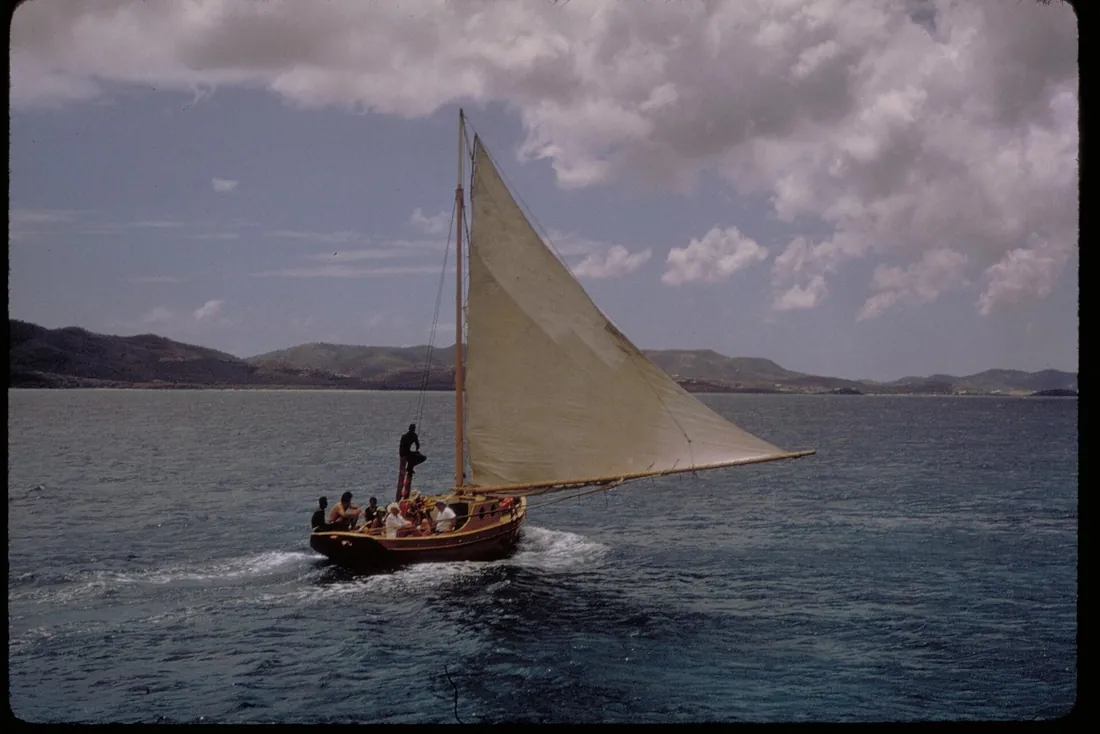
Frederiksted Pier
The opposite dive in every way: shallow, flat-calm, and about small strange animals rather than big blue water. The pier's pilings run from the shoreline out to about 90 feet of water at the far end, with most of the length averaging around 25 feet. Sponges and corals wrap the columns, and the resident cast is a macro photographer's list: seahorses, frogfish, octopus, squid, juvenile trunkfish, porcupinefish, brittle stars, arrow crabs, hermit crabs, with turtles and stingrays over the sand between. The calm west-coast water makes it, in the visitor guide's words, an easy dive for all levels, including first-timers on an introductory course. After dark it changes character completely, with octopus hunting and tarpon feeding, and that version has its own page: night diving. One hard rule governs everything here: the pier is closed to divers, snorkelers and swimmers whenever a cruise ship or military vessel is alongside, so shops plan pier dives around the ship calendar. Details in the Frederiksted Pier guide.
Butler Bay wrecks
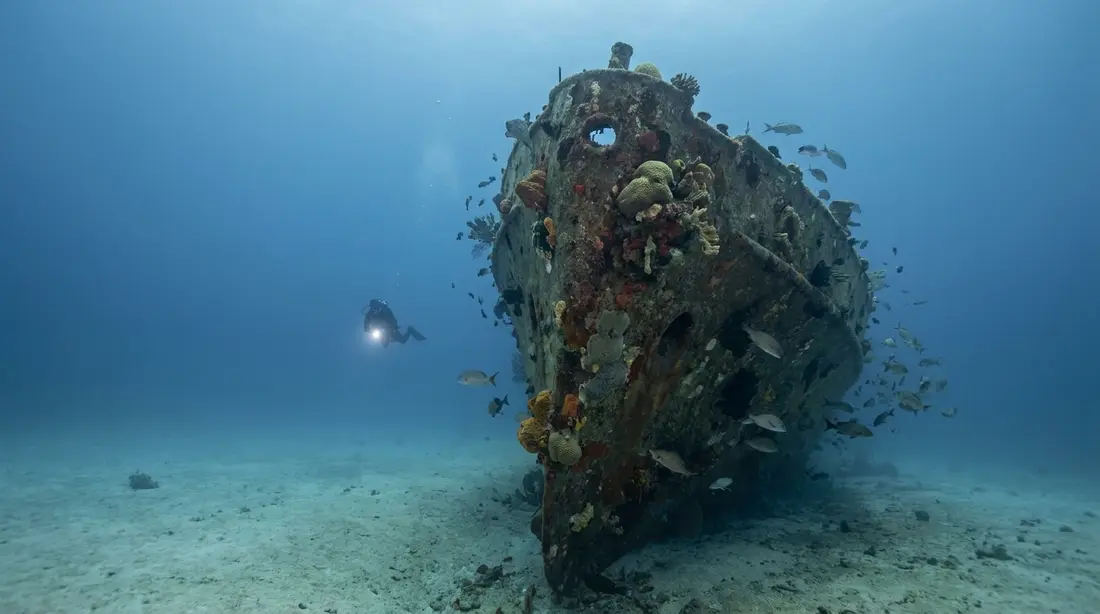
About 2.7 miles north of Frederiksted, five ships and some oddities sit close together on the calm west coast, which lets one boat trip cover two or three. The shallow group: the Suffolk Maid, a 144-foot trawler scuttled in 1985, lying in 60 to 80 feet; the Northwind, a 75-foot tug sunk in 1986, in about 55 feet with the wheelhouse top only 15 feet down; and the Virgin Islander, a 300-foot oil barge sunk in 1991, deepest point about 70 feet. The Aegir underwater habitat and a scatter of old oil trucks share the bottom. The deep one is the Rosaomaira, a 177-foot freighter sunk in 1986, upright with the bow around 70 feet and the deepest point about 117, a dive for advanced certification and real gas planning. Visibility on this coast averages around 100 feet. The cluster was named USA Today's top Caribbean dive site in 2018. Wreck-by-wreck detail in the Butler Bay wrecks guide.
Salt River Canyon
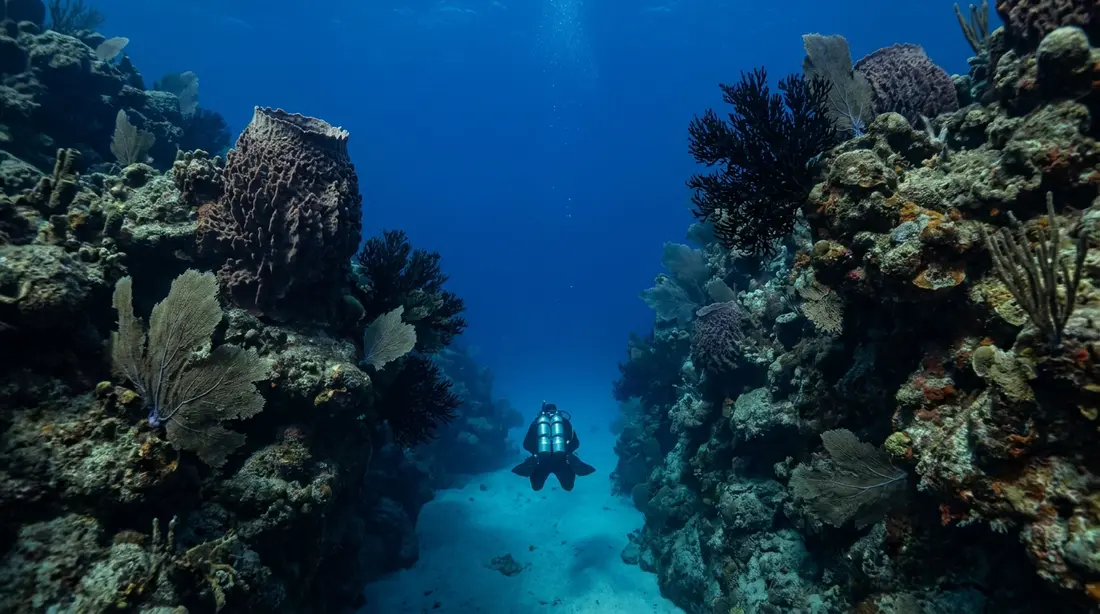
A submarine canyon cuts into the north shore within the boundaries of the Salt River Bay park and preserve, and divers work its two walls from moored boats a few minutes off the marina. The East Wall, which the shops also call Barracuda Bank, moors in about 40 feet and slopes through sand chutes to a drop around 80 feet, with barracuda, jacks, snapper and grouper along the slope. The West Wall moors in about 20 feet and goes sheer from there, with overhangs, cuts and swim-throughs holding soldierfish and squirrelfish and black durgons in the column above. Sponges and black coral cover both faces, centuries-old ship anchors rest where they were lost, and eagle rays, reef sharks, turtles and the occasional hammerhead pass the edge. Anchor Dive Center, the one shop operating from within the park itself, runs the shortest ride to these moorings. The bay is also where Columbus's men touched ground in 1493, and it glows with year-round bioluminescence, which makes a day dive and a night kayak from the same marina a natural double; see the Salt River Canyon guide and Salt River.
The north-shore boat sites
Between the marquee names, the Christiansted boats work a long string of moored sites that rarely make the brochures and fill out a week of two-tank mornings. Depths below are as the Christiansted shops list them, at last check.
- Scotch Bank — north of Christiansted; mooring in about 25 feet, a mini wall from around 40 feet stepping to 130, then dropping hard past 160. Coral gardens and a reputation as a wildlife hotspot.
- Stingraysted — a sandy slope from about 45 to 130 feet named for its stingrays, with grouper and passing sharks.
- Eagle Ray — 28 to 40 feet, a beginner-friendly coral-head site that still surprises with the occasional hammerhead.
- Blue Chute and Chez Barge — a sunken sand barge in 70 to 100 feet, home to morays and lobster.
- WAPA — 45 to 55 feet, an active coral-restoration site where dolphins and eagle rays pass through.
- Love Shack and the Long Reef sections — 15 to 75 feet along the barrier reef fronting Christiansted harbor, with nudibranchs and spotted eels for the macro-minded.
- Twin Anchors — 45 to 55 feet, marked by a Danish colonial anchor more than 200 years old among staghorn corals.
- Little Cozumel — 45 to 75 feet, rare fields of staghorn coral, with current on some days.
- Pinnacle — a sea mound from about 80 feet, a reliable spot for Caribbean reef sharks.
- Pavilions — a wall dive with black coral and elephant-ear sponges, run for beginner through advanced depending on the profile.
No shop dives all of these every week; the day's wind and the group's certifications set the schedule. One Christiansted operator with shops in both towns markets itself on covering every moored site around the island precisely because most boats stay near their home harbor.
Sites at a glance
| Site | Access | Depth | Level | Known for |
|---|---|---|---|---|
| Cane Bay Wall | Shore (100-yd swim) or boat | Lip 26–40 ft, drop of thousands | Open Water and up | The drop-off; sharks, turtles, old anchors |
| Frederiksted Pier (day) | Shore | 20–90 ft, mostly ~25 | All levels, intro courses included | Seahorses, frogfish, octopus; macro |
| Frederiksted Pier (night) | Shore, guided | Under ~40 ft | Any current certification | Hunting octopus, tarpon, sleeping fish |
| Butler Bay shallow wrecks | Boat (long swim possible) | 15–80 ft | Open Water and up | Suffolk Maid, Northwind, Virgin Islander |
| Rosaomaira | Boat | 70–117 ft | Advanced | Intact upright freighter |
| Salt River East Wall | Boat, moored | 40–80 ft to the drop | Open Water and up, guided | Barracuda Bank; the fish life |
| Salt River West Wall | Boat, moored | 20 ft to sheer wall | Depth-dependent; advanced rewards | Overhangs, swim-throughs, black coral |
| Scotch Bank | Boat, moored | 25–160+ ft | Open Water and up | Coral gardens north of Christiansted |
| Eagle Ray / WAPA / Long Reef | Boat, moored | 15–75 ft | Beginner-friendly | Easy reef mornings near town |
| North Star | Shore (experienced) or boat | Wall from ~35–40 ft | Experienced shore divers | Black coral, barrel sponges on the wall |
Depth ranges are the working numbers shops publish, rounded, and profiles vary with the mooring and the guide. Treat the table as planning reference, and the dive briefing as the authority.
The dive shops
Seven operators were running as of this writing; every one below was verified operating at last check. Book direct and a day or two ahead in winter.
- Cane Bay Dive Shop — Frederiksted, 2 Strand Street, open seven days; a PADI 5 Star Instructor Development Center. Guided shore dives at the pier and Cane Bay Wall, night dives, and daily boat dives from the 36-foot Newton IBIS, which at last check loads at the Salt River boat launch for the north-shore sites and wrecks.
- Nep2une Scuba Diving — Frederiksted, steps from the pier; this is the shop longtime visitors knew as N2theBlue, renamed under the same operation. Six divers maximum per boat, air fills included, nitrox with 48 hours' notice. At last check: one-tank pier dives about $75 by day and $100 at night, two-tank boat trips about $150.
- St. Croix Ultimate Bluewater Adventures (St. Croix SCUBA) — the two-town shop: Caravelle Arcade in Christiansted with boats off the boardwalk, and a second shop directly across from the Frederiksted pier. Wall, reef, wreck, pier and night dives; it advertises diving all of the island's moored sites, which its two home ports make practical.
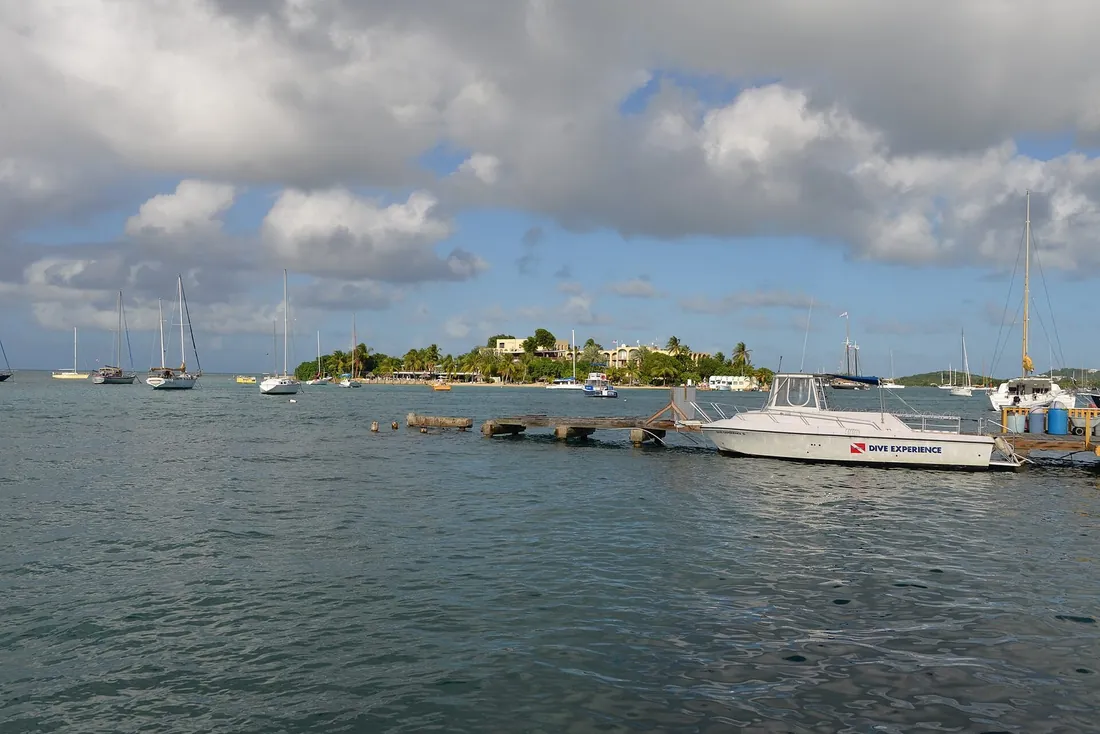
- Blue Salt Divers, Home of Dive Experience — 1000 King Street on the Christiansted boardwalk, running the boat Lil' Salty. It carries on the island's oldest dive center, Dive Experience, founded in 1983 by Women Divers Hall of Fame member Michelle Pugh.
- Sweet Bottom Dive Center — at the Renaissance Carambola resort on the north shore, a PADI 5 Star Instructor Development Center under owners Mark and Laura Linse since 2015; guided wall dives on the Davis Bay and Cane Bay stretch and full course ladders.
- Anchor Dive Center — Salt River Marina, the only dive shop inside Salt River Bay National Historical Park; three boats, PADI instruction through certification, and the shortest possible ride to the canyon walls.
- Crucian Adventure Divers — Frederiksted, a small-group operation and the island's first Black-owned dive shop; training, guided trips, and at last check rentals of Avelo's newer buoyancy system alongside standard kit.
Prices and schedules move seasonally; every figure above is at last check, and confirmation when booking is the rule. One long-running west-end name, SCUBA West, could not be verified as currently operating and is deliberately left off this list.
Learning to dive here
St. Croix is a kind place to get certified: warm water, easy shore entries, and shops in both towns that run small classes with the pier and the Cane Bay shallows as classrooms. The options break into four categories. An introductory experience (Discover Scuba or a try-scuba session) puts an uncertified guest underwater with an instructor in a day, often at the pier, with no exam and no card at the end. Open Water certification is the full entry-level course, and the standard play for vacationers is doing the knowledge portion online at home so the island days go to pool skills and four open-water dives; some visitors complete the whole course in a stay. Referral students who did classroom and pool work at home finish their checkout dives here. And continuing education runs deep on this island because two shops, Cane Bay Dive Shop and Sweet Bottom, are PADI 5 Star Instructor Development Centers: Advanced Open Water, Rescue, specialties like wreck and navigation, and professional ratings. Divers whose cards have gone dusty should plan on a refresher; at last check one Frederiksted shop asked for a logged dive within two years for boat trips and priced refresher sessions from about $150. Course formats and rates change, so ask each shop directly. More in learn to dive on St. Croix.
Conditions and seasons
The water is warm enough to dive year-round, and most visiting divers wear a skin or a light wetsuit at most. What changes with the calendar is which coast the boats favor.
The trade winds blow from the east most of the year, so the west coast at Frederiksted sits in the island's lee and stays diveable on days the rest of the island is blown out; the pier and the wrecks are the fallback that keeps a dive week intact. The north shore, home of the wall and the canyon, takes winter's punches: from roughly mid-December to mid-March the Christmas Winds stiffen the trades, and long-period swell from Atlantic storms can put surge on the wall sites for days at a time even under sunny skies. Shops respond by moving boats to sheltered coasts, and the correct response as a guest is to book the wall early in the week and let the operator call the site on the morning. Summer and early fall deliver the year's calmest, clearest diving, with hurricane season (June through November, most active August and September) as the wildcard to watch; see hurricane season for how the island actually experiences it.
Visibility varies by coast more than by month: the west side around the wrecks averages around 100 feet, while Cane Bay runs 20 to 60 depending on runoff and sea state. Late winter adds one bonus worth planning around: humpback whales migrate past the north shore, and dive boats occasionally hear them through the hull.
Safety and flying after diving
The island-specific rules first. The Frederiksted pier is off-limits to divers whenever a cruise ship or military vessel is docked, with no exceptions; shops schedule around the published ship calendar. Boat traffic uses the Christiansted harbor channels and the west coast, so shore divers tow a flag, and the shops provide them. The territory's sunscreen law bans oxybenzone, octinoxate and octocrylene, so any lotion on board should be mineral-based. Nothing on a reef or wreck is for touching or taking, and Buck Island's waters, covered in the Buck Island guide, are a no-take national monument where diving happens only on authorized trips.
Then the piece of planning that shapes every dive vacation: the gap between your last dive and your flight home. Divers Alert Network's consensus guidelines, built on trials run at Duke University, recommend a minimum 12-hour surface interval before flying after a single no-decompression dive, at least 18 hours after repetitive dives or multiple days of diving, and substantially longer than 18 hours after any dive requiring decompression stops. Those are minimums that reduce risk rather than erase it, and many divers simply give themselves a full day. This is standard published guidance, and a dive professional or DAN itself is the right resource for individual questions. The practical St. Croix translation: on a week-long trip, make the day before departure a land day — Christiansted's fort and shops, the rainforest, or the first-timer loop — and let the nitrogen leave on island time.
Building the dive week
A workable seven-day shape, assuming morning dives and afternoon flexibility. Open with a guided pier dive: shallow, calm, and the best skills-shakeout on the island. Put the Cane Bay Wall next, early in the week, so a north swell postpones it rather than canceling it. Give the Butler Bay wrecks a two-tank boat morning, pairing a shallow wreck with the Rosaomaira if your card and comfort cover it. Book the Salt River canyon walls with the Salt River shop and stack the bioluminescent-bay kayak that night, since both leave from the same marina; the bio-bay tours run by moon phase, so check the calendar first. Add a Christiansted boardwalk boat morning for Scotch Bank or the Long Reef sites, and one pier night dive on a ship-free evening. The final day stays dry per the DAN math above. Non-divers in the group are covered the whole time: the snorkeling guide maps the surface version of half these sites. All of it assumes a rental car; rideshare apps do not operate here, and traffic keeps left (see driving on the left).
Questions guests ask
Can beginners dive St. Croix?
Yes, and it is one of the easier Caribbean islands to start on. The Frederiksted Pier is calm, shallow and open to introductory-course students, and several boat sites near Christiansted, Eagle Ray and the Long Reef sections among them, sit in beginner depths. The wall itself is friendlier than it sounds: the lip starts within Open Water limits, and a guide keeps the profile disciplined. Uncertified visitors can do a one-day introductory experience, and full Open Water courses run at shops in both towns, fastest when the knowledge portion is finished online before the trip.
How deep is the wall, really?
Deeper than anyone dives, and the exact figure depends on the source. The island's visitor guide says the drop at Cane Bay falls beyond 3,200 feet; dive shops cite more than 13,000, measuring to the deep basin between the Virgin Islands and the open Atlantic. Published numbers disagree enough that this site simply says thousands of feet. For a diver the relevant depths are the ones at the top: the lip begins around 26 to 40 feet at Cane Bay, which puts the experience of hanging over the edge within any certified diver's range.
Do I need a boat to dive here?
Not for the island's two most famous dives. Cane Bay Wall and the Frederiksted Pier are true shore dives, entered from the sand, and guided shore dives at both cost less than boat trips anywhere in the Caribbean's marquee destinations. Boats earn their fare at the Butler Bay wrecks, the Salt River canyon walls and the moored sites along the north shore, none of which is a comfortable swim. A balanced week uses both: shore mornings when you want to set your own schedule, boat mornings for the sites you cannot walk to.
When is the best season for diving?
Summer and early fall bring the calmest, clearest water on every coast, plus the smallest crowds; hurricane season is the tradeoff, watched forecast by forecast. Winter is fully diveable and is peak visitor season, but the Christmas Winds and north swell can close the wall sites for days, pushing boats to the west coast. The west side is the constant: the pier and the wrecks dive well nearly year-round, which is why Frederiksted shops keep full calendars in every month. Late winter adds migrating humpback whales along the north shore.
Is nitrox available?
Yes, with notice. At last check Nep2une Scuba in Frederiksted filled nitrox for certified enriched-air divers with about 48 hours' warning, and other shops on the island handle it as well; ask when you book rather than on the dock. Air fills for independent shore divers are routine at the Frederiksted and Cane Bay shops. If you are not nitrox-certified, the specialty course is a common add-on here, since repetitive multi-day diving on a week's trip is exactly the pattern enriched air serves.
How long before my flight can I dive?
Divers Alert Network's guidelines recommend at least 12 hours after a single no-decompression dive, at least 18 hours after repetitive or multi-day diving, and substantially longer after decompression diving. A week of two-tank mornings is multi-day repetitive diving, so 18 hours is the working minimum, and most divers here simply take the last full day off. With the common early-afternoon departures from the airport, diving on your final morning does not fit the math. Plan the last day above water and spend it in Christiansted or the rainforest.
Do I need to bring my own gear?
No. Every shop on the island rents full kit, and boat-dive prices commonly include tanks and weights; Nep2une includes air fills with its dives, and the guided pier night dives at last check bundled lights and gear into the price. The two items worth flying with are the ones fit makes personal: a mask that seals on your face and your own dive computer, since a computer you know is a safety item on repetitive multi-day profiles. Certification cards, or the app versions, come along too; shops check them, and one Frederiksted operator asks for a logged dive within the past two years before boat trips.
Will I see sharks?
Reef sharks are regular sights along the Cane Bay Wall and at the Pinnacle site, and nurse sharks rest at cleaning stations the Christiansted boats know. Hammerheads appear occasionally off the walls, listed by shops as a possibility rather than an expectation. None of this is baited or staged; St. Croix has no shark-feed industry, and encounters are the ordinary kind where the animal cruises the blue edge and leaves. Divers who want the best odds should ask for the deeper wall moorings and keep their eyes off the reef and into the water column now and then.
Where to stay for a diving trip
Geography decides your default dive. Our west-end villas put the Frederiksted pier, the wrecks and three dive shops within minutes, with the calmest water on the island out front. The East End homes and beachfront collection sit closest to the Christiansted boardwalk boats for the north-shore moored sites, with Salt River and Cane Bay an easy morning drive on Route 80. Groups that mix divers with non-divers do well on the East End, where the sheltered snorkel bays keep the surface crew busy while the divers are on the wall. Every home we manage has the outdoor shower and the gear-drying space a dive week actually requires.
Sources
Written from official and first-party sources, checked August 2026. Hours, prices and event dates change — confirm before you go.
In this guide
Stay nearby
Private oceanfront on the East End with a sandy, swimmable beach, pool, outdoor kitchen and a separate guest cottage. Sleeps twelve.
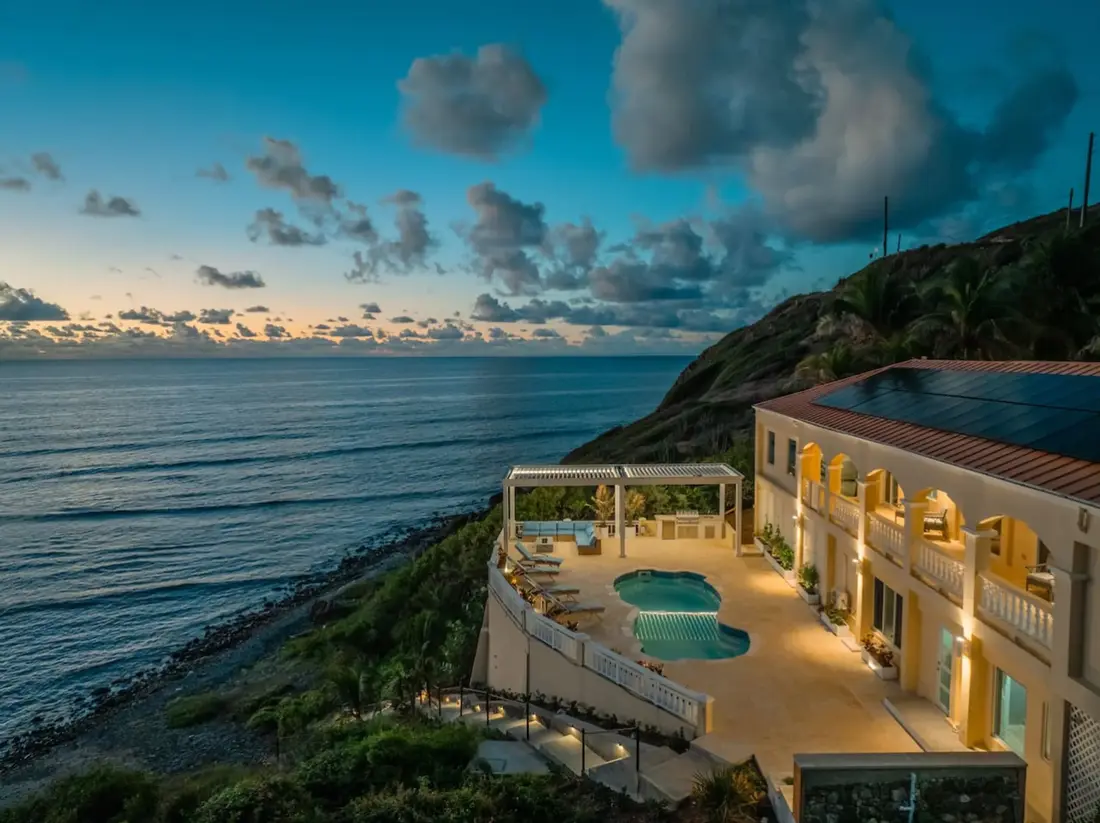 The Cerulean5 bd · 5 ba · sleeps 12 · Christiansted
More in On the Water
Sources
12 references, listed in full at the end of this guide — official park, refuge, tourism-board and business sources, checked August 2026.