Sandy Point National Wildlife Refuge
Two miles of undeveloped white sand and the largest leatherback nesting beach under U.S. jurisdiction. Open weekends only; closed Apr 1 to Aug 31.
Sandy Point National Wildlife Refuge occupies the southwest tip of St. Croix: two miles of wide, bare white sand, a mangrove-ringed salt pond behind it, and nothing built on any of it. More leatherback sea turtles nest here than on any other beach under U.S. jurisdiction, and the refuge is run for them. The public gets in on a narrow schedule, Saturdays and Sundays from 10 a.m. to 4 p.m. between September 1 and March 31, with a full closure from April 1 through August 31, and this page exists to make that schedule, and everything behind it, completely clear before you drive out.
What the refuge is
Sandy Point is a unit of the National Wildlife Refuge System, managed by the U.S. Fish and Wildlife Service as part of its Caribbean Islands refuge complex. It was created in 1984, when the service purchased 340 acres at the island's southwest corner from the West Indies Investment Company for one stated purpose: protecting the nesting habitat of the endangered leatherback sea turtle. About 43 additional acres came in later, added to take in the Aklis archaeological site and a stand of Vahl's boxwood, an endangered native tree. Published totals for the refuge today run from roughly 360 acres to just under 400 depending on which document you read; the service's own habitat description counts 327 acres of beach, mangrove and littoral woodland.
The service's claim for the place is specific, and worth quoting in substance: Sandy Point holds the largest known nesting population of leatherbacks anywhere under U.S. jurisdiction, and its strand is the largest beach in the Virgin Islands. Hawksbill and green sea turtles nest on the same sand. That combination, three listed species using one uninterrupted beach, is why the refuge operates the way it does. Wildlife comes first here as a matter of law and founding purpose; public recreation is permitted only where it does not interfere. Wikipedia's entry recorded about 11,000 visitors in 2005, which averages out to a few hundred people per open weekend on two miles of sand.
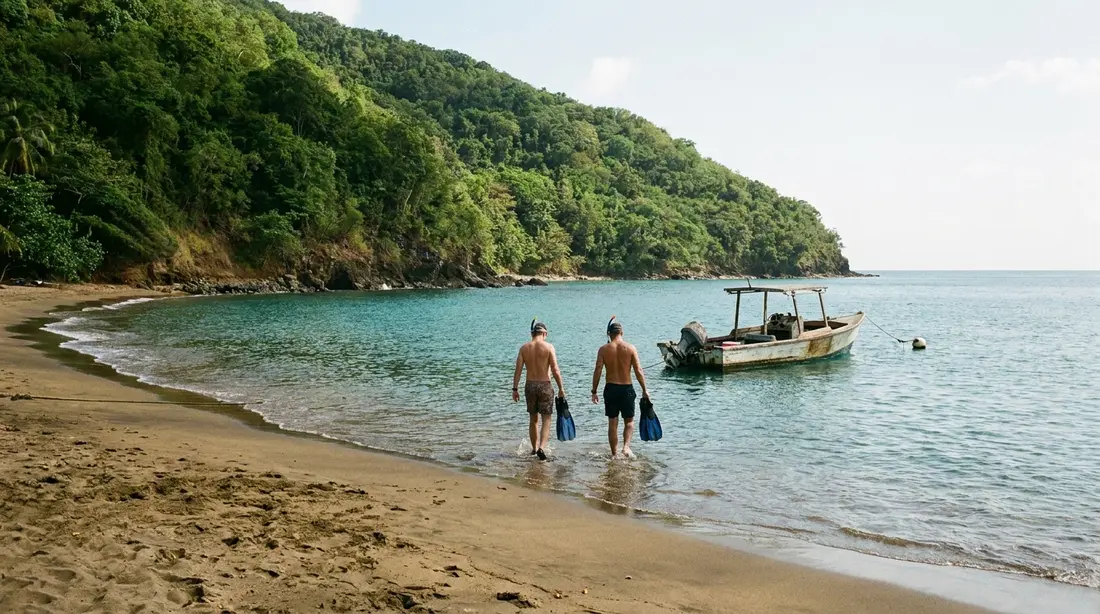
Open days and hours
The schedule has two halves, and neither has exceptions worth planning around.
- September 1 to March 31: the refuge admits visitors on Saturdays and Sundays, 10 a.m. to 4 p.m. Monday through Friday the gate stays locked, every week, all season.
- April 1 to August 31: shut to the public completely, seven days a week, while the leatherbacks nest and their eggs incubate. The only lawful way onto the sand in these months is a guided program, covered below.
Admission is free in the open season. There is no weekday pass, no off-hours permit for photographers, and no shoulder period when the rules soften. The Fish and Wildlife Service also adjusts access when the turtles require it, so a posted notice can trim hours inside the open season without warning; check the refuge's current information before committing a morning to the drive. Guests who show up on a Tuesday, or any day in June, meet a chain across a dirt road and turn around. Every year plenty do.
Why weekends only, when the turtles nest at night either way? Refuge managers have to balance a legal mandate to put wildlife first against limited staff on an island unit with no visitor center. Concentrating public use into two supervised daytime windows keeps the beach undisturbed five days a week, protects ground-nesting birds and incubating nests in the shoulder months, and makes stewardship feasible with the people available. It also, incidentally, produces the emptiness visitors remember; the schedule is the crowd control.
The rest of the rules
The open-day rules are stricter than any other beach on St. Croix, because the sand itself is the protected resource. At last check, posted and published rules included the following.
- No pets. Dogs are excluded even on leash; loose dogs dig nests and kill hatchlings.
- Nothing staked or anchored into the sand. Beach umbrellas, canopies and pop-up shelters that pierce the beach are barred, since eggs can sit anywhere beneath the surface. Carry shade you can wear.
- No collecting. Shells, coral fragments, sand, plants, driftwood and artifacts all stay. The Aklis site makes artifact removal a federal offense on top of a refuge violation.
- No drones. Unmanned aircraft are prohibited on national wildlife refuges without a permit, and none is issued for recreation here.
- No fires, no camping, no overnight presence. The refuge closes at 4 p.m. sharp and empties.
- Vehicles stay on the entrance road and in the parking areas. Driving on the beach is out of the question.
- Pack out everything. There is no trash service because there are no facilities at all.
Enforcement is real. All three turtles that use this sand carry Endangered Species Act listing, so disturbing a nest or harassing an animal draws federal penalties, on a beach patrolled by researchers who count every crawl.
Rules at a glance
| Question | Answer at last check |
|---|---|
| Open days | Saturday and Sunday only, Sept. 1 – Mar. 31 |
| Hours | 10 a.m. – 4 p.m. |
| Apr. 1 – Aug. 31 | Closed to the public, all days |
| Cost | Free |
| Restrooms / water / vendors | None |
| Shade | None on the beach; umbrellas may not be staked |
| Pets | Prohibited |
| Drones | Prohibited |
| Collecting shells, sand, artifacts | Prohibited |
| Fires / camping | Prohibited |
| Lifeguards | None |
Getting there and the gate
The refuge sits at the dead end of the island's only divided highway. From mid-island, take the Melvin H. Evans Highway (Route 66) west; the divided highway narrows into an ordinary two-way road, and the refuge entrance gate appears along it, south of Frederiksted. Through the gate, a dirt road runs past the salt ponds to several small parking areas with beach access. The unpaved stretch is washboarded and slow, fine for any rental car driven patiently, and it eats more of the clock than the map suggests. From Frederiksted town figure about 15 minutes; from Christiansted or the East End, 40 minutes to an hour before the dirt begins.
Practical gate math: the gate opens at 10 and closes at 4, and rangers or volunteers sweep the beach before locking up. Arrive mid-morning, park at the first or second pull-off, and give yourself a hard 3:15 departure from the far end of the sand if you walked the full strand. Trip reports pass around side approaches onto the north end of the beach from the Frederiksted side; outside posted hours every one of those is illegal entry into a closed federal refuge, so treat the gate schedule as the whole story.
The beach itself
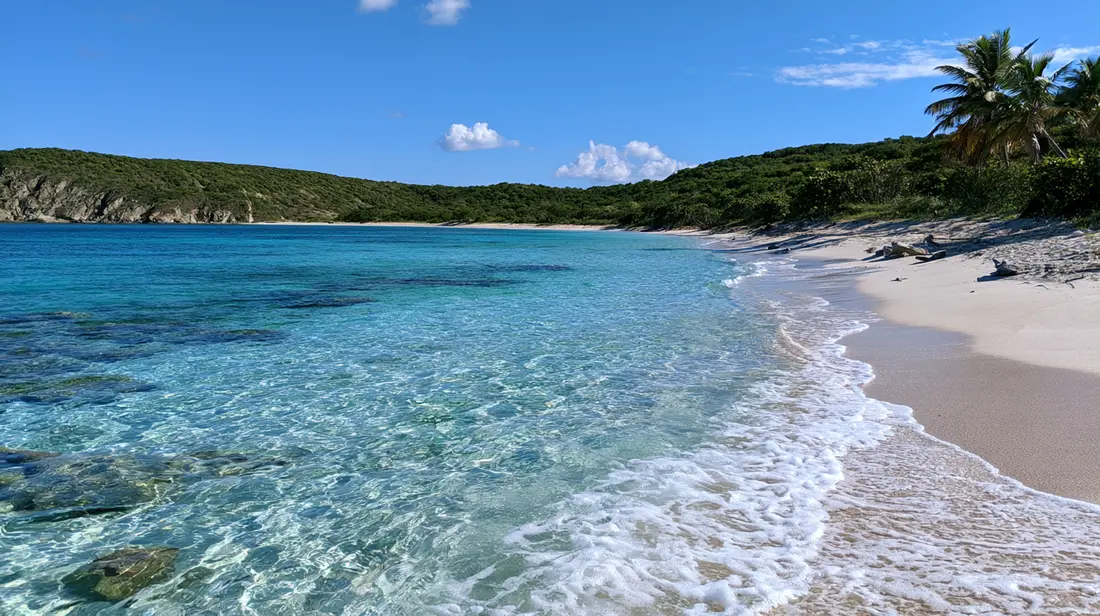
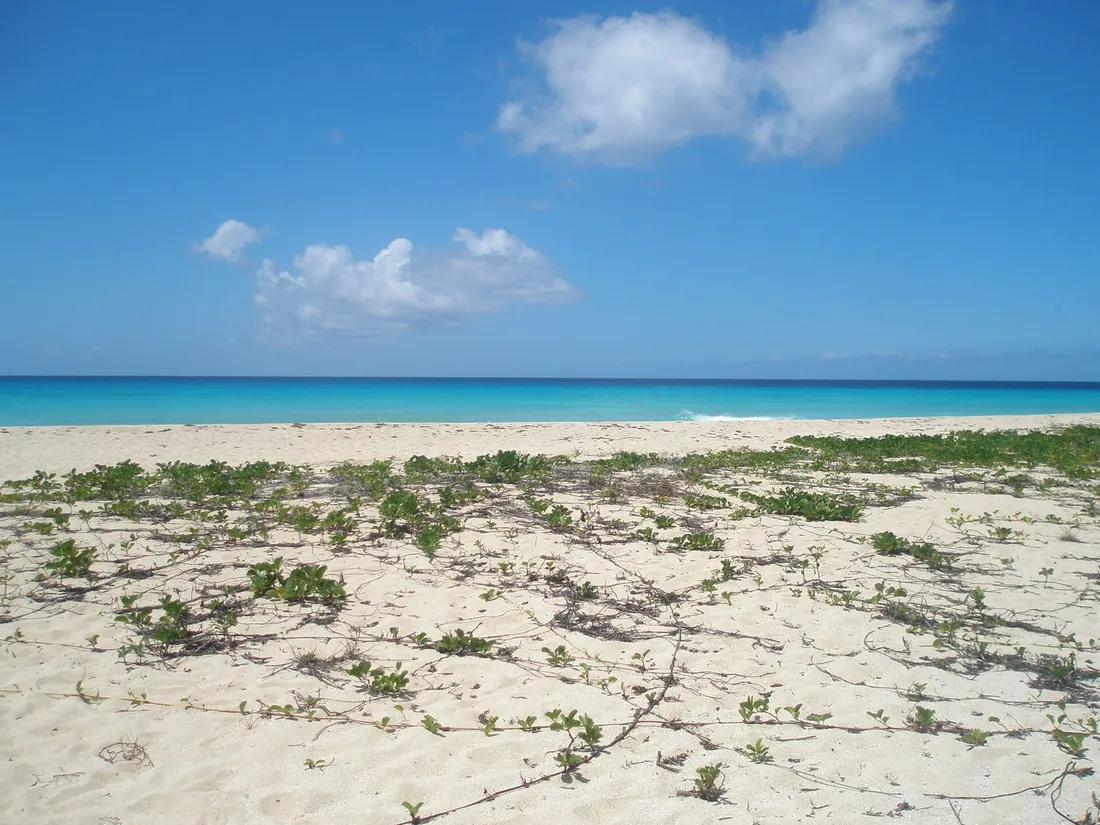
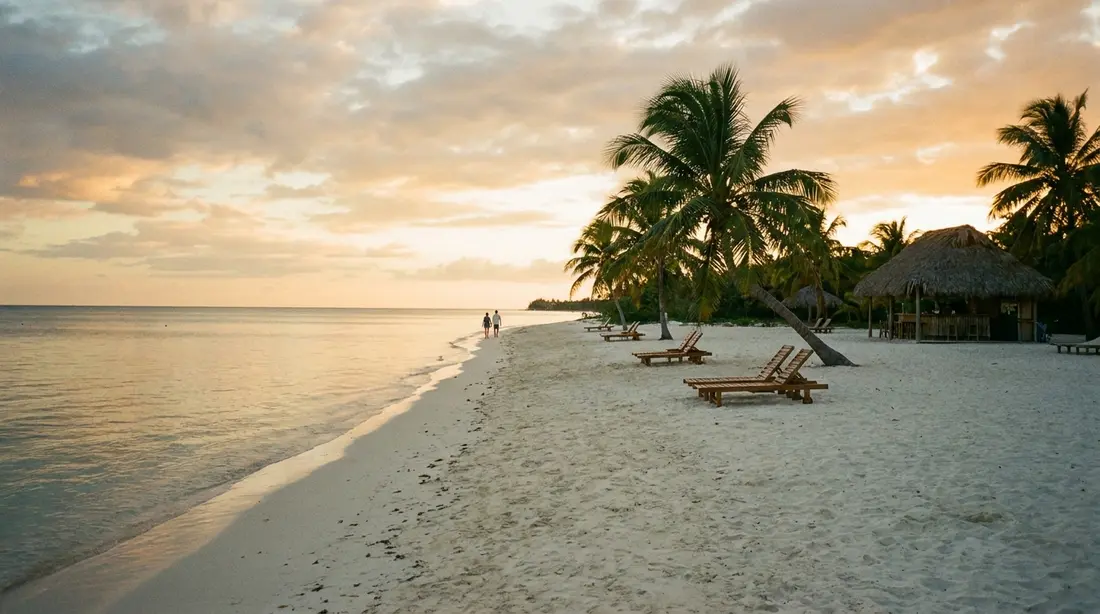
What the rules protect is the longest, widest, emptiest run of sand in the territory. The strand is an enormous sandy peninsula wrapping the island's southwest corner around the West End Salt Pond, roughly two miles from end to end, with the beach broadening to a width few Caribbean islands can show. No reef fringes it, no palm line shades it, and no structure stands on it. On a January Saturday you might share the whole thing with a few dozen people, most of whom stay near the parking areas; fifteen minutes of walking usually buys total solitude.
The geometry faces west and southwest, which makes this the island's longest run of sunset-facing sand, and also produces a small irony: nobody watches a sunset here, because everyone is out by 4. What the orientation actually delivers is the low, slanting afternoon light of winter, which is when the white sand and the blue gradient offshore photograph best. For an actual sunset on this coast, finish the day a few minutes north at Frederiksted's town beach, Dorsch or Rainbow; our sunset beaches guide ranks them.
Swimming and the drop-off
The water is usually gentle on winter weekends, this is still the island's calm side, and the entry is soft sand the whole way. The caution is what happens a short distance out: the bottom falls away quickly into deep water close to shore. That underwater profile is the reason the leatherbacks chose this beach, a heavy, soft-bodied animal can reach dry sand without dragging across rock or reef, and it is the reason swimmers should respect the place. You go from wading to well over your head fast, and when a southerly swell runs, the deep water close in can stand the shore break up harder than the west-coast beaches you swam yesterday.
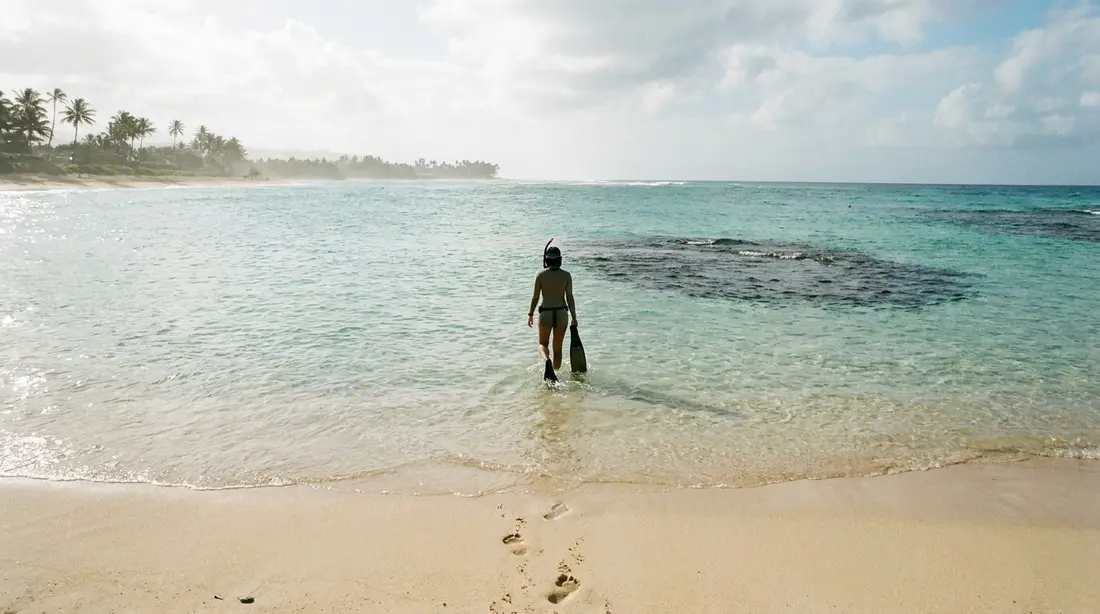
There are no lifeguards, no flags and no one to wave you in. Swim parallel and close to shore, keep children inside their depth with an adult between them and the open water, and on a day when the break is dumping, make it a walking beach. Snorkeling has little to offer here anyway; the appeal is above the waterline. For fish and coral, the Frederiksted Pier and the island's snorkeling beaches are minutes away on the same coast.
Pack like the desert: more water than seems sensible, real sun protection, a wide hat, and food. The nearest tap, toilet and shop are back in Frederiksted.
What to bring
Because the refuge supplies nothing and forbids the usual workarounds, the packing list is short and non-negotiable. Water first: a half gallon per person covers a two-to-three-hour visit in winter sun, and more is better, since the walk back to the car always runs longer than expected on soft sand. Sun protection has to be wearable, a wide-brimmed hat, a long-sleeve sun shirt, quality sunglasses and reef-safe sunscreen reapplied often, because the no-staking rule removes umbrellas and pop-ups from the equation and the strand offers zero natural cover from one end to the other. Food comes along if the visit spans lunch; the alternative is driving back to Frederiksted and burning your window on the washboard road twice.
Beyond survival gear: binoculars earn their weight at the salt pond, a phone in a dry bag covers photos and emergencies, and low-profile beach chairs are fine since they rest on the surface instead of piercing it. Sturdy sandals or reef shoes help on the hot dry sand at midday. Leave behind anything you would hate to carry for two miles, and leave with every wrapper, bottle and peel you brought; the pack-in, pack-out rule has no trash-can safety net.
The leatherbacks
The animal this beach serves is the largest living turtle. Adult leatherbacks reach up to eight feet and as much as 2,000 pounds, per NOAA Fisheries; they carry a ridged, rubbery carapace instead of a hard shell, feed largely on jellyfish, range across entire ocean basins, and have been recorded diving to nearly 4,000 feet, deeper than most marine mammals. They are also the most endangered of the three species that use St. Croix, which is why a whole federal refuge exists for their benefit.
Nesting at Sandy Point runs roughly March into July. A female hauls out at night, digs a chamber with her rear flippers above the reach of the tide, deposits a clutch of about 100 eggs, a portion of them yolkless spacers, disguises the site, and returns to the sea before light. She repeats this at intervals of roughly 8 to 12 days, several times in a season, then skips two to four years before nesting again. Incubation takes around 60 days, with the sex of the hatchlings set by nest temperature, and the young emerge at night and sprint for the water. Eggs laid at the end of the season are still hatching well into the fall, one more reason the sand stays protected after the closure lifts. The short version of the biology is on our leatherback page, and the island-wide picture, greens and hawksbills at Buck Island, Ha'penny and the East End bays included, is in sea turtles of St. Croix.
The research program
Sandy Point is a landmark in sea turtle science as well as a refuge. Night patrols with saturation tagging, the attempt to identify every single female that nests in a season, began on this beach in 1977, and Earthwatch's "Saving the Leatherback Turtle" project launched here in 1982 under the Virgin Islands Department of Planning and Natural Resources, with Karen and Scott Eckert leading early field seasons alongside Rafe Boulon. The published literature calls Sandy Point the longest-running leatherback saturation-tagging program in the world. Over the decades the work has been carried and funded by the territorial government, Earthwatch, the Fish and Wildlife Service, NOAA's Southwest Fisheries Science Center and the West Indies Marine Animal Research and Conservation Service (WIMARCS), with the St. Croix Sea Turtle Project running the beach patrols in recent years.
The method explains those markers you may notice on an open-season walk. Every nesting female is checked for Inconel flipper tags and an implanted PIT tag, new animals are tagged, and each nest's position is logged; nests laid in erosion-prone zones have historically been relocated to safer sand. Decades of continuous records have made this colony one of the best-documented leatherback populations anywhere: analyses in the mid-2000s reported a strong increase credited to the beach's protection, and a later 20-year study documented declining hatching success tied to climate variation. The counts move year to year, and the patrols continue either way.
Why saturation tagging matters is worth a sentence, because it is the refuge's scientific claim to fame. Most nesting beaches sample: teams count a fraction of crawls and estimate the rest. At Sandy Point, patrols aim to meet every female on every night of the season, which means researchers know each turtle as an individual, how many seasons she has returned, how many clutches she lays, how her nest placement fares against erosion, and whether she survives the years between visits. Individual histories at that resolution, sustained for close to fifty years, are what let scientists separate a real population trend from a noisy season, and they are the reason data from this two-mile beach shows up in leatherback studies worldwide. A visitor sees an empty strand; the literature sees one of the most closely read wildlife datasets in the Caribbean.
Turtle Watch nights
The refuge's summer closure has one public exception: organized turtle watches, run so that visitors see a nesting leatherback with the research effort instead of underfoot. The St. Croix Environmental Association has operated its Turtle Watch program at Sandy Point for decades in cooperation with the refuge, an evening that starts with an orientation at the refuge's education pavilion and moves onto the dark beach with trained leaders, red light only. In recent years the nights have run in April, on limited dates with mandatory reservations, and they fill almost immediately; the 2026 season was posted as full. The St. Croix Sea Turtle Project also fields research-season wildlife-visit inquiries at stxturtles@gmail.com and posts program information at seaturtlecensus.com.
Program formats, organizers and dates shift season to season, so verify the current arrangement before promising one to your group, and book the moment dates appear. Our turtle watch page carries the fuller how-to-join detail. What no visitor should do is improvise: walking this beach at night in nesting season, without a program, is both a federal violation and harmful.
Birds and the salt pond
Turtles get the headlines, and the refuge would still matter without them. Behind the strand lies the West End Salt Pond, and about three-quarters of it, the largest salt pond in the U.S. Virgin Islands, sits inside the refuge boundary, fringed with mangroves. Between the pond, the mudflats, the littoral woodland and the open beach, the refuge's habitats support more than 100 recorded bird species. Least terns lay their eggs directly on the bare sand, one more reason foot traffic is channeled and dogs are banned, and local birders report Wilson's plovers and black-necked stilts nesting on the flats through a March-to-August season that conveniently overlaps the human closure. Brown pelicans work the drop-off just offshore. In migration months, an open-season visit with binoculars can be as productive at the pond edge as on the beach; the island-wide species picture is in our St. Croix wildlife guide.
The plant list carries weight too: part of the refuge's later acreage was added specifically to protect a stand of Vahl's boxwood, an endangered tree with only a handful of known populations.
The Aklis site
Near the western end of the refuge, a four-acre prehistoric site called Aklis sits on the National Register of Historic Places, listed in 1976, before the refuge existed. It is a coastal shell midden left by people who lived at this shoreline around A.D. 200 to 400; excavations have produced shell and bone tools, pottery and ceramic bowls. The site erodes gradually, and it enjoys the same federal protection as the turtles: nothing gets picked up, nothing gets taken home. There is no interpretive trail or signage to speak of, so for most visitors Aklis is simply a fact that deepens the walk, people have been using this exact beach for some eighteen centuries.
The Shawshank scene
Sandy Point's one piece of pop-culture fame: published accounts, from the island's visitor sites to the encyclopedia entry on the refuge, place the closing scene of The Shawshank Redemption (1994) here, the wide shot of the Pacific-blue water and long empty sand standing in for the Mexican beach town of Zihuatanejo. The film's Ohio prison scenes were half a hemisphere away; the reunion on the sand was St. Croix. Stand at the waterline on the western strand and the frame is recognizable at a glance. It photographs today exactly as it did then, because in thirty years nothing has been built, which is the whole point of the place.
How to behave around nests
Even in the open season, you are walking a working nursery, and a few habits keep a visit harmless.
- Walk on the wet, packed sand below the last high-tide line where possible; nests sit in the dry sand above it.
- Give any stake, flag or marked plot a wide berth, and never dig near one. Markers are research equipment, and moving one corrupts data.
- If you cross fresh turtle tracks, the wide tractor-tread crawls of early season, leave them exactly as found; patrols read them each morning.
- Fill in any hole you dig and level sandcastles before you leave. Pits trap hatchlings and can turn an 800-pound female around.
- Stay off the dune vegetation; those roots hold the nesting platform together.
- Keep lights, including phone screens, off the beach in any dusk situation, and skip flash photography near the sand line.
- Found a stranded, injured or hooked turtle anywhere on island? Report it to the Sea Turtle Project or the refuge rather than intervening yourself.
The refuge year
One way to hold the whole schedule in your head is to follow the refuge through twelve months, because the human calendar here is simply the turtle calendar inverted.
| Months | On the sand | For visitors |
|---|---|---|
| January – February | Quiet beach; wintering shorebirds on the pond | Open weekends; the driest, most comfortable visiting weather |
| March | First leatherback crawls of the season | Last open weekends until fall; tracks possible on a morning walk |
| April – June | Peak leatherback nesting; terns and plovers on eggs | Closed; spring turtle watch nights are the one sanctioned entry |
| July – August | Late nesting tapers; early nests hatch nightly | Closed; watch for green turtles in the water elsewhere on island |
| September – October | Final nests still emerging after dark | Open weekends resume Sept. 1; the emptiest visits of the year |
| November – December | Beach rebuilds; bird activity on the flats | Open weekends; strong low-angle afternoon light for photos |
Two planning notes fall out of the table. First, the open season and the island's high season overlap almost exactly, so a winter trip nearly always contains at least one eligible weekend day. Second, the closed months are also the island's warmest and least crowded, so a summer trip trades this one beach for thinner crowds everywhere else, a trade plenty of repeat guests make on purpose.
Fitting it into a week
Sandy Point is a half-day, calendar-dependent stop, and it slots most naturally into a west-end day. If your trip includes a Saturday or Sunday between September and March, claim that morning: gate at 10, two hours of walking and swimming, out by early afternoon. Then lunch in Frederiksted, where the town's restaurants sit ten minutes from the refuge road, a slow afternoon at Rainbow or Dorsch, and sunset from the Frederiksted waterfront. That sequence turns the island's strictest beach into the anchor of its easiest day; our seven-day itinerary builds it in exactly that way.
Choosing between the two open days: cruise calls concentrate crowds in Frederiksted town on ship days rather than at the refuge, so either weekend day works at Sandy Point itself; Sundays sometimes run a touch quieter. September, the first open month, pairs the emptiest sand of the year with the quietest travel season on the island, a combination covered in St. Croix in September. And if your dates land entirely in the closed months, spend zero energy on regret: Ha'penny on the south shore and the hike-in East End bays deliver the empty-sand experience legally all summer, and the full beach rundown maps every alternative.
Questions guests ask
Is Sandy Point worth it given all the restrictions?
If a weekend day falls inside your dates, yes, emphatically. Two miles of protected, undeveloped Caribbean beach with a few dozen people on it does not exist anywhere else on St. Croix, and hardly anywhere in the region. The restrictions are the reason it looks the way it looks. Treat the schedule as a feature: the refuge model has kept this shoreline in roughly its natural state for four decades while beaches across the Caribbean grew hotels. A visit costs nothing except planning.
What happens if I show up on a weekday?
You meet a locked gate on a dirt road, with no attendant and no workaround, and you turn the car around. The recovery plan takes five minutes: drive back toward Frederiksted and pick any west-coast beach, Dorsch and the town beach are closest, Rainbow a few minutes further north, all with calm water and at least some services. The same applies from April through August, when the closure is total. Nothing about arriving at the gate creates an exception, and entering around it is a federal offense.
Will I see turtles on a regular daytime visit?
Almost certainly no, and the calendar explains why. Leatherbacks nest at night, roughly March into July, when the refuge is closed; by the time weekend access resumes in September, most nests have hatched. Early-season visitors in March occasionally spot fresh crawl tracks, and late-season nests can still be hatching in September and October, though emergences happen mostly after dark. The dependable way to see a leatherback is a guided spring turtle watch. For a turtle in the water today, snorkel the seagrass at Chenay Bay or take the Buck Island trip, where daytime green turtle sightings are routine.
Can I swim there?
Yes, in the open season, with judgment. The entry is soft and the winter water on this corner is usually calm, and the bottom drops into deep water unusually close to shore, the very feature that attracts nesting leatherbacks. Stay close in, keep children shallow, and skip swimming when a south swell has the shore break standing up. There are no lifeguards and no reef; this is a walking-and-wading beach with an optional swim rather than a snorkel destination.
Is there any shade or any facilities?
None, and you cannot create your own: refuge rules bar staking umbrellas or shelters into the sand because eggs may lie beneath any square foot of it. There are no restrooms, no water, no vendors and no trash cans, and the nearest of all four is back in Frederiksted. Bring water in quantity, wearable sun protection and a hat, and plan bathroom stops around the drive. Everything that comes in with you leaves with you.
Can I bring my dog, or fly a drone for photos?
No on both. Pets are prohibited outright, leashed or otherwise, because dogs dig nests and take hatchlings. Drones fall under the refuge system's general ban on unmanned aircraft, and no recreational exception is issued here. Photographers get remarkable material anyway: the winter afternoon light on the widest beach in the territory, from ground level, with almost nobody in frame.
How do I join a turtle watch?
Through the organizers, early. The St. Croix Environmental Association has run spring Turtle Watch nights at the refuge, reservation-only and quick to fill, the 2026 dates sold out, and the Sea Turtle Project's crew answers research-season visit questions by email, stxturtles@gmail.com. Formats and dates change from year to year, so check current listings as soon as your travel window firms up. Details and expectations, including why small children and impatient adults struggle with the format, are on our turtle watch page.
Staying near the refuge
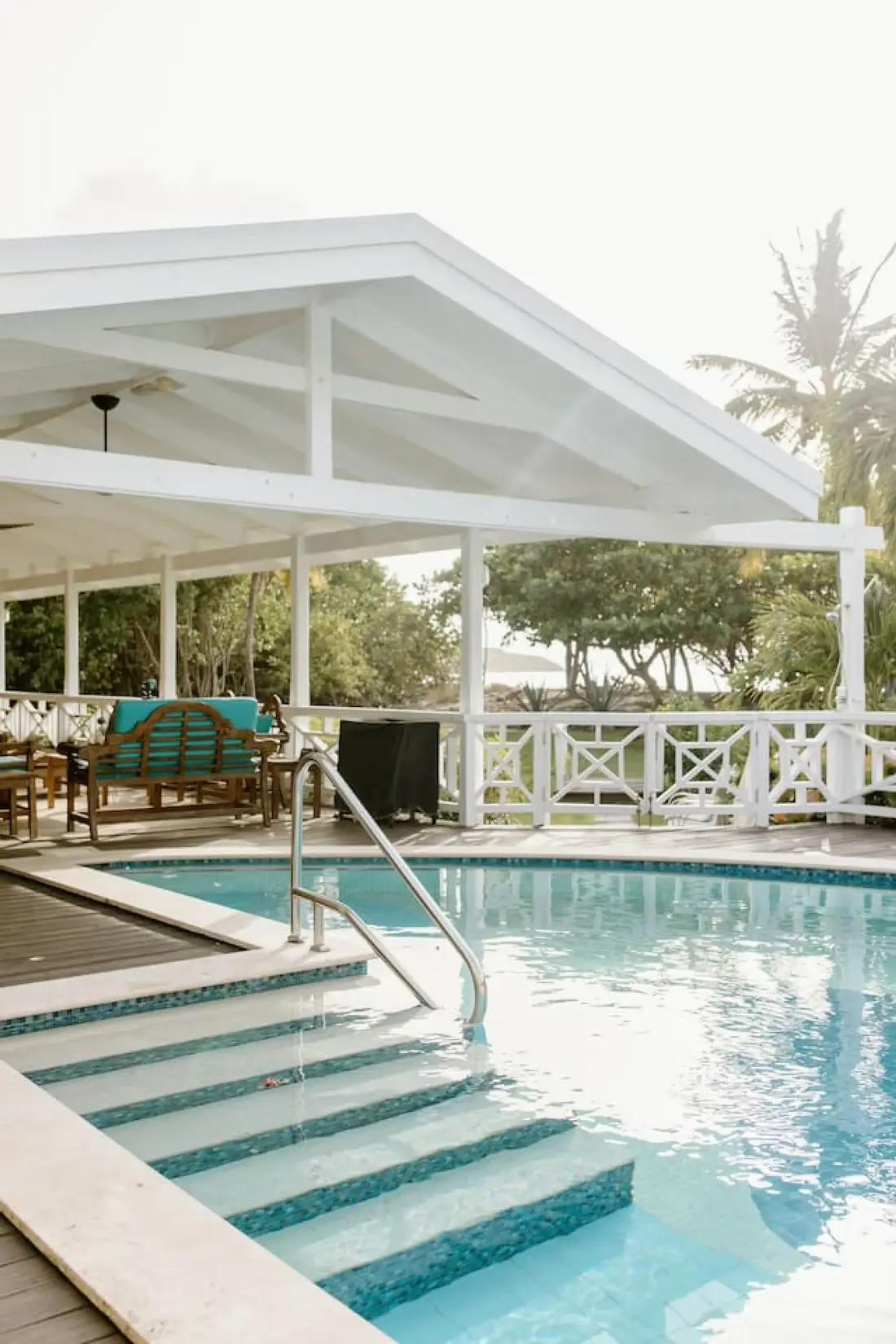
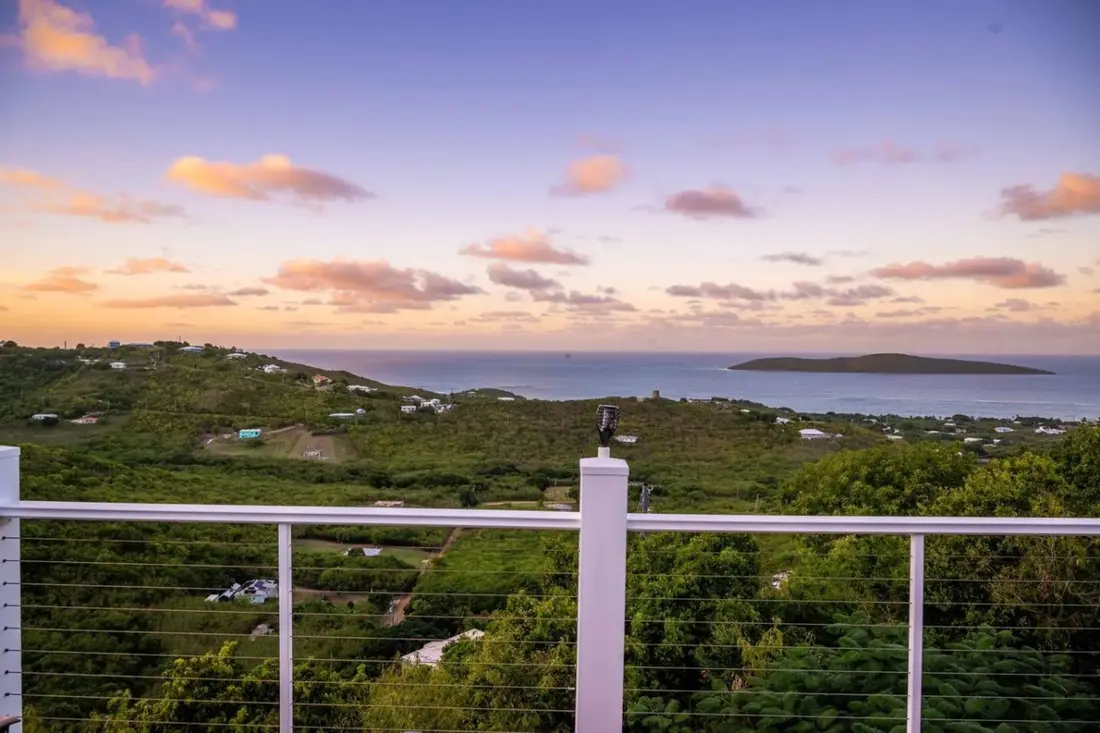
Our west-end villa Sunset Sea-Clusion is the natural base for a Sandy Point weekend: the refuge gate, Frederiksted's restaurants and the calm west-coast swimming beaches all sit within about 15 minutes, and the sunset comes to the front of the house every evening. From our East End homes and the Christiansted-side portfolio, the refuge is a 45-to-60-minute drive, which works fine as the anchor of a full west-end day, out in the morning, beach and town through the afternoon, home after sunset. Browse all villas and put a September-through-March weekend on the calendar before you pick the house.
Sources
Written from official and first-party sources, checked August 2026. Hours, prices and event dates change — confirm before you go.
In this guide
Stay nearby
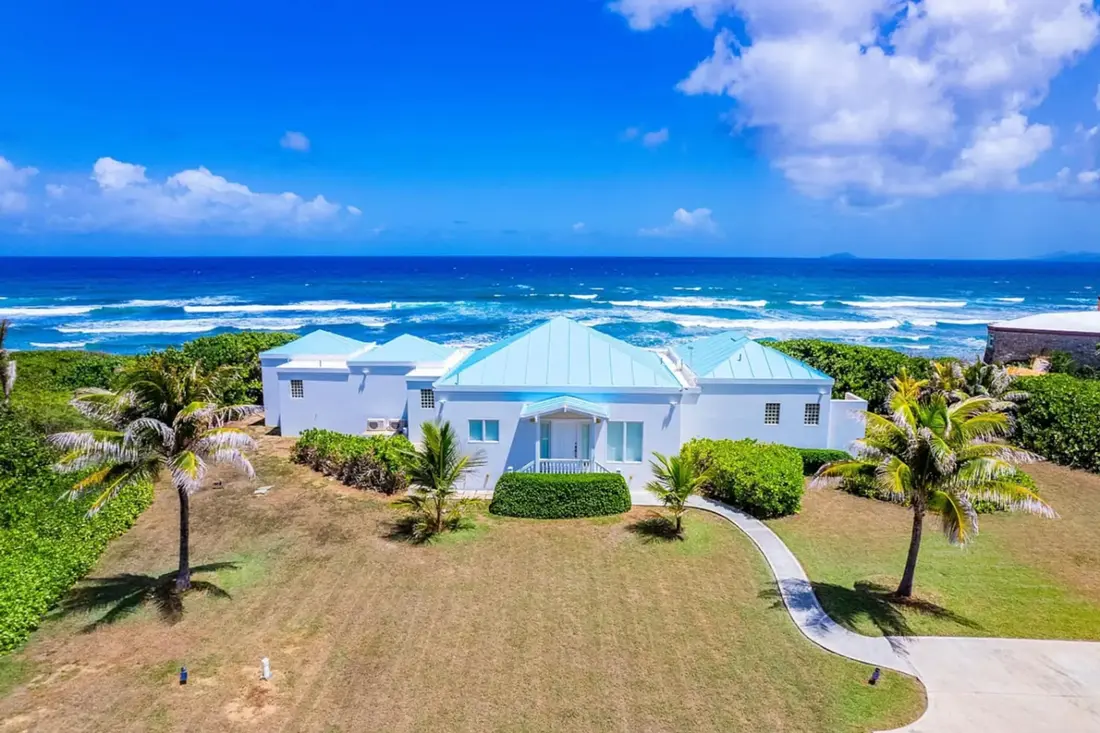
Private oceanfront on the East End with a sandy, swimmable beach, pool, outdoor kitchen and a separate guest cottage. Sleeps twelve.
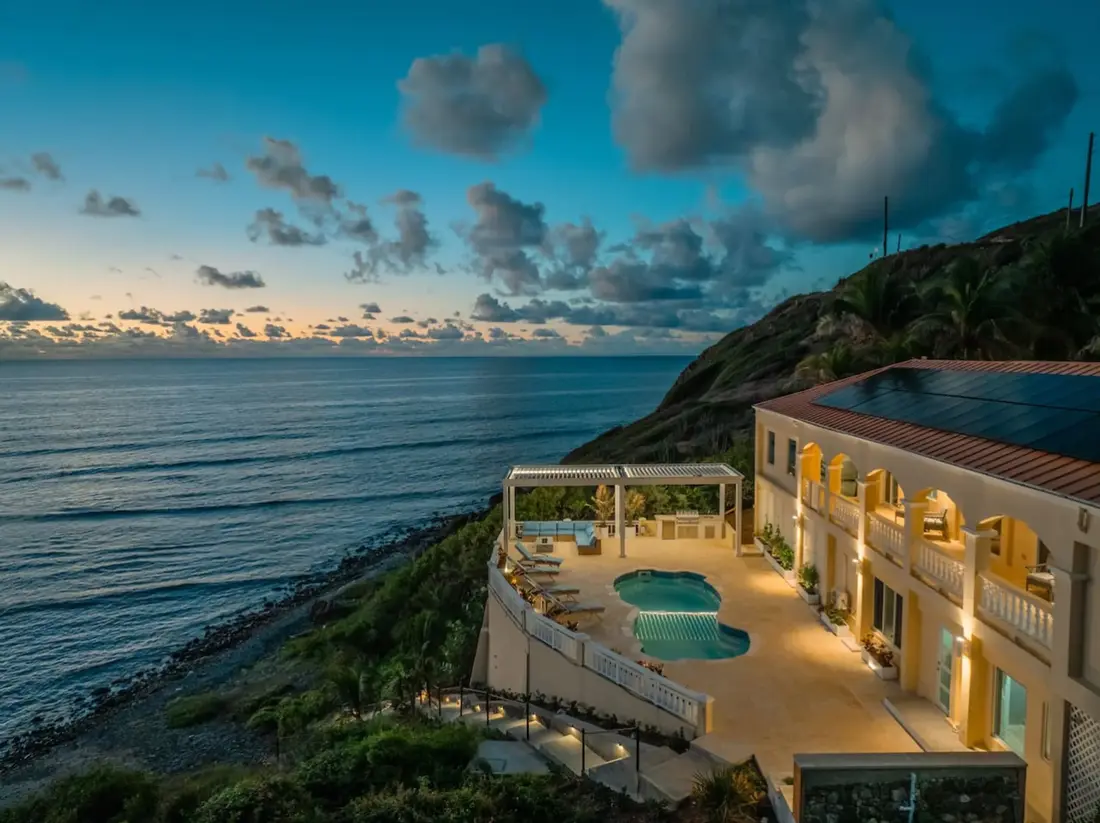 The Cerulean5 bd · 5 ba · sleeps 12 · Christiansted
More in Beaches
Sources
11 references, listed in full at the end of this guide — official park, refuge, tourism-board and business sources, checked August 2026.