Diving the Frederiksted Pier
Calm, shallow, and strange in the best way: seahorses, frogfish, and octopus among the pilings. One of the Caribbean's great macro dives.
The Frederiksted Pier is a working cruise dock that happens to hold some of the best small-animal diving in the Caribbean. Its concrete columns stand in flat, clear water on St. Croix's sheltered west coast, running from a few feet at the shoreline to about 90 feet under the far end, and every column has grown a coat of sponge and coral that shelters seahorses, frogfish and octopus. Certified divers walk in from town; after dark the same columns produce the island's most requested night dive. This page is the pier's full reference: how a dock becomes a reef, who lives on which stretch, day and night dive plans, the ship rule, photography, seasons and the structure's own history.
Why a pier makes a great dive
Take away the pier and this piece of seabed is plain: a gentle sand slope with scattered rock, sliding west into deeper water. Put roughly fifteen hundred feet of concrete columns on it and everything changes. Bare sand offers marine life almost nowhere to hold on, hide or hunt; a column offers all three, from the surface to the bottom, and it offers them in the one place on the island where the sea is nearly always calm. Divers call this the artificial-reef effect, and piers demonstrate it better than intentional reef projects do, because a pier adds shade, steady food drift and decades of undisturbed growth to the basic gift of hard surface.
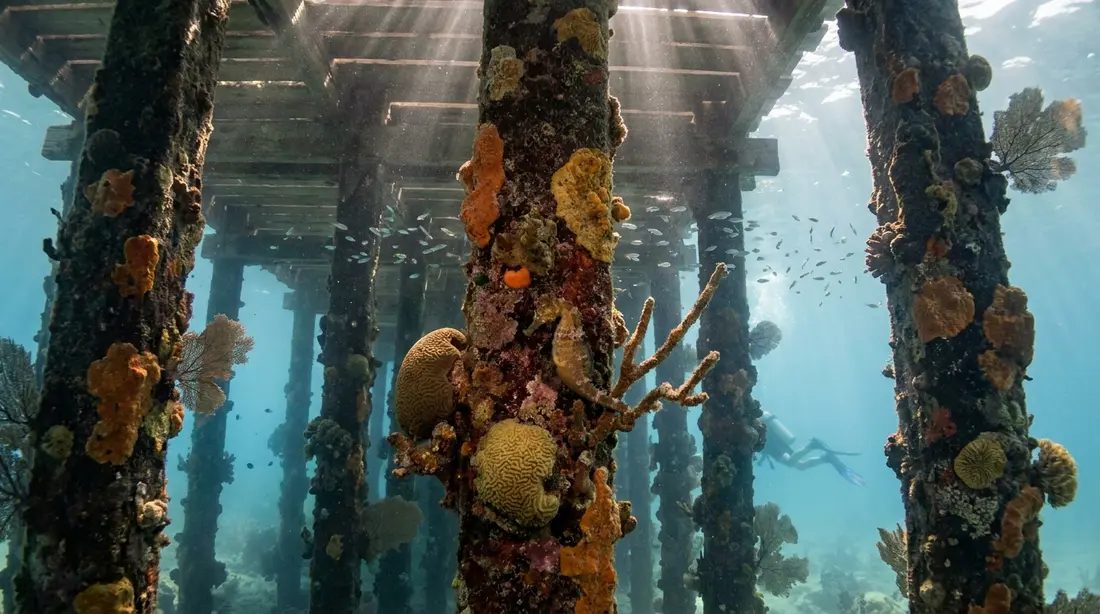
The colonization runs in layers. Sponges in reds, oranges, purples and yellows wrap the concrete first and thickest, joined over time by soft corals, hard corals, Christmas tree worms and feather-duster worms. That growth is itself habitat: brittle stars thread through the sponge, arrow crabs and shrimp pick across it, juvenile fish hold station beside it. Each column ends up working as a reef stood on end, and the animals arrange themselves by height on it the way they would arrange themselves by ledge on a wall.
The sand between the columns matters as much as the columns. Open bottom is where the flounder, stingrays, garden eels and hunting octopus operate, and the border zone where structure meets sand is the most productive strip of the whole site. Divers who fly here specifically for the pier treat it the way muck divers treat the famous sites of Indonesia and the Philippines: slow passes, eyes at inches, one strange small animal at a time. The rest of St. Croix's diving is scenery on a grand scale — the drop at Cane Bay, the Butler Bay wrecks, the Salt River canyon — and the pier is the counterweight: the island's one dive where the show gets better the smaller you look.
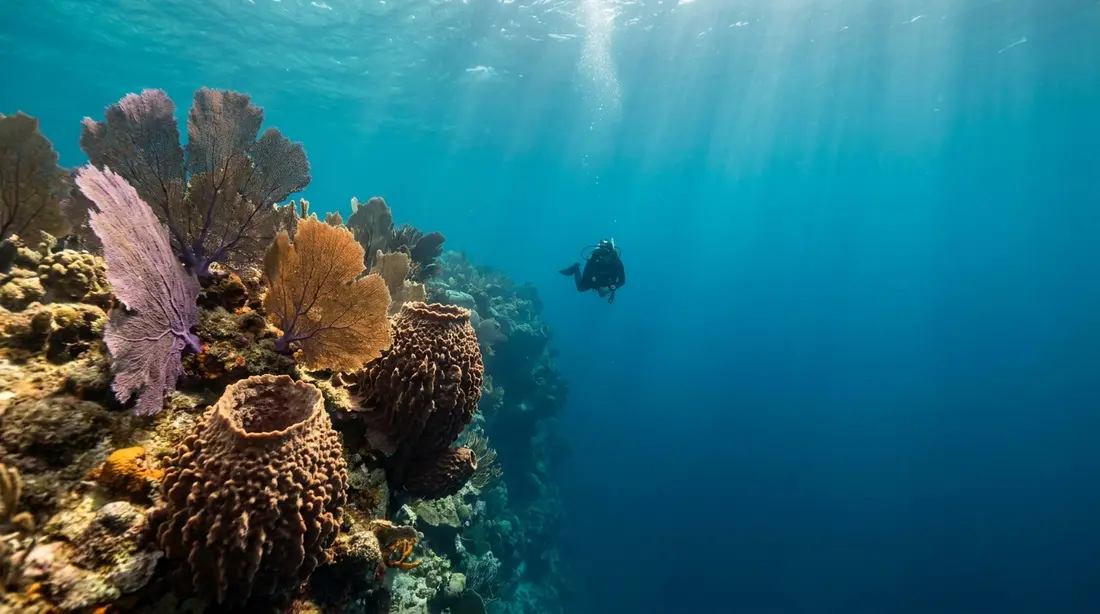
The structure under the surface
The pier, formally the Ann E. Abramson Marine Facility, extends 1,526 feet from the Frederiksted waterfront, and the Virgin Islands Port Authority maintains cruise-ship depths along its outer berth. For a diver, the useful map has four zones.
The inshore shallows. The first stretch off the beach runs over rock, rubble and remnants of the pier's earlier life in roughly 10 to 20 feet. It looks like an afterthought and is anything else: the rubble holds juvenile fish in clouds, and the shallow columns here are where guides most often point out frogfish and seahorses. Snorkelers see this zone best of anyone.
The mid-pier columns. Most of the pier's length stands in water averaging about 25 feet — the depth figure the site is quoted at — and this is the classic circuit: row after row of encrusted columns with sand lanes between, enough light for color, and bottom time measured in whole hours if your air holds.
The deep end. Under and past the ship berth the bottom falls away toward 90 feet, where three oversized columns — divers call them the Three Amigos — mark the far corner. Atlantic spadefish school here, barracuda hang in the current shadow, and pelagic visitors pass. Most dives never come this far; it is a destination for a deliberate deep leg, planned with the shop.
The Dolphins. South of the pier stand two free-standing concrete mooring islands, and the reef growth on and around them includes brain corals wound with Christmas tree worms. They make a natural side trip on a second or third pier dive.
Navigation could hardly be simpler, which is one reason instructors bring students: the columns run in straight rows, shore is always east, and depth alone tells you how far out you are. The one structural caution is overhead awareness — you are under a dock that working boats use, so surfacing away from the structure and listening before ascending are part of the local briefing.
The residents
Seahorses
The pier's signature animal. The longsnout seahorse (Hippocampus reidi) is the species divers and photographers document here, and the pier is one of the Caribbean's more dependable places to meet one — dependable by seahorse standards, which still means searching. They favor the shallower columns, holding onto sponge or growth with their tails, and their camouflage is good enough that most first-timers swim past several before a guide's pointer finger recalibrates their eyes. The finding technique is a discipline: pick one column, descend it slowly, and inspect the growth in bands rather than scanning across the site. Guides who dive the pier weekly often know which columns are currently occupied, which is the single strongest argument for taking one along.
Frogfish
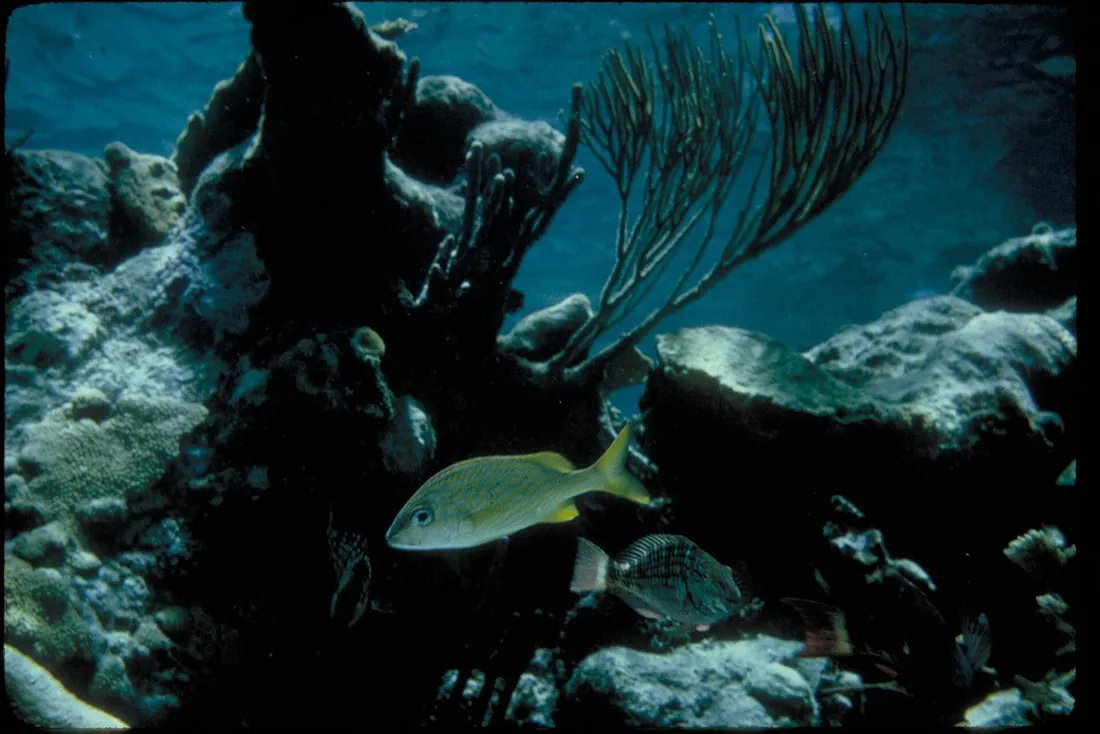
The pier's other celebrity is an ambush hunter that imitates a sponge so well it is routinely photographed by divers who only spot it later on their screens. Frogfish sit motionless against the column growth, matching its color, and dangle a lure to draw small fish into range of a strike too fast to see. They turn up in the shallow and mid-pier zones, often staying on the same column for days, so shops frequently know a current address. Like the seahorses, they reward area search over distance covered.
Octopus
Common here by day and abundant by night. Daytime octopus are den-dwellers — look for a hole in the rubble with a tidy pile of emptied shells outside it — while nighttime octopus range across the open sand hunting crabs. PADI's listing for the site notes a winter mating season during which night divers may count dozens in a single dive, an event photographers plan trips around. Squid, their free-swimming cousins, drift in small squadrons near the pier as well, often meeting divers at the start of the swim.
The nursery
Divers here comment on how much of the fish life is miniature: juvenile trunkfish the size of peas, baby drums with outsized fins, clouds of new-recruit reef fish shoaling around the rubble. The pattern has straightforward causes. The structure supplies hiding places at every scale, the west-coast lee keeps the water gentle enough for weak swimmers, and the growth on the columns feeds a food web small mouths can use. The result is that the pier functions as a nursery as well as a reef, and the smallest animals on it are often the ones repeat divers remember.
The longer list
Around the headliners, the supporting cast is deep. Trumpetfish and porcupinefish work the columns; pufferfish, sergeant majors, tangs and soldierfish fill the mid-water; scorpionfish disappear against the rubble; hermit crabs, arrow crabs, fireworms and brittle stars cover the close-up range. PADI's site listing adds nudibranchs — lettuce sea slugs among them — plus mantis shrimp, cleaner shrimp, decorator crabs and spiny lobster. Hawksbill and green turtles are regular, surfacing for air and gliding back down between the rows. Stingrays and the occasional eagle ray cross the sand, garden eels ripple at the edge of visibility, and the rare-sighting list that keeps photographers coming back includes batfish, flying gurnards and coronetfish — all reported at the pier by shops and trip logs, none promised on any given day.
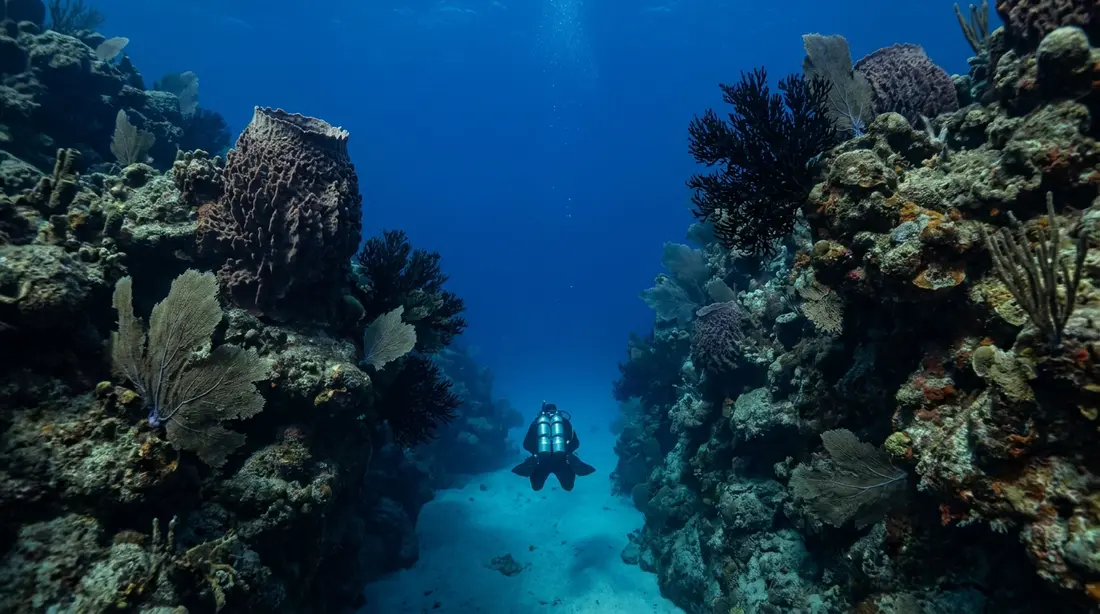
Diving it by day
The day dive is about as forgiving as scuba gets, which is why intro courses and rusty-diver refreshers happen here. Depth is yours to choose, current is normally weak to absent, the exit is visible from anywhere on the site, and the animals do not require depth to find — most of the famous residents live shallower than 30 feet.
Getting in. There are two working approaches, and the right one changes with conditions and port activity, so let the shop's current briefing override anything written anywhere, this page included. As divers describe it at last check: the classic entry is a giant stride from a low platform on the pier's north side into 15 to 20 feet of water, with the matching exit — a ladder climb in full kit — being the strenuous part of the day. The gentler route is from the shoreline south of the pier, wading in over rock (improvised block steps have served as the path in recent years) and swimming to the columns. A wooden entry platform that once eased the shore route was lost to Hurricane Maria in 2017 and the access details have shifted more than once since, which is exactly the kind of local knowledge a guided first dive buys you.
The circuit. A standard plan works out along one row of columns and back along another, or out along the columns and home over the inshore boulder field, which carries its own share of life. Budget most of the dive for the first hundred yards; covering ground is how you miss everything the pier is famous for. Guides pace it at a few columns per tank, and no one has ever complained that a pier dive was too slow.
Visibility. The west coast holds the island's clearest water, and the pier commonly gives 50 feet or better, with reports up to about 80 on its best days. The exceptions are close to shore and after heavy rain, when runoff can cloud the inshore zone; the columns further out usually stay clean. Even on a milky day the macro subjects are unaffected — you photograph them from inches, and inches always have visibility.
The ship rule
The pier's first job is a cruise berth, and the water answers to the port. Whenever a cruise ship or other large vessel occupies the dock, the sea around the structure goes off-limits to everyone — tanks, snorkels and swimmers alike — and it stays that way until the vessel departs. Outside ship calls the site is diveable around the clock; PADI's listing describes it as open 24 hours except when a ship is in. In practice the restriction is easy to plan around: the season's cruise calls are published well ahead, calls cluster in winter, and every west-end dive shop schedules pier trips against the calendar as a matter of routine. Independent divers should make the same check the shops make and confirm the day's status before driving over. What a ship day actually looks like ashore — and everything else worth doing in town while the water is closed — is covered in the cruise-day guide and the Frederiksted guide.
The night dive
If the day dive is the pier's introduction, the night dive is its reputation. Darkness rearranges the entire site. The day shift of reef fish tucks into the growth and goes still; the sand, empty at noon, becomes a hunting floor. Octopus are the stars — out of their dens, flowing over the bottom, changing color mid-stride — with lobsters marching the sand, morays swimming free, and big tarpon materializing at the edge of your beam to use it as a fishing light. Turtles sleep in the structure. And the columns themselves change: coral polyps extend to feed after dark, so surfaces that read as crust by day turn soft-edged and animated under a beam. Cup corals — the bright orange, shade-tolerant colonizers of dock pilings across the Caribbean — are built exactly this way, feeding with tentacles out at night, which is a large part of why night photographs of pier columns look nothing like day ones.
The dive itself stays easy. Guided night dives here typically hold depths under 40 feet, the column rows make navigation as readable at night as by day, and the calm water removes the usual night-dive stress inputs. It is a common first night dive for exactly these reasons, and shops hold it to sunset start times so divers gear up in the last of the light. The etiquette that matters: keep your beam moving rather than pinning animals in it, angle light away from eyes — octopus especially — and use the edge of the beam for the shy subjects. Red light modes, where your torch has one, buy longer looks at some animals.
Who runs it, current start times and prices live in the island-wide night diving guide; the short version is that Frederiksted's shops guide it on ship-free evenings year-round, gear and lights are typically bundled, and winter's octopus season is the connoisseur's booking.
Snorkeling the pier vs diving it
The pier is a genuine snorkel site — among the better ones on the island — and it is still a different experience from the dive, so set expectations accordingly. From the surface you see the shallow zone well: the inshore columns, the rubble fish clouds, squid near the top of the water, turtles coming up to breathe, and the sponge color on the upper column faces. What you mostly cannot do from the surface is the thing the site is famous for — the inch-by-inch search of column growth that produces seahorses and frogfish — because those searches happen at depth, up close and over many minutes in one spot. Strong freedivers split the difference; casual snorkelers should count a seahorse from the surface as luck rather than plan.
The practical advice: snorkel it if you are on the west end anyway and a calm, strange, easy swim appeals — full surface-side detail is in the snorkeling guide — and dive it if the pier is a reason you picked St. Croix. Non-divers who want the real show have one more option: this is one of the island's classic sites for a first-ever supervised dive, and the learning-to-dive guide explains how intro experiences work here.
Guided or independent
Both are normal at the pier, and the trade-off is simple to state. The site's difficulty is low enough that certified buddy pairs shore-dive it independently every week: parking sits near the waterfront, the swim is short, and the navigation forgives everything. Independent divers own three responsibilities — confirming the ship calendar, sorting the current entry and exit, and towing a flag, since working boat traffic uses this coast. Tanks and fills are easy; Frederiksted has dive shops within blocks of the water.
The case for a guide is different here than at most easy sites, because the pier's value is concentrated in animals that take practiced eyes to find. A guide who dove the site this week knows which column the frogfish is on, which is worth more than any map. Verified as operating at last check, the west-end roster is: Nep2une Scuba Diving, the small-group shop steps from the pier that longtime visitors knew under its old name N2theBlue, running guided pier dives day and night (roughly $75 and $100 for one tank, at last check); Cane Bay Dive Shop, on Strand Street in Frederiksted despite the name, guiding the pier alongside its wall and boat program; St. Croix Ultimate Bluewater Adventures, whose west-shore location faces the pier across the street; and Crucian Adventure Divers, the island's first Black-owned dive shop, running small groups from Frederiksted. All four appear with fuller detail in the island diving reference. A sensible pattern for a week: first pier dive guided, repeats independent, night dive guided.
Photography under the pier
The pier is the most photographed dive site on St. Croix and arguably the most photographable, because its subjects hold still and its water holds calm. The working setup is macro: a 60mm or 100mm-equivalent lens or a strong close-up wet lens, a strobe or video light to bring back the reds the water strips, and patience budgeted per column. Photographers who shoot the site regularly advise carrying wide-angle only by deliberate choice — the columns receding in blue rows, silhouettes against the surface, the occasional bait ball — and accepting that whichever lens you carry, the pier will present subjects for the other one.
Technique matters more here than gear, and two habits separate clean shooters from destructive ones. First, position and buoyancy: the muck-diving fin discipline applies, meaning fins up and still near the bottom, no kneeling on the sand lanes (garden eels, flounder and resting rays live there), and propulsion by gentle frog kicks that do not stir the silt behind you for the next diver. Second, no touching and no repositioning: growth on the columns is decades old and slow, seahorses are protected and stress easily, and a moved subject is a wrecked subject by every standard that counts. Shoot short bursts of light on any single animal, then move along. The territory's sunscreen rules apply on this coast as everywhere in the USVI — oxybenzone, octinoxate and octocrylene are banned, so wear mineral formulas or a suit.
Conditions and seasons
The pier's home advantage is geography. St. Croix's trade winds arrive from the east, and Frederiksted faces west, tucked into the island's wind shadow, so the water here stays workable on days when the north and east coasts are white-capped. That lee is the backbone of every dive operator's calendar: when winter's reinforced trades or long-period north swell shut the Cane Bay side down, the boats and the shore divers move west, and the pier keeps the week alive. The full seasonal logic of the island's coasts is laid out in the weather guide.
The pier's own weaknesses are few and specific. A strong north swell can wrap around the island's west corner and put surge into the site for a day or two, more of an inconvenience than a closure at these depths. Heavy rain clouds the inshore water with runoff until it clears. And winter, the calmest season for west-end seas, is also cruise season, so ship closures and the best conditions overlap — which is why pier-focused divers check the port calendar before they check the forecast. Water temperature runs warm year-round; most divers here wear a skin or a thin suit, adding a little thickness for long night dives, and hurricane season is the standard June-through-November asterisk on all of it.
The pier's history
Frederiksted has been St. Croix's deep-water front door since the Danish era — the west end had the draft, so the west end got the ships — and the current pier is the latest structure in a long line. The one before it was wrecked by Hurricane Hugo, which raked St. Croix in September 1989; its replacement, the Ann E. Abramson Marine Facility, opened on July 15, 1994, built to take modern cruise tonnage, and carried the name of a Crucian honoree designated by the territory's legislature. Published accounts add that Hurricane Marilyn battered the structure's story again in 1995. The rebuild is the reason today's dive exists in its current form: fresh concrete went into calm, clear water, and three decades of colonization have wrapped it to a density that reads far older.
The old pier never fully left. Some of its material became fill for the new platform, and most of the rest was sunk about two miles offshore in roughly 110 feet of water, creating a deep dive site divers call Armageddon. Closer in, remnants and rubble from earlier structures still pave parts of the inshore zone, where they work as low reef. Above the waterline the pier leads a double life: cruise berth on ship days, and on all the others a public walk where locals fish in the evening, the launch point for the Coconut Cup paddleboard races, and the island's standing front-row seat for the green flash at sunset — the after-dive scene, along with coffee at Polly's at the Pier, is in the Frederiksted restaurants guide, with Fort Frederik a block away for the surface interval.
Marine life by zone
Where the pier's animals concentrate, by stretch of the structure and by clock. Sightings are typical patterns from shop and diver reports; nothing on a wild reef is certain.
| Zone | Depth | By day | By night |
|---|---|---|---|
| Inshore rubble and boulders | ~5–20 ft | Juvenile fish clouds, scorpionfish, hermit crabs, den octopus | Hunting octopus, lobster, sleeping fish |
| Shallow columns | ~15–25 ft | Seahorses, frogfish, trumpetfish, arrow crabs, brittle stars | Extended coral polyps, morays out, macro crustaceans |
| Mid-pier columns and sand lanes | ~25–45 ft | Turtles, stingrays, flounder, garden eels, squid, pufferfish | Tarpon in the beam, rays cruising, octopus on sand |
| Deep end / Three Amigos | ~60–90 ft | Atlantic spadefish, barracuda, pelagic passers-by | Rarely dived at night |
| The Dolphins (south moorings) | ~25–35 ft | Brain corals, Christmas tree worms, reef fish | Polyp feeding, crustaceans |
Ways to dive it
| Option | Who it suits | Cost at last check | Notes |
|---|---|---|---|
| Guided day dive | First pier visit, macro hunters | About $75 one tank (Nep2une) | Guide knows current seahorse and frogfish columns |
| Guided night dive | Any current certification | About $100–$125, gear typically included | Sunset start; ship-free evenings; book ahead |
| Independent shore dive | Certified buddy pairs | Tank and fill costs only | Check ship calendar, confirm entry, tow a flag |
| Intro / course dive | Uncertified or in training | Shop course pricing | A standard first-dive and checkout site |
| Snorkel from the beach | Non-divers on calm days | Gear rental only | Shallow zone only; see the snorkeling guide |
Prices move with seasons and fuel; every figure is at last check, and the booking call is the source of truth.
Questions guests ask
How deep is the Frederiksted Pier dive?
As deep as you decide, up to about 90 feet at the far corner. The structure starts at the shoreline, most of its length stands in roughly 25 feet, and the bottom slopes steadily as you follow the columns out. Nearly all of the famous residents live shallower than 30 feet, so this is that rare dive where the best plan is also the easiest one: stay shallow, stretch the tank past an hour, and save the 90-foot corner for a deliberate deep leg with a shop that knows it.
Do I need a guide to dive the pier?
Certification-wise, no — certified buddy pairs dive it independently all the time, and the navigation is about as simple as diving offers. The guide earns their fee in animal-finding: seahorses and frogfish are camouflage specialists, and someone who dove the site days ago usually knows their current columns. The efficient pattern is one guided dive first, then independent repeats. Independent divers carry three duties: check the cruise calendar, get current entry advice from a local shop, and fly a dive flag.
What are the odds of seeing a seahorse?
Good by Caribbean standards, never certain. The longsnout seahorse population here is established and regularly photographed, but the animals are small, slow and superbly camouflaged, so success tracks search technique more than luck: one column at a time, inches away, in bands from bottom to top. With a guide who knows the week's occupied columns, most divers connect. Without one, treat a sighting as a bonus and let the frogfish, octopus and everything else carry the dive.
Is the night dive hard?
It is one of the easier night dives anywhere, which is why shops use it for first-timers. Depths stay under about 40 feet, the water is usually flat, and the column rows make it nearly impossible to lose your bearings. Guided trips start around sunset so the gearing-up happens in daylight, and lights are typically included. Any current certification qualifies. The payoff is outsized for the effort: hunting octopus, tarpon in the beam, and columns transformed by feeding coral polyps.
Can you dive the pier when a cruise ship is in?
No. Ship alongside means the surrounding water is closed to divers, snorkelers and swimmers for the duration of the call — a port security rule with no workaround. Ship-free days far outnumber ship days across the year, calls concentrate in winter, and the schedule is public months out, so planning around it takes minutes. Shops do this automatically; independent divers should check the calendar or call a west-end shop the morning of. On ship days, dive elsewhere or take the town day.
Is the pier worth it for snorkelers?
Yes, with adjusted expectations. Snorkelers get the shallow zone: sponge-colored columns from above, juvenile fish clouds over the rubble, squid, and turtles surfacing to breathe. The signature finds — seahorses and frogfish — are close-inspection animals at depth, and surface swimmers rarely spot them. If those are the point, book an intro dive or get certified; if a calm, strange swim on the island's flattest coast sounds good on its own terms, the pier delivers that from the surface, on any ship-free day.
When is the best season for the pier?
The site works year-round, which is its role in island diving: the west lee keeps it diveable when winter wind and swell close the north shore. Summer and fall bring the flattest water, the clearest inshore conditions and the fewest ship calls. Winter brings cruise season and the occasional wrapping swell, plus the pier's own headline event — octopus mating season, when night divers may count animals by the dozen. Photographers pick winter nights; everyone else can pick any ship-free day on the calendar.
Staying near the pier
A pier-focused dive trip argues for sleeping on the west end. Our west-end villas put the pier, its dive shops and the calmest water on St. Croix within a few minutes, close enough that a night dive ends with a short drive rather than a cross-island one, and Rainbow Beach and Dorsch Beach handle the no-tank days. Homes across the wider collection still reach Frederiksted in 40 minutes to an hour, a normal day-trip for a guided pier dive. Divers should look for the practical amenities our properties carry as standard — outdoor showers and space to rinse and hang gear — and end at least one evening on the west coast for the sunset the pier watches nightly.
Sources
Written from official and first-party sources, checked August 2026. Hours, prices and event dates change — confirm before you go.
In this guide
Stay nearby
Private oceanfront on the East End with a sandy, swimmable beach, pool, outdoor kitchen and a separate guest cottage. Sleeps twelve.
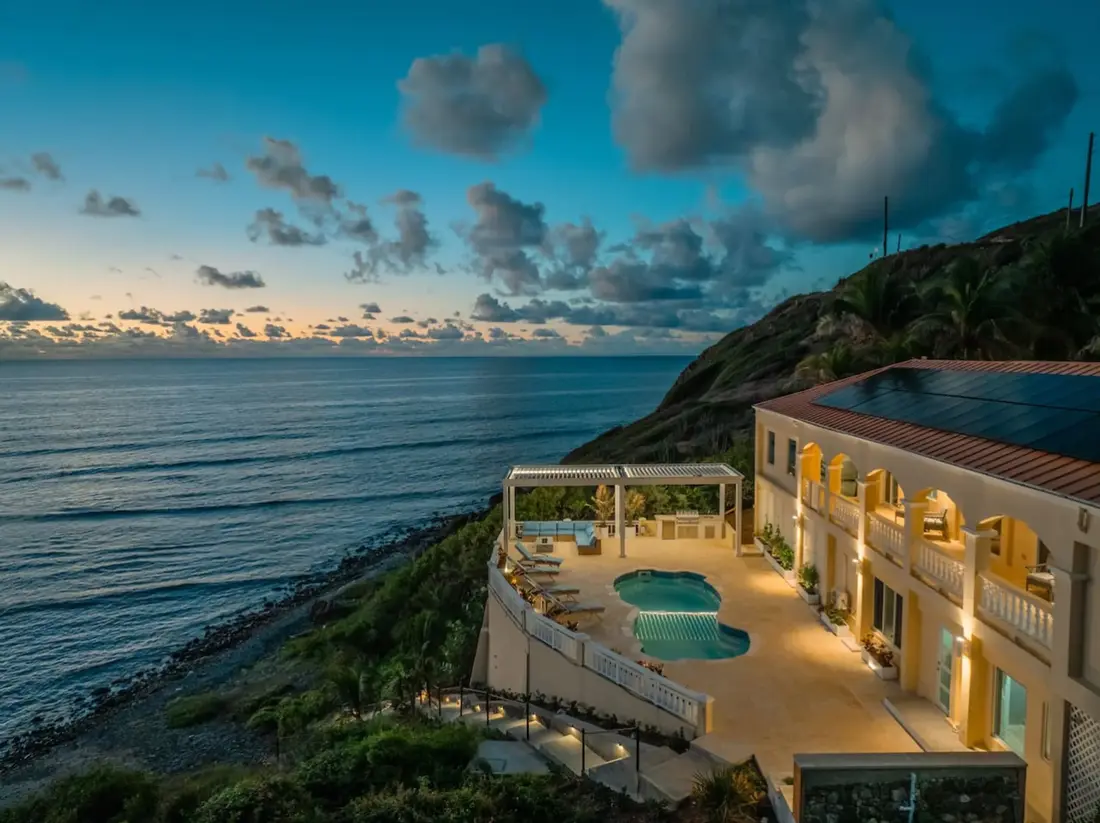 The Cerulean5 bd · 5 ba · sleeps 12 · Christiansted
More in On the Water
Sources
10 references, listed in full at the end of this guide — official park, refuge, tourism-board and business sources, checked August 2026.