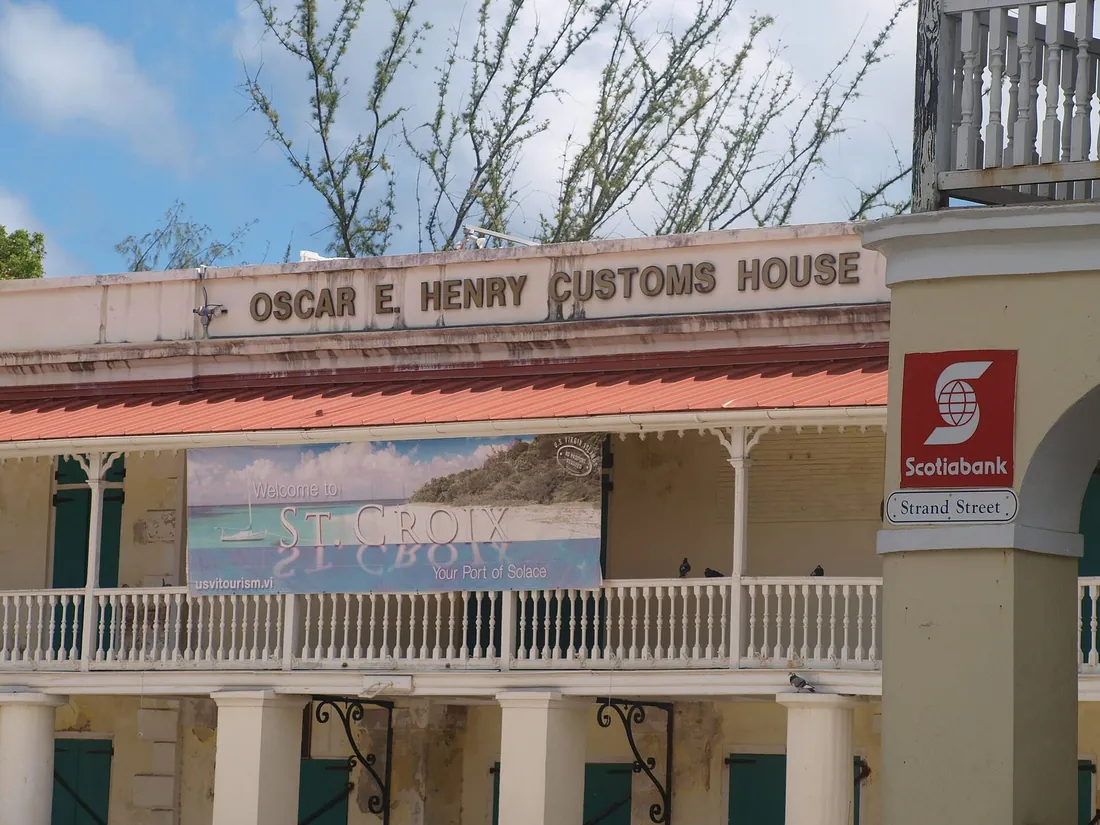
St. Croix vs St. Martin
Half French, half Dutch, all busy: the Caribbean's famous two-nation island runs on cruise ships, casinos and jet-blast selfies. The American alternative runs on quiet.
St. Martin sells a two-for-one: France on the north half, the Dutch kingdom on the south, thirty-seven beaches, casinos, duty-free rows and the most photographed runway approach in the world. It moves enormous volumes of visitors through 34 dense square miles and shows it — in traffic, in crowds, in prices tuned to the ship schedule. St. Croix offers the opposite proposition under the American flag: more island, fewer people, no passport, and a food-and-history depth of its own.
The two, side by side
| St. Croix | St. Martin | |
|---|---|---|
| Passport for U.S. citizens | Not needed | Required — two foreign jurisdictions on one island |
| Size and density | 84 square miles, about 41,000 people | About 34 square miles, roughly 70,000 people plus cruise volume |
| Cruise traffic | A handful of calls weekly at Frederiksted | Philipsburg is one of the eastern Caribbean's major cruise ports |
| Famous moment | First U.S. sunrise at Point Udall | Jets over Maho Beach |
| Beaches | A dozen, usually near-empty | 37 by local count; the famous ones busy |
| Food | Crucian cooking, boardwalk dinners, three distilleries | Grand Case's French row; lolos; casino buffets |
| Traffic | None to speak of | The Simpson Bay bridge and cross-island jams are legend |
| Hurricane history | Maria 2017; rebuilt | Irma 2017; rebuilt |
| Coming home | Agriculture check; $1,600 duty-free | U.S. customs; $800 duty-free |
| Advisory | None — U.S. territory | Check current State Department guidance for both sides |
Advisory levels and details are as published by the U.S. Department of State and checked August 2026. They change — read the current advisory at travel.state.gov before any international trip.
The short answer
St. Martin is the Caribbean's variety show: two flags, two cuisines, casinos, beach bars, a jet roaring fifty feet over your head at Maho. If a dense, busy, something-every-night island is the assignment, it delivers. St. Croix is the long exhale: twice the land, a fraction of the people, no cruise machine, no casino strip — and dinner in a Danish arcade instead of a Dutch duty-free row. Same sea, opposite philosophies. We manage our own homes on St. Croix; take our conclusion with that grain of salt and check every fact below.
Density is the story
Run the numbers side by side. St. Martin fits roughly 70,000 residents on about 34 square miles split between two countries — the most densely settled island in the Caribbean for its size class — and then adds one of the eastern Caribbean's busiest cruise ports at Philipsburg, whose piers can stage several ships at once. On a multi-ship day the island absorbs tens of thousands of extra people onto a road network with exactly one famous bottleneck: the Simpson Bay drawbridge, where traffic waits for yachts and everyone waits for traffic.
St. Croix runs 41,000 residents across 84 square miles — roughly one-fifth the human density — with cruise calls at Frederiksted counted per week, not per morning. There is no bottleneck because there is nothing to bottle: Christiansted to Frederiksted is an open twenty-minute run through cane country. The difference is not subtle and it is not a matter of taste; it is arithmetic you feel every single day of the trip.
Getting there and getting home
Princess Juliana's airlift is strong — nonstops from many U.S. cities, which is exactly why the island fills. The bookends are the cost: passports for every traveler, an arrival hall that queues badly when widebodies bunch, and on the way home U.S. customs and immigration at the standard $800 allowance — after checking out through a foreign airport famous for crowds in season.
St. Croix matches the flight (Miami about three hours daily on American, Charlotte daily from December 17, 2026, Atlanta near-daily from December 19, Newark Saturdays from October 31, 2026, Chicago winter Saturdays, San Juan hop all day) and removes the bookends: driver's license, domestic arrival, agriculture check home, $1,600 allowance — plus CBP's five-liter rum rule for the Cruzan aisle. Verified August 2026:
| Airline | From | Schedule (as published Aug 2026) | Flight time |
|---|---|---|---|
| American Airlines | Miami (MIA) | Year-round, one to three flights daily by season | about 3 hours |
| American Airlines | Charlotte (CLT) | Paused until Saturdays return November 7; daily beginning December 17, 2026 | about 3¾ hours |
| American Airlines | Chicago O'Hare (ORD) | Winter Saturdays beginning December 5, 2026 | about 4¾ hours |
| Delta Air Lines | Atlanta (ATL) | Saturdays through September 5; Saturdays again from November 14; daily except Mondays beginning December 19, 2026 | about 4 hours |
| United Airlines | Newark (EWR) | Saturday nonstops beginning October 31, 2026 | about 4½ hours |
Beaches: 37 versus a dozen, counted differently
St. Martin's beach count is real and its variety is real: Orient Bay's organized French scene, Mullet Bay's surf, Maho's jet-blast spectacle, Pinel Island's day-trip sand. What the count omits is occupancy. The famous beaches carry the island's density plus the ship schedule; chairs and umbrellas are a business at every one of them, and quiet is the one amenity not for rent.
St. Croix counts fewer and delivers emptier. Two undeveloped miles at Sandy Point — the largest leatherback nesting beach under U.S. jurisdiction, weekend-open outside nesting season, often shared with a few dozen people. Cane Bay under its dive wall, Rainbow's sunset sand, The Shoys behind its guard gate (our Shoy's Beach House fronts it), hike-in Jack's and Isaac's Bays, Chenay's family shallows. No chair concessions, no fees, no ship crowd. The roster: the best beaches.
The food question, taken seriously
St. Martin's culinary reputation is earned and this page salutes it: Grand Case's row of French kitchens, the lolos' barbecue smoke, a cosmopolitan table built from two colonial pantries. Food-first travelers rank it among the Caribbean's best eating islands, and they are right.
St. Croix's answer is depth of a different kind: a cuisine that belongs to the island rather than to its visitors. Kallaloo, fungi with fresh-caught wahoo, saltfish, pate from roadside stands, La Reine's spit-roasted chicken — Crucian cooking served in institutions priced for neighbors, alongside boardwalk dining rooms and a serious upper end. And where St. Martin pours imports, St. Croix distills: Cruzan since 1760, Captain Morgan's visitor center, breadfruit vodka at Sion Farm, rainwater beer at Leatherback. Grand Case wins the tasting menu; St. Croix wins the week of eating like you live there.
Two hurricanes, one season
Both islands took catastrophic hits in September 2017 — Irma leveled much of St. Martin's infrastructure; Maria struck St. Croix two weeks later — and both have spent the years since rebuilding. This site does not dramatize storms anywhere, and will not here: the season runs June through November for the entire region, the sensible advice is identical everywhere (insurance, flexible bookings, attention in September and October), and neither island holds an edge. Our hurricane-season guide says the rest.
Underwater
St. Martin's diving is modest — pleasant reef and wreck sites by boat, better snorkeling off Pinel and Creole Rock. It is not why people go. St. Croix's water is why people go: the Cane Bay Wall dropping toward abyssal depth a hundred yards off the sand, the Frederiksted Pier's seahorses and night dives, Butler Bay's wrecks, and Buck Island Reef National Monument's marked snorkel trail inside a no-take reserve protected since 1961. Certified or curious, the comparison is short. Start at diving St. Croix.
Nights out
St. Martin's nights are the Caribbean's most varied: casinos on the Dutch side, wine bars on the French, beach clubs that run past midnight. If that carries your vacation, it is the better island for it and this page says so without flinching. St. Croix's nights are a boardwalk dinner, a beach bar's last round, mocko jumbies at a Jump Up, stars over the East End, and — several nights a month — a glowing paddle through the bioluminescent bay. Quieter, cheaper, and the mornings after are better.
Month by month on the two islands
St. Martin's calendar stacks three rhythms on one small island: the resort high season (December–April) at full rates; the cruise calendar, which runs heaviest in exactly those months and converts Philipsburg and the famous beaches into ship-day venues by 10 a.m.; and the French side's European holiday waves, which fill Grand Case's tables in February and August alike. Carnival seasons — the French side's at Mardi Gras, the Dutch side's around April — are the island at its loudest and most itself. Summer and fall soften everything, with the standard hurricane-season counsel and the memory of 2017 keeping the insurance advice concrete on both sides of every border in the region. St. Croix's year runs one rhythm: high season that fills villas without filling sand, a December–January festival of its own in Frederiksted, and green quiet months where the island discounts but never dims. Months in detail: when to visit.
The travel day, hour by hour
St. Maarten's arrival is famous enough to have its own webcams: wheels-down over Maho's sunbathers at 1:30, then Princess Juliana's immigration hall — efficient at 11 a.m., an hour-plus when the widebodies from Paris and the East Coast bank together. Bags, the rental queue, and then the island's signature variable: traffic. The Simpson Bay drawbridge opens for yachts on schedule and for patience never; cross-island runs to Grand Case or Orient that map at 25 minutes ride at 50 in season. Villa by 4 on a good day. Home reverses it through one of the region's busiest departure halls into U.S. customs at the $800 allowance.
The St. Croix day: nonstop to Henry E. Rohlsen by early afternoon, rental counter, supermarket, villa inside forty minutes — no immigration, no drawbridge, no webcam-worthy anything, which is precisely the product. Home is an agriculture check and a $1,600 allowance. The two-nation island gives you a story about the journey; the American one gives you the afternoon back.
Seven days on each
The St. Martin week is a sampler platter: Orient Bay's organized French beach scene one day, Maho's jet-blast circus another, a Pinel Island ferry morning, Marigot's market and Fort Louis, a Grand Case dinner crawl, a casino night in Simpson Bay, maybe a day-sail to Anguilla or St. Barts with passports in the dry bag. Variety is the pitch and the island delivers it — alongside the crowds, the traffic and the tabs that variety invoices.
The St. Croix week samples one island deeply instead: Buck Island's snorkel trail Monday, Cane Bay's wall Tuesday, Christiansted's fort and boardwalk Wednesday, the East End's beaches and Point Udall Thursday, Frederiksted's pier and Rainbow's sunset Friday, rainforest and Cruzan Saturday, the bio bay after dark. Two towns instead of two countries, one currency, no line at any of it. Plans: the 7-day itinerary.
Getting around once you land
St. Martin drives on the right through the Caribbean's most congested miniature road network: two nations' traffic funneled through a handful of junctions, the Simpson Bay drawbridge's scheduled openings, cruise-day surges, and roundabouts that have earned their own visitor folklore. Rentals are easy and immediately embattled; season regulars memorize the back way over the hill to Marigot and still sit in it. Parking at Orient or Maho in high season is an event. The island is small; the driving makes it feel large in the wrong way.
St. Croix is more than twice the island with none of the funnel: left-side driving (a day-one novelty) on open roads, no drawbridge, no border — the only crossing on island is the guard gate at The Shoys — and free parking wherever you land. The island loop runs both coasts in an easy half-day.
Before you book either island
For St. Martin: decide your side first — French (Grand Case dining, quieter coves, euros accepted alongside dollars) or Dutch (casinos, Maho, the airport) — because the drive between them in season shapes every evening; check the cruise calendar against your beach days; book Grand Case tables ahead in high season; and remember every traveler needs a passport, including the infant. Budget the two-airport craziness of holiday departures into the last day.
For St. Croix: book the villa direct (the homes), reserve the car, calendar Buck Island and the bio bay in peak weeks, and pick dinner neighborhoods by mood rather than by traffic forecast — Christiansted's boardwalk and Frederiksted's sunset bars are twenty open minutes apart. The first-timer tips finish the file.
The case for St. Croix, point by point
One: 84 uncrowded square miles against 34 shared by two nations, a cruise port and their traffic. Two: no passport for U.S. citizens against passports for everyone aboard. Three: no immigration hall at either end — and $1,600 of allowance against $800. Four: beaches without chair concessions or ship-day surges — Sandy Point's empty miles against Orient's organized rows. Five: a real dive island — wall, pier, wrecks, snorkel-trail monument — against a snorkeling sideline. Six: Crucian cooking priced for neighbors against tasting-menu tourism — conceding Grand Case its crown. Seven: rum distilled on-island since 1760 against duty-free shelves. Eight: history walked daily — two NPS-anchored towns, Hamilton, emancipation — against a fort viewpoint and a shopping street. Nine: quiet nights, stars, tree frogs against casino carpet and traffic hum. Ten: one country's simple week against two countries' complicated one. The variety show is fun; the exhale is the vacation.
Who should pick which island
Pick St. Martin if: novelty is the engine — two cuisines, casinos, beach-hopping and a different scene nightly; Maho's jets are bucket-listed; Grand Case's tables anchor the trip; or you are hub-hopping onward to St. Barts, Anguilla or Saba. Pick St. Croix if: density is what you are escaping, not seeking; the group wants a villa base rather than a nightly itinerary; divers and snorkelers are aboard (the walk-in wall settles it); the budget prefers island prices to duty-free-strip prices; or the vacation's success will be measured in quiet. The two-nation island is the Caribbean's variety show; St. Croix is its long exhale — and most weeks need the exhale.
When St. Martin is the right call
The variety-seeker's week: two countries, casino nights, French lunches and a different beach scene daily suits people who measure vacations in novelty. Aviation fans owe themselves Maho once. Foodies chasing Grand Case have a real case. And travelers connecting onward — St. Barts, Anguilla, Saba — use Princess Juliana as the hub it is. For quiet, space, value and ease, the two-nation island is the wrong tool, and its own crowds are the proof.
A rainy day on each island
St. Martin's rainy day splits by nation: the Dutch side offers casinos built for exactly this weather, the French side offers Marigot's covered market and long Grand Case lunches, and both offer traffic unchanged. Fort Louis climbs wet. St. Croix's circuit runs deeper on history per square foot: Fort Christiansvaern's vaults, the Whim estate museum, the Apothecary Hall, Frederiksted's arts center, and the distillery trail rain flatters. The rainy-day plan against a casino floor is a temperament test; this site knows its answer.
If you choose St. Martin anyway
Then work the two-nation trick properly. Base French for food and calm or Dutch for nightlife and the airport — and accept the cross-island drive as a scheduled event, not a whim. Book Grand Case's serious tables ahead; eat the lolos between them. Do Maho once at the right hour (the arrivals board tells you when the widebody lands), Pinel by the morning ferry, Orient's organized scene with wallet expectations set. Check the cruise calendar before Philipsburg or Marigot mornings. Day-trip Anguilla by ferry or St. Barts by boat with passports carried — the hub position is the island's best card, play it. Convert euro and guilder prices before agreeing, pad the Simpson Bay bridge's openings into every airport run, and hold the departure day loosely; Princess Juliana in season rewards the early.
Where you would stay on St. Croix
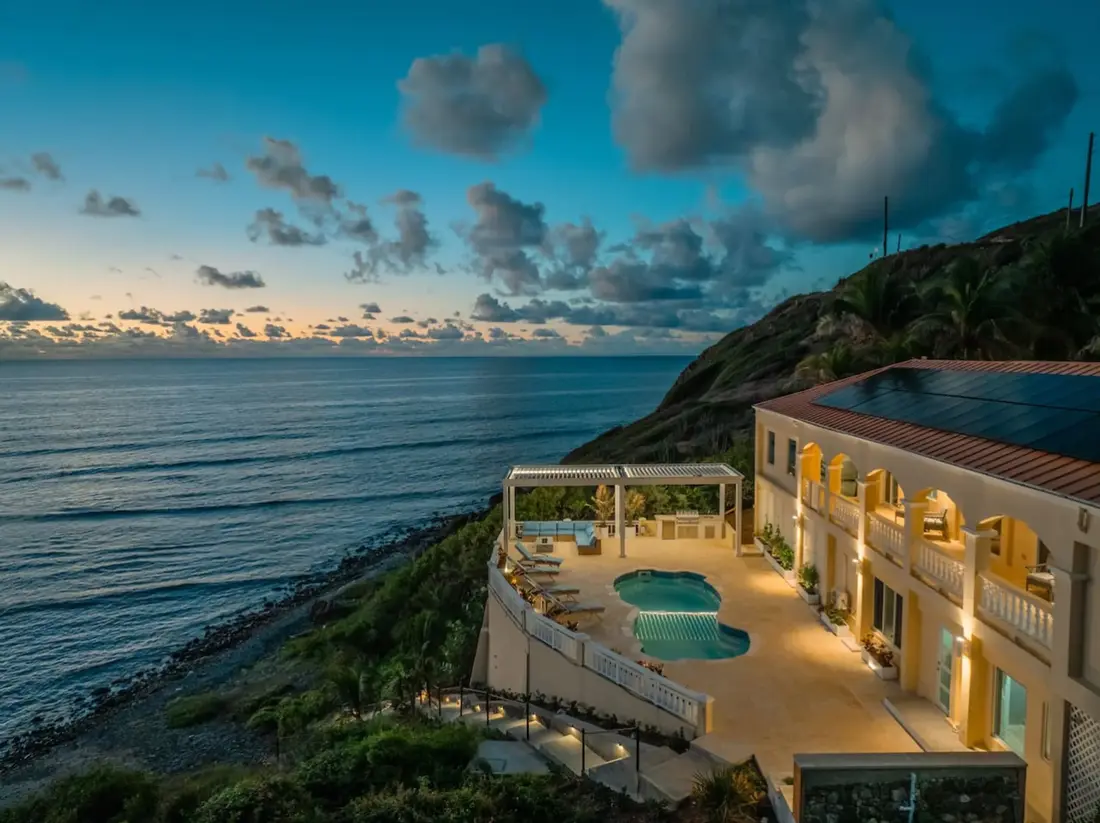
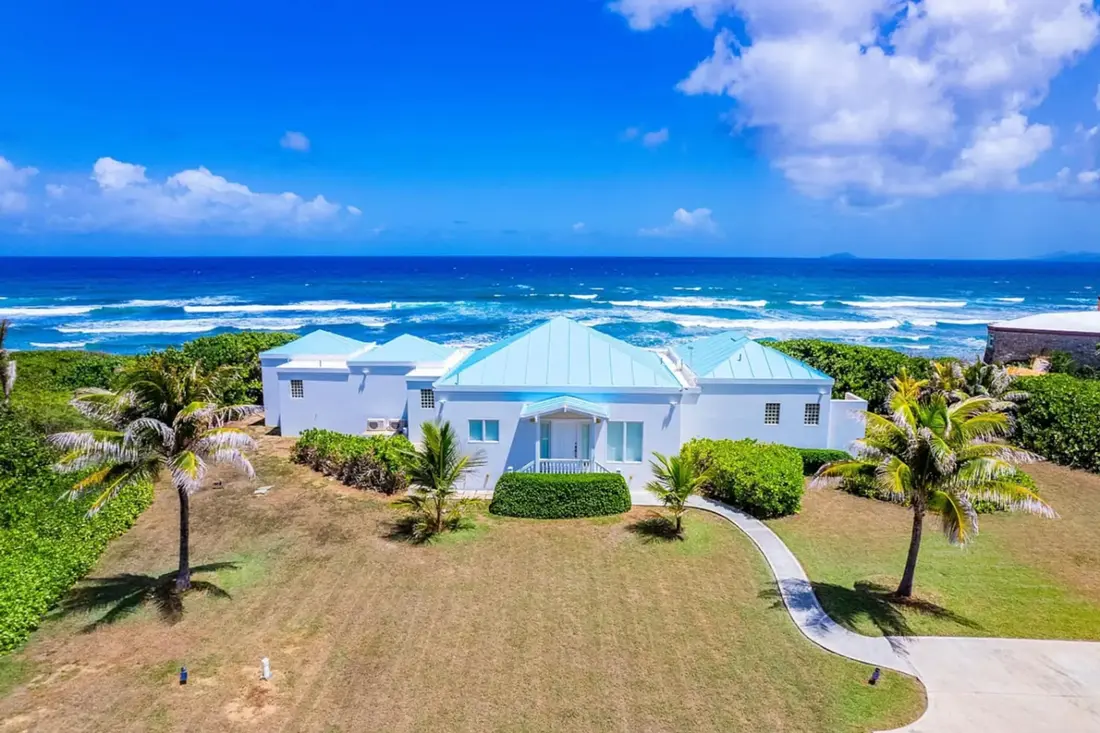
The one-nation base: our direct-booked homes with Sterling Point managing on-island. Shoy's Beach House on The Shoys' guarded sand; East End villas — The Cerulean among them — facing Buck Island from private pools; Christiansted condos a walk from the boardwalk's dinner rows — the island's Grand Case, in one currency; west-end sunset stays. Full kitchens, supermarket provisioning, no border between dinner and bed. Couples: homes for two; groups to twelve: the family collection. The roster: the homes.
How this page was made
Series rules: density and cruise figures per public statistics; the 37-beach count per the island's own tourism materials; 2017's Irma per public record, stated without drama by a site whose island lived Maria the same month; advisory standing per the State Department (check both sides' current text at travel.state.gov); flights verified August 2026. The two-nation island's variety and food are conceded throughout. Our bias: the homes we manage on St. Croix, disclosed across this series. Count the people per square mile yourself; the arithmetic is public.
The bottom line
St. Martin compresses two countries, a cruise port, casinos and thirty-seven beaches onto 34 dense square miles — a lively machine that runs on volume and queues. St. Croix spreads one quiet American island across 84: no passport, no ship mornings, no bridge traffic, beaches without concessions, rum without imports and history without a gift-shop line. Same latitude of sunshine; opposite ideas of a week. The homes are here.
Elsewhere in this series
This page is one of twenty-six. If you are still shopping the map, the verdicts nearest this comparison run as follows — each links to the full page with its own sources:
St. Croix vs the British Virgin Islands — The BVI are the Caribbean's sailing capital — reached by passport, puddle jumper and ferry. St. Croix flies you straight in, no passport at all.
St. Croix vs Turks & Caicos — Turks and Caicos sells one famous beach at luxury-resort prices. St. Croix sells a whole island for less — no passport, no Level 2 advisory.
St. Croix vs Anguilla — Anguilla perfected the quiet expensive beach. St. Croix does the quiet beach without the relay flight, the passport or the markup.
The complete set, grouped by region and passport rules, lives at St. Croix vs other destinations.
Which home fits your group
If St. Croix wins your comparison, the homes are the easy part. Groups of eight to twelve settle into the family collection; couples take a home for two; anyone who wants sand at the door starts with beachfront. Every one is managed from the island by Sterling Point and booked direct — tell us the dates and the headcount and we will point you at the one that fits.
Two practical notes that surprise first-time villa bookers. Direct booking means the rate is the rate: no platform service fees, no resort fees, and the people answering questions are the same Sterling Point team that manages the houses on the island. And every home runs a full kitchen — one run to Plaza Extra or Seaside Market on the drive from the airport covers the week, which is where a villa quietly beats a resort bill before the first beach day. How the booking works, and what it does not mean, is spelled out at book direct.
Who wrote this
SP Vacations is the vacation-rental division of Sterling Point Real Estate, a licensed real-estate operation based on St. Croix in the U.S. Virgin Islands. The team lives and works on the island it writes about: the homes in the villa collection are inspected, cleaned and managed locally, and the person who answers a booking question is on St. Croix, not in a call center three time zones away. That is the vantage point behind every page in this series — and the reason the series exists at all, since most of the destinations compared here are places our guests weighed before choosing this island.
Two standing practices shape what you read. First, the pricing wall: nightly rates and availability for the homes live only on the booking pages, never in articles, so nothing here goes stale or oversells. Second, the sourcing rule: safety statements cite the U.S. State Department, customs figures cite CBP, park facts cite the National Park Service, and anything that changes — advisories, schedules, hours — carries its checked date and a pointer to the primary source. Where a rival destination wins a category, the page says so, because a comparison that concedes nothing persuades nobody. Questions, dates or a villa to match a group — the island team is here, or call 340-205-3929.
Questions people ask
Is Maho Beach dangerous?
The jet blast is a real hazard the airport's signs shout about — fence-clingers have been injured, and the sand is a narrow strip beside a runway. As spectacle, once; as a beach day, no. St. Croix's aviation moment is gentler: the seaplane sliding into Christiansted harbor.
What are the lolos in Grand Case?
Open-air barbecue shacks — ribs, lobster, johnnycakes — anchoring the French side's food fame at its cheap end, steps from the serious kitchens. St. Croix's equivalents are its pate stands and La Reine's chicken; the barbecue smoke smells the same in both languages.
Do the two sides of St. Martin feel different?
Yes — two countries in fact: French pace, menus and euros north; Dutch casinos, cruise piers and guilders south, with an unmarked border and shared traffic. It is the island's charm and its complication. St. Croix's two towns offer the contrast without the customs union.
How did Hurricane Irma change St. Martin?
September 2017's direct hit was catastrophic and the rebuild remade much of the tourism plant — newer hotels, rebuilt Orient Bay, a modernized terminal. The island recovered impressively; the season's lesson (insurance, flexibility) stands region-wide, St. Croix's Maria year included.
Is Pinel Island worth the ferry?
Yes — the five-minute hop to the car-free islet buys a calm French-side beach day with two grills and snorkeling off the point, busy by noon. St. Croix's islet day is Buck Island: a federal monument's snorkel trail and Turtle Beach by licensed sail.
Which island is better for shopping?
St. Maarten, by design — Philipsburg's Front Street is a duty-free arcade built for cruise mornings. St. Croix's counters are smaller and stranger: the island's own hook bracelet tradition, local rum and gallery pieces. See the hook bracelet.
Is St. Martin crowded?
Yes, by Caribbean standards: roughly 70,000 residents on 34 square miles across two countries, plus one of the eastern Caribbean's busiest cruise ports at Philipsburg. St. Croix runs about one-fifth the density with a handful of weekly cruise calls, and its beaches show the difference daily.
Do I need a passport for St. Martin?
Yes — both the French and Dutch sides are foreign territory, with U.S. customs and immigration on the way home at the standard $800 allowance. St. Croix needs no passport for U.S. citizens and allows $1,600 per person home.
Which has better food, St. Martin or St. Croix?
For French fine dining, St. Martin — Grand Case's reputation is earned. For a week of eating like a local — Crucian kallaloo, pate, fresh wahoo, boardwalk dinners and three working distilleries — St. Croix, at island-economy prices.
Is Maho Beach worth it?
As a spectacle, once — jets crossing the fence fifty feet up are exactly as loud and surreal as the videos suggest. As a beach day it is a narrow, busy strip beside an airport. St. Croix's answer to a signature moment is quieter: first U.S. sunrise at Point Udall.
How do the beaches compare?
St. Martin counts 37 beaches with real variety, nearly all carrying chair concessions, crowds and the ship schedule. St. Croix's dozen-plus run near-empty and fee-free, led by Sandy Point's two undeveloped miles on winter weekends.
Which is better for diving and snorkeling?
St. Croix by a wide margin: shore-entry dives at the Cane Bay Wall and Frederiksted Pier, wrecks at Butler Bay, and Buck Island's marked underwater snorkel trail in a federal no-take reserve. St. Martin's underwater scene is a pleasant sideline, not a reason to choose it.
Which side of St. Martin should I stay on?
French for Grand Case dining and quieter coves, Dutch for casinos, nightlife and the airport — and in season the drive between them shapes every evening. St. Croix's equivalent choice, Christiansted or Frederiksted, is twenty open minutes with no border between.
Do euros or dollars work on St. Martin?
Both circulate — the French side prices in euros (dollars accepted at varying rates), the Dutch side in guilders and dollars — and the mental math never quite stops. St. Croix prices in U.S. dollars, period, with no exchange spread anywhere.
Is Orient Bay still the famous beach it was?
It remains the organized French beach day — chair rows, beach clubs, watersports — rebuilt since Irma and busy with it. St. Croix's counterpart energy is Rainbow Beach's bar-and-watersports sand; its counterpart beauty is Sandy Point, with nothing on it at all.
When is the best time to visit St. Martin or St. Croix?
Both peak December–April. St. Martin's peak stacks resort season, the heaviest cruise calendar and European holiday waves onto 34 square miles; St. Croix's fills villas without filling beaches. Summer and fall soften both, with standard hurricane-season flexibility advised region-wide.
How bad is traffic on St. Martin?
A defining feature: the Simpson Bay drawbridge and the cross-island roads turn 25-minute map distances into 50-minute season drives, a reality every repeat visitor plans around. St. Croix's longest common run — airport to the East End — is about forty open minutes.
Can I day-trip to St. Barts or Anguilla from St. Martin?
Yes — that hub position is St. Martin's best card: ferries and short hops reach both, passports required throughout. St. Croix's day-trip cards are Buck Island's lagoon and the St. Thomas seaplane — no passport for either.
What about hurricanes on both islands?
Both took major 2017 hits — Irma on St. Martin, Maria on St. Croix — and both rebuilt. The season (June–November) and the sensible advice (insurance, flexible bookings) are identical across the region; neither island holds an edge. See hurricane season.
In this comparison
St. Croix at a glance
- U.S. territory — no passport for U.S. citizens
- Nonstops from Miami, Fort Lauderdale, Charlotte, Atlanta, Newark and Chicago
- U.S. dollars, U.S. phone plans, no foreign customs
- $1,600 duty-free allowance home (double the standard $800)
- 84 square miles — the largest U.S. Virgin Island
More comparisons
- St. Croix vs St. Thomas
- St. Croix vs St. John
- St. Croix vs Puerto Rico
- St. Croix vs Vieques & Culebra
- St. Croix vs the Florida Keys
- St. Croix vs Hawaii
- St. Croix vs the British Virgin Islands
- St. Croix vs Turks & Caicos
- St. Croix vs Anguilla
- St. Croix vs St. Barts
- St. Croix vs Antigua
- St. Croix vs St. Kitts & Nevis
- St. Croix vs St. Lucia
- St. Croix vs Barbados
Sources
Population, density and cruise-port stature per public census and port figures as widely reported; the 37-beach count per the island's own tourism messaging; 2017 hurricane history per public record, stated without drama. CBP allowances per Know Before You Go. St. Croix facts from NPS and our sourced island reference. Flights verified August 2026.
St. Croix vs St. Martin
St. Martin packs two countries, a cruise port and a traffic jam onto 34 square miles. St. Croix spreads one quiet country across 84.