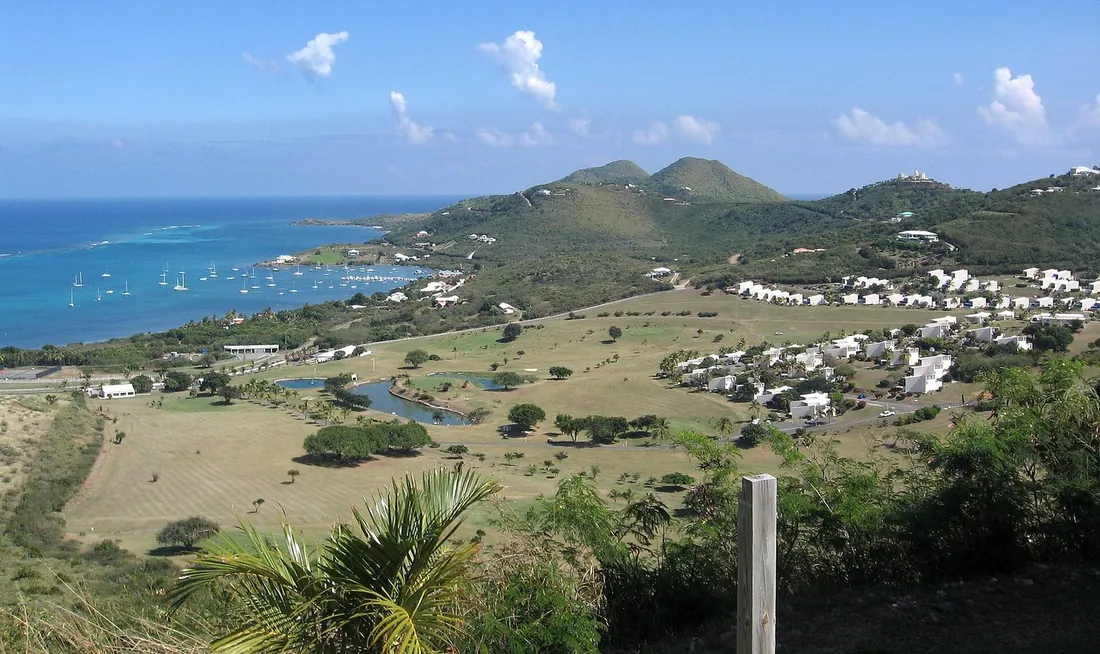
St. Croix vs Antigua
A beach for every day of the year, says the slogan. The question a one-week traveler should ask is different: what are the seven days you actually get?
Antigua's tourism runs on two engines: the '365 beaches' slogan, and an all-inclusive resort industry that packages the island into wristbanded weeks. Add Nelson's Dockyard — a genuine UNESCO treasure — and Sailing Week, and it is a real destination with real credentials. It is also a foreign trip with resort-wall economics, and for travelers whose ideal week is a private house on a quiet island, the American alternative compares well on almost every line.
The two, side by side
| St. Croix | Antigua | |
|---|---|---|
| Passport for U.S. citizens | Not needed | Required |
| Advisory | None — U.S. territory | Check the current State Department advisory before booking |
| The famous claim | Point Udall: first sunrise in the United States | The tourist board's '365 beaches, one for every day' |
| Lodging model | Private villas, direct-booked | Dominated by all-inclusive resorts |
| Sailing | Day sails and Buck Island runs from the boardwalk | Nelson's Dockyard and Sailing Week — a true sailing capital |
| History | Two Danish towns; NPS historic site; Hamilton's boyhood | Nelson's Dockyard, a UNESCO World Heritage site |
| Diving | Cane Bay Wall and Frederiksted Pier from shore | Modest reef diving by boat |
| Interior | Rainforest, tide pools, golf, distilleries | Dry scrubland; the coast is the show |
| Coming home | Agriculture check; $1,600 duty-free | U.S. customs; $800 duty-free |
| Currency | U.S. dollar | Eastern Caribbean dollar; U.S. dollars widely accepted |
Advisory levels and details are as published by the U.S. Department of State and checked August 2026. They change — read the current advisory at travel.state.gov before any international trip.
The short answer
Antigua does two things at world level: it hosts the Caribbean's most storied sailing culture, and it packages carefree all-inclusive weeks at every price point from package-deal to Jumby Bay. If either of those is your trip, book it and enjoy it. St. Croix does a different thing at world level: a whole quiet American island for people who want their week self-directed — a villa, a car, empty beaches, shore diving, real towns — without a passport, a wristband or a buffet line. We manage our own homes on St. Croix; that is the lens, and the facts below survive it.
The slogan, examined kindly
'A beach for every day of the year' is excellent marketing, and Antigua's coast is legitimately lovely — Dickenson Bay's resort sand, Half Moon Bay's wild Atlantic crescent, Ffryes' sunset gold. But count what a visitor actually uses: the resort's own beach most days, one or two excursion beaches, done. The 365 are scattered around an island most guests never circumnavigate, many are pocket coves without access roads, and the famous ones belong, in practice, to the resorts that front them. The slogan sells inventory; the week delivers a handful.
St. Croix advertises no number and delivers the thing the number gestures at: beaches you can have mostly to yourself, reachable by rental car in minutes. Sandy Point's two undeveloped miles — the largest leatherback nesting beach under U.S. jurisdiction — on winter weekends; Cane Bay under its dive wall; The Shoys behind its guard gate (our Shoy's Beach House fronts it); hike-in Jack's and Isaac's Bays in a Nature Conservancy preserve; Rainbow's sunset sand. Seven days, seven beaches, zero wristbands: the roster.
The all-inclusive question
Antigua's lodging market is dominated by the all-inclusive model, and the model has real virtues: one price, zero decisions, swim-up bars, kids' clubs. It also has a shape: the property is the vacation. Guests eat the resort's food at the resort's hours, the beach ends at the resort's flags, and the island outside arrives pre-packaged on excursion buses. Travelers who love that trade — and millions do — should make it knowingly.
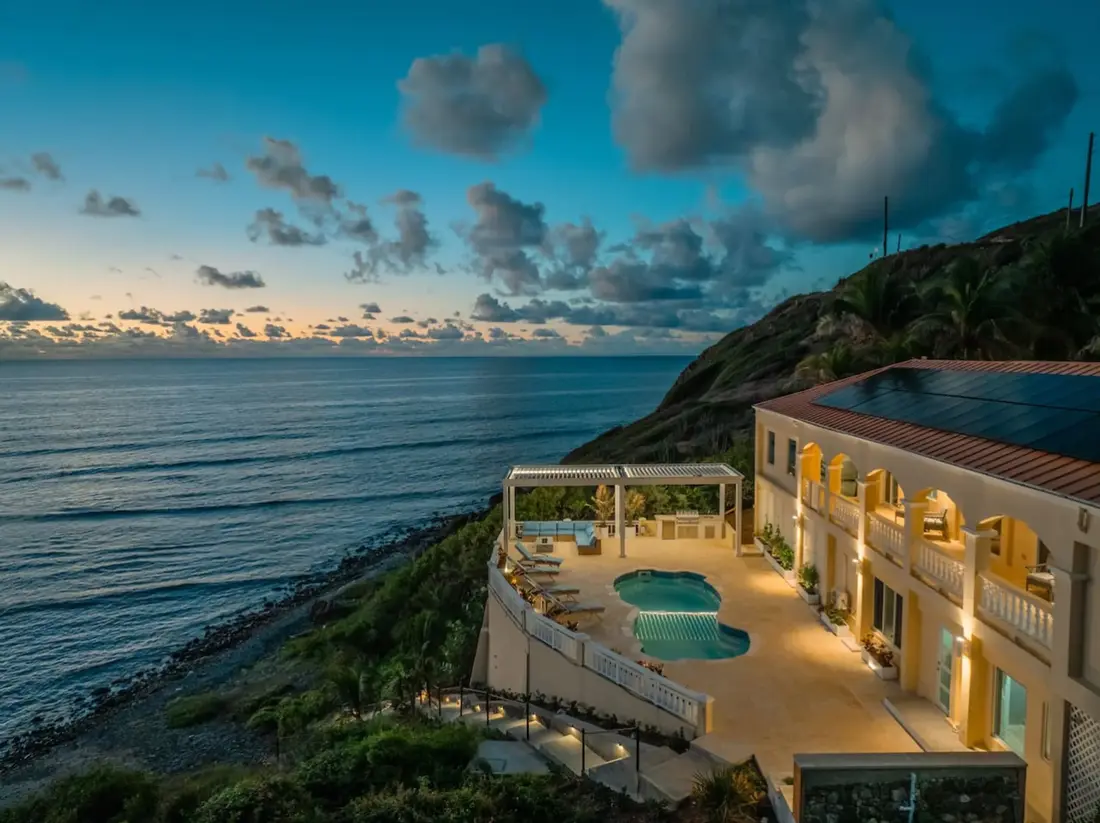
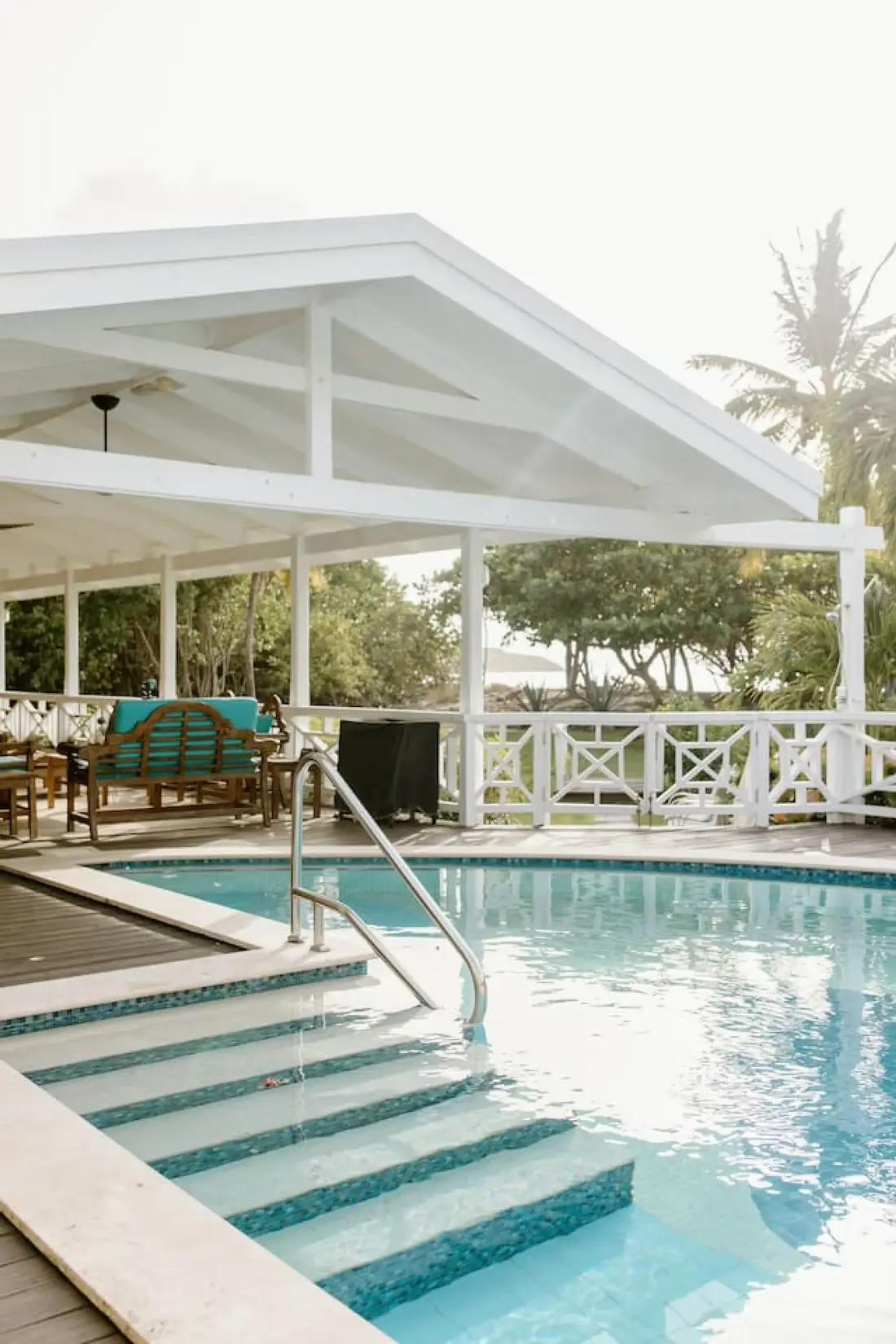
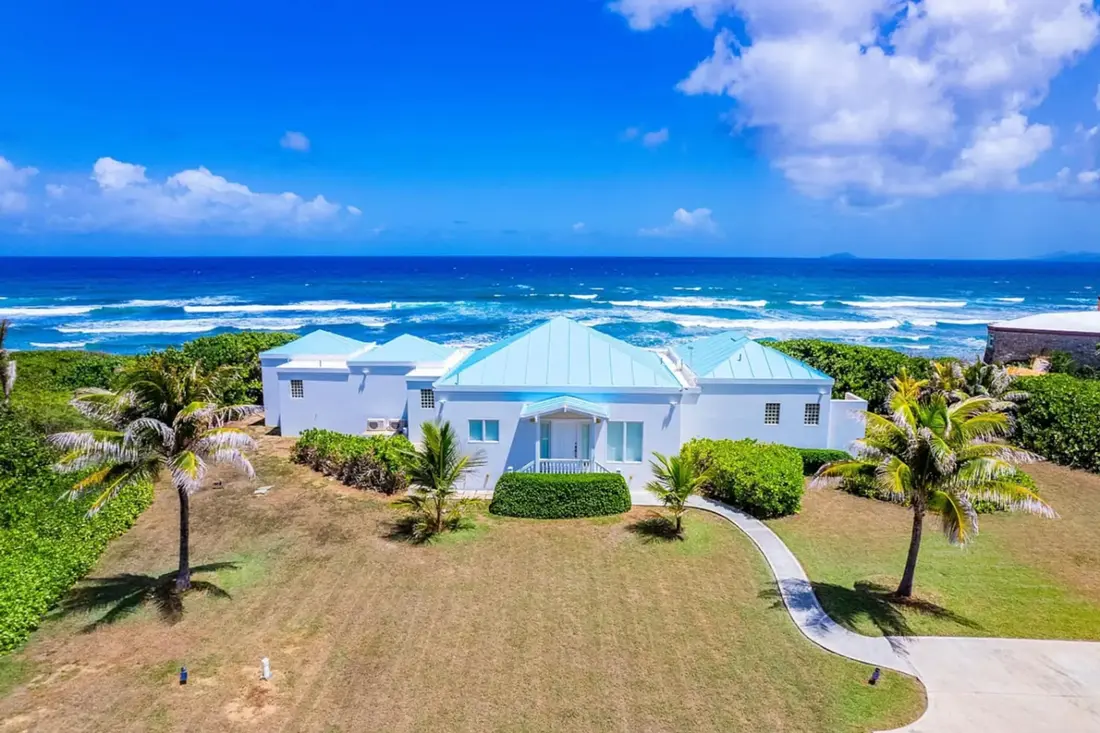
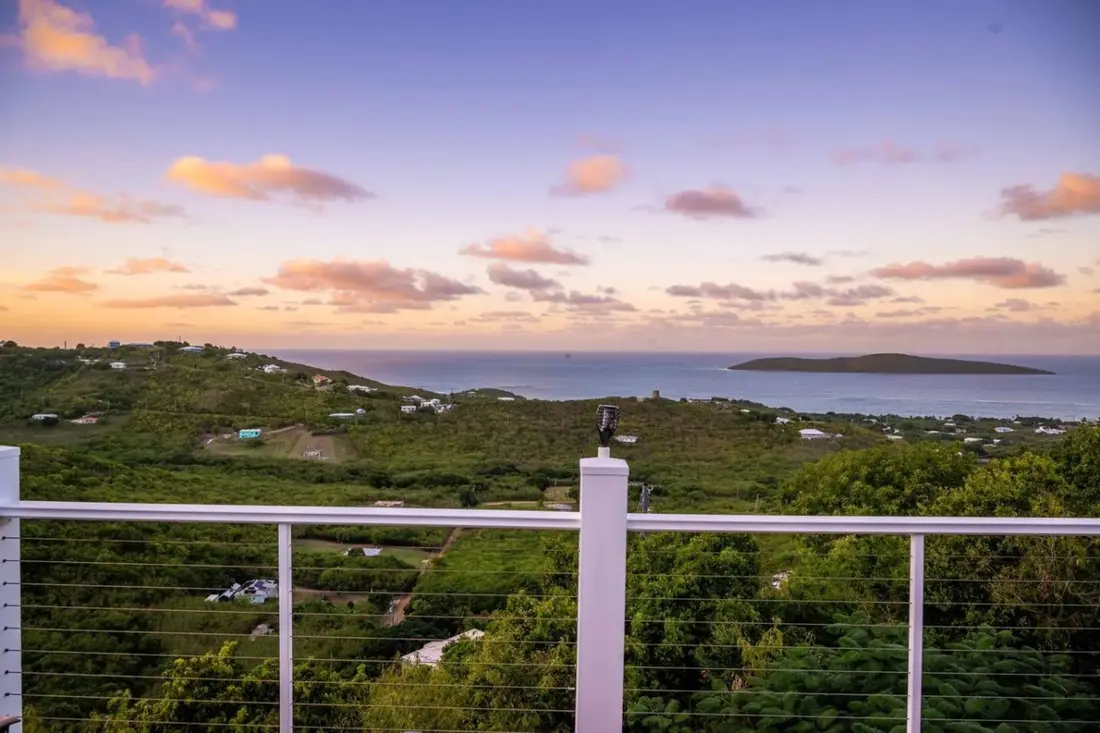
The villa model St. Croix runs is the opposite shape: the island is the vacation and the house is its base. Our homes — beachfront, East End views of Buck Island, in-town condos, most with pools — come with full kitchens provisioned from real supermarkets, managed from the island by Sterling Point, booked direct with no platform fees. Dinner is a boardwalk table, a private chef night, or your own grill; the day is whatever the car and the mood decide. Freedom versus package is the real Antigua-vs-St. Croix question, and it sorts travelers cleanly. The homes: here.
History: the Dockyard against the Danish towns
Nelson's Dockyard deserves its UNESCO listing — the world's only continuously working Georgian dockyard, restored stone sail lofts and all, with Shirley Heights' sunset party above it. It is Antigua's one unmissable ashore day, and this page recommends it sincerely.
St. Croix's history is not one site; it is the island's fabric. Christiansted National Historic Site protects five Danish colonial buildings around the harbor; the arcaded streets beside them, built by enslaved African craftsmen to Danish plans, still serve as the island's dining rows. Frederiksted's Fort Frederik saw emancipation proclaimed in 1848 after eight thousand people marched on it; the 1878 Fireburn's story is told in the town the revolt rebuilt. Alexander Hamilton clerked his boyhood away on Company Street. Salt River Bay holds the only documented spot where Columbus's crew touched what is now U.S. soil. A history traveler fills a week here without repeating a century: start at the historic site and the seven flags.
Getting there and getting home
Antigua's V.C. Bird airport is well served from the U.S. East Coast — several nonstops daily in season — and this page credits it. The bookends are the usual foreign ones: passports for all, an arrival queue, departure formalities, and U.S. customs on the way home at the $800 standard allowance. One extra wrinkle worth knowing: U.S. visa policy toward Antigua and Barbuda has tightened in 2026 for non-citizen travelers — irrelevant to U.S. passport holders, relevant to mixed-nationality groups; check current rules.
St. Croix: Miami nonstop about three hours daily on American, Charlotte daily from December 17, 2026, Atlanta near-daily from December 19, Newark Saturdays from October 31, 2026, Chicago winter Saturdays, and the 50-minute San Juan hop all day. Driver's license, domestic arrival, agriculture check home, $1,600 allowance, five-liter rum rule. Verified August 2026:
| Airline | From | Schedule (as published Aug 2026) | Flight time |
|---|---|---|---|
| American Airlines | Miami (MIA) | Year-round, one to three flights daily by season | about 3 hours |
| American Airlines | Charlotte (CLT) | Paused until Saturdays return November 7; daily beginning December 17, 2026 | about 3¾ hours |
| American Airlines | Chicago O'Hare (ORD) | Winter Saturdays beginning December 5, 2026 | about 4¾ hours |
| Delta Air Lines | Atlanta (ATL) | Saturdays through September 5; Saturdays again from November 14; daily except Mondays beginning December 19, 2026 | about 4 hours |
| United Airlines | Newark (EWR) | Saturday nonstops beginning October 31, 2026 | about 4½ hours |
Underwater
Antigua's diving is modest — shallow reef and a famous wreck or two, by boat, mostly booked as resort excursions; Cades Reef snorkels pleasantly. It is a sailing island, not a diving one. St. Croix is the diving island: the Cane Bay Wall beginning a hundred yards off the sand and dropping toward abyssal depths, the Frederiksted Pier's celebrated macro and night diving, Butler Bay's wrecks, Salt River Canyon's walls — the first two walked in from shore — plus Buck Island Reef National Monument's marked snorkel trail inside a no-take reserve protected since 1961. See diving St. Croix.
Sailing
Antigua Sailing Week and the Dockyard make Antigua a true sailing capital; charterers and regatta crews should go and go happily. St. Croix's answer is scaled to a villa week rather than a racing calendar: day sails and sunset catamarans from the Christiansted boardwalk, the Buck Island run under sail, and deep-sea fishing on Lang Bank off the East End. One great day on the water inside a self-directed week — see day sails — rather than a week built around the rigging.
What it costs
Antigua's all-inclusive pricing looks simple and lands wherever the resort tier lands — package-economy at the bottom, Jumby Bay at the top — with excursions, premium menus and transfers billed on top of the wristband. The island outside the gates prices for resort guests when it sees them. St. Croix's costs are transparent and low-friction: a direct-booked villa, a rental car, supermarket provisioning, free beaches, single-digit attraction fees, shore dives without charter costs, and rum tastings priced like souvenirs. The federal extras — no foreign transaction fees, $1,600 duty-free home — finish the ledger. Compare your own dates; the direction is consistent.
Month by month on the two islands
Antigua's year bends around two events. Sailing Week (late April–early May) fills English Harbour with racing crews and the island with its most stylish energy; summer's Carnival (late July–early August) is the cultural crescendo. High season proper runs December through April at resort rates, with the all-inclusives' charter banks landing in waves; September and October are the quiet months when some properties take maintenance closures. St. Croix's calendar answers event for event at island scale — the Crucian Christmas Festival's December–January season, AgriFest in February, Mardi Croix at Cane Bay — and stays fully open through the green fall, discounted rather than shuttered, with the region's standard insurance advice everywhere. The dry-island bonus both share: Antigua and St. Croix's East End are among the Caribbean's sunnier, lower-rainfall coasts. Months in detail: when to visit.
The travel day, hour by hour
Antigua's flight math is respectable: V.C. Bird takes East Coast nonstops in about four hours, and the airport is modern. The day's friction sits at the edges: an immigration hall that queues when the morning banks land, the resort transfer network (the all-inclusives run shuttles on their schedule, not yours — independent villas mean pre-arranged taxis at island rates), and check-in lines scaled to 300-room properties. The return day adds departure-tax formalities folded into tickets and a U.S. customs hall at the $800 allowance. St. Croix's day: three to four and a half hours nonstop depending on city, rental counter, supermarket, villa — and a domestic stroll home with $1,600 of allowance. Neither day is hard; only one contains zero lines.
Seven days on each
The Antigua week, resort edition: beach and pool on property, the catamaran-and-snorkel excursion, the Nelson's Dockyard-and-Shirley-Heights day (Sunday for the party), maybe Stingray City Antigua or a 365-beaches sampler by taxi, dinners inside the wristband with one splurge out. Comfortable, pre-decided, and bounded by the property line that defines the model.
The St. Croix week, villa edition: Buck Island's snorkel trail Monday; Cane Bay's wall and beach bar Tuesday; Christiansted's fort, arcades and boardwalk Wednesday; Point Udall's sunrise, the Jack's and Isaac's hike and The Shoys Thursday; Frederiksted's emancipation fort, a pier snorkel and Rainbow's sunset Friday; the rainforest, Cruzan and the Domino Club Saturday; the bio bay one dark night. Every day self-directed, every dinner chosen from a whole town's menu. Plans: the 7-day itinerary.
Getting around once you land
Antigua drives on the left with a temporary visitor's permit, over roads whose condition varies famously by parish and season — the coastal loops are fine, the interior lanes pothole-tested — and most resort guests never find out, because the all-inclusive model runs on taxis and excursion buses at fixed tourist tariffs. Independent villa renters do drive it and manage; they also learn why the island's beach count exceeds its beach-access count, since many of the famous 365 hide behind resort property or roadless bush. Shirley Heights on a Sunday adds the island's one famous traffic jam.
St. Croix's left-side driving needs no permit beyond your license, its roads roll open between towns, and its beach-access count matches its beach count — public sand with public lots or roadside parking, no resort frontage to negotiate. The island loop and left-side guide cover the craft.
Before you book either island
For Antigua: choose the resort tier with eyes open — the all-inclusive label spans package-economy to Jumby Bay and the wristband experience varies as much as the price; check Sailing Week and Carnival against your dates (energy or crowding, depending on taste); price the excursions that reach the island beyond the property; confirm passports for every traveler and the 2026 U.S. visa-policy wrinkles for any non-citizen companions; and ask the resort what its beach actually is — some of the 365 are better in the count than underfoot.
For St. Croix: book the villa direct (the homes), reserve the car, calendar Buck Island and the bio bay ahead in peak weeks, and skim villa vs hotel if the wristband habit dies hard — the math and the freedom both argue the same direction.
The case for St. Croix, point by point
One: a self-directed week against a property's schedule. Two: no passport, no visa-policy wrinkles, no customs hall — and $1,600 of allowance against $800. Three: beaches you reach against beaches you count — every mile of St. Croix sand is public-access sand. Four: a dive island against a sailing island's watery sideline — wall, pier, wrecks, snorkel-trail monument. Five: history as streets rather than as one dockyard excursion — two NPS-anchored towns, Hamilton's blocks, an emancipation fort. Six: rum since 1760 with the five-liter rule against a resort bar's pours. Seven: food chosen from a town against a wristband's map. Eight: villa economics against per-person-per-night mathematics. Nine: a rainforest and a cactus coast on one drive against dry scrubland. Ten: a week that ends with the island explored rather than the property memorized. The slogan is theirs; the seven days are yours.
Who should pick which island
Pick Antigua if: sailing is the spine — a regatta, a charter, the Dockyard's gravity; the all-inclusive form is a feature, not a bug, and the tier is chosen with eyes open; Carnival or Sailing Week anchors the dates; or the group wants a big resort's social machinery. Pick St. Croix if: the week should belong to you rather than to a property's schedule; beaches should be empty and free rather than counted and fronted; divers or snorkelers are aboard (Antigua concedes the category); history should be walked through daily rather than visited once; or the budget should buy an island, not a wristband. The slogan counts beaches; travelers count days — and the self-directed week wins the count.
When Antigua is the right call
Sailing first: a regatta, a charter, a family that measures a trip by hours under canvas — Antigua is the Caribbean's home port for you. All-inclusive devotees who want the wristband simplicity should choose their resort tier and enjoy it. Beach-bar romantics have Shirley Heights' Sunday party. And travelers combining islands in the eastern chain will find Antigua a natural hub. For a self-directed villa week without a passport, the comparison tilts hard the other way.
A rainy day on each island
Antigua's wet-day bench is thin outside the resort: Nelson's Dockyard's museum rooms carry an hour, St. John's landmark church and the small national museum another, and then the island hands you back to the property's bar and spa. Fine for a shower, long for a system. St. Croix's indoor ledger runs a full day without repeating: Fort Christiansvaern's vaults and the Steeple Building, the Whim estate museum, Frederiksted's arts center and Fort Frederik, and the distillery trail — Cruzan's working tour, Captain Morgan's tasting room, Sion Farm's breadfruit-vodka lounge — that rain improves. The rainy-day plan is written; most weeks never open it.
If you choose Antigua anyway
Choose the tier with open eyes — the all-inclusive label spans package-economy buffets to Jumby Bay's island-within-an-island, and the wristband experience tracks the price exactly. Book Sailing Week or Carnival dates on purpose or avoid them on purpose; they transform the island either way. Do the Dockyard on a non-ship morning and stay for Shirley Heights if it is Sunday — the steel-band sunset earns its fame. Ask your resort which beach is actually yours and what the excursion desk charges to reach the others; the 365 slogan is carried by taxis. Eat off-property at least twice (English Harbour's yachtie kitchens are the island's best) and budget the tariffed taxi rides between everything. And check passports early for every traveler — including the non-U.S.-citizen companions the 2026 visa-policy changes complicate.
Where you would stay on St. Croix
Instead of a wristband, a deed's worth of freedom: homes across the island, booked direct with Sterling Point's managers on-island and no platform fees. Shoy's Beach House fronts The Shoys' guarded crescent; the East End villas — The Cerulean among them — face Buck Island from private pools; Christiansted's condos put the boardwalk's dinner rows in walking range; the west end holds the sunsets. Full kitchens turn one supermarket run into the week's meals on your schedule, not a buffet's; private chefs cover the celebration nights. Couples: homes for two. Groups to twelve: the family collection. The roster: the homes.
How this page was made
Series rules: entry and advisory facts from the State Department and public visa-policy record, checked August 2026 (advisories and policies change — read current text at travel.state.gov); flights verified the same month; the 365-beach slogan attributed to the tourism board that coined it; Nelson's Dockyard's UNESCO standing per UNESCO. Antigua's real strengths — the sailing culture, the Dockyard, the packaged ease — are conceded in their own sections. Our bias is printed on every page: the homes we manage on St. Croix. Check any fact against its source; they hold.
The bottom line
Antigua is a fine foreign destination with a great slogan, a UNESCO dockyard and a resort-package industry that knows its business. St. Croix is the American version of the same latitude: no passport, no wristband, no excursion bus — a whole quiet island run from a private house, with beaches the slogan-writers would kill for and history the excursion buses never reach. Seven days is the budget; spend them on the island you can actually roam. The homes are here.
Elsewhere in this series
This page is one of twenty-six. If you are still shopping the map, the verdicts nearest this comparison run as follows — each links to the full page with its own sources:
St. Croix vs the British Virgin Islands — The BVI are the Caribbean's sailing capital — reached by passport, puddle jumper and ferry. St. Croix flies you straight in, no passport at all.
St. Croix vs Turks & Caicos — Turks and Caicos sells one famous beach at luxury-resort prices. St. Croix sells a whole island for less — no passport, no Level 2 advisory.
St. Croix vs Anguilla — Anguilla perfected the quiet expensive beach. St. Croix does the quiet beach without the relay flight, the passport or the markup.
The complete set, grouped by region and passport rules, lives at St. Croix vs other destinations.
Which home fits your group
If St. Croix wins your comparison, the homes are the easy part. Groups of eight to twelve settle into the family collection; couples take a home for two; anyone who wants sand at the door starts with beachfront. Every one is managed from the island by Sterling Point and booked direct — tell us the dates and the headcount and we will point you at the one that fits.
Two practical notes that surprise first-time villa bookers. Direct booking means the rate is the rate: no platform service fees, no resort fees, and the people answering questions are the same Sterling Point team that manages the houses on the island. And every home runs a full kitchen — one run to Plaza Extra or Seaside Market on the drive from the airport covers the week, which is where a villa quietly beats a resort bill before the first beach day. How the booking works, and what it does not mean, is spelled out at book direct.
Who wrote this
SP Vacations is the vacation-rental division of Sterling Point Real Estate, a licensed real-estate operation based on St. Croix in the U.S. Virgin Islands. The team lives and works on the island it writes about: the homes in the villa collection are inspected, cleaned and managed locally, and the person who answers a booking question is on St. Croix, not in a call center three time zones away. That is the vantage point behind every page in this series — and the reason the series exists at all, since most of the destinations compared here are places our guests weighed before choosing this island.
Two standing practices shape what you read. First, the pricing wall: nightly rates and availability for the homes live only on the booking pages, never in articles, so nothing here goes stale or oversells. Second, the sourcing rule: safety statements cite the U.S. State Department, customs figures cite CBP, park facts cite the National Park Service, and anything that changes — advisories, schedules, hours — carries its checked date and a pointer to the primary source. Where a rival destination wins a category, the page says so, because a comparison that concedes nothing persuades nobody. Questions, dates or a villa to match a group — the island team is here, or call 340-205-3929.
Questions people ask
What is Antigua Sailing Week?
The Caribbean's storied regatta — late April into early May, English Harbour filled with racing crews, parties climbing to Shirley Heights — and the island at its most alive. If it is your world, go. St. Croix's sailing is a villa week's single perfect day: a Buck Island run or a sunset catamaran.
Is Barbuda part of the trip?
Antigua's sister island — pink-sand beaches and a frigate-bird colony — sits a ferry or small hop away, still rebuilding its small tourism plant since Irma. Lovely and logistical. St. Croix's islet is Buck Island: a monument, a trail and a beach, by licensed morning sail.
Do you need a car on Antigua?
Resort guests mostly don't rent — the all-inclusive model runs on taxis at fixed tourist tariffs, and the 365-beach slogan is largely reached by them. Villa travelers do rent, with the temporary permit and the parish potholes. On St. Croix the rental car is the week's default and the roads cooperate.
Which island has better history for a day out?
Antigua's Nelson's Dockyard is the single best-preserved site — a genuine UNESCO day. St. Croix's history is not a day out but the setting itself: NPS-kept Christiansted, Fort Frederik's emancipation story, Hamilton's streets and Columbus's landfall, threaded through ordinary dinners and beach runs.
What is Shirley Heights on a Sunday?
Antigua's famous sunset party — steel bands, barbecue and the harbor view from the old signal station — and worth its reputation once. St. Croix's sunset institutions run quieter: Rainbow Beach's bar, Frederiksted's pier, and a green flash if the horizon cooperates.
Is English Harbour worth staying near?
For sailors and dockyard romantics, yes — it is the island's most characterful corner, with the best independent kitchens. It is also a taxi economy away from the beach resorts. St. Croix's equivalent character lives in Christiansted's arcades, with the beaches ten minutes away by your own car.
Do Antigua resorts charge for excursions?
Almost everything beyond the property line bills separately — the catamaran days, Dockyard runs and beach-hopping taxis that the 365 slogan quietly requires. On St. Croix the excursion desk is your rental car, and the beaches, forts and rainforest price at parking-lot rates.
Which island has better sailing for amateurs?
Antigua — learn-to-sail programs, regatta culture and charter depth cluster at English Harbour. St. Croix offers day sails and sunset catamarans from the boardwalk plus the Buck Island run — one great day under canvas inside a villa week. See day sails.
Does Antigua really have 365 beaches?
The number is the tourist board's slogan and nobody audits it. The coast is lovely, but a typical resort guest uses two or three beaches in a week, and many of the 365 are roadless pocket coves. St. Croix skips the slogan and offers a dozen-plus near-empty beaches you reach by car in minutes.
Do I need a passport for Antigua?
Yes, for every traveler, plus U.S. customs on the way home at the standard $800 allowance. St. Croix needs no passport for U.S. citizens and allows $1,600 per person home. Non-U.S.-citizen companions should also check 2026 U.S. visa-policy changes affecting Antigua and Barbuda travel.
Is Antigua mostly all-inclusive resorts?
The lodging market is dominated by them, from package tier to ultra-luxury. That model packages the island into the property. St. Croix runs the opposite model: private villas with kitchens, a rental car and a self-directed island. Which shape you want is the real decision.
What is Nelson's Dockyard?
Antigua's UNESCO World Heritage site: the world's only continuously working Georgian dockyard, with Shirley Heights above it. It is a great day ashore. St. Croix's history runs wider: an NPS-protected Danish town, an emancipation fort, Hamilton's boyhood streets and Columbus's 1493 landing site at Salt River.
Which has better diving?
St. Croix, clearly: the Cane Bay Wall and Frederiksted Pier are shore-entry dives, with wrecks and canyon walls a short boat run away and Buck Island's snorkel trail in a federal no-take reserve. Antigua's diving is a modest resort-excursion sideline.
Is Antigua good for sailing?
Outstanding — Sailing Week and the Dockyard make it the region's sailing capital, and sailors should choose it for that. St. Croix offers day sails, sunset catamarans and the Buck Island run for one great day afloat inside a villa week.
When are Sailing Week and Antigua Carnival?
Sailing Week runs late April into early May at English Harbour; Carnival peaks late July into early August. Both are the island at its best and busiest. St. Croix's calendar counters with the Crucian Christmas Festival (December–January), AgriFest in February and Mardi Croix at Cane Bay.
Is Antigua's interior worth exploring?
Modestly — the island is dry scrubland with viewpoints (Shirley Heights above all) and villages between the famous coast. St. Croix packs a rainforest, tide pools, a botanical garden in sugar-mill ruins and a cactus East End onto one drive. See two landscapes, one island.
Do Antigua resorts close in the fall?
Some take September–October maintenance closures in the traditional quiet months. St. Croix's fall stays open — quieter and discounted, with restaurants serving and dive shops filling tanks under the region's standard season advice.
Which is cheaper?
Depends on the resort tier, but like for like — a private house, meals, activities — St. Croix's direct-booked villas, supermarket provisioning, free beaches and charter-free shore diving undercut Antigua's packaged and premium tiers. No foreign transaction fees and the $1,600 allowance add up too.
In this comparison
St. Croix at a glance
- U.S. territory — no passport for U.S. citizens
- Nonstops from Miami, Fort Lauderdale, Charlotte, Atlanta, Newark and Chicago
- U.S. dollars, U.S. phone plans, no foreign customs
- $1,600 duty-free allowance home (double the standard $800)
- 84 square miles — the largest U.S. Virgin Island
More comparisons
- St. Croix vs St. Thomas
- St. Croix vs St. John
- St. Croix vs Puerto Rico
- St. Croix vs Vieques & Culebra
- St. Croix vs the Florida Keys
- St. Croix vs Hawaii
- St. Croix vs the British Virgin Islands
- St. Croix vs Turks & Caicos
- St. Croix vs Anguilla
- St. Croix vs St. Barts
- St. Croix vs St. Martin
- St. Croix vs St. Kitts & Nevis
- St. Croix vs St. Lucia
- St. Croix vs Barbados
Sources
The 365-beach slogan per Antigua and Barbuda's own tourism marketing; Nelson's Dockyard per UNESCO; 2026 U.S. visa-policy tightening for Antigua and Barbuda nationals as publicly reported (irrelevant to U.S. citizens); advisory status changes — check travel.state.gov. St. Croix facts from NPS, CBP and our sourced island reference. Flights verified August 2026.
St. Croix vs Antigua
Antigua is the all-inclusive-and-sailing island with the famous slogan. St. Croix skips the resort walls and the passport line.