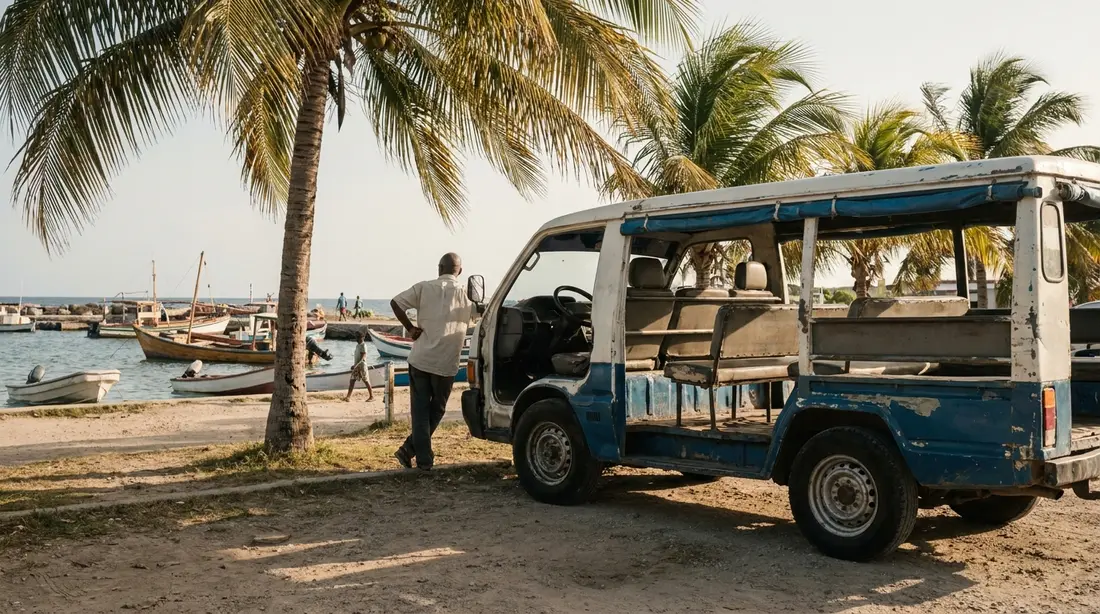
No Passport Needed
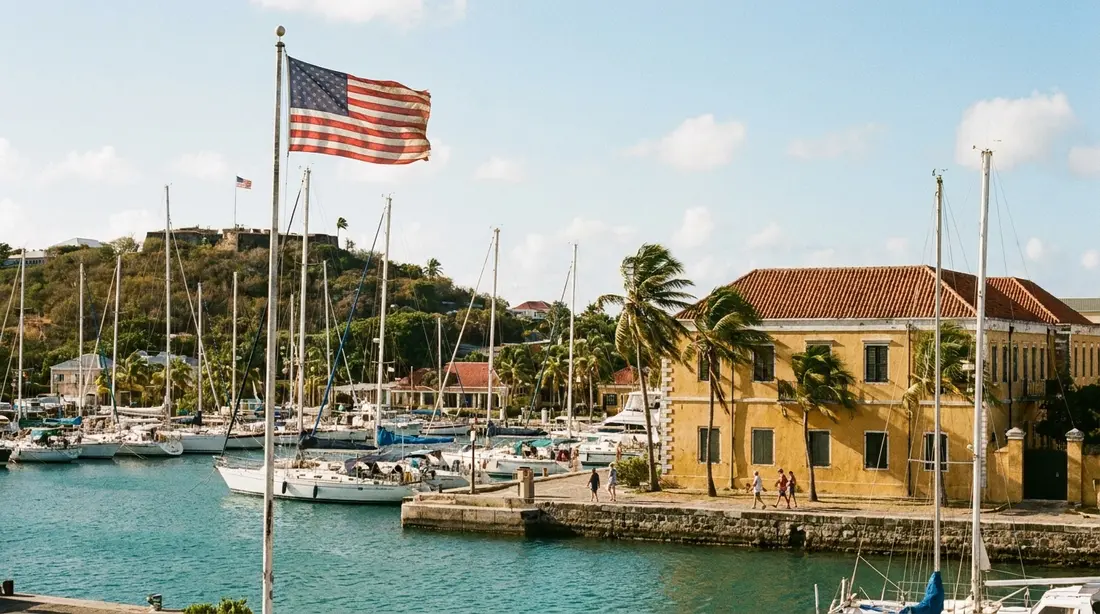
St. Croix is the United States: no passport for U.S. citizens, U.S. dollars, U.S. phone plans, and no customs line home.
St. Croix is the United States. U.S. citizens board a domestic flight to get here, show a driver's license instead of a passport, spend dollars, and use their regular phone plan under area code 340. This page is the full documents reference for the trip: the ID rules as TSA enforces them in 2026, what children need, how the departure inspection at the airport works, what non-citizen visitors should carry, and the duty-free rules that reward you for the one extra line on the way home.
Why no passport is required
The United States bought the Virgin Islands from Denmark in 1917, a story our Transfer Day guide covers in full. Since then the islands have been an unincorporated U.S. territory, organized today under the Revised Organic Act of 1954, and people born here have held U.S. citizenship since 1927. Federal immigration law defines the term United States to include the Virgin Islands, which is the entire legal machinery behind the headline: a flight from Miami or Atlanta to St. Croix never crosses a border, so no border document exists to check. Your airline sells it as a domestic ticket and TSA screens it as a domestic flight.
One asterisk sits inside that clean picture, and it explains almost everything else on this page. Congress wrote the territory out of the customs territory of the United States back in the Tariff Act era, so while the USVI is domestic for immigration, it is a separate zone for customs. The islands set their own low import duties, which is why storefronts in Christiansted advertise duty-free shopping, and it is why a Customs and Border Protection officer looks at your documents on the way out rather than a foreign officer stamping you in on the way in. Same country, different tariff line on the map.
Daily life on U.S. systems
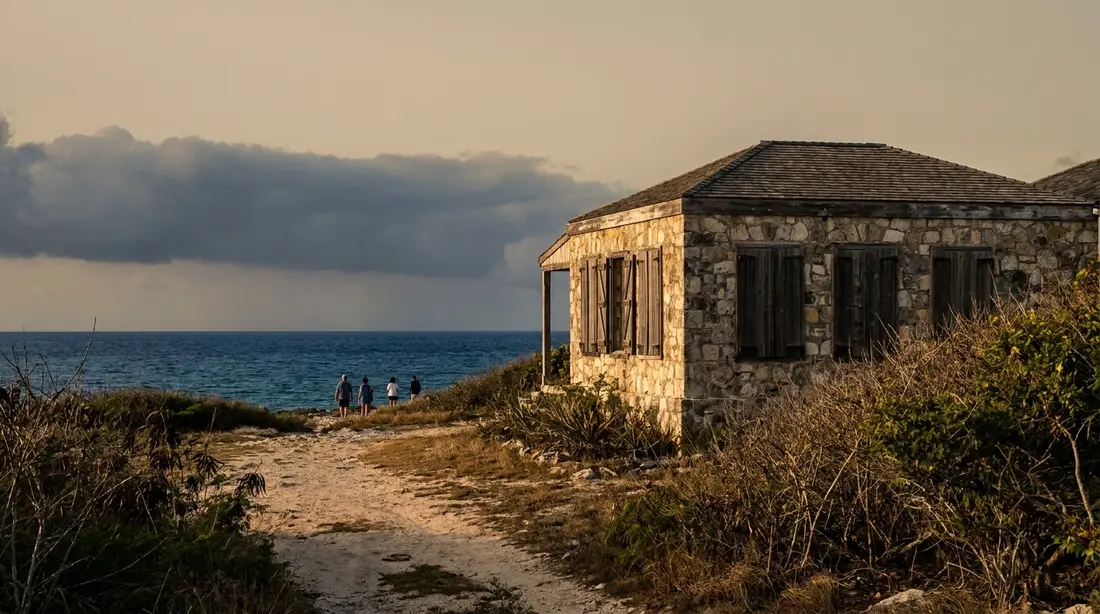
The territory question settles a stack of small practical ones at the same time. The currency is the U.S. dollar with no exchange counter and no conversion fee. Mainland debit and credit cards work normally, ATMs belong to U.S. banks, and tipping runs on mainland habits, though a number of beach bars and food vans take cash only; our money and tipping guide has the details. Mobile phones stay on U.S. networks under area code 340, and the large majority of mainland plans bill USVI calls and data as domestic; a quick check with your carrier before the trip is still smart, and phones, wifi and remote work covers coverage island-wide. Mail moves through the U.S. Postal Service with regular postage. Federal law applies, the language is English, and the one genuine daily-life surprise is traffic: cars keep to the left here, in ordinary American vehicles, as explained in driving on the left.
Arrival day
Landing at Henry E. Rohlsen Airport works like landing in any mainland city. You walk off the plane, collect bags from the belt, and head for the rental counters. There is no arrival form, no immigration booth, and no inspection of any kind coming in. Agriculture rules on the inbound leg are also a non-issue for ordinary luggage. The whole airport-to-villa sequence, including why the rental car should already be reserved, lives in getting to St. Croix and renting a car.

REAL ID rules in 2026
The ID that matters is the one you show TSA, and the rules tightened twice in recent memory. Airport enforcement of the REAL ID Act began on May 7, 2025: a state driver's license or ID card now only clears the checkpoint if it meets the federal standard, shown by a star printed at the top of the card. Then on February 1, 2026, TSA added teeth for anyone still carrying an older card. A traveler with no acceptable ID can pay $45 to run TSA's Confirm.ID identity-verification process, which covers a 10-day window, involves extra questioning, and carries no promise of success. The agency had proposed an $18 charge in late 2025 and raised the figure before launch.
The practical takeaway for a villa group: audit every adult's license during the booking week, months before the flight. Renewing a license to the REAL ID standard takes one DMV visit plus documents, while discovering the problem at the airport costs $45, a long delay, and possibly the flight. Anyone with a valid passport can skip the worry entirely, since a passport clears TSA everywhere.
Upgrading a license before the trip
The upgrade itself is a state DMV transaction, and while each state runs its own checklist, the pattern is consistent: one document proving identity, such as a birth certificate or passport, proof of the Social Security number, and two documents proving state residence, such as a utility bill and a lease or bank statement. Most states require an in-person visit for the first compliant card even if renewals normally happen online, and processing plus mailing can take several weeks in busy seasons. Book the DMV appointment when you book the flights and the timeline never becomes interesting. Households where one adult holds a passport and the other holds neither passport nor star should prioritize the second adult, since the group moves at the speed of its least-documented member.
IDs TSA accepts besides a compliant license
A non-compliant license is a problem only if it is the only card in your wallet. TSA publishes a list of alternatives, all equally valid for the STX flight in both directions. The commonly held ones:
- U.S. passport book or passport card — the card is a cheaper, wallet-sized option many travelers forget exists.
- DHS trusted-traveler cards — Global Entry, NEXUS, SENTRI, or FAST.
- U.S. Department of Defense ID, including dependents' cards.
- Permanent resident card — the green card itself is checkpoint-valid ID.
- Enhanced driver's license from the handful of states that issue them, such as New York, Michigan, Minnesota, Vermont, and Washington.
- Other listed documents — tribal photo ID, Veteran Health ID card, transportation worker credential, merchant mariner credential, or a foreign government passport.
At last check the full list sits on TSA's identification page; it shifts rarely, so any of the above is a safe plan for a 2026 trip.
Children and minors
TSA does not ask travelers under 18 for identification on domestic flights when they travel with a companion, and the whole STX itinerary is domestic. The adult's ID covers the family at the checkpoint. Two footnotes are worth knowing. First, airlines set their own paperwork rules, and several major carriers want proof of age for a lap infant at check-in, so the baby's birth certificate should ride in the diaper bag. Second, a minor flying alone who wants PreCheck screening needs acceptable ID of their own, per TSA's published guidance.
For St. Croix specifically there is a third reason to pack each child's birth certificate: the exit checkpoint. The officers staffing the departure inspection at STX work for Customs and Border Protection, and they are entitled to ask about citizenship for anyone in the party, minors included. A certificate produces an instant answer. More on family logistics in traveling with kids.
The CBP checkpoint on departure
Here is the one piece of airport choreography that surprises first-timers, presented precisely. Because the islands sit in their own customs zone, the federal checks that would normally happen when you land happen at STX before boarding instead. Any flight bound for the mainland or for Puerto Rico routes you past a CBP position after check-in. When you land stateside you are already cleared and walk out like any domestic passenger.
What actually happens at the podium: an officer reviews your ID and may ask where you were born or whether you are a U.S. citizen. For most citizens the encounter lasts seconds on a driver's license alone, since a verbal declaration usually satisfies the question. Officers can ask for more, though, so the belt-and-suspenders move is citizenship proof in the carry-on: a passport, a passport card, or a certified birth certificate with the raised seal. Children, who carry no license, are the members of the party most likely to need that paper. Non-citizens show the documents covered later on this page. Budget roughly two hours at the airport on departure day; the line moves, but it stacks on top of check-in and regular security. Note the direction of the rule: hops within the territory, like the seaplane or ferry to St. Thomas, involve no inspection at all in either direction, as covered in the St. Thomas day trip guide.
The agriculture screening
Alongside the CBP position runs a USDA agriculture check of luggage, there to keep island pests and plant diseases off mainland farms. The rule is simple to comply with: every food item, plant, seed, or flower in your bags gets shown to the inspector. APHIS keeps the approved-produce list short. At last check it included items such as citrus fruit, avocados, and coconuts, while most other fresh fruit and vegetables from the islands stay behind, along with anything potted in soil, cactus, and citrus plants. Commercially sealed snacks, coffee, hot sauce, and of course bottled rum sail through. When a mango from the villa tree is the question, the answer is to eat it before the airport.
Departure day in sequence
For anyone who likes the day mapped station by station, the outbound airport runs in this order:
- Check-in. Bags get tagged, and this is the moment to mention any rum boxes so they ride as fragile checked pieces.
- Agriculture screening. Checked luggage passes the USDA station; declare and show any food or plant items here rather than hoping.
- CBP document position. ID out, party together, children's certificates reachable. Seconds for most groups.
- TSA screening. Standard domestic security, REAL ID rules in force.
- Gate. The reward for the two-hour arrival is an unhurried coffee with a runway view.
Landing stateside involves nothing further. The plane parks at a domestic gate, and connections behave like any onward domestic leg, which is part of why one-ticket itineraries through the big hubs work so smoothly; see first-time visitor tips for the rest of the last-day playbook.
Green-card holders and visa holders
For lawful permanent residents the trip is close to a non-event, legally speaking. Flying from the mainland to St. Croix never exits the United States, so there is no re-entry, no new admission, and no continuous-residence complication from the trip itself. Carry the green card: it is TSA-valid ID and it answers the CBP officer's status question at the departure checkpoint in one motion.
Visa holders in F, H, J, O, or similar status get the same core answer. A vacation on St. Croix is domestic travel, the I-94 record does not change, and an expired visa stamp in the passport does not matter because no one is being readmitted to the country. Bring the passport with the I-94-linked documents anyway, since the exit checkpoint is staffed by immigration officers and a complete file makes the stop boring, which is the goal. One careful caveat: travelers with anything pending or fragile in their immigration file, such as an adjustment-of-status application or a status that is mid-extension, should run the itinerary past their immigration attorney or a CBP office before booking. The general rule that territory travel is domestic is well established; edge cases deserve professional eyes.
ESTA travelers
Visitors from Visa Waiver Program countries handle the USVI with the same ESTA that admitted them, because the waiver program treats the territory as part of the United States. The admission happened at the first port of entry, typically a mainland hub or San Juan, and the St. Croix leg is an internal flight afterward. Two mechanics follow from that. The 90-day VWP clock keeps ticking on the island, since no departure occurs. And the passport remains essential luggage even though nobody stamps it here: it is the ESTA traveler's only TSA-listed identification for the flights, and it is the clean answer at the CBP exit position. Anyone whose 90 days would expire mid-trip should reshape the itinerary, since the islands offer no reset.
The $1,600 duty-free allowance
Now the reward for all that customs-zone bookkeeping. A U.S. resident returning from an insular possession, a category holding the USVI, Guam, and American Samoa, may bring home $1,600 in goods free of duty once every 30 days. The standard figure from most foreign trips is $800, so the islands carry double the headroom. Members of a household traveling together may pool their figures, and children count, so a family of four flying home from a villa week theoretically shields $6,400 in purchases, with the usual caveat that a child's share cannot absorb alcohol or tobacco. Go over the cap and the sky does not fall: at last check the tranche above the exemption from an insular possession is assessed at a flat 1.5 percent, milder than the standard rate. Declare everything; the electronic declaration process on landing takes moments, and only the excess owes anything.
One more insular-possession perk that shoppers miss: purchases can be shipped home separately and still ride inside the $1,600 exemption, provided they leave directly from the islands, arrive within 30 days, and get declared on your return with the shop's paperwork. That turns a large mahogany carving or a case of rum into a freight problem instead of a checked-bag problem. Standard-trip rules give no such option.
Tobacco, gifts, and split itineraries
Cigarette shoppers get their own doubled figure: a returning resident may include up to 1,000 cigarettes from the USVI in the exemption, so long as no more than 200 of them were acquired outside the territory, against the usual 200-cigarette ceiling from foreign trips. Gift mailings scale up too. At last check, packages sent to friends and relatives from the islands qualify for a $200-per-recipient-per-day duty-free gift level, twice the standard $100, with alcohol and tobacco excluded from gift treatment. Travelers who pair the USVI with a foreign Caribbean stop on one itinerary keep the full $1,600 ceiling, but CBP caps the portion attributable to the other country at that country's own level, so receipts matter on split trips. All of these figures come from CBP's published exemption tables and are worth a re-check close to travel, since Congress adjusts them rarely but not never.
| Allowance | Returning from the USVI | Typical foreign trip |
|---|---|---|
| Duty-free exemption | $1,600 per person per 30 days | $800 per person per 30 days |
| Alcohol (21 and over) | 5 liters, with 4 bought in the islands and 1 island-made | 1 liter |
| Cigarettes | 1,000, no more than 200 acquired elsewhere | 200 |
| Gift packages mailed | $200 per recipient per day at last check | $100 per recipient per day |
| Shipping purchases under the exemption | Allowed if sent directly and declared, arriving within 30 days | Accompanied baggage only |
| Rate on the next $1,000 above the cap | Flat 1.5 percent at last check | Flat 3 percent at last check |
The rum allowance, exactly
The alcohol rule inside the exemption is precise, so here it is stated precisely. An adult 21 or over returning from the USVI may include up to five liters of alcoholic beverages duty-free, on two conditions: at least four of the five liters were purchased in the islands, and at least one liter is a product of the islands. St. Croix makes that last condition trivial. Cruzan has distilled here since 1760, Captain Morgan runs its production on the south shore, and Mutiny distills vodka from island breadfruit, so a single local bottle in the box satisfies CBP. Bottles beyond five liters owe the modest flat rate plus federal excise tax rather than being confiscated, though your airline has a say too: federal aviation rules cap checked alcohol between 24 and 70 percent ABV at five liters per passenger, a limit that happens to rhyme with the customs one. Pack bottles in the middle of the suitcase or buy the padded shippers sold island-wide, and see the packing list for the wrapping strategy.
Reasons to pack a passport anyway
None of the above requires a passport, and plenty of guests fly without one. If you own one, bring it. The arguments stack up quickly. It answers the CBP citizenship question faster than any other document. It is the rescue plan if a wallet with the driver's license goes missing mid-trip, an event that otherwise leaves you negotiating with Confirm.ID at $45 and no certainty. It opens the British Virgin Islands as an add-on, a crossing that is international and demands a passport from every traveler in the group plus entry formalities on both legs. And in the rare event weather or mechanicals reroute a flight through a foreign airport, the passport turns a headache into an inconvenience. The villa safe holds it the rest of the week.
Cruise passengers
Ship guests calling at Frederiksted operate under maritime document rules rather than TSA's. On a closed-loop cruise, one that starts and finishes at the same U.S. port, CBP permits U.S. citizens 16 and over to sail on a government photo ID plus citizenship proof such as an original or certified birth certificate, with younger children on the birth certificate alone. Cruise lines often push passengers toward passports anyway, partly because other islands on the itinerary may demand them and partly because flying home from a foreign port after a missed ship requires one. St. Croix itself, being a U.S. port, asks nothing at the gangway beyond the ship card and normal ID. A full shore-day plan is in cruise day on St. Croix.
Boats and island hops
Water travel follows the same map as air travel. Moving among St. Croix, St. Thomas, and St. John is entirely domestic: the seaplane, the ferry, and any charter running between the U.S. islands involve no document checks in either direction, so a day trip needs nothing beyond the ID already in your pocket. The line on the water sits a few miles east, where the British Virgin Islands begin. A boat that touches Jost Van Dyke or Tortola has left the country, which means BVI entry formalities over there and a report to CBP on the way back, filed at a designated port or through the agency's ROAM app for small vessels. Crewed charters handle those filings as routine, but every passenger needs the passport aboard, so ask the operator about the route before anyone books; our private boat charters guide covers who runs what. Private boaters moving between the USVI and Puerto Rico face reporting rules of their own under CBP's pleasure-boat procedures, a wrinkle chartering guests never touch.
Documents by traveler type
| Traveler | Flight to STX | Departure checkpoint at STX | Worth packing |
|---|---|---|---|
| U.S. citizen adult | REAL ID license or any TSA-listed ID | Same ID; citizenship question possible | Passport or certified birth certificate as backup |
| U.S. citizen under 18 | No TSA ID needed with a companion | Officer may ask about the child's citizenship | Birth certificate for each child |
| Lawful permanent resident | Green card (TSA-valid) | Green card answers the status question | Passport from home country if held |
| Visa holder (F, H, J, etc.) | Passport as ID | Passport plus status documents | I-94 printout; attorney check for pending cases |
| ESTA / Visa Waiver visitor | Passport as ID | Passport; 90-day clock keeps running | Nothing extra; territory time counts as U.S. time |
| Closed-loop cruise guest (U.S. citizen) | Photo ID plus birth certificate per CBP | Ship handles clearance formalities | Passport if the itinerary touches foreign ports |
Questions guests ask
My license has no star on it. Can I still make the trip?
Yes, with a workaround. Since February 2026 TSA lets travelers without acceptable ID attempt the Confirm.ID process for a $45 fee covering ten days, but it adds real delay and can fail, so treat it as a last resort rather than a plan. The better routes: renew the license to the REAL ID standard before the trip, or fly on any other listed document, such as a passport, passport card, Global Entry card, military ID, or an enhanced license from the states that issue them.
What documents does my toddler need?
For the flights, none, since TSA exempts minors under 18 traveling with an adult on domestic routes. Check your airline's rule for lap infants, because several carriers ask for proof of age at check-in. Then pack the birth certificate regardless: the departure inspection at the St. Croix airport is a Customs and Border Protection operation, an officer can raise the citizenship question for any traveler, and a certificate closes the topic immediately for a child with no photo ID.
Can a green-card holder vacation on St. Croix without risk?
In the normal case, yes. The flight never leaves the United States, so there is no departure, no readmission, and no effect on permanent-resident status or the continuous-residence count. Carry the green card itself, which works as TSA identification and satisfies the officers at the exit checkpoint. Anyone with an unusual file, such as a pending naturalization or adjustment application, should confirm the trip with an immigration attorney first, purely as good practice.
Does time on St. Croix count against my ESTA 90 days?
Yes. The Visa Waiver Program treats the U.S. Virgin Islands as the United States, so island days are U.S. days and the clock never pauses or resets. There is no new admission when you fly down from the mainland and no stamp when you leave for home, because neither movement crosses a border. Plan the territory leg inside the same 90-day window as the rest of the American itinerary, and carry the passport for the flights.
How early should we reach the airport for the flight home?
About two hours before departure. STX is a small airport, but leaving adds two stations a mainland trip lacks: the CBP document position and the USDA bag screening, stacked on top of airline check-in and normal security. The lines move at a steady island pace and rum boxes slow the belt. Arriving early converts the whole thing into twenty calm minutes and a seat at the gate rather than a sprint.
Can I take fruit or plants home in my suitcase?
Mostly no, with a short list of exceptions. All food and plant material must be shown to the agriculture inspector before departure, and APHIS approves only certain produce from the territory, a list that at last check included items like citrus fruit, avocados, and coconuts. Anything growing in soil is refused, as are cactus and citrus plants. Sealed commercial goods, coffee, hot sauces, and rum pass without drama. Check the current APHIS traveler page before packing anything green.
Is a passport card enough for this trip?
For everything on this page, yes. The wallet-sized card is on TSA's accepted list for the flights and it proves citizenship at the departure checkpoint, all for a fraction of the price of the book. Its limits appear only if the itinerary grows: the card covers land and sea border crossings, so it cannot be used for an international flight, and at last check BVI authorities expect a full passport book from arriving visitors. For a pure St. Croix villa week, the card does the whole job.
Does the inspection apply on a flight to San Juan?
Yes. Puerto Rico sits inside the U.S. customs territory while the Virgin Islands sit outside it, so the STX-to-San-Juan leg crosses the customs line and passes the same CBP and agriculture stations as a Miami flight. The reverse is friendlier: flying from San Juan down to St. Croix involves no inspection at all. Travelers connecting home through San Juan clear everything at STX and then treat the San Juan hub as an ordinary domestic connection.
How much rum can our group actually fly home with?
Five liters per adult 21 or over can travel duty-free inside the $1,600 exemption when at least four liters were bought in the islands and at least one liter is island-made, a condition any Cruzan or Captain Morgan bottle meets. Beyond five, customs charges a small flat rate plus excise tax rather than stopping you, though aviation rules cap checked spirits in the 24-to-70-percent range at five liters per passenger. Shops sell padded shippers, and larger hauls can be shipped home under the exemption if declared.
Where the trip goes from here
The paperwork story ends at booking: check the licenses, slip the birth certificates and passport into the document pouch, and the rest of the planning is the fun kind. Our homes put that easy logistics story to work. The Cerulean and the East End collection sit 15 to 40 minutes from the airport, so the gap between the baggage belt and the first swim is measured in minutes, and every house has a safe for the documents you brought but never needed. Browse the full portfolio at our villas, and use the fly-from pages to find the cleanest route from your city.
Sources
Written from official and first-party sources, checked August 2026. Hours, prices and event dates change — confirm before you go.
In this guide
Stay nearby
On The Shoys beach: six bedrooms, six baths, pool and hot tub, room for twelve, and the beach through the back garden.
 Shoy's Beach House6 bd · 6 ba · sleeps 12 · Christiansted
More in Plan Your Trip
Sources
11 references, listed in full at the end of this guide — official park, refuge, tourism-board and business sources, checked August 2026.