Point Udall at Sunrise
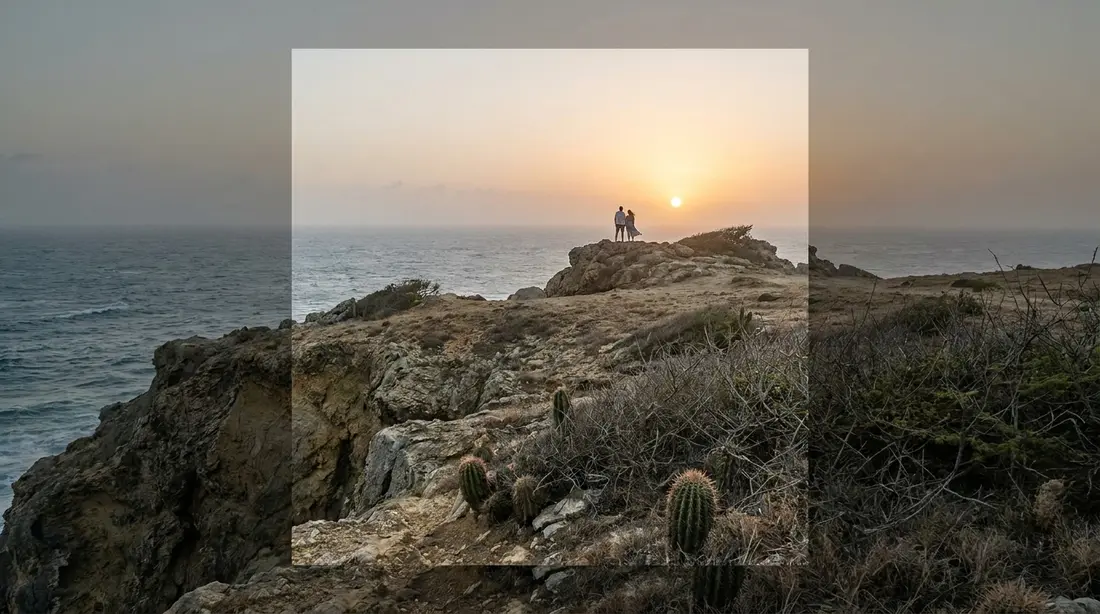
The easternmost point of the United States, marked by the Millennium Monument sundial. Watching the country's first sunrise from the East End.
Every morning, the first daylight to reach the United States lands on a windy limestone-and-scrub headland at the eastern tip of St. Croix. Point Udall is a drive-up overlook, no ticket and no hike required, and watching the day arrive there has become the island's one true pilgrimage. This page is the complete playbook for doing it well: what the easternmost claim actually means, what the sundial monument is, when the sun comes up month by month, how dark the drive is, where to stand, and what to do with the rest of a morning that started before five-thirty.
What easternmost means here
The claim on the sign deserves to be stated carefully, because a certain kind of guest will check. Point Udall sits at longitude 64 degrees 34 minutes west, latitude 17 degrees 45 minutes north. Among all fifty states, the record-holders are in Maine: West Quoddy Head is the easternmost spot on the U.S. mainland, and tiny Sail Rock off Lubec edges it offshore. Point Udall lies more than two degrees of longitude farther east than either, which makes it the easternmost ground in the country as a traveler would measure it — from anywhere else under the U.S. flag, the shortest way to this headland points east.
The asterisk lives in Alaska. Far out along the Aleutian chain, Semisopochnoi Island crosses the 180th meridian, so its Pochnoi Point technically carries an eastern-hemisphere longitude of 179 degrees 46 minutes east — on paper, the most "eastern" coordinates in the nation. Nobody watches a sunrise there; the island is an uninhabited volcano roughly 4,000 miles from the U.S. mainland, and you would travel west to reach it. Geographers settle the puzzle by ranking Point Udall easternmost by direction of travel, and that is the phrasing this site uses. For the purpose that matters at 5:45 a.m. — the sun touching American soil here first — the headland's claim is solid.
One more piece of trivia earns its place at a dinner table. The point was named in 1969 for Stewart Udall, the Interior Secretary through the Kennedy and Johnson years, and the westernmost point of U.S. territory, on Guam, is Point Udall too — named for his brother, Congressman Mo Udall. When the Guam naming was proposed in the 1980s, the argument made for it was that America's day would then open and close at a Point Udall. It does.
The Millennium Monument
The structure on the rise above the parking loop is the Millennium Monument, put up for January 1, 2000, when this headland saw the country's first daylight of the new millennium and ceremonies were held on the spot. The designer was Bill Rich, an architect from St. John; there is no admission charge to visit it, at last check or ever.
It works as an enormous sundial, and its shape encodes one specific moment. Read it like an instrument: the tall notched tower and the lower marker beyond it form a sight line, and that line records the exact compass bearing on the horizon where the sun appeared on the first morning of 2000. In January the sun rises well south of due east at this latitude, so the sight line aims east-southeast rather than straight out to sea. Each year on the mornings around New Year's, the sunrise drifts back to nearly the same bearing, and the instrument briefly does its job again: sun, notch and marker in one line.
The rest of the year the monument serves as foreground, wind-block and meeting point. The paved walk ends at it; the true tip of the island lies beyond and below, reached by a rough informal path of moderate difficulty that most sunrise visitors skip. The view from the monument terrace already covers three sides of water.
The sunrise clock
Clocks never change here — the territory holds Atlantic Standard Time through every season — so sunrise drifts smoothly through a narrow band instead of jumping an hour twice a year. Standard astronomical calculations of the U.S. Naval Observatory type, run for Point Udall's coordinates, put the year's earliest sunrises around 5:42 a.m. from late May through mid-June, and the latest around 6:52 a.m. in the middle of January. The entire year fits inside about seventy minutes. There is no month when seeing the first American sunrise requires waking before five, and no month when you can sleep to seven and still catch it.
The second number matters as much as the first. Civil twilight — the period of growing light before the sun's edge clears the horizon — lasts barely 22 or 23 minutes regardless of month, since a tropical sun rises on a steep track rather than slanting along the skyline. That short window is the show: the sky runs through its colors fast, and being five minutes late costs real percentage. Plan to be standing at the monument when civil twilight begins, which means parked a few minutes before that.
Direction changes with the season too. Only near the March and September equinoxes does the sun rise due east of the point. Through the year the rising spot wanders about 25 degrees north or south of that mark: toward the northeast at the June solstice, toward the southeast in December and January. Practically, this means the sun always comes up over open Atlantic from this headland — there is no season when land blocks it — but photographers who care about lining the sun up with the monument's geometry get their alignment only in the weeks around New Year's.
Sunrise times by month
Mid-month values calculated for Point Udall's coordinates; times shift only a minute or two across each month, and year-to-year variation is under two minutes. First light is the start of civil twilight, when color begins. The arrive-by column is the number to plan around: parked, out of the car, and at the monument.
| Month | First light | Sunrise | Be parked by |
|---|---|---|---|
| January | 6:29 a.m. | 6:52 a.m. | 6:20 a.m. |
| February | 6:23 a.m. | 6:45 a.m. | 6:15 a.m. |
| March | 6:05 a.m. | 6:27 a.m. | 5:55 a.m. |
| April | 5:40 a.m. | 6:02 a.m. | 5:30 a.m. |
| May | 5:23 a.m. | 5:46 a.m. | 5:15 a.m. |
| June | 5:19 a.m. | 5:43 a.m. | 5:10 a.m. |
| July | 5:28 a.m. | 5:51 a.m. | 5:20 a.m. |
| August | 5:38 a.m. | 6:01 a.m. | 5:30 a.m. |
| September | 5:44 a.m. | 6:06 a.m. | 5:35 a.m. |
| October | 5:50 a.m. | 6:12 a.m. | 5:40 a.m. |
| November | 6:01 a.m. | 6:24 a.m. | 5:55 a.m. |
| December | 6:17 a.m. | 6:41 a.m. | 6:10 a.m. |
Two readings worth pulling out of the table. Winter visitors get the gentlest deal: a mid-January sunrise at 6:52 means a 6:00 alarm from an East End villa and coffee at a civilized hour. Early summer asks the most, with first light before 5:20 — and pays it back, since June mornings are also the calmest and clearest of the year on this coast.
The drive out in the dark
Whatever the month, you will drive the last miles of Route 82 in full darkness, and that drive is part of the experience. Past Christiansted's last streetlights the island goes black; the East End has no lit roads, and on a moonless morning your headlights are the only light between the hills and the sea. Add ten minutes to whatever the daytime drive would take and treat it as its own small event rather than a commute.
Budget by starting point. From our East End homes the point is 10 to 20 minutes; from Christiansted, allow 35 to 40 in the dark; from the west end it is a full hour, which is why sunrise chasers based near Frederiksted usually fold the point into the island loop instead — the east-first ordering in driving the island in a day exists for exactly this reason.
Three cautions, all minor. The island's wild white-tailed deer favor these scrub hills and step onto the pavement most often in darkness, so hold your speed down and assume any deer you pass has company behind it. The final climb to the parking loop tightens to a narrow lane — the surface stays paved and sound to the end, and any rental sedan manages it, but oncoming cars pass slowly up there. And phone coverage dies near the tip, so set your navigation before leaving and tell nobody to expect a call until breakfast. The road ends at a paved loop with free parking a short, flat walk below the monument; take valuables with you rather than leaving them in view, as at any remote lot on island. Left-side driving in the dark deserves a read of driving on the left the night before if this is your first morning doing it.
Where to stand
The choice is between the monument terrace and the open ridge, and most mornings the answer is both. The terrace is the classic position: the sundial gives the eye scale and the camera a subject, the low walls cut the wind, and on a busy morning this is where everyone gathers. Thirty steps along the ridge in either direction buys solitude and a wider horizon — the headland drops away on three sides, with surf working the rocks far below and the sound carrying up even over the wind.
About that wind: this is the most wind-raked place on St. Croix, the first land the trades touch after 3,000 miles of open Atlantic, and at 5:45 a.m. it reads cooler than any thermometer says. A windbreaker or long sleeves is the difference between savoring the wait and enduring it. A lidded travel mug beats an open cup; hats leave without permission.
Going beyond the monument to the true point is a daylight decision, not a dawn one. The informal path is rated moderate, the footing is loose rock over drops, and pre-dawn light hides all of it. Watch the sunrise from the top; scramble afterward if the urge persists. The ground itself rewards a second look once the light is up: the headland is built of volcanic and sedimentary rock laid down in the Upper Cretaceous, then heaved upward and tilted, which is why the strata below the overlook lean at such odd angles against the surf.
The kit, in full: a layer for the wind, coffee in something with a lid, a small light or a phone flashlight for the walk from the car (the terrace path is unlit), water and real shoes if the morning continues into a hike, and a bag to carry out everything you carried in — there is no trash pickup at the end of the road, and the headland stays clean because visitors keep it that way.
The sky before first light
Arrive a little earlier than the table demands and the point offers a warm-up act. The East End is the darkest corner of an already dark island — no streetlights, no buildings east of you, nothing but ocean for a hundred horizons — and in the half hour before civil twilight the stars over the Atlantic put on a show that mainland visitors rarely get at home. Meteors register here. So does the band of the Milky Way on the right nights.
The moon sets the terms, and it is worth checking the phase before you pick your morning. Around the new moon the sky is blackest and the stars are the event; the drive out is also at its darkest, so take the road gently. Around the full moon the arrangement flips in a pleasing way: a full moon stands opposite the sun, so as dawn builds in the east you can watch the moon sinking over the dark ridge line to the west, and the drive out is lit for free. In most seasons a bright planet hangs low over the sunrise point as the morning star, outlasting every other light in the sky until the blue swallows it. None of this requires knowing a constellation; it only requires arriving fifteen minutes earlier than necessary.
The twenty minutes before the sun
The event people drive out for is mostly over by the time the sun appears. What you are really attending is civil twilight, and it runs on a reliable script. In the first minutes, the horizon separates from the sea as a gray seam, and Buck Island materializes low in the northwest. Then the color: a band above the rising point warms through amber into rose and violet, the shades stack, and the water starts throwing the palette back. The wind somehow feels like part of it. On a morning with a few scattered clouds — most mornings, as covered below — their undersides catch the pink well before anything else does, and the best photographs of the whole session usually happen here, ten minutes before sunrise, not at it.
The disc itself arrives fast. At this latitude the sun climbs at a steep angle, so barely two minutes pass between the first molten sliver and a whole circle standing clear of the water. If a crowd is present, someone always announces it. And then comes the part first-timers don't expect: turn around. With the sun finally up, its light sweeps across the East End behind you — the ridges of Goat Hill, the scrub hills going gold, the reef shallows switching on their blues — while the whole rest of the country remains, for a few more minutes, in the dark. That is the fact people came for, and it lands hardest facing west.
New Year's morning at the point
Point Udall carries one date on its calendar. On January 1, 2000, this headland delivered the United States its first daylight of the millennium; the monument was raised for that morning and ceremonies marked it on the spot. The occasion never really ended. Every January 1 since, islanders have driven out in the dark to watch the year's first American sunrise from the same terrace, a tradition that runs on word of mouth — no organizer, no schedule, no promotion — and island press has described the result as an impromptu party at the end of the road. Expect vehicles lining the loop and the roadside below it, families with blankets and thermoses, music from somebody's speaker, and a cheer when the sun shows.
For a guest, the playbook is simple. New Year's Day sunrise lands near the latest of the year, about 6:50, which is merciful after a midnight; leave earlier than the table above suggests, because parking thins out; and hold no expectation of solitude, because this is the one morning the point belongs to a crowd. It is also, by general agreement, the best morning of the year to be there. Guests wanting the private version get an identical sunrise on January 2 with a tenth of the audience.
Clouds on the horizon
Now the fine print: what are the odds the horizon is clear? The Caribbean trade-wind belt manufactures a steady supply of small, puffy cumulus clouds riding the easterlies, with tops mostly in the 1,000-to-1,500-meter band, and cloud studies of the region find this cover tends to peak in the pre-dawn hours before thinning through the morning. Since the sunrise point sits exactly upwind, a low shelf of cloud sitting on the east horizon at first light is the normal condition here.
Calibrate expectations accordingly. A textbook water-line sunrise — the disc rising clean from a bare sea — happens, and is worth celebrating, but it is the exception. The common morning runs differently: brilliant twilight color on the cloud undersides, then a muted minute or two while the sun climbs behind the low bank, then a second reveal as it breaks over the top, often within five or ten minutes. Scattered cloud is the photographer's friend, giving the light something to work on; the only losing hand is a solid gray wall, and even then the color show before sunrise usually still fires. No forecast reliably calls the difference the night before. The odds favor going.
Photographing the sunrise
The scene is high-contrast and quick, so a little technique goes a long way.
- Expose for the sky, not the land. On a phone, tap the brightest region and pull exposure down until the color goes rich; the headland renders as silhouette, which is the right look. A camera wants a stop or two under the meter's suggestion.
- Use the sundial. A bare sunrise over water is a postcard from anywhere; the monument's tower in black silhouette against the color is a photograph from exactly one place on earth. Move around it until the shapes read cleanly.
- Shoot hardest before the sun appears. The 15 minutes of twilight color photograph better than the raw glare that follows. Once the disc is up, meters struggle and lens flare takes over.
- Know what a phone can do. A modern phone in HDR handles this scene well at its normal focal length and poorly at zoom — the 2x-and-beyond sun turns into a smeared blob. Wide and steady wins. Brace against the monument wall; the wind will shake your hands more than you think.
- Turn around for the last frames. The first light raking across the East End hills behind you is the shot nobody else takes.
- Then pocket the camera. Two minutes of sunrise deserve at least one unphotographed.
After the sun is up
By 6:30 or so you are standing at the end of the road, fully awake, with the entire day still ahead of you. The pairings, in rising order of ambition:
- The breakfast swim. Cramer's Park is minutes back down Route 82, and at 7 a.m. its calm water is glass and its pavilions are empty. A swim there while the light is still low is the cheapest luxury on the island. Chenay Bay offers the same stillness closer to town.
- The empty-beach hike. The lot you parked in doubles as the trailhead down to Jack's and Isaac's Bays, and dawn is the ideal departure: the path is shadeless and the East End heat arrives by mid-morning, so hikers who start at 6:15 swim the island's most secluded coves before eight and climb out before the sun means it. Details, turtle-season rules and the longer routes are in that guide and in hiking St. Croix.
- The summit. Goat Hill is the other first-light project at this end of St. Croix; its bare track punishes midday, so a sunrise start is how experienced walkers take it on.
- The villa breakfast. The default, and defensible: East End villa guests are back on their own deck by seven with coffee going and the whole apparatus of morning barely begun. Sunrise at the point runs on a smaller time budget than almost anything else this site recommends — the round trip from an East End villa, show included, fits inside 90 minutes.
Everything else on this quarter of the island — the beaches, the marine park, dinner — is cataloged in the East End guide. Boat-day guests should note the pairing that does NOT work: Buck Island departures run from Christiansted in mid-morning, so sunrise plus boat means driving the point-to-wharf leg straight through, doable but brisk.
East tip at dawn, west coast at dusk
St. Croix is one of the few places where a single unhurried day can hold a sunrise over the Atlantic and a sunset into the Caribbean, about 28 road miles apart. The frame: first light at the country's eastern tip, breakfast and a swim on the East End, whatever the middle of the day wants to be, then the 40-minute drift west in the late afternoon to watch the sun land in the sea off Frederiksted — the geometry and the beach choices live in the sunset beaches guide. Winter visitors get the friendliest arithmetic, with sunrise near 6:50 and sunset near 5:45, a day that starts late and ends early by tropical standards.
A note for symmetry hunters: the island's far southwestern sand at Sandy Point cannot host the evening half, since the refuge admits visitors only on daytime weekend hours in its open season. The both-ends day ends at Rainbow, Dorsch or the Frederiksted waterfront instead, which sacrifices nothing. Done deliberately — ideally with the full island loop from the driving guide filling the hours between — this is the single best one-day argument for how much island 84 square miles can hold.
Questions guests ask
Is this really the country's easternmost point?
Yes, with one technical footnote. Measured the way a traveler measures — which direction takes you there shortest — no ground under the U.S. flag lies farther east, and it beats Maine's famous claim by more than two degrees of longitude. The footnote is an uninhabited Aleutian volcano whose far shore crosses the 180th meridian and therefore carries eastern-hemisphere coordinates on paper. Geographers call Point Udall the easternmost point by direction of travel, and the sunrise fact carries no asterisk at all: daylight touches this headland ahead of every other place Americans live.
How early do we need to wake up?
Less early than people fear. Sunrise never comes before about 5:42 a.m. (early June) or after about 6:52 (mid-January), and the target is being at the monument when first light begins, roughly 22 minutes ahead of the sun. From an East End villa that means an alarm 45 to 60 minutes before the sunrise time in the table above; from Christiansted, add the 35-to-40-minute dark drive. Winter guests get the easiest version of the whole ritual.
Is the drive safe in the dark?
Yes, with ordinary care. The road is paved the entire way and carries almost no traffic at that hour; the real variables are deer, which cross East End roads most in darkness, and the tightening last climb before the parking loop. Drive modestly, use high beams on the empty stretches, and remember you are on the left side. Note that cell coverage fades near the tip, so load directions before leaving the villa.
What if the morning is cloudy?
Go anyway, with adjusted expectations. A low bank of trade-wind cloud on the east horizon is the region's default dawn condition, and the usual result is a delayed reveal — the sun climbs out over the cloud tops within minutes of official sunrise — preceded by twilight color that scattered cloud actually improves. Only a solid overcast cancels the show, and that is uncommon on this dry coast. There is no reliable way to call it from a forecast the night before.
Do we need to hike anything?
No. Point Udall is the rare landmark where the car does all the work: pavement to the parking loop, then a short flat walk to the monument terrace. The hiking is optional and starts where the pavement stops — a rough informal scramble to the true tip, best left for daylight, and the walk from the same lot that ends on the sand at Jack's and Isaac's Bays, covered in its own guide.
What does a visit cost, and what is out there?
Nothing, at last check — no gate, no hours, no ticket. There are also no services: not a restroom, not a water fountain, not a vendor, not a light — and phone signal is unreliable. Bring your own coffee and a layer against the wind, and make Cramer's Park, minutes back down the road, your first stop for restrooms afterward.
Can you see a green flash at sunrise?
In principle yes — the optics work at both ends of the day — but in practice the sunrise version is a much harder catch. At sunset you know exactly where the sun will touch the water and can time your glance to the last sliver; at sunrise the flash comes in the instant BEFORE the disc appears, at a spot on the horizon you have to predict, and once the sun is up the chance is gone and your eyes are dazzled. A clean sea horizon, which the trade-wind cloud bank often denies, is also required. Treat any green as a lottery win and plan the morning around the colors you will get instead.
How crowded does sunrise get?
Outside of one date, barely. A typical weekday dawn draws a handful of cars — a couple of visitors, a local or two who treat it as routine — and the ridge absorbs everyone with room to spare. Cruise-ship days can add a mid-morning bus or two, but those arrive long after the show. The exception is New Year's morning, when the island turns out in force and the point hosts its annual unplanned party; go early that day, or go January 2 for the private edition.
Sunrise from our East End villas
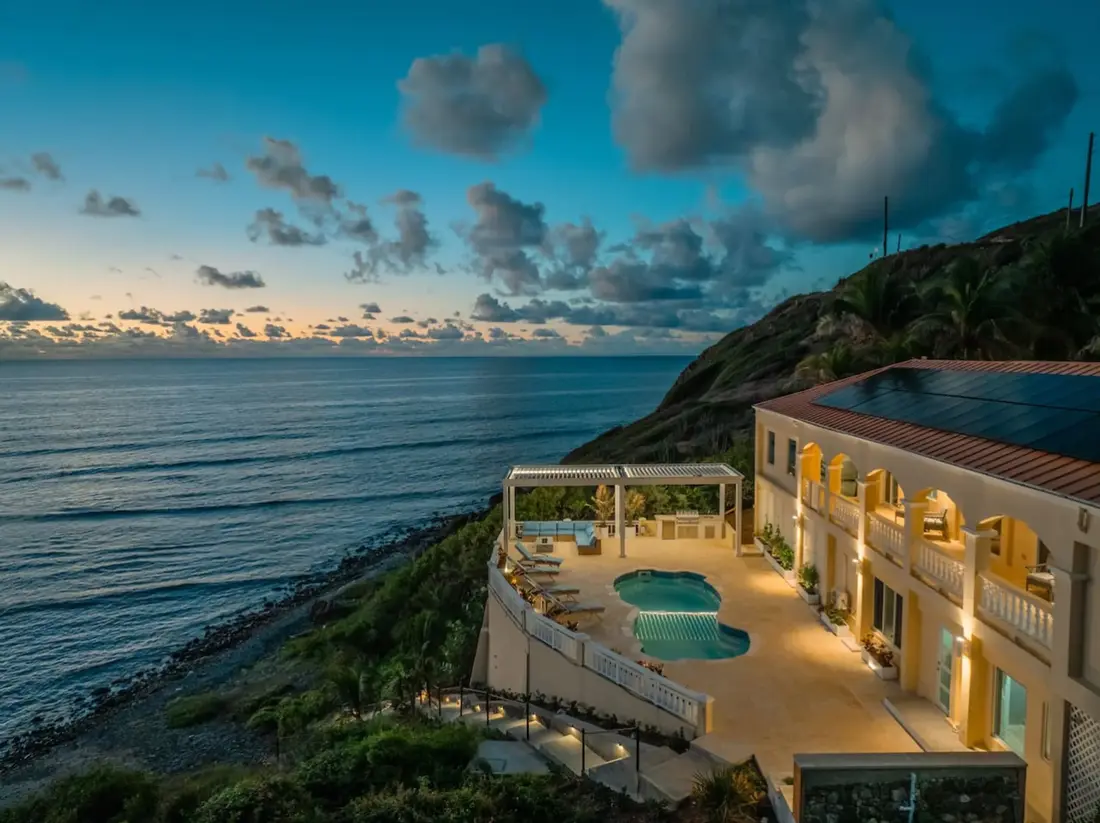
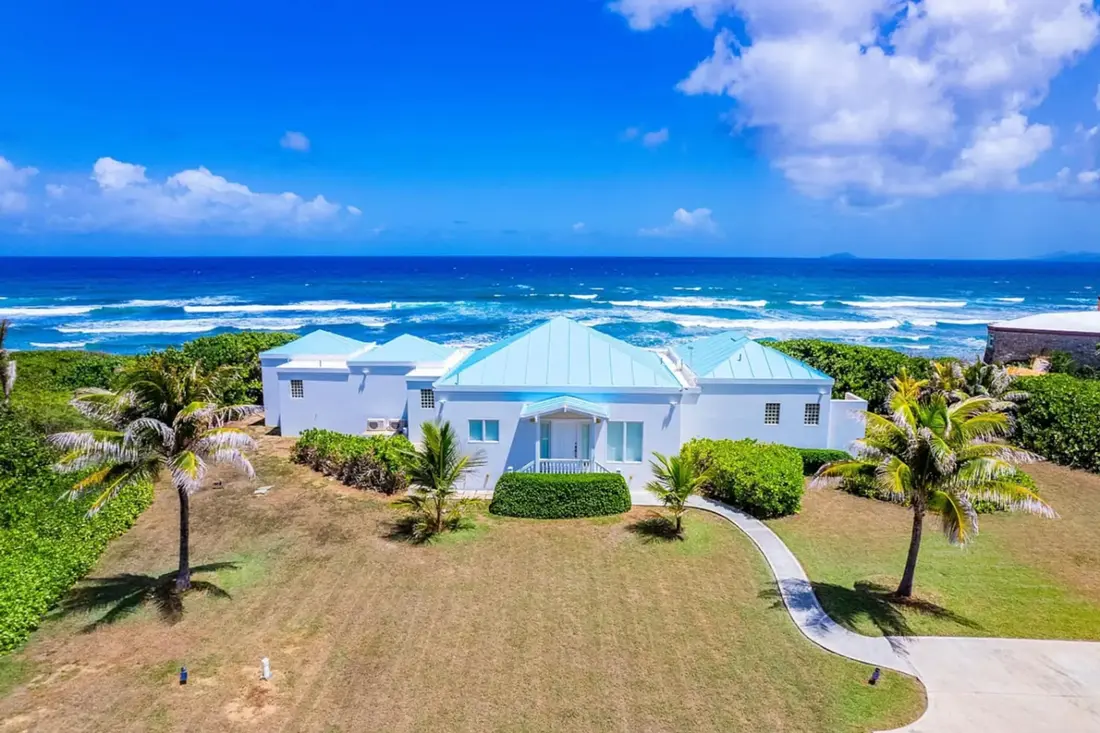
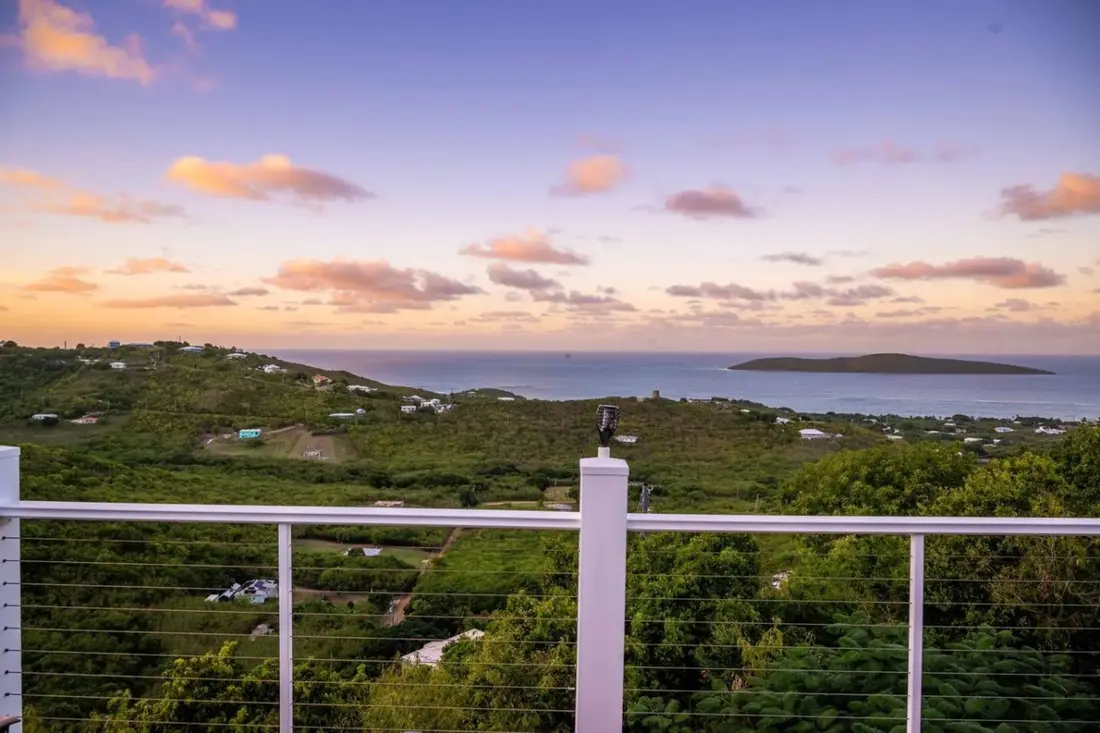
Our guests hold an unfair advantage in this particular ritual: the villas sit on the side of the island the light reaches first. Reviews at The Cerulean keep returning to the morning light off the deck, and The Buck Island Overlook and Moko Vista both take their names from the view their windows face. The right plan is one of each: watch one sunrise from the deck with coffee within reach, and give one morning to the point itself, ten minutes farther east, where the same light arrives with wind, surf and a sundial built for it. Browse all of the East End villas to pick your deck.
Sources
Written from official and first-party sources, checked August 2026. Hours, prices and event dates change — confirm before you go.
In this guide
Stay nearby
On The Shoys beach: six bedrooms, six baths, pool and hot tub, room for twelve, and the beach through the back garden.
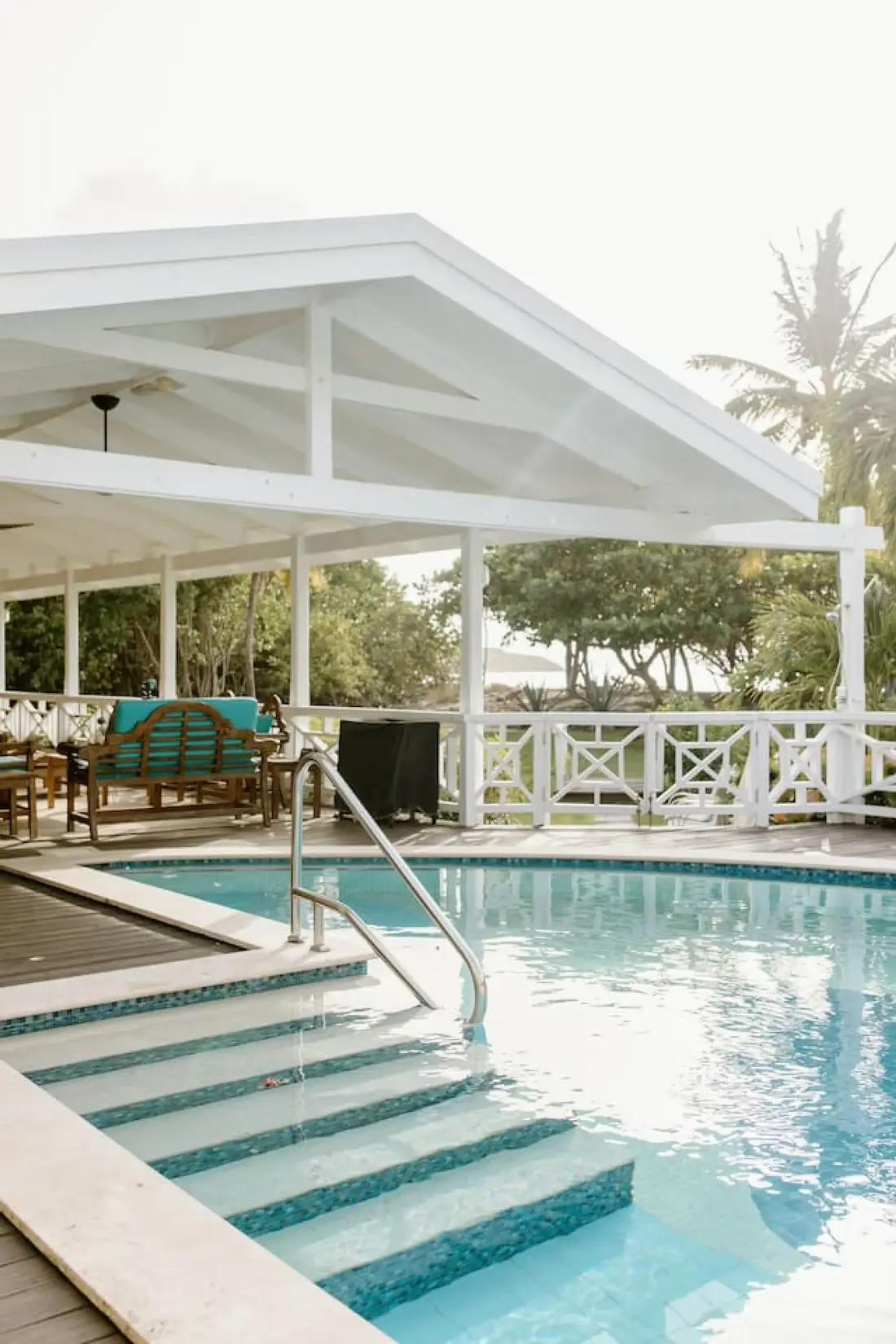 Shoy's Beach House6 bd · 6 ba · sleeps 12 · Christiansted
More in Land & Adventure
Sources
9 references, listed in full at the end of this guide — official park, refuge, tourism-board and business sources, checked August 2026.