St. Croix vs the Florida Keys
America's drive-to islands against America's Caribbean island. One asks three hours on US-1; the other asks three hours from Miami by jet, and pays it back in the water.
The Florida Keys are the easiest island trip in America: drive or fly to Miami, aim the car down US-1, stop when the water looks right. Millions do it every year, which is part of the story. St. Croix asks one more step — a three-hour nonstop from Miami — and hands back the things the Keys cannot manufacture: 80-degree January water, true Caribbean turquoise, sand beaches with nobody on them, and a reef you can reach from shore. Both are American. Only one is the Caribbean.
The two, side by side
| St. Croix | the Florida Keys | |
|---|---|---|
| Passport | Not needed — U.S. territory | Not needed — it's Florida |
| Getting there from the East Coast | Nonstop jet: Miami about 3 hours | Fly to Miami or Key West, then US-1: one road, real traffic |
| Winter sea temperature | About 79–80°F in January | Often around 70°F in January cold snaps |
| Water color | Caribbean turquoise over white sand and reef | Green-blue inshore; the clear water is a boat ride out |
| Beaches | A dozen real sand beaches, usually near-empty | Few natural beaches; mostly seawalls, flats and man-made sand |
| Reef access | Cane Bay Wall and Frederiksted Pier from shore | Reef sits miles offshore; snorkeling means a charter |
| Crowds | 41,000 residents, no cruise machine | Duval Street, cruise calls and spring-break season |
| Lodging | Villas with pools, booked direct | Among the highest room rates in the United States |
| Hurricane exposure | June–November season, like all of it | Same season, same insurance advice |
| Duty-free allowance home | $1,600 per person | Not applicable — but nothing to bring back either |
Advisory levels and details are as published by the U.S. Department of State and checked August 2026. They change — read the current advisory at travel.state.gov before any international trip.
The short answer
If the trip is the drive — the Overseas Highway, the Seven Mile Bridge, a fish sandwich at a dockside bar, a tiki sunset — the Keys are a great American road trip and no island will replace them. If the trip is the water, be careful: the Keys' postcard is mostly shot offshore. The islands themselves have few natural sand beaches, the inshore water runs green over turtle-grass flats, and a January cold front can drop the sea into sweater territory. St. Croix is a real Caribbean island under the same flag: reef off the beach, 80-degree winter sea, empty sand, and lodging that undercuts Key West in season. We manage our own homes on St. Croix — weigh that, then check the facts, which are all public.
Getting there: the math
The Keys feel closer, and for Floridians they are. For everyone else, run the clock. Fly to Miami, collect a car, and drive: Key Largo is about 90 minutes on a good day, Islamorada two hours, Key West three and a half to four — on one two-lane road that accordion-stops behind every crash, drawbridge and weekend migration. The alternative, flying into Key West's small airport, carries some of the highest per-mile fares in the country and still lands you in the busiest town in the island chain.
St. Croix from that same Miami airport: about three hours nonstop on American, daily, year-round — roughly the time it takes to drive to Islamorada, without touching a steering wheel. Charlotte goes daily December 17, 2026; Atlanta near-daily from December 19; United's Newark Saturday flight starts October 31, 2026; Chicago runs winter Saturdays. Verified August 2026:
| Airline | From | Schedule (as published Aug 2026) | Flight time |
|---|---|---|---|
| American Airlines | Miami (MIA) | Year-round, one to three flights daily by season | about 3 hours |
| American Airlines | Charlotte (CLT) | Paused until Saturdays return November 7; daily beginning December 17, 2026 | about 3¾ hours |
| American Airlines | Chicago O'Hare (ORD) | Winter Saturdays beginning December 5, 2026 | about 4¾ hours |
| Delta Air Lines | Atlanta (ATL) | Saturdays through September 5; Saturdays again from November 14; daily except Mondays beginning December 19, 2026 | about 4 hours |
| United Airlines | Newark (EWR) | Saturday nonstops beginning October 31, 2026 | about 4½ hours |
Landing logistics favor the island too: villa in 10 to 40 minutes from the St. Croix runway, car rented at the airport, groceries at a real supermarket on the way. No U.S. customs on the way home either — just an agriculture bag check — and the USVI's $1,600 per-person duty-free allowance (double the mainland-return standard) makes the rum aisle a souvenir strategy. See getting here.
The water, measured
This is the section that decides the comparison, so it gets numbers. St. Croix's sea sits around 79 to 80 degrees in the winter months and 83 to 85 in late summer — swimmable every single day of the year, and warm enough in January that you stay in until you are bored. The Keys' inshore water routinely drops to around 70 degrees in January cold snaps — brisk enough that winter snorkel charters hand out wetsuits — and the famous clarity lives at the reef line, five or six miles offshore by boat. Inshore, the Keys are flats and turtle grass: superb for bonefish, green-brown for swimmers.
Color follows geology. St. Croix sits on a carbonate shelf: white calcium-carbonate sand in shallow, reef-protected water is what produces that pale turquoise the Caribbean is known for. The Keys' nearshore bottom is grass and marl, and the Gulf side is shallow bay — a beautiful fishing ground that photographs green. Anyone who has stood at Cane Bay or on the sand at Sandy Point knows the difference at a glance; it is not a matter of taste but of seabed.
Beaches: a structural problem the Keys cannot fix
The Keys are ancient coral islands with almost no natural sand beach — most of the famous "beaches" (Smathers in Key West, Sombrero in Marathon) are man-made and periodically re-sanded, and much of the shoreline is seawall, mangrove and dock. That is simply the geography, and Keys loyalists will tell you the trip was never about beaches anyway.
St. Croix's shoreline is the opposite inheritance: real sand in every direction. Two undeveloped miles at Sandy Point — the largest leatherback nesting beach under U.S. jurisdiction, open weekends outside nesting season and famously the beach in The Shawshank Redemption's final scene, as widely reported. Cane Bay with its beach bar and dive wall. Rainbow facing the sunset. The Shoys behind its guard gate, where our Shoy's Beach House sits. Hike-in coves at Jack's and Isaac's Bays, family shallows at Chenay, sea-glass hunting at Frederiksted. A different beach every day for a week, none man-made, most near-empty on weekdays: the roster is here.
Reefs and diving
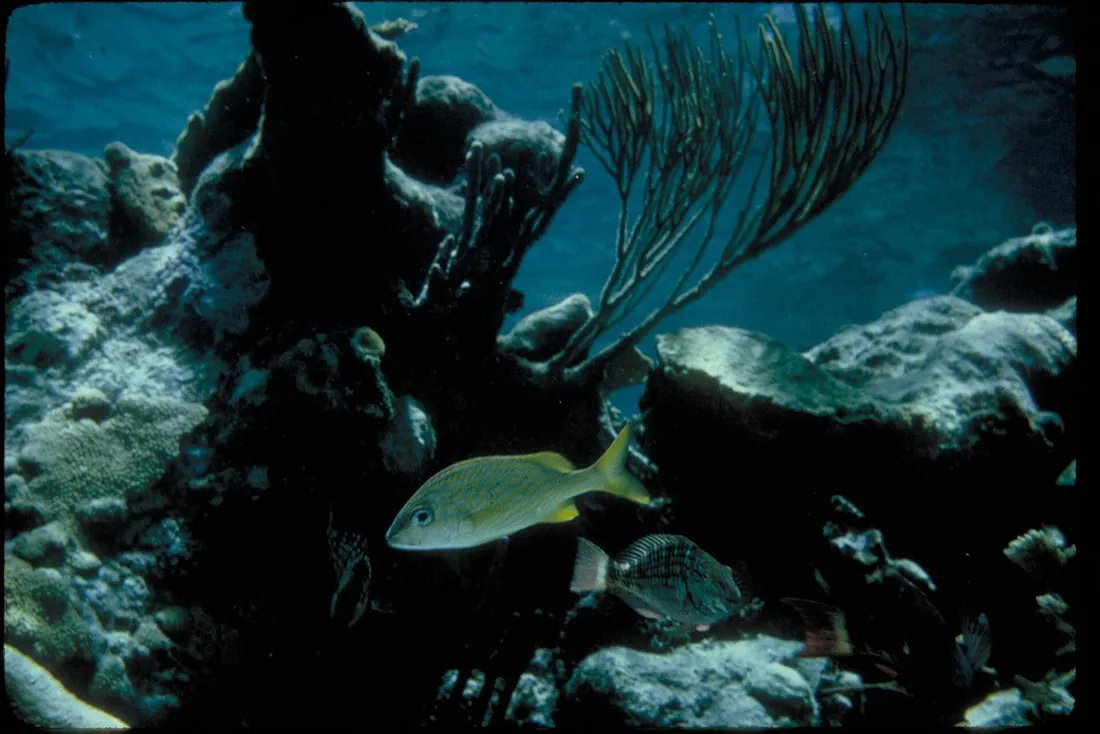
Fair credit: the Florida reef tract is the only living coral barrier reef in the continental United States, and sites like Looe Key and Molasses Reef make pretty dives — reached by charter boat, miles out, on the operator's schedule. The tract has also suffered publicly: decades of bleaching, disease and the 2023 marine heat wave hit it hard, a story Florida's own scientists tell candidly.
St. Croix's signature diving starts where the sand ends. The Cane Bay Wall begins about a hundred yards off the beach and drops toward depths measured in thousands of feet — divers walk in. The Frederiksted Pier is a famous macro dive (seahorses, frogfish, octopus) and the classic night dive, also a walk-in. Buck Island Reef National Monument — a no-take reserve since 1961 — holds a marked underwater snorkel trail behind an elkhorn barrier reef. Shore access changes the whole shape of a dive vacation: no charter schedule, no seasickness, two tanks before lunch and a beach bar after. See diving St. Croix.
Crowds and the feel of the week
The Keys host millions of visitors a year on a strip of islands a few blocks wide. Key West adds cruise calls at Mallory Square, Duval Street's bar crawl, and spring break. Even mid-Keys "quiet" is relative: the road is always there, humming. It is a lively, saturated, distinctly American party corridor — wonderful if that is the assignment.
St. Croix hosts a fraction of that on an island twice as wide as the whole Keys chain is long, with no cruise machine (a handful of calls a week at Frederiksted in season), no strip, and no spring break migration. Dinner in Christiansted is a boardwalk table, not a two-hour wait behind a bachelorette party. The nights are dark enough for stars. The competitive line writes itself: the Keys sell you a margarita with ten thousand neighbors; St. Croix pours the rum where it is actually distilled — Cruzan, at Estate Diamond since 1760 — and you drive home on an open road.
What it costs
Keys lodging is, notoriously, some of the priciest in the United States — Key West room rates in season rival Manhattan, and even mid-chain motels on the highway post numbers that make first-timers laugh out loud. Add boat charters for every good snorkel, resort parking, and Duval-priced dinners, and the drive-to island trip stops being the budget option somewhere around Islamorada.
St. Croix's costs concentrate in one airfare, and then the island is kind to you: direct-booked villas with pools that undercut Key West rooms in season, supermarkets for the kitchen, free beaches, walk-in dives that need no charter, forts that cost a few dollars, and rum tastings priced like souvenirs. We do not print nightly rates — they move with dates — but run the comparison for your own week and watch the gap open. Then look at the homes.
Hurricane season
Both destinations share the Atlantic season, June 1 through November 30, and both have lived real storms. The advice is identical in both places: travel insurance, flexible policies, and attention in the September–October peak. Neither gets an edge here and this page will not pretend otherwise; our hurricane-season guide covers how we handle it.
Month by month, Keys against island
The Keys' calendar is a mainland calendar: winter high season brings the snowbird armada and the year's top room rates; spring break floods Key West in March; summer is hot, cheap and mosquito-thick with the reef at its calmest; September is dead quiet inside hurricane season; and events — Fantasy Fest in late October, lobster mini-season in July — spike the whole chain's occupancy overnight. The water follows the fronts: every winter cold snap that thrills the anglers chills the swimmers, and a January norther can strand a snorkel trip for days.
St. Croix's calendar is a trade-wind calendar: December through April dry, breezy and 83°F with the sea at 79–80; May and June clear and quieter; September through November green, cheap and calm between weather watches, with the same insurance advice the Keys deserve. There is no spring break wave, no event that books the island out, and no cold front that closes the water — the swimming simply never stops. Month by month: when to visit.
The travel day, hour by hour
The Keys' arithmetic depends entirely on where you stop. Miami wheels-down at noon, rental car by 1, and then US-1: Key Largo by 2:30 on a clean run, Islamorada past 3, Marathon 4, Key West closer to 5 — later behind the season's traffic, an accident on the Stretch, or a drawbridge, because there is one road and everyone is on it. The return day starts with the same drive in reverse, padded generously against missing the flight.
The St. Croix arithmetic from that same Miami noon: the 2:40 American nonstop lands at Henry E. Rohlsen around 6 local — or the morning departure lands you poolside by mid-afternoon — with the villa ten to forty minutes from the runway and zero traffic variables in between. Net travel time to the far end of the Keys and to the middle of the Caribbean is nearly identical; only one of them ends at 80-degree turquoise. And the return is a domestic stroll with a $1,600 duty-free allowance the Keys cannot offer because there is nothing to declare from Florida.
Seven days on each
The Keys week, done classically: dive or snorkel charter out of Key Largo, a fish-shack lunch crawl down Islamorada, the Seven Mile Bridge photo, a flats charter or Bahia Honda beach day, then Key West — Duval, Mallory Square sunset, the Hemingway cats, maybe the Dry Tortugas ferry if you booked far enough ahead. Fun, boozy, expensive, and spent substantially in the car and on boats.
The St. Croix week spends its hours in the water instead: Buck Island's snorkel trail Monday; Cane Bay Tuesday, where the reef is a swim, not a charter; Christiansted's fort and boardwalk Wednesday; the East End Thursday — Point Udall, the Jack's and Isaac's trail, The Shoys; Frederiksted Friday with a pier snorkel and Rainbow's sunset; the rainforest and Cruzan Saturday; Sunday wherever the week pointed. No day loses two hours to a highway, and no snorkel costs $80 a head. Plans: the 7-day itinerary.
Getting around once you land
The Keys are one road, and the road is the trip: US-1's mile markers organize every address, every restaurant recommendation and every traffic report, and when the Overseas Highway stops — a crash on the Stretch, a drawbridge, a season-long roadwork zone — the whole island chain stops with it. Key West itself walks and bikes charmingly once you surrender the car to a paid lot (Old Town parking is its own economy), and the mid-Keys demand the car for everything. There is no alternative route to anything; that is the geography's charm and its chokehold.
St. Croix is a road network rather than a road: multiple routes between towns, forty minutes corner to corner, free parking at the beaches and towns, and no single point of failure between you and dinner (the loop). Left-side driving is the one novelty (the guide), traded for never once checking a mile-marker traffic report.
Before you book either
For the Keys: book lodging early and read the rate twice — Key West's seasonal pricing leads the nation and minimum stays appear around events (Fantasy Fest, lobster mini-season, the regattas); check the drive time from your actual key to the things you plan to do daily; price the snorkel and fishing charters into the total since the reef is boat-access only; and watch the winter cold fronts if swimming is the point. Spring break reshapes the lower Keys entirely.
For St. Croix: book the villa direct (the homes), reserve the car, calendar Buck Island and the bio bay ahead in peak weeks. The water needs no charter, the season needs no cold-front watch, and no event reprices the island under you.
The case for St. Croix, point by point
One: an 80-degree January sea against 70-degree cold-snap water with wetsuit loaners. Two: real sand beaches against seawalls and man-made strips. Three: turquoise carbonate shallows against green inshore flats. Four: reef off the beach against reef six miles out by charter. Five: villa economics against the nation's steepest motel market. Six: a road network against one road's traffic report. Seven: two historic towns and three distilleries against one bar street's t-shirt economy. Eight: the $1,600 duty-free allowance — a perk Florida cannot offer at all. Nine: no spring break, no Fantasy Fest repricing, no cruise-crowd Tuesdays. Ten: it is actually the Caribbean — the thing the Keys' margarita glasses only paint. The drive is a great American road trip; the island is a great American island. They were never the same product.
Who should pick which
Pick the Keys if: the road trip is the point; you fish flats or offshore seriously; the crew wants Duval Street's volume; you own a boat or trailer one; or you live within driving distance and the weekend is short. Pick St. Croix if: the trip is about swimming, snorkeling or diving (the water decides it); you want a villa with a pool for less than a Key West motel; the group includes kids who need calm, warm shallows; you want beaches that are sand rather than seawall; or the week deserves an island that feels away — the Keys never stop feeling like Florida, which is their charm and their ceiling. Snowbirds splitting winters do both: the Keys for the drivable weekends, St. Croix for the real week.
When the Keys are the right call
Anglers, first: the flats fishing (bonefish, permit, tarpon) is famous, and if the trip is about a skiff and a guide, the Keys win outright. Road-trippers who want to leave Miami after breakfast and sleep over the water by sunset: that convenience is real. Divers with a wreck list (the Vandenberg, the Spiegel Grove) will find them there. And if your crew's ideal night is loud, walkable and open until 4 a.m., Duval Street was built for you. None of those is a beach-and-reef villa week — which is the trip this comparison is actually about.
A rainy day on each
The Keys handle rain with bars and museums in that order: Hemingway's house and the little shipwreck and lighthouse museums in Key West, the turtle hospital in Marathon, the History of Diving museum in Islamorada — a quirky, likable bench — and then Duval, which never needed sunshine. St. Croix answers with its own full circuit: Fort Christiansvaern's vaults, the Whim estate museum, the Apothecary Hall, Frederiksted's arts center, and a distillery trail with a working 1760 house at its head. Call the wet-day column even and note which island's water is worth the wait when the sun returns.
If you choose the Keys anyway
Then drive it like a local: leave Miami before eight or after ten, never on a Friday afternoon, and check the mile-marker traffic feeds like weather. Stay mid-Keys (Islamorada or Marathon) to cut Key West's prices and reach both ends; book the reef snorkel for the first calm morning, not the last day; and pick one splurge charter — the flats with a guide teach more about the Keys than any bar crawl. In Key West, walk or bike everything, do the Hemingway house early, and treat Duval as a nightcap rather than a base. Bahia Honda's beach is the chain's best natural sand — go midweek. Hold hurricane-season plans loosely, watch lobster mini-season dates unless you enjoy crowds with tickets, and budget the lodging line first: it is the trip's whole economics.
Where you would stay on St. Croix
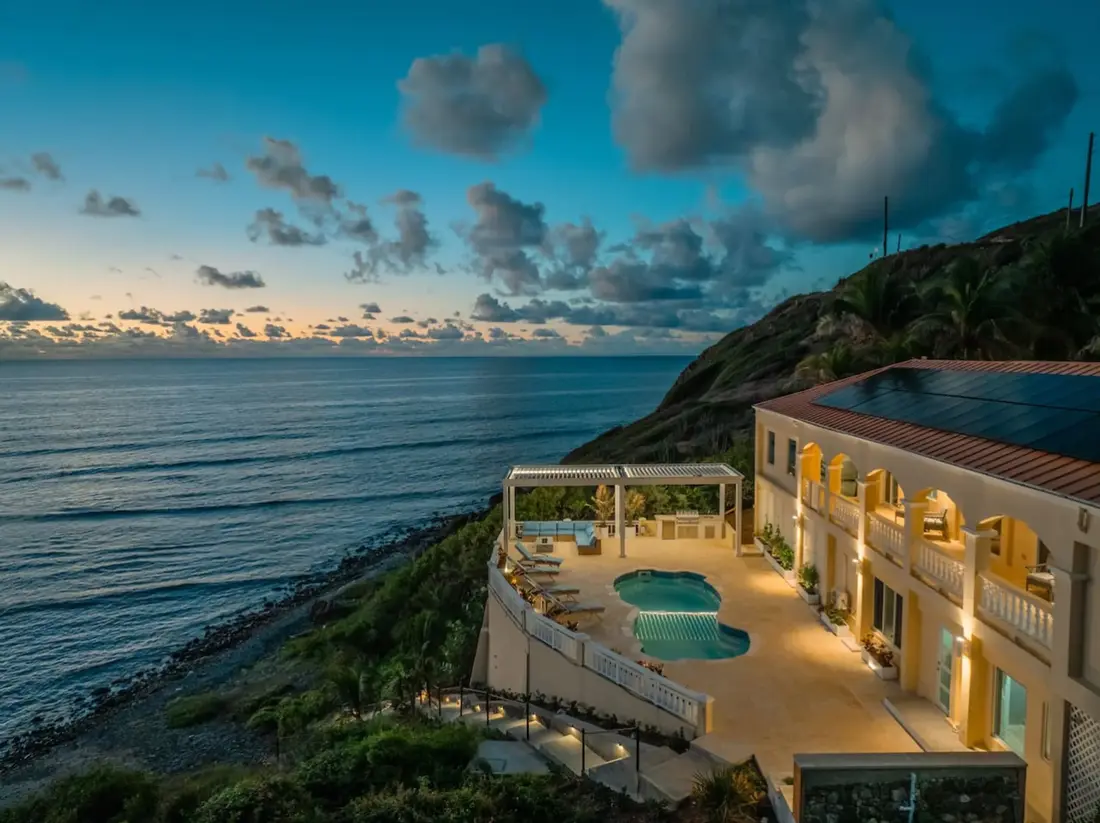
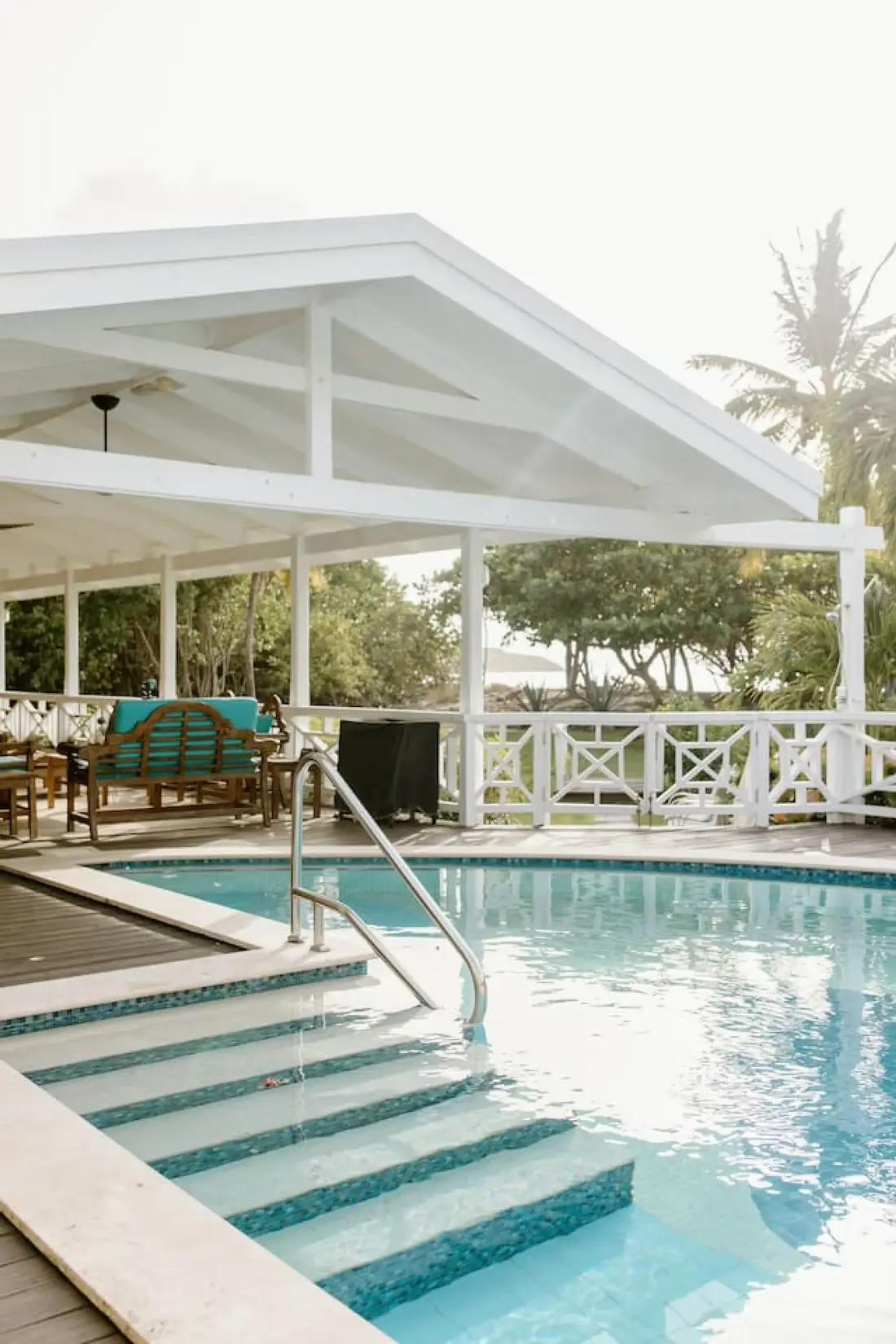
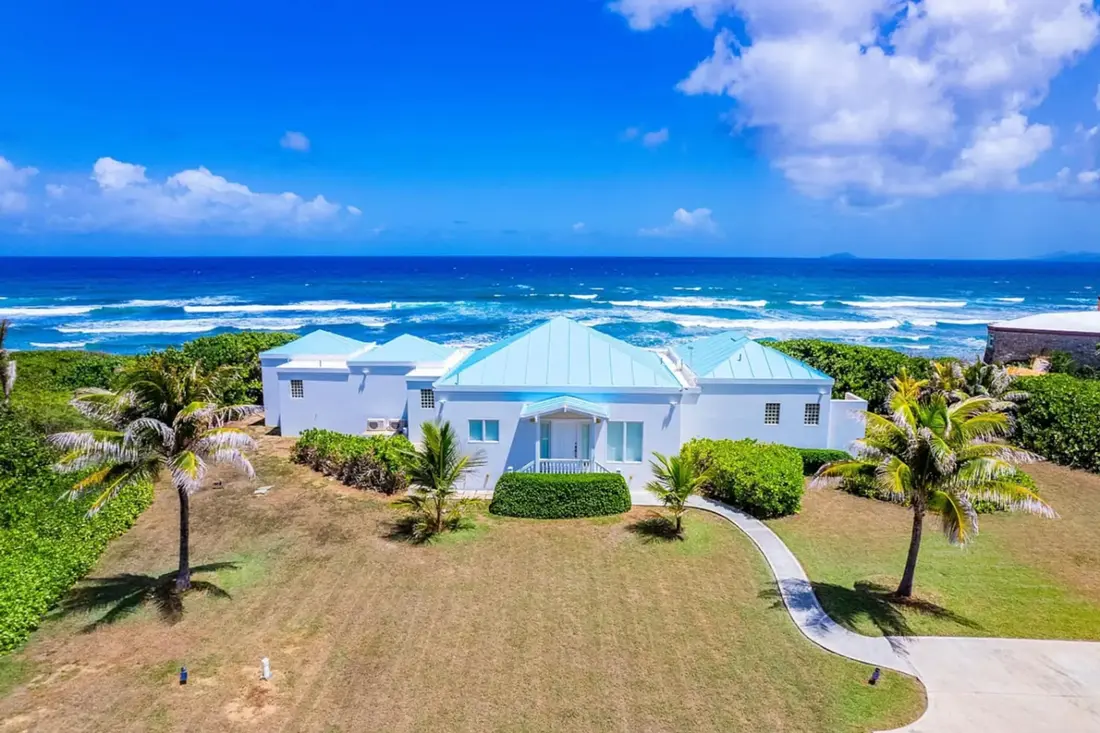
The Caribbean answer sleeps better per dollar: our direct-booked homes with Sterling Point's on-island management — Shoy's Beach House on The Shoys' guarded sand, East End villas (The Cerulean among them) facing Buck Island from private pools, Christiansted condos near the boardwalk, west-end sunset stays. A full kitchen and one Plaza Extra run beat a week of conch-fritter menus; the pool needs no tide chart; and the nightly rate undercuts a Key West king room in season while sleeping the whole family. Couples: homes for two; groups to twelve: the family collection. The roster: the homes.
How this page was made
Series rules: sea temperatures per NOAA data and published normals, stated as ranges; the Keys' beach geology and man-made sand per Florida's own state references; reef status per NOAA sanctuary science; lodging-price standing per years of published market data, stated as the pattern it is. Drive times reflect the Overseas Highway's posted geography and its documented congestion. The Keys' real charms — the road, the fishing, the bars, the quirk — are conceded with affection. Our bias: the homes we manage on St. Croix, disclosed throughout. Check the water-temperature charts first; they end most arguments.
The bottom line
The Keys are a beloved American road trip wearing an island costume: few real beaches, offshore reef, cool green winter water, and the country's priciest motel rooms. St. Croix is the American Caribbean without the costume: 80-degree January sea, turquoise over white sand, reef off the beach, two historic towns, and a villa that costs less than a Key West king room. Same passport — none needed. One more flight, a different world. The homes are here.
Elsewhere in this series
This page is one of twenty-six. If you are still shopping the map, the verdicts nearest this comparison run as follows — each links to the full page with its own sources:
St. Croix vs Puerto Rico — Puerto Rico is a country-sized trip with city energy. St. Croix is the island-sized version: 41,000 people, no traffic, same flag.
St. Croix vs Vieques & Culebra — Same quiet, same flag. St. Croix has the jets, the villas and the services; the little islands have the ferry line.
St. Croix vs Hawaii — Hawaii is magnificent and eleven hours away. St. Croix is the American tropics you can reach by lunch, with warmer, calmer, bluer water.
The complete set, grouped by region and passport rules, lives at St. Croix vs other destinations.
Which home fits your group
If St. Croix wins your comparison, the homes are the easy part. Groups of eight to twelve settle into the family collection; couples take a home for two; anyone who wants sand at the door starts with beachfront. Every one is managed from the island by Sterling Point and booked direct — tell us the dates and the headcount and we will point you at the one that fits.
Two practical notes that surprise first-time villa bookers. Direct booking means the rate is the rate: no platform service fees, no resort fees, and the people answering questions are the same Sterling Point team that manages the houses on the island. And every home runs a full kitchen — one run to Plaza Extra or Seaside Market on the drive from the airport covers the week, which is where a villa quietly beats a resort bill before the first beach day. How the booking works, and what it does not mean, is spelled out at book direct.
Who wrote this
SP Vacations is the vacation-rental division of Sterling Point Real Estate, a licensed real-estate operation based on St. Croix in the U.S. Virgin Islands. The team lives and works on the island it writes about: the homes in the villa collection are inspected, cleaned and managed locally, and the person who answers a booking question is on St. Croix, not in a call center three time zones away. That is the vantage point behind every page in this series — and the reason the series exists at all, since most of the destinations compared here are places our guests weighed before choosing this island.
Two standing practices shape what you read. First, the pricing wall: nightly rates and availability for the homes live only on the booking pages, never in articles, so nothing here goes stale or oversells. Second, the sourcing rule: safety statements cite the U.S. State Department, customs figures cite CBP, park facts cite the National Park Service, and anything that changes — advisories, schedules, hours — carries its checked date and a pointer to the primary source. Where a rival destination wins a category, the page says so, because a comparison that concedes nothing persuades nobody. Questions, dates or a villa to match a group — the island team is here, or call 340-205-3929.
Questions people ask
What is the Dry Tortugas?
Fort Jefferson's island fortress seventy miles west of Key West, reached by daily ferry or seaplane — the Keys' best history-and-snorkel day and a booked-out one. St. Croix's fort-and-snorkel day needs no ferry: Fort Frederik stands beside the pier's famous dive.
Is Key lime pie actually from the Keys?
So the Keys insist, and the slice is mandatory either way. St. Croix's table answers with johnnycakes, pate and rum cake — and a distillery pouring the rum. See coffee and sweets.
Is St. Croix warmer than the Florida Keys in winter?
The sea is, meaningfully. St. Croix's water sits around 79–80°F in January; Keys inshore water commonly drops to around 70°F in cold snaps, which is why winter snorkel boats carry wetsuits. Air temperatures follow the same pattern — St. Croix winter days run about 83°F.
Do the Florida Keys have good beaches?
Few natural ones — the Keys are coral islands whose famous beaches (Smathers, Sombrero) are man-made and re-sanded, with much of the shoreline seawall and mangrove. St. Croix has a full roster of natural sand beaches, including two undeveloped miles at Sandy Point National Wildlife Refuge.
Is the water bluer in St. Croix than the Keys?
Yes, and it is geology rather than luck: St. Croix's shallow carbonate shelf — white calcium-carbonate sand under reef-protected water — produces true Caribbean turquoise. Keys inshore water runs green over turtle-grass flats; the clear water sits at the reef line, miles offshore by boat.
Which is cheaper, the Keys or St. Croix?
On lodging, St. Croix — Key West posts some of the highest room rates in the United States in season, and Keys snorkeling adds charter fees that St. Croix's shore-entry reef doesn't require. Airfare favors the Keys for Floridians; from most of the East Coast, the Miami–STX nonstop closes that gap in three hours.
Do I need a passport for St. Croix?
No — like Florida, it's the United States. Government ID for the flight, U.S. dollars, U.S. phones, no foreign customs. Unlike Florida, your souvenirs fly home under the USVI's $1,600 per-person duty-free allowance and the five-liter rum rule. See no passport needed.
Is the diving better in St. Croix or the Keys?
The Keys have the continental U.S.'s only barrier reef and famous wrecks, all by charter boat, and the tract has suffered well-documented bleaching. St. Croix's Cane Bay Wall and Frederiksted Pier are world-known shore dives — walk in from the sand — plus Buck Island's protected snorkel trail. For ease and health of reef, St. Croix.
When is the best time for the Keys or St. Croix?
The Keys peak with snowbird winter and spring break, spike around Fantasy Fest and lobster mini-season, and go quiet in September. St. Croix's high season is December–April with no spring-break wave, and its water stays swimmable and warm every month — no cold fronts close the beach.
Can you snorkel from shore in the Keys?
Mostly no — the living reef sits miles offshore, so snorkeling means charter boats on schedules; inshore water is turtle-grass flats. On St. Croix the Cane Bay reef shelf, the Frederiksted Pier and half a dozen beaches snorkel straight off the sand.
Is Key West family-friendly?
Parts of it, with caveats its own tourism board acknowledges — Duval Street's bar culture is the town's engine, and lodging prices punish families needing two rooms. A St. Croix villa gives a family a pool, a kitchen and calm shallows at Chenay Bay for less. See traveling with kids.
How long does it take to get to St. Croix?
About three hours nonstop from Miami — roughly the drive time from Miami to Islamorada. Nonstops also run from Charlotte, Atlanta, Newark and Chicago (seasonal), verified August 2026. See getting here.
In this comparison
St. Croix at a glance
- U.S. territory — no passport for U.S. citizens
- Nonstops from Miami, Fort Lauderdale, Charlotte, Atlanta, Newark and Chicago
- U.S. dollars, U.S. phone plans, no foreign customs
- $1,600 duty-free allowance home (double the standard $800)
- 84 square miles — the largest U.S. Virgin Island
More comparisons
- St. Croix vs St. Thomas
- St. Croix vs St. John
- St. Croix vs Puerto Rico
- St. Croix vs Vieques & Culebra
- St. Croix vs Hawaii
- St. Croix vs the British Virgin Islands
- St. Croix vs Turks & Caicos
- St. Croix vs Anguilla
- St. Croix vs St. Barts
- St. Croix vs St. Martin
- St. Croix vs Antigua
- St. Croix vs St. Kitts & Nevis
- St. Croix vs St. Lucia
- St. Croix vs Barbados
Sources
Sea temperatures per NOAA buoy and published climate normals, stated as typical ranges; Keys beach origins and reef status per Florida state and NOAA sanctuary publications; Shawshank claim hedged as widely reported; St. Croix figures from our sourced island reference. Flights verified August 2026. Lodging comparisons are patterns — verify on your dates.
St. Croix vs the Florida Keys
The Keys are a road trip with margaritas. St. Croix is the Caribbean: warmer winter water, real turquoise, and lodging that costs less than Key West.