
Flying private to St. Croix
A 10,002-foot runway, U.S. Customs on the field, and one local team that meets the car at the door. What it really takes to arrive by private jet, and the homes to base the trip on.
This page is about one thing: what it actually takes to arrive on St. Croix by private jet, and how to turn that arrival into a whole-home stay booked direct. There are no promises about the flight itself here, only the useful parts: the runway, the airport, the customs desk, the real flying times from the airports our guests use most, and the plain part about cost. St. Croix is U.S. soil, so for a U.S. citizen the trip is closer to a domestic hop than an overseas one.
Why arriving by private jet changes a St. Croix trip
St. Croix has one commercial airport and a thin schedule of nonstop airline service. Fly the airlines and you often route through San Juan, wait for a connection, and land on someone else's clock. A private aircraft removes the connection and lets you pick the day and the hour. For a family gathering, a milestone birthday, or a quiet working trip, that control is most of the point.
The other advantage is the group. A whole-home rental works best when everyone lands together, and a chartered jet lets a party of six or ten arrive on one aircraft with the bags, the golf clubs, the case of wine, and the car seats. There is no baggage carousel and no scramble to reunite a split party at the far end.
There is a discretion angle too, which is why we hear from advisors and family offices. A private arrival is quiet, the ground time at the airport is short, and the whole trip runs through one local team rather than a chain of counters and desks. If you are weighing St. Croix for a client trip or a family base, the companion page for family offices and their advisors covers the tax and residency picture; this one covers the flying.
None of this requires you to own an aircraft. Most guests charter, and the sections below walk through the airport, the fixed-base operator that meets the jet, the realistic times from New York and Florida, and how the trip ends at the door of the home. When you are ready, you book the home direct with us and we handle the ground side.
Henry E. Rohlsen Airport and the name it carries
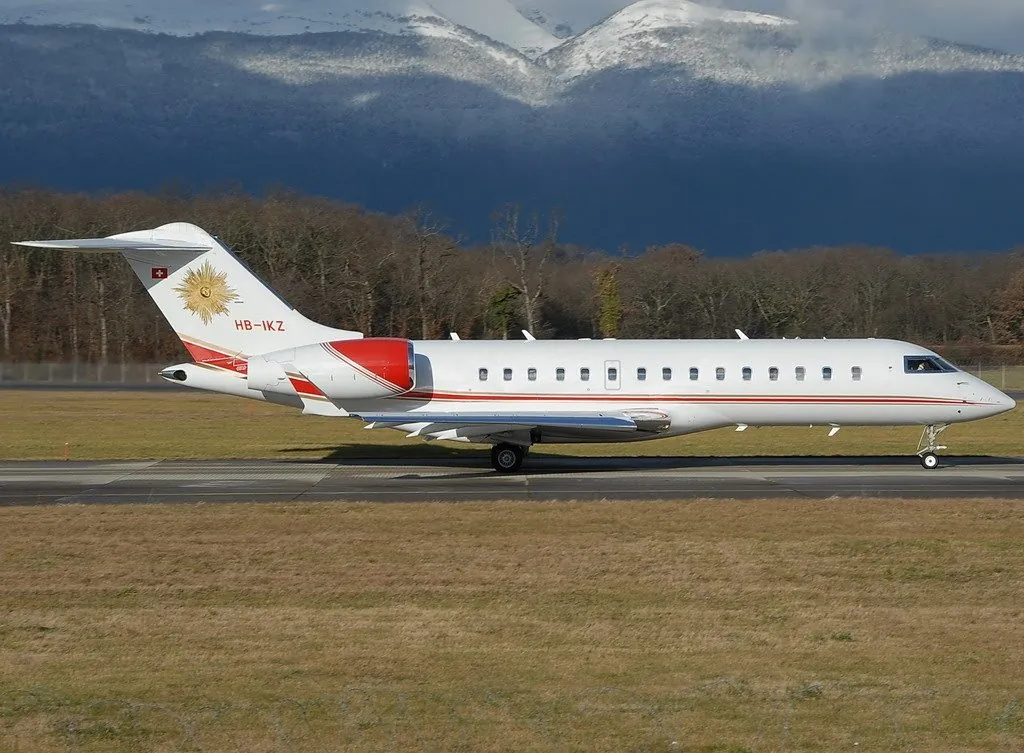
Private and commercial flights land at Henry E. Rohlsen Airport, near Kingshill in the middle of the island. Its codes are STX for travelers and TISX for pilots. It is a full U.S. airport with a control tower, a commercial terminal, and a separate general-aviation side where private aircraft are handled.
The airport was earlier called Alexander Hamilton International Airport. Hamilton spent part of his youth on St. Croix, so the older name was a local tie, not a borrowed one. It was renamed in 1996 for Henry E. Rohlsen, who was born on the island and served as one of the Tuskegee Airmen, the group of Black military pilots trained during the Second World War. It is one of the few U.S. airports named for a hometown aviator, and Crucians tend to know the story.
For a traveler, the practical takeaways are simple. This is a real port of entry with U.S. Customs and Border Protection on site, not a small strip. It sits low and central, so no home on the island is far from it. And it has been built and lengthened to take large aircraft, which is what makes the private-jet math easy. If you want the wider picture of how people reach the island by air, ferry, and seaplane, our getting-here guide lays it out; the rest of this page stays with the jet.

What a 10,002-foot runway means for your aircraft
Rohlsen has one asphalt runway, oriented 10/28, about 10,002 feet long and 150 feet wide, at a field elevation near 74 feet. Those numbers matter more than they look. Runway length is what limits a heavy jet on a hot day with full fuel, and 10,000 feet is generous even by mainland standards. A low field elevation helps too, because thinner air at altitude lengthens takeoff and landing rolls. Near sea level, in the Caribbean heat, the runway still has plenty of margin.
The proof is in what has actually used it. The airport handles aircraft up to Boeing 747 size. A 747 flew relief into St. Croix after Hurricane Marilyn in 1995, and an Antonov An-124 — one of the largest cargo aircraft in the world — landed here in 2018. If the field can take those, it can take any business jet or airliner that would ever serve the island.
So the question guests sometimes ask first — will the runway handle my jet — has a short answer. Yes, with room to spare. There are no runway-length or weight concerns for a Phenom, a Citation, a Challenger, a Gulfstream, a Global, or a Falcon. The variables that actually shape your trip are range and routing from your departure city, and the ground handling once you land, which are the subjects of the next sections. The runway is the settled part.
Bohlke International Aviation, the FBO that meets you
On the private side of the field you are handled by a fixed-base operator, or FBO — the private terminal that fuels the aircraft, parks it, and looks after the crew and passengers. On St. Croix that is Bohlke International Aviation, a family business that has served Caribbean aviation since 1959. It is both an FBO and a Part 135 charter operator, so it does this every day, not occasionally.
Bohlke was voted Best Caribbean FBO in the 2024 Pro Pilot PRASE survey, an annual poll of professional pilots — a useful signal when you are trusting a ramp you have never seen. It runs more than 43,000 square feet of covered hangar, sells both Jet A and Avgas, and handles quick turns, catering, U.S. Customs clearance, concierge requests, rental and crew cars, and medevac when it is needed.
What that means on the day: your jet taxis to the Bohlke ramp rather than the commercial gates, the crew is looked after, customs is coordinated on site, and a car can be waiting a short walk from the aircraft. Because Bohlke clears customs for arriving aircraft, the paperwork side is not something you manage yourself. It is the difference between an airport and a private arrival.
Bohlke also charters, so if you do not already have an operator, it is one place to price a trip. We are a rental company, not a broker, so we will point you to Bohlke or a Part 135 operator rather than quote a flight ourselves. What we handle is everything after the ramp — the car, the home, and the week.
Flying down from the New York area
For most Northeast trips the departure point is Teterboro (KTEB) in New Jersey, the classic general-aviation airport for the New York area. From Teterboro to St. Croix is about 1,450 nautical miles on a great-circle line, which works out to roughly 3 hours 40 minutes in the air. Treat that as a planning figure: the real time moves with the aircraft, the air-traffic routing, and the winds on the day, which in winter can add or subtract meaningfully.
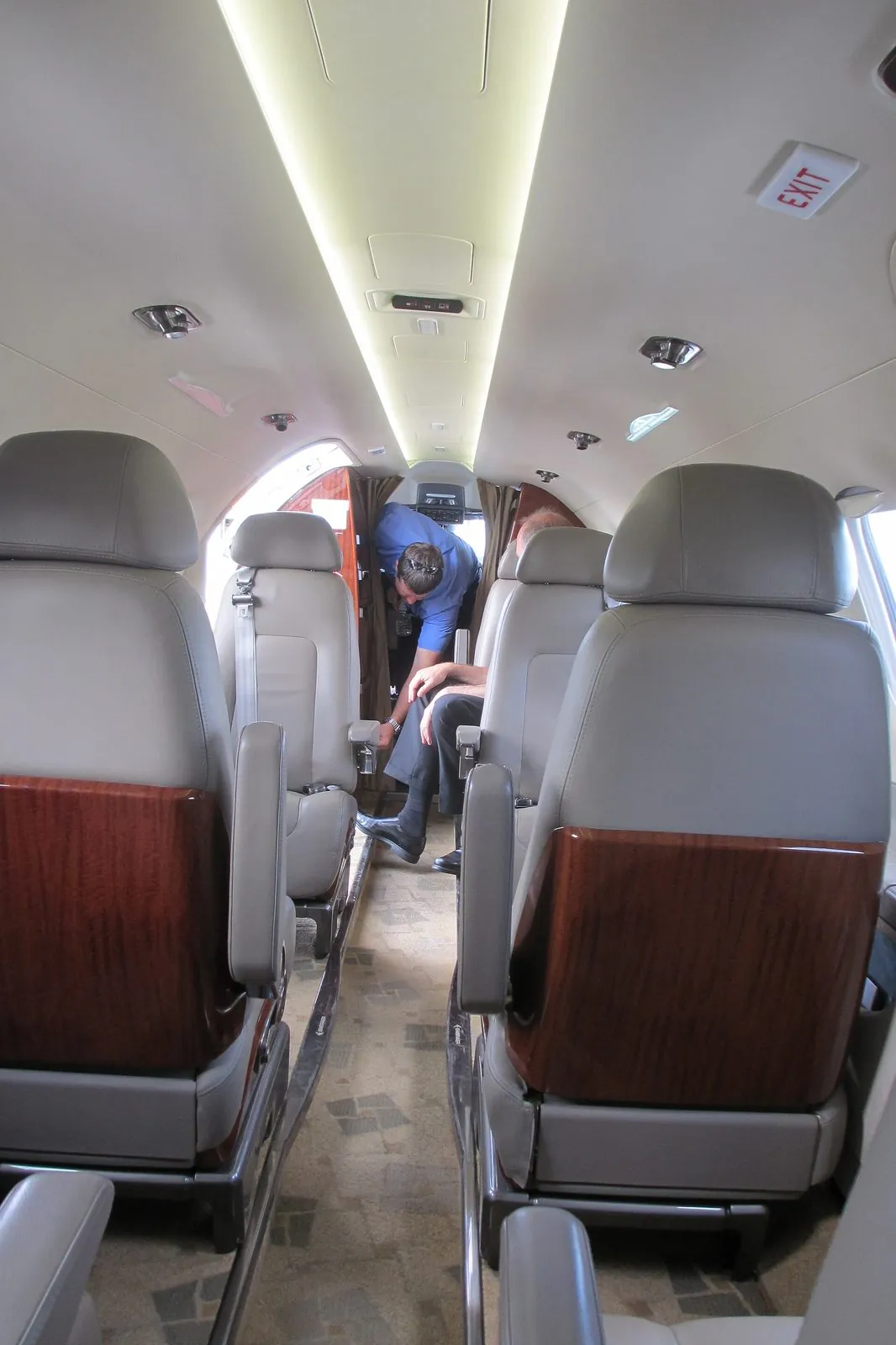
At that distance the aircraft class is the thing to get right. A super-midsize or large-cabin jet makes the run comfortably nonstop — the sort of aircraft people mean by a Challenger 300 or 350, a Praetor 600, a Gulfstream, a Bombardier Global, or a Dassault Falcon. These are typical manufacturer capabilities; your operator will confirm what a given tail can do on your date.
A light jet from the Northeast is where it gets case-by-case. Some can make roughly 1,450 nautical miles nonstop and some cannot, and the answer is that it depends on how many people and bags are aboard, the reserves the operator carries, and the winds. As an illustration, a Phenom 100E is quoted with a range near 1,970 nautical miles, which is enough for the Northeast run in principle — but even that figure is payload-dependent and needs verifying for the actual trip.
If a light jet cannot make it nonstop, the fix is a short fuel stop, usually San Juan or somewhere in South Florida, covered a little further down. Three hours forty nonstop is the target; a stop adds ground time but rarely more than an hour.
Teterboro is the default, but not the only New York-area choice — White Plains and Morristown serve the same purpose, and an operator may prefer one based on where the aircraft is based. In winter, strong headwinds on the southbound leg can stretch the airborne time, while a tailwind shortens the trip home; that is normal, and the crew folds it into the fuel plan. The distance stays about 1,450 nautical miles whichever field you use.

Tell us the dates and the group; we will suggest the right home and handle the rest through one local team — no third-party booking desk.
See the homesTalk to usFlying up from South Florida
South Florida is the most common jumping-off point for St. Croix, and the numbers are friendlier than from the Northeast. From Opa-locka (KOPF), just north of Miami, it is about 990 to 1,000 nautical miles, roughly 2 hours 50 minutes in the air. Fort Lauderdale Executive (KFXE) is close to the same, on the order of 990 to 1,050 nautical miles. As always, treat the times as great-circle estimates that winds and routing will nudge.
At around 1,000 nautical miles the aircraft question mostly disappears. Most light jets make the run nonstop — a Phenom 300 or a Citation in the CJ family are the usual examples — and midsize and larger aircraft certainly do. That widens the field of available tails and, often, lowers the price, because you are not forced up into a large-cabin jet purely for range.
This is why a Florida connection can change the shape of a whole trip. A family scattered across the Northeast and the Midwest sometimes gathers in Florida first, then makes the shorter, lighter-jet hop to St. Croix together. It is also why empty-leg availability tends to be better on the Florida run, since there is more private traffic between South Florida and the Caribbean than between New York and the islands.
Whichever airport you leave from, the arrival is the same: Rohlsen, the Bohlke ramp, and a car we arrange. If several parties are coming from different cities, tell us the plan and we will line up the ground side so nobody is waiting around. The homes built for that kind of group are covered later, and you can browse them anytime under the full portfolio.

The San Juan hop and the fuel-stop question
San Juan, Puerto Rico is the region's main connecting hub, and it sits about 40 nautical miles from St. Croix — a short hop of well under half an hour in a jet. For airline travelers it is the usual connecting point. For private flights it plays a different but related role: the classic technical stop.
A tech stop is a quick landing purely for fuel. If a light jet cannot make the Northeast run nonstop, San Juan (SJU / TJSJ) is a natural place to top off before the final short leg to Rohlsen, and South Florida airports serve the same purpose earlier in the route. The stop adds ground time — commonly on the order of thirty to forty-five minutes — but it is often the difference between chartering a smaller, less expensive aircraft and being pushed into a larger one for range alone.
There is a planning point worth flagging. If your routing includes a stop in San Juan or another Puerto Rico or U.S. Virgin Islands point, you are moving within U.S. jurisdiction, which keeps the customs picture simple for U.S. citizens. Your operator will handle the specifics; the takeaway is that a fuel stop here does not turn a domestic-feeling trip into an international one.
For most guests the decision is a straightforward trade. Nonstop is faster and cleaner; a tech stop can be cheaper. Which one wins depends on the group size, the departure city, and what tails are available on your dates. If you are also weighing the airline route with a San Juan connection, our guide to getting to St. Croix covers that side.
| From | Distance | Typical time |
|---|---|---|
| Teterboro (KTEB) | ~1,450 nm | ~3h 40m |
| Opa-locka (KOPF) | ~990 nm | ~2h 50m |
| San Juan (SJU) | ~40 nm | short hop |
Which jets make the run nonstop
The right way to talk about range is to hedge it, because published numbers are best-case. A manufacturer's range figure assumes favorable conditions and a modest load. Add passengers, bags, headwinds, and the fuel reserves a careful operator insists on, and real-world range comes down, sometimes by a wide margin. So read the guidance below as typical classes, not promises, and confirm every trip with your operator.
From South Florida, at roughly 1,000 nautical miles, most light jets make St. Croix nonstop. The Phenom 300 and the Citation CJ series are the aircraft people usually name in this bracket, and anything midsize or larger has range to spare. This is the easy case, and it is why the Florida run opens up the most choices.
From the New York area, at roughly 1,450 nautical miles, you want a super-midsize or large-cabin jet for a comfortable nonstop — a Challenger 300 or 350, a Praetor 600, a Gulfstream, a Bombardier Global, or a Dassault Falcon. A light jet from the Northeast is the borderline case: some can make it, some cannot, and a fuel stop is a common and unremarkable solution when they cannot.
The one firm rule is that St. Croix itself never limits you. The 10,002-foot runway takes anything on this list and much larger, so the only real constraint is getting the aircraft there, and that is a range-and-routing conversation with your charter operator, not an airport problem.
Arriving at a U.S. port of entry, no passport required
Here is the part that surprises first-time visitors. St. Croix is part of the U.S. Virgin Islands, an unincorporated U.S. territory, so for a U.S. citizen arriving from the mainland it is effectively a domestic arrival. There is no foreign immigration line, no passport requirement, and the currency is the U.S. dollar. You are on U.S. soil under U.S. federal law the whole time.
The airport is a genuine port of entry, with U.S. Customs and Border Protection on the field. On the private side, Bohlke coordinates the customs clearance for arriving aircraft, so you are not navigating that process yourself — the crew and the FBO handle it while you are still finishing your descent paperwork. In practice, a U.S. citizen steps off the aircraft, clears quickly, and is in a car within minutes.
Two caveats. First, a passport is not required for U.S. citizens, but many people bring one anyway, and it is the cleanest form of identification if any question ever comes up. Second, if you are not a U.S. citizen, or your flight originates from a foreign point, normal customs and immigration rules apply, so carry the documents your citizenship and routing require. Your operator and Bohlke will advise on the specifics for a given trip.
The wider point is why St. Croix appeals to a certain traveler in the first place: a Caribbean island that runs on the U.S. dollar, U.S. law, and U.S. courts, reached without leaving the country. Our short explainer on why no passport is needed covers the documents question in more detail, and the family-offices page covers why that U.S.-soil status matters beyond the airport.
After you land at Rohlsen
- Taxi to the Bohlke ramp on the general-aviation side, not the main commercial terminal.
- Clear U.S. Customs and Border Protection with Bohlke coordinating the paperwork
- U.S. citizens from the mainland need no passport.
- Meet the car the Sterling Point team arranged and load bags, gear, and any provisions.
- Drive to the home — about fifteen to forty minutes depending on where on the island it sits.
The drive from the ramp to your home
St. Croix is a small island, so no home is a long way from the airport. Rohlsen sits low and central, and the drive to most homes runs about 25 to 40 minutes. Christiansted, the historic Danish harbor town on the north shore, is roughly 15 to 20 minutes away. The East End, where many of the private-pool and ocean-view homes sit, is about 30 to 40. Frederiksted and the west end are the closest, on the order of 10 to 15 minutes.
Those are driving estimates on ordinary traffic, and St. Croix drives on the left — a Danish and British inheritance that catches first-timers off guard, though the roads are quiet and the distances short. Most guests are glad to have the car handled for them on arrival day. The Sterling Point team can arrange a vehicle so it is waiting at the FBO, and can stock the kitchen so the first meal does not mean a supermarket run after a travel day.
Where you land in the day matters for where you should stay. If you want to walk to dinner your first night, a home near Christiansted keeps the drive short. If the point of the trip is a private pool and a quiet stretch of coast, the East End homes are worth the extra ten minutes. You can see how the collections sit around the island on the map.
If anyone in the group wants their own wheels for day trips, we can help there too, and our guidance on renting a car explains the left-side driving, the fuel, and the practicalities. Either way, arrival day is arranged so the trip starts at the front door, not at a rental counter.


Time zone, trade winds, and flying weather
St. Croix keeps Atlantic Standard Time all year and does not observe daylight saving. That is a small but useful thing to know when you schedule a departure or a pickup: in the U.S. winter the island runs an hour ahead of Eastern time, and in the U.S. summer it matches Eastern. There is no clock change to trip you up on either end of the trip.
The everyday weather is defined by the trade winds, the steady easterly flow that moderates the Caribbean heat and keeps the air moving. For flying, the pattern that matters most is the afternoon build-up: warm, humid days often produce brief showers or a passing cell in the afternoon, then clear again. These are usually short and local rather than all-day systems, and crews plan around them as a matter of routine.
None of this restricts the aircraft that serve St. Croix. The runway is long, the field is low, and the tower and instrument approaches are there for the days when a shower is sitting over the field. A brief hold or a slightly adjusted approach is the worst most trips see. What the weather does shape is the experience on the ground — mornings tend to be the clearest, calmest part of the day, which is worth knowing if you are planning a Buck Island sail or an early departure.
For a month-by-month sense of temperatures, rainfall, and what the island is like at different times of year, the seasonal notes in our guidebooks go deeper than a flying page should. The short version: St. Croix is a year-round destination, and the weather rarely dictates the jet.
Hurricane season and planning the calendar
The Atlantic hurricane season runs from June through November, and it is the one calendar factor worth planning around. For most of that stretch the weather is ordinary Caribbean summer — hot, bright, with the usual afternoon showers — and named storms are the exception, not the rule. But when a system does form, it can reshape a week, so trips in those months reward a little flexibility and an eye on the forecast in the days before departure.
Practically, that means a few sensible habits rather than avoidance. Watch the tropical outlook as your dates approach, keep some slack in the schedule, and talk to your operator about their weather policy. Charter crews track developing systems closely and will move a departure earlier or later to stay well clear. The island itself is well used to the season and returns to normal quickly after a passing system.
The upside of the shoulder and summer months is a quieter island and easier availability across the portfolio. If your dates are flexible, those months can be the best value of the year, and the homes are the same homes. Winter — roughly December through April — is the peak, drier, and busier season, and books furthest ahead.

What a charter costs, and where empty legs help
We will be direct about price because there is no single number to give. Charter is quoted per trip, driven mainly by the aircraft class and the routing. A light jet from Florida and a large-cabin jet from New York are simply different products at different price points, and the same route can vary with the season, the day of the week, and how far ahead you book. Anyone who quotes you a flat figure for private aviation without those details is guessing.
The one lever that reliably lowers cost is the empty leg. Charter aircraft frequently have to reposition without passengers — flying home after a one-way drop, or moving to pick up the next client — and operators discount those repositioning flights to avoid flying them empty. If your dates and times are flexible, an empty leg into or out of St. Croix can cut the cost meaningfully. The trade-off is that you fit the aircraft's schedule rather than the other way around.
The right way to price a trip is to get a real quote from a Part 135 operator — the certificate that covers on-demand charter in the U.S. — or from Bohlke, which is a Part 135 operator itself and knows the St. Croix ramp intimately. Give them your group size, your dates, and your departure city, and they can compare a nonstop against a routing with a fuel stop and show you the difference in real dollars.
To be clear about our role: SP Vacations rents homes. We do not sell flights, take a cut of them, or quote prices for them. We will happily point you to Bohlke or an operator and then handle everything from the ramp onward. The getting-here guide keeps a wider view of the travel options if you are still comparing.
Which homes suit a group that flies in together
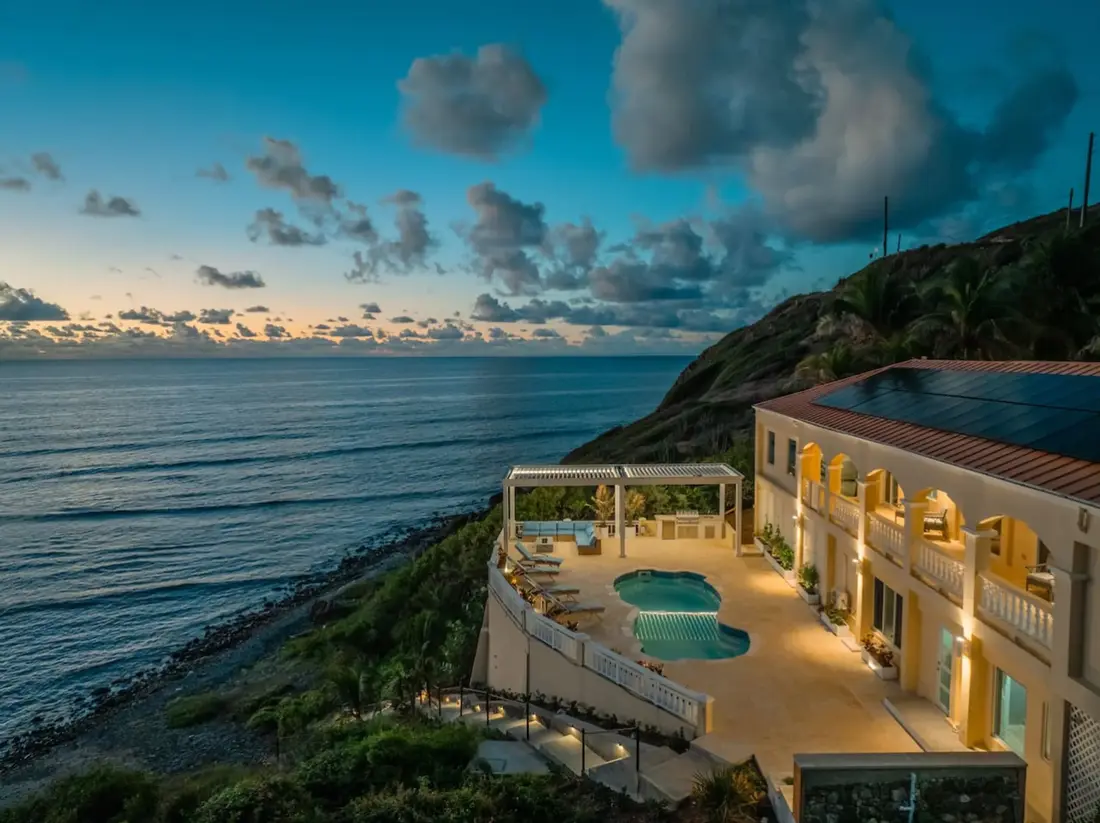
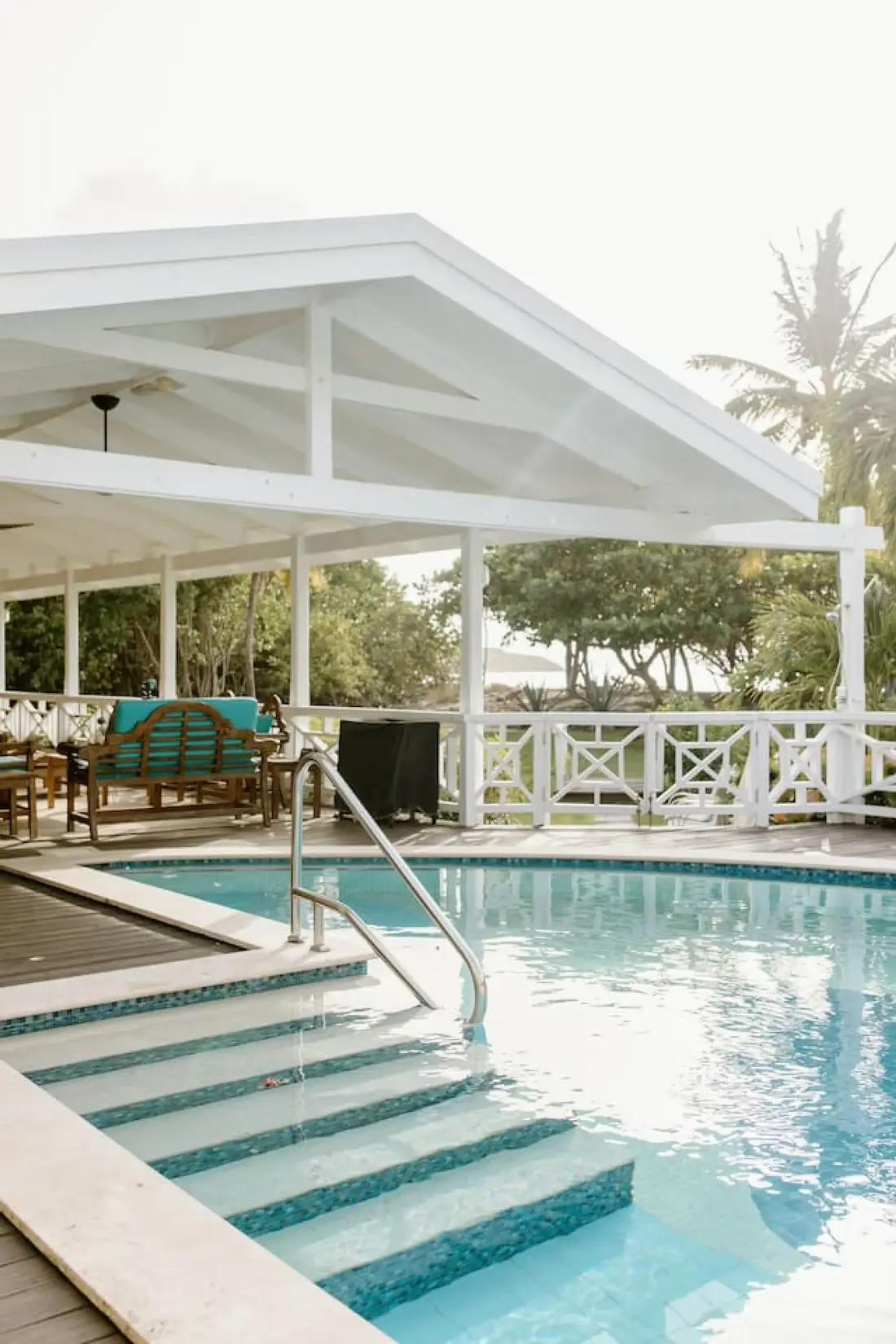
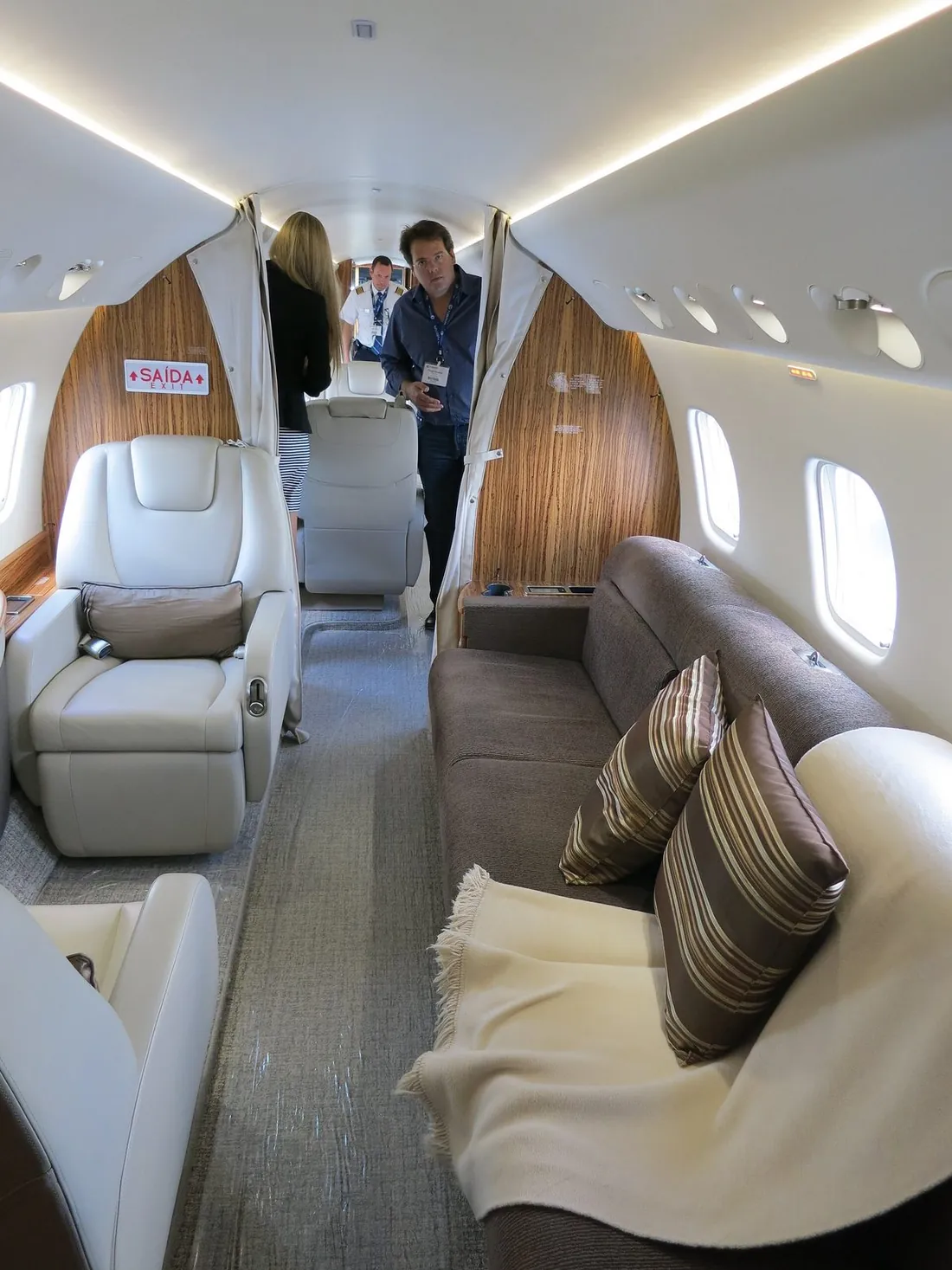
The reason people fly private to a small island is usually the same reason they want a whole home rather than a hotel: the group. When a party of eight or twelve arrives together on one aircraft, a single house that sleeps all of them beats a block of hotel rooms. Our homes for large groups are built for exactly that — several bedrooms under one roof, shared living space, and a kitchen and pool that become the center of the trip.
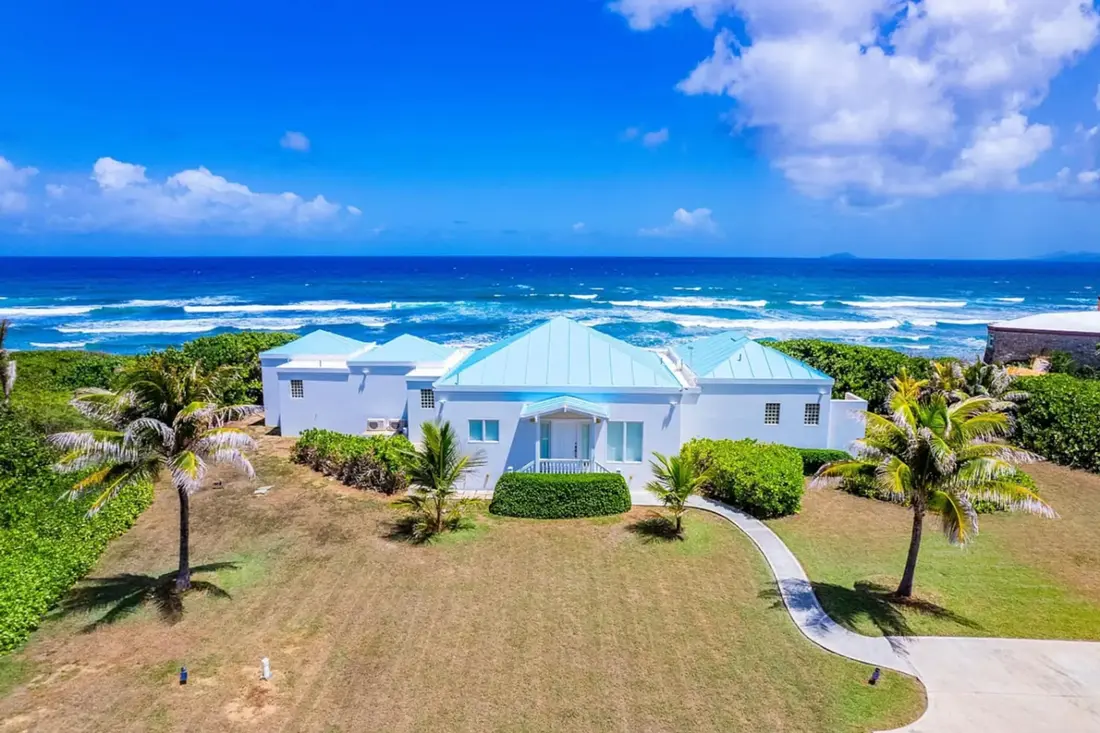
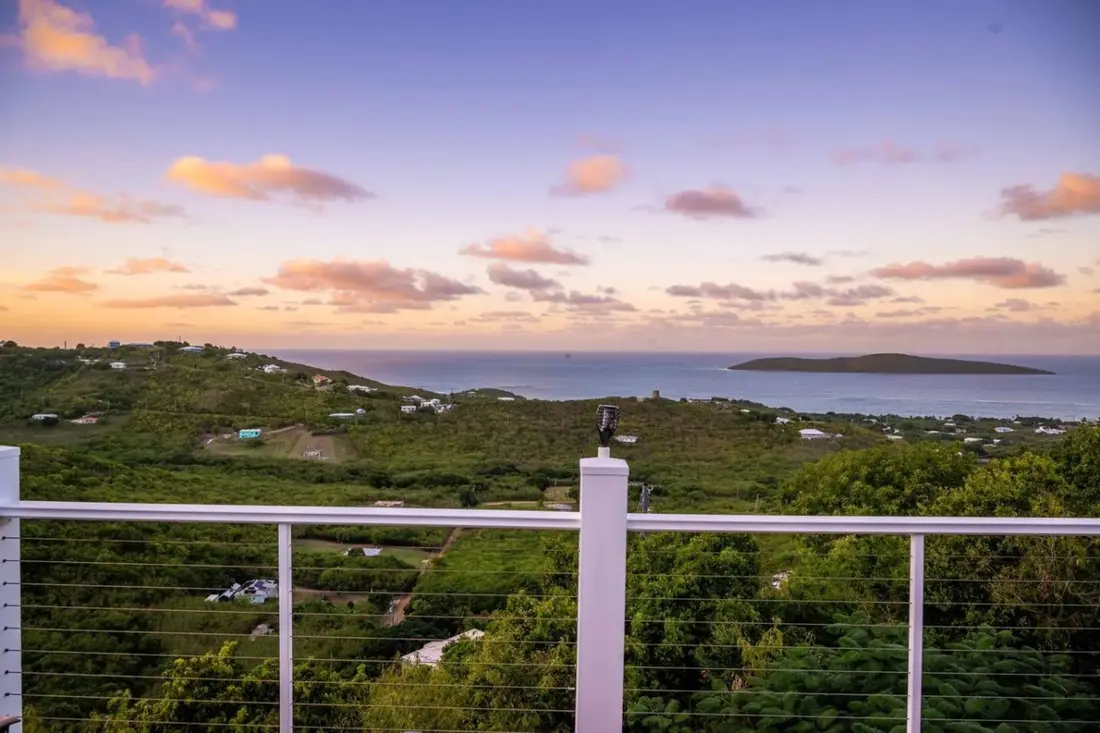
Location is the next decision. The beachfront homes put you on the sand, which suits families who want the water to be the whole day. The private-pool homes, many of them on the East End with long ocean views, suit groups who want a quiet base and their own stretch of coast. Couples and smaller parties who fly in for an anniversary or a long weekend have their own couples collection, and families with children have family homes chosen with that in mind.
Because everyone lands together, the practical questions are easy to answer in advance. Tell us the head count, the ages, whether you want to walk to dinner or stay put, and how many cars you need, and we will match the home to the group before you leave. That is easier when one local team holds all of it, rather than a home rented from one company and the logistics improvised on arrival.
If you are traveling on behalf of clients — a family office arranging a principal's trip, or an advisor hosting a small offsite — the same portfolio works as a discreet, repeatable base. The family-offices page covers that use in full, including the U.S.-territory tax context that some visitors come to explore.
If part of the group wants the quieter west end and its sunsets, the West End homes sit closest to the airport and to Frederiksted. Across the collections, an arriving group can usually be matched to a single home rather than split among several — keeping the trip together, which is the reason most people chartered in the first place. Tell us the numbers and we will narrow it down before you fly.
Tell us the dates and the group; we will suggest the right home and handle the rest through one local team — no third-party booking desk.
See the homesTalk to usBooking the home direct through one local team
SP Vacations is the vacation-rental brand of Sterling Point Real Estate, a St. Croix company, and it manages a portfolio of villas and condos across the island — beachfront, ocean-view, private-pool, East End and West End, homes for couples and homes that sleep up to twelve. Every one of them is locally managed and booked direct. There is no online-travel-agency desk in the middle, which means one accountable point of contact and no third-party layer between you and the people who actually look after the home.
For a private-jet arrival that direct line is the practical advantage. The same team that confirms your dates can arrange the car at the FBO, stock the kitchen before you land, and answer the phone if something needs handling mid-stay. When the whole trip runs through one local manager instead of a chain of counters, the arrival is quieter and the week is simpler.
Booking is straightforward. Browse the full portfolio, or tell us the group and the dates and we will suggest the right home. You can reach the team at 340-205-3929 or stay@sterlingpointvi.com, or start on the contact page. When you are ready to hold dates, you book direct with Sterling Point — no middleman, no markup from a booking site.
What we do not do is sell you the flight. We will point you to Bohlke or a Part 135 operator for the charter, and take it from there. The division of labor is clean: your operator gets you to the Rohlsen ramp, and Sterling Point owns everything from the ramp to the front door and through the stay.
From the ramp to the house
Pull the pieces together and the trip is simpler than the logistics make it sound. The runway is a settled question — 10,002 feet at a low, central field that has handled everything up to a 747, so no business jet has anything to prove here. The FBO, Bohlke, has run this ramp since 1959 and clears your customs while you taxi in. The flying times are short: roughly 3 hours 40 minutes from the New York area, about 2 hours 50 from South Florida, and a short hop from San Juan if you route that way.
The arrival is easy because St. Croix is U.S. soil — no passport for U.S. citizens, U.S. dollars, U.S. law — and the homes are close, 15 to 40 minutes from the aircraft door. Cost is the one thing we will not pretend to know for you; get a real quote by class and routing, and ask about empty legs if your dates flex. Everything else is arranged: the car at the ramp, the stocked kitchen, the home matched to your group. None of it is left to improvise on arrival day.
That is the whole idea. Your operator owns the sky between your city and the Rohlsen ramp. Sterling Point owns the ground from the ramp to the house and through the week, booked direct with one local team, so no third-party desk sits between you and the people who look after the home. Tell us the dates and the group, browse the homes, and we will handle the rest.
Questions people ask
Can a private jet really land on St. Croix?
Yes. Henry E. Rohlsen Airport has a single asphalt runway of about 10,002 feet by 150 feet at a field elevation near 74 feet. It has handled aircraft up to Boeing 747 size, including a 747 relief flight after Hurricane Marilyn in 1995 and an Antonov An-124 in 2018. For any business jet that serves the Caribbean, runway length and weight are not a concern here.
Which airport and terminal do private flights use?
Private aircraft use Henry E. Rohlsen Airport (STX / TISX) near Kingshill and are handled by Bohlke International Aviation, the fixed-base operator on the field since 1959. Bohlke runs the private terminal, fuel, hangar, customs coordination, catering, and crew or rental cars. It was voted Best Caribbean FBO in the 2024 Pro Pilot PRASE survey. You clear on the general-aviation side, not the main commercial terminal.
Do I need a passport to fly private to St. Croix?
St. Croix is part of the U.S. Virgin Islands, a U.S. territory, so U.S. citizens arriving from the mainland do not need a passport. It works much like a domestic arrival. U.S. Customs and Border Protection is on the field, and Bohlke coordinates the clearance. Non-U.S. citizens and flights arriving from foreign points still clear customs and immigration normally, so carry the right documents.
How long is the flight from the New York area?
From Teterboro it is roughly 1,450 nautical miles, about 3 hours 40 minutes airborne on a great-circle basis. Actual time depends on the aircraft, routing, and winds. A super-midsize or large-cabin jet typically makes it nonstop; a light jet from the Northeast may need a fuel stop. Treat the figure as a planning estimate and confirm the real number with your operator.
How long is the flight from South Florida?
From Opa-locka it is about 990 to 1,000 nautical miles, roughly 2 hours 50 minutes airborne; Fort Lauderdale Executive is similar. Most light jets, such as a Phenom 300 or a Citation in the CJ family, can make the run nonstop, and midsize and larger aircraft certainly can. These are typical manufacturer figures that vary with payload, winds, and reserves, so confirm with your operator.
Will my jet need a fuel stop?
It depends on the aircraft and the departure point. From South Florida, most light jets reach St. Croix nonstop. From the New York area, super-midsize and larger jets usually go nonstop, while a light jet may stop for fuel, commonly at San Juan (about 40 nautical miles away) or in South Florida. Ranges are payload-dependent, so ask your operator to run the exact numbers for your trip.
What does a private charter to St. Croix cost?
There is no single price. Charter is quoted per trip by aircraft class and routing, so a light jet from Florida and a large-cabin jet from New York are very different numbers. If your dates are flexible, an empty-leg repositioning flight can lower the cost. Get a firm quote from a Part 135 operator or from Bohlke, which is itself a charter operator. We do not sell flights and do not quote prices.
How far is the airport from the homes?
Most homes are about 25 to 40 minutes from the airport. Christiansted is roughly 15 to 20 minutes, the East End about 30 to 40, and Frederiksted on the west end about 10 to 15. The Sterling Point team can arrange a car and provisioning so a vehicle is waiting when you land. Tell us the group and the dates and we will match the home and the logistics.
Is hurricane season a problem for flying in?
The Atlantic hurricane season runs from June to November, and it is worth watching the forecast and keeping some flexibility in those months. Day to day, St. Croix sees steady trade winds and brief afternoon build-ups rather than all-day weather. None of this restricts the aircraft that serve the island, given the 10,002-foot runway. St. Croix stays on Atlantic time all year with no daylight saving.
On this page
At a glance
- Airport Henry E. Rohlsen (STX / TISX)
- Runway 10,002 ft × 150 ft
- Field elevation 74 ft
- FBO Bohlke International Aviation
- Bohlke serving since 1959
- From Teterboro ~1,450 nm / ~3h 40m
- From Opa-locka ~990 nm / ~2h 50m
- From San Juan ~40 nm
Also useful
Sources
Facts checked against official aviation, tax-authority, tourism-board and business sources in August 2026. Figures change — confirm before you rely on them.