Frederiksted
The Victorian west-end town where emancipation was won, cruise ships dock, and every clear evening ends with a sunset over flat water.
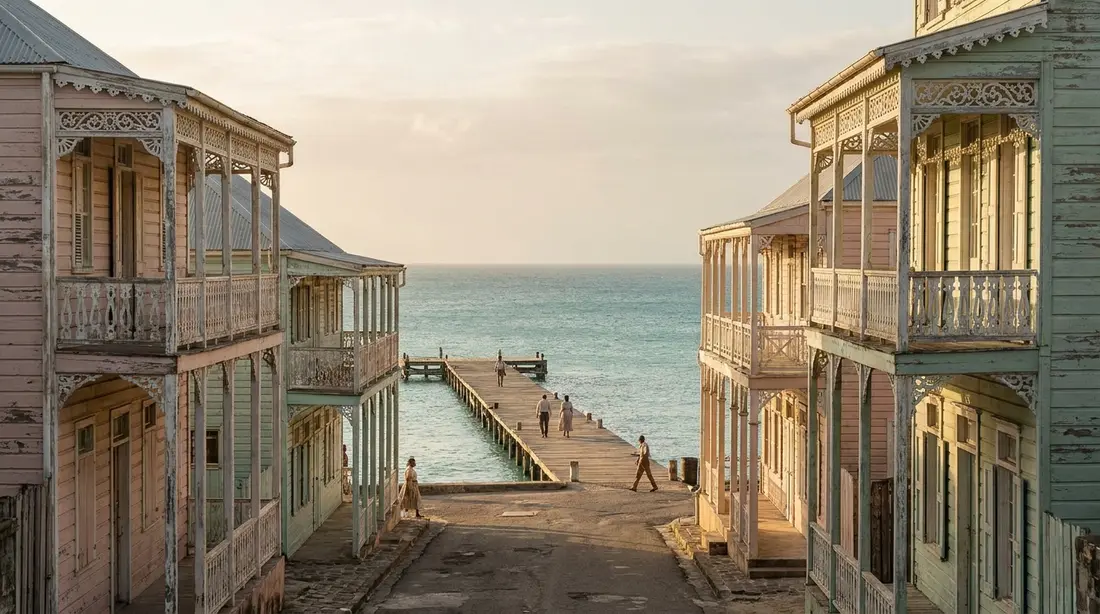
Frederiksted is St. Croix's west-coast town: a seven-block Danish grid from 1751, Victorian gingerbread balconies on stone ground floors, a red fort where emancipation was proclaimed in 1848, and the island's only cruise pier running a quarter mile into calm leeward water. Crucians call it Freedom City, and the name is literal. This page carries the full record: how the town began, what happened here in 1848 and 1878, what is inside the fort, how the pier works, which businesses were operating at last check, the beaches and rainforest on either side, the events that fill its streets, and the logistics of a west-end day.
The town
Frederiksted sits at the island's western tip, facing due west over the flattest water St. Croix has. The trade winds blow from the east, so the west coast is the sheltered side, and the sea along the town front usually lies calm enough to mirror the sky. That geography decides most of what the town is known for: easy swimming, the island's gentlest shore diving, and a sunset that drops into open ocean with nothing in the way.
The town itself is small and getting smaller. The 2020 census counted 528 people in Frederiksted proper, a fraction of what the sugar port once held, and on a day without a cruise ship the streets can be nearly still. The grid is a few blocks deep: Strand Street runs along the waterfront, King Street parallel behind it, with short cross streets tying them to the shore. Fort Frederik and Buddhoe Park anchor the north end of the waterfront, the pier reaches out from the middle, and the town beach begins where the buildings stop. St. Croix's other town, Christiansted, holds the boardwalk, most of the restaurants and the old capital's institutions; Frederiksted holds the deep water, the cruise calls, the emancipation story and the sunset. Visitors who treat it as a half-day stop tend to come back for a second one.
How Frederiksted began
Denmark bought St. Croix from France in 1733 and built Christiansted first. Frederiksted followed in 1751, laid out by the surveyor Jens Michelsen Beck and named for King Frederik V. The plan on paper was ambitious, a grid of fourteen blocks by fourteen; the town as built settled at roughly seven by seven, which is still its footprint today. The reason for a second town was the water. Christiansted's harbor hides behind a protecting reef that keeps big ships out as effectively as it keeps storms out, while the west coast offered deep water close to shore and a calm lee to anchor in. Frederiksted became the island's working deep-water port, the place where the sugar economy met its ships.
The port role never left. When cruise lines came to St. Croix, they came here, because the west end could take the draft. The pier has been rebuilt and renamed over the years, and the town around it keeps the shape Beck drew: straight streets crossing at right angles, long blocks facing the sea, and building lots that still carry 18th-century walls under 19th-century woodwork.
July 3, 1848
Frederiksted is called Freedom City because emancipation in the Danish West Indies happened here, and because it was demanded here rather than handed down. In 1847 the Danish crown had decreed a slow end to slavery: children born from that point on would be free, and everyone else would wait twelve more years. The enslaved people of St. Croix did not accept the wait. On the night of July 2, 1848, conch shells and estate bells signaled across the island's west end, and by the morning of July 3 a crowd that accounts put near 8,000 stood before Fort Frederik, led by Moses Gottlieb, an enslaved craftsman remembered as General Buddhoe. The demand was freedom that day.
Governor-General Peter von Scholten arrived from Christiansted, weighed a garrison of a few dozen soldiers against thousands of determined people, and proclaimed from the fort that all unfree in the Danish West Indies were free. No shot was fired at the fort that day. The territory has kept July 3 as Emancipation Day from that year forward, a territorial holiday with its ceremonies held where the event happened, and the proclamation came seventeen years before the United States abolished slavery. The full account, including what happened to Buddhoe and von Scholten afterward, is in our Fort Frederik and emancipation guide.
Earthquake, fire and the town you see
Two catastrophes in eleven years explain Frederiksted's architecture. On November 18, 1867, an earthquake in the Anegada Passage sent a tsunami into the west coast; accounts describe a wave around 25 feet that carried the U.S. Navy steamer Monongahela onto the shore at Frederiksted and killed at least five people. Then, on October 1, 1878, thirty years after emancipation, laborers rose against the contract system that still bound them to the plantations. The revolt, led by four women and remembered as the Fireburn, burned much of Frederiksted and around fifty plantations before it was put down. Queen Mary Thomas, the most famous of the four leaders, remains a Virgin Islands hero; the history, and what the revolt changed in the labor law, is in our Fireburn guide.
The town was rebuilt in the fashion of its era, and that is why Frederiksted looks the way it does: Victorian wooden upper stories, fretwork balconies and gingerbread trim sitting on the Danish masonry ground floors that survived the fire. Walk Strand and King Streets and the two centuries read in layers, cut stone and brick below, painted wood above. Some blocks are restored, some are weathered, and a few stand empty; the town wears its history without staging it.
Fort Frederik
The deep-red fort anchoring the waterfront's northern end is both the town's landmark and its museum. Built between 1752 and 1760 and named, like the town, for Frederik V, it was meant to defend the new port against pirates and rival powers, and it spent its working life guarding ships and cargo. It is a U.S. National Historic Landmark, and its deep-red walls against the blue of the west coast make it the most photographed building on this end of the island. Local history also credits the fort with firing one of the first foreign salutes to a ship flying the flag of the newly declared United States, in 1776, a distinction other Caribbean ports also claim.
Inside, the fort runs as the Fort Frederik Museum. At last check the rooms held the furnished commandant's quarters, an exhibit on the Fredensborg, a Danish ship of the triangle trade between Europe, West Africa and the Caribbean, a display on Danish West Indies building styles, and a gallery whose art exhibits rotate through the year. The courtyard and ramparts are the heart of the visit: from the walls you look over Buddhoe Park, the pier and the water, and the open ground where the crowd stood in 1848 is directly below. Posted hours have been weekdays 8:30 in the morning until 4, Saturdays from 1, plus cruise-ship days, with admission around $5 for adults and children 16 and under free with an adult, all worth confirming by phone before you build a morning on it.
Between the fort and the waterfront lies Buddhoe Park, named for the man who led the march. Its centerpiece is the Freedom statue, installed on July 3, 1998 for the 150th anniversary of emancipation: a bronze figure by the sculptor Bright Bimpong blowing a conch shell, the signal that called the island's enslaved people together, with a cane-cutting blade raised in the other hand. The park's bandstand hosts ceremonies and concerts, and the statue has become the emblem of the west end.
The pier
Frederiksted's pier, formally the Ann E. Abramson Marine Facility, is the island's front door for cruise passengers and its most unusual attraction for everyone else. The Virgin Islands Port Authority lists it at 1,526 feet long, with about 29 feet of depth on the north side and 36 on the south, which is why St. Croix's cruise traffic docks here and nowhere else. Ships tie up at the outer end; the inner stretch is a public walk, and locals fish from it in the evening.
Under the surface, divers count the pier among the region's most celebrated shore entries: the pilings have grown a coating of sponge and coral that shelters seahorses, frogfish and octopus, and the same calm water makes it a favorite night dive. Snorkelers can work the pilings from the surface on a flat morning, and the west-end dive shops run it as a guided shore dive scheduled around ship traffic; the full rundown is in our Frederiksted Pier diving guide.
Cruise calls concentrate in the winter season, often one ship at a time, and the schedule is public: the port authority and the island's visitor sites publish the season's calls months ahead, so you can check any date of your stay in a minute. On a ship day the town wakes up hard, vendors set up near the pier gate, taxis stage for island tours, and the beach north of the pier fills with day visitors; by late afternoon the ship swallows its passengers and the town exhales. On a no-ship day Frederiksted may be the Caribbean's quietest waterfront. Neither version is wrong, and the schedule lets you choose.
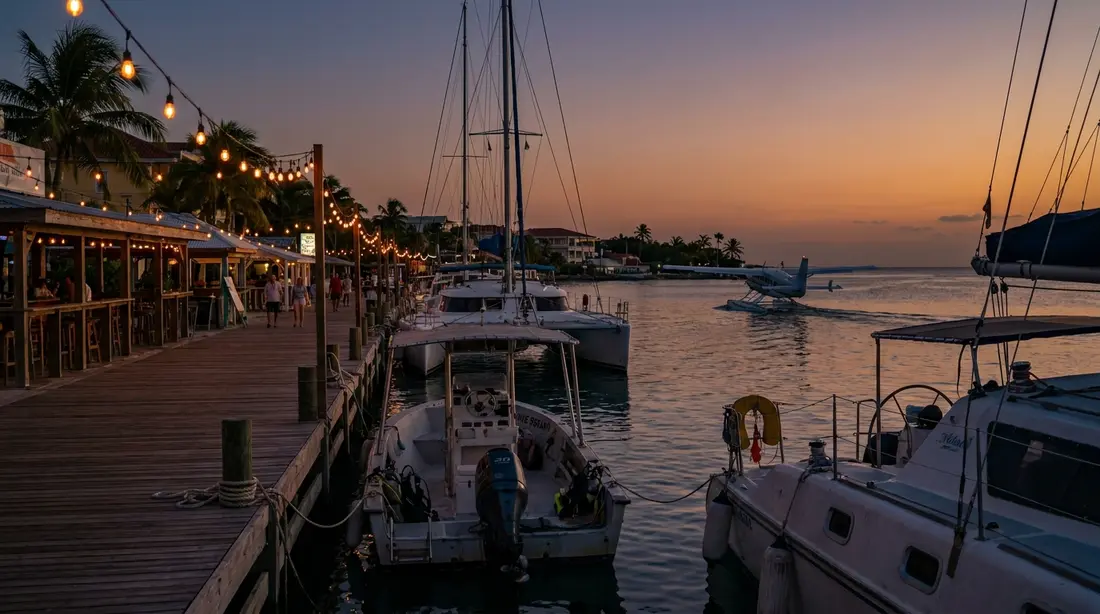
The day's last event needs no ticket. The town faces due west, so the sun sets over open water every clear evening, and the pier and seawall are where people watch it. The bars along the waterfront fill an hour before, the light goes gold on the fort, and the west end delivers the one show it never cancels.
Strand Street and King Street
The two main streets carry what remains of the town's commerce, and the west end's pattern is small, local and worth checking ahead. These were the businesses verified operating at last check in August 2026:
- Polly's at the Pier — the waterfront coffee shop and lunch cafe facing the pier; the west end's morning ritual.
- Turtle's Deli — a Frederiksted institution for oversized deli sandwiches and barbecue, eaten at picnic tables or carried to the beach.
- Louie & Nacho's Beach Bar — burgers, tacos, vegan plates and cocktails over crushed ice beside The Fred, looking straight at the pier.
- The Fred — the adults-oriented beachfront boutique hotel named for King Frederik V; its bar and pool terrace are a sunset fixture, with the kitchen running late morning to afternoon.
- Beach Side Cafe — the oceanfront terrace at Sand Castle on the Beach, just south of town on Dorsch Beach: lunch on weekdays, dinner nightly, weekend brunch and Saturday-evening live music at last check.
- Caribbean Museum Center for the Arts — the free art museum at 10 Strand Street, in its 18th-century building since 2003, with exhibitions that change every couple of months, artist residencies and classes; open Tuesday to Saturday 9 to 4 at last check. It gets its own guide.
One closure worth naming, because older articles still send people there: Villa Morales, the landmark Puerto Rican-Crucian kitchen, served its last regular meals in 2019; the family has cooked pop-up dinners at Sand Castle on the Beach, on the month's first and third Wednesday at last check. The dining detail, dish by dish, lives in the Frederiksted restaurants guide.
Eating the west end
West-end food splits into two zones. The waterfront handles the visitor day: coffee and lunch at Polly's, a sandwich from Turtle's, tacos at Louie & Nacho's, sunset drinks at The Fred, dinner on the terrace at Beach Side Cafe. Minutes north at Rainbow Beach, Rhythms puts a full beach bar and kitchen on the sand, roughly thirty years running, with live music and the sunset dead ahead.
The second zone is the Centerline Road corridor on the drive in, which is where the island itself eats. La Reine Chicken Shack, mid-island near the La Reine junction, spit-roasts chicken over an open fire, johnny cakes on the side; arrive early for the best choice and bring cash. Roadside pate stands and local lunch spots come and go along the road, and the reliable rule is that a line of local plates means join it. Plaza Extra West, on Centerline near town, is the west end's full supermarket for villa provisioning. Cruzan Rum's distillery sits just off the same road at Estate Diamond, with weekday tours at 12, 1:30 and 3 at last check, reservations required, and it belongs on the drive home from any Frederiksted day.
The beaches on either side
Town sits between three named beaches and one federal refuge, all covered in depth in beaches near Frederiksted. The short version, north to south:
- Rainbow Beach — the social one, a few minutes north: white sand, calm water, watersports rentals from West End Water Sports, and Rhythms beach bar.
- Frederiksted Beach — the town beach, starting at the pier: sea glass in the wash, the easiest swim from a parked car on the island, busiest when a ship is in.
- Dorsch Beach — just south: soft sand under palms and sea grapes along Sand Castle on the Beach, quiet on weekdays.
- Sandy Point National Wildlife Refuge — beyond Dorsch at the island's southwest tip: two miles of undeveloped sand, the largest leatherback turtle nesting beach under U.S. jurisdiction, open weekends only 10 to 4 and closed entirely April 1 through August 31 for nesting.
Every one of them faces the sunset, which is the west end's standing advantage, and the sunset beaches guide linked at the end of this page compares the island's evening shorelines.
The rainforest behind town
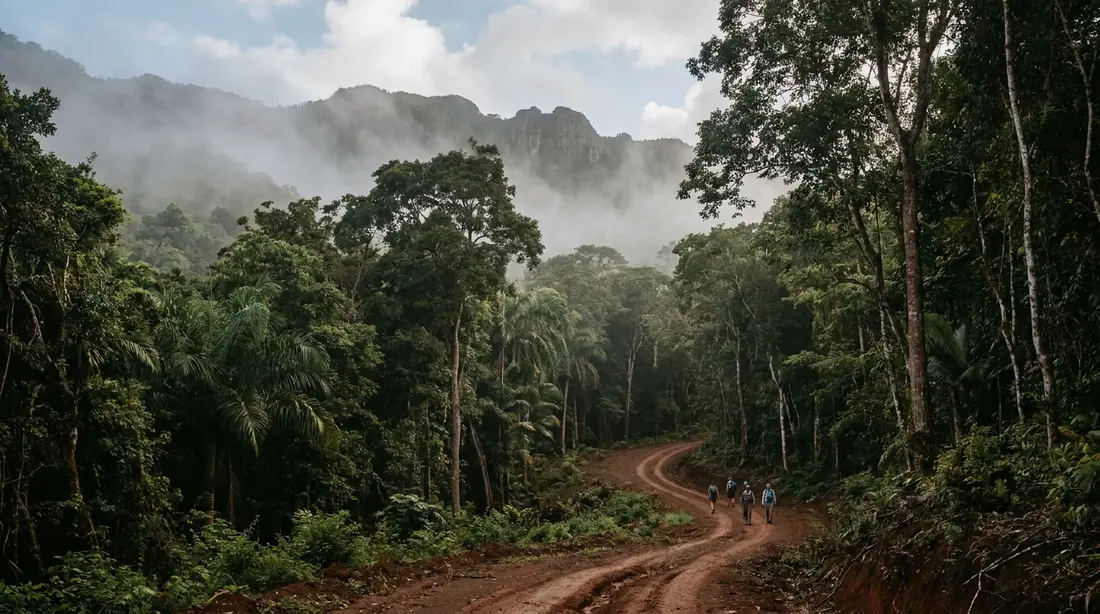
Frederiksted's second landscape starts a five-minute drive inland. The western hills collect upward of 50 annual inches of rain, double the East End's share, and they grow a real forest of mahogany, kapok and turpentine trees with a network of roads through it. Mahogany Road, Route 76, is the paved drive under the canopy, home of the Mt. Pellier Domino Club, the open-air bar with the beer-drinking pigs, pouring since 1971. Creque Dam, a 1926 stone dam built to supply Frederiksted with water, sits mossy and quiet off Route 63, with the unpaved Scenic Road beyond it for dry days and proper 4x4s. North along the coast, a short steep trail climbs to Ham's Bluff Lighthouse, the 1915 Danish cast-iron tower on the cliffs, and the ridge beyond it carries the history of Maroon Ridge, where escaped enslaved people held free ground.
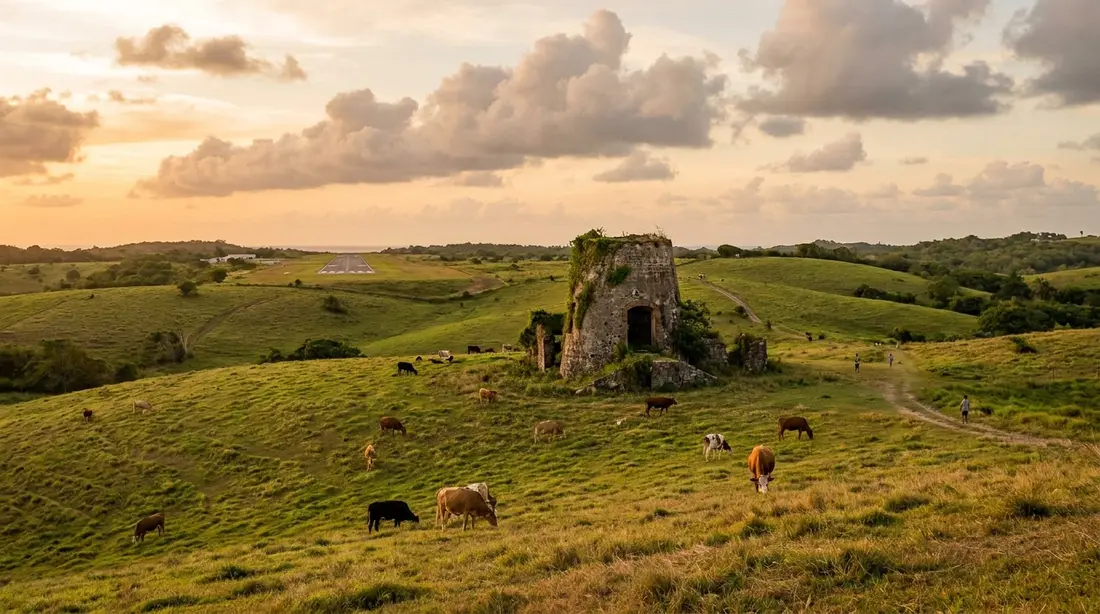
The plain below the forest holds the west end's history-and-gardens circuit: Estate Whim, the St. Croix Landmarks Society's restored sugar plantation on Centerline Road, whose great-house interior has been closed since 2017 while the grounds, windmill and factory complex carry the visit; and St. George Village Botanical Garden, planted through the ruins of a plantation village, with a roughly 9-to-3 window when last checked. The whole quarter, with routes and timing, is in the west-end rainforest guide. The natural west-end day runs forest in the morning, beach in the afternoon, sunset from the seawall.
Events in Frederiksted
For a town of a few hundred people, Frederiksted hosts a startling share of the island's calendar, led by one fact visitors regularly get wrong: the Crucian Christmas Festival's parades happen here. The territory's carnival season runs from late December into early January, and while events scatter across the island, the Festival Village and the children's and adults' parades belong to Frederiksted, marching through town with mocko jumbies on stilts, troupes in sequins and steel and brass bands, typically in the first days of January. The 2026-27 season was listed to run December 26 through January 2 at last check; dates shift each year, so check the official festival calendar once yours are set.
July stacks three days together. July 3 is Emancipation Day, observed where it happened: the Fort-to-Fort Freedom Walk sets out from Christiansted's fort around 4 a.m. and covers roughly 15.5 miles to arrive at Fort Frederik in the morning, with ceremonies following at the fort and Buddhoe Park. July 4 brings U.S. Independence Day fireworks over the Frederiksted waterfront.
The steady beat between holidays is Rhythms at Sunset, the free concert series run by Our Town Frederiksted on the third Friday of the month, about 6 to 9 p.m., at the veterans' park on the waterfront, with live music, dance, spoken word and food vendors. It launched in late 2024, taking up the third-Friday evening tradition that the long-running Sunset Jazz series established in Buddhoe Park, and its season has run roughly October through May at last check; despite the name, it is separate from Rhythms, the beach bar at Rainbow Beach. The island's full month-by-month schedule is in a year of events.
Reference table
Hours and costs below are as published or reported at last check in August 2026, and small island institutions change them without ceremony; confirm anything your day depends on.
| Place | Hours at last check | Cost at last check |
|---|---|---|
| Fort Frederik Museum | Mon-Fri 8:30-4, Sat 1-4, plus cruise days | About $5 adults; under 16 free with an adult |
| Caribbean Museum Center for the Arts | Tue-Sat 9-4 | Free |
| Buddhoe Park and the Freedom statue | Open public park | Free |
| The pier (walking, fishing, sunset) | Open outside ship security zones | Free |
| Pier snorkel or dive | Scheduled around cruise calls; shops confirm | Gear or guide through a west-end dive shop |
| Cruzan Rum Distillery tours | Weekdays 12, 1:30 and 3, reserve ahead | Posted tour fee; reservations required |
| Estate Whim Museum | Limited open days; check the Landmarks Society | Posted admission; great-house interior closed since 2017 |
| St. George Village Botanical Garden | Roughly 9-3; confirm | Posted admission |
| Sandy Point NWR | Weekends 10-4, Sep 1 to Mar 31 only | Free; closed entirely Apr 1 to Aug 31 |
| Rhythms at Sunset concert | Third Fridays about 6-9 p.m., roughly Oct-May | Free; food vendors on site |
Getting there and parking
Frederiksted is the far end of the island from most villas, and the drive is part of the plan. From Christiansted, allow about 40 minutes by the Melvin Evans Highway or Centerline Road; from our East End homes, plan on 45 minutes to an hour depending on where you start and the mid-island traffic. The highway is the faster run, Centerline the one with the food stops, and the two make a natural loop, out one way and back the other with the Domino Club or the distillery folded in.
Parking is the easy kind. The waterfront and side streets hold free parking that works every day except the biggest cruise calls, when the blocks near the pier gate fill with tour staging; on those days park a few blocks north toward the fort, or south toward the beach, and walk the flat waterfront. The town rewards parking once: fort, park, pier, museum, lunch and beach all sit within a half-mile stroll. Rideshare apps do not operate on the island, traffic keeps left in standard American cars, and taxis can be arranged for an evening if nobody wants to drive back east after sunset; the wider logistics are on our getting around page.
Timing the visit is mostly about the ship schedule and the light. Cruise-day mornings are the town at its busiest and its most open, with every counter staffed; no-ship weekdays are the town at its quietest, with some doors closed by mid-afternoon. Either way, plan to still be on the west end when the sun goes down, because the sunset is the point of the coast, and driving away from it at 5 p.m. is the standard first-timer regret.
Questions guests ask
Why is Frederiksted called Freedom City?
Because emancipation in the Danish West Indies was proclaimed here, under pressure from the enslaved people themselves. On July 3, 1848, a crowd of roughly 8,000, called together by conch-shell signals and with Moses Gottlieb ("General Buddhoe") at its head, stood before Fort Frederik and demanded immediate freedom rather than the twelve-year wait Denmark had decreed. Governor-General Peter von Scholten proclaimed all unfree in the Danish islands free that day. July 3 is Emancipation Day, a Virgin Islands holiday, and its ceremonies return to the fort and Buddhoe Park each year.
How much time does Frederiksted need?
A half day covers the town itself at an easy pace: an hour at the fort and Buddhoe Park, a walk on the pier, the art museum, lunch on the waterfront and a swim at the town beach. The full west-end day is the better trip, adding the rainforest roads or the distillery inland and a sunset from the seawall or a beach bar to finish. Guests staying on the east side should treat it as a planned day out rather than a quick stop, since the drive runs 40 minutes to an hour each way.
Can you snorkel the pier on your own?
Yes, on a calm day, from the beach beside it, and the pilings hold the marine life the pier is famous for: seahorses, frogfish, octopus and sponge-covered columns in 25 to 90 feet of water. Mornings are flattest, there is no rental counter at the pier itself, so bring or rent gear in advance, and stay clear of any area the port has closed while a ship is docked. For the fuller experience, the west-end dive shops guide it as a shore dive by day and by night, scheduled around cruise calls.
When are cruise ships in Frederiksted?
Mostly in the winter season, on a schedule published months ahead by the port authority and carried on the island's visitor sites, so you can check every date of your stay in advance. A ship day brings vendors, taxis and a few thousand visitors to the blocks around the pier from morning to late afternoon, and the town beach fills; a no-ship day returns the town to a few hundred residents and open parking. Neither is better for every purpose: shops and food stands are most reliably open when a ship is in.
Is Frederiksted safe to visit?
Visitors walk the waterfront, the fort, the pier and the beaches daily without trouble, and the town is small enough that the busy blocks are obvious. Apply ordinary town judgment: stay to the peopled waterfront and main streets after dark, skip empty side streets late, and leave nothing visible in a parked car, which is the standing rule at every beach lot and trailhead on St. Croix. Evenings around sunset, when the seawall and bars are full, are among the town's best and most sociable hours. Your villa manager can speak to current conditions any week.
Where are the Crucian Christmas Festival parades?
In Frederiksted. The festival season runs from late December into the first days of January, and while events spread across the island, the Festival Village and both parades, the children's and the adults', march through Frederiksted, traditionally along King Street, with mocko jumbies, troupes and bands. The adults' parade typically lands in the first days of January and is the single biggest street day of the island's year. Dates move annually, so check the official calendar, and expect the town, and parking, to be transformed.
What time does the sun set in Frederiksted?
Between about 5:45 in early winter and a little after 7 in midsummer, and the west coast sees the whole event over open water on any clear evening. The practical planning note: arrive at least an hour early if you want a table at The Fred, Louie & Nacho's or Rhythms at Rainbow Beach, since sunset is the west end's nightly occasion. The pier and the seawall are free front-row seats, and locals fish and watch from both. Check any weather app for the exact minute on your dates.
Staying on the west end
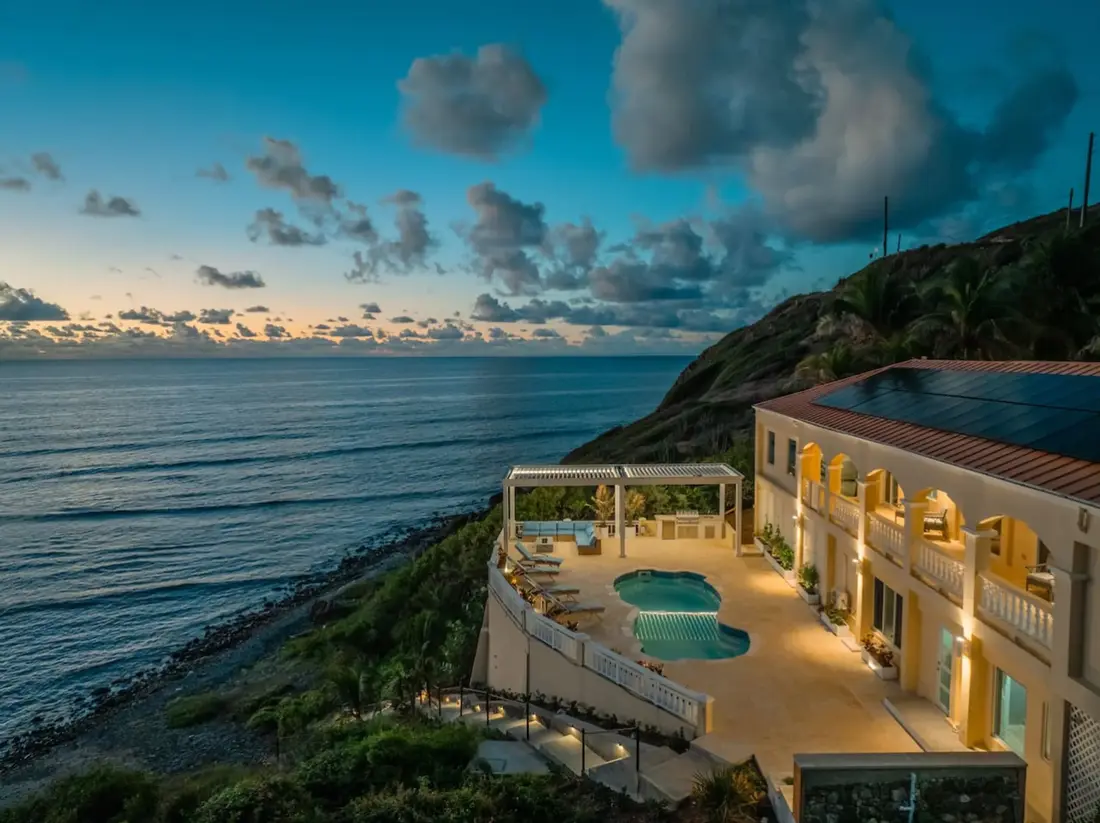
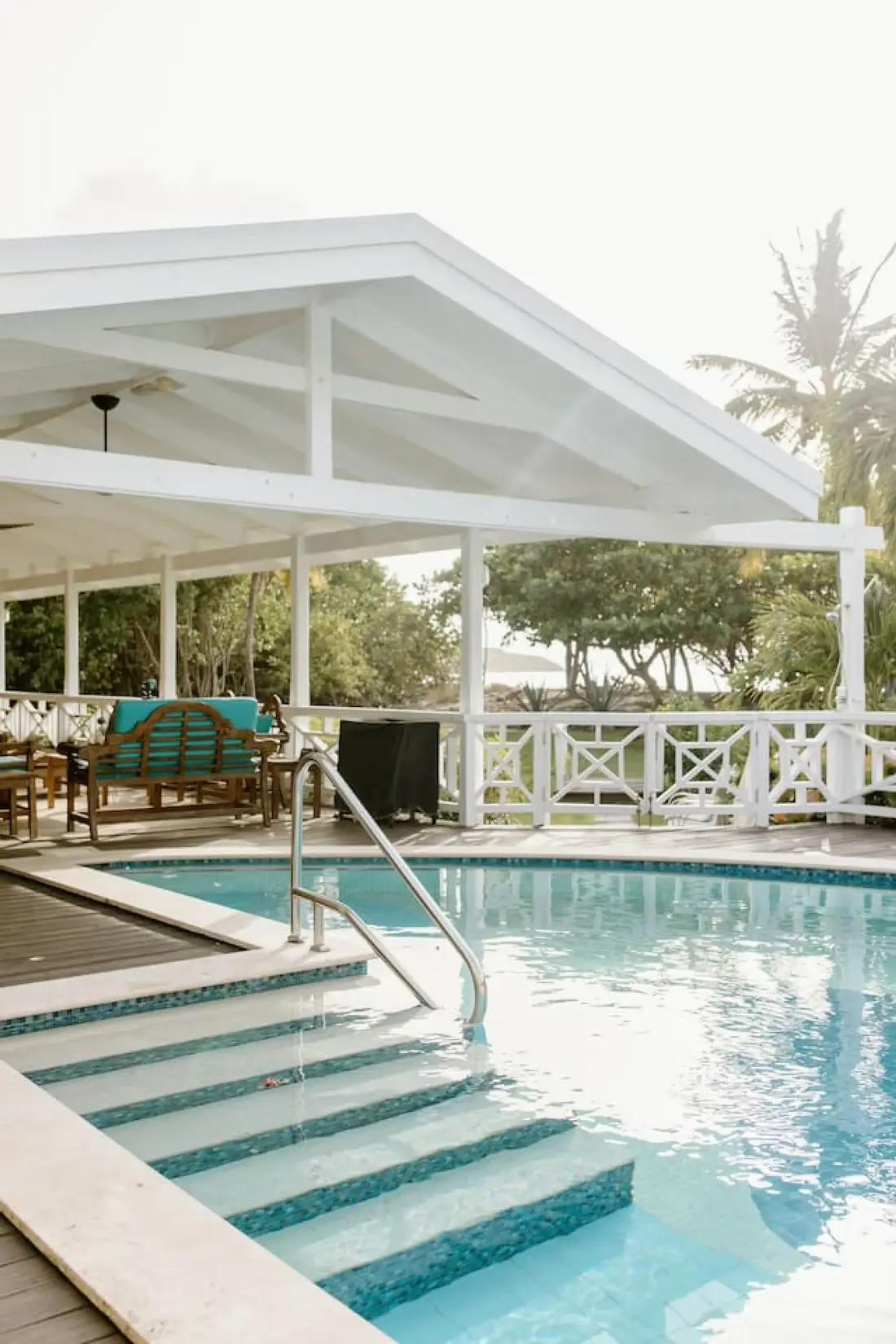
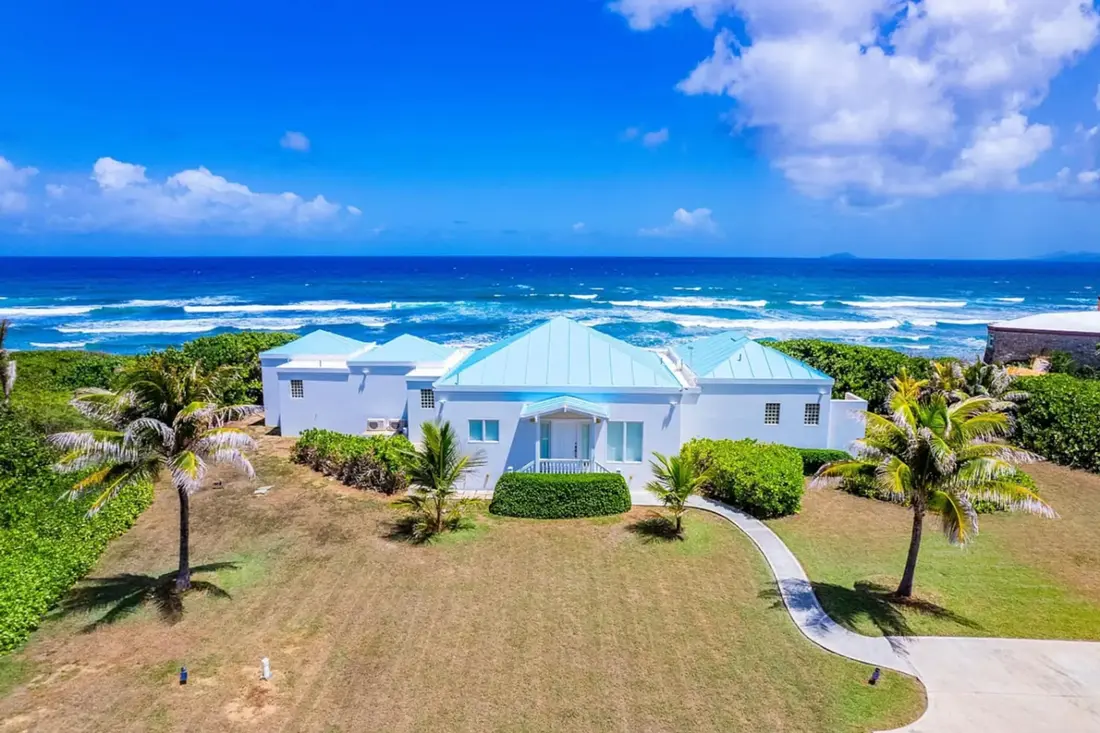
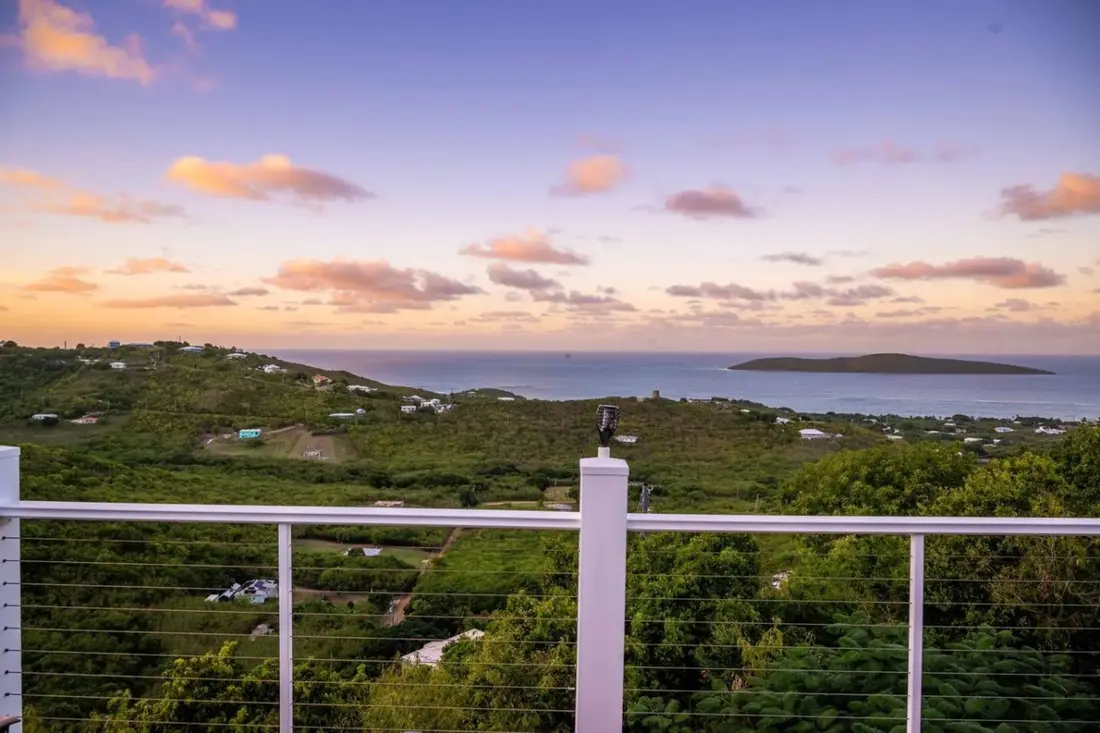
Our west-side home is Sunset Sea-Clusion, in Frederiksted itself, which turns everything on this page into neighborhood: the fort and pier minutes away, Rainbow and Dorsch beaches on either hand, the rainforest roads out the back, and the sunset from the west end every evening without a drive afterward. Guests based in our Christiansted and East End homes reach Frederiksted as a day trip and usually pair it with the rainforest or the distillery; the sunset beaches guide helps pick the evening's spot, and all twelve villas and condos are here.
Sources
Written from official and first-party sources, checked August 2026. Hours, prices and event dates change — confirm before you go.
In this guide
Stay nearby
A two-bedroom oceanside villa with a private pool on the calm, sunset-facing west end near Frederiksted; sleeps four.
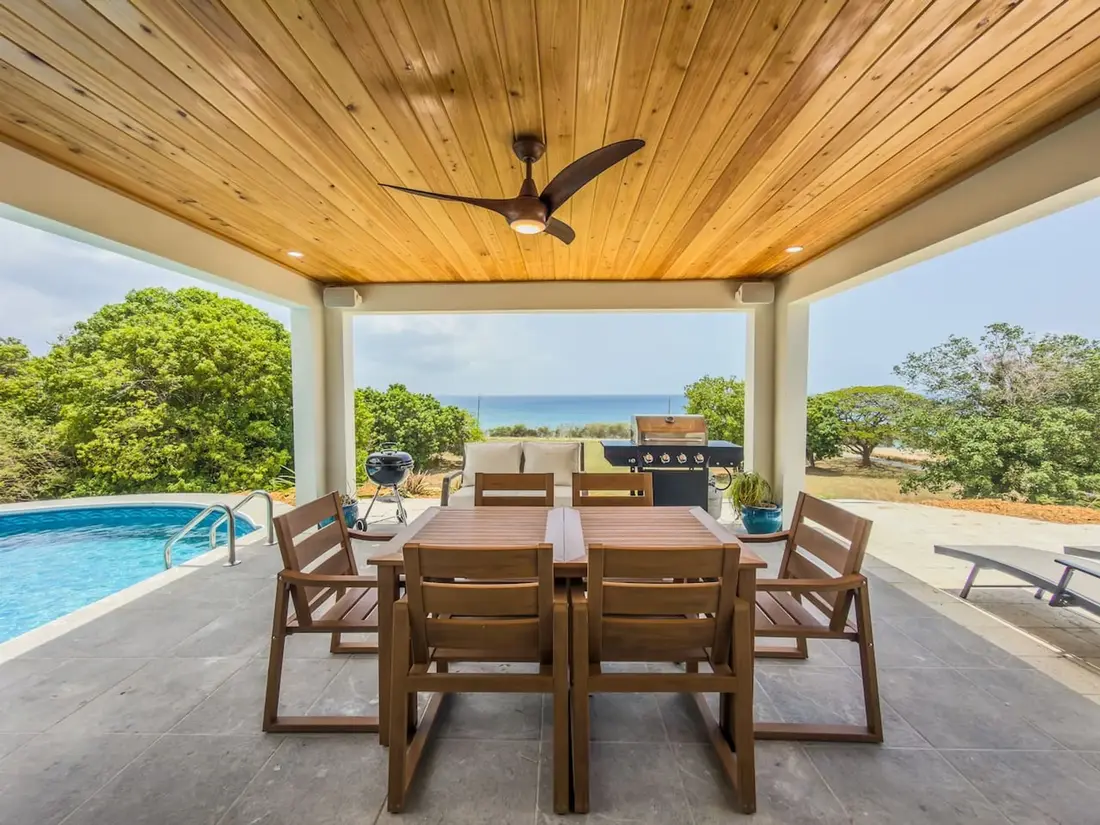 Sunset Sea-Clusion2 bd · 2 ba · sleeps 4 · Frederiksted
More in Towns & Areas
Sources
11 references, listed in full at the end of this guide — official park, refuge, tourism-board and business sources, checked August 2026.