

St. Croix from Minneapolis–St. Paul
Real routing, realistic connection times and which home fits: Minneapolis–St. Paul to St. Croix, verified August 2026.
When the Twin Cities settle into a January that averages around 24°F, St. Croix is running near 83°F with 79°F water, and getting there is easier than the distance suggests. There is no nonstop from Minneapolis-St. Paul, but one stop puts you on a warm, quiet island the same day — and because St. Croix is a U.S. territory, you make the whole trip with no passport, U.S. dollars, and your own phone plan working the moment you land. You leave a subzero wind chill at MSP and land where the evening air is still warm.
The fastest way from Minneapolis–St. Paul
Minneapolis-St. Paul (MSP) has no nonstop to St. Croix, so the fastest realistic route is a single connection, and for most travelers that means Delta through Atlanta. MSP is a Delta stronghold with frequent daily service to Atlanta (ATL), and from Atlanta a St. Croix nonstop of about four hours runs daily except Mondays starting December 19, 2026. The Atlanta routing wins on frequency: because MSP-ATL flies many times a day, you have real flexibility in how you build the connection, and if anything slips there are later Atlanta departures to fall back on. The one thing to plan around is that ATL-STX does not fly on Mondays in the early winter schedule, so avoid a Monday arrival on that path.
Two other one-stops are worth knowing. From December 5, 2026, you can connect in Chicago (ORD) to American's winter Saturday nonstop — a good fit if your week is Saturday-to-Saturday and you would rather change planes in the Midwest than fly south to Atlanta first. And American through Charlotte (CLT) is a clean alternative, going daily to St. Croix from December 17, 2026. All three are one stop and land you the same day; the deciding factors are your travel day, which airline you hold status or a companion fare with, and how the layover times line up.
Plan the full day. On a well-paired Atlanta connection, plan roughly ten to eleven hours door to door: the drive to MSP, bag drop and security, the flight to Atlanta, a layover long enough to breathe, the four-hour island leg, and the 15-to-40-minute drive from Rohlsen to your villa. Deep-winter mornings add a wildcard in the form of de-icing, which is the single most common reason a comfortable Twin Cities connection becomes a tight one, so favor a morning departure with margin rather than the last flight that technically connects.
Plan the return before you book it. St. Croix is two hours ahead of the Twin Cities in winter, so a mid-morning departure from STX, a connection at Atlanta, and a flight home lands you at MSP in the evening — a long day, but St. Croix is a U.S. port of entry, so you clear no customs coming back to the mainland and simply re-check for the last leg. Give the Atlanta connection on the way home a real buffer; an island departure that runs a few minutes late should not cost you the last flight to Minneapolis, especially in a winter when MSP arrivals can be delayed by weather of their own.

Every route from Minneapolis–St. Paul, compared
The options, best first. Times are door to door and rounded; days follow the published August 2026 schedules.
| Option | How it works | Days | Door to door |
|---|---|---|---|
| Via Atlanta — Delta | MSP to Atlanta on frequent daily service, then ATL to STX (about 4h); the island leg runs daily except Mondays from Dec 19, 2026. | daily exc. Mon from Dec 19, 2026 | about 10–11h door-to-door |
| Via Chicago — American | MSP to O'Hare, then the winter Saturday nonstop ORD to STX (about 4¾ hours); a Saturday-only option. | Saturdays from Dec 5, 2026 | about 10–12h door-to-door |
| Via Charlotte — American | MSP to Charlotte, then CLT to STX (about 3¾ hours); CLT goes daily from Dec 17, 2026. | daily from Dec 17, 2026 | about 11–12h door-to-door |
Which airport to fly from
Minneapolis-St. Paul (MSP) is a single, well-run airport that happens to be one of Delta's core hubs, and that shapes every St. Croix itinerary out of the Twin Cities. There is no nonstop to the island from here, but MSP's real strength is frequency to the connecting hubs: many Delta departures a day to Atlanta, plus American service toward Charlotte and Chicago. That density is what makes a one-stop day dependable rather than nerve-wracking — if a flight slips, there is usually another behind it. Most St. Croix travelers will use Terminal 1 (Lindbergh), Delta's home, with its C, F, and G concourses; the Atlanta-bound flight that feeds your island leg typically leaves from the C or F concourse, but confirm on the monitors, since gates shift.
The ground logistics are easy here. The light-rail Blue Line connects Terminal 1 and the smaller Terminal 2 (Humphrey) to downtown Minneapolis and the Mall of America, a simple way to reach the airport without parking a car for a week. If you do drive, the ramps attached to Terminal 1 are the most convenient but priciest for a long trip; the value ramps and nearby off-site lots cost less over a vacation. Security at T1 has ample TSA PreCheck and Clear lanes, which matter most on an early-morning departure when the whole terminal is trying to leave at once. Past the checkpoint, the C and F concourses have solid sit-down restaurants, coffee, and grab-and-go, plus Delta Sky Clubs if you have access. Eat a real meal before you board and top up a water bottle — it is a long day with a change of planes, and the second leg runs dry over the water. In deep winter, build in extra time for de-icing delays on your outbound leg; it is the most common reason a tight connection gets tighter, and a delay that would be trivial in July can quietly erase a 45-minute gap in January.
What the travel day feels like
The Minneapolis travel day is a study in contrast, and a morning start makes it a good one. You leave MSP in the cold and dark, put in a first leg to Atlanta or Charlotte, take a layover long enough to stretch and eat, then fly the last stretch south into a completely different climate. The connection is where the day is won or lost. A roomy 75-to-90-minute layover at Atlanta means a walk, a proper lunch, and time to absorb a gate change without stress; a tight 40-minute gate-to-gate dash means checking the monitors the second you land, hoping your inbound and outbound are on the same concourse rather than opposite ends of the airport train. Give yourself the buffer, especially when a de-icing wait at MSP can quietly erase it.
Then the good part. The final leg drops toward St. Croix over open Caribbean water, and on a clear afternoon the reef and the pale shallows off the north and east coasts come into view before the runway does; which side of the plane gets the best of it depends on the day's runway direction, so treat it as a bonus, not a promise. Rohlsen's runway is a full 10,002 feet, rated for aircraft up to a 747, so the touchdown is smooth and unhurried. The first thirty minutes on island are the reward for the whole day: you step off into thick, warm, salt-scented air, cross to a small and calm terminal, and because you never left the United States there is no passport line and nothing to declare. Bags out, a rental car a few steps away, and within half an hour you are driving toward Christiansted with the windows down. The road out of Kingshill rolls past green hills and glimpses of water, and you stop for groceries at Plaza Extra on the way, picking up something cold and easy for the first night. By the time you reach the house the light is going soft and the trade winds are moving through the palms. Twelve hours earlier you were scraping frost off the car and squinting through a salted windshield; now the cold is an abstraction, and the only real decision left is which beach comes first in the morning.
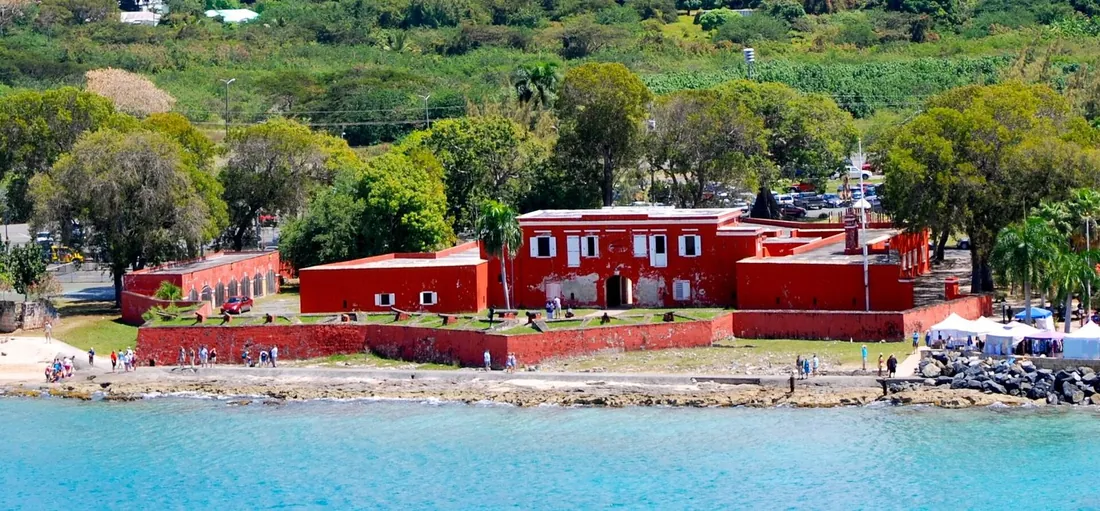
Your travel day from Minneapolis–St. Paul, hour by hour
Minneapolis reaches St. Croix by connection, most cleanly on Delta through Atlanta. Here is how a well-timed weekday runs. St. Croix stays on Atlantic Standard Time all year, so in winter it is two hours ahead of the Twin Cities, and the clock jumps as you go.
- 5:45 a.m. CST — Leave for MSP in the dark and the cold. In deep winter you allow for a slow, salted drive and a possible de-icing wait later.
- 6:30 a.m. — Bag drop and security at Terminal 1 (Lindbergh), Delta's home. PreCheck lanes are open early and worth it.
- 7:15 a.m. — Coffee on the C or F concourse; last mainland breakfast before the islands.
- 7:50 a.m. — Board MSP to Atlanta. If the outbound needs de-icing, this is where a tight day gets tight.
- 11:10 a.m. EST — On the ground at Atlanta with a comfortable layover; grab lunch on the concourse rather than rushing.
- 12:30 p.m. EST — Board the Atlanta to STX nonstop, about four hours over open water.
- ~4:35 p.m. AST — Descent over the reef and wheels down at Rohlsen; the clock is now two hours ahead of home.
- 5:15 p.m. AST — Car, a quick grocery stop, and the short drive to the house with the last of the daylight.
Minneapolis–St. Paul in winter vs a week on St. Croix
Minneapolis-St. Paul in January averages around 24°F for the daytime high, and the real feel is colder once wind chill is in play; this is the deep middle of a long northern winter, the stretch where subzero mornings stop being news, the sidewalks stay icy for weeks, and the sun sets before 5:00. It is the season you organize your life around: block heaters, layered kids, and a careful eye on the forecast before any drive. St. Croix during the same week sits near 83°F by day, with sea water around 79°F and about eleven hours of daylight, the sun up well past 5:30 in the evening. It is one of the widest weather gaps you can cross in a single travel day anywhere in the country.
The payoff is a full, reliable warm-weather week. A typical St. Croix week in January runs warm and breezy, with steady trade winds keeping the heat easy, quick passing showers that dry within the hour, and water warm enough to swim in without a second thought. January falls inside the island's dry, breezy high season, so you are not trading Minnesota cold for tropical storms — you are trading it for steady sun, swimmable sea, and evenings mild enough for dinner outside. There is no daily bundling-up ritual, no shoveling, no watching the wind chill to decide whether the kids can play outside; the days hold near 83°F from mid-morning on, and all eleven hours of daylight are usable. For a Twin Cities traveler, that is the entire point: a hard reset from the coldest, darkest part of the year, reachable in a single day.
Booking it: when to fly and when to buy
Because Minneapolis reaches St. Croix by connection rather than a single scarce nonstop, you generally have more routing flexibility here than a nonstop city does — but the final legs into St. Croix are still the limiting factor. Atlanta, Charlotte, and Chicago all feed a small island on limited daily frequencies, and those island legs fill first during the December holidays and the February and March high weeks. Book those peaks early and pay attention to the second leg's availability rather than just the fare out of MSP.
Read the calendar by month. The two Christmas-through-New-Year weeks are the hard peak; MLK weekend in mid-January and Presidents week in February are the next tier and go early because school breaks stack onto long weekends. The value windows are the first weeks of December before the holidays and the back half of April into May, when the island stays warm and dry while mainland demand slackens. If your week is Saturday-to-Saturday, price the Chicago option against the daily Atlanta path, because the winter Saturday nonstop out of ORD can be the shortest overall day. Set a fare alert as soon as your dates are firm, and compare the total journey rather than the Minneapolis-to-hub leg alone.
Two tactical notes. On a connecting itinerary with any tight legs, a carry-on that fits the overhead saves you from a gate-check that can put your bag on a different flight than you; check a bag only when your layovers are generous. And for the approach view, the reef shows best from whichever side faces the water on the day's runway heading, so it is not worth paying extra for a specific seat — pick the window you prefer and take the view the landing gives you.
Making the connection easy
With no nonstop, the connection is the whole game, so treat the layover as something to design rather than survive. The realistic minimum at a big hub like Atlanta is about 60 minutes, but 75 to 90 is far more comfortable, and in deep winter you want that cushion because a de-icing delay on your MSP outbound can eat a tight gap before you have even left home. Delta's frequency at Atlanta is your friend here: if a flight slips, there are usually later Atlanta departures to catch, which is exactly why a 45-minute connection that looks efficient on the schedule can cost you the whole afternoon.
If you would rather not gamble on a same-day connection at all, Atlanta, Miami, and San Juan all make good deliberate stopovers. A night in Atlanta on the way down breaks the trip cleanly and lets you take a rested morning flight to the island. San Juan (SJU) is the most appealing option on the Caribbean side: it is the region's connecting hub, about fifty minutes from St. Croix with many daily inter-island hops, so an overnight there turns a rushed change of planes into an easy morning arrival and a full first day on island. Any of these adds a day and removes the pressure entirely; from a winter-weather city where the outbound can be delayed by snow, that planned buffer is often worth more than the day it costs.
No passport, no foreign country
St. Croix is part of the U.S. Virgin Islands, a U.S. territory. U.S. citizens fly on a domestic ID, spend U.S. dollars, keep their own phone plans and clear no foreign customs in either direction. Henry E. Rohlsen (STX) is a U.S. port of entry with CBP on the field, so arriving feels like any other domestic flight. Full detail is on getting to St. Croix.
When you land at St. Croix
Rent a car at the airport (drive on the left), and it is a short run to the house: Christiansted is about 15 to 20 minutes east, the East End 30 to 40, Frederiksted 10 to 15 minutes west. Stop at Seaside Market or Plaza Extra for the first night before you settle in. See renting a car on St. Croix.
Which home fits your group
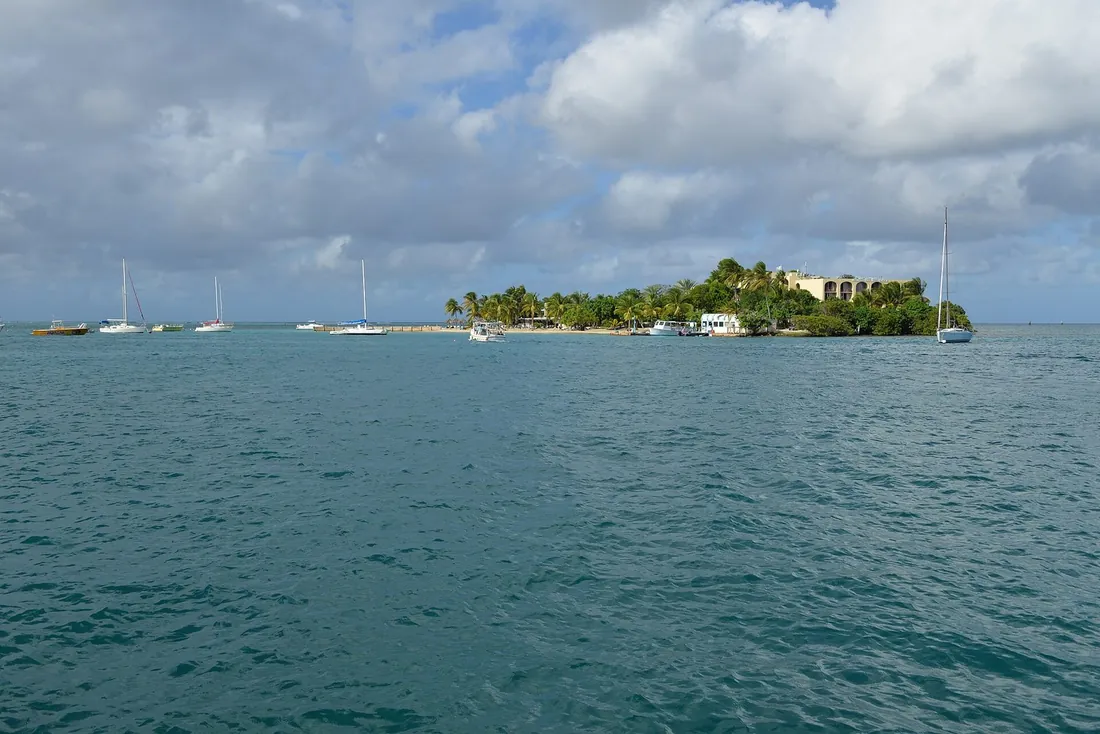
Groups of eight to twelve settle into the family collection; couples take a home for two; anyone who wants sand at the door starts with beachfront. Tell us the dates and the headcount and we will suggest the one that fits.
Questions people ask about flying from Minneapolis–St. Paul
Is there a nonstop from Minneapolis to St. Croix?
What is the best way to fly MSP to St. Croix?
Do I need a passport?
How long does the trip take?
Will winter weather in Minneapolis mess up my connection?
What is the best month to go?
Is it faster to connect in Atlanta or Charlotte?
Can I fly with kids and car seats?
Do I need a passport to fly from Minneapolis–St. Paul to St. Croix?
Is St. Croix the same island as St. Thomas?
What time will I actually land on St. Croix?
Do I need to rent a car on St. Croix?
In this guide
Minneapolis–St. Paul at a glance
- One stop
- Best via Miami, Charlotte, Atlanta or Newark
- Airports: MSP (Minneapolis-St. Paul) — connect via Atlanta (best), Charlotte, or Chicago, No nonstop from the Twin Cities — all routings are one stop, Destination: STX, Henry E. Rohlsen — U.S. port of entry, no passport
- Destination: STX, Henry E. Rohlsen