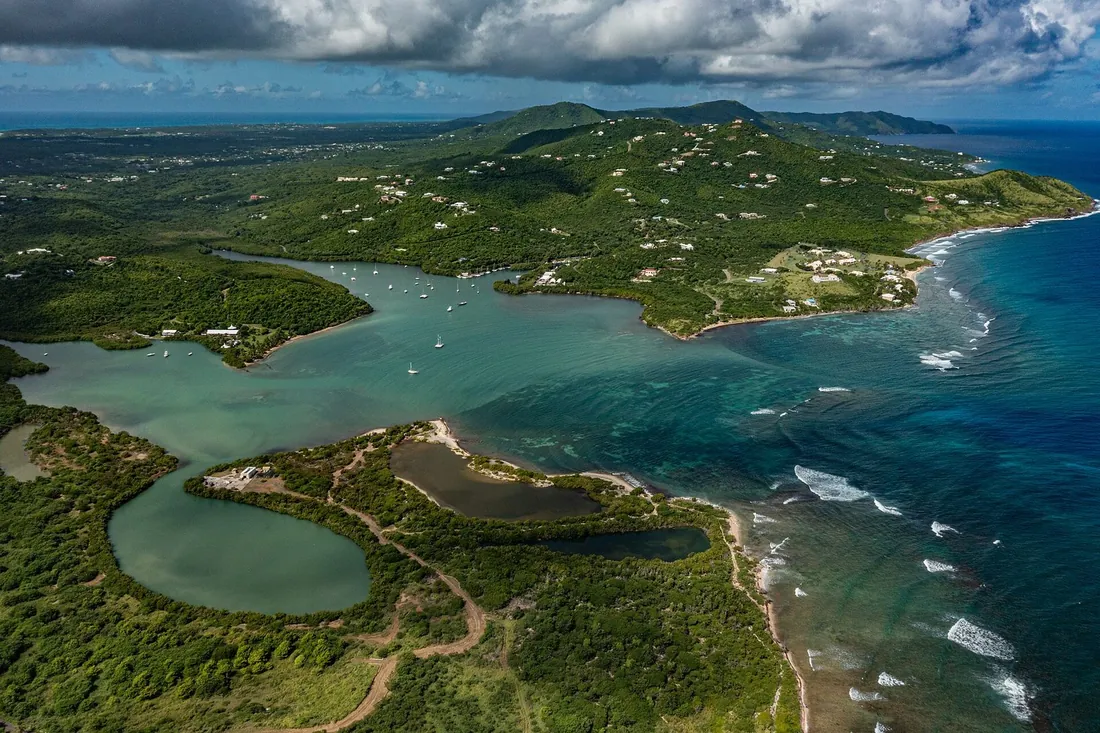
St. Croix vs Vieques and Culebra
Puerto Rico's little sisters pitch the same quiet, no-passport Caribbean as St. Croix. The difference is what it takes to get there and what is waiting when you land.
Vieques and Culebra are the islands people mean when they say Puerto Rico has a secret quiet side: small, slow, gorgeous, no passport. They compete for exactly the traveler St. Croix serves — which is why the differences matter. One of these quiet American islands has nonstop mainland jets, managed villas, real supermarkets and a hospital. The others are reached by a ferry from Ceiba or an eight-seat Cessna, and ask you to pack patience with the sunscreen. Both sides of that trade are laid out here.
The two, side by side
| St. Croix | Vieques & Culebra | |
|---|---|---|
| Passport for U.S. citizens | Not needed | Not needed |
| Getting there | Nonstop jets from five mainland cities | Fly to Puerto Rico, then a ferry from Ceiba or an 8-seat plane |
| Size | 84 square miles | Vieques about 51; Culebra about 10 |
| Bioluminescent bay | Salt River — glows year-round, kayak tours nightly | Mosquito Bay — the brightest recorded, tours booked out in season |
| Famous beach | Sandy Point: two miles, usually near-empty | Flamenco: routinely ranked among the top beaches anywhere, and busy |
| Groceries and services | Full supermarkets, hospitals, car rentals | Small markets, limited medical care, scarce rentals |
| Where you stay | Managed villas and condos, most with pools | Guesthouses and small rentals; thin inventory |
| Power and infrastructure | An island economy of 41,000 | Outage-prone grids; Vieques' hospital lost to Maria, rebuild ongoing |
| Diving | Cane Bay Wall and Frederiksted Pier from shore | Snorkeling-first; limited dive operations |
| Restaurants | A real dining town in Christiansted | A short list that fills fast in season |
Advisory levels and details are as published by the U.S. Department of State and checked August 2026. They change — read the current advisory at travel.state.gov before any international trip.
The short answer
If you want the smallest, barest version of the Caribbean — a tent-and-beach-chair trip, a long weekend on Flamenco's half-moon — Culebra will give it to you, and Vieques adds wild horses and the brightest bioluminescent bay ever measured. If you want the same national flag and the same unhurried pace with a house, a pool, a full kitchen, a real grocery run, walk-in diving and a jet that flies straight home, that is St. Croix, and it is not a small difference across a full week. We manage our own homes on St. Croix; judge our leanings accordingly and check the facts, which are all public.
The journey, hour by hour
Reaching Vieques or Culebra is a two-stage trip. Stage one: fly to Puerto Rico — usually San Juan, sometimes Ceiba's small strip via a connection. Stage two: either the passenger ferry from Ceiba (about 30 to 45 minutes, a few dollars, and famously oversubscribed — residents have priority, weekend and holiday sailings sell out, and the queue at the terminal is part of island lore) or an eight-to-nine-seat puddle jumper from San Juan or Ceiba, weight-limited to the point that your bags are weighed with you. Miss the last ferry and you sleep in Ceiba. None of this is exaggeration; it is simply what small-island logistics look like, and repeat visitors budget for it.
St. Croix's arithmetic: one aircraft, one landing. American flies Miami to St. Croix nonstop in about three hours, daily, year-round; Charlotte goes daily in December 2026; Atlanta near-daily from December; Newark's Saturday nonstop starts October 31, 2026; Chicago runs winter Saturdays. And because Cape Air and JetBlue link San Juan to St. Croix in about 50 minutes, every cheap fare into Puerto Rico is also a route here — without the ferry terminal. Verified August 2026:
| Airline | From | Schedule (as published Aug 2026) | Flight time |
|---|---|---|---|
| American Airlines | Miami (MIA) | Year-round, one to three flights daily by season | about 3 hours |
| American Airlines | Charlotte (CLT) | Paused until Saturdays return November 7; daily beginning December 17, 2026 | about 3¾ hours |
| American Airlines | Chicago O'Hare (ORD) | Winter Saturdays beginning December 5, 2026 | about 4¾ hours |
| Delta Air Lines | Atlanta (ATL) | Saturdays through September 5; Saturdays again from November 14; daily except Mondays beginning December 19, 2026 | about 4 hours |
| United Airlines | Newark (EWR) | Saturday nonstops beginning October 31, 2026 | about 4½ hours |
From the St. Croix runway, your villa is 10 to 40 minutes by rental car. No weigh-in, no queue, no last boat.
Bio bay against bio bay
Vieques' Mosquito Bay holds the record — scientists have measured it as the brightest bioluminescent bay in the world, and a night paddle there in a new-moon winter week is the reason people go. Book well ahead; the handful of permitted operators sell out in season, and the bay is the island's one unmissable ticket.
What most travelers do not know: St. Croix has one of the world's few year-round bioluminescent bays too, at Salt River — the same bay where Columbus's crew landed in 1493, now a national historical park with some of the territory's largest mangrove forests. Three operators run night kayak tours, including clear-bottom kayaks and pedal-drive boats, ten minutes from Christiansted. Glow strength varies with the moon on both islands, and brightness on a given night is never certain. Mosquito Bay is brighter at its best; Salt River is here, tonight, without a second island to reach. The guide: the bio bay tours.
Flamenco against the St. Croix beach roster
Flamenco Beach on Culebra earns its rankings: a protected horseshoe of white sand and glassy water that shows up on world-best lists year after year, with campgrounds behind it and a rusted tank in the sand as a photo prop from the Navy years. It is also, for exactly those reasons, the single busiest quiet beach in the region — day-trippers ferry over from Puerto Rico in numbers, and the kiosks and lots fill by mid-morning in season.
St. Croix does not have one world-list beach; it has a dozen very good ones with nobody on them. Sandy Point is two miles of undeveloped white sand — the largest leatherback nesting beach under U.S. jurisdiction, open weekends September through March, and on those weekends a few dozen people share two miles. Cane Bay puts a beach bar and a legendary dive wall on one calm bay. Jack's and Isaac's Bays are hike-in coves in a Nature Conservancy preserve. The Shoys sits behind a guard gate (our Shoy's Beach House fronts it), Rainbow faces the sunset with watersports and a thirty-year-old beach bar, and Chenay's shallows suit small kids. Culebra's headline beach is real; St. Croix's whole roster is the argument. See the best beaches.
Underwater
Culebra and Vieques are snorkeling islands — good reef off several beaches, easygoing and shallow. Organized diving is thin: a small number of operators, limited schedules, and nothing like a signature deep site. St. Croix is the divers' island of the American Caribbean: the Cane Bay Wall begins about a hundred yards off the beach and drops toward depths measured in thousands of feet — you walk in from the sand — and the Frederiksted Pier is one of the Caribbean's known macro dives and its classic night dive, also a walk-in. Buck Island Reef National Monument adds a marked underwater snorkel trail inside a no-take reserve protected since 1961. Divers do not weigh this choice long. Start at diving St. Croix.
Services: the unglamorous decider
Here is the section the brochures skip. Vieques' hospital was destroyed by Hurricane Maria in 2017, and the island has spent the years since with limited clinical services while a replacement is built — serious medical needs mean a flight or boat to the main island. Both little islands sit on Puerto Rico's outage-prone power grid, with their own generator culture. Groceries are small-market: less selection, higher prices, and a planning trip to the main island for a big provision. Car rentals are scarce enough that visitors reserve months out and often settle for golf carts or scooters. None of this ruins a short trip; all of it shapes a long one.
St. Croix is a small island with a full economy: a hospital and clinics, real supermarkets (Plaza Extra, Seaside Market), national car-rental brands plus trusted local firms, hardware stores, pharmacies, marinas — the infrastructure of 41,000 residents rather than 9,000 (Vieques) or 1,800 (Culebra). A villa week runs on that quiet backbone: provisioning is easy, help is nearby, and nothing about dinner depends on a barge schedule.
Where you stay
Lodging on Vieques runs to guesthouses, a few boutique properties and scattered rentals; Culebra is smaller still, with the Flamenco campground as its most famous address. Sweet places exist on both — and thin inventory means the good ones book out fast, at prices that would surprise you for islands with no supermarket.
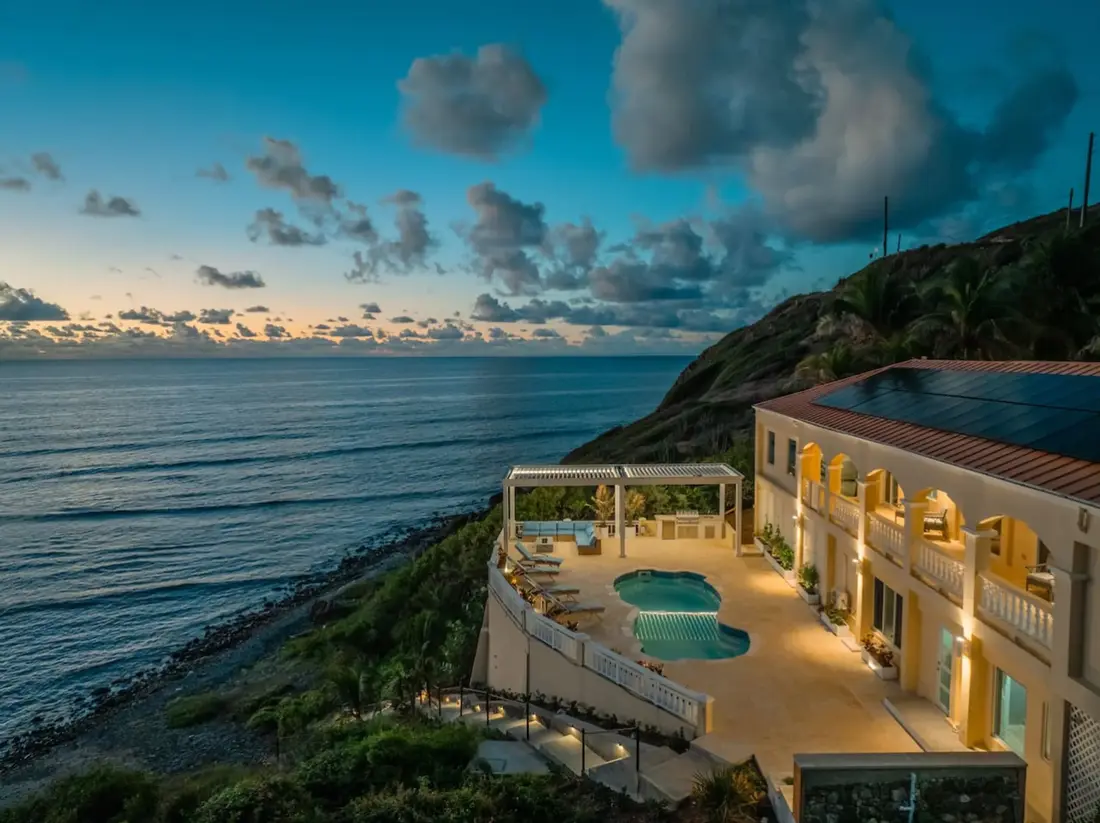
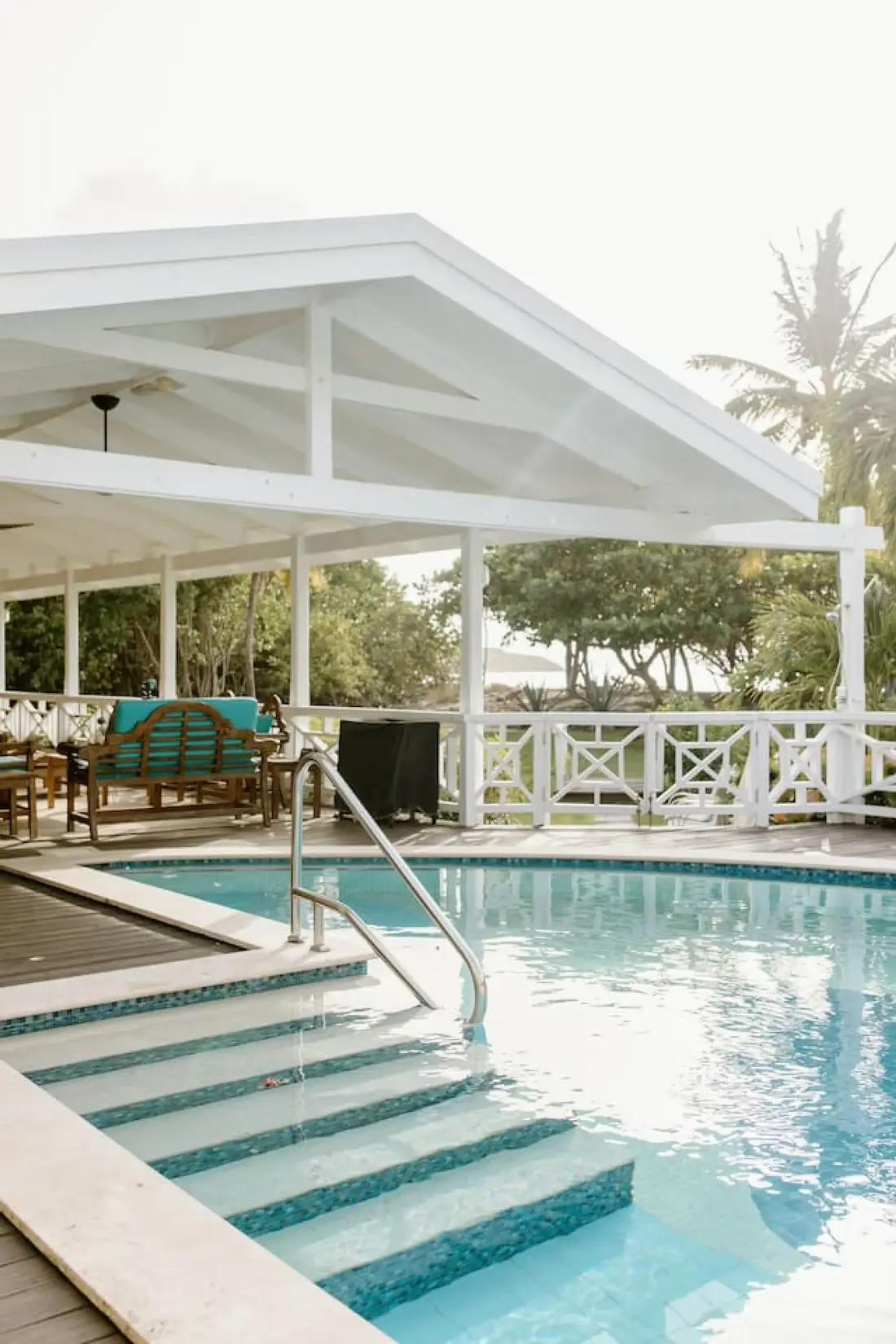
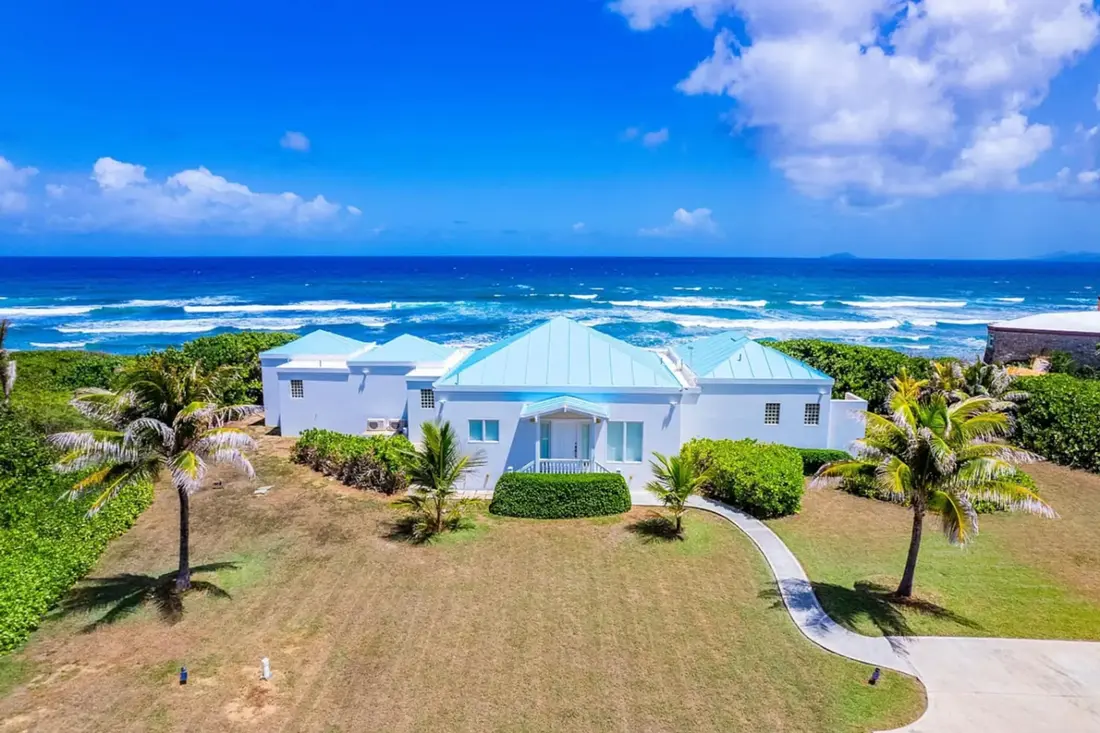
St. Croix's rental market has depth, and ours is the managed end of it: a roster of villas and condos — beachfront houses, East End homes facing Buck Island, in-town condos — most with pools, all managed from the island by Sterling Point, all booked direct with no platform fees. A house with a washer, a real kitchen, air conditioning that works and a person on-island who answers the phone: that is the difference between visiting an island and camping on one. The homes are here.
Month by month on the little islands
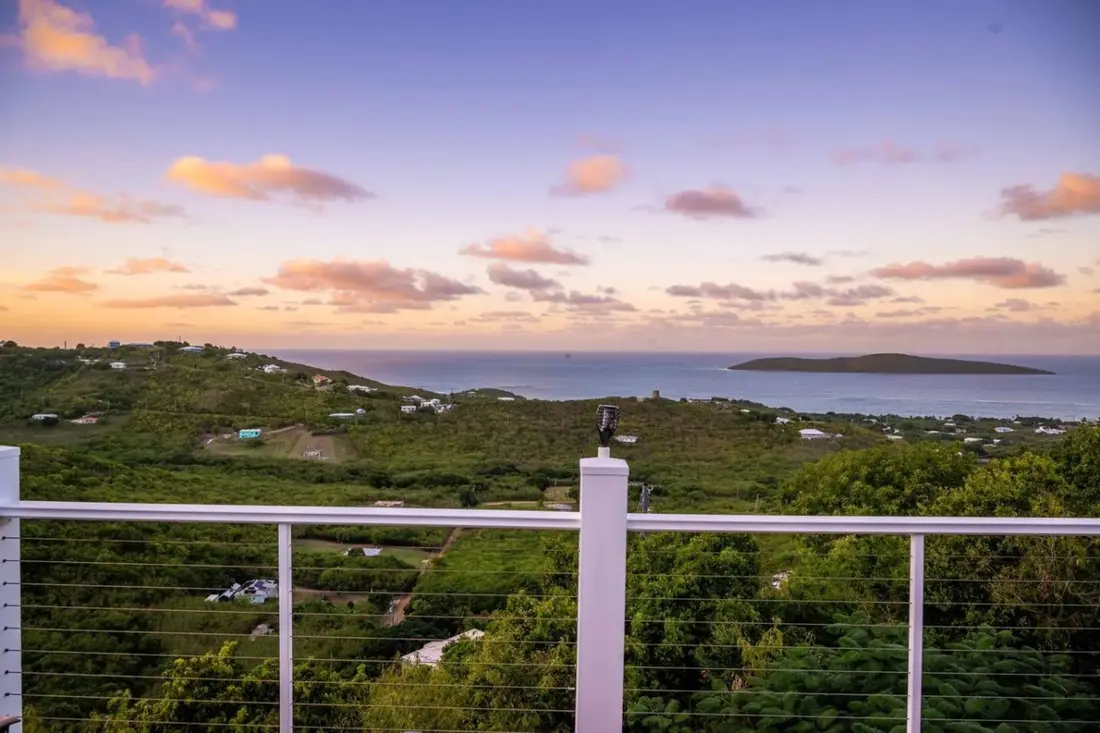
The shared climate needs no re-litigating — trade winds, 83-degree winters, hurricane season June through November with insurance advised everywhere. The small-island calendar has its own physics, though. High season on Vieques and Culebra means the thin inventory sells out months ahead, the Ceiba ferry queue grows Puerto Rican holiday crowds (Semana Santa and summer weekends are legendary), and the handful of restaurants set up waits the islands cannot absorb. Low season cuts the other way: operators go on vacation themselves, kitchens close for September, and the short list gets shorter. A 41,000-person island does not breathe like that: St. Croix's high season fills villas without filling beaches, and its September stays open — quieter, greener, cheaper, but open, with its own case for the month. Mosquito Bay's best viewing follows the new moon in any month; so does Salt River's — and only one of them is bookable the same week you thought of it.
The travel day, hour by hour
The Vieques run, told straight from the traveler forums that keep its lore: land at San Juan at 2; taxi or transfer 45 minutes to Ceiba; make the 4:30 ferry if the 4:00 sold out (residents board first, as they should); cross in 40 minutes; find the publico or your guesthouse pickup; keys by 6 if the chain held. The air alternative compresses the clock and inflates the budget: an eight-seater from SJU or Ceiba, bags weighed with you, golf-cart pickup on the other side. Culebra runs the same relay to a different dock. Nobody calls it hardship; everybody calls it a second travel day inside the first.
The St. Croix day, same wheels-down at 2: walk to Cape Air or JetBlue's commuter gates, lift off over the east coast of Puerto Rico, and descend past Buck Island fifty minutes later — or skip San Juan entirely on a mainland nonstop. Rental counter, supermarket, villa: poolside before the Ceiba ferry has boarded. The way home repeats the arithmetic in reverse, minus the ferry-anxiety padding every little-island traveler builds into departure morning.
Seven days on each
The typical Vieques week: Caracas and La Chiva beaches through the old Navy lands, the malecon at Esperanza for dinner, horses in the road, Mosquito Bay on the darkest night, a Culebra day if the ferries align — then the week begins repeating itself, gently, which is exactly what its loyalists come for. Culebra alone is Flamenco plus snorkeling at Tamarindo plus a bar at the Dinghy Dock, on a loop.
The St. Croix week refuses to loop: Buck Island's snorkel trail Monday; Cane Bay's wall and beach bar Tuesday; Christiansted's fort, arcades and boardwalk Wednesday; Point Udall sunrise, the Jack's and Isaac's trail and The Shoys on Thursday; Frederiksted's fort, pier snorkel and Rainbow sunset Friday; the rainforest, Cruzan and the Domino Club Saturday; Salt River's glow one night, night diving another if you are certified. Same quiet register as the little islands — with a week's worth of different days in it. Plans: the 7-day itinerary.
Getting around once you land
On Vieques the rental fleet is small, jeep-heavy and booked out for months around holidays; the roads to the famous south-shore beaches run through the old Navy lands on graded gravel that rearranges itself after rain; wild horses have the right-of-way by custom and mass; and publicos cover the towns but not the beaches. Culebra compresses the same pattern: golf carts and jeeps from a handful of agencies, one road worth the name, and Flamenco's lot as the island's one traffic concept. Fuel is one or two stations per island; running low is a real rookie error.
St. Croix's rental counter stocks national brands beside trusted local firms, the roads are paved to every beach worth naming, fuel is everywhere, and the only wildlife negotiating right-of-way is a slow parade of goats near Estate Lower Love. Left-side driving is the single briefing (the guide); renting a car covers the rest.
Before you book either
For the little islands: reserve the jeep or cart before the lodging — the fleet is the binding constraint; book Mosquito Bay tours around the new moon and early (the permitted operators cap out); pad the ferry schedule generously in both directions and hold the last-boat rule sacred; carry cash for the kiosks; and check the fall calendar — September thins operators and kitchens to a skeleton crew.
For St. Croix: book the villa direct (the homes), reserve any car, calendar Buck Island and the Salt River bio bay ahead in peak weeks. The moon matters for the glow on both islands; nothing else on the St. Croix list is scarce.
The case for St. Croix, point by point
One: one aircraft against a plane-plus-ferry relay with resident priority. Two: managed villas with pools against thin guesthouse inventory. Three: a hospital and pharmacies against a years-long clinic rebuild. Four: real supermarkets against small-market provisioning runs. Five: a year-round bio bay ten minutes from dinner against the (brighter, conceded) bay one relay away. Six: a dozen paved-access beaches against gravel-road gems with a fuel-gauge subplot. Seven: walk-in wall diving and a snorkel-trail monument against snorkeling-only water. Eight: towns with dinner rows and history against kiosks and horses — charming, and thin by Wednesday. Nine: a full-year operating calendar against a September skeleton crew. Ten: the same American flag and the same quiet, with the infrastructure switched on. The little islands are a lovely weekend's answer; St. Croix is the week's.
Who should pick which islands
Pick Vieques or Culebra if: it is a two-to-four-night add-on to a Puerto Rico trip; the bare-bones aesthetic is the point; Mosquito Bay at new moon is the one thing you came for; or you are a returning devotee with the ferry rhythm in your bones. Pick St. Croix if: the trip is the full week; the group includes kids, grandparents or anyone who wants a real bed, a real kitchen and air conditioning that never blinks; a diver is aboard (the little islands cannot answer the wall); provisioning should take an hour, not a strategy; or medical backup within minutes matters to anyone's peace of mind. The little islands are a beautiful weekend's answer; St. Croix is the week's.
When the little islands are the right call
For a two-or-three-night add-on to a Puerto Rico trip, Culebra is a joy: ferry over light, Flamenco at dawn before the day boats, fresh fish at a kiosk, ferry back. Vieques rewards the same short format with Mosquito Bay at new moon and wild horses grazing the roadsides. Travelers whose whole aesthetic is bare-bones — no resort, no villa, no plan — will find the little islands' limitations romantic rather than limiting, and they are served well there. A full week with a family, a group, or anyone who likes a comfortable base: that is a different trip, and it is the trip St. Croix is built for.
A rainy day on each
Rain on Vieques is the fort museum's small rooms above Isabel Segunda, a long lunch on the malecon, and the sound of it on tin roofs — which devotees call the point. Culebra's version subtracts the museum. St. Croix's wet-day file runs a full circuit: Fort Christiansvaern's vaults, the Whim estate museum, the Apothecary Hall, Frederiksted's arts center, and a distillery trail that improves in weather. The rainy-day plan exists because an island of 41,000 built things; the little islands' charm is that they mostly didn't.
If you choose the little islands anyway
Then go in the format they reward: short, light and pre-booked. Reserve the jeep or cart before the lodging; book Mosquito Bay for the darkest night of your stay the moment dates exist; ride the first ferry of the morning with tickets bought online and expectations padded. On Vieques, take the gravel south-shore road to Caracas and La Chiva early, give the horses their right-of-way and your photographs, and eat where the chalkboard is short. On Culebra, Flamenco at dawn beats Flamenco at noon by an island's worth of difference; snorkel Tamarindo for turtles and carry cash for the kiosks. Fuel up whenever the gauge dips below half — the stations are few and keep island hours — and hold the last-boat rule sacred in both directions. Two or three nights, done exactly so, is the little islands at their best.
Where you would stay on St. Croix
The infrastructure-on version of the same quiet: our direct-booked homes with Sterling Point managing on-island. Shoy's Beach House on The Shoys' guarded sand; East End villas — The Cerulean among them — facing Buck Island's water from private pools; Christiansted condos near the boardwalk; west-end sunset stays. Air conditioning that never negotiates with a grid, kitchens fed by real supermarkets, a hospital in range and a car that never worries about gravel — the little islands' romance with the rookie errors removed. Couples: homes for two; groups to twelve: the family collection. The roster: the homes.
How this page was made
Series rules: ferry capacity and resident-priority rules per the Puerto Rico maritime authority's public record; Vieques' clinic rebuild per post-Maria reconstruction coverage; Mosquito Bay's measured brightness per published science; grid reliability per the utility's own documented record. The little islands' magic — the glow, the horses, Flamenco's crescent — is conceded with affection throughout. Our bias: our managed homes on St. Croix, disclosed across this series. All four islands fly the same flag; the difference is what got built, and that is checkable on any map.
The bottom line
Vieques and Culebra prove how much Americans want what St. Croix has: quiet, warm, beautiful and under the U.S. flag. They deliver the quiet; they charge for it in ferries, weigh-ins, thin services and short lists. St. Croix delivers the same quiet at 84-square-mile scale with jets, villas, supermarkets, forts, distilleries, a year-round bio bay and the best shore diving in the American Caribbean. If the little islands are a beautiful weekend, St. Croix is the same idea grown up into a week. Start with the homes.
Elsewhere in this series
This page is one of twenty-six. If you are still shopping the map, the verdicts nearest this comparison run as follows — each links to the full page with its own sources:
St. Croix vs Puerto Rico — Puerto Rico is a country-sized trip with city energy. St. Croix is the island-sized version: 41,000 people, no traffic, same flag.
St. Croix vs the Florida Keys — The Keys are a road trip with margaritas. St. Croix is the Caribbean: warmer winter water, real turquoise, and lodging that costs less than Key West.
St. Croix vs Hawaii — Hawaii is magnificent and eleven hours away. St. Croix is the American tropics you can reach by lunch, with warmer, calmer, bluer water.
The complete set, grouped by region and passport rules, lives at St. Croix vs other destinations.
Which home fits your group
If St. Croix wins your comparison, the homes are the easy part. Groups of eight to twelve settle into the family collection; couples take a home for two; anyone who wants sand at the door starts with beachfront. Every one is managed from the island by Sterling Point and booked direct — tell us the dates and the headcount and we will point you at the one that fits.
Two practical notes that surprise first-time villa bookers. Direct booking means the rate is the rate: no platform service fees, no resort fees, and the people answering questions are the same Sterling Point team that manages the houses on the island. And every home runs a full kitchen — one run to Plaza Extra or Seaside Market on the drive from the airport covers the week, which is where a villa quietly beats a resort bill before the first beach day. How the booking works, and what it does not mean, is spelled out at book direct.
Who wrote this
SP Vacations is the vacation-rental division of Sterling Point Real Estate, a licensed real-estate operation based on St. Croix in the U.S. Virgin Islands. The team lives and works on the island it writes about: the homes in the villa collection are inspected, cleaned and managed locally, and the person who answers a booking question is on St. Croix, not in a call center three time zones away. That is the vantage point behind every page in this series — and the reason the series exists at all, since most of the destinations compared here are places our guests weighed before choosing this island.
Two standing practices shape what you read. First, the pricing wall: nightly rates and availability for the homes live only on the booking pages, never in articles, so nothing here goes stale or oversells. Second, the sourcing rule: safety statements cite the U.S. State Department, customs figures cite CBP, park facts cite the National Park Service, and anything that changes — advisories, schedules, hours — carries its checked date and a pointer to the primary source. Where a rival destination wins a category, the page says so, because a comparison that concedes nothing persuades nobody. Questions, dates or a villa to match a group — the island team is here, or call 340-205-3929.
Questions people ask
What happened at the Vieques Navy ranges?
The Navy used much of Vieques for training until 2003; the former ranges became refuge land — which is why the south-shore beaches feel wild — with cleanup continuing on closed parcels. St. Croix's wild shores earned their emptiness differently: refuge status at Sandy Point and a Nature Conservancy preserve at the East End bays.
Are there cars to rent on Culebra?
A small fleet of jeeps and golf carts from a handful of agencies — reserve well ahead or walk. St. Croix's airport row includes national brands and local firms with real inventories; the rental is never the trip's constraint.
Is Flamenco Beach free?
Yes, with small parking and camping fees — and its fame fills it by mid-morning in season via the ferry crowds. Sandy Point asks only the refuge's weekend calendar and rewards with two miles that fame forgot.
Which is better for stargazing?
All three run dark skies by mainland standards. Vieques' south shore is famously black — part of Mosquito Bay's magic — while St. Croix's East End delivers the same star field above Point Udall with a paved road home. See the island after dark.
Are Vieques and Culebra easier to reach than St. Croix?
No — the reverse. Both require flying to Puerto Rico and then a ferry from Ceiba (often oversubscribed, residents have priority) or an eight-seat plane. St. Croix has nonstop mainland jets from six cities as of August 2026, plus a 50-minute San Juan hop all day on Cape Air and JetBlue.
Is St. Croix's bio bay as good as Mosquito Bay?
Mosquito Bay on Vieques is the brightest ever measured and worth its fame. Salt River Bay on St. Croix is one of the world's few year-round bioluminescent bays, ten minutes from Christiansted, with nightly clear-kayak tours. Glow varies with the moon at both. The practical difference: Salt River needs no second island.
Is Flamenco Beach better than St. Croix's beaches?
Flamenco is a world-list beach and busy for exactly that reason. St. Croix counters with breadth: Sandy Point's two near-empty miles on winter weekends, Cane Bay, The Shoys, Jack's and Isaac's Bays and a dozen more, none with lines or day-trip crowds. One trophy against a full roster.
Do Vieques and Culebra have hospitals and supermarkets?
Limited ones. Vieques lost its hospital to Hurricane Maria in 2017 and the rebuild has run for years; both islands rely on small markets and the main island for serious needs. St. Croix runs a full economy for 41,000 residents: hospitals, pharmacies, real supermarkets and national car-rental brands.
Do I need a passport for any of these islands?
No — Vieques, Culebra and St. Croix are all U.S. territory. St. Croix adds the USVI's $1,600 per-person duty-free allowance home, double the standard $800.
Which is better for diving?
St. Croix, decisively. The Cane Bay Wall and Frederiksted Pier are shore dives; Buck Island is a protected snorkel-trail monument; wrecks and canyon walls fill out the week. The little islands are snorkeling-first with thin dive operations.
When should I visit Vieques, Culebra or St. Croix?
All three share the trade-wind calendar. The little islands' thin inventory sells out for high season and Puerto Rican holidays, and some kitchens close entirely in the fall. St. Croix stays open year-round — high season fills villas without filling beaches, and September–November runs green and cheap.
How does the Ceiba ferry actually work?
Passenger ferries run from Ceiba (not San Juan) to both islands for a few dollars; residents have boarding priority, weekend and holiday sailings sell out, and travelers routinely pad hours around the queue. The alternative is an eight-to-nine-seat plane with weighed bags. St. Croix's arrival is a jet bridge and a rental counter.
Are there villas with pools on Vieques and Culebra?
A handful, thinly spread and quickly booked; most lodging is guesthouses and small rentals, with Culebra's famous option being the Flamenco campground. St. Croix's Sterling Point homes — most with pools, all with kitchens — are managed from the island and booked direct. See the homes.
Can I do Vieques or Culebra from St. Croix?
Not practically — there is no direct link; you would route back through Puerto Rico. Treat them as separate trips. If you want a small-island day from St. Croix, Buck Island's lagoon and Turtle Beach deliver it by licensed boat from the Christiansted boardwalk.
In this comparison
St. Croix at a glance
- U.S. territory — no passport for U.S. citizens
- Nonstops from Miami, Fort Lauderdale, Charlotte, Atlanta, Newark and Chicago
- U.S. dollars, U.S. phone plans, no foreign customs
- $1,600 duty-free allowance home (double the standard $800)
- 84 square miles — the largest U.S. Virgin Island
More comparisons
- St. Croix vs St. Thomas
- St. Croix vs St. John
- St. Croix vs Puerto Rico
- St. Croix vs the Florida Keys
- St. Croix vs Hawaii
- St. Croix vs the British Virgin Islands
- St. Croix vs Turks & Caicos
- St. Croix vs Anguilla
- St. Croix vs St. Barts
- St. Croix vs St. Martin
- St. Croix vs Antigua
- St. Croix vs St. Kitts & Nevis
- St. Croix vs St. Lucia
- St. Croix vs Barbados
Sources
Ferry system, capacity and priority rules per the Puerto Rico Maritime Transport Authority as widely reported; Vieques hospital status per public post-Maria reconstruction coverage; Mosquito Bay brightness per published scientific measurement coverage; St. Croix facts from NPS, USFWS and our sourced island reference. Flights verified August 2026.
St. Croix vs Vieques and Culebra
Same quiet, same flag. St. Croix has the jets, the villas and the services; the little islands have the ferry line.