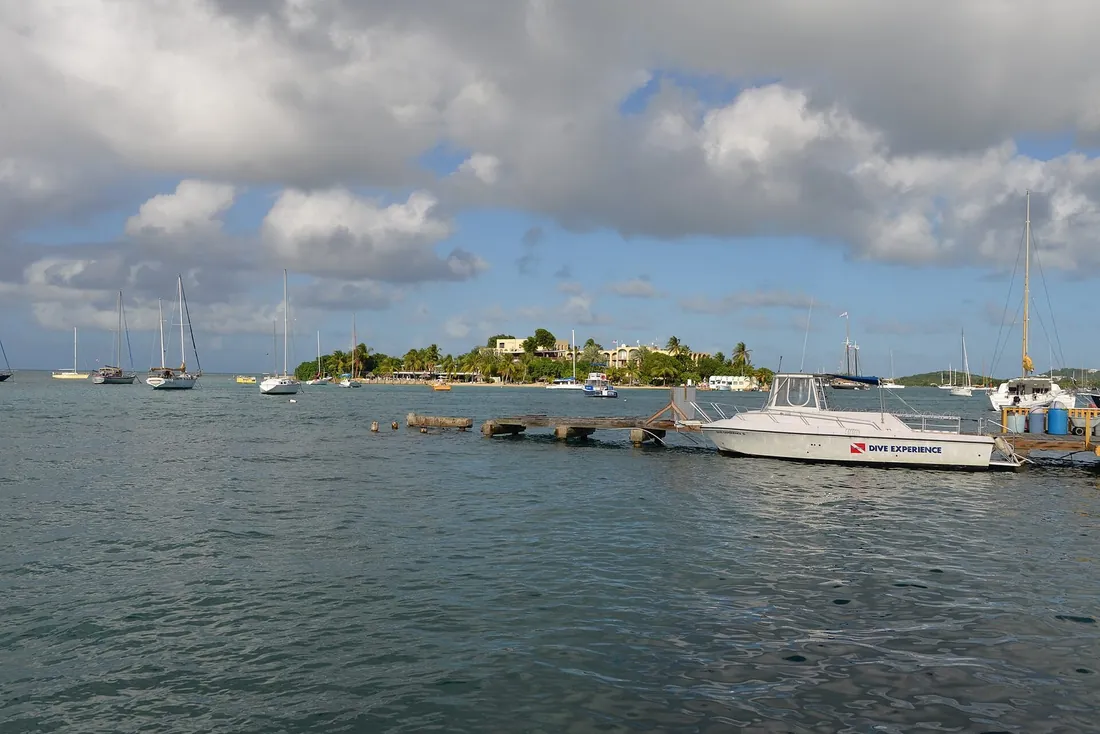
St. Croix vs Hawaii
Both are American islands with no passport required. One is three hours from Miami. The other is a day of travel, six time zones of jet lag, and a different ocean.
Hawaii deserves its legend: volcanoes, sea cliffs, surf culture, landscapes with no rival under the American flag. This page will not argue otherwise. It argues arithmetic instead. From the East Coast, a Hawaii week spends two of its days inside airplanes and two more shaking off a six-hour clock change — for water that is cooler, rougher and deeper-blue than the Caribbean postcard most beach travelers are actually picturing. St. Croix is that postcard, three hours from Miami, on the same no-passport terms.
The two, side by side
| St. Croix | Hawaii | |
|---|---|---|
| Passport for U.S. citizens | Not needed | Not needed |
| Flight from the East Coast | About 3 hours from Miami; 4½ from Newark | 9–11 hours nonstop from New York; most trips connect |
| Time zones from Eastern | None — Atlantic time, same clock as EDT | Five to six hours behind; jet lag both ways |
| Winter sea temperature | About 79–80°F | Roughly mid-70s; brisk by Caribbean standards |
| Winter swimming | Calm, protected, swimmable everywhere | North-shore beaches close to swimmers under giant surf |
| Water color | Turquoise shallows over white carbonate sand | Deep Pacific blue; volcanic coasts drop off fast |
| Crowds | About 41,000 residents, no resort strips | Nearly ten million visitors a year at recent counts |
| Lodging | Villas with pools, booked direct | Resort rows at Waikiki, Ka'anapali, Wailea; high rates plus resort fees |
| A week's travel overhead | Half a day, total, round trip | Two full travel days plus recovery |
| Duty-free allowance home | $1,600 per person (USVI) | Not applicable |
Advisory levels and details are as published by the U.S. Department of State and checked August 2026. They change — read the current advisory at travel.state.gov before any international trip.
The short answer
If the trip is Hawaii itself — Haleakala at sunrise, the Napali cliffs, lava fields, the North Shore in January from a safe distance — go, once, properly, for ten days or more, and no Caribbean island will substitute. If the trip is a beach week — warm water, white sand, a villa, a reef, drinks at sunset — then Hawaii is the long way around for East Coast travelers, and the numbers below make the case. We manage our own homes on St. Croix, so you know our angle; the numbers do not care about our angle.
The travel math, stated in hours
New York to Honolulu nonstop runs about eleven hours outbound; most itineraries from the East Coast and South connect through the West Coast and stretch past thirteen. Add the six-hour time change (five in winter): you land mid-afternoon island time with your body insisting it is bedtime, and the first two days of the vacation are spent negotiating with your own circadian clock. The return does it again in reverse, and the red-eye east is the one travelers remember. Count it: a seven-night Hawaii trip from the East Coast buys about five functional island days.
St. Croix from the same origins: Miami nonstop in about three hours, Charlotte about three and three-quarters (daily from December 17, 2026), Atlanta about four (near-daily from December 19), Newark about four and a half (Saturdays from October 31, 2026), Chicago about four and three-quarters on winter Saturdays — and the island sits in Atlantic time, which matches the East Coast clock all summer and drifts one hour in winter. No jet lag in either direction. Wheels down to villa: 10 to 40 minutes. A seven-night St. Croix trip is seven island days. Verified August 2026:
| Airline | From | Schedule (as published Aug 2026) | Flight time |
|---|---|---|---|
| American Airlines | Miami (MIA) | Year-round, one to three flights daily by season | about 3 hours |
| American Airlines | Charlotte (CLT) | Paused until Saturdays return November 7; daily beginning December 17, 2026 | about 3¾ hours |
| American Airlines | Chicago O'Hare (ORD) | Winter Saturdays beginning December 5, 2026 | about 4¾ hours |
| Delta Air Lines | Atlanta (ATL) | Saturdays through September 5; Saturdays again from November 14; daily except Mondays beginning December 19, 2026 | about 4 hours |
| United Airlines | Newark (EWR) | Saturday nonstops beginning October 31, 2026 | about 4½ hours |
The water: two different oceans, literally
Sea temperature first. St. Croix's water holds roughly 79 to 85 degrees across the year — bath-warm in winter, when you want it most. Hawaiian waters run cooler, roughly the mid-70s in winter — fine for a surfer in a spring suit, brisk for a swimmer who came to float. The gap is only a few degrees on paper; in the water it is the difference between staying in an hour and getting out in fifteen minutes.
Winter conditions matter more. Hawaii's north and west shores take the full North Pacific swell from roughly November through March — the season of the famous big-wave contests — and lifeguards close swimming at beach after beach under high-surf warnings. Families discover this on arrival: the postcard beach is real, and it is also unswimmable today. St. Croix's winter is the Christmas Winds — a brisk trade breeze over a sea that stays calm on the protected shores where the beaches are. Cane Bay, The Shoys, Chenay, Frederiksted's west coast: swimmable every day of a January week, with the water at 79.
And the color. Hawaii's islands are young volcanoes that plunge into deep Pacific blue — magnificent, dramatic, dark. The pale turquoise of the tropical postcard comes from something Hawaii mostly lacks: shallow shelves of white calcium-carbonate sand under reef-protected water. St. Croix sits on exactly that geology. Stand at Cane Bay or Sandy Point and the flats glow that impossible pale blue-green; it is the seabed doing it, and no Pacific volcano can copy it.
Reefs and what lives on them
Hawaii's isolation gives it wonderful endemics — fish found nowhere else, honu on every snorkel — but its coral cover is thin by Caribbean standards and its famous snorkel spots (Hanauma Bay, Molokini) meter crowds with reservations and boat fees. St. Croix's reef is the classic Caribbean architecture: an elkhorn barrier wrapping two-thirds of Buck Island inside a no-take national monument protected since 1961, with a marked underwater snorkel trail; a wall at Cane Bay that starts a hundred yards off the sand and drops toward abyssal depth — a shore dive, walked into from the beach; and the Frederiksted Pier, one of the Caribbean's known macro dives. No reservation systems, no crowd caps needed, because there is no crowd. Start at snorkeling St. Croix and diving St. Croix.
Crowds and cost
Hawaii hosted nearly ten million visitors a year at recent counts — against 1.4 million residents — and its beach economies are built to metabolize that volume: resort rows at Waikiki, Ka'anapali and Wailea, resort fees stacked on high room rates, paid parking at famous beaches, reservations for parks and even for sunrise. It works, impressively; it is also a managed, metered experience, and you feel the management.
St. Croix's entire visitor volume is a rounding error on those numbers. There are no resort strips; there is no metering because nothing fills. A direct-booked villa with a pool — ours are here — costs less than a comparable Hawaiian resort week before the resort fees start, the beaches are free and empty, the fort costs a few dollars, the rum tasting is priced like a souvenir, and the $1,600 USVI duty-free allowance (double the standard) flies the souvenirs home. The scale of the saving varies with dates; the direction of it does not.
Things to do, compared fairly
Hawaii wins the sublime: an erupting volcano, a 10,000-foot sunrise, cliffs that make helicopters feel necessary. Nothing on St. Croix — nothing in the Caribbean — competes with that, and this page will not pretend otherwise.
But a beach week is made of afternoons, and St. Croix's afternoons hold more than visitors expect: two Danish colonial towns (Christiansted's five-building National Historic Site; Frederiksted's emancipation fort), Alexander Hamilton's boyhood streets, the Cruzan distillery pouring since 1760 and Captain Morgan's visitor center, a year-round bioluminescent bay you kayak at night, a west-end rainforest, tide pools at Annaly Bay, an 18-hole Robert Trent Jones Sr. course at Carambola, Point Udall — the easternmost point of the United States — and Buck Island sails from the Christiansted boardwalk. It is a full week's list on an island you cross in forty minutes, with no line at any of it.
Families, couples, divers
Families: Hawaii's flight-plus-jet-lag overhead lands hardest on children, and winter surf closures complicate the one thing kids came for. St. Croix's calm shallows at Chenay Bay, a villa with its own pool and kitchen, and a no-jet-lag arrival make the week easier at every step — see traveling with kids. Couples: Hawaii sells the honeymoon spectacular; St. Croix sells the same sunsets with the crowd deleted, at Rainbow Beach and the west end. Divers: Hawaii dives are lovely boat dives in cooler water; St. Croix's wall is a walk from the sand into 80-degree blue. The homes for two and family collection are sorted accordingly.
Month by month, Pacific against Caribbean
Hawaii's calendar runs on swell and school breaks. Winter (November–March) is whale season and big-wave season: magnificent to watch, hostile to swim on the north and west shores, with high-surf closures a routine lifeguard call; it is also peak pricing, driven by holiday demand. April–May and September–October are Hawaii's sweet spots — calmer water, thinner crowds. Summer brings family volume and the calmest swimming, plus hurricane season's Pacific version (rarely landfalling, occasionally disruptive) and vog drifting on Kona winds when the volcano is active.
St. Croix's calendar is simpler because the ocean cooperates year-round: December through April dry and breezy at 83°F with the sea at 79–80 — the exact months Hawaii's north shores close — May and June clear and quieter, September through November green, cheap and watched (insurance, flexible bookings, the standard Atlantic advice). There is no surf season that cancels swimming, no whale-week price spike, and the best month is whichever one you have. Detail: when to visit and the twelve month guides.
The travel day, hour by hour
The Hawaii day from the East Coast, told kindly: a 9 a.m. departure, a West Coast connection with its layover, wheels down in Honolulu around 4 p.m. island time — 10 p.m. on your body clock — then the rental-car center shuttle, the H-1 crawl toward Waikiki or a second inter-island hop to Maui or Kauai with its own baggage cycle. Bed by 8, wide awake at 3 a.m., repeat for two mornings. The return is the same day run backward into a red-eye that lands you home at dawn, useless. Ten to thirteen hours each way, four days of the trip taxed by clock math.
The St. Croix day: Miami mid-morning, Caribbean by early afternoon, villa by mid-afternoon, swim before dinner — body clock undisturbed, because Atlantic time matches the East Coast in summer and drifts one hour in winter. Seven island days out of seven, both directions painless. For West Coast readers the ledger flips — and this page is written for the other coast.
Seven days on each
The Hawaii week (Maui edition): Haleakala sunrise with a 3 a.m. alarm and a reservation; the Road to Hana with its 600 curves and its parking wars; a snorkel boat to Molokini; Ka'anapali beach days between resort fees; a luau; whale watching in season; the airport day that starts at dawn. Grand, and paced like a campaign.
The St. Croix week: Buck Island's snorkel trail Monday; Cane Bay Tuesday — the wall for divers, the shelf for snorkelers, the beach bar for everyone; Christiansted's fort and arcades Wednesday; Point Udall's sunrise (no reservation, no alarm before 5) and the East End beaches Thursday; Frederiksted's pier and Rainbow's sunset Friday; the rainforest, Cruzan and the Domino Club Saturday; the bio bay one dark night. Nothing metered, nothing booked months out, nothing more than forty minutes away. Plans: the 7-day itinerary.
Getting around once you land
Hawaii driving is American-easy and Hawaiian-slow: Oahu's H-1 runs a real city's rush hours, Maui's resort-to-sight corridors (the Hana road's 600 curves, the upcountry grades) convert short maps into long days, and the famous trailheads and beaches now meter access with paid lots and reservations that sell out at midnight releases. Rental cars price with demand spikes that made national news in recent years; resort parking bills nightly. None of it is hard; all of it is managed, metered and shared with the volume the islands host.
St. Croix's driving is the unmanaged version: left-side habit learned in a morning (the guide), forty minutes corner to corner, zero reservations for anything a car reaches, free lots at the beaches, and a rental market priced like an island rather than a surge. The island loop is the anti-Hana road: half the beauty per mile, none of the caravan.
Before you book either
For Hawaii: build the reservation layer before the flights — Haleakala sunrise, Hanauma Bay, Diamond Head, Waianapanapa and others gate access with timed systems that fill; price the resort fees and parking into the rate; check surf season against your swimmers (November–March closes north shores); and budget the jet lag as real days lost — the first two days and the return red-eye belong to the clock, not to you. Inter-island hops add their own baggage cycle.
For St. Croix: book the villa direct (the homes), reserve the car, calendar Buck Island and the bio bay ahead in peak weeks. Nothing else on the island takes a reservation system; the sunrise at Point Udall admits everyone who wakes up.
The case for St. Croix, point by point
One: three hours against nine-to-thirteen, and zero time zones against five or six — seven island days out of seven. Two: an 80-degree January sea against the mid-70s with surf closures. Three: turquoise carbonate shallows against deep volcanic blue — the postcard's actual chemistry. Four: nothing metered — no timed sunrises, no midnight reservation drops, no paid trailhead lots. Five: a reef off the sand against snorkel sites that cap and queue. Six: villa economics against resort-fee rows. Seven: no red-eye home — the return lands you functional. Eight: history walked between beach days — Danish towns, Hamilton, emancipation — against long drives between managed sights. Nine: rum at the source with the $1,600 allowance carrying it home. Ten: the whole trip runs on impulse — wake, look at the sky, choose — which is what a beach week was always supposed to be. Hawaii is the grand tour; St. Croix is the vacation.
Who should pick which
Pick Hawaii if: it is the grand tour — ten days minimum, volcanoes and cliffs, once a decade; you live west of the Rockies; surf culture or Pearl Harbor is the point; or the Pacific's particular majesty is worth two travel days to you, and it can be. Pick St. Croix if: the trip is an annual beach week from the eastern half of the country; children or grandparents are aboard (jet lag lands hardest on both); anyone plans to spend real hours in the water rather than beside it; the budget prefers a villa to a resort-fee row; or the vacation's first job is rest, which a six-hour clock change refuses to allow. The two compete only on the calendar page; the map already decided.
When Hawaii is the right call
From the West Coast, the math flips completely: five to six hours from California, mild time change — Hawaii is their Caribbean, and it would be silly to argue them out of it. For the once-in-a-decade grand tour — volcanoes, three islands, two weeks — Hawaii is worth the trip from anywhere. For surf culture, for Pearl Harbor, for the specific grandeur of the Pacific: go. This page exists for the other trip — the annual warm-water beach week from the eastern half of the country — and for that trip the eleven-hour flight is buying the wrong product at the wrong distance.
A rainy day on each
Hawaii's rain is part of its majesty — the windward sides drink it daily and the waterfalls run because of it — and its wet-day bench is deep where the cities are: Pearl Harbor's memorials deserve a full reverent day, the Bishop Museum is the Pacific's finest, and Honolulu's food halls shrug at weather. On the neighbor islands, rain mostly means driving to the dry side. St. Croix's version: Fort Christiansvaern's vaults, the Whim estate museum, Frederiksted's arts center, and the distillery trail from Cruzan to Sion Farm — smaller than the Bishop, three hours from Miami rather than eleven from JFK. The rainy-day plan covers the passing showers that are St. Croix's whole rainy repertoire.
If you choose Hawaii anyway
Then honor the distance with duration: ten days minimum, two islands maximum. Fly into the trip through the West Coast with an overnight if the budget allows — arriving broken wastes the first days. Book the metered marvels (Haleakala's sunrise, Hanauma, the Napali boats) the moment reservations open, and build the jet-lag mornings into the plan: 5 a.m. wakefulness is free sunrise logistics. Respect the ocean absolutely — the lifeguard closures and rip warnings are not suggestions, and winter north shores are for watching. Rent the car everywhere except Waikiki, eat at the food trucks and poke counters where the islands actually eat, and spend on one splurge (the helicopter, the luau done right) rather than resort-fee attrition. Hawaii rewards the pilgrim and punishes the impulse booking; go as the former.
Where you would stay on St. Croix
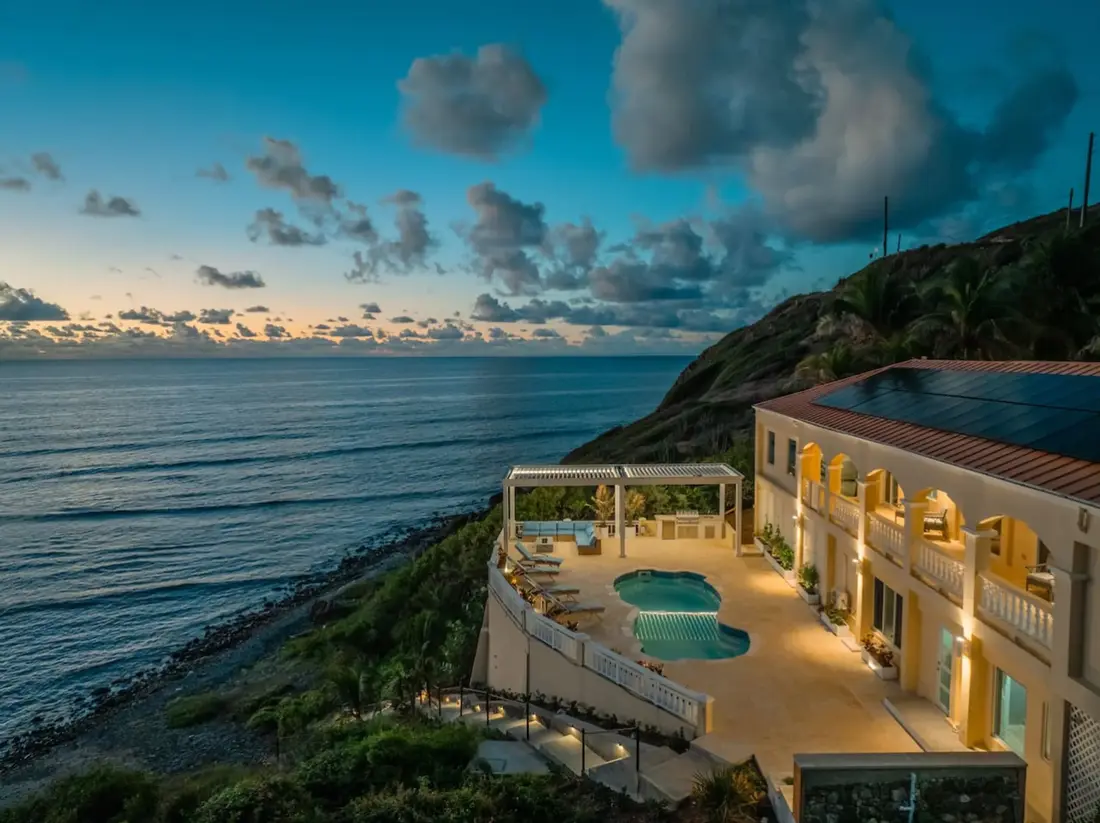
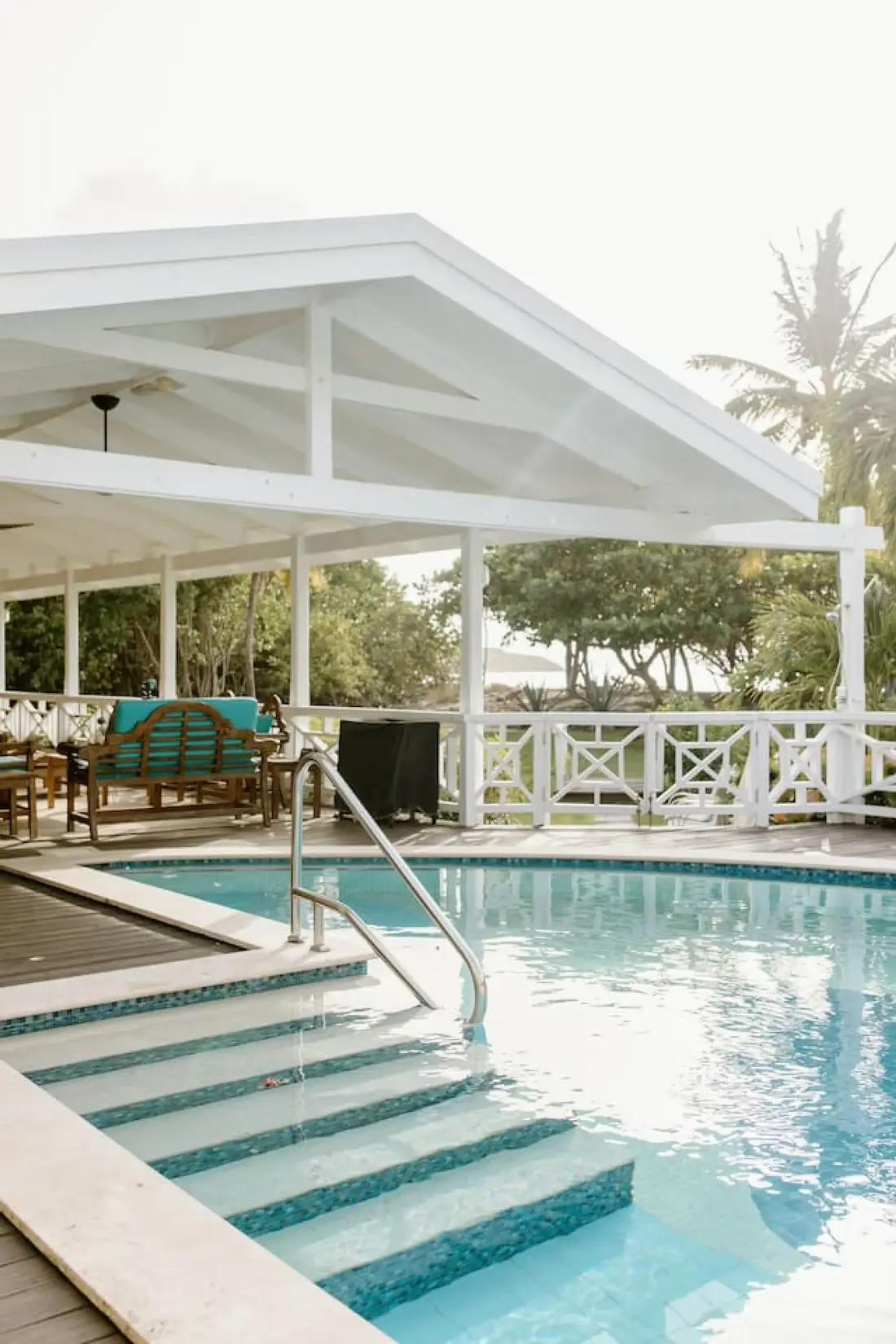
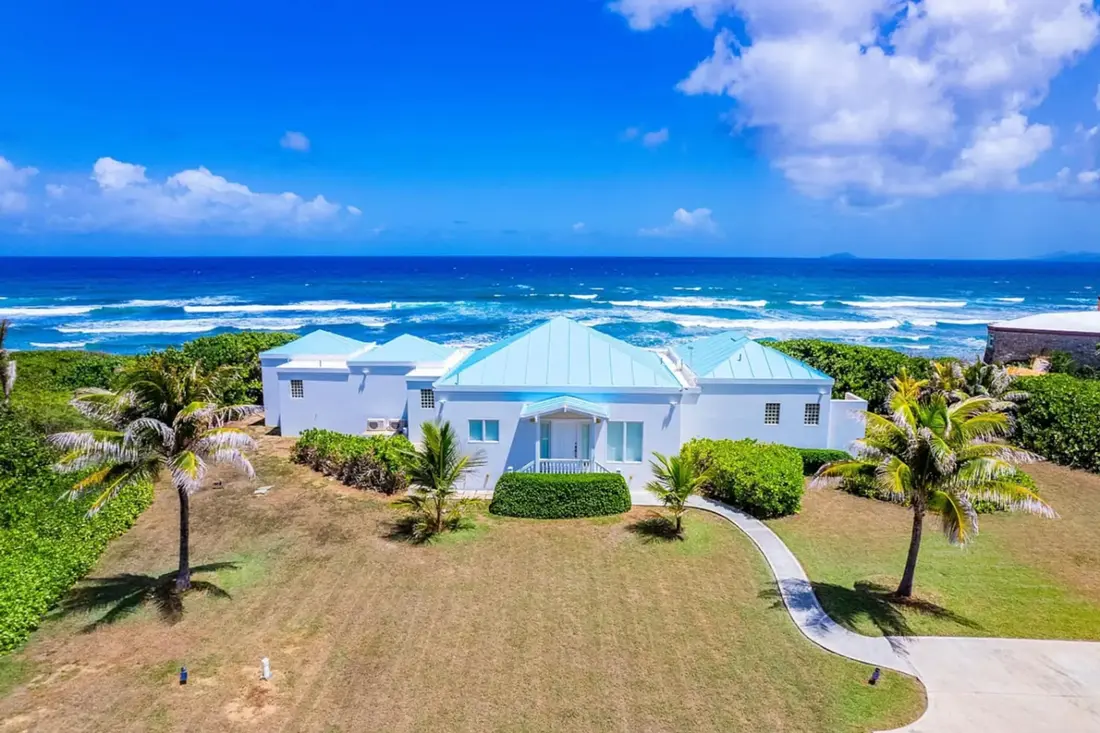
The near-tropics base: our direct-booked homes with Sterling Point managing on-island. Shoy's Beach House on The Shoys' guarded sand; East End villas — The Cerulean among them — facing Buck Island from private pools; Christiansted condos near the boardwalk; west-end sunset stays. No resort fees, no parking bills, no reservation systems between you and the water — and the clock you land on is the clock you left. Couples: homes for two; groups to twelve: the family collection. The roster: the homes.
How this page was made
Series rules: flight times per published schedules; visitor volume per Hawaii's state tourism statistics; surf closures per Hawaii ocean-safety guidance; reservation systems per the parks' and sites' own published rules; sea temperatures per NOAA normals, stated as ranges — all checked August 2026. Hawaii's grandeur is conceded in the first paragraph and throughout, because arguing against volcanoes is a fool's errand; the argument here is arithmetic, and arithmetic only. Our bias: the homes we manage on St. Croix, disclosed on every page of this series. The time-zone map is the least biased source there is.
The bottom line
Hawaii is the greatest island destination in America and the wrong tool for an East Coast beach week: two travel days, six time zones, cooler rougher water, metered crowds, resort-fee economics. St. Croix is the American tropics at Caribbean coordinates: three hours from Miami, no clock change, 80-degree turquoise water over white sand, a reef off the beach, and a villa that costs less than the resort row. No passport for either. Choose by ocean, not by fame. The homes are here.
Elsewhere in this series
This page is one of twenty-six. If you are still shopping the map, the verdicts nearest this comparison run as follows — each links to the full page with its own sources:
St. Croix vs Puerto Rico — Puerto Rico is a country-sized trip with city energy. St. Croix is the island-sized version: 41,000 people, no traffic, same flag.
St. Croix vs Vieques & Culebra — Same quiet, same flag. St. Croix has the jets, the villas and the services; the little islands have the ferry line.
St. Croix vs the Florida Keys — The Keys are a road trip with margaritas. St. Croix is the Caribbean: warmer winter water, real turquoise, and lodging that costs less than Key West.
The complete set, grouped by region and passport rules, lives at St. Croix vs other destinations.
Which home fits your group
If St. Croix wins your comparison, the homes are the easy part. Groups of eight to twelve settle into the family collection; couples take a home for two; anyone who wants sand at the door starts with beachfront. Every one is managed from the island by Sterling Point and booked direct — tell us the dates and the headcount and we will point you at the one that fits.
Two practical notes that surprise first-time villa bookers. Direct booking means the rate is the rate: no platform service fees, no resort fees, and the people answering questions are the same Sterling Point team that manages the houses on the island. And every home runs a full kitchen — one run to Plaza Extra or Seaside Market on the drive from the airport covers the week, which is where a villa quietly beats a resort bill before the first beach day. How the booking works, and what it does not mean, is spelled out at book direct.
Who wrote this
SP Vacations is the vacation-rental division of Sterling Point Real Estate, a licensed real-estate operation based on St. Croix in the U.S. Virgin Islands. The team lives and works on the island it writes about: the homes in the villa collection are inspected, cleaned and managed locally, and the person who answers a booking question is on St. Croix, not in a call center three time zones away. That is the vantage point behind every page in this series — and the reason the series exists at all, since most of the destinations compared here are places our guests weighed before choosing this island.
Two standing practices shape what you read. First, the pricing wall: nightly rates and availability for the homes live only on the booking pages, never in articles, so nothing here goes stale or oversells. Second, the sourcing rule: safety statements cite the U.S. State Department, customs figures cite CBP, park facts cite the National Park Service, and anything that changes — advisories, schedules, hours — carries its checked date and a pointer to the primary source. Where a rival destination wins a category, the page says so, because a comparison that concedes nothing persuades nobody. Questions, dates or a villa to match a group — the island team is here, or call 340-205-3929.
Questions people ask
Which Hawaiian island is most comparable to St. Croix?
None cleanly — Kauai for green quiet, Maui for beach-resort balance — and all share the Pacific math: long flights, big time change, metered sights, resort-fee economics. St. Croix's actual peers are Caribbean; against Hawaii the comparison is really about which ocean your week can afford in hours.
Is the Road to Hana worth it?
As a full committed day — 600 curves, waterfalls, banana bread, crowds at every pullout — it is Maui's signature drive and it earns the legend if you start early. St. Croix's scenic drive is Mahogany Road through the rainforest to the west end: shorter, emptier, and done by lunch.
Do Hawaii hotels charge resort fees?
Almost universally at the beach properties — nightly fees plus parking that add hundreds to a week before a towel is touched. St. Croix's direct-booked villas charge the rate and nothing else; parking is a driveway.
What about snorkeling Molokini or Hanauma Bay?
Both are lovely, managed experiences — a boat ticket for the crater, a timed reservation and entry fee for the bay, crowds at each. Buck Island's trail is the unmanaged-feeling equivalent: a licensed sail, a marked lagoon, no reservation system because none is needed.
Is St. Croix or Hawaii better for a beach vacation from the East Coast?
St. Croix, on logistics and water alike: about three hours from Miami with no time change, versus nine-to-thirteen travel hours and a five-to-six-hour clock shift; winter sea around 79–80°F versus Hawaii's mid-70s with high-surf swim closures on north shores. Hawaii wins for volcano-and-cliffs grandeur, not for the beach week itself.
Is the water warmer in St. Croix than Hawaii?
Yes — St. Croix's sea runs roughly 79–85°F across the year, warmest exactly when Hawaii's is coolest. Hawaiian winter water sits in the mid-70s, and its famous north-shore beaches close to swimmers under winter swell.
Why does the Caribbean look more turquoise than Hawaii?
Seabed geology. Turquoise shallows come from white carbonate sand and shallow reef shelves, which St. Croix has and volcanic Hawaii mostly lacks — its young islands drop quickly into deep Pacific blue. Both are beautiful; only one is the pale-turquoise postcard.
Do I need a passport for Hawaii or St. Croix?
No for both. St. Croix adds two quirks Hawaii can't: the USVI's $1,600 per-person duty-free allowance home (double the standard), and an Atlantic-time clock that matches the East Coast — no jet lag. See no passport needed.
Is Hawaii more crowded than St. Croix?
By orders of magnitude: Hawaii has drawn nearly ten million visitors a year at recent counts, with reservation systems at famous beaches, parks and sunrise viewpoints. St. Croix's visitor economy is small enough that nothing needs metering; its best beaches are commonly near-empty on weekdays.
Is St. Croix cheaper than Hawaii?
Generally, yes, and structurally: shorter flights, direct-booked villas without resort fees, free unmetered beaches, and shore-entry snorkeling and diving that need no charter. Exact gaps depend on dates — run both for your week and compare.
When is the best time to visit Hawaii vs St. Croix?
Hawaii's calm-water windows are spring and fall; its winter is whale-and-big-wave season with routine swim closures on north shores and peak prices. St. Croix's winter is its glory — 83°F days, 79–80°F sea, every beach open — exactly when the Northeast most wants out.
How bad is the jet lag to Hawaii?
Five to six time zones from the East Coast — enough that sleep researchers budget a day of adjustment per zone. Practically: 3 a.m. wide-awake mornings early in the trip and a punishing red-eye home. St. Croix sits in Atlantic time, matching the East Coast clock in summer — zero adjustment either way.
Do Hawaii trips need reservations now?
Several famous sights do — Haleakala sunrise, Hanauma Bay, Diamond Head and others use timed-entry or paid-reservation systems to manage volume. Nothing on St. Croix is metered; the island's visitor count never required it.
What does Hawaii have that St. Croix doesn't?
The sublime: active volcanoes, 10,000-foot summits, the Napali cliffs, surf culture, endemic wildlife. For that once-in-a-decade grand tour, go to Hawaii — ideally for ten days or more. For the annual warm-water week, the eleven-hour flight is the wrong tool.
In this comparison
St. Croix at a glance
- U.S. territory — no passport for U.S. citizens
- Nonstops from Miami, Fort Lauderdale, Charlotte, Atlanta, Newark and Chicago
- U.S. dollars, U.S. phone plans, no foreign customs
- $1,600 duty-free allowance home (double the standard $800)
- 84 square miles — the largest U.S. Virgin Island
More comparisons
- St. Croix vs St. Thomas
- St. Croix vs St. John
- St. Croix vs Puerto Rico
- St. Croix vs Vieques & Culebra
- St. Croix vs the Florida Keys
- St. Croix vs the British Virgin Islands
- St. Croix vs Turks & Caicos
- St. Croix vs Anguilla
- St. Croix vs St. Barts
- St. Croix vs St. Martin
- St. Croix vs Antigua
- St. Croix vs St. Kitts & Nevis
- St. Croix vs St. Lucia
- St. Croix vs Barbados
Sources
Flight times per published airline schedules; Hawaii visitor volume per the state's tourism statistics as widely reported; winter surf closures per Hawaii ocean-safety guidance; sea temperatures per NOAA and published climate normals, stated as typical ranges; St. Croix figures from our sourced island reference. Verified August 2026.
St. Croix vs Hawaii
Hawaii is magnificent and eleven hours away. St. Croix is the American tropics you can reach by lunch, with warmer, calmer, bluer water.