St. Croix vs Grenada
The Spice Island smells like nutmeg, and getting there is a long-haul itinerary: far south, thin flights, and a Level 2 advisory since January 2026. The American island is three hours from Miami.
Grenada is one of the Caribbean's most likable islands: a working spice economy that scents the docks with nutmeg, cocoa estates pressing tree-to-bar chocolate, a pretty carenage at St. George's and, on Grand Anse, a beach with a real claim to the region's top tier. It is also one of the farthest islands from the United States, its advisory moved to Level 2 in January 2026, and its airlift is thin. St. Croix offers the nearer version of the same unhurried virtues — with jets, no advisory and no passport.
The two, side by side
| St. Croix | Grenada | |
|---|---|---|
| Passport for U.S. citizens | Not needed | Required |
| U.S. State Department advisory | None — U.S. territory | Level 2: Exercise Increased Caution (crime), since January 5, 2026 |
| Flight from the U.S. | Nonstops from five mainland cities; 3 hours from Miami | Deep southern Caribbean; a handful of nonstops, many connections |
| Famous for | Buck Island, Cane Bay Wall, Danish towns, rum | Nutmeg, cocoa estates, Grand Anse beach |
| Signature underwater sight | A marked snorkel trail in a 1961 national monument | The world's first underwater sculpture park |
| Beaches | A dozen-plus, calm and near-empty | Grand Anse's two fine miles; smaller coves beyond |
| Interior | Rainforest, tide pools, golf — drive-in access | Lush volcanic interior; guided hikes and waterfalls |
| Diving | Cane Bay Wall and Frederiksted Pier from shore | Good boat diving; wrecks including the Bianca C |
| Coming home | Agriculture check; $1,600 duty-free | U.S. customs; $800 duty-free |
| Currency | U.S. dollar | Eastern Caribbean dollar |
Advisory levels and details are as published by the U.S. Department of State and checked August 2026. They change — read the current advisory at travel.state.gov before any international trip.
The short answer
Grenada rewards travelers who prize atmosphere over convenience: the spice markets, the chocolate, the fishing-village Fridays at Gouyave. Its distance is the moat that keeps the crowds thin — and the moat runs both ways, in flight hours, connection risk and cost. St. Croix delivers the same unhurried register — small towns, working distilleries, empty sand — on American terms: nonstop jets, a rental car, no State Department paperwork trailing the trip. Our stake is the portfolio of homes we manage on St. Croix; the ledger below is public record.
Getting there: the deep-south problem
Grenada sits at the bottom of the Antilles arc, ninety miles from Venezuela. American flies Miami nonstop and JetBlue has served New York seasonally; beyond those, itineraries connect — Miami, San Juan or Barbados — and stretch to eight or ten hours door to door from most of the country. Seats thin out around holidays and price like scarcity. It is the kind of journey a two-week traveler absorbs and a one-week traveler feels every day.
St. Croix, at the arc's north end: Miami nonstop about three hours daily on American, Charlotte daily from December 17, 2026, Atlanta near-daily from December 19, Newark Saturdays from October 31, 2026, Chicago winter Saturdays, plus San Juan's all-day 50-minute hop feeding every mainland fare war into the island. Verified August 2026:
| Airline | From | Schedule (as published Aug 2026) | Flight time |
|---|---|---|---|
| American Airlines | Miami (MIA) | Year-round, one to three flights daily by season | about 3 hours |
| American Airlines | Charlotte (CLT) | Paused until Saturdays return November 7; daily beginning December 17, 2026 | about 3¾ hours |
| American Airlines | Chicago O'Hare (ORD) | Winter Saturdays beginning December 5, 2026 | about 4¾ hours |
| Delta Air Lines | Atlanta (ATL) | Saturdays through September 5; Saturdays again from November 14; daily except Mondays beginning December 19, 2026 | about 4 hours |
| United Airlines | Newark (EWR) | Saturday nonstops beginning October 31, 2026 | about 4½ hours |
What the State Department says
On January 5, 2026 the U.S. State Department moved Grenada to Level 2 — Exercise Increased Caution — citing crime. That put the Spice Island in the same advisory tier as the Bahamas and Jamaica, and it surprised people, because Grenada's reputation is gentle. The text is measured and most visits remain trouble-free; this page reports the datum without inflating it. St. Croix carries no advisory of any level — the State Department does not rate the United States. Sensible-anywhere guidance is written at safety and common sense. Advisories change in both directions; read the current text at travel.state.gov before booking foreign travel.
Grand Anse against the roster
Grand Anse is a great beach by any standard: two miles of fine light sand on a calm leeward bay, with the capital's hotels arrayed behind it — which is also its condition, since those hotels' guests and the cruise passengers tendered in from St. George's share it daily. Beyond Grand Anse, Grenada's coast turns to smaller coves (Morne Rouge, La Sagesse) and the sand darkens with the volcanic geology.
St. Croix spreads its sand wider and emptier: two undeveloped miles at Sandy Point — the largest leatherback nesting beach under U.S. jurisdiction — on winter weekends; Cane Bay beneath its dive wall; The Shoys behind its guard gate (our Shoy's Beach House fronts it); hike-in Jack's and Isaac's Bays; Rainbow's sunset sand; Chenay's family shallows. One celebrated beach with company, against a dozen without.
Underwater: sculptures against a snorkel trail
Grenada holds a real distinction: Molinière Bay's underwater sculpture park, the world's first, its concrete figures greened into artificial reef — plus the Bianca C, a 600-foot sunken liner billed as the Caribbean's largest wreck dive. Both are boat trips, and both deserve their fame.
St. Croix's underwater distinctions are older and closer to shore: Buck Island Reef National Monument's marked snorkel trail, protected inside a no-take reserve since President Kennedy's 1961 proclamation; the Cane Bay Wall beginning a hundred yards off the beach — walked in, not boated to — and falling toward depths measured in thousands of feet; the Frederiksted Pier's seahorses and night dives; Butler Bay's own wreck collection. Sculpture garden or snorkel trail is taste; shore access is arithmetic, and arithmetic favors St. Croix.
Spice against rum
Grenada's interior is its treasure: nutmeg stations at Gouyave, cocoa fermenting at Belmont and Crayfish Bay, waterfalls threading a volcanic rainforest, and a tree-to-bar chocolate scene that earns its pilgrimage. Conceded with pleasure — a Grenada estate day is among the Caribbean's best land excursions.
St. Croix's flavor economy pours instead of grates: the Cruzan distillery at Estate Diamond, in a tradition dating to 1760, tours and tastings weekdays; Captain Morgan's visitor center; the world's first breadfruit vodka at Sion Farm; rainwater beer at Leatherback. Its interior answers greenly enough: the Mahogany Road rainforest, the Annaly Bay tide pools, the botanical garden rising from a sugar estate's ruins — all drive-in, no guide required. And the finish line is federal: five duty-free liters home under the $1,600 USVI allowance. Grenada sends you home with nutmeg; St. Croix sends you home with the bar.
Towns
St. George's is often called the Caribbean's prettiest harbor town, its carenage curling under fort-topped hills — and cruise mornings fill it accordingly. Christiansted answers with Danish arcades, the five-building National Historic Site, Alexander Hamilton's boyhood streets and a boardwalk whose evening trade is dinner, and adds a second act at Frederiksted, where Fort Frederik saw emancipation proclaimed in 1848 and the sunsets end the day. Two towns, no tender schedule. See Christiansted and Frederiksted.
What it costs
Grenada is not an expensive island once you land — that is part of its charm — but landing costs: long itineraries, scarce holiday seats, EC-dollar exchange, and the $800 allowance at U.S. customs on the way home. St. Croix's ledger stays flat end to end: competitive nonstop fares, direct-booked villas with pools, supermarket provisioning, free beaches, charter-free shore diving, U.S. dollars, no foreign transaction fees, $1,600 duty-free home. For a couple the difference funds the flights; for a group it funds the week. The homes: here.
Month by month on the two islands
Grenada's year peaks in August with Spicemas — carnival week, J'ouvert's oil-slicked Jab Jab morning included, when St. George's dances and every room books — and again each January–April with the sailing crowd working through from the Grenadines. Its green interior earns its lushness the usual way: the wet season (June–November) waters the nutmeg generously, and the island sits at the hurricane belt's southern edge — a real statistical mercy its tourism rightly notes, though Ivan in 2004 taught the island the word statistical. St. Croix's calendar runs drier month for month, with its festival season in December–January, AgriFest in February, and a fall that discounts rather than closes; the standard season counsel — insurance, flexibility — applies on both islands without drama. Months in detail: when to visit.
The travel day, hour by hour
The Grenada day is the arc's longest after Barbados: a morning departure, the Miami or San Juan connection with its layover, the leg south past the whole island chain, and Maurice Bishop International by late afternoon; immigration, then the taxi over the ridge to Grand Anse by dusk. From most of the country it is an eight-to-ten-hour door-to-door day, and holiday seats on the thin nonstop schedule price like the scarcity they are. The return runs it backward into U.S. customs at the $800 allowance, EC dollars converting in your head. St. Croix's day: three hours from Miami or the San Juan hop, rental counter, supermarket, villa by mid-afternoon, and the reverse with a $1,600 allowance and the rum checked through domestically. Two extra travel-hours each way is a full island day returned to the week.
Seven days on each
The Grenada week earns its nickname: a spice-estate morning (Gouyave's nutmeg station, Belmont's cocoa), the Grand Etang crater lake and a waterfall hike, Molinière's sculpture park by boat, Grand Anse's two miles, the St. George's carenage and fort, a chocolate-factory tasting, maybe a Carriacou day for the ambitious. Fragrant, green, excursion-shaped — and each item a guided booking or a taxi negotiation.
The St. Croix week self-drives the same appetites: Buck Island's snorkel trail Monday; Cane Bay's wall Tuesday; Christiansted's fort and arcades Wednesday; Point Udall, the Jack's and Isaac's hike and The Shoys Thursday; Frederiksted's pier and Rainbow's sunset Friday; the rainforest road, Cruzan's tour and the Domino Club Saturday; the bio bay after dark. Spice concedes to rum, sculpture park to snorkel trail, crater lake to tide pools — and the whole card plays without a guide's clipboard. Plans: the 7-day itinerary.
Getting around once you land
Grenada drives on the left up and over a volcanic interior whose roads are famously steep, narrow and drainage-guttered at the edges — renting is possible with a local permit, and many visitors conclude one white-knuckle Grand Etang crossing later that the island's excellent guided-tour culture exists for a reason. Water taxis serve Grand Anse from St. George's; buses are the local minivan network, an experience of its own. The spice estates, waterfalls and mountain lakes that make Grenada special are precisely the places the rental car works hardest to reach.
St. Croix's left-side roads roll instead of climb — cane-country straights and coastal curves in ordinary American cars, forty minutes corner to corner, with the rainforest's Mahogany Road as the closest thing to an adventure drive and even that paved most of the way (the drive). Guides are a choice here, not a survival strategy. See driving on the left.
Before you book either island
For Grenada: read the January 2026 advisory text yourself; book the thin nonstop seats early or price the connection in full (holiday itineraries through Miami sell out); decide the Carriacou question up front (the hop is half a day each way); check whether your dates hit Spicemas, which books the island and transforms it; and budget the EC-dollar exchange plus the $800 allowance. Estate tours book ahead in season — the chocolate crowd found Grenada years ago.
For St. Croix: book the villa direct (the homes), reserve the car, calendar Buck Island and the bio bay a few days out in peak weeks, and put Cruzan on a weekday (tour times). Done.
The case for St. Croix, point by point
One: three flight-hours against eight-to-ten door to door. Two: no advisory against January 2026's Level 2. Three: no passport, no EC dollars, no customs hall — and $1,600 of allowance against $800. Four: a dozen near-empty beaches against one great shared one. Five: walk-in wall diving and a snorkel-trail monument against boat bookings — conceding Grenada the Bianca C trophy. Six: rum since 1760 with five liters flying home against nutmeg in a sachet. Seven: roads you drive relaxed against mountain lanes that recruit guides. Eight: two NPS-kept towns and Hamilton's streets against one pretty harbor with a cruise schedule. Nine: a year-round bio bay ten minutes from dinner. Ten: the whole island open every month, no shutdown season. The Spice Island is a wonderful far place; St. Croix is a wonderful near one, and weeks are short.
Who should pick which island
Pick Grenada if: chocolate and spice estates justify the pilgrimage (they can); the Bianca C is on your wreck list; Spicemas sets the dates; you are sailing the Grenadines anyway and the arc's end is your natural harbor; or a long stay amortizes the long flights. Pick St. Croix if: the week is seven days and travel should not eat two of them; beaches should be plural and empty rather than singular and shared; divers want shore entries over boat bookings; the January 2026 advisory datum weighs on anyone aboard; or the trip's spices can arrive as five duty-free liters of 1760-tradition rum instead of a nutmeg sachet. The Spice Island rewards the devoted; the American island rewards the week.
When Grenada is the right call
Chocolate and spice pilgrims, first — the estate scene is unique and worth a dedicated trip. Divers with the Bianca C on a list will find the Caribbean's largest wreck nowhere else. Long-stay travelers riding out a northern winter get more island per dollar down south once the airfare is sunk. And sailors continuing to the Grenadines pass through naturally. For the one-week American traveler this site serves, the distance, the thin seats and the January 2026 advisory tip the scale hard toward home waters.
A rainy day on each island
Grenada wears rain well — the interior exists because of it — and its wet day works: the nutmeg processing station at Gouyave runs under roofs, the chocolate factories ferment indoors by definition, the national museum and Fort George fill an hour, and the rum distilleries (River Antoine's water-wheel operation is the antiquarian's pick) pour regardless. A fair bench. St. Croix's matches it stop for stop: Fort Christiansvaern's vaults, the Whim estate museum, the Apothecary Hall, Frederiksted's arts center and the Cruzan-to-Sion Farm trail — three hours closer to home. The rainy-day plan holds either way; the flight math never changes.
If you choose Grenada anyway
Then go all-in on what the Spice Island alone offers. Book a full estate day — Belmont or Crayfish Bay for tree-to-bar cocoa, Gouyave's nutmeg station on the Friday if you can pair it with the fish fry; take a guide for Grand Etang and the waterfalls and let the mountain roads be someone else's job; dive the Bianca C early in the week so weather can reschedule it; and give St. George's a slow morning — the carenage, Fort George, the market — on a non-cruise day. River Antoine's 18th-century rum operation is worth the rough drive once. Book Spicemas accommodations months out or avoid the week entirely, read the January 2026 advisory before departure, and pad the connections — the deep-south schedules forgive nothing. Bring home nutmeg; the $800 allowance will fit it.
Where you would stay on St. Croix
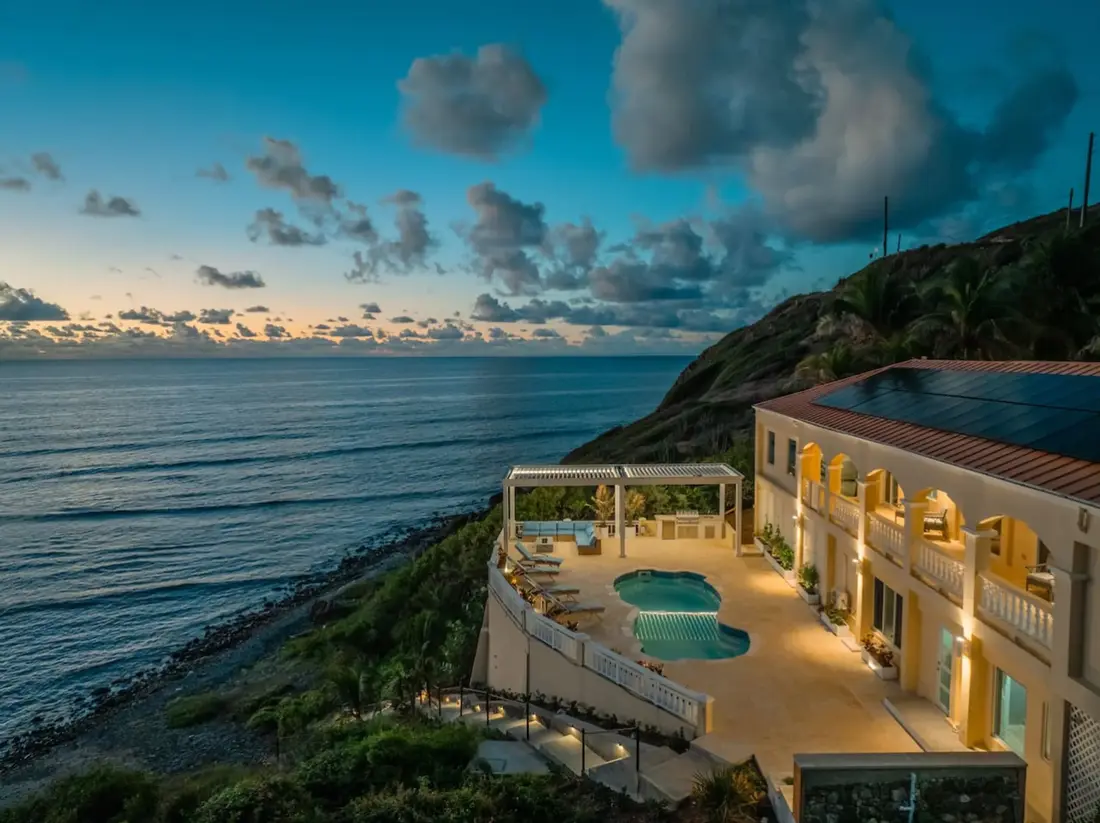
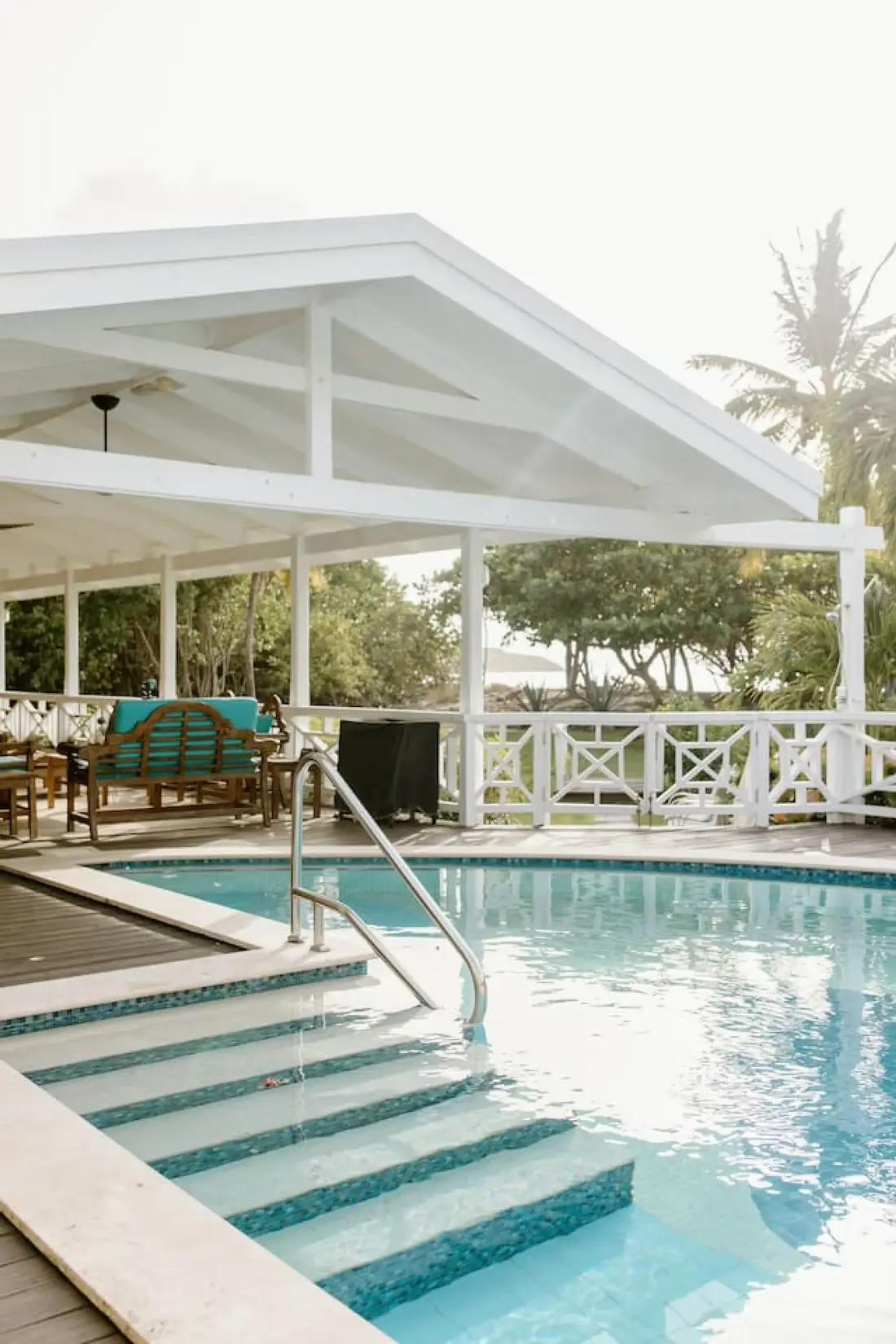
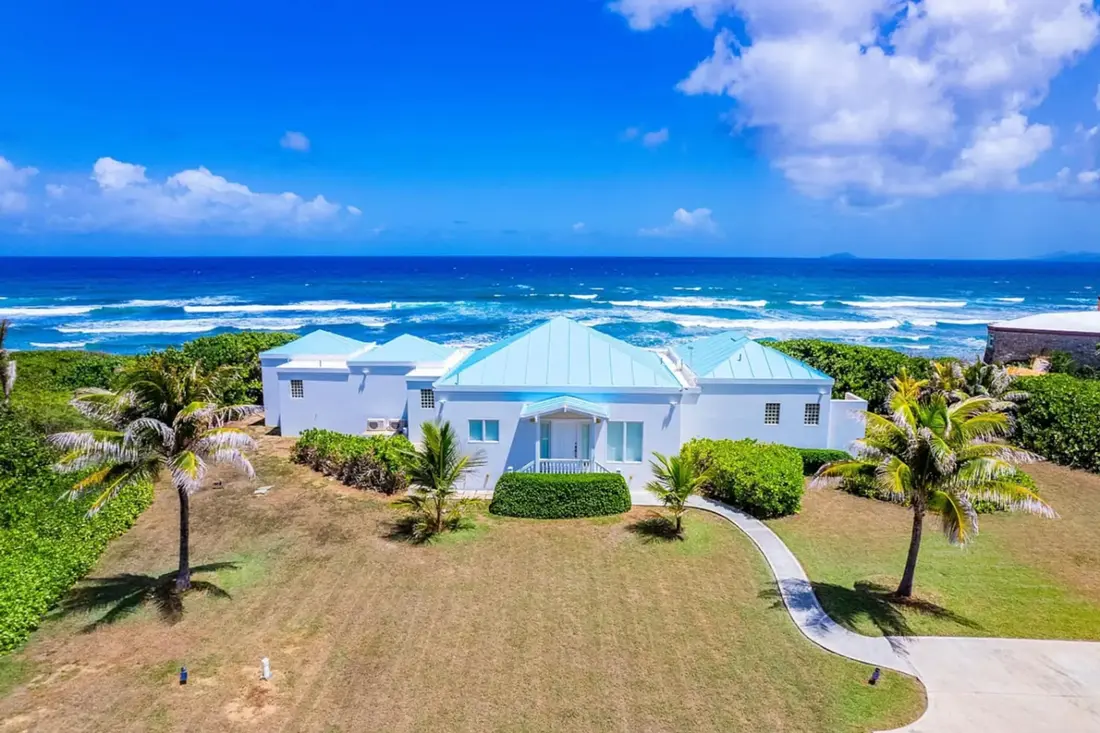
The near alternative: our direct-booked homes with Sterling Point's on-island management. Shoy's Beach House fronts The Shoys' guarded sand; the East End villas — The Cerulean among them — face Buck Island's water from private pools; Christiansted's condos walk to the boardwalk's dinner rows; the west end holds the sunsets. Full kitchens, supermarket provisioning, no platform fees, sleeps two to twelve via the homes for two and the family collection — with the spice-island craving answered by a working 1760 distillery and a botanical garden in sugar-estate ruins. The roster: the homes.
How this page was made
Series rules: the January 5, 2026 Level 2 advisory per the State Department (current text at travel.state.gov — advisories change); flights verified August 2026; the sculpture park and Bianca C per Grenada's own tourism and dive references; spice and cocoa economics per the island's industry sources; Ivan's 2004 record as the hurricane-belt footnote. Grenada's real treasures — the estates, the harbor, the wreck — are conceded with enthusiasm, because they are true. Our bias: the homes we manage on St. Croix, printed on every page in this series. Audit at will.
The bottom line
Grenada is the Caribbean at its most fragrant and most distant: nutmeg docks, cocoa estates, a postcard harbor — behind eight travel hours, thin airlift and a Level 2 advisory new in 2026. St. Croix keeps the same low-key virtues inside American logistics: three hours from Miami, no passport, no advisory, rum since 1760, a snorkel-trail monument and two Danish towns. Smell the spice someday; spend this year's week on the island that is actually close. The homes are here.
Elsewhere in this series
This page is one of twenty-six. If you are still shopping the map, the verdicts nearest this comparison run as follows — each links to the full page with its own sources:
St. Croix vs the British Virgin Islands — The BVI are the Caribbean's sailing capital — reached by passport, puddle jumper and ferry. St. Croix flies you straight in, no passport at all.
St. Croix vs Turks & Caicos — Turks and Caicos sells one famous beach at luxury-resort prices. St. Croix sells a whole island for less — no passport, no Level 2 advisory.
St. Croix vs Anguilla — Anguilla perfected the quiet expensive beach. St. Croix does the quiet beach without the relay flight, the passport or the markup.
The complete set, grouped by region and passport rules, lives at St. Croix vs other destinations.
Which home fits your group
If St. Croix wins your comparison, the homes are the easy part. Groups of eight to twelve settle into the family collection; couples take a home for two; anyone who wants sand at the door starts with beachfront. Every one is managed from the island by Sterling Point and booked direct — tell us the dates and the headcount and we will point you at the one that fits.
Two practical notes that surprise first-time villa bookers. Direct booking means the rate is the rate: no platform service fees, no resort fees, and the people answering questions are the same Sterling Point team that manages the houses on the island. And every home runs a full kitchen — one run to Plaza Extra or Seaside Market on the drive from the airport covers the week, which is where a villa quietly beats a resort bill before the first beach day. How the booking works, and what it does not mean, is spelled out at book direct.
Who wrote this
SP Vacations is the vacation-rental division of Sterling Point Real Estate, a licensed real-estate operation based on St. Croix in the U.S. Virgin Islands. The team lives and works on the island it writes about: the homes in the villa collection are inspected, cleaned and managed locally, and the person who answers a booking question is on St. Croix, not in a call center three time zones away. That is the vantage point behind every page in this series — and the reason the series exists at all, since most of the destinations compared here are places our guests weighed before choosing this island.
Two standing practices shape what you read. First, the pricing wall: nightly rates and availability for the homes live only on the booking pages, never in articles, so nothing here goes stale or oversells. Second, the sourcing rule: safety statements cite the U.S. State Department, customs figures cite CBP, park facts cite the National Park Service, and anything that changes — advisories, schedules, hours — carries its checked date and a pointer to the primary source. Where a rival destination wins a category, the page says so, because a comparison that concedes nothing persuades nobody. Questions, dates or a villa to match a group — the island team is here, or call 340-205-3929.
Questions people ask
What is River Antoine rum?
The Caribbean's great antiquarian distillery — an 18th-century operation still crushing cane on a water wheel, bottling overproof rum that mostly never leaves the island; worth the rough drive once. St. Croix's counterpart is Cruzan's Estate Diamond, a working tradition since 1760 with weekday tours and a tasting bar. See the rum.
Is Grand Etang worth visiting?
Yes — the crater lake sits in mist-forest with Mona monkeys working the parking lot, and the waterfall trails radiate from it, guides recommended. St. Croix's green hour is the Mahogany Road rainforest and the Creque Dam walk — ungated, self-driven, ten minutes from the west end's beaches.
How do Grenada connections through Barbados work?
A common routing — a short Barbados hop connects the arc's southeast — and it stacks a second island's queues onto the day; from most U.S. cities, count eight to ten door-to-door hours. St. Croix's door-to-door from Miami is about four, rental counter included.
What months have the best weather in Grenada?
The dry season, roughly January through May — the interior stays green because the wet season waters it generously. St. Croix runs drier month for month, its rain arriving as brief passing showers even in fall. See when to visit.
Is the sculpture park good for non-divers?
Yes — Molinière's figures sit shallow enough for snorkelers on boat trips from Grand Anse. Buck Island's marked snorkel trail answers it on St. Croix: shallow, protected since 1961, staged from the Christiansted boardwalk with Turtle Beach in the same morning.
Which is better for a long winter stay?
Both suit long-stayers — Grenada's low cost of living rewards the airfare's sunk cost; St. Croix adds U.S. phones, banking, mail and medicine, which decides it for most American remote workers. See long stays.
Why did Grenada get a Level 2 advisory?
On January 5, 2026 the State Department moved Grenada to Level 2 — Exercise Increased Caution — citing crime risk. The text is measured and most visits are trouble-free; it simply places Grenada in the same tier as the Bahamas and Jamaica. St. Croix, as U.S. territory, has no advisory. Check travel.state.gov for the current wording.
How long does it take to fly to Grenada?
From Miami about 3½ hours nonstop when American's service fits your dates; from most of the country, connecting itineraries run eight to ten hours door to door. St. Croix is about 3 hours from Miami with nonstops from five mainland cities, verified August 2026.
Is Grand Anse better than St. Croix's beaches?
Grand Anse belongs in the region's top tier — two fine calm miles — and it hosts the capital's hotels and cruise tenders daily. St. Croix counters with breadth and emptiness: Sandy Point's two undeveloped miles, Cane Bay, The Shoys and a dozen more, usually near-empty on weekdays.
What is the underwater sculpture park?
Molinière Bay's sculpture garden off Grenada was the world's first — concrete figures now greened into reef, visited by boat. St. Croix's counterpart distinction is Buck Island's marked underwater snorkel trail inside a national monument protected since 1961 — plus shore-entry wall diving Grenada cannot match.
Do I need a passport for Grenada?
Yes, plus EC-dollar exchange and U.S. customs at the $800 allowance on return. St. Croix: no passport for U.S. citizens, U.S. dollars, and a $1,600 duty-free allowance with CBP's five-liter rum rule.
Which is better for chocolate and spice?
Grenada, without argument — nutmeg stations and tree-to-bar cocoa estates are its signature and worth a dedicated trip. St. Croix's flavor trail runs to rum (Cruzan since 1760), breadfruit vodka and rainwater beer — and flies home five duty-free liters.
Is driving hard in Grenada?
Left-side, steep, narrow and guttered — the volcanic interior's roads convert many renters into tour customers after one Grand Etang crossing. St. Croix's left-side roads roll through cane country instead; the rental car is a pleasure, not a test.
What is Grenada chocolate like?
The real thing — tree-to-bar estates ferment and press on-island, and the tasting tours earn their pilgrimage status. St. Croix's craft trail pours rather than presses: Cruzan's 1760 tradition, Captain Morgan's tasting room, breadfruit vodka and rainwater beer.
How do the beaches compare beyond Grand Anse?
Grenada's secondary coves — Morne Rouge, La Sagesse — are small and sometimes dark-sanded; Grand Anse carries the postcard alone. St. Croix's roster runs a dozen deep in white carbonate sand, from Sandy Point's refuge miles to hike-in Jack's and Isaac's Bays.
When is Spicemas?
Carnival week in early-to-mid August — J'ouvert, Jab Jab and the road march — Grenada's cultural peak, booked well ahead. St. Croix's carnival season is the Crucian Christmas Festival, late December into January, with its parades in Frederiksted.
Is Grenada below the hurricane belt?
At its southern edge — a real statistical advantage its tourism fairly cites, with 2004's Ivan as the reminder that edges are statistical. Both islands share the June–November season's standard advice: insurance and flexible bookings.
Can I visit Carriacou from Grenada?
Yes — Grenada's sister isle is a ferry or short hop away, sleepy and boat-minded. St. Croix's equivalent side trips are Buck Island's lagoon by licensed sail and the 25-minute seaplane to St. Thomas — no passport for either.
Which is better for diving?
Grenada offers the Bianca C wreck and good boat reefs. St. Croix offers the Cane Bay Wall and Frederiksted Pier from shore, Butler Bay's wrecks and Buck Island's snorkel trail. For wreck-hunters, Grenada has the trophy; for everything else, St. Croix wins on access.
In this comparison
St. Croix at a glance
- U.S. territory — no passport for U.S. citizens
- Nonstops from Miami, Fort Lauderdale, Charlotte, Atlanta, Newark and Chicago
- U.S. dollars, U.S. phone plans, no foreign customs
- $1,600 duty-free allowance home (double the standard $800)
- 84 square miles — the largest U.S. Virgin Island
More comparisons
- St. Croix vs St. Thomas
- St. Croix vs St. John
- St. Croix vs Puerto Rico
- St. Croix vs Vieques & Culebra
- St. Croix vs the Florida Keys
- St. Croix vs Hawaii
- St. Croix vs the British Virgin Islands
- St. Croix vs Turks & Caicos
- St. Croix vs Anguilla
- St. Croix vs St. Barts
- St. Croix vs St. Martin
- St. Croix vs Antigua
- St. Croix vs St. Kitts & Nevis
- St. Croix vs St. Lucia
Sources
Advisory per the State Department's January 5, 2026 Grenada update; Molinière sculpture park and Bianca C per Grenada tourism and dive publications; spice and cocoa economy per the island's own industry sources. St. Croix facts from NPS, CBP and our sourced island reference. Flights verified August 2026.
St. Croix vs Grenada
Grenada is charming, aromatic and far — with a fresh Level 2 advisory. St. Croix is the closer, easier island with no advisory at all.