Apothecary Hall
A 19th-century Danish pharmacy preserved in its original Christiansted building — the only one of its kind left in the Western Hemisphere.
Apothecary Hall is a Danish pharmacy from the early nineteenth century, kept intact at the corner of Company and Queen Cross Streets in Christiansted. The business opened in 1820, filled prescriptions until 1970, and now operates as a museum of the St. Croix Landmarks Society. Per the Society, no other Danish pharmacy museum in the Americas can show you the shop in the building where it actually did business.
The pharmacist who started it
The founder was Peder Eggert Benzon, born October 27, 1788, in Vestenskov, Denmark. He landed on St. Croix on November 18, 1816, at age 28, brought out by Paul-Elias Schlegel, the newly appointed surgeon of the Danish military garrison in Christiansted, to compound medicines for the troops. Christiansted was then the capital of the Danish West Indies, and the garrison it housed needed a steady supply of drugs that the colony could produce locally instead of waiting on shipments from Copenhagen.
Benzon worked fast. By 1818 he had outfitted a pharmacy laboratory in Christiansted where he distilled pharmaceuticals in quantity, supplying the garrison along with other physicians and pharmacists across the Danish West Indies. On April 14, 1819, the government named him inspector of all pharmacies on St. Croix and of every drug import entering the island, which made the young Dane both the chief producer and the chief regulator of medicine in the colony. The pharmacy itself dates its founding to 1820.
He was also a working scientist. Between batches, Benzon traveled through the Danish islands collecting botanical specimens, shipped them to colleagues in Copenhagen, and in 1822 published a treatise on West Indian salep, a starchy preparation drawn from orchid tubers. The shop he built belonged to a tradition in which the pharmacist doubled as the colony's chemist, botanist and drug analyst.
A royal monopoly on medicine
Danish pharmacy ran on privilege in the legal sense of the word. The crown granted named individuals the exclusive right to operate pharmacies within a territory, inspected them, and in exchange held them to standards for training and dispensing. Benzon petitioned for and won this status: on December 1, 1826, the government approved his pharmacy, and on December 18 he advertised his Pharmacie at No. 50 King's Street in Christiansted. On December 10, 1827, he received his privilegium exclusivum for the whole of St. Croix, a royal monopoly on the island's pharmacies.
The same system produced a famous parallel one island over. In 1838 the crown granted pharmacist Albert Heinrich Riise the privilege for St. Thomas, where his shop, also trading under the name Apothecary Hall, grew into the business that made A.H. Riise a lasting name in bay rum and spirits. Riise stayed with Benzon on St. Croix in 1839, and accounts of the visit suggest the two pharmacists talked through the distillation ideas that later fed Riise's bay rum products. The Christiansted shop thus sits inside a wider story: Danish colonial pharmacies were licensed manufacturing houses, and alcohol, tinctures and toiletries were part of the trade alongside prescriptions.
The move to Company and Queen Cross
In 1827 Benzon bought the house at No. 4 Company Street, on the corner of Queen Cross Street, and on January 8, 1828, he advertised that he and his family had moved in. He converted the lower floor into the apothecary and announced a dispensary where, in the wording of his notice, those requiring medicines at night would be pleased to apply. The arrangement was the standard Danish town pattern, commerce at street level and the household above, and the shop stayed on that corner for the rest of its working life. Later that year, on August 9, 1828, Benzon opened a branch dispensary, the Filial Apothek, in Frederiksted, extending the monopoly to the island's west end.
That 1828 move is why the building matters as much as the collection. The pharmacy did move once, from its first King Street address, in its earliest years. Everything after 1828 happened in the rooms you stand in front of today: the same corner, the same walls, 142 years of trade.
What a Danish colonial pharmacy dispensed
Histories of the shop draw a sharp contrast between Danish practice and the American drug trade of the same decades. In the United States, over-the-counter remedies leaned heavily on opium and its derivatives, sold in syrups and tonics with no disclosure and no control. The Danish pharmacists on St. Croix practiced the school known as heroic medicine, dispensing strong mineral compounds of antimony, lead and mercury to purge, blister and sweat disease out of the body. Neither approach survives modern scrutiny, and the Danish one at least came with training, inspection and a paper trail: a privileged pharmacist answered to the crown for what crossed his counter.
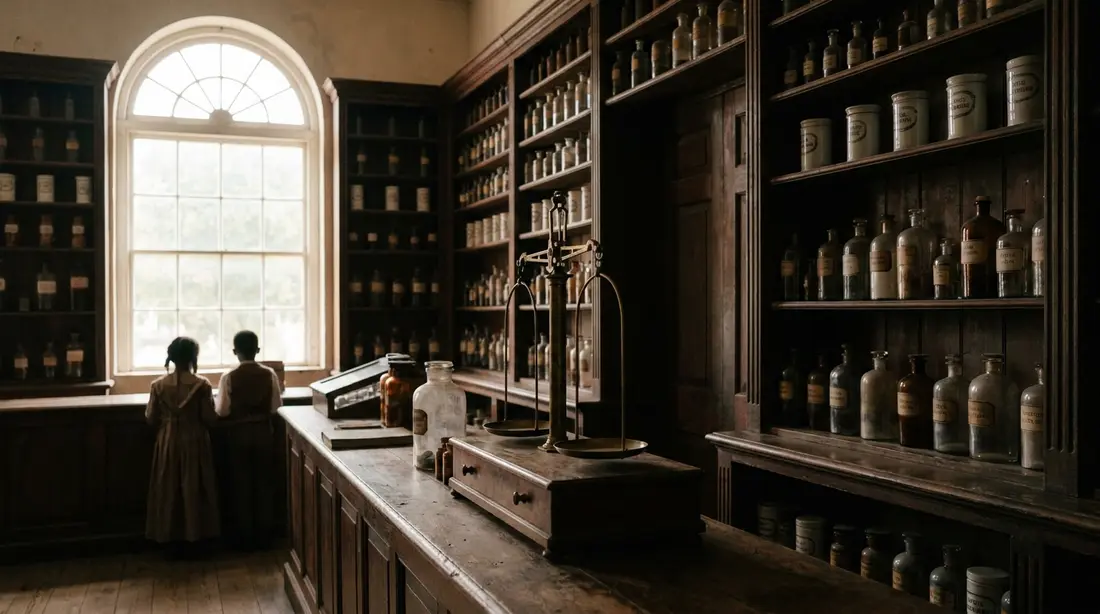
The shop also compounded rather than merely sold. Benzon's laboratory distilled and prepared medicines for other practitioners across the colony, which is why the museum's drawers and jars carry the range they do, raw botanicals, powdered minerals and finished preparations side by side. Look for the labeled bottles when you visit; the Latin abbreviations on them are the working shorthand of a nineteenth-century dispensary.
Medicine in a port town of epidemics
The pharmacy's first half-century ran through the roughest disease environment the island ever knew. European garrisons across the West Indies suffered staggering mortality through the nineteenth century, with fevers doing most of the killing, and Christiansted's soldiers, the customers Benzon was recruited to serve, lived inside that statistic. Then came cholera. In December 1853 fishermen from Hull Bay on St. Thomas went to the aid of a distressed vessel whose passengers carried Asiatic cholera; the disease was officially reported on December 16 and tore through the crowded quarters of Charlotte Amalie, then crossed to the other islands over the following weeks. St. John lost close to a tenth of its population in four months. The Danish authorities printed warning leaflets, ordered estate managers to report cases and tried to police travel between islands, with limited success.
Specific records of what the Company Street shop dispensed through those months are thin, and this page will not invent them. What the epidemic era explains is the shop's standing: for the whole Danish period, a pharmacy under royal privilege was the island's legitimate source of medicine, and the counter on this corner was where Christiansted got it.
A shop that outlived its flag
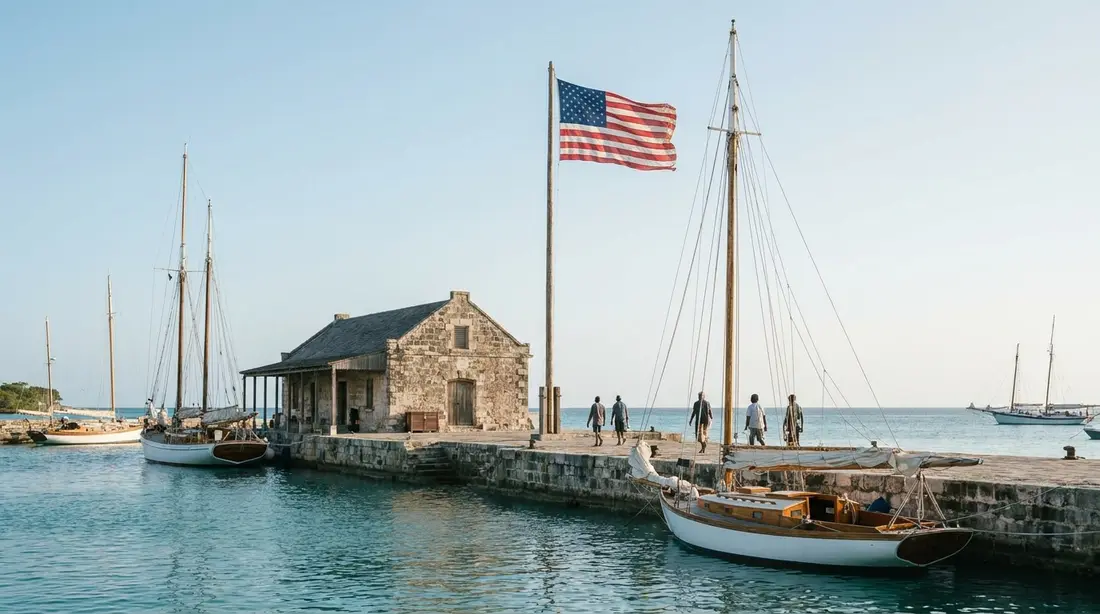
The business Benzon founded kept trading long after him, under a succession of pharmacists whose century of ownership the Landmarks Society's archives document better than any travel page can. Think about what the shop stood open through: emancipation in 1848, the Fireburn labor revolt of 1878, the collapse of the sugar economy, and Transfer Day in 1917, when Denmark sold the islands to the United States. The pharmacy crossed from Danish crown privilege into American commerce and simply kept filling prescriptions, one of the few businesses on the island that bridged both flags in the same room.
The final chapter belongs to Laurence C. Merrill, who bought the pharmacy in 1946 and ran it until his retirement in 1970. When he closed the door, the business had served St. Croix continuously since 1820. Merrill donated the shop's drug jars and pharmaceutical equipment to the St. Croix Landmarks Society, and that donation is why the museum exists: the contents never scattered into auction lots, so the Society could put the shop back together as a shop.
From drugstore to museum
The Landmarks Society restored the interior and returned the collection to its shelves in the rooms where it had always worked. On the opening date, published accounts differ, and this page reports the discrepancy rather than papering over it: the Society's own museum page and the territory's tourism office both state that the fully restored pharmacy opened in its original location in 1987, while other listings, including the long-running VInow directory, date a renovation and reopening to 1996. The likeliest reading is an initial opening in the late 1980s with a further round of work in the mid-1990s, and we will update this page if the Society clarifies the record.
What is beyond dispute is the result. The interior is presented as a furnished nineteenth-century Danish colonial pharmacy, with the exhibits protected behind Plexiglas panels, so a visit means looking into the preserved shop rather than wandering among loose display cases.
The collection, shelf by shelf
The room holds the original fittings and stock of the working pharmacy: wooden cabinetry and banks of small drawers, rows of labeled apothecary bottles, jars and drawers of dried and powdered medicines, and the equipment, scales, mortars, measures, that turned raw ingredients into prescriptions. Because Merrill's donation kept the contents together, the assemblage is the shop's own rather than a curated gathering of period pieces from elsewhere, and that provenance is the museum's real distinction.
The tourism office's listing also notes a display of Indigenous artifacts, including pottery, axe heads, beads and an ancient canoe left by the people who lived on St. Croix for more than 3,000 years before European contact. The St. Croix Archaeological Society has kept collections in the same Company Street complex over the years, though its public activity has recently run mostly online, so treat the archaeology display as a possible bonus rather than a promise. The deeper pre-Columbian story on the island is told at Salt River, where the Columbus expedition touched land in 1493.
Why an intact pharmacy is rare
Old pharmacy fittings survive in plenty of museums; old pharmacies almost never survive in place. A drugstore that closes is normally stripped within the year, its jars sold to collectors, its cabinets to decorators, its building to the next tenant. Preservation requires an unusual chain: a final owner willing to give the contents away as a whole, an institution ready to take them, and a building that nobody guts in the meantime. St. Croix got all three.
The closest American parallel shows how rare the chain is. The Stabler-Leadbeater Apothecary in Alexandria, Virginia, ran from 1792 until the Depression closed it in 1933, and reopened as a museum in 1939 with its stock still sitting on the original shelves. That shop and this one bookend the same phenomenon, roughly 140-year family businesses frozen at the moment of closing, and there are only a handful like them anywhere in the country. Within its own category, the Christiansted shop stands alone: the Landmarks Society identifies it as the sole Danish pharmacy museum in the Western Hemisphere that still occupies the premises where the pharmacy traded.
The Landmarks Society's role
The St. Croix Landmarks Society is the island's private preservation organization, and Apothecary Hall is its presence in Christiansted, a single preserved room in the middle of the shopping district. Its headquarters and its flagship campus sit at the other end of the island at Estate Whim outside Frederiksted, where the Society also maintains its research library and archives, the place to go if you want the pharmacy's ownership history, photographs or documents at the primary-source level. The pairing is worth a day: the sugar estate shows how the island made its money, and the pharmacy shows one of the trades that money supported in town, with about forty minutes of driving between them.
The Society runs on memberships and donations, and the museum charges nothing at the door. If the room earns fifteen minutes of your attention, the donation box is how a free museum this small keeps its doors opening at all.
The building and the street
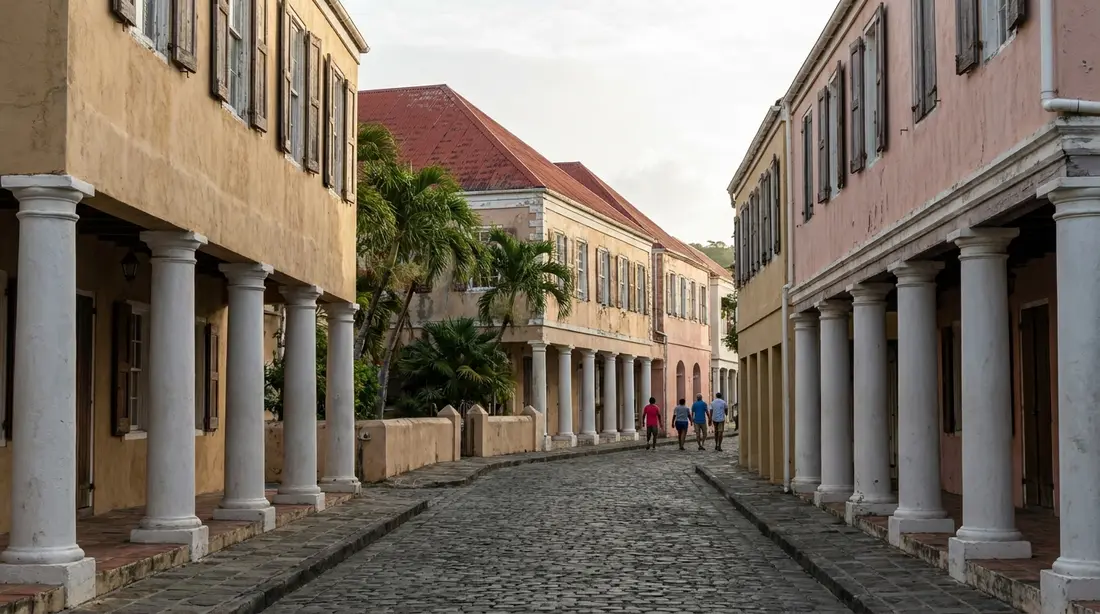
Architecturally, the corner house follows the Christiansted formula documented in the federal surveys of the town: masonry construction, a commercial ground floor addressing the sidewalk, dwelling space above, on a street where arcaded walkways shade the shopfronts. The full grammar of the town, arcades, galleries, hip roofs, hurricane-tested walls, is walked building by building in our Danish architecture guide, which puts this corner in context on its Christiansted route.
The street under your feet carries its own record. When a federally funded water-line project opened Company Street in 2016, archaeologist David Hayes monitored the trench under the National Historic Preservation Act and pulled artifacts spanning the early eighteenth century to the twentieth from about three feet down: clay pipes, china, pottery, bottles and glassware. The stretch by the old apothecary complex alone gave up some 600 pipe stems, evidence of a corner where people lingered, smoked and talked for two centuries. The block also touches the island's most famous biography; a few doors along at 34 Company Street, Alexander Hamilton's mother kept the store where the future treasury secretary spent part of his boyhood.
Visiting: the current picture
This site has told readers twice to check with the Landmarks Society before counting on Apothecary Hall, so here is the fullest answer we can verify as of August 2026. The Society's website lists the museum as open Monday through Saturday with free admission; its two pages disagree slightly on the closing hour, one giving 10 to 4 and the other 10 to 5, and Fodor's carries the 10-to-5 version. Travelers over the years have found the room viewable in different arrangements, staffed hours in some seasons, glass-panel viewing in others, and a small volunteer-dependent museum's real-world schedule can lag whatever a website says. The practical rule: if the museum is the reason for your trip into town, call the Landmarks Society at (340) 772-0598 or email info@stcroixlandmarks.org and ask what the current arrangement is; if you are in Christiansted anyway, walk to the corner and try the door, because even a closed day costs you a two-minute detour.
Apothecary Hall facts
| Item | Detail (at last check, August 2026) |
|---|---|
| Location | Corner of Company and Queen Cross Streets, Christiansted (historic No. 4 Company Street) |
| Operator | St. Croix Landmarks Society, (340) 772-0598, info@stcroixlandmarks.org |
| Posted hours | Monday to Saturday, 10 a.m. to 4 or 5 p.m. depending on the listing; confirm before a special trip |
| Admission | Free; donation box |
| Time needed | 15 to 30 minutes |
| Pharmacy in operation | 1820 to 1970; at this corner from 1828 |
| Museum since | 1987 by most accounts; some listings cite a 1996 renovation and reopening |
| Parking | Street and lot parking in downtown Christiansted; walk from anywhere in the core |
Timeline of the pharmacy
| Year | Event |
|---|---|
| 1816 | Peder Eggert Benzon, 28, arrives on St. Croix to compound medicines for the Christiansted garrison |
| 1818 | Benzon's laboratory is producing pharmaceuticals for the garrison and practitioners across the Danish West Indies |
| 1819 | Benzon appointed inspector of St. Croix pharmacies and drug imports |
| 1820 | Founding year of the pharmacy |
| 1826 | Government approval; first advertised location at No. 50 King's Street |
| 1827 | Privilegium exclusivum granted for all of St. Croix; Benzon buys No. 4 Company Street |
| 1828 | Shop and family move to the Company and Queen Cross corner; Frederiksted branch opens |
| 1917 | Denmark transfers the islands to the United States; the pharmacy keeps trading |
| 1946 | Laurence C. Merrill buys the pharmacy |
| 1970 | Merrill retires; the shop closes and he donates jars and equipment to the Landmarks Society |
| 1987 | Restored pharmacy opens as a museum (a 1996 renovation date also appears in some listings) |
Building a town morning around it
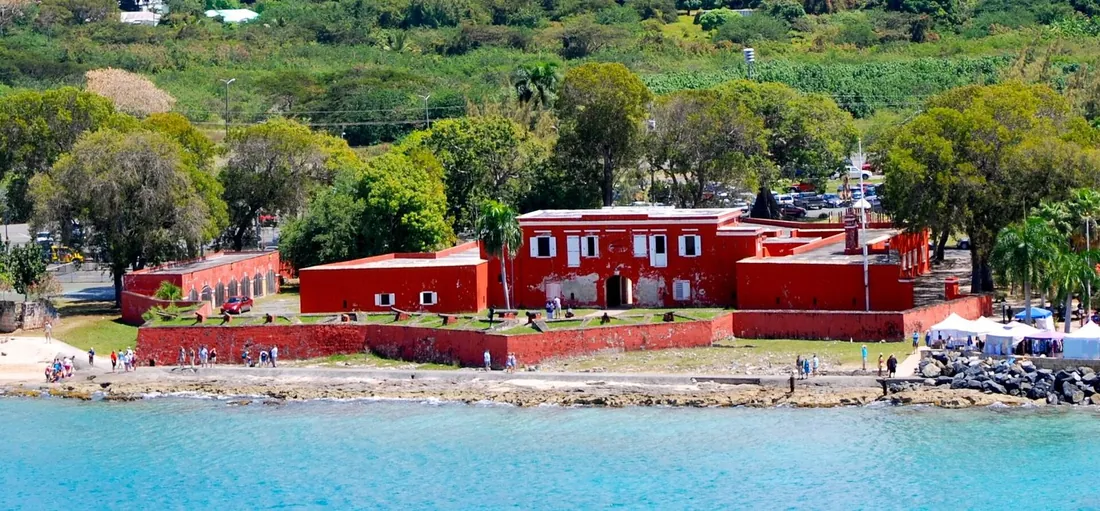
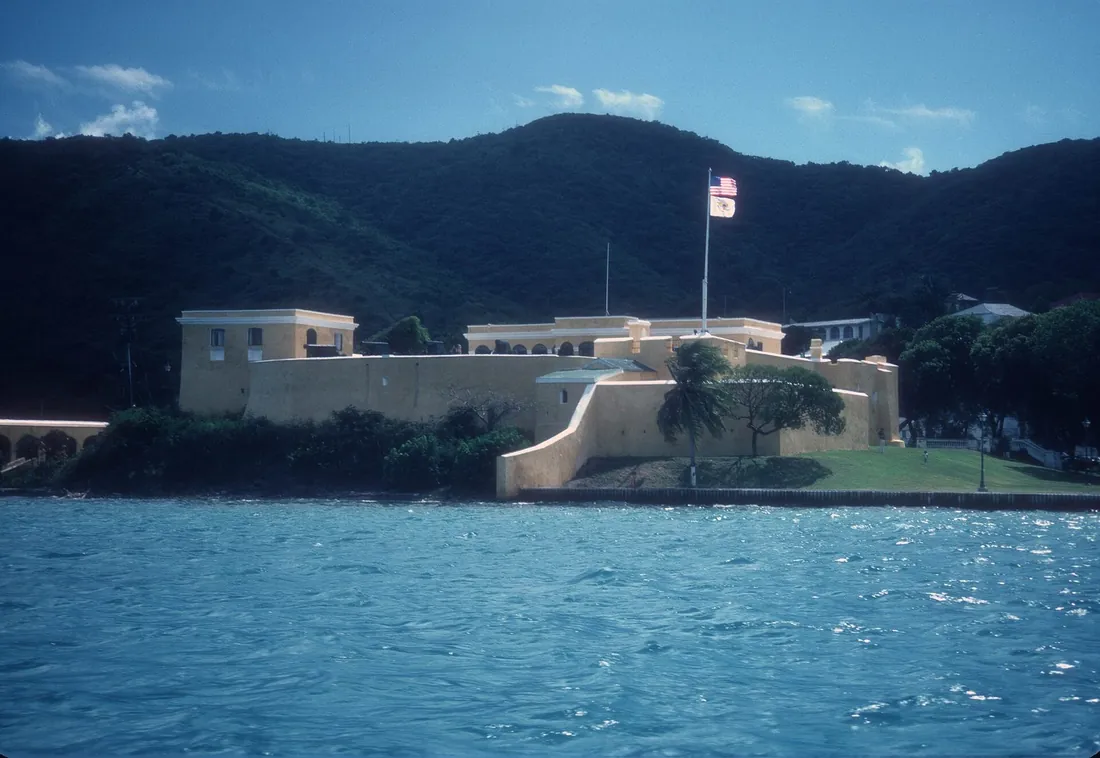
Apothecary Hall is a fifteen-minute stop, so let the rest of the block do the heavy lifting. Fort Christiansvaern and the national historic site around it open at 8:30 and reward a full hour; the historic district page sequences the government buildings between fort and wharf. From the fort, the arcades of King and Company Streets funnel you past the jewelers, including the shop that originated the hook bracelet, to the pharmacy corner, and the boardwalk waits at the bottom of town for lunch, with tables sorted in the restaurant guide. The covered sidewalks make this the island's best wet-weather circuit, and the rainy day plan slots the museum into a full indoor morning. For the wider picture of the town, start with the Christiansted guide; for the west-end museums on another day, the Caribbean Museum Center for the Arts anchors Frederiksted.
Questions guests ask
Is Apothecary Hall open right now?
As of our August 2026 check, the Landmarks Society lists Monday-through-Saturday daytime hours with free admission, and that is the best available answer. The museum is small and volunteer-dependent, and visitor reports over the years describe everything from staffed open doors to viewing the room through glass, so the listing and the reality can differ on any given day. Call the Society at (340) 772-0598 before making a special trip; if you are already in town, just walk past and try it.
How long does a visit take?
Fifteen to thirty minutes covers it thoroughly. This is one preserved room with dense shelving, so the visit is a close look rather than a walk-through. Readers of labels, pharmacists and history-minded visitors sit at the long end of that range; children and the mildly curious at the short end. Nobody should budget more than half an hour, which is exactly why it slots so well into a town morning built around the fort, the shops and lunch.
What does it cost?
Nothing, at last check. Admission has been free under the Landmarks Society, with a donation box in place of a ticket desk. A few dollars in cash is the right move: the Society is a nonprofit that also maintains Estate Whim and its research archives, and small unstaffed museums survive on precisely this kind of loose-change support. There is no gift shop at the pharmacy itself; the Society's museum store operates through its Whim headquarters.
Why is the collection behind Plexiglas?
Because the contents are the original stock of the shop, irreplaceable as a set. The glass panels protect the bottles, drawers and equipment while letting you see the dispensary arranged as it worked, and they also allow the Society to show the room safely without a staff member standing in it at all times. You lose the ability to handle anything and gain the certainty that what you are looking at is the real assemblage, in place, rather than reproductions.
Is it worth visiting with kids?
In passing, yes; as a destination, no. The pitch that works on a child is the strangeness of old medicine, mercury and lead compounds sold as cures, leech-era treatments, poison bottles with warning labels, and that carries a ten-year-old for about ten minutes. Fold it into a morning that also includes the fort's cannons and dungeons and the boardwalk's boats and you will get a better reception than the museum alone would earn.
How does it compare with Estate Whim?
Different scale, same steward. Whim is a 12-acre outdoor campus that takes an hour or more; the pharmacy is a single room in town that takes fifteen minutes. Whim explains the plantation economy; Apothecary Hall preserves one urban trade that economy supported. Seeing both gives you the Landmarks Society's whole portfolio and a fuller picture of Danish St. Croix than either alone, and the drive between them is about forty minutes along routes covered in our sugar mill ruins guide.
Staying nearby
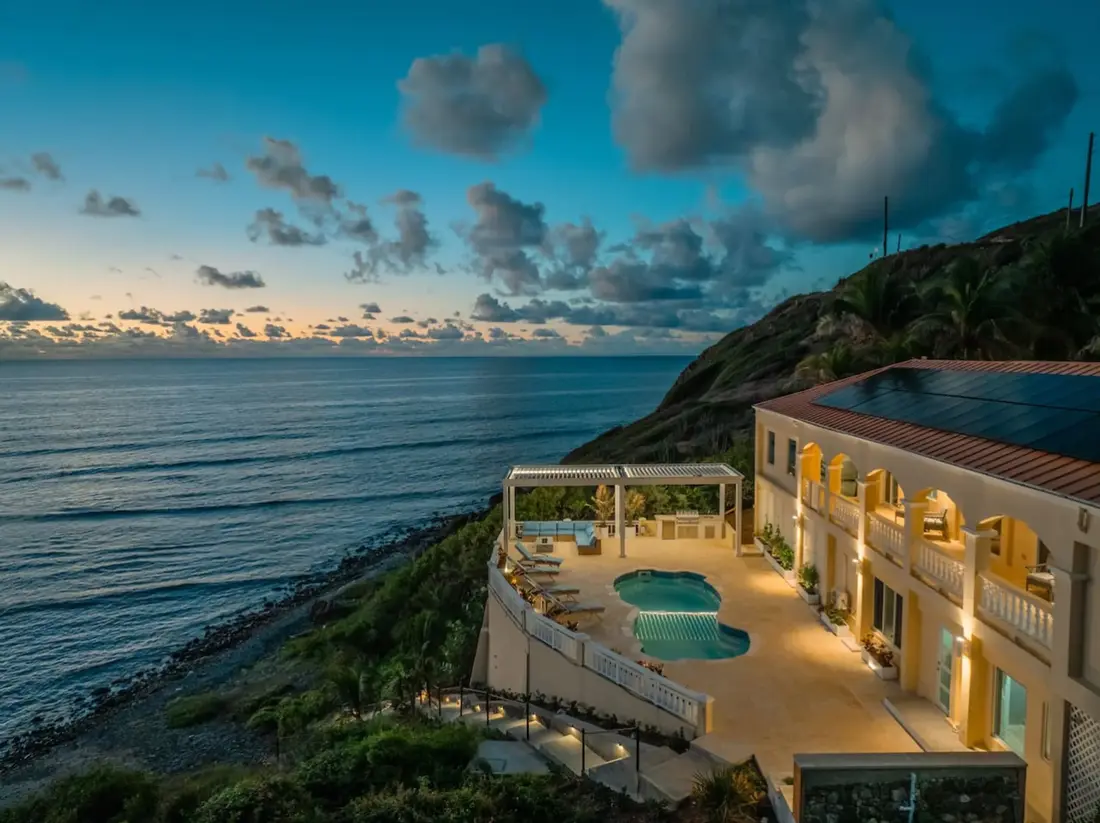
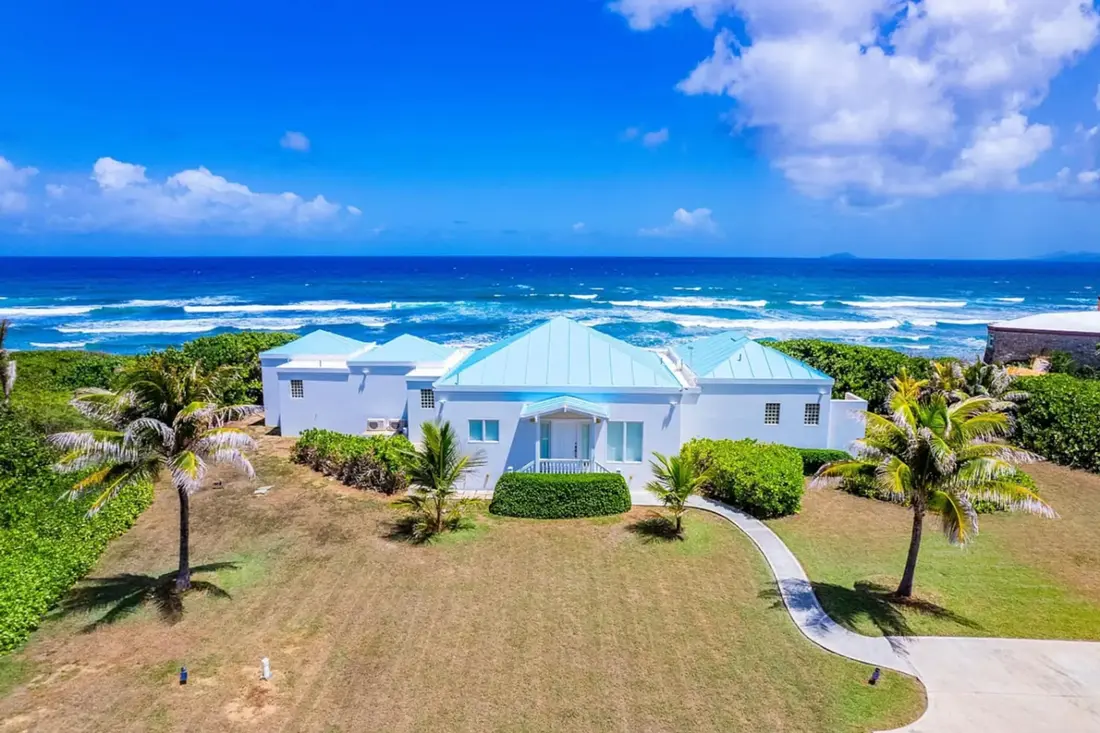
Most of our portfolio sits on the Christiansted side of the island, which puts the pharmacy corner on your errand route rather than your excursion list. From Shoy's Beach House, minutes east of downtown, or the East End homes such as The Cerulean, town is a 5-to-20-minute drive, close enough to fold Apothecary Hall into any dinner run or provisioning trip. Browse the East End collection or all villas to pick your distance from the arcades.
Sources
Written from official and first-party sources, checked August 2026. Hours, prices and event dates change — confirm before you go.
In this guide
Stay nearby
On The Shoys beach: six bedrooms, six baths, pool and hot tub, room for twelve, and the beach through the back garden.
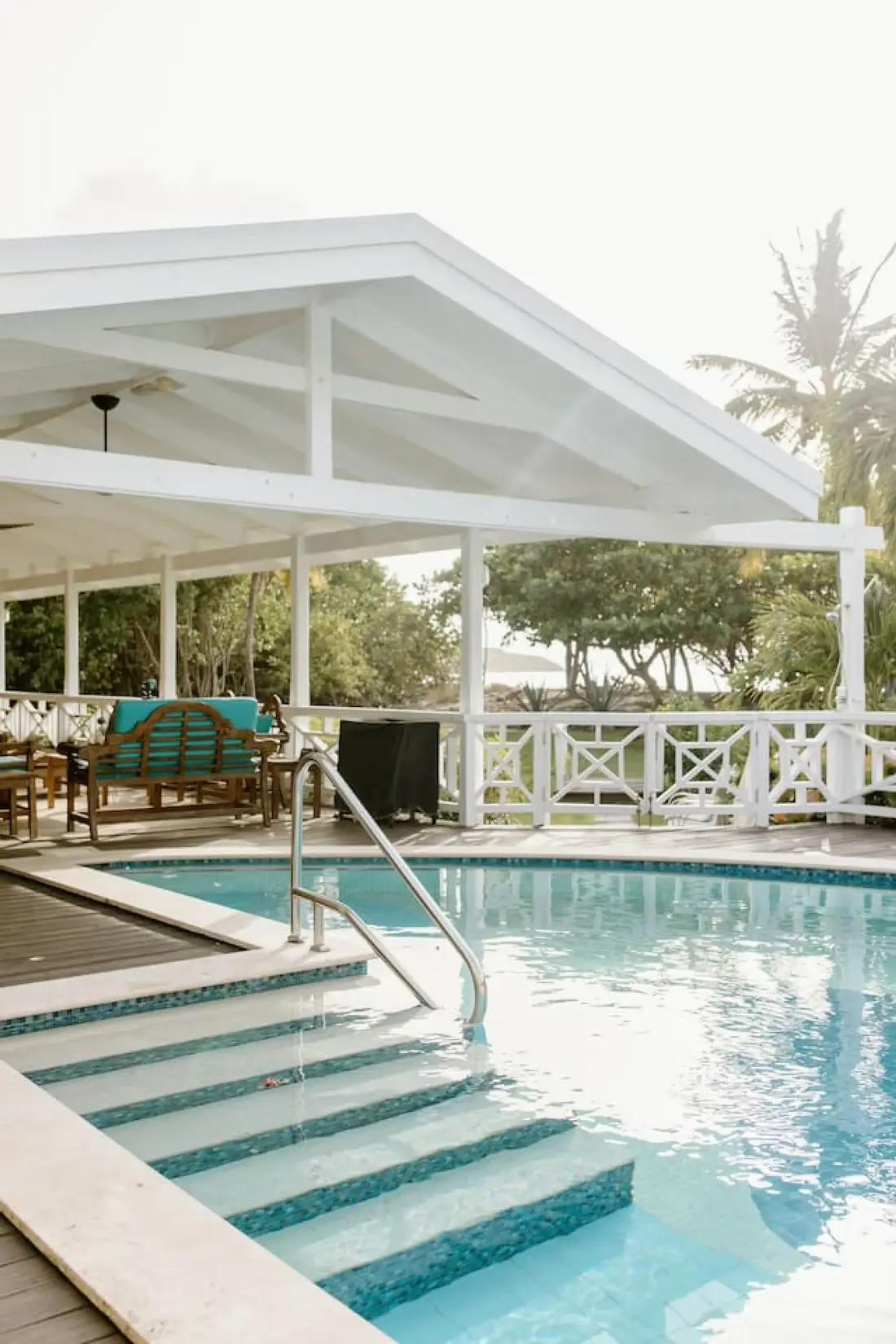 Shoy's Beach House6 bd · 6 ba · sleeps 12 · Christiansted
More in History & Culture
Sources
11 references, listed in full at the end of this guide — official park, refuge, tourism-board and business sources, checked August 2026.