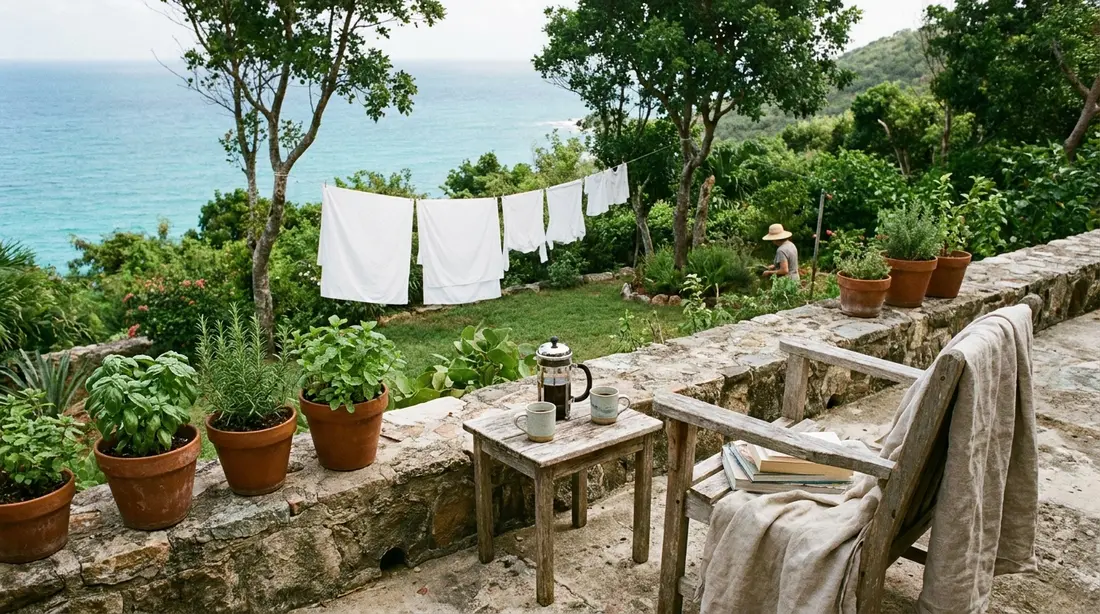
Staying a Month or More
Snowbirds and remote workers settle in easily here: one guest stayed two months at The Cerulean and wrote about it. What long stays need.
A month on St. Croix runs on different machinery than a week. The booking works differently, the tax works differently, the grocery cart looks different, and by the second Saturday you have a regular beach and a regular breakfast order. This page is the operations reference for stays of one to three months in a villa: who books them, how monthly pricing and the ninety-day tax line work, what to settle before you commit, how the first week turns a vacation house into a household, and where the gym, the mail, and the monthly car come from.
Who books a month on St. Croix
Four kinds of guests account for nearly every month-plus booking we see, and each one reads this page a little differently.
Remote workers bring the job along. The island sits on U.S. networks, keeps a friendly clock for East Coast teams, and several of our homes name a dedicated workspace in their listings. The full connectivity picture, from carriers to backup plans, lives in phones, Wi-Fi and remote work; this page handles everything domestic around the workday.
Snowbirds trade a mainland winter for the Christmas Winds. January through March is the classic window, it is also the island's high season, and the calendar section below explains what that does to availability and why the earliest inquiry wins.
Scouts are testing the island before a purchase or a move. A long villa stay is the cheapest diligence a future owner can buy, and we wrote two journal essays for exactly that reader: why vacationers end up buying here and what resident life involves, from power bills to schools. This guide stays on the guest side of that line; you are renting for a season, and someone else owns the cistern.
Sabbatical and in-between guests round out the list: a break between jobs, a semester of remote study, a writing project, a recovery month. They need what everyone above needs, which is a real house with a real kitchen and a team on island who answers the phone.
The ninety-day line
The U.S. Virgin Islands charges a hotel room occupancy tax of 12.5 percent on short-term lodging, and the definition reaches past hotels: it applies to a house, condo, or apartment rented by the day, the week, or the month whenever the whole rental period runs shorter than ninety days. A five-week villa booking therefore carries the same 12.5 percent line a weekend booking does.
Stays of ninety days or longer sit outside that definition, which is why the ninety-day mark matters to anyone weighing two months against three. In practice the treatment of a specific booking depends on how the stay is structured and documented, and territorial tax rules can change, so treat this as the shape of the rule rather than a promise: if your dates put you near the boundary, raise it when you inquire and we will walk through how your booking would be handled. Confirm the tax treatment at booking, in writing, and budget with the 12.5 percent included until it is confirmed otherwise.
How monthly villa pricing works
Villa pricing is built as a nightly instrument, and a month is where the instrument bends. Across the vacation-rental world, listings commonly publish weekly and monthly rates that land below the simple nightly math, because a single long booking saves the owner turnover cleans, vacancy gaps, and platform churn. The size of that break is set home by home and season by season; there is no standard percentage, and any page that quotes one is inventing it. What holds as a pattern: the longer the block and the quieter the season, the deeper the adjustment.
Two levers move the number most. The first is the calendar. Quiet-season months price furthest below winter, and on this island that means May and the September-to-November stretch, which is when a long stay buys the most house for the money. The second is how you book. A month arranged directly with the manager skips the platform's service fees and opens an actual conversation about rate, terms, and dates that a checkout page cannot have. That conversation is the entire reason our book direct page exists. Send us the dates and the headcount, tell us it is a long stay, and ask what the month runs; the answer is specific to the home and the season, which is the only kind of answer worth having.
One more pattern worth knowing: long bookings are sometimes structured as a rate plus defined extras rather than one folded number, so two quotes that look different can cost the same. Compare totals, never nightly rates.

What to settle before you book
A week-long guest can absorb almost any surprise. A month-long guest should get the household questions answered in writing first. These are the ones that earn their place in the inquiry email.
| Ask about | Why it matters at month scale |
|---|---|
| Housekeeping cadence | Turnover cleans are built into short stays; a month needs a mid-stay schedule. Agree on how often, what it covers, and what it costs before day one. |
| Utilities | Island electricity is costly to produce, and some month-plus arrangements cap the included power, with usage past the cap billed. This is entirely listing-dependent; many homes fold it in. Ask which kind yours is. |
| Workspace and connection | If income depends on the internet, name your requirement in numbers and ask what the specific house delivers, per the remote-work guide linked above. |
| Laundry | Nearly all of our homes list a washer and dryer; verify yours does, because a month without one means paid trips no one prices in. |
| Power backup | Homes with generators or battery systems say so in their listings; grid blinks feel different in week five than on night two. |
| Pets | Policies are set home by home, and none is automatic. Details below, but the rule is: ask before booking, never after. |
| Mid-stay flexibility | Visitors will want to come see you. Ask how extra guests, an overlapping weekend, or a headcount change are handled. |
None of these questions is awkward. Managers who host long stays expect all seven, and the answers tell you as much about the operation as about the house.
Week one: from vacation to household
The first week of a long stay has one job: convert the villa from lodging into your address. Guests who do it deliberately settle in days sooner than guests who keep running week-long-trip habits into week three.
Start with a provisioning run sized for the stay. Every home we manage has a full kitchen, and cooking most of your meals is where a long stay quietly pays for itself on an island where restaurant dinners are an event, and priced like one. The shopping pattern month-guests converge on: one big warehouse-scale trip early, then weekly top-ups. Cost-U-Less runs on the warehouse model and charges no membership, which makes it the natural first stop for the pantry load-in; Plaza Extra has a store toward each end of the island, Pueblo covers the middle ground, The Market STX was operating at last check, and Seaside Market handles the wine-and-cheese tier. IsleAtDelivery brings groceries and packages of up to a hundred pounds anywhere on island, and we can arrange pre-arrival provisioning so the first breakfast is already in the fridge. The store-by-store detail lives in groceries and provisioning; the month-scale addition is simply cadence and the produce habit covered below.
Then build your map. Time the drives from your door to the nearest market, fuel, the beach you expect to default to, and town. Claim the workspace and test it on a real call. Learn the house's systems while nothing is wrong: where the breaker panel is, what the water pressure does, which windows catch the trade winds after dark. And do the paperwork errands early: if anything is being shipped to you, sort out the address question in week one, per the mail section next, rather than in the week something is in transit.
Mail and packages during a long stay
Money needs no setup at all for a season here: the dollar is the currency, the banking is U.S. banking, and cards behave as they do at home. Mail is where the island is fully American and fully an island at the same time. The U.S. Postal Service serves St. Croix at domestic rates, with post offices in and around Christiansted, at Gallows Bay, mid-island, and in Frederiksted, and Priority Mail is the channel islanders lean on. The catch for a guest: carrier delivery to the door covers only parts of the island, which is why most residents run their lives through a post office box, and why what works at your villa depends on the villa.
So handle it in this order. First, ask us how packages actually reach your specific address, because we know which homes receive deliveries reliably and which need a workaround, and we can often accept parcels for guests; sort this out before anything ships. Second, for letter mail during a multi-month stay, General Delivery, addressed to you at a specific post office for pickup with ID, is the traditional traveler's channel; policies vary by branch, so confirm with the branch you would use. Third, adjust your expectations on timing: shipments from the mainland commonly take longer than the tracking estimate, some retailers decline to ship to the territory or price it internationally at checkout, and the private couriers operate here with island surcharges. Build a week of margin into anything that matters, and have documents that cannot wait sent by a service with signature tracking. None of this is hard once arranged; all of it is annoying to improvise in week three.
Gyms, classes, and staying in shape
A month is too long to treat exercise as a vacation casualty, and the island has real options, all hedged here with the standard island caveat that hours and prices shift, so check before you go. Island Movement, on the second floor at 53 King Street in Christiansted, is a gym built for exactly your situation at last check: key-card access around the clock, with passes sold by the day, the week, two weeks, or the month, plus group classes and personal training. Beeston Hill Health and Wellness, the long-running club outside Christiansted, pairs a gym with a class schedule and a pool, including water-based Zumba, and has offered day and short-term rates at last check. The Courtyard in Christiansted runs barre and related classes drawing on ballet, yoga, and Pilates, with drop-in pricing. And the no-fee tier is good here: a morning swim as a daily constitutional, hill roads that turn a walk into a workout, and the guided hikes noted in the next section. Ask us what is nearest your particular villa; the answer differs a lot between a Christiansted condo and an East End hilltop.
The month-long rhythm
A week-long visitor runs a checklist. A month-long guest develops defaults, and the difference is the whole pleasure of the format. By the second week most long-stay guests have settled into some version of the same shape: weekdays with a morning anchor, a swim, a workout, or the workday itself, and afternoons that end at the same one or two beaches; weekends for the bigger outings that short-trip visitors have to cram, the boat day, the far end of the island, the St. Thomas run.
The repeat-visit payoff is real and specific. With thirty-plus days you stop choosing the best beach and start choosing the right beach for the day in front of you: calm-water mornings on the east side, a west-coast evening when you want the sunset, the north shore when you want to snorkel, per the beach guide. You catch the island on its quiet days, the Tuesday when a famous stretch of sand holds six people. You get weather insurance no short trip has; a rainy Thursday costs a month-guest nothing. And you get to do favorite things twice, which vacations never allow. Guests consistently report that the month felt slower per day and fuller in total, which is the entire case for the format.
Joining island life for a season
Thirty days is long enough to stop being a stranger, and the entry points are scheduled and public; nobody has to be brave. The greeting culture, covered in first-time visitor tips, is the master key: lead every exchange with good morning and the island opens noticeably faster for a regular than for a tourist. Beyond manners, attach yourself to the calendar. Jump Up brings an evening street festival to downtown Christiansted several times a year. AgriFest fills three mid-February days with farm food and livestock, and the Saturday-morning produce stands and fish trucks run year-round, which is also the cheapest way to eat well for a month. The St. Croix Hiking Association leads guided hikes that welcome visitors, including routes you should never attempt solo, and in nesting season the St. Croix Environmental Association runs organized turtle-watch programs. Become a repeat face at one bakery, one bar, one beach, and by week three the island is greeting you first. That is a real and reliably reported experience of the month-long format, and it is the thing guests say they miss when they leave.
A car for a month
You will need a car for the entire stay; the island is twenty-some miles long, there is no rideshare, and a long stay multiplies the errands. The good news is that monthly rentals are an established product here rather than a favor. Centerline Car Rentals advertises long-term arrangements for guests who need a vehicle for three months and up, Judi of Croix publishes long-term rates alongside its dailies, and Olympic, the island's oldest independent, quotes extended arrangements on request, all per their own materials at last check. The full roster of companies, including the ones that deliver the car to your villa, is in renting a car. When you inquire, say the real length of the stay up front; a thirty-day quote and thirty daily rates are different numbers.
Then there is the temptation every long-stay guest eventually voices: buying a cheap island car and selling it at the end. For a one-to-three-month stay, the pattern arithmetic rarely works. A purchase means registration and insurance in the territory, in-person errands that consume days of your month; island cars age fast in salt air, so the cheap ones carry repair risk with no warranty; and the exit depends on finding a buyer on your schedule. Residents and half-year snowbirds sometimes make ownership pay. Inside ninety days, the monthly rental, with someone else owning every breakdown, is almost always the sane column in the spreadsheet.
Healthcare and prescriptions for longer stays
Routine health logistics work here because the island is U.S. soil, but a month needs more planning than a week. Prescriptions first: arrive with enough supply to cover the stay if your insurer will fill it, which for many plans means requesting a vacation override or a ninety-day fill before travel. Mail-order pharmacy programs generally ship to the territory as a domestic destination, but the transit caveats from the mail section apply doubly to medication, so refill early and carry a margin, and keep medicines in original containers for the airport. The island has pharmacies in and around both towns for fills and transfers; category advice only, since which pharmacy suits you depends on your plan.
For care itself, the picture a guest needs is short. The Governor Juan F. Luis Hospital, mid-island, runs an emergency room around the clock, and clinics and urgent-care options handle the routine tier; the practical map is in the first-time guide linked earlier, and 911 works as at home. Most mainland insurance treats the USVI as in-country, and you should still confirm your plan's rules for the territory before a multi-month stay, exactly as you would for a long domestic trip. Guests managing a serious condition should ask their specialists about the stay in advance, since advanced specialty care on island is limited and complex cases travel.
Pets and family logistics
Pets on a long stay are decided one home at a time. No listing in our program advertises a pet-friendly policy among its amenities, which means the only correct sequence is to ask about your animal, in writing, before booking, and let us take the question to the specific home; surprising a villa with a dog in month two is how deposits die. If a pet is coming, also check your airline's rules for the route early, since carrier pet policies and seasonal embargoes vary and the STX run involves specific aircraft.
Families do well at month scale for the same reason everyone else does: bedrooms, a kitchen, laundry, and a yard beat any suite. The kid-specific island logistics, beaches, gear, groceries, car seats, are covered in traveling with kids, and all of it holds for a month; the additions are rhythm, a school-hours quiet island in term time, and the mid-stay housekeeping conversation, which matters more with children in the house. For families scouting a real relocation, the school picture belongs to the resident-level journal post linked at the top of this page, which walks through the public, private, and homeschool lanes.
Budgeting a month, by category
We will not print dollar figures a guest could wave at us in a different season; every line below moves with dates, headcount, and the specific home. What a long-stay budget needs is the right categories and a sense of what drives each one.
| Category | What drives it |
|---|---|
| Lodging | Season first, length second: winter prices highest, May and Sep–Nov lowest, and longer blocks earn deeper adjustments. Under 90 days, add the 12.5 percent occupancy tax. |
| Car | Monthly rate class and vehicle size; ask for long-term pricing by name. |
| Groceries | The import premium, offset by how much you cook and how hard you lean on warehouse runs and produce stands. |
| Dining out | Frequency, purely; a month of restaurant dinners rewrites the budget faster than any other line. |
| Activities | Front-loaded: boat trips and tours cluster in the first weeks, then spending settles toward beaches, which are free. |
| Utilities | Zero on most bookings; real only if your arrangement caps included electricity, which is why you asked before booking. |
| Fitness, mail, misc. | Gym passes, shipping margin, the ferry or seaplane day, and a contingency line for the errand you cannot predict. |
Run the total against what the same weeks cost at home, counting the mortgage or rent you are paying anyway, and long stays here look more reasonable than the nightly-rate math suggests. That comparison, run fairly by category, is how most of our snowbirds justified year one.
The long-stay calendar
Every month of the year hosts long stays; they simply have different personalities and different booking clocks.
December through April is the snowbird term: the driest, breeziest, busiest stretch, with the Crucian Christmas Festival closing in early January and AgriFest mid-February. It is also when monthly guests compete with peak weekly demand, so these bookings need the longest lead, often the better part of a year for a specific home. May opens the value window; it is the month longer-stay rates traditionally begin, the crowds thin after Easter, and the sea stays fine. June through August runs warm and family-paced, with mangoes and Emancipation Day on July 3.
September through November is the quietest, greenest, best-priced long-stay season, and it sits inside hurricane season, which deserves a straight paragraph rather than a euphemism. The Atlantic season runs June 1 to November 30 and is statistically most active in August and September. A fall long stay works, and guests take them every year, on three conditions: book with flexible terms and ask us how storm disruptions are handled; buy trip insurance when you book, since coverage attaches to storms that were unnamed at purchase; and accept that a named system means days of tracked warning and, rarely, a rearranged stay. The full picture, preparation, probabilities, and how the island actually experiences these months, is in the hurricane season guide and the September page. Fall guests who go in clear-eyed report the emptiest beaches of the year.
Questions guests ask
Do stays of ninety days or more avoid the hotel tax?
The territory's 12.5 percent occupancy tax is defined to cover rentals whose total period is under ninety days, so a stay of ninety days or longer falls outside that definition as written. How a specific booking is treated depends on its structure and on current territorial rules, which can change, so we will not promise an outcome on a web page: raise the question with your dates when you inquire, get the answer in writing at booking, and budget with the tax included until then.
How much do villas discount for a month?
There is no standard number, and we decline to invent one. Monthly pricing is set per home and per season, with the deepest adjustments in the quiet months, May and September through November, and the smallest in high winter, when weekly demand competes for the same nights. The dependable rule: a long block booked directly is the best version of the price, because it skips platform fees and lets us build the rate around your actual dates. Send the dates and ask; the specific answer costs nothing.
Can I receive mail and packages during a two-month stay?
Yes, with setup. USPS serves the island at domestic rates, but door delivery reaches only parts of the island, so the working answer depends on your villa: ask us how parcels reach your specific address before anything ships. General Delivery pickup at a post office is the traditional fallback for letter mail; confirm the branch's policy. Expect mainland shipments to run days longer than tracking predicts, expect some retailers to decline the territory, and give medication and documents extra margin.
Should I rent a car for the whole month or buy a cheap one?
Rent, at monthly rates, for any stay under about three months. Local companies quote long-term pricing, Centerline advertises rentals for three-plus-month needs, and Judi of Croix publishes long-term rates, and the rental keeps breakdowns, insurance, and registration off your plate. Buying an island beater means territorial paperwork, salt-aged mechanical risk, and a resale you must complete on a deadline; it pays for half-year residents, rarely for month-guests. Name the true length of your stay when you ask for quotes.
Can I run my mainland job from a villa for a month?
Guests do it routinely; one stayed two months at The Cerulean and the review that followed dwelt on the en-suite bedrooms, the scale of the kitchen, and the guest cottage a few steps off. The requirements are a home whose connection matches your workload and a backup plan for grid blinks, both covered in depth in phones, Wi-Fi and remote work. Tell us your requirement in numbers when you inquire and we will match the house to it.
What if a hurricane threatens during a fall long stay?
You will not be surprised by it; Atlantic systems are tracked publicly for days before any effect arrives, and we watch forecasts with our guests. The preparation is contractual, done before the stay: flexible booking terms, trip insurance purchased at booking rather than after a system has a name, and a conversation with us about how disruptions are handled. Most fall stays pass with rain squalls at worst, and September through November remains the greenest, quietest, best-value stretch on the calendar.
Are pets allowed on a long stay?
Only by explicit arrangement, home by home. None of our listings advertises a pet policy among its amenities, so the answer for your animal has to come from us, in writing, before you book; we will ask the specific home. If the answer is yes, check your airline's pet rules for the St. Croix route early, since policies and seasonal restrictions vary by carrier and aircraft. Never book first and ask after; that order risks both the deposit and the stay.
Homes built for a month
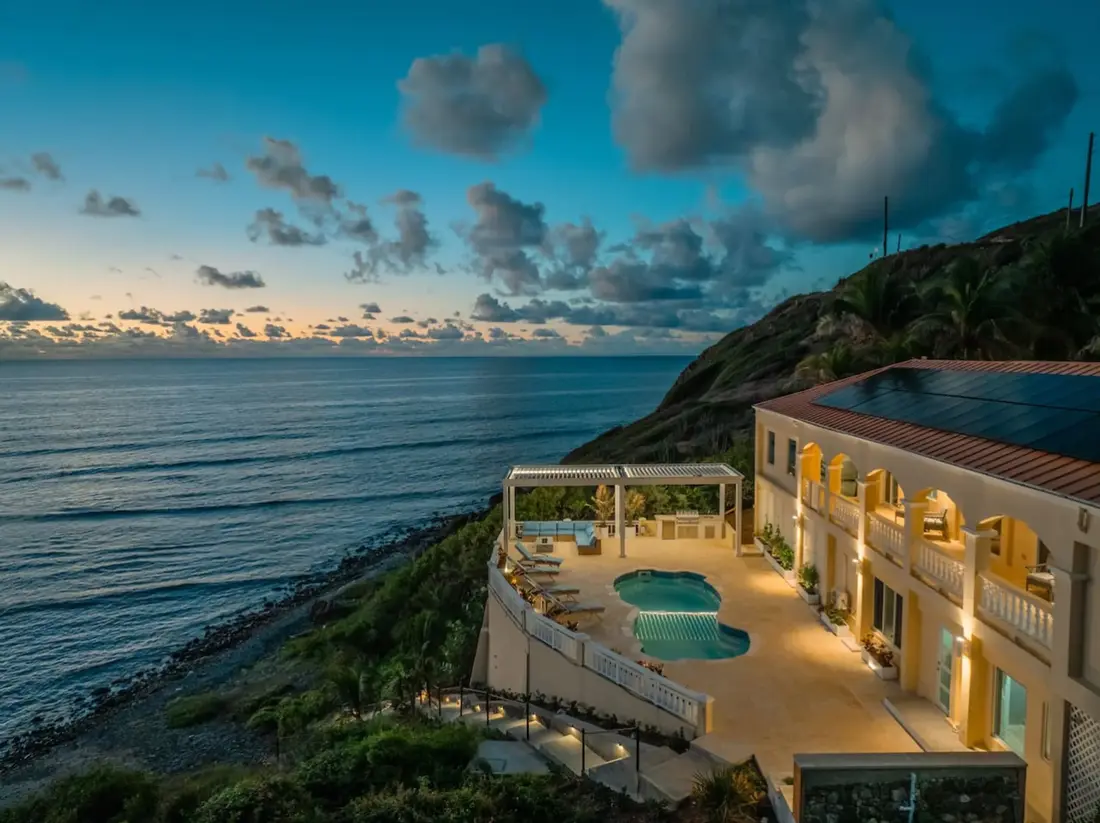
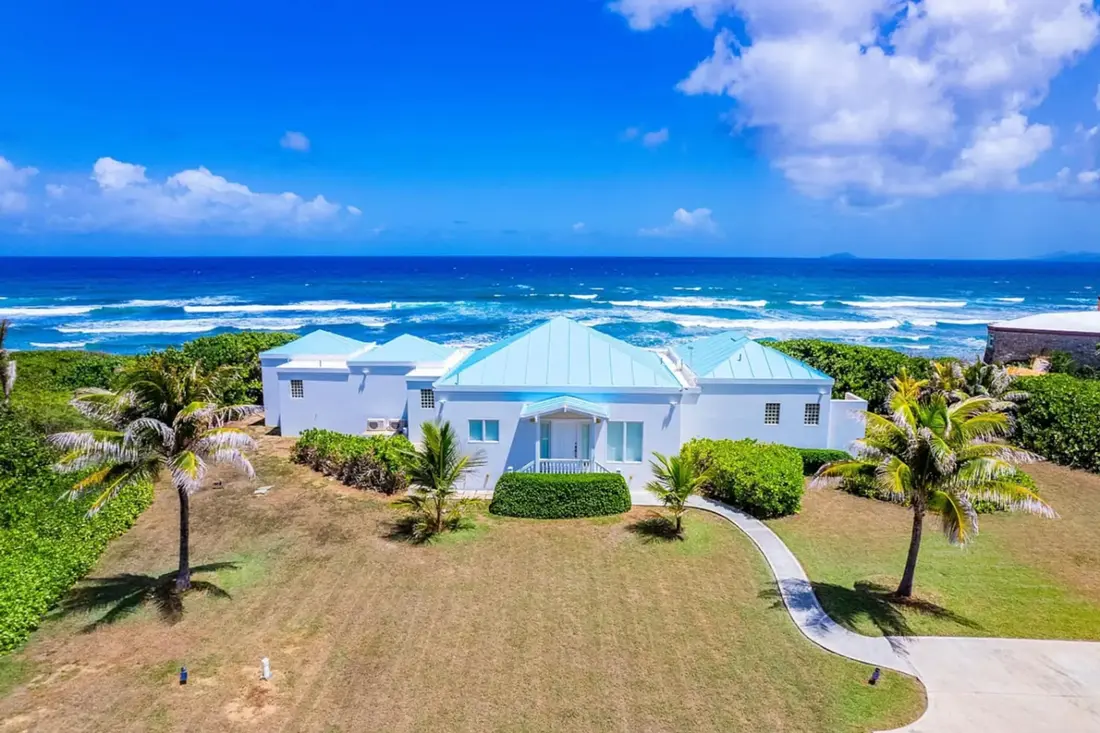
Every home we manage has the full kitchen a long stay lives out of, Wi-Fi shows up on all twelve amenity sheets, and nearly all include a washer and dryer, with amenity lists on each property page drawn straight from the listings. For working months, start with the homes whose listings name a dedicated workspace, including Cozy Condo with Beach Access near town and Dragonfly Villa on the East End. For a month with room to breathe, The Cerulean has already proven itself over a guest's two-month stay, and Shoy's Beach House puts a family-sized household directly on its beach. Browse the East End collection or the full portfolio, then send dates; long stays are a conversation, and we like having it.
Sources
Written from official and first-party sources, checked August 2026. Hours, prices and event dates change — confirm before you go.
In this guide
Stay nearby
On The Shoys beach: six bedrooms, six baths, pool and hot tub, room for twelve, and the beach through the back garden.
 Shoy's Beach House6 bd · 6 ba · sleeps 12 · Christiansted
More in Plan Your Trip
Sources
9 references, listed in full at the end of this guide — official park, refuge, tourism-board and business sources, checked August 2026.