Safety & Common Sense
The same street sense as any U.S. destination, plus island specifics: swell on north shores, sun at 17 degrees latitude, and locked cars at trailheads.
St. Croix is a working American island of about 41,000 people, and it rewards the same judgment you carry through any American town — plus a set of island-specific habits that concern the sea more than the streets. This page collects all of it in one place: what the official sources actually say, where visitor problems occur, and the small routines that prevent nearly all of them.
Reading the island correctly
Start with what the paperwork says. The U.S. State Department publishes travel advisories for foreign destinations only, so the U.S. Virgin Islands — a territory, domestic soil — never appears on that list at all. For an outside government's read, Canada's foreign ministry files the USVI at its lowest tier, "take normal security precautions," the same category it assigns the mainland United States, at last check. That is the entire official advisory picture.
Behind it sits a real place rather than a resort compound. St. Croix has two genuine towns, neighborhoods that range from wealthy to struggling, a police force (the VIPD), courts, and a local press that reports crime the way any American paper does. The territory's violent-crime numbers run high per capita, and the local news does not hide it — yet that violence overwhelmingly grows out of disputes among people who know each other, concentrated in specific communities, and it almost never touches visitors. What does touch visitors, here as in Miami or Honolulu, is property crime: chiefly theft from parked cars. So the working model is a normal small American city with a big rural surround. Nobody suggests fear; nobody should promise a bubble either. You drive everywhere, go where you like day or night with ordinary judgment, and reserve your sharpest attention for the ocean — which, for a visitor, carries more real risk than any street on the island.
Theft from parked cars
If a visitor's trip goes wrong on land, this is usually how: a rental car sits at a trailhead or a quiet beach lot with a bag visible on the seat, and a window gets broken for it. The pattern is identical to trailhead lots in Colorado or California, and the countermeasure is identical too — an empty cabin. Not hidden valuables. Empty.
- Load nothing you cannot carry. Phone, cards, and one key go in a dry bag to the sand or up the trail with you. Everything else stays at the villa. A villa trip makes this easy: your base is a full house minutes away, so the car never needs to hold luggage.
- Stage the trunk at the villa. Moving a bag into the trunk at the parking spot defeats the purpose; anyone watching the lot saw you do it. Whatever rides in the trunk went in before you left the driveway.
- Know the exposed lots. The Carambola-side trailhead for the Annaly Bay hike, the lot at Point Udall where the Jack's and Isaac's Bay trail begins, and any lonely pull-off along a remote shore are the classic spots. Busy beaches with bars and rental stands, such as Rainbow Beach or Cane Bay, see far less of it.
- Leave nothing that looks like something. A charging cable, a duffel of wet towels, a shopping bag of groceries — from outside the glass they all read as possibility. Bare seats end the calculation.
Rental agencies on island will tell you the same, and some print it on the key tag. Follow the rule for two days and it becomes automatic; the payoff is that the single most common visitor incident on St. Croix becomes essentially impossible for you.
Locks, gates, and the villa itself
Treat the villa the way you treat your own house, because that is what it is. Lock doors and accessible windows when you leave and when you sleep; use the safe for passports and backup cards if the home provides one; close the garage if there is a garage. None of this is special island doctrine — it is house sense, applied on vacation, when people tend to switch it off.
Several of the island's villa neighborhoods add a layer. The Shoys, east of Christiansted, sits behind a staffed guard gate by The Buccaneer; guests sign in, and the gate logs who comes and goes. Other estates use coded gates or simply the geography of a private road. State it factually: a gate filters casual opportunism and gives a neighborhood one set of eyes at the entrance. It does none of your thinking for you, and homes outside gates do fine on the same lock-up habits. What every SP Vacations home shares regardless of gate status is a manager on St. Croix — a phone number that reaches a person who lives here, which matters more in practice than any hardware.
Nights out and the roads home
Evenings on St. Croix cluster where the light and the people are. In Christiansted that means the boardwalk and the restaurant blocks behind it — busy, walkable, and fine late on any normal night. The habits that apply in any small American downtown after dark apply here: park near where you are going, keep your group together after the last round, and skip the deserted blocks between you and the car in favor of the lit route. Frederiksted's evening scene runs earlier and quieter, built around the sunset and the pier, with big exceptions on event nights. During festival season the crowds come with a heavy police presence; carry what you need and no more, and split cash from phone as you would at any street fair. If a night runs long, a called taxi beats a tired drive — arrange it before the kitchen closes, since cabs do not cruise for fares here; details in taxis and getting around.
The genuine nighttime hazard on this island involves no other people at all: rural roads without streetlights. Deer, dogs, blind curves, and the occasional pothole demand daylight from drivers still new to keeping left. Plan cross-island dinners so the unfamiliar leg happens before dark, and save the after-dinner drives for roads you have already run twice. The full treatment — turn logic, animals, night technique — lives in driving on the left.
As for street hassle: expect very little. Vendors concentrate around the Frederiksted pier on cruise mornings and in festival villages, selling rather than pressing. A greeting and a no-thank-you close any pitch. Panhandling exists in the towns at mainland-small-city levels; the same one-sentence response works.
The sea outranks the street
Here is the heart of this page, and the part worth reading twice: for a visitor to St. Croix, the meaningful risks live in the water. The National Weather Service, which tracks surf drownings nationally, puts the chance of drowning at a lifeguarded beach at 1 in 18 million — and then you should absorb the island corollary: St. Croix's beaches post no lifeguards. Not the famous ones, not the busy ones; at last check there is no routine lifeguard stand anywhere on the island's sand. Every swim here is an unguarded swim, which does not make swimming dangerous — thousands of calm-water swims happen daily — it makes your own judgment the only safety system on duty.
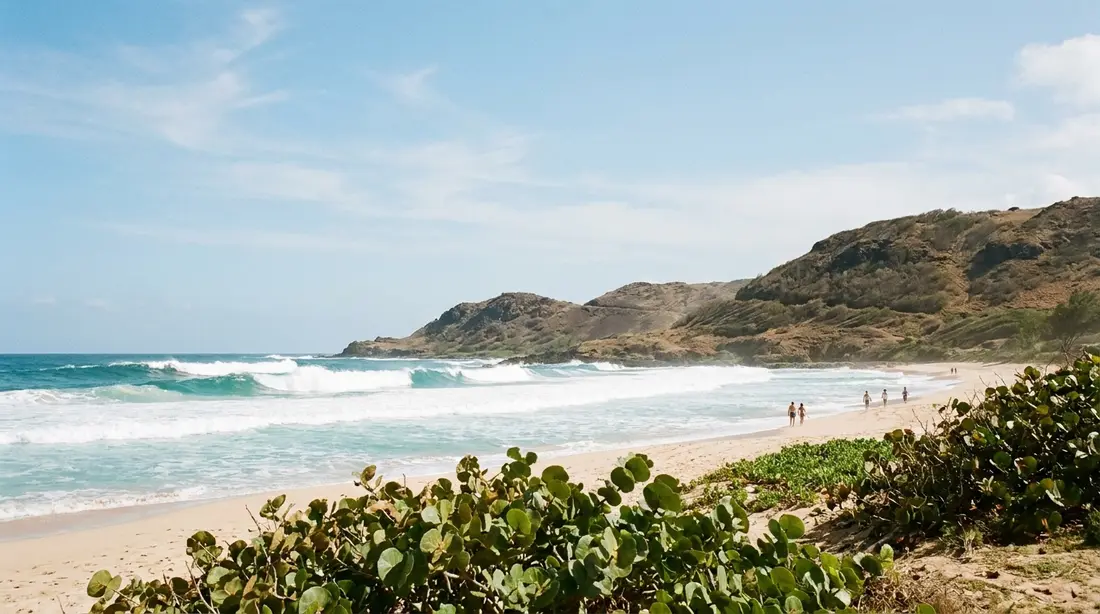
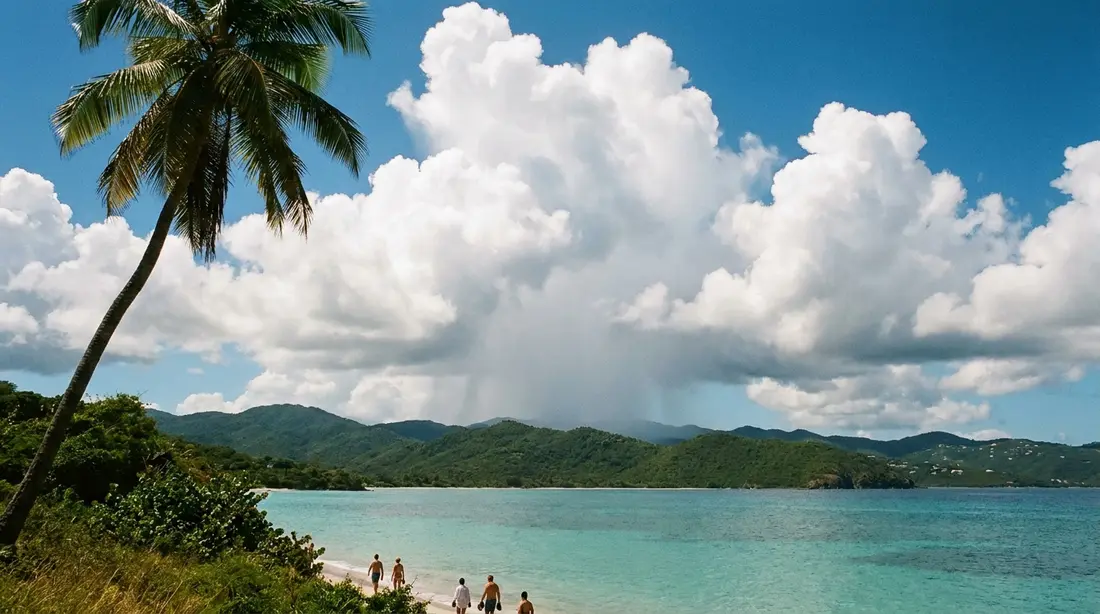
That judgment starts with geography. The island's south and west shores and its protected bays (Chenay, the Shoys, Frederiksted's town beach, Sprat Hall's stretch) run calm most days. The north shore faces open Atlantic water and builds real surf when winter swells arrive, roughly November through March; exposed points on any shore accelerate current on any day. The single most reliable habit costs sixty seconds: stand on the sand and watch the water before you commit to it. Waves breaking farther out than yesterday, brown churn in the shallows, or a channel of oddly smooth water through the surf line are all instructions to swim elsewhere today. Beach-by-beach temperament is mapped in the beach guide.
Rip currents
A rip current is a narrow river of water flowing away from the beach, formed where waves pile water inside a sandbar or reef and it drains back out through a gap. The National Weather Service's San Juan office, which covers the USVI, issues rip current statements for St. Croix's coastal zones when conditions build — worth a glance at the marine forecast on swell days. Two facts from the NWS material deserve memorizing. First, rips do not pull you under; they pull you out, and they defeat swimmers who exhaust themselves fighting straight back toward shore. Second, sunny, pleasant beach weather coexists with rip conditions all the time — the sky tells you nothing.
Reading the water: the rip is often the deceptively calm lane between areas of breaking waves, sometimes carrying a plume of stirred sand or debris seaward. If a beach shows surf plus such a lane, swim well away from the lane.
If one takes you: do nothing hard. Stay calm, keep your breathing, and let it carry you — rips are narrow and weaken past the surf zone. Swim across the current, parallel to the beach, until you feel its grip release, then angle back to shore. If swimming parallel gains nothing, rest on your back, keep afloat, and wave an arm while yelling for help; people on shore should throw or extend something rather than swim out, because untrained rescuers becoming second victims is the classic rip tragedy. Teach children the parallel-swim rule before the first beach day.
Rules for every swim
- Swim with someone. The buddy rule is the whole ballgame on unguarded sand. A partner in the water or a designated watcher on the towel — one or the other, every time, and always for snorkelers.
- Enter feet first, always. Sand moves, and reef sits shallower than it looks. Depth you have not personally tested today gets a feet-first entry.
- Pick your exit before you get in. At rocky entries such as the Cane Bay end sections or any pier area, know where you will climb out and what the surge does to that spot.
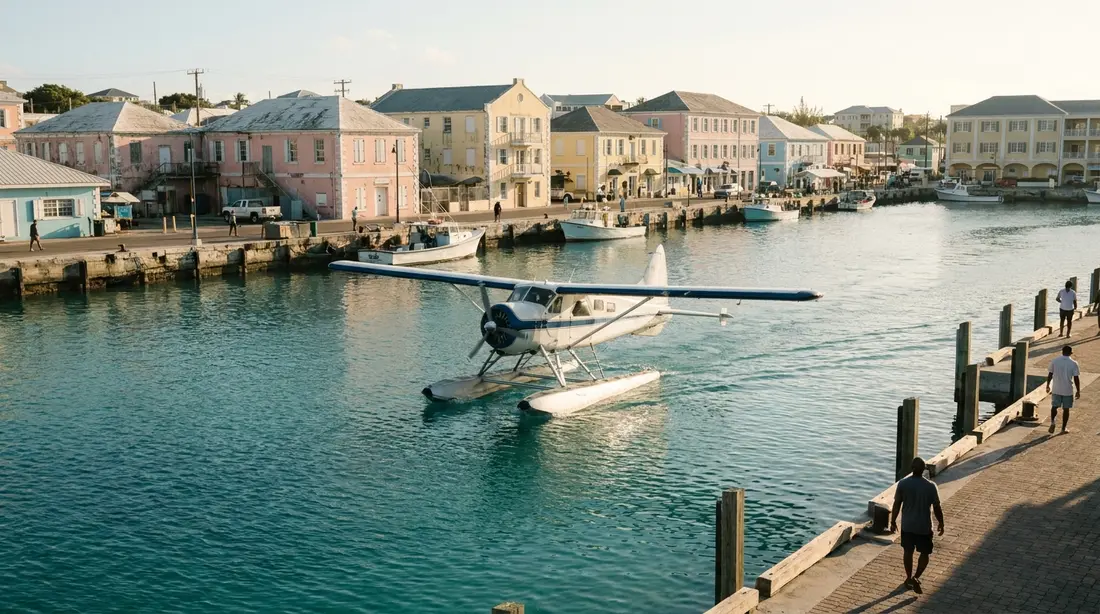
- Respect the working water. Christiansted harbor hosts a seaplane run and boat traffic at Gallows Bay; it is a port, never a swimming hole. At beaches with motorized rentals — jet skis run out of Rainbow Beach — stay inside the obvious swim area and make yourself visible.
- Tow a flag when you snorkel beyond the shallows. A surface float with a dive flag is standard practice for open-water snorkeling here, and boat traffic looks for exactly that. More in the snorkeling guide.
- Alcohol swims after, never before. The beach-bar beer is the reward for the water, on the far side of it.
Reef injuries, urchins, and the manchineel tree
The Caribbean's cast of minor hazards responds to one master rule: hover, look, touch nothing. Coral cuts easily and infects readily in warm water; fire coral — mustard-colored, smooth-looking — delivers a burning sting to bare skin that brushes it. Long-spined black sea urchins wedge into rock and dead coral precisely at foot height in rocky entries. The National Park Service's own hazard list for Buck Island adds fire worms, barbed snails, and the occasional Portuguese man-o-war, while noting that barracuda and sharks, for all their looks, essentially never bother snorkelers.
First aid, sourced to standard guidance: for urchin spines, soak the site in water as hot as comfortably tolerable for 30 to 90 minutes for pain, remove spines you can grasp, and let embedded fragments be — a doctor visit is warranted for deep punctures, spines near a joint, or any sign of infection. For jellyfish and fire-coral stings, rinse with seawater (never fresh water, which fires remaining stinging cells), and vinegar helps for most Caribbean stings. Clean every coral scrape with soap and fresh water once ashore and watch it for a couple of days; island humidity slows healing.
One hazard grows on land. The manchineel tree — beach-loving, with small apple-like green fruit — is poisonous in every part: sap, bark, leaves, fruit. Contact causes chemical burns, and rain dripping through the canopy carries the sap onto anyone sheltering beneath. The NPS marks manchineels along the Buck Island trail; on unmarked shores, learn the look and give the tree its space. Do not handle the "apples" and do not burn the wood.
Heat, trails, and water math
Hiking on St. Croix pairs modest distances with immodest sun. The tide-pool hike above Annaly Bay runs about 3.6 miles round trip with 550 feet of gain, much of it exposed, and the pools themselves belong strictly to calm seas at lower tide — swell turns that rock shelf violent, which is why the trip is a conditions call, never a calendar item. Full details in the Annaly Bay guide.
The desert-style arithmetic surprises people on a green island: figure roughly a liter of water per person per hour of hot-trail effort, and carry it, because no St. Croix trail has a tap. Start early — trail heat peaks with the afternoon — wear a real hat, and put sunscreen on before the trailhead rather than at it. Tell someone your route and your turnaround time; cell coverage is decent along most of the coast and patchy in the rainforest folds. The island's drainage ravines, called guts, flash during heavy rain — never walk a gut with a storm working, and treat the seasonal Caledonia waterfall as a guided outing. The complete trail roster is in hiking St. Croix.
The sun itself deserves its own line item at 17 degrees north: burn times run far shorter than mainland instinct expects, midday shade is strategy rather than laziness, and a long-sleeve swim shirt outperforms any reapplication schedule on the water. Remember the territory's reef-safe sunscreen law when packing — mineral formulas only; the packing list carries the specifics, and traveling with kids covers the small-people version.
Mosquitoes and dengue
The health topic worth genuine attention is mosquito-borne illness. The CDC lists the U.S. Virgin Islands among areas with dengue risk, and the wider Caribbean has run through a historically active dengue stretch since health authorities declared outbreaks across the region in 2024; territorial activity has fluctuated since, so check the CDC's USVI destination page for the current notice before you fly. The Aedes mosquitoes that carry dengue bite by day, with pushes at dawn and dusk, and breed in small standing water close to houses.
Prevention is unglamorous and effective: repellent with at least 20 percent DEET or 20 percent picaridin on exposed skin, longer layers for dusk on the deck, screens and air conditioning doing their quiet work overnight, and a walk around the villa to dump any rain-filled bucket or saucer. If a fever with body aches, headache, or rash arrives during the trip or within two weeks after, see a clinician promptly, say where you have been, and — per standing dengue guidance — reach for acetaminophen rather than aspirin or ibuprofen until dengue is ruled out. Zika and chikungunya circulate at low levels in the region in some years; the same repellent defeats all three.
Ciguatera and kitchen notes
Ciguatera is a toxin that accumulates up the reef food chain into large predatory fish — barracuda above all, plus big grouper, amberjack, and moray eel — and it survives cooking, freezing, and every kitchen process; CDC guidance is blunt that travelers in ciguatera regions should simply never eat barracuda or moray. The practical St. Croix translation is reassuring: island restaurants and fishermen know exactly which fish and which sizes carry the risk, and menus run to wahoo, mahi, tuna, and smaller pot fish that sit outside the problem. Order fish freely. The scenario that actually produces visitor cases in the Caribbean is the self-caught or dockside-gifted large reef predator grilled at the rental — decline that specific meal, and the topic closes.
On water: most villa taps draw from rain cisterns, and the settled local practice is jugged or machine-refilled drinking water from any market — a supply question rather than a safety scare, covered in first-time visitor tips. Restaurant ice and drinks are ordinary-U.S. normal.
Emergency services and medical care
Dialing 911 works throughout the territory for police, fire, and ambulance — one of the quiet advantages of a domestic destination. The medical picture at category level: St. Croix operates one full-service hospital mid-island with an emergency department that never closes, supported by urgent-care clinics and pharmacies in and between the two towns for the sprains, ear infections, and prescription refills that make up real vacation medicine. Complex trauma and specialty cases transfer by air to Puerto Rico or the mainland, which is standard practice for any small island and the reason evacuation coverage appears in the insurance section below. Canada's advisory page adds a fair caveat worth knowing: power interruptions can touch services here, hospitals included, though generators back the critical systems.
Divers get a dedicated safety net. Divers Alert Network runs a 24-hour emergency line that any dive operator on island can recite, and the territory's recompression chamber sits at the hospital on St. Thomas at last check — a short flight arranged through exactly that emergency machinery. Report any post-dive symptom to your operator immediately rather than sleeping on it; the shops here handle this professionally. Operator details live in the diving guide.
Two boring preparations cover most medical scenarios: prescriptions packed in original containers with days to spare, and a photo of your insurance card in your phone. Mainland U.S. health plans commonly treat USVI care as domestic — confirm your own plan's network language before travel rather than in a waiting room.
Solo travelers, women, and LGBTQ visitors
U.S. federal law runs here in full — civil-rights protections, marriage equality, all of it — and the islands' tourism economy has served every kind of traveler for decades. For women traveling alone, the playbook matches any U.S. destination: the buddy standard for swimming becomes a check-in standard on land (someone knows your day plan), night transport is a called taxi rather than a walk through empty blocks, and drinks stay in sight at the bar. Solo travelers of any description report that the island's greeting culture works in their favor — a good-morning habit turns strangers into acquaintances fast, and bartenders and villa managers make natural anchors. LGBTQ couples visit and vacation here routinely; as anywhere new, individual comfort levels around public affection vary, and reading a room is a skill rather than a warning. No promises get made on anyone's behalf — just the plain facts: same law as home, tourism-hardened towns, and a manager one call away.
Wildlife and the rules that protect it
The safety rules here run in the animals' favor, and following them keeps you legal as well as kind. Sea turtles are federally protected: give them room in the water, never touch or chase, and on any beach keep clear of staked or marked nest sites. After-dark flashlights and phone lights are prohibited behavior on nesting beaches in season — lights disorient nesting females and hatchlings alike — and Sandy Point closes entirely from April through August for exactly this reason, with weekend-only hours (10 to 4) the rest of the year; see the sea turtle guide. In the water, feeding fish rewires reef behavior and is banned on protected reefs; on land, the free-ranging dogs and chickens are locals with their own schedules — pet at your own judgment, feed none of them. Mongoose sightings delight children and require nothing from you. The island hosts no venomous snakes, and the scorpions and centipedes that exist here mostly ask you to shake out beach shoes left on a porch overnight.
Travel insurance
Three categories cover the realistic scenarios, and they differ enough to name separately. Trip-cancellation and interruption coverage protects the money if plans collapse before or during travel — most relevant June through November, and the timing rules that make it work (buy before a storm has a name) are laid out in the hurricane season guide. Travel-medical coverage fills whatever gap your health plan leaves, useful mainly for visitors whose insurance treats the territory as out-of-network despite its domestic status. Medical-evacuation coverage is the one people skip and the one this geography argues for: an air transfer to San Juan or Miami is the standard escalation path for serious cases anywhere in the small-island Caribbean, and evacuation riders are cheap against that bill. Divers should confirm dive-injury coverage specifically — DAN sells purpose-built policies the dive shops all recognize. None of this is exotic; it is a 20-minute errand during booking week.
Scenarios and responses
| Situation | Do this | Do not |
|---|---|---|
| Caught in a current pulling you seaward | Stay calm, swim parallel to the beach until free, then angle in; if tired, rest on your back and signal | Fight straight toward shore until exhausted |
| Someone else is caught in a rip | Call 911, throw or extend anything buoyant, direct them to swim parallel | Swim out untrained to perform a rescue |
| Rental car window smashed at a lot | Photograph everything, call 911 for a report number, call the rental agency | Leave the scene without the police report your insurance needs |
| Urchin spines in a foot | Hot-water soak, remove graspable spines, clinic if deep or near a joint | Dig for embedded fragments |
| Fever and body aches mid-trip or within two weeks after | See a clinician, mention the travel, use acetaminophen | Take ibuprofen or aspirin before dengue is ruled out |
| Post-dive tingling, joint pain, or unusual fatigue | Tell the dive operator immediately; they engage DAN and the chamber pathway | Sleep on it or fly first |
| Storm named while you are on island | Follow the manager's plan and the forecast; days of warning precede any arrival | Improvise; the island has a practiced routine — join it |
| Offered a barracuda dinner from a day's catch | Decline that fish, enjoy the wahoo | Assume thorough cooking makes it safe |
| Sheltering from rain under a beach tree with small green fruit | Move — that is likely a manchineel | Touch the fruit, leaves, or trunk |
Questions guests ask
Is St. Croix safe for tourists?
Treated like the small American city it is, yes. There is no State Department advisory because the USVI is domestic territory, and Canada's advisory system rates it at the same "normal precautions" tier as the mainland U.S. The territory's crime statistics include serious violence, concentrated in local disputes that do not involve visitors; the visitor-facing pattern is property crime, mainly theft from parked cars, which the empty-car habit defeats. Meanwhile the risk visitors consistently underrate is the ocean — unguarded beaches reward the swim habits covered above far more than any street-smarts.
Are there lifeguards on St. Croix beaches?
Plan on none. At last check no beach on the island keeps a routine staffed lifeguard post — including the famous ones. That single fact reorganizes beach thinking: swim with a partner or watcher, favor the calm protected bays with children, watch the water for a minute before entering, and know the rip-current escape (parallel, then in). Most days at most beaches the water is gentle; the point is that the judgment on duty is yours.
Can I walk around Christiansted at night?
The boardwalk and the restaurant blocks, yes — that is where island evenings happen, with people and light around you. Apply downtown-anywhere judgment past midnight: stay on the traveled streets, keep the group together, and take a called taxi rather than a long dark walk. The bigger nighttime consideration on St. Croix is driving unlit rural roads before you know them; schedule unfamiliar drives for daylight.
Do I need to worry about dengue?
Worry is the wrong tool; repellent is the right one. The CDC includes the USVI among dengue-risk areas, and regional activity has run high in recent seasons — check the CDC destination page for the current notice before travel. Consistent use of 20 percent DEET or picaridin, longer sleeves at dusk, and screened or air-conditioned sleeping handles the exposure. A fever with aches during or shortly after the trip means a clinic visit and a mention of your travel.
Is the tap water safe at the villa?
Villa taps typically draw from rain cisterns — standard island infrastructure, fine for showers, dishes, and cooking. For drinking, follow local practice and buy jugged water or refill at the purified-water machines outside the markets; it costs little and removes all house-to-house variation. Ask us how your specific villa's water system is configured, and count a case of drinking water into the first grocery run.
What happens if someone gets hurt or sick?
Call 911 — it works territory-wide. The island runs a full-service hospital with a round-the-clock emergency department plus urgent-care clinics and pharmacies for everyday issues; serious cases transfer by air to Puerto Rico or the mainland, which is why an evacuation rider on travel insurance earns its small price. Divers have the DAN emergency line and a recompression chamber one island over, reached through any dive operator. And your villa manager lives here — for the where-do-I-go question at 9 p.m., call us first.
Is hurricane season a safety problem?
It is a planning variable more than a safety crisis. The season runs June through November with its statistical peak in August and September, and modern forecasting delivers days of warning before any system arrives — nothing about a Caribbean storm is a surprise. Book those months with flexible terms and insurance purchased early, then watch the forecast with us if anything develops. The complete playbook, from booking checklist to on-island procedure, is in the hurricane guide.
A manager on the island
Most of this page compresses to habits: an empty car, a locked door, a watched wave, a bottle of repellent. The remainder compresses to a phone number. Sterling Point is on St. Croix year-round, and every guest gets a direct line to people who know which beach suits a six-year-old this week, which clinic is fastest on a Sunday, and what the forecast actually means for Thursday's sail. Questions that feel too small for 911 and too local for Google are exactly what we are for — call before a wrinkle becomes a story. Browse the full portfolio at our villas, including Shoy's Beach House behind The Shoys' guard gate and the family collection chosen with calm-water swimming in mind.
Sources
Written from official and first-party sources, checked August 2026. Hours, prices and event dates change — confirm before you go.
In this guide
Stay nearby
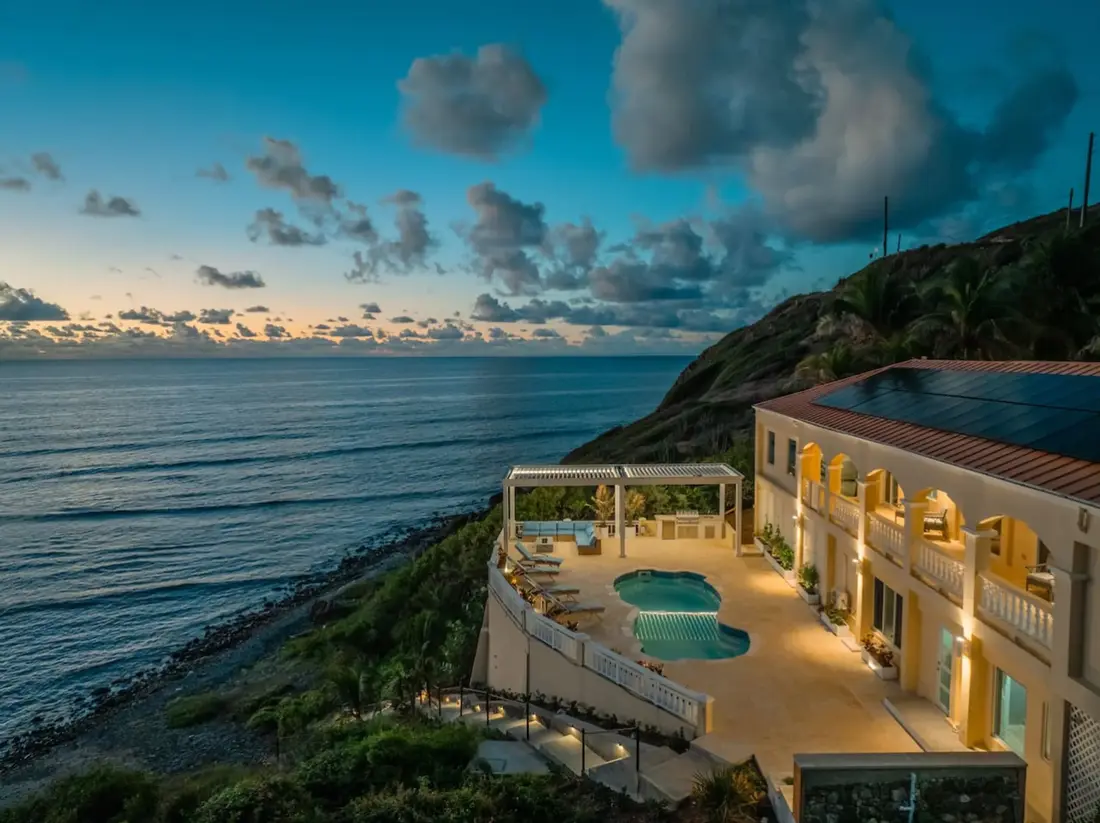
On The Shoys beach: six bedrooms, six baths, pool and hot tub, room for twelve, and the beach through the back garden.
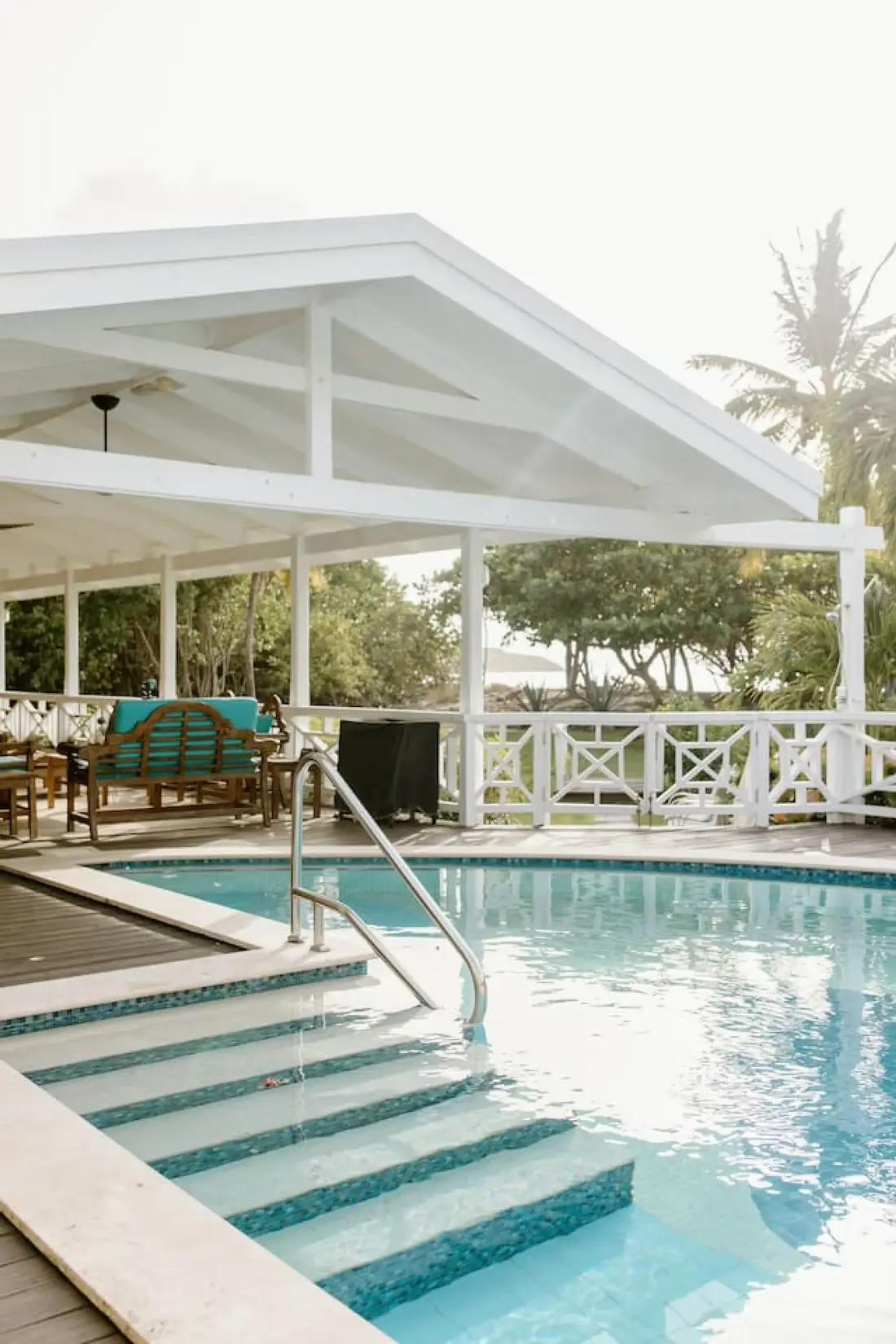 Shoy's Beach House6 bd · 6 ba · sleeps 12 · Christiansted
More in Plan Your Trip
Sources
11 references, listed in full at the end of this guide — official park, refuge, tourism-board and business sources, checked August 2026.