Chenay Bay
Shallow, protected, and family-friendly on the East End, with kayaking and easy snorkeling where turtles and rays are common sightings.
Chenay Bay is the calmest easy-access swimming water on St. Croix's East End: a reef-guarded cove about three miles east of Christiansted where the sea stays shallow and settled, green turtles feed in the grass beds, and small children can spend a whole morning in water that never gets past their waists. This page is the full reference — the bay's shape and conditions, the resort behind the sand and its current state, the paddling and snorkeling reality, access rules for non-guests, and how to build a day around it.
Where the bay sits
Drive east out of Christiansted on Route 82, the East End Road, and the coast starts organizing itself into a chain of coves. You pass The Buccaneer's hillside, then the turn for Tamarind Reef and Green Cay Marina, then a low green stretch of protected shoreline — and then the road bends around Chenay Bay, with the cottages of the old Chenay Bay Beach Resort terraced up the hill behind it. The trip from downtown takes about fifteen minutes with normal traffic. Cramer's Park and Point Udall continue another ten to fifteen minutes east on the same road, which is why Chenay slots so naturally into an East End day; the whole quarter is covered in our East End guide, and the nearer options back toward town are ranked in beaches near Christiansted.
The address system tells you the history: the resort's street address is 5000 Estate Chenay Bay, one of the old Danish-era estate parcels that still organize the island's map. Frommer's notes the property occupies ground that once carried a sugar plantation, which was true of nearly every workable acre on this coast; the estate name survived the crop by two centuries.
Why the water stays calm
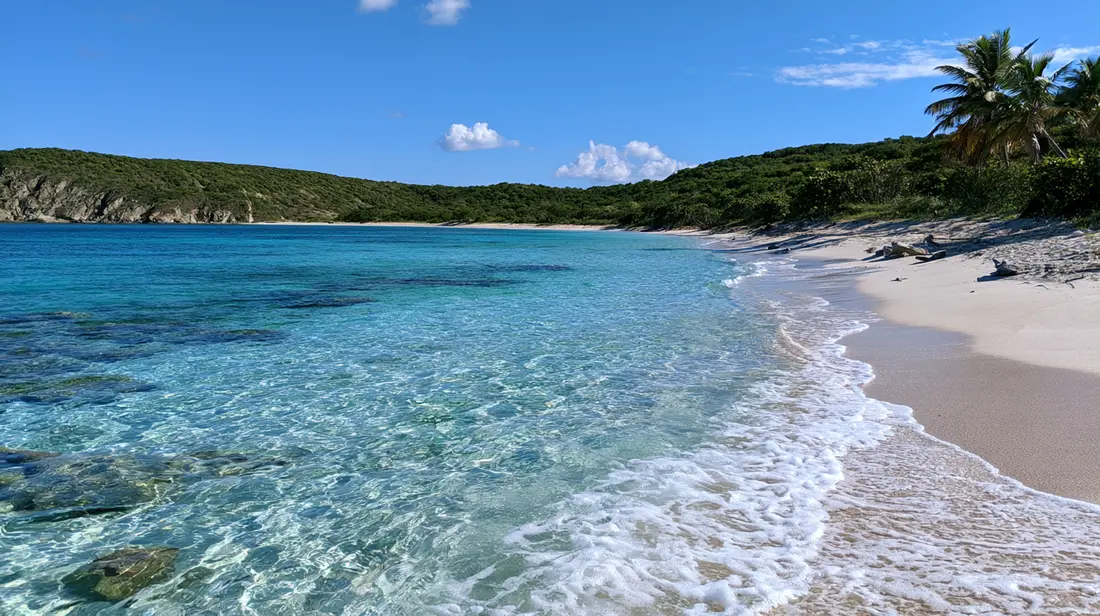
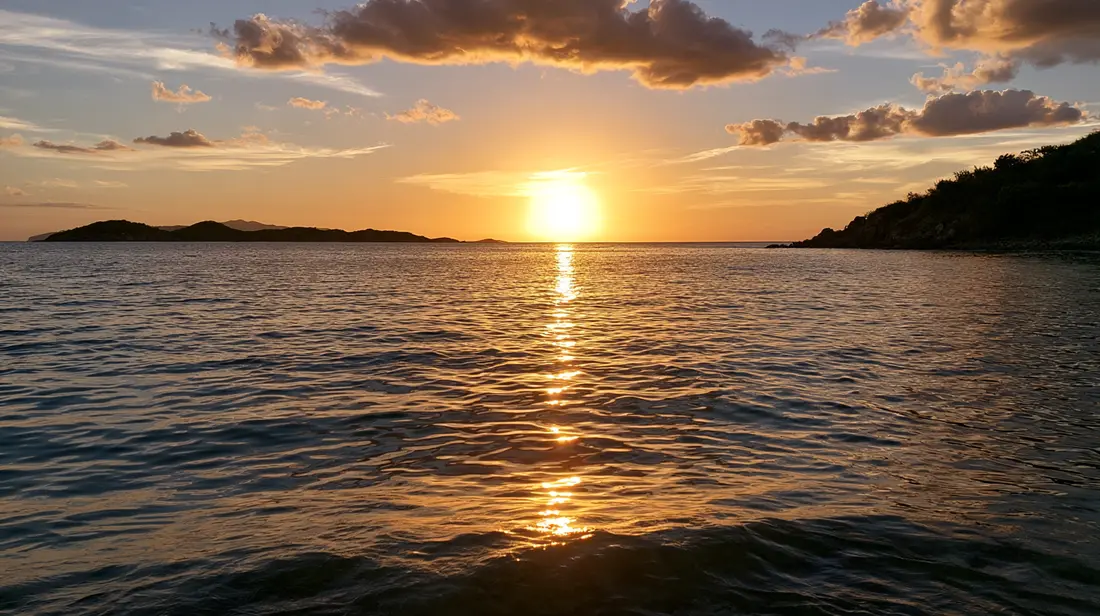
St. Croix's steady weather comes from one direction. The trade winds arrive out of the east and northeast nearly every day of the year, and the island's beaches divide cleanly into the ones that face that wind and the ones that hide from it. Chenay Bay hides well. The cove opens toward the north instead of into the weather, headlands pinch its entrance, and a band of reef runs across the mouth, so most of the swell that travels down the coast breaks offshore before it reaches the swimmers. What crosses the reef arrives with only a few hundred yards of open water left to work with — too short a runway to build real waves.
The result is a bay that behaves like the island's calm-water template. When people describe an ideal first-snorkel or first-paddle venue — flat surface, no shore break, gradual bottom, something alive to look at — they are describing Chenay Bay's default condition. The Shoys and Cramer's Park share the same sheltered geometry along this coast, but Chenay pairs it with the shallowest bottom of the three, which is what makes it the specific answer for toddlers, nervous swimmers, and anyone recovering their sea confidence.
Green Cay, the island offshore
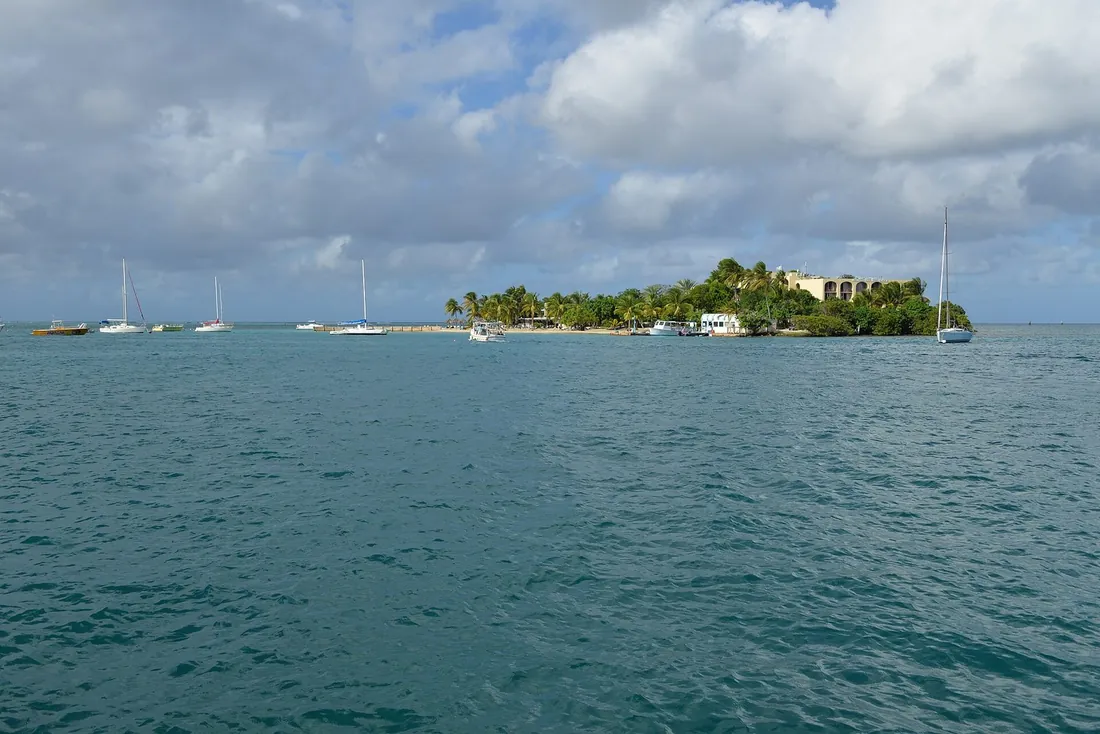
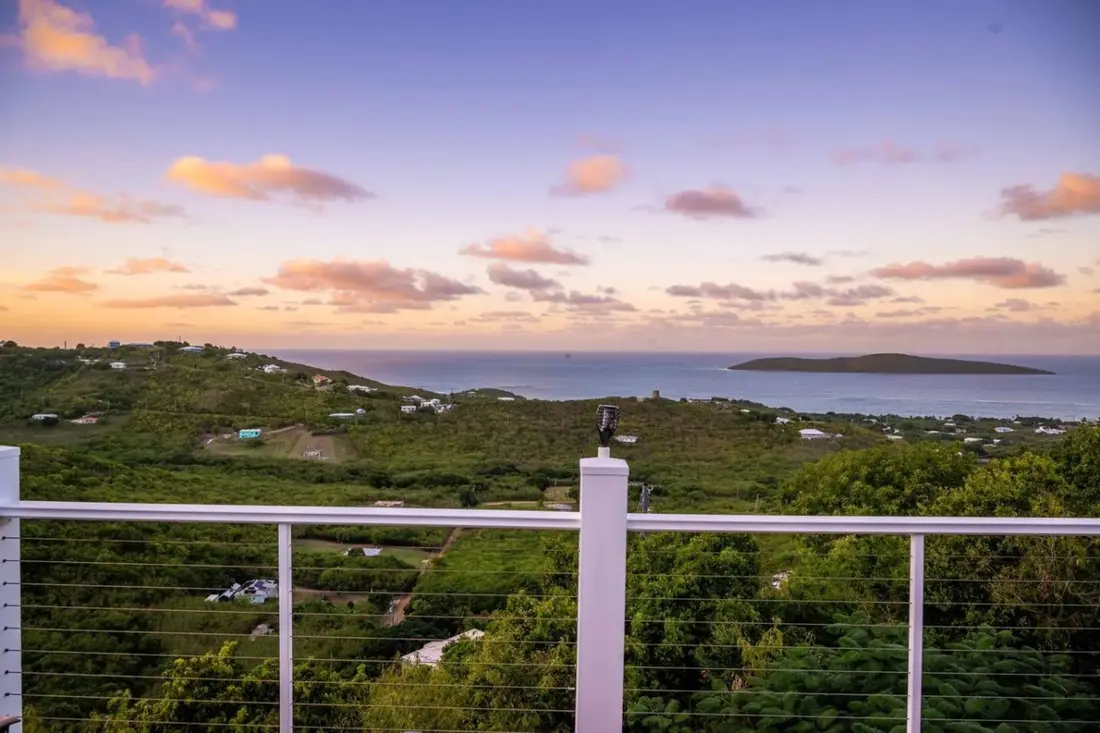
The small green island you see from the sand, about a thousand feet off the western end of the bay, is Green Cay National Wildlife Refuge — 14 acres set aside in 1977 for the endangered St. Croix ground lizard, which survives there in its largest natural population after mongooses eliminated it from the main island, so the refuge stays closed to all visitors. That single sentence is the whole visiting policy: you look, you do not land. From the beach the cay serves as the bay's scenery and its wind gauge — whitecaps beyond it mean the open coast is working while your side stays flat. The lizard's story, and the rest of the island's animals, are covered in the wildlife guide.
Sand, entry, and depth
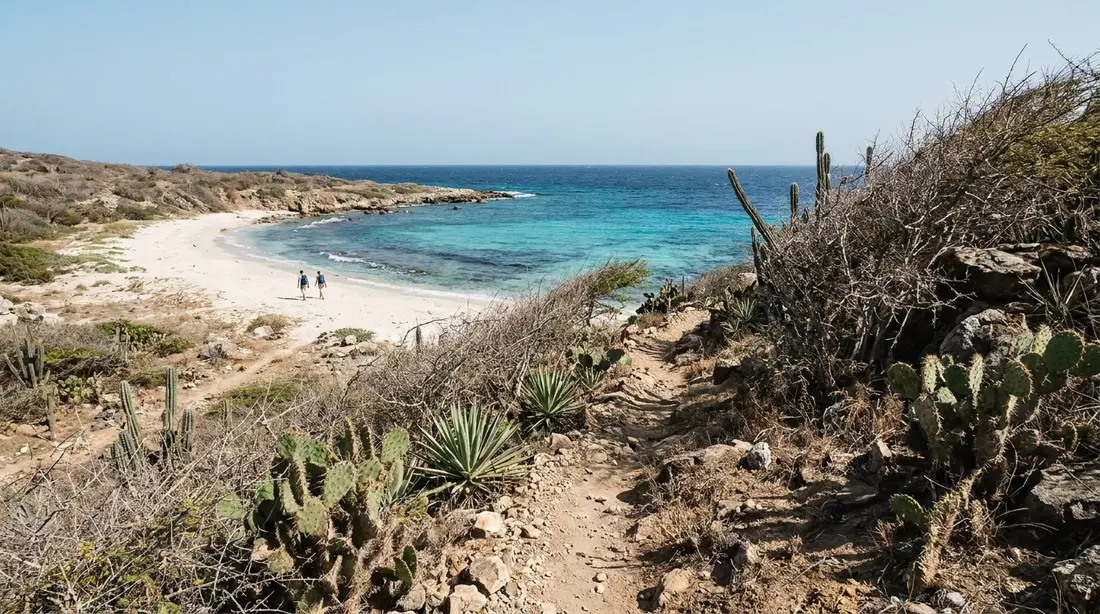
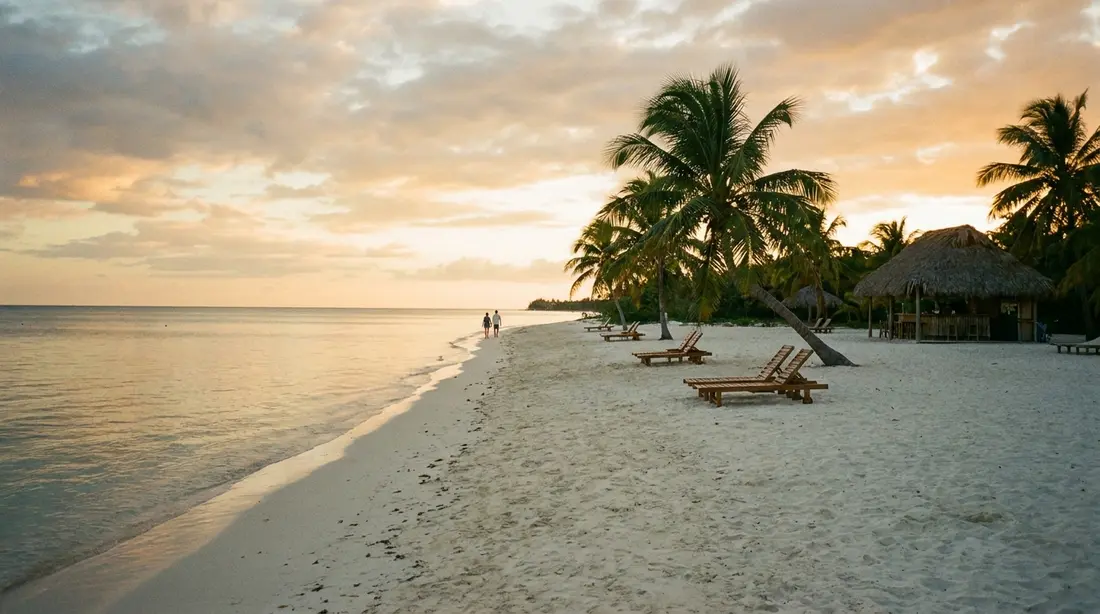
The beach is a long, narrow ribbon of pale sand backed by sea grape and scrub, wider at some points than others and never deep from waterline to vegetation. It is not a postcard powder beach and does not need to be; its value is in the water. The entry is sand underfoot, sloping so gently that an adult can walk out a very long way before swimming becomes necessary. Small children get an enormous shallow playground; snorkelers get standing-depth water over the first grass beds, which means masks can be adjusted and nerves managed with feet planted on the bottom.
Two things to know about the bottom. First, sand gives way to seagrass in patches beginning close to shore — dark areas that first-timers sometimes mistake for rock or coral. The grass is the point of the bay, and the next section explains why. Second, scattered rocky patches and the reef areas hold sea urchins, so keep bare feet on sand and put water shoes on anyone who plans to wander the edges.
The seagrass and its turtles
Most of Chenay Bay's floor is meadow: seagrass growing on shallow sand in exactly the depth range that suits a feeding green turtle. Greens are resident here, cropping the same beds day after day, and the bay has earned its reputation as one of the most reliable places on St. Croix to see one from shore. Reliable does not mean scheduled. On a calm morning with decent visibility, a patient snorkeler who covers some ground over the grass has a good chance; on a churned-up afternoon, sightings drop with the visibility. Watch for a dark shape against pale bottom, and for a small head breaking the surface for air every few minutes.
The etiquette is short and enforce-it-with-your-kids simple: keep several body lengths back, stay off to the side rather than overhead, never block the path to the surface, and let the animal keep eating. A turtle that keeps feeding while you watch is the encounter done right. Southern stingrays work the sand lanes between the grass here too, reading as gray shapes that seem to glide rather than swim, and they follow the same rule — observe, keep your distance, and they carry on. The full species-by-species picture, including where else greens and hawksbills concentrate, is in the sea turtles guide; the nesting-season rules live in turtle watch season.
The bay also sits inside the St. Croix East End Marine Park, the territorial marine protected area established in 2003 that covers this entire coast, so the grass beds and reef here have formal protection to go with the informal kind that comes from visitors behaving well. In practice, park status translates to a short list of rules a beach visitor can actually follow: take no coral, no live shells, and no conch; leave the grass beds unraked by paddles, anchors, and dragged kayak hulls; and treat the whole bottom as habitat rather than souvenir shelf. A queen conch making its slow track across the sand is one of the better sights the meadow offers, and it stays that way because people leave it where it is.
The resort behind the beach
The hillside above the sand carries roughly 50 West Indian-style cottages, and their story explains most of the confusion travelers have about this beach. For decades this was Chenay Bay Beach Resort, a low-key cottage colony that generations of repeat visitors knew by name. Then came a run of setbacks that the St. Thomas Source later catalogued: an owner's bankruptcy in 2010 that starved the property of maintenance money, a 2016 fire that destroyed the kitchen and restaurant, and the 2017 hurricanes — which battered the grounds but left the cottages standing. The property renovated and relaunched, and by 2021 it was operating under a new name: Bungalows on the Bay.
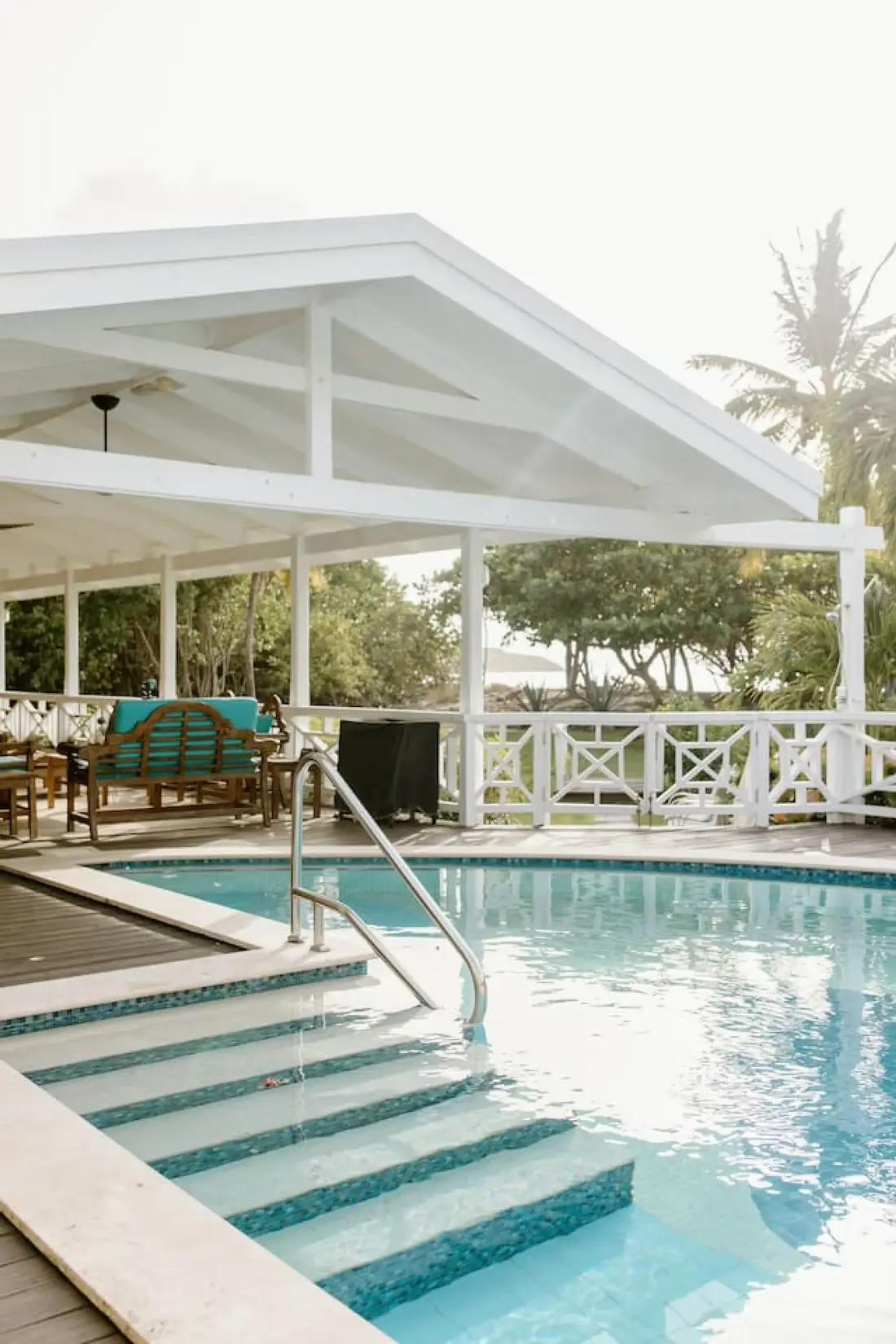
At last check in 2026, Bungalows on the Bay is open and active — cottages updated, a pool on the grounds, and a beachside restaurant serving from morning into the evening with a full bar and regular live music. Recent guest reviews describe it accurately as casual and low-key rather than polished; anyone expecting a groomed luxury resort has the wrong property, and anyone wanting a beach-shack lunch fifty steps from the water has the right one. Because ownership and operations here have cycled more than once, confirm anything you are counting on — restaurant hours, rental gear, events — directly with the property before you build a day around it.
Beach access if you are not staying there
You do not need a room to use this beach. Virgin Islands law has kept every shoreline in the territory open to the public since 1971, resort frontage included, so the sand and water at Chenay are yours regardless of where you sleep. What the resort controls is its own infrastructure: the pool, loungers, and cottage grounds belong to registered guests, while the restaurant welcomes the public — and eating or drinking there is the practical way for a day visitor to borrow the property's restrooms and shade. Parking works two ways: an informal sandy lot serves the public beach off the East End Road, and the resort's lot serves its guests and restaurant patrons. Neither involves a fee at last check.
Kayaks and paddleboards
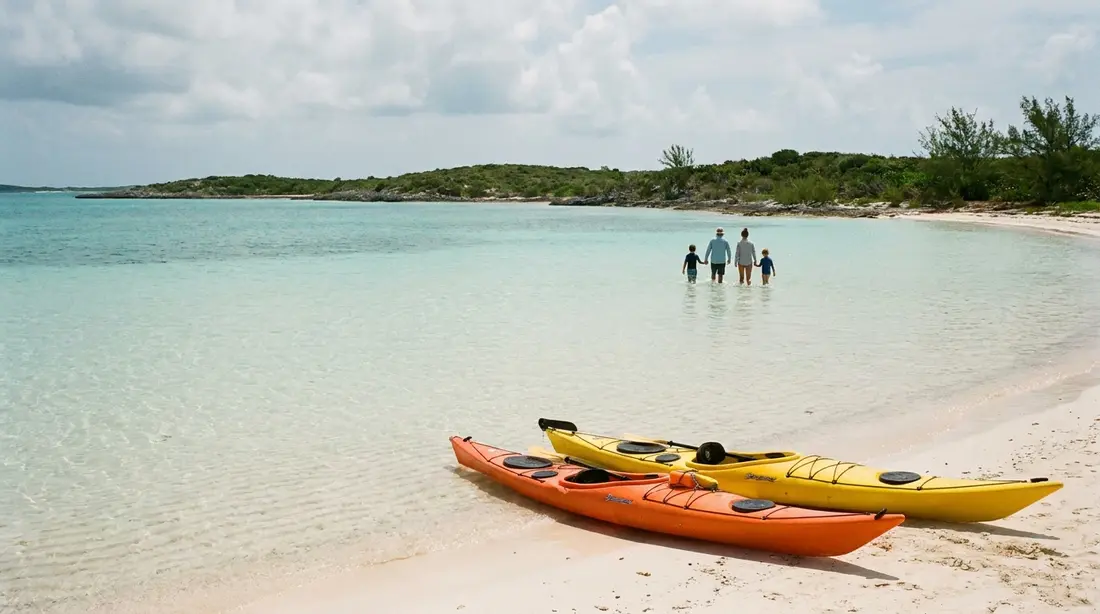
Chenay Bay has been rental-kayak water since the original resort's heyday, and the reason has never changed: reef shelter plus shallow bottom equals the most forgiving paddling on the island. What has changed, repeatedly, is who hands you the paddle. The beach operation has come and gone with the property's ownership cycles — in some seasons there is a shack renting kayaks and stand-up boards on the spot, in others there is nothing. At last check the reliable route is delivery: island outfits such as Sea Sports St. Croix truck kayaks, boards, and snorkel gear anywhere on St. Croix seven days a week, and a villa guest can have equipment dropped at the house or met at the bay. Treat any on-beach rental as a bonus you confirm by phone, never a plan.
For a first-time paddler, this bay removes every failure mode at once. There is no shore break to punch through, so launching is a step-and-go. The wind shadow means a beginner is never fighting to hold position. And because so much of the bay is standing depth, falling costs nothing — you stand up, climb back on, and try again, which is the entire learning curve compressed into an hour. Confident paddlers use the bay differently, as an observation platform: from a board's height, with polarized glasses, the grass beds below read clearly, and a quiet paddler often spots turtles that swimmers miss.
Routes sort themselves by ability. Beginners work the inner bay and never need to leave it; there is a morning's worth of water inside the reef line. Stronger paddlers can follow the shoreline west toward Tamarind Reef and the marina entrance, staying inside the protected water the whole way, or nose along the eastern headland on a flat day. Two cautions apply to everyone: give Green Cay a wide berth, since landing on the refuge is prohibited and its surrounding shallows take the wind first, and turn around the moment the breeze fills in, because the return leg into the trades is always the half of the trip that gets underestimated. The island-wide venue rankings, wind rules, and rental logistics live in the paddleboarding guide.
Snorkeling, with expectations set
Be clear about what kind of snorkel this is. Chenay Bay is a wildlife-over-grass snorkel, at its best for turtles, rays, conch shells trailing their tracks across the sand, and the small fish that shelter in the meadow. It is a poor place to expect walls of coral and clouds of reef fish; for that, the island offers Cane Bay, the Frederiksted pier, and Buck Island, all ranked in the snorkeling beaches guide. The patch reef and rockier structure toward the bay's edges do hold more fish life than the open grass — juvenile reef species, the occasional parrotfish working the hard bottom — and a snorkeler who works the margins on a clear day gets a fuller show than one who stays over the middle.
What makes the bay valuable in a snorkeling week is the difficulty level. This is where the mask goes on for the first time, where kids graduate from pool practice to open water, and where the nervous member of the group builds the confidence the rest of the week will spend at bigger venues. Standing depth, no current to speak of inside the reef, and a real chance at a turtle within fifty yards of shore: as training water with a payoff, nothing on the island beats it.
The with-kids morning
Families default to Chenay Bay for reasons that become obvious within ten minutes of arriving. The waist-deep shelf keeps every child in easy reach and easy view. The absence of surf means nobody gets knocked down at the waterline. The turtles give older kids a mission while the youngest dig at the water's edge, and the whole bay works as a single supervised space in a way that steeper beaches never do. Local families use it the same way, especially on weekends, which is its own endorsement — and a reason to pick a weekday morning if you want the sand mostly to yourselves.
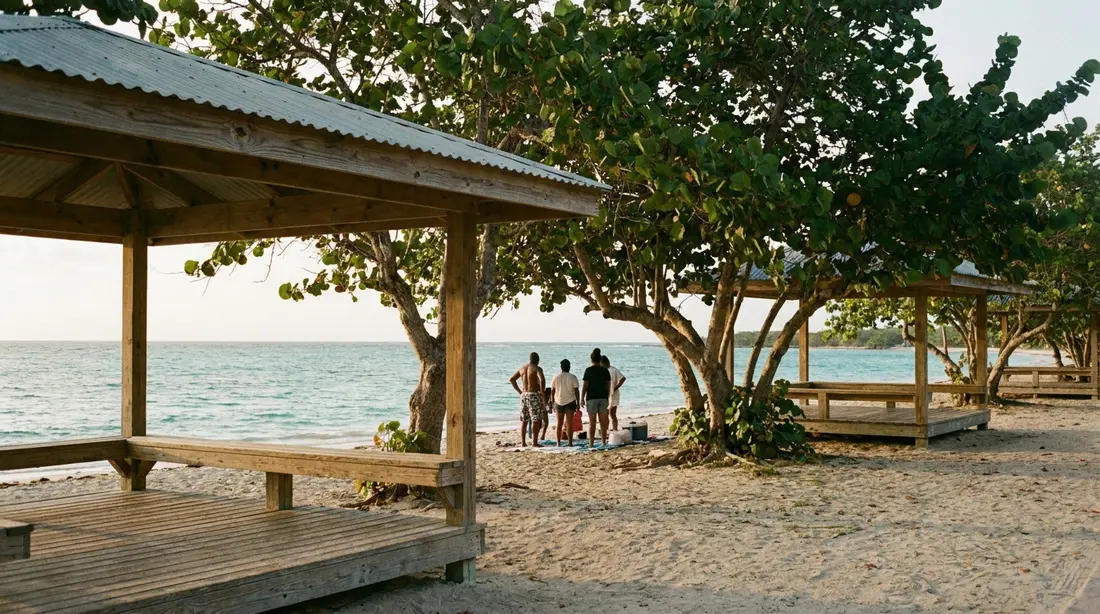
The pattern that works: arrive by 8:30 or 9, before the wind and the heat; swim and snorkel through the morning; then either picnic under the sea grapes with a cooler you packed at the villa, or walk to the resort restaurant when it opens and let lunch double as the restroom stop. By early afternoon the trades are up, the surface has texture, and the youngest crew members are done anyway — which is exactly when a villa with a pool earns its rent. Age-by-age beach strategy is in traveling with kids.
Birds and the early shift
Arrive at opening hours — just after sunrise — and the bay belongs to the birds. Pelicans crash-dive the shallows while the water is glassy, herons stalk the waterline, and the beach makes a case for bringing coffee and doing nothing for half an hour. The early window is also the day's best for every other purpose: flattest water for paddling, clearest for snorkeling, coolest for small children, and emptiest for everyone. On this bay more than most, the difference between 7:30 a.m. and 1:30 p.m. is the difference between two different beaches.
Wind, seasons, and when the bay chops up
No Caribbean cove is calm by rule, and it helps to know when Chenay's shelter gets tested. The daily cycle matters most: trade winds are lightest around dawn and strongest by mid-afternoon, every month of the year, so mornings are the bay's showcase and afternoons carry chop on the outer half even when the inner shallows stay swimmable. Seasonally, the stretch from mid-December through mid-March brings the Christmas Winds, the year's briskest trades; the bay remains one of the island's most usable pieces of water in that season precisely because of its shelter, but expect texture on the surface and plan water time earlier. Summer flattens everything — June through August mornings here can look like a pond — and the September-to-November quiet season keeps light winds with warmer water, at the price of watching the tropical forecast through hurricane season. Rain is brief and local on this dry end of the island; the East End often sits in sun while the rainforest end of St. Croix takes a shower, so a gray morning at your west-side villa is an argument for driving east, never for canceling. The island-wide climate picture is in weather and when to visit.
| Season | Typical bay conditions | Best for |
|---|---|---|
| Mid-December to mid-March | Christmas Winds; sheltered but textured, calmest at dawn | Early swims and snorkels; kids in the inner shallows |
| April to May | Trades easing; long calm mornings | All uses; the sweet spot of crowd and calm |
| June to August | Lightest wind of the year; frequent glassy mornings | First-time paddling, longest snorkel range |
| September to November | Light wind, warmest water; tropical systems possible | Empty-beach mornings, with a forecast check |
| Any month | Wind builds through the day; afternoon chop on the outer bay | Go in the morning; take afternoons at the villa pool |
The name and the neighbors
Two naming notes for map readers. "Chenay" is generally traced to chaney, the Crucian word for the fragments of colonial-era china that wash out of the island's soil and shorelines — pieces of broken tableware that island children once ground smooth and traded as play money, the word itself a mash-up of china and money. Shards still turn up along this coast, so the derivation is easy to believe standing on the beach, though like most estate-name etymologies it comes down through local tradition rather than paperwork. Second: parts of this shoreline appear on maps as Southgate Beach, after the Southgate Coastal Reserve — roughly 100 acres of protected pond and shore kept by the St. Croix Environmental Association on the bay's western flank as nesting habitat, a walking-and-birding shoreline rather than a swimming one.
Practicalities
The access details, in one place. The turn is off Route 82; the public parking area is informal, sandy, and fine for any rental car. There is no entrance fee, no lifeguard — true of nearly every beach on St. Croix — and no public restroom apart from the resort restaurant's, which patronage unlocks. Shade exists along the vegetation line but is patchy; a beach umbrella earns its space in the trunk here. Bring water and snacks regardless of your lunch plan, since the restaurant's hours and the rental shack's existence both fluctuate with the property's management. Wear mineral sunscreen — territorial law restricts the common chemical formulas, and everything you rinse off ends up in the grass beds the turtles eat from. And keep valuables out of sight in the car, standard practice at every quiet beach lot on the island.
| Item | Detail |
|---|---|
| Location | North shore of the East End, off Route 82, about 3 miles / 15 minutes east of Christiansted |
| Access and fee | Public shoreline, no fee; informal beach lot plus resort parking for patrons |
| Water profile | Sandy gradual entry; standing depth far offshore; seagrass beds begin near shore |
| Protection | Opens north with reef across the mouth; inside the St. Croix East End Marine Park |
| Wildlife | Resident green turtles over the grass, southern stingrays on the sand lanes, pelicans and herons early |
| Facilities | Bungalows on the Bay restaurant and bar at last check; no lifeguard; shade patchy |
| Rentals | On-beach concession intermittent; island delivery outfits cover kayaks, boards, snorkel gear |
| Best window | Weekday mornings, roughly 8 to noon |
Pairing the bay with the rest of the East End
Chenay Bay rarely fills a whole day by itself, and it does not need to; the coast around it is dense with add-ons. Five minutes back west, Green Cay Marina and the Tamarind Reef Resort share a shoreline with a small sandy beach, reef-protected swimming, and the Deep End Bar & Grill, whose tables look straight out at the cay — the natural lunch when the resort restaurant is closed or crowded. The marina is also where two of the authorized Buck Island boats depart, so an East End base can pair a Buck Island morning with a Chenay afternoon without ever seeing town. Heading east instead: Cramer's Park adds picnic pavilions and local weekend energy ten minutes on, Point Udall holds the country's first sunrise at the end of the road, and the trail beside it drops to Jack's and Isaac's Bays for the wild-beach counterpart to Chenay's tameness. Back toward Christiansted, The Shoys offers the same sheltered calm closer to town, and the boardwalk restaurants cover dinner. The full restaurant map for this quarter is in East End restaurants.
Questions guests ask
Is Chenay Bay Beach Resort still open?
Under that name, no. The property cycled through a 2010 bankruptcy, a 2016 restaurant fire, and the 2017 hurricanes, then renovated and relaunched as Bungalows on the Bay, which was open and operating at last check in 2026 — about 50 cottages, a pool, and a beachside restaurant with a full bar. Older guidebooks, timeshare directories, and map pins still carry the original name, which confuses travelers every season. If your plans depend on the restaurant or on renting gear at the beach, call the property directly; its operations have changed hands enough times that this page hedges on purpose.
Can we use the beach without staying at the resort?
Yes. The shoreline is public under territorial law, as it is everywhere in the U.S. Virgin Islands, and day visitors use Chenay Bay constantly. Park in the informal public lot off the East End Road, or patronize the restaurant and use the resort lot. What is reserved for hotel guests is the resort's own equipment and grounds — pool, loungers, cottage areas. Buying lunch or drinks at the restaurant is the accepted way for a beach visitor to use its restrooms and claim some shade.
How likely are we to see a turtle?
Likely enough that Chenay is the island's usual recommendation for a first sighting from shore, and no more certain than any wild-animal encounter. Green turtles live in the bay year-round because the grass they eat grows there; they do not appear on a schedule. Your odds rise sharply on calm, clear mornings, with slow swimming, polarized sunglasses from a paddleboard, or simply patience over the grass beds. If the water is stirred up, sightings fall with the visibility — come back the next morning rather than writing the bay off.
Is the snorkeling good compared with Cane Bay or Buck Island?
Different category. Cane Bay and Buck Island are coral snorkels — structure, fish density, and in Buck Island's case a marked underwater trail. Chenay is a meadow snorkel: turtles, rays, conch, and small fish over grass and sand, in water calm and shallow enough for total beginners. Judged as reef, it is minor; judged as a first-snorkel venue with a real wildlife payoff, it is the best on the island. Most good St. Croix weeks use it as the warm-up before the bigger venues.
Are there restrooms, food, and shade?
Conditionally. The resort restaurant covers food, drinks, and restrooms when it is open — from morning to evening daily at last check — and nothing else on the beach does. Shade along the vegetation line is real but limited, and the best patches go early on weekends. The self-sufficient version of a Chenay day carries water, snacks, and an umbrella, and treats the restaurant as a pleasant option rather than infrastructure. There is no lifeguard, no shower, and no gear shop you can rely on being open.
Do we need water shoes?
For plain swimming over sand, no — the entry is soft and gradual. They earn their place for anyone exploring the rockier margins and patch reef, where sea urchins live, and for small children who wander without watching their feet. A stepped-on urchin is the one common injury this gentle beach hands out, and it is entirely avoidable. Fins solve the same problem for snorkelers while adding range over the grass beds.
When is the bay too rough?
Rarely for swimmers, occasionally for beginners on boards. The reef and the bay's northern orientation keep the inner water swimmable through conditions that close other coasts, which is why local families trust it. The exceptions: windy winter afternoons, when chop covers the outer bay and paddling turns into work, and the rare north swell events that push surge across the reef. If whitecaps show inside the bay itself, or beyond Green Cay the sea looks white rather than blue, downgrade the plan from paddling to wading and the morning still works.
Staying nearby
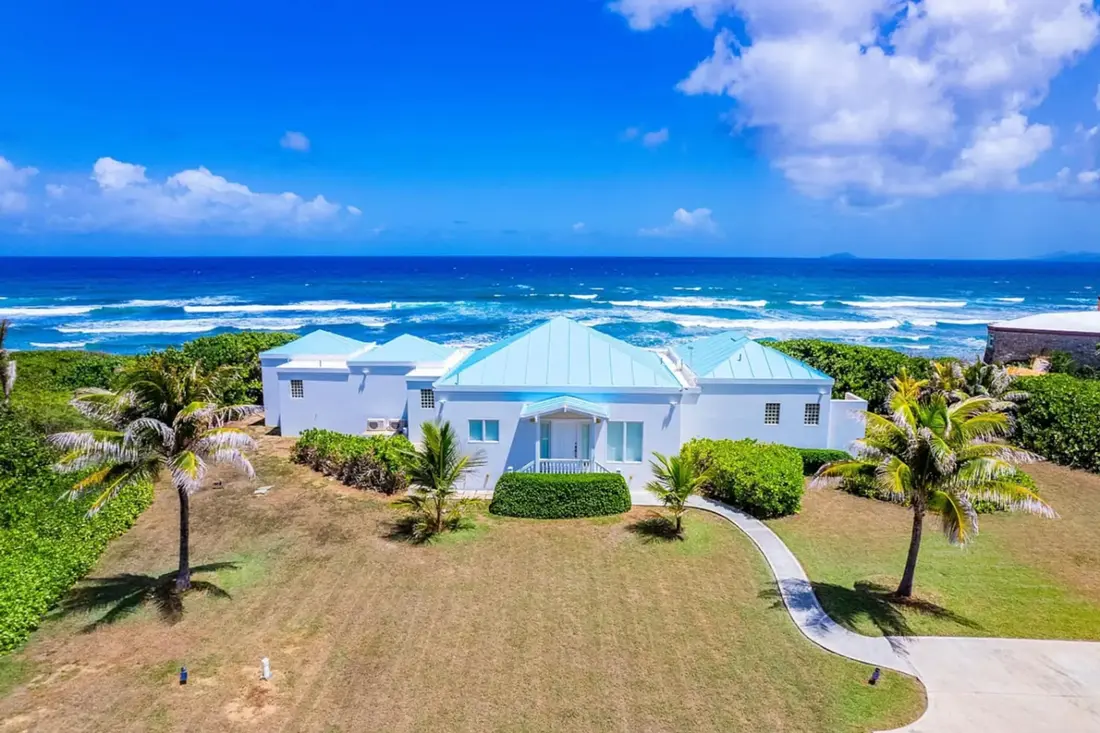
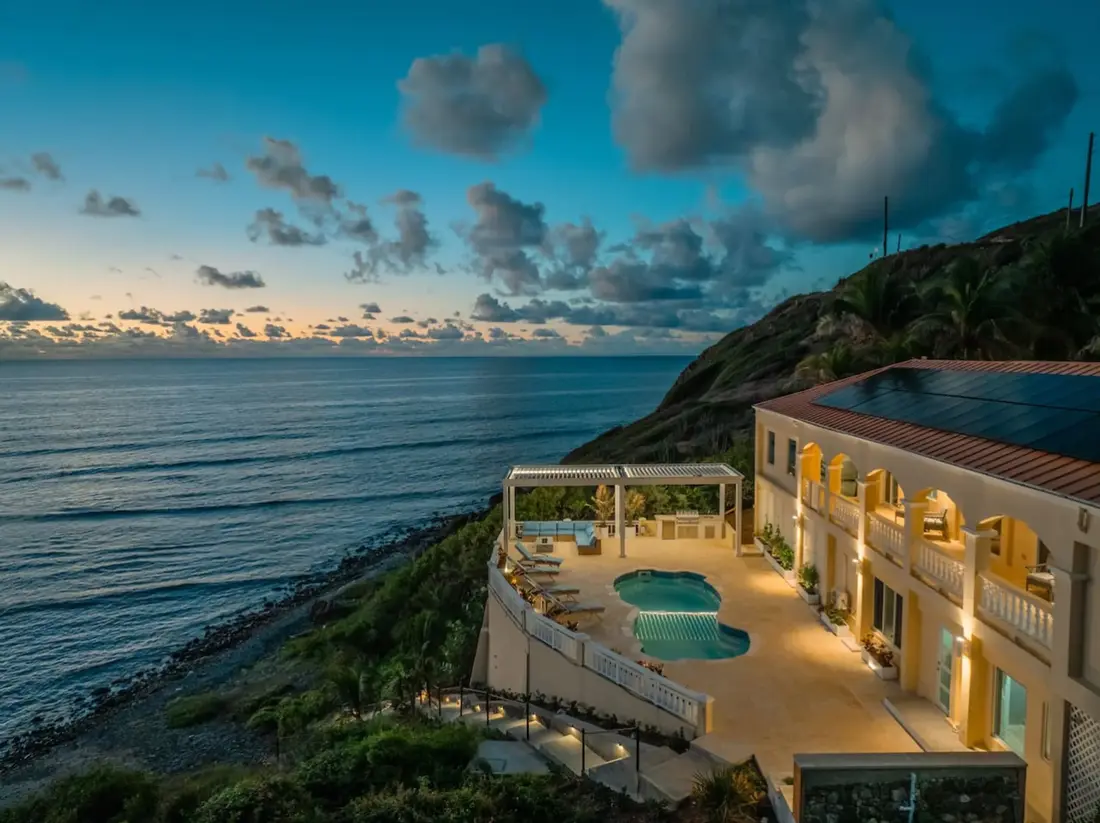
Chenay Bay rewards proximity, because its best hours are the early ones and a short drive is what gets a family there by 8:30 without a fight. Our East End villas put the bay minutes away: Dragonfly Villa and Moko Vista both make it the neighborhood beach, close enough for a turtle swim before breakfast. The Cerulean offers the private version of the same idea — its own sandy beach on this coast, per its listing, with Chenay and Cramer's Park as the public alternates up the road. Families comparing houses should start with the family collection; tell us the ages in your group and we will point you at the right base for calm-water mornings.
Sources
Written from official and first-party sources, checked August 2026. Hours, prices and event dates change — confirm before you go.
In this guide
Stay nearby
Private oceanfront on the East End with a sandy, swimmable beach, pool, outdoor kitchen and a separate guest cottage. Sleeps twelve.
 The Cerulean5 bd · 5 ba · sleeps 12 · Christiansted
More in Beaches
Sources
10 references, listed in full at the end of this guide — official park, refuge, tourism-board and business sources, checked August 2026.