Caribbean Museum Center for the Arts
Free admission, rotating exhibitions every six to eight weeks, and artist residencies in a historic Strand Street building in Frederiksted.
The Caribbean Museum Center for the Arts is Frederiksted's contemporary-art museum and the island's one cultural institution sitting right on the west-coast waterfront. A Crucian lawyer and art collector, Candia Atwater, started it in 1994 to give the island's young people a constructive outlet through art, and since 2003 it has worked out of a late-1700s Danish-era building at 10 Strand Street. Admission is free. This page is the full record: what the place is, the building it fills, the exhibitions and the live-in artist residency it runs, how to visit, and where it fits in St. Croix's working art scene.
What the museum is
Most Caribbean islands built their cultural life around forts, plantations and churches, and St. Croix has all of those. The Caribbean Museum Center for the Arts, known locally as CMCArts, is the island's one dedicated home for living, contemporary art, and by its own account it is the only operating art museum in the U.S. Virgin Islands. It shows the work of artists from St. Croix and across the wider Caribbean, it runs a residency that puts working artists inside the building for weeks at a stretch, and it teaches art to islanders of every age. It is a small nonprofit, run on grants, memberships and donations, and it charges nothing at the door; the museum reports drawing more than 40,000 visitors a year across three decades of operation. In recent years it has added a second location on St. Thomas, in Charlotte Amalie, so the name now covers two islands, but the original and larger operation is the Frederiksted one this page describes.
Candia Atwater, the founder, was a lawyer and collector who saw art as a practical answer to a real problem. CMCArts was set up in 1994 to reach the island's children and teenagers, giving them a place to make and see art rather than a lecture about staying out of trouble. That founding purpose still shapes everything the museum does, from the classes it teaches to the artists it invites to live upstairs. It is registered as a U.S. 501(c)(3) charity, which is why gifts to it are deductible and why the annual fundraiser described further down matters to its survival, and it has carried a four-star rating from the charity evaluator Charity Navigator. The St. Thomas outpost, added later, keeps its own galleries and hours in Charlotte Amalie, but the Frederiksted museum remains the flagship and the one built into a St. Croix trip.
The building on Strand Street
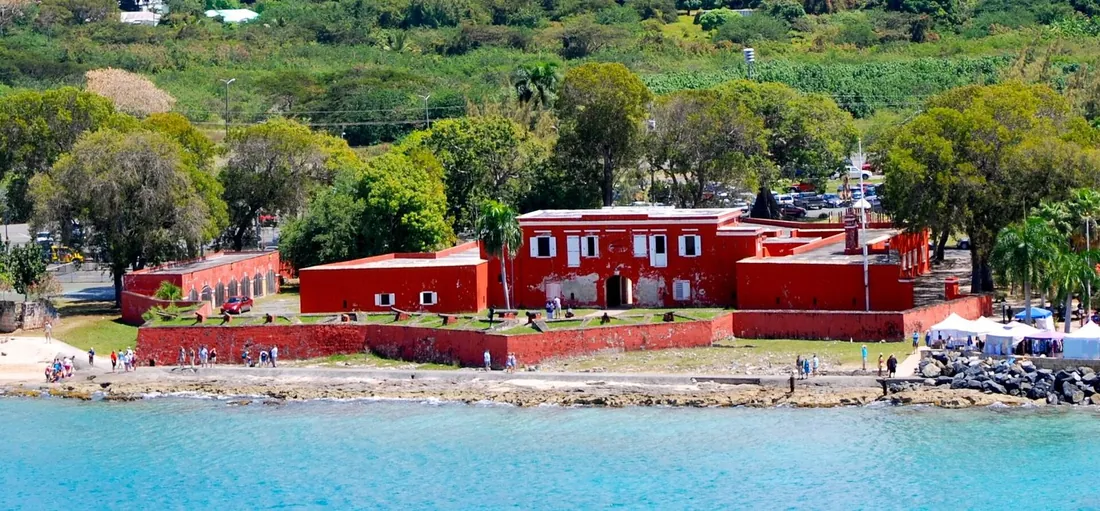
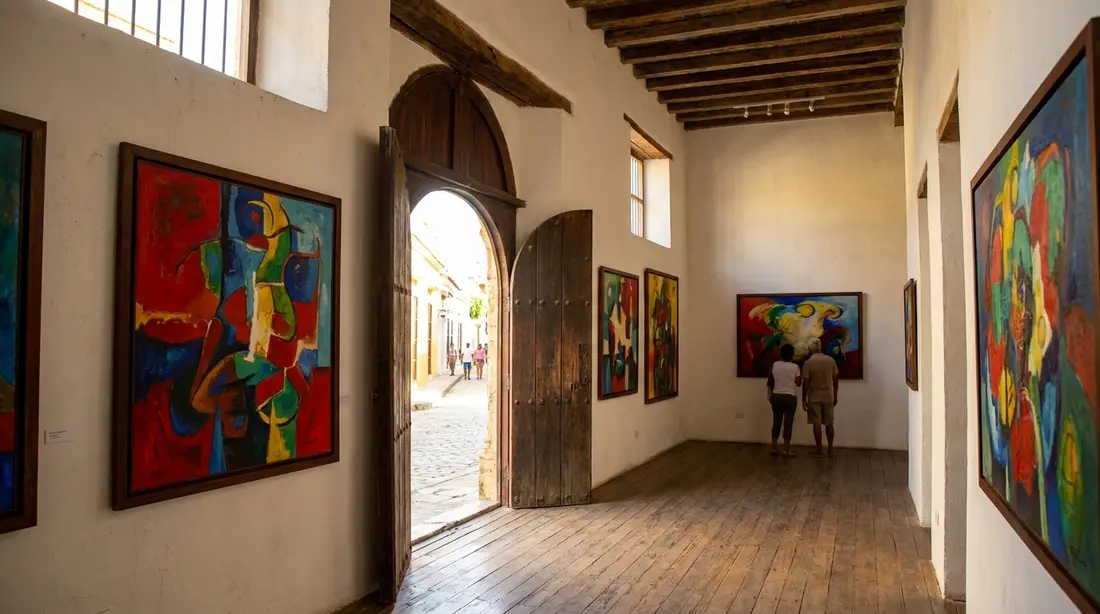
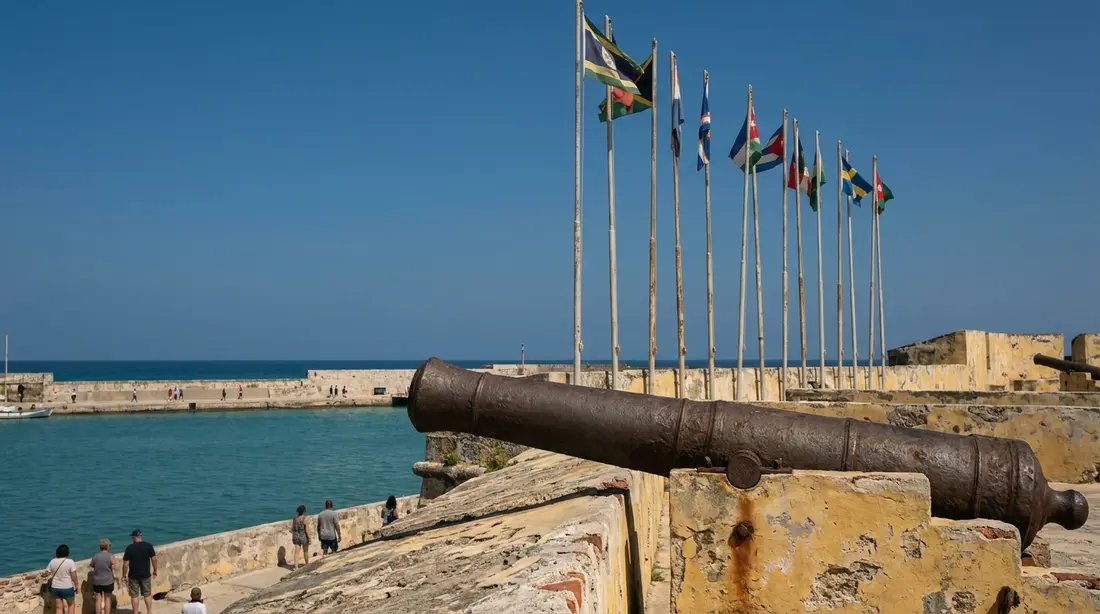
CMCArts occupies a masonry building at 10 Strand Street, the shore street that runs the length of Frederiksted's waterfront. The structure went up during Danish colonial rule in the late 1700s, which makes it a near-contemporary of Fort Frederik a few blocks north, and the museum moved into it in November 2003 after earlier years in temporary quarters. The museum calls itself the only museum center in the territory that stands directly on the water, and the claim reads true on a walk down Strand Street, where the galleries open toward the sea and the light off the water fills the rooms most of the day.
The building is worth reading as an artifact in its own right. Frederiksted's older buildings follow a Danish pattern of thick stone or coral-block ground floors carrying lighter upper stories, a system built for heat, storms and fire, and the town's whole vocabulary of arcades, galleries, shutters and hip roofs is laid out in our Danish architecture walk. What is documented about this particular structure is its Danish-era date and its long life as a Strand Street commercial building; the specifics of who built it and what trade filled it first are not well recorded, so treat any precise origin story you hear on the island with a little caution. What you can see is plain enough: a courtyard behind the galleries, the two small balconies of the upstairs residency apartment looking down into it, and stone walls two centuries older than anything hanging on them.
The mission and the young people it was built for
CMCArts describes its purpose in three parts, and understanding them explains why the museum feels more like a community workshop than a hushed gallery. The first aim is to preserve, promote and exhibit the art of St. Croix and the wider Caribbean. The second is to give children, youth and adults a welcoming place to learn positive ways to express themselves. The third is to run creative-learning programs that connect people to the cultural traditions of the region and where those traditions came from. The museum sums the whole thing up as promoting the Caribbean's cultural and artistic heritage, and the youth clause is not decoration; it was the reason the doors opened in the first place.
That mission threads through the programming in ways a visitor can actually see. The exhibitions lean toward Caribbean and Virgin Islands artists rather than imported blockbusters. The residency, covered below, specifically screens applicants for their willingness to teach, so the artists in the building are expected to work with local students rather than retreat to make their own art in private. The classes run for all ages. A museum built to serve the island's own community, rather than to impress its visitors, is a particular kind of institution, and it rewards a visitor who arrives curious about the place rather than checking a landmark off a list.
What hangs on the walls
CMCArts is a changing museum, which is the single most important thing to know before you plan around it. Its main galleries run temporary exhibitions that turn over on a steady cycle; a show typically hangs for roughly six to eight weeks before the next one goes up, so the walls you see are unlikely to be the walls anyone saw two months earlier. The program is multidisciplinary and Caribbean-focused: painting, photography, sculpture, printmaking, textiles and mixed media by artists from the Virgin Islands, the neighboring islands and the broader Caribbean diaspora. Because the calendar moves, this page will not promise you a particular exhibition; the museum posts its current shows on its own site and social feeds, and a quick check before you drive out is the only reliable way to know what is up.
Some threads recur enough to describe. The museum has mounted an annual friendship exhibition pairing Virgin Islands and Puerto Rican artists, shows built around emancipation and post-colonial themes that speak directly to the town's own history, and presentations of queer Caribbean artists during Pride Month. One such show, titled around reflections on emancipation and post-colonial society, centered the work of Barbadian artists, the kind of cross-island pairing the museum returns to often. The 1848 emancipation that gives Frederiksted its nickname is told in our Fort Frederik guide and the labor revolt that reshaped the town in our Fireburn guide, and it is common for the art on Strand Street to be in conversation with that past.
Alongside the rotating shows, CMCArts keeps a permanent collection, which it describes candidly as young but growing. Its holdings include black-and-white photographs of the islands by Fritz Henle, the German-born photographer who settled on St. Croix in 1947 and spent decades documenting the Caribbean; watercolors by American residents who made the island home; and work by Crucian artists such as Lloyd "Dove" Braffith along with pieces by Caribbean diaspora artists. It is a collection assembled slowly, by a small institution, and it functions less as a national treasury than as a record of who has made art on and about this island.
The artist residency
The residency is what sets CMCArts apart from a gallery, and it is the program the museum is best known for in art circles beyond the island. Artists apply to live and work inside the museum building for a stretch that the museum prefers to keep to three or four weeks, which it considers long enough to make real work and short enough to keep the calendar moving. The point is dedicated time in Frederiksted to work, research and develop a practice, with the museum and the town as both studio and subject.
What the residency provides is concrete. An accepted artist gets a furnished one-bedroom apartment inside the museum itself: an open-plan kitchen, living area and studio workspace, a private bedroom with a queen bed, two work tables with wall space for planning and pinning up work, two small private balconies over the courtyard, and Wi-Fi. At last check the museum also paid a stipend of $500 per week for the length of the stay. Residents cover their own travel, food, a rental car and their personal art supplies, so the stipend offsets living costs rather than functioning as a fee. Eligibility runs two ways: applicants need an active, established practice and a strong body of work, and they need experience leading workshops or classes, especially with young people, because teaching is part of the deal. The application window has run to an August 31 deadline for a residency the following year, with decisions sent out by the end of October, all worth confirming on the museum's residency page before you count on a date.
The people who have come through the program show its reach. Past residents include the painter and educator Clayton Singleton and the jazz pianist Amy K. Bormet, and the museum has hosted the Barbadian sculptor Ras Ilix Heartman, whose carved wood draws heavily on African form. Past residents have spoken warmly of the time and the space the program gave them, which is a large part of why it keeps drawing established artists to a small island museum. Because residents teach while they are here, a visit during a residency can mean catching an artist mid-project or sitting in on a workshop, which is a different experience from a standard museum stop and one reason to ask at the desk what is happening the week you come.
Classes and workshops
Teaching is not a sideline at CMCArts; it is the founding purpose in daily form. The museum runs art programming for all ages, from children through adults, and past offerings have ranged from pottery and ceramics to traditional Crucian art forms such as storytelling and the making of shekeres, the beaded gourd rattles used in Caribbean music. Some programming is tied to the current exhibition or the artist in residence, and some runs on its own schedule; during the pandemic the museum moved parts of it online, including a paid jazz livestream. For a visitor, the practical takeaway is that the calendar is fuller and more changeable than a gallery's, so a family interested in a class rather than a walk-through should contact the museum ahead and ask what is open to drop-ins. The performing-arts side of the island's culture, the stilt-dancing mocko jumbies and the quelbe bands, has its own guide, and CMCArts programming often touches those traditions.
The shop
CMCArts runs a shop under the banner SHOP LOCAL, and it is a genuine reason to walk in even on a short stop. The shelves carry work by St. Croix makers, including the Crucian artist Waldemar Brodhurst, and the museum counts more than a hundred local artists and craftspeople among the makers it sells. Because the museum is a nonprofit and the door is free, the shop is one of the ways a visit turns into support: buying a print, a piece of pottery or a small work here sends money to island artists and to the institution at the same time. It is also the most reliable place in town to leave with real St. Croix art rather than an imported souvenir. For another piece of island-made craft with a story behind it, the St. Croix hook bracelet has its own page.
Planning a visit
The visit is short, easy and self-guided. At last check the Frederiksted museum opened Tuesday through Saturday, from nine in the morning until four in the afternoon, and closed Sunday and Monday; hours at a small island nonprofit move without much notice, so confirm the day you plan to go. Admission is free, though a donation is welcome and, at a charity that charges nothing, meaningful. Most visitors need somewhere between half an hour and an hour, depending on the exhibition and whether a class or a resident artist is at work; it is a compact museum, not an afternoon-long one. There is no cafe inside, which matters for how you build the stop.
Getting there is simple. Frederiksted is flat, walkable and easy to park in, and Strand Street sits along the water with the fort at the north end; parking notes and the island's drive-on-the-left rules are on our getting-around page. The museum works best as one stop on a west-end morning or afternoon: pair it with Fort Frederik a few blocks up the waterfront and a coffee or lunch on Strand Street, with the town's food spelled out in the Frederiksted restaurants guide. On accessibility, the building is a two-hundred-year-old masonry structure and the ground-floor galleries face the street; a visitor with specific mobility needs should call ahead, since a historic building of this age can carry thresholds and steps that a modern museum would not. The full west-coast town, its history, its beaches and its sunset, is laid out in the Frederiksted guide.
Visit facts
Everything below was current at last check in August 2026, as posted by the museum or carried in local coverage. A small museum changes its hours, its shows and its programs freely, so treat this as a starting point and confirm anything your plan depends on.
| Detail | At last check |
|---|---|
| Address | 10 Strand Street, on the Frederiksted waterfront |
| Hours | Tuesday to Saturday, 9 a.m. to 4 p.m.; closed Sunday and Monday |
| Admission | Free; donations welcomed |
| Time needed | About 30 to 60 minutes |
| Exhibitions | Rotating, roughly every six to eight weeks; check current shows before you go |
| Shop | Work by Waldemar Brodhurst and more than 100 local makers |
| Residency | Live-in artist program, three to four weeks; applications by August 31 |
| Other location | A second CMCArts site in Charlotte Amalie, St. Thomas |
| Best paired with | Fort Frederik, a Strand Street lunch, a Frederiksted town day |
Where it fits in St. Croix's art scene
CMCArts is the anchor of Frederiksted's art presence, and it helps to know how the rest of the island's scene is laid out, because the two towns play different roles. The regular gallery night belongs to Christiansted, the old capital across the island, where an event called ArtThursday runs on the third Thursday of the month from November through May, roughly five to eight in the evening. On those nights the town's galleries, jewelry studios and shops stay open late, the art on show spans painting and sculpture through photography, glass, textiles and furniture, and there is no charge to walk it. The Christiansted guide covers that town in full.
The story behind ArtThursday also runs through the Henle family, whose thread ties the whole island scene together. Fritz Henle, whose photographs are held in the CMCArts collection, was a world-known photographer who worked in a square format with a Rolleiflex camera across travel, fashion and portraiture; he moved to St. Croix in 1947, and his island pictures became one of the fuller photographic records of the mid-century Virgin Islands, made until his death in 1993. His daughter Maria Henle, a printmaker and painter who trained in Florence and New York before returning to the island, opened a Christiansted gallery in 1993 that carried her own work, her father's photographs and her sister Tina's, along with other island artists, and that gallery was instrumental in creating ArtThursday before it closed in 2020 after nearly three decades. Maria Henle died in 2007, but the monthly art walk she helped start still runs. Alongside it, Christiansted's current galleries have included, at last check, Maufé Gallery, run by the artist Thérese Trudeau, and Christa's Art Gallery, showing work by Christa-Ann Davis Molloy. Between the two towns, the picture is consistent: this is a small island with a real and continuous community of working artists, and CMCArts is the institution that gives that community a permanent room.
Annual events and how it stays open
For a museum that charges nothing, staying open is its own project, and CMCArts runs a handful of events through the year to do it. The oldest and best known is the Island Art and Soul Calendar, a wall calendar of island art that dates to 1993 and circulates internationally in a print run the museum has put around 5,000 copies; it is the museum's signature fundraiser and a collectible in its own right. Around the exhibition schedule, the museum holds openings and receptions when a new show goes up, which are the liveliest times to visit and a chance to meet artists, and it draws support through memberships and donations as any nonprofit does. Specific gala dates and event lineups shift from year to year, so the museum's own calendar is the place to check what is coming during your stay rather than any fixed annual promise. If you value what a free, artist-run museum adds to a small island, the shop, a membership or a donation is the straightforward way to keep it running.
Why a visitor goes
There are three clear reasons to put CMCArts on a St. Croix itinerary. The first is a culture day or a rainy one. When the beach is off, a free, indoor museum in a walkable town is one of the island's better wet-weather stops, and it appears by name in our rainy-day plan as part of a Frederiksted washout circuit. The second is a Frederiksted town day. The museum slots naturally between the fort, the pier and lunch on the waterfront, turning a west-end afternoon into something with a little substance in the middle of it; pair it with the beaches and the sunset covered in the sunset beaches guide. The third is simple interest in the place you are visiting. A traveler who wants to understand St. Croix through its own artists, rather than through resort art, will get more from an hour here than from a rack of prints anywhere else. For the island's other cultural stops, the restored sugar estate at Estate Whim and the plantation-era grounds of the St. George Village Botanical Garden round out a west-end culture day.
Questions guests ask
Is there an admission fee?
No. Entry to the Caribbean Museum Center for the Arts is free, and it has been free throughout its run; the museum reports drawing more than 40,000 visitors a year at no charge. It is a registered nonprofit, so donations are welcomed and useful, and buying something from the shop supports both the museum and the island artists it sells. Free admission is one reason it works so well as a rainy-day or spur-of-the-moment stop: you can walk in, see the current show, and walk out without planning around a ticket. Hours can change, so confirm the day before a special trip.
How much time should I set aside?
Plan on thirty minutes to an hour. It is a compact museum with rotating galleries and a shop, not a half-day institution, and most visitors see everything comfortably in under an hour. The time stretches if a class is running, an artist is in residence and working, or a new exhibition has just opened with a reception. Because there is no cafe inside, most people fold the visit into a wider Frederiksted stop, giving the fort, the waterfront and lunch the rest of the time. If you are short on the day, the museum is easy to see quickly without feeling rushed.
What will be on display when I visit?
That depends on your dates, because the main galleries change. A show usually hangs for about six to eight weeks before the next goes up, so the exhibition changes several times a year, and the museum leans toward contemporary work by Virgin Islands and Caribbean artists across painting, photography, sculpture, printmaking and mixed media. Recurring themes have included a Virgin Islands and Puerto Rico friendship show and exhibitions built around emancipation and the island's history. The only reliable way to know what is up on your dates is to check the museum's own website or social feeds shortly before you go, which is also how you catch opening receptions.
Can I stay there as an artist?
Yes, through the residency, if your work and your dates line up. CMCArts runs a live-in artist-in-residence program, generally three to four weeks, that houses an accepted artist in a furnished one-bedroom apartment inside the museum with a studio workspace, and at last check it paid a stipend of $500 a week while the artist covered travel, food, a car and supplies. Applicants need an established practice and, importantly, experience teaching or leading workshops, since residents are expected to work with the local community. The application deadline has fallen at the end of August for a residency the following year. Full current terms are on the museum's residency page, which is the place to apply.
Is this the same as the Christiansted gallery night?
No, they are two different things in two different towns. CMCArts is a museum in Frederiksted, on the west coast, open regular daytime hours Tuesday through Saturday. ArtThursday is a monthly evening gallery walk in Christiansted, the old capital across the island, held on the third Thursday from November through May, when that town's galleries and shops stay open late. Both are free, both are worth doing, and they suit different plans: the museum fits a daytime west-end outing, while the gallery walk is an evening in Christiansted. If your trip includes a third Thursday in season, you can do both on different days.
Is the building wheelchair accessible?
Call ahead to be sure. The museum sits in a masonry building from the late 1700s on the Frederiksted waterfront, and historic structures of that age can have thresholds, steps or narrow doorways that modern museums are built to avoid. The ground-floor galleries face Strand Street, which is flat and walkable, but the museum is the right source for the specifics of getting inside and moving through it with a wheelchair or a stroller. A quick phone call before you go will tell you what to expect and let the small staff help; that is the plain answer for a building this old, and it applies to several of Frederiksted's historic sites.
Villas near the museum
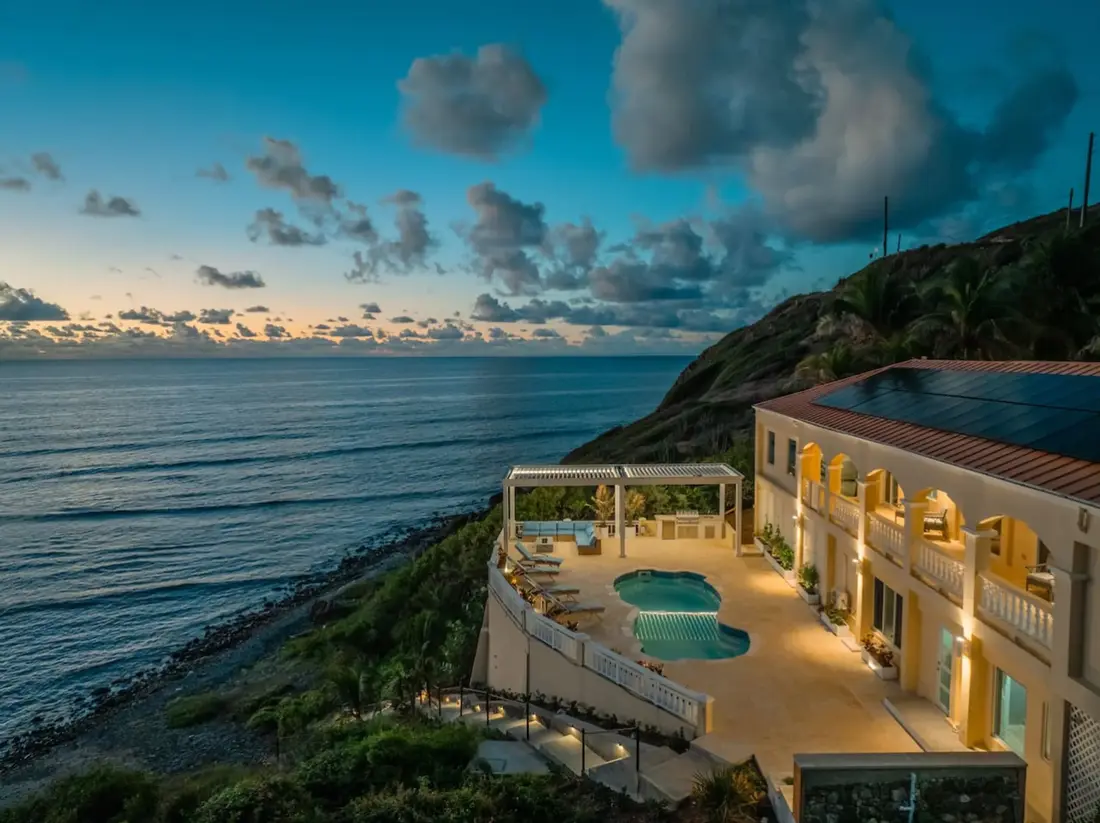
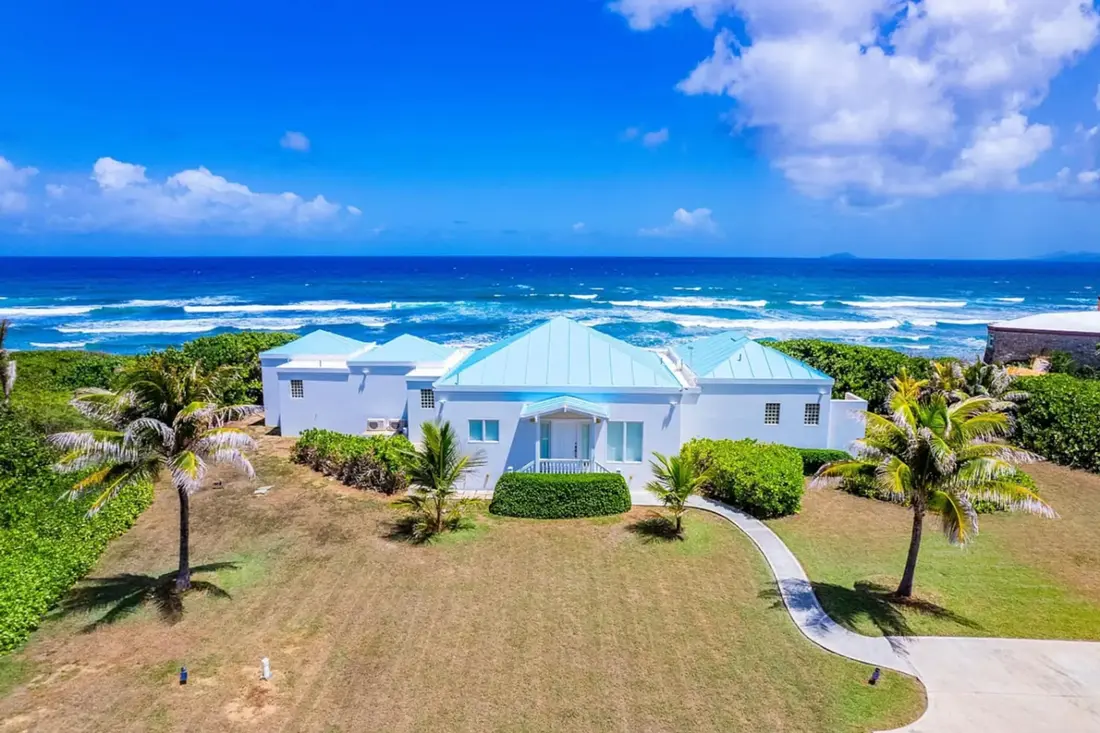
CMCArts is a Frederiksted stop, so our west-side home makes it a neighborhood errand: Sunset Sea-Clusion, in Frederiksted itself, puts the museum, the fort and the pier within a short walk and the sunset out the front every evening. Guests based on the other side of the island reach it as part of a planned west-end day; from The Cerulean and the wider East End collection, or from Shoy's Beach House near Christiansted, allow roughly forty minutes each way and pair the museum with the rainforest, a beach and dinner before the drive home. Every home in the collection sits within easy reach of both towns and their galleries.
Sources
Written from official and first-party sources, checked August 2026. Hours, prices and event dates change — confirm before you go.
In this guide
Stay nearby
On The Shoys beach: six bedrooms, six baths, pool and hot tub, room for twelve, and the beach through the back garden.
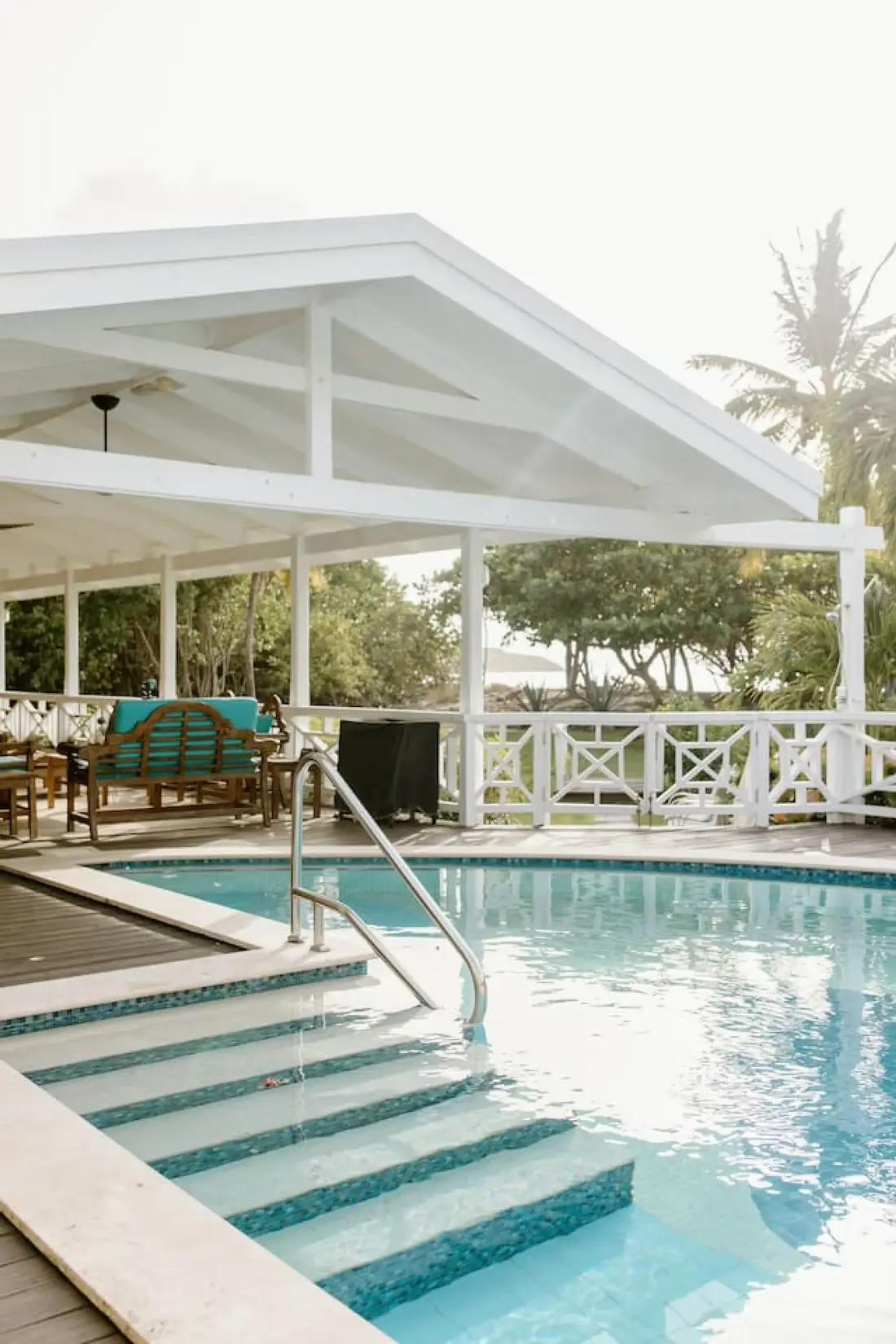 Shoy's Beach House6 bd · 6 ba · sleeps 12 · Christiansted
More in History & Culture
Sources
9 references, listed in full at the end of this guide — official park, refuge, tourism-board and business sources, checked August 2026.