St. Croix vs Curaçao
The Dutch Caribbean's culture capital paints a famous waterfront and hides its beaches in coves. The American island answers with its own colonial towns — and better sand.
Curaçao is the Dutch Caribbean's grown-up: a real city with a UNESCO-listed painted waterfront, a culture deeper than its beaches, decent shore diving and a southern latitude that dodges most storms. Its trade-offs are just as real: five-hour flights, a cruise megaport, beaches that come in fee-charging pockets, and a passport wrapped around all of it. St. Croix competes directly on the town-and-culture axis — and wins outright on sand and logistics.
The two, side by side
| St. Croix | Curaçao | |
|---|---|---|
| Passport for U.S. citizens | Not needed | Required |
| U.S. State Department advisory | None — U.S. territory | Level 1: Exercise Normal Precautions |
| Colonial townscape | Christiansted's Danish arcades; NPS historic site | Willemstad's Handelskade, UNESCO-listed |
| Beaches | Long open sand: Sandy Point, Cane Bay, The Shoys | Pocket coves, many with entry fees; Grote Knip the star |
| Flight from the East Coast | About 3 hours from Miami | About 5 hours from New York; thinner schedules |
| Cruise traffic | A handful of calls weekly | A major southern-Caribbean cruise port |
| Diving | Cane Bay Wall and Frederiksted Pier from shore | Good shore diving too — a fair fight here |
| Language and money | English, U.S. dollar | Dutch and Papiamentu; guilder, dollars accepted |
| Hurricane exposure | Atlantic season, like the whole arc | South of the main belt; storms rare |
| Coming home | Agriculture check; $1,600 duty-free | U.S. customs; $800 duty-free |
Advisory levels and details are as published by the U.S. Department of State and checked August 2026. They change — read the current advisory at travel.state.gov before any international trip.
The short answer
Curaçao suits travelers who want a city break wearing beach clothes: Willemstad's museums, the Venezuelan produce boats at the old market quay, rum shops and street art, with a cove swim in the afternoon. It is the most culturally interesting island in the Dutch Caribbean. St. Croix offers the same blend — colonial streets, working distilleries, real local food — with the proportions reversed: the beaches are the main event and the town is the evening. Closer, cheaper, English-speaking, no passport. We manage our homes here; discount the verdict, audit the facts.
Two painted waterfronts
Willemstad's Handelskade is the Caribbean's most photographed street: gabled Dutch merchants' houses in candy colors along Sint Anna Bay, UNESCO-listed with the surrounding historic quarters, the swinging Queen Emma pontoon bridge stitching Punda to Otrobanda. It earns the fame — and it shares itself with a major cruise port whose ships tower over the quarter most mornings in season, market boats and all.
Christiansted is the same colonial idea in a Danish accent, at village scale, without the ships: five protected structures — Fort Christiansvaern's yellow ramparts, the Steeple Building, the Scale House, Customs House and warehouse — kept by the National Park Service, fronting arcaded streets that still do the town's living as its dining rows. Frederiksted adds a second act: Fort Frederik, where emancipation was proclaimed in 1848, gingerbread Victorians from the post-Fireburn rebuild, and sunset at the pier. Cruise calls here run a handful per week, so the towns belong to residents and villa guests nearly every day. See the historic site and the Danish architecture walk.
The beach problem Curaçao cannot vote away
Curaçao's coast is ironshore — fossil-reef limestone cliffs — broken by pocket coves: Grote Knip's turquoise wedge, Cas Abao, Porto Mari, Jan Thiel. The best are postcard-pretty, small, a 45-to-60-minute drive from the hotels, and many charge entry or chair fees; on cruise days and Sundays the pockets fill wall to wall. The island is candid about it — beaches are its supporting act, not its lead.
St. Croix's coast is the lead: open carbonate sand in every direction. Sandy Point's two undeveloped miles — the largest leatherback nesting beach under U.S. jurisdiction — on winter weekends; Cane Bay under its wall; The Shoys' guarded crescent (our Shoy's Beach House fronts it); hike-in Jack's and Isaac's Bays; Rainbow's sunset sand; Chenay's shallows for the kids. No entry fees, no chair concessions, no cruise-day crush: the roster.
Diving: the fair fight
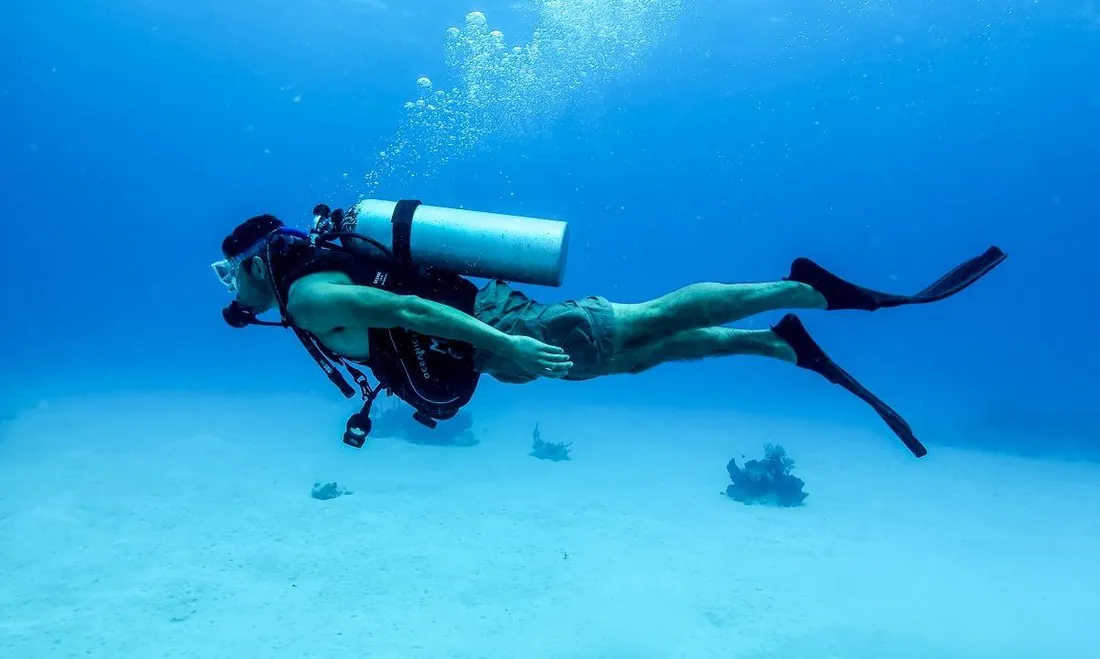
Credit where due: Curaçao is one of the Caribbean's better shore-diving islands — the Tugboat, Playa Kalki's Alice in Wonderland, a healthy southern fringing reef — and divers who choose it choose well. This is the one column where the islands trade real blows. St. Croix's case: the Cane Bay Wall is a wall — a hundred yards off the sand and falling toward depths measured in thousands of feet, a profile Curaçao's gentler slopes cannot offer; the Frederiksted Pier is a macro dive of regional fame and the classic night dive; Butler Bay adds wrecks, Salt River Canyon adds walls, and Buck Island Reef National Monument adds a marked snorkel trail inside a no-take reserve protected since 1961. Call diving a draw on quality — then let the three-hour flight, the dollar and the missing passport break the tie. Start at diving St. Croix.
Getting there
Curaçao sits deep south: about five hours nonstop from New York on the days the schedules run, with many itineraries connecting and stretching well past seven. St. Croix: Miami about three hours daily on American, Charlotte daily from December 17, 2026, Atlanta near-daily from December 19, Newark Saturdays from October 31, 2026, Chicago winter Saturdays, plus San Juan's 50-minute hop all day. And the paperwork gap: passport, guilder mental math and U.S. customs at $800 on one side; driver's license, dollars and a $1,600 allowance on the other. Verified August 2026:
| Airline | From | Schedule (as published Aug 2026) | Flight time |
|---|---|---|---|
| American Airlines | Miami (MIA) | Year-round, one to three flights daily by season | about 3 hours |
| American Airlines | Charlotte (CLT) | Paused until Saturdays return November 7; daily beginning December 17, 2026 | about 3¾ hours |
| American Airlines | Chicago O'Hare (ORD) | Winter Saturdays beginning December 5, 2026 | about 4¾ hours |
| Delta Air Lines | Atlanta (ATL) | Saturdays through September 5; Saturdays again from November 14; daily except Mondays beginning December 19, 2026 | about 4 hours |
| United Airlines | Newark (EWR) | Saturday nonstops beginning October 31, 2026 | about 4½ hours |
Culture, food and the liqueur question
Curaçao's food scene is the Dutch Caribbean's best — krioyo cooking at Plasa Bieu's old-market stalls, Dutch-Indonesian rijsttafel, a real museum bench (Kura Hulanda's unflinching slavery museum above all) and yes, the namesake blue liqueur distilled from the laraha orange at Landhuis Chobolobo. A strong hand, honored here.
St. Croix answers in its own voice: Crucian kallaloo, fungi with fresh wahoo, pate from roadside stands, La Reine's chicken, boardwalk dining rooms — and a distillery bench that outguns a liqueur house: Cruzan at Estate Diamond since 1760, Captain Morgan's visitor center, the world's first breadfruit vodka at Sion Farm, Leatherback's rainwater beer. History runs through it all: seven flags, Hamilton's boyhood streets, the 1848 emancipation and the 1878 Fireburn told where they happened. See the Crucian food guide.
What it costs
Curaçao prices moderately by Caribbean standards — part of its appeal — but the trip stacks foreign frictions: longer flights, guilder exchange, beach entry fees, rental-car excursions to reach the coves, and the $800 allowance at U.S. customs. St. Croix's ledger is flat and familiar: direct-booked villas with pools, supermarket provisioning, free beaches, charter-free shore diving, no exchange rate, no foreign transaction fees, $1,600 duty-free home with the five-liter rum rule. On matching dates the totals favor the American island before the time savings are even priced. The homes: here.
Month by month on the two islands
Curaçao shares Aruba's below-the-belt steadiness — dry, breezy, storm-rare — with a calendar set by two clocks: the Dutch-European holiday waves (July–August and the Christmas fortnight fill the island with KLM's widebodies) and Carnival, which runs January into the Grand Parade before Lent and ranks among the region's largest. Cruise season stacks the Handelskade heaviest in winter. There is no true closure season; the island runs year-round at moderate occupancy. St. Croix's year offers actual seasonal texture — the Christmas Winds' high-season sparkle, May–June clarity, a discounted green fall — plus its own December–January festival and February's AgriFest, all under the standard Atlantic-season counsel that Curaçao's latitude largely escapes and this page duly credits. Months in detail: when to visit.
The travel day, hour by hour
The Curaçao day runs long for Americans: the five-hour New York nonstop when the schedule offers it, otherwise a Miami connection stretching the door-to-door past seven hours; Hato's immigration queue; the rental pickup (a car is near-mandatory — the good coves are 45 minutes west of the hotels); and Willemstad or the west-end resorts by early evening. The return repeats it into U.S. customs at the $800 allowance, guilders converting on the receipts. St. Croix's day: three hours from Miami, rental counter, supermarket, villa by mid-afternoon, dollars throughout, $1,600 allowance home. The Dutch island asks a real travel commitment; the American one asks an afternoon.
Seven days on each
The Curaçao week balances city and cove: Punda and Otrobanda's painted blocks with the pontoon bridge swinging, the Kura Hulanda museum's hard history, a Chobolobo liqueur tasting, then the westward cove crawl — Cas Abao one day, Grote Knip the next, Playa Lagun's turtles — with a Klein Curaçao boat day for the ambitious and rijsttafel or krioyo dinners back in town. A rich week — lived substantially in the car between its pieces.
The St. Croix week keeps the same blend within forty minutes: Buck Island's snorkel trail Monday; Cane Bay's wall Tuesday (the shore diving Curaçao would respect, with a beach attached); Christiansted's Danish arcades and fort Wednesday — the townscape comparison is closer than Willemstad's fame suggests; Point Udall and the East End Thursday; Frederiksted's pier and Rainbow's sunset Friday; the rainforest, Cruzan and the Domino Club Saturday; the bio bay after dark. Plans: the 7-day itinerary.
Getting around once you land
Curaçao is a driving island whether you planned one or not: the hotels cluster around Willemstad and Jan Thiel while the postcard coves run 45 to 70 minutes up the west coast on two-lane roads, so the rental car is effectively mandatory and the beach days budget ninety minutes of round-trip windshield time each. Right-side driving, Dutch signage, easy enough — and a real tax on a seven-day clock, which is why repeat visitors sort themselves into town-people or west-enders. Taxis price the same distances prohibitively; there is no meaningful transit for visitors.
St. Croix compresses the identical trip: the villa-to-beach run is ten to twenty minutes in most pairings, the full airport-to-East-End extreme is forty, and the day can hold a morning wall dive, a town lunch and a west-end sunset without the car owning it. Left-side driving in ordinary American cars — a day-one novelty (the guide) — and the island loop is a pleasure drive, not a commute.
Before you book either island
For Curaçao: confirm your dates against the KLM-driven European holiday waves (July–August and the Christmas fortnight fill the island in ways U.S. travelers don't anticipate); reserve the rental car with the room, not after; check which coves on your list charge entry and which close facilities midweek; note that the famous Handelskade photo comes with a cruise schedule — ship-day mornings change the quarter; and budget the guilder exchange and the $800 allowance into the total. Divers pairing with Bonaire should price the inter-island hop early; the small planes fill.
For St. Croix: book the villa direct (the homes), reserve the car for high season (how it works), calendar Buck Island and the bio bay a few days out in peak weeks, and pack for a week where the farthest thing is forty minutes away. The first-timer tips close the loop.
The case for St. Croix, point by point
One: three flight-hours from Miami against five-plus from the Northeast with thinner schedules. Two: no passport, no guilder math, no customs hall home — and $1,600 of allowance against $800. Three: beaches that are the island's lead, open sand in every direction, against fee-charging pocket coves an hour from the hotels. Four: a Danish colonial townscape kept by the National Park Service and almost never shared with a ship, against a UNESCO waterfront that hosts a cruise megaport. Five: a true wall profile a hundred yards off the sand — the one dive-shape Curaçao's slopes cannot offer. Six: a distillery bench — 1760-tradition rum, breadfruit vodka, rainwater beer — against one liqueur house. Seven: American history you stand in, from Columbus's landfall to Hamilton's boyhood to the 1848 emancipation. Eight: a year-round bio bay ten minutes from dinner. Nine: villa economics with supermarket provisioning against import-priced hotel dining. Ten: the whole comparison runs without a single line, queue or conversion. Willemstad keeps the better photograph; St. Croix keeps the better week.
Who should pick which island
Pick Curaçao if: the city itself is half the draw — museums, street art, Dutch-Caribbean food culture; you are pairing shore-diving days with Bonaire; September storm-certainty matters and Aruba's strip repels you; or European friends are converging on KLM. Pick St. Croix if: the beach half of the trip should be beaches rather than coves with entry fees; the drive to the good water should be minutes, not most of an hour; a true wall and a famous pier outrank a gentle slope; the week's history should include your own country's (emancipation, Hamilton, Columbus's landfall); or five flight-hours and a guilder receipt sound like the vacation starting late. The painted waterfront is worth a photo; the week is worth an island.
When Curaçao is the right call
City-break travelers who rank museums and street life above sand will find the Dutch Caribbean's best version of that trip. Shore divers touring the southern arc pair it naturally with Bonaire. September–October certainty-seekers get the below-the-belt latitude Aruba sells, with more culture attached. And Dutch and European travelers with KLM's direct widebodies have logistics St. Croix cannot offer them. For the American East Coast villa traveler, the five-hour flight buys a waterfront photo and a passport stamp — and gives back the beach week St. Croix keeps whole.
A rainy day on each island
Rain tests a destination's depth, so run the test. A wet Curaçao day is actually one of its best: the Kura Hulanda museum's slavery history demands unhurried hours, the maritime museum and the synagogue (the hemisphere's oldest in continuous use, sand floor and all) fill the morning, Punda's covered arcades keep the shopping dry, and rijsttafel was invented for weather. Credit paid: the city carries a rainy day better than any beach island in this series.
St. Croix's wet-day card is nearly as strong and less expected: Fort Christiansvaern's vaulted rooms and the Steeple Building's exhibits, the Apothecary Hall and the arts center in Frederiksted, the Whim estate museum's plantation history told without varnish, and the distillery trail — Cruzan's tour, Captain Morgan's tasting room, Sion Farm's breadfruit-vodka lounge — which improves in the rain by any fair measure. Add a long lunch under the boardwalk galleries and the rainy-day plan writes itself. Both islands pass the test; only one of them also has the beaches for the other six days.
If you choose Curaçao anyway
Then do it well, because the island rewards planning. Stay in or near Willemstad for the culture half and accept the cove drives, or base west at a dive lodge and treat town as an evening excursion — splitting the difference splits the week. Book Grote Knip for early morning before the tour vans, carry small bills for the beach fees, and reserve the Kura Hulanda museum a real morning rather than a rushed hour; it deserves it. Eat at Plasa Bieu once at minimum, order whatever the pot holds, and take the Chobolobo tour early in the trip so the blue bottles have context. Divers should build the Tugboat and Kalki into different days and watch the cruise calendar — ship mornings reroute everything downtown. And fly home through the guilder math with receipts checked; the 2:1-ish conversion invites rounding creep. A good Curaçao week is a city break with reef attached — plan it as that, and it delivers.
Where you would stay on St. Croix
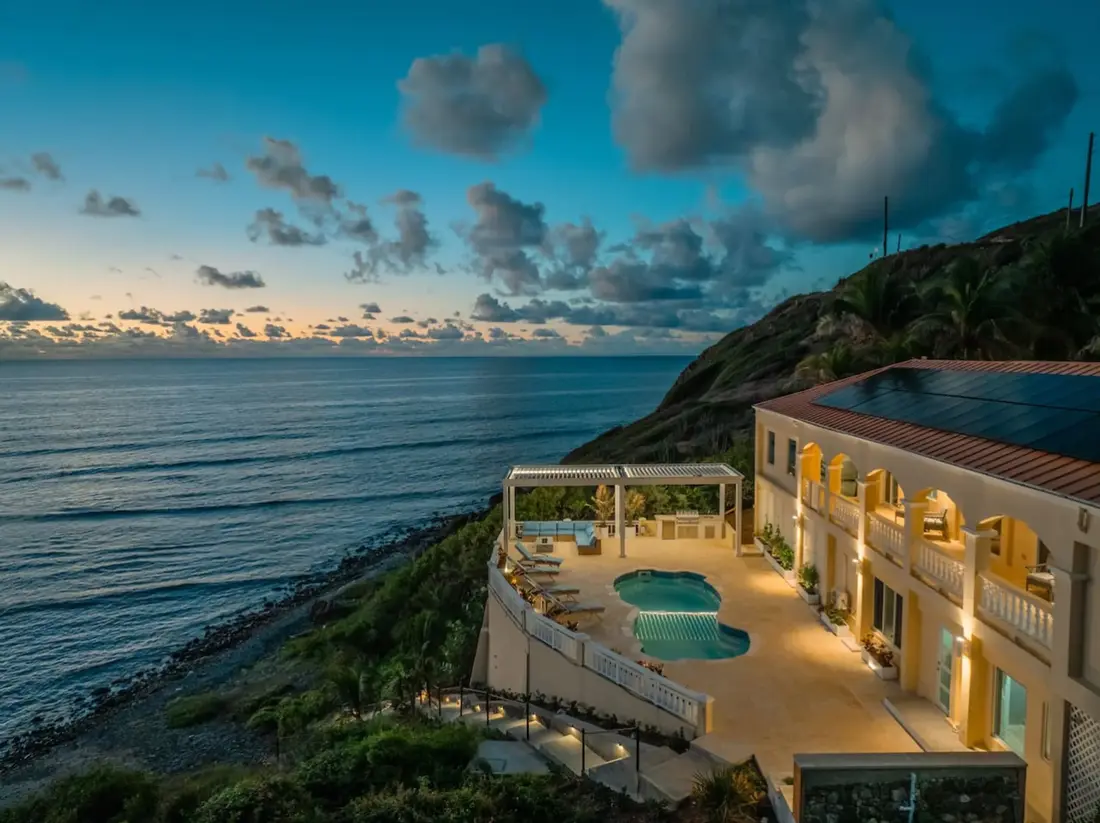
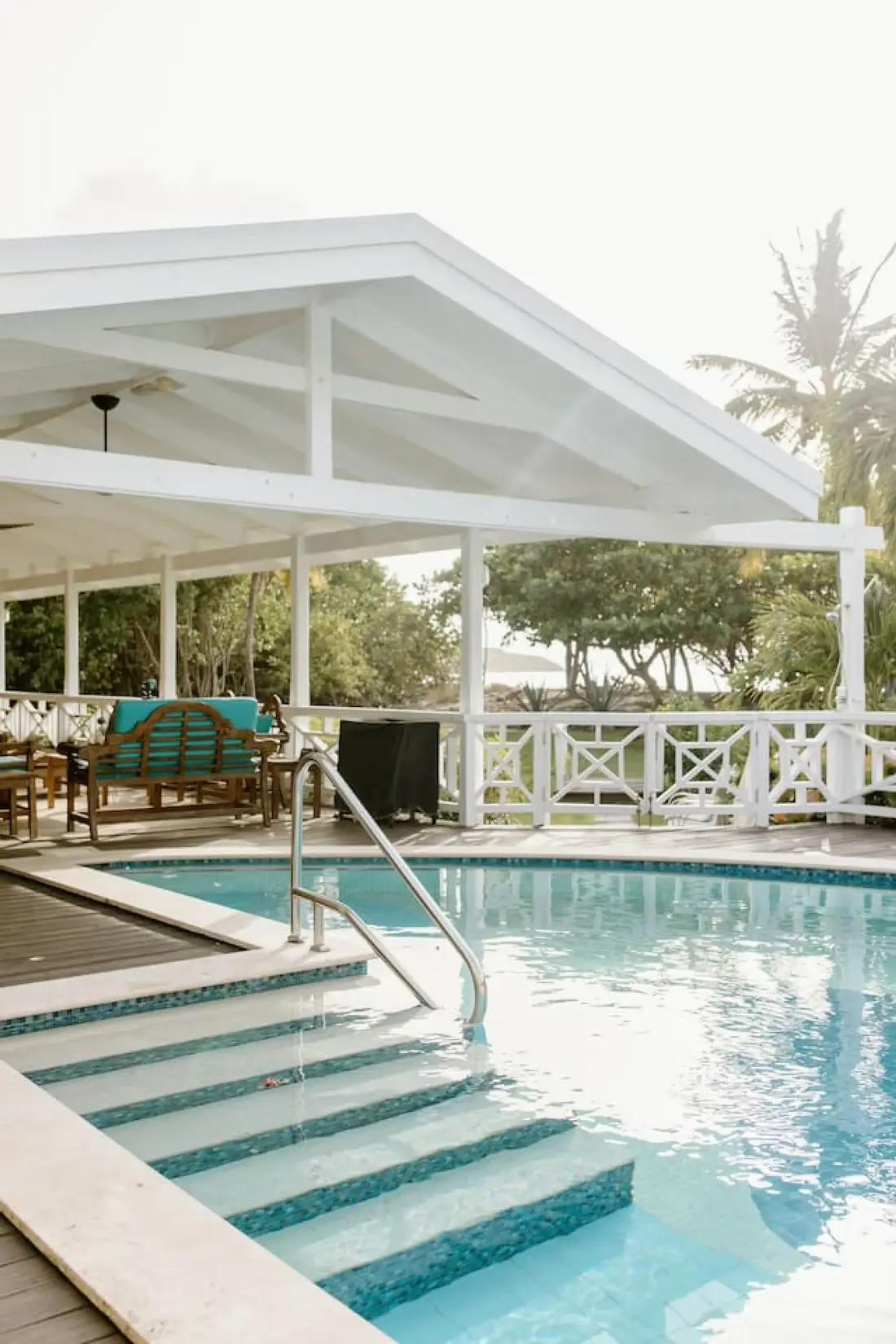
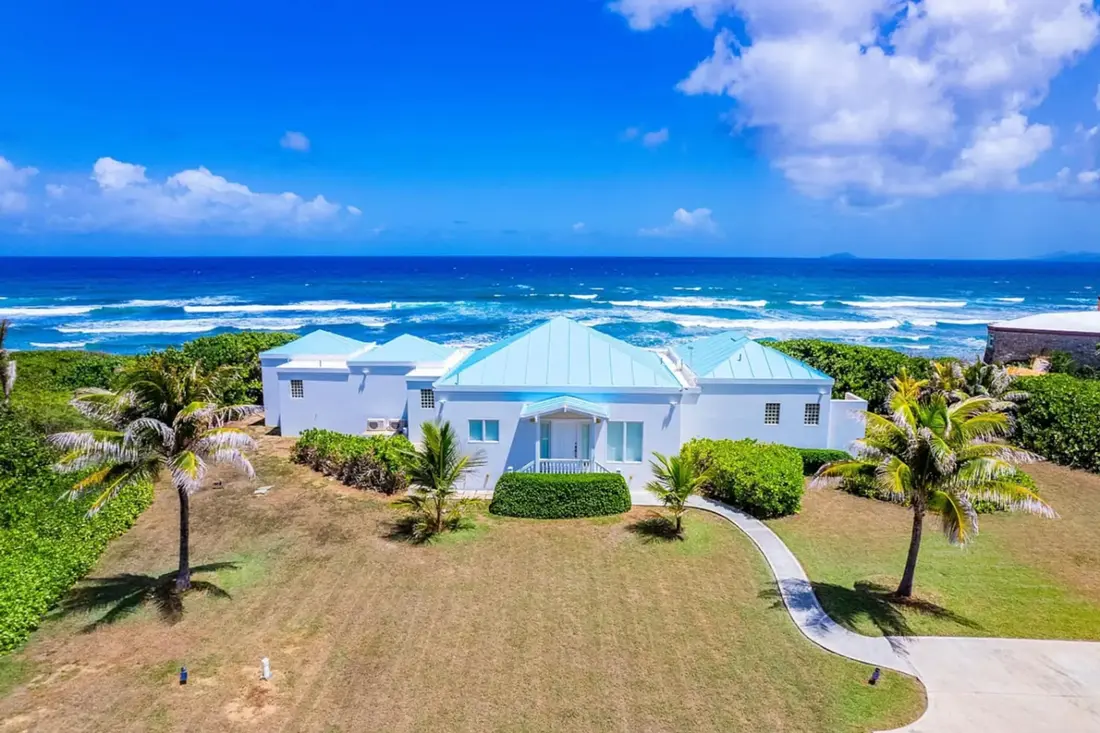
The comparison's other half deserves its specifics. Our homes spread across the island the way Curaçao's coves never can: on the sand itself at Shoy's Beach House, behind the Estate Shoys guard gate east of Christiansted; on the East End heights facing Buck Island's reef — The Cerulean and its neighbors, where the monument's water is the view from the pool; in Christiansted itself, condos a walk from the boardwalk's dinner rows; and west near Frederiksted for sunset-side stays. Most have private pools, all have full kitchens provisioned from real supermarkets, and every one is managed from the island by Sterling Point — the phone that answers is on St. Croix, not in a call center. Booking is direct, with no platform fees stacked on the rate. Groups sleep two to twelve: couples take the homes for two, families spread into the family collection, and divers pick by proximity to the wall. The full roster with photographs and reviews is at the homes — and unlike a cove, none of it charges an entry fee.
How this page was made
Every comparison in this series follows the same rules. The safety facts come from the U.S. State Department's published advisories — Curaçao's Level 1 standing included — checked August 2026 and linked by name so you can read the current text yourself at travel.state.gov. Flight patterns were verified against airline schedules the same month. Beach geography, fees and cruise patterns reflect the destination's own tourism publications and widely documented visitor experience; where something is a pattern rather than a fact, the page says so. What Curaçao does better — the UNESCO cityscape, the shore-diving depth, the below-the-belt latitude — is stated in its favor, because a comparison that concedes nothing convinces nobody. And yes: we manage the villas on St. Croix, which is both the reason this page exists and the bias you should read it with. The facts survive the bias; check any of them.
The bottom line
Curaçao is the thinking traveler's Dutch island: a painted UNESCO city, real culture, decent reefs, pocket beaches, five hours out and a passport deep. St. Croix is the thinking traveler's American one: Danish arcades instead of Dutch gables, a wall instead of a slope, open sand instead of fee-charging coves, three hours instead of five, and no line at either end. The postcard is theirs; the week is ours. The homes are here.
Elsewhere in this series
This page is one of twenty-six. If you are still shopping the map, the verdicts nearest this comparison run as follows — each links to the full page with its own sources:
St. Croix vs the British Virgin Islands — The BVI are the Caribbean's sailing capital — reached by passport, puddle jumper and ferry. St. Croix flies you straight in, no passport at all.
St. Croix vs Turks & Caicos — Turks and Caicos sells one famous beach at luxury-resort prices. St. Croix sells a whole island for less — no passport, no Level 2 advisory.
St. Croix vs Anguilla — Anguilla perfected the quiet expensive beach. St. Croix does the quiet beach without the relay flight, the passport or the markup.
The complete set, grouped by region and passport rules, lives at St. Croix vs other destinations.
Which home fits your group
If St. Croix wins your comparison, the homes are the easy part. Groups of eight to twelve settle into the family collection; couples take a home for two; anyone who wants sand at the door starts with beachfront. Every one is managed from the island by Sterling Point and booked direct — tell us the dates and the headcount and we will point you at the one that fits.
Two practical notes that surprise first-time villa bookers. Direct booking means the rate is the rate: no platform service fees, no resort fees, and the people answering questions are the same Sterling Point team that manages the houses on the island. And every home runs a full kitchen — one run to Plaza Extra or Seaside Market on the drive from the airport covers the week, which is where a villa quietly beats a resort bill before the first beach day. How the booking works, and what it does not mean, is spelled out at book direct.
Who wrote this
SP Vacations is the vacation-rental division of Sterling Point Real Estate, a licensed real-estate operation based on St. Croix in the U.S. Virgin Islands. The team lives and works on the island it writes about: the homes in the villa collection are inspected, cleaned and managed locally, and the person who answers a booking question is on St. Croix, not in a call center three time zones away. That is the vantage point behind every page in this series — and the reason the series exists at all, since most of the destinations compared here are places our guests weighed before choosing this island.
Two standing practices shape what you read. First, the pricing wall: nightly rates and availability for the homes live only on the booking pages, never in articles, so nothing here goes stale or oversells. Second, the sourcing rule: safety statements cite the U.S. State Department, customs figures cite CBP, park facts cite the National Park Service, and anything that changes — advisories, schedules, hours — carries its checked date and a pointer to the primary source. Where a rival destination wins a category, the page says so, because a comparison that concedes nothing persuades nobody. Questions, dates or a villa to match a group — the island team is here, or call 340-205-3929.
Questions people ask
What is Klein Curaçao?
An uninhabited islet two boat-hours south — a lighthouse ruin, a long white beach and snorkel water, sold as a full-day catamaran trip. Buck Island is St. Croix's islet, closer and federal: a licensed half-day with a marked trail and Turtle Beach.
Is Papiamentu hard for visitors?
Not at all — the creole is the island's heart but Dutch and English carry every tourist transaction. St. Croix's English carries everything including the fine print, which matters at pharmacies and rental counters.
Which has better street art?
Curaçao, easily — Otrobanda and Punda's mural scene is the Dutch Caribbean's gallery. St. Croix's visual signature is architectural instead: arcaded Danish facades, sugar-mill silhouettes and boardwalk light.
Is Curaçao's Willemstad worth seeing?
Yes — the Handelskade's gabled waterfront and surrounding quarters are UNESCO-listed and the Caribbean's best colonial cityscape, shared with a busy cruise port. St. Croix's counterpart, Christiansted, is smaller, Danish, NPS-protected and rarely hosts a ship — you trade grandeur for having it to yourself.
Does Curaçao have good beaches?
Pretty ones, small ones: pocket coves cut into ironshore cliffs, many charging entry or chair fees, most a long drive from the hotels, crowded on cruise days. St. Croix's open carbonate-sand beaches — Sandy Point's two undeveloped miles above all — are free, close and usually near-empty.
Which has better shore diving?
The one column where they trade blows — Curaçao's fringing reef is one of the region's best shore-diving systems. St. Croix answers with a true wall (Cane Bay) a hundred yards off the sand, the Frederiksted Pier's famous macro and night dives, wrecks and a snorkel-trail monument. Quality: a draw. Logistics: St. Croix.
Do I need a passport for Curaçao?
Yes, plus guilder exchange in practice and U.S. customs at the $800 allowance on return. St. Croix requires no passport for U.S. citizens, runs on dollars and allows $1,600 per person home.
How long is the flight to Curaçao?
About five hours nonstop from New York when schedules align, and well past seven on connecting itineraries from most of the country. St. Croix is about three hours from Miami with nonstops from five mainland cities, verified August 2026.
Is Curaçao outside the hurricane belt?
Largely yes — like Aruba and Bonaire it sits south of the main track and direct storms are rare, a real advantage for September–October dates. St. Croix shares the region's June–November season and manages it with insurance and flexible bookings; see hurricane season.
Is Curaçao good for families?
Reasonably — the Sea Aquarium and dolphin programs, calm coves like Porto Mari and a walkable city help — within the constraints of long cove drives, entry fees and import-priced dining. A St. Croix villa gives a family its own pool, Chenay Bay's shallows, Buck Island's snorkel trail and a fort to storm, with groceries solved in one supermarket run. See traveling with kids.
What language is spoken on Curaçao?
Dutch and Papiamentu officially, with English and Spanish widely spoken in tourism — menus and museums translate well, and visitors manage easily. St. Croix speaks English natively, which matters most in the small moments: pharmacies, mechanics, emergency rooms and rental-car fine print.
Can you swim with sea turtles on either island?
Curaçao's Playa Grandi is famous for turtles around the fishing pier — an organized little scene with fees and crowds. St. Croix's turtles come wilder: greens and hawksbills over Buck Island's lagoon and the East End bays, and leatherbacks nesting at Sandy Point in season, protected by refuge staff rather than fed by vendors. See the sea turtles.
How does the nightlife compare?
Curaçao runs the Dutch Caribbean's best: Pietermaai's bars, waterfront terraces and a real live-music culture. St. Croix's nights are smaller and warmer — boardwalk dinners, beach bars' last rounds, a Jump Up when the calendar obliges, and the bio bay glowing for the adventurous. City energy against island calm; choose the register that restores you.
When is Curaçao's Carnival?
The season runs January into the pre-Lenten Grand Parade — among the Caribbean's largest, filling Willemstad. Dutch holiday waves (July–August, Christmas) mark the other peaks. St. Croix's festival season runs late December into January with February's AgriFest behind it.
Do you need a car in Curaçao?
Effectively yes — the famous coves sit 45-plus minutes west of the hotel zones, and the week is lived substantially on the road between them. St. Croix also rewards a rental car, but nothing sits more than forty minutes from anything, and several beaches are minutes from the villas.
Is Willemstad's history like Christiansted's?
Cousins with different accents: Dutch gables at city scale with UNESCO listing and cruise mornings, against Danish arcades at village scale kept by the NPS and rarely shared with a ship. Christiansted adds Hamilton's boyhood and an emancipation story told where it happened.
What about the blue liqueur?
Real and local: Curaçao of Curaçao distills the laraha-orange liqueur at Landhuis Chobolobo, tours available. St. Croix's counter is heavier: Cruzan rum in a tradition dating to 1760, Captain Morgan's visitor center, breadfruit vodka and rainwater beer — and five liters fly home duty-free under the USVI allowance.
In this comparison
St. Croix at a glance
- U.S. territory — no passport for U.S. citizens
- Nonstops from Miami, Fort Lauderdale, Charlotte, Atlanta, Newark and Chicago
- U.S. dollars, U.S. phone plans, no foreign customs
- $1,600 duty-free allowance home (double the standard $800)
- 84 square miles — the largest U.S. Virgin Island
More comparisons
- St. Croix vs St. Thomas
- St. Croix vs St. John
- St. Croix vs Puerto Rico
- St. Croix vs Vieques & Culebra
- St. Croix vs the Florida Keys
- St. Croix vs Hawaii
- St. Croix vs the British Virgin Islands
- St. Croix vs Turks & Caicos
- St. Croix vs Anguilla
- St. Croix vs St. Barts
- St. Croix vs St. Martin
- St. Croix vs Antigua
- St. Croix vs St. Kitts & Nevis
- St. Croix vs St. Lucia
Sources
Willemstad's UNESCO listing per UNESCO; beach geography and fees per Curaçao tourism publications; dive-site stature per standard dive references; Level 1 advisory per the State Department (verify current). St. Croix facts from NPS, CBP and our sourced island reference. Flights verified August 2026.
St. Croix vs Curaçao
Curaçao has the postcard waterfront and pocket coves. St. Croix has comparable history, bigger beaches, closer flights and no passport.