Christiansted National Historic Site
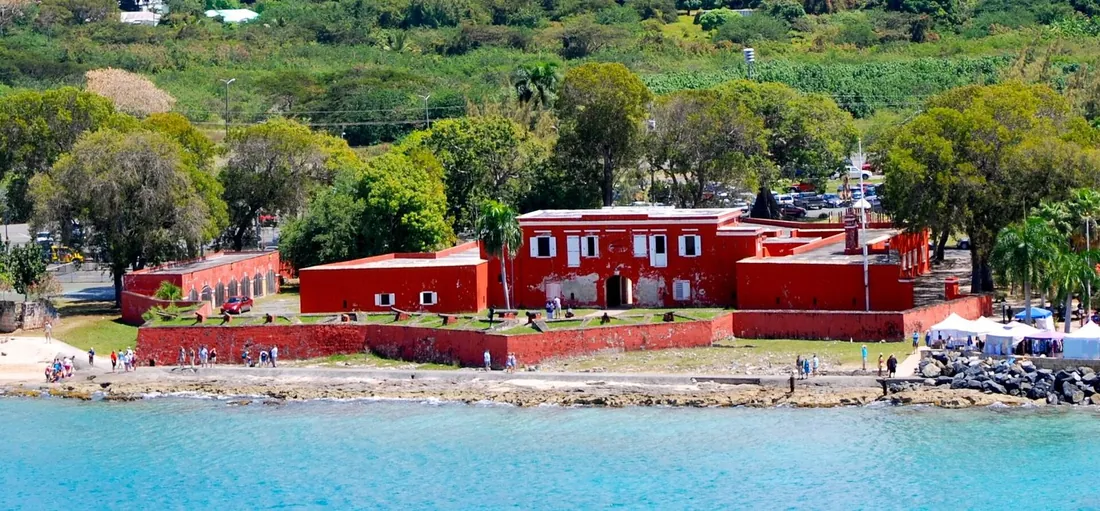
Five Danish colonial structures on one waterfront: the fort, the Steeple Building, the Scale House, the Customs House, and the Company Warehouse.
Christiansted National Historic Site is the National Park Service unit that holds the old Danish waterfront of Christiansted: about seven acres at the harbor's edge, five colonial structures raised between 1738 and 1856, and the clearest surviving picture anywhere of how Denmark ran a Caribbean sugar colony. Fort Christiansvaern, the Steeple Building, the Danish West India & Guinea Company Warehouse, the Scale House and the Danish Custom House stand within a few hundred feet of one another, each one a working part of the same operation. This page is the site reference: what each building was for, the system they served, the Hamilton connection, and the current hours, fees and access, checked against the Park Service in August 2026.
What the site is
Congress created the park on March 4, 1952, after Crucian citizens organized to save the fort and the customs waterfront from decay; it began life under the name Virgin Islands National Historic Site and took its present name on January 16, 1961. The Park Service describes the unit as roughly seven acres centered on the Christiansted wharf, and its stated job is interpretation of Danish government, commerce, religion, architecture and the trade in enslaved people on St. Croix between 1733 and 1917, the full span of Denmark's ownership. By the NPS count, the site drew a little over 100,000 visits in 2025.
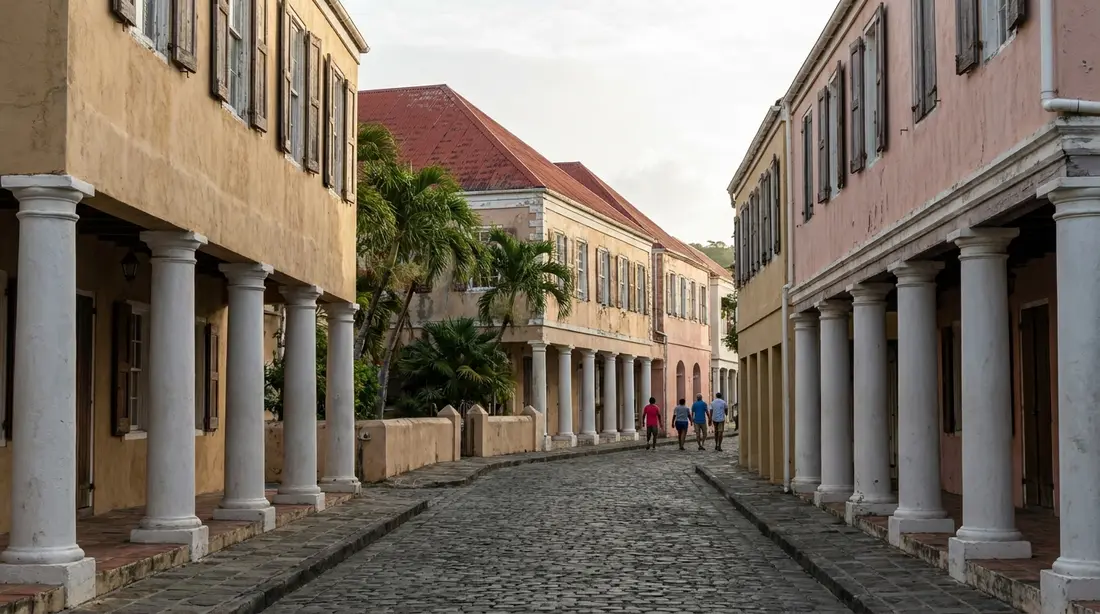
Two clarifications save visitors confusion. First, the site and the fort are separate ideas: Fort Christiansvaern is one of the five protected structures, and it is the only one with an entrance fee and regular interior hours. The other four buildings, plus the grounds, the old parade area and the waterfront lawns, cost nothing to walk. Second, the site sits inside a much larger historic town. The blocks of arcaded Danish buildings uphill from the park are a National Register district in their own right, covered on this site by the Danish architecture walk, and the town as a whole, businesses included, is in the Christiansted guide. This page stays inside the park boundary.
The system the buildings served
The five structures only make sense together, because the Danes built them as one machine. Denmark's purchase of St. Croix from France closed in 1733 at a price of 750,000 livres, and the formal handover took place on January 8, 1734, in a ceremony held beside the ground where the fort now stands. Frederik Moth laid out the new town that same year, named it for King Christian VI, and Christiansted became the seat of government for the Danish West Indies, a role it kept until the colonial administration shifted to St. Thomas’s Charlotte Amalie in 1871.
The colony existed to grow sugar, and sugar was grown by enslaved Africans. Cane from the island's plantations came down to this harbor in barrels; each barrel was weighed at the Scale House so the crown could assess its duty, the duty was paid at the Custom House, the cargo waited in the Company Warehouse, and ships carried it out past the guns of the fort. The same fort quartered the soldiers whose assigned work included suppressing uprisings by the enslaved majority, and the warehouse's inner yard was an auction ground where human beings were sold. None of this is subtext at the site; the Park Service names it directly in its exhibits, and this page does the same.
The machine ran at full capacity for less than a century. European beet sugar began undercutting cane prices in the 1820s, and emancipation came in 1848, won when thousands of enslaved Crucians marched on Frederiksted and forced the proclamation from Governor-General von Scholten; that story belongs to the west end and is told in the Fort Frederik guide. The economy slid for decades afterward, and in 1917 Denmark sold the islands to the United States for $25 million in gold. The park's buildings passed through American hands as post offices, libraries and government offices before preservation caught up with them in 1952. For the plantation side of the same economy, see Estate Whim and the island's sugar mill ruins; for the full parade of colonial owners, the seven flags of St. Croix.
Fort Christiansvaern
The fort is the anchor of the site and the building visitors go inside. Construction started in 1738, on ground where a French earthwork from the late 1600s had stood until a hurricane wrecked it that same year, and the main works were defensible by 1740, with construction running on to completion in 1749. Denmark enlarged it once more between 1835 and 1841, adding the stables and altering the outworks, and the Park Service has restored the interior to its appearance in that final military period, the 1830s and 1840s.
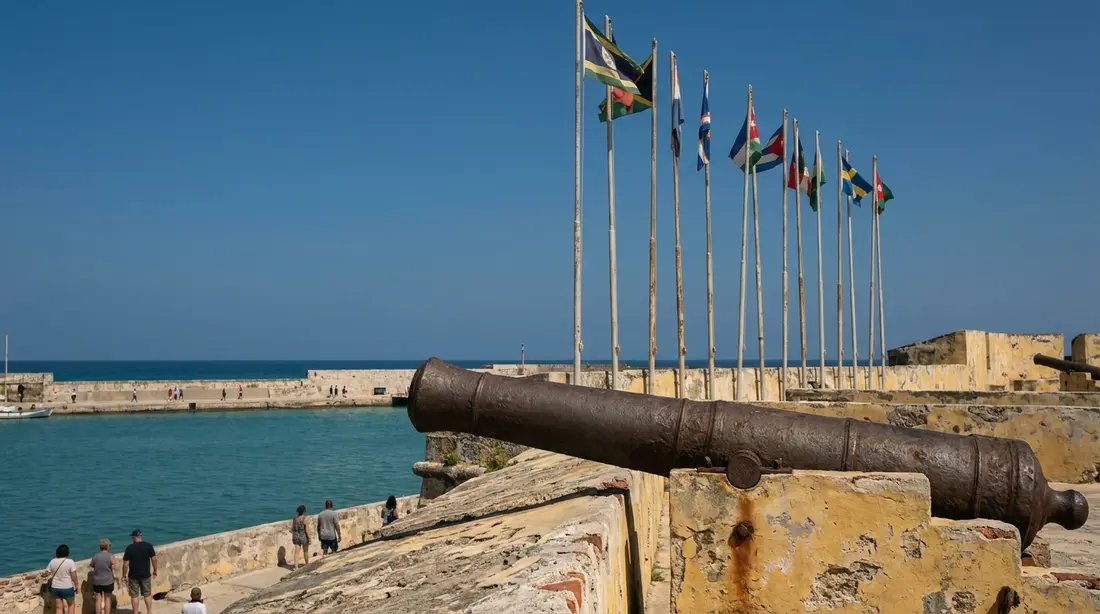
The material is the famous one: yellow brick carried from Denmark as ships' ballast, laid up with rubble masonry and coral cut from the harbor reefs. Danish vessels sailed out light and came home heavy with sugar, so the bricks were self-financing cargo, and their color became the signature of Danish building across the islands. The name Christiansvaern translates as Christian's defense, honoring the same king the town is named for. The garrison's assignments, as the Park Service states them, were three: protect shipping from pirates and privateers, enforce the collection of customs duties, and hold down the enslaved population by force. The fort's guns never fired against a foreign attack.
Inside, a self-guided route moves through the restored rooms: the officers' quarters and mess, the powder magazine, the kitchen bakery, and the dungeon cells on the lower level. The gun deck above carries the cannon and the harbor view the gunners had, and the ravelin, the triangular defensive yard inside the main gate, holds the red-painted guard stand that has become the most photographed object in the park. One exposed patch of ground on the grounds marks where the whipping post stood, where enslaved people were publicly punished; the marker is deliberate and worth pausing at. After the military era the building spent decades as Christiansted's police station and courthouse, beginning in 1878, which is a large part of why it survived intact. The fort has enough history for a page of its own, and it has one: Fort Christiansvaern covers the garrison years, the British occupations and the famous prisoner in cell detail.
The Steeple Building
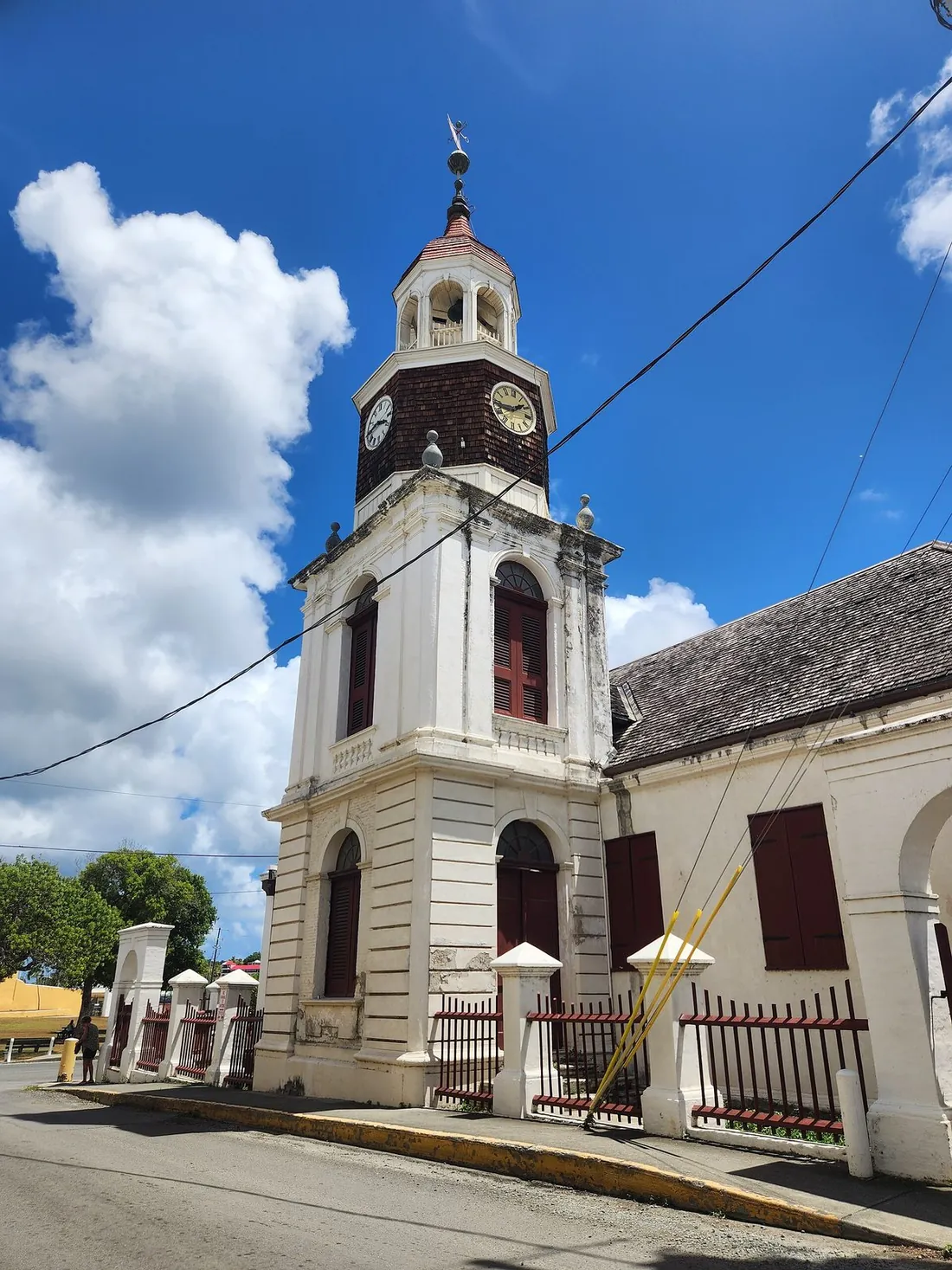
Across Hospital Street from the fort's parade ground stands the white church tower that appears on half the postcards of St. Croix. The Steeple Building was completed in 1753 as the Church of Our Lord God of Sabaoth, the first Lutheran church on the island, serving the state congregation of the Danish colony. The steeple itself came later, added between 1794 and 1796, and mariners used the tower as a landmark for the harbor entrance. The Lutheran congregation moved out around 1831, taking over a former Dutch Reformed church a few blocks west that remains in use today.
The building's second act was long and unsentimental. After deconsecration the colony used it in turn as a military bakery, a storehouse, a hospital and a school; Park Service accounts list the sequence with slight variations, which is what happens when a building works for a living for a century. Under NPS ownership it became the site's museum building, housing exhibits on the island's Indigenous people, the colonial era and the church itself.
Access is the thing to check. The Steeple Building's interior has been closed to entry at last check in August 2026, with no posted reopening date, a status that has held through recent seasons while the structure waits on repair work. The exterior alone justifies the walk: the tower is the finest piece of neoclassical church architecture in the territory, and the building reads beautifully from the fort's gun deck. Ask at the fort's entrance booth for the current status, since interior openings at the smaller buildings come and go with staffing and preservation schedules.
The Danish West India & Guinea Company Warehouse
One block in from the wharf, at the corner of Church and Company Streets, stands the oldest commercial building in the park and the one that carries its heaviest history. The chartered corporation that ran the colony through its first decades — the Danish West India & Guinea Company — finished this warehouse in 1749 as its St. Croix headquarters: offices, storerooms for sugar and provisions, cisterns, and an inner courtyard, in a complex originally about three times the size of what stands today.
That courtyard was a slave market. The company held a royal monopoly on the Danish transatlantic trade, and enslaved Africans who survived the crossing were brought here and auctioned in the yard, then marched to the plantations whose ruins still dot the island. Denmark issued a decree in 1792 abolishing its Atlantic slave trade, the first such national decree in Europe, but wrote it to take effect in 1803, and the intervening decade saw the trade accelerate. Auctions connected to the trade continued at the warehouse until the 1803 deadline arrived. Slavery itself continued on St. Croix for another 45 years. The Park Service presents this history without softening, and standing in the courtyard is the most direct encounter with it the island offers.
The later biography runs like the Steeple Building's: military supply depot after 1833, telegraph office around 1900, and United States post office from 1939 until 2001. The Park Service announced plans in 2016 to rehabilitate the warehouse and interpret the slave trade inside it; at last check the building was in administrative use with interior access limited, so treat it as an exterior stop and read the wayside panels, which carry the essentials.
The Scale House
The small hip-roofed building facing the wharf is where every cargo on the island began or ended its paper life. A first scale house went up here in 1740; the present building replaced it in 1856, late in the Danish era, and it held the public scales, offices for customs inspectors, and quarters for a few soldiers. Exports, above all the hogsheads of sugar coming down from the estates, were weighed and inspected here before shipping, because weight set the duty the crown collected next door. The scale still inside dates to 1861 and could handle 1,600 pounds, the weight of a full sugar barrel.
The Scale House earns a stop out of proportion to its size because it makes the whole waterfront legible: face the water and you are standing where the wharf, the warehouse, the tax office and the fort all converge on the single act of weighing a barrel. In recent years the building has served as the park's welcome point at various times, and self-guided tour brochures have been stocked here and at the fort; the dedicated welcome center and bookstore has kept hours of Monday through Wednesday, 9 to 4, at last check, shorter than the fort's own schedule, so plan bookstore errands for early in the week.
The Danish Custom House
Between the fort and the Scale House stands the long yellow building with the sweeping exterior staircase, the most elegant piece of civic architecture on the waterfront. This was the Custom House, where duties on everything entering and leaving the port were assessed and paid. Its construction dates are layered: a portion of the ground floor goes back to 1751, and the building reached its finished form in the early 1840s, with Park Service pages dating the completion variously between 1841 and 1844. The staircase led merchants and captains up to the customs hall on the main floor.
After the American purchase the building kept working: the upper floor served as Christiansted's post office until 1927, then the town's public library from 1927 to 1972, and the Park Service has since used it as site headquarters. The interior follows the same rule as the other small buildings, open when staffing allows and otherwise an exterior stop, and the staircase front is the building's best feature in any case, especially in the low morning light that flatters everything yellow in this town.
Government House and the bandstand
Two more structures appear on the Park Service's own list of associated places, both outside the five-building core. Government House on King Street, two blocks uphill, began as a merchant's residence in 1747, became the governor-general's seat in 1771, and reached its present length when an 1830 project joined it to the neighboring 1797 building; ownership passed to the Government of the Virgin Islands in 1984, and it still serves official territorial functions. It belongs to a walk through the town grid rather than the waterfront park, and the Christiansted guide covers it in that context. The small bandstand on the fort's old parade ground is easier to miss and more charming to know: locally recruited U.S. Navy personnel built it in late 1917, months after the American transfer, and it has hosted town concerts for a century.
Alexander Hamilton at the site
The most famous person connected to these buildings worked among them as a teenager. Alexander Hamilton reached Christiansted from Nevis around age eleven, after 1765, when his mother Rachel Faucette returned to the island she had lived on before; she kept a small provisioning shop at or near 34 Company Street, one block up from the Company Warehouse. The fort already held a place in the family story: Rachel had been imprisoned there for several months in 1750, jailed at her husband's instigation for leaving him, two decades before her son ever saw the building.
After Rachel died in 1768, the boy went to work as a clerk for Beekman & Cruger, an import-export house on King Street that traded through this harbor, and the counting-house years became his education in currency, cargo, credit and the sugar economy, trade that moved across the very scales and wharves the park preserves. He later called his time under Cruger "the most useful part of his education." The document that ended his Christiansted years is dated to the week after the hurricane of August 31, 1772: his September 6 letter describing the storm, printed in the island's Gazette, impressed local sponsors enough that they raised funds that sent him north to the mainland colonies for schooling. He sailed in 1772 and never returned to the Caribbean.
The Park Service publishes a two-page self-guided walking map, Alexander Hamilton's Christiansted, that strings the surviving locations together, from the Scale House and fort through the wharf, the site of the family shop and the Beekman & Cruger premises; pick it up at the fort. Keep expectations calibrated: no Hamilton museum exists, several traditional addresses rest on thin records, and the accurate framing is that the town itself, with its intact working relationship of fort, scale, warehouse and wharf, is the exhibit. Our Hamilton page carries the wider island story.
Hours, fees and passes
Figures below are per the Park Service’s published schedule, checked August 2026; confirm close to your visit, since island schedules move.
| Item | Detail at last check |
|---|---|
| Fort hours | 8:30 a.m. to 4:30 p.m. every day, except Thanksgiving Day and Christmas Day |
| Grounds and exteriors | Free to walk; no ticket needed outside the fort |
| Fort admission | $10, ages 16 and up; a ticket spans three consecutive days |
| Children under 16 | Free with an adult |
| Passes honored | America the Beautiful annual, Senior, Access, Military and volunteer passes admit the holder free |
| Fee-free days | Eight days in 2026, among them Presidents Day, Memorial Day, the holiday stretch in early July, the Park Service’s own August 25 anniversary, and Veterans Day |
| Payment | Card at the fort's entrance booth, or online through Recreation.gov |
| Welcome center and bookstore | Monday through Wednesday, 9 to 4 |
| Fort parking lot | Two-hour limit; vehicles left past 4:30 p.m. are towed at the owner's expense |
The three-day ticket is a useful feature for villa guests: pay once early in the week, then come back for the ramparts at a different hour, or bring family members who arrived later, at no additional cost. Ranger-led tours have supplemented the self-guided fort route when staffing permits, and rangers at the entrance booth will tell you what is scheduled that day; the site's programs are modest in scale, so build the visit around the self-guided loop and count a ranger talk as a bonus. For parking beyond the two-hour fort lot, the paid government lot on Strand Street is the full-day answer, detailed in the town guide.
A route through the site
The park rewards a specific order, and the whole loop fits in 60 to 90 minutes, plus a full hour inside the fort if you take the rooms seriously.
- Start at the Scale House, facing the wharf. Orient yourself: water in front, fort to your right, Custom House behind you, warehouse a block inland. Every barrel of sugar the island shipped passed this spot.
- Walk the wharf line past the Custom House, reading the staircase and the customs hall above it as the second station of the export machine.
- Cut inland to the Company Warehouse at Church and Company Streets. Stand in view of the courtyard and give the auction ground its due. The wayside panels here are the site's most important reading.
- Return past the Steeple Building, circling for the tower view from the fort side.
- Finish inside Fort Christiansvaern, taking the rooms first and the gun deck last, so the visit ends on the harbor panorama with every building you have just walked visible below.
Morning beats afternoon twice over: the yellow masonry is at its richest before ten, and the fort rooms are empty at opening. The boardwalk begins where the park ends, so the natural continuation is coffee or lunch a few hundred feet west; the restaurant guide has the tables. Guests who want to keep pulling the historical thread can pair the site with Apothecary Hall three blocks away, or drive the island's deeper timeline: Salt River, where the Columbus expedition landed in 1493, and Estate Whim near Frederiksted.
Preservation work and current condition
The site is a working preservation project, and visitors in any given season should expect some scaffolding somewhere. The most recent major campaign ran through 2025: the Park Service and its Historic Preservation Training Center began phased repairs at Fort Christiansvaern on May 5, 2025, rebuilding the ravelin courtyard to match its documented 1816 appearance and repairing the upper gun deck to stop water infiltration into the rooms below, with completion targeted for late that summer. The fort stayed open through the work, with detours posted inside.
The pattern to plan around: the fort is dependably open on its published schedule, the grounds are always walkable, and the interiors of the four smaller buildings vary year to year with repair schedules and staffing. The Steeple Building's closure is the longest-standing of these. None of it diminishes the visit much, because the site's power is the ensemble, five buildings in their original working relationship, and that reads from the outside.
The five structures at a glance
| Structure | Dates | Danish-era function | Later lives |
|---|---|---|---|
| Fort Christiansvaern | Begun 1738, defensible by 1740, finished 1749; enlarged 1835–1841 | Harbor defense, customs enforcement, garrison for troops policing the enslaved population | Police station and courthouse from 1878; restored to its 1830s–1840s appearance |
| Danish West India & Guinea Company Warehouse | Completed 1749 | Company headquarters and depot; courtyard auctions of enslaved Africans until 1803 | Military depot after 1833, telegraph office, U.S. post office 1939–2001 |
| Steeple Building | Completed 1753; tower 1794–1796 | First Lutheran church on St. Croix, until about 1831 | Bakery, storehouse, hospital, school; museum under NPS; interior closed at last check |
| Danish Custom House | Ground-floor portion 1751; completed early 1840s | Assessment and payment of import and export duties | Post office to 1927, public library 1927–1972, park headquarters |
| Scale House | First building 1740; present building 1856 | Weighing and inspection of cargo to set duties; the 1861 scale handled 1,600 pounds, a full sugar barrel | Park welcome point and brochure stop in recent years |
Questions guests ask
Is the historic site the same thing as the fort?
The fort is one piece of it. Christiansted National Historic Site is the seven-acre park holding five buildings: the fort plus the Steeple Building, the Company Warehouse, the Scale House and the Custom House, all within a few minutes' walk of one another. Only the fort charges admission and keeps daily interior hours; the rest of the park is free, open ground. If someone tells you they have seen the fort, they may still have missed the warehouse courtyard and the Scale House, which together carry half the story.
Can you go inside the Steeple Building?
At last check in August 2026, no; the interior has been closed pending repairs, with no reopening date posted, and the closure has held for several seasons. The exterior and the tower remain the most photographed architecture in town after the fort, and the building sits directly on the walking loop, so you lose the museum exhibits rather than the building itself. Ask at the fort's entrance booth for the current status, because interior access at the smaller structures changes with preservation schedules.
How much time does the site need?
Plan on two hours to do it properly: 60 to 90 minutes for the outdoor loop past all five buildings with the wayside panels, and a full hour inside the fort for the rooms, the dungeon level and the gun deck. A compressed visit, the fort plus the Scale House and a look at the warehouse, fits inside an hour. The three-day fort ticket makes splitting the visit easy, and the site pairs naturally with lunch in town, since the boardwalk starts at the park's western edge.
What does it cost if we skip the fort interior?
Nothing. The grounds, the wharf frontage, the exteriors of all five buildings and the interpretive panels are free at any hour, and the outdoor loop is worthwhile on its own. The $10 fort ticket, ages 16 and up with children free, buys the restored rooms, the dungeons and the gun deck view, and it spans three days. Federal passes, including America the Beautiful, Senior, Access and Military, admit the holder at no charge, and 2026 carries eight fee-free days.
Why is everything yellow?
The bricks came from Denmark as ballast. Ships sailed out from Copenhagen light and returned loaded with sugar, so they filled their holds outbound with yellow brick, which the colony then laid up into its fort, warehouses and townhouses alongside local coral and rubble stone. The color, refreshed with lime wash for centuries, became the visual signature of Danish colonial building across the Virgin Islands, and the Park Service keeps the historic palette. Low morning sun is when the masonry shows best.
Is the site suitable for children?
Yes, with a preparation note. Kids tend to rate the fort highly, since it delivers cannon, ramparts, a powder magazine and dungeon cells, and under-16s enter free. The site's interpretation also addresses slavery directly, including the warehouse auction yard and the whipping-post marker, and the panels do this frankly. Families we host generally treat that as a reason to go, with a conversation before or after suited to the child's age. An hour is about the limit for younger attention spans.
Where exactly were enslaved people sold?
In the inner courtyard of the Danish West India & Guinea Company Warehouse, one block in from the wharf at Church and Company Streets. The company held the Danish crown's monopoly on the Atlantic trade, and people who survived the crossing were auctioned in that yard until Denmark's 1792 abolition decree took effect in 1803. Slavery itself lasted on the island until the 1848 emancipation forced at Frederiksted. The Park Service marks and explains the courtyard; it is the most important few hundred square feet in the park.
Visiting from our villas
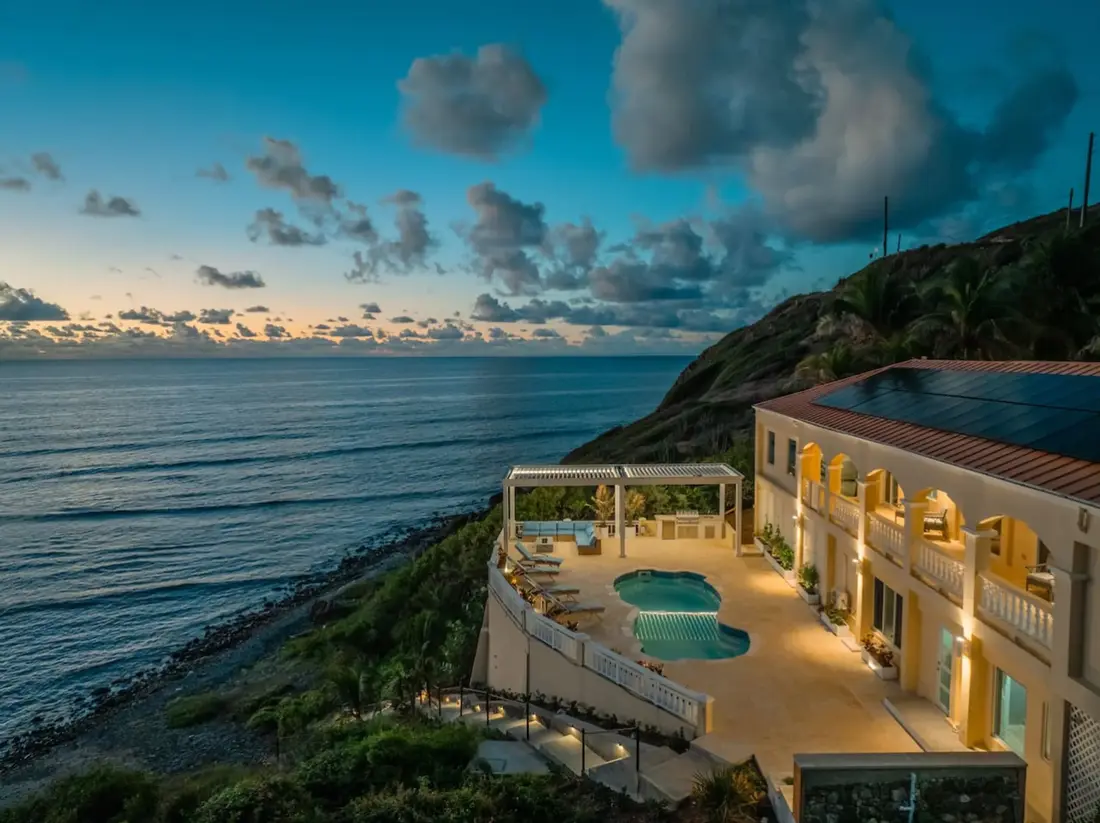
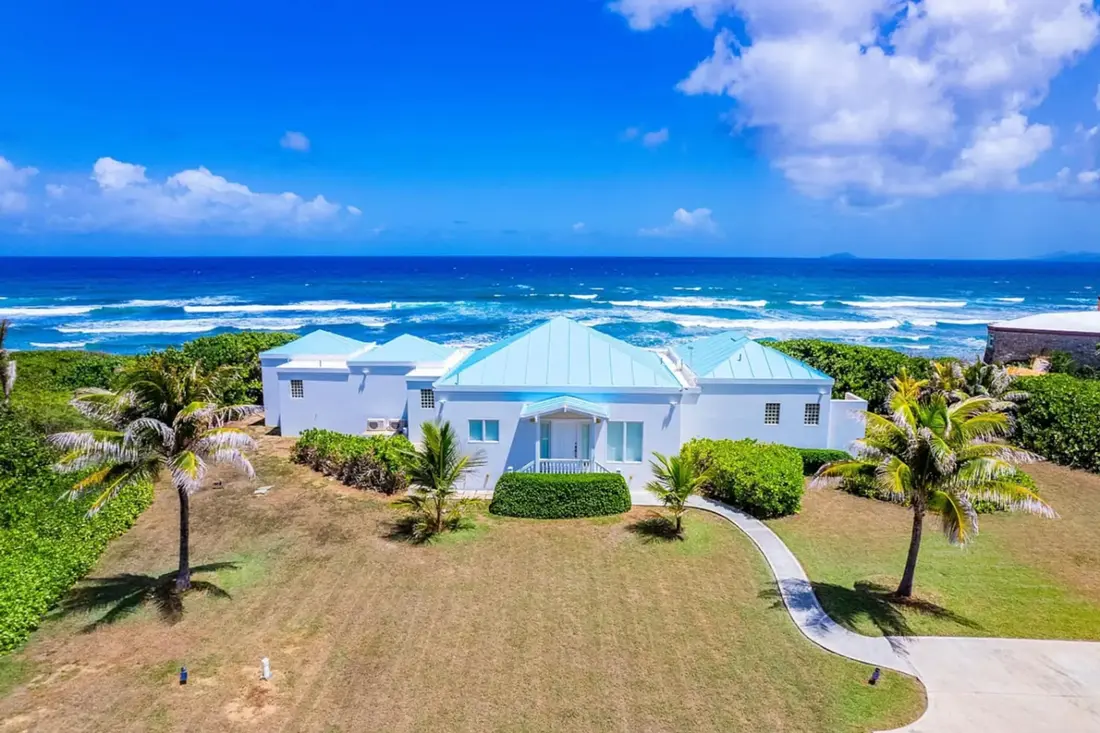
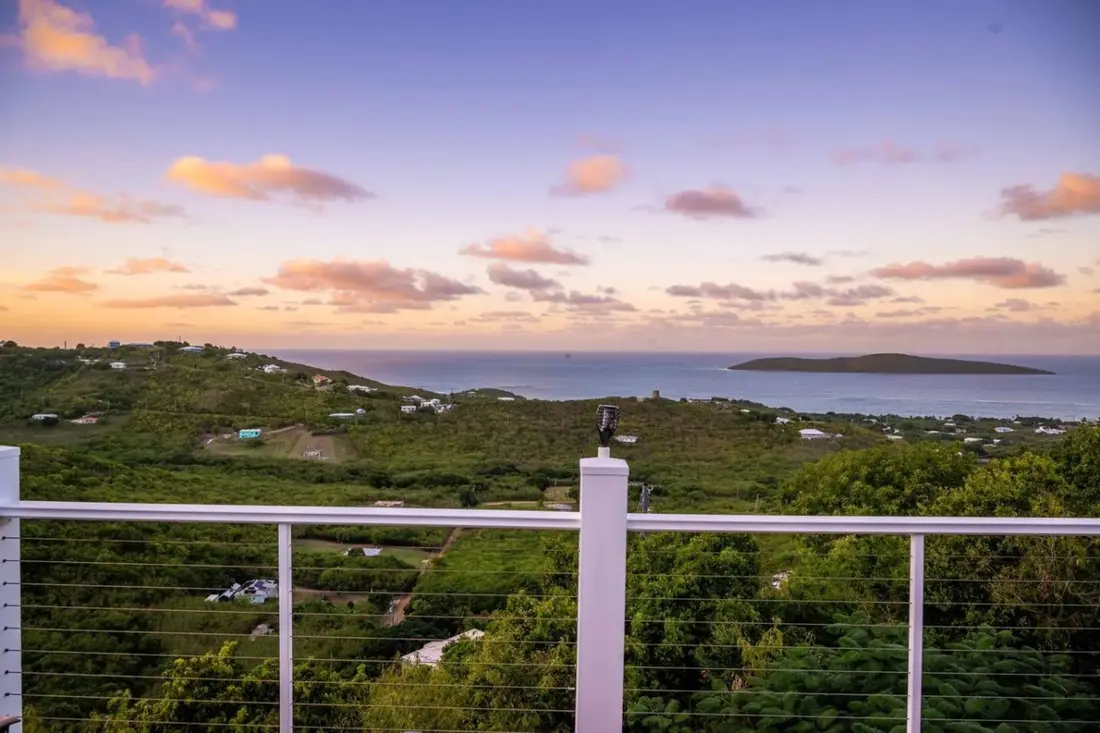
The historic site sits at the east end of downtown Christiansted, 15 to 20 minutes by car from our East End homes, and it slots naturally into any town day: fort at opening, the five-building loop, lunch on the water. Guests at Shoy's Beach House are closest, about five minutes out. The Cerulean and the rest of the East End collection put the park within an easy morning's reach, with a swim waiting at home afterward. Driving is on the left and parking beyond the fort's two-hour lot is covered on our getting around page; see all villas for the full portfolio.
Sources
Written from official and first-party sources, checked August 2026. Hours, prices and event dates change — confirm before you go.
In this guide
Stay nearby
On The Shoys beach: six bedrooms, six baths, pool and hot tub, room for twelve, and the beach through the back garden.
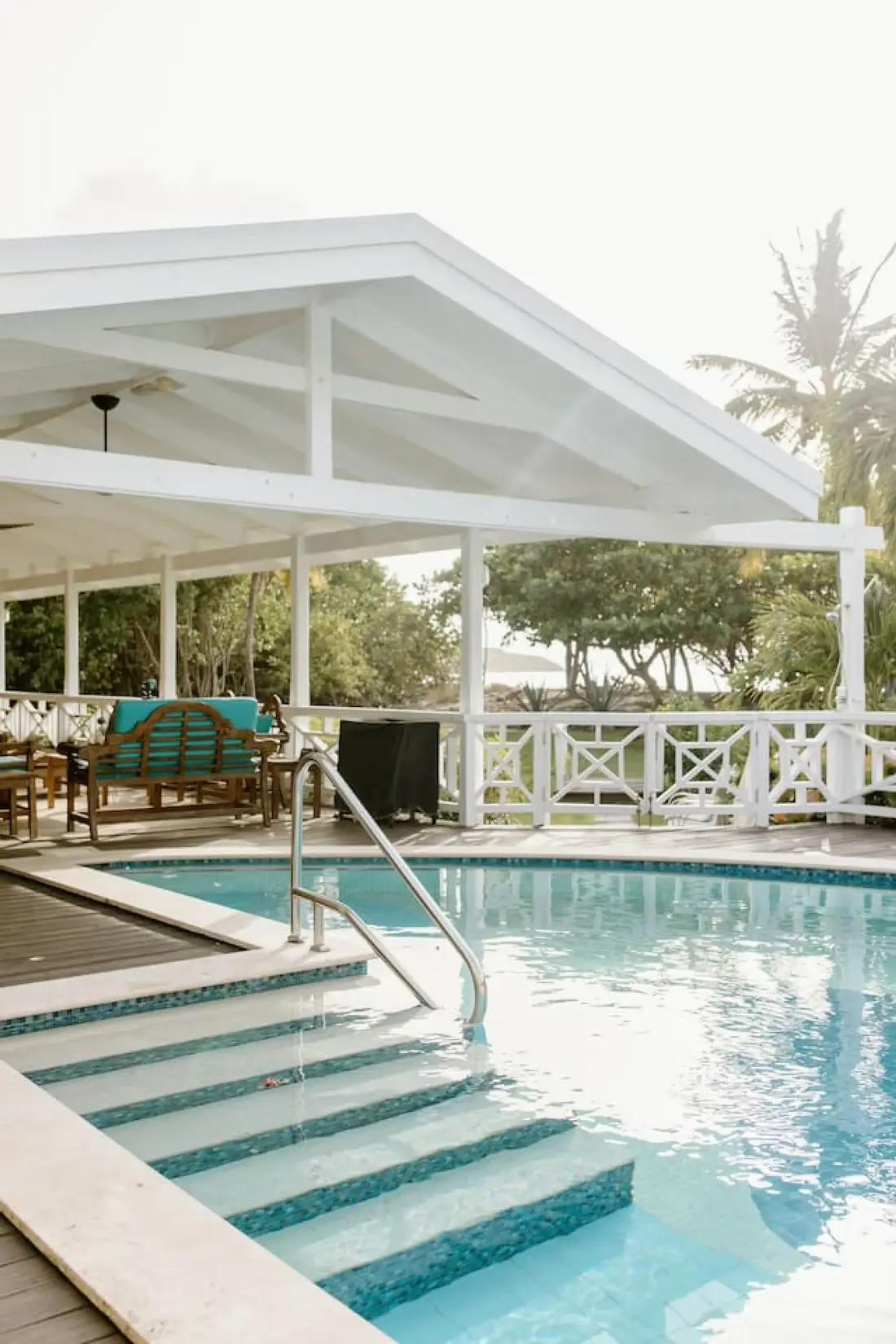 Shoy's Beach House6 bd · 6 ba · sleeps 12 · Christiansted
More in History & Culture
Sources
11 references, listed in full at the end of this guide — official park, refuge, tourism-board and business sources, checked August 2026.