First-Timer Tips
Drive left, greet people first, pack patience for island time, and never turn your back on the sun at Point Udall. Starter wisdom.
This page is the checklist for a first St. Croix trip, arranged in the order the trip happens: the ID rules before you fly, the reservations that cannot wait, the airport, the grocery run, the first night in a cistern-fed house, the manners that matter, and the inspection line before the flight home. None of it is complicated. All of it is easier to learn here than at a locked gate or a rental counter with no cars left.
ID and documents
St. Croix is U.S. soil, so a U.S. citizen flies here on the same paperwork as a flight to Dallas. No passport, no visa, no arrival form. What the TSA checkpoint wants is current federal ID standards, and those tightened recently: since February 1, 2026, TSA fully enforces the REAL ID rule, which means a driver's license only works if it carries the compliance star in the corner. A passport, a passport card, a Global Entry card, or a military ID all work in its place. Travelers who show up with a non-compliant license and nothing else are routed into TSA's paid ConfirmID identity check, $45 at last check, with delays of half an hour or more and no certainty of clearing it. Check every license in your group the week you book, and renew or plan to fly on passports if any lack the star.
Two wrinkles specific to the territory. First, minors flying domestically with an adult generally do not need ID of their own, though airlines set their own rules for lap infants, so a child's birth certificate is worth packing. Second, the return trip runs through a U.S. Customs and Border Protection checkpoint at the St. Croix airport, and an officer there can ask for proof of citizenship. A passport or a certified birth certificate in the carry-on settles that question in seconds. Citizens of other countries need exactly what they would need to enter the United States anywhere else. The full breakdown lives in no passport needed.
Travel insurance
For trips between June and the end of November, treat trip insurance as part of the airfare. The reason is a quirk of how the policies work: coverage applies to storms that had no name on the day you bought the policy, and stops applying to systems that were already on the forecast map. Buying on booking day protects the whole window; waiting until a tropical wave shows up on the news protects nothing. Read the weather language before paying, since policies differ on what counts as a covered disruption. Outside the summer and fall, insurance becomes an ordinary judgment call about health coverage and cancellation flexibility rather than a weather tool. Our hurricane season guide covers how the island actually experiences those months, and weather and when to visit covers the calendar in full.
Money
The currency is the dollar, the banks are U.S. banks, and the card in your wallet works here without a foreign-transaction surcharge, because nothing about the transaction is foreign. Nobody exchanges anything. ATMs sit at bank branches in Christiansted, Frederiksted, and the mid-island shopping centers rather than on every corner, so the efficient habit is one healthy withdrawal early in the week instead of hunting machines later.
Why cash at all? Because several island institutions run on it. The Mt. Pellier Domino Club up in the rainforest takes cash only and keeps no ATM on the property. La Reine Chicken Shack is a cash-friendly operation. Roadside fruit stands, food-fair tents, and some of the small beach bars go back and forth. A modest fold of small bills covers all of it, plus tips for boat crews and bag handlers. Rates, tipping percentages, and the tax picture are itemized in money and tipping; the short version is that tipping works the way it does at home.
Phones and the clock
Mainland phones function here as domestic devices on the 340 area code. Most U.S. plans charge nothing extra, though the word most is doing work in that sentence, so confirm with your carrier before wheels-up rather than after the first bill. Coverage strength varies by network: Liberty and T-Mobile carry strong island coverage, while Verizon service has been reported thinner outside the Christiansted area at last check. Villa Wi-Fi fills any gaps at the house.
The clock is the detail that trips up conference calls and dinner reservations. St. Croix keeps Atlantic Standard Time all year and never changes its clocks. In winter that puts the island one hour ahead of New York; when the mainland springs forward, the two run level. Details, along with the remote-work picture, are in phones, Wi-Fi and remote work.
Small logistics worth knowing
A few mainland-to-island details that save a purchase or a puzzled moment. Electricity is standard U.S. current with standard U.S. outlets, so nothing needs an adapter; leave that drawer of converters at home. Mail runs through the U.S. Postal Service at ordinary domestic rates, which makes the post office the cheap way to ship a box of rum or beach finds home — the private couriers serve the island too, at noticeably higher island pricing. Sunday is quieter than mainland habits expect: some shops and family restaurants close or shorten hours, and business hours generally run softer than the posted sign implies, so call ahead on the day for anything that matters. None of this is friction once you know it; it is simply a small island keeping small-island rhythms.
Reservations that cannot wait
Three bookings should be made from your kitchen table, weeks before the flight, because each draws on a fixed supply.
- The rental car. Every car for hire on St. Croix is already on St. Croix; no overflow fleet arrives when winter demand spikes. Six firms operated at last check — Budget and Hertz at the airport, plus the local independents Centerline, Olympic, Skyline, and Judi of Croix, several of which deliver the car to your door. Reserve the same day you book lodging; most reservations cancel free, so early costs nothing. Details in renting a car.
- The Buck Island boat. Access to the reef monument runs through five park-service concessionaires with finite seats, and winter departures fill days or weeks out. Reserve before arrival and aim for a mid-trip day so weather has room to reshuffle. See Buck Island boat tours.
- The glowing bay. Salt River's bioluminescence shows best when the moon is down, so kayak outfitters publish calendars of the dark nights they paddle. Match your dates against a moon-phase chart, then grab a night from the operator's list. See bio bay kayak tours.
Two softer reservations round out the list: Cruzan's distillery tours run at set weekday times and ask for advance sign-up, and a private chef for the first night needs lead time to shop. Neither will wreck a trip if skipped; both reward a week's notice.
Landing at the airport
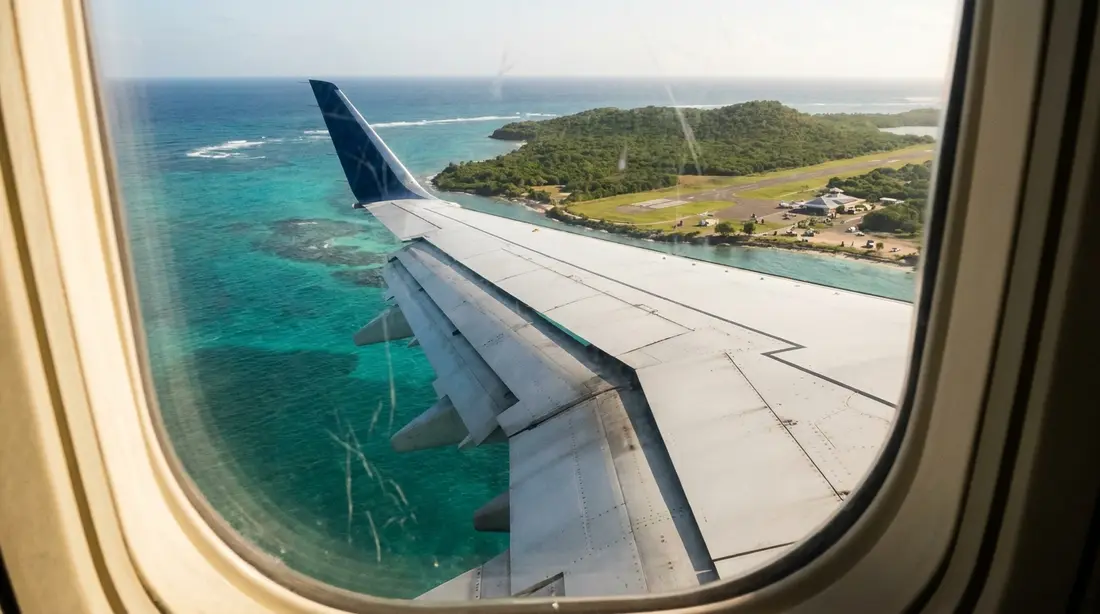
Flights arrive at Henry E. Rohlsen Airport, STX, on the island's south side. It is a small, easygoing field: you walk from the plane to a single baggage area, and the whole arrival process usually takes minutes rather than hours. Taxi vans wait outside every arriving flight, charging set per-person rates by destination — agree on the number before loading bags, which is the normal custom here rather than a negotiation.
If your car is booked at an airport counter, collect it there; if you chose one of the independents that delivers, the car may be waiting at the villa instead, which spares you a first left-side drive straight off a travel day. Orientation from the airport: Christiansted sits roughly twenty minutes to the northeast, Frederiksted about fifteen minutes west, and the East End villas thirty to forty minutes out along the coast. Flight routes and the St. Thomas connections are covered in getting to St. Croix.
The grocery stop comes first
The single best habit for a villa trip: shop before you unpack. Every home in our portfolio has a full kitchen, and the difference between a stocked kitchen and an empty one is the difference between coffee on the deck at sunrise and a hungry drive into town. The island's serious supermarkets cluster mid-island — Plaza Extra's two stores, Pueblo, the warehouse-style Cost-U-Less, and The Market STX were all operating at last check — and Seaside Market and Deli near Christiansted handles the gourmet end: wine, cheese, prepared food, real bakery goods. Hit whichever sits along your route from the airport, buy the first two days of breakfasts plus drinking water, and settle in. The full store-by-store rundown, including delivery and pre-arrival provisioning, is in groceries and provisioning.
Water, power, and insects at the villa
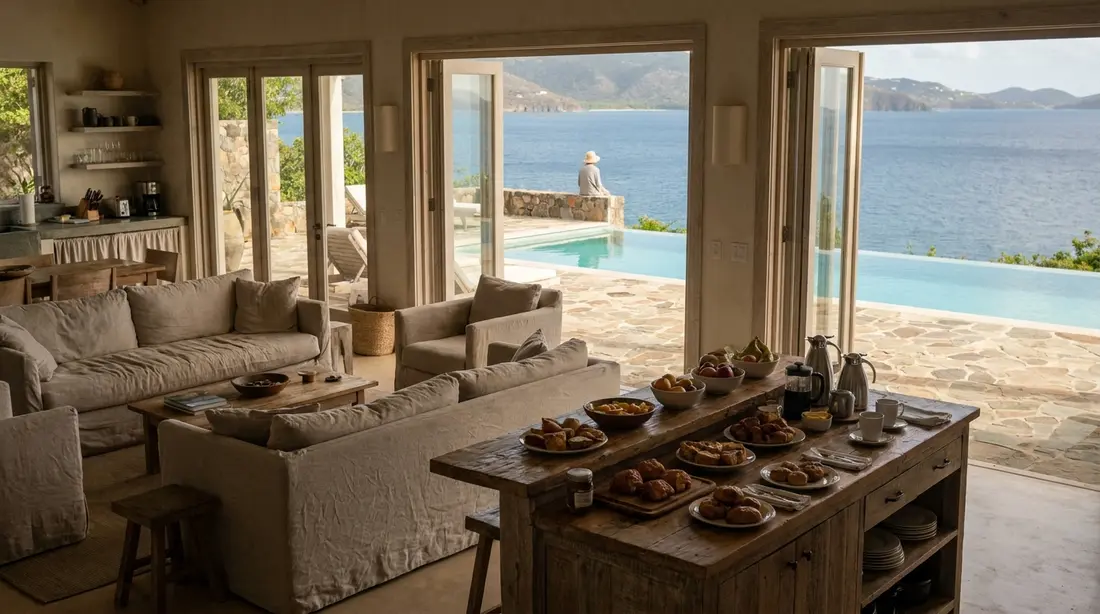
Here is the piece of island infrastructure that surprises the most first-timers. The majority of St. Croix houses, including most vacation villas, draw their tap water from a cistern — a large tank, usually built under the house, that stores rain collected from the roof. This is standard Caribbean engineering, not a shortcut, and it supplies everything a household does: showers, laundry, dishes, cooking water you boil.
Drinking straight from the tap is a different question, and the sensible local practice answers it. Cistern quality varies house to house with the roof, the filters, and the rains, so most residents and nearly all seasoned guests simply buy drinking water: gallon jugs from any supermarket, or refills at the coin-operated purified-water machines that stand outside most markets for well under a dollar a gallon. Some homes add filtration or UV treatment at the kitchen tap; ask us what your villa runs and we will tell you exactly how its water is set up. Budget a case of drinking water into the first grocery run and the subject never comes up again.
A related cistern courtesy: rain is the supply line, so long showers in a dry stretch drain a finite tank. Normal use is fine. Mainland-teenager use, less so.
The island grid hiccups now and then — a flicker, occasionally an outage of an hour or two, then back. Residents treat it as weather, and so should you: phones charged, a flashlight located on night one, refrigerator kept closed if the pause stretches. Villas with generators or battery backup note it in their listings. It is a footnote to island life, mentioned here only because the first unexplained blink at 9 p.m. lands differently when nobody warned you.
The other first-night briefing is insects. Mosquitoes and no-see-ums — biting midges small enough to ignore a standard window screen — come out around dawn and dusk, especially near mangroves and after rain. The fix is boring and total: repellent with DEET or picaridin at sundown, long sleeves for a deck dinner, and doors closed through dusk in green season. Guests who do this get bitten rarely; guests who discover it on day three itch through the rest of the week. Pack the repellent rather than hunting it after the first bites; the packing list has the rest of the bag.
Driving, condensed
Traffic keeps left on St. Croix, in ordinary American cars with the wheel on the left. The working habit: your body stays near the middle of the road. Give it twenty minutes of deliberate attention and the strangeness burns off. Speed limits run 20 mph in the towns and 35 on most open road, so mistakes here happen slowly. When another driver taps the horn, it is almost always a hello or an invitation to pull out — answer with a wave. The complete treatment, from turn logic to the animals with no traffic sense, is in driving on the left; the classic first-day loop is in drive around the island.
One rule worth pulling forward from that guide because it shapes your dinner plans: rural St. Croix has almost no street lighting. Save unfamiliar cross-island drives for daylight and keep the night runs to roads you already know. The rainforest is an afternoon drive, never an after-dinner one.
Manners the island cares about
Three customs separate guests who fit in from guests who wonder why service feels cool.
- Greet before anything else. The Virgin Islands open every exchange with the time of day — good morning, good afternoon, good night — and only then move to business. Walking up to a counter and leading with a question reads as rude, and cold openings sometimes draw cold answers. Adopt the greeting in your first hour and watch every interaction warm up.
- Cover up away from the sand. Swimwear belongs at the beach and the pool. In town, in shops, and at restaurants, shirts and shoes are the norm and a cover-up is the minimum. Evening dress codes run to resort casual at the nicest tables; nobody needs a jacket.
- Beaches are shared, and mostly residential. Pack out what you carry in, keep speakers low, give anglers and local family gatherings their space, and steer well around any staked or marked patch of sand — those are turtle nests. Where a beach fronts a guarded neighborhood, as at The Shoys, sign in with the gate and be the guest worth waving through next time.
Tipping follows mainland habits — servers, crews, guides, drivers, housekeepers — with the specific percentages in the money guide linked above.
Safety
St. Croix asks for ordinary American-city judgment, applied to an island layout. Keep valuables out of sight in a parked car, and leave nothing tempting in it at trailheads or remote beach lots — the one petty-theft pattern that recurs. Lock the villa when you leave, the way you would any house. Stick to lit, populated areas for late nights out, which in practice means the Christiansted boardwalk. On the water, respect matters more than fear: the north shore builds real surf in winter swells, currents strengthen off exposed points, and the tide-pool hike at Annaly Bay belongs only on calm-sea days. The emergency number is 911, same as home. The rest of the calm version is in safety and common sense. Add the standing offer: we live here, so when something feels uncertain, call us before it becomes a story.
Sun, reef, and where the doctor is
The sun at 17 degrees north outworks anything a mainland summer taught you. Burn time is short, midday shade is a strategy, and a long-sleeve swim shirt on the water beats any lotion schedule ever invented. Hydrate like it is a sport.
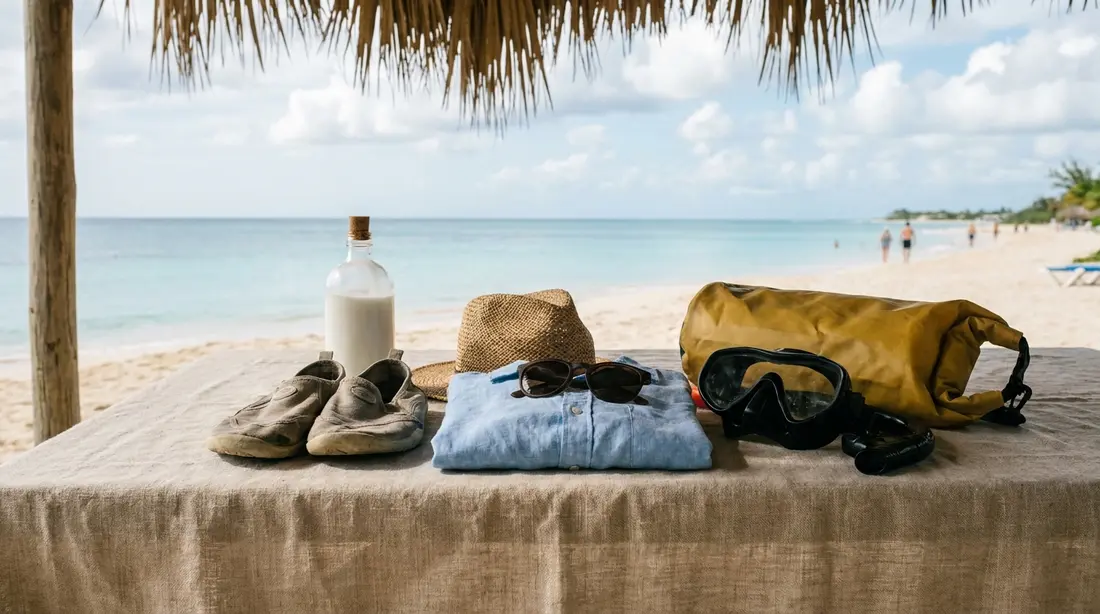
Know the sunscreen law before packing: since March 2020, territorial law has banned the import, sale, and possession of sunscreens containing oxybenzone, octinoxate, or octocrylene — locals call them the three O's. Check your bottle's active ingredients; mineral formulas built on zinc oxide or titanium dioxide are the compliant choice and the reef-safe one, which is the point of the statute. The reefs you came to see are the ones the law protects.
In the water, look and hover rather than touch. Coral scrapes and fire-coral stings punish careless contact, and black sea urchins tuck into rocks and ledges exactly where a foot wants to land — shuffle on sandy bottoms, wear reef shoes at rocky entries, and float over the reef rather than standing on it. If spines or a sting do find you, vinegar, hot water, and patience handle most cases.
For anything bigger: the island has a full hospital, Governor Juan F. Luis, mid-island near Christiansted, with a round-the-clock emergency room, plus clinics, urgent-care options, and pharmacies in and between both towns. Health insurance generally treats the USVI as U.S. territory, but confirm your plan's rules as you would for any trip. Bring prescriptions in their original containers with a few days of margin.
Calendar rules that catch first-timers
A handful of schedules on this island are inflexible, and every one of them has stranded a visitor who did not check.
- Sandy Point runs on the turtles' year. The refuge admits visitors Saturdays and Sundays, 10 to 4, from the start of September through the end of March — and shuts completely from April 1 to August 31 while leatherbacks nest. Arrive any other time and the gate is locked. Plan it as a weekend outing or not at all; see the Sandy Point guide.
- Frederiksted changes on ship days. Cruise ships tie up at the west-end pier, and their passengers fill the nearby streets and beaches for the day. The port calendar is public; on ship mornings, point yourself at the north shore or the East End and visit the west side another day.
- The fort keeps office hours. Christiansted's Fort Christiansvaern opens at 8:30 and closes at 4:30, so it is a daytime stop; the boardwalk beside it is the evening venue. Frederiksted, facing due west, owns the sunset.
- Mornings are for snorkeling in winter. The trade winds strengthen through winter afternoons and chop up the water; the flattest sea is before lunch. Summer is calmer all day. Beach-by-beach conditions live in the beach guide.
And the master rule of pacing: two anchors a day. One thing on the water or a trail in the morning, one town or beach in the afternoon, dinner aimed at the sunset. The island is about 22 miles by 7, split between a lush green west and a dry, cactus-covered east that are effectively two destinations — give each end its own day instead of criss-crossing. The weather cooperates with this plan: air in the low-to-high 80s in every month, a sea that never gets cold, and rain that arrives mostly as brief showers, heaviest from September into November. The month guides break down each page of the calendar.
Flying home
Departure day has one structural difference from a mainland flight: because the USVI sits outside the U.S. customs zone, the border formalities happen before you board rather than after you land. At STX you will pass a Customs and Border Protection document check and a Department of Agriculture screening of your bags — fruit, plants, and food must be presented, and plants in soil stay behind. It moves briskly, but it is one more line than a domestic airport has, so give yourself about two hours. On the far end you walk off the plane like any domestic arrival, straight past the customs hall.
That customs status also writes the shopping rules, and they favor you. A returning U.S. resident's duty-free allowance from the USVI is $1,600 — double the standard figure for foreign travel. Within it, adults can fly home with as much as five liters of alcohol, on the condition that four or more liters came from island shops and at least one was distilled in the territory. Cruzan, Captain Morgan, and Mutiny Island Vodka all qualify on the last count, which is why departure-eve rum shopping is a Crucian tradition among visitors. Boxes and bubble wrap are easy to find; checked-bag padding is your friend.
The classic first-trip mistakes
- No car reserved. Rideshare apps do not operate in the territory, and the winter fleet sells out. This mistake has no on-island fix.
- Sandy Point on a weekday. Or in June. The refuge calendar does not bend.
- Bio bay under a bright moon. Book against the operators' dark-night calendars, never against your dinner schedule.
- Assuming Buck Island can wait. Seats are finite and winter boats fill. Reserve before you fly.
- Banned sunscreen in the bag. The three-O law covers possession. Pack mineral formulas.
- Skipping the arrival grocery run. Day one ends better with breakfast already in the fridge and drinking water on the counter.
- First long drive after dark. Unlit roads plus unfamiliar left-side driving is a combination with no upside. Daylight first.
- Questions without greetings. Good morning costs nothing and buys everything.
- Valuables on the car seat. Trunk or villa, always, especially at trailheads.
- A schedule with no slack. A fifth stop added is usually a fourth stop ruined. The slow afternoon is the product.
Week-one reference
| Need | Where it gets handled | Timing note |
|---|---|---|
| Full grocery run | Mid-island supermarkets; Seaside Market for the gourmet basket | On the drive from the airport, before unpacking |
| Drinking water | Gallon jugs in-store, or refill machines outside most markets | With the first shop; restock as needed |
| Cash | Bank ATMs in both towns and mid-island | Early in the week; before holiday weekends |
| Fuel | Stations cluster mid-island and near both towns | Top up before an East End or rainforest day |
| Buck Island day | Boats from the Christiansted waterfront | Booked pre-trip; keep a fallback day open |
| Bio bay paddle | Salt River, after dark | Dark-moon nights only, per operator calendars |
| Sandy Point walk | Southwest tip of the island | Weekends 10–4, September through March |
| Fort and old town | Christiansted historic district | Morning, inside the 8:30–4:30 window |
| Sunset dinner | Frederiksted and the west coast | Any evening; check the cruise schedule first |
Questions guests ask
What ID do my kids need to fly to St. Croix?
For the flight itself, minors under 18 traveling with an adult on a domestic itinerary generally need no ID at TSA, though individual airlines set documentation rules for infants, so check yours. For the trip, pack each child's birth certificate anyway: the departure checkpoint at the St. Croix airport is run by Customs and Border Protection, and an officer can ask any traveler for proof of citizenship. A certificate in the carry-on answers the question instantly and weighs nothing.
Can we drink the villa's tap water?
Treat the tap as utility water — showers, dishes, cooking — and buy your drinking water, which is what most islanders do. Nearly all villas run on roof-fed cisterns, and while many are well maintained and filtered, quality varies with each house's setup, so the gallon jug and the supermarket refill machine are the standard practice rather than a tourist precaution. Ask us about your specific villa; some homes carry filtration or UV treatment at the kitchen sink, and we can tell you exactly what yours has.
Which sunscreens are legal in the USVI?
Mineral sunscreens whose active ingredients are zinc oxide or titanium dioxide. Territorial law has banned products containing oxybenzone, octinoxate, or octocrylene since March 2020 — including possession, so it is a packing question as much as a shopping one. Read the active-ingredients panel rather than the front label, since the words reef-friendly on the front carry no legal meaning. Compliant brands are sold widely on island if you would rather buy after landing, and a rash-guard shirt reduces how much lotion the week needs at all.
Do we need cash, and how much?
Cards handle most of the trip: restaurants, supermarkets, dive shops, fuel, rental counters. Keep a modest reserve of small bills for the exceptions — the Domino Club in the rainforest runs cash-only with no machine on site, La Reine Chicken Shack is cash-friendly, and roadside vendors, festival tents, and a few beach bars vary week to week. Something like a hundred dollars in mixed bills per week covers the typical family, tips included. Bank ATMs sit in both towns and mid-island; pull once early rather than hunting machines on a beach day.
Will my phone work there?
Almost certainly, and almost certainly at no extra cost — the USVI is a domestic destination on most mainland plans, under area code 340. Confirm with your carrier before travel, because a minority of plans handle the territory differently, and coverage strength varies by network, with Liberty and T-Mobile strongest at last check. Data speeds in the towns feel mainland-normal; remote coves may drop to a bar or none, which is arguably a feature. Every one of our homes lists Wi-Fi among its amenities.
How early should we get to the airport for the flight home?
About two hours. STX is a small airport, but departures to the mainland pass through two extra steps a domestic field does not have: a Customs and Border Protection document check and an agriculture inspection of luggage. Both usually move quickly; on days when two flights leave close together, the lines stack. Arriving with margin turns the wait into a rum-shop browse in the departure area instead of a sprint. Declare any fruit or plant material rather than gambling on the beagle's nose.
What absolutely must be booked before we fly?
Three things, in order of consequence: the rental car, because the island fleet is finite and no rideshare backstop exists; the Buck Island boat, because five permitted operators carry a fixed number of seats; and the bio bay kayak night, because the glow only shows on the dark half of the moon's cycle and those calendar nights sell first. Everything else on St. Croix — beaches, forts, distilleries, restaurants outside the very top tables — can be decided the morning of, which is most of the island's charm.
Your first villa on St. Croix
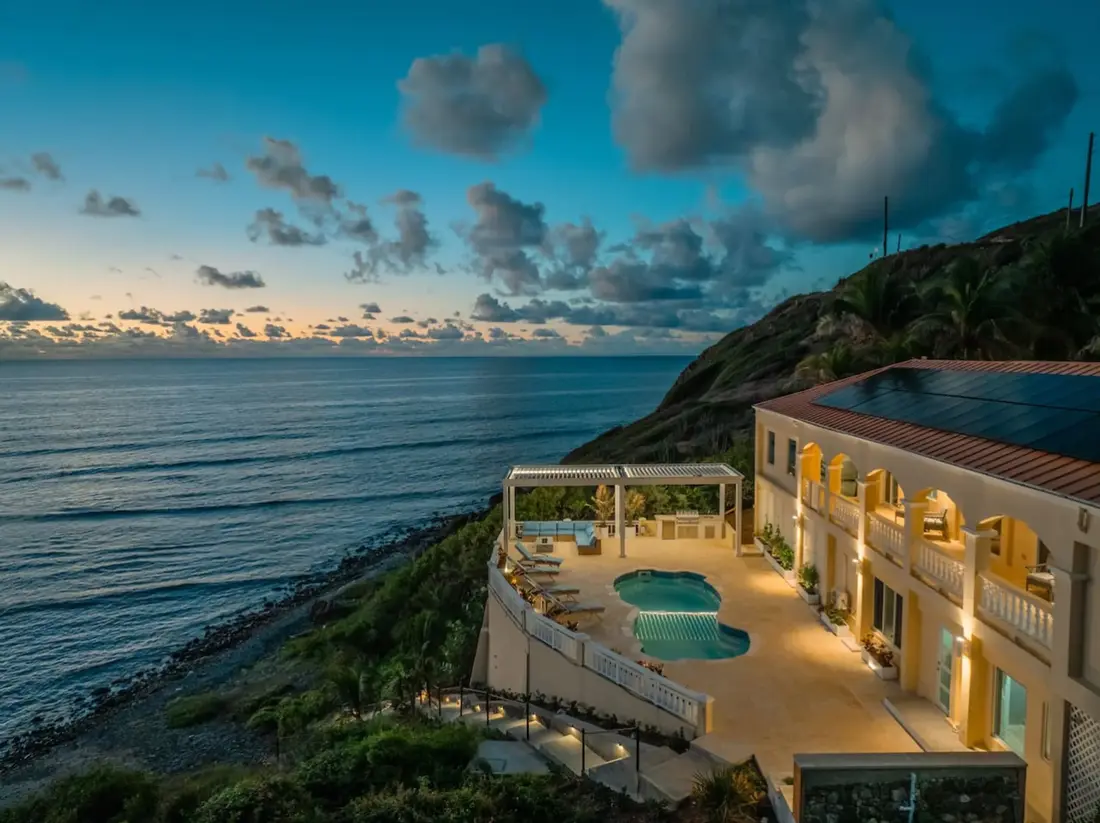
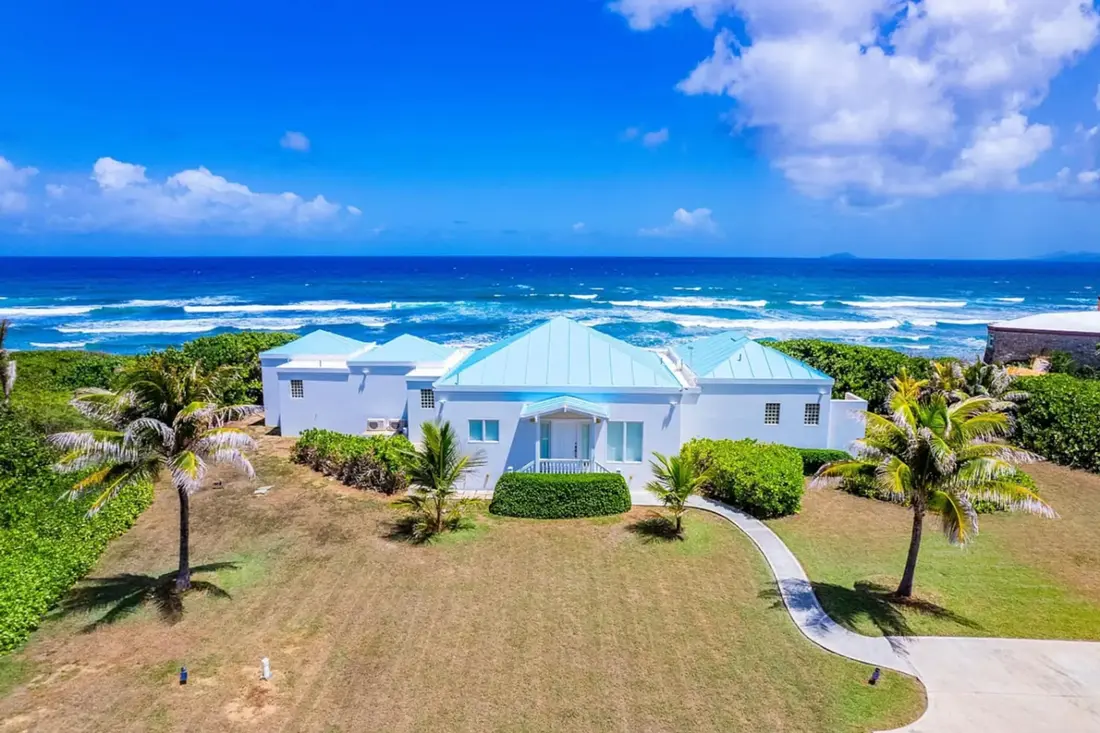
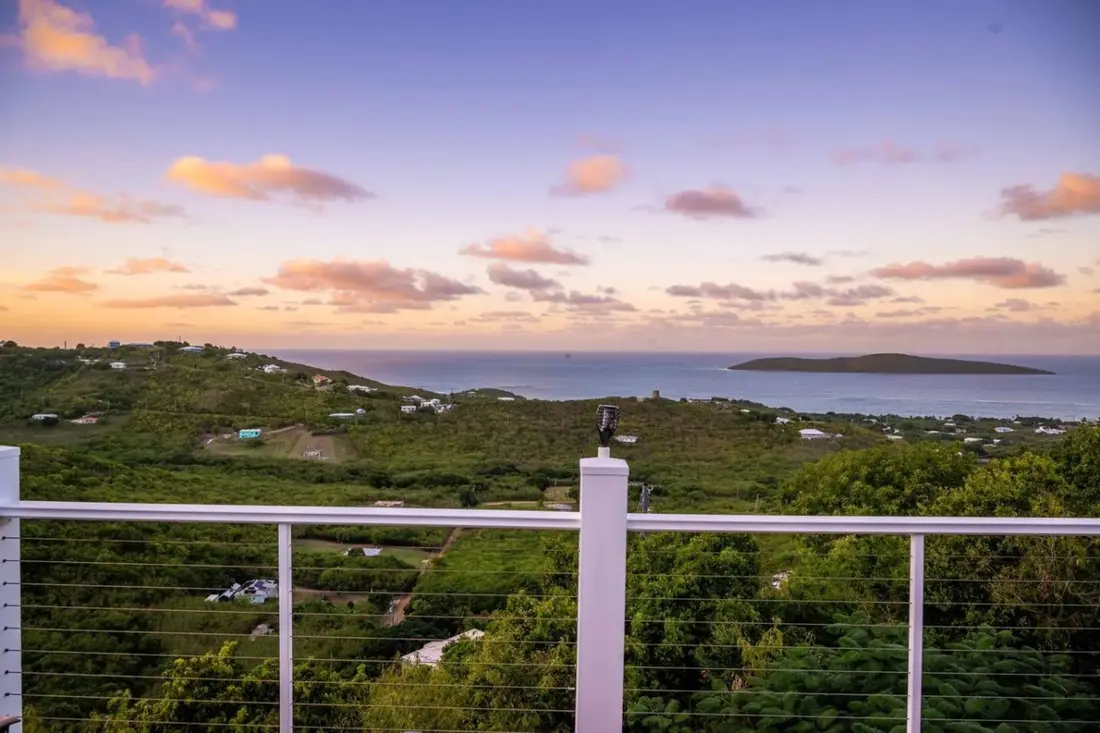
Every item on this page gets easier with a home base that comes with local backup. Our houses and condos all carry full kitchens for that first grocery haul, and we answer the cistern, coverage, and driving questions for each specific address before you land. First-timers who want walk-to-dinner ease look at our Christiansted-area homes; families spread out at Shoy's Beach House on its calm private-feeling beach; couples chasing the view book The Cerulean with Buck Island filling the horizon. Browse the full collection, then send the questions this page did not answer — we live here, and answering them is the job.
Sources
Written from official and first-party sources, checked August 2026. Hours, prices and event dates change — confirm before you go.
In this guide
Stay nearby
On The Shoys beach: six bedrooms, six baths, pool and hot tub, room for twelve, and the beach through the back garden.
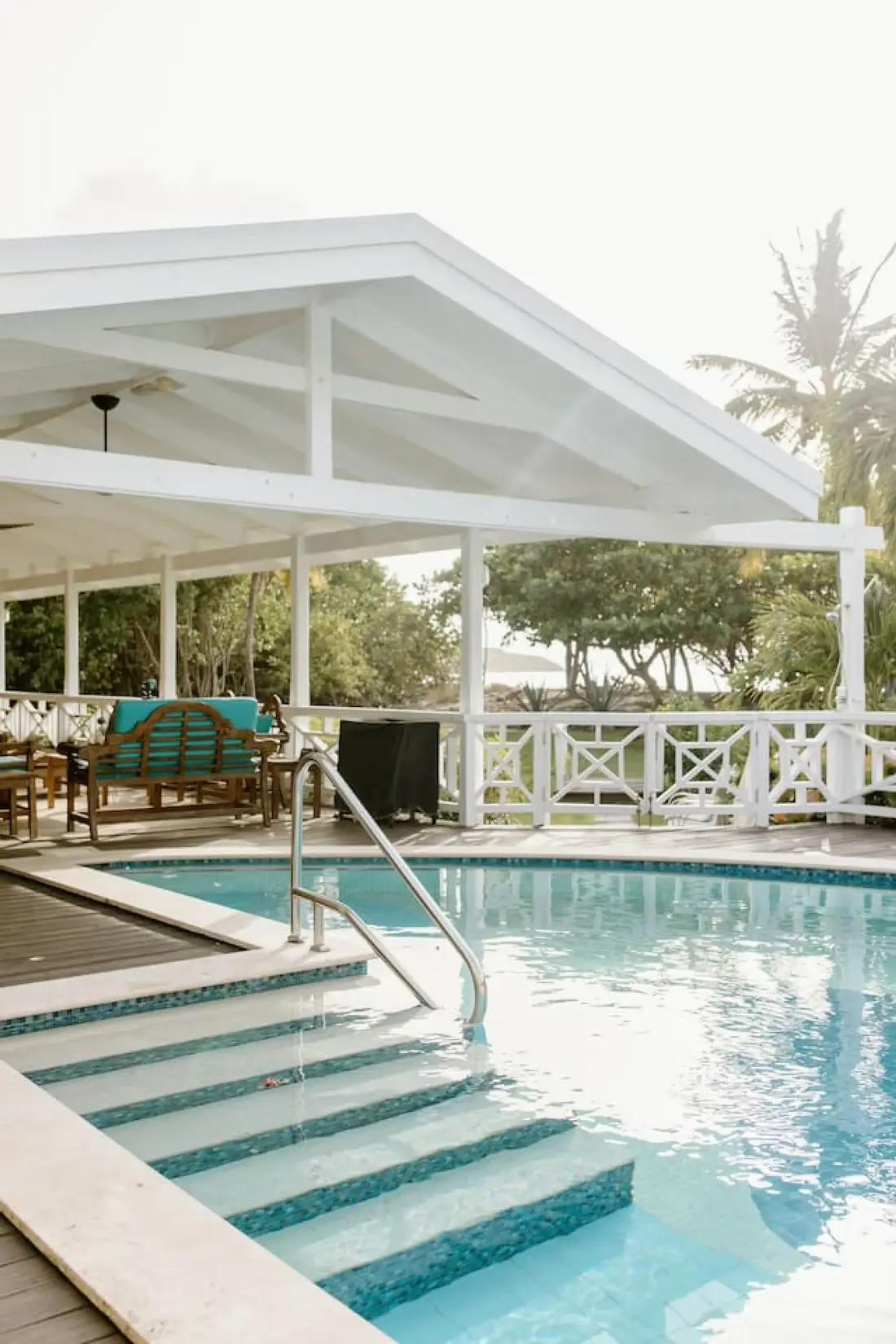 Shoy's Beach House6 bd · 6 ba · sleeps 12 · Christiansted
More in Plan Your Trip
Sources
10 references, listed in full at the end of this guide — official park, refuge, tourism-board and business sources, checked August 2026.