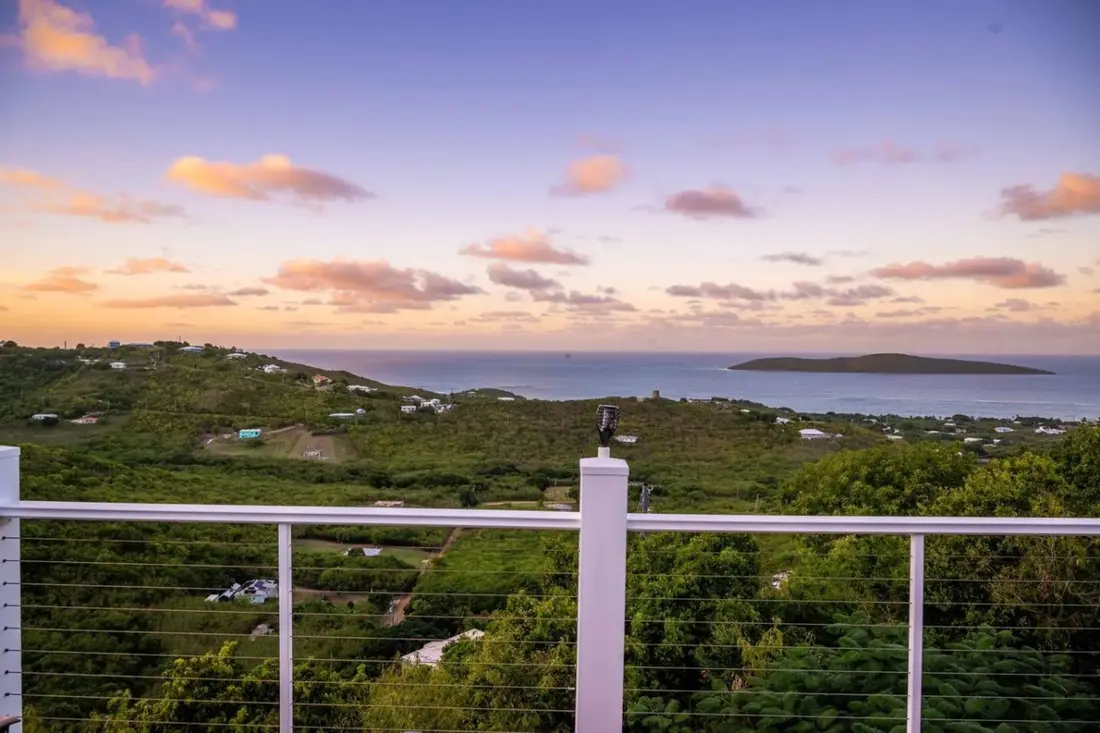
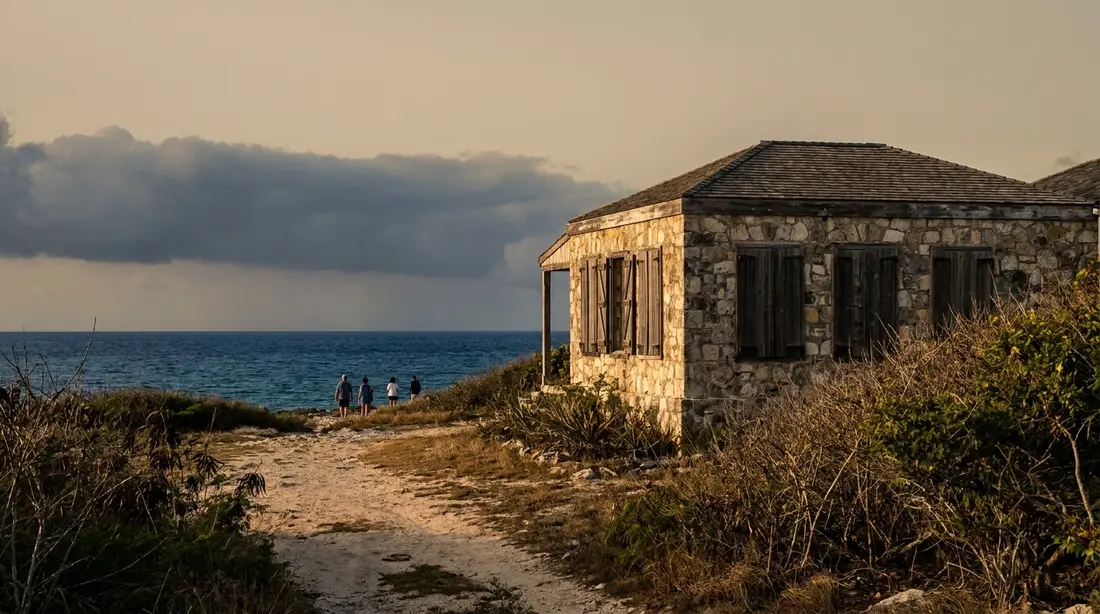
Hurricane Season
June through November on paper, August and September in practice. What the season really means for a villa trip, without the drama.
Atlantic hurricane season runs June 1 to November 30. On St. Croix the part that deserves real attention is much shorter: roughly mid-August to mid-October, with the statistical peak around September 10. This page is the reference version of the subject. It covers the calendar, the actual odds, the booking rules that protect your money, what the alerts mean, and what a storm week looks like on the island. For the long-form discussion of the decision itself, read the hurricane season journal post.
The season at a glance
- Official dates: June 1 to November 30, set by NOAA for the whole Atlantic basin.
- Active window on the climatology: mid-August to mid-October, about eight weeks out of the six calendar months.
- Statistical peak: around September 10.
- Quiet bookends: June, July and November are historically light in the eastern Caribbean, and June–July also sit in a drier lull inside the island's wet season.
- A normal season day here: 88 to 89 degrees, a brief shower possible, sea warm and swimmable. The sea is swimmable in every month of the year.
- Warning time: tropical systems appear in National Hurricane Center outlooks days before they matter to anyone. No storm arrives without notice.
- The money rule: travel insurance must be purchased before a storm has a name. Buy it the same day you make your first trip payment.
Everything below expands on those seven lines. If you retain only one, make it the last one, because it is the only item on the list with a deadline attached.
Month by month
The table blends National Hurricane Center climatology for the basin with the island's own weather record. Basin activity and island weather are two different things; a busy Atlantic month can pass on St. Croix without a cloud worth mentioning.
| Month | Atlantic basin (NOAA climatology) | On St. Croix | Trip notes |
|---|---|---|---|
| June | Season opens June 1. An average year's first named storm shows up in the second half of the month, usually far from the eastern Caribbean. | Drier lull inside the wet season; days near 88. | Quiet bookend. Same insurance rules apply. See June. |
| July | Historically light activity across the basin. | The drier lull continues; showers short when they come. | Quiet bookend, good availability. See July. |
| August | The curve climbs. The year's first hurricane typically forms in the first half of the month, and the deep-tropics pattern that can involve the eastern Caribbean gets going mid-month. | Warmest stretch of the year; rain ticks up late in the month. | The active window opens around mid-August. See August. |
| September | Peak of the season, centered on September 10. The busiest weeks of the basin's year. | Wettest single month, around six inches on average, still delivered mostly as brief showers. Fewest visitors of any month. | Deepest value on the calendar. Sandy Point resumes weekend visiting September 1. See September. |
| October | Activity falls off noticeably after mid-month. | Landscape at its greenest; sea at its warmest. | The active window closes around mid-October. See October. |
| November | The tail of the season; November 30 closes it. | Rain eases late in the month as the Christmas Winds approach. | Quiet bookend at shoulder pricing. See November. |
Peak visitor season is the other end of the calendar entirely: the Christmas Winds stretch from mid-December to mid-March, the coolest and driest weeks of the island's year. The full twelve-month picture lives in weather and when to visit.
How the numbers spread across the basin
The National Hurricane Center's 1991–2020 climatology gives an average Atlantic season 14 named storms, with 7 reaching hurricane strength and 3 reaching major (Category 3+) strength. Read the fine print on that sentence: those counts cover the entire basin, an expanse running from the coast of West Africa across the Caribbean and Gulf to Texas. A single storm occupies a small piece of that map for a handful of days. The count measures how busy the ocean was, and says nothing about what any one 84-square-mile island experienced.
The calendar concentration is just as lopsided as the geography. NOAA's hurricane research division puts 78 percent of the basin's tropical-storm days, 87 percent of its hurricane days and 96 percent of its major-hurricane days inside August, September and October. June, July and November share the thin remainder. When this page talks about an eight-week active window, that is the arithmetic behind it.
For St. Croix specifically, the systems that matter most are the long-track storms that organize in the deep tropical Atlantic near the Cape Verde islands and ride the trade winds west. NOAA's research climatology counts an average of about two such storms per year, nearly all of them in August and September, and in any given year most of those two curve north into open water or pass at a distance. A storm passing 100 or 200 miles away is a common season event and typically reads on the island as a breezy day, some rain, and boats staying in. Hurricane conditions actually reaching St. Croix is a different and much rarer event; at last check it had happened once since 1989, in September 2017.
Distant storms do leave one visible signature: swell. A large system passing far to the north can send waves to the island's north-facing shores days later under a clear blue sky. On those days boat and dive operators shift to the sheltered west and south coasts or reschedule, surf shows up where there usually is none, and the smart beach choice moves leeward. It is the season's most common "storm effect" by a wide margin, and it costs a trip nothing beyond flexibility about which beach gets the day.
The plain summary a booking decision needs: a June-to-November trip here will almost certainly run as a normal warm-weather vacation, and the small remaining chance is a disruption you would see coming for days, with cheap and well-understood tools for handling it. Those tools are the next two sections.
Booking checklist
Every item here is done from a desk, most of them in the same hour you book. A season-proof trip gets built right here, months before there is anything on the map to track.
- Insurance on payment day. Put the policy in place the day of your first deposit. The reason is a hard industry rule covered in the next section: coverage applies to storms that did not yet exist when you bought it.
- Read the weather paragraphs before buying. The policy should spell out trip cancellation and trip interruption for named-storm events, delay benefits when weather strands you en route, and coverage when the place you booked becomes uninhabitable. Policies differ; the weather language is the part worth your reading time.
- Decide on the cancel-for-any-reason question immediately. That upgrade has its own purchase deadline, usually inside the first two to three weeks after your initial payment. Wait a month and the option is gone regardless of what you would pay.
- Lean toward changeable airfare. When the flexible fare costs only a little more, it buys you easy rebooking in a waiver week. September and October schedules into the island run thinner than winter ones, so having options matters more then; routes are covered in getting to St. Croix.
- Keep the trip's edges light. Plan nothing critical for the first day and last day. A trip with soft edges absorbs a schedule change without losing anything that matters.
- Ask us about your dates. We live on the island and watch the same forecasts our guests do. Cancellation terms, calendar flexibility, what the house's plan is when weather threatens: these are booking-time questions, and we answer them with specifics.
Travel insurance timing
One rule drives everything about insuring a hurricane-season trip: insurers cover the unforeseen, and a tropical system stops being unforeseen the day the National Hurricane Center gives it a name. Policies purchased after that date exclude that storm. Every carrier applies a version of this, which is why shopping for coverage during an active storm week accomplishes nothing at all.
Bought on time, standard trip insurance is the workhorse for this season. Its weather-related protections fall into a few categories rather than one blanket promise, and knowing the categories helps you compare policies:
- Cancellation — reimburses prepaid, nonrefundable costs when a covered weather event forces the trip off entirely.
- Interruption — covers the unused portion plus the cost of getting home when a covered event cuts a trip short.
- Delay — pays lodging and meals when weather strands you between home and the island.
- Uninhabitable accommodation — applies when the booked property itself cannot host you because of the event.
The cancel-for-any-reason upgrade sits on top of a standard policy and does what its name says: you may call the trip off for reasons entirely your own and recover a majority share of the cost. It costs meaningfully more, refunds less than 100 percent, requires cancelling a couple of days before departure, and must be added within its short post-deposit window. It exists for the scenario standard coverage ignores, the forecast that looks worrying and then turns out fine after you have already decided not to go. Some travelers want that option; many do not. Either answer is fine as long as you give it at booking time, while both doors are open. We are not insurance advisers; compare current policies directly and read the weather clauses before paying.
One expectation to set now: no policy of any kind pays out because a vacation week turned out rainier than hoped. Insurance responds to defined disruptions, never to weather that was merely imperfect. The island's own answer to a gray afternoon is the rainy day plan.
Reading the forecast
From June through November, the National Hurricane Center publishes scheduled tropical outlooks for the Atlantic, flagging any area it is watching and attaching a formation probability. Once a system organizes, the Center issues regular advisories with the forecast graphic everyone has seen on the news: the cone.
The cone is the most misread image in tropical weather, so here is what it actually is. It maps the probable path of the storm's center over the next five days, drawn from circles sized so that two-thirds of the Center's recent historical track errors would fit inside them. Three practical consequences follow for a traveler:
- It tracks the center only. The cone's width says nothing about the storm's size. Weather can reach well outside the cone; a center passing outside it can still brush the island with wind and rain.
- One-third of centers historically travel outside it. A cone edge near the Virgin Islands is a reason for attention, never a verdict in either direction.
- Five days is the horizon. Beyond that, outlook probabilities exist and decisions do not need to be made. A system ten days from the islands is a thing to glance at tomorrow, and no more.
The workable guest routine during the active weeks: check the tropical outlook with morning coffee, roughly thirty seconds. A clear map, the usual result, ends the subject for the day.
Watches and warnings
If a system does bear on the northeastern Caribbean, the alerts arrive in a fixed vocabulary with clocks attached. The hour counts run to the expected arrival of tropical-storm-force wind, because that wind is what closes airports, ports and preparation windows.
| Alert | Wind involved | Meaning | Notice given |
|---|---|---|---|
| Tropical storm watch | 39–73 mph sustained | Conditions possible in the watch area | About 48 hours |
| Tropical storm warning | 39–73 mph sustained | Conditions expected in the warning area | About 36 hours |
| Hurricane watch | 74+ mph sustained | Conditions possible in the watch area | About 48 hours |
| Hurricane warning | 74+ mph sustained | Conditions expected in the warning area | About 36 hours |
Watch means possible; warning means expected. Under a watch, preparations begin and plans go conditional. Under a warning, preparations get finished and everyone follows official guidance through the weather. Between the first watch and the arrival of wind sits at least a full day and usually more, which is the entire design: the system exists so nobody improvises.
Forecast vocabulary
Tropical forecasts use a short ladder of defined terms, and news coverage mixes them freely. The ladder, bottom to top, with the National Hurricane Center's wind thresholds:
| Term | Definition | What it means for a trip |
|---|---|---|
| Tropical wave | A disorganized ripple of showers moving west off Africa | Background weather; dozens cross each summer |
| Invest / disturbance | An area the NHC is watching, tagged with a formation percentage | Worth a glance in the outlook, nothing more yet |
| Tropical depression | An organized system, sustained winds under 39 mph | Now on the advisory schedule with a track forecast |
| Tropical storm | Sustained winds 39–73 mph; the system gets its name | The insurance cutoff moment for that storm |
| Hurricane, Cat 1–2 | 74–95 mph and 96–110 mph sustained | Serious weather; island routine handles it |
| Major hurricane, Cat 3–5 | 111–129, 130–156, and 157+ mph sustained | The rare, high-end scenario official guidance is built for |
The Saffir-Simpson categories measure sustained wind only. Rain, surf and storm surge scale imperfectly with category, which is one more reason to take instructions from officials on the ground rather than from a single number on a screen.
One more forecast product deserves a definition: the seasonal outlook. Each spring NOAA publishes a prediction for the season's basin-wide totals, above-normal, near-normal or below-normal, and headlines repeat it all summer. It is a forecast of how busy the whole ocean will be, and it contains no information about whether any storm will approach any particular island. A quiet-forecast season can produce the year's one bad track, and a busy-forecast season can pass the eastern Caribbean by entirely from June to December. Book on the island's climatology and your own calendar; insure the trip either way; let the seasonal headline pass by.
Storm week on the island
When a real threat develops, St. Croix runs a routine it has practiced for generations, and a guest mostly watches it happen. The visible sequence, in rough order:
- The island starts talking about it early. Forecast chatter begins while a system is still days out over open water. VITEMA, the territory's emergency management agency, adds its own local advisories on top of the federal forecast; its St. Croix office is at (340) 773-2244 at last check, and its Alert VI system pushes notifications to any phone that registers.
- Boats reschedule themselves. Charter and dive operators here treat weather windows conservatively and start moving bookings before any alert requires it.
- Shutters go up. Storm protection is standard equipment on island buildings, roll-downs, panels and the old hinged style, and closing it is a familiar chore rather than an emergency.
- Provisioning happens. Groceries and fuel see a busy day or two as households top up water, food and gas. Stores restock; the pattern is orderly. Where to shop is covered in groceries and provisioning.
- The airport and ports announce their status. Closures, when they come, are published in advance, keyed to the arrival of tropical-storm-force wind.
For our guests, the practical piece is that we reach out first. You hear from us what the forecast says, what the plan for your villa is, and what your calendar options are, before you have to ask.
If a storm threatens your travel dates
For a guest still at home, a threatening forecast triggers a short sequence, and rebooking, rather than cancelling, is how most of these weeks resolve.
- Check the airline's travel-alert page before calling anyone. Carriers publish waivers when a system threatens a route, often days out, listing affected airports and dates and allowing free rebooking into a window around the disruption. The waiver usually answers the main question by itself.
- Know the federal backstop. If the airline cancels the flight, or changes it significantly, and you decline what it offers instead, U.S. Department of Transportation rules entitle you to your money back to the original payment method, nonrefundable fares included, and since 2024 the refund is required to be automatic. Weather cancellations qualify; what airlines do not owe for weather is compensation beyond the refund.
- Loop in the insurer. If the trip is disrupted rather than moved, this is what the policy from the booking checklist exists for. Document costs as they happen.
- Talk to us throughout. When weather threatens a trip, we work with guests on the calendar. A rescheduled week is the normal outcome of a storm scare, and a guest treated fairly in a bad week tends to come back for years of good ones.
Timing note: decisions in these weeks get made two to four days out, against a real forecast, with alerts and waivers in hand. Deciding earlier than the information allows just means deciding with less information.
If you are on island
The much rarer scenario is a warning issued mid-trip, and the shape of it is: secure, stock, sit tight, in company.
The villa side is handled. Our team lives here and manages these houses through every season; when a warning is issued we secure the property, tell you exactly what will happen and when, and stay reachable through the event. You will be asked to do simple things, mainly staying in, keeping devices charged and keeping water on hand, alongside everyone else on the island.
The housing stock itself is a quiet advantage. The island's building tradition runs to masonry and poured concrete, current territorial codes require storm-rated protection on new construction, and Virgin Islands law requires new homes to carry a rain-fed cistern of at least 2,000 gallons, which means a typical villa holds its own water reserve independent of any utility. Construction varies house to house, so ask us about the specific property; the pattern, though, is an island built for its own climate.
Public shelters exist as the fallback layer: VITEMA designates and announces shelter locations by district when an event requires them. In practice, guests in a well-built villa ride out weather where they are, on the guidance of local officials and the people managing the house. Category matters here, and it deserves plain statement: a direct hit from a major hurricane is the scenario in which officials may direct movement, and in that rare case the instruction chain is VITEMA and local authorities first, us alongside.
After a storm
Recovery speed depends entirely on what actually happened, so this section deals in patterns rather than promises. After the common case, a brush or near miss, the island typically shakes itself off within a day or two: the airport and ports reopen once winds permit and inspections clear, boats return to schedule, and the week resumes with better sunsets than it started with. After a serious hit, the timeline stretches with the damage, and power restoration has historically been the long pole. Guests with imminent dates get direct guidance from us either way, because "how is the island, really" is a question best answered by someone standing on it.
The long arc is worth one line: after 2017 the territory rebuilt to stricter codes, hardening homes and the grid, and the island's tourism plant has run at full speed for years since. The visible legacy of that September is a place that takes preparation seriously, which is exactly what a visitor wants underneath them in storm season.
The September and October case
The active window overlaps the island's best-value weeks, and that overlap is a trade some travelers make on purpose every year. September brings the year's lowest villa rates and thinnest crowds; October keeps most of the value with a fading storm curve. The green season's full argument, the light, the empty beaches, the open calendars, the sea at its warmest, is made properly in the best-time-to-visit journal post. The short version: pair those months with the booking checklist above and the risk becomes a managed line item, priced at one insurance premium and a little flexibility. Sandy Point's weekend season reopening on September 1 is the bonus; details in the Sandy Point guide.
Preparation timeline
| When | What to do |
|---|---|
| Booking day | Pay the deposit, buy standard trip insurance with clear weather clauses the same day, decide on the cancel-for-any-reason upgrade. |
| Within 2–3 weeks of deposit | Last practical window to add cancel-for-any-reason coverage, per most policies at last check. |
| Booking to trip | Nothing. The tropics need no attention from you for months. |
| One week out | Glance at the NHC tropical outlook. Clear map: pack per the packing list and go. |
| System on the map | Read the forecast, check the airline's waiver page, review the policy, and keep us in the loop. Decide with days in hand. |
| Watch issued (~48h) | Plans go conditional; confirm flights; hear the villa plan from us. |
| Warning issued (~36h) | Preparations finish; follow official guidance and ours. |
| On island, active weeks | Thirty seconds of tropical outlook with morning coffee, then the beach. |
Questions guests ask
How often do storms actually reach St. Croix?
Distant passes are routine season events; direct hits are rare. In a typical year the eastern Caribbean sees systems track by at distances that produce, at most, a breezy rainy day on the island, and many seasons pass without even that. Hurricane conditions on St. Croix itself are another matter entirely: at last check that had happened once since 1989, in September 2017. Treat the basin's storm count and the island's storm history as two separate statistics, because they are.
What is a tropical wave and does it matter to my trip?
A tropical wave is a ripple of disturbed weather that rolls off West Africa every few days all summer long. The large majority cross the Atlantic as nothing more than a cloudy, showery interlude. The National Hurricane Center's outlook flags any wave with development potential and attaches a percentage; a wave with a low formation chance five days away deserves no space in your head. Waves only graduate to trip-relevance if they organize into a named system with a track toward the islands, and the forecast process makes that transition visible days in advance.
Do boat trips and dive charters run during hurricane season?
Yes, on the overwhelming majority of days, which are ordinary Caribbean boating days. Operators here read the marine forecast daily and reschedule on their own initiative when a system approaches, usually before any official alert requires it. If your Buck Island day or dive gets moved, it is because professionals declined to gamble with a weather window, and the same operators are quick to rebook once it passes. Booking activities early in your week leaves room to shuffle if weather claims a day.
Will my phone get emergency alerts on the island?
Yes. St. Croix is on U.S. carrier networks, so Wireless Emergency Alerts reach visiting phones the same way they do at home. For a longer stay, or for peace of mind, you can register with Alert VI, the territory's own notification system run by VITEMA, whose St. Croix office answers at (340) 773-2244 at last check. Between federal forecasts, territorial alerts and a villa team that contacts you directly, the problem during a storm week is never a shortage of information.
What happens to my villa payment if a storm forces a cancellation?
The outcomes sort into categories. Rescheduling is the most common resolution by far; when weather threatens a trip we work with guests on new dates. Trip insurance bought on deposit day is the instrument designed to make cancellation whole, which is why this page repeats that purchase rule so often. Airfare has its own federal track: a carrier-cancelled flight you decline to rebook is owed an automatic refund. What no traveler should count on is an after-the-fact exception purchased by nobody; the protections all get set up at booking time.
Is June safer than September?
The climatology says June is much quieter: the season's early weeks produce a small fraction of its activity, and early-season systems historically favor waters far from the eastern Caribbean. No month between June and November is a zero, though, so the booking rules on this page apply to all six, and they cost the same whenever you apply them. Choose the month on rates, schedules and what you want from the island, then insure the trip the day you book it, whichever month that is.
Does SP Vacations operate through the whole season?
Yes. We are an on-island company, our team lives here year-round, and the villas host guests in every month. Storm season changes nothing about operations on the ordinary days that make up nearly all of it; what it changes is how much our being here matters if a forecast ever turns interesting. Guests hear from us early with the plan rather than chasing a distant host for answers. New to the island generally? Start with first-time visitor tips.
Villas for the green months
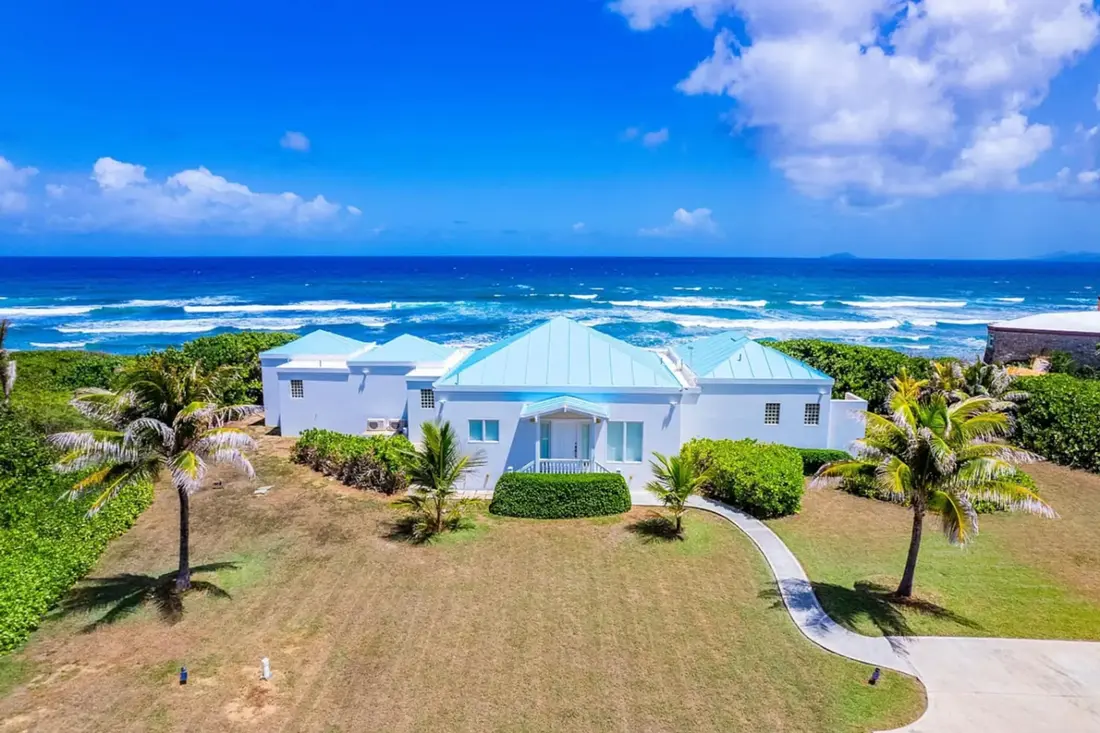
June through November is when the island's calendar opens up and the best houses have dates to offer. The beachfront villas make the most of the year's warmest sea, The Cerulean faces Buck Island from its own East End sand, and Sunset Sea-Clusion sits near Frederiksted's calm west water, the sheltered side on most summer days. Groups hunting a green-season rate have the large-group houses to choose from. Every one of them is managed by our team here on St. Croix, which is the single most useful amenity a villa can have between June and November. Ask us anything about the season before you book; we would rather you ask than wonder.
Sources
Written from official and first-party sources, checked August 2026. Hours, prices and event dates change — confirm before you go.
In this guide
Stay nearby
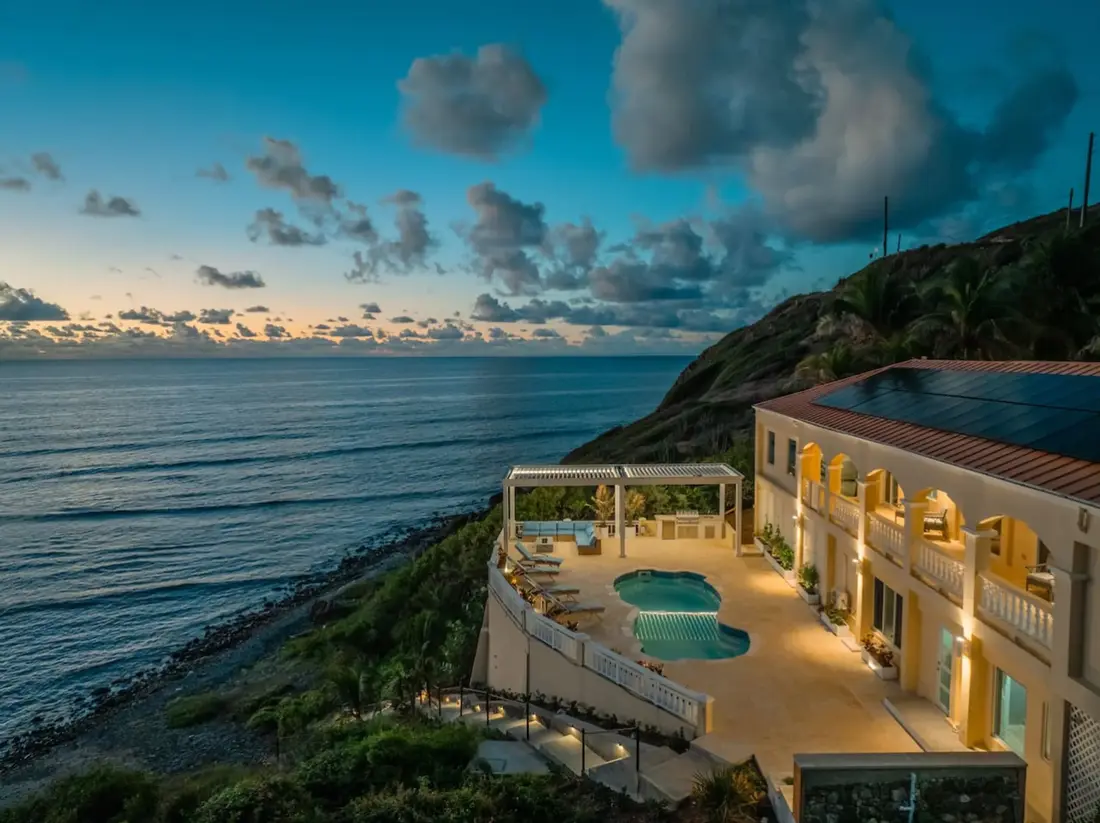
On The Shoys beach: six bedrooms, six baths, pool and hot tub, room for twelve, and the beach through the back garden.
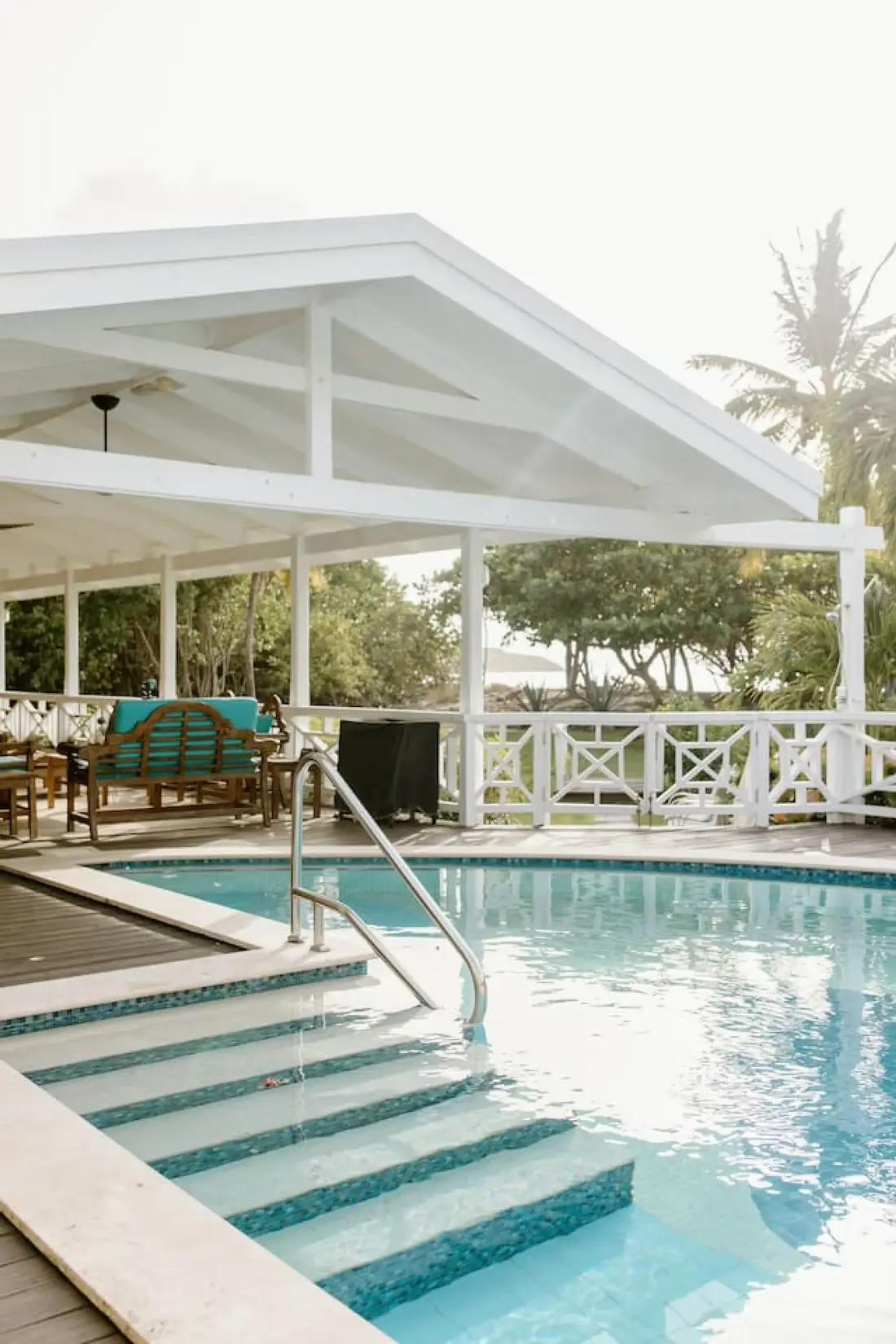 Shoy's Beach House6 bd · 6 ba · sleeps 12 · Christiansted
More in Plan Your Trip
Sources
9 references, listed in full at the end of this guide — official park, refuge, tourism-board and business sources, checked August 2026.