St. Croix vs Punta Cana
The Caribbean's biggest resort machine moves millions through a purpose-built strip of gated compounds. The question is whether that was ever the trip you meant to take.
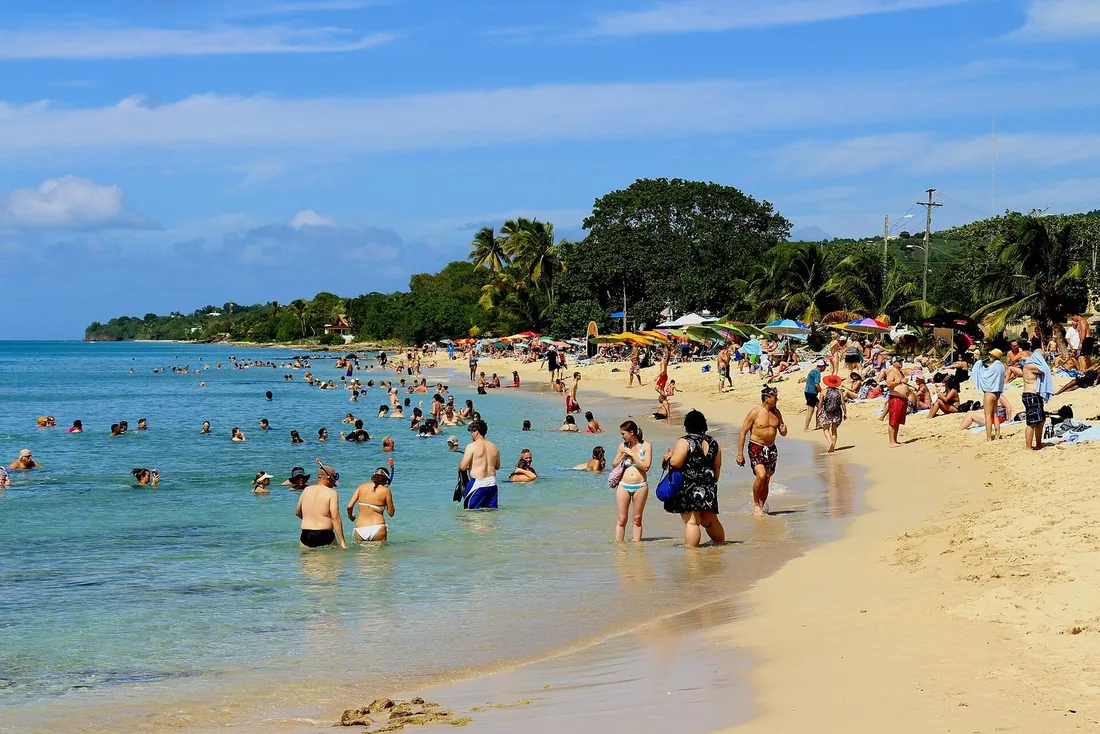
Punta Cana is tourism at its most industrial: a strip of coast the Dominican Republic purpose-built for all-inclusive volume, now the engine that makes the DR the Caribbean's most-visited country. The formula — cheap package, gated compound, buffet wristband, excursion menu — moves millions happily every year. It also defines everything a villa traveler is usually trying to avoid, seaweed seasons included. St. Croix is the counter-formula, and on true cost it is closer than the packages suggest.
The two, side by side
| St. Croix | Punta Cana | |
|---|---|---|
| Passport for U.S. citizens | Not needed | Required |
| U.S. State Department advisory | None — U.S. territory | Level 2: Exercise Increased Caution (crime) |
| Scale of tourism | Light — a quiet island | The Caribbean's most-visited country; Punta Cana is its engine |
| The model | Private villas on an open island | Gated all-inclusive compounds on a purpose-built strip |
| Leaving the resort | The whole island, any hour, your car | Excursions by arranged transport; guests rarely roam |
| Sargassum seaweed | Light, patchy arrivals in recent years | East-coast beaches among the hardest hit in bad seasons |
| Language and money | English, U.S. dollar | Spanish; peso, dollars accepted in the zone |
| Diving and snorkeling | Cane Bay Wall, Frederiksted Pier, Buck Island | Modest; pool-and-beach is the product |
| Nightlife | Boardwalk dinners, beach bars | Resort shows, Coco Bongo, swim-up bars |
| Coming home | Agriculture check; $1,600 duty-free | U.S. customs; $800 duty-free |
Advisory levels and details are as published by the U.S. Department of State and checked August 2026. They change — read the current advisory at travel.state.gov before any international trip.
The short answer
If the goal is maximum resort for minimum sticker — a bachelorette weekend, a group reunion where nobody cooks and nobody decides — Punta Cana's machine does that at a price no boutique island matches, and this page will not pretend otherwise. If the goal is the Caribbean itself — an island you roam, water you walk into, dinners you choose from a town rather than a buffet map — the machine is the wrong purchase at any price, and the quiet American island three hours from Miami is the right one. Our stake: the managed homes on St. Croix. The facts below are sourced.
What the machine is
Punta Cana was not a town that grew tourism; it is tourism that built a town. The airport is privately developed, the strip runs dozens of compounds deep, and the model is vertically complete: your wristband is your currency, your beach is the resort's roped frontage, your Dominican Republic is a curated excursion — Saona Island by catamaran, zip lines, a party bus — booked at the lobby desk and delivered by arranged transport. The State Department's Level 2 advisory (Exercise Increased Caution, citing crime) is part of why the walls work the way they do: the destination is engineered so that guests never need to leave the perimeter, and most never do.
None of that is a scandal; it is a product, honed brilliantly for its market. But call it what it is: a resort, not an island. The Dominican Republic — a huge, beautiful, complicated country of mountains, colonial Santo Domingo and real Dominican life — is mostly scenery behind the excursion-bus glass.
The seaweed season the brochures skip
Punta Cana's east-facing coast takes the Atlantic's sargassum arrivals head-on, and in the heavy years of the past decade its beaches have been among the region's hardest hit — resorts deploy barriers and tractor crews, and summer guests can find the postcard fronted by a brown windrow that smells like low tide. Arrivals vary by year and month; the pattern is well documented and worth checking against your dates for any east-coast DR booking.
St. Croix sits differently in the currents and has seen far lighter, patchier arrivals in recent years — and an island of a dozen beaches on different exposures always has clean sand somewhere: the north shore's Cane Bay, the west's Rainbow and Frederiksted, the protected Shoys (our Shoy's Beach House fronts it), Sandy Point's two refuge miles on winter weekends. No single-exposure strip, no tractor crews: the roster.
What the wristband buys
The package sticker is the model's genius and its sleight of hand. Add what the week actually invoices: airport transfers, the excursion menu (the only way to see anything), premium-restaurant surcharges above the buffet tier, top-shelf upcharges, spa pitches, photographers, and gratuities layered across all of it — then note that the base product is a buffet line shared with two thousand neighbors and a beach chair claimed at dawn. Per person per memorable day, the cheap week is rarely cheap.
St. Croix's ledger has no sleight: a direct-booked villa with pool and kitchen, supermarket provisioning at Plaza Extra, free beaches on every exposure, shore snorkeling and diving with no excursion desk, dinners chosen from a real town's menu at island prices, attractions in single digits, U.S. dollars with no exchange spread, and $1,600 duty-free home with five liters of Cruzan in the bag. For couples and families comparing true totals on matching dates, the boutique island lands closer to the package than anyone expects — and every dollar bought something you chose. The homes: here.
The water
Punta Cana's sea is a swimming amenity: a long open beach, roped swim zones, boat excursions to Saona's sandbars. Snorkeling and diving are modest add-ons over sand and patch reef. St. Croix's sea is the destination: the Cane Bay Wall falling toward abyssal depth a hundred yards off the sand, the Frederiksted Pier's famous macro and night dives — both walk-ins — Butler Bay's wrecks, and Buck Island Reef National Monument's marked snorkel trail inside a no-take federal reserve since 1961, reached by licensed sail from the Christiansted boardwalk. Add the year-round bioluminescent bay at night and the water alone out-programs the excursion desk. See snorkeling St. Croix.
Days that need no wristband
The compound's week is the pool, the beach, the buffet, the show, repeated. The open island's week: Christiansted's five-building National Historic Site and Danish arcades, Frederiksted's emancipation fort, Alexander Hamilton's boyhood streets, three distilleries, the west-end rainforest and Annaly tide pools, Robert Trent Jones Sr. golf, Point Udall's first American sunrise, and a different free beach every day — strung together by your own rental car on your own clock. See things to do and the 7-day itinerary.
Month by month on the strip and the island
Punta Cana's calendar is charter-flight arithmetic: high season tracks the North American winter with the compounds at capacity, spring break brings its notorious weeks (several resorts now market adults-only wings around them), summer swells with Latin American holidays and Dominican families, and the fall discounts deepest just as the sargassum season typically eases. The seaweed is the strip's real seasonal variable: spring-through-summer arrivals have buried the postcard in the bad years, and the resorts' barrier-and-tractor war runs all season. St. Croix's calendar carries no equivalent asterisk — lighter, patchier sargassum and beaches on every exposure — and its own texture: festival season December–January, AgriFest in February, the discounted green fall under standard Atlantic-season counsel that covers Hispaniola identically. Months in detail: when to visit.
The travel day, hour by hour
Punta Cana's arrival is the machine's front door: the thatched-roof terminal receives charter banks in waves, immigration and the tourist-card formality queue accordingly, and the transfer lot sorts thousands into resort buses for the 30-to-60-minute ride up the strip — efficient at scale, personal at no point. Check-in lines run resort-sized; wristbands by late afternoon. The return reverses it with the airport's own famous departure crowds and U.S. customs at the $800 allowance. St. Croix's day: three hours from Miami, a rental counter conversation, Plaza Extra, villa — no bus, no wristband, no line longer than the checkout's. The machine moves millions smoothly; the island moves you.
Seven days on each
The Punta Cana week, wristband edition: pool-and-beach rotations inside the property, the buffet's geography memorized by Tuesday, a Saona Island catamaran day (the good one — book it), the Hoyo Azul cenote or zip-line excursion, a premium-restaurant reservation cashed mid-week, the foam party or the show depending on the resort's demographic, and the beach vendors' gauntlet between swims. Comfortable, pre-paid, identical to ten thousand neighbors' weeks by design.
The St. Croix week: Buck Island's snorkel trail Monday; Cane Bay's wall and beach bar Tuesday; Christiansted's fort and arcades Wednesday; Point Udall, the Jack's and Isaac's hike and The Shoys Thursday; Frederiksted's emancipation fort, a pier snorkel and Rainbow's sunset Friday; the rainforest, Cruzan and the Domino Club Saturday; the bio bay glowing after dark. Nothing pre-paid, nothing gated, nothing identical to anyone's. Plans: the 7-day itinerary.
Getting around once you land
Punta Cana's transport system is the resort's nervous system, and it is designed so you never need your own: the strip has no walkable town at its heart (Bavaro's commercial plazas are drive-to islands in the traffic), taxis quote tourist tariffs negotiated at the lobby door, ride-hailing coverage is partial and politically contested with the taxi syndicates, and renting a car — while possible — means Dominican highway driving, aggressive local norms, and police checkpoints that travelers' forums teach each other to navigate. The result: nearly everyone rides the excursion bus or stays inside, which is the model working as intended. The country's real distances are serious, too — Santo Domingo is two and a half hours, Samaná's whales a day trip with a dawn start.
St. Croix hands you keys at the airport and a forty-minute island: left-side driving in ordinary American cars (a day-one novelty — see driving on the left), no checkpoints, no syndicates, no tariff negotiations, gas stations and supermarkets where you need them, and taxis available when the rum tour wins the evening — see taxis and getting around. The freedom to follow a whim — a second sunset at Rainbow, a 6 a.m. run to Point Udall — is the vacation's texture, and it is precisely what the compound model deletes.
Before you book either trip
For Punta Cana, the diligence list is real: read the current State Department DR page, not last year's; check a sargassum bulletin for your month (the university monitoring feeds publish free) before believing any beach photo; confirm whether your quoted rate is per person or per room — the all-inclusive industry prices per person and surprises couples; audit the resort's fine print for mandatory transfer bundles, resort-credit gimmicks and premium-restaurant caps; verify passport validity for every traveler; and price the excursions you actually want (Saona, Hoyo Azul) into the total, because the wristband covers none of them. Spring-break dates deserve a demographic check on your specific resort.
For St. Croix, the list is short: book the villa direct (the homes — no platform fees, a manager on-island), reserve the rental car for your dates (high season tightens supply — how that works), book Buck Island and the bio bay a few days ahead in peak weeks, and pack the snorkels. No advisory to monitor, no seaweed feed to refresh, no per-person asterisks. The packing list and first-timer tips cover the rest.
The case for St. Croix, point by point
Set the two weeks side by side and count. One: no passports — a family of five keeps five renewal fees and one expiration panic. Two: no advisory — the DR's Level 2 is mild as advisories go, but zero is zero. Three: no walls — the whole island is yours at any hour, not a compound with excursion windows. Four: real beaches on every exposure, free, with no vendor gauntlet working the towels. Five: sargassum odds that favor you instead of the tractor crews. Six: water with content — a wall dive, a pier full of seahorses, a snorkel-trail monument — not a roped swim zone. Seven: food chosen from a town's worth of kitchens instead of a buffet map, at island prices. Eight: rum made here since 1760, five liters of which fly home free under the $1,600 allowance. Nine: dollars, U.S. phones, no exchange spread, no foreign transaction fees. Ten: a villa with your name on the door instead of a wristband on your arm. The package sticker buys volume; these ten lines are what it costs.
Who should pick which
Pick Punta Cana if: the group is large, the sticker rules, and nobody wants a decision all week — the machine's true and worthy customer; a 60-room wedding block needs banquet infrastructure; golf at Corales headlines; or charter-fare math from your city is unbeatable and the compound is understood for what it is. Pick St. Croix if: the week should belong to the travelers rather than the operator; beaches should be vendor-free and gate-free; the water should include a wall and a snorkel-trail monument rather than a roped swim zone; sargassum roulette should not touch the postcard; or the same total — reckoned fully against the wristband's add-ons — should buy a private house on an open American island. The machine serves volume; the island serves you.
When Punta Cana is the right call
The big-group blowout where per-head sticker rules everything and nobody wants a decision all week: the machine exists for you and executes superbly. Wedding parties needing 60 rooms and a banquet team, spring groups chasing swim-up-bar energy, package hunters riding charter-fare deals — all correctly served there, eyes open, advisory read, sargassum season checked. Travelers who want the actual Dominican Republic should skip the strip entirely for Santo Domingo's colonial zone and the mountains — a different, better DR trip. And travelers who wanted an island rather than a compound were never the machine's customers at all.
A rainy day on each
A wet Punta Cana day is the compound at its most typical: the pool bar under an awning, the buffet's long lunch, the spa upsell, the show rehearsed for exactly this audience — the machine absorbing weather as programming. Santo Domingo's museums are two and a half hours away and stay there. St. Croix's rain runs a real circuit: Fort Christiansvaern's vaults, the Whim estate museum, the Apothecary Hall, Frederiksted's arts center, and the distillery trail that rain flatters. The rainy-day plan beats the third buffet pass.
If you choose Punta Cana anyway
Then game the machine. Book per-person pricing with the full headcount math done first; choose the resort by its demographic reviews, not its drone footage (the same strip holds foam-party towers and adults-only calm); and buy the premium-restaurant package only if you will actually book the tables, which sell out by Tuesday. Take the Saona catamaran — the one excursion that earns its price — and skip the rest unless a cenote or zip line calls. Check the sargassum bulletin the week before travel and ask the resort what its beach looked like last week. Tip in small bills throughout; the staff economy runs on it. And if the trip's real appetite is the Dominican Republic itself, book Santo Domingo's colonial zone instead — the country deserves better than its strip.
Where you would stay on St. Croix
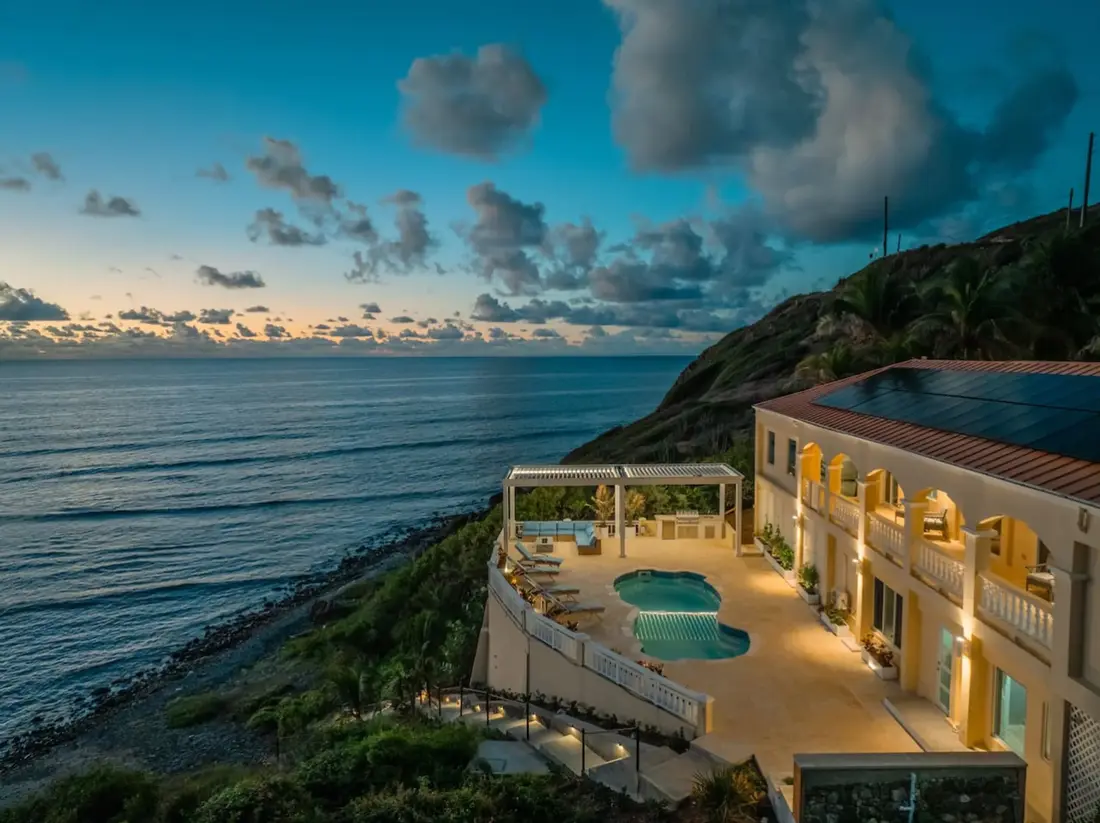
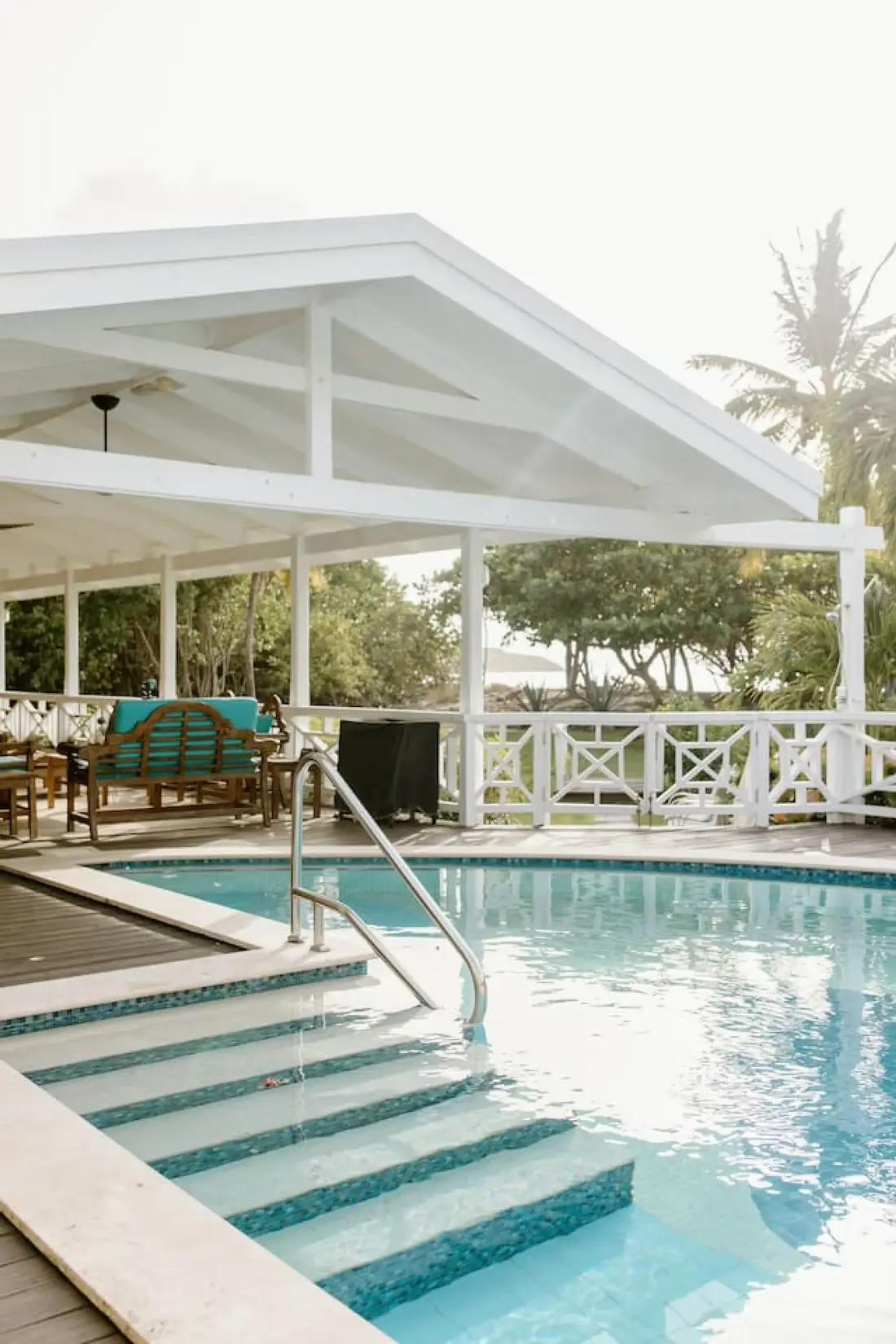
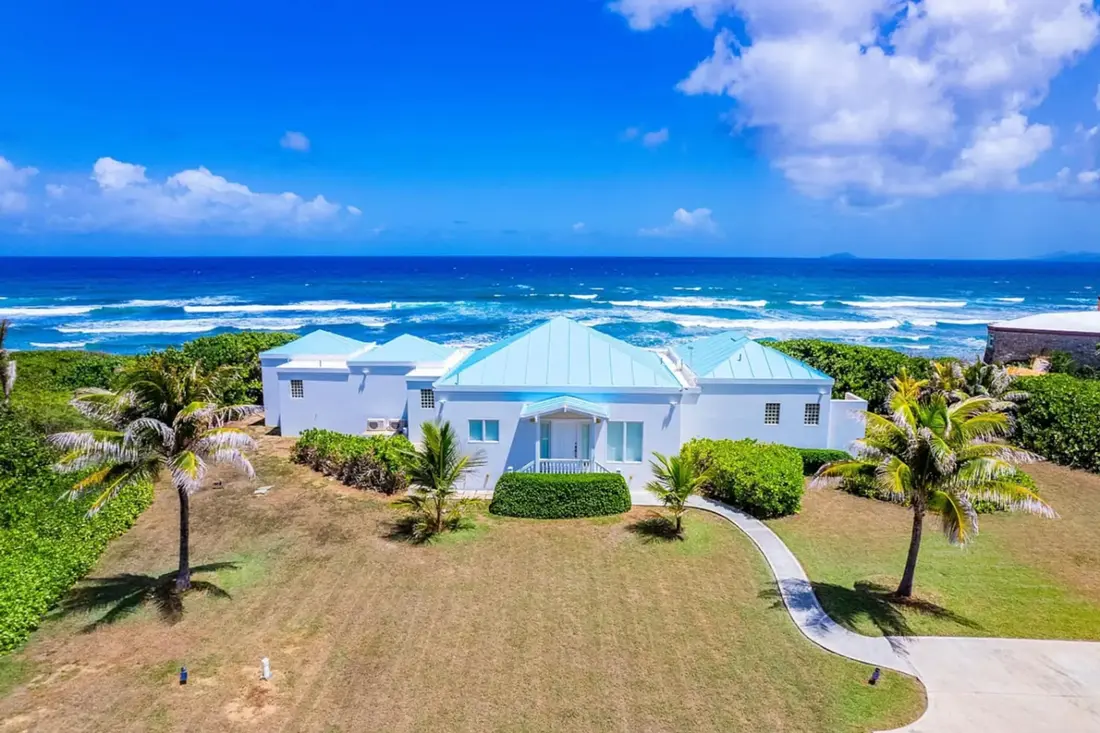
The unwristbanded alternative: our direct-booked homes with Sterling Point's on-island management. Shoy's Beach House on The Shoys' guarded sand; East End villas — The Cerulean among them — facing Buck Island from private pools; Christiansted condos near the boardwalk's dinner rows; west-end sunset stays. The house rate covers everyone under the roof — no per-person multiplication — and the kitchen turns one supermarket run into the week's meals on your clock. Couples: homes for two; groups to twelve: the family collection. The roster: the homes.
How this page was made
Series rules: the DR's Level 2 advisory per the State Department, checked August 2026 — current text at travel.state.gov; sargassum patterns per university monitoring bulletins and regional reporting; the all-inclusive model's per-person pricing and add-on economics per the industry's own public rate structures, stated as patterns rather than invented numbers; visitor volumes per Caribbean tourism statistics. The machine's genuine strengths — sticker value, group logistics, zero decisions — are conceded where due. Our bias: the homes we manage on St. Croix, disclosed throughout. Run both totals for your own dates; the page's argument is the arithmetic.
The bottom line
Punta Cana is the Caribbean concentrated into a gated product: astonishing volume, genuine sticker value, and a week whose walls, lines and seaweed windrows are all part of the purchase. St. Croix is the Caribbean left as a place: open roads, free beaches on every exposure, walk-in reef, real towns and a villa of your own — no passport, no advisory, no wristband. The machine is cheap; the island is worth it, and on true totals the gap is smaller than the brochure math pretends. The homes are here.
Elsewhere in this series
This page is one of twenty-six. If you are still shopping the map, the verdicts nearest this comparison run as follows — each links to the full page with its own sources:
St. Croix vs the British Virgin Islands — The BVI are the Caribbean's sailing capital — reached by passport, puddle jumper and ferry. St. Croix flies you straight in, no passport at all.
St. Croix vs Turks & Caicos — Turks and Caicos sells one famous beach at luxury-resort prices. St. Croix sells a whole island for less — no passport, no Level 2 advisory.
St. Croix vs Anguilla — Anguilla perfected the quiet expensive beach. St. Croix does the quiet beach without the relay flight, the passport or the markup.
The complete set, grouped by region and passport rules, lives at St. Croix vs other destinations.
Which home fits your group
If St. Croix wins your comparison, the homes are the easy part. Groups of eight to twelve settle into the family collection; couples take a home for two; anyone who wants sand at the door starts with beachfront. Every one is managed from the island by Sterling Point and booked direct — tell us the dates and the headcount and we will point you at the one that fits.
Two practical notes that surprise first-time villa bookers. Direct booking means the rate is the rate: no platform service fees, no resort fees, and the people answering questions are the same Sterling Point team that manages the houses on the island. And every home runs a full kitchen — one run to Plaza Extra or Seaside Market on the drive from the airport covers the week, which is where a villa quietly beats a resort bill before the first beach day. How the booking works, and what it does not mean, is spelled out at book direct.
Who wrote this
SP Vacations is the vacation-rental division of Sterling Point Real Estate, a licensed real-estate operation based on St. Croix in the U.S. Virgin Islands. The team lives and works on the island it writes about: the homes in the villa collection are inspected, cleaned and managed locally, and the person who answers a booking question is on St. Croix, not in a call center three time zones away. That is the vantage point behind every page in this series — and the reason the series exists at all, since most of the destinations compared here are places our guests weighed before choosing this island.
Two standing practices shape what you read. First, the pricing wall: nightly rates and availability for the homes live only on the booking pages, never in articles, so nothing here goes stale or oversells. Second, the sourcing rule: safety statements cite the U.S. State Department, customs figures cite CBP, park facts cite the National Park Service, and anything that changes — advisories, schedules, hours — carries its checked date and a pointer to the primary source. Where a rival destination wins a category, the page says so, because a comparison that concedes nothing persuades nobody. Questions, dates or a villa to match a group — the island team is here, or call 340-205-3929.
Questions people ask
Do I need anything besides a passport for the Dominican Republic?
An online e-ticket entry form now covers what the old paper tourist card did, filled before arrival and again before departure — one more pre-trip chore the package model quietly assumes. St. Croix requires none of it: a driver's license boards the flight home.
How far is the beach strip from the Punta Cana airport?
The Bavaro corridor runs 30 to 60 minutes north depending on your resort's position, by transfer bus or arranged car through resort-gate traffic. St. Croix's villas sit 10 to 40 minutes from its runway, self-driven, with a supermarket stop on the way.
Is the water calm in Punta Cana?
Often breezier and surfier than the postcard implies — the coast faces the open Atlantic, red-flag days happen, and resorts rope conservative swim zones; sheltered swimming often means the pool. St. Croix's protected shores — The Shoys, Chenay, the west coast — swim calm as a rule, not an exception.
What is Hoyo Azul?
A cenote-style sinkhole at Cap Cana sold as a zip-line-and-swim excursion day — pretty, engineered and ticketed like everything on the strip. St. Croix's blue-water counterparts are free or near it: the Annaly tide pools after a rainforest hike, and Buck Island's lagoon by licensed sail.
Are the resorts' beaches private?
Dominican law keeps beaches public, but resort frontages function as guarded amenities with vendors working the sand between them — the practical experience is roped. On St. Croix the public beaches are simply public: no ropes, no vendors, no towel-line wristband checks.
Is Punta Cana good for a honeymoon?
The adults-only compounds stage a comfortable, pre-decided romance at package prices — swim-up suite, dinner on the sand, photographer at sunset. A St. Croix honeymoon runs the private version: a beachfront house, a bio-bay paddle in the dark, sunset at Rainbow. See the honeymoon itinerary.
How early should I book Punta Cana?
Holiday and spring weeks sell out months ahead at the name resorts, and per-person pricing punishes late headcount changes. St. Croix's high season rewards early villa booking too, but the island itself never sells out — beaches, dives and dinners carry no wristband inventory.
Is Punta Cana safe?
The State Department holds the Dominican Republic at Level 2 — Exercise Increased Caution, citing violent crime — with resort zones policed and most package visits trouble-free inside the compound-and-excursion model. St. Croix, as U.S. territory, carries no advisory. Read the current text at travel.state.gov.
Is the all-inclusive price per person or per room?
Per person, almost always — the industry's quiet multiplier, which doubles a couple's mental math and quadruples a family's. Villa pricing is per night for the whole house; a direct-booked St. Croix home splits its rate across everyone under its roof.
Can I use Uber in Punta Cana?
Coverage is partial and contested — ride-hailing operates unevenly around the resort zones amid friction with taxi syndicates, and most guests default to lobby-quoted tourist tariffs or the excursion bus. On St. Croix there is no ride-share either, and no need: your rental car is in the driveway and taxis cover the rum-tour nights.
How far is Santo Domingo from Punta Cana?
About two and a half hours each way by highway — a long excursion day to see the hemisphere's oldest European city, usually by arranged tour. St. Croix's history — a 1493 Columbus landing, Danish forts, Hamilton's streets — sits ten to forty minutes from every villa.
When is sargassum season in Punta Cana?
Arrivals vary by year, typically heaviest spring through summer, and the DR's east coast has ranked among the harder-hit shores in bad years — resorts run barriers and beach tractors. Check recent conditions for your dates. St. Croix has seen lighter, patchier arrivals, and its multi-exposure coastline always has clean sand somewhere.
Is Punta Cana cheaper than St. Croix?
On base sticker, usually. On true totals — transfers, excursions, premium surcharges, upcharges and tips layered onto the wristband — the gap narrows sharply, and what the money buys diverges completely: a shared compound versus a private villa on an open island. Run both totals for your dates.
Can you leave the resort in Punta Cana?
You can, but the destination is engineered so guests rarely do: the strip is purpose-built, the country beyond arrives as arranged excursions, and the advisory context reinforces the pattern. On St. Croix the entire island is yours by rental car, day and night.
Do I need a passport for Punta Cana?
Yes, plus U.S. customs at the $800 allowance on return. St. Croix requires no passport for U.S. citizens and allows $1,600 per person home with CBP's five-liter rum rule.
Which has better snorkeling and diving?
St. Croix, by a category: walk-in dives at the Cane Bay Wall and Frederiksted Pier, wrecks at Butler Bay, and Buck Island's marked snorkel trail in a federal no-take monument. Punta Cana's underwater offering is a modest excursion add-on over sand and patch reef.
When is sargassum season on the DR's east coast?
Typically spring through summer, varying sharply by year — the bad seasons have buried the strip's postcard and set the barrier-and-tractor war running daily. Fall usually eases it, which is also when discounts deepen. St. Croix's arrivals run lighter and patchier, with beaches on every exposure.
What are Punta Cana's airport lines like?
Charter-bank waves queue the thatched terminal's immigration and tourist-card formalities on arrival, and the departure crowds are their own tradition; transfer buses then sort thousands up the strip. St. Croix's arrival is a domestic gate and a rental counter.
Is spring break a factor in Punta Cana?
Famously — several weeks each spring bring the party-charter demographic at scale, and resorts increasingly market adults-only wings around it. St. Croix has no spring-break wave at all; March is simply high season's quiet tail.
What if I want the real Dominican Republic?
Skip the strip: colonial Santo Domingo — the hemisphere's oldest European city — and the Cordillera's mountain towns are a rewarding, different trip. That fuller version of the DR competes with St. Croix on culture, not on beach ease; the gated strip competes with neither.
In this comparison
St. Croix at a glance
- U.S. territory — no passport for U.S. citizens
- Nonstops from Miami, Fort Lauderdale, Charlotte, Atlanta, Newark and Chicago
- U.S. dollars, U.S. phone plans, no foreign customs
- $1,600 duty-free allowance home (double the standard $800)
- 84 square miles — the largest U.S. Virgin Island
More comparisons
- St. Croix vs St. Thomas
- St. Croix vs St. John
- St. Croix vs Puerto Rico
- St. Croix vs Vieques & Culebra
- St. Croix vs the Florida Keys
- St. Croix vs Hawaii
- St. Croix vs the British Virgin Islands
- St. Croix vs Turks & Caicos
- St. Croix vs Anguilla
- St. Croix vs St. Barts
- St. Croix vs St. Martin
- St. Croix vs Antigua
- St. Croix vs St. Kitts & Nevis
- St. Croix vs St. Lucia
Sources
DR visitor volumes per Caribbean tourism statistics as widely reported; advisory per the State Department's Dominican Republic page (Level 2, June 2025 issue, verify current); sargassum patterns per multi-year regional reporting and university sargassum bulletins. St. Croix facts from NPS, CBP and our sourced island reference. Flights verified August 2026.
St. Croix vs Punta Cana
Punta Cana is vacation at industrial scale: cheap, gated and crowded. St. Croix is the boutique alternative that costs less than you think.