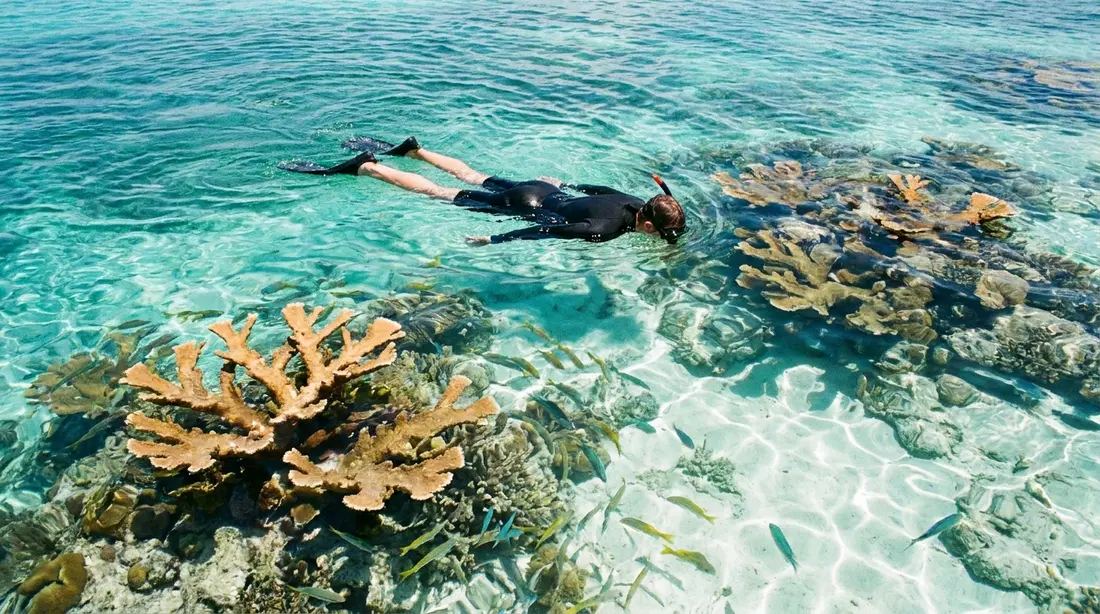
Snorkeling St. Croix
Shore entries, boat trips, and the one national monument you snorkel through: how to plan snorkeling on St. Croix by skill and season.
St. Croix concentrates four different kinds of snorkeling on one 22-mile island: a national monument you swim through, a famous wall you can reach from the sand, a pier that works like a vertical reef, and sheltered bays where turtles graze in waist-deep seagrass. This page is the full spot-by-spot reference — entries, depths, what lives where, and the rules that apply.
The four kinds of snorkeling on St. Croix
Most Caribbean islands offer one kind of snorkeling: a fringing reef a short swim off the beach. St. Croix has that, and three other habitats that behave nothing like it, which is why a week here can hold four completely different mornings in the water.
First, the monument. Buck Island Reef National Monument, 1.5 miles off the northeast coast, protects an elkhorn coral barrier reef that the National Park Service describes as unique within U.S. waters and one of the most pristine barrier reef systems in the Caribbean. Inside its lagoon runs a marked underwater snorkel trail, one of a mere three such trails anywhere in the United States. No other snorkel on the island, and few anywhere, come with that kind of federal paperwork.
Second, the wall. The island's north shore drops off a submarine cliff that runs for miles, and at Cane Bay the top of that drop sits close enough to shore that a strong swimmer can visit it with a mask and fins. The reef inside the drop is a conventional, excellent shore snorkel; the lip itself is open blue water over a bottom that falls thousands of feet.
Third, the pier. The Frederiksted Pier is an artificial reef built vertically: pilings crusted in sponge and coral, standing in the calmest water on the island. It concentrates small, slow, strange animals — seahorses, frogfish, octopus — that open reef scatters.
Fourth, the seagrass bays. The sheltered coves of the East End and the beaches near Christiansted hold seagrass meadows and patch reef in shallow, protected water. Seagrass is where green turtles feed, which makes these easy bays, and the calmest swimmers in your group, the most reliable turtle-watchers on the island.
Every spot below fits one of those four types. For a shorter ranked list built around beaches, see the best snorkeling beaches; for the skills side — reading wind, timing mornings, gear — our journal post on snorkeling St. Croix well covers what this reference page does not.
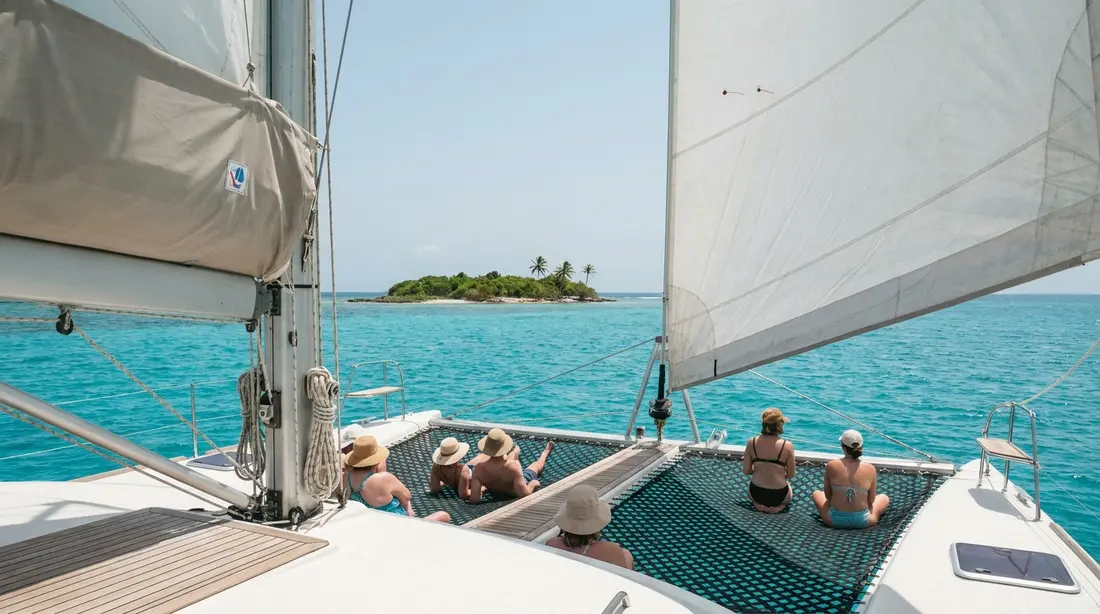
Buck Island and the underwater trail
Buck Island Reef National Monument is the island's signature snorkel and the one that requires a boat. President Kennedy protected it in December 1961; a 2001 expansion brought it to 19,015 acres — a 176-acre island inside 18,839 acres of protected sea — and every acre of the monument operates as a no-take marine reserve. Fishing and collecting are prohibited everywhere inside it, down to a single shell, which is why the reef fish here are notably large and notably unbothered by swimmers.
The centerpiece is the marked underwater trail through the elkhorn coral gardens of the east lagoon. The route threads coral grottoes that reach about 12 feet at their deepest, with markers along the way identifying what you are swimming over. Crews guide small groups — the Park Service describes guides taking about six visitors at a time — and beginners get a short lesson from the boat before anyone gets wet. Expect elkhorn and brain corals, parrotfish, blue tang, sergeant majors, and often a turtle working the lagoon.
Access runs through a short list of NPS-authorized concessionaires — five at last check: Big Beard's Adventure Tours and Caribbean Sea Adventures downtown, plus Jolly Roger Charters, Llewellyn's Charters, and the Teroro II with Dragonfly — or by arranging a private-vessel permit through the park. Most trips leave from the Christiansted boardwalk, with the Teroro II and Dragonfly departing from the East End near Green Cay Marina; the crossing takes anywhere from 40 minutes to an hour and a half by boat. A half-day trip couples the trail with a stop at Turtle Beach on the island's western tip; the full-day version stretches the beach stay and adds lunch. Our boat tour guide compares the operators in detail.
Reference points worth knowing: the monument is day-use, closed from sunset to sunrise; anchoring is allowed only in the designated area off West Beach and only with a permit; and hawksbill, green and leatherback turtles all nest on the island, with brown pelicans and least terns nesting above the sand. The Park Service asks snorkelers to stay in front of moored boats and to swim with a buddy on the trail.
Cane Bay
Cane Bay is the headline shore snorkel and the island's best-known beach for getting into real reef without a boat. The bay sits on Route 80 about halfway along the north shore between Christiansted and the island's west side, with parking along the road and two dive shops within walking distance.
Entry: from the sand, over the clear lane of bottom near the boat ramp; the rocky shallows either side hold urchins. Depth: the inner reef starts shallow, close to shore; the lip of the Cane Bay Wall lies some 600 feet from shore, where the bottom tips over from about 40 feet toward the Puerto Rico Trench, which bottoms out beyond 13,000 feet. What you see: parrotfish, turtles, and stands of staghorn and elkhorn coral over the inner reef; on the drop itself, divers regularly report reef sharks, turtles and rays. Skill: the inner reef suits any competent swimmer on a calm morning; the swim to the wall lip is for strong, confident ocean swimmers only, ideally with fins and a float, and most visitors see the wall with one of the dive operations instead.
Conditions and season: this is the exposed north shore. Mornings are usually calm; trade-wind chop builds after lunch, and winter can add long-period north swell that surges over the shallow reef even on windless days. Summer and fall bring the flattest, clearest water. When Cane Bay is rough, the west coast almost never is — that is the standing trade on this island.
Frederiksted Pier
The pier at Frederiksted is the strangest snorkel on St. Croix and, for many repeat visitors, the favorite. The pilings function as a vertical reef in otherwise open sand, and the west coast sits in the lee of the whole island, so the water here stays flat when everywhere else is blown out.
Entry: from the town beach beside the pier, over sand, in water that is usually pool-calm — the easiest entry on the island. Depth: the structure runs from shallow water near shore to around 90 feet off the deep end; snorkelers work the shallower inshore pilings and the rocky patches at the pier's foot, while divers cover the 25-to-90-foot range at depth. What you see: seahorses, frogfish and octopus among the sponge-covered pilings, plus blue tang, butterflyfish, angelfish, flounder and clouds of juvenile reef fish around the rocks. This is slow snorkeling — pick a piling, hold still, and let it produce. After dark the pier becomes the island's most famous night dive.
The rule that governs it: while a cruise ship sits at berth, no one may swim around the pier. The port schedule is public, ship-free days are common, and the dive shops in town can confirm the day's status. Skill: beginner-friendly in terms of water, with one caveat — it is a longer swim than it looks if you head up the pier, so pace yourself. The pier guide covers the dive side, and the surrounding town beach adds sea glass and sunsets to the trip west.
Rainbow Beach and Dorsch Beach
The west end's sand beaches carry the same calm water as the pier with easier logistics, and they are where we point first-timers who want to learn a mask before attempting the north shore.
Rainbow Beach, a few minutes north of Frederiksted, has modest patch reef with tropical fish in flat, shallow water, plus the only snorkel-gear rental operation that works right on the sand: West End Water Sports rents masks, fins, kayaks, paddleboards and beach chairs by the hour or day. The snorkeling is gentle rather than dramatic — a practice reef, in effect — and the Rhythms beach bar makes the after-swim easy. Dorsch Beach, just south of Frederiksted, is calmer still: mostly clean sand bottom with scattered fish, better suited to a long easy swim than to reef-spotting, and quiet on weekdays.
Skill: both are beginner water. Conditions: the west coast is the island's reliable lee; when wind wrecks the other coasts, these beaches and the pier are usually still workable. Both face west, so the day ends with the sun going down over your swim.
The Shoys and Chenay Bay
The sheltered bays east of Christiansted are the island's turtle-and-stingray water: shallow, protected, seagrass-floored, and forgiving enough for children and nervous swimmers.
The Shoys is a calm crescent behind the Estate Shoys guard gate beside The Buccaneer; give your name at the gate, since public beach access applies under Virgin Islands law. The seagrass near shore draws green turtles, and the small reef at the crescent's east end holds stingrays, eels, conch and tropical fish. Entry: plain sand walk-in. Depth: shallow off the sand, deepening gradually toward the reef. Skill: beginner, with the reef end best on a flat, clear morning. There are no rentals and no facilities, so bring everything, including your own mask and fins.
Chenay Bay, on the East End, is the family pick: a bay protected by its shape and by reef offshore, with seagrass and patch reef in water that stays shallow a long way out. Green turtles graze the meadow and southern stingrays work the sand patches, and both turn up with almost no effort from the swimmer. Entry: walk-in sand. Skill: the easiest genuine wildlife snorkel on the island — small children can wade here. Mornings before the trade winds fill in give the clearest water for both bays.
Jack's and Isaac's Bays
The far East End keeps its two best snorkel beaches behind a walk. Jack's Bay and Isaac's Bay sit inside a 301-acre Nature Conservancy preserve held since 1999, reached by the cactus-lined trail from the parking area just before Point Udall — roughly fifteen to twenty minutes each way, fully exposed to the sun.
Entry: sand broken up by rock and rubble along the waterline; wear reef shoes and pick a clean lane from the beach before you get in. Isaac's is the first bay the trail reaches and the easier of the two, with less rock in the water; Jack's lies over a low rise beyond it and stays emptier. Depth: the reef sits close in, in comfortable snorkel range. What you see: sea fans, elkhorn and brain coral, and schools of reef fish — the preserve's reefs shelter hundreds of fish species, from parrotfish and blue tangs to four-eyed butterflyfish — plus green turtles drifting over the seagrass, particularly at Isaac's. Both bays hold the largest green and hawksbill nesting populations on St. Croix, so in summer and early fall give any tracks or marked nests in the sand a wide berth.
Skill and conditions: calm days only. This is the exposed eastern tip; on a windy day the bays are surf, and there is no lifeguard, no shade and no water out there. Carry in everything and carry out everything. The reward, most days, is a reef with nobody else on it.
Davis Bay and Salt River
Two more north shore entries round out the catalog. Davis Bay, by the Carambola resort, carries two distinct reefs: a shallow inner reef that suits beginners on calm mornings and a deeper outer reef for confident swimmers. It shares Cane Bay's exposure, so the same seasonal logic applies — calm summers, watch the winter swell.
At Salt River, Columbus Landing Beach inside Salt River Bay National Historical Park offers modest snorkeling along the edges of the calm, shallow bay on a settled day, with the unusual bonus of swimming where Columbus's crew came ashore in 1493. The bay mouth is an estuary with mangroves and seagrass rather than a coral garden, so treat it as an easy family swim with fish rather than a destination reef. The famous underwater terrain here — the east and west walls of the submarine canyon — is dive territory, covered in our scuba guide.
Every spot at a glance
| Spot | Entry | Snorkel depth | Most likely sightings | Skill |
|---|---|---|---|---|
| Buck Island underwater trail | Boat, guided | Lagoon grottoes to about 12 ft | Elkhorn coral, big reef fish, turtles | Any comfortable swimmer |
| Cane Bay | Sand, near the boat ramp | Shallow reef; wall top from about 40 ft | Parrotfish, turtles, staghorn and elkhorn | Intermediate; wall for strong swimmers |
| Frederiksted Pier | Town beach beside the pier | Shallow inshore; structure to about 90 ft | Seahorses, octopus, frogfish, juveniles | Beginner-plus, ship-free days only |
| Rainbow Beach | Walk-in sand | Shallow | Patch-reef tropicals | Beginner; rentals on the sand |
| Dorsch Beach | Walk-in sand | Shallow, mostly sand bottom | Scattered fish | Beginner |
| The Shoys | Walk-in via Estate Shoys gate | Shallow, reef at the east end | Green turtles, stingrays, eels, conch | Beginner |
| Chenay Bay | Walk-in sand | Shallow seagrass and patch reef | Green turtles, southern stingrays | Beginner; easiest with children |
| Jack's and Isaac's Bays | Hike in; rocky waterline patches | Close-in reef | Sea fans, brain coral, turtles | Confident; calm days only |
| Davis Bay | Walk-in sand | Shallow inner reef, deeper outer | Reef fish on two reefs | Beginner inner, confident outer |
| Columbus Landing (Salt River) | Walk-in park beach | Shallow bay edges | Bay fish over sand and grass | Beginner, calm days |
Conditions by coast and season
The island runs east to west, the trades hold out of the east for nearly the entire year, and that single arrangement sets each coast's character. The East End takes the wind first and is roughest on an average day, which is why Jack's and Isaac's are calm-day spots. The north shore lies across the path of the trades, picking up afternoon chop plus, in winter, long-period swell from Atlantic storms — the variable that governs Cane Bay and Davis Bay. The west coast sits in the lee of the entire island, and the pier, Rainbow and Dorsch stay workable on days when everything else is white-capped. The sheltered eastern bays sit in a category of their own: protected by shape and reef, they stay usable in most weather.
Season matters less than visitors expect. The water is warm and swimmable year-round. Mid-December to mid-March brings the Christmas Winds, the breeziest stretch of the year, so winter snorkeling leans on early mornings, the west coast and the sheltered bays. April and May ease off. June through August typically runs flat and clear on every coast, and September through November — the statistical heart of hurricane season, June 1 to November 30 — is the quietest stretch, with the flattest water of the year between weather systems. In every month, mornings beat afternoons, because the trades build through the day.
Marine life reference
The animals below are the ones snorkelers actually encounter here, with where and why. Sightings are never certain; habitat is.
Green turtles are grazers — NOAA lists their diet as mainly seagrasses and algae — so they concentrate over the meadows at Chenay Bay, The Shoys and Isaac's Bay, heads down, surfacing every few minutes. They nest on Buck Island and the East End bays. Hawksbills feed almost exclusively on reef sponges, which puts them on the coral itself at Buck Island, Cane Bay and the Jack and Isaac reefs, nosing into crevices. Leatherbacks, the largest sea turtles on earth, nest at Sandy Point roughly March into July but feed in open ocean, so snorkelers essentially never see one over a reef.
Southern stingrays rest under a dusting of sand and feed over grass and sand flats — Chenay, The Shoys and the sand channels between reef patches are the places to look for the diamond outline. Spotted eagle rays are reported along the reef edges and drop-offs, passing in open water; any sighting is a good day. Divers working the wall off Cane Bay occasionally report a reef shark, and after dark the Frederiksted Pier draws tarpon, by many accounts, though both belong more to divers than snorkelers.
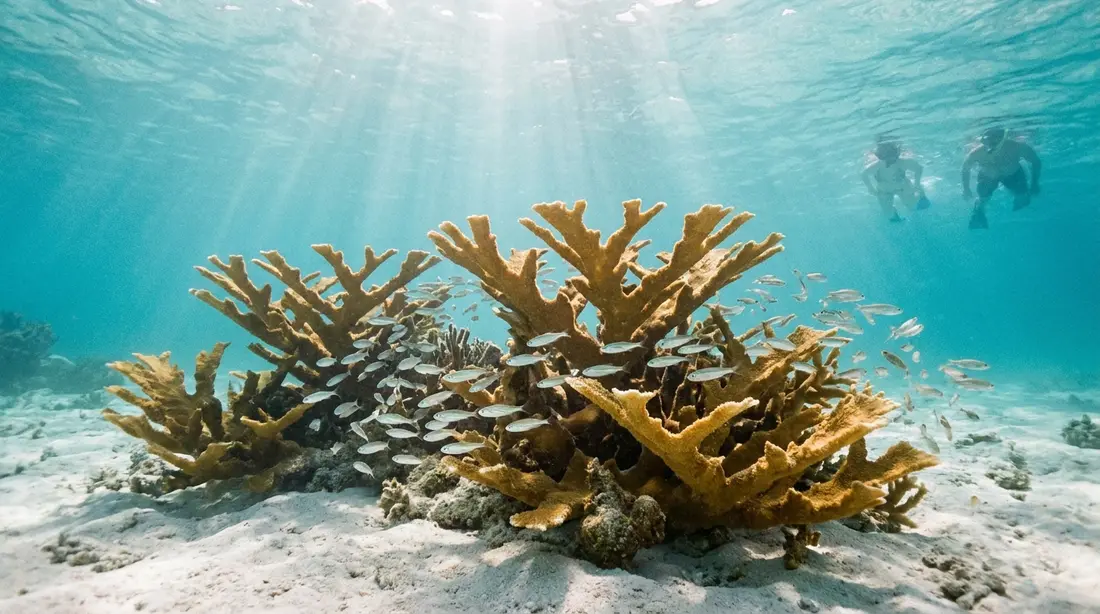
Elkhorn coral is the reason Buck Island is federal property. It is the classic Caribbean reef-builder — with staghorn and star corals it built the region's reefs over the last 5,000 years — and it grows in exactly snorkel depth, about 1 to 15 feet, in golden-tan branches up to 15 inches across. Disease cut the Caribbean population by roughly 97 percent beginning in the 1980s, and the species is listed as threatened under the Endangered Species Act, which makes the intact stands in Buck Island's lagoon, and the patches at Cane Bay and the East End reefs, rare things to swim over. That rarity is the practical argument for every no-touch rule on this page.
The supporting cast is constant across the island's reefs: parrotfish, blue tang, sergeant majors, trumpetfish, butterflyfish and angelfish over coral; conch, flounder and garden eels over sand and grass; and the pier's specialty acts — seahorses, frogfish, octopus and squid — on the pilings.
| Animal | Where you find it | Notes |
|---|---|---|
| Green turtle | Seagrass: Chenay, The Shoys, Isaac's Bay | Grazes seagrass and algae; ESA-listed |
| Hawksbill turtle | Reef: Buck Island, Cane Bay, East End reefs | Eats sponges; endangered |
| Southern stingray | Sand and grass flats, sheltered bays | Rests buried; shuffle feet on entry |
| Spotted eagle ray | Reef edges, open water | Passing sightings, reported island-wide |
| Elkhorn coral | Buck Island lagoon, shallow reef crests | ESA-threatened; grows at 1–15 ft |
| Seahorses, frogfish, octopus | Frederiksted Pier pilings | Slow searching finds them; go piling by piling |
Rules that apply in the water
Three sets of rules cover snorkelers here, and all three are enforced realities rather than suggestions.
Monument rules at Buck Island. The entire monument is no-take: fishing and collecting are prohibited throughout, and nothing leaves the water or the beach — no shell, no coral fragment, no rock. The monument is closed from sunset to sunrise, private vessels need a permit, and anchoring is confined to the designated area off West Beach. Around the rest of the island, leave shells and coral where they lie as well; taking coral is prohibited, and the working rule for everything else is that the souvenir is the photograph.
Sunscreen rules. Sunscreens made with oxybenzone, octinoxate or octocrylene — the three O's — are banned across the U.S. Virgin Islands, a ban covering sale and possession that has stood in full effect since March 30, 2020. Compliance is simple: pick a mineral formula whose actives are zinc oxide or titanium dioxide, and read the ingredient panel rather than the marketing, because octocrylene still turns up in products labeled reef-friendly. Compliant sunscreen is sold across the island. A rash guard covers more skin more reliably than any lotion and cuts how much you need.
Conduct around reef and animals. Float horizontal, keep fins off the bottom, and never stand on or touch coral — the living tissue is the surface layer, exactly what a hand or fin strikes, and fire coral defends itself. Give turtles room and stay off the path between a turtle and the surface; it has to come up to breathe. Give resting rays space and shuffle your feet on sandy entries. At the Frederiksted Pier, stay out of the water entirely whenever a cruise ship is berthed. And keep a bright float with you anywhere boats operate, especially near the Christiansted boardwalk and channel edges.
Operators, guides and gear rental
Snorkeling St. Croix mostly needs no operator at all — that is the island's advantage — but three kinds of businesses earn their place in the plan.
Buck Island concessionaires. The monument is reachable only with the short list of NPS-authorized operators (five at last check, named above) or a private permit. Book ahead between mid-December and April and around holidays; the fleet is capped, and boats fill. Gear is included on these trips.
Dive shops that guide snorkelers. The island's dive operations also rent snorkel sets and will point you at the day's best water, which is worth more than the rental fee. Cane Bay Dive Shop and Sweet Bottom Dive Center sit within reach of the Cane Bay Wall and run guided trips over it; in Frederiksted, Nep2une Scuba — the shop longtime visitors knew as N2theBlue — works the pier daily. The full shop list, sites and wrecks live in the scuba diving guide linked above; if your group splits between snorkelers and divers, Cane Bay and the pier serve both from the same entry.
Beach rentals. West End Water Sports rents snorkel gear, kayaks and paddleboards directly on the sand at Rainbow Beach, the one true walk-up rental on the island. Everywhere else, plan gear before you drive: The Shoys, Chenay, Jack's and Isaac's, and Davis Bay have no rentals and no facilities. If one item flies with you, make it a mask that fits your own face.
Questions guests ask
Where are you most likely to see turtles while snorkeling?
Over seagrass, on calm mornings. Green turtles feed on seagrass and algae, so the meadows at Chenay Bay, The Shoys and Isaac's Bay are the highest-percentage water on the island — swim the border where grass meets reef and check both sides. Hawksbills feed on reef sponges, so Buck Island's lagoon and the Cane Bay reef produce them too. No spot promises a sighting on a given day, but a quiet swimmer over healthy seagrass on St. Croix sees turtles more mornings than not.
How deep is the Buck Island underwater trail?
Shallow. The marked route runs through coral grottoes that reach about 12 feet at their deepest, per the National Park Service, and much of the swim is shallower than that inside the protected lagoon. You never need to dive down; the trail is designed to be read from the surface, with markers identifying the coral and fish below. That depth, plus the guided format and calm water inside the barrier reef, is why the trail suits almost any comfortable swimmer, including kids who can handle a mask.
Can you swim or paddle to Buck Island on your own?
No. The monument sits about 1.5 miles offshore across open, boat-trafficked water, and access is regulated: visitors arrive with an NPS-authorized concessionaire or aboard a private vessel holding a park permit, and anchoring is restricted to the designated area off West Beach. There is no legal freelance drop-off and no swim-from-shore option. Book one of the authorized boats from the Christiansted boardwalk or the East End, and plan on a crossing of 40 to 90 minutes each way.
Which spots work for young children?
Chenay Bay first: shallow, protected, walk-in, with turtles and rays over the grass and water calm enough to wade a long way out. The Shoys is nearly as gentle, with the bonus reef at its east end for stronger swimmers in the family. Rainbow Beach adds on-the-sand gear rental, which solves the equipment problem for a family that packed light. The guided Buck Island trip works for kids who already swim comfortably, since crews carry flotation and keep the groups small.
Is snorkeling on St. Croix free?
The shore spots are. Beaches in the U.S. Virgin Islands are public, entry to every walk-in spot on this page is free at last check, and even The Shoys — reached through a residential guard gate — is open to beachgoers under Virgin Islands law. What costs money: the Buck Island trip, which runs through authorized tour operators; gear rental if you need it; and parking is free at these beaches. The Jack and Isaac Bay preserve charges nothing; you pay in sweat on the trail.
What happened to N2theBlue in Frederiksted?
It operates under a new name: Nep2une Scuba Diving. Same west-end territory, working the Frederiksted Pier and the nearby reefs and wrecks, with the small-group format the shop was known for — six divers per boat at last check, plus nitrox and air fills. Visitors coming back after a few years away sometimes conclude the shop closed; it did not. For pier conditions, cruise-ship status on the day, or a guided snorkel of the pilings, it remains the closest desk to ask.
Do cruise ships change the snorkeling day?
On the west end, yes. When a ship is berthed at Frederiksted, the pier stays closed to swimmers for the duration, and Rainbow Beach and the town beach run at their busiest. The port schedule is public, so the fix is planning: put the pier snorkel on a ship-free morning and use ship days for the East End bays or Cane Bay. The rest of the island's snorkeling is unaffected; the ships touch one pier on one coast.
Villas near the water
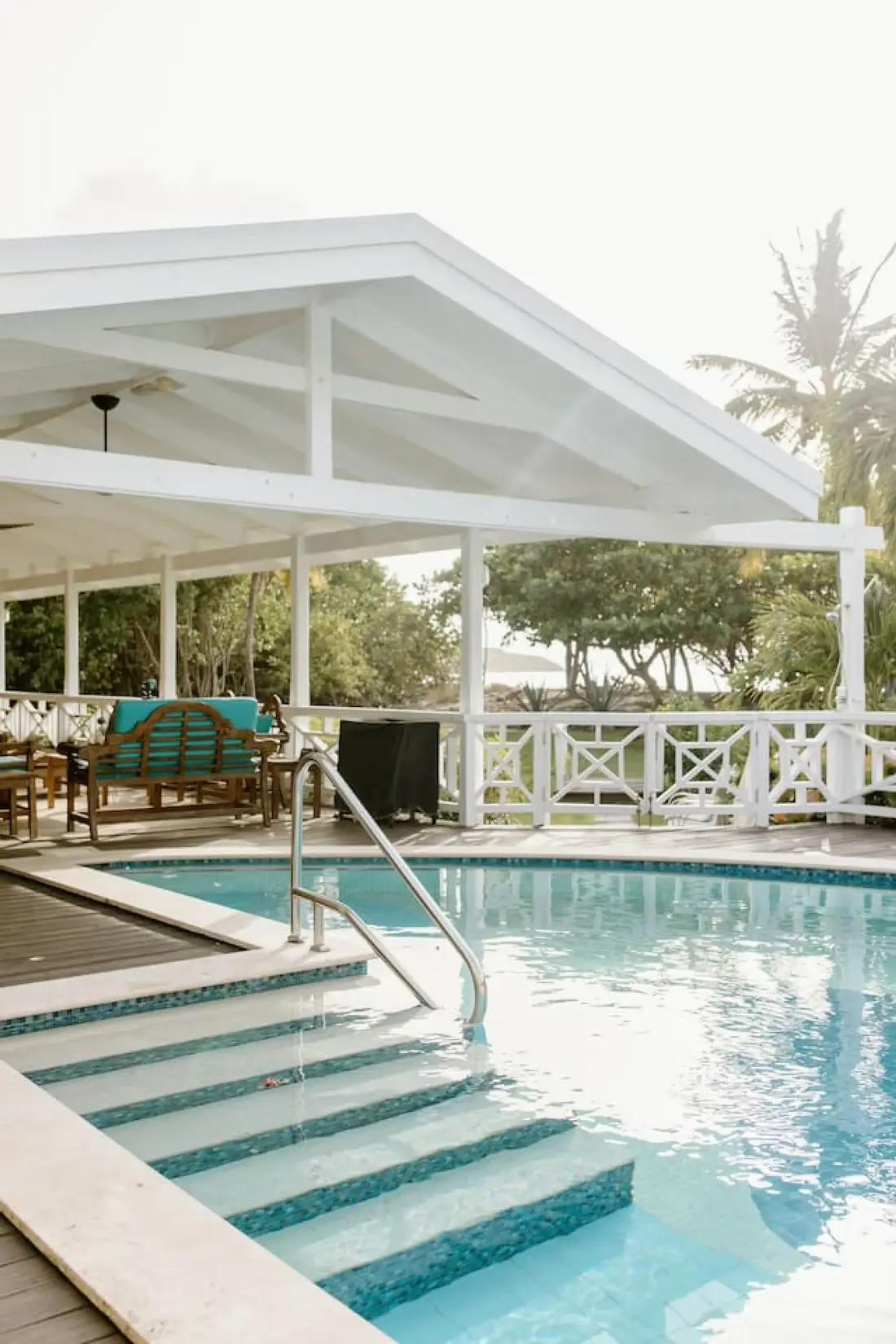
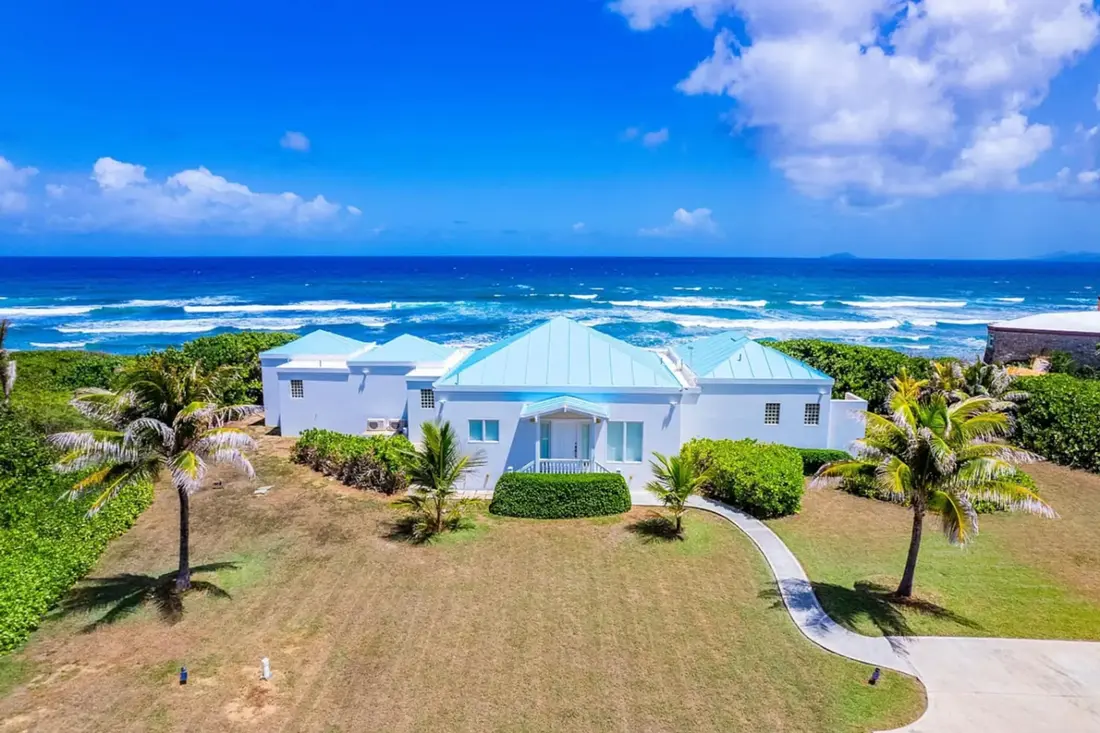
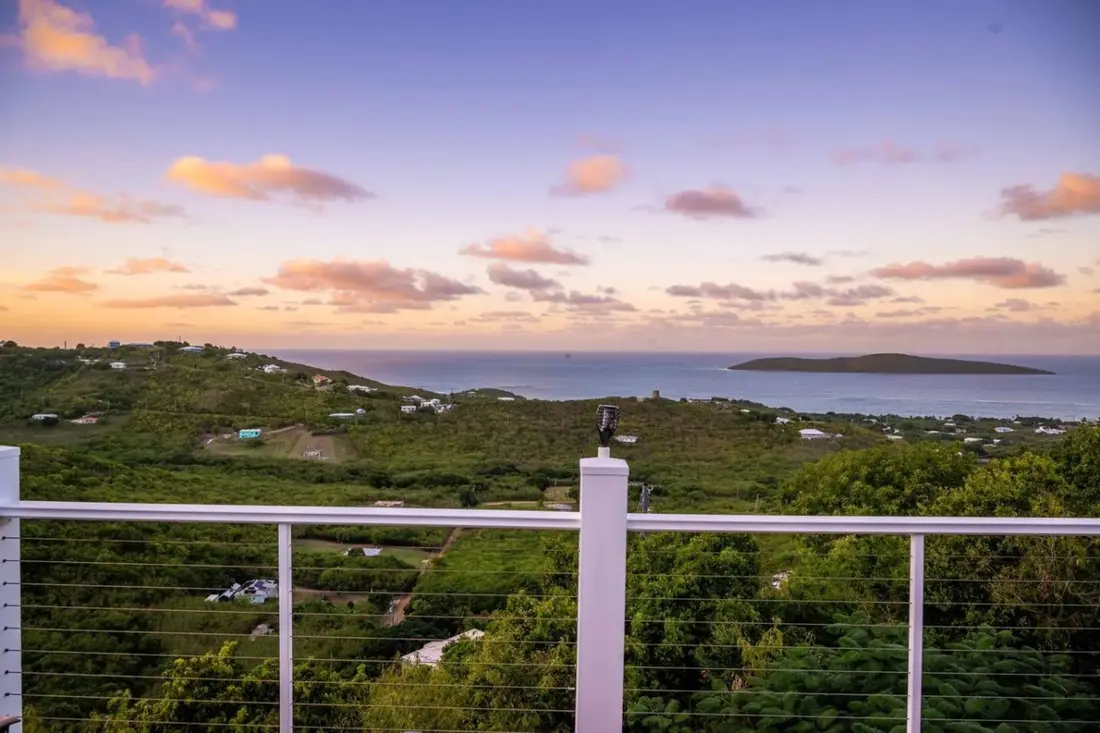
Every home we manage puts some part of this page within an easy morning. Shoy's Beach House sits directly on The Shoys, with the seagrass and the east-end reef a walk from the door. On the East End, The Cerulean looks straight at Buck Island across its own restored sand, and from the terrace at The Buck Island Overlook the monument stays in sight, a daily reminder to book the boat early in the week. From our beachfront homes and East End villas, Chenay Bay, the boardwalk departures in Christiansted and the north shore all sit within a short drive, and the west-end spots are never more than about 40 minutes from anywhere on the island.
Sources
Written from official and first-party sources, checked August 2026. Hours, prices and event dates change — confirm before you go.
In this guide
Stay nearby
Private oceanfront on the East End with a sandy, swimmable beach, pool, outdoor kitchen and a separate guest cottage. Sleeps twelve.
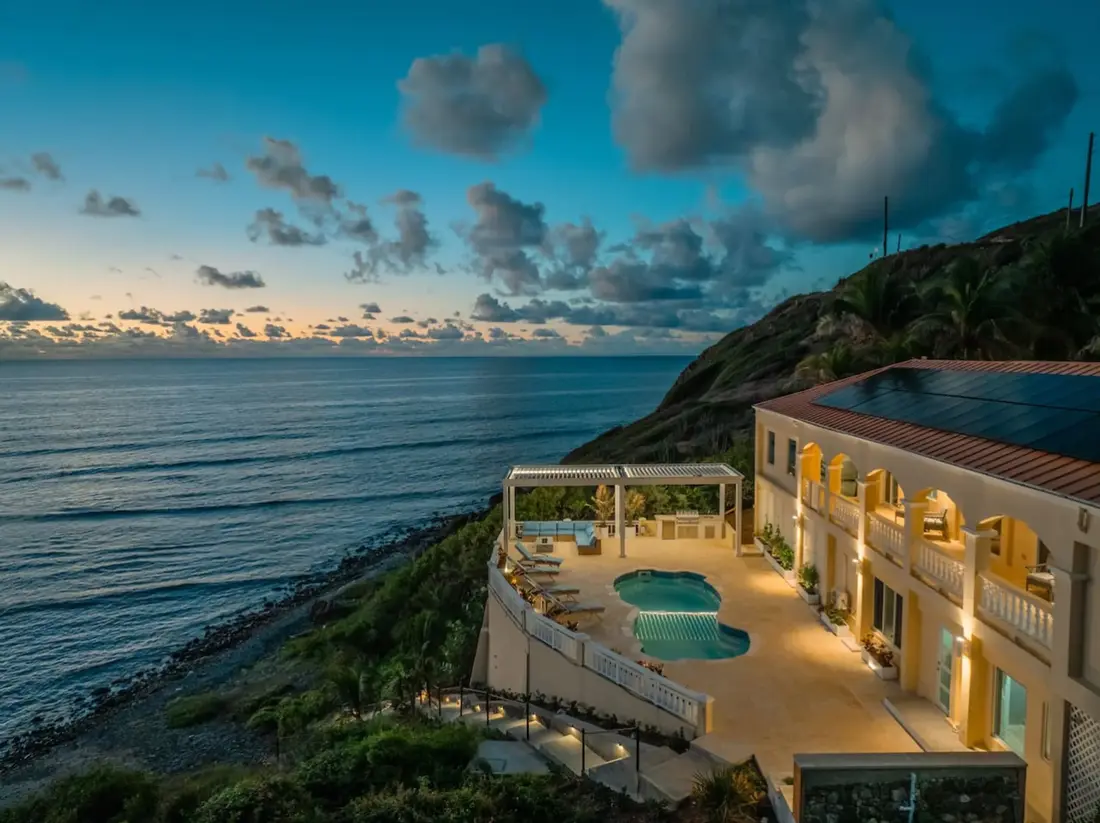 The Cerulean5 bd · 5 ba · sleeps 12 · Christiansted
More in On the Water
Sources
12 references, listed in full at the end of this guide — official park, refuge, tourism-board and business sources, checked August 2026.