Frederiksted Beach
The easiest beach from town: calm west-coast water, sea glass hunting, and front-row sunsets. Livelier when a cruise ship is on the pier.
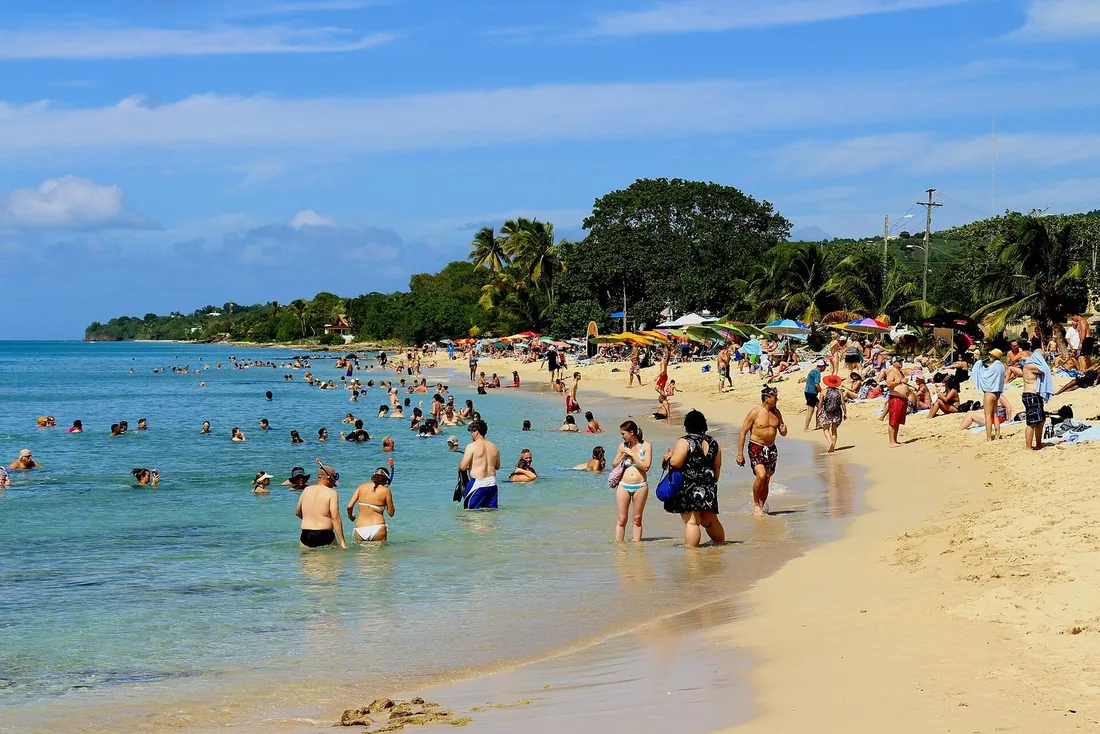
Frederiksted Beach is the sand that begins beside the cruise pier and runs north past Fort Frederik along the town's shoreline. No other beach on St. Croix puts calm swimming water this close to restrooms, cafes, a fort, a free art museum and a parking spot, and no other beach changes character so completely between a ship day and a quiet one. This page is the full reference for the strip: where it starts and ends, how the water behaves, what the town supplies, how cruise calls reshape the day, the snorkeling and sea glass realities, the sunset, the working-harbor history under the swim, and the practical details in one place.
What Frederiksted Beach means
The name covers the strand on the north side of the Frederiksted pier. It starts where the pier meets the shore, passes directly in front of Fort Frederik, and continues north along Route 63 at the town's edge. Maps and review sites often label the section by the fort as Fort Frederik Beach; islanders say the town beach; all of it is the same run of sand. There is no marker where it ends. Somewhere past the last town blocks the shoreline takes the name La Grange, and the sand keeps going toward Rainbow Beach a bit over a mile up the coast. South of the pier there is no beach at all for a stretch: the seawall and the waterfront streets take over, and the next sand is Dorsch Beach beyond the fish market.
The defining fact of this beach is where it sits rather than what it looks like. From the middle of town, the water is one block away. From the cruise checkpoint at the foot of the pier, the sand is a walk of a couple of minutes. From a car, it is a matter of crossing the road. Every other good swimming beach on St. Croix asks for a drive, and several ask for a hike; this one asks you to step off a sidewalk. That is why it carries the town's daily swimmers, the ship crowds, the sea glass walkers and the sunset audience all on the same few hundred yards.
The water
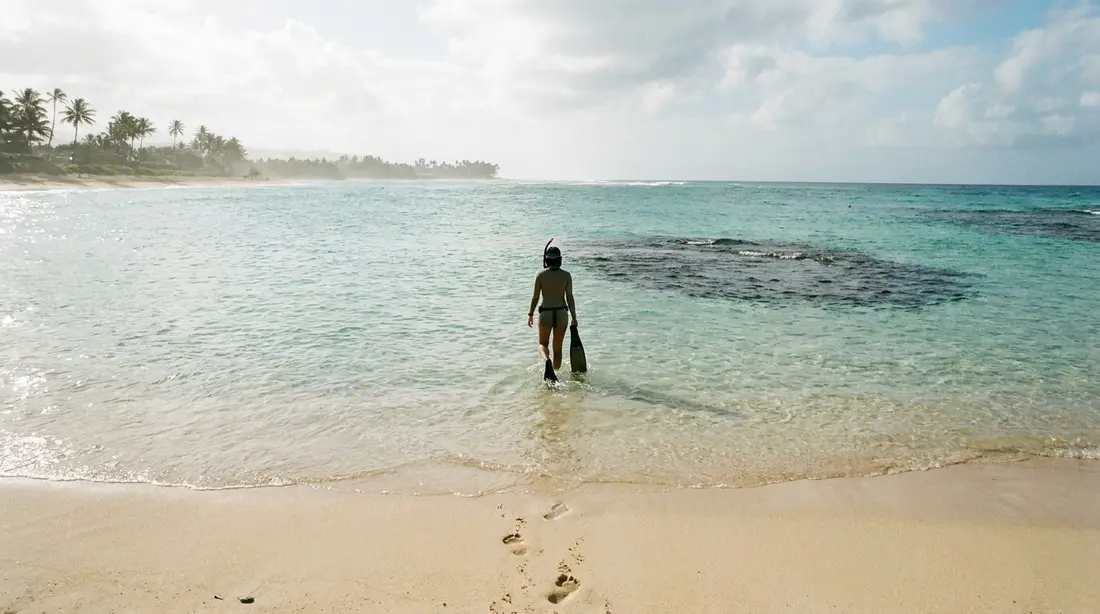
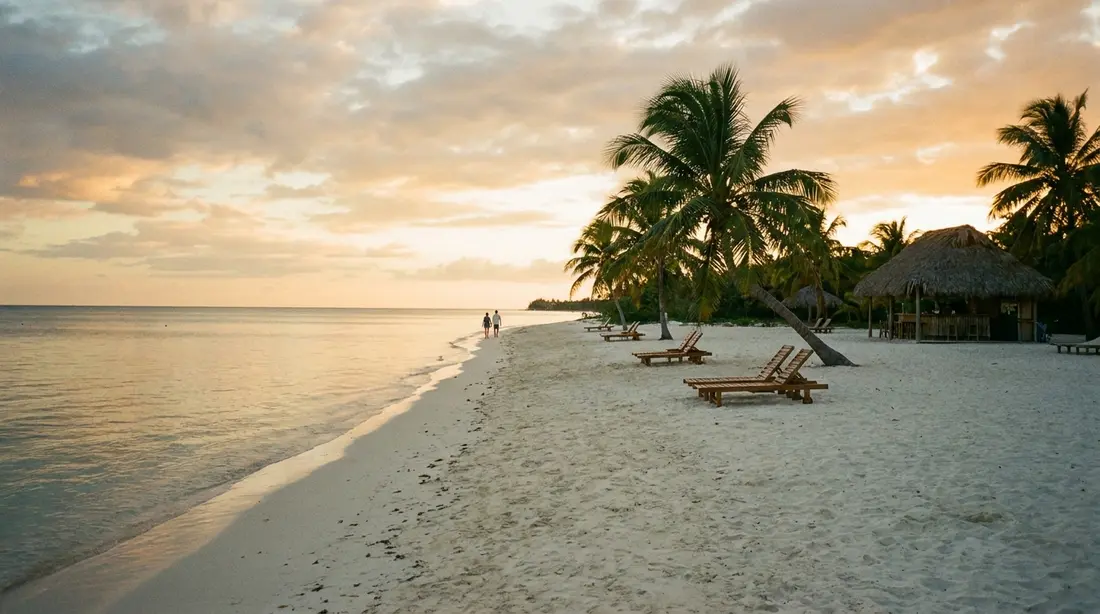
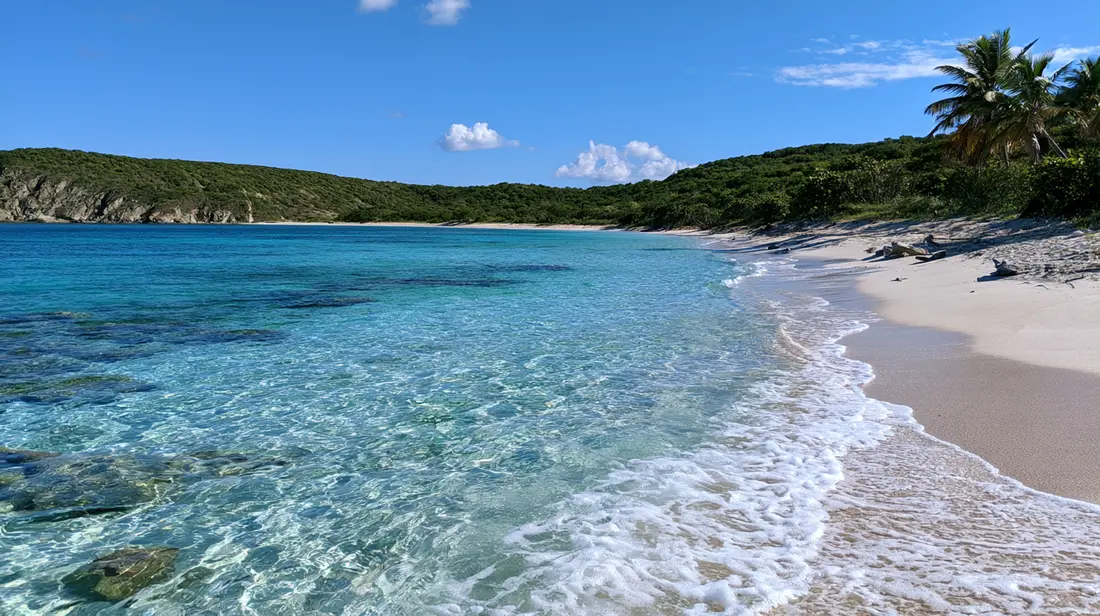
The trades blow out of the east, and by the time that wind has crossed the island's full length there is no open water left on this side for it to stir, so the sea off the town front usually lies close to still. The result is swimming that behaves more like a lake than an ocean on most days of the year: small or no shorebreak, little current along the sand, and clear water over a light bottom. Water temperature runs from around 80 degrees in winter to the mid 80s by late summer, warm enough in every month that the first step in is the only cold one.
The entry is the other kindness. The bottom off the town sand is sand, the slope is gradual, and you can wade to swimming depth without negotiating rock or reef, which is why this is the beach town residents pick for a daily swim and visitors pick for a first one. Scattered rocky patches break up the sand here and there, easy to see through the clear water; sea urchins live in them, so look before you stand anywhere dark, and pack water shoes if you plan to explore the pebbled stretches. There is no lifeguard, which is true at almost every St. Croix beach, and there are no roped swimming lanes either. Boats do use this waterfront: dive boats work the pier area, and the outer harbor holds an anchorage for larger vessels. Keep your swim over the sand off the fort, and treat the pier end as off limits whenever any working vessel is alongside; port security closes the water around the pier to swimmers, snorkelers and divers for the whole of a ship's call.
A beach day with a town attached
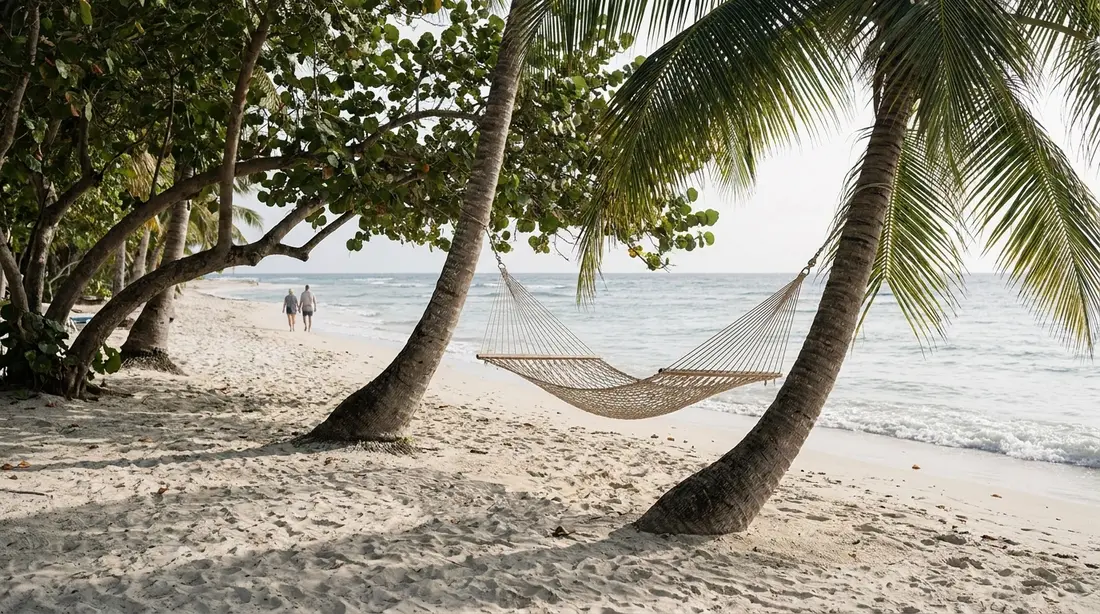
Most St. Croix beaches make you choose between good water and any services at all. This one comes with a town. At last check the beach itself had public restrooms, picnic tables, shade trees on the sand and a playground close by, and the parking is free, in a public lot across from Fort Frederik and in spaces along the shore road. What the beach does without is a concession: nobody is renting loungers or umbrellas on this sand, so bring towels and anything you want to sit on, and count the shade trees as the umbrella plan.
Everything else is a block away. Polly's at the Pier pours the west end's morning coffee and serves lunch facing the water. Turtle's Deli builds sandwiches big enough to split and lets you carry them straight back to your towel. Louie & Nacho's, the beach bar beside The Fred hotel, covers tacos and cold drinks with the pier in view. The full west-end table, hours included, is in the Frederiksted restaurants guide. The standard rhythm writes itself: swim through the late morning, rinse off, walk one block in dry sandals, eat lunch at a real table, and decide over dessert between a second swim and the free art museum on Strand Street. Fort Frederik keeps posted hours and a small admission, worth confirming by phone before you plan a visit around it.
Reaching it without a car
Frederiksted Beach is the one St. Croix beach that works fully car-free, and three groups use it that way. Cruise passengers have the shortest trip of all: the sand starts a couple of minutes' walk from the security checkpoint, close enough that the ship stays in view from the towel, and the return needs no vehicle, no pickup time and no margin for a late driver. Guests staying anywhere in Frederiksted, our Sunset Sea-Clusion guests included, treat the beach as a walk, since every block of the small grid sits within a few minutes of the water. Visitors based elsewhere on the island without a rental for the day can take a taxi; the island runs on shared vans and arranged pickups rather than apps, drivers stage at the pier whenever a ship is in, and the return trip should be arranged in advance rather than hoped for, especially in the evening. The fare structures and dispatch habits are covered in taxis and getting around. Once you are here, the beach, the fort, the pier, the museum and every lunch table in town connect on foot; the whole point of this stretch of coast is that nothing on it requires wheels.
Paddling and other calm-water sports
The same stillness that makes the swimming easy makes this front a fine paddling launch. Stand-up paddleboards go in over the sandy entry with no shorebreak to fight, and the flat morning water lets a first-timer stand up sooner here than almost anywhere on the island; confident paddlers run the shoreline north toward La Grange and Rainbow with the coast in sight the whole way. Bring the board with you or arrange a rental ahead of time, since no operation on this sand rents equipment; the island's launch spots, wind patterns and rental sources are collected in the paddleboarding guide. Long-distance swimmers use this water too, for the same reasons, and the pier makes a natural landmark for judging distance. The usual caution scales with the toys: stay clear of the pier whenever any vessel is working it, and remember that the afternoon trades put a light chop on the surface that the morning never had.
Snorkeling from the sand
Set two different expectations, because this beach sits next to a famous dive site without being one. Straight off the sand, the snorkeling is mild: mostly bare sand bottom, with life gathered at the scattered rock patches. Working those patches on a calm day turns up blue tangs, angelfish, butterflyfish and juvenile fish in numbers, flounder lying on the open sand, an octopus if you are lucky, and green sea turtles passing through on no schedule at all. A beginner has an easy, sheltered first session here. Anyone chasing coral cover should read the island-wide snorkeling guide and plan a Cane Bay or Buck Island morning.
The famous site is the pier at the beach's south end. Decades of growth have covered its pilings in sponge and coral, and the columns shelter the small strange animals divers cross oceans for: seahorses, frogfish and octopus in twenty-some feet of clear, calm water, with the same site ranking among the Caribbean's best night dives. Snorkelers can work the inshore pilings from the surface on a flat morning, and the shallowest stretch, rubble and old pier remnants in ten to twenty feet, is actually the zone where guides point out the seahorses most often. The rules and the route are in the Frederiksted Pier diving guide; the short version is that mornings are flattest, there is no gear rental at the pier itself so bring or rent equipment through a west-end dive shop in advance, and none of it is available while a cruise ship is berthed, because the surrounding water closes for the duration of the call.
Sea glass in the wash
The town beach is where St. Croix's beachcombers go first, and the reason is the harbor behind it: a port town has been dropping bottles into this water for two and a half centuries, and the mild surf polishes them and hands them back. Look in the pebble patches, along the line the last high tide left, and in the shallows just off the sand; the variety of colors here surprises collectors who have hunted bigger islands. Glass is the one souvenir the rules allow you to pocket. Shells, coral and sand are protected in the Virgin Islands and can be confiscated on the way home, so take the glass and leave the rest where the water put it. The colors, techniques and the story of chaney are all in the sea glass guide; the light for spotting glass is best in the low sun of early morning, which is also when the beach is emptiest.
Ship days and quiet days
Frederiksted keeps two calendars, and this beach is where they diverge most visibly. St. Croix's cruise ships all tie up at the town pier, so on a call day several thousand passengers come down the gangway a few minutes' walk from this sand, and a share of them settle on the nearest stretch of it. The section closest to the pier carries most of that weight; walk five minutes north along the water and the towel density falls away fast. Vendors set up near the pier gate, taxis stage for tours, every kitchen in town is open, and the day has an energy the west end shows at no other time. By late afternoon the ship gathers its people and the beach exhales, often inside a single hour.
A no-ship day is a different beach in the same place: a handful of swimmers, sea glass walkers with their heads down, and open sand in both directions. Neither version is a mistake; they suit different moods, and the choice is fully in your control because the port publishes its cruise calls months ahead. Check the date, then decide. If your dates are fixed and a ship is in, come before nine, walk north past the crowd's edge, or give the beach the late-afternoon window after all-aboard, which is one of its best hours anyway. The complete playbook for reading the schedule sits in the cruise day guide, and the neighboring escapes, La Grange, Rainbow and Dorsch, are cataloged in beaches near Frederiksted.
Sunset from the town sand
The west end owns the island's only sunset-over-water shoreline, and the town beach adds the one thing the other west-coast beaches lack: a foreground. From a towel on this sand the pier runs out toward the setting sun, and through the winter months, when the set point sits south of west, the sun drops close enough to the pier line that the whole structure goes to silhouette, fishermen included. Around the March and September equinoxes the drop lines up nearly straight off the beach. Sunset lands between roughly 5:45 in early winter and a few minutes past 7:00 in midsummer, and the show costs nothing from the sand, the seawall or the pier itself.
The last hour is sociable here in a way it is nowhere else on the island. The Fred's terrace and Louie & Nacho's fill ahead of the drop, locals fish from the pier and the wall, and the low light turns Fort Frederik's red walls to ember behind you. A final swim in the warm hour before the drop, then dinner one block inland, is the standard close to a west-end day. The month-by-month comparison of every evening shoreline on the island, town beach included, is in the sunset beaches guide.
Swimming in a working harbor's history
The calm water you swim in is the reason the town exists. Frederiksted was laid out in 1751 to use the west coast's deep, sheltered roadstead, and Fort Frederik went up between 1752 and 1760 to guard the ships riding in it. For two centuries the vessels anchored offshore because the wharf reached nowhere near deep water: in the sugar era, bags trucked in from the La Grange and Bethlehem factories were loaded onto lighters at the wharf and towed out by rowboat to steamships waiting in the road. The sea did not always stay polite; the earthquake of November 1867 sent a wave into this waterfront that carried the U.S. Navy steamer Monongahela up onto the shore. And the beach's backdrop carries the island's central story: the fort behind the sand is where emancipation was proclaimed to a crowd of thousands on July 3, 1848, and the Victorian look of the streets one block in dates from the rebuilding after the 1878 Fireburn labor revolt. The full town history is in the Frederiksted guide and the Fort Frederik guide.
When the waterfront fills
A few dates put the town's calendar directly against this sand, each covered in depth elsewhere on the site. Emancipation Day, July 3, brings the Freedom Walk from Christiansted to Fort Frederik and ceremonies at the fort and Buddhoe Park, steps from the water. July 4 follows with fireworks over the Frederiksted waterfront. The Crucian Christmas Festival stages its Festival Village and both parades in this town in the days around New Year's, filling the blocks behind the beach. And on third Fridays from roughly October through May at last check, the free Rhythms at Sunset concerts play the waterfront park through the sunset hour. The rest of the year's dates are on our events calendar page.
Conditions through the seasons
The lee keeps this shore swimmable in all twelve months, and its winter behavior deserves a plain statement, because winter is when the island's north shore gets rough. The big seasonal swells arrive from the north and spend themselves on the Cane Bay side; the west coast sits out of their direct path, which is why dive shops treat Frederiksted as the bad-weather fallback. Protection is strong here without being absolute: on the occasional day when a large swell wraps far enough around the island's western corner, divers report shore surge that complicates the pier entry, and the swim gets bouncy by local standards. Those days are exceptions you can see from the parking lot. Summers run hot, glassy and quiet, with hurricane season's usual watchfulness from June through November; September through November are the emptiest months on the sand. Sargassum, when it drifts through the Caribbean, mostly lands on the island's east- and south-facing shores and tends to spare this coast. The island-wide patterns are laid out in weather and when to visit.
Choosing between the town beach and its neighbors
Four beaches share this short coast, all with the same flat water, and the useful differences are entirely on land. The town beach is the services-and-history pick: restrooms, shade, food a block off, the fort behind you and the pier snorkel at one end, at the price of company on ship days. Rainbow, up the coast, is the serviced-fun pick, with chair and watersports rentals and a bar on the sand, and it draws the biggest crowd on the coast. Dorsch, south past the fish market, is the shade-and-quiet pick, long and tree-lined with a small cafe and often almost nobody on it. La Grange, between town and Rainbow, is the bring-everything overflow, sand and calm water with no facilities at all. A practical way to decide: start with what you refuse to carry. If the answer is nothing, La Grange or Dorsch; if you want lunch steps away, town beach or Rainbow; if the day is a cruise call, the town beach until it fills, then north or south as taste dictates. Many west-end days sample two or three of them, since end to end the whole lineup spans a ten-minute drive.
Matching the visit to the day
| Day type | Conditions to want | Best time |
|---|---|---|
| Easy swim and town lunch | Any ordinary day; the lee does the work | Late morning swim, one-block lunch after |
| Pier snorkel | No ship berthed, flat surface | Early morning, gear arranged the day before |
| Sea glass walk | Recent high tide or a stirred-up sea the day prior | First light to mid morning, low-angle sun |
| Family afternoon | Shade trees free, playground nearby | Weekday afternoons outside ship calls |
| Full quiet | No ship on the schedule | Any no-ship weekday, all day |
| Sunset evening | Clear western horizon | Arrive an hour ahead; winter for pier silhouettes |
Distances and walk times
| From the sand to | How far |
|---|---|
| Cruise checkpoint at the pier | A walk of about two minutes |
| Fort Frederik and Buddhoe Park | On the beach; the fort fronts the sand |
| Polly's, Turtle's Deli, Louie & Nacho's | About one block |
| Caribbean Museum Center for the Arts | A short walk down Strand Street |
| Dorsch Beach | 15 to 20 minutes on foot south past the fish market, or a two-minute drive |
| Rainbow Beach | A bit over a mile north; drive or taxi hop |
| Christiansted and most villas | About 40 minutes by car; up to an hour from the far East End |
Practical notes
- Parking is free and rarely a problem: the lot opposite the fort, plus roadside spaces along the beach. The exception is a heavy cruise morning, when the blocks by the pier gate fill with tour staging; park a few blocks north and walk.
- Getting here from the Christiansted side takes about 40 minutes by car, and up to an hour from the far East End, so build a west-end day around the beach rather than treating it as a pull-over. Rideshare apps do not operate on St. Croix, and driving is on the left.
- This is a town beach, so town rules apply: nothing visible in the parked car, and valuables stay with you on the towel or back at the villa.
- No lifeguard, no rental concession. Restrooms, picnic tables and tree shade are on site at last check; chairs and umbrellas travel with you.
- Reef-safe mineral sunscreen only; the territory restricts oxybenzone formulas.
- Water shoes earn their space in the bag for the pebble patches and rocky spots, where urchins live.
- Take sea glass, leave shells, coral and sand; the second half of that sentence is territorial law.
Questions guests ask
Is Fort Frederik Beach the same as Frederiksted Beach?
Yes. The names describe one strand from different reference points. Fort Frederik Beach usually means the section directly in front of the red fort, which is the busiest and best-equipped part; Frederiksted Beach covers the whole run of sand from the pier north to where the shoreline becomes La Grange. Signs, map pins and reviews mix the two freely, and nothing on the ground separates them. If a taxi driver, a dive shop or a review mentions either name, they mean the sand this page describes.
Can you swim here while a cruise ship is docked?
Yes, on the sand away from the pier. The security closure applies to the water around the pier itself: no swimmers, snorkelers or divers anywhere near the structure while a ship is alongside, with no exceptions made. The rest of the beach stays open and gets busy, since it is the closest sand to the gangway. If you want space on a ship day, walk north until the crowd thins, which rarely takes more than five minutes, or come back for the late-afternoon window after the ship boards.
Does the beach have restrooms and facilities?
Yes, and that makes it nearly unique on St. Croix. At last check the beach had public restrooms, picnic tables, natural shade from trees on the sand, a playground close by and free parking across from the fort and along the road. What it lacks is a commercial operation: no chair or umbrella rental, no beach bar on the sand itself. The town covers the gap from one block away, with cafes, restaurants, shops and dive shops all in walking range. Bring what you want to sit on and buy the rest in town.
Is Frederiksted Beach good for children?
It is one of the island's better beaches for them. The entry is sandy and gradual, the water is usually near flat, the shallows run warm, and restrooms, shade and a playground sit right there, which the island's prettier remote beaches cannot offer. Two cautions carry the load: there is no lifeguard, so children swim under your eyes, and the rocky patches hold sea urchins, so keep small feet on the sandy stretches or in water shoes. On heavy ship days the nearest sand gets crowded; families do better a short walk north.
Can you snorkel right off the beach without a boat?
Yes, and it takes nothing more than a mask and a calm morning. Expect a gentle session over sand with life concentrated at the rock patches: tangs, angelfish, butterflyfish, flounder and the occasional passing turtle. The celebrated snorkeling is at the pier pilings at the south end of the strand, home to seahorses, frogfish and octopus, and it works from the surface on flat days when no ship is in port. There is no rental counter at the pier or on the beach, so pick up gear from a west-end dive shop or bring your own from the villa.
How long does it take to get here, and is parking hard?
From Christiansted, about 40 minutes across the island; from the East End villas, closer to an hour; from anywhere in Frederiksted, a short walk. Parking is the easiest of any island beach with facilities: a free public lot faces the fort, and free spaces line the shore road. It only tightens on the biggest cruise mornings, when tour vehicles stage near the pier gate; the fix is to park a few blocks away and walk the flat waterfront. Leave the car interior empty here as at every beach on the island.
Will we find sea glass on any given day?
Usually something, never a certainty. The supply renews with the water: each tide rearranges the pebble patches, and a stirred-up sea tends to push fresh pieces onto the sand, so the morning after rough weather is the classic productive walk. On flat, heavily walked stretches the obvious pieces go early, which is why practiced hunters check the high-tide line, sift the pebbles and look in the shallows instead of scanning the open sand. Give it thirty unhurried minutes with the sun low and most visitors leave with a pocketful; treat anything rarer than green, brown and clear as luck.
When is the best time of day for this beach?
Two windows do most of the work. Early morning brings the flattest water for the pier snorkel, the best low light for spotting sea glass, cool sand and near-solitude. Late afternoon into evening brings the warm final swim, the town's sociable hour and the sunset over the water, with the pier in silhouette through the winter months and dinner one block from your towel. Midday is fine too, gentler here than at unshaded beaches thanks to the trees, but it is the stretch when ship-day crowds peak.
Villas near the town beach
Our west-end home, Sunset Sea-Clusion, sits in Frederiksted itself, which makes this its neighborhood sand: morning sea glass walks, a standing daily swim and the sunset without a drive at the end of it. The rest of the west end collection keeps the whole strip, town beach, Rainbow and Dorsch, within a few minutes. Guests staying in our Christiansted and East End homes reach this beach as the anchor of a west-end day, pairing the swim and lunch with the fort and museum, then staying for the sunset before the drive home; all of our villas and condos are here when you are matching a house to the trip you have in mind.
Sources
Written from official and first-party sources, checked August 2026. Hours, prices and event dates change — confirm before you go.
In this guide
Stay nearby
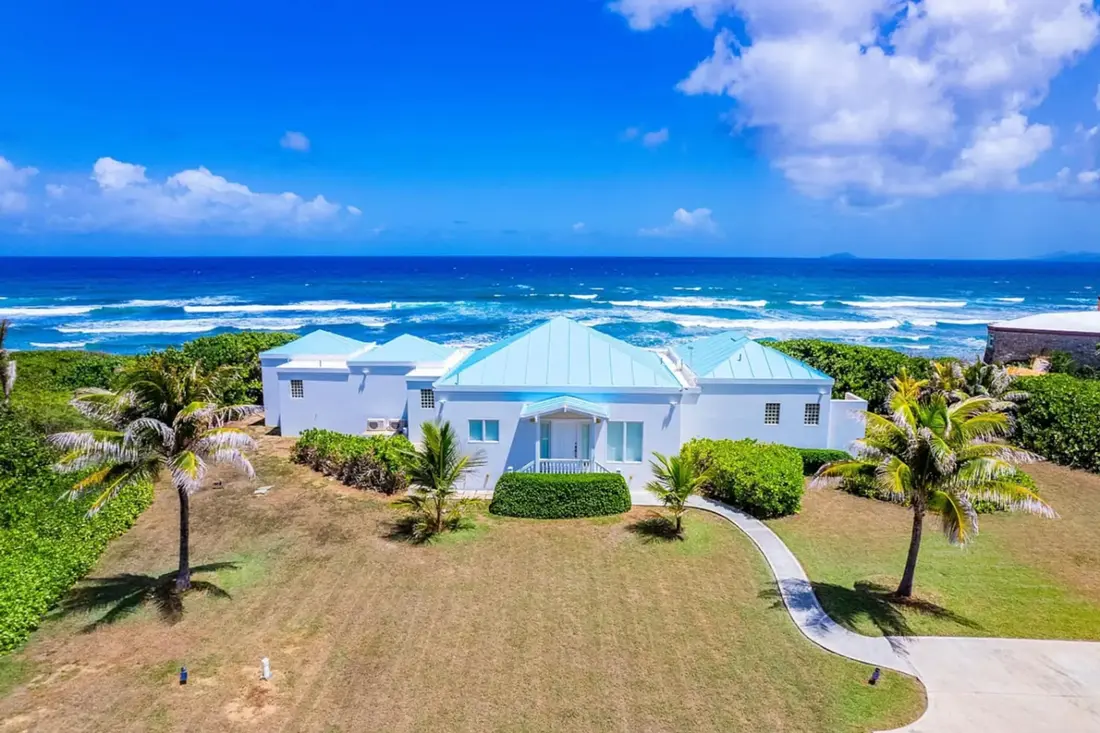
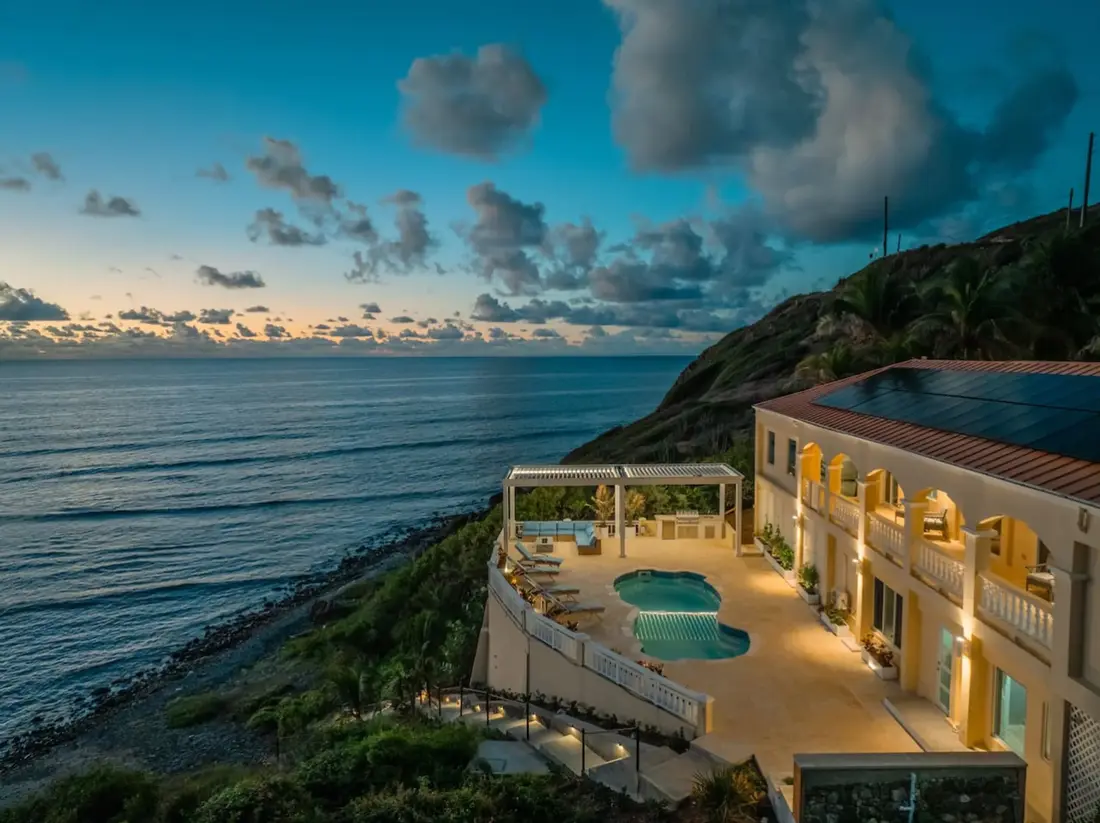
Private oceanfront on the East End with a sandy, swimmable beach, pool, outdoor kitchen and a separate guest cottage. Sleeps twelve.
 The Cerulean5 bd · 5 ba · sleeps 12 · Christiansted
More in Beaches
Sources
10 references, listed in full at the end of this guide — official park, refuge, tourism-board and business sources, checked August 2026.