
St. Croix vs Jamaica
The Caribbean's most famous culture built a tourism of walled resorts — a model its own advisory context explains. The American island never needed walls.
Jamaica is the Caribbean's cultural superpower — reggae, jerk, Blue Mountain coffee, a national voice that carries worldwide — and one of its most complicated destinations. The U.S. State Department held it at Level 3 for years before easing to Level 2 in January 2026; the island's answer has long been the all-inclusive compound, a model that packages the beach behind a gate. And since October 2025, Hurricane Melissa's strike on the resort-heavy west has added a recovery to plan around. St. Croix offers a smaller culture with an open gate.
The two, side by side
| St. Croix | Jamaica | |
|---|---|---|
| Passport for U.S. citizens | Not needed | Required |
| U.S. State Department advisory | None — U.S. territory | Level 2 since January 2026 (down from Level 3), citing crime |
| The dominant model | Private villas, open island | All-inclusive compounds; excursions by arranged transport |
| 2025 hurricane impact | Not in Melissa's path | Hurricane Melissa struck western Jamaica October 28, 2025; recovery ongoing |
| Where the resorts are | — | Mostly that same west: Montego Bay, Negril |
| Freedom to roam | Rent a car, go anywhere, day or night | Advisories and resorts steer guests to compounds and tours |
| Beaches | A dozen-plus, free and near-empty | Doctor's Cave, Seven Mile Negril — busy, vendor-worked |
| Culture | Crucian: quelbe, mocko jumbies, Danish towns | Global: reggae, jerk, Blue Mountains — a giant |
| Coming home | Agriculture check; $1,600 duty-free | U.S. customs; $800 duty-free |
| Scale | 84 square miles, 41,000 people | 4,244 square miles, 2.8 million people |
Advisory levels and details are as published by the U.S. Department of State and checked August 2026. They change — read the current advisory at travel.state.gov before any international trip.
The short answer
People love Jamaica for reasons no other island can supply, and this page will not talk anyone out of the reggae pilgrimage or the jerk pan at Boston Bay. It will state the shape of the modern Jamaica trip: an all-inclusive compound chosen partly for security, excursions by arranged shuttle, and an advisory history that explains the architecture. St. Croix's shape is the opposite: a house of your own on an open island you drive freely at any hour, no advisory, no walls, no wristband. Which shape fits your family is the whole question. Our stake is the portfolio of homes we manage on St. Croix; the sourcing below is public.
What the State Department says, and what it built
The datum first: on January 17, 2026 the U.S. State Department eased Jamaica from Level 3 (Reconsider Travel) to Level 2 (Exercise Increased Caution), citing crime — violent crime including armed robbery and sexual assault, with tourist areas statistically calmer than the island at large. The easing was earned and reported as good news; Level 2 still places Jamaica alongside Mexico's Quintana Roo and the Bahamas, and the advisory still maps no-go neighborhoods in Kingston and beyond.
The deeper point for a vacation planner is what decades of that context built: a tourism of enclaves. The all-inclusive — a Jamaican invention, refined brilliantly there — sells a perimeter as much as convenience: the beach is the resort's, dinner is inside, the island arrives as a curated excursion with a driver. Millions of guests have wonderful weeks on exactly those terms. They are terms, though, and they price the freedom out of the trip. St. Croix carries no advisory — it is the United States — and its tourism never needed a perimeter: you rent a car at the airport, drive to a west-end fish fry after dark, and the only gate on the island is the one at The Shoys beach. Ordinary sense applies everywhere: ours is written here. Advisories change — read the current text at travel.state.gov.
Hurricane Melissa and the tourism coast
On October 28, 2025, Hurricane Melissa made landfall in western Jamaica and did severe damage across the island's west — which is precisely the tourism coast: Montego Bay, Negril and their corridor. Recovery has run through 2026 with resorts reopening in waves; travelers booking Jamaica now should verify their specific property's status and the state of nearby attractions rather than assume the brochure photo. This site does not dramatize storms — St. Croix lived Maria in 2017 and rebuilt too — and the same June-through-November season covers the whole region. The difference in August 2026 is practical: St. Croix's tourism plant is not mid-recovery. Our hurricane-season guide covers how we handle the season on our own island.
Culture: the giant and the miniature
Jamaica's culture is a world export and the island experience of it can be glorious: a Kingston studio tour, Boston Bay's original jerk pits, the Blue Mountains at dawn, Rick's Café cliff divers at sunset. Concede it all — no small island competes with a civilization.
What St. Croix offers is a culture at walking scale, unmediated: quelbe scratch bands and mocko jumbies at a Christiansted Jump Up, Crucian cooking — kallaloo, fungi, saltfish, pate — served in institutions priced for neighbors, the Crucian Christmas Festival's parades in Frederiksted, and a history you stand inside: the 1848 emancipation proclaimed at Fort Frederik after eight thousand people marched on it, the 1878 Fireburn led by Queen Mary, Alexander Hamilton's boyhood on Company Street. You meet all of it as a neighbor, not through a tour-bus window. Start at Fort Frederik.
Beaches and the vendor economy
Jamaica's famous beaches are lively ecosystems: Doctor's Cave's clubby sand, Negril's Seven Mile with its cliff bars — and their persistent vendor-and-hustler economy, which the resorts answer with wristbands and roped swim areas, and which travelers report as the most wearing part of an otherwise warm island. It is a texture some love and many tire of by Thursday.
St. Croix's beaches carry no economy at all beyond a beach bar where you want one: two undeveloped miles at Sandy Point (the largest leatherback nesting beach under U.S. jurisdiction), Cane Bay beneath its wall, The Shoys behind its gate (our Shoy's Beach House fronts it), hike-in Jack's and Isaac's Bays, Rainbow's sunset gold. Nobody sells you anything; most days nobody is there to. The roster.
Underwater
Jamaica's reefs suffered decades of documented overfishing and pressure; its diving is a modest resort amenity, and the island itself would point you instead to Dunn's River Falls and the Luminous Lagoon — a bioluminescent bay whose fame St. Croix quietly matches at Salt River, one of the world's few year-round glowing bays, ten minutes from Christiansted. St. Croix's reef case needs no hedging: the Cane Bay Wall a hundred yards off the sand, the Frederiksted Pier's famous macro and night dives, Butler Bay's wrecks, and Buck Island Reef National Monument's marked snorkel trail inside a federal no-take reserve since 1961. See diving St. Croix.
What a week costs, all-in against all-inclusive
Jamaica's all-inclusive sticker can look unbeatable — that is the model's genius — until the week's true ledger fills in: airport transfers sold as security, excursion pricing through the resort desk, premium menus above the buffet tier, wristband drinks you would not order twice at a real bar, and tips layered throughout. The compound meters everything because the compound is the product.
St. Croix's ledger has no meter: a direct-booked villa with a pool and kitchen, supermarket provisioning, free beaches, charter-free shore diving, single-digit forts and gardens, dollars everywhere, no foreign transaction fees, and $1,600 duty-free home with the five-liter rum rule — Cruzan since 1760 making the case in the checked bag. Families comparing bottom lines on matching dates find the open island beats the walled one more often than the sticker suggests. The homes: here.
Month by month on the two islands
Jamaica's calendar in 2026 is really two calendars. The traditional one: winter high season at the all-inclusives, Reggae Sumfest in July (Montego Bay's giant week), Carnival in April, and the green quiet of fall. The post-Melissa one, laid over it: the western resort coast reopening in waves through the year, with each month's booking requiring a property-status check the brochures never used to need. Both calendars share the June–November season and its counsel — and Melissa's October 28 landfall is the fresh reminder that the counsel is not theoretical anywhere in the region, this island included. St. Croix's calendar runs intact: festival season December–January, AgriFest in February, turtle spring, discounted green fall — no recovery asterisks on any month. Detail: when to visit and hurricane season.
The travel day, hour by hour
The Jamaica day is efficient to the gate and managed after it: three-and-a-half to four hours into Montego Bay, an immigration hall that queues at the charter banks, and then the transfer economy — the resort's shuttle or a pre-arranged driver, because the advisory context has made independent arrival logistics a niche choice — rolling the Negril road or the Ocho Rios highway for one to two hours to the compound. Check-in, wristband, oriented by dinner. The return reverses it into U.S. customs at the $800 allowance. St. Croix's day: three hours from Miami, a rental counter with no security calculus attached, supermarket, villa — forty minutes maximum, any hour, your own keys. The difference is not the flight; it is everything the flight bookends.
Seven days on each
The Jamaica week, resort edition: compound days built around the swim-up and the buffet, the Dunn's River Falls excursion (crowded, chained-hands climbing, still fun), maybe Rick's Café's sunset divers or a bamboo-raft float, a catamaran party cruise, one off-property craft-market run with a driver, reggae night on the schedule. The island arrives in excursion-sized doses between wristband meals.
The St. Croix week, open edition: Buck Island's snorkel trail Monday; Cane Bay's wall Tuesday; Christiansted's fort, arcades and boardwalk Wednesday; Point Udall, the Jack's and Isaac's hike and The Shoys Thursday; Frederiksted's emancipation fort, a pier snorkel and Rainbow's sunset Friday; the rainforest, Cruzan and the Domino Club Saturday; the bio bay after dark; every dinner chosen from a real town's menu, every drive your own. One island is administered to you; the other is handed over. Plans: the 7-day itinerary.
Getting around, and the freedom question
Jamaica is a big island — 4,244 square miles, four hours corner to corner — and its visitor transport reflects the model: resort shuttles and licensed JUTA drivers handle nearly everything, self-driving is legal but actively discouraged by the combination of aggressive road culture, the advisory's corridor guidance and the resorts' own counsel, and route taxis are a local system visitors are steered away from. The practical result is that a Jamaica vacation's movements are scheduled and chaperoned — comfortable, professional, and never spontaneous. The famous sights price accordingly, with transport built into every excursion ticket.
St. Croix's 84 square miles run on the opposite assumption: you rent the car at the airport, learn the left side in a morning (the guide), and go where the mood points — a 6 a.m. Point Udall sunrise, a west-end fish fry after dark, a third trip to the beach that won the week — with taxis covering the distillery evenings. Spontaneity is the product; nothing about it requires review.
Before you book either island
For Jamaica: read the current advisory, then read your specific resort's post-Melissa status directly (reopening waves have run all year — confirm the property, the beach and the nearby attractions you care about, not just the booking engine's availability); price the transfers and excursions into the all-inclusive total; check whether your resort's location sits in the rebuilt west or the undamaged east, which changes the excursion map; and book Sumfest-adjacent dates knowingly. Families should ask the resort directly about current kids'-program staffing — recovery-year operations vary.
For St. Croix: book the villa direct (the homes), reserve the car, calendar Buck Island and the bio bay ahead in peak weeks, and read safety and common sense once — it is short, because it can be. That is the entire pre-trip file.
The case for St. Croix, point by point
One: no advisory — Level 2 with a Level 3 history against no level at all. Two: no recovery asterisk — nothing on St. Croix requires a property-status call this year. Three: freedom of movement as the default, not the exception — your car, your hours, no corridors. Four: beaches without vendor economies or roped resort sections. Five: a villa with a kitchen against a wristband with a buffet map. Six: walk-in wall diving and a protected snorkel trail against resort-excursion water. Seven: a bio bay ten minutes from dinner — the Luminous Lagoon without the excursion bus. Eight: rum at the source since 1760, five liters flying home free. Nine: U.S. logistics end to end — dollars, phones, $1,600 allowance, no customs hall. Ten: an emancipation story told at the fort where it happened, met as a neighbor. Jamaica's culture is a giant and its week is a compound; St. Croix's culture is a miniature and its week is yours.
Who should pick which island
Pick Jamaica if: the culture pilgrimage is deliberate — Kingston's studios, the Blue Mountains, Boston Bay's pits — and the planning honors it; Reggae Sumfest sets the dates; the all-inclusive form is the point and the tier is chosen with eyes open; or golf at Tryall calls. Pick St. Croix if: freedom of movement is non-negotiable (the entire compound model exists because there it is negotiable); the family should roam after dark without an itinerary review; beaches should be empty and unvended; the advisory and the recovery asterisks weigh on anyone's planning; or the week's memories should be self-made rather than excursion-shaped. The giant is worth a deliberate visit someday. The open island is worth this year's week.
When Jamaica is the right call
The cultural pilgrimage, made deliberately: Kingston's music history, the Blue Mountains, real jerk at the source — travelers who go for Jamaica itself, eyes open, are rewarded like nowhere else. Groups who love the all-inclusive form — the wristband ease, the swim-up socialising — get its best execution there. Budget travelers on deep-discount packages know exactly what they are buying. In every case: read the current advisory, verify post-Melissa status for western properties, and book the compound knowingly. For an open-island family week, the comparison was never close.
A rainy day on each island
Jamaica's rainy day depends entirely on where the compound sits: Kingston's travelers get the Bob Marley Museum and Devon House — two of the Caribbean's best indoor hours — while the resort coasts get the spa list and the buffet's third act, with excursions scrubbed and refund policies tested. St. Croix's wet-day circuit runs regardless of address: Fort Christiansvaern's vaults, the Whim estate museum's unvarnished plantation history, Frederiksted's arts center and Fort Frederik's emancipation rooms, and a three-stop distillery trail. The rainy-day plan is a page, not a spa menu.
If you choose Jamaica anyway
Then choose it for Jamaica, not for a generic beach week. Go deliberate: a Kingston base for the music history (the Marley museum, Tuff Gong, Devon House ice cream), the Blue Mountains for a dawn and a coffee-estate morning, Boston Bay for jerk at the source — that trip honors the culture the compounds fence out. If the resort week is the choice, pick the coast knowingly (verify post-Melissa status directly), buy the transfer tier that meets your flight, and take the excursions that earn it: Dunn's River early, the Pelican Bar's sandbar stilts, a bamboo raft with a licensed captain. Read the current advisory, keep valuables boring, tip the compound staff properly — they are the island you came to meet — and book Sumfest dates on purpose or around them. The giant rewards intention.
Where you would stay on St. Croix
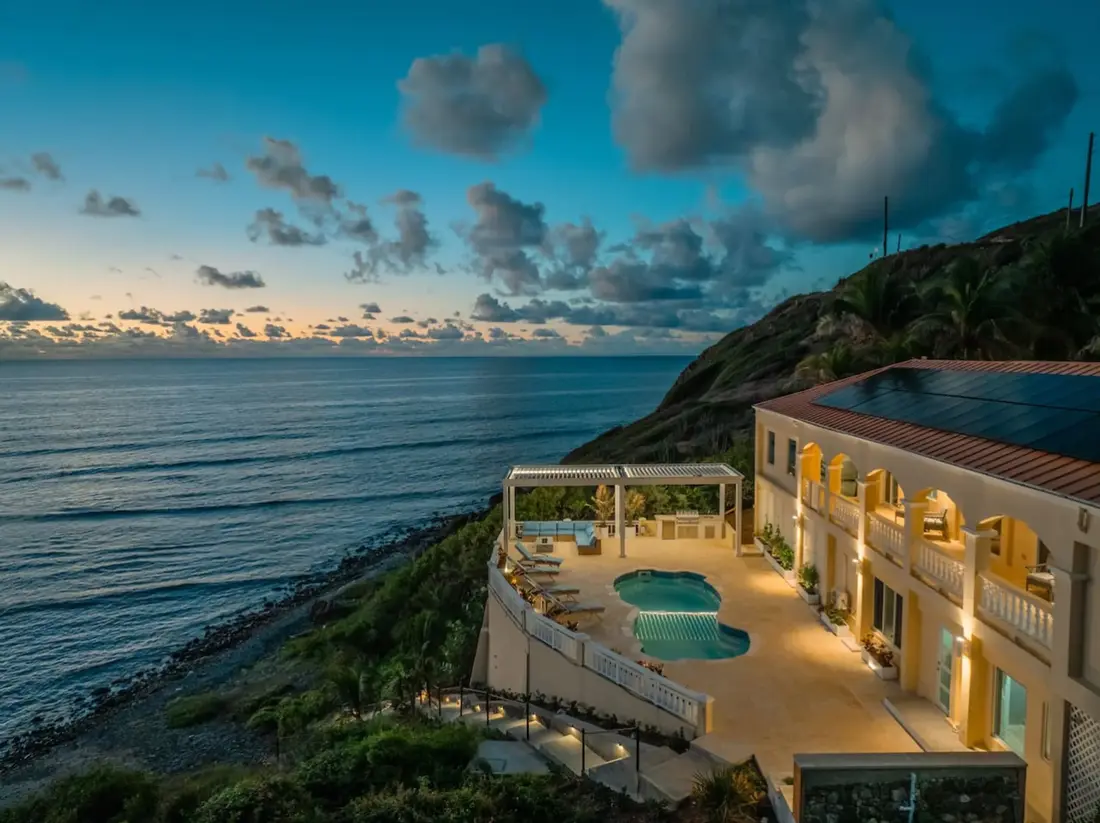
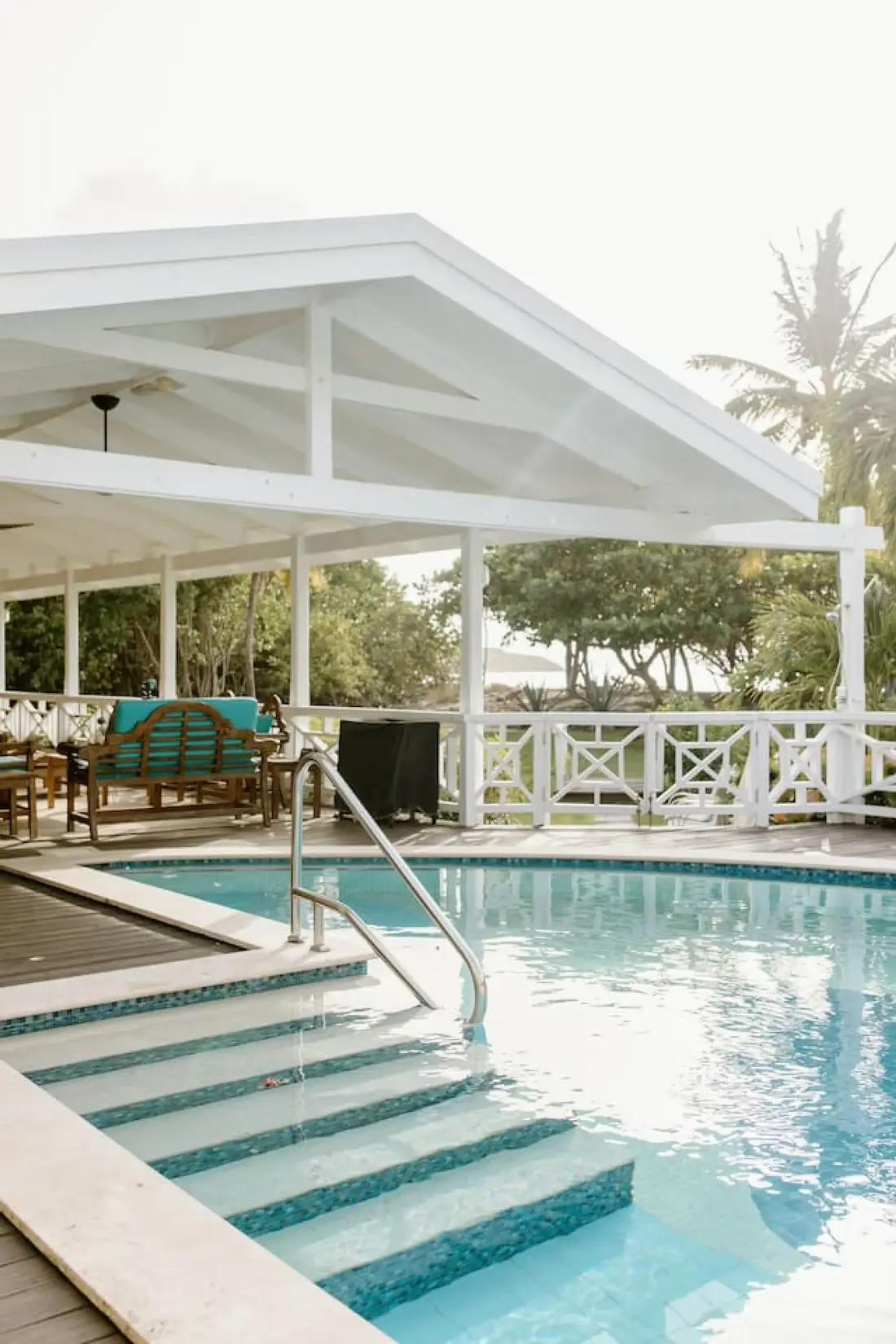
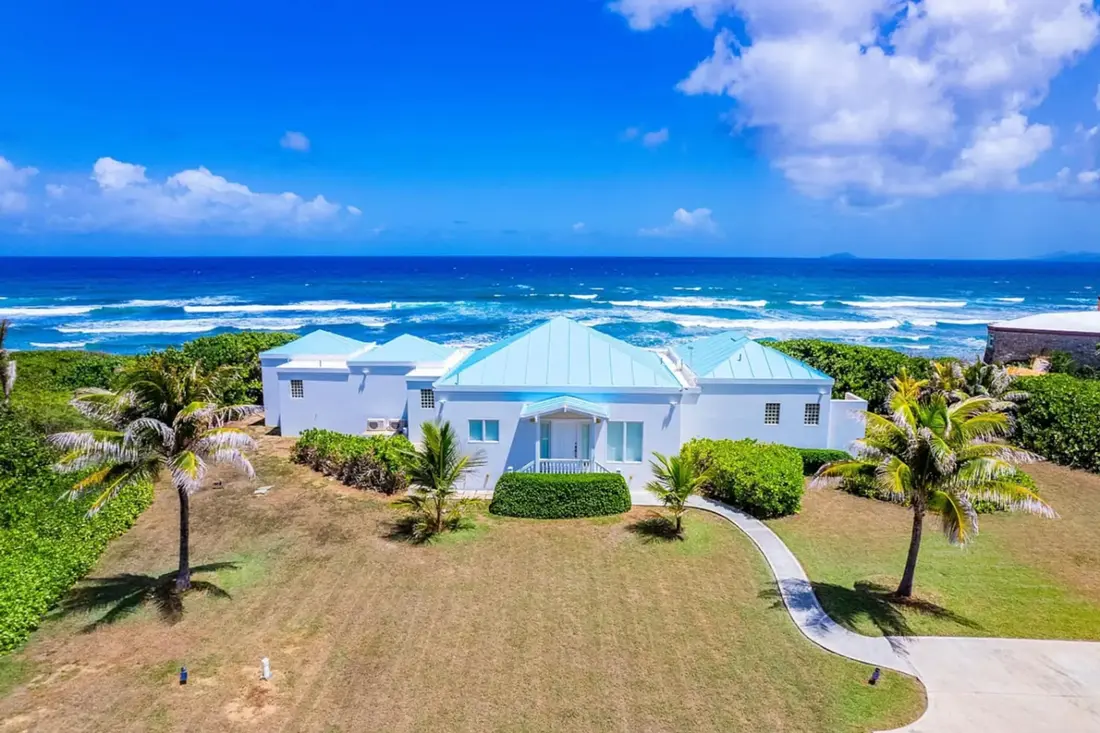
The open-island base: our direct-booked homes with Sterling Point managing from the island. Shoy's Beach House on The Shoys' guarded sand; East End villas — The Cerulean among them — facing Buck Island from private pools; Christiansted condos a walk from the boardwalk; west-end sunset stays. No wristband, no perimeter, no excursion desk: a full kitchen, a rental car and an island that assumes you will roam it. Couples: homes for two; groups to twelve: the family collection. The roster: the homes.
How this page was made
Series rules: the advisory history (Level 3 to Level 2, January 17, 2026) per the State Department — current text at travel.state.gov; Hurricane Melissa's landfall and the western recovery per public storm and reopening records, stated without drama on a site whose own island lived Maria; the compound model and vendor economy per decades of industry documentation, stated as patterns. Jamaica's cultural supremacy is conceded in the first sentence and never retracted. Our bias: the homes we manage on St. Croix, disclosed throughout this series. Verify the advisory and the reopening lists yourself; this page will still read the same.
The bottom line
Jamaica is a magnificent culture wrapped in a complicated destination: Level 2 with history, a hurricane recovery on its tourism coast, and a resort model built to manage what the advisory describes. St. Croix is a small culture wrapped in an easy one: no advisory, no walls, no wristbands — a villa, a car, free beaches, a wall dive and a glowing bay, all under the American flag. Visit the giant someday with clear eyes. Give the easy week to the island that never needed a perimeter. The homes are here.
Elsewhere in this series
This page is one of twenty-six. If you are still shopping the map, the verdicts nearest this comparison run as follows — each links to the full page with its own sources:
St. Croix vs the British Virgin Islands — The BVI are the Caribbean's sailing capital — reached by passport, puddle jumper and ferry. St. Croix flies you straight in, no passport at all.
St. Croix vs Turks & Caicos — Turks and Caicos sells one famous beach at luxury-resort prices. St. Croix sells a whole island for less — no passport, no Level 2 advisory.
St. Croix vs Anguilla — Anguilla perfected the quiet expensive beach. St. Croix does the quiet beach without the relay flight, the passport or the markup.
The complete set, grouped by region and passport rules, lives at St. Croix vs other destinations.
Which home fits your group
If St. Croix wins your comparison, the homes are the easy part. Groups of eight to twelve settle into the family collection; couples take a home for two; anyone who wants sand at the door starts with beachfront. Every one is managed from the island by Sterling Point and booked direct — tell us the dates and the headcount and we will point you at the one that fits.
Two practical notes that surprise first-time villa bookers. Direct booking means the rate is the rate: no platform service fees, no resort fees, and the people answering questions are the same Sterling Point team that manages the houses on the island. And every home runs a full kitchen — one run to Plaza Extra or Seaside Market on the drive from the airport covers the week, which is where a villa quietly beats a resort bill before the first beach day. How the booking works, and what it does not mean, is spelled out at book direct.
Who wrote this
SP Vacations is the vacation-rental division of Sterling Point Real Estate, a licensed real-estate operation based on St. Croix in the U.S. Virgin Islands. The team lives and works on the island it writes about: the homes in the villa collection are inspected, cleaned and managed locally, and the person who answers a booking question is on St. Croix, not in a call center three time zones away. That is the vantage point behind every page in this series — and the reason the series exists at all, since most of the destinations compared here are places our guests weighed before choosing this island.
Two standing practices shape what you read. First, the pricing wall: nightly rates and availability for the homes live only on the booking pages, never in articles, so nothing here goes stale or oversells. Second, the sourcing rule: safety statements cite the U.S. State Department, customs figures cite CBP, park facts cite the National Park Service, and anything that changes — advisories, schedules, hours — carries its checked date and a pointer to the primary source. Where a rival destination wins a category, the page says so, because a comparison that concedes nothing persuades nobody. Questions, dates or a villa to match a group — the island team is here, or call 340-205-3929.
Questions people ask
What is the Pelican Bar?
A driftwood bar on stilts a quarter-mile off the south coast, reached by boat — one of the Caribbean's great eccentric afternoons and a real reason to leave the compound with a licensed captain. St. Croix's over-water eccentricity is gentler: the Frederiksted pier at sunset and beach bars with their feet in the sand.
Is Blue Mountain coffee worth the trip?
The estate tours above Kingston are among the Caribbean's best mornings — cool air, terraced slopes, a cup at the source — and they require the deliberate Kingston-side trip most resort visitors never make. St. Croix's plantation history pours rum instead: Cruzan's tradition since 1760.
Do Jamaica's resorts really include everything?
The wristband covers the compound's base tier; transfers, excursions, premium restaurants, top-shelf pours, spa and photography bill on top, and tips grease all of it — the all-inclusive is a floor, not a ceiling. A St. Croix villa runs the other way: the house is the ceiling and groceries are the floor.
Is Negril's Seven Mile Beach really seven miles?
Closer to four by most measures — the name is marketing that stuck — and its length is walked by vendors as much as visitors. Sandy Point's two St. Croix miles are two true miles with nobody selling anything.
Which is better for music lovers?
Jamaica, without contest — reggae's birthplace rewards the deliberate Kingston pilgrimage. St. Croix's soundtrack is its own: quelbe scratch bands, mocko jumbies at Jump Ups and boardwalk musicians — smaller, live and unticketed. See quelbe and mocko jumbies.
Is Jamaica safe right now?
The State Department eased Jamaica to Level 2 (Exercise Increased Caution) on January 17, 2026, after years at Level 3 — citing violent crime, with tourist areas calmer than the island average and specific areas still flagged. Most resort visits are trouble-free on the compound-and-excursion model. St. Croix, as U.S. territory, carries no advisory. Read the current text at travel.state.gov.
How did Hurricane Melissa affect Jamaica?
Melissa made landfall October 28, 2025 and hit western Jamaica — the Montego Bay–Negril tourism coast — hard; recovery has run through 2026 with properties reopening in waves. Booking travelers should verify their specific resort and nearby attractions. St. Croix was not in Melissa's path.
Do I have to stay in an all-inclusive in Jamaica?
No, but the destination is built around them: security, transfers and excursions all assume the compound model, and independent roaming is what the advisory context discourages. On St. Croix the opposite assumption holds — a villa, a rental car and an open island, day and night.
Which has better culture?
Jamaica, at world scale — reggae, jerk, the Blue Mountains are a civilization's exports. St. Croix's culture is a miniature you can walk around inside: quelbe and mocko jumbies, Crucian cooking, an emancipation story told at the fort where it happened, with no tour bus between you and it.
Do I need a passport for Jamaica?
Yes, plus U.S. customs at the $800 allowance on return. St. Croix requires no passport for U.S. citizens and allows $1,600 per person home — including five liters of rum under CBP's insular-possession rule.
Which has better beaches?
Jamaica's famous sands — Seven Mile at Negril, Doctor's Cave — are beautiful, busy and vendor-worked, with resort sections roped. St. Croix's are free, open and usually near-empty: Sandy Point's two undeveloped miles, Cane Bay, The Shoys, Jack's and Isaac's Bays.
What is JUTA?
The Jamaica Union of Travellers Association — the licensed tourist-transport network that carries most visitors between airports, resorts and excursions; it is the system the compound model runs on. St. Croix's equivalent is a rental counter and your own keys.
Is Dunn's River Falls worth it?
As a spectacle, yes — a 600-foot terraced waterfall you climb hand-in-hand, shared with every cruise excursion in Ocho Rios that day. St. Croix's water moments run quieter: the Annaly Bay tide pools after a rainforest hike, and the bio bay glowing after dark.
How big is Jamaica compared to St. Croix?
Fifty times the land and seventy times the people: 4,244 square miles and 2.8 million against 84 and 41,000. Scale is Jamaica's glory — Blue Mountains to Negril — and the reason its tourism needed a management model. St. Croix is small enough to hand you whole.
When is Reggae Sumfest?
July, in Montego Bay — Jamaica's biggest music week and a real reason to time a deliberate cultural trip. St. Croix's calendar answers at island scale with the Crucian Christmas Festival's December–January season and quelbe on the boardwalk year-round.
Are Montego Bay and Negril fully reopened after Melissa?
Reopening has run in waves through 2026 — many properties returned quickly, others rebuilt longer, and attraction status varies locally. Verify your specific resort and its surroundings directly before booking; the brochure photo may predate October 2025. St. Croix's tourism plant carries no such asterisk this year.
Can you drive yourself around Jamaica?
You can rent a car, and most visitors don't: the advisory context, aggressive roads and resort logistics have made arranged drivers the destination's default. On St. Croix self-driving is the default — left-side, easy roads, forty minutes to anywhere, day or night.
Does Jamaica have a bioluminescent bay like St. Croix?
Yes — the Luminous Lagoon at Falmouth is a famous one. St. Croix's Salt River Bay is one of the world's few year-round bio bays, ten minutes from Christiansted, toured nightly by clear-bottom kayak — no compound excursion desk required. See the bio bay.
In this comparison
St. Croix at a glance
- U.S. territory — no passport for U.S. citizens
- Nonstops from Miami, Fort Lauderdale, Charlotte, Atlanta, Newark and Chicago
- U.S. dollars, U.S. phone plans, no foreign customs
- $1,600 duty-free allowance home (double the standard $800)
- 84 square miles — the largest U.S. Virgin Island
More comparisons
- St. Croix vs St. Thomas
- St. Croix vs St. John
- St. Croix vs Puerto Rico
- St. Croix vs Vieques & Culebra
- St. Croix vs the Florida Keys
- St. Croix vs Hawaii
- St. Croix vs the British Virgin Islands
- St. Croix vs Turks & Caicos
- St. Croix vs Anguilla
- St. Croix vs St. Barts
- St. Croix vs St. Martin
- St. Croix vs Antigua
- St. Croix vs St. Kitts & Nevis
- St. Croix vs St. Lucia
Sources
Advisory history per the U.S. State Department (Level 3 to Level 2, January 17, 2026); Hurricane Melissa landfall and western-parish damage per public storm and recovery reporting; all-inclusive model and vendor economy per decades of travel-industry coverage, stated as patterns. St. Croix facts from NPS, CBP and our sourced island reference. Flights verified August 2026.
St. Croix vs Jamaica
Jamaica is a great culture experienced mostly from inside a resort compound. St. Croix is a smaller story you get to walk around in freely.