Fort Frederik & Emancipation Day
On July 3, 1848, eight thousand enslaved people led by General Buddhoe marched here — and emancipation was proclaimed from the ramparts.
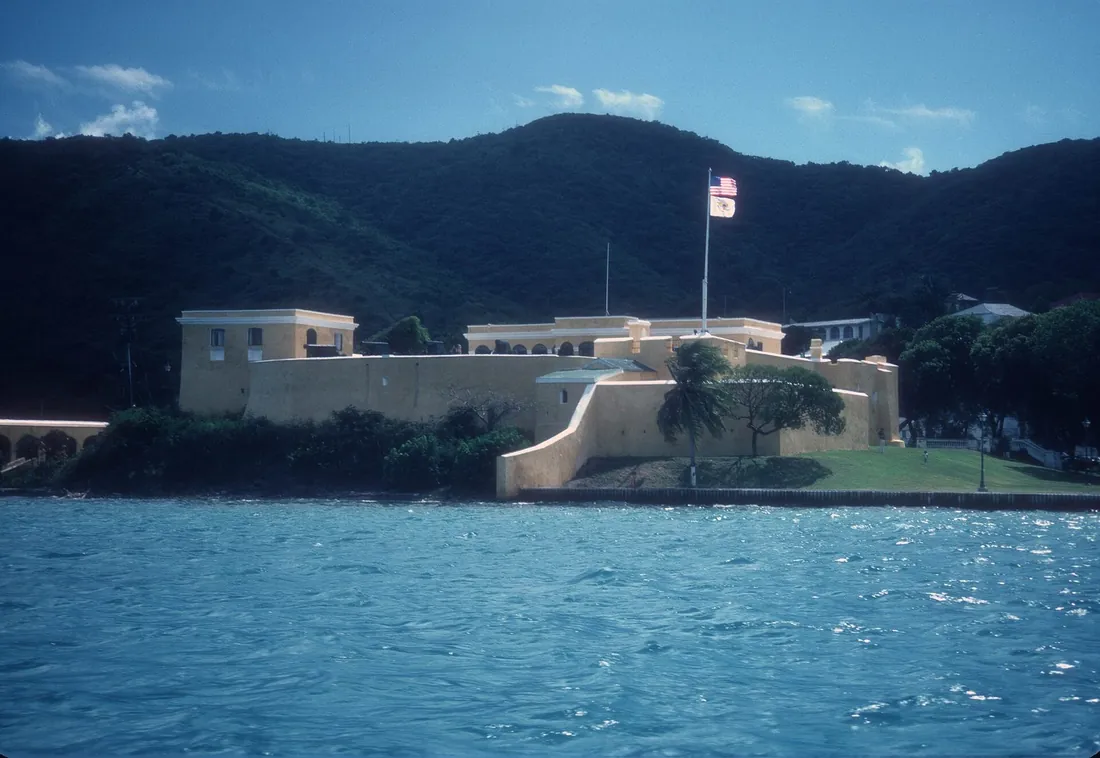
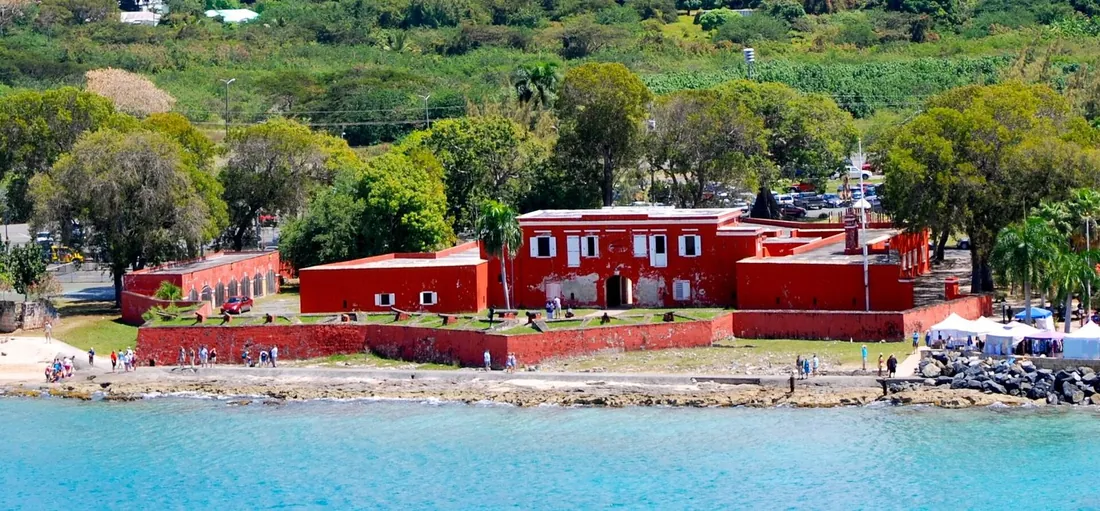
Fort Frederik is the dark-red Danish fort at the north end of Frederiksted's waterfront, begun in 1752 and finished in 1760. On July 3, 1848, thousands of enslaved Crucians surrounded it and refused to leave without their freedom, and Governor-General Peter von Scholten gave it to them on the spot, eleven years ahead of Denmark's schedule and seventeen ahead of the United States. This page is the documentary record of both subjects: what the fort was built to do, how the walls are organized, how the Danish colony traveled from the 1792 trade ban to the 1847 half-measure to the July morning that ended slavery, what happened afterward to the two men at the center of it, and how to visit the rooms where all of it took place.
Why Denmark built it
Frederiksted was platted in 1751 as St. Croix's second town, sited on the island's west coast because deep water runs close to shore there and the trade winds leave that side calm. A roadstead that convenient attracted more than legitimate shipping. The National Park Service lists the fort's assignments in plain terms: hold the west end against rival colonial powers, stop smuggling, shelter the harbor's merchant traffic from pirates and privateers, and keep the enslaved majority of the countryside under military watch. Customs enforcement came first in practice. Ships could anchor off the open coast, land cargo quietly and sail before a revenue officer ever saw them; a battery commanding the anchorage changed that arithmetic, since no captain could clear out without passing under its guns.
Work started in May 1752, under the reign of Frederik V, whose name the fort and the town both carry, and dragged for eight years before the garrison could call it finished in 1760. For most of its Danish career the post ran with a modest complement, several dozen soldiers, because its real leverage was position rather than manpower. Nothing about the design anticipated a European siege; the Caribbean threats it answered were contraband runners, raiders and internal revolt. The irony of its history is that the one event which made it famous was a confrontation its cannon never fired a shot in.

The plan of the fort
The layout survives essentially as the 18th century left it, which is why the building rewards a slow walk. Federal documentation describes a slightly trapezoidal enclosure with diamond-shaped bastions on the two landward corners, southwest and northwest, and a triangular salient projecting from the east side that contained the powder magazine, kept as far as possible from the living quarters for obvious reasons. Facing the sea on the west is a three-pointed masonry water battery, the working end of the customs mission, its embrasures aimed across the anchorage. A walled stable yard closes the north side.
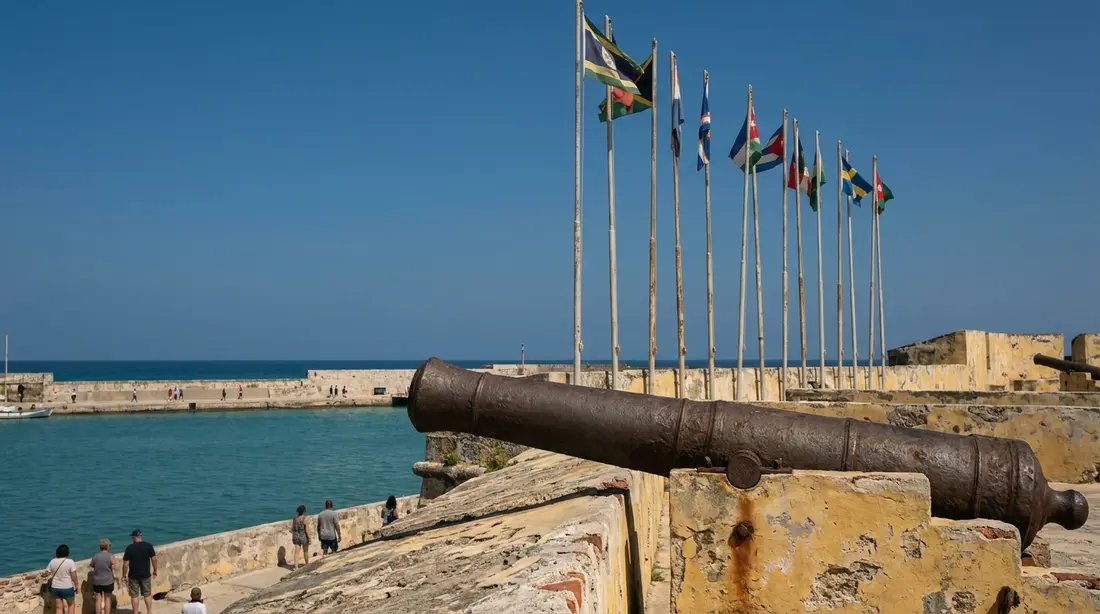
Inside the curtain walls, a ring of rooms opens onto a brick-paved central courtyard: kitchens and quarters for officers and enlisted men, storerooms, and a row of detention cells. The cells deserve a pause. Plantation discipline on St. Croix ran through this building, and people the estates wanted punished or held were locked here; the fort policed the system that the crowd of 1848 came to end. The commandant lived in the only two-story section, built over the main gate on the seaward side, where his windows watched the anchorage his guns controlled. Climb to the ramparts and the whole arrangement explains itself in one look: sea battery to your west, town grid to your south, and below the walls the open ground where history's largest Crucian crowd assembled.
The red walls
The fort wears a deep brick-red with white trim, and the color has become the emblem of the west end, photographed against blue water more than any other subject on that coast. What the published record actually establishes about the paint is narrower than the postcard suggests. The Virgin Islands government emptied the building of offices in 1973 and completed a restoration in 1976 that returned the fort to its documented 1780 configuration, and the red-and-white livery is the scheme that restoration fixed in place. Danish colonial builders on the islands favored strong mineral color on masonry, and St. Thomas's Fort Christian wears a comparable red, so the choice sits inside a real tradition. A precise paint chronology for the earlier centuries, though, is thin in the sources this page relies on, so treat the exact shade as heritage presentation and the walls beneath it as the genuine 18th-century article. Whatever the pigment's pedigree, it earns its keep at sunset, when the last light comes straight off the water onto the west face.
The 1776 salute
Before emancipation gave the fort its meaning, it collected one curious diplomatic footnote. According to the National Park Service, Fort Frederik delivered the earliest reported salute by a foreign government to a vessel of the United States, on October 25, 1776, when an American brigantine standing into the roadstead showed the flag of the newly declared republic and the Danish battery answered. The better-known version of this story belongs to the Dutch island of St. Eustatius, whose Fort Oranje saluted the American warship Andrew Doria that November and entered the textbooks as the first salute; the Danish incident at Frederiksted predates it by three weeks in the NPS account but was a merchantman's courtesy rather than a state gesture toward a man-of-war, which is why historians keep both claims alive with careful wording. For a visitor the footnote has one practical payoff: it explains why July 4 fireworks and July 3 emancipation ceremonies feel so much at home on the same waterfront.
The long approach to 1848
Emancipation at Fort Frederik was the last move in a chess game that had run for half a century. On March 16, 1792, the Danish crown signed an edict ending its subjects' part in the Atlantic slave trade, making Denmark the first European state to legislate against the traffic; the edict then granted a ten-year grace period before taking effect at the start of 1803. The grace period had a calculated purpose. Planters were expected to use the decade to import heavily and balance their labor forces by age and sex so that the population would sustain itself once the ships stopped, and imports duly surged while the window stayed open. Trading people between the islands remained legal after 1803; only the ocean crossing closed.
The demographic bet failed. Estate labor in the cane fields consumed lives faster than births replaced them, and the enslaved population of the Danish islands slid downward through the early 1800s, a decline that itself testified to the conditions on the ground. By 1848, St. Croix held roughly 17,000 people in bondage alongside about 5,000 free Black residents, a countryside where the unfree outnumbered everyone else many times over.
Peter von Scholten, governor from 1827 and in authority over all three islands from 1835, spent the 1830s and 1840s loosening individual planks of the system while leaving its frame standing. Free people of color received full civil equality in 1834. Schools for enslaved children opened at the end of that decade. Von Scholten's household mattered here: he shared his life on St. Croix with Anna Heegaard, a free woman of color, and scholars broadly credit her influence for the direction of his reforms. None of this changed the central fact that a person could still be owned, and everyone in the colony understood which fact was central.
The 1847 decree
On July 28, 1847, King Christian VIII announced Denmark's exit plan: every child born to an enslaved mother from that date forward would be free at birth, and full emancipation for everyone else would follow after a twelve-year transition, in 1859. On paper this looked like a promise. Read from inside the quarters of a St. Croix estate, it was an insult with a date on it. The born-free clause split families down the middle, leaving parents in bondage while their infants were nominally free, and the twelve-year wait asked field workers, whose life expectancy the cane rows had already shortened, to gamble that they would live to collect. A generation that could see Britain's colonies free since the 1830s, and that had watched France abolish slavery in its islands that very spring of 1848, was being told to wait out a working lifetime for what neighbors already had. The decree's real effect was to concede that slavery was ending while inviting the enslaved to doubt they would ever see it end, and eleven months later they closed the gap themselves.
July 2, 1848
The rising began on a Sunday evening. After dark on July 2, estate bells started ringing across the western plantations and conch shells passed the signal from property to property, the same shell-blast communication network the island's maroons had used for generations. Through the night, work stopped and people moved. By morning the roads into Frederiksted carried columns from the west-end estates, armed for the most part with the tools of their labor, machetes and cane bills, and by the time the sun was fully up the town's northern waterfront held a mass of people that contemporary estimates set around eight thousand. They enclosed the fort, took over the police station, and issued their terms: freedom, declared before noon, or the town would burn.
What did the garrison do? Essentially nothing, and that restraint decided everything. The soldiers stayed behind the walls with their cannon loaded and did not fire; the crowd, for its part, kept a discipline that observers on both sides recorded, destroying property in places but taking no lives. A messenger rode east with the ultimatum. The fort that had been built to suppress exactly this event spent the day as its stage instead.
The proclamation of July 3
Von Scholten was at Christiansted, the seat of government at the island's other end, when the news reached him. He had roughly 26 miles of Centerline Road between himself and a choice: order the batteries to clear the crowd and drown the west end in blood, or concede immediately what Copenhagen had scheduled for 1859. Accounts place his carriage in Frederiksted in the mid-afternoon, with the announcement variously timed at three and at four o'clock. Where exactly he spoke is likewise told two ways; one tradition puts him on the ramparts, another has him stepping down from the carriage at the fort's main gate to face the crowd at its own level. The words themselves are consistently reported: "You are free now, you are hereby emancipated."
The formal document followed within a day, printed and circulated through the islands, and its four clauses are worth reading because they sketch the world that was ending. First, all unfree in the Danish West Indies were emancipated from that date. Second, the people of the estates could keep their houses and provision grounds for three months. Third, labor from now on was to be paid by agreement, and the old allowance system of rations ceased. Fourth, estate owners remained responsible for maintaining the aged and infirm who could not work, until further arrangement. Freedom arrived, in other words, wrapped in the bookkeeping of the plantation it dissolved, and the fine print foreshadowed the fight over labor that the next thirty years would bring. The crown in Copenhagen ratified what its governor had done on September 22, 1848.
What is documented about Buddhoe
The rising's leader entered the record under several names, John Gottlieb, John Gottliff, Moses Gottlieb, and lives in Crucian memory as General Buddhoe. The documented spine of his story is short. He came from Estate La Grange, just outside Frederiksted, and was a skilled worker, by most accounts a sugar boiler, one of the most technical jobs an estate had. Witnesses describe him at Frederiksted on horseback with a sword, insisting on restraint, and in the days after July 3 he worked, with Danish officers watching, to settle the estates and prevent reprisal killings. That service bought him nothing. The authorities arrested him, held him about six months at Fort Christiansvaern in Christiansted, and in December 1848 put him aboard the Danish warship Ornen, whose captain, Carl Irminger, confiscated his belongings once the ship cleared the harbor and questioned him repeatedly at sea about the insurrection's planning. He gave up no one. On January 8, 1849, the ship landed him at Port of Spain, Trinidad, with a warning never to return to St. Croix.
There the documents stop, and tradition carries the rest, which this page flags the way the record deserves. Some accounts have him robbed and worked like a crewman on the passage; some trace him to the United States by 1850; another line of memory has him dying in Grenada. None of it is verifiable, and the silence is part of the story: Denmark deported the man precisely so that his history would end offshore. What stands beyond dispute is the sequence at Frederiksted itself, a rising he steered away from massacre and toward a proclamation. The bronze figure in the park below the fort, conch at his lips, blade in hand, is the island's answer to the missing archive; the Frederiksted guide covers the statue and its park in detail.
The days after
Frederiksted lay quiet by nightfall on July 3, but the island did not. Word came that crowds were moving on Christiansted, and the government threw up defended positions with artillery on the approaches to the town; disturbances and reprisals ran through the following days on the east end, and the peace that had held so remarkably at Fort Frederik frayed elsewhere before order settled. Von Scholten himself collapsed with the crisis. He left the islands for Denmark on July 14, eleven days after the proclamation, his health and career both finished. At home he faced a commission trial for exceeding his authority, and the initial judgment went against him; on appeal, Denmark's highest court cleared him, though the sources this page draws on differ on the precise years of verdict and reversal. He died in Altona in January 1854 without seeing the islands again. Danish opinion at the time treated him as a man who had surrendered crown property under threat; Virgin Islands memory has been kinder, while insisting on the correction that matters, that the freedom proclaimed at the fort was taken by the people outside its gate, and only announced by the man at it.
The labor acts and the Fireburn
What the proclamation gave, the legislature promptly fenced. In January 1849 a new labor law bound the freed population to the estates through compulsory yearly contracts at wages set by schedule, with October 1 the single day each year a worker could change employers. Housing and provision grounds came tied to the contract, so leaving an estate meant losing both. Emancipated in law, Crucian field workers spent the next generation inside an arrangement that historians describe as peonage, and the pressure built for thirty years until it detonated on the contract-change day itself: October 1, 1878, when the west end rose again, burned much of Frederiksted and dozens of estates, and produced the four women leaders the islands still honor. The fort figured in that crisis too, this time holding out; the rioters never got inside its walls. That story has its own page in the Fireburn guide, and the plantation world both revolts grew from is laid out at Estate Whim. Read the three pages together and the century falls into order: 1848 ended ownership of people, 1878 broke the contract system that had replaced it, and neither happened because anyone in authority volunteered.
The fort after the soldiers
Once its military purpose faded, the fort became the west end's entire civic apparatus, one tenant at a time. Across the American era that began with the 1917 transfer, the building served as police station, jail, courthouse, fire station, public library and telephone exchange, a resume recorded by the Park Service, and the walls absorbed each conversion without losing their shape. Government offices finally moved out in 1973, and the territorial government's restoration, finished in 1976 for the American bicentennial, stripped the accretions back to the fort's 1780 form and opened it as a museum. Recognition followed on the federal ledger: a contributing structure of the Frederiksted Historic District from 1976, an individual National Register listing on October 8, 1996, and designation as a National Historic Landmark on September 25, 1997, an honor reserved for places of national significance, held by only a handful of Virgin Islands sites.
The museum today
The working museum occupies the restored rooms around the courtyard. At last check the permanent material included the commandant's quarters dressed in period furnishings upstairs, an exhibit built around the Fredensborg, the Danish slave ship whose 1768 wreck off Norway left the trade's most completely documented single voyage, a display on the building traditions of the Danish islands, covered from another angle in our Danish architecture guide, and a gallery space whose art shows change through the year. Posted opening times have run Monday through Friday from 8:30 in the morning until 4, plus Saturday afternoons beginning at 1, and the museum also opens when a cruise ship is alongside the pier; admission has been in the neighborhood of five dollars for adults, with children 16 and under admitted free with an adult. Staffing on a small island being what it is, call before making the fort the anchor of your morning. Budget 45 minutes for a brisk visit and up to 90 if you read everything, which this particular museum rewards.
Walking the fort room by room
A visit organizes itself into four stations. Enter through the west gate and start in the courtyard, the brick-paved square the whole fort faces inward upon; stand at its center and turn once, and you have seen the entire administrative machine of the Danish west end. Second, the cells along the curtain wall: small, thick-walled, and the most direct physical link to the fort's role in plantation discipline, worth more silence than photography. Third, the ramparts and the sea battery, reached by stairs from the courtyard, where the cannon still point across an anchorage that now holds cruise ships and dive boats; from up here, look down at the ground between the fort and the park, because that is where eight thousand people stood on the morning of July 3, 1848, and the sightline from the wall to the ground is the whole event in one glance. Fourth, the commandant's rooms over the gate, the furnished domestic world of the man who ran the machine. Afterward, let the waterfront finish the day: the park and statue below the walls, the Caribbean Museum Center for the Arts three minutes' walk down Strand Street, lunch from the Frederiksted restaurants, a swim at the town beach or Dorsch Beach, and, if you are certified, the pier dive under the structure the fort was built to guard.
July 3 at the fort now
Emancipation Day is a Virgin Islands public holiday, and the fort is its natural address. The observance concentrates on the Frederiksted waterfront: a commemorative walk that leaves Christiansted in the pre-dawn dark and covers the width of the island to reach the fort by morning, retracing in reverse the road von Scholten's carriage took; ceremonies, orators and historians at the fort and the park through the day; quadrille dancers, cultural performances, children's games and food vendors along the water; and fireworks over the pier after dark, with U.S. Independence Day following on the calendar's next page. If your stay covers early July, build that day around Frederiksted and read this page before you go; the full holiday rundown, including the rest of the island's July events, is in our Emancipation Day guide.
Timeline
| Date | Event |
|---|---|
| 1751 | Frederiksted laid out as St. Croix's west-end port town |
| May 1752 | Construction of Fort Frederik begins |
| 1760 | Fort completed |
| Oct 25, 1776 | Reported salute to a vessel flying the new United States flag |
| Mar 16, 1792 | Danish edict against the Atlantic slave trade, effective 1803 |
| 1803 | Transatlantic imports end; inter-island trading continues |
| 1834 | Free people of color gain full civil rights |
| Jul 28, 1847 | Royal decree: children born free, general emancipation set for 1859 |
| Jul 2, 1848 | Bells and conch shells signal the rising across the west end |
| Jul 3, 1848 | About 8,000 surround the fort; von Scholten proclaims emancipation |
| Sep 22, 1848 | Danish crown ratifies the emancipation |
| Dec 1848 - Jan 1849 | Buddhoe deported to Trinidad aboard the Ornen |
| Jan 1849 | Labor act binds freed workers to annual estate contracts |
| Oct 1, 1878 | Fireburn; the fort holds against the rioters |
| 1917 | Denmark sells the islands to the United States |
| 1973 | Government offices vacate the fort |
| 1976 | Restoration to the 1780 configuration; museum opens |
| Sep 25, 1997 | National Historic Landmark designation |
Questions guests ask
How much time does Fort Frederik need, and what does it cost?
Plan on an hour as the comfortable middle: 45 minutes covers the courtyard, cells, ramparts and commandant's quarters at a steady pace, and readers who work through the Fredensborg exhibit will use 90. Admission has been about $5 for adults at last check, with children 16 and under free alongside an adult, and opening times have run weekday business hours plus Saturday afternoons and cruise-ship days. Phone ahead on any day your plans depend on it, since posted hours on the west end flex with staffing. The surrounding park, statue and waterfront cost nothing and take as long as you give them.
Fort Frederik or Fort Christiansvaern: which should we visit?
Both, ideally, because they tell different halves of one story. Fort Christiansvaern in Christiansted is the larger and more polished visit, a National Park Service site inside the historic district, and it explains the machinery of the Danish sugar port. Fort Frederik is smaller, quieter and carries the single most important event in Virgin Islands history on its doorstep. If your trip allows one fort only, choose by theme: colonial commerce in Christiansted, emancipation in Frederiksted. The 40-to-60-minute drive between them is itself the road the news traveled on July 3, 1848.
Was anyone killed on July 3, 1848?
At Frederiksted, no. The garrison never fired, the crowd took no lives, and observers on both sides recorded the discipline that held through the day; property was damaged, people were not. The violence came afterward and elsewhere: crowds moved on Christiansted that night, the government fortified the town approaches with artillery, and the disturbances and reprisals of the following days did produce casualties on the east end before calm returned. The bloodless day at the fort was the achievement of the crowd's own leadership as much as of Danish restraint, which is a large part of why Buddhoe is remembered as he is.
How much of the Buddhoe story is documented?
The arc is documented; the details are tradition. Danish records and contemporary accounts establish a leader from Estate La Grange known by variants of the name John or Moses Gottlieb, his role in restraining the crowd, his work calming the estates afterward, his arrest, roughly six months' imprisonment at Fort Christiansvaern, and his deportation to Trinidad aboard a Danish warship at the turn of 1849. His birth, much of his earlier life, and everything after Port of Spain rest on memory and conflicting stories rather than paper. This guide marks that boundary because the gap is itself historical: exile was designed to erase him, and it half succeeded.
Why is the fort painted red?
Nobody can show you an 18th-century paint receipt, so the candid answer is that the deep red with white trim is the fort's restored livery, standardized when the territorial government returned the building to its 1780 form in 1976. Strong red masonry paint belongs to a genuine Danish colonial palette, and Fort Christian on St. Thomas wears the same family of color, so the scheme is defensible history as well as the west end's favorite photograph. The walls under the paint, rubble masonry from the 1750s, need no defending.
Where exactly was the proclamation made?
Accounts differ, and the fort lets you stand in both candidate spots. One tradition places von Scholten on the ramparts, speaking down to the crowd massed on the ground below the walls; another, drawn from contemporary description, has him stepping from his carriage at the main gate and delivering the words at street level. The reported sentence is the same in either version. Most modern retellings favor the ramparts image, and the annual July 3 ceremonies use the fort and the park below it interchangeably as the stage, which is probably the right answer: the event belonged to the whole ground, walls and crowd together.
Staying near the fort
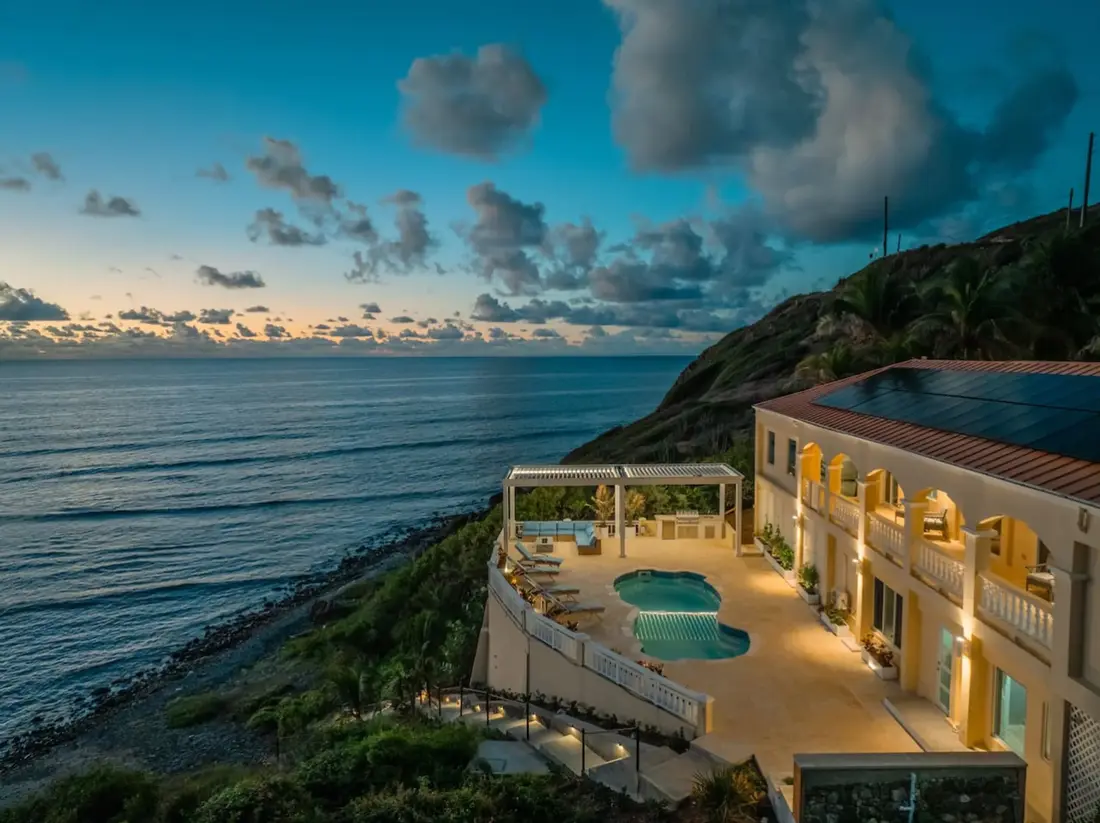
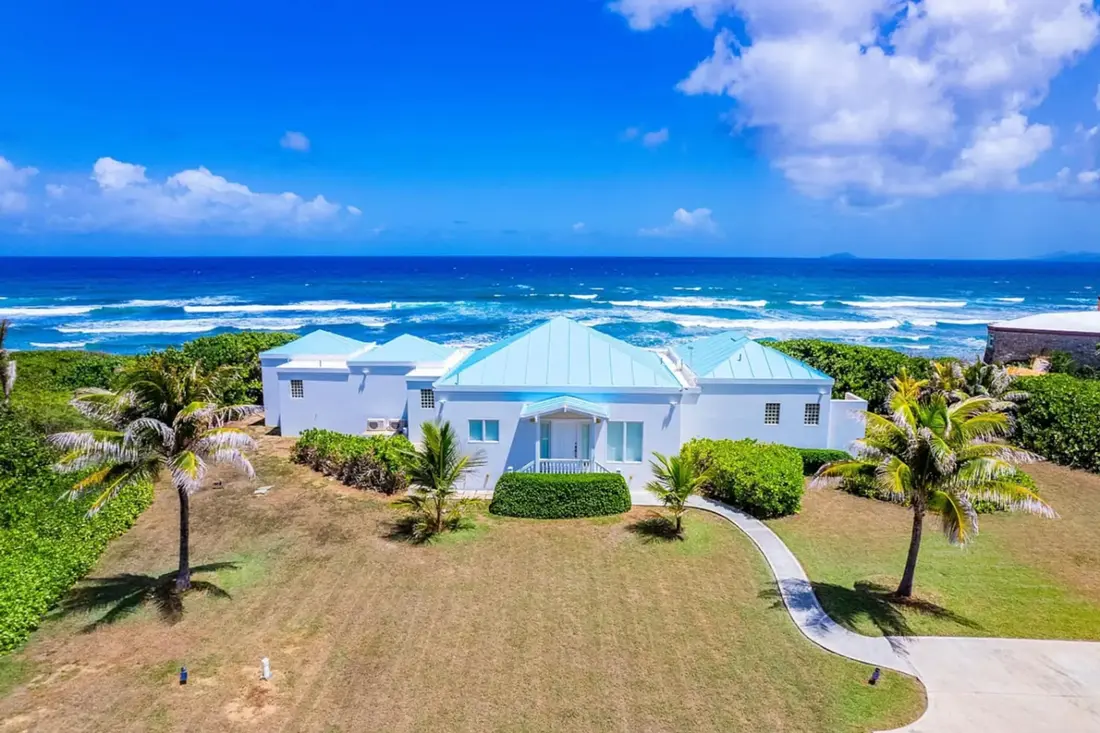
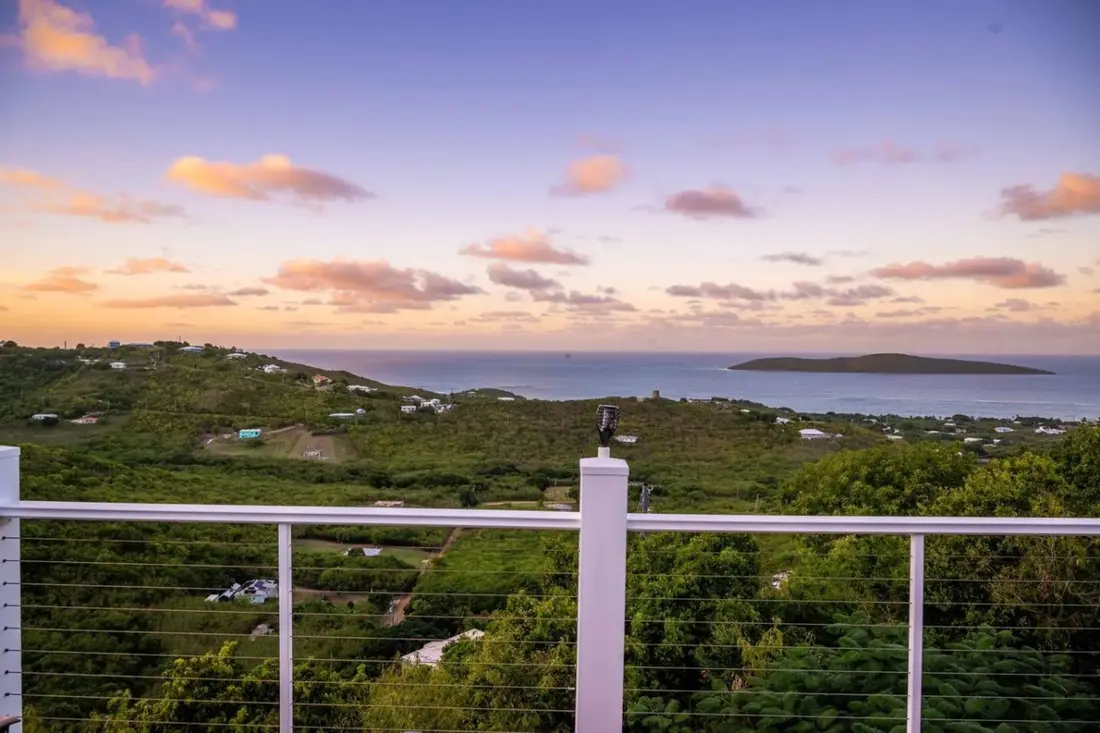
Our Frederiksted home, Sunset Sea-Clusion, puts the fort a few minutes away, close enough to take the museum on one morning, the July 3 ceremonies without a parking plan, and the red walls at sunset any evening of your stay. Guests in our Christiansted and East End villas reach Frederiksted in 40 minutes to an hour and usually fold the fort into a full west-end day of history, beach and sunset; the Frederiksted guide builds that day, and all twelve villas and condos are here.
Sources
Written from official and first-party sources, checked August 2026. Hours, prices and event dates change — confirm before you go.
In this guide
Stay nearby
On The Shoys beach: six bedrooms, six baths, pool and hot tub, room for twelve, and the beach through the back garden.
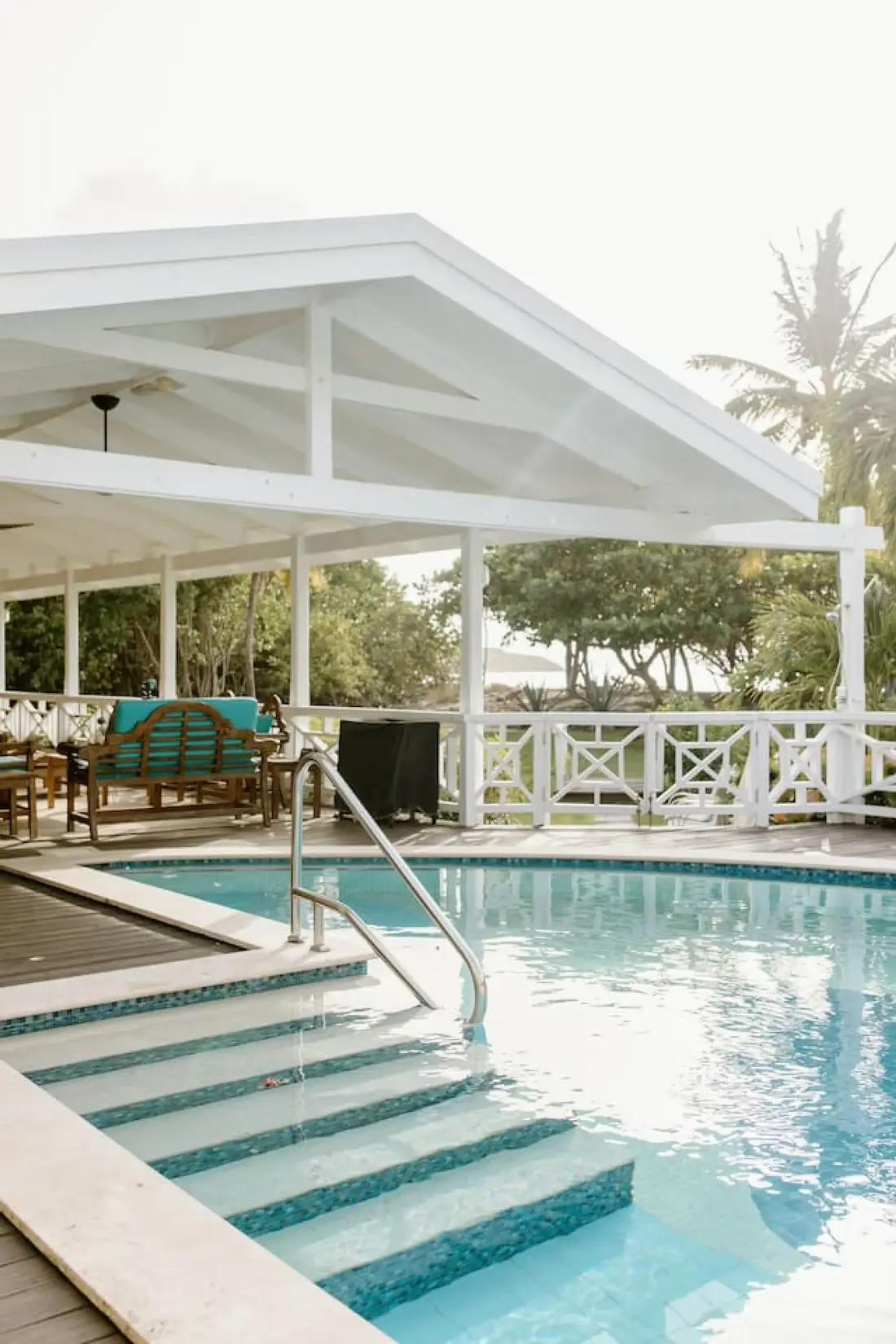 Shoy's Beach House6 bd · 6 ba · sleeps 12 · Christiansted
More in History & Culture
Sources
11 references, listed in full at the end of this guide — official park, refuge, tourism-board and business sources, checked August 2026.