Crucian Christmas Festival
St. Croix's carnival: pageants, calypso and soca monarchs, J'ouvert at dawn, and two parades through Christiansted around New Year's.
The Crucian Christmas Festival is the United States Virgin Islands' carnival as St. Croix keeps it: pageants, the Calypso Monarch and Soca Monarch competitions, a food fair, a festival village that runs into the small hours, J'ouvert in the dark before sunrise, and two parades down King Street in Frederiksted. The 2025-26 edition ran December 26 through January 3, with the children's parade on January 2 and the adult parade on January 3. This page is the full reference: what the festival is, where it came from, every event in the season, and how to attend it well from a villa.
The territory's carnival, held at Christmastime
Each of the three main U.S. Virgin Islands throws its own carnival, staggered through the year: St. Thomas in spring, St. John around the Fourth of July, and St. Croix at the turn of the year. St. Croix's is the Crucian Christmas Festival, and its timing is the first thing to understand, because it separates the island from most of the Caribbean. Carnival in Trinidad and its many descendants land in the pre-Lenten window of February or March. St. Croix ties its festival to Christmas and New Year's instead, a calendar inherited from the island's own history rather than borrowed from anywhere else, and the season builds from the days after Christmas to a two-parade finish in the first days of January.
The festival is produced by the Division of Festivals under the USVI Department of Tourism, and dates are announced each year, usually months ahead. The recent pattern is consistent: the 2025-26 season was scheduled for December 26, 2025 through January 3, 2026, and the 2026-27 season had been announced for December 26, 2026 through January 2, 2027 when we last checked. Older editions stretched the season toward Three Kings Day on January 6, the traditional close of the Crucian Christmas season, and island coverage still ties the festival's climax to that older calendar. Treat every specific date on this page as the recent pattern rather than a promise; confirm the current schedule on the official calendar once your travel dates are set, and see a year of events for how the festival sits in the island's full calendar.
One fact visitors get wrong more than any other: the big public events happen in Frederiksted, the smaller town on the island's west end. The festival village sits on the Frederiksted waterfront, J'ouvert fills Frederiksted's streets, and both parades march through Frederiksted, one block up from the water. Christiansted contributes the harbor boat parade earlier in December and its own Jump Up street nights at other times of year, but festival week belongs to the west end. Plan your driving accordingly; the logistics section below covers it.
Where the festival comes from
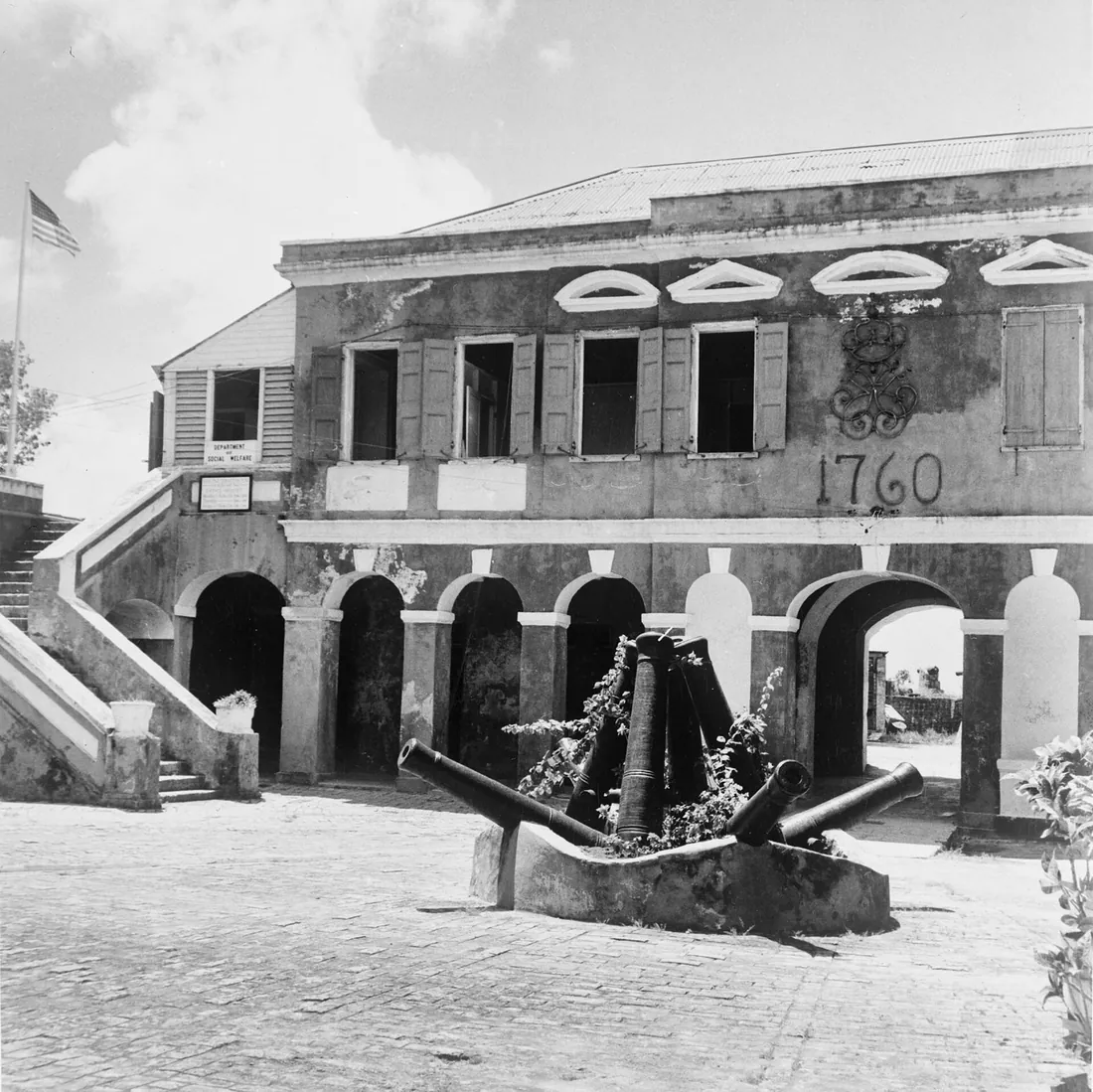
The tradition is older than the festival's name. Under Danish rule, enslaved Africans on St. Croix's plantations were customarily allowed time off at Christmas, and those December days became the year's window for music, dancing, costume and movement between estates. Out of that window grew the island's Christmas masquerade culture: costumed and masked bands with drums and fifes going through the streets and from place to place, a tradition documented across the 1800s and carried on after emancipation in 1848. The stilt-walking mocko jumbie and the scratch band both come out of this lineage, and both are still the festival's signature figures, which is part of why the season carries the weight it does. It is a celebration with a direct line back to the people who built the island.
The organized, official festival is a mid-century creation. The modern Crucian Christmas Festival was founded in 1952, the same era in which carnival was formally revived across the territory, taking the island's existing Christmas traditions and giving them a program: pageants, competitions, a village, scheduled parades. It has run on essentially that structure ever since, administered today by the Division of Festivals. Each year's edition is dedicated to honorees drawn from the island's cultural life; the 2025-26 festival village was named for the Xpress Band, the St. Croix group founded in 1987 that once toured with Trinidad's Mighty Sparrow and holds a festival road-march title from the mid-2000s. That habit of naming the village for musicians and culture-bearers tells you what the festival thinks it is: a stage the community builds for its own.
Quelbe and the scratch bands
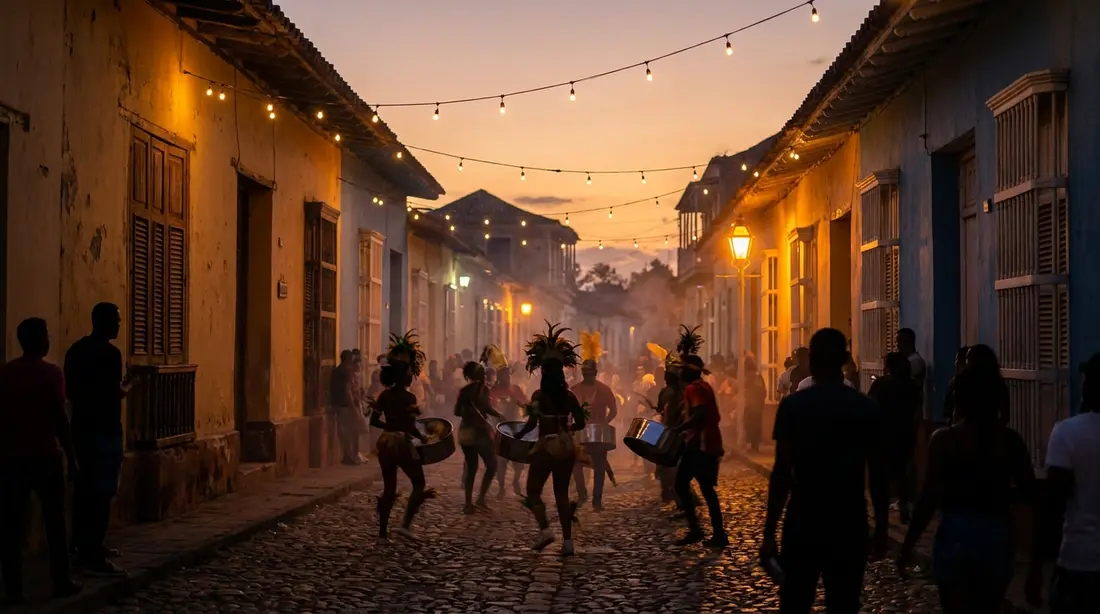
The festival's traditional soundtrack is quelbe, the folk music of the Virgin Islands, played by what islanders call scratch bands. The instrumentation is the definition: a squash (a ridged gourd scraped for rhythm), a steel triangle, a pipe made from tailpipe tubing, banjo or ukulele, guitar, and a flute carrying the melody, with lyrics that run to social commentary, local news and sly humor. The repertoire holds jigs, Crucian merengues and the quadrille melodies that still power organized quadrille dancing on the island. In late 2003 the Virgin Islands Legislature voted to designate quelbe the official traditional music of the territory, and the bill was signed into law weeks later, a formal recognition of a sound that had carried the culture for well over a century.
St. Croix is the tradition's stronghold. Stanley Jacobs, the Crucian flutist who co-founded the Ten Sleepless Knights and spent decades pushing quelbe from stigma to official status, was named a National Heritage Fellow by the National Endowment for the Arts in 2022, the United States' highest honor in the folk and traditional arts; the band he led played parties, quadrille dances and carnival parades for more than half a century. An earlier generation's standard-bearer, James "Jamesie" Brewster, was the subject of the documentary Jamesie, King of Scratch. During festival season you hear the tradition at the village, in the parades and at cultural events around both towns; our mocko jumbies and quelbe guide covers the music on its own page.
Guavaberry season
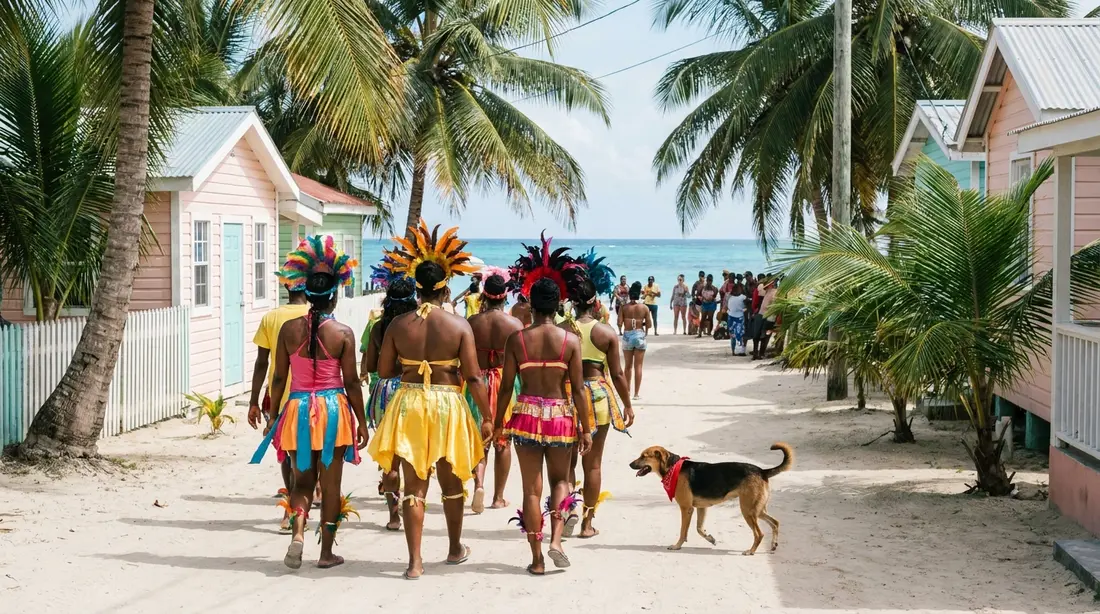
Christmas on St. Croix has its own drink. Guavaberries, small dark fruit that grow wild on the islands and ripen in December, are steeped with rum, spice and sugar into guavaberry liqueur, made at home in batches that families start weeks or months ahead; the old method carries a little of last year's batch into the new one. The drink is inseparable from a caroling custom: singers historically went door to door at Christmastime with a morning serenade asking for guavaberry, and the households they sang to answered with a pour of the liqueur and something from the holiday table. The best-known guavaberry song in the islands was written by the Virgin Islands composer Bill La Motta, and you will still hear it through the season.
For a visitor, guavaberry is a taste worth chasing rather than a bottle to expect on every shelf. Home batches outnumber commercial ones, so look for it at holiday markets and cultural fairs, ask at the festival village drink booths, and accept happily if a host offers. December visitors will also see sorrel, the deep-red hibiscus drink that peaks at Christmas, sold alongside it; both are covered in the Crucian food guide.
The boat parade that opens the season
Before the festival proper begins, Christiansted gets its night. The St. Croix Christmas Boat Parade fills Christiansted harbor on the second Saturday of December: dozens of boats strung with lights circling the waterfront in the dark, competing for prizes in categories like best lighting and best music, with entertainment and vendors along the shore and fireworks to finish. It is a separate, community-run event rather than a Division of Festivals production, but on the island's calendar it works as the season's opening act, and it is billed as the largest holiday boat parade in the Caribbean. If your trip lands in mid-December, it is the easiest festival-season evening there is: dinner in town, then the harbor. St. Croix in December covers the rest of the month around it.
Pageants and the monarch competitions
The festival's competitive backbone runs through the week between Christmas and New Year's. The pageants crown the season's royalty: a Princess Pageant for the younger title and the Miss St. Croix Queen Pageant for the crown, full production nights with talent, costume and interview segments that families dress up for. In the 2025-26 edition the Princess Pageant fell on December 26 and the Queen Pageant on December 28. Between and after them come the music titles. Calypso Monarch, held December 27 that season, is the traditional crown: composed calypso performed live, judged on lyrics as much as melody, with the social-commentary bite the form was built for. Soca Monarch, December 30 that season, is its high-energy sibling, judged on power and crowd response. Winners carry their titles all year, and the competitions are taken seriously; these are contested crowns with histories, and the audiences know the field. For a visitor they are the most local-feeling ticketed nights of the season, and a good way to hear the difference between calypso and soca explained by example.
The festival village
The village is the season's engine room: a fairground built on the Frederiksted waterfront and named each year for that edition's honorees. Inside are rows of booths cooking traditional food, drink stands, rides and games for children, craft vendors, and a main stage that runs nightly bills of local, regional and international acts. In the 2025-26 edition the village was open evenings from around 6 p.m. to 1 a.m., with the headline entertainment concentrated from December 29 through January 3 and the stage performances free once inside; gate and admission arrangements are announced with each year's schedule, so carry cash and check the current lineup rather than assuming. Quelbe and steel pan share the schedule with soca, reggae and dancehall headliners, and the village crowd swings from families with small children in the early evening to a late-night dance as the hour moves.
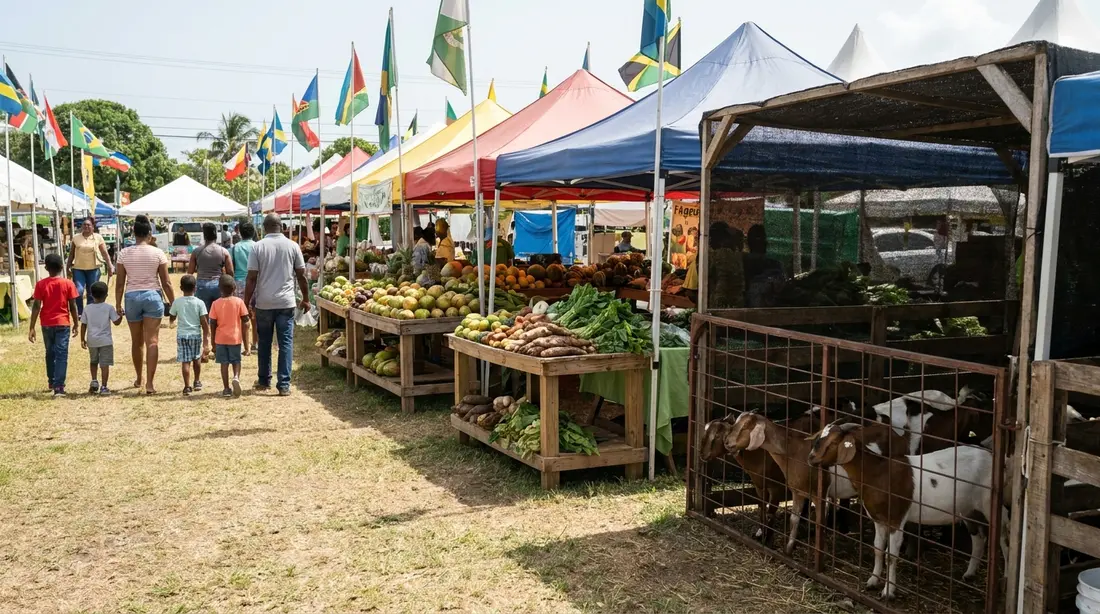
The food booths deserve their own visit, and a hungry one. Expect johnny cakes, saltfish pate, stewed and grilled meats, kallaloo, tamarind and local juices, and the full sweets table; the booths are run by island cooks competing for reputation, and festival food is a genuine branch of Crucian cooking. Our pate guide and food guide explain what everything is before you get in line.
J'ouvert and the food fair
J'ouvert, from the French for daybreak, is carnival's pre-dawn street party, and St. Croix keeps the tradition. Revelers gather in Frederiksted in the dark and move through the streets behind music trucks as the sky lightens, many dusted in paint or powder in the classic J'ouvert style, and the party runs into the morning. In the 2025-26 edition J'ouvert fell on the morning of December 31, ringing the year out; the slot moves with each year's schedule, so check where it lands in yours. It is the season's most physical, least curated event, an adult-leaning tramp rather than a family outing, and it is glorious if that is your speed. Later that same day in 2025-26, from noon, came the Food Fair, the daytime showcase of traditional Crucian cooking and drink, a calmer and completely family-friendly counterweight to the morning.
The children's parade and the adult parade
The parades are the finish line, and they belong to Frederiksted. Both run along King Street, one block up from the waterfront, through the middle of the island's westernmost town. The children's parade comes first, a full-scale production in its own right: school groups, dance troupes, majorettes, junior mocko jumbies and youth steel pan, in costume themes their groups have worked on for months. Watching several hundred kids in sequins take a small Caribbean town's main street is one of the island's best afternoons, and the crowd treats it that way. In the 2025-26 season it ran on January 2.
The adult parade, January 3 that season, is the single biggest street day of St. Croix's year. The entries follow carnival's traditional vocabulary: troupes, the costumed marching groups built around a theme; floupes, the local term for a troupe traveling with its own float; steel pan and brass on wheels; majorettes; Indians and clowns in the old masquerade line; and mocko jumbies working the route above everyone's heads. Music trucks carry the sound, costume sections roll past in waves, and the parade takes hours to pass any single point, running from late morning deep into the afternoon. Start times and lineups are published with each year's schedule. Bring more time than you think the event needs; the parade is not something you check off, it is the day.
Mocko jumbies
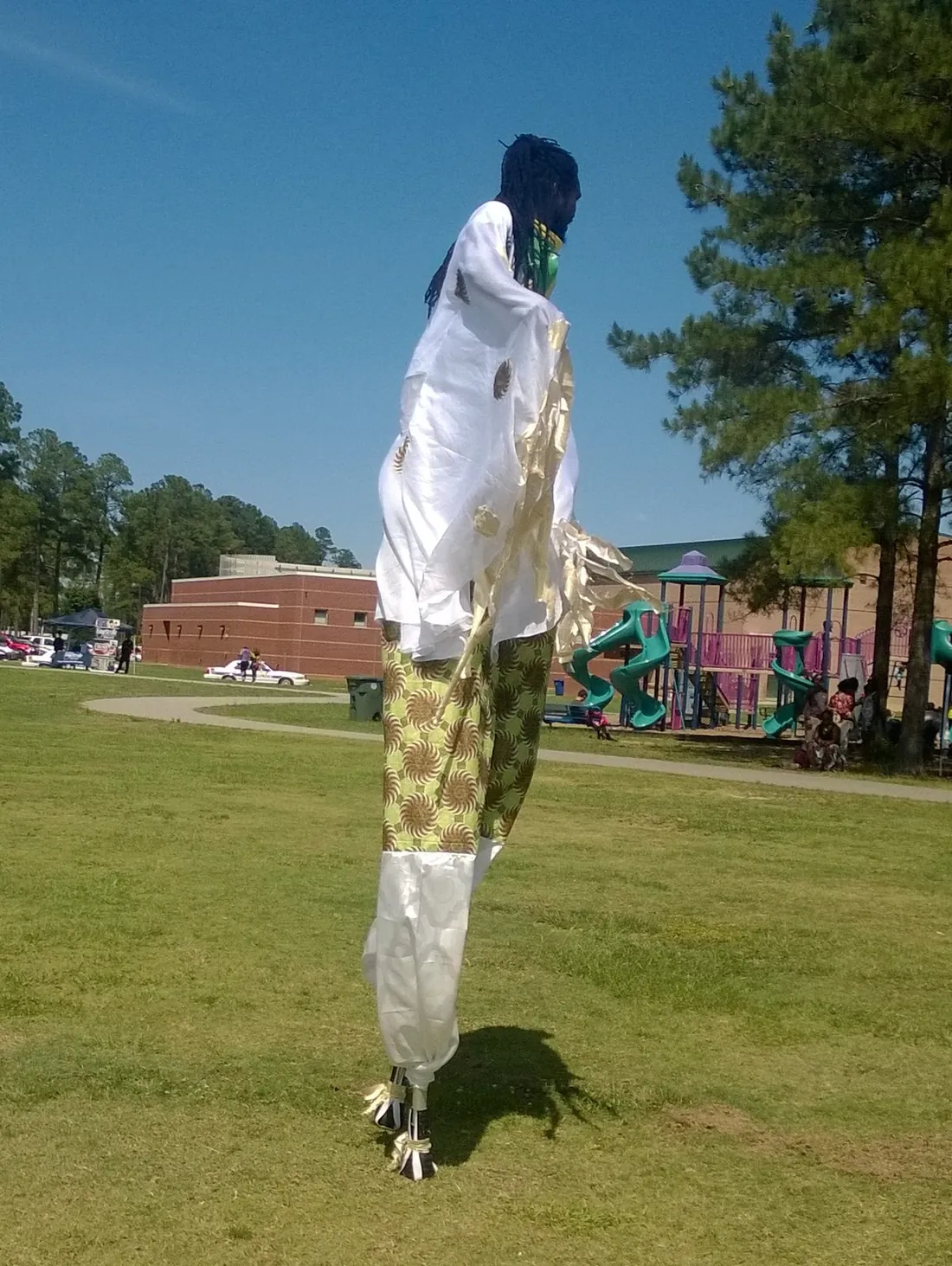
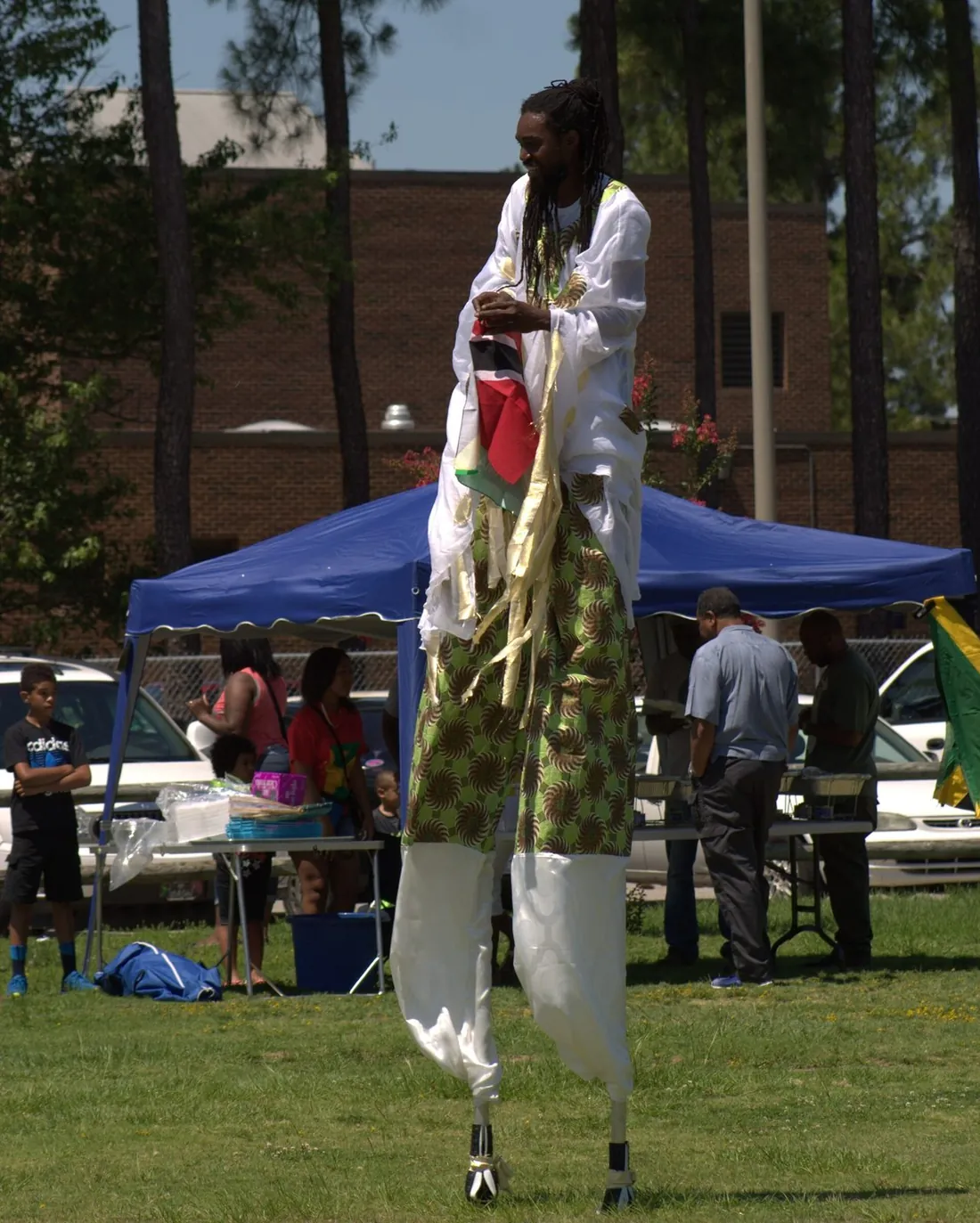
The stilt walker is the festival's emblem, and the tradition is worth understanding on its own. The mocko jumbie descends from West and Central African masquerade, where towering stilt figures embodied protective spirits whose height let them see trouble coming; the tradition crossed the Atlantic with enslaved Africans and took root across the Caribbean. The name itself is a compound of African and Caribbean pieces, with "jumbie" being the islands' word for a spirit or ghost. On St. Croix the figure has been part of Christmas masquerade and carnival for as long as either has existed, and the island treats the tradition as a living inheritance: community groups and school programs teach stilt work to each new generation, so the jumbies on the parade route range from veterans to first-year kids on short stilts.
In practice, you will see them everywhere the festival goes: leading and threading through both parades, at the village, and at cultural events through the season, costumed head to toe and dancing on stilts that put them several feet above the crowd. They also appear at Christiansted's Jump Up nights and at events across the year, so a trip that misses festival season has other chances. The dedicated guide goes deeper on the history.
The food of the season
Crucian Christmas has a table of its own, and festival season is when all of it appears at once. Kallaloo, the island's West African-rooted stew of greens, okra and meat or seafood, is the traditional dish of Old Year's Night; island custom holds that a pot of kallaloo as December 31 turns to January 1 sets the new year right, and generations of Crucian families have cooked it exactly then, historically as a shared pot that neighbors contributed to. Guavaberry liqueur and sorrel are the season's drinks. The festival village and the Food Fair put the whole street-food canon in one place: pates, johnny cakes, fish and fungi, stewed oxtail and goat, roast pork, provisions, tarts and sweet breads. December also brings out red grout, the guava-and-tapioca dessert inherited from the Danish era. For the full vocabulary, start with the Crucian food guide and the kallaloo and fungi page; for where to eat in the parade town itself, Frederiksted's restaurant guide covers the year-round kitchens.
Parade day from a villa, done well
Parade days transform Frederiksted, and the difference between a great day and a hard one is mostly logistics. The advice below is built for guests staying in our villas, most of which sit near Christiansted and the East End, a 40-minute to one-hour drive from the route.
- Go early. The parade town fills from mid-morning, the closest parking goes first, and the drive west is easiest before the island is all moving the same direction. Aim to be parked before the published step-off time, and treat the morning as part of the outing: coffee and a walk on the waterfront beat sitting in a line of cars.
- Park on the edges and walk in. The blocks around King Street close or fill; the northern end of town toward the fort and the southern end toward the beach are the standard overflow, and everything in Frederiksted is flat, walkable blocks from everything else.
- Claim shade before you claim a sightline. The route runs through full Caribbean sun for hours. A spot under a gallery overhang or a tree is worth thirty feet of sightline, and locals set up chairs and coolers early; you can too.
- Carry water, sunscreen, a hat and cash. Vendors line the route, cash moves faster than cards, and the day is long by design.
- Decide the drive home before dark if you want an easy exit, or stay for the evening and eat in town while the traffic drains. The post-parade hour is the day's one slow drive; there is no way around the fact that one road system is emptying one small town all at once. Taxis can be arranged for groups that would rather not drive at all; see taxis and getting around and the getting-around page.
Remember the island-wide constants: driving is on the left, there is no Uber or Lyft, and your phone works like it does at home. For the town itself beyond festival week, our Frederiksted guide is the reference.
Village nights and family fit
The village runs on a different clock from the parades, and families can use that. Early evening, roughly the first two or three hours after the gates open, is the family window: rides and games running, food booths at full strength, the stage warming up, small kids everywhere. The later it gets, the more the village becomes a concert and a dance, and headline sets have historically run toward the 1 a.m. close. There is no reason a family with young children and a couple chasing a soca headliner cannot both love the village; they just attend different shifts of it.
Across the season, the family fit sorts roughly like this: the boat parade, the children's parade, the Food Fair and early village evenings are comfortable for all ages; the adult parade is family-friendly along the route but long, hot and loud, so plan shade and exits for small kids; the pageants and monarch shows are seated productions that suit older kids fine; J'ouvert is the adult end of the season. None of it is velvet-roped; all of it rewards showing up with the patience the event's own crowd brings.
Booking a festival trip
Be clear-eyed about the calendar: festival season sits inside the most expensive, most booked weeks of the island's year. The stretch from Christmas through the first days of January is peak season's peak, and it books earliest of all. Villas take reservations far in advance for those weeks, minimum-stay requirements are standard, and rental cars sell out island-wide, so the car should be reserved the same week the villa is; see renting a car. Guests who want festival week in a specific home should be planning the better part of a year out, and flexible travelers should note that the first weeks of January after the parades offer the same weather with the holiday premium gone; St. Croix in January makes that case. The trade-off is real and worth naming: festival week costs more and books harder, and it is also the single most culturally alive week the island offers.
A celebration guests join
A last note on posture. The Crucian Christmas Festival is not staged for visitors; it is the island's own party, built by school groups, bands, cooks, seamstresses and committees for their own community, with roots in the days enslaved Crucians claimed for themselves. Guests are welcome at all of it, and the welcome is warmer for visitors who arrive as guests rather than as an audience: buy from the booths, applaud the kids' troupes like everyone around you, ask what a squash is or what floupe means, accept the pour of guavaberry, and let the day run on island time. The festival rewards exactly the travelers a villa week tends to attract, the ones who came to be on St. Croix rather than merely near it.
Season timeline
Dates below follow the 2025-26 edition and the recent pattern. Every year's schedule is announced by the Division of Festivals, events move between editions, and the 2026-27 season had been announced for December 26 through January 2 at last check; confirm the current calendar before building plans around any single line.
| When (recent pattern) | Event | Where |
|---|---|---|
| Second Saturday of December | Christmas Boat Parade (independent of the festival) | Christiansted harbor |
| December 26 | Season opens; Princess Pageant | St. Croix venues |
| December 27 | Calypso Monarch | St. Croix venues |
| December 28 | Miss St. Croix Queen Pageant | St. Croix venues |
| Late December through the parades | Festival village, nightly from evening to about 1 a.m. | Frederiksted waterfront |
| December 30 | Soca Monarch | St. Croix venues |
| December 31, before dawn | J'ouvert | Frederiksted streets |
| December 31, from noon | Food Fair | Frederiksted |
| Old Year's Night | Kallaloo tradition; New Year's celebrations | Island-wide |
| Early January (Jan 2 in 2025-26) | Children's parade | King Street, Frederiksted |
| Early January (Jan 3 in 2025-26) | Adult parade; season closes | King Street, Frederiksted |
| January 6 | Three Kings Day, the traditional end of the Crucian Christmas season | Island-wide |
Questions guests ask
When is the Crucian Christmas Festival?
From the days right after Christmas into the first days of January, with exact dates announced each year by the Division of Festivals under the USVI Department of Tourism. The 2025-26 edition ran December 26 to January 3, and the 2026-27 season had been announced for December 26, 2026 to January 2, 2027 when we last checked. The parades land at the end of the run, in early January. Older editions reached toward Three Kings Day on January 6, so treat the season as roughly two weeks of possibility and confirm the current schedule before locking plans.
Where do the festival events happen?
Frederiksted, on the island's west end, hosts the core of it: the festival village on the waterfront, J'ouvert, the Food Fair, and both parades on King Street. Pageants and the monarch competitions are staged at venues announced with each year's schedule. Christiansted's contribution to the season is the harbor boat parade on the second Saturday of December, which is community-run and separate from the festival organization. If you are staying near Christiansted or the East End, plan festival outings as west-end days with a 40-minute to one-hour drive each way.
Do we need tickets?
The street events are free: the parades, J'ouvert and the boat parade are public and unticketed, and you simply find a spot. Pageants and the Calypso and Soca Monarch shows are ticketed productions. The festival village's gate arrangements are announced with each year's schedule; in the 2025-26 edition the nightly stage performances were billed as free, and any admission charged at the gate has been modest in recent editions. Carry cash for gates, booths and vendors regardless, since it moves faster than cards everywhere in the village.
Is the festival good for kids?
Much of it is built for them. The children's parade is one of the island's great family events, the Food Fair is a daytime outing, the boat parade is an early evening on the Christiansted waterfront, and the village's first hours each night run rides, games and food with small children everywhere. The adult parade works for families too, with shade and an exit plan, since it is long and loud. J'ouvert and the village's late hours are the adult end of the season. Our traveling with kids guide covers the island's family logistics generally.
What exactly is J'ouvert?
Carnival's daybreak street party, named from the French for the opening of the day. On St. Croix it means gathering in Frederiksted in the pre-dawn dark and moving through the streets behind music trucks as the sun comes up, with many revelers dusted in paint or powder in the tradition's classic style. In the 2025-26 season it fell on the morning of December 31; the slot can move between editions. It is energetic, crowded, adult-leaning and unlike anything else on the island's calendar. Wear clothes you are willing to sacrifice, and arrange the ride there before you go to bed, because it starts earlier than any vacation morning you had planned.
How far ahead should we book for festival week?
Further than any other week of the year. The Christmas-to-New-Year's stretch is the island's peak demand, villas carry minimum stays then, and specific homes go to guests who planned the better part of a year out. Rental cars sell out island-wide in the same window, so book the car when you book the house. If the festival itself is the draw and the holiday premium is not, note that the parades fall in early January, so a stay that starts just after Christmas or spans New Year's into January catches the biggest events while the earliest weeks of December stay far cheaper and quieter.
Festival season from our villas
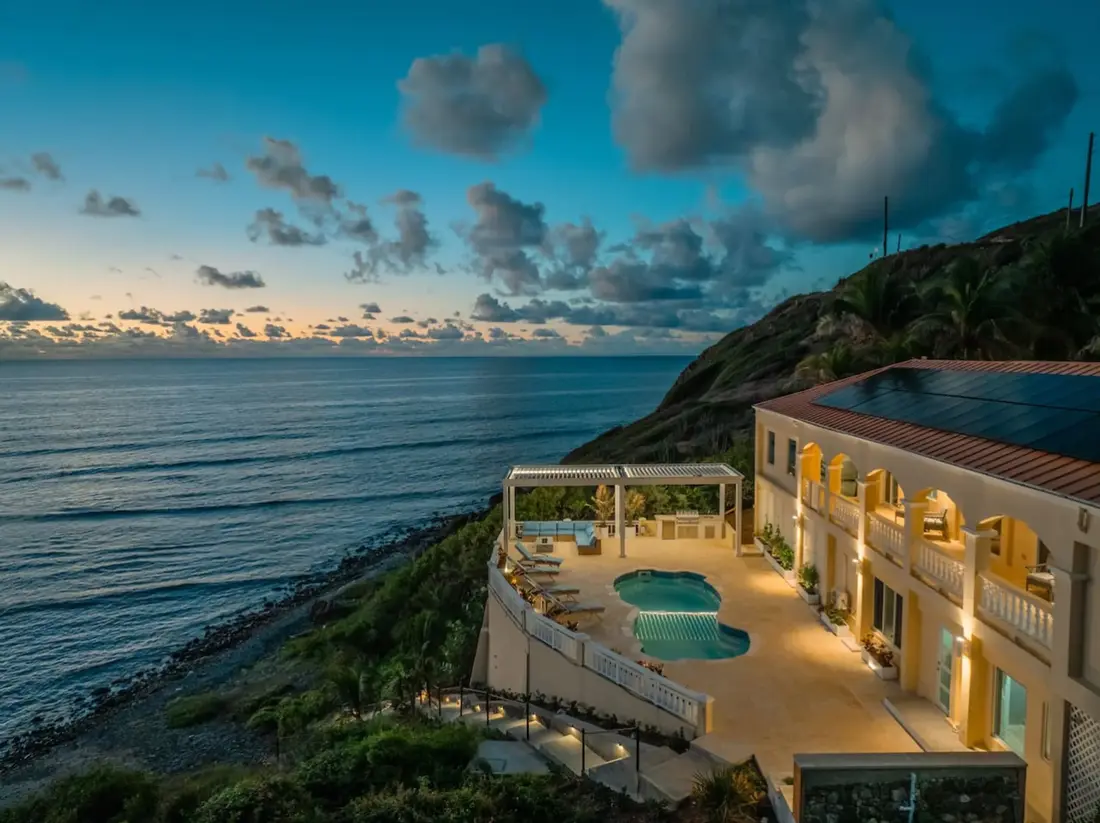
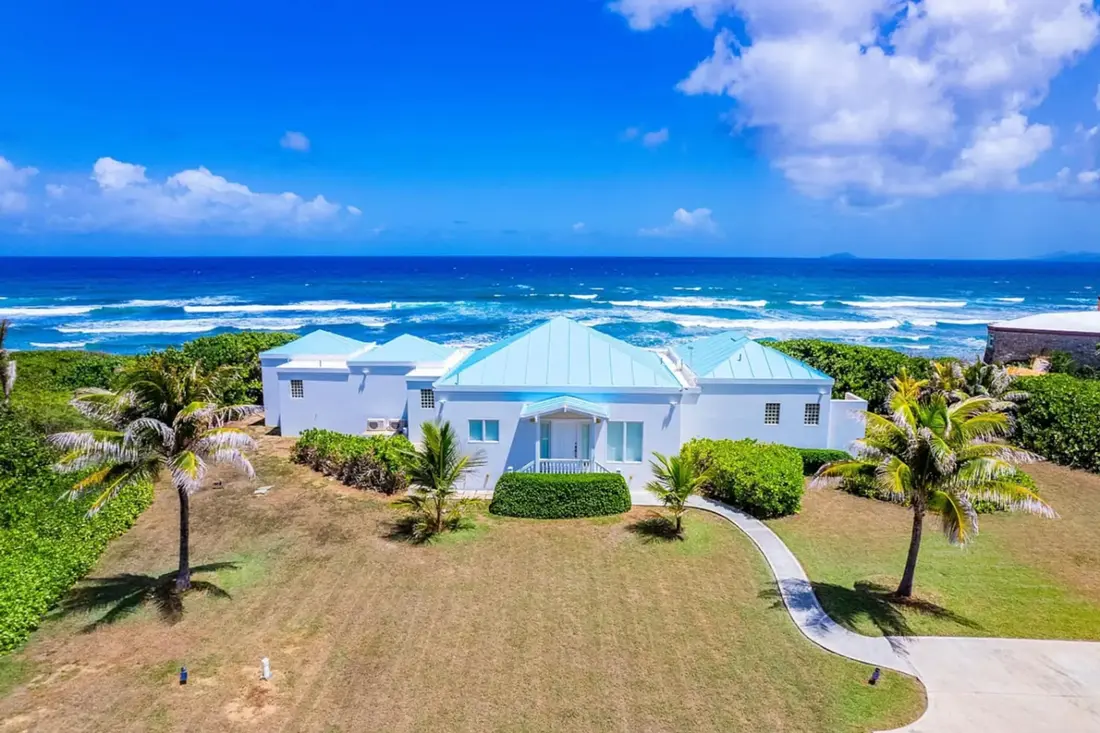
Our homes put you on either end of the season's map. Sunset Sea-Clusion sits in Frederiksted itself, walking distance from the village, J'ouvert and the parade route, which for festival week is the single most useful address on the island. The rest of our twelve villas and condos cluster near Christiansted and the East End, first in line for the boat parade and an easy drive west on parade days, with room for the whole family to recover by the pool between events. Holiday weeks book far ahead, so start the conversation early and tell us the festival is the reason; we plan around it every year.
Sources
Written from official and first-party sources, checked August 2026. Hours, prices and event dates change — confirm before you go.
In this guide
Stay nearby
On The Shoys beach: six bedrooms, six baths, pool and hot tub, room for twelve, and the beach through the back garden.
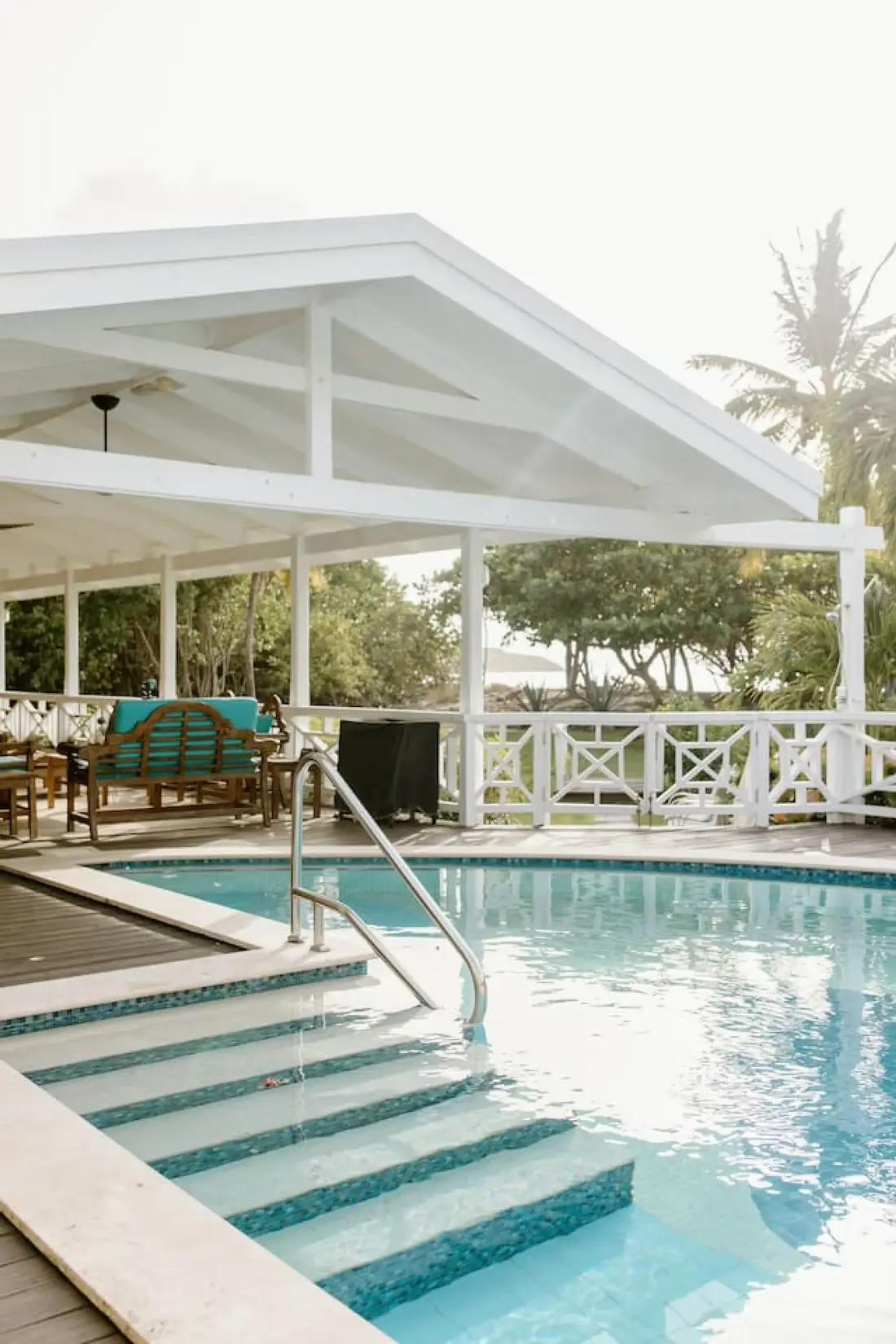 Shoy's Beach House6 bd · 6 ba · sleeps 12 · Christiansted
More in Events & Festivals
Sources
12 references, listed in full at the end of this guide — official park, refuge, tourism-board and business sources, checked August 2026.