Day Sails & Catamaran Trips
Most day sails run from the Christiansted boardwalk to Buck Island; Frederiksted adds live-music sails at sunset. How the fleet breaks down.
St. Croix does its daytime sailing on a small fleet of owner-run multihulls, and most of it orbits Buck Island. That makes choosing a boat here a different exercise than in the charter capitals up north: the question is less which company than which kind of day — a snorkel sail to the monument, a swim-and-sail afternoon off Frederiksted, a two-hour history sail out of Salt River, or a winter afternoon aboard a wooden schooner. This page maps those trip types, explains what a day under sail here feels like hour by hour, and gives the catamaran-versus-monohull decision the plain treatment it deserves.
The shape of the fleet
Sail-crazy corners of the Caribbean measure their fleets in marinas. St. Thomas supports a big day-charter industry off its cruise piers, and Tortola, an hour's flight away, is one of the world's largest bareboat bases. St. Croix's scheduled day-sail roster, by contrast, fits on one hand, and the island likes it that way. Nearly every boat is run by the captain who owns it, several have been in the same family for decades, and two of them carry no engine at all.
Two forces keep the list short. First, the island's marquee destination is a federally protected reef: commercial landings at Buck Island Reef National Monument are limited to five authorized concession operations, so the core of the fleet is capped by the National Park Service rather than by demand. Second, St. Croix never became a yachting hub — no mega-marina, no bareboat base — so the boats that exist are working day boats, built for snorkel stops and beach landings rather than week-long itineraries.
One detail visiting sailors enjoy: some of these hulls were built on this island. Gold Coast Yachts, the multihull builder at Salt River, delivered its first commercial boat decades ago — the 42-foot trimaran Teroro II, which is still sailing the same Buck Island run today from the East End. A day sail here can put you on a Crucian-built boat, sailed by a Crucian family, over a reef Crucians pushed to protect in 1961.
The island also races. The St. Croix Yacht Club at Teague Bay, a private club dating to 1952, hosts the annual St. Croix International Regatta and doubles as the departure dock for the oldest one-captain Buck Island operation. Visitors cannot rent club boats, and no bareboat outfit operates here, so travelers who want to sail themselves should plan on a crewed charter with a captain willing to hand over the helm — several are, if you ask when booking. For everyone else, the crewed day sail is the product, and the rest of this page is about choosing the right one.
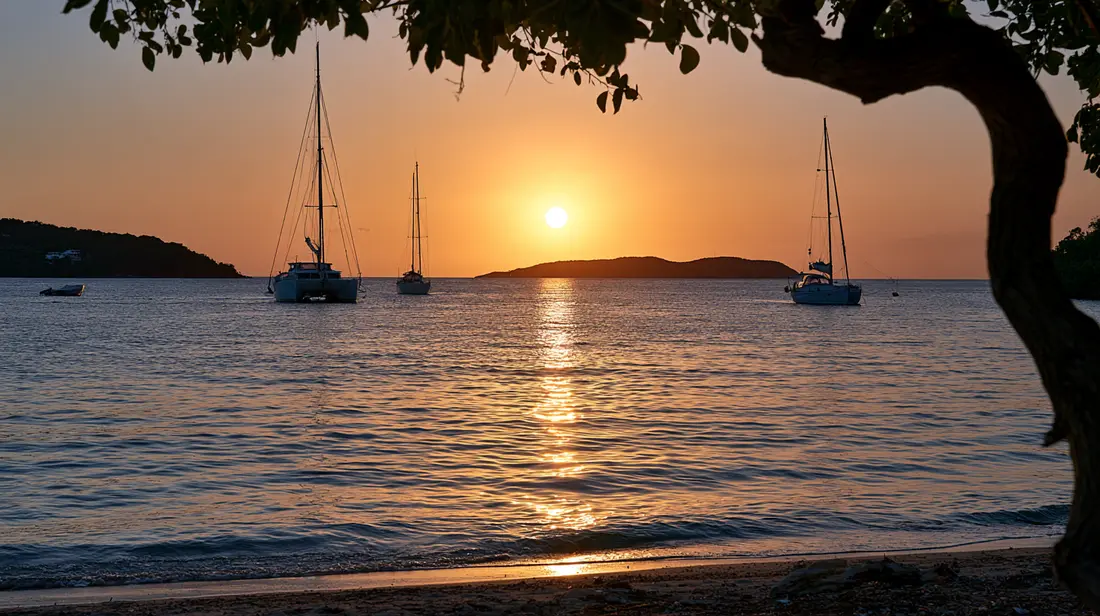
Two coasts, one channel
Geography sorts the fleet into two camps. The Christiansted side faces the trade winds. Boats leave the harbor or the East End marinas and work the north shore, and the open stretch between the mainland and Buck Island gets whatever the trades are serving — lively and wet on a windy winter day, near-flat on a summer morning. The reward for the exposure is real sailing: steady breeze, a proper reach across the channel, and the monument at the end of it.
The Frederiksted side is the island's wind shadow. The west coast lies in the lee, so its water stays calm when the north shore is white-capped, and the day boats there sail gentle miles over sand flats, reef patches and the pier's wreck sites. Less spray, less heel, easier swimming — the trade is a quieter ride in exchange for a less athletic sail.
Timing follows the same logic everywhere on island: breeze builds with the day, so morning departures get the smoothest water and afternoon departures get the most wind. The seasonal wind calendar — Christmas Winds in winter, glassy spells in summer — lives in the weather guide, and it applies to sails exactly as it does to beaches.
Trip type one: the Buck Island snorkel sail
This is the flagship product and the trip most visitors mean when they say they went sailing on St. Croix. A concession boat crosses from Christiansted or the East End, guests swim the marked underwater trail through the elkhorn coral, and the day usually adds beach time on Turtle Beach. The five authorized operations — Big Beard's Adventure Tours with the sailing cat Renegade and the power cat Adventure, Caribbean Sea Adventures with its multi-boat fleet including the power cat Celebration, Captain Mike's Jolly Roger, a 42-foot cat that keeps its passenger count intentionally low, Llewellyn's engine-free trimaran Charis from the yacht club at Teague Bay, and the trimarans Teroro II and Dragonfly from Green Cay Marina — each get a full profile, with published prices, departure times and cancellation terms, in the Buck Island boat tours guide. Read that page to pick your operator; stay on this one to decide if the monument run is even the right trip type for your group, because it is the most structured day on this list. Park rules script the snorkel, the landing and the schedule, and on the scheduled boats you share the deck with other parties. Wonderful, and worth its fame — also the least improvisational sailing on the island.
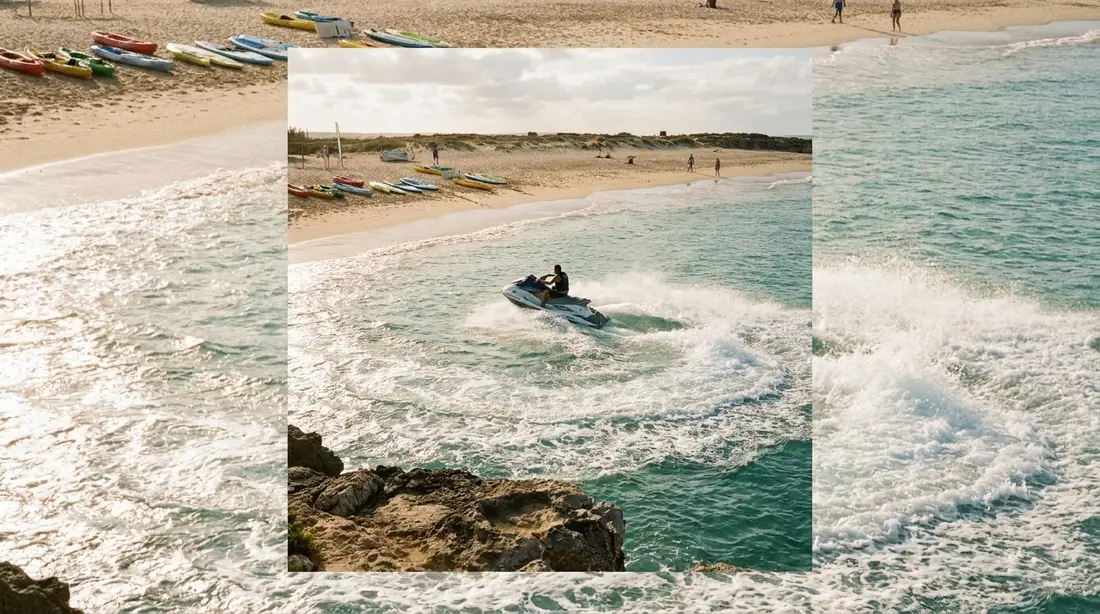
Trip type two: the west-coast sail and swim
The unstructured alternative sails out of Frederiksted. Lyric Sails runs the Jolly Mon — a 63-foot custom sailing catamaran, Coast Guard inspected for 49 passengers, the biggest sailboat working the island — and while the company is best known for its live-music evenings and its monthly full-moon sails, its daytime side is the west coast's easy afternoon: private day sails offered daily at last check, plus a Sunday group sail the company brands its Funday sail. The formula is hours of slow sailing on lee-calm water with snorkel stops over reefs and shipwrecks — this coast keeps its sunken hulls close to shore, as the Butler Bay wrecks guide details — and swim breaks off the boat with no park regulations and no fixed circuit.
Christiansted-side equivalents exist for groups that would rather stay east: Caribbean Sea Adventures publishes a full-day sailing trip aboard Wave Dancer in season, Jolly Roger sells private sailing days on its 42-footer, and Inconceivable Marine Services lists custom outings on a 42-foot sailing catamaran. All of these are effectively charters — you set the emphasis, the crew sets the route — so the deeper comparison of boats, rates and group sizes lives in the private charters guide. The point for trip planning: a sail-and-swim day exists on both coasts, and on the west coast it comes with the calmest water on the island.
Trip type three: the Salt River history sail
The island's most unusual day sail is also its shortest. Eighth Flag Charters sails two-hour trips out of Salt River Marina with Captain Stanford Joines, a local author, narrating the Golden Age of piracy while the boat passes over wreck sites and the remains of a colonial fort. At last check the trip carried up to seven passengers, cost $75 per adult and $45 for kids 12 and under with a $250 minimum, and included sodas, water and beer. It is small, cheap by island standards, kid-friendly and educational — and it leaves from the one bay on St. Croix where Columbus's men actually came ashore in 1493, which gives the history talk an unusual amount of scenery to point at. The bay itself, its national park designations and its kayak tours are covered in the Salt River guide. Book direct by phone; a seven-passenger boat has no inventory to spare.
Trip type four: the tall ship
In winter, Christiansted harbor gains a schooner. World Ocean School, an educational nonprofit, bases a tall ship at Gallows Bay for the season — in recent years the Denis Sullivan, a replica of a Great Lakes cargo schooner, standing in while the organization's flagship Roseway, a National Historic Landmark, undergoes long-term preservation work. The ship's public tickets sell for the late-afternoon slot, roughly 4 to 6 p.m. in season, which our sunset sails guide covers in full.
The ship's daytime work is the reason it exists, and it is worth knowing about even though you cannot simply buy a seat. Since 2006 the school has run single-day and multi-day programs for St. Croix students, who rotate through seamanship, navigation and marine-science stations as working crew — the daylight hours belong mostly to those classes. Private daytime charters and special sails do appear on the calendar, and every public fare funds the student programs, so a ticket doubles as a donation. Dates shift year to year and the season has recently run November into spring; confirm the current schedule before planning around the ship. The wider story of sail on St. Croix, tall ship included, has its own page at sailing St. Croix.
What a sailing day is like, hour by hour
Trip lengths vary — two hours at Salt River, five to six on a full monument day — but the rhythm of a day sail here is consistent enough to describe. Across the fleet's published schedules at last check, morning departures cluster between 8:45 and 9:30 a.m. and afternoon runs, where they exist, leave around 1 p.m.; summer thins the afternoon schedule at some operations, so the morning boat is the dependable one year-round. You check in at a dock, usually 15 to 30 minutes before lines-off, and board from a fixed pier or marina slip; no beach launches on the scheduled boats. The first stretch is almost always under engine on the motorized boats: out of the harbor or marina channel, clear of moorings and traffic, then sails up once there is room and breeze. The engine-free trimarans skip that phase by definition and ghost off the dock under canvas, which is slower and quietly thrilling.
The middle of the day belongs to the stop. Snorkel trips anchor or pick up a mooring, run a gear briefing, and put guests in the water with crew swimming along — every snorkel boat on the island teaches beginners, and flotation is standard issue for anyone who wants it. Swim-stop trips are looser: ladder down, swim, climb back to a drink. Full-day formats add food in the middle — a beach barbecue on some Buck Island days, picnic spreads on others — where half-day formats run lean and put you back on the dock inside three or four hours.
The run home is the sailing highlight more often than the run out. Afternoon breeze is fresher, the boat is loose and fed, and crews tend to let the boat stretch its legs — or, on the music boat, turn the ride back into the show. Expect to be sun-tired in the best way by the dock. Guests comparing the two classic lengths should think in terms of appetite: the half day delivers the headline swim and returns you with an afternoon to spend; the full day buys slack — a second snorkel, a longer beach, lunch — rather than new sights.
Catamaran, trimaran, monohull
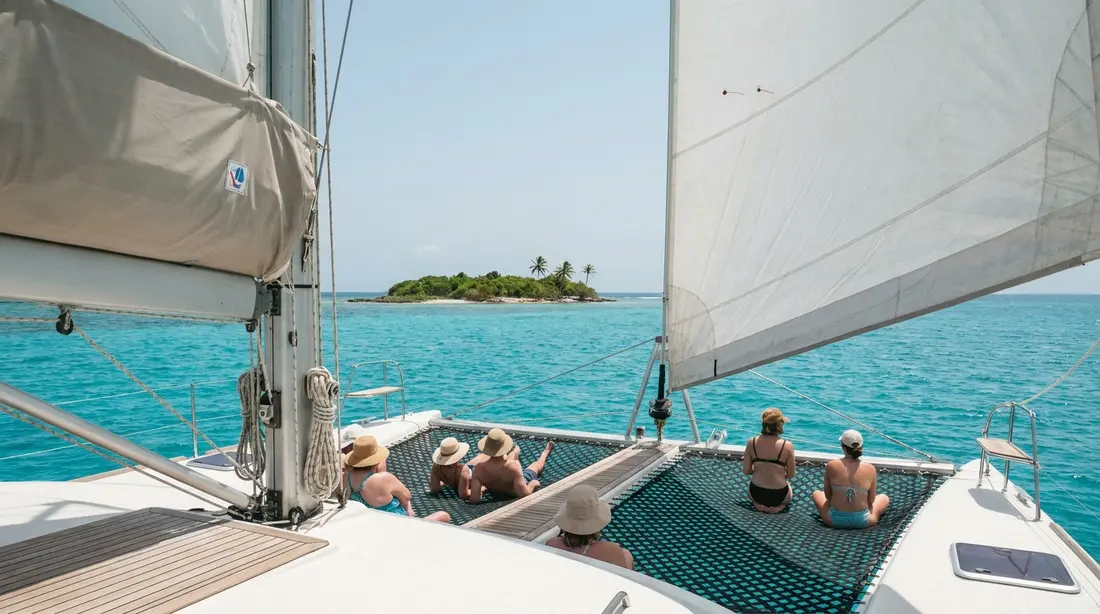
The fleet is nearly all multihull, and the reasons are practical. Two or three hulls make a platform that resists rolling, which keeps drinks upright, stomachs settled and grandparents comfortable. Draft is shallow, so a cat can slide close to a beach or a lagoon that would ground a keelboat. Deck space is wide and flat, with trampolines forward for kids and shade structures over the cockpit on most boats. For a day trip whose cargo is swimmers, coolers and cameras, the catamaran is simply the right tool, which is why Renegade, Adventure, Jolly Roger, Jolly Mon and the Wave Dancer are all cats, and why the island's oldest operations sail trimarans.
The trimarans deserve their own line. Teroro II, Dragonfly and Charis are light three-hulled boats that sail fast and flat, and the first two run with no engine installed — wind only, both directions, every trip. That is rare in the commercial Caribbean and it changes the feel of the day: no diesel rumble under the conversation, no exhaust over the stern, and a crossing whose length depends on the breeze. Travelers on a schedule should respect that last clause.
Monohulls are the minority daytime option, and the schooner is the beautiful exception that proves the rule. A single-hulled sailboat heels — leans away from the wind — which is the sensation sailors love and queasy passengers do not. On the Denis Sullivan the scale of the ship softens the motion, and hauling on a halyard as she leans through the outer harbor is the most sailorly two hours available to the public on this island. Smaller private monohulls appear through charter listings; book one for the sailing feel, and seat the seasick-prone on a cat instead.
One expectation to calibrate on every motorized sailboat: engines are part of the product. Crews motor out, sail when wind and schedule allow, and motor home if the breeze quits, and a light-air day can pass largely under power with the sails up for looks. Operators do not promise otherwise, and the only certain engine-free sailing on St. Croix is on the boats that physically lack one.
Comfort, spray and queasy stomachs
Most guests, including first-timers, get through St. Croix day sails without a hint of trouble — crossings are short and the multihulls ride flat. The plain risk map: the Buck Island channel on a breezy winter day is the bounciest water in the rotation, the north shore in the Christmas Winds comes second, and the Frederiksted lee barely registers. If anyone aboard has a history of motion sickness, stack the odds — choose the west coast or a power-cat crossing, sit aft and low where motion is least, keep eyes on the horizon, and take the remedy before boarding rather than after symptoms start, since nothing in the pharmacy works once they do. Spray is a cheerful nuisance on windward runs; anything that must stay dry belongs in a zip bag, and a towel plus a dry layer for the ride home earns its space in every season.
What trips include
Published inclusions follow patterns, all worth confirming at booking since they shift season to season. Snorkel trips supply mask, fins, snorkel, flotation and instruction as a baseline. Drinks appear on most boats — water and a punch or a beer cooler are typical, with Eighth Flag publishing sodas, water and beer in its fare — and full-day formats add a meal where half days do not. What is almost never included: gratuity (crews work for it, 15 to 20 percent is customary), sunscreen, and towels on most boats. Park fees for Buck Island trips are generally folded into the ticket, though operators word this differently; the boat tours page tracks the current fine print per company.
Sunscreen deserves its own sentence because it is a legal matter here. The U.S. Virgin Islands banned sunscreens containing oxybenzone, octinoxate and octocrylene — the territory called them the toxic three Os — with the ban on sale and use in force since March 30, 2020. Bring mineral-based zinc or titanium formulas, or buy a compliant bottle on island; boat crews will call out a prohibited tube, especially on the reef trips, and a rash-guard shirt does more than any lotion on a two-snorkel day anyway.
A seat or the whole boat
Daytime pricing splits into per-seat tickets and whole-boat rates, and the crossover point sits lower than most groups guess. At last check, published per-seat day trips ran roughly $75 to $135 per adult depending on length. Against that, Dragonfly sells only as a private boat at $1,200 for up to eight — $150 a head with a full group — and the $250 minimum on the seven-seat Salt River boat means three adults have effectively chartered it. The pattern to remember: on a small boat, five or six people are the whole boat, so book it as one and choose your own day. Run the arithmetic before defaulting to tickets — eight scheduled seats at a published $95 half-day rate come to $760, well past the halfway mark to a private eight-passenger boat, and the private boat sails on your date, at your pace, with nobody else aboard. Larger private hulls and the full rate sheet, including the big-group options aboard the 49-passenger Jolly Mon, are laid out in the private charters guide; villa groups of eight or more should start there rather than with per-seat tickets.
Kids on deck
St. Croix's day boats are broadly family boats, with policies that differ enough to check. Big Beard's markets its trips for all ages and publishes toddler pricing; the Buck Island operators generally price children in tiers with the youngest riding free; Eighth Flag publishes a kids-12-and-under fare and pitches the pirate material straight at them. No operator publishes a universal minimum age, so call with your youngest child's age and let the crew advise — answers vary by boat and by conditions. Practical notes from the fleet's own guidance: child-size flotation is aboard the snorkel boats but confirm sizes for the very small; trampoline bows are a joy for supervised kids and a hazard for unsupervised ones; and the half-day format fits a young child's patience far better than six hours does. Crews here are used to multi-generation groups — this is an island where the same boat carries honeymooners on Tuesday and a family reunion on Wednesday.
Boarding, docks and mobility
Every scheduled day sail boards from a fixed dock — the Christiansted waterfront, Gallows Bay, Green Cay Marina, the yacht club, Salt River Marina or the Frederiksted pier area — so nobody wades out to a boat. From there, candor is required: these are sailboats, and moving aboard means steps, rails and ladders. No St. Croix operator publishes a wheelchair-accessible day sail, swim stops are reached by ladder, and Buck Island itself has no pier. The most encouraging published detail is Celebration's boarding stairs and onboard bathroom, and the most useful advice is a phone call describing your mobility situation before booking — captains here know their boats and will tell you which trip works. Guests comparing the Buck fleet specifically will find fuller boarding notes in the boat tours guide linked above.
Booking windows and blown-out days
Lead times scale with boat size inversely: the big boats have seats to sell, the small boats do not. A six- or seven-passenger trimaran can be gone for your whole week before you land, so the tiny boats are the ones to lock in first — two to four weeks ahead in winter and around holidays, earlier for a specific date. Scheduled catamaran seats are usually available a few days out in the off-season and a week or two out in high season. Cancellation policies cluster around 48-hour windows where published.
Wind cancellations happen but are uncommon; captains judge the water, most calls come the evening before or at dawn, and rebooking is the standard remedy. The planning defense is simple and worth repeating in a sailing context: put the sail in the front half of your stay so a blown-out day has room to move, and hold a calm-water fallback — a west-coast beach day from the Rainbow Beach guide pairs naturally with a rescheduled Frederiksted sail. Getting to the docks is easy from anywhere on island; see taxis and getting around for drive times and parking basics in both towns.
Trip types at a glance
| Trip type | Typical length | Best for | Book ahead (high season) |
|---|---|---|---|
| Buck Island half day | 3-3.5 hours | First visits, snorkelers, young kids | 1-2 weeks |
| Buck Island full day | 5-6 hours | Beach lovers, celebrations, no-schedule days | 1-2 weeks |
| West-coast sail and swim | 3-5 hours (private or Sunday group) | Calm-water swimmers, mixed-age groups | 1 week; earlier for private dates |
| Salt River history sail | 2 hours | Families, history readers, short attention spans | 2-4 weeks (7 seats total) |
| Tall-ship public sail (winter) | ~2 hours, late afternoon | Sailing romantics, photographers | Days to a week, in season |
| Engine-free trimaran day | ~5 hours | Purists, small private groups | 2-4 weeks |
| Private whole-boat day | Half or full day | Villa groups of 8+ | 3-4 weeks; more for holidays |
Times and availability above reflect operator publications at last check; treat them as planning shapes, and confirm specifics when you book.
Questions guests ask
Do we need any sailing experience?
None. Every day sail on St. Croix is fully crewed — guests are passengers, and participation is optional entertainment rather than labor. On the schooner you can haul lines if you want the experience, on the catamarans you can take a turn at the helm if the captain offers, and on all of them you can do nothing at all with total legitimacy. Crews handle sail trim, anchoring and the swim-stop logistics. The only skills that improve the day are swimming, for the snorkel stops, and even there crews teach beginners and provide flotation on every trip.
Will the boat actually sail, or is it all motoring?
It depends on wind and boat. The trades blow reliably here, so most trips get real sailing time, and crews prefer canvas — it is the product, and it saves fuel. But motorized boats use engines for harbor work and schedule-keeping as a matter of course, and a light-air day can run mostly under power. If sailing itself is the point of your day, book Teroro II, Dragonfly or Charis, which have no engines to fall back on, or the winter schooner, whose public sails exist to be sailed.
Which trip is best if someone gets seasick?
The Frederiksted options, without much debate. The west coast sits in the island's lee, so a Lyric day sail moves over water that often looks poured rather than blown. Second choice: a power-catamaran Buck Island half day on a morning departure, which minimizes both crossing time and chop. Avoid windward trips in the December-to-March wind season for the sensitive, seat them low and aft, and have them medicate 30 to 60 minutes before boarding. Multihulls of any kind beat monohulls on this axis every time.
What should we wear and bring?
Swimsuit worn aboard, cover-up, hat with a clip or strap, sunglasses on a leash, reef-safe sunscreen applied before departure, a towel, a dry layer for the ride home, and cash for crew gratuity. Shoes come off or stay soft-soled on most decks. Add a zip bag for phones — windward crossings throw spray — and motion remedies taken preemptively for anyone who might want them. Leave snorkel gear at the villa unless you strongly prefer your own; the snorkel boats carry sanitized sets in all sizes.
Can toddlers and young kids come along?
On most boats, yes — several operators publish fares for ages two to five, and infants often ride free — but policies are boat-by-boat, so confirm ages when you book. The better question is fit: a two-hour or half-day trip matches small-child stamina, full days test it, and the pirate-history sail at Salt River is the single most kid-calibrated ticket on the island. Ask about child-size life jackets when reserving, and count hands on trampolines.
Is there daytime sailing from Frederiksted, or only sunset trips?
Daytime exists and is underrated. Lyric Sails offers private day sails daily and a Sunday group sail at last check, with snorkeling over west-coast reefs and wrecks in the calmest water on St. Croix. The evening music sails get the fame — the sunset sails guide covers those — but a west-side villa group can sail, swim and be back on the sand by mid-afternoon without ever driving east.
Sailing days from our villas
Departure point should influence where you stay, or at least which boat you pick. Guests in our East End villas are minutes from Green Cay Marina and the yacht club docks — The Buck Island Overlook puts the monument itself in view before you board. The Christiansted boardwalk fleet suits anyone staying centrally, while our west-end homes pair naturally with Frederiksted's calm-water day sails. Groups filling a large villa should price a whole boat first — the math favors them — and we are glad to point any guest toward the right captain for their week.
Sources
Written from official and first-party sources, checked August 2026. Hours, prices and event dates change — confirm before you go.
In this guide
Stay nearby
Private oceanfront on the East End with a sandy, swimmable beach, pool, outdoor kitchen and a separate guest cottage. Sleeps twelve.
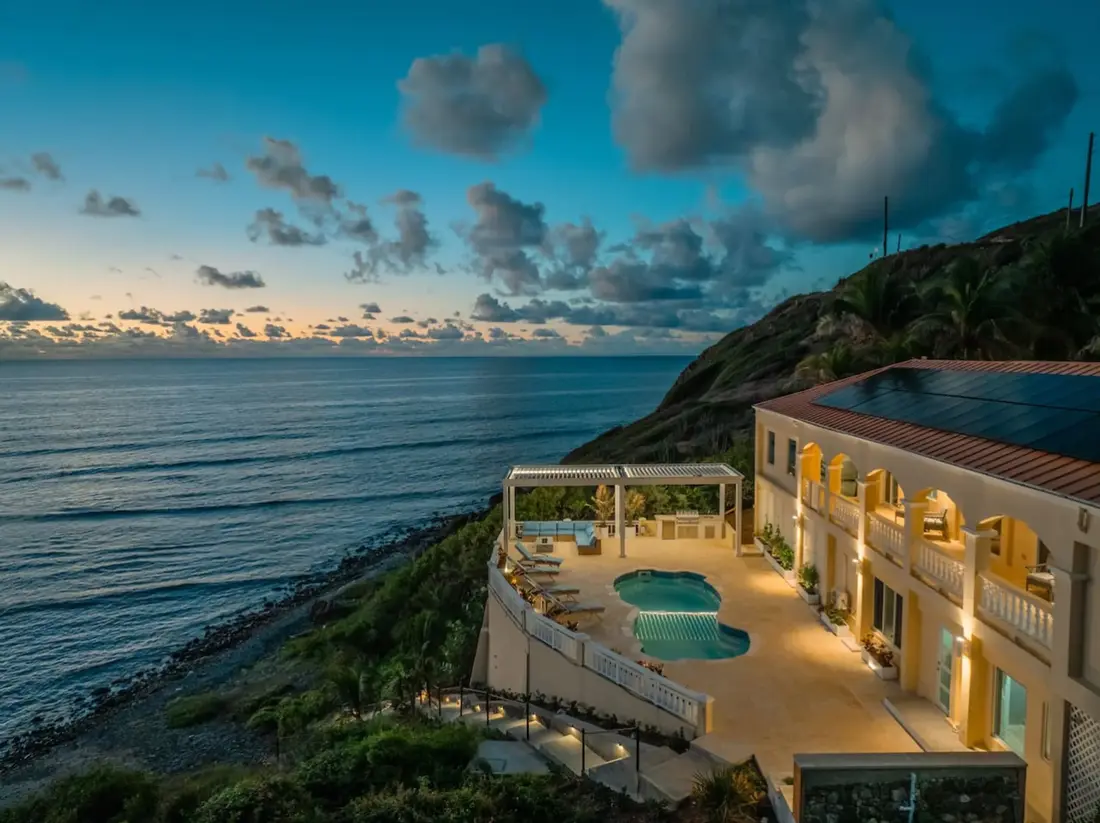 The Cerulean5 bd · 5 ba · sleeps 12 · Christiansted
More in On the Water
Sources
11 references, listed in full at the end of this guide — official park, refuge, tourism-board and business sources, checked August 2026.