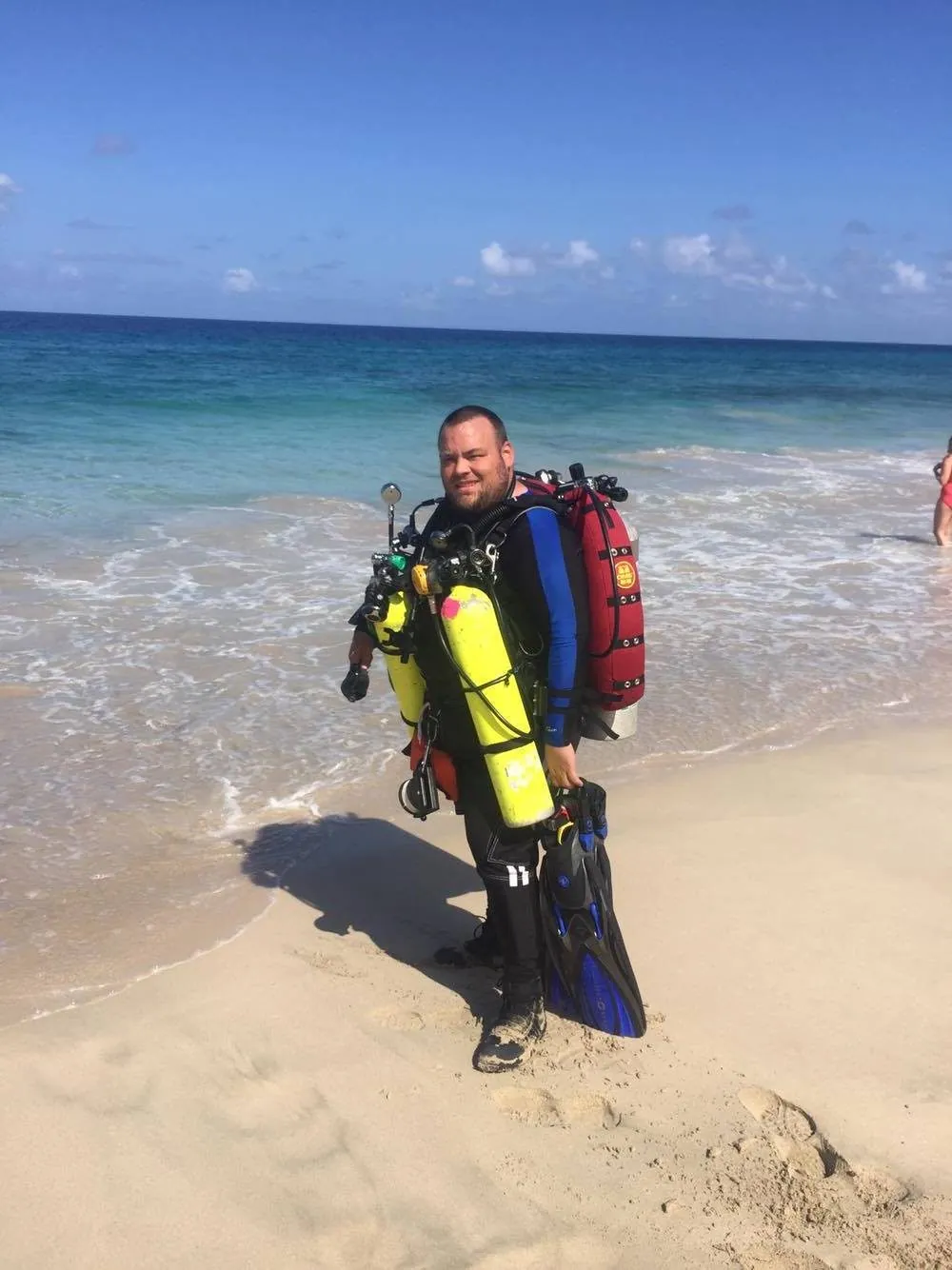
St. Croix vs Bonaire
Divers speak of Bonaire the way climbers speak of Yosemite. The fair comparison is between two shore-diving islands — one of which also has beaches, towns and nonstop jets.
Among divers Bonaire needs no introduction: the fringing reef starts at the waterline, sixty-plus painted yellow stones mark the shore entries, and the marine park has guarded it all since 1979. It is the purest dive-vacation formula ever built. It is also a desert island with almost no beaches, thin flights, a growing cruise schedule and little for the non-diving half of a family to do by Wednesday. St. Croix is the American answer: shore diving of real consequence, on an island that works for everyone who came with you.
The two, side by side
| St. Croix | Bonaire | |
|---|---|---|
| Passport for U.S. citizens | Not needed | Required |
| U.S. State Department advisory | None — U.S. territory | Level 1: Exercise Normal Precautions |
| Shore diving | Cane Bay Wall, Frederiksted Pier — walk-ins | The world benchmark: 60-plus marked shore sites |
| Marine protection | Buck Island NM, no-take since 1961 | Bonaire National Marine Park, pioneering since 1979 |
| Park fees | None for shore diving | STINAPA nature fee required of every visitor |
| Beaches | White-sand roster, swimmers' island | Scarce and rocky; famously not a beach island |
| Non-diver days | Towns, rum, rainforest, bio bay, golf, sails | Salt flats, flamingos, windsurfing at Lac Bay — then repeat |
| Flights from the U.S. | Nonstops from five mainland cities | A handful of weekly nonstops; most itineraries connect |
| Cruise traffic | A handful of calls weekly | Growing cruise calls at Kralendijk |
| Coming home | Agriculture check; $1,600 duty-free | U.S. customs; $800 duty-free |
Advisory levels and details are as published by the U.S. Department of State and checked August 2026. They change — read the current advisory at travel.state.gov before any international trip.
The short answer
A hundred-dive veteran building a log-padding week with dive buddies should go to Bonaire; that is what it is for, and nothing in the Caribbean does the tanks-in-the-truck ritual better. Everyone else — mixed groups, families with one diver, couples where the reef is half the trip — runs into Bonaire's fine print: no real beaches, modest restaurants, a required nature fee, connection-heavy flights and afternoons that run out of island. St. Croix keeps the shore-entry magic — a true wall, a legendary pier — inside a full island with sand, towns, rum and jets. Our stake: the homes we manage here. The reef does not care; the logistics do.
Respect first: what Bonaire got right
Bonaire protected its reef before protecting reefs was fashionable — the marine park dates to 1979, moorings replaced anchors decades ago, and the STINAPA fee every visitor pays funds real enforcement. The result is the Caribbean's healthiest easy reef and a shore-diving culture of total freedom: rent a pickup, fill tanks at the drive-through, follow the yellow stones, dive at dawn or midnight on nobody's schedule. Divers call it the island where the boat never leaves without you because there is no boat. All of that is earned, and St. Croix's case does not require denying a word of it.
The St. Croix dive case
What St. Croix offers underwater is different in shape and equal in seriousness. The Cane Bay Wall is a true drop-off — the shelf ends about a hundred yards off the sand and the wall falls toward depths measured in thousands of feet — walked into from a beach with a bar on it. Bonaire's reef is a slope; St. Croix's is an edge, and divers who love blue water under their fins know the difference in their stomachs. The Frederiksted Pier is one of the Caribbean's celebrated macro dives — seahorses, frogfish, octopus among the pilings — and its classic night dive, also a walk-in. Butler Bay adds a wreck collection, Salt River Canyon adds east-and-west walls inside a national park, and Buck Island — no-take since President Kennedy's 1961 proclamation, twelve years before STINAPA — carries the marked underwater snorkel trail for the surface crowd. Fewer sites than sixty; nothing to apologize for at any of them. Start at diving St. Croix and night diving.
The beach problem
Bonaire says it in its own guidebooks: it is not a beach destination. The coast is ironshore and coral rubble; the famous entries are steps and ladders over rock; the sandy exceptions (Sorobon on Lac Bay, tiny Klein Bonaire by water taxi) are few and narrow. Non-divers spend the week on a dock chair.
St. Croix is a swimmers' island that happens to dive: two undeveloped white-sand miles at Sandy Point (the largest leatherback nesting beach under U.S. jurisdiction), Cane Bay's sand above its wall, The Shoys behind its guard gate (our Shoy's Beach House fronts it), Jack's and Isaac's Bays, Rainbow, Chenay's shallows. The diver surfaces to an island the family spent happily without them: the roster.
The other six hours of every day
Bonaire's topside inventory is charming and finite: pink salt flats and flamingo colonies, the slave huts' sobering history, Washington Slagbaai's cactus park, windsurfing in Lac Bay's waist-deep lagoon, Kralendijk's short waterfront of Dutch-café dinners. It fills two days well; repeat visitors dive more because there is more diving than island.
St. Croix's topside runs all week: Christiansted's five-building National Historic Site and arcaded dining streets, Frederiksted's emancipation fort and sunset pier, Alexander Hamilton's boyhood blocks, the Cruzan distillery since 1760 with Captain Morgan and breadfruit vodka beside it, a west-end rainforest, the Annaly Bay tide pools, Robert Trent Jones Sr. golf, the bioluminescent bay after dark — a night paddle that pairs with the pier's night dive for the best double feature in the American Caribbean — and Point Udall's first U.S. sunrise. See things to do.
Getting there
Bonaire's airlift is a diver's compromise: a handful of weekly U.S. nonstops (Miami, Atlanta and Newark service has come and gone seasonally) and otherwise connections through hubs or Curaçao, often landing at odd hours with tanks-deep luggage. St. Croix: Miami about three hours daily on American, Charlotte daily from December 17, 2026, Atlanta near-daily from December 19, Newark Saturdays from October 31, 2026, Chicago winter Saturdays, San Juan every hour or two. Dive bags fly domestic — no customs officer weighing your regulators in either direction. Verified August 2026:
| Airline | From | Schedule (as published Aug 2026) | Flight time |
|---|---|---|---|
| American Airlines | Miami (MIA) | Year-round, one to three flights daily by season | about 3 hours |
| American Airlines | Charlotte (CLT) | Paused until Saturdays return November 7; daily beginning December 17, 2026 | about 3¾ hours |
| American Airlines | Chicago O'Hare (ORD) | Winter Saturdays beginning December 5, 2026 | about 4¾ hours |
| Delta Air Lines | Atlanta (ATL) | Saturdays through September 5; Saturdays again from November 14; daily except Mondays beginning December 19, 2026 | about 4 hours |
| United Airlines | Newark (EWR) | Saturday nonstops beginning October 31, 2026 | about 4½ hours |
Costs and fine print
Bonaire is not expensive by boutique standards, but the meter has quirks: the STINAPA nature fee for every visitor, truck rental as a near-mandatory line item, guilder-priced dining that trends Dutch, thin lodging that books out in high season, and the $800 allowance at U.S. customs home. St. Croix's meter is flatter: direct-booked villas with pools and kitchens, supermarket provisioning, free beaches and free shore entries, no park fee for the wall or the pier, U.S. dollars throughout, and $1,600 duty-free home with the five-liter rum rule. For the mixed group Bonaire quietly taxes, the American ledger wins before the first tank is filled. The homes: here.
Month by month on the two islands
Bonaire's calendar is a diver's spreadsheet: conditions barely vary (dry, breezy, below the belt, 100-foot visibility the default), so the year is priced by demand instead — the winter high season and the Dutch summer holidays book the island's thin lodging solid, and the annual Regatta week in October is the one local crescendo. Windsurf season at Lac Bay peaks with the summer trades. There is no month you cannot dive; there are months you cannot book. St. Croix's diving is similarly year-round — the wall does not take a season off — while the island around it offers the actual calendar: festival season December–January, AgriFest in February, turtle-nesting spring at Sandy Point, the discounted green fall under standard Atlantic-season counsel. A dive trip plans around visibility; a family trip plans around a year — and only one island has one. Months: when to visit.
The travel day, hour by hour
The Bonaire day tests devotion: the handful of weekly nonstops leave odd-houred (the classic Newark departure has run overnight, landing Flamingo Airport toward morning), and connecting itineraries through hubs or Curaçao stretch past ten hours with dive bags surcharged leg by leg. Then immigration, the STINAPA fee, the truck pickup, and the drive to a dive lodge. Divers accept all of it as the tithe. The St. Croix day: three hours from Miami with regulators checked domestically, rental counter, tanks arranged with a shore-diving operator by phone from the supermarket line, and a checkout dive at Cane Bay before dinner — no fee, no tithe, no overnight leg. The return trip repeats the mercy: agriculture check, $1,600 allowance, home by dinner.
Seven days on each
The Bonaire week is gloriously monomaniacal: two or three shore dives a day off the truck — Thousand Steps, Salt Pier when permitted, Karpata — a Klein Bonaire boat morning, the Washington Slagbaai loop on the surface interval day, rinse tanks, repeat, log everything. For divers it is heaven's vending machine; for anyone else aboard it is a week of reading on a dock.
The St. Croix week dives seriously and lives besides: the wall Monday morning and Buck Island's snorkel trail for the family that afternoon; the pier's macro Tuesday with Frederiksted's fort and sunset after; Christiansted Wednesday between tanks; Butler Bay's wrecks Thursday and The Shoys for the surface crowd; Salt River's canyon Friday and the bio bay glowing that night — the double feature no other island stages; the rainforest and Cruzan Saturday; Sunday's checkout dive at Cane Bay with lunch at the beach bar. Five days of real diving, seven days of real vacation, everyone aboard accounted for. Plans: diving St. Croix and the 7-day itinerary.
Getting around once you land
Bonaire's vehicle of state is the double-cab pickup with a tank rack — rented by every dive party, driven on the right down the one coastal road, parked at yellow stones. It works perfectly for the ritual it serves and thinly for everything else: Rincon and the salt flats fill an afternoon, Kralendijk's few blocks walk in twenty minutes, and the non-diver's week runs out of destinations before the truck runs out of fuel. Groceries are Dutch-supermarket adequate at import prices; restaurants cluster on one waterfront.
St. Croix's rental car serves a whole island's worth of errands: a dozen beaches, two towns, the rainforest road, the distillery belt, golf, the East End — left-side driving learned in a morning (the guide), with real supermarkets stocking the villa kitchen at U.S.-supply-chain prices. The dive gear rides in the same trunk; so does everyone who is not diving.
Before you book either island
For Bonaire: book lodging first and early — the island's thin inventory is the binding constraint, especially for high season and Dutch holidays; budget the STINAPA fee, the truck, the nitrox upgrades and the odd-houred flights; confirm the marine park's current rules for the sites on your list (Salt Pier access has varied with port operations); and be realistic about the non-divers in the party — the island's own tourism materials do not pretend otherwise.
For St. Croix: book the villa direct (the homes), reserve the car, line up tanks with a shore-diving operator (the operators), and calendar Buck Island for the surface crew and the bio bay for a dark night. Certification cards and swimsuits; the list ends there.
The case for St. Croix, point by point
One: a mixed party thrives — divers get the wall and the pier while the family gets beaches, towns and a pool, the case that decides most real bookings. Two: civilized nonstop flights against odd-houred devotion. Three: no passport, no STINAPA fee, no guilder — and $1,600 of allowance against $800. Four: a true wall profile and a legendary night dive, both shore entries, against slope diving — conceding Bonaire the site count. Five: beaches — actual white-sand swimming beaches — which Bonaire's own guides concede it lacks. Six: the bio bay pairing with the pier for the hemisphere's best night-water double feature. Seven: villa-and-supermarket economics against thin lodging at import prices. Eight: history and rum between dives — Danish towns, Hamilton, Cruzan since 1760. Nine: protection with seniority — Buck Island's no-take reserve dates to 1961, twelve years before STINAPA. Ten: a vacation the whole passenger manifest votes for. Bonaire remains diving's holy site; St. Croix is where the pilgrimage brings the family along.
Who should pick which island
Pick Bonaire if: every traveler is a certified diver or wants to become one; the trip's success is measured in logged dives and species counts; the truck-and-tanks ritual is the romance; or Lac Bay's windsurfing calls. Pick St. Croix if: the group mixes divers and non-divers (the decisive case); the diving should include a true wall profile and a legendary night dive without a park fee; the week needs beaches, towns and history between tanks; flights should be civilized hours at domestic prices; or the bio bay's glow belongs on the same itinerary as the pier's night octopus. Bonaire is the best dive trip in the hemisphere; St. Croix is the best vacation that happens to include one.
When Bonaire is the right call
The dedicated dive week, no apologies: buddies, a truck, sixty sites, five tanks a day — Bonaire remains the best vending machine anywhere for that trip. Underwater photographers chasing reef-health baselines will find the park's decades of protection in every frame. Windsurfers belong in Lac Bay. And divers pairing with Curaçao get two Dutch reefs on one itinerary. If every seat on the plane holds a certified diver, go south. If even one holds a beach reader, a kid, or a spouse who came for the island, the math swings hard to the wall you can walk to from a white-sand beach.
A rainy day on each island
Bonaire's rainy day barely exists meteorologically — the desert statistics hold — and barely exists programmatically either: the Terramar museum's one good room, the salt-and-slave-hut drive under wipers, and the dive shop's rinse tanks. Divers dive anyway; visibility shrugs at drizzle. The surface crew reads. St. Croix's weather is nearly as kind and its indoor bench is actual: Fort Christiansvaern's vaults, the Whim estate museum, Frederiksted's arts center, and the distillery trail that rain flatters. The rainy-day plan mostly waits unused — but on the mixed-party island, the surface crew was never waiting on weather in the first place.
If you choose Bonaire anyway
Then commit to the ritual completely, because halfway is the worst of both. Book lodging the moment dates exist — inventory is the island's one scarcity; choose a drive-through tank program and the double-cab truck; plan five diving days with the surface interval sights (Rincon, the flamingo sanctuary from its legal distance, the slave huts) slotted between tanks, not instead of them. Respect the yellow stones' difficulty ratings — some entries eat ankles — and the park rules that made the reef what it is. Windsurf Lac Bay once even if you never have; the waist-deep lagoon is the world's kindest classroom. Budget the STINAPA fee, the gear surcharges and the odd-hour flights without resentment: they are the pilgrimage's tolls, and the reef at 7 a.m. pays them back.
Where you would stay on St. Croix
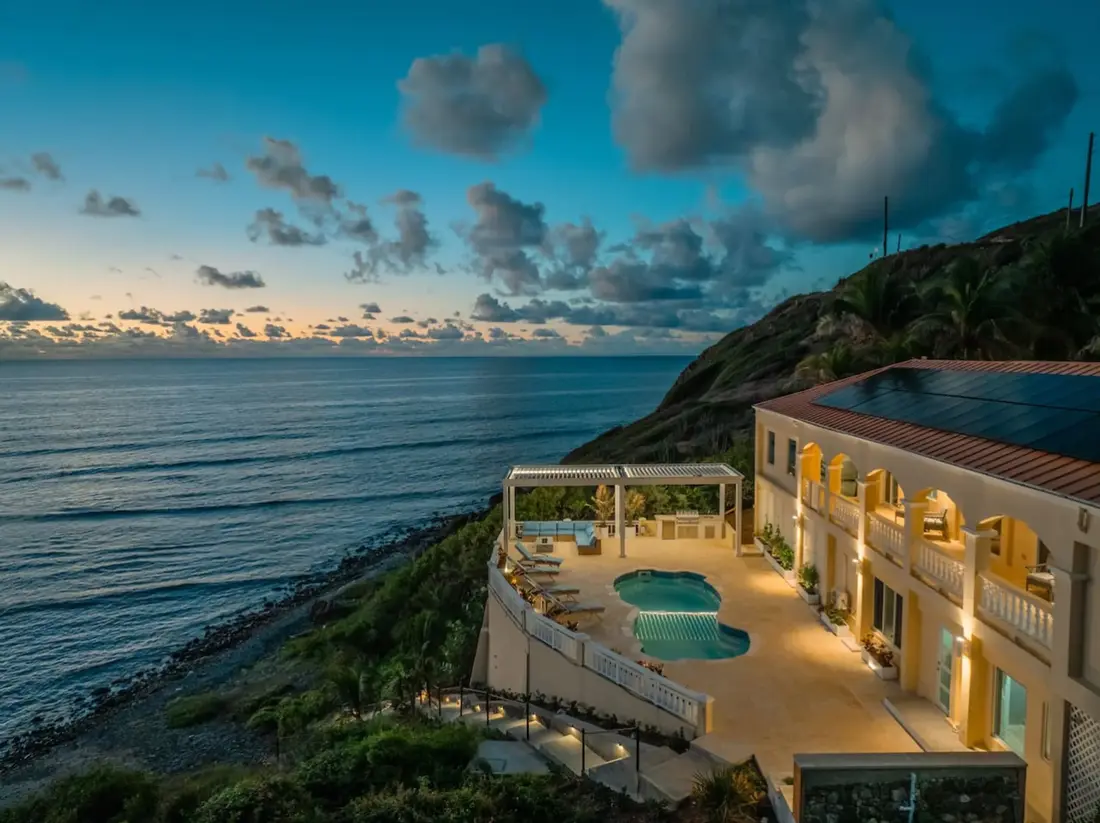
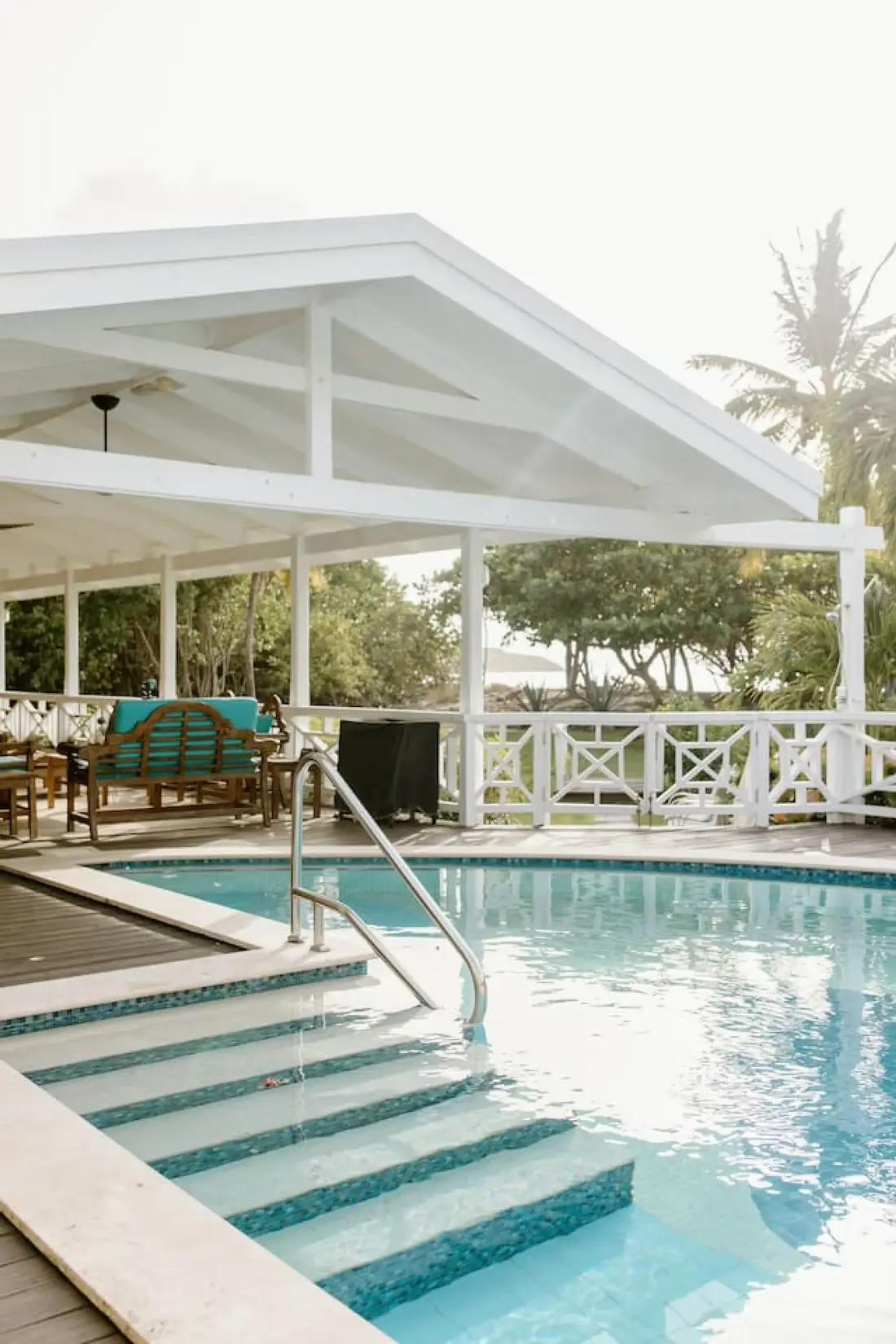
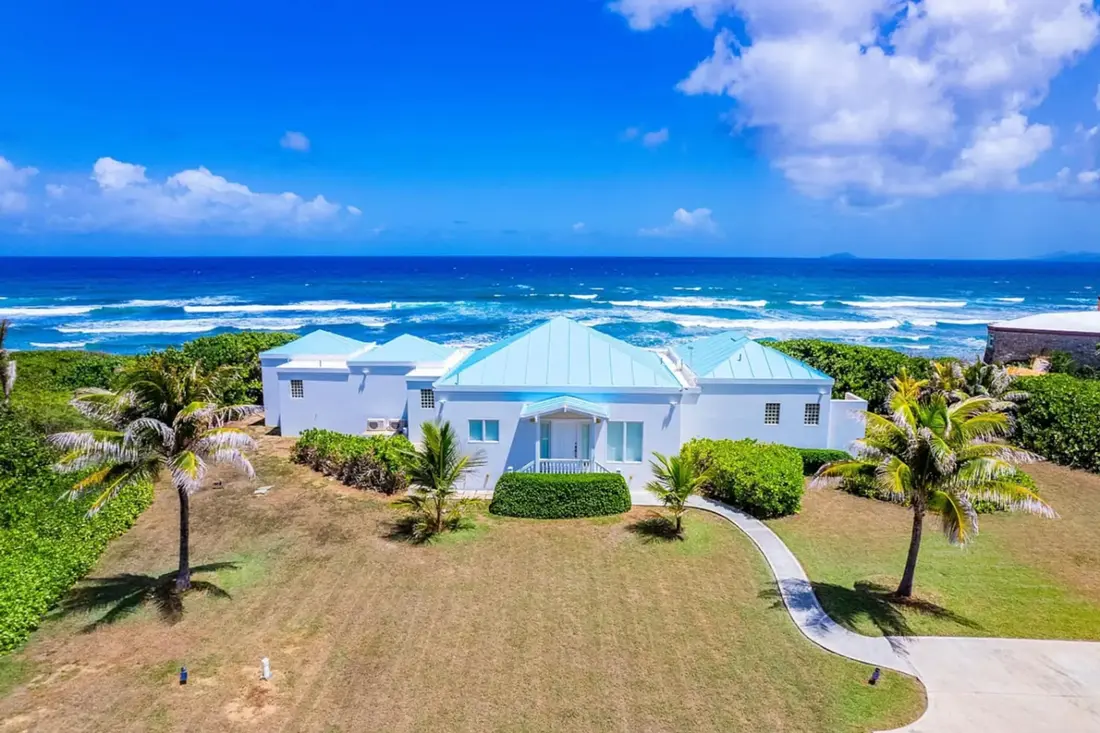
The both-worlds base: our direct-booked homes with Sterling Point managing from the island. Divers gravitate to the north and west — Cane Bay's wall and Frederiksted's pier bracket the island — while Shoy's Beach House holds The Shoys' calm sand for the surface crew and the East End villas (The Cerulean among them) face Buck Island's snorkel-trail water from private pools. Full kitchens rinse and refuel a dive day better than any lodge buffet; the washer handles the salt. Couples: homes for two; groups to twelve: the family collection. The roster: the homes.
How this page was made
Series rules: park history and the STINAPA fee per STINAPA's own publications; shore-site counts per standard dive references; the no-beaches candor per Bonaire's own guidance; Level 1 advisory standing per the State Department, checked August 2026 — verify current text at travel.state.gov. Buck Island's 1961 proclamation per NPS. Bonaire's crown — the freest, most protected shore diving on earth — is conceded without hedging, because divers can smell hedging through a regulator. Our bias: the homes we manage on St. Croix. Check anything; the reef facts are the most audited in this series.
The bottom line
Bonaire perfected the dive vacation by subtracting everything else; St. Croix kept everything else and still put a wall a hundred yards off the sand. One is a pilgrimage for the obsessed; the other is a week that works for the whole family and still logs serious dives before lunch. The yellow stones are magnificent. The jets, the beaches, the towns and the missing passport are decisive. The homes are here.
Elsewhere in this series
This page is one of twenty-six. If you are still shopping the map, the verdicts nearest this comparison run as follows — each links to the full page with its own sources:
St. Croix vs the British Virgin Islands — The BVI are the Caribbean's sailing capital — reached by passport, puddle jumper and ferry. St. Croix flies you straight in, no passport at all.
St. Croix vs Turks & Caicos — Turks and Caicos sells one famous beach at luxury-resort prices. St. Croix sells a whole island for less — no passport, no Level 2 advisory.
St. Croix vs Anguilla — Anguilla perfected the quiet expensive beach. St. Croix does the quiet beach without the relay flight, the passport or the markup.
The complete set, grouped by region and passport rules, lives at St. Croix vs other destinations.
Which home fits your group
If St. Croix wins your comparison, the homes are the easy part. Groups of eight to twelve settle into the family collection; couples take a home for two; anyone who wants sand at the door starts with beachfront. Every one is managed from the island by Sterling Point and booked direct — tell us the dates and the headcount and we will point you at the one that fits.
Two practical notes that surprise first-time villa bookers. Direct booking means the rate is the rate: no platform service fees, no resort fees, and the people answering questions are the same Sterling Point team that manages the houses on the island. And every home runs a full kitchen — one run to Plaza Extra or Seaside Market on the drive from the airport covers the week, which is where a villa quietly beats a resort bill before the first beach day. How the booking works, and what it does not mean, is spelled out at book direct.
Who wrote this
SP Vacations is the vacation-rental division of Sterling Point Real Estate, a licensed real-estate operation based on St. Croix in the U.S. Virgin Islands. The team lives and works on the island it writes about: the homes in the villa collection are inspected, cleaned and managed locally, and the person who answers a booking question is on St. Croix, not in a call center three time zones away. That is the vantage point behind every page in this series — and the reason the series exists at all, since most of the destinations compared here are places our guests weighed before choosing this island.
Two standing practices shape what you read. First, the pricing wall: nightly rates and availability for the homes live only on the booking pages, never in articles, so nothing here goes stale or oversells. Second, the sourcing rule: safety statements cite the U.S. State Department, customs figures cite CBP, park facts cite the National Park Service, and anything that changes — advisories, schedules, hours — carries its checked date and a pointer to the primary source. Where a rival destination wins a category, the page says so, because a comparison that concedes nothing persuades nobody. Questions, dates or a villa to match a group — the island team is here, or call 340-205-3929.
Questions people ask
What is Lac Bay windsurfing like?
A waist-deep, steady-trade lagoon that may be the world's kindest place to learn — schools, rentals and shallow forgiveness; windsurfers plan trips around it. St. Croix's calm-bay boards are paddleboards at Chenay and Salt River; its wind is the Christmas trades on a beam reach at sunset.
Are there flamingos on Bonaire?
Thousands — the southern salt flats host one of the Caribbean's great colonies, viewed from legal distances along the salt road. St. Croix's birding runs to pelicans diving the bays and least terns at Sandy Point; its pink is the conch shells.
Is Kralendijk walkable?
In twenty minutes end to end — a tidy Dutch waterfront of dive shops and cafes that empties when the cruise ships leave. Christiansted holds a full evening after the shops close: boardwalk dinners, arcade bars and a lit fort.
What are Bonaire's yellow stones?
Painted roadside markers naming each of the sixty-plus shore sites — the island's beloved navigation system for truck-and-tank diving. St. Croix's two signature entries need no markers: the beach at Cane Bay and the pier at Frederiksted are the map.
Can you fly to Bonaire with dive gear easily?
You can, with surcharges and odd-hour departures — the overnight Newark run has been the classic — and connecting itineraries bill the bags twice. St. Croix flights are domestic: standard baggage rules, civilized hours, regulators unremarked.
Is Klein Bonaire worth the water taxi?
Yes — the islet's No Name Beach is Bonaire's one true sand moment and its reef is superb. St. Croix's islet answer is grander: Buck Island, a federal monument with a marked snorkel trail and Turtle Beach, by licensed sail from the boardwalk.
Do non-divers pay the STINAPA fee too?
Every visitor pays the nature fee, swimmer or not — it funds the park that makes the island what it is. St. Croix charges no equivalent; the wall, the pier and the beaches are free, and Buck Island prices only the boat.
Is Bonaire the best shore diving in the world?
It is the standard bearer — sixty-plus marked entries on a reef protected since 1979, with total schedule freedom. St. Croix's answer is fewer sites of equal seriousness: a true wall at Cane Bay a hundred yards off the sand, the Frederiksted Pier's famous macro and night dives, wrecks and canyon walls — on an island with beaches and towns attached.
Is Bonaire good for non-divers?
For about two days — salt flats, flamingos, Lac Bay windsurfing, a short café waterfront — and its own guides concede it is not a beach island; the coast is ironshore. St. Croix gives non-divers a full week: white-sand beaches, two historic towns, distilleries, rainforest, golf and a bioluminescent bay.
Do I need a passport for Bonaire?
Yes, plus the STINAPA nature fee on arrival and U.S. customs at the $800 allowance home. St. Croix: no passport for U.S. citizens, no park fee for shore diving, $1,600 allowance home.
How do the flights compare?
Bonaire fields a handful of weekly U.S. nonstops and many connection itineraries at dive-bag-unfriendly hours. St. Croix runs nonstops from five mainland cities plus the all-day San Juan hop, verified August 2026 — domestic both ways, regulators unweighed by customs.
Is the reef healthier in Bonaire than St. Croix?
Bonaire's decades of park protection show, and divers should credit them. St. Croix's protected water is older still where it counts: Buck Island has been federal no-take since 1961, its elkhorn barrier reef wraps two-thirds of the island, and the East End marine park and Salt River add more. Both islands reward conservation-minded divers.
Which is better for a family with one diver?
St. Croix, and it is the whole point of this page: the diver walks into the Cane Bay Wall or the pier while the family holds the beach, the pool or the town — then everyone shares Buck Island's snorkel trail. On Bonaire the non-divers run out of island by midweek.
What is diving the Cane Bay Wall actually like?
A beach entry past snorkelers, a short surface swim over the shelf, and then the bottom falls away — a sheer face dropping toward depths measured in thousands of feet, with the blue underfoot that wall divers chase. Then you surface and the beach bar is right there. See the wall guide.
Does Bonaire have beaches at all?
Barely — ironshore and coral rubble dominate, entries are steps and ladders, and the sandy exceptions (Sorobon on Lac Bay, Klein Bonaire by water taxi) are few and narrow. Its own guides say the island is for diving, not beaches. St. Croix is both.
Can beginners dive on St. Croix?
Yes — operators run discover-scuba and certification courses with the calm-shore advantage working for students: easy entries, protected shallows, and the wall waiting when skills catch up. See learning to dive.
When should divers book Bonaire or St. Croix?
Bonaire dives year-round but books out for winter high season and Dutch summer holidays — its lodging is thin. St. Croix's wall and pier are equally year-round with far deeper lodging; its green fall discounts a dive trip meaningfully.
What is the STINAPA fee?
Bonaire's mandatory nature fee, paid by every visitor to fund the marine park — money well spent and a real line item. St. Croix's shore dives at Cane Bay and the pier carry no park fee; Buck Island trips price only the licensed boat.
Are the flights to Bonaire difficult?
Devotional: a handful of weekly nonstops at odd hours (overnight departures have been the norm from the Northeast) and long connecting itineraries with dive-bag surcharges. St. Croix runs daily civilized-hour nonstops with domestic baggage rules, verified August 2026.
Can you night dive on St. Croix like Bonaire?
Yes — the Frederiksted Pier is the territory's classic night dive and among the Caribbean's known ones, a shore entry under a lit pier full of macro life. Pair it with a bioluminescent-bay kayak on the dark of the moon for the American Caribbean's best night-water double feature. See night diving.
In this comparison
St. Croix at a glance
- U.S. territory — no passport for U.S. citizens
- Nonstops from Miami, Fort Lauderdale, Charlotte, Atlanta, Newark and Chicago
- U.S. dollars, U.S. phone plans, no foreign customs
- $1,600 duty-free allowance home (double the standard $800)
- 84 square miles — the largest U.S. Virgin Island
More comparisons
- St. Croix vs St. Thomas
- St. Croix vs St. John
- St. Croix vs Puerto Rico
- St. Croix vs Vieques & Culebra
- St. Croix vs the Florida Keys
- St. Croix vs Hawaii
- St. Croix vs the British Virgin Islands
- St. Croix vs Turks & Caicos
- St. Croix vs Anguilla
- St. Croix vs St. Barts
- St. Croix vs St. Martin
- St. Croix vs Antigua
- St. Croix vs St. Kitts & Nevis
- St. Croix vs St. Lucia
Sources
Bonaire marine park history and STINAPA fee per STINAPA's own publications; shore-site counts per standard dive references; beach character per Bonaire tourism's own guidance; Level 1 advisory per the State Department (verify current). St. Croix facts from NPS (Buck Island Proclamation 3443), CBP and our sourced island reference. Flights verified August 2026.
St. Croix vs Bonaire
Bonaire is a dive site with an island attached. St. Croix is an island with first-rate diving attached — and the rest of the family invited.