Night Diving St. Croix
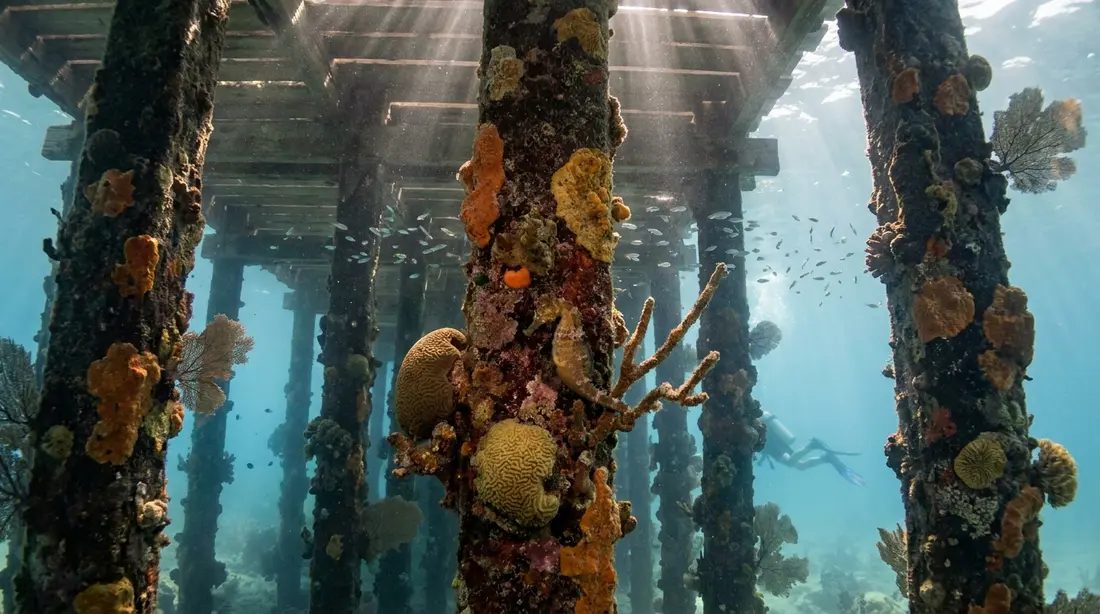
The Frederiksted Pier after dark is the signature night dive: octopus on the hunt, sleeping fish, and macro life on every piling.
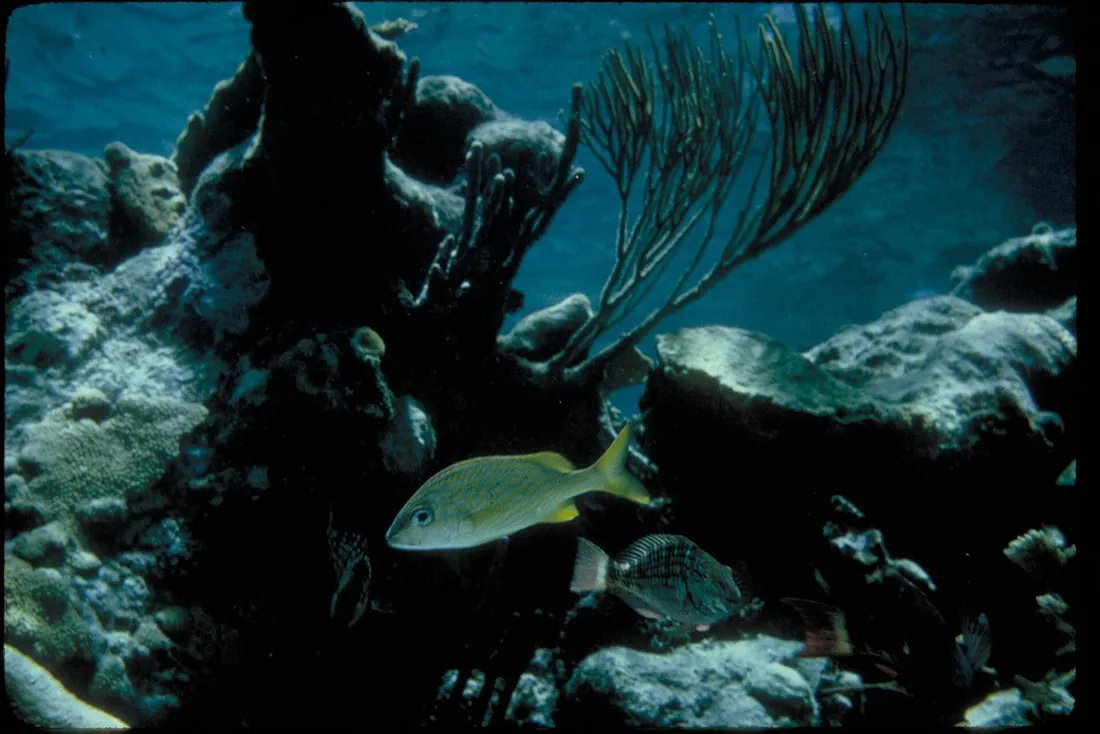
A reef you dived at noon is a different animal at nine at night. The parrotfish that grazed the coral all day are sealed inside cocoons of their own mucus; the sand that looked empty is a hunting floor for octopus and spiny lobster; and the coral itself opens up to feed. St. Croix runs one of the Caribbean's easiest, most reliable night dives at the Frederiksted pier, and a handful of shops guide it year-round. This page is the island's night-diving reference: what actually changes on the reef after dark and why, which sites shops run at night, the lights and skills the discipline demands, who is ready for it, and how to fit a night dive into a trip without wrecking your flight home.
What the reef does after dark
The reason to dive at night is that a coral reef runs two different shifts, and most visitors only meet the day crew. Sunset triggers a changeover across the whole community at once: daytime animals hide and shut down, nocturnal ones wake and spread out, and a few residents that read as scenery by day turn out to be animals waiting for the light to drop. Divers who understand it stop hunting for the fish they saw that morning and start looking for the night shift, which is where the dive earns its reputation.
The hunters come out
The headliner is the Caribbean reef octopus. It spends daylight tucked inside a den it builds from rubble, shell and coral scraps, and Oceana's species account describes it as primarily nocturnal, leaving that den after dark to hunt crabs, shrimp, small fish and other prey across the reef and seagrass. Watch one work and you see the thing octopuses are famous for: skin packed with pigment cells called chromatophores lets the animal wash color and texture across its body in a second, so it can pour over the bottom as a moving piece of reef and ambush whatever it corners. A night dive is the best chance most divers get to see an octopus doing its actual job rather than sulking in a hole.
The other classic night animal here is the Caribbean spiny lobster. NOAA Fisheries and the research literature both describe the same pattern: the lobster shelters by day inside reef crevices, ledges and overhangs, then forages in the open at night, an arrangement that keeps it out of sight of the groupers, snappers, sharks, turtles and octopus that hunt it. Its night menu runs heavily to snails, chitons and other molluscs. On a dark dive you will find lobsters walking the sand and reef flats in the open that would never leave their ledges in daylight, antennae sweeping ahead of them. Crabs do the same, and tarpon learn the game fast: a big silver tarpon will fall in behind a diver and use the beam as a hunting light, pinning small fish for an easy strike.
The reef goes to sleep
While the hunters wake up, the day-active fish shut down, and one of them does something worth the price of the dive on its own. Parrotfish, the busy coral-grazers of every daytime reef, wedge themselves into a crevice at dusk and secrete a bubble of mucus that swells up and encloses the whole body like a sleeping bag. For years the assumption was that the mucus masked the fish's scent from predators. A 2010 study reported in Biology Letters and covered by National Geographic tested that and found a better answer: the cocoon works as a mosquito net. Its main threat is not sharks but gnathiid isopods, tiny blood-feeding crustacean larvae that swarm reef fish at night the way mosquitoes work a campsite. Parrotfish sealed in an intact cocoon carried far fewer of these parasites than fish whose cocoons were removed; the mucus both blocks the odor cues the isopods home in on and physically screens them out, letting small molecules through while keeping the biters at the door. Find a parrotfish in its cocoon and you are looking at one of the reef's stranger pieces of engineering. Around it, wrasses and other day fish sleep jammed into the coral, and a slow, careful light shows you fish holding utterly still that would have bolted at noon.
The night-shift feeders
Some of the reef's best after-dark theater comes from animals that are always present and simply invisible by day. Coral is the prime example. By daylight a stony coral keeps its polyps withdrawn and lets the symbiotic algae in its tissue photosynthesize, which supplies most of its energy. After sunset, as NOAA's coral tutorial and marine-science sources describe, most polyps open their crowns of tentacles and go fishing, using stinging cells called nematocysts to grab the zooplankton that rises through the water column after dark. A coral head that read as bare rock in the afternoon turns furred and moving under a night light, every polyp a working mouth. The color, too, comes back: a torch returns the reds and oranges that deep blue water strips away in daylight, so night divers often say the reef looks more saturated after dark than it ever does at noon.
Then there are the basket stars. The Caribbean giant basket star spends the day coiled into a tight ball, jammed under a ledge or balled up on a sea fan, easy to walk a fin past without noticing. At night it climbs to a high, current-swept perch and unrolls a set of branching arms into a fine mesh basket that can span close to a metre, straining plankton from the moving water. Catch one fully open in a beam and it looks less like an animal than a piece of pale coral lace. Brittle stars, feather stars and a long list of crustaceans run the same day-hidden, night-active schedule, which is why the macro photographers who fly here for the pier often rate the night version above the day one.
Light in the black water
One more effect belongs only to the dark. Switch your primary light off for a moment and fan a hand through the water, and it can spark with pinpoints of blue-green. Those are dinoflagellates, the same single-celled plankton that light up Salt River's bioluminescent bay, only scattered here at ordinary reef density rather than concentrated in a mangrove lagoon, so the effect reads as faint glitter off your fingers instead of a wash of glowing water. It is a different phenomenon from the guided glow-water trip, which is a boat activity with its own biology and its own moon math, covered in Kayaking the Bioluminescent Bay and Why the Bay Glows. Underwater it is a small, private bonus, and the standard move is to gather the group, kill every light for thirty seconds, and let everyone wave their arms in the black.
| Resident | By day | After dark |
|---|---|---|
| Caribbean reef octopus | Sealed in a rubble den | Out hunting crabs and shrimp, color rippling as it moves |
| Caribbean spiny lobster | Backed into a ledge or overhang | Walking the open sand and reef, foraging for molluscs |
| Parrotfish | Grazing the coral | Asleep inside a mucus cocoon that screens out biting parasites |
| Stony coral | Polyps closed, algae photosynthesizing | Polyps open, tentacles catching drifting zooplankton |
| Giant basket star | Coiled tight under a ledge | Climbed high, arms unrolled into a plankton net |
| Tarpon | Cruising in loose schools | Shadowing dive lights to ambush lit-up prey |
Sightings are the reef's ordinary night patterns, never a promise; what any single dive delivers depends on the site, the season and a good measure of luck.
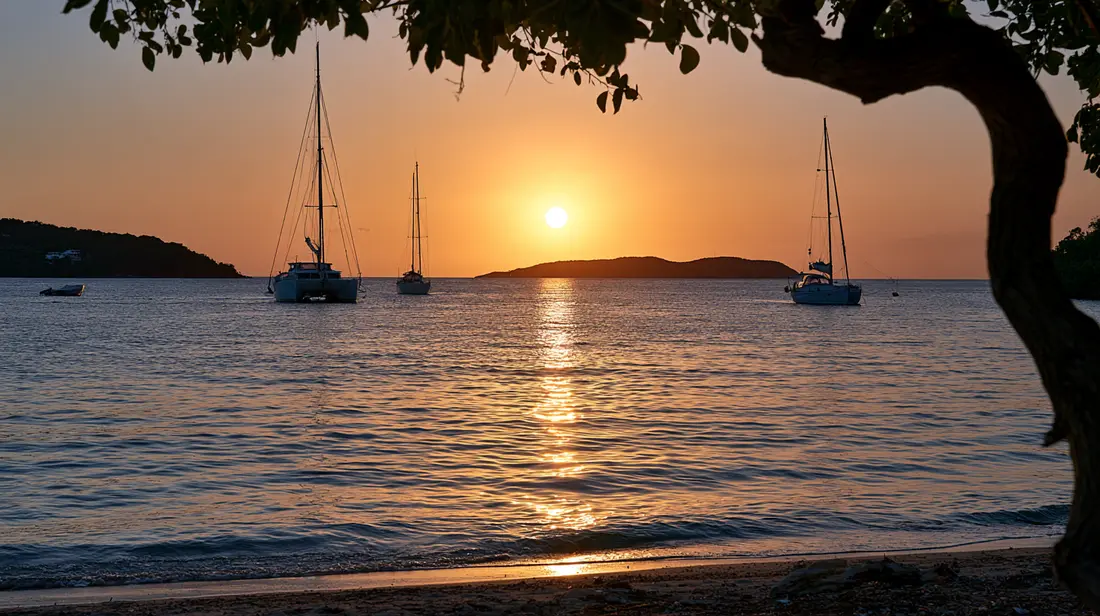
The Frederiksted pier at night
St. Croix's signature night dive is the Frederiksted pier, and it earns the billing because everything that makes a night dive stressful somewhere else is missing here: the water is shallow, close to shore and normally flat calm, and the rows of pilings make the site almost impossible to get lost on. The pilings and the sand between them concentrate exactly the octopus, lobster, sleeping fish and feeding coral described above, which is why divers who have done it once tend to book it again. This page keeps the pier short on purpose, because the site has its own full reference: the piling-by-piling detail, the resident seahorses and frogfish, the entries and the cruise-ship closure rule all live in the Frederiksted pier guide, and the broader island dive picture is in the scuba guide. What matters for planning a night dive is that the pier is the venue nearly every shop means when it lists a night trip, and that the same cruise-ship rule that governs it by day governs it after dark, so shops schedule around the ship calendar.
Night diving beyond the pier
The pier is the default, but it is not the only after-dark option, and it helps to know what is real and what is not before you ask a shop for something they do not run.
The most established alternative is the Cane Bay Wall after dark. The drop-off reads clearly in a beam, the sand chutes navigate you home, and the same changeover plays out along the reef flat above the edge; Cane Bay Dive Shop has long treated the wall night dive as a specialty. The trade-off is exposure: Cane Bay faces the open north shore, so a night dive there depends on the day's surge and swell in a way the sheltered pier does not, and it is one to do guided regardless of experience. The full site picture, night version included, is on the wall page.
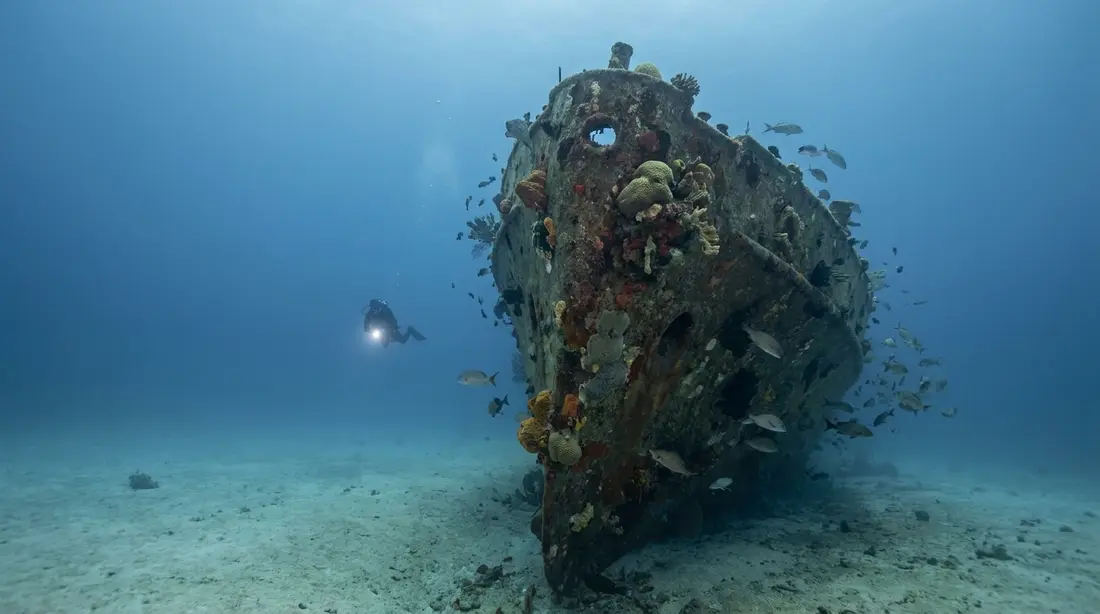
Boat night dives are the real gap in the island's menu. St. Croix's night diving is overwhelmingly a shore activity at the pier; a scheduled two-tank night boat trip is not something the shops advertise as a standing product at last check, and the Salt River canyon and the Butler Bay wrecks are day dives in practice. If a boat night dive is on your wish list, treat it as a private charter to arrange directly with a shop rather than a trip you can book off a website, and expect it to depend on group size, crew availability and conditions. For most visitors the pier, and occasionally the wall, is the whole of guided night diving here, and that is plenty.
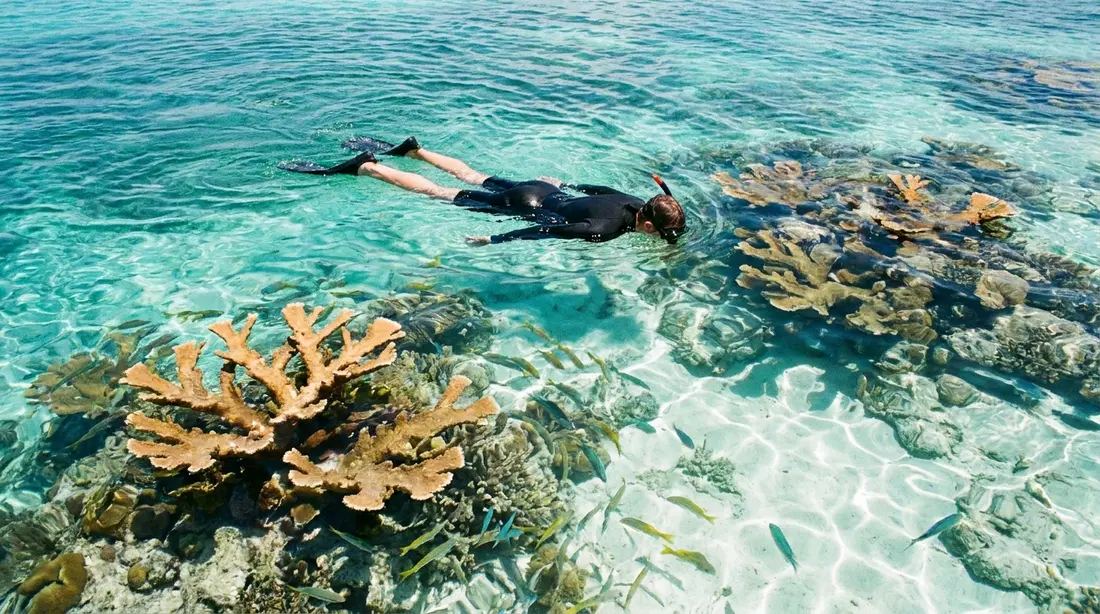
Fluorescence and blackwater diving
Two specialized styles come up often enough to address. Fluorescence diving, sometimes called fluoro or glow diving, swaps your torch for a blue-light lamp and adds a yellow barrier filter to your mask; under it certain corals, anemones and animals absorb the blue light and re-emit their own glow in greens, pinks and oranges, a completely different picture from a normal beam. PADI treats it as a step beyond standard night diving. Blackwater diving is the other: a deep-water drift over open ocean at night, lights hung in the void to draw up the strange larval and pelagic animals that rise after dark. Both are genuine disciplines with real followings.
Neither is a listed St. Croix product at last check. The Caribbean's known fluoro-diving destinations are places like Bonaire and Grenada, and blackwater diving is centered on a handful of deep-water spots elsewhere; no St. Croix shop advertises a dedicated fluorescence or blackwater program. That is not a reason to rule it out entirely. A diver who owns a blue-light setup can, with a shop's blessing, run a fluoro dive on their own gear at a guided pier night dive, since the pier's corals and animals fluoresce like any others. If it interests you, raise it when you book and ask the shop directly rather than expecting it on the schedule, and take any operator's claim to run a formal program as something to confirm before you count on it.
Who can dive at night
No special license is required to join a guided night dive; an Open Water card and a shop willing to take you are enough, which is why the pier is a common first-ever night dive for vacationers. Training still helps, and the sport builds the skill deliberately. A night dive is one of the adventure dives inside the PADI Advanced Open Water course, so many divers meet the dark while moving up a level, and there is a standalone PADI Night Diver specialty, three dives that drill navigation, light handling, signaling and reading nocturnal life. Where those courses run, and how certification fits a vacation week, is in Learning to Dive on St. Croix.
For a visiting diver, the guided-first reality is the important part. Even an experienced diver who has never dived a site at night benefits from a guide who has, because your world shrinks to a cone of light and local knowledge fills in everything outside it: where the exit is, which way the current sets, and where the octopus was last week. The sensible pattern is to dive a site by day first, then dive it again after dark with a guide. Comfort matters more than logged dives: a diver who is easy in the water and calm about the dark will enjoy a first night dive at the pier, while one still working on buoyancy should get more daytime experience first.
Lights and night-dive gear
Light is the equipment that defines the dive, and the rule is redundancy. The standard night kit is built around three lights. A primary light is your main torch, bright, with a beam wide enough to light a scene rather than drill a spot. A backup light rides stowed and unused unless the primary fails, at which point it exists to end the dive in an orderly way rather than to keep sightseeing; night divers who carry only one light are one flooded switch away from a problem. A marker light, clipped to the tank valve or worn on the body, is not for seeing but for being seen: it lets your buddy, your guide and any boat pick you out of the dark at a glance. Add the pieces every diver should carry anyway and a night dive uses in earnest, an audible surface signal such as a whistle, a surface marker buoy for the ascent, and a dive computer you can read in the dark.
A reel or spool matters more on some night dives than others. On a boat night dive, or any site where you leave from and return to a fixed point, a line run from the anchor or the exit is standard practice and a real safety margin. At the pier, the rows of pilings do the navigating for you, so a reel is less essential there and many divers skip it, though a shop may still want one along. As for glow sticks: the cheap chemical light sticks divers once zip-tied to a tank valve still work as markers, but they are single-use plastic, and reusable LED markers have largely replaced them. Bring an LED marker if you own one; otherwise ask what the shop supplies. Most St. Croix operators bundle lights and gear into a guided night dive, so a visitor without a torch is not shut out, and a mask you know and your own computer stay the two items worth traveling with.
Light manners underwater
A light is a tool and a weapon, and night-dive etiquette is mostly about not using it as the latter. The first rule is to keep the beam off other divers' faces. A torch in the eyes destroys the night vision a diver has spent ten minutes building and leaves them briefly blind, so you light the water in front of a buddy, not their mask, and you signal with the light rather than swinging it around: slow circles for "I'm OK," a fast back-and-forth for "attention" or "problem," aimed at the water or your own free hand, never at a person's head.
The second rule protects the animals that make the dive. A bright beam held on a fish, an octopus or a lobster stresses it and can pin a light-dazzled creature in place for a predator; the considerate technique is to light a subject with the soft edge of the beam rather than its hot center, look for a while, then move on and let the next animal alone. Many divers carry a light with a red mode for exactly this, since a lot of reef animals see red poorly and will tolerate a red-lit observer far longer than a white-lit one. Keep the beam moving in general, resist the urge to spotlight everything at full power, and remember that a hand fanned an inch above the sand at night stirs up silt you cannot see settling, which fogs the water for everyone behind you.
Buddy contact and navigation in the dark
Everything about staying oriented gets harder when your visual world is a moving circle of light, so night divers tighten up their procedures. Buddy contact stops being a glance across the reef and becomes deliberate: partners dive closer together than by day, check on each other far more often, and keep track of one another mainly by the glow of each other's beams and marker lights. Lose sight of your buddy's light and the standard drill is the one every night diver learns, a slow careful turn to scan for their beam, then a short surface if that fails, exactly the kind of contingency a guide walks a group through before the dive.
Navigation leans on instruments and structure rather than scenery, because the landmarks you would steer by are swallowed by the dark. This is where the pier is a gift to beginners: its parallel rows of pilings are a grid you can read at night as easily as by day, and depth alone tells you roughly how far out you are. On a site without that built-in map, a compass bearing taken on the way out and attention to the slope of the bottom do the work, and a guide who knows the site removes most of the guesswork. The shift that trips up first-timers is trusting the plan over the instinct to chase whatever the light falls on; divers who relax into that find night navigation calmer than they feared.
Pace and buoyancy at night
The single best habit on a night dive is to slow down. The reef after dark rewards the diver who hovers over one coral head and watches it, not the one who covers ground, and going slow also solves most of the dive's minor problems before they start. A slow diver holds better buoyancy, and buoyancy control is more important at night than at any other time, because the visual cues you unconsciously use to hold your depth by day are gone and it is easy to sink or rise without noticing until your ears or your computer complain. Night divers learn to hold position by feel and by frequent computer checks rather than by eye, and to hover clear of the bottom rather than settle onto it, both to protect the reef and to keep from raising silt.
Slow also keeps you calm, which is the real skill of night diving. The reef closing to a cone of light unsettles most first-timers for a minute or two; the fix is to shorten your world to the beam, breathe long and slow, stay glued to your buddy and let the dive come to you. Divers who manage it describe the same arc: a jolt of unease on the descent, and then, once the first octopus crosses the sand in the torchlight, a focus that day diving rarely delivers. The unhurried pace that calms the nerves is also the pace that finds the most animals.
How a guided night dive runs
The logistics of a guided pier night dive are simpler than the drama of the word "night" suggests. Shops time the trip to sunset, so the meeting time slides through the year and moves by roughly half an hour as the season shifts; St. Croix SCUBA notes its start varies about that much with sunset, and Nep2une pegs its pier night dive to a sunset start around six o'clock. That timing is deliberate. You arrive in the last of the daylight, gear up and run the briefing while you can still see, wade or step in at dusk, and drop down as full dark settles over the site, so the hardest part of any dive, the setup, happens in light and only the dive itself is in the dark. Lights and gear are typically included, and a shop that lets you rinse, store and pre-stage your own kit turns the evening into a short, low-friction outing.
Surface support and exit planning are the parts a guest should confirm rather than assume. On a guided shore dive the plan covers where and how you get out, someone accounts for every diver at the surface, and the group stays together far more strictly than on a day dive. The pier's calm, shallow, close-to-shore profile is why it is the island's teaching night dive, and it is also why a first night dive here rarely rattles anyone for long. One small, real piece of advice that survives from every version of this guide: bring a light layer for the surface interval. A trade-wind evening on wet skin runs cooler than the beach at noon led you to expect, and a rash top or a windbreaker for the walk back to the car makes the after-dive glow last longer. The drive home is on unlit, left-hand roads, so a designated clear-headed driver and the notes in Driving on the Left both apply after a night dive.
Moon, sunset, and season
Night diving does not run on the moon the way the bioluminescent-bay trip does, but the sky still shapes the dive at the edges. A bright moon lifts the ambient light so the water above you glows faintly and your beam feels less absolute, which some divers like; a new-moon dive is darker, quieter and the stronger pick for the full effect. Neither closes the site, and shops run night trips across the lunar cycle, so unless you are also chasing the glow-water tour, book whatever evening suits your week and let the moon be a detail. What matters is starting after sunset, because the nocturnal changeover needs real dark to be underway; a dive that drops at dusk and surfaces in full night sees the reef mid-transition, which is part of the appeal.
Season works on night diving the same way it works on all St. Croix diving. Frederiksted's water, screened from the prevailing east wind, stays the calm and dependable venue in nearly every month, which is why the pier carries the island's night-dive calendar year-round; the exposed north shore, and any thought of a wall night dive, comes and goes with winter swell. Summer and early fall bring the flattest, clearest water islandwide, with the tropical-weather season as the trade-off. The full logic of which coast dives well when is in Weather and When to Visit, and the storm-season picture is in Hurricane Season. Water temperature stays warm all year; a skin or a thin suit covers most divers, and a slightly thicker one is worth it on a long, still night dive when you are not generating much heat.
Night dive options
What the shops run after dark, with the operators verified as offering it at last check. Prices and schedules move with the season, so every figure is a snapshot and the booking call is the authority.
| Night dive | Access | Who runs it at last check | Who it suits | Cost at last check |
|---|---|---|---|---|
| Frederiksted pier | Shore, guided | Nep2une, St. Croix SCUBA, Crucian Adventure Divers | Any current certification, first-timers included | About $100 to $125, one tank, lights usually included |
| Day-and-night pier combo | Shore, guided | Nep2une | Divers wanting both faces of the pier in one day | About $175, two dives |
| Cane Bay Wall | Shore, guided | Cane Bay Dive Shop, as a specialty | Certified, comfortable on the wall by day first | Ask the shop; conditions permitting |
| Boat or blackwater night dive | Boat | Not a standing trip; arrange privately | Experienced divers, by arrangement | By charter |
| Fluorescence (blue-light) dive | Shore, guided | No dedicated program; bring your own kit and ask | Divers already comfortable at night | Add-on to a guided night dive |
Cane Bay Dive Shop has historically listed pier and wall night dives among its offerings; because its published day schedule did not show a night slot at last check, confirm current availability when you book. SCUBA West, an older west-end name, could not be verified as operating and is left off deliberately.
Safety and flying afterward
A guided pier night dive is low-risk, and the safeguards that keep it that way are the ordinary ones done with a little more care: three lights, tight buddy contact, a briefed exit, an accounted-for surface, and a conservative depth. These dives sit under about forty feet, which keeps the profile shallow and leaves plenty of no-decompression margin, and there is no reason to go deeper, since the whole night show plays out in the shallows. Skip solo night diving, keep the plan simple, and let the guide who saw the water that day call the conditions, especially off the sheltered west coast.
The one piece of trip planning a night dive can quietly break is the flight home. A night dive loads your body with nitrogen exactly as a daytime dive does, so it falls under the same wait-before-you-fly rule, and an evening dive followed by a next-morning departure is a common way divers cut it too close. The working minimums run to half a day after a single dive and closer to a full day once you have dived over several days, with the exact Divers Alert Network figures and how they shape a departure laid out in the scuba guide. The practical takeaway: put your night dive early enough in the trip that it is not the last thing you do before the airport, and keep the final day dry. For non-divers who still want an after-dark wildlife night, the summer leatherback watches at Sandy Point in Turtle Watch Season and the glow-water paddle in the bioluminescent bay both scratch the itch without a tank.
Questions guests ask
Do I need a special certification to night dive?
No. Any current diving certification is enough to join a guided night dive here, which is why the Frederiksted pier is a common first night dive for vacationers. A night dive is also one of the adventure dives in the Advanced Open Water course, and there is a standalone Night Diver specialty of three dives for anyone who wants to build the skill formally, both available on the island and covered in the learn-to-dive guide. What actually matters is comfort in the water and calm about the dark; a relaxed Open Water diver will enjoy a guided pier night dive, while anyone still fighting buoyancy is better off logging more daytime dives first.
Is night diving scary?
Most first-timers feel a flicker of unease on the descent and then forget about it. The reef shrinking to a cone of light is disorienting for a minute; the cure is to breathe slow, stay tight to your buddy, and let your world be the beam. The pier is the gentlest place to try it, shallow and calm with piling rows that make getting lost almost impossible, and a guide the first time removes most of what there is to worry about.
What will I actually see that I miss during the day?
The night shift. Octopus out hunting, spiny lobster and crabs walking in the open, tarpon using your light to catch fish, and coral polyps opened up to feed so the reef looks furred and moving. The day fish are asleep, parrotfish sealed in mucus cocoons and wrasses jammed into the coral, and if the shop runs a lights-out moment, bioluminescent plankton spark off your own hand. Your torch also brings back the reds and oranges that daylight strips at depth.
How many lights do I need?
Three, and shops that guide night dives supply them if you do not own them: a bright primary light to see by, a backup stowed in case the primary fails, and a marker light on your tank or body so your buddy, guide and any boat can find you. A whistle, a surface marker buoy and a readable computer round out the kit. Bring a mask that fits and a computer you trust; a guided pier night dive usually bundles the rest into the price.
Can beginners or nervous divers do the pier night dive?
Yes, with a guide, and the pier is built for it: depth under about forty feet, normally flat water, a close exit, and pilings that navigate for you. Shops run it for first-time night divers regularly. The self-check is comfort rather than logged dives. If you are easy in warm, calm water and hold your buoyancy without thinking about it, you are ready; if not, dive the pier by day first and add the night dive later in the trip.
Can I dive the pier at night whenever I want?
Almost. Shops run pier night dives across the year and across the lunar cycle, so the moon is a preference rather than a gate, and a new-moon night simply gives you a darker, purer version. The one hard limiter is the same as by day: whenever a cruise ship or large vessel is at the dock the water around the pier is closed to divers, so trips are scheduled around the ship calendar. Book a day or two ahead, especially in winter, and reconfirm your start time the evening before, because it follows sunset and moves through the season.
Is there fluorescence or blackwater diving on St. Croix?
Not as a listed program at last check. Fluorescence diving, using a blue light and a mask filter to make corals and animals glow, and blackwater diving, drifting over deep open ocean at night, are both real specialties, but the Caribbean's known fluoro spots are places like Bonaire and Grenada, and no St. Croix shop advertises a dedicated fluorescence or blackwater trip. A diver who owns a blue-light setup can sometimes run a fluoro dive on their own gear during a guided pier night dive with the shop's blessing, since the pier's corals fluoresce like any others. Ask directly when you book rather than expecting it on the schedule.
How long after a night dive can I fly home?
A night dive counts toward the same nitrogen load as any dive, so the standard preflight wait applies: a minimum of about half a day after a single dive, and closer to a full day once you have dived on several days, per the Divers Alert Network guidance detailed in the scuba guide. An evening dive before an early flight is a classic way to cut that too fine. Schedule your night dive for earlier in the stay and keep the last day dry, spending it above water in Christiansted or the rainforest, and both your ears and your itinerary come out ahead.
Where to stay for a night-diving trip
Night diving argues for sleeping near the water you will dive. Our west-end villas sit minutes from the Frederiksted pier and the shops that guide it, which means a night dive ends in a short drive home rather than a cross-island run in the dark, and the calmest water on the island is right out front. The East End homes and the beachfront collection still reach the west end in well under an hour for a booked night dive, and put you closer to Salt River for the glow-water paddle on another evening. Whichever coast you choose, the outdoor showers and gear-rinse space our homes carry as standard handle salty kit and wet lights, and the wider collection keeps a day of snorkeling or a daytime dive within easy reach so the reef you meet after dark is one you already know by light.
Sources
Written from official and first-party sources, checked August 2026. Hours, prices and event dates change — confirm before you go.
In this guide
Stay nearby
Private oceanfront on the East End with a sandy, swimmable beach, pool, outdoor kitchen and a separate guest cottage. Sleeps twelve.
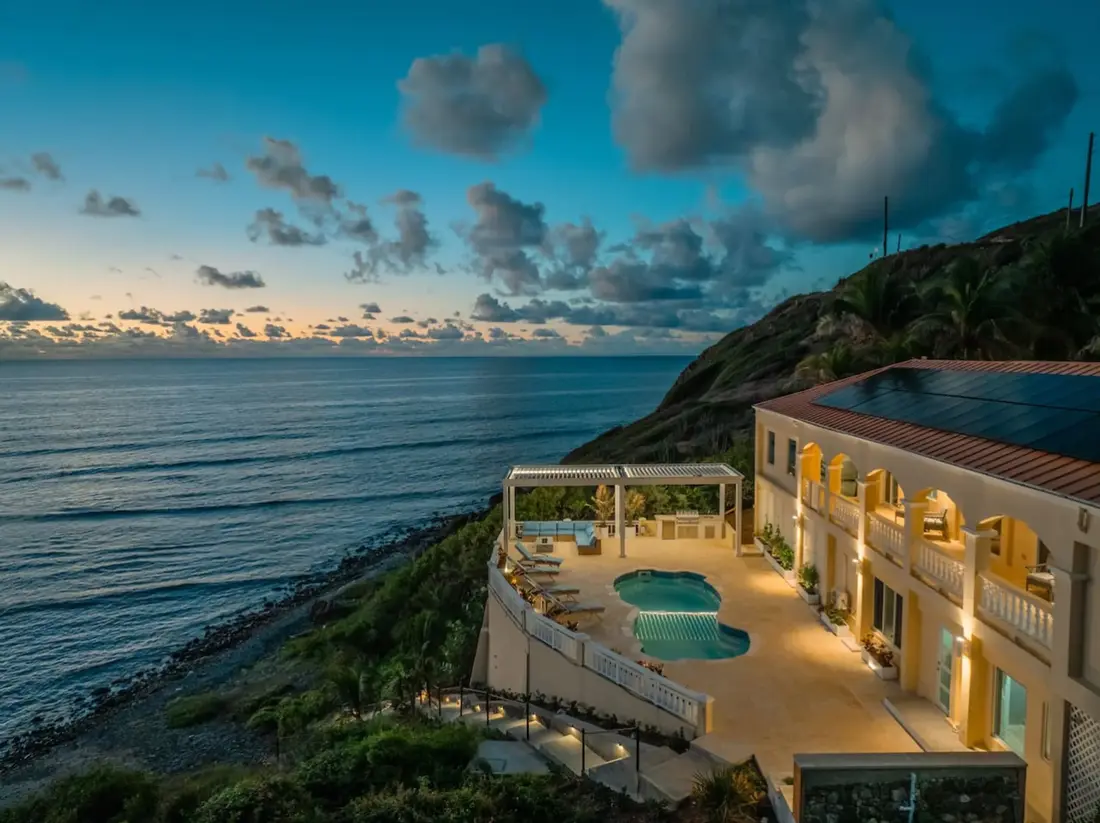 The Cerulean5 bd · 5 ba · sleeps 12 · Christiansted
More in On the Water
Sources
12 references, listed in full at the end of this guide — official park, refuge, tourism-board and business sources, checked August 2026.