St. Croix vs Belize
The hemisphere's greatest reef fronts a rustic, two-leg destination whose port city carries its own Reconsider Travel rating. The American wall is one flight and zero asterisks away.
Belize owns two of diving's proper nouns — the Blue Hole and the hemisphere's largest barrier reef — and wraps them in a destination that stays defiantly rustic: golf-cart cayes reached by puddle jumper or water taxi, dock-swimming instead of beaches, and a port city whose own advisory zones read Reconsider Travel. It is a wonderful trip for the traveler who wants exactly that. St. Croix sells the other arrangement: first-rate water bolted to an easy American island.
The two, side by side
| St. Croix | Belize | |
|---|---|---|
| Passport for U.S. citizens | Not needed | Required |
| U.S. State Department advisory | None — U.S. territory | Level 2 overall; Belize City carries Level 3 zones (Reconsider Travel) |
| The journey | Nonstop jets, villa in 40 minutes | Jet to Belize City, then puddle jumper or water taxi to the cayes |
| The reef | Buck Island monument; Cane Bay Wall from shore | The hemisphere's largest barrier reef; the Blue Hole |
| Where you stay | Managed villas and condos, most with pools | Caye guesthouses and lodges; golf carts, rustic grids |
| Beaches | A dozen-plus real sand beaches | Scarce — the cayes are mangrove and seawall; swimming is off docks |
| On-island comfort | Supermarkets, hospital, U.S. supply chain | Barge-and-boat provisioning; limited caye services |
| Beyond the water | Towns, rum, rainforest, golf, bio bay | Jungle and Maya ruins — on the mainland, hours away |
| Coming home | Agriculture check; $1,600 duty-free | U.S. customs; $800 duty-free |
| Language and money | English, U.S. dollar | English; Belize dollar pegged 2:1 |
Advisory levels and details are as published by the U.S. Department of State and checked August 2026. They change — read the current advisory at travel.state.gov before any international trip.
The short answer
Divers who have wanted the Blue Hole for years, anglers bound for permit flats, and travelers who like their islands barefoot-rustic will love Belize and should go — through the relay, past the flagged port city, into a caye hammock, happily. Families, mixed groups and anyone whose vacation includes the words beach, villa or pool should read the fine print first, because Belize's cayes have essentially no beaches, its comforts ride a barge schedule, and its journey has two legs each way. St. Croix pairs its own serious reef with jets, sand and a full island economy. Our stake is the homes we manage here; the facts are sourced below.
The journey, leg by leg
Belize's international airport sits outside Belize City, and almost nobody's vacation is in Belize City: the State Department rates the country Level 2 overall and marks zones of the city itself Level 3, Reconsider Travel, for violent crime — the only capital-area rating of its kind in this series. So arrivals immediately leave, by 12-seat puddle jumper to San Pedro or Caye Caulker (scenic, weight-limited, extra fare) or by water taxi (about 90 minutes, luggage in the bow). The reverse relay ends in U.S. customs at the $800 allowance. Repeat visitors budget half a travel day each way and call it part of the charm; first-timers call it a surprise.
St. Croix: one jet, one landing. Miami about three hours daily on American, Charlotte daily from December 17, 2026, Atlanta near-daily from December 19, Newark Saturdays from October 31, 2026, Chicago winter Saturdays, San Juan all day — then a driver's license, a rental car and a villa inside forty minutes. Verified August 2026:
| Airline | From | Schedule (as published Aug 2026) | Flight time |
|---|---|---|---|
| American Airlines | Miami (MIA) | Year-round, one to three flights daily by season | about 3 hours |
| American Airlines | Charlotte (CLT) | Paused until Saturdays return November 7; daily beginning December 17, 2026 | about 3¾ hours |
| American Airlines | Chicago O'Hare (ORD) | Winter Saturdays beginning December 5, 2026 | about 4¾ hours |
| Delta Air Lines | Atlanta (ATL) | Saturdays through September 5; Saturdays again from November 14; daily except Mondays beginning December 19, 2026 | about 4 hours |
| United Airlines | Newark (EWR) | Saturday nonstops beginning October 31, 2026 | about 4½ hours |
The reef, both sides of it
Belize's headline is real: the Mesoamerican reef is the largest barrier system in the hemisphere, a UNESCO World Heritage site, and the Great Blue Hole — Jacques Cousteau's famous sinkhole — is one of diving's icons. Hol Chan's channel teems; Shark Ray Alley delivers its name. Every serious diver should see it once. Now the asterisks: the Blue Hole is a 2-to-3-hour boat run each way from the cayes, sold as a long, expensive, weather-dependent day; the hole itself is a deep, dark, brief technical profile that many divers rank below its own legend; and the daily diving otherwise runs boat schedules from the caye docks.
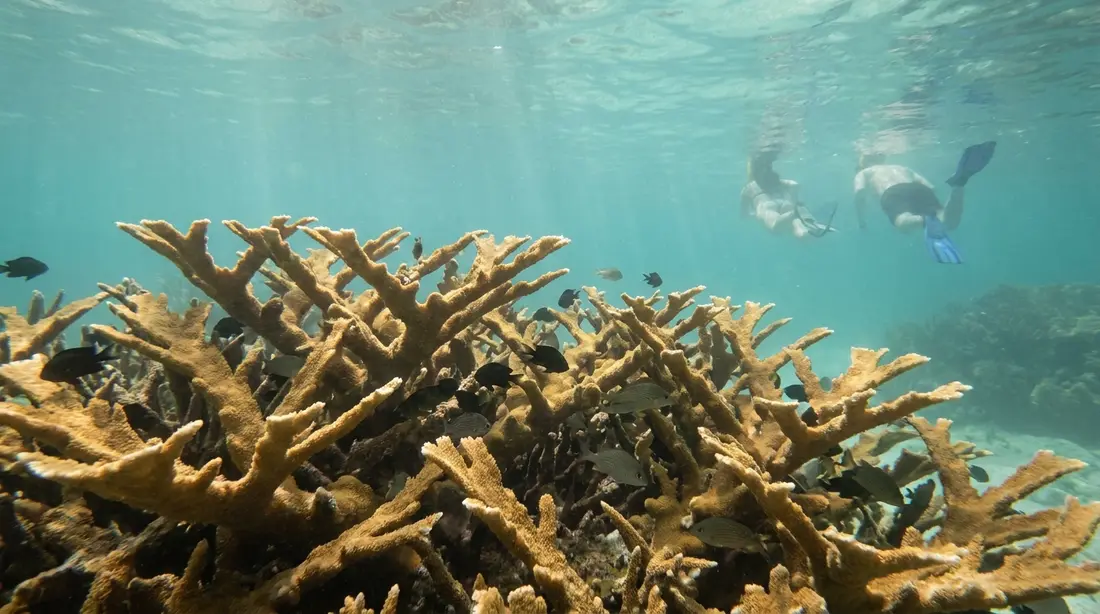
St. Croix's counterargument is access and depth in one move: the Cane Bay Wall starts about a hundred yards off the sand and drops toward depths measured in thousands of feet — walked into from a beach with a bar, no boat, no schedule. The Frederiksted Pier is a celebrated macro and night dive; Butler Bay's wrecks and Salt River Canyon's walls fill the card; and Buck Island Reef National Monument — federal no-take since 1961, its elkhorn barrier wrapping two-thirds of the island — runs the marked snorkel trail for the surface half of the family. Belize wins the trophy dive; St. Croix wins every ordinary morning of the week. See diving St. Croix.
The beach problem nobody mentions until arrival
Here is the caye fine print: Ambergris and Caulker have almost no natural beaches. The shorelines are mangrove, seawall and reclaimed sand strips; swimming happens off docks over turtle grass, and the famous Split at Caulker is a channel, not a strand. Belize's own guides say it — you come for the reef and the vibe, not for beaches. For a dive crew that is no problem; for the half of the group that pictured sand, it is the whole problem.
St. Croix is a beach destination in the plain meaning: Sandy Point's two undeveloped white miles (the largest leatherback nesting beach under U.S. jurisdiction), Cane Bay beneath its wall, The Shoys behind its gate (our Shoy's Beach House fronts it), hike-in Jack's and Isaac's Bays, Rainbow's sunset sand, Chenay's shallows — free, drive-up, near-empty. The roster.
Jungle and ruins, conceded — and located
Belize's second act is genuine: Maya sites (Caracol, Xunantunich, Lamanai), cave tubing through the ATM cave's ceremonial chambers, jaguar country at Cockscomb. Credit paid in full — and geography noted: all of it is on the mainland, hours from the cayes by boat-plus-vehicle excursion days. The classic Belize trip splits the week — jungle lodge, then caye — which is wonderful and is also two more transfers on the relay.
St. Croix's land act needs no second base camp: Christiansted's five-building National Historic Site and Danish arcades, Frederiksted's emancipation fort, Salt River's 1493 Columbus landing (the only one on U.S. soil), the west-end rainforest, Annaly's tide pools, three distilleries led by Cruzan since 1760, Robert Trent Jones Sr. golf and the year-round bioluminescent bay. Smaller wonders; zero transfers.
Comfort, provisioning and the week's machinery
Caye life is charming and thin by design: golf carts on sand streets, generator hum, barge-priced groceries, water made by reverse osmosis, lodging that runs from backpacker to boutique with rustic as the shared adjective, and medical care that means an evacuation flight for anything serious. Its fans would not change a plank of it. St. Croix runs a full American island economy under the same sun: supermarkets, a hospital, national car rentals, hardware stores, and managed villas with pools, kitchens and a Sterling Point manager on-island — the machinery of an easy week, invisible until you need it. The homes: here.
What it costs
Belize's sticker looks modest and stacks quietly: the domestic hop or water taxi, the Blue Hole day (a serious line item), guided-everything excursions to the mainland, barge-priced meals, the 2:1 Belize dollar's mental tax, and the $800 allowance home. St. Croix's ledger: direct-booked villa, rental car, supermarket provisioning, free beaches, charter-free shore diving, single-digit attractions, U.S. dollars, $1,600 allowance, five-liter rum rule. For the mixed group especially, the American island delivers more week per dollar — and every activity without a boat schedule.
Month by month on the two destinations
Belize's calendar divides wet and dry with jungle emphasis: the dry season (roughly December–May) is prime for both reef and ruins, and it is when the cayes fill and the lodges book; the wet season (June–November) soaks the interior generously, mosquitoes included, while the cayes stay breezier — and the whole country shares the Atlantic storm season's counsel. The famous natural calendar events are divers' dates: whale sharks off Placencia around the spring full moons, lobster season opening with festivals on the cayes in June–July. September brings national celebrations and the deepest quiet. St. Croix's calendar runs the same season's advice with fuller continuity — festival season at the holidays, AgriFest in February, turtle spring at Sandy Point, a discounted green fall with every kitchen open. Months in detail: when to visit.
The travel day, hour by hour
The Belize day, caye edition: three-ish hours to Philip Goldson International, immigration's modest queue, then the choice — the 15-minute Tropic or Maya Island hop to San Pedro (12 seats, sea-level views, extra fare) or the taxi to the water-taxi terminal and 90 minutes of spray to the dock. Golf-cart pickup, sandy streets, lodge by late afternoon. The jungle-first version swaps the hop for a two-hour van west toward San Ignacio. Either way the return relay ends in U.S. customs at the $800 allowance. St. Croix's day: three hours from Miami, rental counter, supermarket, villa — forty minutes maximum, no second carrier, and the $1,600 allowance home with the rum checked domestic. The relay is charming exactly once per direction.
Seven days on each
The Belize week, classic split: three jungle nights — Xunantunich or Caracol, the ATM cave's helmet-lit ceremony, a river float — then the transfer day east and the hop out to the caye for reef mornings (Hol Chan, Shark Ray Alley), dock hammocks, the Blue Hole splurge day for the committed, and Belikin sunsets at the Split. A wonderful itinerary that spends two of its seven days in transit and lives rustic throughout.
The St. Croix week holds its variety on one island: Buck Island's snorkel trail Monday; Cane Bay's wall Tuesday; Christiansted's fort and arcades Wednesday; Point Udall, the Jack's and Isaac's hike and The Shoys Thursday; Frederiksted's pier and Rainbow's sunset Friday; the rainforest drive, Cruzan and the Domino Club Saturday; the bio bay glowing after dark — reef, forest, history and rum without a single transfer day, from a villa with air conditioning that never negotiates with a generator. Plans: the 7-day itinerary.
Getting around once you land
On the cayes the vehicle is the golf cart, rented by the day over sand streets that flood photogenically after rain; bicycles and bare feet cover the rest, and everything beyond the island is a boat. On the mainland the distances are Central American: San Ignacio's ruins country sits two hours west of the airport, Placencia four south, Hopkins three, over the Hummingbird Highway's beautiful, slow miles — most travelers book transfers or the domestic Cessna network rather than self-drive, and the guided format owns the marquee sights (the ATM cave admits guided parties only). It all works; none of it is quick.
St. Croix scales the same variety to one rental car and forty minutes: reef, towns, rainforest and distilleries on a single map, self-driven, with left-side driving as the only briefing. The island loop covers coast to coast before lunch.
Before you book either destination
For Belize: sequence the split week deliberately (jungle first, then caye, so the transfers descend toward rest); book the Blue Hole day early and hold it loosely — weather scrubs it and refunds vary; confirm your caye lodging's power, water and air-conditioning reality at the price you are paying; check advisory guidance for Belize City and plan the airport transit accordingly; and budget the puddle-jumper or water-taxi legs, the guided-site fees and the 2:1 Belize dollar into the true total. Divers should verify operator certifications and group sizes — the good boats book out.
For St. Croix: book the villa direct (the homes), reserve the car, arrange tanks with a shore operator (the operators), calendar Buck Island and the bio bay ahead in peak weeks. No sequencing required; the island is one piece.
The case for St. Croix, point by point
One: beaches exist — the category the cayes concede outright. Two: one flight and forty minutes against a jet, a puddle jumper and a golf cart. Three: no advisory routing around a Level 3 port city. Four: wall diving that starts at the sand against a 2-to-3-hour boat run to the trophy. Five: villas with kitchens, air conditioning and a manager on-island against generator-and-barge rusticity. Six: no passport, no Belize-dollar math — and $1,600 of allowance against $800. Seven: a hospital and supermarkets ambient rather than an evacuation plan. Eight: history on the same island as the reef — Columbus's landfall, Danish forts, Hamilton — against ruins a mainland transfer away. Nine: a bio bay ten minutes from dinner. Ten: zero transfer days in the week's seven. The hemisphere's reef deserves its pilgrimage once; the American wall is there every ordinary morning. The homes: here.
Who should pick which destination
Pick Belize if: the reef pilgrimage is the trip — the Blue Hole seen once, Hol Chan's channel, maybe spring's whale sharks; the jungle-and-ruins split week calls; permit flats summon the anglers; or rustic is the romance and golf-cart streets sound like freedom. Pick St. Croix if: beaches matter (the cayes concede the category entirely); the group mixes divers with beach-and-pool travelers; the week should spend zero days in transit; comforts — supermarkets, a hospital, real kitchens — should be ambient rather than imported; or serious wall diving should start at the sand rather than a 2-to-3-hour boat run. The hemisphere's biggest reef earns a pilgrimage; the American wall earns the ordinary weeks — and there are more ordinary weeks.
When Belize is the right call
The dedicated dive pilgrimage with the Blue Hole and Hol Chan on the card — go, budget the boat days, savor it. Permit-and-bonefish anglers have famous flats at Turneffe. Jungle-first travelers who want ruins at dawn and a caye hammock after — the split week is a classic for good reason. Backpackers and rustic romantics belong at the Split with a Belikin. In every case: read the advisory's Belize City zones, plan the relay, and pack for barefoot. If instead the week is beach, villa, family, ease — the reef with jets attached wins without a second leg.
A rainy day on each destination
A wet caye day is a hammock day by design — the islands hold a chocolate shop, a small museum room and the bars, and the reef trips scrub with the weather that grounded them. On the mainland, rain moves the ruins indoors only in the sense that the vans keep driving. St. Croix's wet-day file runs indoors properly: Fort Christiansvaern's vaults, the Whim estate museum, Frederiksted's arts center, the Apothecary Hall, and a distillery trail that improves with weather. The rainy-day plan covers a full day without a boat in it — which on a caye is the day's whole problem.
If you choose Belize anyway
Sequence it right and it sings: jungle first (San Ignacio side for the ATM cave — book the guided slot early, cameras stay outside — plus Xunantunich or a Caracol day), then descend to the caye for the reef half. Choose Ambergris for range and restaurants, Caulker for barefoot budget charm; confirm the lodging's power and water reality at your price; and hold the Blue Hole loosely — weather scrubs the long run, and Hol Chan's channel with Shark Ray Alley delivers more life per dollar anyway. Take the 12-seat hop over the water taxi when bags and patience are short. Carry cash for the cayes, budget the guided-everything fees in full into the total, and transit Belize City as exactly that — a transit.
Where you would stay on St. Croix
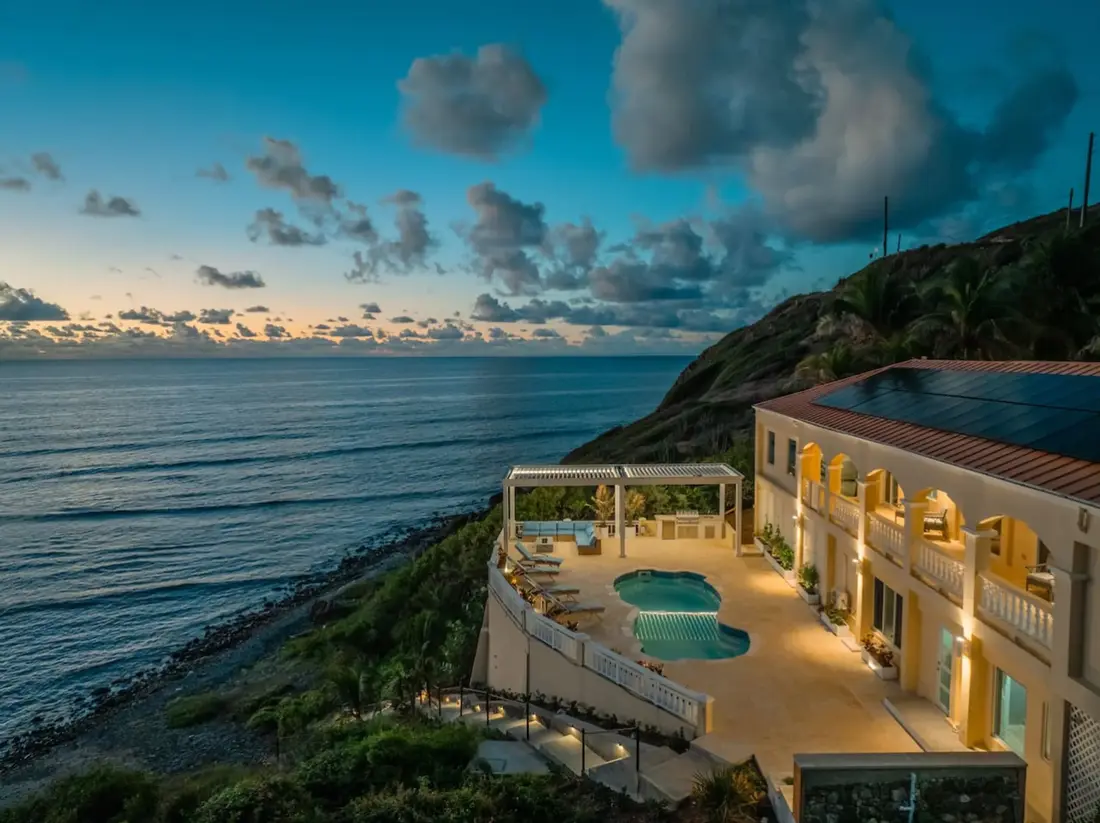
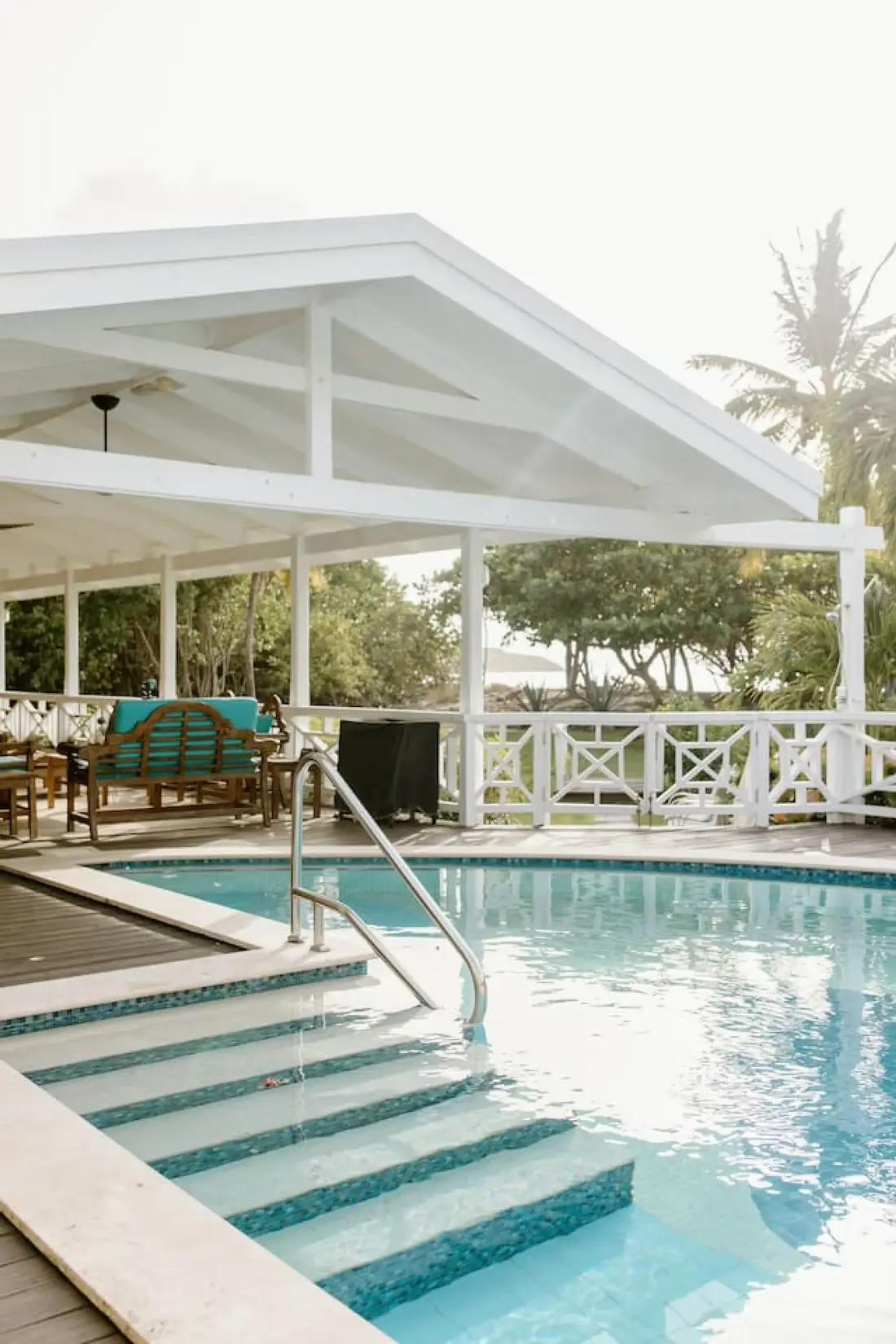
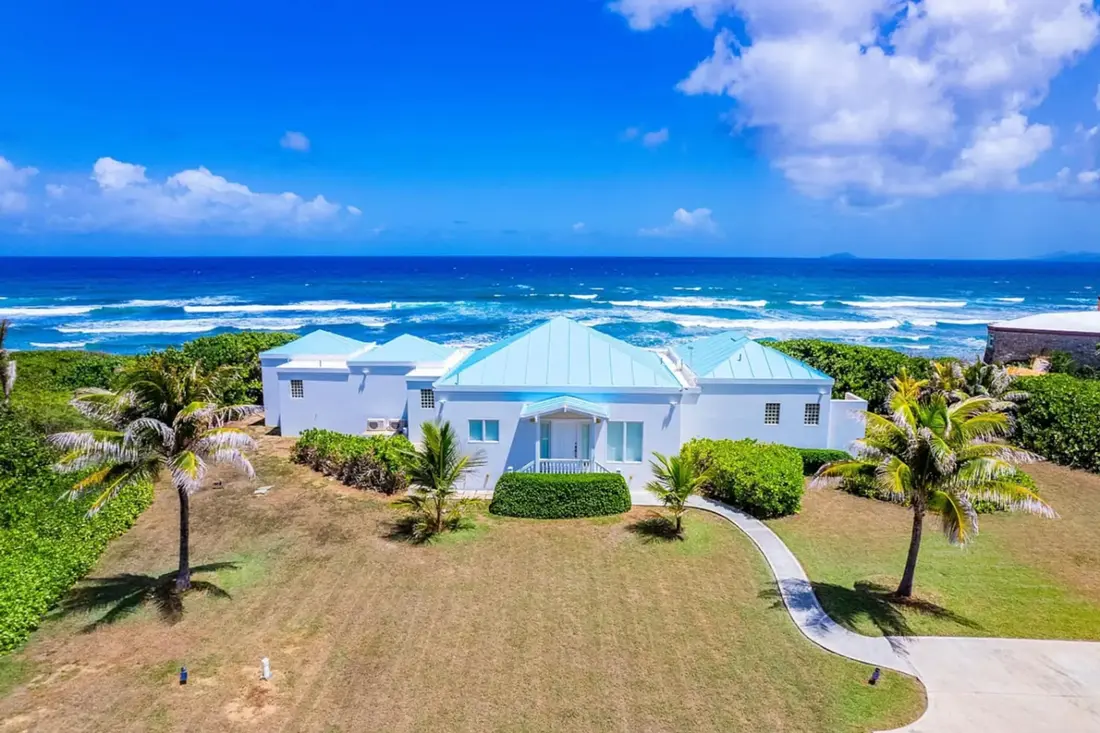
The consolidated alternative sleeps in real houses: our direct-booked homes under Sterling Point's on-island management. Shoy's Beach House on The Shoys' guarded sand; the East End villas — The Cerulean among them — facing Buck Island's monument water; Christiansted condos near the boardwalk; west-end sunset stays. Air conditioning without generator negotiations, kitchens provisioned in one supermarket run, pools that need no tide chart, and a hospital ten-to-thirty minutes from every door — the caye week's quiet worries, deleted. Divers pick by wall proximity; families by Chenay's shallows. Couples: homes for two; groups: the family collection. The roster: the homes.
How this page was made
Series rules: the advisory structure (Level 2 country, Belize City's Level 3 zones) per the State Department, checked August 2026 — advisories change; read the current text at travel.state.gov. Reef and Blue Hole standing per UNESCO and standard dive references; caye logistics per the carriers' and water taxis' schedules; the no-beaches candor per Belize's own guides. What Belize does best — the hemisphere's reef, the ruins, the rustic romance — is conceded in full. Our bias: the homes we manage on St. Croix, disclosed here as on every page. Verify anything; it holds.
The bottom line
Belize is a magnificent reef wearing a rustic, two-leg destination: no beaches on the cayes, thin comforts, a flagged port city at the hinge of every journey, and trophies — the Blue Hole, the ruins — that earn their asterisks. St. Croix is the consolidated alternative: a true wall off a real beach, a snorkel-trail monument, towns, rum and a villa economy, one nonstop from Miami with no briefing attached. See the Blue Hole once in your life. Spend the ordinary weeks on the island that is easy to reach. The homes are here.
Elsewhere in this series
This page is one of twenty-six. If you are still shopping the map, the verdicts nearest this comparison run as follows — each links to the full page with its own sources:
St. Croix vs the British Virgin Islands — The BVI are the Caribbean's sailing capital — reached by passport, puddle jumper and ferry. St. Croix flies you straight in, no passport at all.
St. Croix vs Turks & Caicos — Turks and Caicos sells one famous beach at luxury-resort prices. St. Croix sells a whole island for less — no passport, no Level 2 advisory.
St. Croix vs Anguilla — Anguilla perfected the quiet expensive beach. St. Croix does the quiet beach without the relay flight, the passport or the markup.
The complete set, grouped by region and passport rules, lives at St. Croix vs other destinations.
Which home fits your group
If St. Croix wins your comparison, the homes are the easy part. Groups of eight to twelve settle into the family collection; couples take a home for two; anyone who wants sand at the door starts with beachfront. Every one is managed from the island by Sterling Point and booked direct — tell us the dates and the headcount and we will point you at the one that fits.
Two practical notes that surprise first-time villa bookers. Direct booking means the rate is the rate: no platform service fees, no resort fees, and the people answering questions are the same Sterling Point team that manages the houses on the island. And every home runs a full kitchen — one run to Plaza Extra or Seaside Market on the drive from the airport covers the week, which is where a villa quietly beats a resort bill before the first beach day. How the booking works, and what it does not mean, is spelled out at book direct.
Who wrote this
SP Vacations is the vacation-rental division of Sterling Point Real Estate, a licensed real-estate operation based on St. Croix in the U.S. Virgin Islands. The team lives and works on the island it writes about: the homes in the villa collection are inspected, cleaned and managed locally, and the person who answers a booking question is on St. Croix, not in a call center three time zones away. That is the vantage point behind every page in this series — and the reason the series exists at all, since most of the destinations compared here are places our guests weighed before choosing this island.
Two standing practices shape what you read. First, the pricing wall: nightly rates and availability for the homes live only on the booking pages, never in articles, so nothing here goes stale or oversells. Second, the sourcing rule: safety statements cite the U.S. State Department, customs figures cite CBP, park facts cite the National Park Service, and anything that changes — advisories, schedules, hours — carries its checked date and a pointer to the primary source. Where a rival destination wins a category, the page says so, because a comparison that concedes nothing persuades nobody. Questions, dates or a villa to match a group — the island team is here, or call 340-205-3929.
Questions people ask
What is Hol Chan Marine Reserve?
The cayes' signature snorkel — a protected channel teeming with rays, nurse sharks and grouper, minutes from San Pedro by boat and busy accordingly. Buck Island is St. Croix's version: a federal monument since 1961 with a marked trail and a beach, by licensed sail from the boardwalk.
Do you need shots or malaria pills for Belize?
For the cayes, standard travel precautions; jungle itineraries raise mosquito-borne considerations worth a travel-clinic conversation. St. Croix is a U.S. jurisdiction with U.S. healthcare and no such checklist.
What is San Pedro like at night?
Golf carts, sandy-floor bars, reggae covers and an easy barefoot buzz — charming, compact, repetitive by Thursday. Christiansted's evenings run deeper: boardwalk dinners, arcade bars, a fort at sunset and the bio bay glowing ten minutes away.
What is the ATM cave?
Actun Tunichil Muknal — a guided-only wade-and-climb into a Maya ceremonial cave with calcified remains in situ, cameras banned, helmets on. It is Belize's single most extraordinary inland hour and books out. St. Croix's underground is gentler: rum cellars and fort vaults.
Ambergris Caye or Caye Caulker?
Ambergris for range — more lodging, restaurants and dive boats at higher prices; Caulker for barefoot budget charm at backpacker pace. Both share the no-beaches, golf-cart, barge-priced reality this page describes. A St. Croix villa outclasses both on comfort while keeping the reef.
Do you need cash in Belize?
On the cayes, meaningfully — cards work at the bigger operations, but kiosks, carts, tips and water taxis run on cash, and the 2:1 Belize dollar invites arithmetic. St. Croix runs U.S. cards and dollars everywhere, with no conversion at any register.
Can you combine Belize's jungle and reef in one week?
Yes — the classic split week does exactly that at the cost of two transfer days and two unpackings. St. Croix's version needs neither: the rainforest drive, the wall dive and the fort visit share one villa base forty minutes wide.
Is Belize safe?
The State Department rates Belize Level 2 overall with zones of Belize City at Level 3, Reconsider Travel, for violent crime — the transit hinge most itineraries pass through briefly. The cayes and tourist corridors are calmer. St. Croix, as U.S. territory, carries no advisory. Read the current text at travel.state.gov.
How do you get to Ambergris Caye or Caye Caulker?
Jet to Belize City, then a 12-seat puddle jumper to San Pedro or Caulker, or a roughly 90-minute water taxi — and the same relay home. St. Croix is one nonstop jet from five mainland cities with a villa inside forty minutes, verified August 2026.
Does Belize have good beaches?
Candidly, no — the cayes are mangrove and seawall, swimming happens off docks, and Belize's own guides say the trip is about the reef, not beaches. St. Croix is a true beach destination: Sandy Point's two undeveloped miles, Cane Bay, The Shoys and a dozen more, free and near-empty.
Is the Blue Hole worth it?
As an icon, once — and know the fine print: a 2-to-3-hour boat run each way, a premium price, weather dependence, and a deep, dark, brief profile many divers rank below its legend. St. Croix's Cane Bay Wall delivers big-drop diving a hundred yards off the sand, every ordinary morning, for the cost of a tank.
Do I need a passport for Belize?
Yes, plus the Belize-dollar 2:1 exchange and U.S. customs at the $800 allowance home. St. Croix: no passport for U.S. citizens, U.S. dollars, $1,600 allowance and CBP's five-liter rum rule.
Which is better for families?
St. Croix by the width of the fine print: real beaches, a villa with a pool and kitchen, calm shallows at Chenay, Buck Island's snorkel trail, a hospital and supermarkets — no puddle jumpers, dock swimming or barge provisioning. See the family collection.
When is the best time to visit Belize?
The dry season, roughly December through May, for reef and ruins alike — with whale sharks off Placencia around spring full moons and lobster festivals opening the June season. The wet months soak the interior. St. Croix runs drier year-round with no split-week transfer day in any month.
Do the cayes have cars?
Essentially no — San Pedro and Caye Caulker run on golf carts over sand streets, with groceries barge-priced and services thin; that rusticity is the charm and the constraint. St. Croix runs full-size rental cars, supermarkets and a hospital under the same sun.
Is the water taxi to the cayes rough?
It can be — about 90 open-water minutes with luggage stowed forward, spray included on windy days; the 12-seat plane hop is the smoother, pricier alternative. St. Croix's villas are a forty-minute drive from the jet, no second vessel involved.
What about Belize's jungle and Maya ruins?
Real and conceded — Caracol, Lamanai and the ATM cave are extraordinary, on the mainland hours from the cayes, usually as a split-week itinerary. St. Croix's land week needs no second base: forts, a Columbus landing site, rainforest, tide pools, golf and three distilleries, all one rental car apart.
In this comparison
St. Croix at a glance
- U.S. territory — no passport for U.S. citizens
- Nonstops from Miami, Fort Lauderdale, Charlotte, Atlanta, Newark and Chicago
- U.S. dollars, U.S. phone plans, no foreign customs
- $1,600 duty-free allowance home (double the standard $800)
- 84 square miles — the largest U.S. Virgin Island
More comparisons
- St. Croix vs St. Thomas
- St. Croix vs St. John
- St. Croix vs Puerto Rico
- St. Croix vs Vieques & Culebra
- St. Croix vs the Florida Keys
- St. Croix vs Hawaii
- St. Croix vs the British Virgin Islands
- St. Croix vs Turks & Caicos
- St. Croix vs Anguilla
- St. Croix vs St. Barts
- St. Croix vs St. Martin
- St. Croix vs Antigua
- St. Croix vs St. Kitts & Nevis
- St. Croix vs St. Lucia
Sources
Advisory structure per the State Department's Belize page (Level 2 country, Level 3 Belize City zones; verify current); reef and Blue Hole per UNESCO and standard dive references; caye beach character per Belize tourism's own guidance; ruins and cave sites per Belize's archaeology authorities. St. Croix facts from NPS, CBP and our sourced island reference. Flights verified August 2026.
St. Croix vs Belize
Belize is a famous reef behind a puddle-jumper relay and a flagged port city. St. Croix is serious diving with jets, villas and no asterisks.