Turtle Beach, Buck Island
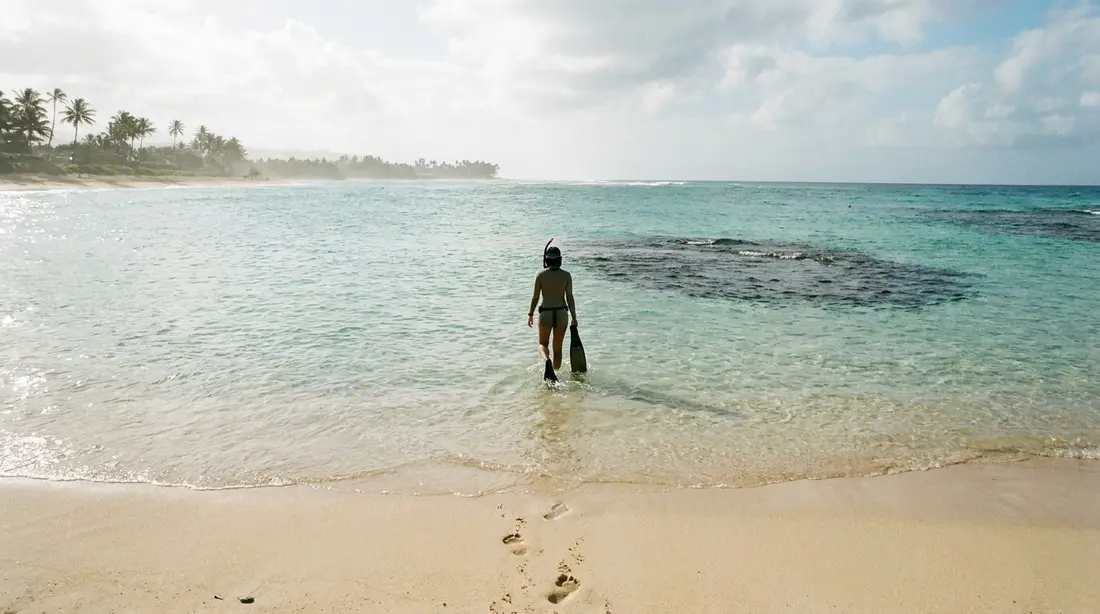
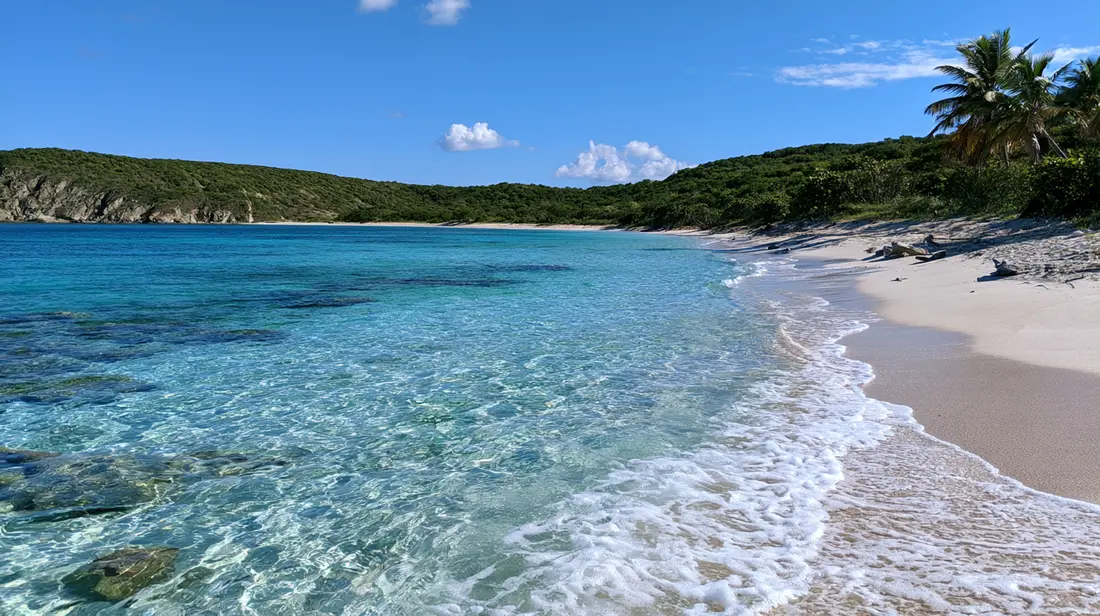
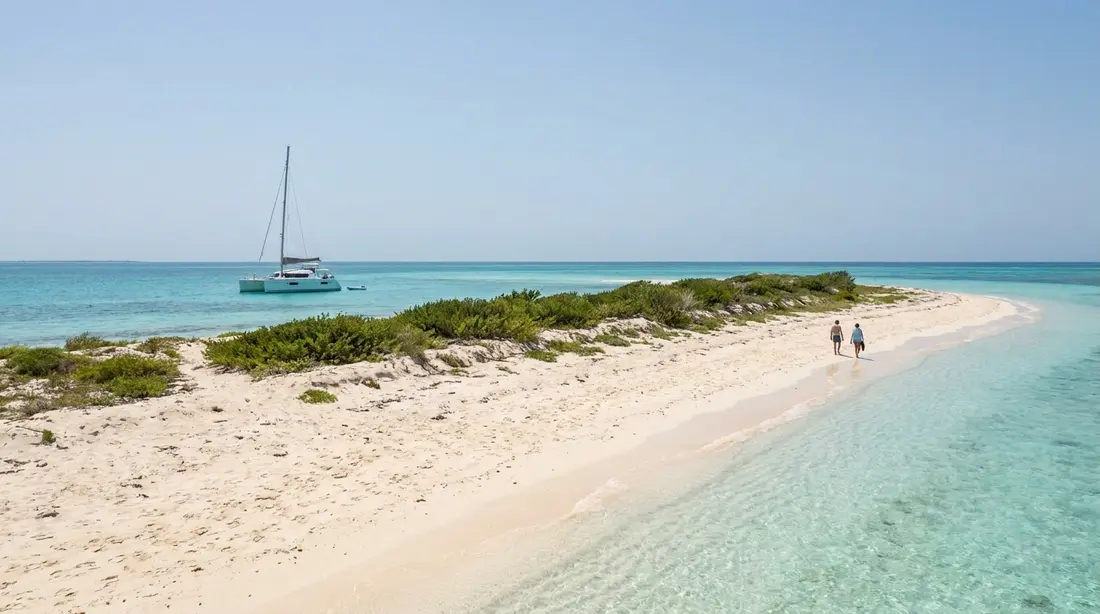
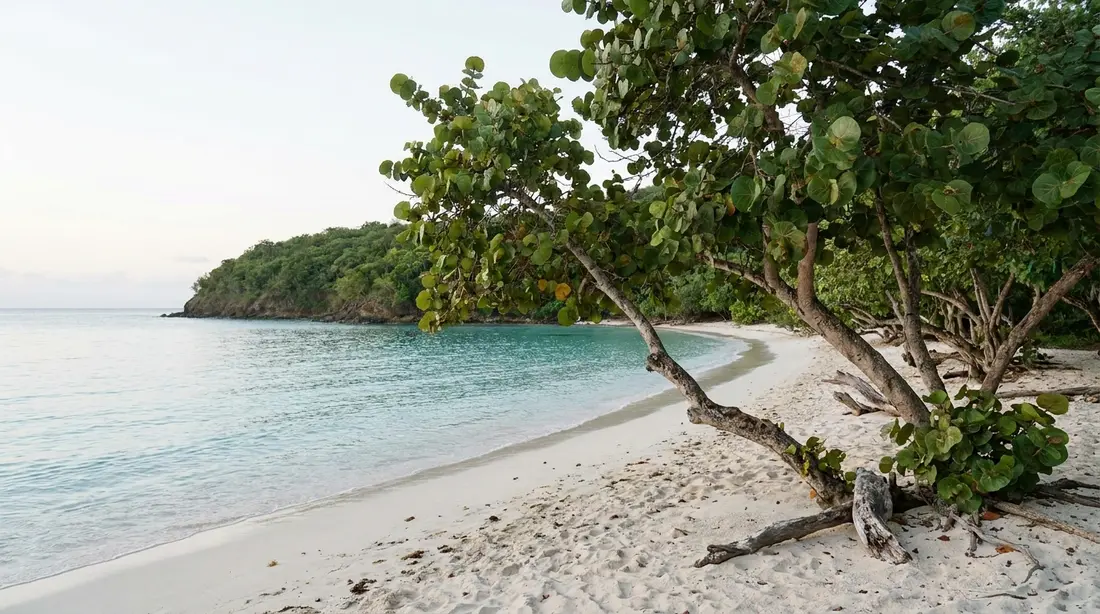
The powder-sand beach on Buck Island's west end, reached only by boat. Regularly named among the Caribbean's most beautiful beaches.
Turtle Beach is the sand at the west end of Buck Island: a curve of pale, fine-grained beach sloping into clear turquoise shallows, inside Buck Island Reef National Monument, reachable only by boat. It has carried a most-beautiful-beaches reputation for decades, it belongs to nesting sea turtles after dark, and it is the sand half of the most-booked day trip on St. Croix. This page covers the beach itself: what the sand and water are like, how you land on it, what you can and cannot do on it, and how to get the best hours out of it.
The sand and the water
Buck Island keeps nearly all of its sand at one end. The island is a green 176-acre ridge a mile and a half off St. Croix's north-east coast, and its west end tapers into low ground fringed with beach on two sides: the long strand the Park Service labels West Beach on the north-west shore, and a second run of sand along the south shore past a small point called Diedrichs Point. Tour crews and every beach list call the west-end sand Turtle Beach; the park's own maps and signs say West Beach. Same place. If a ranger or a regulation refers to West Beach, it means the beach you are standing on.
The sand is white, soft and fine, the classic Caribbean grade, and it stays bright because the rules keep it that way: no fires outside the grills, no digging, nothing hauled ashore that the boats do not carry back. The water in front of it is the calmest in the monument. The west end faces away from the trade swell, the barrier reef and the island itself block the chop, and the bottom runs out in clean sand for a long way before anything interrupts it. The Park Service describes the swimming here simply as clear sapphire water, and the territory's tourism pages note that the current off this beach is generally mild, which matches what visitors find on a normal day: water you wade into, stand in, and see your feet in.
The National Geographic line
Nearly every description of this beach carries the same credential: National Geographic ranked it among the most beautiful beaches in the world. The territory's official tourism office prints a version of it, the local guide sites repeat it, and the tour crews will tell you on the way over. What nobody prints is the issue or the year. We looked for the original citation and found the claim everywhere and the source nowhere convenient; it appears to trace to a National Geographic ranking from decades back, repeated so long that the reference outlived the paper trail. So here is the careful version: the accolade is real enough that the U.S. Virgin Islands tourism office states it, and old enough that no one cites it precisely.
The useful test is the one you can run yourself. Step off the boat, look down the strand, and decide whether the ranking needs a footnote. The sand is among the finest in the eastern Caribbean, the water color is the postcard the rest of the industry borrows, and the backdrop is a protected island with no buildings on it. Our own St. Croix beach ranking treats it as a category of one, because comparing a boat-access monument beach against drive-up sand misses what each is for.
Getting ashore
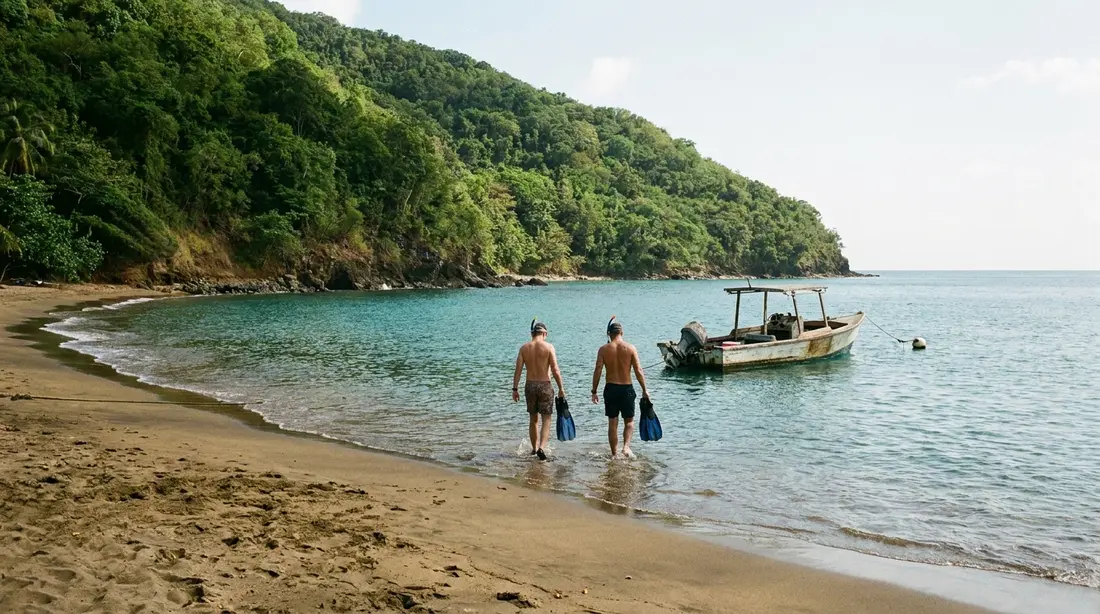
There is no marina and no beach bar waiting. Boats arriving at the west end pick up moorings or anchor in the designated anchorage area off West Beach, a zone the park marks on its charts and adjusts as conditions require, and the last stretch is yours: over the side into chest-to-waist-deep water, or a short ride in a tender, or a bow eased close enough to the sand that you step off into the shallows. Concessionaire crews use the calm water off this beach for snorkel practice, which is why most trips touch the sand before anyone sees the reef; first-timers get fitted and taught standing on a sand bottom instead of over coral. The park's brochure also documents a concrete pier on the south shore, maintained for Park Service operations and for off-loading passengers, and notes that it gives Buck Island wheelchair access; if boarding or landing is a concern in your group, ask your operator directly how they put guests ashore, since practice varies by boat and by day.
Who carries you over is its own subject, covered operator by operator in the boat tours guide. The short form: five companies hold the park's authorizations, with Big Beard's and Caribbean Sea Adventures boarding on the Christiansted boardwalk, Jolly Roger in the harbor, Llewellyn's at the yacht club in Teague Bay, and the Teroro II and Dragonfly trimarans at Green Cay Marina on the East End. Crossings run 40 to 90 minutes depending on power or sail. Private boats may come too, under permit rules handled through the park office in Christiansted.
How much beach time each trip buys
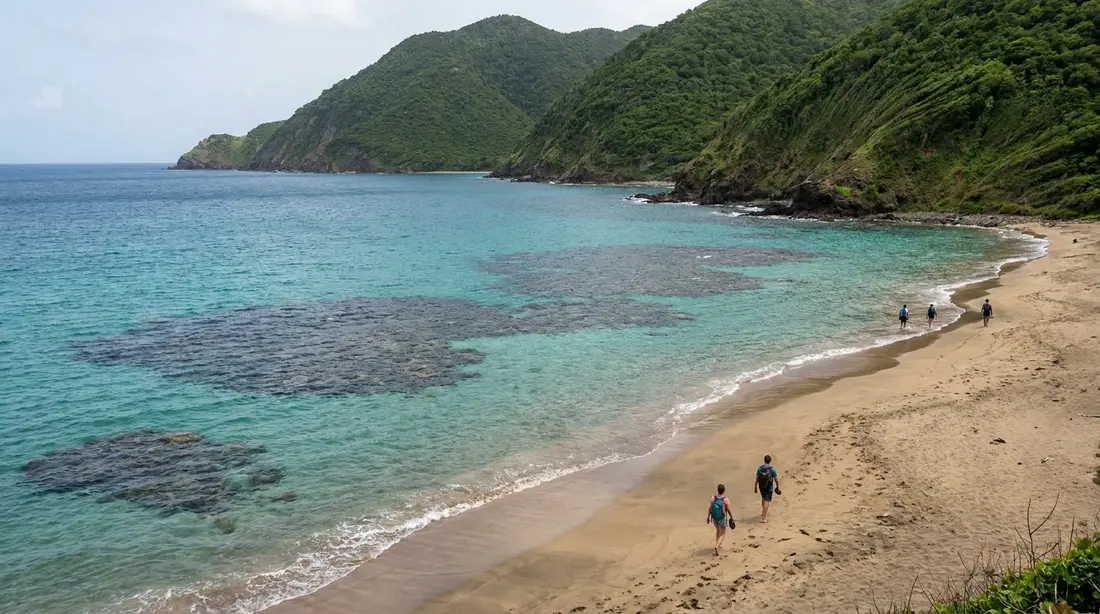
The beach is one half of a two-part day, and how the halves divide depends on the ticket. The standard half-day format spends its beach minutes efficiently: a stop off the west end for the snorkel lesson and a leg-stretch on the sand, the guided swim at the east lagoon, and sometimes a second brief touch at the beach before the run home. Call it 30 to 45 minutes with your feet in this sand, and treat that as the trade for a shorter, cheaper trip built around the reef. The full-day format is where Turtle Beach becomes the destination rather than the intermission: the snorkeling happens in the morning block, and the long middle of the day belongs to the west end, lunch, swimming, the walk, the hike for those who want it, before boats leave in time to clear the island by closing.
If the beach is the point for your group, book the full day and say so; if the reef is the point, the half day loses nothing that matters underwater. Families splitting the difference should know that small children usually rate the beach block, with its warm shallows and sand construction projects strictly of the no-digging-free kind, above the snorkeling, which argues for the longer format. Timing formats, prices and which boat suits which group are the tours page's business; the underwater trail guide covers the swim half of the day.
Swimming off the sand
The swimming is the easiest in the monument and among the easiest anywhere on a St. Croix trip. The shallows shelve gently, the sand bottom continues well out from shore, and on an ordinary day there is no shore break to speak of, no undertow to manage, and no navigation to do. Non-swimmers can stand and cool off; children can be watched from a towel with the whole scene in view; snorkelers can push out from the beach over the sand and find scattered heads of coral and seagrass patches where the bottom begins to change. Green turtles graze the grass in the shallows around the west end often enough that crews point them out from the deck, an encounter covered properly in the sea turtles guide.
Respect two boundaries. First, moored and anchoring boats share this water; stay shoreward of the anchorage and inside whatever line your crew sets, and surface-swim rather than roam when vessels are moving. Second, where sand gives way to reef, the park's warnings apply: the shallow reefs near shore carry sharp corals, fire coral, spiny urchins, fire worms and barbed snails, and cuts from marine life infect fast in warm water, so anyone exploring past the sand should keep horizontal, touch nothing and stand nowhere. Flat, clear and shallow does the beach's swimming justice; it does the reef's edges no justice at all if you treat them as footing.
Why it is called Turtle Beach
The name is literal. Buck Island's beaches are nesting ground for three sea turtle species, hawksbill, green and leatherback, and the west end sand is part of the nursery. Park announcements put the Virgin Islands nesting season at roughly March through December, with leatherbacks the spring specialists, and hawksbills and greens carrying the summer and fall; the females come ashore at night, dig, lay and return to the sea, and roughly two months later the hatchlings boil out and sprint for the water. This is why the monument's day ends at 5 p.m. sharp and begins at 7 a.m.: the island is closed overnight, artificial light on the beach is prohibited in the closed hours, and the turtles get the sand to themselves every single night of the year. The National Park Service has run a nesting research program on these beaches since the late 1980s, and its story, one of the great sea turtle recoveries anywhere, is told on the monument page.
What the name does never promise is a turtle on the sand at noon. Day visitors see turtles in the water, tracks on the beach some mornings in season, and stakes where biologists have marked nests. The beach's other famous nesters at Sandy Point, and the island-wide watching calendar, live in the turtle watch guide.
Stakes, ropes and closed sections
Expect parts of the beach to be marked off, and treat the markings as law, because they are. The clearest documented example is for birds rather than turtles: least terns, a protected migratory seabird, return to Buck Island each year and lay their eggs in shallow scrapes on open sand, and when a colony establishes itself the park closes that section of beach outright. In recent seasons the closures have covered the south-eastern end of West Beach, posted with signs, ropes on stakes and warning tape, with the park asking visitors flatly to keep away, walk around by another route, and avoid swimming along that shoreline, since every disturbance flushes adults off eggs and exposes the clutch to heat and predators. Terns nest from late spring into summer; brown pelicans nest on the island across a longer window.
Turtle nests get their own protection, mostly the nightly closure plus research marking, and the standing beach rules exist for them too: no digging anywhere on the beach, nothing staked into the sand, and any marked plot left exactly as found. A roped square on an empty beach can look like bureaucracy; on this beach it is the entire point of the place.
Walking the west end
The beach rewards walking, and the geography sets the route. From the West Beach picnic area you can walk the strand itself, then continue around the west end along the shoreline toward Diedrichs Point on the south shore, the flat, easy stretch the park's own trail map uses as the return leg of its hiking loop. That shoreline walk, sand and water's edge the whole way, is the best free half hour on the island: reef colors on one side, dry forest on the other, and usually nobody else doing it, because most passengers stay within sight of their boat. Turn around at any closed section, and keep to the sand rather than cutting inland.
The vegetation line is a real boundary, marked by the most poisonous tree in the Caribbean. Manchineel grows in the beach forest here, and its sap, leaves, bark and small green fruit all burn skin on contact, so the park's guidance is exact: stay on the beach or on the designated trail, do not shelter under shoreline trees in rain, and leave the little apples where they fall. For legs that want elevation, the marked hiking trail crosses the island from either picnic area in about 45 minutes, with a side spur to the observation point roughly 300 feet up; the crossing and its views belong to the monument guide.
Picnicking under the rules
The west end is set up for eating ashore, modestly and deliberately. The park maintains two picnic areas: one behind West Beach and one at Diedrichs Point, each with tables, charcoal grills and vault toilets, and Diedrichs Point adds a 20-by-20-foot roofed shelter, the only built shade in the monument. Regulations are posted at kiosks at both areas, which tells you how the Park Service expects picnics to go: read the board, then behave accordingly.
The rules that shape lunch, straight from the park's published pages and brochure:
- Fires only in the provided grills, never on the sand, and no gathering firewood on the island.
- Grill ashes never go on the ground; they stain the white sand and draw biting ants. Cooled ashes leave the island in a bag or container; ashes still hot get doused with sand and left inside the grill.
- No glass containers anywhere on the island, and alcohol stays aboard the boats rather than coming ashore.
- Everything packed in gets packed out. There are no trash cans, no vendors, no water fountains and nothing for sale; the vault toilets are the only service the island provides.
- No generators and no loud noise; the soundtrack is the reef line, and the park intends to keep it.
On concessionaire trips the crew usually handles food logistics, and some full-day formats feed you aboard rather than ashore, so ask when booking if a grilled lunch on the island is part of your picture. Private-boat picnickers own the whole checklist themselves.
What stays on the boat or at home
The short list, fresh from the park's regulations, of what this beach does not allow: drones anywhere over the monument without written approval, collecting of any kind, shells and coral included, pets ashore or in the water, beach umbrellas, tent poles or anything else staked or dug into the sand, and camping in any form, since the island is day-use only. Vehicles are banned with one exception the rule itself makes, wheelchairs. The complete monument rulebook, anchoring rules included, lives on the monument page; the beach-level summary is that you bring a towel, shade you can wear, and food you can carry back out.
Sun, shade and what to carry ashore
Plan for the sun as the day's one real hazard. The beach has no shade infrastructure at all, no palapas, no umbrella rentals, and no umbrellas permitted even if you brought one, and the only roof is the small shelter at Diedrichs Point, a shoreline walk away from where most boats land. The park's own brochure states that an average Buck Island tour exposes you to about four hours of direct sunlight, enough for a serious burn while the trade wind convinces you that you are cool, and its floor for sunscreen is SPF 30. Under territorial law that sunscreen must be mineral-based; the USVI bans formulas with oxybenzone, octinoxate and octocrylene, and the reef you crossed to get here is the reason.
The carry-ashore kit is short: water in refillable bottles, since the island has none; a hat with a brim and a shirt or rash guard you can swim in; footwear that tolerates hot sand and boat ladders; and a small dry bag for the phone. Skip anything glass, anything you would have to stake, and anything you would mind carrying back. Boat-side packing, seasickness tablets and towel policy belong to the tours guide; villa-to-boat morning logistics for families are in traveling with kids.
Photographing the beach
The picture everyone wants is the one the accolade lists were describing: bare sand running into water that grades from clear over white bottom to deep turquoise, with no structure in the frame. It is easy to get here because it is simply what the west end looks like. Work the water line where the shallows hold their palest color, put a wading person mid-depth for scale, and shoot along the beach rather than straight out to sea so the strand's curve carries the frame. A phone in a waterproof case at knee height in the shallows gets the half-in, half-out shot the brochures use.
Light is the scheduling question. Morning light comes over the island's ridge, so early frames are backlit from the sand looking east and glorious looking west along the strand; by afternoon the sun stands behind a photographer facing the island and the greens and blues switch on at full saturation. Full-day passengers get the best of it, since the midday-to-afternoon window belongs to them. The aerial angle is not available, drones are prohibited monument-wide without written approval, so the high shot is the observation point on the ridge, and the underwater half of the day's photography is covered in the trail guide.
Timing: crowd pulses and quiet windows
The beach's crowds arrive the way its visitors do, by the boatload, and that makes the rhythm predictable. When two or three boats land their passengers in the same half hour, the stretch of sand nearest the anchorage holds most of the island's population for the day; twenty minutes later the trail swimmers have left for the east lagoon and the beach breathes out again. The practical moves are simple: walk, because ten minutes of strand puts almost everyone behind you; time your swim against the pulses rather than with them; and if boats stack up near the landing area, remember the south-shore walk toward Diedrichs Point, which most passengers never take.
Seasonally, the calculus follows the boats. Winter brings the fullest departures and the Christmas Winds, which favor morning crossings; summer brings the flattest water, thinner schedules and the emptiest sand; and the closing bell never moves, 5 p.m., every day of the year, because the night shift nests. The island-wide weather picture is in the weather guide, and how the trip slots into a villa week is on our experiences page.
A beach day by the clock
The patterns below describe how the sand itself gets used across a typical day in season; individual operators set their own schedules, so treat this as the shape rather than a timetable.
| Time of day | On Turtle Beach | Your move |
|---|---|---|
| 7 a.m. | Island opens; empty sand, overnight turtle tracks visible in season | Only private boats see this hour; look for tracks before feet erase them |
| Mid-morning | First concessionaire boats moor; practice swims and lessons off the sand | Get the lesson done, then claim a spot away from the landing area |
| Late morning | Trail-bound passengers leave for the east lagoon; beach empties briefly | Half-day guests: this is your sand time, use it. Walkers: start the shoreline walk |
| Midday | Full-day trips return from the reef; grills and picnic tables in use | Lunch, then the long swim; the shallows are at their warmest and clearest |
| Early afternoon | Fullest hours on the sand; best color for photographs | Hike the ridge or walk to Diedrichs Point while others cluster near the boats |
| Late afternoon | Boats begin loading; crews sweep for gear and trash | Final swim early; carry out everything, ashes included |
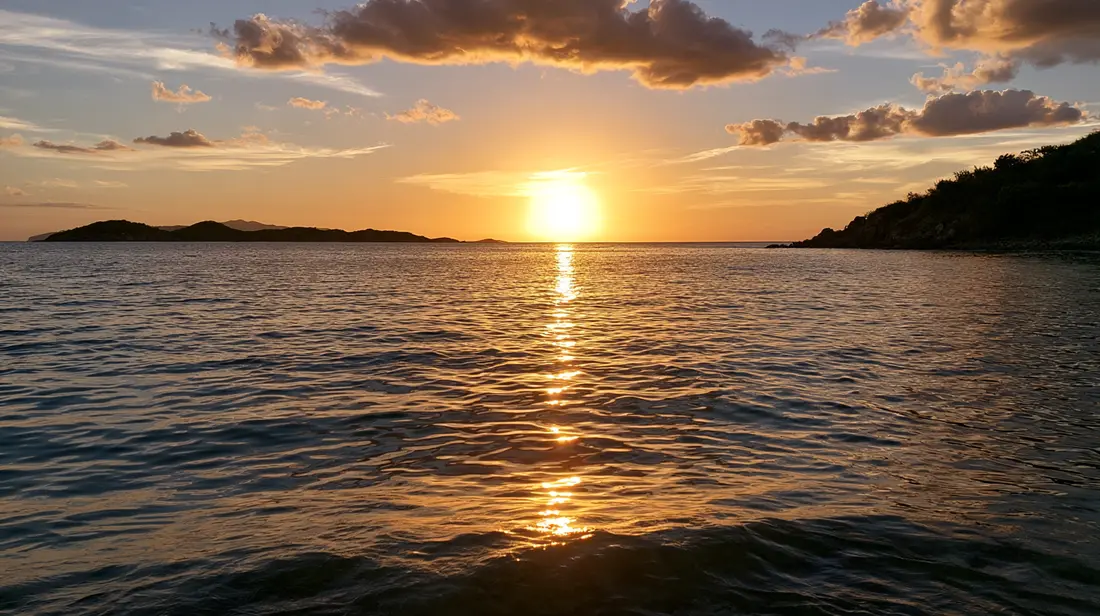
| 5 p.m. | Island closes; beaches revert to the turtles until 7 a.m. | Watch the west end catch the last light from the boat, or later from an East End deck |
How it compares to the drive-up beaches
Fair positioning, because a boat ticket is a real cost. Against St. Croix's own sand, Turtle Beach wins on setting: no road, no buildings, no vendors, protected water, and the cleanest sand-to-water gradient in the area. It loses on convenience and duration; you cannot linger past your boat's schedule, carry a cooler of glass bottles, or come back at sunset. The Shoys gives you calm, walkable, house-free sand fifteen minutes from Christiansted with no boat involved; Chenay Bay gives families the same standing-depth swimming with kayaks and a beach bar; and the west-coast beaches own the sunsets. The reason Turtle Beach justifies the crossing is the package around it, a monument reef, a guided trail swim and an uninhabited island, of which the beach is the barefoot chapter. Rank them all yourself with the beach ranking and the snorkeling-beach list.
Questions guests ask
Can you spend the whole day on Turtle Beach?
Most of it, on the right ticket. Full-day concessionaire trips park their middle hours at the west end, which in practice means a long midday block of swimming, lunch and walking, bracketed by the morning reef swim and the afternoon return. What nobody gets is early morning or evening: the island opens at 7 a.m., closes at 5 p.m., and overnight stays are prohibited in every form, so sunrise and sunset on this sand belong to the turtles and the rangers. Private boats under permit have the widest latitude within the day-use window.
Is there any shade on the beach?
Almost none, and you cannot make your own. The strand itself is open sand, umbrellas and staked shade are prohibited beach-wide, and the shoreline trees are partly manchineel, which you should not sit under at all. The one roof is the 20-by-20-foot picnic shelter at Diedrichs Point, a shoreline walk from the main landing area. Treat shade as clothing: hat, long-sleeve rash guard, and a boat with a hard top for the recovery hours. The park's four-hours-of-sun estimate for an average trip is worth taking literally.
Are there bathrooms on Turtle Beach?
Vault toilets, yes, at both picnic areas, West Beach and Diedrichs Point, maintained by the Park Service. That is the full extent of the plumbing: no running water, no showers, no changing rooms. Boats in the concessionaire fleet variously carry freshwater showers and marine heads, which is worth weighing when you pick an operator if facilities matter to your group. Come ashore already in your suit, and plan the freshwater rinse for the boat or the villa.
Can kids handle this beach?
It is arguably the best swimming beach for children on the whole trip, with flat, clear, gradually deepening water over sand and no surf. The real caveats are logistical rather than aquatic: getting ashore can involve a wet transfer from the boat, there is no shade for a napper, the sun is fierce for four hours, and the no-digging rule outlaws serious excavation projects. Families who bring water, hats and swim shirts, and who pick the trip length to match attention spans, do fine; the boat-choice angle for kids is in the tours guide.
Why is part of the beach roped off?
Because something is nesting in it. The park closes sections of West Beach when least terns establish their colony on the open sand, typically from late spring, marking the area with signs, ropes and warning tape, and it marks sea turtle nests as research crews find them through a season that runs roughly March to December. The closures move year to year with the birds and the nests. Walk around them, never through, and do not swim along a closed shoreline section; the eggs a rope protects cannot survive repeated disturbance.
Can you visit Turtle Beach without snorkeling?
Yes. Nothing obliges anyone to get in past their knees, and every trip carries passengers who come for the island rather than the reef. A non-snorkeling guest gets the crossing, the beach hours, the shoreline walk, the picnic and, on full-day trips, the ridge hike to the overlook, which is a full day by any standard. Tell the crew you are sitting the swim out so the count works, and claim the quiet sand while the rest of the boat is at the east lagoon.
Villas that look at this beach
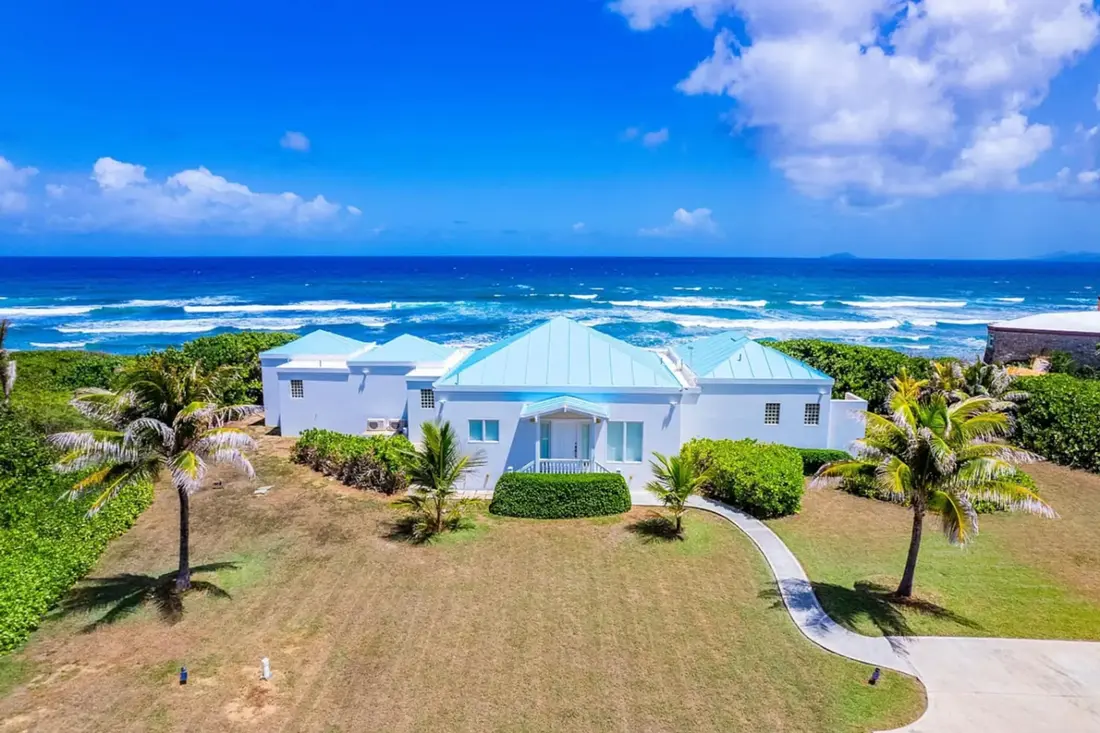
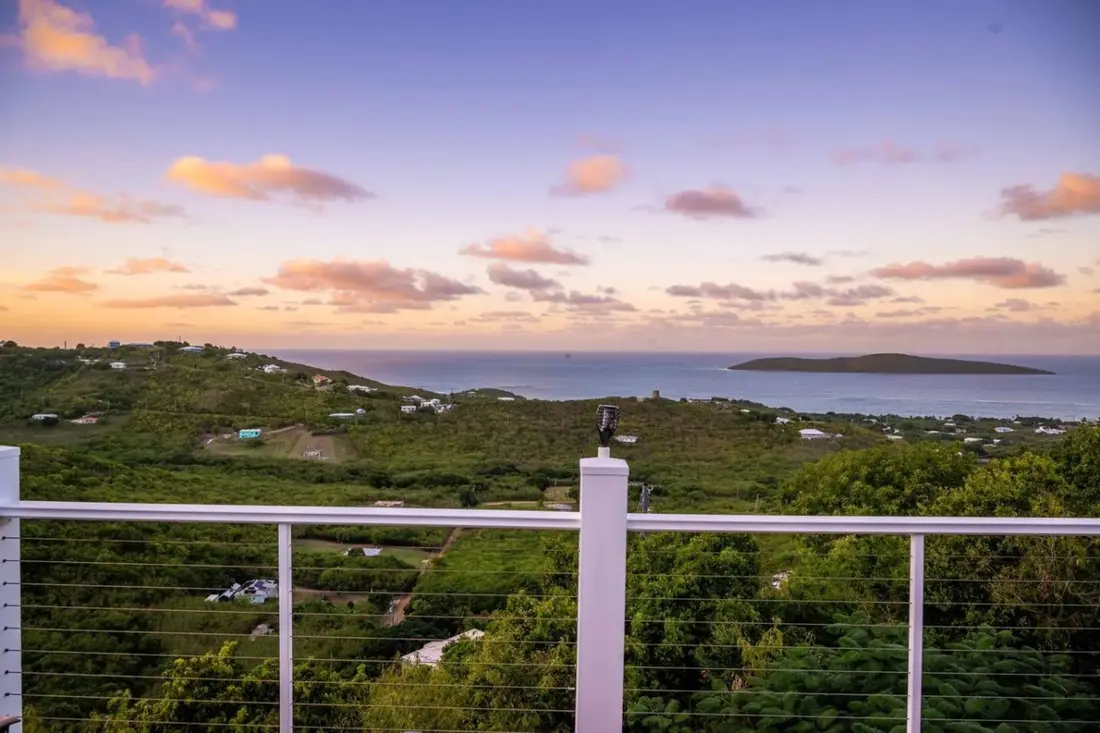
From the East End of St. Croix, Buck Island sits on the horizon like furniture, and the pale seam of its west end sand is visible on clear days from the decks that face it. The Cerulean and the Buck Island Overlook hold that sightline all day, which does something pleasant to the trip: you swim the beach in the morning and it is still there at dinner, catching the last western light across the channel. The rest of the East End collection shares the view in some measure, minutes from the eastern departure docks, and our on-island team books the boat day as routine. The East End guide maps the neighborhood around them.
Sources
Written from official and first-party sources, checked August 2026. Hours, prices and event dates change — confirm before you go.
In this guide
Stay nearby
Private oceanfront on the East End with a sandy, swimmable beach, pool, outdoor kitchen and a separate guest cottage. Sleeps twelve.
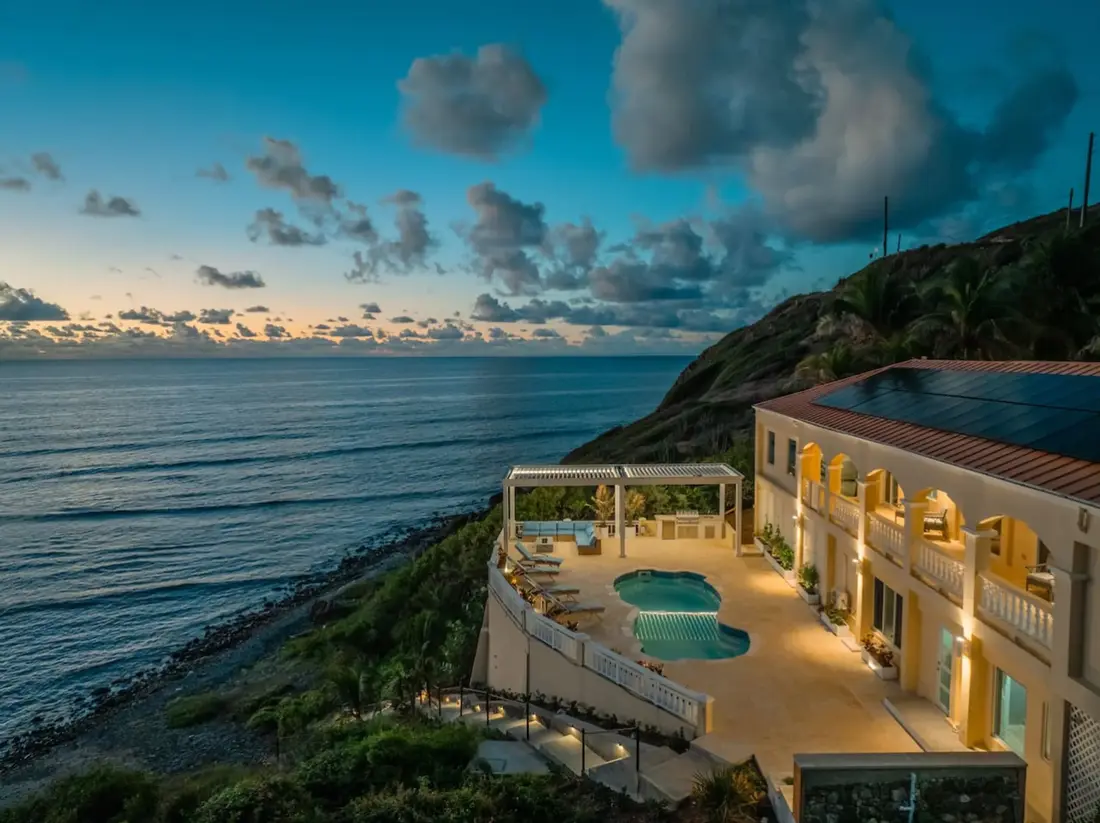 The Cerulean5 bd · 5 ba · sleeps 12 · Christiansted
More in Beaches
Sources
8 references, listed in full at the end of this guide — official park, refuge, tourism-board and business sources, checked August 2026.