
Alexander Hamilton's St. Croix
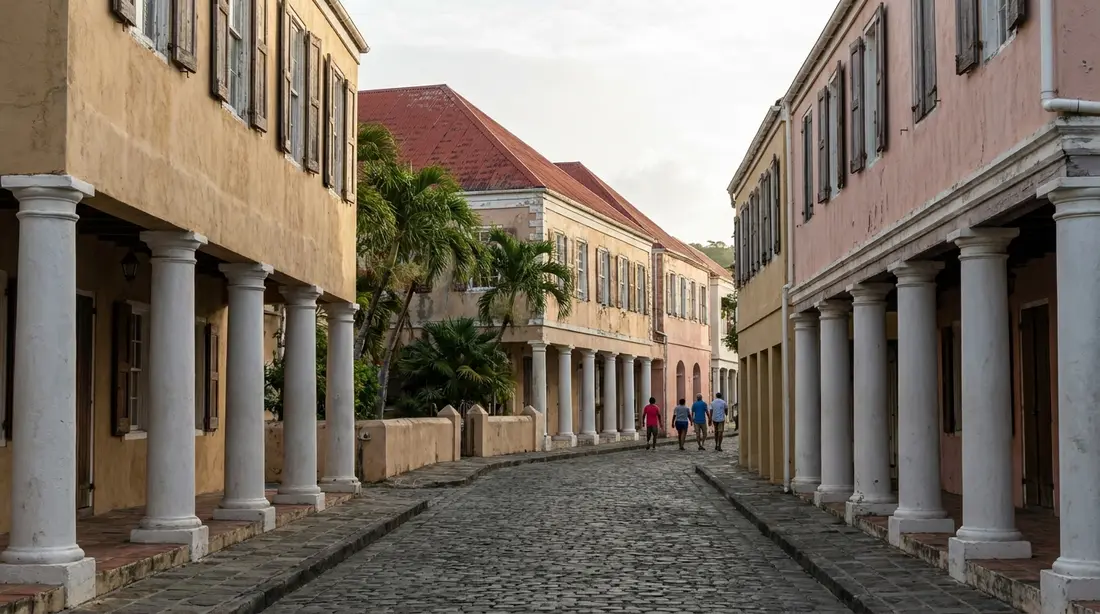
Hamilton grew up on Company Street, clerked for an export house on this harbor, and left for New York in 1772. Walking his Christiansted.
Alexander Hamilton spent the best-documented stretch of his boyhood in Christiansted, on the Danish colonial waterfront where he clerked for a shipping house, buried his mother, and wrote the letter that carried him off the island for good. He was born on one Caribbean island and made his career on the American mainland, and the years in between on St. Croix, roughly 1765 to 1772, are the ones the surviving paper actually covers. The town he grew up in still stands, and this page sets out what the record supports, what it only suggests, and where to stand in Christiansted to see it.
The Caribbean origins
Hamilton was born in Charlestown, on the small island of Nevis, to James Hamilton and Rachel Faucette. The two were never married, so no baptismal entry fixes the date, and that gap is why his birth year is still argued. Hamilton himself gave the year as 1757. A St. Croix probate court, inventorying his mother's estate in 1768, recorded his age as thirteen, which points to 1755, and most modern biographers take the court's number over the man's memory and settle on January 11, 1755. The frequent confusion with St. Kitts is worth clearing up: Nevis is the birthplace, while St. Kitts is where his father had roots and where James Hamilton went after leaving the family. An older brother, James Jr., had been born about 1753.
The father was the fourth son of a Scottish laird in Ayrshire, a younger son with no inheritance who drifted through the islands chasing trade and mostly failing at it. That failure sets up everything that follows. Where the record grows thin on Nevis and St. Kitts, it grows thick on St. Croix, because Christiansted is where Rachel opened a shop the tax rolls noted, where a court wrote down the family's affairs, and where a teenager left a trail of business letters in his own hand. The documented Hamilton is a Crucian boy first.
Rachel Faucette's earlier life
Rachel Faucette came from a family of French Huguenot descent with property ties on St. Croix, and she first reached the island as a girl, around 1745, traveling with her mother. On St. Croix she was married off, still in her mid-teens, to Johann Michael Lavien, an older planter and merchant with social pretensions and an eye on her modest inheritance. The marriage failed. They had one son, Peter, and then Rachel walked out.
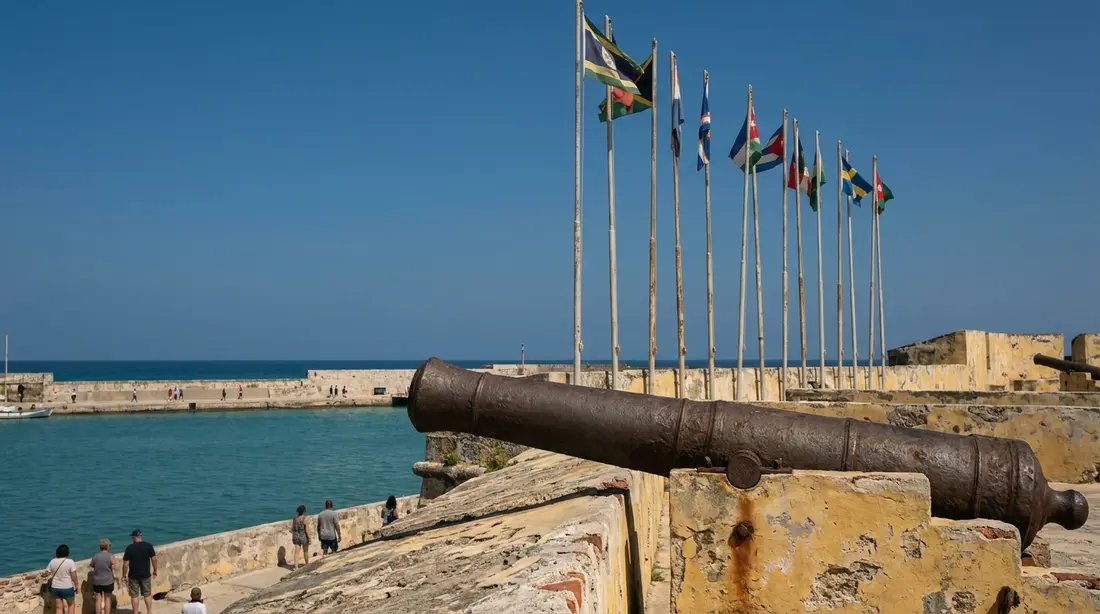
Her husband did not take the desertion quietly. Around 1750 he used a provision of Danish colonial law to have her jailed, and she spent several months shut in a cell inside Fort Christiansvaern, the same harbor fort her son would later pass every working day. The confinement was meant to force her back to the marriage; it did the opposite. On her release she left St. Croix entirely, moved to the northern Leeward Islands, and there met James Hamilton and bore the two boys. Lavien eventually divorced her in 1759 under terms that freed him to remarry while barring her from doing the same, which left Alexander and his brother permanently outside the shelter of legitimacy. The fort itself is covered in the Fort Christiansvaern guide.
Arrival in Christiansted, 1765
James Hamilton brought Rachel and the two boys back to St. Croix in May 1765. The trip was business: he had been sent to collect a debt for a St. Kitts merchant, and the family traveled with him. The errand ended, and so did the marriage in all but name. In January 1766 James left the island for the northern islands, and he never saw his sons again. Alexander was about ten or eleven, and from that point his mother supported the household alone.
Rachel rented the ground floor of a two-story house on Company Street, at No. 34, and set up a small store, living with her sons in the rooms above. She sold the staples that provisioned the plantations and the town: salted fish and salted meat, flour, rice, and imported apples, the ordinary goods a colonial shopkeeper turned over for a thin margin. For part of 1767 the shop operated a few doors along at No. 23 before returning to No. 34. Company Street then was what it still is in plan, a working commercial street one block up from the harbor, shaded by the arcaded sidewalks the Danes built along it, and it is walked in the Danish architecture walk and mapped in the Christiansted town guide.
Clerk at Beekman and Cruger
While his mother kept the shop, the boy went to work. Around 1766, at roughly eleven, he was taken on as a clerk by the import-export firm of David Beekman and Nicholas Cruger, whose counting house stood at Nos. 7 and 8 King Street, a short block from the wharf. Beekman and Cruger were transplanted New Yorkers, and the firm was one node in a family network that reached back to a mercantile clan in New York, a connection that mattered later: it gave a Crucian shop boy a thread running to the mainland colonies.
The business was the island economy in miniature. Ships came in from North America carrying flour, salt provisions, timber, and livestock, mules and horses among them, and went out loaded with the sugar, molasses, rum, and cotton the Danish plantations produced. Cargoes of Dutch, Spanish, and French goods moved through as well, since Christiansted worked as a busy entrepot port. A clerk's job was to receive all of it, find buyers, weigh quality against price, keep the books straight across several currencies, and chase the money owed. Hamilton did that work in the middle of the port whose surviving buildings are covered by the Christiansted National Historic Site guide.
The five months he ran the firm
The clerkship turned into something larger in late 1771. Nicholas Cruger's health broke, and in October he sailed for New York to recover, leaving the firm in the hands of a fourteen-year-old. For roughly five months, until Cruger returned in March 1772, Hamilton effectively ran the house. The evidence survives on paper. Letters in his hand from those months, preserved in his published papers, instruct ship captains, report market conditions to Cruger, press debtors for payment, and record his own calls on inventory, marking down a shipment of spoiled flour and putting a consignment of underfed mules out to pasture to fatten them before sale.
What that period gave him was a working education in accounting, credit, foreign exchange, and logistics, run under real pressure with real money at stake. Hamilton later called the counting house "the most useful part of his education," and his son, writing the family biography, judged the experience a source of lasting benefit. The judgment is easy to credit. The man who would go on to build the financial machinery of a new nation, its customs service, its public debt, its national bank, first learned how money and goods actually move by moving them across a Caribbean wharf as a teenager. The firm also kept an office in New York, and that mainland connection, along with Cruger's own standing there, would help smooth Hamilton's landing when the island's collection sent him north the following year.
Sugar, rum, and the slave trade
The commerce Hamilton clerked ran on enslaved labor, and the counting house dealt in enslaved people directly. Alongside the flour and the mules, firms like Beekman and Cruger imported captive Africans and sold them to the plantations, and a clerk's duties put the young Hamilton in the middle of that trade. He would have been on hand when human cargo was landed and prepared for sale, and the reasonable inference from his position is that he helped record the transactions, the counts and the prices, the way he recorded any other consignment. No surviving document names him at a specific auction, but the nature of the work is not in doubt.
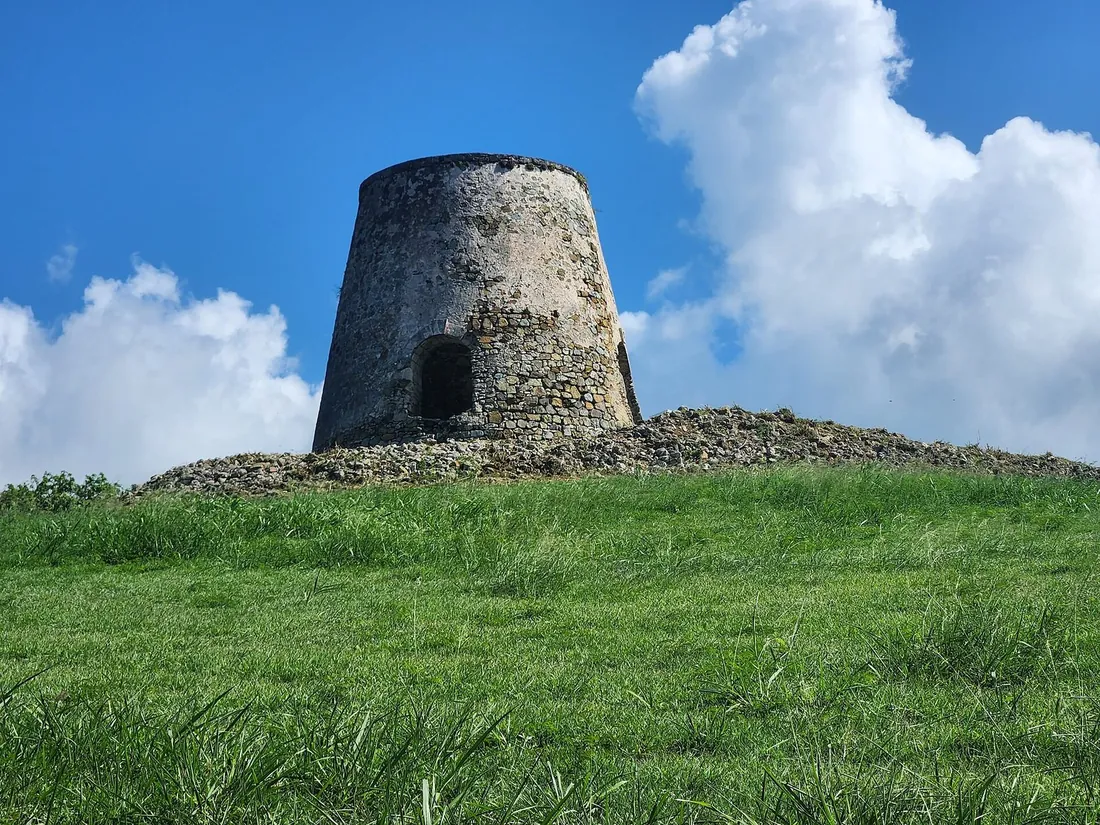
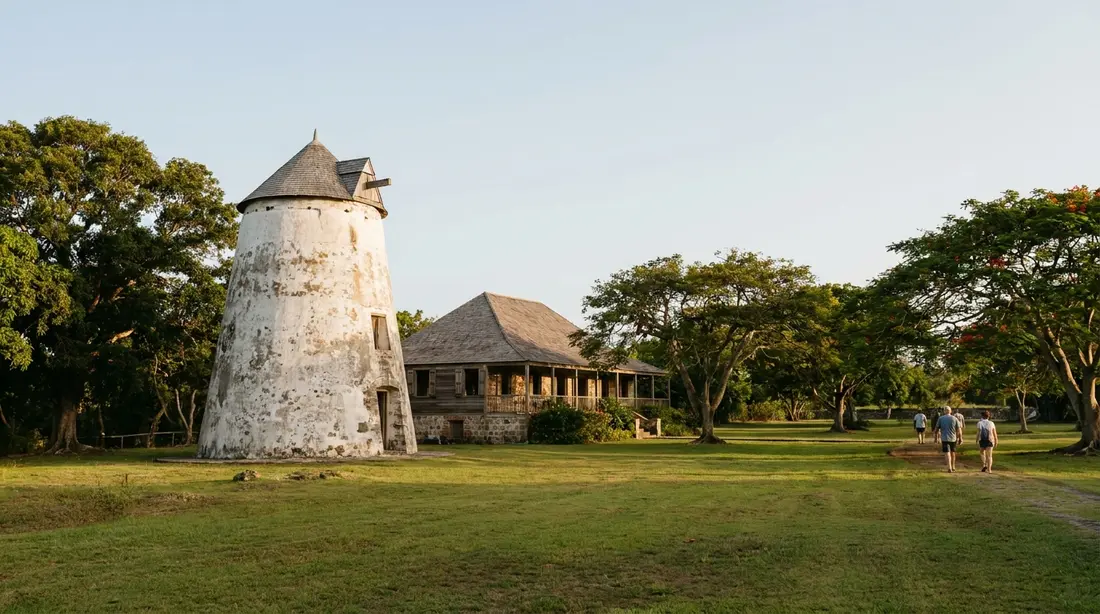
The scale on the island was enormous. Sugar had made St. Croix one of the richest colonies in the Danish empire, and it did so on the backs of a population that, at its late-1700s peak, numbered on the order of eighteen to twenty thousand enslaved people against a few thousand free residents. Captives were sold in the courtyard of the Danish West India and Guinea Company Warehouse, one block from Rachel's shop, until the Danish ban on importing them, decreed in 1792, finally took force in 1803. The plantation half of that economy sits at Estate Whim and among the sugar mill ruins; the wider colonial arc runs through the seven flags of St. Croix to the 1848 emancipation and the 1878 Fireburn. The people who escaped the estates and held out in the cliff country are remembered in the Maroon Ridge guide.
Rachel's death and the orphaned years
In February 1768 a fever, most likely yellow fever, went through the Company Street household, and both Rachel and Alexander fell ill. The boy recovered; his mother did not, and she died on February 19, 1768. She was buried on the land of relatives, the Lytton family, at their estate outside town, and the burial was entered in the register of St. John's Anglican Church under her married name. What followed compounded the loss. A probate court inventoried Rachel's small estate, and her legitimate son from the Lavien marriage, Peter, claimed it. Because Alexander and James Jr. had been born out of wedlock, they inherited nothing, not even the contents of the shop. The court had moved fast. It convened in the Company Street house on the day Rachel died, sealing her effects so they could be recorded, and the inventory it drew up listed, among the ordinary household goods, a parcel of books. Their titles went unrecorded, but they were almost certainly the ones Alexander kept: his friend Edward Stevens later described a home library that historians trace back to Rachel's own shelves. The disinherited boy came away from the settlement with little more than those books, and he read his way through them, the start of the self-education that Hugh Knox would soon take in hand.
The brothers were taken in by a cousin, Peter Lytton, but he died in 1769, and the household broke up again. James Jr. was apprenticed to a carpenter and drops largely out of the story. Alexander went to live with the family of a Christiansted merchant, Thomas Stevens, whose son Edward became a close lifelong friend, close enough that a persistent local tradition, never proven, wondered whether the two boys were related. By his mid-teens Hamilton was an orphan supporting himself by his own competence inside a trading house, which is the point at which most of the island would have expected his story to end.
Hugh Knox and the hurricane letter
The turn came through a minister and a storm. The Reverend Hugh Knox, a Presbyterian who was also a physician and a writer for the local press, arrived on St. Croix in 1772 and took an interest in the well-read clerk. Knox opened his library to him and encouraged his writing; his congregation met at 13 Watergut, at Prince Street. Then, on August 31, 1772, a severe hurricane struck the island, wrecking ships in the harbor and tearing apart buildings across Christiansted and Frederiksted.
A few days later Hamilton wrote a long letter, dated September 6, 1772, addressed to his absent father, describing the storm in vivid and heavily moralizing prose. The piece reads less like reportage than like a sermon, moving from the terror of the night, the roaring wind, the flooded streets, the cries in the dark, to a stern reflection on human smallness before such force; it survives in full in his collected papers and is the earliest substantial piece of his writing that we have. Knox read it and pressed him to let it be printed. It ran in the Royal Danish American Gazette on October 3, 1772, introduced by a preface, understood to be Knox's, explaining that the piece had come to hand by accident and deserved a public. The writing startled its readers. A group of the island's leading men, by tradition including the governor, decided that a mind like that should not be spent on a wharf, and they took up a collection to send its author to North America for a proper education. Late in 1772 Hamilton sailed for the mainland. He enrolled first at a preparatory academy in Elizabethtown, New Jersey, then at King's College in New York, the future Columbia, and he never returned to the Caribbean.
Documented, traditional, and disputed
A reference page owes its readers a clear line between what the record fixes and what it only suggests, and the Hamilton story on St. Croix runs across all three. Firmly documented are the shop on Company Street, noted in the town's rent and tax records; the 1768 probate that disinherited the boys and, in passing, supplied the age that dates his birth; the business letters he wrote running the firm in 1771 and 1772; the hurricane letter and its publication in the Gazette; and the burial entry for his mother.
Held more by tradition than by hard proof are several of the exact addresses a visitor is shown. The buildings have mostly been replaced, so the numbers on Company and King Streets mark sites rather than surviving structures, and the location of the Stevens house where Hamilton lived is not actually known. Whether he personally stood at any particular slave auction is an inference from his job, not a documented event with his name attached. His birth year remains open, with 1755 favored but 1757 defensible. None of this weakens the core story; it keeps the walk accurate, which matters more here than at most sites, because the route asks you to picture what is no longer standing.
What survives in Christiansted
Christiansted has never built a Hamilton museum, and the self-guided walk works precisely because it has not. The exhibit is the town: the harbor grid the Danes laid out, the arcaded galleries over the sidewalks, and the port buildings Hamilton knew as the machinery of his trade, the harbor fort, the wharfside Custom House and Scale House, and the Company Warehouse a block inland, all still standing in their original relationship to the water. The National Park Service publishes a free two-page map, "Alexander Hamilton's Christiansted," with eight numbered stops, and you can pick it up at Fort Christiansvaern or the Scale House during opening hours.
What has not survived is most of the specifically Hamilton fabric. The shop houses at Nos. 34 and 23 Company Street are gone, replaced by later buildings on the same lots. The Beekman and Cruger counting house at 7 and 8 King Street was rebuilt in the late 1700s. The wooden St. John's Anglican Church where Rachel's burial was recorded was itself destroyed in the 1772 hurricane and replaced by the Gothic-revival church that has stood at 27 King Street since 1780. Hugh Knox's Presbyterian church was sold in 1818 and later pulled down. So the walk is a reading of the streetscape rather than a tour of rooms, and it rewards a visitor who arrives already knowing the story.
Walking the Hamilton sites
The whole route fits comfortably in an hour on foot, and morning is the time to do it, before the heat and while the yellow masonry is at its best. The table below runs the eight stops in the order the Park Service map suggests, with what each place was in Hamilton's day and what a visitor finds now.
| Stop | Address | In Hamilton's day | What you see now |
|---|---|---|---|
| Christiansted wharf | Waterfront | The international harbor he clerked for; where he arrived in 1765 and sailed in 1772 | The working boardwalk and seaplane dock |
| Fort Christiansvaern | Waterfront | Where his mother was jailed around 1750 | Restored fort, open daily, admission charged |
| Scale House and Custom House | Waterfront | Where cargo was weighed and taxed | Park welcome point and headquarters |
| Company Warehouse | Church and Company Streets | Company depot; courtyard auctions of enslaved Africans | Park site, the auction courtyard marked and explained |
| Nos. 34 and 23 Company Street | Company Street | Rachel's shop, with the family's rooms above | Later buildings; the arcaded street survives |
| Beekman and Cruger | 7 and 8 King Street | The counting house where he clerked | A building that replaced Cruger's in the late 1700s |
| St. John's Anglican Church | 27 King Street | Rachel's 1768 burial recorded here | The 1780 church; the original was lost in the 1772 storm |
| Presbyterian church site | 13 Watergut at Prince Street | Hugh Knox's congregation | Site only; sold 1818 and later demolished |
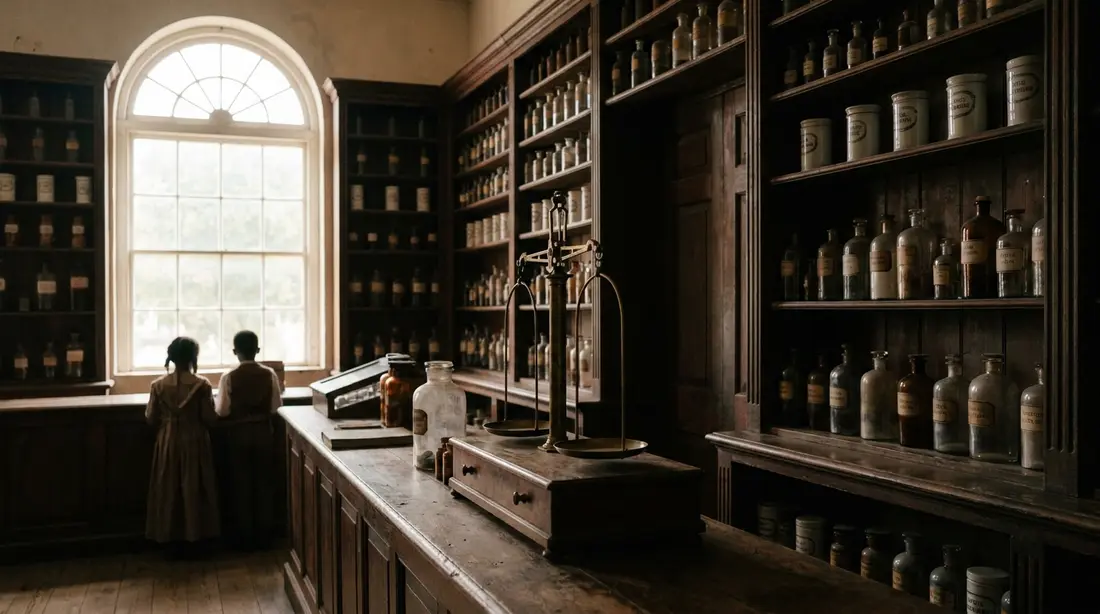
After the walk, the natural continuation is the water: the boardwalk begins where the historic site ends, and the Christiansted restaurant guide has the tables for lunch. Guests pulling on the wider historical thread can add Apothecary Hall a few blocks inland, or drive out to Salt River, where a Columbus expedition landed in 1493, for the island's deeper timeline.
The musical and modern interest
For two centuries Hamilton's Caribbean boyhood was a footnote known mainly to biographers and to Crucians. That changed in 2015, when Lin-Manuel Miranda's stage musical Hamilton, built on Ron Chernow's 2004 biography, opened on Broadway and became a global phenomenon. Its opening number compresses exactly the story this page tells: an immigrant born into Caribbean poverty and disorder, orphaned young, sharpened by hardship, and set on a new course by the hurricane and the letter it produced. Millions of people who had never heard of St. Croix suddenly knew that the man on the ten-dollar bill had grown up on a Danish sugar island.
St. Croix has answered the interest without turning the story into a theme park. The Park Service walking map, geocaching along the route, and Hamilton-themed events give visitors a way to connect the songs to the real streets, and the island's pride in the connection is plain and earned, since this is where the documented boyhood happened. The sites themselves stay modest, which suits them. A reader who arrives already knowing the outline, and who treats the empty lots and replaced buildings as prompts rather than letdowns, gets the most out of an hour spent walking where he walked.
Timeline
Dates below follow the mainstream scholarly account; where a fact is disputed, the entry says so.
| Year | Event |
|---|---|
| c. 1745 | Rachel Faucette arrives on St. Croix with her mother and is married to Johann Michael Lavien |
| c. 1750 | Lavien has Rachel jailed in Fort Christiansvaern; on release she leaves the island |
| 1755 (or 1757) | Alexander Hamilton born at Charlestown, Nevis; the year is disputed |
| 1759 | Lavien divorces Rachel on terms that bar her from remarrying |
| May 1765 | James Hamilton brings the family to Christiansted |
| January 1766 | James Hamilton leaves for good; Rachel opens the Company Street shop |
| c. 1766 | Alexander begins clerking at Beekman and Cruger |
| February 1768 | Rachel dies of fever; the two boys are disinherited |
| 1769 | Cousin Peter Lytton dies; Alexander moves to the Stevens household |
| Oct 1771 to Mar 1772 | Hamilton runs the firm during Cruger's absence in New York |
| August 31, 1772 | A hurricane strikes St. Croix |
| September 6, 1772 | Hamilton writes the hurricane letter |
| October 3, 1772 | The letter is published in the Royal Danish American Gazette |
| Late 1772 | Hamilton sails for North America and never returns |
Questions guests ask
Was Alexander Hamilton born on St. Croix?
No. He was born on Nevis, a small island in the northern Leewards, and is often placed by mistake on St. Kitts, where his father had roots. St. Croix is where he was raised: the family arrived in 1765, and the island holds the documented years of his boyhood, the shop, the clerkship, his mother's death, and the hurricane letter. So Nevis is the birthplace and St. Croix is the boyhood home, which is why the island claims him and why the walking sites are in Christiansted rather than anywhere else in the Caribbean.
Is there a Hamilton museum in Christiansted?
There is no dedicated museum. The Park Service publishes a free two-page self-guided map, "Alexander Hamilton's Christiansted," with eight stops, and you collect it at Fort Christiansvaern or the Scale House during opening hours. The experience is a walk through the historic town rather than a building full of exhibits. The fort, Scale House, Custom House, and Company Warehouse that anchor the route are interpreted in depth at the Christiansted National Historic Site, which is the closest thing to a museum on the walk.
Which buildings from Hamilton's time still stand?
The port ensemble does: the harbor fort, the Custom House and Scale House on the wharf, and the big Danish West India and Guinea Company Warehouse are original working buildings he would have known. The specifically Hamilton addresses mostly are not. The shop houses on Company Street have been replaced, the Beekman and Cruger counting house on King Street was rebuilt in the late 1700s, and the church where his mother's burial was recorded was lost in the 1772 hurricane and rebuilt in 1780. The walk marks sites more than surviving rooms, so it helps to know the story before you go.
How long does the Hamilton walk take?
About an hour on foot covers all eight stops, since the historic core of Christiansted is compact and flat. Morning is best, before the heat and while the light is on the masonry. Many guests fold it into a wider town day: the fort at opening, the Hamilton loop, then lunch on the boardwalk, which begins where the historic site ends. Wear sun protection and comfortable shoes and carry water; there is shade under the galleries, but the waterfront stretches are open to the sun.
Did Hamilton have anything to do with slavery on St. Croix?
Yes, directly, as a clerk. The firm he worked for traded in enslaved people alongside flour, timber, and livestock, and his duties would have included handling and recording those sales. Later, in New York, Hamilton joined the Manumission Society, and he was long portrayed as an abolitionist shaped by what he saw as a boy. Recent scholarship complicates that picture, showing that he also bought and sold enslaved people on behalf of his wife's family and possibly for his own household. The fair summary is that his relationship to slavery was real, close, and more tangled than the tidy version allows.
What was the hurricane letter?
It was a letter Hamilton wrote on September 6, 1772, describing the hurricane that had struck St. Croix on August 31. His mentor Hugh Knox arranged for it to run in the Royal Danish American Gazette on October 3, and the quality of the writing so impressed the island's leading men that they raised money to send the orphaned clerk to North America for schooling. In that sense a single piece of writing about a storm redirected his entire life, and it is the hinge on which the St. Croix chapter closes.
Can you visit Rachel Faucette's grave?
Not really as a public stop. She was buried in 1768 on the land of her Lytton relatives, at an estate outside Christiansted, and the burial was recorded in the St. John's Anglican register under her married name. The grave sits on private estate ground rather than on the walking route, so it is not part of the standard self-guided tour. The church at 27 King Street is the place most visitors connect with her, and it appears on the Park Service map as the stop tied to her death.
A history day from our villas
The Hamilton sites make an easy half-day from any of our homes. The plan that works is the fort at opening, the eight-stop loop while the morning is still cool, and lunch on the water afterward. From our East End villas the drive into Christiansted runs 15 to 20 minutes. Shoy's Beach House is the nearest of them. For a larger group, The Cerulean suits, and the full East End collection lies a short morning's drive from downtown, a swim waiting when you get back. The island drives on the left, and parking past the fort's short-stay lot is explained on the getting around page; the full portfolio sits at all villas.
Sources
Written from official and first-party sources, checked August 2026. Hours, prices and event dates change — confirm before you go.
In this guide
Stay nearby
On The Shoys beach: six bedrooms, six baths, pool and hot tub, room for twelve, and the beach through the back garden.
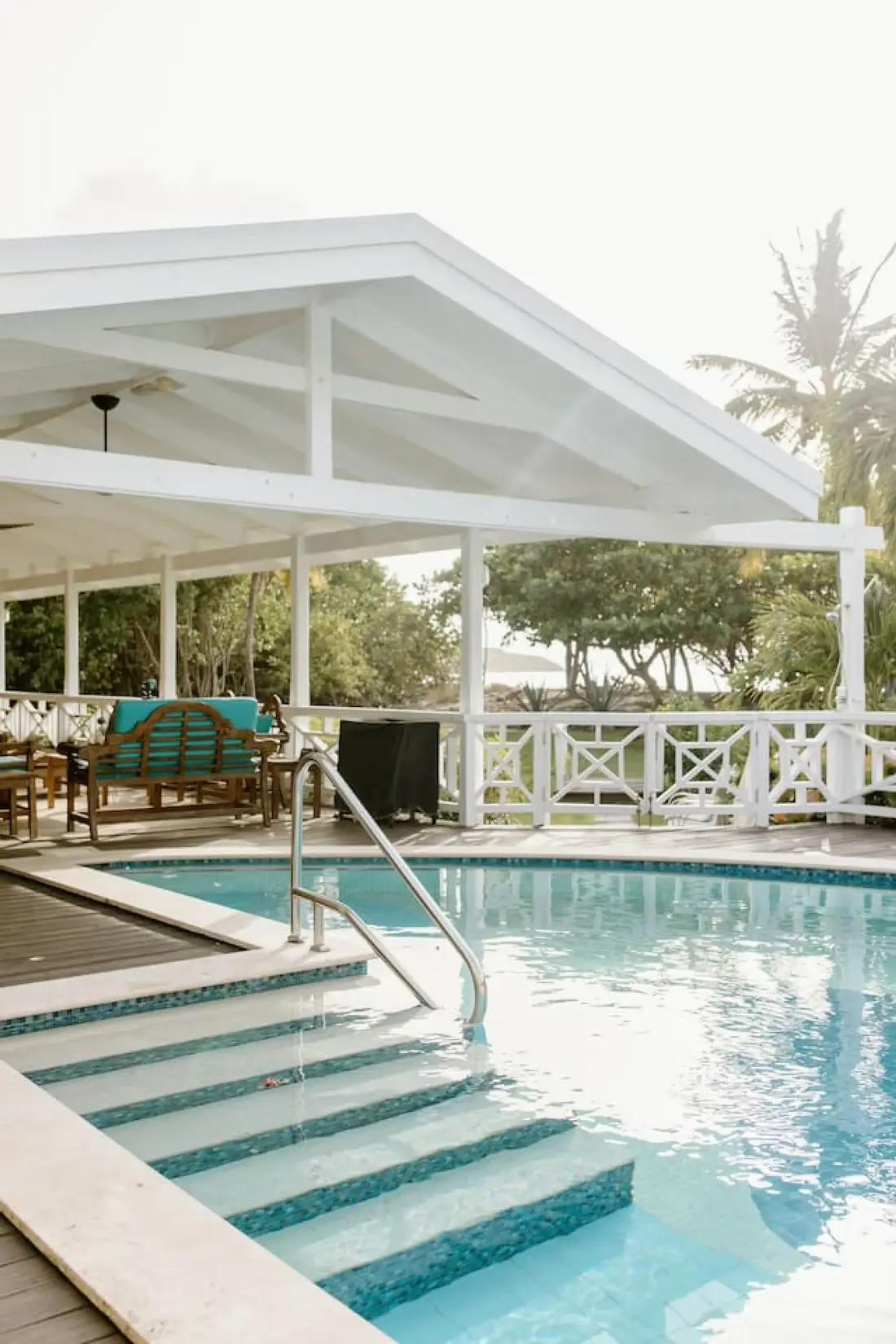 Shoy's Beach House6 bd · 6 ba · sleeps 12 · Christiansted
More in History & Culture
Sources
11 references, listed in full at the end of this guide — official park, refuge, tourism-board and business sources, checked August 2026.