St. Croix vs Cancún and Tulum
The Riviera Maya is the biggest beach machine in the hemisphere, operating inside a country whose State Department advisory is unlike any other in this series. Quote it, then decide.
No comparison in this series needs less editorializing than this one, because the U.S. government has already written it. Mexico is the only major beach destination whose State Department advisory is issued state by state, in language — cartels, kidnapping, Do Not Travel — used nowhere else in the Caribbean conversation. Quintana Roo, home of Cancún, Playa del Carmen and Tulum, sits at Level 2 with caveats worth reading in full. The flights are cheap and the cenotes are real. So is the briefing.
The two, side by side
| St. Croix | Cancún & Tulum | |
|---|---|---|
| Passport for U.S. citizens | Not needed | Required |
| U.S. State Department advisory | None — U.S. territory | Mexico is rated state by state; Quintana Roo: Level 2, citing crime and terrorism |
| The advisory's own words | — | Risk of violence from 'terrorist groups, cartels, gangs and criminal organizations' |
| Elsewhere in Mexico | — | Six states at Level 4 Do Not Travel for crime and kidnapping |
| Tourist-zone incidents | — | The advisory notes bystanders injured and killed in shootings in tourist areas |
| Arrival experience | Domestic gate, driver's license | CUN immigration halls; long peak-season lines widely reported |
| Sargassum seaweed | Light, patchy arrivals in recent years | The hemisphere's hardest-hit coast in heavy years |
| The hustle | None — no timeshare industry | Airport timeshare gauntlet, beach-club minimums, taxi conflicts |
| What is unmatched there | — | Cenotes and Maya ruins — conceded fully |
| Coming home | Agriculture check; $1,600 duty-free | U.S. customs; $800 duty-free |
Advisory levels and details are as published by the U.S. Department of State and checked August 2026. They change — read the current advisory at travel.state.gov before any international trip.
The short answer
The Mexican Caribbean delivers three things at scale nobody matches: airfare (huge airlift, low fares), archaeology (the Maya world is unique on earth) and cenotes (there is nothing like swimming in a sunlit limestone cavern, and this page concedes it without reservation). Everything else about the trip — the security context, the immigration lines, the seaweed, the hustle economy layered onto every transaction — is what the low fare actually costs. St. Croix cannot show you a Maya pyramid. It can hand you turquoise water, empty sand and a villa under American law, three hours from Miami, with no briefing required. The homes here are ours to manage; the State Department quotes below are verbatim in substance and checkable tonight.
What the advisory actually says
Read it before booking, because no summary does it justice. Mexico's advisory is unique in this series: it rates each of thirty-two states separately, and as of August 2026 six of them — including Sinaloa, Guerrero, Tamaulipas and Zacatecas — carry Level 4, Do Not Travel, for crime and kidnapping. Quintana Roo, the state containing Cancún, Playa del Carmen, Cozumel and Tulum, carries Level 2, Exercise Increased Caution — and its text is unlike any Caribbean island's: it cites both crime and terrorism, warns of violence from what it describes as terrorist groups, cartels, gangs and criminal organizations, and notes that criminal activity and violence can occur anywhere in the state, including in tourist zones, where shooting incidents between rival factions have injured and killed innocent bystanders. In February 2026 the U.S. Mission in Mexico issued a further security alert around ongoing security operations. The designation of major cartels as foreign terrorist organizations in 2025 is why the word terrorism now appears in a beach destination's travel advisory at all.
Tulum's beach strip in particular has spent recent years in the incident reports: the advisory's tourist-zone language follows documented shootings in and around its restaurants and beach clubs that injured or killed foreign visitors. None of this means a given week ends badly — millions of visits conclude uneventfully — but no other destination in this series requires a paragraph like this one, and honesty about that asymmetry is the whole point of a comparison page. St. Croix has no advisory, no level, no state map and no security-alert inbox: it is the United States. Ordinary sense applies everywhere — ours is here — and advisories change: read the current Mexico page at travel.state.gov before booking, and decide with open eyes.
The arrival, the lines and the gauntlet
Cancún's airport moves tens of millions of passengers a year, and its immigration halls are notorious in peak season — travelers regularly report lines running past an hour when charter banks land together. Clearing them delivers you to the airport's second famous feature: the timeshare gauntlet, a licensed corridor of hard-sell desks dressed as information booths, followed by a transfer economy of shuttle brokers, and — in recent years around Tulum and Playa — documented friction between taxi unions and ride-share drivers that has occasionally turned physical. The strip manages all of it; managing is the operative word.
St. Croix's arrival: a domestic gate, a driver's license, a rental counter and a fifteen-to-forty-minute drive to the villa. No immigration hall, no timeshare corridor, no transfer brokers — and on the way home, no customs beyond an agriculture bag check, with a $1,600 duty-free allowance (double Mexico's return) and CBP's five-liter rum rule. Verified August 2026:
| Airline | From | Schedule (as published Aug 2026) | Flight time |
|---|---|---|---|
| American Airlines | Miami (MIA) | Year-round, one to three flights daily by season | about 3 hours |
| American Airlines | Charlotte (CLT) | Paused until Saturdays return November 7; daily beginning December 17, 2026 | about 3¾ hours |
| American Airlines | Chicago O'Hare (ORD) | Winter Saturdays beginning December 5, 2026 | about 4¾ hours |
| Delta Air Lines | Atlanta (ATL) | Saturdays through September 5; Saturdays again from November 14; daily except Mondays beginning December 19, 2026 | about 4 hours |
| United Airlines | Newark (EWR) | Saturday nonstops beginning October 31, 2026 | about 4½ hours |
Sargassum: the brown elephant on the beach
The Mexican Caribbean faces the Atlantic's sargassum belt head-on, and in the heavy years of the past decade — including recent record seasons tracked by university monitoring bulletins — the Riviera Maya has been the hemisphere's hardest-hit coast: barriers offshore, tractors at dawn, resort rakes running all day, and summer social feeds full of brown windrows where the postcard promised white. Conditions vary month to month and the resorts fight hard; the fight itself is the point. St. Croix's position in the currents has brought far lighter, patchier arrivals, and a dozen beaches on different exposures mean clean sand somewhere every day of the year: Cane Bay north, Rainbow and Frederiksted west, The Shoys protected (our Shoy's Beach House fronts it), Sandy Point's two refuge miles on winter weekends. The roster.
What Mexico has that nothing else does
Concede it in full, because it is spectacular: Chichén Itzá and the Maya world, Tulum's own clifftop ruin over the sea, and the cenote country of the Yucatán — freshwater caverns strung under the jungle like nothing else on the planet. Food, too: the peninsula eats brilliantly at every price. A culture-first traveler who goes for those things, stays alert, and treats the beach as a bonus is buying the right product and should read the advisory as preparation rather than deterrent.
St. Croix's counter-programming is smaller and closer: a 1493 Columbus landing site that is the only one on U.S. soil, Danish colonial towns kept by the National Park Service, Alexander Hamilton's boyhood streets, rum since 1760, a year-round bioluminescent bay, and the underwater headliners: the Cane Bay Wall a hundred yards off the sand, the Frederiksted Pier, and Buck Island's marked snorkel trail in a no-take monument since 1961. No pyramid — and no perimeter either.
The beach-club economy
Tulum invented a genre: the beach club whose sunbed carries a minimum spend, whose jungle-chic dinner bills like Manhattan, whose road — one sand-and-pothole lane behind the dunes — jams daily, and whose prices climbed as fast as its incident reports. Cancún's hotel zone runs the resort version: towers, wristbands, roped frontages. On St. Croix the sand is federal, territorial or simply public; the beach bar at Cane Bay sells you lunch because you walked in hungry, not because the lounger required it. A beach week without minimums is not a small luxury; it is the whole product.
What it costs, all told
Airfare to Cancún is often unbeatable and package stickers follow — that is the machine's magnetic pull. The week then invoices its context: resort security tiers, transfer brokers, beach-club minimums, excursion pricing to reach the cenotes and ruins, peso-dollar friction, tips on everything, and the $800 allowance at U.S. customs home. St. Croix's ledger is short and flat: direct-booked villa, rental car, supermarket provisioning, free beaches, walk-in reef, single-digit attractions, U.S. dollars, $1,600 home. The fare gap narrows to nothing over a week — and the weeks are not the same product at any price. The homes: here.
Month by month on the two coasts
The Riviera Maya's calendar layers four seasons that rarely all cooperate. High season (December–April) brings the best weather, the fullest hotel zone and the peak immigration-hall stacking. Spring break brings the party-charter demographic at industrial scale — the season the security alerts have historically clustered around, and the one the U.S. Embassy's spring-break guidance addresses directly each year. Sargassum season (typically spring through summer, brutal in the record years) buries the postcard precisely as family-summer pricing peaks. And the fall discount season doubles as the storm-watch months, shared with the whole basin. Threading a week that dodges the crowds, the seaweed, the party wave and the advisories is the Riviera's real planning puzzle. St. Croix's calendar threads itself: winter high season with empty beaches, no spring-break wave, light patchy sargassum, festival season at the holidays, and the same June–November counsel every island shares. Months in detail: when to visit.
The travel day, hour by hour
The Cancún day, told as travelers tell it: a cheap morning fare lands at 1 into a terminal receiving a dozen flights an hour; the immigration hall's queue runs twenty minutes on a blessed day and past ninety in the season's stacking, a spectacle covered annually by the destination's own press; then the timeshare corridor's licensed hard-sell, the transfer lot's broker dance, and Highway 307 — forty minutes to the hotel zone, ninety-plus to Tulum's strip behind the construction and the beach-road crawl. Check-in, wristband or boutique minimum briefing, and the sea by late afternoon. The return repeats the highway and the hall into U.S. customs at the $800 allowance. St. Croix's day: three hours from Miami, a rental counter, Plaza Extra, villa — and the return is an agriculture check with $1,600 of allowance. The fare difference buys the Riviera's ticket; the day spends it.
Seven days on each
The Riviera week, done ambitiously: a hotel-zone or Tulum base, the Chichén Itzá day (up at 5 to beat the heat and the buses), two cenotes, the Tulum ruins at opening, an Isla Mujeres or Cozumel ferry day, a beach-club afternoon with its minimum, and resort or strip dinners — with the sargassum report checked each morning like a surf forecast and the advisory's common-sense rules (stay in tourist corridors, arranged transport after dark) running quietly under all of it. A rich week for the alert.
The St. Croix week runs no threat model: Buck Island's snorkel trail Monday; Cane Bay's wall Tuesday; Christiansted's fort and arcades Wednesday; Point Udall, the Jack's and Isaac's hike and The Shoys Thursday; Frederiksted's pier and Rainbow's sunset Friday; the rainforest, Cruzan and the Domino Club Saturday; the bio bay after dark. The history is real (a 1493 landfall, an 1848 emancipation), the water is walk-in, and no morning starts with a seaweed report or a security bulletin. Plans: the 7-day itinerary.
Getting around once you land
The Riviera's transport is a managed corridor: ADO buses run the trunk route competently, hotel-zone taxis operate as a cartel with tourist tariffs (the word is the industry's own), the taxi-versus-Uber conflict has produced documented confrontations around Tulum and Playa, rental cars come wrapped in insurance disputes and checkpoint folklore, and Tulum's beach road remains a single jammed sand lane between the clubs. The excursion economy exists partly because independent movement is work: the cenotes and ruins are collectivo-reachable for the intrepid and van-packaged for everyone else. After dark, the advisory's arranged-transport counsel is the operative sentence.
St. Croix's counsel is a car-rental counter: left-side driving learned in a morning (the guide), open roads to every corner, free parking, no checkpoints, no tariffs, no counsel about the dark. The island loop is the anti-corridor: forty minutes of freedom in any direction.
Before you book either coast
For the Mexican Caribbean: read the current Quintana Roo advisory and the embassy's seasonal alerts in full; check a sargassum bulletin for your month before trusting any beach photograph; book airport transfers with named, established companies before landing (the terminal gauntlet is not the place to shop); price beach-club minimums and cenote-and-ruins excursions into the true total; and set the group's after-dark rules before the trip rather than during it. Spring-break dates deserve their own risk read.
For St. Croix: book the villa direct (the homes), reserve the car, calendar Buck Island and the bio bay ahead in peak weeks. There is no advisory to read, no bulletin to refresh and no rules meeting to hold — which is, precisely, the product.
The case for St. Croix, point by point
One: no State Department briefing — against the only beach destination in this series whose advisory maps cartel risk state by state. Two: no immigration hall, no timeshare corridor, no transfer brokers. Three: sargassum odds and multi-exposure beaches against the hemisphere's hardest-hit coast. Four: free public sand against minimum-spend clubs. Five: walk-in wall diving and a snorkel-trail monument against excursion-boat snorkeling — conceding Cozumel's drift walls their fame. Six: a villa on an open island against a corridor with rules for the dark. Seven: no passport — and $1,600 of allowance against $800. Eight: history on U.S. soil — Columbus's landfall, Danish forts, Hamilton — against pyramids that deserve their own separate, prepared trip. Nine: dollars, U.S. phones, U.S. law, end to end. Ten: a week whose planning documents contain the words snorkel, sunset and rum — and none of the others. The fare difference was never the price difference.
Who should pick which coast
Pick the Mexican Caribbean if: the archaeology is the trip and the beach is a bonus — the Maya world justifies a deliberate, well-planned visit; Cozumel's drift walls call the divers; the food pilgrimage through the peninsula tempts the eaters; or charter math delivers a fare too good to refuse and the fine print is read and accepted. Pick St. Croix if: the week is a beach-villa week and the words in the planning documents should be snorkel, sunset and rum rather than advisory, sargassum and minimum; families want open roads after dark without a corridor map; the group's comfort with the briefing varies (one nervous traveler taxes the whole week); or American law, American dollars and an empty beach sound like the actual luxury. The pyramids are eternal; they will wait for the trip built around them.
When Mexico is the right call
The archaeology-and-cenotes trip, planned deliberately: fly in, see Chichén Itzá at opening, swim the caverns, eat the peninsula — with the advisory read, arrangements made through established operators, and the beach demoted to a sideline. Divers bound for Cozumel's drift walls have a specific, strong reason. Budget groups riding charter fares into an all-inclusive tower, eyes open, are the machine's intended customers. For a family beach week where the words cartel, sargassum and minimum spend should not appear in the planning documents at all, the American island was always the answer.
A rainy day on each coast
The Riviera holds a rainy day better than most beach strips because its best things were never on the beach: the cenotes swim in any weather (rain above changes nothing thirty feet down), the Maya museums in Cancún and the site museums carry real hours, and the malls of the hotel zone do what malls do. Fair credit. St. Croix's wet day is smaller and closer: Fort Christiansvaern's vaults, the Whim estate museum, Frederiksted's arts center, and the distillery trail that rain flatters. Neither coast fears a shower; only one requires a security briefing to enjoy the sunshine that follows.
If you choose the Mexican Caribbean anyway
Then run it like the experienced do. Book the airport transfer with a named company before wheels-up and walk the timeshare corridor with headphones on. Base by mission: hotel zone for beach-resort ease, Playa for walkability, Valladolid — the colonial town inland — for the archaeology-first trip that skips the strip entirely and is the connoisseur's Mexico. Do Chichén Itzá at opening from a Valladolid overnight, cenotes on weekday mornings, Tulum's ruin at 8 a.m. or not at all. Check the sargassum bulletin the week you leave, keep after-dark movement to arranged rides per the advisory's own counsel, drink bottled, and treat the beach-club minimums as cover charges you either accept or route around. The peninsula rewards planning the way it punishes improvisation — and its greatest hits were never on the sand anyway.
Where you would stay on St. Croix
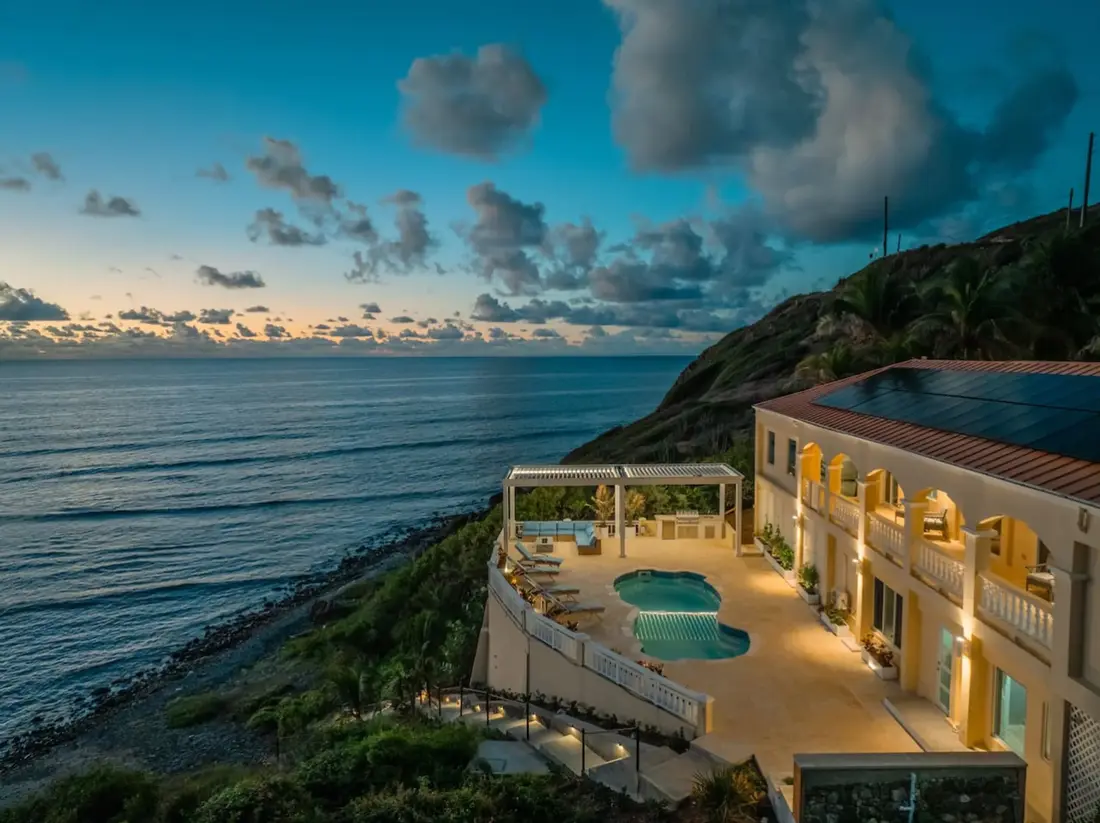
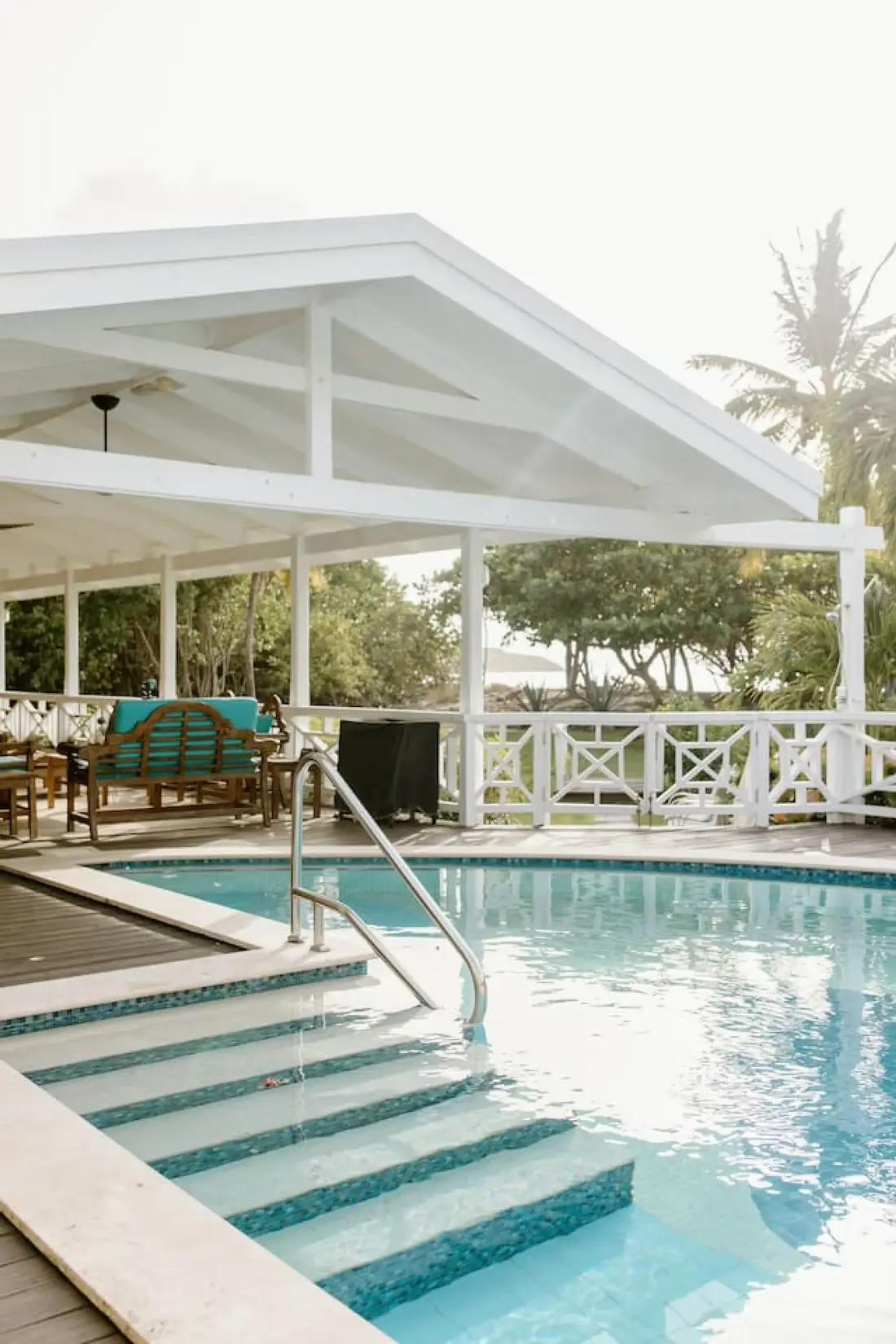
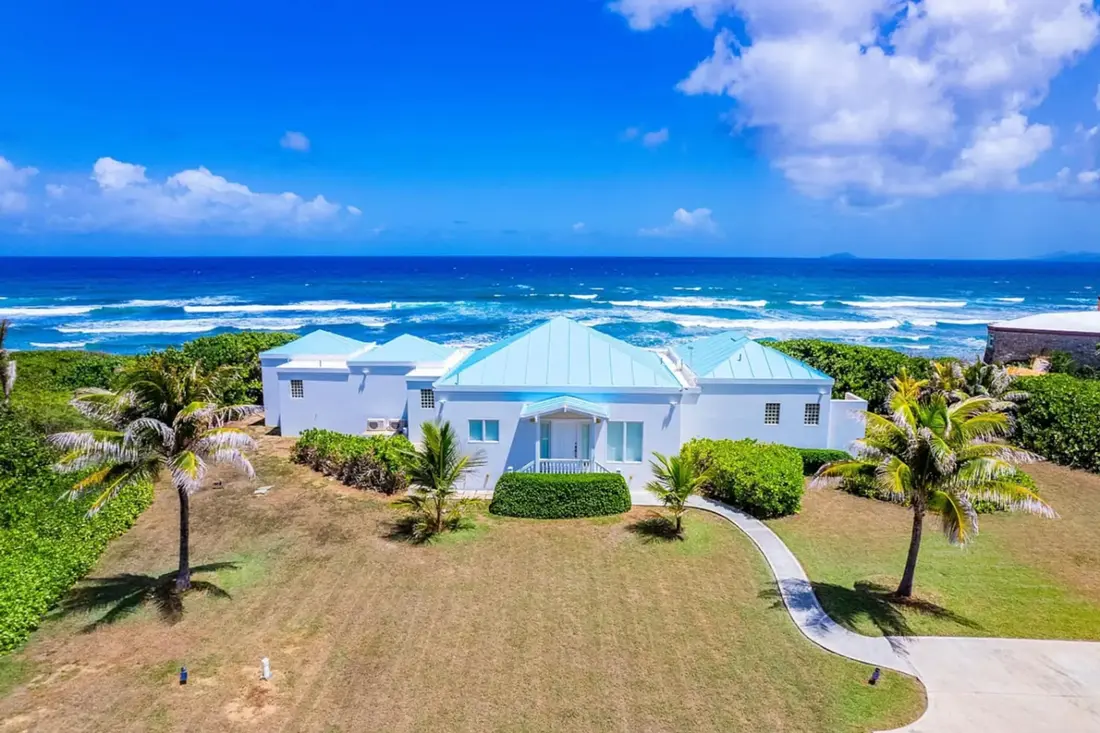
The no-briefing base: our direct-booked homes, Sterling Point managing from the island. Shoy's Beach House on The Shoys' guarded crescent; East End villas — The Cerulean among them — facing Buck Island's monument water from private pools; Christiansted condos near the boardwalk; west-end sunset stays. Full kitchens, supermarket provisioning, free beaches on every exposure, and a rental car that goes anywhere at any hour — the sentence no Riviera page can print. Couples: homes for two; groups to twelve: the family collection. The roster: the homes.
How this page was made
Series rules, applied to the series' most sensitive page: every security characterization — the state-by-state structure, Quintana Roo's Level 2 crime-and-terrorism language, the six Level 4 states, the tourist-zone bystander warnings, the February 2026 alert — restates the State Department's own published text, checked August 2026; read the current version at travel.state.gov before deciding anything. The cartel FTO designations are 2025 federal record. Sargassum patterns per university monitoring bulletins; airport-line and timeshare-corridor patterns per years of traveler and press documentation. What Mexico does best — the Maya world, the cenotes, the food, the fares — is conceded without reservation. Our bias: the homes we manage on St. Croix. This page quotes; verify the quotes.
The bottom line
Cancún and Tulum sit inside the only destination in this series whose safety picture the U.S. government maps state by state in the language of cartels and kidnapping — Level 2 where the resorts are, Do Not Travel six states over, bystander warnings in the tourist zones themselves. The machine is real, the cenotes are magic, the fares are cheap, and every traveler can weigh those against the briefing. St. Croix requires no weighing: American law, empty turquoise, a wall off the beach and a villa with your name on it. Some comparisons are close. The homes are here.
Elsewhere in this series
This page is one of twenty-six. If you are still shopping the map, the verdicts nearest this comparison run as follows — each links to the full page with its own sources:
St. Croix vs the British Virgin Islands — The BVI are the Caribbean's sailing capital — reached by passport, puddle jumper and ferry. St. Croix flies you straight in, no passport at all.
St. Croix vs Turks & Caicos — Turks and Caicos sells one famous beach at luxury-resort prices. St. Croix sells a whole island for less — no passport, no Level 2 advisory.
St. Croix vs Anguilla — Anguilla perfected the quiet expensive beach. St. Croix does the quiet beach without the relay flight, the passport or the markup.
The complete set, grouped by region and passport rules, lives at St. Croix vs other destinations.
Which home fits your group
If St. Croix wins your comparison, the homes are the easy part. Groups of eight to twelve settle into the family collection; couples take a home for two; anyone who wants sand at the door starts with beachfront. Every one is managed from the island by Sterling Point and booked direct — tell us the dates and the headcount and we will point you at the one that fits.
Two practical notes that surprise first-time villa bookers. Direct booking means the rate is the rate: no platform service fees, no resort fees, and the people answering questions are the same Sterling Point team that manages the houses on the island. And every home runs a full kitchen — one run to Plaza Extra or Seaside Market on the drive from the airport covers the week, which is where a villa quietly beats a resort bill before the first beach day. How the booking works, and what it does not mean, is spelled out at book direct.
Who wrote this
SP Vacations is the vacation-rental division of Sterling Point Real Estate, a licensed real-estate operation based on St. Croix in the U.S. Virgin Islands. The team lives and works on the island it writes about: the homes in the villa collection are inspected, cleaned and managed locally, and the person who answers a booking question is on St. Croix, not in a call center three time zones away. That is the vantage point behind every page in this series — and the reason the series exists at all, since most of the destinations compared here are places our guests weighed before choosing this island.
Two standing practices shape what you read. First, the pricing wall: nightly rates and availability for the homes live only on the booking pages, never in articles, so nothing here goes stale or oversells. Second, the sourcing rule: safety statements cite the U.S. State Department, customs figures cite CBP, park facts cite the National Park Service, and anything that changes — advisories, schedules, hours — carries its checked date and a pointer to the primary source. Where a rival destination wins a category, the page says so, because a comparison that concedes nothing persuades nobody. Questions, dates or a villa to match a group — the island team is here, or call 340-205-3929.
Questions people ask
Is Isla Mujeres a better day than Tulum?
Many repeat visitors say yes — the ferry hop to golf-cart streets and North Beach's calm shallows delivers the easy island day the strip promises. St. Croix's ferry-free version is Buck Island's lagoon morning plus a Christiansted afternoon.
What is a cenote actually like to swim?
Cool, clear fresh water in a limestone cavern, shafts of light, swallows overhead; the Yucatán's singular gift and worth a prepared trip. St. Croix offers no cenotes; its counterpart blue is the bio bay's glow and the wall's abyssal edge.
Are taxis safe in Cancun?
Licensed hotel-zone taxis run fixed tourist tariffs and are the advisory's preferred mode along with arranged transport; the documented friction has been between taxi unions and ride-share drivers, occasionally catching riders in the middle. St. Croix's taxis are a stand at the airport and a phone number; the subject needs no paragraph there.
Is Cancun safe right now?
Quintana Roo carries a Level 2 State Department advisory citing crime and terrorism, with language about cartels, gangs and criminal organizations and a note that shootings between rival factions have injured and killed bystanders in tourist areas. Millions of visits conclude uneventfully inside the resort corridors. Read the full current text at travel.state.gov — it is unlike any Caribbean island's — and decide with open eyes. St. Croix, as U.S. territory, has no advisory.
Why does Mexico's advisory mention terrorism?
Because in 2025 the U.S. designated major Mexican cartels as foreign terrorist organizations, and the advisory language followed: Quintana Roo's text now warns of violence from terrorist groups, cartels, gangs and criminal organizations. Six other Mexican states sit at Level 4, Do Not Travel, for crime and kidnapping.
Is Tulum still worth it?
Tulum's clifftop ruin and the cenote country remain extraordinary. The beach-club strip — minimum spends, jammed beach road, heavy sargassum years, and the incidents behind the advisory's tourist-zone language — is a harder sell than its own hashtag suggests. Culture-first travelers should go prepared; beach-first travelers have better options.
How bad is sargassum in Cancun and Tulum?
In heavy years, the hemisphere's worst — the Riviera Maya faces the Atlantic sargassum belt directly, and recent record seasons brought barriers, tractors and brown windrows through the summer months. It varies by month; check monitoring bulletins for your dates. St. Croix has seen far lighter arrivals, with multi-exposure beaches that always offer clean sand somewhere.
What are the immigration lines like at CUN?
Peak-season arrivals regularly report waits past an hour when charter banks land together, followed by the airport's timeshare-sales corridor and shuttle-broker gauntlet. St. Croix's arrival is a domestic gate with a driver's license and a rental counter.
Is Cancun cheaper than St. Croix?
The airfare usually is; the week often isn't. Beach-club minimums, security-tiered resorts, transfer brokers, excursion pricing and tips close the gap, and the $800 customs allowance halves St. Croix's $1,600. More to the point, the two weeks are different products: a managed corridor versus an open American island.
Is spring break in Cancun a safety issue?
Enough of one that the U.S. Embassy publishes seasonal spring-break guidance for Quintana Roo each year, layered on the standing advisory — crowd incidents, drink-spiking warnings and corridor advice included. St. Croix has no spring-break wave and no embassy, because none is needed.
How long are Cancun's immigration lines?
From twenty minutes on quiet mornings to ninety-plus when the charter banks stack in high season — a pattern the destination's own press documents annually, followed by the airport's licensed timeshare-sales corridor. St. Croix's arrival has neither hall nor corridor.
Is Cozumel different from Cancun?
Meaningfully — the island across the channel is quieter, dive-centric and beloved for its drift walls, though it shares the state's advisory and the ferry-and -cruise crowds. Divers weighing Cozumel specifically should also weigh a wall they can walk into: Cane Bay.
What does Mexico have that St. Croix can't match?
The Maya world and the cenotes — conceded completely. Chichén Itzá, Tulum's ruin and the freshwater caverns have no Caribbean equivalent. If the trip is archaeology, go prepared and enjoy it. If the trip is the beach week, the advisory, the seaweed and the minimums are the product's fine print.
In this comparison
St. Croix at a glance
- U.S. territory — no passport for U.S. citizens
- Nonstops from Miami, Fort Lauderdale, Charlotte, Atlanta, Newark and Chicago
- U.S. dollars, U.S. phone plans, no foreign customs
- $1,600 duty-free allowance home (double the standard $800)
- 84 square miles — the largest U.S. Virgin Island
More comparisons
- St. Croix vs St. Thomas
- St. Croix vs St. John
- St. Croix vs Puerto Rico
- St. Croix vs Vieques & Culebra
- St. Croix vs the Florida Keys
- St. Croix vs Hawaii
- St. Croix vs the British Virgin Islands
- St. Croix vs Turks & Caicos
- St. Croix vs Anguilla
- St. Croix vs St. Barts
- St. Croix vs St. Martin
- St. Croix vs Antigua
- St. Croix vs St. Kitts & Nevis
- St. Croix vs St. Lucia
Sources
All security characterizations per the U.S. State Department's Mexico travel advisory (state-by-state ratings, Quintana Roo Level 2 crime-and-terrorism language, Level 4 states, tourist-zone bystander language) and U.S. Mission Mexico security alerts, checked August 2026 — read the current text at travel.state.gov. Cartel FTO designations per 2025 federal action, widely reported. Sargassum per university monitoring bulletins and regional reporting. CUN lines and timeshare corridor per extensive traveler and press documentation. St. Croix facts from NPS, CBP and our sourced island reference.
St. Croix vs Cancún and Tulum
The Mexican Caribbean is cheap flights into a country the State Department maps state by state for cartel risk. St. Croix is the version without the briefing.