Island Wildlife
Brown pelicans diving the bays, least terns on Buck Island, hermit crabs on the trails — and the turtles that headline it all.
St. Croix's animal life sorts into two lists: the natives that reached a mid-ocean island on their own, and the long parade of species people brought. Bats own the first list among mammals, because bats fly and nothing else could make the crossing. Birds dominate the sightings, with 267 species recorded across the U.S. Virgin Islands and the island's salt ponds doing the heavy lifting. Lizards run the walls of every villa, frogs run the night audio, humpback whales pass the north shore in late winter, and the famous sea turtles have their own page. This is the field reference for everything with a pulse that a guest might meet, plus the plain truth about what is and is not out here.
Native, introduced, and why the difference matters
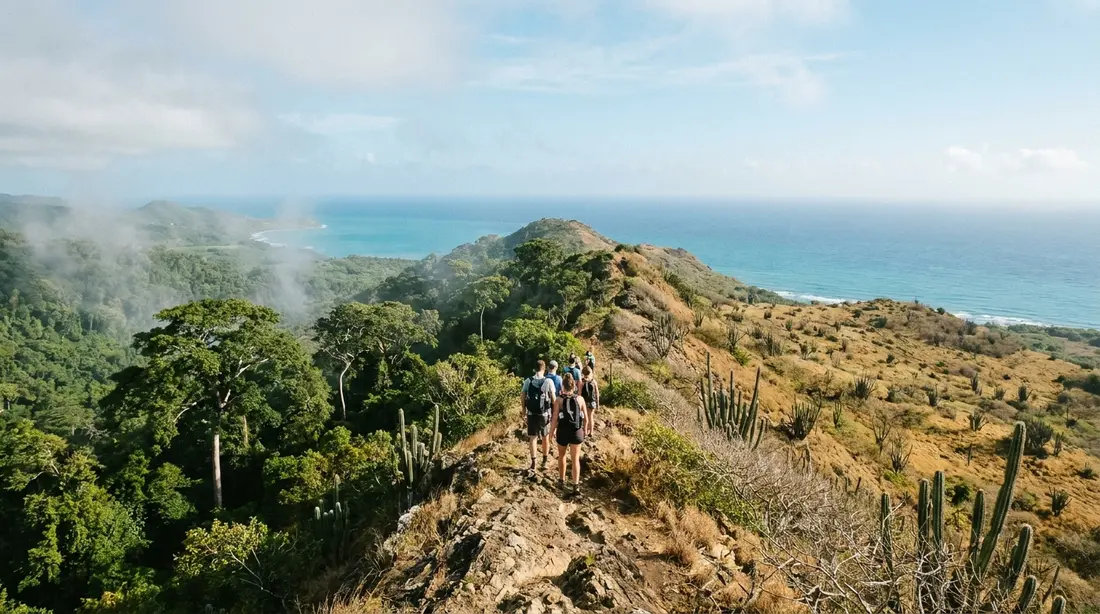
Islands build strange faunas. Whatever swims, flies, or rafts across open water gets in; everything else stays out, and the arrivals evolve in isolation until some of them exist nowhere else. St. Croix sat separate long enough to produce its own species: a 2019 paper in Herpetological Conservation and Biology counts seven reptiles endemic to this one island, animals whose entire global range was 84 square miles. Then ships arrived, and with them rats, mongooses, deer, goats, iguanas, frogs from other islands, and eventually pet-trade escapes. Island natives evolved without mammal predators, which left them defenseless when mammal predators showed up, and three of those seven endemic reptiles are now considered extinct. The pattern repeats across the Caribbean; St. Croix is simply a well-documented case of it. Knowing which list an animal belongs to changes how you read it. The anole on the porch rail is deep local history. The mongoose crossing the road is an 1880s policy decision still playing out. The full ecological backdrop, wet forest to cactus scrub, is in the two-landscapes guide.
Bats, the only native land mammals
Every wild mammal on St. Croix that did not arrive by ship is a bat. The St. Croix Environmental Association counts five species in the Virgin Islands, three that eat fruit, one that eats insects, and one that fishes; some published lists for the territory run to six, so treat the exact count as a taxonomist's argument rather than a settled fact. The cast includes the Antillean cave bat, the Jamaican fruit bat, the velvety free-tailed bat, and the fisherman bat, a big species that trawls its hooked feet through calm water for small fish. None of them wants anything to do with people, and none of the vampire lore applies; the fruit bats are pollinators and seed carriers, and the insect eaters clear mosquitoes by the thousand per night.
Seeing them takes no effort beyond looking up at the right hour. The first bats come out in the ten minutes after sunset, flickering over pool decks, gardens, and pond edges. SEA has run public bat programs at the Barren Spot bat tower mid-island, where cave bats stream out at dusk; check their current calendar if a group emergence appeals. From a villa, the show is quieter: quick shapes crossing the last light, doing free pest control over your dinner table. Guests staying near calm water sometimes get the specialist act, a fisherman bat skimming low over the surface after small fish, though telling one bat from another at dusk is a job for the researchers.
The introduced mammals
The white-tailed deer descend from animals a Danish ship's log places on the island by 1790, and they are now an ordinary sight at the grassy edges of roads and estates, smaller than mainland deer and most active in low light. They shape one real rule of island driving, covered in the East End guide: slow down at dawn and dusk and expect a second animal behind the first.
The small Indian mongoose is the daytime dart across the pavement, a low brown streak with a long tail. It was brought in during the 1880s to control plantation rats, a plan with one structural flaw: mongooses hunt by day and retreat to burrows at night, and rats work the opposite shift, so the two species largely missed each other. What the mongoose did catch was the native fauna, a story told in full in the two-landscapes guide. The damage is not historical trivia; the territory's invasive-species program lists eggs and hatchlings of all three endangered sea turtles in the mongoose diet today, which is one reason nest patrols still walk the beaches. Guests will see mongooses almost daily and should read them as scenery, wary of people and gone in a second.
The hooved animals in the pastures are livestock with local pedigrees worth knowing. St. Croix bred its own cattle: the Senepol, developed on island farms from West African N'Dama stock imported in 1860 and crossed with Red Poll after 1918, heat-tolerant, polled, and now exported worldwide. The island also produced the St. Croix White hair sheep, a wool-free breed suited to the tropics that turns up in flocks along the roads mid-island; loose goats browse fence lines in the drier country. One correction for readers of general Virgin Islands guides: the free-roaming donkeys belong to St. John. St. Croix has no wandering donkey population, and any donkey you meet here has an owner. Feral chickens, on the other hand, are fully island-wide, and the roosters do not respect sunrise conventions.
Birds: the everyday residents
Birdlife is the deepest wildlife on St. Croix, and a guest starts seeing it at breakfast. The territory's official bird is the bananaquit, called yellow breast locally, a small black-and-yellow nectar drinker with a white eyebrow stripe that visits railings, flowers, and unattended sugar within minutes of it appearing. Its official status is tied to the sugar history of the islands, and its boldness is genuine; a still guest with a bowl of fruit will have company.
The pearly-eyed thrasher is the yard bird with attitude, a big brown mimid with a pale eye and a jay's temperament, loud, curious, and willing to raid an outdoor table. Two hummingbirds share the flower beds: the green-throated carib, larger and iridescent green, and the Antillean crested hummingbird, tiny with a peaked crown, and where feeders or heavy bloom concentrate them they chase each other all day. Zenaida doves, close cousins of the mourning dove, post the top numbers in the island's annual bird counts, with ground doves underfoot and scaly-naped pigeons in the taller trees. Cattle egrets stalk the pastures beside the livestock, the gray kingbird calls from wires everywhere, and in winter an osprey or two patrols the coasts. St. George Village Botanical Garden mid-island, with over a hundred species logged on its grounds, is the easiest single stop for the garden birds; the garden guide has the practical details.
Birds: the salt ponds
The serious birding happens where the island holds standing water. St. Croix keeps a chain of coastal salt ponds and lagoons that the other Virgin Islands mostly lack, and the wetlands explain why the island's Christmas Bird Count regularly logs around 70 species in a day while better-known St. John logs fewer. The count itself says something about the island's birding culture: an Audubon Christmas Bird Count has run here for decades under the St. Croix Environmental Association's wing, 52 volunteers strong in 2019, the year three scarlet ibises, a South American bird never before recorded on St. Croix, dropped in on the counters.
Two ponds anchor the list. The Southgate Coastal Reserve, SEA's 100-acre property between Green Cay Marina and Chenay Bay, packs salt pond, mangrove, beach forest, and grassland into one walkable site with a trail and a bird blind over the water. Its regulars include great and snowy egrets, herons, black-necked stilts, white-cheeked pintails, Wilson's plovers, stilt sandpipers, and least terns nesting on the flats in season, with ospreys overhead in winter. Great Pond, the big mangrove lagoon on the southeast shore, carries a BirdLife International Important Bird Area designation on the strength of its white-crowned pigeons, hummingbirds, elaenias, and a substantial least tern colony; it is a pull-over-with-binoculars stop along Route 60. The salt pond behind the dunes at Sandy Point refuge adds a third wetland when the refuge is open, weekends September through March. Migration widens the cast: southbound shorebirds move through from late summer into fall, northern warblers and ducks winter on the ponds, and any odd week can produce a rarity, which is how species 268 will eventually join the territory list.
The salt-pond rules are birding's usual ones. Go early, move slowly, keep quiet, skip playback, stay on trails, and give nesting flats a wide margin, because least terns lay camouflaged eggs on open ground where a footstep is fatal.
Birds: offshore
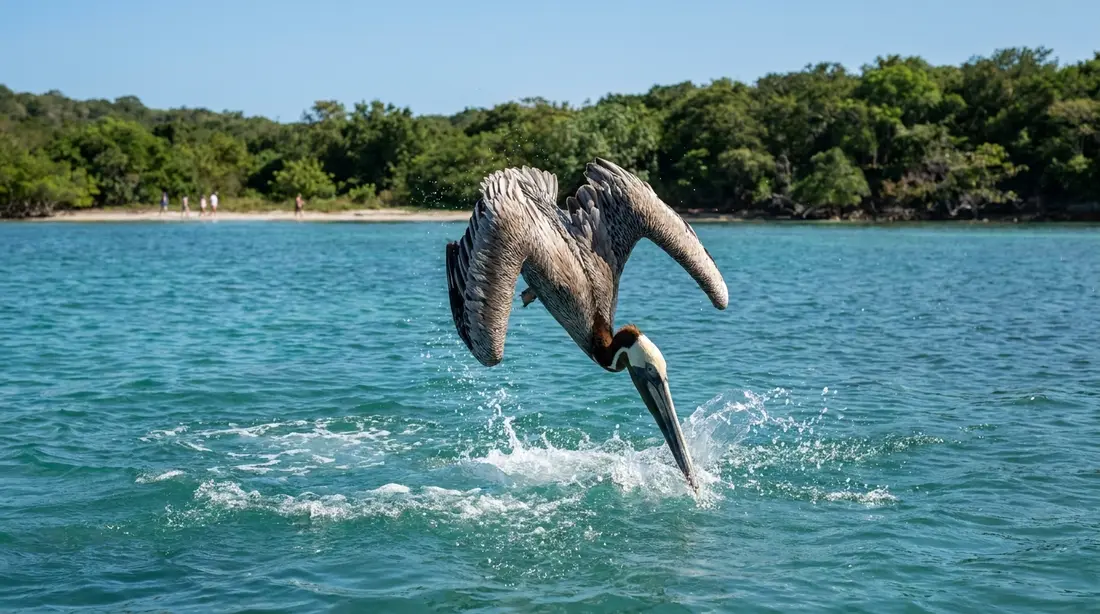
The sea birds work all day within sight of shore. Brown pelicans are the constant, patrolling every bay and folding into their head-first dives a few yards off swimmers; they nest on Buck Island, as do the least terns. Royal terns post up on docks and buoys, magnificent frigatebirds hang high on the trade wind with their unmistakable scissor tails, and brown boobies are regularly reported over the deeper water, especially from Buck Island boat trips and fishing charters. A crossing to the reef monument doubles as the island's cheapest pelagic: terns working bait, frigatebirds shadowing them to steal the catch, pelicans running the beach line.
Reptiles: a lizard island
Strip away feathers and fur and St. Croix belongs to the lizards. The one a guest sees hundreds of times daily is the St. Croix anole, a slim brown lizard found nowhere else on earth and, happily, everywhere on this island, walls, trees, porch rails, the endemic that shrugged off every invasion. Males do push-up displays and flare a yellowish throat fan; count them on any villa wall and you are censusing a species with an 84-square-mile world range that is doing fine.
The St. Croix ground lizard, the island's other famous endemic, was hunted off the main island entirely by the mongoose and survived only on tiny offshore cays, where a decades-long recovery effort has been rebuilding it, including a thriving transplanted population on Buck Island. The full story, cays, translocations, and the 2022 return to the main island, is told in the two-landscapes guide.
The supporting cast rewards a closer look. Beatty's least gecko, another St. Croix endemic, is a thumbnail-sized leaf-litter gecko now confined mostly to the drier east end, squeezed by a larger relative introduced from the Puerto Rico bank. The big, fast, boldly spotted lizard rummaging through leaf litter in broad daylight is likely the Puerto Rican ameiva, documented on St. Croix since a 1995 cargo arrival and now established island-wide. Green iguanas, pet-trade descendants, sun themselves in trees and on seawalls, with the Salt River mangroves and marina shorelines among the dependable spots; they are established and common here, officially listed as invasive by the territory, and best appreciated from a few feet back with the snacks kept in the bag.
Inside the villa, the after-dark resident is the tropical house gecko, known locally as a woodslave, a pale gecko that appears on walls and ceilings near lights and eats the insects the lights attract. Treat it as staff. A house with a gecko or two runs measurably lower on mosquitoes and moths, the animal is harmless, and the soft clicking chuckle it makes at night is one of the island sounds guests end up missing when they leave.
Frogs and the night chorus
The nightly soundtrack starts within half an hour of sunset and runs until the roosters take the handoff. Most of it is frogs, none of which need water to breed in the usual way; the coqui clan lays eggs on land and skips the tadpole stage entirely. St. Croix's chorus is led by the red-eyed coqui, whose two-note metallic chirp, often written ta-deek, repeats from gardens and brush all night. Listeners who know Puerto Rico's classic ko-kee will notice the difference: the whistling coqui of St. Thomas and St. John is absent from St. Croix, so this island's chorus runs a different score. After rain, the white-lipped frog adds a steady pink-pink-pink from wet ground, like a glass being tapped. The loud rasping croak like a rusty hinge is the Cuban treefrog, an invasive arrival with a taste for smaller frogs; the territory asks that it not be relocated. Cane toads are also reported in the territory. None of the frogs is a problem for people, and most guests file the chorus under charm inside two nights.
A short decoder for the rest of the night audio: soft clicking chuckles indoors are the house gecko; rhythmic churring from trees is insects, mostly crickets and katydids; heavy flapping past the porch light is a bat on patrol; a scrabble on the roof at 3 AM is usually a rat or a mongoose passing through, common to every tropical island; and the crowing that starts well before dawn is the feral roosters, who answer to no one.
Snakes
The traditional line is that St. Croix has no snakes, and it needs updating in both directions. The island once had its own: the Saint Croix racer, a harmless colubrid over three feet long found nowhere else, last collected more than a century ago and considered extinct, a casualty of the mongoose along with two endemic skinks. The island's remaining historical snakes are blindsnakes, tiny burrowing worm-lookalikes that most visitors will never knowingly see; the native Virgin Islands blindsnake is being outcompeted by the introduced flowerpot blindsnake, a global stowaway.
The modern update is the boa constrictor. Following pet releases reported in the western forests around 2012, researchers confirmed an established breeding population on St. Croix, and the 2019 study that documented it estimated boas had spread across more than half the island, densest in the west. They are non-venomous, secretive, mostly nocturnal, and no threat to a villa guest; the concern is what they eat, which is native wildlife. The territory asks that sightings be reported to DPNR's Division of Fish and Wildlife rather than handled. The bottom line for a visitor: nothing venomous slithers on St. Croix, the odds of seeing any snake on a vacation remain low, and the mongoose-killed-the-snakes legend gets the history backwards, since the mongoose eliminated a harmless native and the only snakes thriving now arrived in spite of it.
Insects and other small animals
The insects worth planning for are the biting ones. Mosquitoes concentrate at dawn and dusk, in still air, in the wetter west, and after rain anywhere; screens, fans, and repellent handle them, and air moving off the water keeps most beachfront porches clear. No-see-ums, the almost invisible sand flies, work calm beaches around sunset and reward a layer of repellent on the ankles. Neither calls for more than ordinary Caribbean habits.
The rest of the small fauna is more startle than hazard. Scorpions exist here, small ones, with stings generally compared to a bee's; shake out shoes left outside and that risk is managed. Centipedes are more common on St. Croix than on the other Virgin Islands, and the large ones deliver a painful bite, so they are the one crawler that earns respect: don't pick them up, and check firewood piles before reaching in. Spiders are ordinary, wasps behave like wasps, and hermit crabs, the borrowed-shell foot traffic on every east-end trail, are entirely harmless and endlessly watchable. Nothing in this section has ever been a reason to change a travel plan.
Whales and dolphins
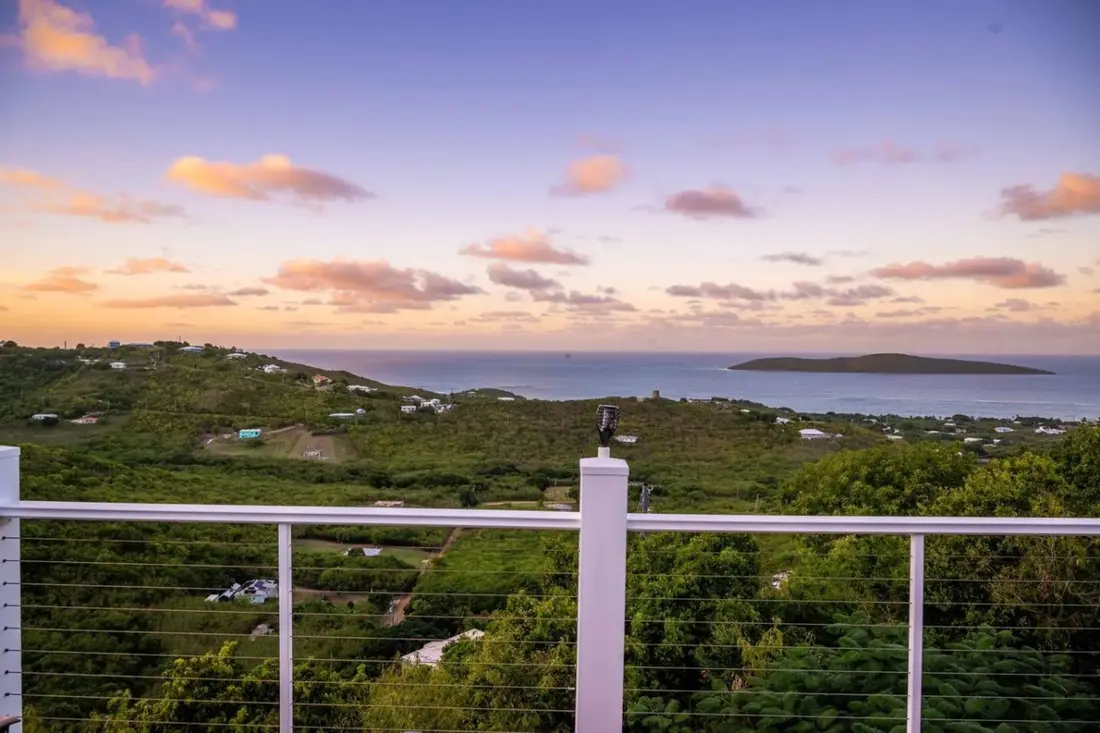
St. Croix gets a marine-mammal season. Humpback whales winter in the Caribbean to breed and calve, and from about February into mid-April, with February and March the dependable core, they pass along St. Croix's north shore, where the sea floor drops into deep water close to land, sometimes bringing blows and breaches within sight of shore. There is no whale-watching fleet; sightings come from headlands, north-shore terraces, dive boats, and luck, which makes a February sighting from a villa balcony one of the island's best free upgrades. Bring binoculars if you travel in that window and give the horizon an occasional scan. Dolphins are reported year-round by charter and dive crews, pods turning up off Buck Island, Cane Bay, and the west end, delightful and unschedulable in equal measure.
The reef, in one paragraph
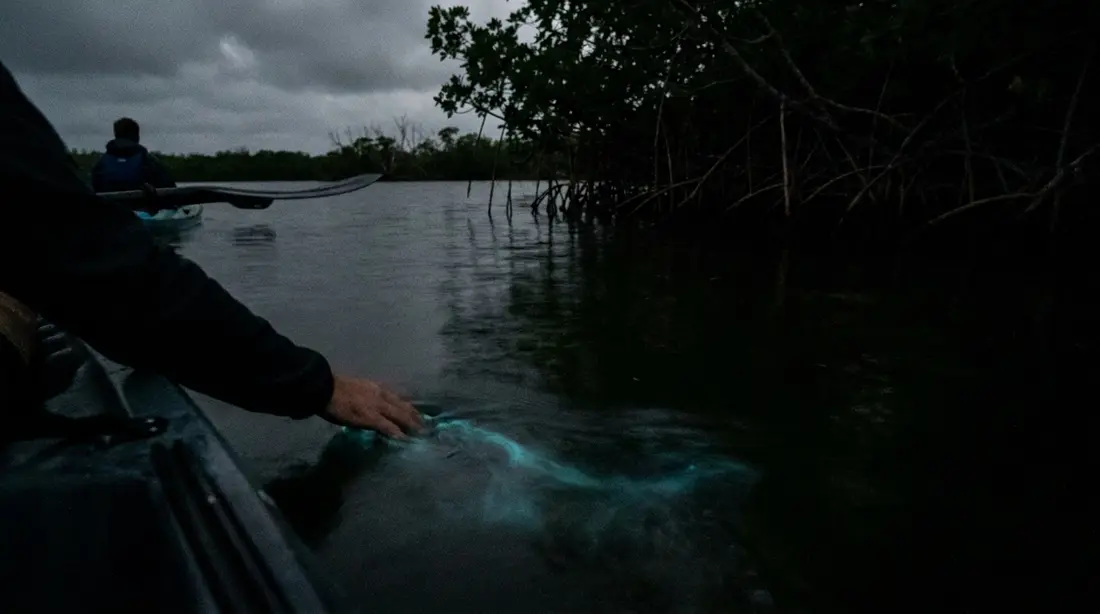
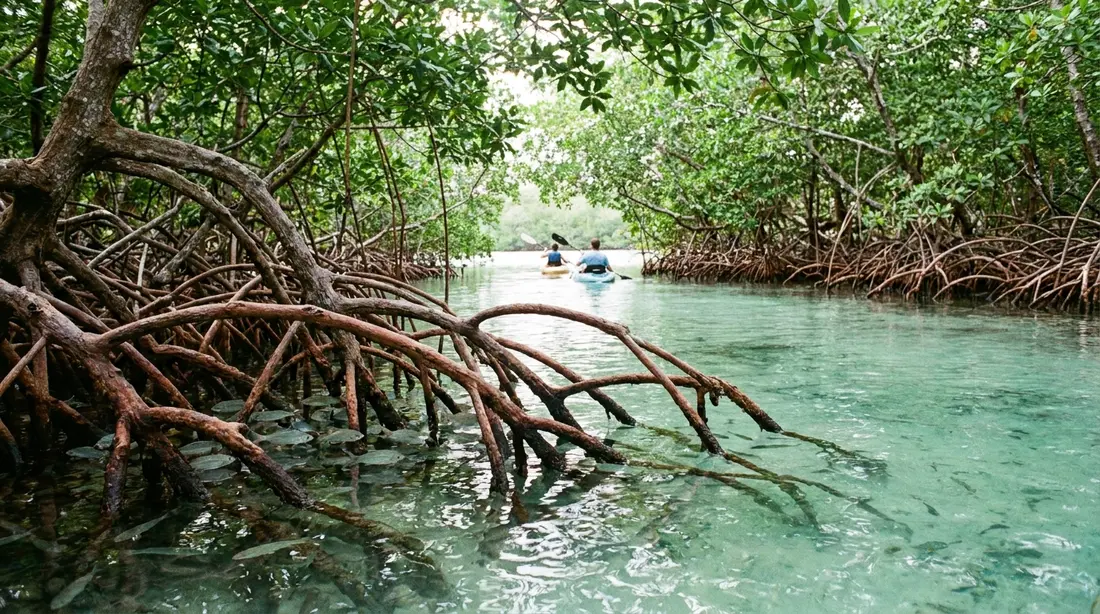
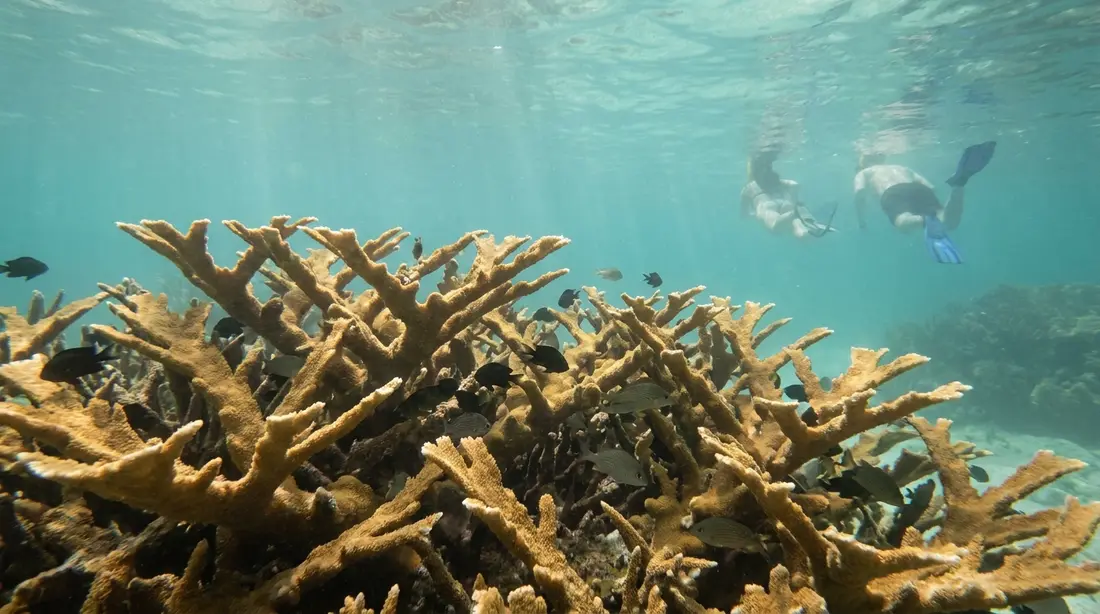
The underwater fauna has its own full reference, so here it is at a glance: parrotfish, tangs, and rays over the inshore reefs and seagrass, green turtles grazing the calm east-end bays, hawksbills on the coral, reef sharks cruising the deep edge of the Cane Bay Wall, and the Frederiksted Pier's pilings sheltering the slow oddities, seahorses, frogfish, and octopus. Spot-by-spot detail, entries, and conditions are in the snorkeling guide and the Cane Bay Wall guide, and the glowing water after dark belongs to the bio bay page.
The villa-porch safari
A guest who never leaves the deck still collects a respectable species list, and nothing below is embellished. Morning: bananaquits arrive first, hummingbirds work whatever is flowering, a pearly-eyed thrasher inspects the breakfast table, pelicans start diving the bay, and the St. Croix anoles take up their posts on the railings. Midday: frigatebirds hang motionless overhead, an ameiva rustles the garden bed, a mongoose crosses the drive. Dusk: deer step out onto the road edges, the first bats replace the last pelicans, and the coqui chorus tunes up. Night: the woodslave takes the wall by the porch light, and in February, the horizon might hold a whale blow. None of that is arranged and all of it is ordinary here, which is rather the point. The animals commute past the house; the only equipment is coffee and patience.
Where, what, and when
| Place | Best chance of | When |
|---|---|---|
| Southgate Coastal Reserve | Egrets, herons, stilts, pintails, least terns from the bird blind | Year-round; early morning; terns nest in season |
| Great Pond, Route 60 | White-crowned pigeons, wading birds, least tern colony | Year-round from the roadside; spring–summer for nesting |
| Sandy Point refuge salt pond | Shorebirds, wintering waterfowl | Weekends 10–4, Sept 1–Mar 31 only |
| Buck Island trip | Ground lizards ashore, pelicans and terns, frigatebirds on the crossing | Any boat day |
| Salt River mangroves | Iguanas, herons, mangrove nursery life | Any day; kayak tours after dark for the glow |
| East End roads and trails | Deer, hermit crabs, Beatty's least gecko country | Deer at dawn and dusk |
| North shore lookouts | Humpback blows and breaches offshore | Roughly February to mid-April, best Feb–Mar |
| Any villa porch | Bananaquits, hummingbirds, anoles, bats, woodslave, coqui chorus | Daily, no effort required |
Watching rules
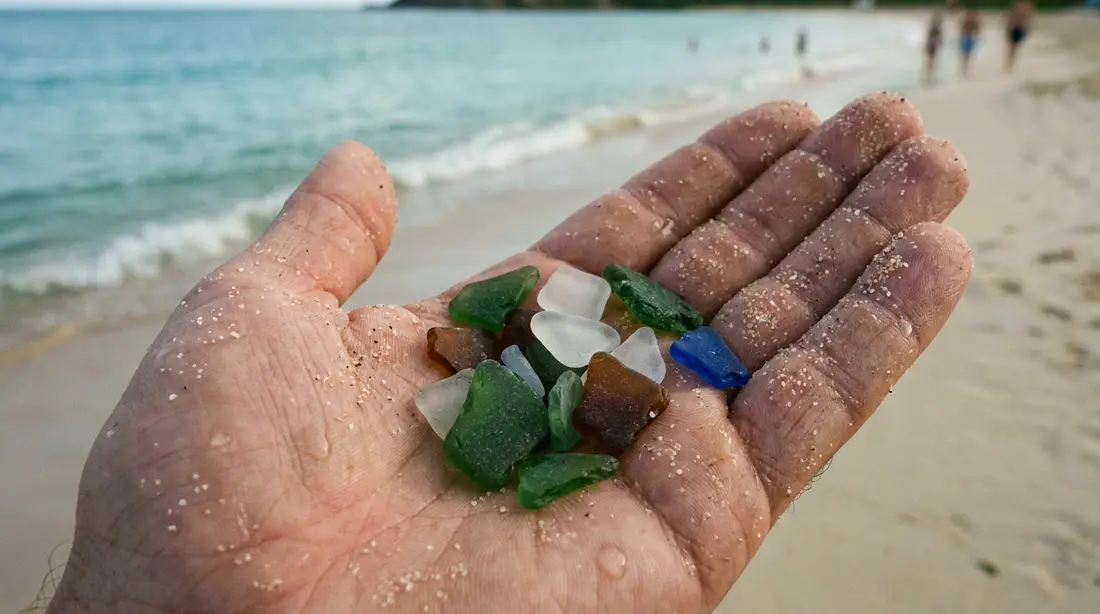
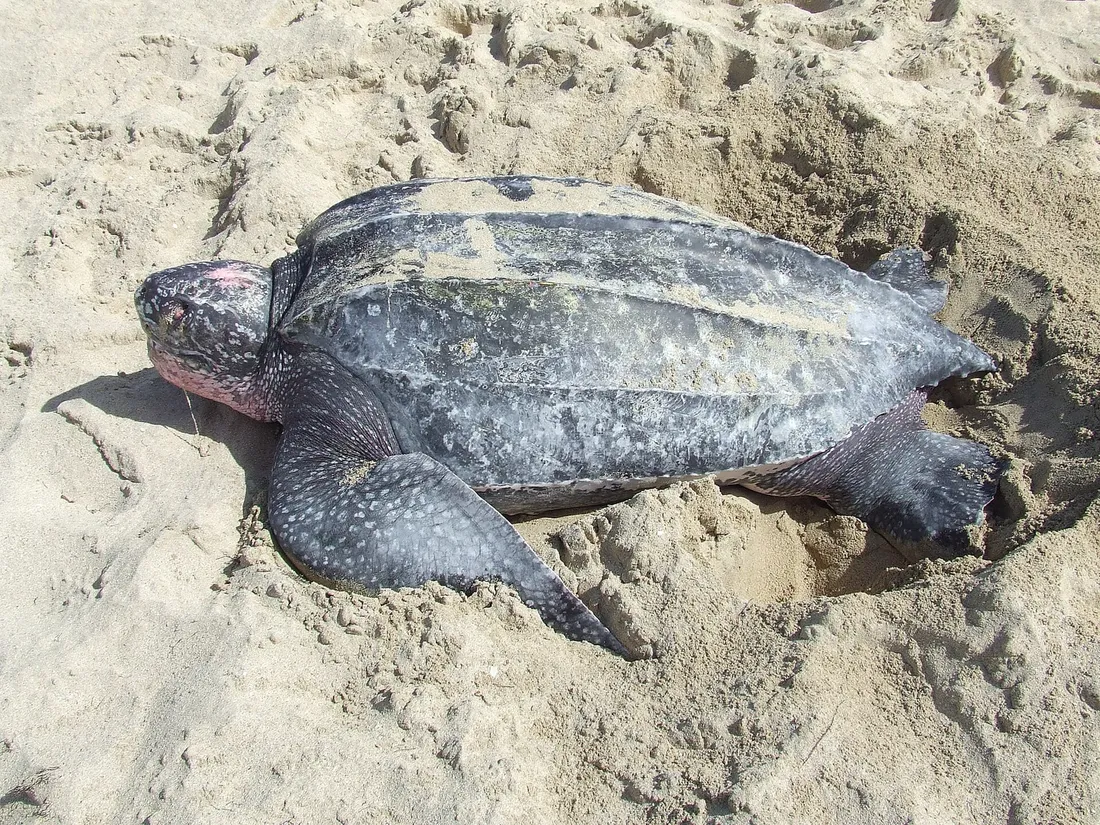
The island's wildlife etiquette compresses to a short list, and every item on it earns its place. Feed nothing, anywhere; fed iguanas, fish, and thrashers all become problems, and feeding wildlife in protected areas is illegal besides. Keep distance and let the animal set it. On beaches from spring through fall, treat marked or disturbed sand as a turtle nest, keep white lights off the shore at night, and read the turtle watch guide before any nesting-season beach evening; the leatherback page covers the federal rules in force at Sandy Point. In the water, wear reef-safe sunscreen and touch nothing living. Leave shells and coral where they lie, both because the law says so and because empty shells are the hermit crabs' housing stock; the sea glass guide explains what you can take instead. And report rather than rescue: injured turtles, stranded birds, or a boa in the yard all go to DPNR Fish and Wildlife or SEA, whose people have the permits and the training.
Questions guests ask
Are there any dangerous animals on St. Croix?
Nothing that should shape a plan. The island has no venomous snakes, no large predators, and no wild mammal bigger than a small deer. The genuine cautions are small: centipedes bite painfully and should be left alone, scorpion stings run about bee-sting level, and mosquitoes are mosquitoes. In the water, the standard reef rules cover it, and deer near the road at dusk are the one wildlife hazard with a real track record, and the fix is simply slower driving in low light.
Will I see snakes?
Almost certainly no. The native racer has been gone for over a century, blindsnakes live underground and look like earthworms, and the boa constrictors documented since the 2010s are nocturnal, secretive, and concentrated in the forested west, so tourists essentially never encounter them. None of the island's snakes, past or present, is venomous. If you do see a large snake, photograph it from a distance if convenient and report it to DPNR's Division of Fish and Wildlife; the territory tracks boa records.
What is the gecko in my villa, and should I do anything about it?
It is a tropical house gecko, locally called a woodslave, and the correct response is nothing. It is harmless, it cannot bite effectively, it avoids people, and it spends every night eating the mosquitoes and moths your porch light gathers. The clicking chuckle you hear after dark is the same animal talking. Villas across the Caribbean count a resident gecko as a feature, and houses that lose theirs notice the insect difference quickly.
What is making the loud chirping all night?
Frogs, almost entirely. The lead voice on St. Croix is the red-eyed coqui, a land-breeding frog with a repeated two-note chirp, backed after rain by the white-lipped frog's steady tapping note and, where it has spread, the Cuban treefrog's rasp. The chorus starts near sunset and fades by dawn, when the feral roosters take over. Most guests stop hearing it as noise within a night or two; light sleepers should pack the same earplugs the roosters justify anyway.
When can I see whales from St. Croix?
Roughly February into mid-April, with February and March the reliable heart of the season. Humpbacks breed and calve in the Caribbean in winter and travel along the deep water off St. Croix's north shore, close enough that blows and breaches are seen from land in a good week. There are no scheduled whale-watch boats here, so the method is a north-facing vantage point, binoculars, and regular scans of the horizon; dive and charter crews in that window see them with some regularity.
Where is the best birdwatching on the island?
Southgate Coastal Reserve for a first outing: one hundred acres, four habitats, a trail, and a bird blind over the salt pond, ten minutes east of Christiansted. Great Pond on the south shore adds the Important Bird Area lagoon, Sandy Point's pond works on winter weekends, and the botanical garden covers the land birds. The island's wetlands are why its day counts beat the other Virgin Islands; a casual birder can log 40-plus species in a weekend without trying hard.
Are the iguanas dangerous, and can we feed them?
They are not dangerous when left alone, and no, do not feed them, for their sake and yours. Green iguanas are big vegetarian lizards that would always rather flee; a cornered or grabbed one can scratch and whip its tail, which is an argument for admiring from a few feet away. Feeding teaches them to approach people, which is how the rare unpleasant iguana encounter gets manufactured, and it is prohibited in the protected areas where they are most photogenic.
Which animals will children actually get to see?
Plenty, and mostly within arm's reach of the house. The near-certain tier is anoles doing push-ups on the railings, bananaquits at the breakfast table, hermit crabs on any east-end trail, pelicans crash-diving the bays, and the woodslave gecko on the wall at night, which most kids adopt by name within a day. The likely tier is green turtles on a calm-morning snorkel over seagrass, deer at dusk, and bats at sunset. The lottery tier is a whale blow in late winter and dolphins off a boat. A cheap headlamp with a red setting and a pair of binoculars turn all of it into the trip's best free entertainment.
Wildlife from our villas
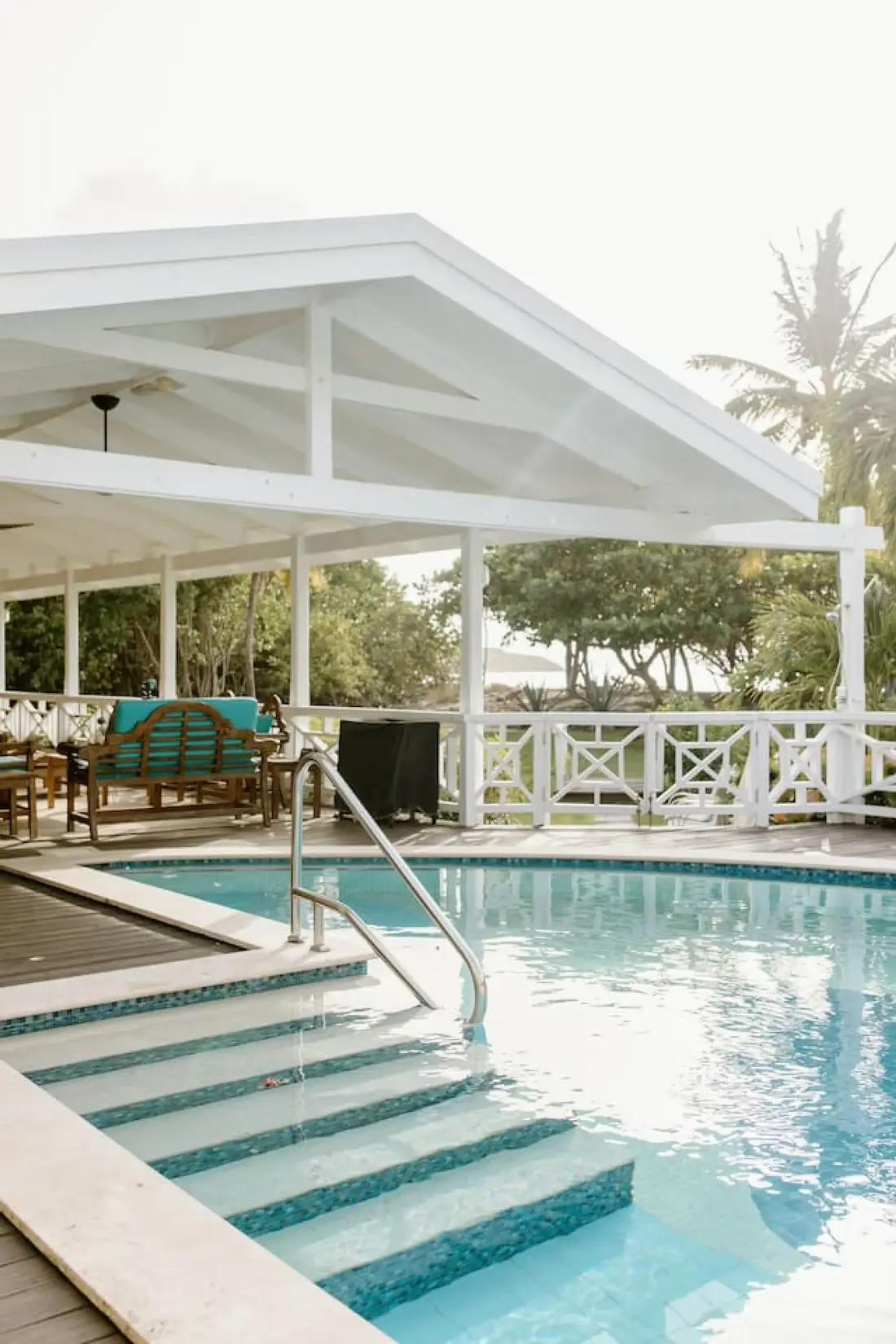
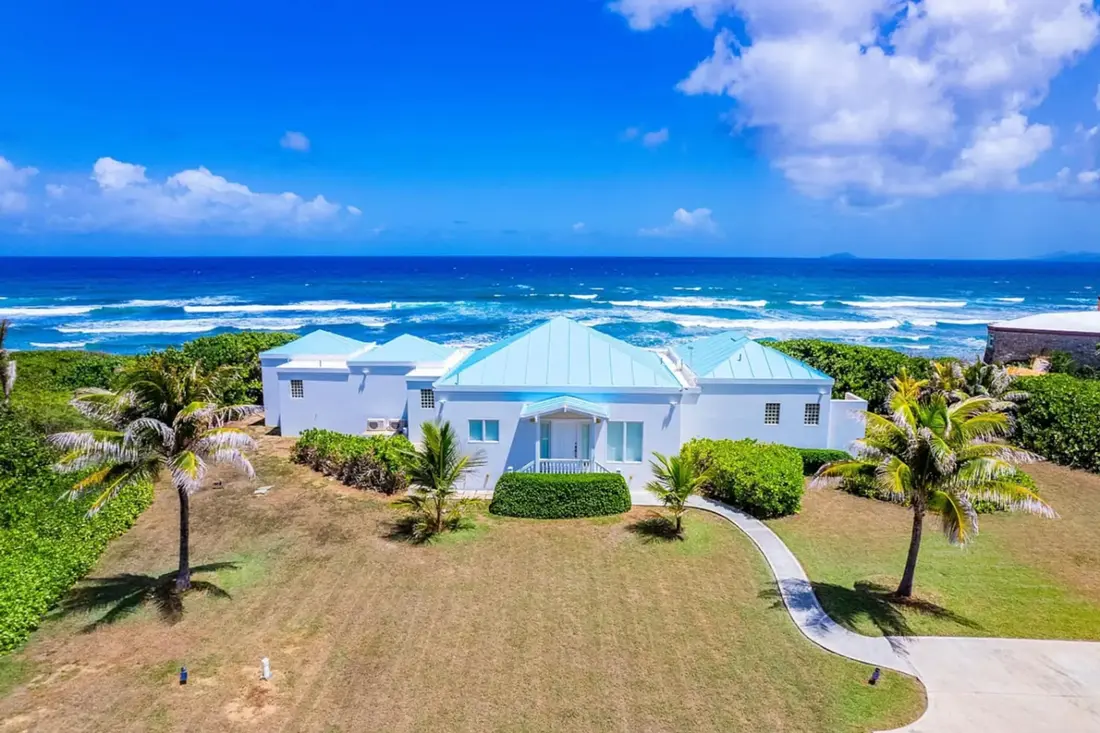
The villa-porch safari above was written from experience at our own houses. The East End homes sit in the island's best casual wildlife country, deer on the estate roads, hermit crabs on the trails, pelicans and terns working the bays, with The Cerulean adding the Buck Island channel as a front-row seabird show. On the west side, Sunset Sea-Clusion puts guests 15 minutes from Sandy Point for winter refuge weekends and spring turtle watch nights. Every house comes with the free tier: bananaquits at breakfast, anoles on the rails, bats at dusk, and the coqui chorus after dark. Browse all villas and pick your porch.
Sources
Written from official and first-party sources, checked August 2026. Hours, prices and event dates change — confirm before you go.
In this guide
Stay nearby
Private oceanfront on the East End with a sandy, swimmable beach, pool, outdoor kitchen and a separate guest cottage. Sleeps twelve.
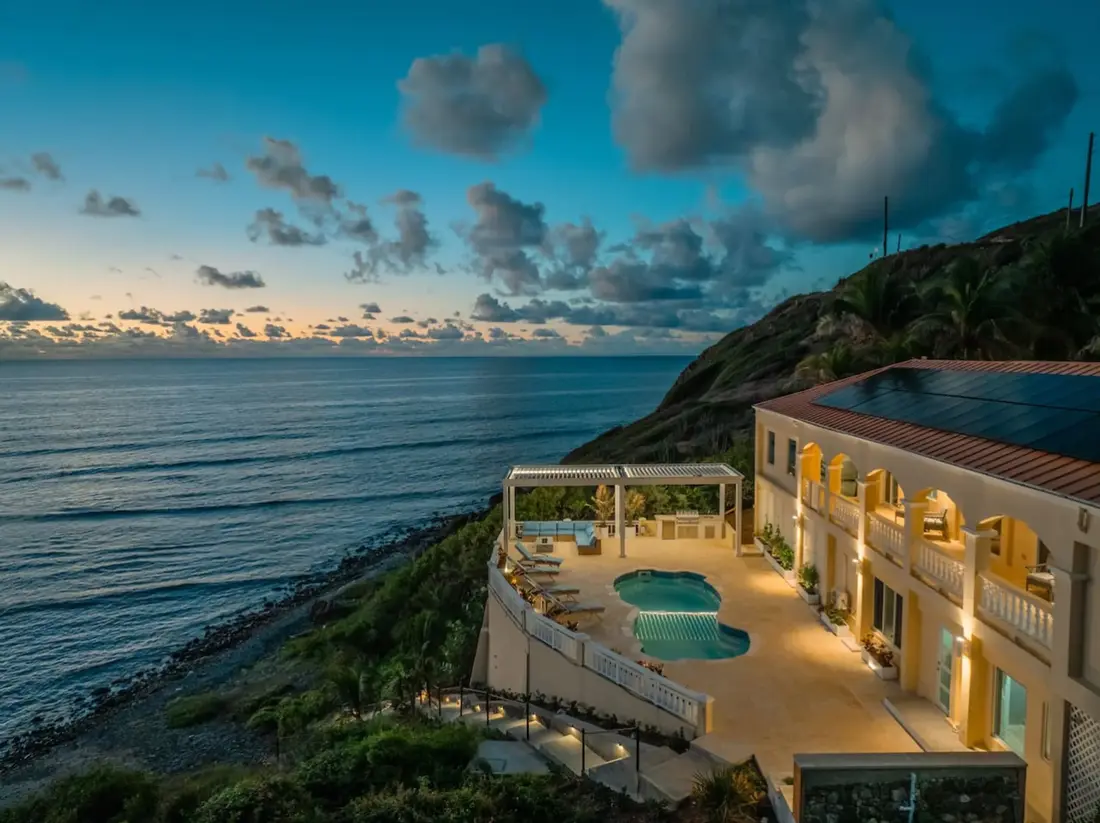 The Cerulean5 bd · 5 ba · sleeps 12 · Christiansted
More in Nature & Wildlife
Sources
16 references, listed in full at the end of this guide — official park, refuge, tourism-board and business sources, checked August 2026.