St. Croix in September
The quietest month: deepest green, lowest occupancy, and the year's best value — with weather flexibility advised.
September is St. Croix at its emptiest and its cheapest. Fewer visitors come this month than any other, villa rates bottom out, the sea holds the warmest water of the whole year at around 85°F, and the hills run their deepest green after a summer of rain. It is also the muggiest month, the front of the wettest quarter, and the statistical high point of the Atlantic storm season, so the value comes with a weather asterisk that every September traveler should weigh before booking. This page is the September fact page: the climate normals for the month, what the humidity and rain really do, where the storm risk sits, the September 1 reopening of Sandy Point, the water and the turtles, the sparse events, and how to book around a slow-season closure or two. To place September among the other eleven months, the best-time-to-visit essay ranks the year; for the way the island's weather actually behaves once you land, the weather guide lays out the machine.
What a September week feels like
The defining feature of September is space. This is the single quietest month on the visitor calendar, quieter even than the deep summer, and the emptiness changes the texture of an ordinary day. A weekday morning at a headline beach can leave you sharing the sand with two or three other people. Restaurants that need a reservation days ahead in February seat you on arrival, when they are open at all. Dive boats run with room to spread your gear, and the rental-car counter has cars. For a traveler who measures a trip by how few strangers are in the frame, no month on St. Croix delivers more than this one.
The trade for that space is real and specific. September is warm and sticky rather than dry and breezy, the rain gauge is near its yearly top, and the calendar sits at the busiest stretch of hurricane season. None of that makes for a bad week, and most September weeks run as plain warm-weather vacations, but it does make September a month you book with open eyes and a flexible plan rather than on autopilot. The rest of this page is about setting those eyes.
September temperatures, rain, and humidity
The long-run federal normals, taken at the island's Henry E. Rohlsen Airport, describe a warm and wet September. A typical day reaches about 89°F and eases to about 77°F after dark, which keeps the month within a degree of August and near the top of the year for heat. WeatherSpark's modeled summary reads slightly cooler, nearer 88 by day and 78 at night; the small gap is one station against a grid, and it changes nothing about the experience. Across the whole year the thermometer barely travels, so what marks a September afternoon is the weight of the air, not the reading.
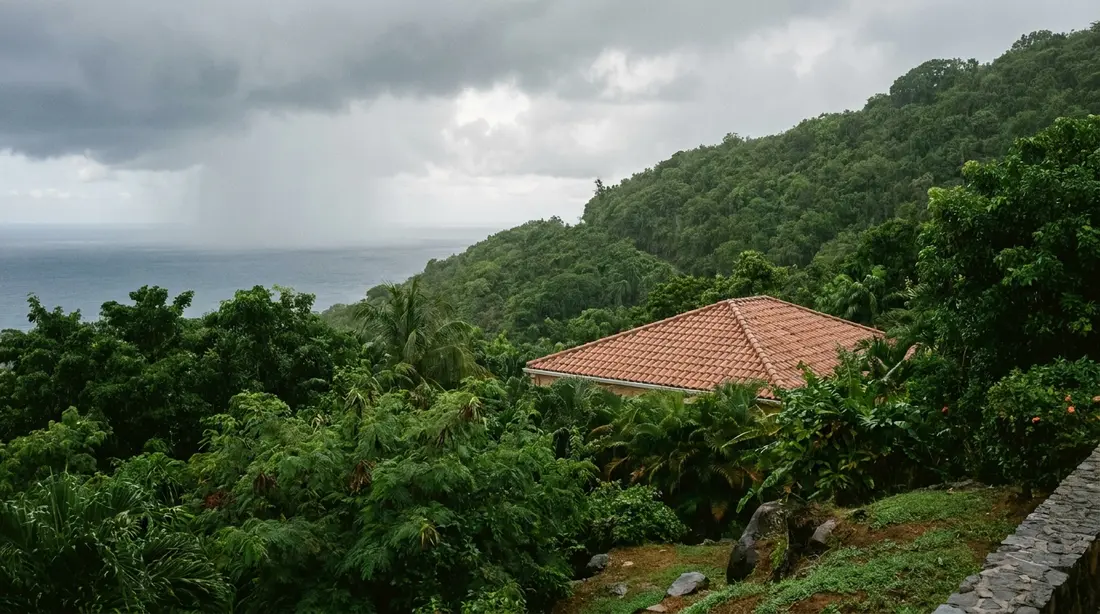
Rain is the number that carries weight this month. The long-term normal puts September around five inches, with a few datasets nearer six, and either figure lands it among the wettest months and at the head of the September-to-November run that supplies roughly two-fifths of the annual total. The delivery, though, is the usual island kind: fast cells that wet one length of coast and clear off, adding up to a shower on about a quarter of days rather than steady gray. Where September's total climbs is in the heavier rain a tropical wave or a passing system can wring out, and such systems ride through more often now than in any other month. The weather guide explains how these showers build and why a scary rain percentage here so rarely spoils a day.
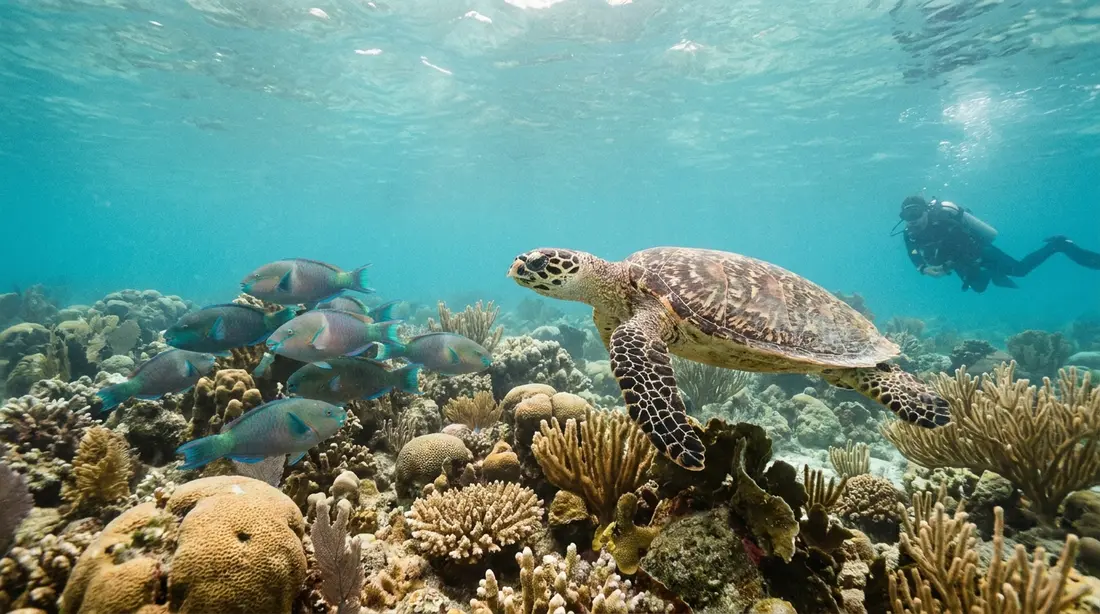
The sea is September's quiet reward. Ocean water off St. Croix warms right through the summer and crests as the heating season closes, and September keeps it there, near 85°F on the long average and a degree or two above that in recent years. No one puts on neoprene for warmth in September. Here are the month's figures gathered in one place:
| Measure | September figure | Yearly context |
|---|---|---|
| Average daytime high | Near 89°F | A degree off August's peak; among the year's warmest |
| Average overnight low | Near 77°F | Warm after dark; the villas cool the bedrooms |
| Sea temperature | Around 85°F | The warmest water of the year |
| Rainfall | About 5 in (some data nearer 6) | Opens the wettest quarter; mostly brief showers |
| Wet days | Roughly one in four | A shower on about a quarter of days |
| Humidity | At its yearly high | The stickiest stretch on the record |
| Wind | About 12 to 14 mph, easing | Among the lightest of the year; calm mornings |
| Daylight | 12h 28m down to 11h 59m | Crosses the equinox near the 22nd |
The stickiest month, and how to live with it
Humidity is the one thing that sets September apart. The air stays muggy almost around the clock, more reliably than in any other month, and the dew point, the surest read on how heavy the air feels, sits near its yearly ceiling around 75°F. A windless September afternoon reads hotter than the 89 on the screen, and an uphill walk in the open will have you wringing out a shirt. Residents answer it the same way every year: front-load the day, save the baking hours for the sea or a shaded porch or the pool, and keep drinking past the point of thirst.
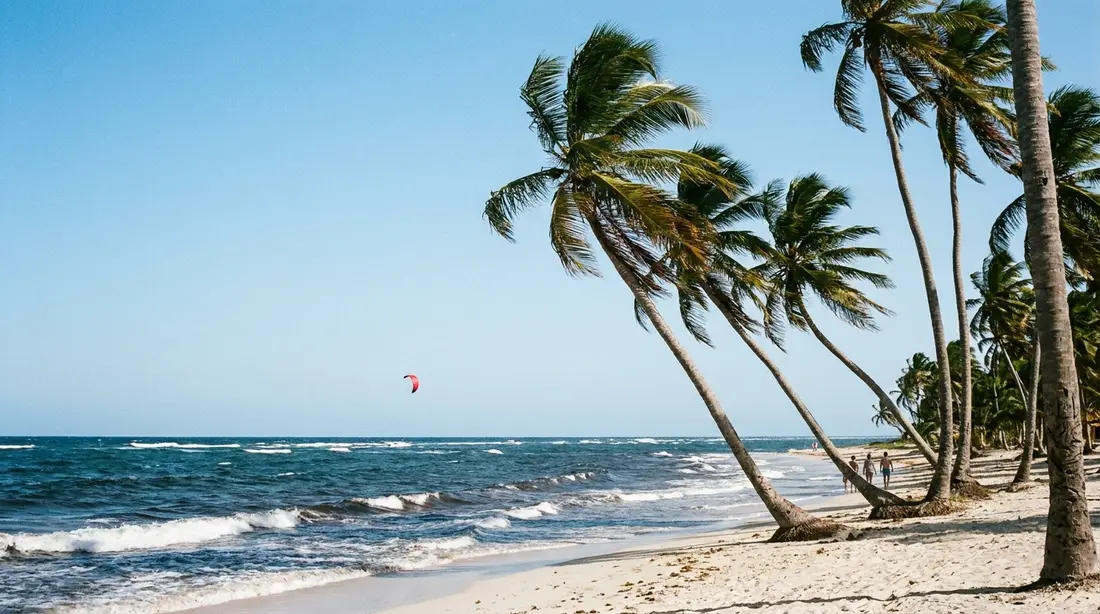
The breeze both helps and hurts. September falls in the limpest part of the wind year, the strong winter trades still a season away and the summer flow gone soft, so the air that normally carts the heat off is in short supply. The upside of that same stillness is a run of calm dawns, morning after morning, which is the gift September gives anyone who wants the water. Daylight is tipping over, too: about twelve and a half hours of it to open the month, a hair under twelve to close it, with the equinox around the 22nd, so an early start beats the heat and lands you on the calmest sea and in the kindest light at once. Skip the warm layer when you pack; a rain shell, a spare swimsuit, and more reef-safe sunscreen than you expect will earn their space.

The peak of the storm season
September carries the one caveat that shapes a September booking. The Atlantic hurricane season reaches its statistical high point now, right around September 10 on the National Hurricane Center's long-term climatology, which makes these the basin's busiest weeks. That is a reason to plan carefully, not a forecast of trouble: build the trip on insurance arranged the day you book and a flight you can move, then read the real odds, the alerts, and what to do if a system is ever aimed at your dates in the hurricane season guide, which this page will not repeat.
The emptiest, lowest-priced month
Money and elbow room are September's whole argument, and it makes that case more strongly than any other month. Rates sit at the floor of the year across the island's villas and small hotels; the homes that book out a year ahead for the winter holidays sit open a few days out. The rest of a busy island loosens up in step, from dinner tables to boat seats to that small fleet of rental cars. Because occupancy runs at its yearly low, the island feels less like a destination in high gear and more like a place a few people happen to be visiting, which for the right traveler is exactly the appeal.
The savings do not always show up as a slashed nightly number, and it helps to know that going in. On St. Croix the slow-season deal often arrives as an added value rather than a lower rate, a complimentary night or an extra day on the car, though plenty of houses do drop their pricing outright this month. Either way the September total lands well under a winter one. The one cost that never changes is the flexibility-and-insurance habit that belongs on every trip between June and November, and handled at booking it is cheap: a single policy premium and a little give in the plans, in exchange for the quietest, greenest, warmest-water version of the island on the calendar. The neighboring month keeps most of that value as the storm curve begins to fade; October is the natural second choice for anyone who wants the emptiness with a shorter weather asterisk.
What stays open in September
September sits in the heart of the island's slow season, which runs roughly from midsummer into late October and thins out most noticeably from August through this month, and that reality deserves a straight answer rather than a cheerful dodge. Some restaurants and shops use the quietest weeks of the year to close for a stretch, to paint, remodel, handle repairs, or simply give their staff a vacation. It is not a shutdown of the island; the businesses that stay open generally keep their normal hours, and live music, water sports, boat trips, and the beaches all carry on with fewer people around them. But the specific place you were counting on for dinner may be dark for two weeks with no notice beyond a sign on the door.
The practical move is a phone call. Do not build a September evening around one particular kitchen without confirming it is open that week, and make a reservation even where you would not need one in winter, because the restaurant that is running may be the only one of its kind open for miles. Retail tends to keep shorter days now, often Tuesday through Saturday and closing by late afternoon. None of this is a hardship with a villa kitchen and a bit of planning, and it is a fair trade for having the island to yourself; it just rewards the traveler who checks the current week over the one who trusts last winter's listings. If a closed sign or a gray sky redirects an afternoon, the island keeps more indoor and undercover options than a first-timer would guess, gathered in the rainy day plan.
Sandy Point reopens on the first
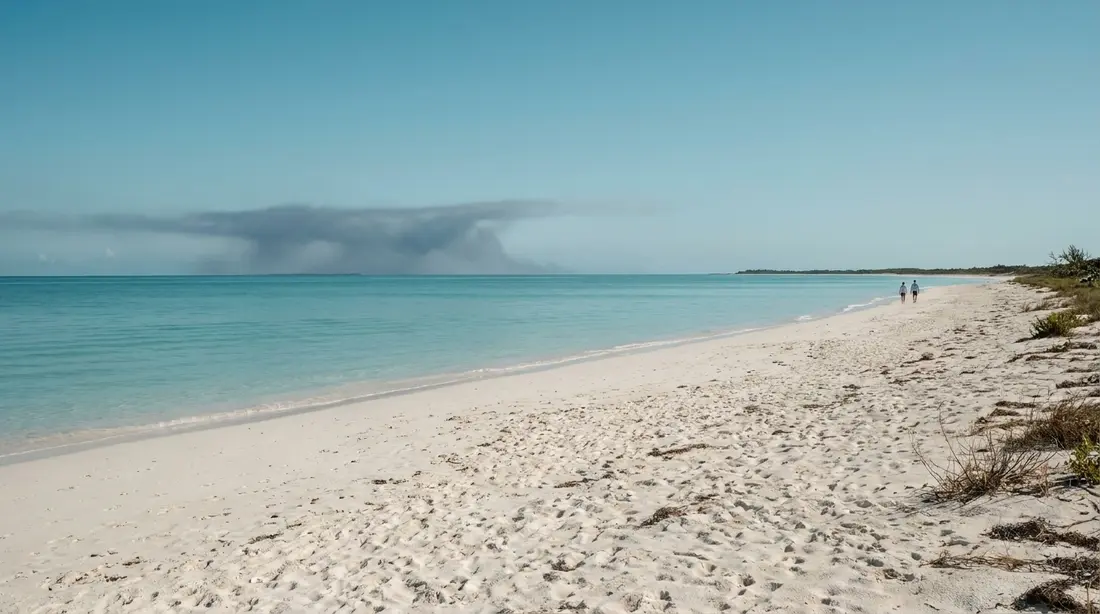
The clearest date on the September calendar is the very first one. Sandy Point, a two-mile ribbon of empty beach on the island's southwest shore, has sat closed to visitors since the start of April for turtle nesting, and on September 1 the gate opens again. For the rest of the fall and winter, through the end of March, it opens to the public on weekends only, from ten in the morning to four each afternoon, and stays shut on weekdays. The first September weekends are the earliest crack at it in five months, and with the island this empty, that broad beach lies all but abandoned.
Everything about the place runs on turtles. Sandy Point draws more nesting leatherbacks than anywhere else under the American flag, which is precisely why it shuts for the summer, and the September reopening is what a five-month closure gives back. Expect nothing out there but sand and sea, no shade, no water, no restrooms, so pack your own and time the drive down the rutted access track for the cooler ends of the day. The gate, the road, and the full set of rules are in the Sandy Point guide; the animals the closure protects are on the leatherback page.
Turtles in September
September is a real turtle month, just a different one from spring. The leatherbacks that pack Sandy Point earlier in the year have finished; those giants come ashore roughly March through July, the exact span the beach stays closed. September belongs to the other two species. Green turtles nest here from about July into November and hawksbills across much of the year, and the nests they laid earlier in the summer start breaking open now, the hatchlings scrambling seaward after about two months underground. So a reopened weekend beach holds no nesting leatherback, but it sits inside the green-and-hawksbill hatching window.
Getting onto a nesting beach at night is regulated, and the guided outings that do it run with the research crews through the nesting and hatching weeks. If joining one in September is the plan, write to the St. Croix Sea Turtle Project ahead of time and treat a place as something to lock in early. Keep any light off a nesting shore after dark, wherever you stand. Watching turtles in the water needs no permit at all: greens graze the seagrass in the sheltered shallows at Chenay Bay and show up on most reef swims, a daily sight the year round. For the species themselves, see the sea turtles guide; for the guided nights, the turtle watch page.
The water in September
September water rewards patience and a willingness to read the day. The sea has climbed to the top of its yearly range, so warmth is never the question; the question is only whether the surface is settled, and in September it often is. Between weather systems the month strings together mornings of glass, when the wind has not yet stirred and the light air of early fall barely troubles the surface at all. On one of those settled, dry mornings the water clears to its longest sightlines of the year, because nothing is lifting sand off the bottom and no runoff is milking the shallows. Divers and snorkelers who plan around those windows get the island's best conditions for the least money.
Two things unsettle the picture, and both are September specials. A heavy shower can drop enough rain to cloud the nearshore water off the guts and river mouths for a day, so a soaked coast becomes a next-day coast. And with the tropics at their most active, a system far out in the ocean can push a swell onto the north-facing shores days ahead of any cloud, raising surf on a blue-sky morning. When either lands, the answer is to switch coasts rather than cancel: the leeward west end near Frederiksted usually stays flat while the north shore works, and a beach clear of the runoff is a short drive from one that is not. Operators check the marine forecast every morning and move with it, which is why booking a boat day early in the week matters. After dark, the Salt River bioluminescent bay glows all year, and September's long, early nights suit it; aim a paddle for the days near the new moon, when the plankton read brightest, and take any night's glow as a hope rather than a promise. The bio bay guide has the moon advice.
Diving and snorkeling on the calm mornings
Pick your mornings and September is one of the strongest dive months of the year. Warm water and slack wind put the exposed sites back in play, the ones a winter blow keeps closing. The Cane Bay Wall drops from the north shore toward water thousands of feet deep and rewards an early, glassy start, which September hands out freely. On the leeward side, the Frederiksted Pier goes in almost any weather and ranks as the island's best macro and night dive, its pilings crowded with seahorses, frogfish, and octopus. In water this warm a diver needs little more than a skin, and the dive shops match your kit and read the day's sea for you before you get wet; the scuba diving guide runs through the sites.
Snorkelers work the same warm, glassy windows. When a swell or a breeze roughs up the open coasts, the protected west-end and East End entries stay friendly, and choosing by exposure is the whole game; the snorkeling guide ranks the spots that way. The crossing out to Buck Island, with its marked underwater trail, is easy on the light September air, and the sensible habit is to slot a boat day near the front of your stay so a rare blown-out day still has room to move. That flexibility is why clear diving keeps its place among September's best arguments: the shops simply skip the off day and sail on the good one.
The island at its greenest
The same rain that hedges a beach day pays for itself the moment the road turns uphill. A whole summer of it has soaked in by September, and the interior wears the richest green it shows all year, thickest in the wet northwest where the rainforest lives. This is the month to point the car up Mahogany Road and drive beneath a roof of leaves, past mahogany and kapok and the old estate ruins, and it is when a photographer gets the deepest color, in the bright half-hour after a squall pulls away and the sun lights the dripping canopy.
Wet season also decides how the trails behave. The island's only natural waterfall, back in the Caledonia forest on the northwest slopes, flows solely after a real soaking, so this is its season, but it is a guided, wade-through-water hike, and a gut is no place to be with heavy rain falling or forecast, because the water comes down them in a rush. The open ridge walks on the dry East End want the reverse, a first-light start before the mugginess sets in, and the Annaly Bay tide pools stay off-limits whenever the sea is up. The hiking guide spells out the routes and the warnings, and why one small island carries both jungle and cactus gets its own guide, two landscapes, one island.
What is on in September
September is the thinnest month of the year on the events calendar, and there is no getting around it: the big summer food fairs have wrapped, the carnival and gallery calendar of winter has yet to open, and no marquee event anchors the month. What fills the gap is community-scale and worth knowing about, but a trip should not be built around a single September fixture the way a February or a December one can be.
Labor Day opens the month, landing on Monday, September 7 in 2026, a federal holiday marked with a road race and a busier-than-usual beach day rather than a parade. The month's real cluster is conservation on the water: dive shops run reef and shoreline cleanups, lionfish-removal dives, and marine-debris projects through September, timed loosely to the global International Coastal Cleanup that falls on the third Saturday, and small triathlon and swim events turn up at Cane Bay in the same weeks. Hispanic Heritage Month opens on September 15 and builds toward the Virgin Islands–Puerto Rico Friendship celebration that belongs to October. Around all of that, the recurring nights carry on: a free outdoor movie at a Kingshill brewery, the monthly waterfront concert in Frederiksted, arts workshops in Christiansted, and the occasional downtown Jump Up whose date surfaces only weeks ahead. Confirm any of it against the current calendar, because September programs are set late and change often.
Who September is for
The month fits some travelers and fails others, and it helps to sort yourself before you pay. The clearest match is the bargain-minded traveler with a loose calendar: someone who prizes the year's lowest price and an all-but-deserted island over any promise of dry weather, and who can shrug off a wet afternoon or the odd change of plan. Divers and snorkelers with room to pick their mornings are the next best fit, since the warm, frequently flat water is what September does better than any other month. So are the quiet-seekers, the writer on a long stay, the couple wanting a beach to themselves, the photographer drawn to soaked green hills and dramatic storm light. And so is anyone locked into these dates for reasons of their own, provided they prepare for the month they are getting.
The wrong fit is the traveler who needs a sure thing. When a trip cannot swallow a lost afternoon, a nervous forecast, or a favorite restaurant dark for the week, the dry and breezy winter is the better buy, and the whole year's give-and-take is laid out in the best-time-to-visit essay. September is also lean on nonstop flights, the winter routes not yet running, so most trips route through Miami or San Juan and cost a few extra hours; the current map is on the getting to St. Croix page. Come wanting the crisp trade wind of January and September falls short; come wanting an empty, green, warm-water island at the cheapest rate of the year, and it is exactly that.
Booking a September trip
September is at once the simplest month to reserve and the one that most needs a cushion built in. The house is rarely the obstacle: a week that would demand most of a year's notice in February often falls into place days or weeks ahead in September, first-choice home included, which makes it the best month on the calendar for a last-minute getaway. Prices are as low as they go. The effort, then, shifts from beating other travelers to protecting the trip against the weather.
Set up the travel insurance the same day you commit, and actually read the storm language, because a policy cannot cover a system that already had a name when you paid; the workings are in the hurricane season guide. Where the fare difference is small, choose the changeable ticket, since the thin September schedule offers fewer painless rebookings when a day falls apart. Leave the first and last days of the itinerary loose, with nothing you cannot miss pinned to them. Book a rental car together with the villa, because there is no Uber or Lyft here, the sights lie a drive from one another, and cars keep to the left; the renting a car guide has the rest. And ring ahead on any restaurant, shop, or tour you mean to rely on, for the slow-season reasons above. If the storm-peak timing unsettles you, the month before reads a shade safer: August is every bit as quiet and just as warm, with the active window only opening around the middle of it.
September and the winter peak, side by side
The fastest way to see what a September trip trades away, and what it buys, is to set it beside the island's high season. The two are the same island doing opposite things.
| Measure | September | Peak season (mid-Dec to mid-Mar) |
|---|---|---|
| Crowds | The emptiest month of the year | The busiest weeks of the year |
| Villa rates | The floor of the calendar | The ceiling; holidays highest of all |
| Daytime high | Near 89°F | About 84 to 85°F |
| Sea temperature | Around 85°F, the year's warmest | About 79 to 80°F, the year's coolest |
| Rainfall | About 5 in; among the wettest | Under 2 in in February and March |
| Humidity | The stickiest month | The driest, most comfortable air |
| Wind and sea | Light; glassy mornings, some storm swell | Christmas Winds; choppy east and north coasts |
| Hurricane risk | Statistical peak near September 10 | None; the season is over |
| Flights | Miami and San Juan connections | The full winter nonstop map |
| Sandy Point | Reopens weekends September 1 | Open weekends through March 31 |
| Best for | Bargain hunters, divers, quiet-seekers | Winter-escapers wanting dry heat |
Questions guests ask
Is anything open on St. Croix in September?
Yes, though September is the slow season, so it pays to check. Most businesses stay open and keep close to their usual hours, and beaches, boat trips, water sports, and live music all carry on with fewer people around them. What varies is the individual place: some restaurants and shops close for a couple of weeks this month to remodel, repair, or give staff a break, usually with little notice. The fix is a phone call. Confirm the specific restaurant or tour you are counting on for the week you are there, and make a reservation even where winter would not require one, since the kitchen that is running may be the only one of its kind open nearby.
Is September a safe month to visit St. Croix?
Yes, with the standard green-season groundwork. The month is the statistical high point of hurricane season, so the chance of a system somewhere in the Atlantic peaks now, yet a storm actually striking this one small island stays uncommon, and anything that forms is tracked for days, leaving room to react. A normal September here runs warm and largely sunny with showers passing through. Safety is a matter of setup rather than luck: buy trip insurance on booking day, lean toward a changeable fare, and hold your plans loosely. The odds, the alerts, and the what-if steps live in the hurricane season guide.
How warm does the sea get in September?
About as warm as St. Croix water ever gets. It heats through the summer and reaches the top of its range as the season turns, and September holds it near 85°F on the long average, a touch higher in recent years. That is soak-for-hours water, and the reason most divers go without a wetsuit or wear only a thin skin this month. The warmth does double duty: that stored ocean heat is the fuel the tropical Atlantic runs on, which is why the warmest sea and the busiest storm weeks arrive on the calendar together.
Does it rain every day in September?
No. September ranks among the wettest months, around five inches on the long-term normal and closer to six by some measures, but that figure oversells the gloom. The bulk of it comes in quick cells that cross one part of the island and clear, which works out to a wet day about one time in four. The high total mostly reflects the heavier rain an odd tropical wave delivers, not endless overcast. Weather here is also patchy by geography: a downpour drenching the green northwest can leave the East End dry at the same moment, so steering clear of a cell is often as easy as driving a few miles.
Can I walk Sandy Point in September?
Yes, on the weekend. After a summer sealed for nesting, the refuge reopens September 1 and then runs Saturdays and Sundays, gate up at 10 and down at 4, closed on weekdays. The payoff is two miles of broad, near-deserted sand at the island's southwest corner, and in a month this slow you may have long reaches of it to yourself. No nesting leatherback will be about, that season having closed in July, though green and hawksbill hatchlings are on the move. Carry water and shade of your own; there is nothing out there, and the road in is rough.
Is September really the cheapest month?
For most trips, yes. September sits at the bottom of the rate calendar across villas and small hotels, and the fares into the island are usually at their lowest too. The savings do not always appear as a lower nightly number; the slow-season deal here often comes as an added value, a free night or an extra car day, though many houses do cut their rates outright. Either way a September total lands well under a winter one. The trade is the peak of the storm season and a thinner flight schedule, so a bargain-hunting traveler should still buy insurance at booking and favor a changeable fare.
What is the catch with a September trip?
Three things, all manageable. First, it is the statistical high point of hurricane season, which a policy bought at booking and a flexible fare handle. Second, it is the muggiest, wettest month, so expect sticky air and passing showers, and plan the middle of hot days around shade and water. Third, it is the deepest slow season, so a favorite restaurant may be closed for its own break, which a phone call the week before sorts out. Weighed against the emptiest, greenest, warmest-water island of the year at the lowest prices, most September travelers find the trade an easy one to make.
Villas for a September stay
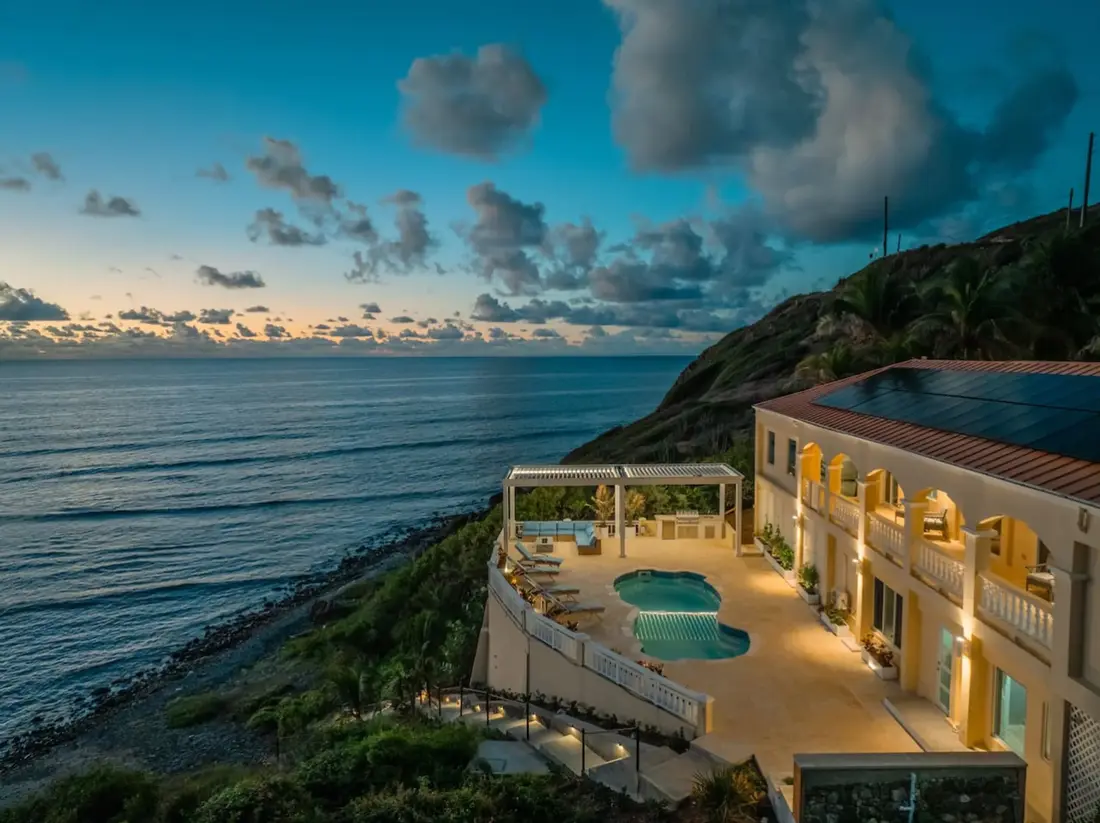
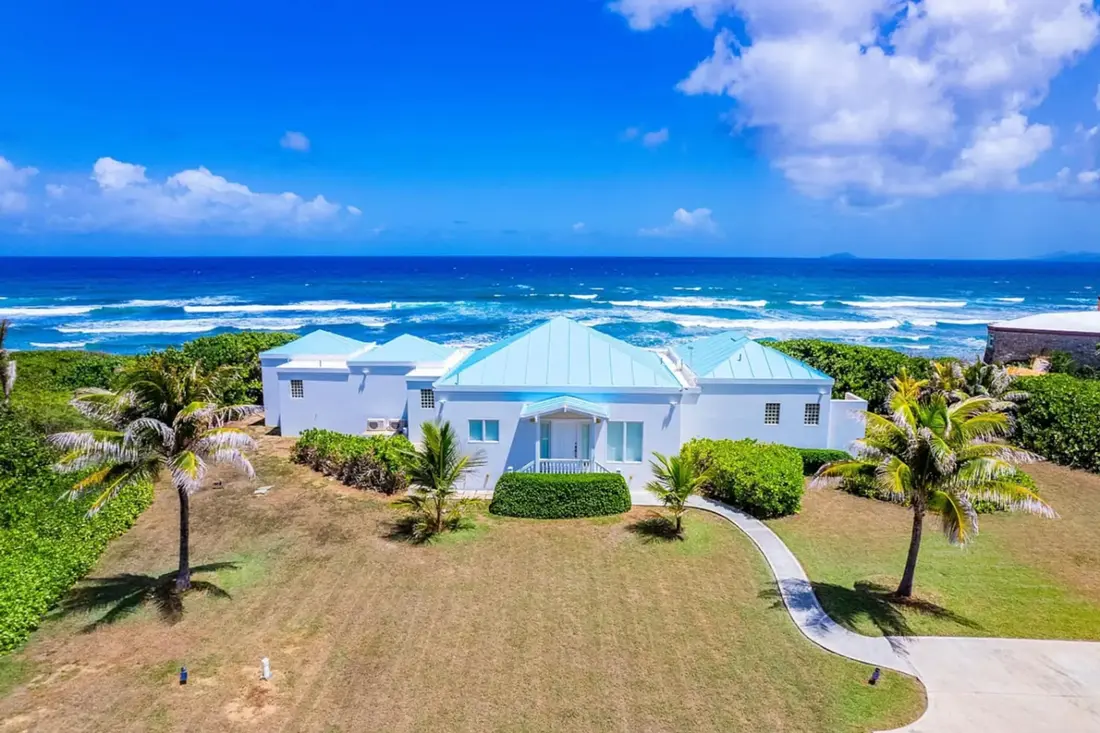
Because the whole appeal of September is the empty island, it favors a home you can sink into for a week. The light fall wind keeps even the exposed East End calm, so The Cerulean, set on its own East End sand within sight of Buck Island, works as a base for the warm-water dive days and the Saturday drive to Sandy Point. Shoy's Beach House puts you on a gentle swimming beach minutes from Christiansted, near whichever kitchens are keeping September hours. Over on the sheltered coast, Sunset Sea-Clusion takes the west end by Frederiksted, the one nearest the sunset and the calmest evening water. The beachfront collection has more open weeks in September than in any other stretch of the year, and since we live here, we can tell you how your particular September week tends to go, storms and all. Ask before you commit.
Sources
Written from official and first-party sources, checked August 2026. Hours, prices and event dates change — confirm before you go.
In this guide
Stay nearby
On The Shoys beach: six bedrooms, six baths, pool and hot tub, room for twelve, and the beach through the back garden.
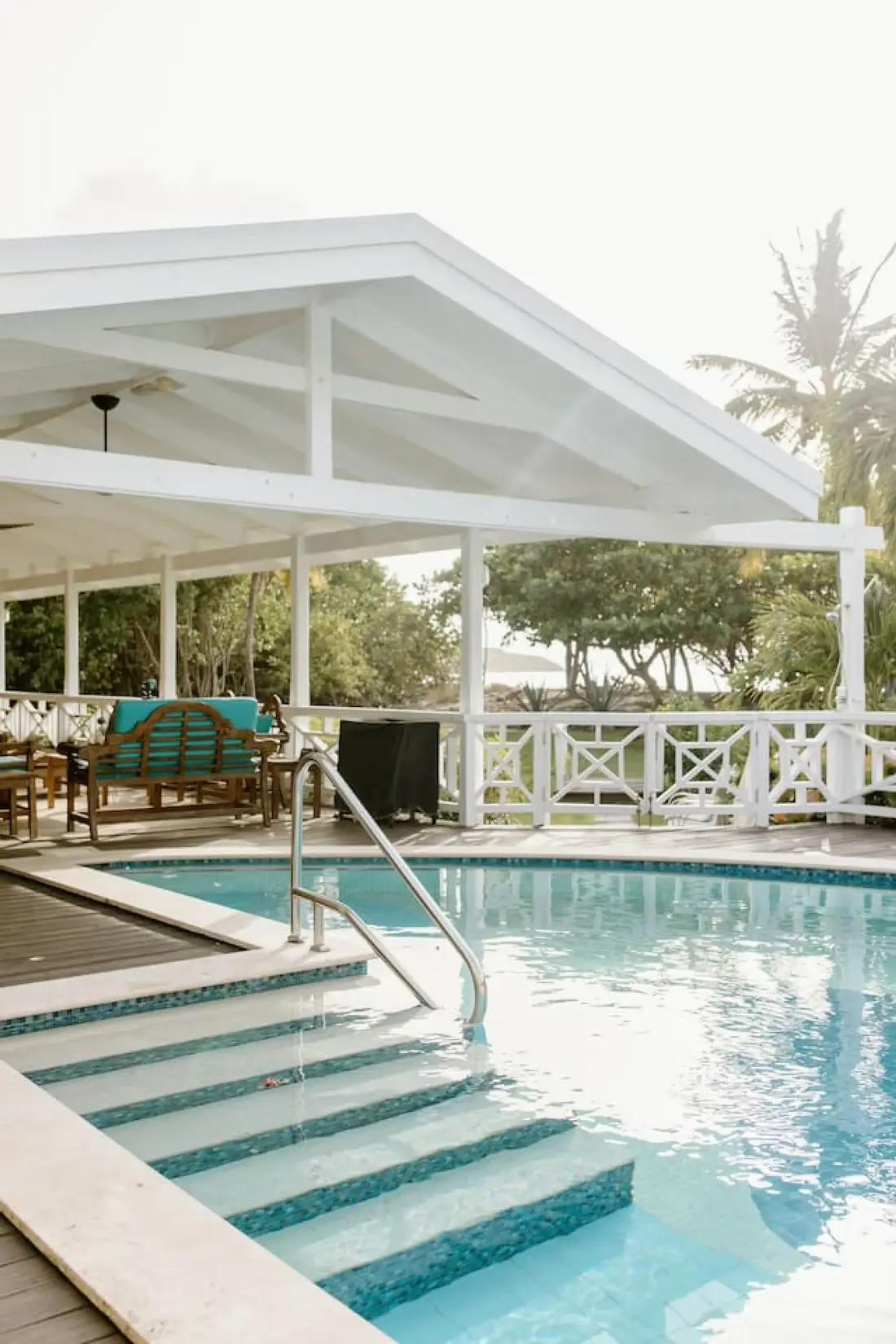 Shoy's Beach House6 bd · 6 ba · sleeps 12 · Christiansted
More in Month by Month
Sources
9 references, listed in full at the end of this guide — official park, refuge, tourism-board and business sources, checked August 2026.