St. Croix in October
Still green and quiet, with the reef at its warmest and the festival year starting to stir.
October is the deep end of the green season on St. Croix: the sea sits at or beside its yearly warmest, near 85°F, the hills are as green as the calendar makes them after months of rain, and the island runs close to its quietest and cheapest. It is also the back half of the wet season and the closing weeks of the hurricane calendar, so it asks a little flexibility in return for the year's lowest rates and its emptiest beaches. This page is the October-specific reference: the month's climate normals, why the rain and the humidity peak now, the water and the diving, where Sandy Point and the turtles stand, the two events that anchor the month, and how to book. To weigh October against every other month, read the best-time-to-visit essay; for how island weather works in general, the weather guide explains how the trade winds and rain cells work.
October temperatures and rainfall
The long-term federal averages paint October. The NOAA 1991 to 2020 record for Henry E. Rohlsen Airport puts the average daily high at 88°F and the average low at 76°F, one degree below September and one above November. The calendar has begun its slow slide off the summer peak, but only just, and nights in the mid-to-upper 70s remain the rule. What sets an October day apart from a January one is not the thermometer, which moves only a few degrees across the whole year, but the air. October sits in the muggiest stretch of the calendar, and it is the humidity, not the heat, that a winter regular notices first.
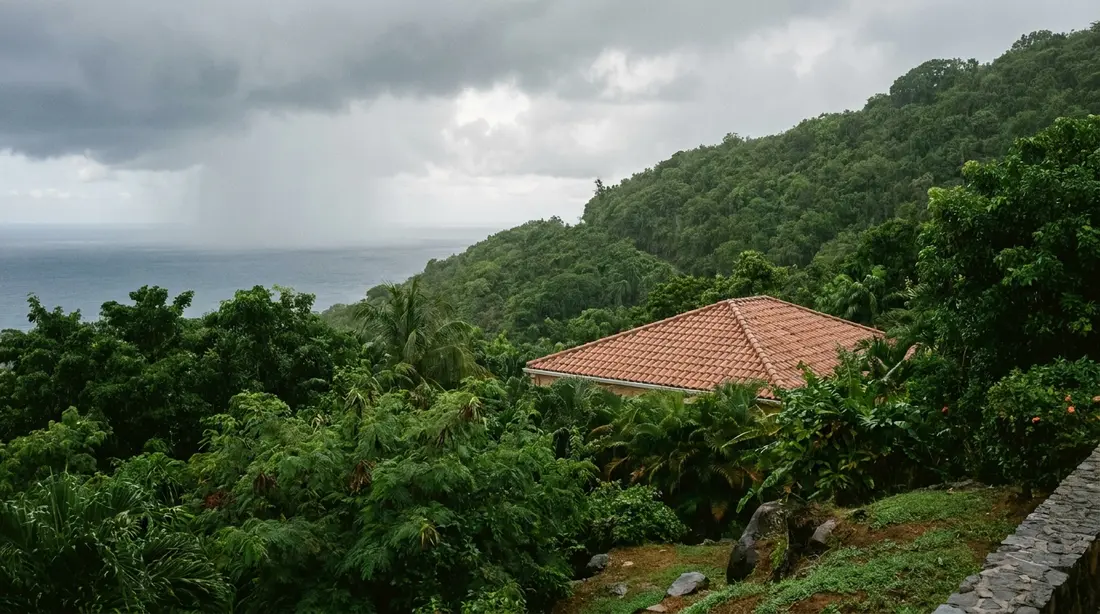
Rain is the number that defines the month. On the long-term normal, October averages close to five inches, which places it inside the September-to-November run that delivers roughly two-fifths of the island's yearly rainfall — the wettest quarter of the year, and a real step up from a dry-season month that can pass under two inches. The important qualifier is how the rain is delivered. Even in the wet months most of it still comes as brief trade-wind showers rather than all-day gray, and WeatherSpark's climatology puts the chance of a wet day in October at about one in four. The higher totals owe more to the organized systems — tropical waves, and the occasional distant storm — that are likelier now than at any other time of year. How island rain behaves in general, and why an eighty-percent forecast here seldom means a washed-out day, is the subject of the weather guide.
The sea is the month's headline. Water around St. Croix warms all summer and tops out at the end of the heating season, and October holds right at that peak: the long-term station record puts the average October sea temperature near 85°F, effectively tied with September for the warmest water of the year. Nobody reaches for a wetsuit in October for warmth, and even divers logging long bottom time are comfortable in a skin or a shorty. Here is how the late-season stretch compares, figure by figure:
| Month | Avg high | Avg low | Sea temp | Avg rain |
|---|---|---|---|---|
| September | 89°F | 77°F | ~85°F | 4.9 in |
| October | 88°F | 76°F | ~85°F | 5.0 in |
| November | 87°F | 74°F | ~84°F | 5.3 in |
Read down the columns and the story is the rain column holding high while the calendar edges toward winter: the readings ease a degree a month, the nights begin to cool, and the rainfall stays near its yearly ceiling. October is the middle of that transition, still fully summer in the water and the air, with the first hint of the coming season only in the shorter days — daylight runs about eleven hours and fifty minutes at the start of the month and about eleven and a half by the end. The full twelve-month version of this table lives in the best-time-to-visit essay.
Humidity, wind, and the feel of the month
October air is thick. The island's dew point, the cleanest gauge of how sticky the air feels, runs near its yearly high in early fall, up around 75°F, and WeatherSpark's summary keeps the muggiest conditions in place through essentially the entire month. In plain terms, a still October afternoon feels warmer than the 88 on the screen, and a midday walk earns a change of shirt. The remedy is the one residents use: take the outdoors in the morning and the late afternoon, leave the hottest hours for the water, a shaded gallery, or the villa pool, and keep water close.
The wind, by contrast, is at its gentlest. October falls in the calmest stretch of the island's year, when the brisk winter trades are still two months off and the summer flow has gone soft; the average breeze sits around twelve miles an hour, and often less at dawn. That slack air is why October mornings so often lie glassy, one after another, and it is the single best thing the month does for anyone who wants to be on or under the water. It also means the cooling the trade wind normally supplies is thinner now, which is the other half of why the humidity registers the way it does. A light layer earns no space in an October bag; a second swimsuit and extra reef-safe sunscreen do. A complete what-to-bring rundown lives in the packing guide.
The storm-season caveat
October is the last month that carries a genuine storm watch: Atlantic hurricane season runs until November 30, but the climatology shows activity falling off after about the middle of the month, so the first half sits inside the active window and the second half eases toward the quiet tail. This is a managed risk rather than a reason to stay home — systems are forecast days out, most seasons bring nothing worse than a wet, breezy afternoon, and the real odds, the booking rules, and the single insurance deadline are laid out in full in the hurricane season guide. The one-line version: put a policy in place the day you book, before any system has a name.

October, the deepest-value month
If price and elbow room drive the decision, October makes the strongest case on the St. Croix calendar. This is the bottom of the rate year: villa nightly rates sit at or near their lowest, the houses that need half a year's notice in February have open weeks a few weeks out, and the whole apparatus of a busy island — restaurant tables, dive-boat seats, rental cars — has slack in it. Occupancy runs thin, which changes the texture of a trip. You pull into Cane Bay on a weekday and park anywhere; the sand at Rainbow has a handful of people on it; the dive boat heads out with room to stretch. For a certain traveler that emptiness is the entire point, and October delivers more of it than almost any month.
The trade is the one named above: this is green-season weather in the closing weeks of the storm calendar, so the value comes bundled with a little rain, a lot of humidity, and the flexibility-and-insurance habit that every trip between June and November should carry. Handled at booking time, that trade is cheap — the price is a single insurance premium and some give in your plans — and it buys the emptiest, greenest, warmest-water version of the island there is. The neighboring month pushes the same argument a notch further: September is statistically the quietest and rainiest month of all, and the deepest discount, if you want the value case at its edge. The long-form version of the green-season argument — the space, the light, the open villa calendars — is in the best-time-to-visit essay.
What is on in October
October is a shoulder in the events year. The summer's big food festivals are done, the winter's carnival and gallery season have not started, and the island runs on a lighter calendar than at almost any other time. Two things anchor the month, and both are worth planning a day around.
Virgin Islands–Puerto Rico Friendship Day is the fixture. It is a territorial public holiday held on the second Monday of October — the same day the mainland marks Indigenous Peoples' Day — honoring the deep ties between the two territories, and in particular the Puerto Rican families who came to St. Croix for work through the last century and shaped the island's food, music, and surnames. The centerpiece is the VI/PR Friendship Village on St. Croix, a multi-day fair of Puerto Rican and Crucian food, live music, and cultural performance that runs in the days around the holiday and folds into the tail of Hispanic Heritage Month. The legislature created the observance in 1964, and recent editions have run past their sixtieth year. The dates and the village program shift, so confirm the current year before you build around it.
Halloween closes the month, and it has grown into one of the livelier weeks of the fall. The concentration is in Gallows Bay, just outside Christiansted, where shops and businesses host an evening of trick-or-treating and a costume contest around October 31, with family trunk-or-treats and beachfront costume parties scattered across the island on the days either side. It is a local affair rather than a tourist production, which is much of its appeal.
Around those two, the calendar is thin but not bare. Rhythms at Sunset, the free concert on the Frederiksted waterfront, runs its October edition on the third Friday of the month, as it does most months. Leatherback Brewing in Kingshill has hosted a free outdoor movie night on the first Saturday. The arts center in Christiansted runs pottery and ceramics workshops through the fall, seasonal Halloween pieces among them. A Christiansted Jump Up, the downtown street party with mocko jumbies on stilts and the shops open late, sometimes lands in the fall, but its dates surface only a few weeks out, so glance at the local listings after you land instead of planning a trip around one. And the busy season is visible on the horizon: the gallery walks and the first big open-water swim race begin in November, and the carnival build-up starts in December, so an October visitor catches the island in its last quiet weeks. The month-by-month handoff continues in St. Croix in November.
The water in October
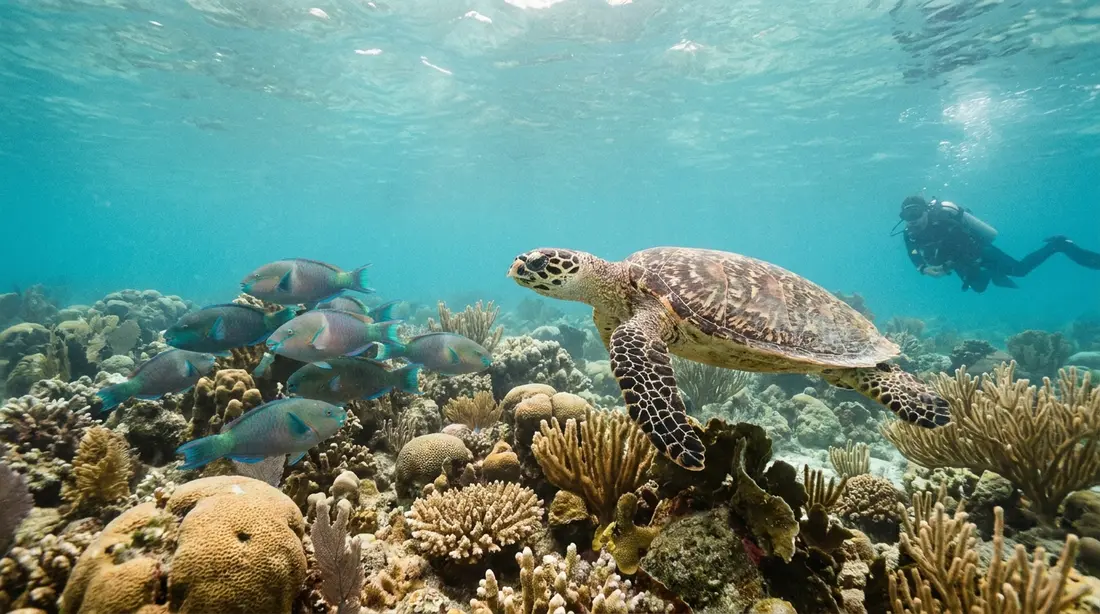
The water is the reason to come this month, and it comes with an asterisk. On the good side, everything lines up. The sea is at its warmest, near 85°F, so a long snorkel or a two-tank morning asks nothing of you; the light fall winds leave the surface calm far more often than the breezy winter does; and on a settled, rain-free stretch the visibility can be the sharpest you will get here all year, with nothing lifting sediment off the seabed and no runoff clouding the shallows. Days like that — flat, warm, and clear from the boat rail down — are what bring divers back to this month in particular.
The asterisk is variability. This is still the wet season, so a passing cell can drop heavy rain, and a hard downpour will cloud the nearshore water off the river mouths and guts for a day afterward. And because the tropics are still active, a hurricane tracking well out in the Atlantic can send a north swell onto Cane Bay and the north-shore beaches a couple of days afterward, with clear skies overhead, standing up surf where there usually is none. Neither is the norm, and both have the same answer the island always gives: if one coast is stirred up, another is calm. When a north swell is running, the sheltered west coast around Frederiksted lies flat; when a shower has just soaked the hills, wait a day or choose a beach away from the runoff. The general mechanics of swell, clarity, and reading the coasts are in the weather guide.
Diving and snorkeling this month
For divers, October is close to ideal, weather permitting. The warm water and the light winds open up sites that winter's chop can shut down. The Cane Bay Wall, the shore dive that drops off the north coast toward thousands of feet, is a morning-calm proposition and shows its best on the settled fall days October supplies in quantity. The Frederiksted Pier on the sheltered west coast dives in nearly any conditions and stands as the island's premier macro and night dive, its pilings crawling with seahorses, frogfish, and octopus. The Salt River canyon walls and the Butler Bay wrecks round out a dive week. Water this warm means most divers skip the wetsuit or wear the thinnest one; the dive shops match you with gear and read the morning's water for you at the desk, and the full rundown is in the scuba diving guide.
Snorkelers get the same warm, often-flat water. The calm mornings are the window, and the sheltered entries on the west end and in the East End's protected bays are the dependable choices when a swell or a breeze is working the exposed coasts; the snorkeling guide sorts the spots by exposure. Boat trips to Buck Island and its marked underwater trail run through the fall, and the light October winds make for an easy crossing on most days — reserve them for early in your week, so a rare washed-out day still leaves time to rebook. And for getting onto the flat water under your own power, the paddleboarding is as good as it gets in the year's calmest wind.
The bioluminescent bay after dark
Salt River holds one of the few bays in the world that glows the year round, and October is a fine month to paddle it, because the fall nights come on early and the moon does the choosing. The plankton show brightest on the darkest nights, so a tour timed to the days around the new moon, well away from a full one, gives the best odds; the glow varies, and no operator can promise a given night's brightness. The clear-bottom and pedal-drive kayak trips launch after sunset from the river; the details and the moon-calendar advice are in the bio bay guide.
Sandy Point and the turtles in October
October is one of the first full months you can walk Sandy Point again. The refuge on the island's southwest tip — two miles of undeveloped sand, set aside because it hosts the largest leatherback nesting beach under United States jurisdiction — is shut to the public through the summer nesting months and swings back open for the cool season on the first of September, on a weekends-only schedule. Through October that means Saturday and Sunday, gate up at 10 in the morning and down at 4 in the afternoon, and nothing on weekdays. A weekend walk buys you one of the widest, emptiest beaches in the territory; the drive, the gate, and the rules are covered in the Sandy Point guide.
What you will not see in October is a nesting turtle. Leatherbacks nest here in the spring, roughly March into July, which is the reason the beach closes from April through August; by October the nesting is long over, and the last hatchlings from the summer's green and hawksbill nests are working their way to the sea, the tail end of a season that runs into the fall. Keep artificial light off any nesting beach after dark. The biology and the calendar sit on the leatherback page, and the three species and where to find them are in the sea turtles guide. In the water, turtles are a routine sight all year: green turtles are a common daytime presence over the Chenay Bay seagrass, on the calm East End, right through the fall.
The greenest the island gets
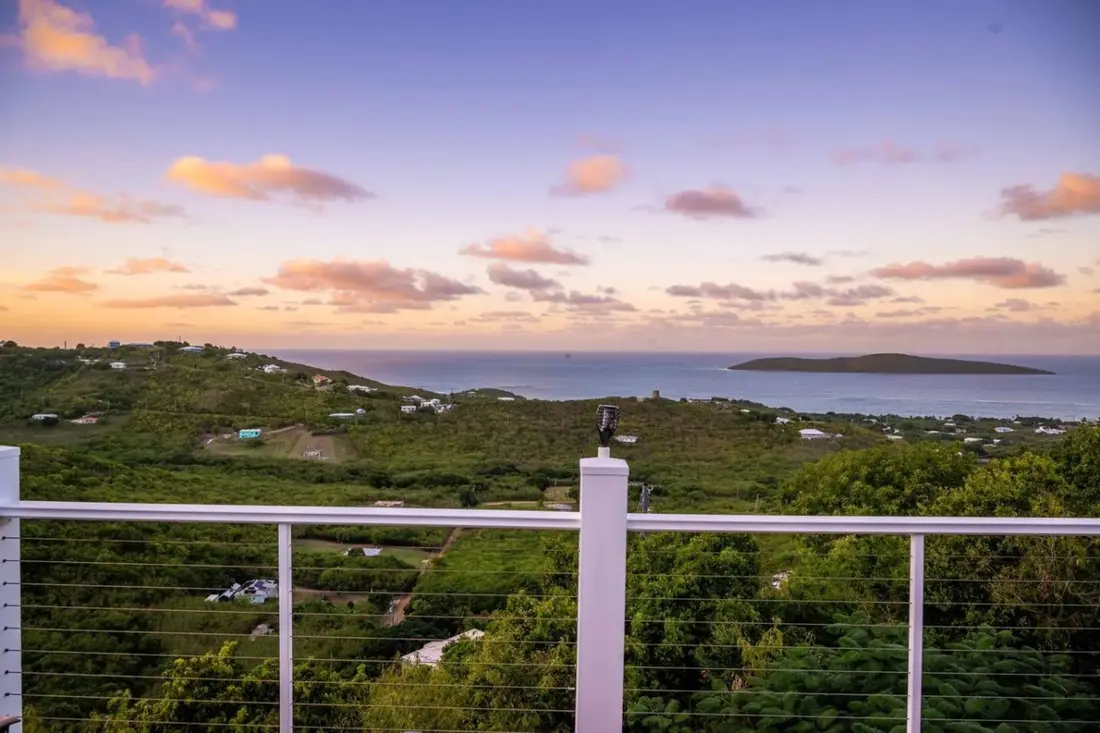
All the rain that makes October a hedge for beach days pays off on land. By now the hills have taken in a summer and early fall of it, and the island is at its greenest, the wet northwest corner where the rainforest grows deepest of all. This is the best stretch of the year to drive Mahogany Road under a closed green canopy, past the mahogany and kapok trees and the 1926 Creque Dam; the rainforest drive is a short, cool loop through the island's other landscape. Photographers get the year's richest color and softest light in the hour after a shower clears and the sun comes back through the wet leaves.
The rain feeds the hikes, too. The island's one natural waterfall, deep in the Caledonia rainforest on the northwest side, only runs after real rain, which makes the wet months its season; it is a guided, boots-wet outing, and no one should walk a rainforest gut with heavy rain falling or forecast, since they flash. The exposed ridge hikes on the drier East End ask the opposite — start early, before the humid heat builds. And the Annaly Bay tide pools stay a calm-seas-only walk in any month, October included. The full slate, with the cautions, is in the hiking guide; the reason one island grows both a rainforest and a cactus scrub is the subject of two landscapes, one island.
Who October is for
October rewards a specific traveler and disappoints another, and it is worth knowing which you are before you book.
It suits value travelers with flexible dates above all — the people who would rather have the lowest rates and a near-empty island than a reliably dry forecast, and who can roll with a rainy afternoon or, in the rare case, a shifted plan. It suits divers and snorkelers who can pick their days, because the warm, often-glassy water is the month's real luxury. It suits anyone chasing quiet: honeymooners, writers, long-stay guests, and photographers after the green hills and the storm light. And it suits people who simply cannot travel any other time; a family tied to a fall break can have a good week here with the booking habits below in place.
It is a poor fit for a traveler who needs certainty. If your trip cannot absorb a lost afternoon or a forecast scare, the dry, breezy weeks from December through April are the product you want instead. October is also thinner on the ground for events and for nonstop flights: the fall schedule is only starting to build, with American's daily Miami service the year-round anchor and San Juan the usual connection, and the first winter nonstops — United's Saturday Newark flight among them — not beginning until the very end of the month. Routes and seasons are kept current on the getting here page. For a side-by-side of what each month trades away, the best-time-to-visit essay lays out the year.
Booking an October trip
October is the easiest month of the year to book, and it needs the shortest lead time you will ever use here. Where a February house wants half a year's notice, an October week can often be put together a few weeks out with a first-choice home still open, which makes the month the best window on the calendar for a spur-of-the-moment escape. Rates are at the floor. The one exception to the ease has nothing to do with demand: it is the weather-and-storm flexibility every green-season booking should carry.
So the booking work for October is less about racing a calendar and more about building in give. Take out travel insurance the same day you reserve the house, and read its weather clauses; the deadline and the reasons are in the hurricane season guide. Favor a changeable fare when the difference in price is small, since the thinner October flight schedule leaves fewer easy rebookings if a day goes sideways. Keep the first and last days of the trip soft, with nothing critical riding on them. And book the rental car when you book the house — the island has no ride-hailing apps, and the sights sit a drive apart, so a car is essential in any season; the renting a car guide has the details. Then, if a gray afternoon does arrive, the island's indoor and covered options are deeper than most visitors expect, laid out in the rainy day plan.
October at a glance
| Measure | October on St. Croix (at last check) |
|---|---|
| Average high / low | 88°F / 76°F (NOAA 1991–2020, Rohlsen Airport) |
| Sea temperature | Near 85°F — at or beside the yearly peak |
| Average rainfall | About 5 in — among the three wettest months; mostly passing showers |
| Humidity | At its yearly peak; muggy most days |
| Wind | Lightest of the year; calm, glassy mornings |
| Crowds and prices | Among the quietest and cheapest weeks of the year |
| Hurricane season | Active window closes about mid-month; season ends Nov 30 |
| Flights | Miami daily plus San Juan connections; winter nonstops begin at month's end |
| Sandy Point refuge | Open Sat and Sun, 10 to 4 (reopened Sept 1) |
| Sea turtles | Nesting over; hatchlings winding down; turtles in the water year-round |
| Signature events | VI–PR Friendship Day (2nd Monday); Halloween week (Oct 31) |
| Best for | Value and flexible-date travelers, divers, quiet-seekers, photographers |
Questions guests ask
Is it safe to visit St. Croix in October?
Yes, with the ordinary green-season preparation. October falls inside hurricane season, and the first half of the month is still in the statistically active window, but a storm actually reaching the island is rare, and any system is forecast days ahead, which leaves plenty of time to adjust. The common experience of an October week is a warm, mostly sunny stretch broken by some passing showers. The way to travel worry-free is procedural rather than a matter of luck: take out travel insurance the day you book, and keep your plans a little flexible. The full picture — the odds, the alerts, and what happens if a storm is ever forecast for your dates — is in the hurricane season guide.
Does it rain the whole time in October?
No. October is one of the three wettest months on the record, close to five inches on the long-term normal, but the total is misleading on its own. Most of that rain still falls as brief showers that cross the island and move on, and even in the wet season the chance of any given day being a wet one runs only around one in four. What the wet-season total really reflects is the heavier rain the occasional tropical wave can drop, not day after day of gray. And island weather is local: a shower soaking the green northwest often means dry sky on the East End at the same hour, so driving out from under a cell is a real option here.
How warm is the ocean in October?
About as warm as it gets. The sea around St. Croix reaches its yearly high at the end of the summer heating season and holds there through October, averaging near 85°F. That is bath-warm water you can stay in for hours, and it is why most divers leave the wetsuit at home this month or wear only a thin one. The warmth is even part of the season's machinery: the same late-summer heat stored in the ocean is the fuel the tropical Atlantic draws on, which is one reason the storm calendar and the warmest-water calendar overlap. For swimming, snorkeling, and long dives, October water is the easiest of the year.
Is October a good month to dive or snorkel?
For many divers it is the best of the year, on the right day. The water is at its warmest and the fall winds are the lightest of any season, so the surface lies calm more often than not, and the visibility on a settled, dry stretch can be the sharpest here. The Cane Bay Wall and the north-shore sites open up on the calm mornings, and the Frederiksted Pier on the sheltered west coast dives in almost any weather. The one caveat is variability: a passing squall or a distant-storm swell can turn a coast rough or cloudy for a day, so you pick your days and your coast rather than assuming every one is perfect. Mornings are the calmest window.
Is Sandy Point open in October?
Yes, on weekends. After closing all summer for nesting, the Sandy Point refuge reopens for the cool season on September 1 and runs on a Saturday-and-Sunday schedule, gate open 10 to 4, with nothing on weekdays, so October weekends qualify. A visit buys you two miles of wide, near-empty sand on the island's southwest tip. You will not see a nesting leatherback, since that season ends in the summer, and by October the last hatchlings are nearly done reaching the sea. Bring water and sun cover; there are no facilities out there. The gate hours and the washboard access road are covered in the Sandy Point guide.
What is there to do in October?
Plenty on the water and the land, plus two events worth timing. Virgin Islands–Puerto Rico Friendship Day falls on the second Monday of the month, with a multi-day village of food, music, and culture on St. Croix around it, and Halloween closes October with a lively week centered on trick-or-treating and costume contests in Gallows Bay. Beyond those, October is a quiet stretch: a monthly waterfront concert in Frederiksted, the occasional Jump Up, and otherwise the island's year-round draws — diving, snorkeling, the rainforest at its greenest, Sandy Point weekends, and the bio bay after dark. The busier events season starts up in November, which leaves October as the island at its calmest.
How far ahead should I book an October trip?
Not far, which is one of the month's advantages. October carries the shortest booking windows of the year, and a trip put together a few weeks out will often still land a first-choice house at the lowest rates on the calendar. A good cancellation can open a good week at almost no notice. The one thing to do early rather than late is the protective paperwork: take out travel insurance the day you commit, favor a changeable fare, and reserve the rental car alongside the villa, since cars are essential and there is no ride-hailing on the island. Do the flexible-planning part at booking, and the short lead time is pure upside.
Where to stay in October
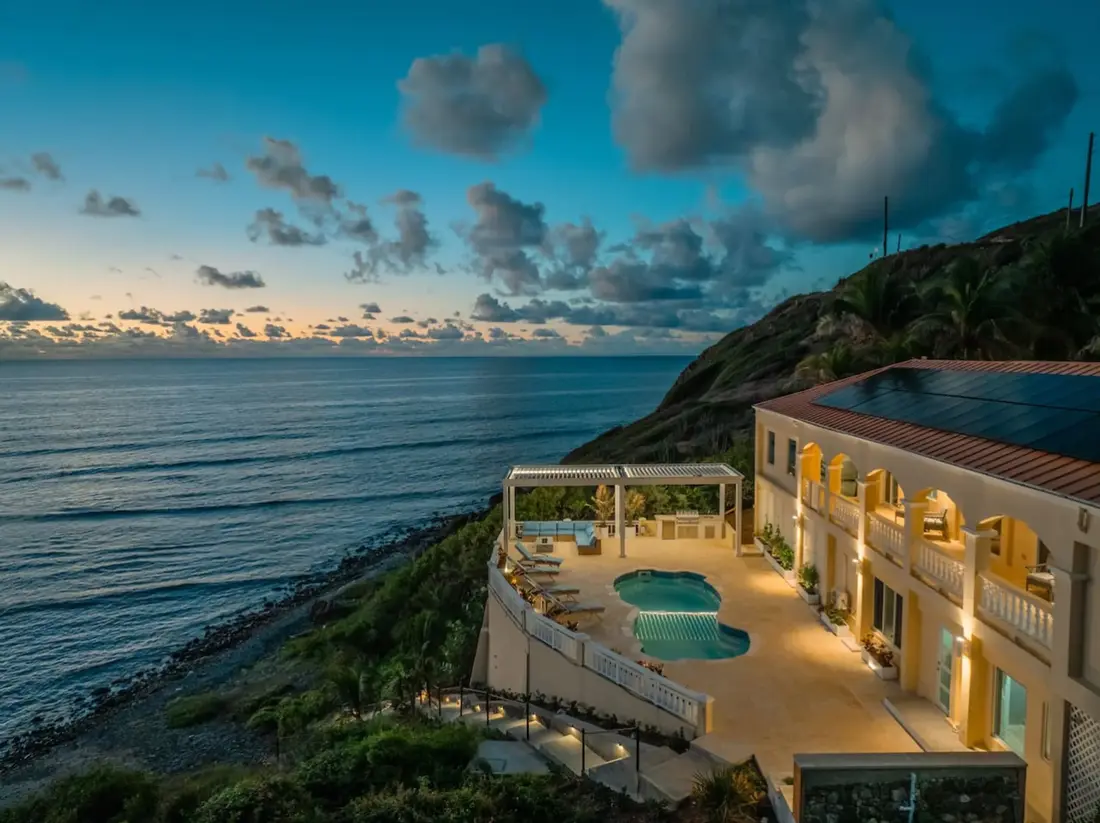
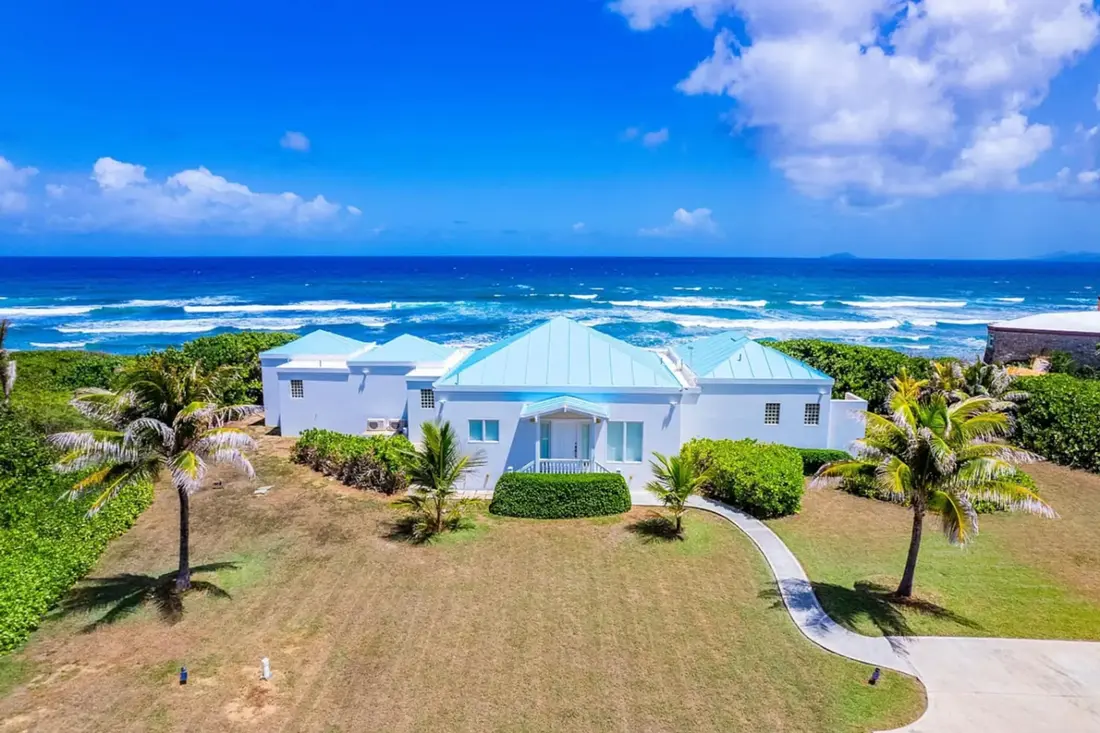
October's quiet is the whole point, so the month suits a house you can settle into. With the fall winds light, the exposed East End is comfortable and calm: The Cerulean, on its own East End beach across the water from Buck Island, makes an easy base for the warm-water diving and the weekend run out to Sandy Point. Shoy's Beach House sits on a calm swimming beach a few minutes from Christiansted and its restaurants, which have room to seat you this month. On the opposite shore, Sunset Sea-Clusion takes the leeward west end near Frederiksted, closest to the flat water and the evening sun. Availability is at its widest of the year across the beachfront collection, and because we live on the island, we can tell you exactly how your October week is likely to run, storm season and all. Just ask.
Sources
Written from official and first-party sources, checked August 2026. Hours, prices and event dates change — confirm before you go.
In this guide
Stay nearby
On The Shoys beach: six bedrooms, six baths, pool and hot tub, room for twelve, and the beach through the back garden.
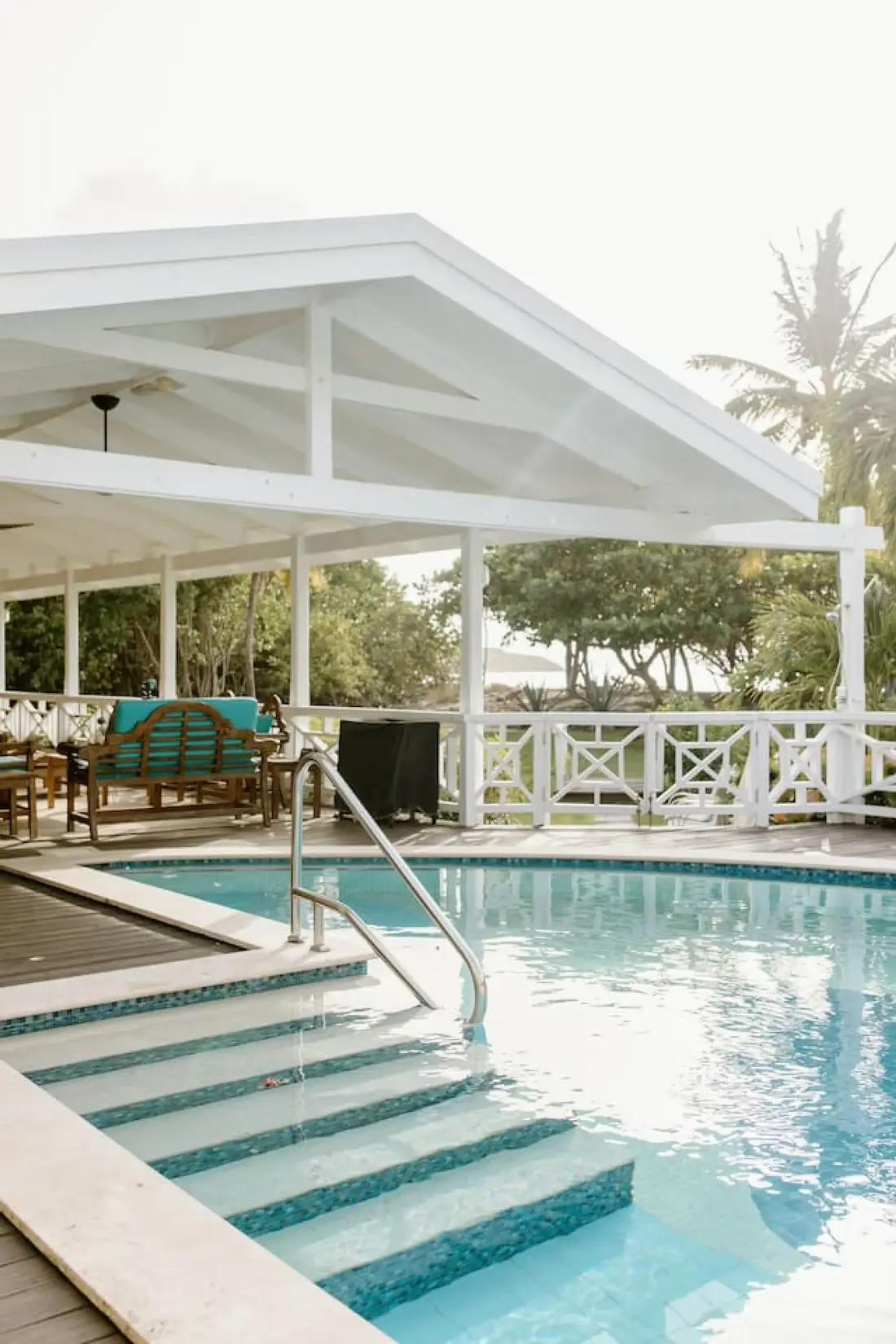 Shoy's Beach House6 bd · 6 ba · sleeps 12 · Christiansted
More in Month by Month
Sources
10 references, listed in full at the end of this guide — official park, refuge, tourism-board and business sources, checked August 2026.