St. Croix in June
A dry-ish lull inside the wet season, the start of hurricane season, and Taste of St. Croix's big night.
June is the quiet hinge of the St. Croix year. The winter crowds are gone, villa rates have stepped down, the sea has warmed to around 83°F, and the month sits in the driest pocket of the whole wet season, drier on the long record than the month before it or the month after. Hurricane season opens on the first, though the early weeks are among its calmest, and the island's food calendar puts two very different feasts a fortnight apart: the chef-driven Taste of St. Croix and the street-food Virgin Islands Paté Festival. This page is the June reference. It lays out the month's climate normals, the value-season math, the water, the turtles behind the closed refuge gate, the events with their dates, who the month suits, and what still needs booking ahead. If the real question is which of the twelve months to pick, our best-time-to-visit essay lines them all up; if it is how a St. Croix forecast actually reads on the ground, the weather guide takes the mechanics apart.
June's weather on the record
June is warm, bright, and drier than its place on the calendar suggests. Working from the 1991-to-2020 federal climate normals for Henry E. Rohlsen Airport, a typical June day tops out near 89°F and bottoms out near 77°F overnight, for a round-the-clock average close to 83°F. That reading puts June among the three or four warmest months of the year, a step up from the mid-80s of spring and level, within a degree, with the July and August heat that follows. The plain version: summer has arrived by June, but the worst of the humidity has not, so the days carry real warmth without yet feeling heavy.
The moisture is what separates a June afternoon from a February one, far more than the thermometer does. The dew point has begun its summer climb, the air holds more water than the dry winter carried, and a still, hazy stretch after noon can feel a few degrees warmer than the number on the screen reads. The trade wind is the counterweight. It comes out of the east and southeast most days and does the cooling that keeps an 89-degree reading comfortable, which is why so many older houses here were built to catch a cross-breeze rather than to seal it out. Set the month's figures in one place and June looks like this:
| June reading | Normal | June note |
|---|---|---|
| Daytime high | About 89°F | Among the year's warmest; level with July |
| Overnight low | About 77°F | Warm nights; bedrooms here run air conditioning |
| Round-the-clock mean | About 83°F | Summer warmth without the late-season mugginess |
| Sea temperature | About 83°F | Warming toward the September peak near 85°F |
| Monthly rainfall | About 1.9 in | The driest month of the wet season; brief showers |
| Trade winds | Light southeast | Seas easing from spring toward the summer calm |
Every figure in that table describes a comfortable beach month, and the one worth staring at is the rainfall, which gets its own section next because it is the least expected thing June does.
The June rainfall lull
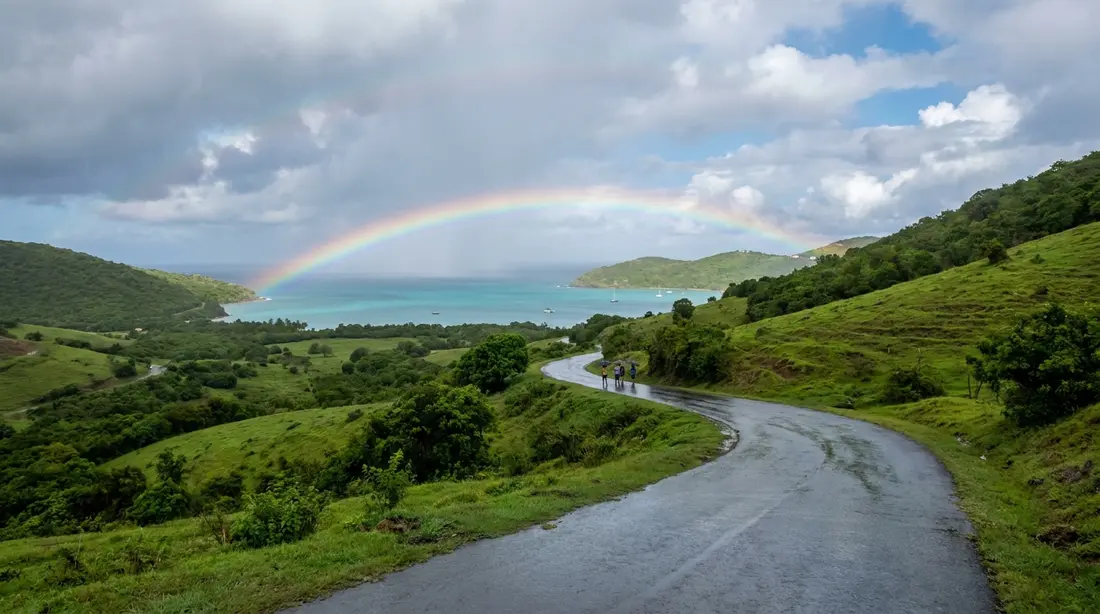
St. Croix runs a dry season from January to April and a wet season from May to December, and the tidy version of that split hides a real surprise sitting right at the start of the wet half: June is dry. On the long-term normal the month collects only about 1.9 inches of rain, which is the lowest total of any month in the entire May-to-December wet season and, on paper, as dry as January. It lands well under May, which averages closer to three and a half inches just weeks earlier, and under July behind it. Meteorologists describe the pattern as an early-summer break in the rains, a lull that settles over the northeastern Caribbean in June and July before the heavy tropical months arrive in late summer. For a traveler it means June often delivers dry-season weather odds at wet-season prices.
How the rain arrives matters as much as how much of it falls. June rain is almost always a trade-wind shower, a compact cell that rides in from the east, wets one stretch of coast for ten or fifteen minutes, and slides off to the west while the sun is already returning behind it. A lost afternoon is rare, and a lost day rarer still. Island geography adds its own hedge: the green hills of the northwest gather more rain than the airport gauge ever records, while the low, dry East End catches less, so a downpour drenching one side of the island often leaves the far side under clear sky. The full picture of how these showers form, and why an alarming rain percentage here so seldom means a washout, belongs to the weather guide.
When the value season begins
June is where the price of a St. Croix week comes off its winter high in earnest. The peak runs from the December holidays through April; once Easter and the last spring breaks clear out, the island slides into its quieter, cheaper half, and by June that shift is complete. Villa nightly rates run well under the winter numbers, houses that were booked half a year ahead for February sit open much closer to arrival, and the machinery of a busy island, from restaurant tables to dive-boat seats to the small rental fleet, loosens up again. None of that costs you the weather, which is the month's particular appeal: you get near-dry-season conditions at the softer rates of the off-peak calendar.
The timing suits families above all. June is the first month with schools out across most of the mainland, so it opens the summer-vacation window while the island is still uncrowded and the water is warming fast, and a big house for a multi-generation trip is far easier to land now than in the winter scramble. Couples and remote workers get the same math, more room and lower cost, without the midsummer heat at its peak. The one real caveat is the calendar itself, since June starts hurricane season, which the next section handles. For a month-by-month read on what each part of the year gives and gives up, the best-time-to-visit essay covers all twelve, and the month just before this one gets its own page in St. Croix in May.
Hurricane season opens June 1
Atlantic hurricane season officially begins on June 1, and the date sounds more ominous than the month earns. Its opening weeks rank among the calmest of the whole season on the long climate record: the year's first named storm, on average, does not appear until the month's back half, and it typically spins up well away from the northeastern Caribbean. The dry Saharan air that starts to haze June skies plays a part, since it tends to choke off young systems before they can organize. The stretch that warrants attention holds off until around mid-August.
The response is procedural, not anxious. Buy a travel-insurance policy the same day you reserve the villa, because coverage evaporates the moment a system earns a name, and choose a fare you can change when the upcharge is minor. With those two boxes ticked at the time of booking, a June week almost always plays out as a plain warm-weather vacation. The hurricane season guide spells out the rest: the odds by month, the insurance fine print, and the steps if a storm is ever aimed at your dates.
The first Saharan dust of the year
June is when the island's summer haze season starts up. Every few days through the warm months, a broad layer of dry, dusty air peels off the Sahara and travels the high-level winds westward over the Atlantic, and that traffic picks up around the middle of June, so the first pale skies and coppery sunsets of the year usually show in the month's second half. A dust day looks like softened distances and a whitened sky rather than any weather you feel, and it typically clears within a few days. Most guests register only the changed light; anyone with asthma or a respiratory condition should handle a heavy episode as they would any low-air-quality day back home, dialing back strenuous activity until the haze thins. The dust does the tropics a quiet favor too, since its dryness suppresses storm formation in the very early-season weeks it runs thickest. The full account of the Saharan Air Layer, and its odd tie to the storm calendar, sits in the weather guide.
The water in June
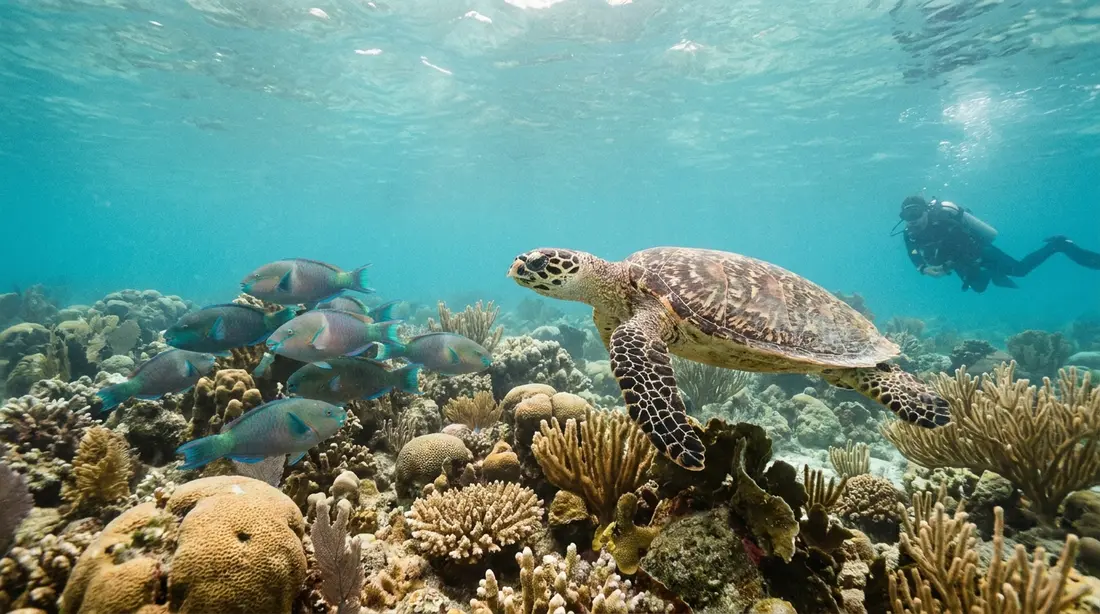
June is where the sea settles into its summer manners. The reinforced winter trades are long gone, the flow has backed into the southeast and dropped toward its gentle summer speed, and the chop that works the north and east coasts through the cool months keeps flattening week by week. The water is not yet at the glassy stillness of July and August, but June already hands you days the winter rarely offers, and at about 83°F it has warmed enough to stay in for hours without a thought. That combination, a settling sea and a warm one, makes the month a strong all-around stretch on the water.
It is a fine month to sail out to Buck Island for its marked snorkel trail, to take one of the catamaran day sails out of the Christiansted boardwalk or the Frederiksted waterfront, and to shore-dive the Frederiksted Pier, which stays workable on the lee side in most weather. Because the sea is warming and clearing, June also makes for an easy first snorkel, and the sheltered entries on the west end and in the protected East End bays are where a beginner should start; the snorkeling guide ranks the sites by how exposed they are. When a June morning falls calm, the north coast comes into play, and that is the window for the Salt River canyon dives and for the shore-dive at the Cane Bay Wall. The island's daily pattern holds all the same: the water is smoothest at sunrise and roughens as the wind wakes up toward midday, so grab the early hours for anything that needs a flat surface. After sundown, the Salt River bio bay lights up in every season, and its glow reads strongest on the moonless nights near the new moon, which is what a paddle should be timed against.
Sargassum in June
Sargassum, the brown seaweed that rides across the Caribbean in pulses, runs a season that takes in June, so it deserves a straight word. The amount that lands varies enormously between one year and the next, and even between weeks, and which shore you choose decides your experience far more than the month does. Carried on the easterly currents, the weed collects first along the exposed east and south coasts that face the open ocean; the beaches where most guests actually swim, along the north shore and the west end, lie in the wind shadow and stay clean on the great majority of days, and Buck Island tours work the calm lagoon inside the reef. Conditions turn over quickly, too, so a shore with a brown tideline at breakfast can be scoured clean by afternoon. Anyone traveling in a heavy year does best to get a current read on the sand from us a few days before the flight, instead of judging by an old photo, and to keep the calm west coast as a fallback. The territory issues monthly sargassum bulletins through the season, and the fuller coast-by-coast breakdown sits in the year-by-year best-time-to-visit essay.
Turtles in June
June is the turning point of the island's sea-turtle year, and it plays out on a beach no visitor can reach. The refuge at Sandy Point, a two-mile run of sand on the southwest tip and the leading leatherback nesting beach anywhere in the United States, takes no visitors during the nesting months: its gate stays locked from the first of April to the end of August, and weekend entry returns only on September 1, so a June drive there dead-ends at a closed gate.
Two things unfold on that closed sand at once in June. The leatherback nesting that crested in spring is winding down, with the last females still coming ashore to lay, while the earliest nests, laid back in March and April, complete their roughly two-month incubation and start to hatch. The research program tracks the shift: the Turtle Watch evenings move from spring nesting watches to hatching watches from about mid-June into July. Those guided nights, taken by reservation with the science crews, are the one lawful way onto the beach while it is closed, and they book up the moment dates post. Green and hawksbill turtles, meanwhile, are laying through the summer here and along Buck Island and the far East End coves, on a longer clock of their own. If standing on a nesting beach is the aim, grab a Turtle Watch slot as soon as it opens; the sea turtles guide runs through all three species. Keep any light off a nesting beach after dark. Turtles in the water need no permit whatsoever: green turtles crop the seagrass in the calm East End shallows off Chenay Bay and turn up on nearly every Buck Island run.
June's two food festivals
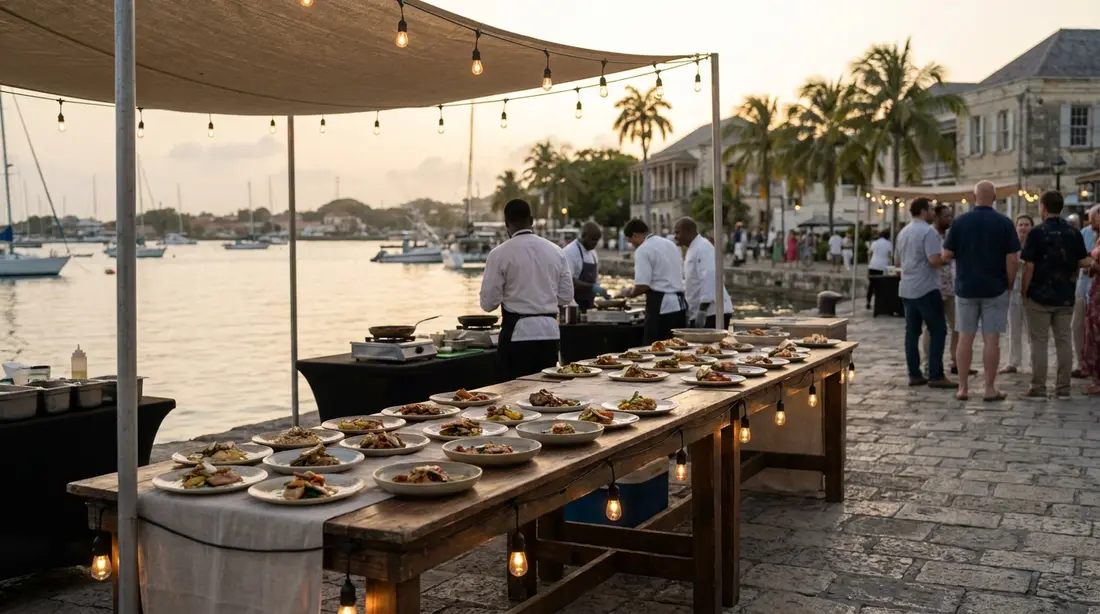
The island's food calendar gives June its biggest single events, and the two could not be more different. First comes Taste of St. Croix, the chef-and-restaurant tasting night that gathers the island's kitchens under one roof for an evening of small plates, drinks, and competition. Its 26th edition ran on June 11, 2026, at Divi Carina Bay on the East End; the event has drifted around the calendar in recent years, having once anchored an April food-festival week, so double-check the current date before you lock in a trip. Tickets are limited and tend to sell out ahead of the night, so buy early if it is on your list.
A fortnight later the island celebrates the other end of its cooking, and it may be the most Crucian day on the summer calendar. The Virgin Islands Paté Festival honors the fried, stuffed turnover that is the island's signature street food, and its fourth annual edition ran on Sunday, June 21, 2026, at the St. Croix Agricultural Fairgrounds. The day runs on a vendor competition for the best pate, live music, mocko jumbie stilt dancers, and family activities, with admission modest at around ten dollars for adults at last check. It is a single-day crash course in the dish and the culture around it, and it lands on a June Sunday each year, so check the date once the current program posts. The rest of the island's traditional plates, and where to find them the other fifty-one weeks of the year, sit in the Crucian food guide.
The rest of the June calendar
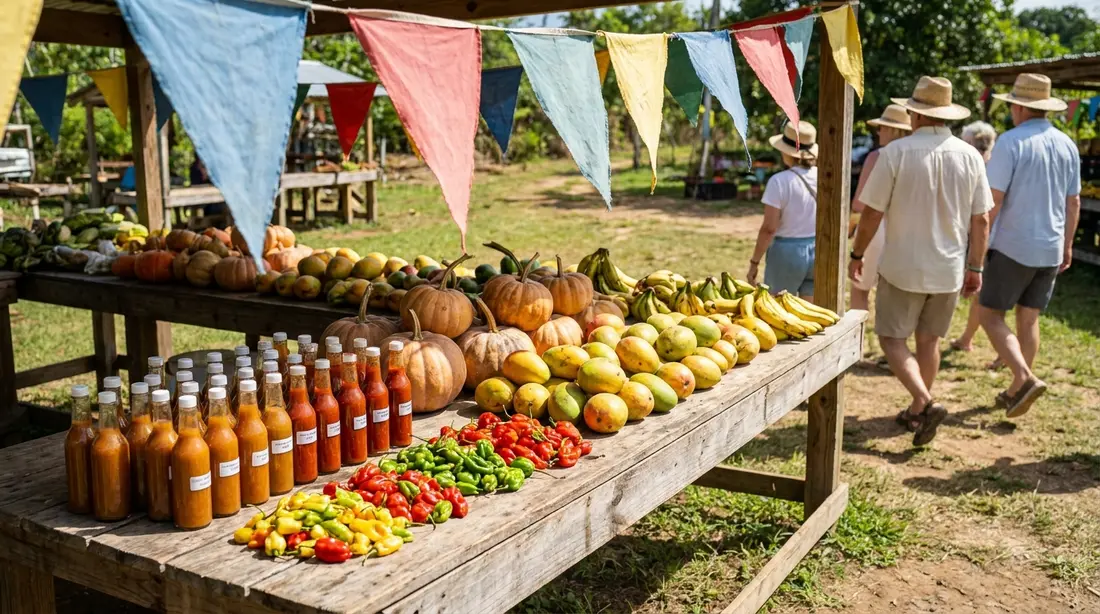
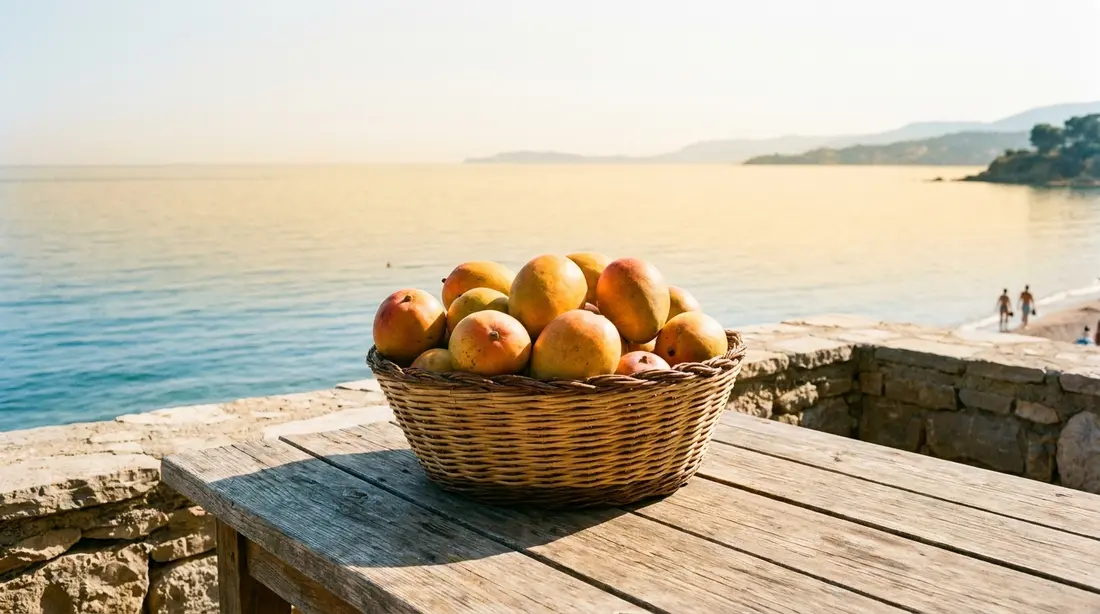
Around those two feasts, June keeps a lighter, more local calendar, and a few things are worth knowing. June is the start of mango season on St. Croix: the trees begin dropping fruit through the month, roadside stands start to appear, and the island builds toward the crest that arrives in July. The big mango event itself, Mango Melee at the botanical garden, is a July fixture rather than a June one, and it is covered in St. Croix in July. A downtown Jump Up in Christiansted, the evening street festival with stilt-walking mocko jumbies and shops trading late, has sometimes kicked off the summer in late May or June, but the dates land only a few weeks ahead, so scan the local calendar once you get here rather than planning around one.
Two calendar notes head off a common mix-up. The island's own Emancipation Day observances, marking the 1848 freedom proclamation read at Fort Frederik, fall on July 3, not in June, so that piece of the summer belongs to the July page. And the large carnival many summer travelers hear about, the St. John Celebration, happens on St. John, a separate island reached by way of St. Thomas. Its 2026 edition ran from June 14 through July 4, with the village nights in Cruz Bay opening in late June and the parade and fireworks closing it on Independence Day, so its build-up touches June while its main days sit in early July. It makes a long day trip from St. Croix rather than a local event; nothing of that scale takes place here in June.
Who June suits
June rewards a few travelers in particular. Families lead the list, because the month opens the summer-break window while the island is still quiet and cheap, the sea is warm and calming, and the big houses that fill fast in winter have room; the pace also suits young children, with warm shallow bays, the pool for the midday hours, and shaded festival grounds. The tips for traveling with kids on the island are gathered in the family guide. Value seekers are the second group, the travelers who want strong weather odds without the winter premium and are glad to trade a small storm-season caveat, handled at booking, for open calendars and softer rates.
Divers and snorkelers make up the third group. June's settling sea and warm, clearing water open up days the windy winter can spoil, and a diver who can pick calm mornings will find the north-shore wall and the Buck Island crossing at their friendliest. The month is a weaker fit for one kind of traveler: the one set on the dry, breezy crispness of a St. Croix winter, since June trades that steady trade-wind cool for warmer, stickier air and the opening of the storm calendar. Anyone whose heart is set on that dry winter crispness will be happier in the classic winter window from December through April, and the year's full set of trade-offs is spread out in our best-time-to-visit essay.
What to book for June
June turns the usual booking math on its head. The house is seldom the hard part to get this month, so many trips come together a few weeks to a couple of months ahead, where a winter booking might need most of a year; only the biggest homes over the earliest summer-break weeks tend to go sooner, as families converge on the same dates. The things that do run short are the ones with a set headcount. Taste of St. Croix releases a limited number of tickets that sell out before the evening, and the Paté Festival packs the fairground, so both pay off if you commit and turn up early. A Buck Island boat or a particular dive day can book full even in a slow month, especially on a festival weekend, so lock those down as soon as your plans firm up rather than waiting to arrive.
A rental car is all but essential here, since the island runs no rideshare apps, everything sits a drive apart, and traffic keeps to the left; reserve one alongside the villa, and the renting a car guide covers the particulars. If the Paté Festival or Taste of St. Croix is the reason for the trip, treat the weekend around it as the fixed point and build the rest of the week outward from there. And if the growing summer heat gives you pause, the two shoulders read a little differently: May is a touch cooler and greener as the green season opens, while July runs warmer and flatter on the water, with the storm-watch window still weeks off.
June at a glance
| Trip factor | How June runs on St. Croix |
|---|---|
| Crowds and rates | Thin crowds and low-season pricing; villa calendars with room |
| Headline events | Taste of St. Croix (June 11, 2026) and the Virgin Islands Paté Festival (June 21, 2026) |
| Rain | About 1.9 in, the wet season's driest month; quick showers, then sun |
| Daytime weather | Warm; highs around 89°F, humidity climbing but short of its late-summer peak |
| Sea | About 83°F and warming; seas easing toward the summer calm |
| Hurricane season | Opens June 1, but statistically one of its quietest stretches |
| Sandy Point refuge | Closed to the public (April 1 to August 31); Turtle Watch nights only |
| Turtles | Leatherback nesting ending and hatching starting; greens and hawksbills nesting |
| Best for | Families with kids out of school, value travelers, divers and snorkelers who pick calm days |
| Plan around | Festival tickets, the shut refuge gate, buying insurance at booking, early Saharan dust |
Questions guests ask
Is June a good time to visit St. Croix?
Yes, for a good many travelers. June marries near-dry-season weather with off-peak pricing: it is the driest month of the entire wet season on the long record, the sea has warmed to roughly 83°F, and winter's crowds and rates are gone. Families get the start of summer break on a still-quiet island, and divers get a settling sea. The single trade-off worth naming is that the month opens hurricane season, though its early weeks are statistically calm, which a policy bought at booking handles. Travelers who want winter's dry, breezy crispness are the exception and should book the December-to-April high season instead.
Does it rain a lot in June?
Less than almost anyone expects for a month inside the wet season. The long-term normal is only about 1.9 inches for all of June, which is the lowest total of any month from May through December and, on paper, as dry as January. Meteorologists call it the early-summer lull, a break in the rains before the heavy tropical months of late summer. The little that does fall usually comes as a fast trade-wind cell that dampens one stretch of the island and passes in minutes, and since the green northwest gathers more than the dry East End, a downpour on one coast frequently leaves another under sun.
How warm is the ocean in June?
Bath-warm and climbing. St. Croix's sea averages close to 83°F in June, up from the low-80s spring trough and on its way toward the late-summer peak near 85°F. That is warm enough to swim or snorkel for hours without a thought, and warm enough that most divers skip the wetsuit or slip on the thinnest skin. The water is also settling as the winter trade winds fade, so June often delivers calmer, clearer conditions than the breezy cool months, especially in the sheltered mornings and along the leeward west coast.
Is it safe to visit during hurricane season in June?
Yes, with the ordinary green-season preparation. Atlantic hurricane season opens June 1, but the early weeks are among the quietest on the climatological record, and any system that forms tends to keep well clear of the northeastern Caribbean; early summer's Saharan dust tends to hold storms back as well. A storm is forecast days ahead in any case, which leaves time to adjust. Traveling with peace of mind here is a matter of process, not luck: set up travel insurance the same afternoon you reserve the house, since a storm that already has a name can no longer be covered, and choose a fare you can change. The mechanics live in the hurricane season guide.
Can I see turtles at Sandy Point in June?
Not on your own. The Sandy Point refuge shuts to the public throughout the nesting months, April 1 to August 31, so a June visit meets a locked gate; weekend entry only returns on September 1. June is the busiest turnover of the turtle year on that sand, with the leatherback nesting tailing off and the first hatchlings breaking out, but a guided Turtle Watch evening with the science crews is the sole legal route onto the beach, and those book out fast. Turtles under the surface ask no permission at all: they are a routine daytime sight through the month over the Chenay Bay shallows and on Buck Island tours.
What is there to do in June?
A great deal, on the water and off it. Taste of St. Croix brings the island's chefs together for a tasting night in mid-June, and the Virgin Islands Paté Festival celebrates the island's signature street food at the fairgrounds later in the month. Beyond those, June's settling, warm sea makes it a strong month for Buck Island trips, day sails, pier diving, and a first snorkel, and the Salt River bio bay glows after dark year-round. Mango season is getting underway, and the island's beaches, rainforest drives, and historic towns are all open and uncrowded.
How far ahead should I book a June trip?
Not much lead time at all, which is part of June's appeal. The month falls in the island's calmer half, so a villa often comes together a month or two ahead with a real choice of houses still open, and rates sit well under the winter peak. What to arrange sooner: the biggest homes over the opening summer-break weeks, which families claim early, plus anything sold by the seat, festival tickets, a Buck Island boat, a set dive day. Book the rental car with the house, and arrange travel insurance the moment you commit money to the trip, the one piece of June planning that carries a hard deadline.
Villas for a June week
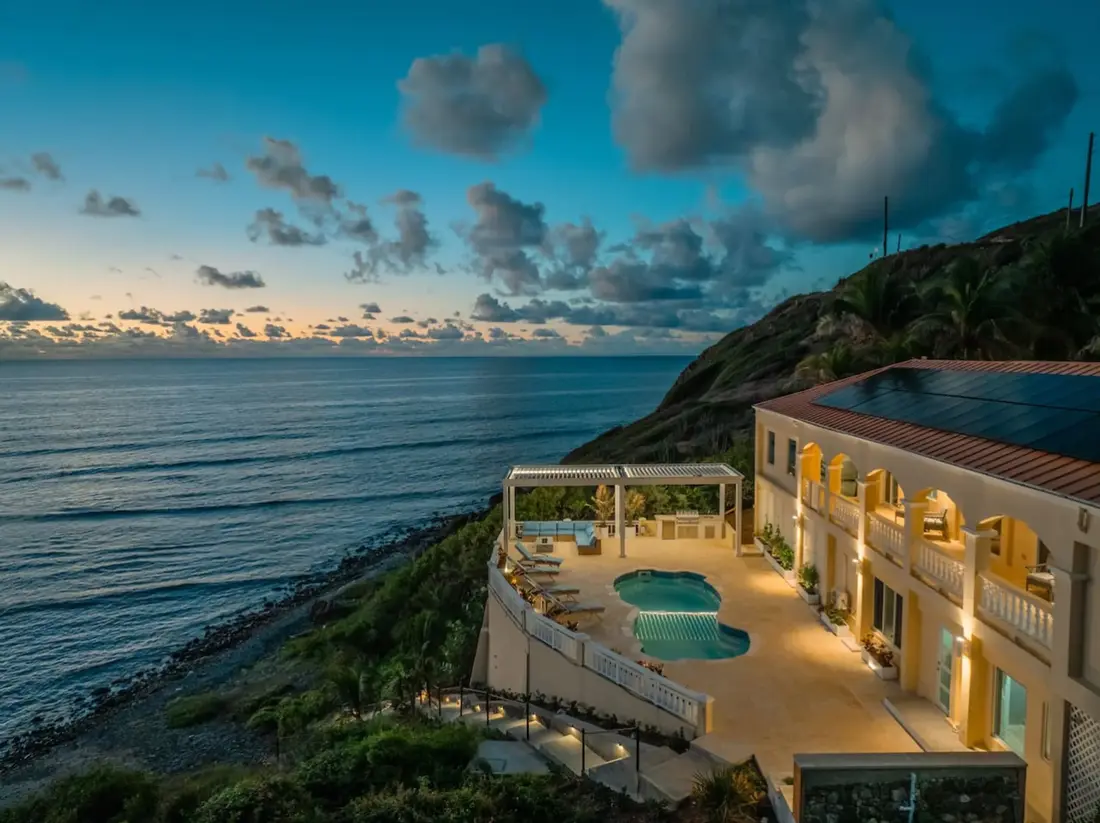
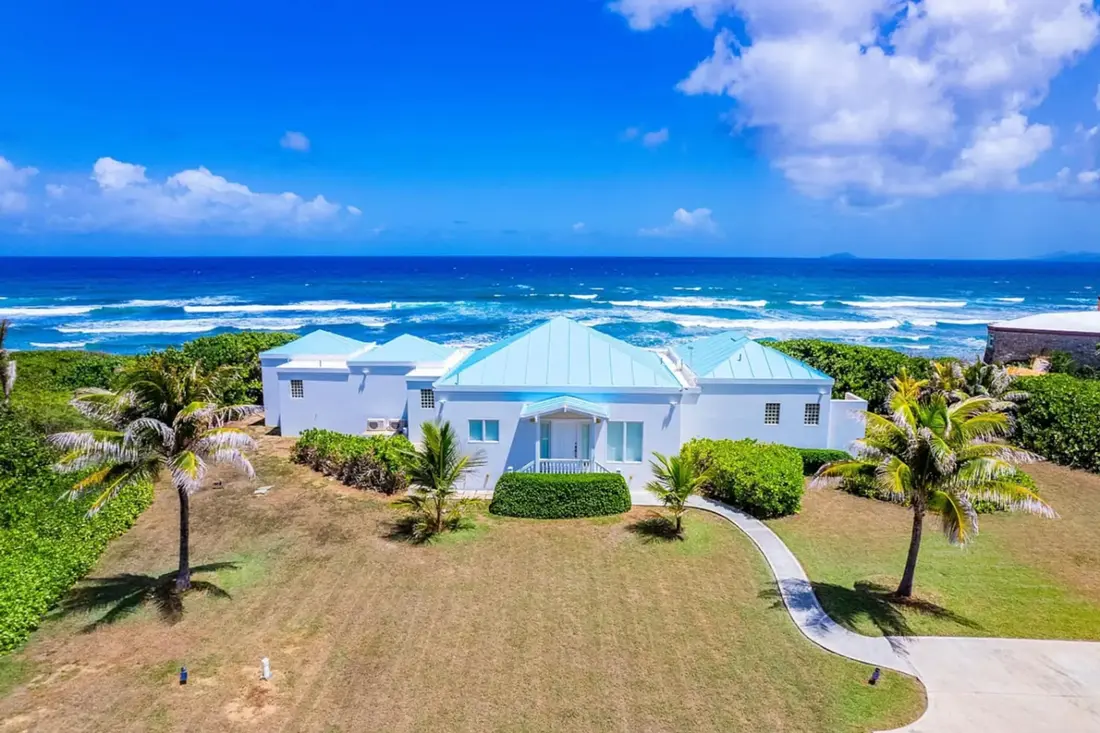
June rewards a house with a pool and a steady breeze, the two comforts that carry the warm middle of the day. The East End homes hold the island's driest, airiest corner and put the warming June sea a step from the door; The Cerulean, on its own strip of East End sand across from Buck Island, is a natural base for the calm-water diving and the boat days the month is built for. Shoy's Beach House hands a summer-break family a gentle, walkable beach a few minutes from Christiansted and its restaurants. Over on the sheltered west end near Frederiksted, Sunset Sea-Clusion sits nearest the flattest water and the evening sun. Across the beachfront collection, June has open weeks outside the two festival weekends, and since our team is based here on St. Croix, we can walk you through how any given week usually plays. Reach out; the calmer season means we can go through it with you in detail.
Sources
Written from official and first-party sources, checked August 2026. Hours, prices and event dates change — confirm before you go.
In this guide
Stay nearby
On The Shoys beach: six bedrooms, six baths, pool and hot tub, room for twelve, and the beach through the back garden.
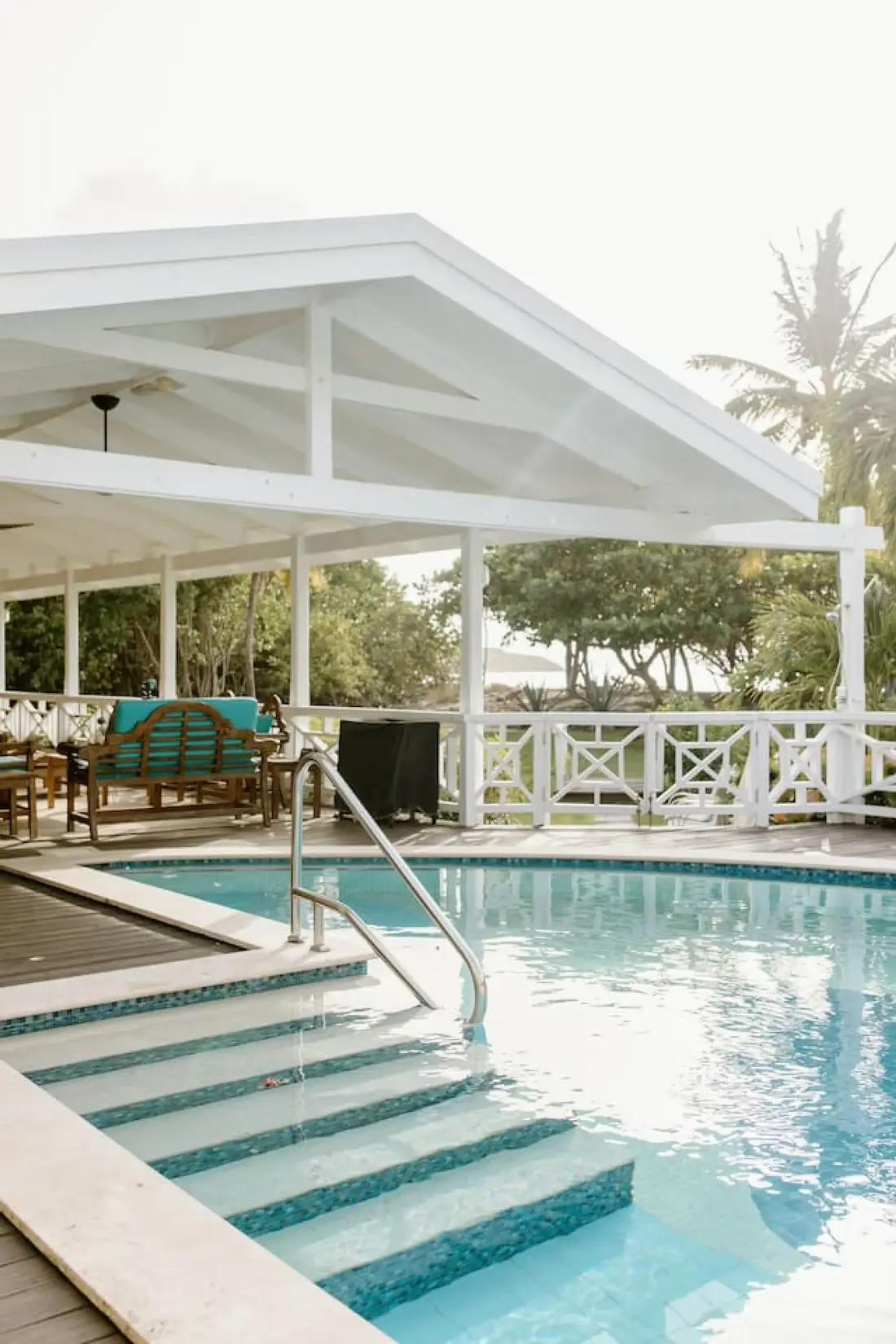 Shoy's Beach House6 bd · 6 ba · sleeps 12 · Christiansted
More in Month by Month
Sources
12 references, listed in full at the end of this guide — official park, refuge, tourism-board and business sources, checked August 2026.