Leatherbacks at Sandy Point
The largest leatherback nesting population under the U.S. flag comes ashore from about March to July on one protected beach.
The leatherback is the largest turtle alive, a reptile that can outweigh a grand piano, dive deeper than a sperm whale's average hunt, and keep its body warm in water cold enough to kill any other turtle. Every spring, some of them haul out of the Caribbean at night onto a two-mile beach on St. Croix's southwest corner. Sandy Point National Wildlife Refuge exists because of this animal, and no beach under U.S. jurisdiction hosts more nesting leatherbacks. This page is about the turtle itself: what it is, how it works, what forty years of counting at Sandy Point shows, and how a visitor can meet one without harming it. For the beach, its access rules and its research history, see the Sandy Point refuge guide.
The largest turtle alive
NOAA Fisheries puts a typical adult leatherback at 5 to 6 feet in length and 750 to 1,000 pounds. That already makes it far bigger than any other sea turtle; an adult green turtle, the next-largest species a St. Croix visitor is likely to see, usually weighs a few hundred pounds. The extreme end of the leatherback's range is stranger still. The biggest specimen on record, an adult male that washed up at Harlech in Wales in September 1988, weighed over 2,000 pounds and stretched roughly nine feet from nose to tail, with a flipper span close to nine feet as well; published figures for it vary slightly between sources, and the animal is preserved at the National Museum of Wales. Females nesting at Sandy Point are not that big, and they are still enormous, several hundred pounds of turtle moving up the sand on flippers built for open ocean.
Leatherbacks reach breeding age somewhere between 9 and 20 years old by NOAA's estimates, and how long they live after that is unknown; the species is hard to keep in captivity and hard to follow at sea, so lifespan estimates stay loose. What is certain is that an adult leatherback has outgrown almost every predator in the ocean. Orcas and large sharks take some; humans, through fishing gear and plastic, take far more.
The leathery carapace
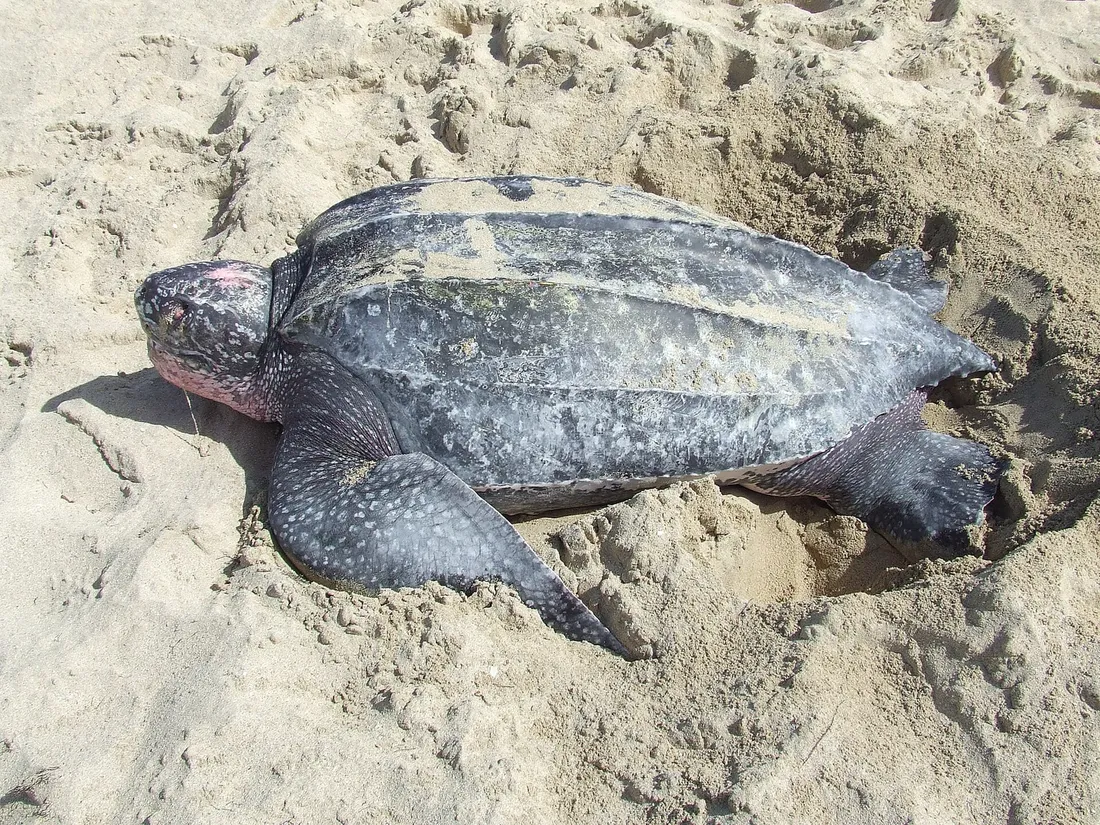
Every other sea turtle wears a hard carapace of fused bony plates covered in scutes. The leatherback carries something different: a flexible, rubbery back built from thousands of small interlocking dermal bones under dark, scale-free skin, with seven ridges running the length of the body like the strakes of a boat hull. The skin is black with pale spotting above and pinkish white below. The whole animal is shaped like a teardrop, and the design choices all point the same direction, toward deep, cold, open water. A rigid shell would resist the pressure of extreme depth; a flexible one gives. The ridges shed water cleanly on a body that swims basin-to-basin distances. This is a turtle whose lineage split from the hard-shelled families tens of millions of years ago, and it is the only member of its family left.
How deep it goes
NOAA Fisheries credits the leatherback with dives to roughly 4,000 feet, deeper than any other turtle, on breath-holds that can run up to 85 minutes. For scale, 4,000 feet is about twenty times the depth of the famous drop-off at the Cane Bay Wall. The turtle follows its food down: jellyfish and other gelatinous animals ride vertical currents and sink into deep scattering layers by day, and the leatherback commutes after them through cold and darkness that would shut down any reptile built the ordinary way.
How a reptile stays warm
The standard rule for reptiles is that body temperature tracks the surroundings. Leatherbacks break the rule without being warm-blooded in the mammal sense, and scientists coined a word for their method: gigantothermy. Research on the species, including a well-known study published in Nature in 1990, describes the system. A body that large has a small surface area relative to its volume, so heat leaks out slowly. A layer of insulating fat under the skin, unusual among living reptiles, slows the loss further. Countercurrent heat exchangers in the flippers, bundles of vessels where outgoing warm blood runs beside returning cold blood, keep the limbs from bleeding heat into the sea. Add the steady muscle heat of an animal that almost never stops swimming, and the result is a core temperature measured at around 25 degrees Celsius in water of 11 to 17 degrees. That budget lets leatherbacks feed in waters as far north as Atlantic Canada, latitudes no other sea turtle uses, and it is why the same individual can nest on a Caribbean beach in April and hunt jellyfish off Nova Scotia in August.
The plumbing turns out to be adjustable, too. A 2015 study in Biology Letters, based on juvenile leatherbacks recovered from fishery bycatch by NOAA observers, found the flipper heat exchangers can run in reverse: in tropical heat the same vessel architecture helps the animal dump excess warmth through its limbs instead of hoarding it. A nesting female at Sandy Point is a half-ton heat engine working hard in warm water and warmer sand, and overheating is as real a risk for her as chilling is for her cousins off Canada. One anatomy handles both problems.
Two smaller pieces of hardware round out the toolkit, and both are visible on a turtle watch. Like all sea turtles, leatherbacks drink seawater and unload the salt through large glands beside the eyes, which stream thick tears constantly; on the beach the secretions also flush sand from her eyes, and they are why every nesting female appears to weep through the whole performance. And on the crown of the head sits a pale pink spot, one per turtle and distinctive enough for photo identification, marking a thin window in the skull directly above the pineal gland; researchers hypothesize it works as a skylight, letting the brain read day length across featureless ocean and time the turn toward the tropics. On a nesting female the spot flushes vividly pink with the blood flow of hard work.
A diet of jellyfish
Nearly everything a leatherback eats is soft, watery and low in calories: jellyfish and salps, mostly. The mouth is built for exactly this. The jaw edges are sharp, with pointed cusps that grip slippery prey, and the throat is lined with backward-pointing spines called papillae that hold gelatinous food in place while the turtle expels seawater, so a swallowed jelly cannot slide back out. An animal this size running on jellyfish has to eat constantly and enormously, which is part of why leatherbacks range so widely; they follow blooms across whole ocean basins.
The diet also created the species' most avoidable modern threat. A drifting plastic bag looks and moves like a jellyfish, and a throat full of backward-pointing spines cannot reject one once it is swallowed. NOAA lists marine debris, including plastic bags, balloons, plastic fragments and fishing line, among the documented killers of this species. It is the reason beach cleanups and villa recycling habits connect directly to the animal in this guide, and the reason a bag that leaves a boat or blows off a beach on St. Croix has a real chance of ending up inside a turtle.
Where leatherbacks live
Leatherbacks swim in the Atlantic, Pacific and Indian Oceans, the widest distribution of any sea turtle. Genetics and tagging divide the species into regional populations; the turtles that nest on St. Croix belong to the Northwest Atlantic population, which nests from the southeastern United States through the Caribbean to the northern coast of South America and feeds across the North Atlantic. Within U.S. territory, most leatherback nesting happens in Florida, Puerto Rico and the U.S. Virgin Islands, which is what makes Sandy Point matter at a national scale: of the beaches America controls, this one records the most leatherback nesting activity, and it has been managed for that single purpose since the federal government bought the land in 1984.
Why this beach
A nesting leatherback needs what Sandy Point has and most beaches lack. The approach is deep water almost to the sand, with no fringing reef and no rock shelf, so a soft-bodied, half-ton animal can come ashore without grinding across coral. The strand is long, wide and dark, with no buildings and no artificial light behind it. The sand is deep enough for a meter-scale nest chamber. Females imprint on regions, and genetic work shows the St. Croix colony is a distinct piece of the wider Caribbean stock rather than an overflow from somewhere else. The refuge's job, in effect, is to keep those conditions exactly as the turtles found them, which is why the beach closes to the public from April 1 through August 31 every year and opens only on weekend days, 10 to 4, the rest of the year. The refuge guide covers that calendar, the gate, the rules and everything else about visiting.
Forty years of counting
Sandy Point's nesting record is one of the longest and most detailed for any leatherback colony in the world, and it tells an unvarnished story with a rise and a fall in it.
When systematic monitoring took hold in the early 1980s, fewer than 30 females nested in a typical season; a 1982 count recorded about 20. Protection and hands-on management followed: the refuge was established in 1984, patrols walked the beach nightly through each season, and nests laid in sand doomed to erode were moved to safer ground. It worked. A 2005 analysis in Biological Conservation, led by NOAA's Dr. Peter Dutton, documented the colony's growth to 186 nesting females by 2001, with annual hatchling production climbing from roughly 2,000 to more than 49,000, a twenty-fold increase, and adult female survival estimated at 89 percent. The authors credited the unglamorous work, relocating doomed nests and keeping people off the beach at night, for most of the gain. Through the mid-2000s Sandy Point was cited internationally as proof that leatherback declines could be reversed.
Then the curve bent. Growth stalled in the decade after 2001, fewer first-time nesters appeared in the tagging records, and a 20-year study published in Royal Society Open Science in 2017 documented declining hatching success at Sandy Point tied to climate variation. Recent seasons have run at a small fraction of the peak; in 2021, beach patrols recorded 98 leatherback nests laid by 27 individual females, numbers in the same range as the unprotected 1980s. The decline is not unique to St. Croix; nesting has fallen across much of the Northwest Atlantic over the same period, and researchers point offshore, to conditions and mortality at sea, rather than to anything failing on the beach itself. The plain summary is that Sandy Point solved the problems a beach can solve. The ocean-scale problems remain, the counts move year to year, and the patrols keep counting either way.
A nesting night
Nesting at Sandy Point runs from roughly March into July, entirely at night. What happens on the sand follows a sequence so consistent that researchers set their protocols by it.
The female arrives alone, most often around high tide. She surfaces in the shallows, often pausing as if checking the beach, then commits and crawls, dragging her full weight upslope with simultaneous sweeps of both front flippers. She stops above the high-tide line, clears a shallow depression for her body, then goes to work with her rear flippers alone, scooping out a bottle-shaped cavity in the damp sand, one flipper-load at a time, with a precision that seems impossible for limbs shaped like paddles. Into it she lays a clutch NOAA describes as approximately 100 billiard-ball-sized eggs; the last few dozen laid are smaller and yolkless, spacers whose exact function is still debated. While the eggs fall, she settles into the state watchers call a trance, breathing in deep sighs, undisturbed by red light and quiet observers, which is the window in which research teams read tags and take measurements. Then she packs the chamber, and spends long minutes flinging sand in every direction to blur the site's exact location, and drags herself back down the slope. By first light nothing remains except a track like a tractor's tread and a scrambled patch of beach.
She is not done. NOAA's figures have females re-nesting at 8-to-12-day intervals through the season, commonly 4 to 7 clutches in all, and then skipping 2 to 4 years before returning, recovering condition on distant feeding grounds in between. A single Sandy Point season, in other words, is the visible tip of a migratory cycle spanning thousands of miles.
Where she goes between clutches matters for the island. Satellite tracking of Northwest Atlantic females shows that during those 8-to-12-day gaps they generally stay in waters near the nesting beach rather than commuting anywhere distant, resting, thermoregulating and waiting out the next clutch's development. Around St. Croix that means gravid leatherbacks are cruising offshore of the island's south and west coasts through the whole spring, largely unseen. It also means local boat traffic, local longline gear and local plastic are not abstractions during nesting season; the strike or entanglement that removes one female removes every clutch she would ever have laid.
Eggs, temperature and sex
Incubation takes about two months. Like all sea turtles, leatherbacks have temperature-dependent sex determination: no chromosome decides whether an embryo becomes male or female, the warmth of the sand does, with cooler nests producing mostly males and warmer nests mostly females. Development succeeds only inside a band that research on the species puts at roughly 25 to 35 degrees Celsius; sand hotter than the upper bound kills embryos outright. This mechanism is why a warming climate appears on every threat list for the species, twice. Hotter beaches skew hatchling sex ratios toward females, and beaches hotter still produce fewer hatchlings at all, which is exactly the pattern the 20-year Sandy Point hatching study describes. It is also why nobody with a flashlight or a shovel belongs anywhere near the dry sand at Sandy Point from spring through fall.
The dash and the lost years
Around 60 days after laying, the hatchlings cut out of their shells, work upward through the sand as a group over a day or more, and wait just under the surface for the temperature drop that signals night. Then the nest erupts. Emergence in darkness is an anti-predator strategy, and speed is the other one: the hatchlings orient to the brightest horizon, which on a natural beach is the sea, and sprint for it. Leatherback hatchlings are noticeably bigger than other species' young and head straight for open water. Once swimming, they enter what biologists call a frenzy, a period of continuous swimming that runs for days on stored yolk, putting distance between themselves and the predator-thick shallows.
After that, the record mostly goes silent. Young sea turtles disappear into the open ocean for a span researchers have long called the lost years, up to a decade in which they are almost never observed; for leatherbacks, which never settle into coastal life the way greens and hawksbills do, the blank stretch is even harder to study. Survival through all of it is brutal arithmetic. The often-cited estimate is that roughly one hatchling in a thousand lives to adulthood, which is why a season of tens of thousands of Sandy Point hatchlings translates into only a handful of future nesting females, and why every single nest is treated as consequential.
Endangered status and threats
The leatherback has been listed as endangered under the Endangered Species Act since 1970, essentially as long as the law has existed. The listing was re-examined recently: in 2017 a fishing industry group petitioned to have the Northwest Atlantic population recognized as a distinct population segment and downlisted to threatened, and in August 2020 NOAA Fisheries and the U.S. Fish and Wildlife Service published their answer after a full status review. The agencies found that seven leatherback populations qualify as distinct, including the Northwest Atlantic, and that every one of them, the Northwest Atlantic included, still meets the definition of endangered. The global population has fallen about 40 percent over the past three generations, with the Pacific populations down 80 to 90 percent or worse.
The threat list, per NOAA, in rough order of weight:
- Fisheries bycatch — the primary threat worldwide. Leatherbacks drown or trail lethal injuries after entanglement in gillnets, longlines, trawls and the vertical buoy lines of pot fisheries.
- Harvest — killing of turtles and collection of eggs continues in parts of the species' range, though the U.S. Caribbean beaches are well protected today.
- Marine debris — swallowed plastic, above all bags mistaken for jellyfish.
- Vessel strikes — a major cause of death near ports and busy waterways.
- Loss of nesting beaches — coastal construction, artificial light and rising seas subtract dark, quiet sand from the map each year.
- Climate — hotter sand kills eggs and skews sex ratios, as covered above.
Set against that list, the logic of Sandy Point's rules gets easy to state: the refuge cannot fix longlines or plastic, so it makes the one contribution a beach can make, maximum output of hatchlings from every nest laid, with zero human interference. The seasonal closure protects incubating eggs from feet, holes, lights and dogs. The research program measures whether it is working. Both halves have run for four decades, and the story of that program, saturation tagging since 1977 and all, is told on the refuge page.
Leatherback numbers at a glance
| Measure | Figure (NOAA Fisheries, at last check) |
|---|---|
| Typical adult length | 5–6 ft |
| Typical adult weight | 750–1,000 lb |
| Largest recorded specimen | Over 2,000 lb (Wales, 1988; published figures vary) |
| Deepest recorded dives | About 4,000 ft |
| Longest dives | Up to 85 minutes |
| Eggs per clutch | About 100, part of them yolkless |
| Incubation | About 60 days |
| Interval between clutches | 8–12 days, several clutches per season |
| Years between nesting seasons | 2–4 |
| Age at maturity | Estimated 9–20 years |
| ESA status | Endangered, listed 1970, confirmed 2020 |
Seeing one legitimately
There is exactly one lawful way to stand near a nesting leatherback on St. Croix: a guided program at Sandy Point during the season the refuge is otherwise sealed. Spring Turtle Watch nights, run for decades by the St. Croix Environmental Association in cooperation with the refuge, take small reserved groups onto the dark beach with trained leaders and red light only, and the St. Croix Sea Turtle Project (stxturtles@gmail.com) handles research-season visit inquiries. Dates are limited, reservations are mandatory, and seasons sell out fast; the full how-to, including formats, timing and why some nights end without a turtle, is on our turtle watch page. Everything else, walking the closed beach at night, freelancing with a flashlight, following tracks, is a federal violation on a patrolled refuge and damaging besides.
The other two species
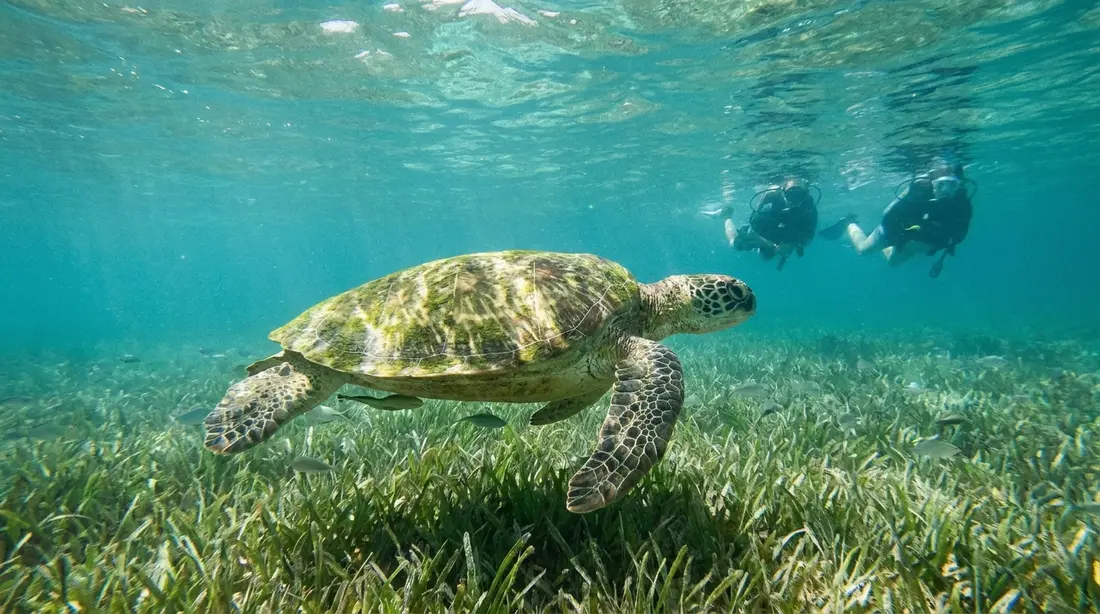
Leatherbacks are the rarest sighting on St. Croix; the island's greens and hawksbills are the everyday ones, and no closure applies to watching them swim. Green turtles graze the seagrass beds and are close to a sure sighting on an easy snorkel at Chenay Bay; the Buck Island lagoon produces sightings on most boat trips; and hawksbills work the reef structure at Jack and Isaac Bays, whose hike-in beaches are themselves protected nesting shores, along with Ha'penny on the south coast. The island-wide overview lives in sea turtles of St. Croix, and the rest of the animal kingdom in the wildlife guide.
| Species | Size class | Nests on STX | Nesting season | Easiest legitimate sighting |
|---|---|---|---|---|
| Leatherback | 750–1,000 lb typical | Sandy Point, mainly | Roughly March–July | Guided spring turtle watch, Sandy Point |
| Green | A few hundred pounds | Sandy Point, Buck Island, East End bays, Ha'penny | Summer into fall | Snorkeling the Chenay Bay seagrass, any day |
| Hawksbill | Roughly 100–150 lb | Buck Island, East End bays, Sandy Point | Summer into fall | Reef snorkeling at Buck Island or Jack and Isaac Bays |
If you encounter a turtle
The rules below apply on every beach and in all water around St. Croix, every month of the year. All three local species carry Endangered Species Act protection, and interference draws federal penalties.
- Never touch a turtle, in the water or on land, adult or hatchling. No riding, no steadying for photos, no helping a hatchling to the sea.
- Keep your distance and hold still. In the water, watch from several body lengths away, stay off to the side rather than above, and let the animal reach the surface to breathe. If it changes behavior because of you, you are too close.
- White light is the enemy at night. Lights on a nesting beach deter females and send hatchlings the wrong way. Red light, pointed down, sparingly, and only where a guide permits it.
- No flash photography near any turtle after dark.
- Leave tracks, nests and stakes alone, and fill in holes you dig on any south- or west-shore beach in season; a pit can trap a hatchling or turn a female back.
- Report, do not rescue. A stranded, injured or entangled turtle needs the Sea Turtle Project or refuge staff, whose contacts are in the turtle watch guide, and not a well-meaning lift back into the surf.
Questions guests ask
How big are the leatherbacks that nest at Sandy Point?
Nesting females typically run in the range NOAA gives for adults, 5 to 6 feet long and 750 to 1,000 pounds, big enough that a first sight of one on a dark beach reads as a boulder that moves. The record-book giants, like the one-ton male found in Wales in 1988, are outliers, and males never come ashore at all after hatching, so everything anyone sees on the sand is female. Watchers consistently report that photographs undersell the animal; the shock is physical scale plus the sound of a half-ton reptile breathing.
When is the best time to see a leatherback on St. Croix?
April and May, on a reserved turtle watch night, full stop. Nesting runs about March into July, and the organized programs concentrate in spring when activity is dependable enough to justify a group on the beach. Nothing about the rest of the calendar works: the refuge is closed at night year-round, closed entirely April through August, and by the September weekend reopening the season is effectively over. Book the moment dates are announced; recent seasons have filled immediately. Details are in the turtle watch guide.
Can I see hatchlings?
Only by luck or through the programs. Emergences happen mostly after dark, roughly 60 days behind each nest, so hatching runs from late spring well into fall; late-season nests are still emerging after the refuge reopens in September, and a weekend visitor occasionally witnesses a morning straggler. If that happens, watch from a distance, keep every light and camera flash off, never handle a hatchling, and let it finish the crawl itself; the walk to the water is part of how it orients. Report anything that seems stuck or off-course rather than intervening.
Are leatherbacks dangerous?
No. The animal eats jellyfish, has no teeth and no crushing beak, and pays no attention to people in the water beyond avoiding them. The danger runs entirely the other way, which is what the conduct rules protect. The only physical caution worth stating is the obvious one: on a nesting beach, stay clear of the flippers of a laying female, which throw heavy sand and could injure someone standing where no one should be standing anyway.
Why did the nesting numbers drop if the beach is protected?
Because the beach was never the whole problem. Protection raised Sandy Point's count from under 30 females to 186 between the early 1980s and 2001, and the decline since shows up across the whole Northwest Atlantic population, pointing at the ocean phase of the life cycle, bycatch in fishing gear, conditions on the feeding grounds and fewer young females surviving to recruit, plus falling hatching success on beaches as sand temperatures climb. Researchers keep tagging and counting each season at Sandy Point precisely so the trend stays measured rather than guessed.
How long do leatherbacks live?
Nobody can say precisely. NOAA states that lifespan is unknown, with maturity alone taking an estimated 9 to 20 years, and individual nesting histories at Sandy Point prove females return for decades after first breeding. The species does not survive in aquariums, so there is no captive benchmark, and tags outlast studies rather than turtles. Fifty years or more is a common working estimate, hedged accordingly.
Do the same turtles come back to Sandy Point?
Yes, and that fidelity is the foundation of the science. Females return to the same region, often the same few miles of sand, season after nesting season, typically with 2 to 4 years between visits. Sandy Point's tagging records track individual females across decades of returns, which is how the project can tell a shrinking population from an unlucky year: the veterans keep showing up while fewer new females join them.
Turtle season from a villa
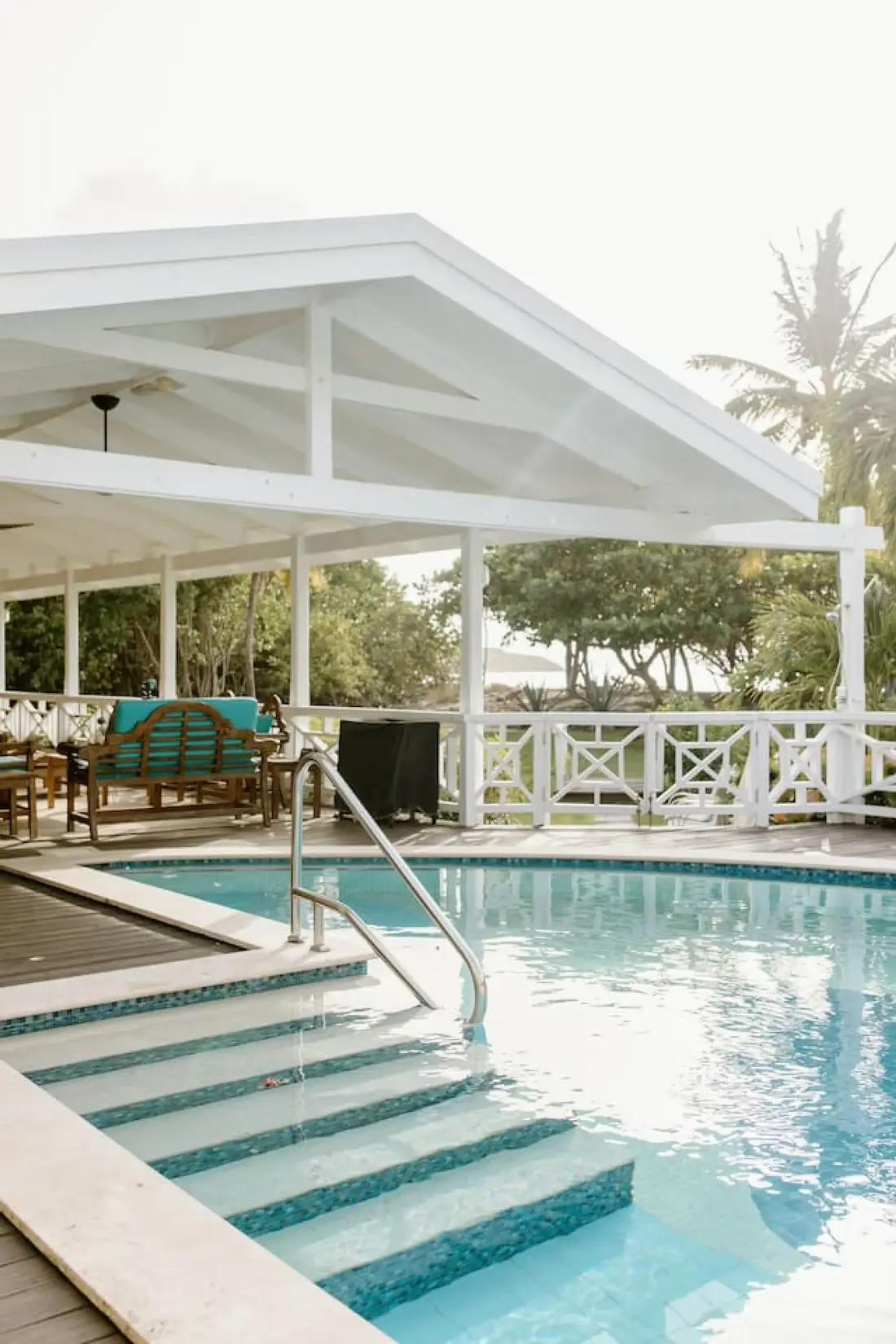
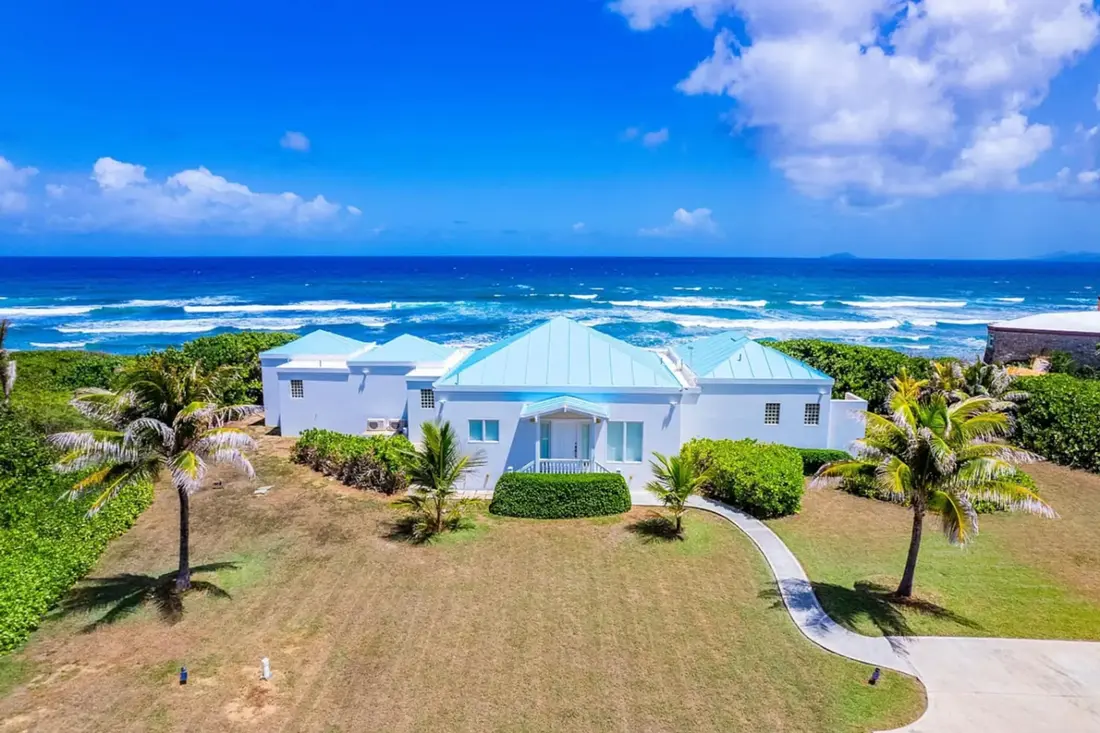
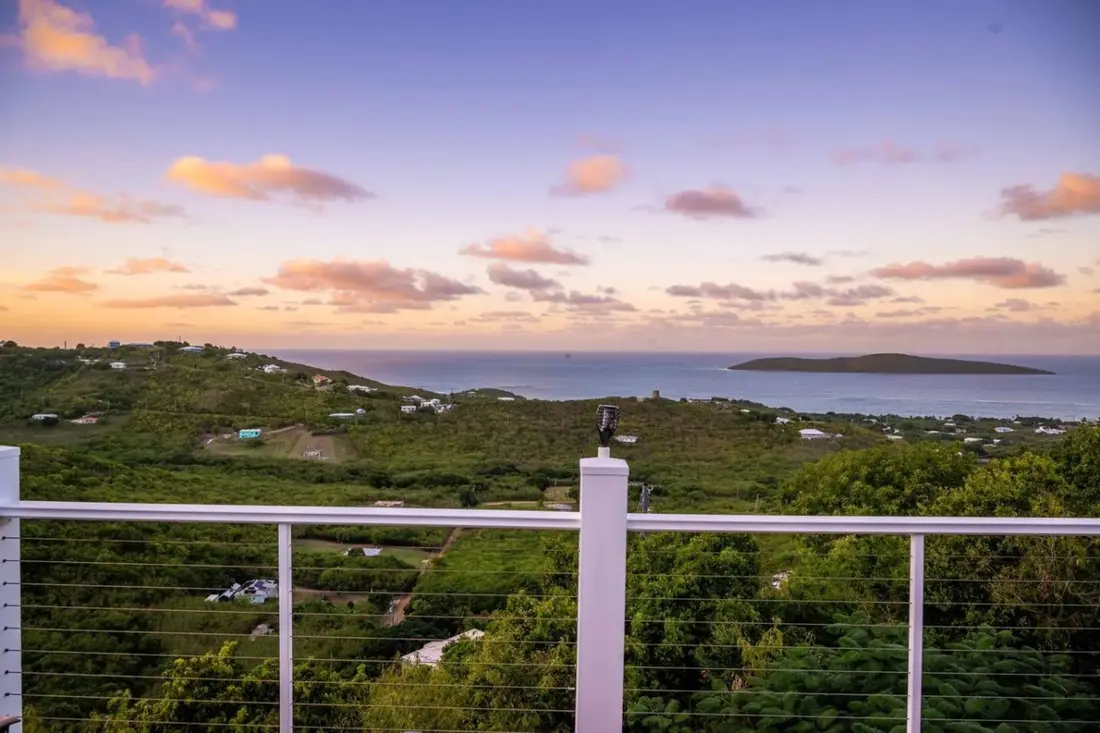
Guests who want a real chance at a turtle watch should stay west and book spring dates: Sunset Sea-Clusion sits about 15 minutes from the refuge entrance, which matters when a program runs from evening orientation past midnight. For everyday turtles rather than the once-a-trip kind, the East End homes put the Chenay Bay seagrass and the Jack and Isaac trailheads a few minutes away, with green turtle sightings on an ordinary morning snorkel. Either way, plan the reservation before the flights; turtle watch capacity is the scarcest commodity in this guide. Browse all villas and match the house to the season you are chasing.
Sources
Written from official and first-party sources, checked August 2026. Hours, prices and event dates change — confirm before you go.
In this guide
Stay nearby
Private oceanfront on the East End with a sandy, swimmable beach, pool, outdoor kitchen and a separate guest cottage. Sleeps twelve.
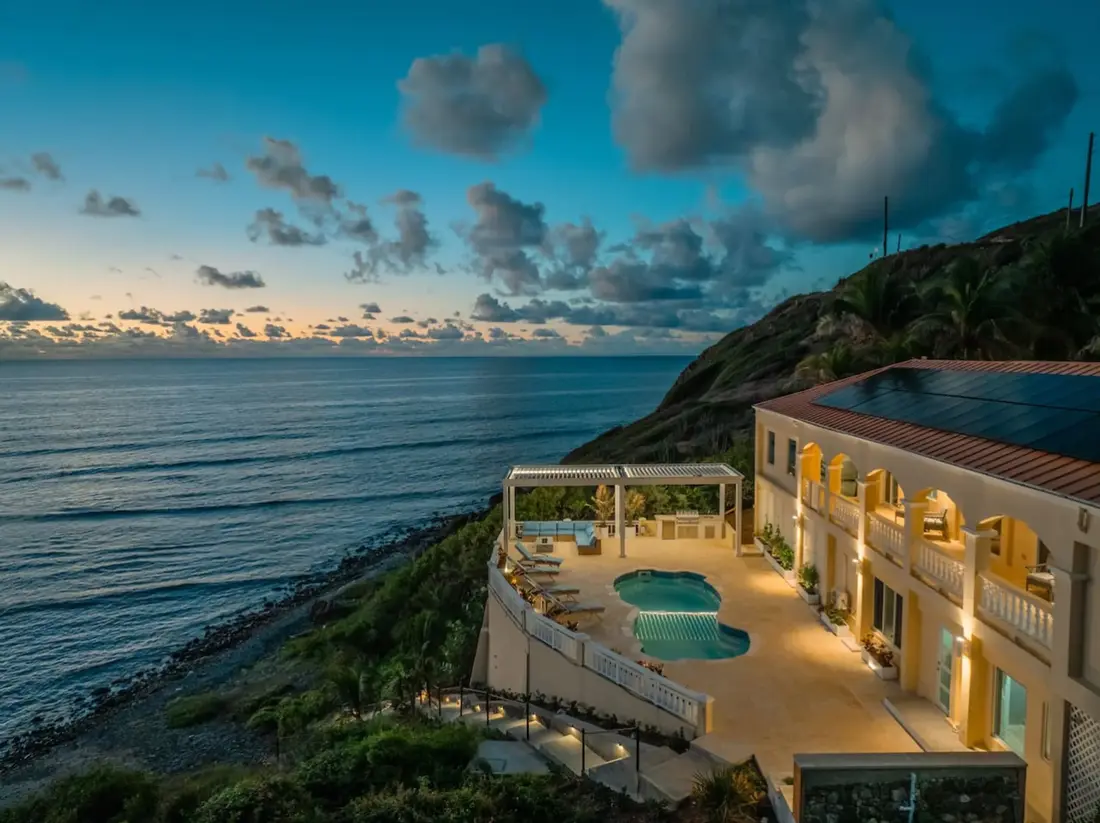 The Cerulean5 bd · 5 ba · sleeps 12 · Christiansted
More in Nature & Wildlife
Sources
16 references, listed in full at the end of this guide — official park, refuge, tourism-board and business sources, checked August 2026.