St. Croix in August
The warmest stretch of the year: sea like bathwater, quick storms, quiet beaches.
August is the warmest and quietest stretch of the St. Croix calendar. Daytime readings sit near 90°F, the top of the island's whole year; the sea has climbed to about 84°F, close to as warm as it ever gets; and the island runs at half speed, with the softest villa rates on the calendar. It is also the month the Atlantic stops being an abstraction: the storm curve starts climbing in the second half, the last of the summer's Saharan dust blows through, and the Sandy Point refuge spends its final weeks shut for the turtles. This is the reference page for the month. What follows is the August weather with its NOAA figures, the value-season math and the caveats attached, the short local calendar, the sea and the turtles, the heat and the daily shape that beats it, and the shortlist of things still worth a reservation. To weigh August against the other eleven options, our best-time-to-visit journal post lines up the full year.
August in brief
August turns the island's summer up to its warmest setting and its calendar down to its lowest. The heat that built through June and July tops out now, so the useful hours run early and late while the searing middle of the day is for shade and water. The trade wind has relaxed into its gentle summer flow, which flattens the sea but also lets the heat press closer than the breezy winter ever permits. What you get back is the warmest water of the year, a near-empty island, and the cheapest weeks on the villa calendar. Two things set August apart from July, its near-twin on the thermometer. First, no holiday interrupts it: July's back-to-back Emancipation Day and Fourth of July fill Frederiksted, while August carries no public holiday at all and no headline festival. Second, the back half of the month is where hurricane season quits being a date on paper and turns into a forecast worth a daily look. Neither changes the basic shape of an August day, which is hot, bright, slow, and inexpensive.
August weather by the numbers
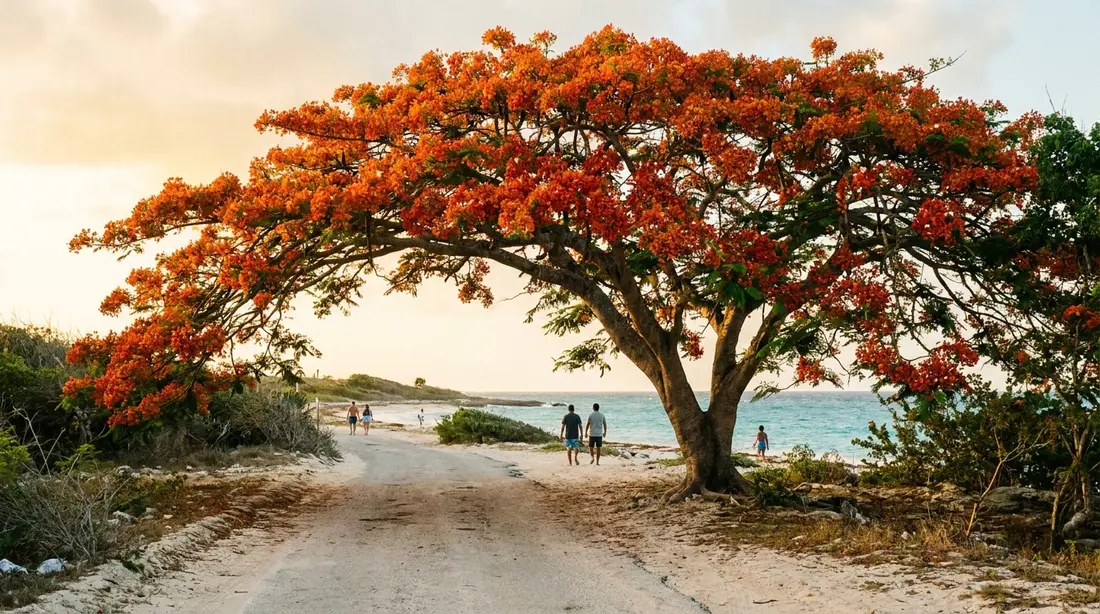
August is the hottest month St. Croix has, though the island's famously narrow year keeps even that within reason. The federal climate normals for 1991 to 2020, taken at Henry E. Rohlsen Airport, put a representative August day at a high near 90°F with an overnight dip to about 77°F, and the round-the-clock average of roughly 82.5°F stands as the single warmest monthly mean anywhere in that record. That edges July by about a degree and sits a touch above September. The plain reading: this is the top of the thermometer for the year, and it is where the summer heat is at its most committed.
The thermometer, though, is only half the story, and the smaller half. What makes an August afternoon feel the way it does is the moisture in the air. The dew point sits near its yearly high, the humidity holds steady day after day, and on a windless, hazy afternoon the feels-like number can run several degrees above what the thermometer shows. The trade wind is the saving grace. Most days it blows in off the east and southeast, carrying the cooling that makes a 90-degree reading livable, which is exactly why the island's old stone houses were built to channel a breeze straight through instead of shutting it out. Lined up together, August's numbers read like this:
| Condition | August average | How it plays out |
|---|---|---|
| Daytime high | Near 90°F | The warmest month on the island's record |
| Overnight low | Near 77°F | Mild, humid nights; villa bedrooms are air-conditioned |
| Round-the-clock mean | About 82.5°F | The year's single warmest month by the federal average |
| Sea temperature | About 84°F | Close to its annual peak; still creeping up toward September |
| Monthly rainfall | About 3.2 in | Rising from July; short cells now, heavier totals ahead |
| Trade winds | Light, east to southeast | Gentle summer flow; the sea lies flat |
| Humidity | High and steady | On a windless afternoon it feels hotter than the reading |
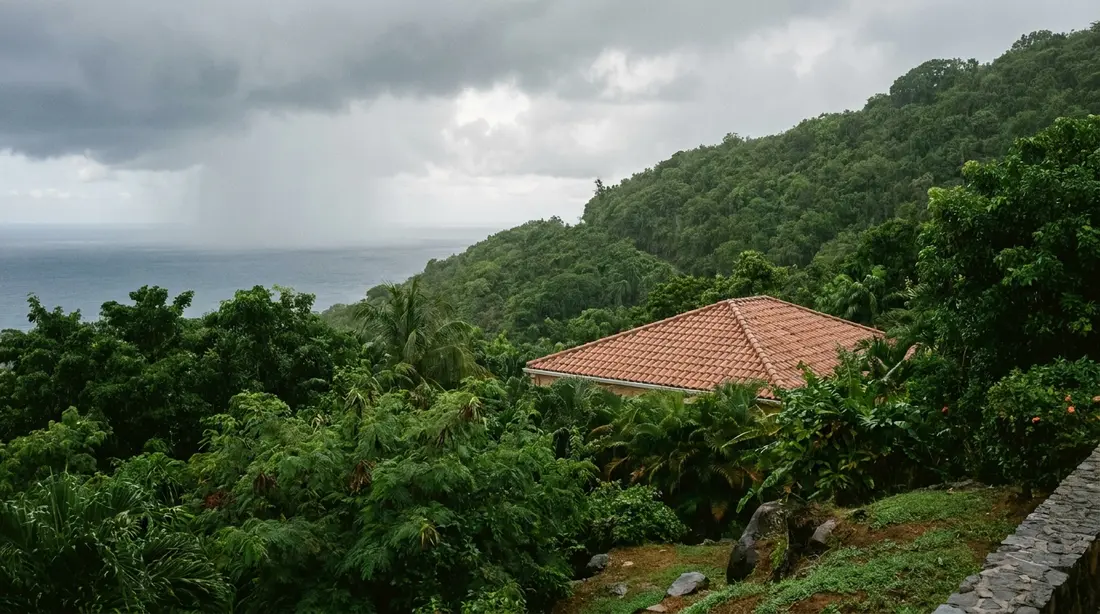
Rain is the figure that moves. August collects about 3.2 inches on the long-term normal, up from July and a clear step toward the wettest stretch of the year, which runs from September into November. The increase shows up mostly late in the month, and it still arrives in the island's usual form: a compact trade-wind cell that soaks a single band of coastline for ten or fifteen minutes before sliding off westward while the sun returns behind it. Full-day rain is uncommon and needs organized weather to happen. Geography spreads the totals unevenly, too, so the green northwest hills gather more than the airport gauge ever measures while the dry East End catches less, which means a shower hammering one shore will often leave the far coast under open sky. How these showers form, and why a scary-looking rain percentage here so rarely means a washout, is taken apart in the year-round weather guide.
The Saharan dust winds down
The desert haze that tints the summer sky is on its way out in August. The dry, mineral-heavy air that lifts off the Sahara and rides the high winds across the Atlantic runs thickest from late June to the middle of August, then drops off fast, so the first half of the month can still bring a milky sky and a coppery sunset while the second half usually clears. Most guests notice nothing beyond the altered light. Anyone with asthma or a similar sensitivity should scale back hard exertion on the haziest days, the same caution a poor-air-quality alert would prompt back home. The dust also does the tropics a backhanded favor, because its dryness smothers young storms; as it retreats late in the month, the Atlantic loses one of its restraints, which is part of why storms grow more likely just as August ends. The mechanics, and the odd link between the dust calendar and the storm calendar, are laid out in the weather guide.
The storm window opens
August is where the Atlantic hurricane season quits being a formality. The National Hurricane Center's climatology has the activity curve climbing through the month, with the first hurricane of an average year forming in early August and the deep-tropical pattern that can reach the eastern Caribbean switching on around mid-month; the statistical peak still sits a few weeks off, near September 10. None of that describes a typical August day here, which is simply hot and bright with a chance of a shower. It changes one habit, though: insurers will not touch a storm that already had a name before your purchase date, so the safeguard belongs on the same receipt as the deposit. The month-by-month odds, the alert vocabulary, and the steps to take if a system ever points at your dates are all in the hurricane season guide.
August rates and the summer tail
August holds the lowest prices of the St. Croix year, and it holds them all month long. Winter is the costly stretch, from the December holidays out through April; once summer takes hold the island tips into its cheaper half, and August settles at the very floor of that descent. A villa night costs well below the winter figures, houses that need most of a year's notice for February free up a few weeks out, and the machinery of a busy island, restaurant tables, dive-boat seats, the small rental fleet, carries plenty of slack. The weather is not the price you pay for any of that, since it holds reliably warm and bright; what you pay instead is the tradeoff this page states, that real heat and the opening weeks of the storm watch come bundled with the low rate.
The month is the tail end of the family-summer window, and that shapes its rhythm. Early August still carries school-break traffic, so the first couple of weeks are the busier ones, with families chasing the last big trip before classes resume. Then the calendar empties. Mainland and territorial schools call students back through the second half of the month, and as they do the island quiets further, until late August is among the stillest stretches of the whole year, quieter even than July. A family that can travel in that late-August lull, or a couple with no school calendar to answer to, finds the beaches close to deserted and the rates at rock bottom. September pushes both further, and its full case sits in the month page linked below.
What is on in August
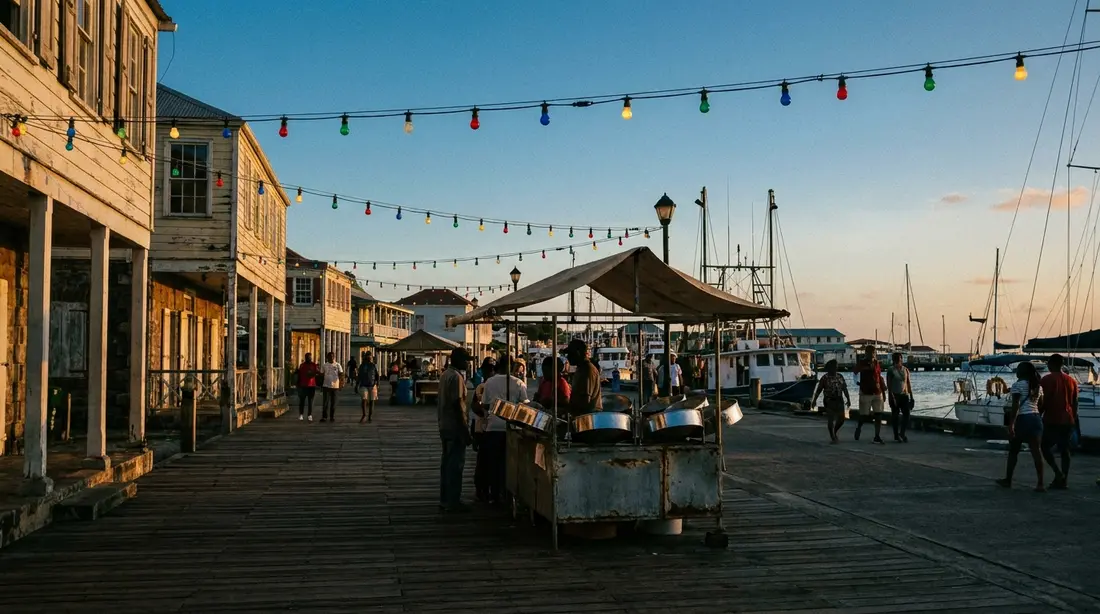
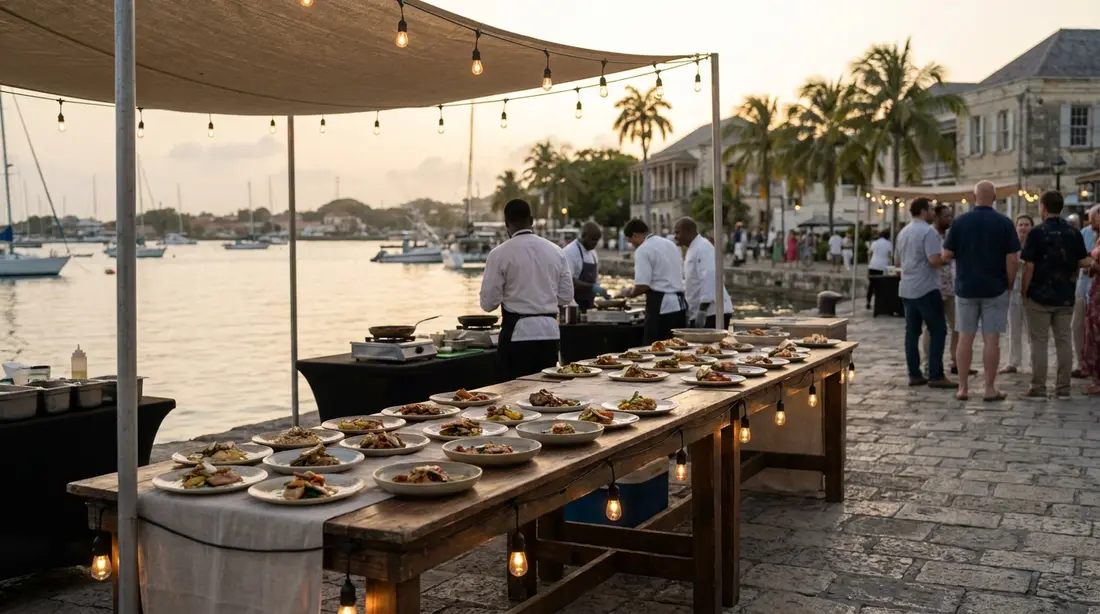
August is the thinnest month on the island's event calendar, and it is worth saying rather than dressing it up. July hands over its two holidays and its mango festival, September has not yet arrived, and what fills the August calendar is small and local: weekly tasting nights at the island distilleries, community beach cleanups and lionfish-removal dives, a snorkel clinic or a guided forest walk, the occasional block party or fundraiser. These are posted a week or two ahead rather than booked months out, so the move is to scan the events calendar once you arrive instead of building a trip around any single one. The island's food, rum, and street-food traditions run every month regardless of the calendar, and the Crucian food guide and its distillery tours make a better August plan than any one-off event.
Two corrections head off a common mix-up. August is not a carnival month: the Crucian Christmas Festival belongs to December and January, with its parades through Frederiksted. And Emancipation Day, the territory's summer holiday that recalls the freedom proclamation read out at Fort Frederik in 1848, falls on July 3, a July date and not an August one. A traveler hoping to catch either should look at those months instead. What August offers in place of a big event is the reverse of one: room. The beaches, the trails, the dive sites, and the restaurants are as uncrowded as they get all year, which for a good many guests is the entire reason to come now.
The water in August
This is prime water time. The summer trades are light, the sea lies about as flat as the island ever offers, and at close to 84°F it asks nothing of a swimmer who wants to stay in for hours. A Buck Island crossing to the marked reef trail is at its most comfortable now, and the catamaran day-sail operators working out of Christiansted and Frederiksted get their most dependable conditions of the year. Shore divers have the Frederiksted Pier, a protected west-side site that holds up in nearly all weather, while a beginner's first mask-and-fins session is easiest in this warm, still water, best started at the sheltered entries the snorkeling guide sorts by exposure. On the mornings the north coast falls calm, the Salt River canyons and the Cane Bay Wall come into range for divers. After sundown the Salt River bio bay puts on its year-round show; time a paddle to a new-moon window, when a moonless sky lets the plankton burn brightest. As everywhere on this coast, the sea is calmest in the early hours, so claim the first light for anything that needs a mirror surface.
The calm summer sea unlocks a couple of pursuits that winter's chop tends to ruin. Paddleboarding is as easy as it gets right now, the sheltered bays turning to glass on a still morning, and the offshore grounds past the east tip are full of mahi, wahoo, and kingfish for the charter captains who watch the marine forecast and choose their days accordingly. Water clarity is usually at its sharpest during a settled August week, because the sea clears up when there is little swell working the bottom and no fresh rain has muddied the strip near shore. The one summer caveat rides in on the next two sections: a distant tropical system, even one hundreds of miles off, can throw swell onto the north-facing beaches under a blue sky, and from the middle of August that possibility is real enough to keep half an eye on. When it happens, the fix is the same as always here, which is to move to the sheltered west coast.
Sargassum in August
Summer is the Caribbean's sargassum season, and August lands just past its high point. The University of South Florida, which tracks the drifting brown seaweed across the whole basin, recorded the amount easing through July after a June peak, with the decline expected to run on into the fall; even so, 2026 is shaping up as the second-heaviest sargassum year on record, behind only 2025, so beaching can still happen. What matters more than the month is the coast. The weed follows the easterly current onto the shores that face open ocean first, the East End and the south side, where it lands and lingers, while the strands the average visitor swims from, which follow the north coast and the west end, together with the lagoon inside Buck Island's reef, sit out of its main path far more often than not. Conditions also flip quickly, so a beach showing a brown streak at dawn can be swept clean again by afternoon. Traveling in a heavy year like this one, ask us how the beaches actually look in the days before departure, since a photo from a few weeks back can badly mislead you, and keep the calm west coast in your pocket as a fallback. The territory posts monthly sargassum updates through the season.
Sea turtles in August
August is the last full month of the island's turtle closure, and the calendar is about to turn. Sandy Point National Wildlife Refuge, the two-mile beach on the southwest tip that is the biggest leatherback nesting ground under the U.S. flag, admits no visitors during nesting: its gate has been shut since April 1 and stays that way until August 31, with weekend hours, Saturdays and Sundays from 10 to 4, resuming on September 1. Drive out there in early August and you meet a closed gate, but by the final days of the month the reopening is only a week or two off.
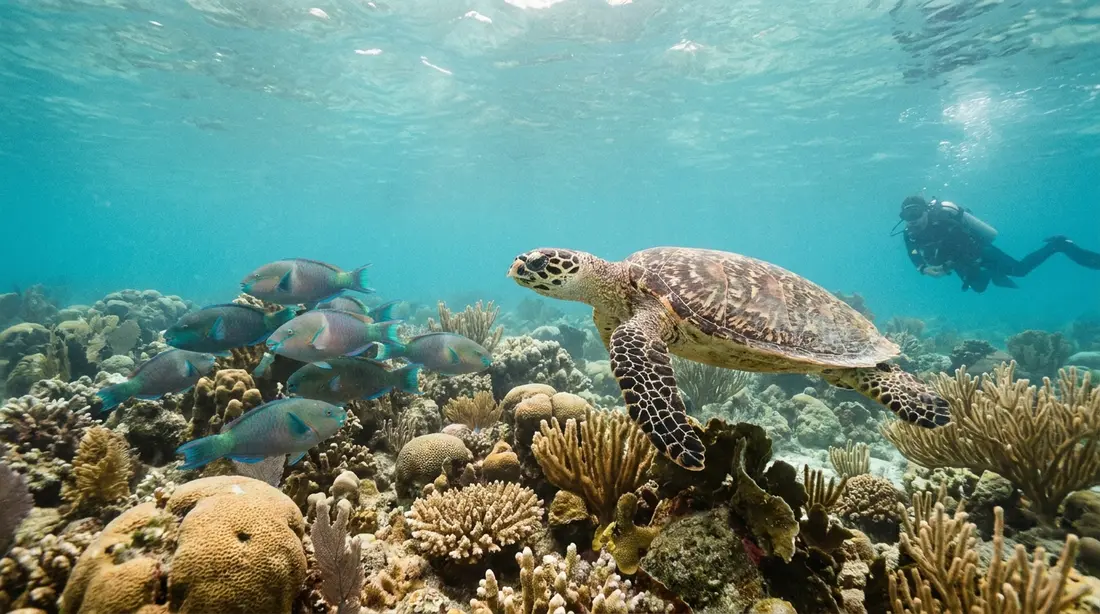
Two things are unfolding on that closed sand at once. The leatherback nesting that crests in spring has finished for the year, while green and hawksbill turtles keep coming ashore into the fall here, at Buck Island, and along the East End bays. August is also deep in hatching season: nests laid back in spring are releasing their young, which scramble for the sea at night. If you are anywhere near a nesting beach after dark, leave the sand black, no flashlights and no phone lights, because artificial light steers hatchlings the wrong way. The one lawful route onto a closed beach is a reserved Turtle Watch evening with the research crews, offered in small groups and claimed the moment dates post. Seeing a turtle in the water, by contrast, needs no permit and happens all summer: greens are a common sight over the seagrass beds near Chenay Bay, and most Buck Island trips turn a few up.
Handling the midday heat
August makes the case for the split day, the rhythm residents keep without thinking about it. Get the beach, the boat, or the hike done in the cool early hours while the water is still like glass; hand the blazing middle of the day to shade, a pool, or the sea itself; then come back out around four o'clock, once the sun drops and the light turns amber. Carry more water than seems sensible, keep your head covered, and pick a reef-safe sunscreen; the reefs here depend on it and the shops all carry it. Hikes in particular are dawn-or-dusk work in August, since the exposed East End trails hand you no shade at all, and a midday climb in this heat is a mistake most people make only once.
Families lean on the pool as the great leveler of the hot hours, and both the first-time visitor tips and the guide to traveling with kids keep to the same clock. Midday indoors does not have to mean the villa walls, either. A gallery or museum in one of the two towns with the air conditioning on, a slow lunch somewhere shaded, a rum-distillery tour, or a wander through the botanical garden's tree-shaded grounds all put the fiercest hours to use, and the indoor options that save a wet day are exactly the ones that save a scorching one. The whole idea is simply to stay somewhere shaded and cool through the sun's fiercest hours, then step back outside as it drops toward the horizon.
Who August suits
August is built for a short list of travelers. Budget-minded families top it, because the month pairs the cheapest villa weeks of the year with warm, gentle water for children and the last stretch of summer vacation; the heat is real, but a pool and an early-and-late schedule handle it. Divers and snorkelers are the second group: the flat summer sea and the warm, clear water open the sites the windy winter can close, and a diver willing to read the morning conditions gets the north-shore wall dives and the Buck Island run at their gentlest. The third group is anyone who prizes an empty island over a full calendar, the traveler who would rather have Cane Bay to themselves on a Tuesday than stand in a festival crowd.
August rewards heat tolerance and flexibility, and it asks for both in return. It suits one traveler badly, in exactly one case: the guest who wants the cool, dry, wind-scrubbed feel of the island in winter, which August simply cannot supply. Anyone whose heart is set on that should aim at the peak months from December into April instead. The full spread of seasonal tradeoffs, month against month, is what our year-round comparison lays out side by side.
What to book for August
August is the simplest month of the year to secure a villa. Availability is wide open across the calendar, so a house that demands most of a year's notice for the winter holidays can often be had a few weeks out, and the flexibility runs both directions: this is the month to ask about a longer stay or to put together a last-minute escape. What still sells out is anything with a fixed seat count. A Buck Island boat on a particular day can fill even in a slow month, and the dive shops run lighter summer rosters, so a specific dive day is worth locking down ahead. You will need a car here, since there is no Uber or Lyft on St. Croix, everything is a drive from everything else, and you will be driving on the left; reserve it before you travel, and our guide to renting a car covers the specifics.
If the peak heat and the opening storm window give you second thoughts, the two months on either side tilt differently. July runs a shade cooler on the thermometer and busier around its holidays, while September is quieter and cheaper still, greener, and deeper into the active part of the storm season. August sits between them, the hottest and among the emptiest, with the storm odds climbing as it goes. Whichever you pick inside the summer, set the travel insurance the day you commit, since that is the one piece of planning here with a hard deadline attached.
August at a glance
| Aspect | August | Notes |
|---|---|---|
| Heat | Hottest month; highs near 90°F | Bracket the midday with shade or the pool |
| Sea | About 84°F, near its yearly peak | Flat and warm; the best water days of summer |
| Rain | About 3.2 inches, trending up | Quick cells for now; the wet peak starts in September |
| Crowds | The emptiest the island gets | No holiday and no big festival to fill it |
| Rates | The lowest villa pricing of the year | Wide availability; room to ask about longer stays |
| Storms | Active window opens mid-month | Insure at deposit; watch the outlook late in the month |
| Saharan dust | Fading after mid-August | Hazier skies early, clearing later |
| Sandy Point | Closed until August 31 | Weekend visiting resumes September 1 |
| Turtles | Hatching underway; greens and hawksbills nesting | Keep nesting beaches dark at night |
| Best suited to | Budget families, divers, heat-tolerant travelers | A poor fit for winter-cool seekers |
Questions guests ask
Just how hot does August get?
August is the island's warmest month. The airport normals put the average high near 90°F and the overnight low near 77°F, with a round-the-clock mean of about 82.5°F, the top reading of the year. The raw number is not extreme, since the island has never recorded 100°F. The humidity is what you feel: with the cooling winter wind gone, a still afternoon sits heavier than the thermometer claims. The counter is the local schedule, morning and late-day outings with the hot middle spent in shade, a pool, or the sea.
What is the hurricane risk in August?
It rises as the month goes on. Early August is historically quiet in the eastern Caribbean, but the climatology has activity climbing from about the middle of the month toward the September peak, so August is the point where a daily glance at the tropical outlook becomes worthwhile. The response is cheap and one-time: put a travel-insurance policy in place the same afternoon you commit your deposit, because coverage is void once a storm has been named, and favor a changeable airfare. With that done, the odds still strongly favor an ordinary hot-weather week, and the hurricane season guide above lays the mechanics out in full.
Is Sandy Point open in August?
No. Sandy Point remains off-limits through the end of nesting and only reopens to weekend visitors on September 1, with hours of 10 to 4 on Saturdays and Sundays. An August drive to the gate is a wasted trip, though by the last week of the month the reopening is nearly here. The closure guards the leatherback nesting beach, the biggest such stretch in the United States. If watching a nesting or hatching turtle is the goal, the reserved Turtle Watch outings with the research teams are the sole lawful route onto that sand while it is shut, and they fill fast. Turtles in the water, on the other hand, are an easy summer sighting at Chenay Bay and on Buck Island runs.
Is August a good month for a family trip?
For a family on a budget, it is one of the best. The sea is warm and mostly calm for young swimmers, the villa pool solves the hot midday, and August carries the cheapest rates of the year at the tail of summer break. The trade you accept is the heat and the opening of storm season, both manageable with an early-and-late daily plan and an insurance policy bought at booking. Beaches and boats run all month, and the slow August pace suits small children better than a packed festival week would. Late August quiets further as schools call kids back, which can mean an even emptier beach for the families still out.
Will seaweed or Saharan dust spoil an August trip?
Rarely, though both are in play. August sits just past the summer sargassum peak; the basin-wide amount began dropping in July, but 2026 is a near-record year, so some beaches can still collect weed. It lands on the ocean-facing east and south shores first, while the beaches most people swim from, along the north and west, generally escape it, and conditions can reset within a day. Saharan dust runs its last strong stretch in early August and thins afterward, bringing a few hazy, orange-sunset days that most people barely register. Neither is constant, and a fifteen-minute drive to another coast fixes most weed days. In a heavy year, ask us how the beaches look just before you fly.
Are there events on St. Croix in August?
Few, and none of them large. August is the quietest month on the island's calendar: no public holiday, no carnival, no headline festival. What runs instead is local and small, tasting evenings at the distilleries, community beach cleanups and lionfish-removal dives, a snorkel clinic, an occasional block party, all announced a week or two ahead. If a big event is the reason for a trip, August is the wrong month and July or the winter festival season is the right one. If space and quiet are the reason, August delivers more of both than any other month of the year.
How far ahead do I need to book August?
Not far. August is the easiest villa month of the year, so a good house is often available a few weeks out, and even large homes are reachable closer in than winter allows, outside the earliest summer-break weeks that families claim first. The items to reserve early are the capacity-limited ones: a boat out to Buck Island, a fixed dive day, and the rental car, which you should line up before arrival since the island runs no rideshare. August carries exactly one deadline worth minding: travel insurance has to be active before a storm is ever named, so set it up as soon as you put money down.
Villas for an August week
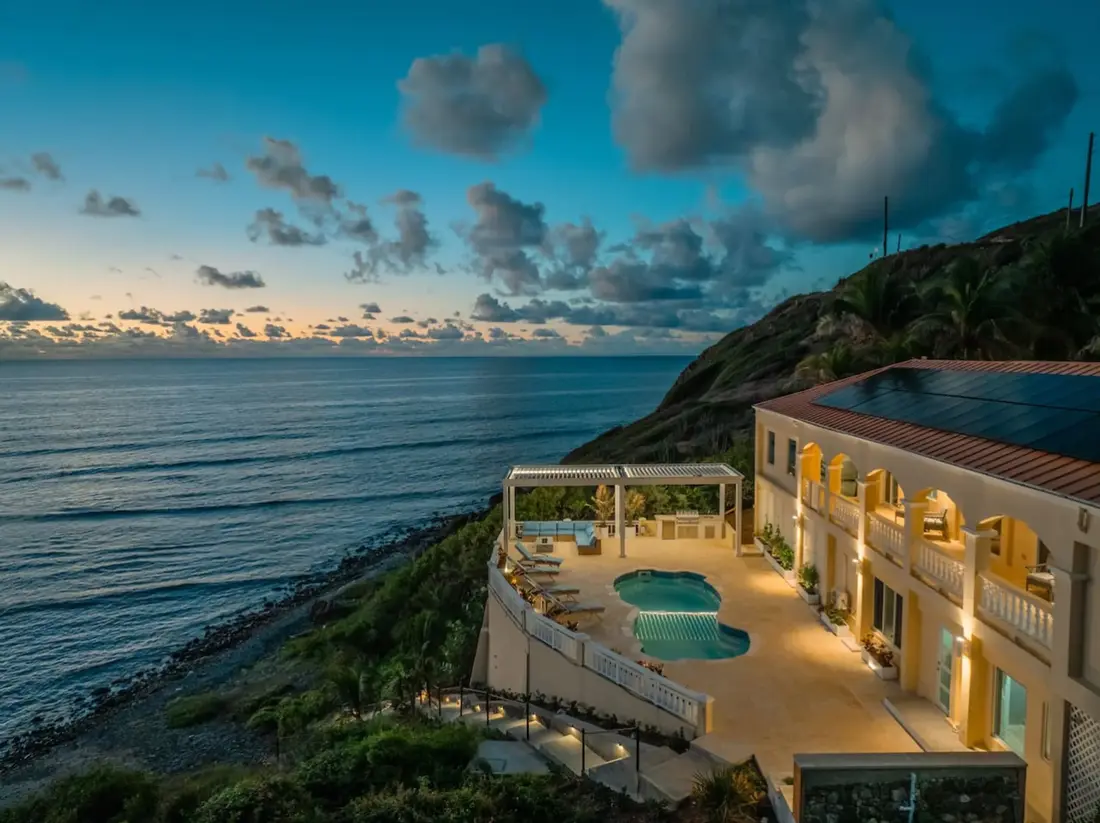
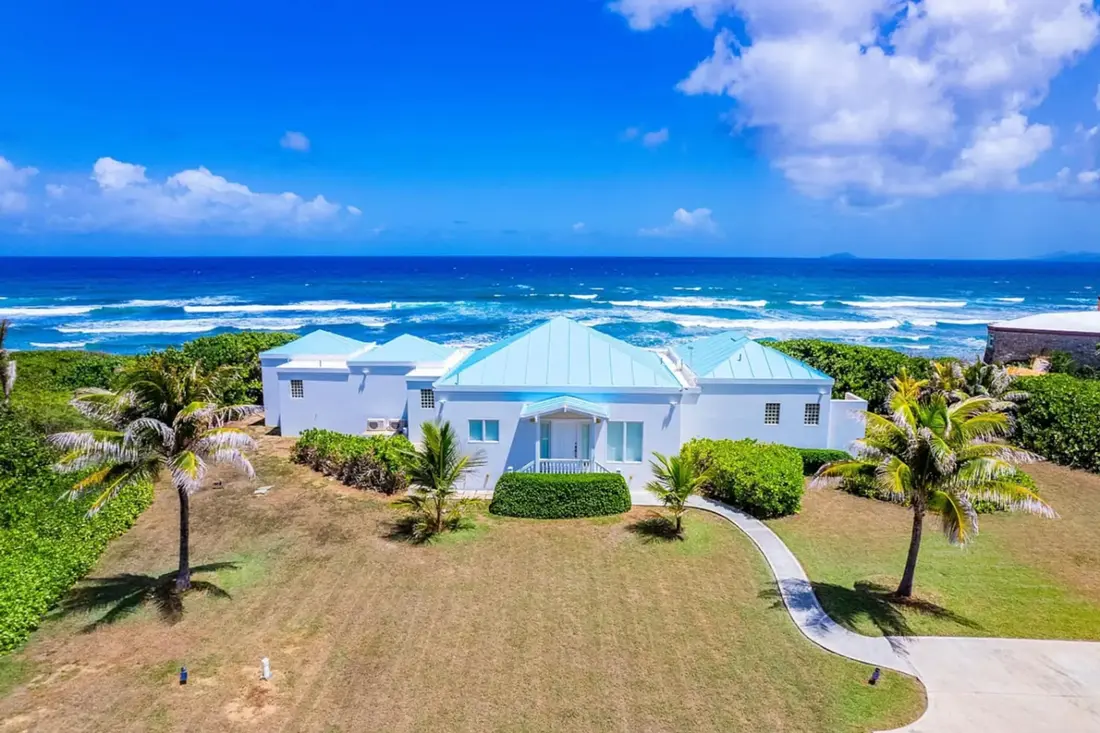
In the island's hottest month, two features earn their keep above the rest: a pool for the middle of the day and a cross-breeze for the nights. Our East End houses hold the breeziest, driest ground on St. Croix and place the warm August sea just outside the door. The Cerulean faces Buck Island from a private East End beach, first to catch the trade wind and close to the flat water the month's boat and dive days want. Shoy's Beach House sets a school-holiday family beside an easy, sheltered beach a short drive from Christiansted. Sunset Sea-Clusion holds the leeward west coast, where the sea stays flattest and the sun sets over the water. The beachfront collection has wide-open August weeks, and because our team lives here, we can tell you how any given week tends to run. Ask us; August is our slow season, and the time is there to talk it through.
Sources
Written from official and first-party sources, checked August 2026. Hours, prices and event dates change — confirm before you go.
In this guide
Stay nearby
On The Shoys beach: six bedrooms, six baths, pool and hot tub, room for twelve, and the beach through the back garden.
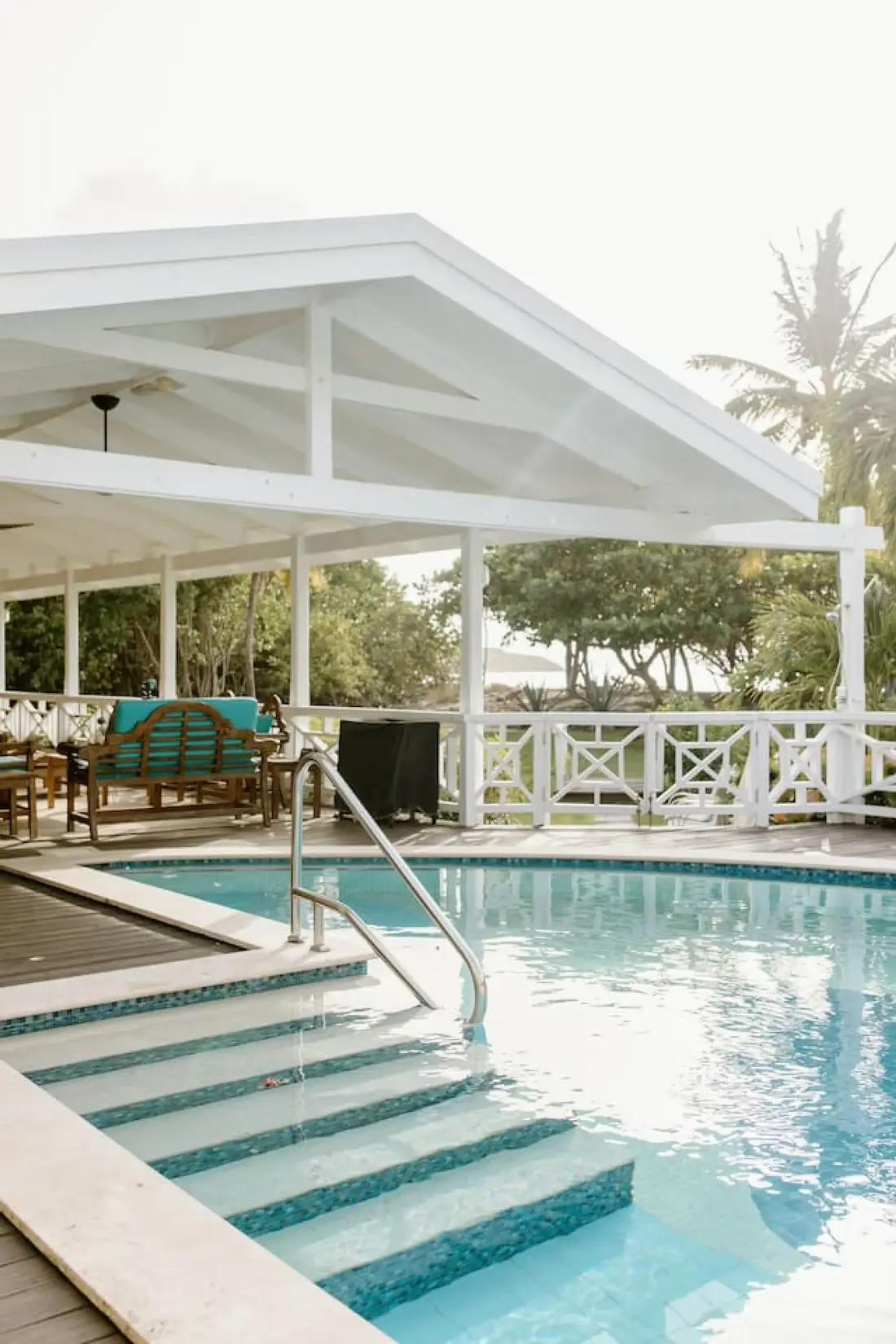 Shoy's Beach House6 bd · 6 ba · sleeps 12 · Christiansted
More in Month by Month
Sources
10 references, listed in full at the end of this guide — official park, refuge, tourism-board and business sources, checked August 2026.